Pitching 101, part XX: getting from ho-hum to “Interesting. I’ve never heard that before.”

ticker-tape-parade

After yesterday’s post on how to pull everything we’ve learned throughout this series into a formal 2-minute pitch, couldn’t you feel the excitement crackling in the air? The moment nearly brought a tear to the eye: the public rejoiced, the heavens opened, lions and lambs lay down together, and agents all over New York spontaneously flung their arms around the nearest aspiring writer, gurgling with joy.

What, you missed all that? Even the good folks cleaning up the ticker tape parade?

Okay, so maybe I’m exaggerating a trifle. And maybe those of you who aren’t planning to attend a conference and pitch anytime soon didn’t find it all that goosebump-inducing. “Let’s get on with it, Anne,” some nonambulant writers scoffed. “Let’s get back to the type of stuff that writers do at home in the solitude of their lonely studios: writing, rewriting, querying, rewriting some more…”

Patience, oh scoffers: as I MAY have mentioned once or twice in the course of this admittedly rather extensive series, learning to pitch is going to make you a better querier. And perhaps even a better writer, at least as far as marketing is concerned.

Did I just hear the scoffers snort derisively again? Okay, allow me to ask a clarifying question: hands up, every querying veteran out there who now wishes devoutly that s/he had known more about how the publishing industry thinks about books before querying for the first time.

bdy3bdy3bdy3bdy3bdy3
That’s quite a response. Keep ‘em up if you sent out more than five queries before you figured out what your book’s selling points were.

bdy3bdy3bdy3bdy3bdy3

Or, heaven forfend, your book category.

That last one is so common that I decided to spare you the artistic representation, so there would still be room on the page for today’s post. The very idea of querying without knowing makes me cringe: can you even guess which agents to query before you’ve come up with that?

See my point? Not only are many of the same skills required to construct a winning pitch and a successful query letter, but many of the actual building blocks are the same. So I hope those of you who are intending to send out anything remotely resembling a query anytime soon have been paying attention for the last few weeks.

And yes, of course I’m going to walk you through it; would I leave you to apply those lessons on your own?

Rest assured, it’s all part of my evil plan. By the end of Labor Day week, if you’re all very good and do your homework diligently, you should have a niftily revised query letter in hand.

Why are we aiming for the week after Labor Day, you ask? Long-time readers, chant it with me now: because a hefty hunk of the NYC-based publishing industry goes on vacation from the second week of August through Labor Day. And when they get back, guess what’s piled up high on their already-cluttered desks?

Uh-huh. Might as well hold off until they’ve had a chance to dig through those thousands of piled-up queries.

“But Anne,” I hear some reformed scoffers point out, “why shouldn’t I add my letter to the pile? Won’t they answer them in the order received?”

Well, more or less. However, Millicent the agency screener’s been known to be a mite grumpy until she has cleared enough desk space to set down her latte. Any guesses what the quickest way to clear a desk of queries is?

Wait until the second week of September.

Okay, back to the topic du jour. Last time, I went over the basic format of a 2-minute pitch, the kind a writer is expected to give within the context of a scheduled pitch meeting. Unlike the shorter elevator speech or hallway pitch (and if you remain unclear on those, please see the appropriate categories at right), the formal pitch is intended not merely to pique the hearer’s interest in the book, but to convey that the writer is one heck of a storyteller, whether the book is fiction or nonfiction.

In case that’s too subtle for anyone, I shall throw a brick through the nearest window and shout: no matter what kind of prose you write, your storytelling skills are part of what you are selling here.

How might a trembling author-to-be pull that off? Basically, by dolling up one’s elevator speech with simply fascinating details and fresh twists that will hold the hearer in thrall.

At least for two minutes.

Because this is a genuinely tall order, it is absolutely vital that you prepare for those two minutes in advance, either timing yourself at home or by buttonholing like-minded writers at the conference for mutual practice. Otherwise, as I mentioned n passing last time, it is very, very easy to start rambling once you are actually in your pitch meeting, and frankly, 10 minutes — a fairly standard length for such an appointment — doesn’t allow any time for rambling or free-association.

This can dangerous, and not just because you may run out of time before you finish your story.

Rambling, unfortunately, tends to lead the pitcher away from issues of marketing and into the kind of artistic-critical (“What do you think of multiple protagonists in general?”), literary-philosophical (“I wanted to experiment with a double identity in my romance novel, because I feel that Descartian dualism forms the underpinnings of the modern Western love relationship.”), and autobiographical points (“I spent 17 years writing this novel. Please love it, or I shall impale myself on the nearest sharp object.”) that he might bring up talking with another writer.

Remember, you are marketing a product here: talk of art and theory can come later, after you’ve signed a contract with these people. (A great rule of thumb, incidentally, even if you happen to feel an instant personal rapport with the person across the pitching table. However simpatico this person may be, a pitching situation is not primarily about making friends).

Don’t forget that that the formal pitch is, in fact, is an extended, spoken query letter, and it should contain, at minimum, the same information. And, like any good promotional speech, it needs to present the book as both unique and memorable.

Glad you asked. Time to whip out one of my famous lists of tips.

(1) Emphasize the most original parts of your story or argument
One great way to increase the probability of its seeming both is to include beautifully-phrased telling details from the book, something that the agent or editor is unlikely to hear from anybody else. What specifics can you use to describe your protagonist’s personality, the challenges he faces, the environment in which he functions, that render each different from any other book currently on the market?

See why I suggested earlier in this series that you might want to gain some familiarity with what is being published NOW in your book category? Unless you know what’s out there, how can you draw a vibrant comparison?

I sense a touch of annoyance out there, don’t I? “But Anne,” a disgruntled soul or two protests, “I understand that part of the point here is to present my book concept as FRESH, but I’m going to be talking about my book for two minutes, at best. Do I really want to waste my time on a compare-and-contrast when I could be showing (not telling) that my book is in fact unique?”

Well, I wasn’t precisely envisioning that you embark upon a master’s thesis on the literary merits of the current thriller market; what I had in mind was your becoming aware enough of the current offerings to know what about your project is going to seem MOST unique to someone who has been marinating in the present offerings for the last couple of years.

Regardless of HOW your book is fresh, however, you’re going to want to be as specific as possible about it. Which leads me to…

(2) Include details that the hearer won’t be expecting.
Think back to the elevator speech I developed earlier in this series for PRIDE AND PREJUDICE: how likely is it that anybody else at the conference will be pitching a story that includes a sister who lectures while pounding on the piano, or a mother who insists her daughter marry a cousin she has just met?

Not very — which means that including these details in the pitch is going to surprise the hearer a little. And that, in turn, will render the pitch more memorable.

(3) Broaden your scope a little.

In a hallway pitch, of course, you don’t have the luxury of including more than a couple of rich details, but the 2-minute pitch is another kettle of proverbial fish. You can afford the time to flesh out the skeleton of your premise and story arc. You can, in fact, include a small scene.

So here’s a wacky suggestion: take fifteen or twenty seconds of those two minutes to tell the story of ONE scene in vivid, Technicolor-level detail.

I’m quite serious about this. It’s an unorthodox thing to do in a pitch, but it works all the better for that reason, if you can keep it brief AND fresh.

Yes, even if the book in question is a memoir — or a nonfiction book about an incident that took place in 512 BC, for that matter. To make any subject interesting to a reader, you’re going to need to introduce an anecdote or two, right? This is a fabulous opportunity to flex your show-don’t-tell muscles.

Which is, if you think about it, why a gripping story draws us in: good storytelling creates the illusion of BEING THERE. By placing the pitch-hearer in the middle of a vividly-realized scene, you make him more than a listener to a summary — you let him feel a PART of the story.

(4) Borrow a page from Scheherazade’s book: don’t tell too much of the story.
Remember, your job is not to summarize the plot or argument; it’s to present it in a fascinating manner.

Leaving the hearer wanting to learn more is a great strategy, because, after all, the point of the pitch is to convince the agent or editor to ask to read the manuscript, right? So focusing on making the premise sound irresistible is usually a better plan than trying to tell the entire story arc.

Don’t be afraid to introduce a cliffhanger at the end of your pitch– scenarios that leave the hearer wondering how the heck is this author going to get her protagonist out of THAT situation? work very, very well in this context.

(5) Axe the jargon.
Many pitchers (and queriers) assume, wrongly, that if their manuscripts are about people who habitually use an industry-based jargon, it will make their pitches more credible if that language permeated the 2-minute speech. In fact, the opposite is generally true: terminology that excludes outsiders usually merely perplexes the pitch hearer.

Remember, it’s never safe to assume that any given agent or editor (or Millicent, for that matter) has any background in your chosen subject matter. Use language in your pitch that everybody in the publishing industry can understand (unless, of course, your book is about the publishing industry, in which case you may be as jargon-ridden as you like in your pitch.)

(6) Delve into the realm of the senses.
Another technique that helps elevate memorability is to include as many sensual words as you can. Not sexual ones, necessarily, but referring to the operation of the senses. As anyone who has spent even a couple of weeks reading submissions or contest entries can tell you, the vast majority of writing out there sticks to the most obvious senses — sight and sound — probably because these are the two to which TV and movie scripts are limited.

So a uniquely-described scent, taste, skin sensation, or pricking of the sixth sense does tend to be memorable. I just mention.

How might you go about this, you ask? Comb the text itself. Is there an indelible visual image in your book? Work it in. Are birds twittering throughout your tropical romance? Let the agent hear them. Is your axe murderer murdering pastry chefs? We’d better taste some fois gras.

And so forth. The goal here is to include a single original scene in sufficient detail that the agent or editor will think, “Wow, I’ve never heard that before,” and ask to read the book.

Which leads me to ask those of you whose works are still in the writing phase: are there places in your manuscript where you could beef up the comic elements, sensual details, elegant environmental descriptions, etc., to strengthen the narrative and to render the book easier to pitch when its day comes?

Just something to ponder.

(7) Make sure that your pitch contains at least one detailed, memorable image.
There is a terrific example of such a pitch in the Robert Altman film THE PLAYER, should you have time to check it out before the next time you enter a pitching situation. The protagonist is an executive at a motion picture studio, and throughout the film, he hears many pitches. One unusually persistent director, played by Richard E. Grant, chases the executive all over the greater LA metro area, trying to get him to listen to his pitch. (You’re in exactly the right mental state to appreciate that now, right?) Eventually, the executive gives in, and tells the director to sell him the film in 25 words or less.

Rather than launching into the plot of the film, however, the director does something interesting: he spends a good 30 seconds setting up the initial visual image of the film: a group of protestors holding a vigil outside a prison during a rainstorm, their candles causing the umbrellas under which they huddle to glow like Chinese lanterns.

“That’s nice,” the executive says, surprised. “I’ve never seen that before.”

Pitching success!

If a strong, memorable detail of yours can elicit this kind of reaction from an agent or editor, you’re home free! Give some thought to where your book might offer up the scene, sensual detail, or magnificently evocative sentence that will make ’em do a double-take.

Or a spit-take, if your book is a comedy.

(8) Let the tone of the pitch reflect the tone of the book.
It’s just common sense, really: an agent or editor who likes a particular kind of book enough to handle it routinely may reasonably be expected to admire that kind of writing, right? So why not write the pitch in the tone and language you already know has pleased this person in the past?

A good pitch for a funny book makes it seem entertaining; a great pitch contains at least one line that provokes a spontaneous burst of laughter from the hearer. Similarly, while a good pitch for a romance would make it seem like a fun read, a great pitch might prompt the hearer to say, “Is it getting hot in here?”

Getting the picture?

I’m tempted to sign off for the day to allow all of you to rush off to stuff your pitches to the gills with indelible imagery, sensual details, and book category-appropriate mood-enhancers, but I know from long experience teaching writers to pitch that some of your manuscripts will not necessarily fit comfortably into the template I’ve laid out over the last couple of posts. To head off one of the more common problems at the pass, I’m going to revive a reader’s excellent question about the pitch proper from years past. (Keep ’em coming, folks!)

Somewhere back in the dim mists of time, sharp-eyed reader Colleen wrote in to ask how one adapts the 2-minute pitch format to stories with multiple protagonists — a more difficult task than it might appear at first glance. By definition, it would be pretty hard to pitch it as just one of the characters’ being an interesting person in an interesting situation; in theory, a GOOD multiple-protagonist novel is the story of LOTS of interesting people in LOTS of interesting situations.

So what’s the writer to do? Tell the story of the book in the pitch, not the stories of the various characters.

Does that sound like an oxymoron? Allow me to explain. For a novel with multiple protagonists to work, it must have an underlying unitary story — it has to be, unless the chapters and sections are a collection of unrelated short stories. (Which would make it a short story collection, not a novel, and it should be pitched as such.) Even if it is told from the point of view of many, many people, there is pretty much always some point of commonality.

That area of commonality should be the focus of your pitch, not how many characters’ perspectives it takes to tell it. Strip the story to its basic elements, and pitch that.

Those of you juggling many protagonists just sighed deeply, didn’t you? “But Anne,” lovers of group dynamics everywhere protest, “why should I limit myself to the simplest storyline? Doesn’t that misrepresent my book?”

Not more than other omissions geared toward pitch brevity — you would not, for instance, take up valuable pitching time in telling an agent that your book was written in the third person, would you? (In case the answer isn’t obvious: no, you shouldn’t. Let the narrative choices reveal themselves when the agent reads your manuscript.) Even in the extremely unlikely event that your book is such pure literary fiction that the characters and plot are irrelevant, concentrating instead upon experiments in writing style, your book is still about something, isn’t it?

That something should be the subject of your pitch. Why? Because any agent is going to have to know what the book is about in order to interest an editor in it.

“Okay,” the sighers concede reluctantly, “I can sort of see that, if we want to reduce the discussion to marketing terms. But I still don’t understand why simplifying my extraordinarily complex plot would help my pitch.”

Well, there’s a practical reason — and then there’s a different kind of practical reason. Let’s take the most straightforward one first.

From a pitch-hearer’s point of view, once more than a couple of characters have been introduced within those first couple of sentences, new names tend to blur together like extras in a movie, unless the pitcher makes it absolutely clear how they are all tied together. Typically, therefore, they will assume that the first mentioned by name is the protagonist.

So if you started to pitch a multiple protagonist novel on pure plot — “Melissa is dealing with trying to run a one-room schoolhouse in Morocco, while Harold is coping with the perils of window-washing in Manhattan, and Yvonne is braving the Arctic tundra…” — even the most open-minded agent or editor is likely to zone out. There’s just too much to remember.

And if remembering three names in two minutes doesn’t strike you as a heavy intellectual burden, please see my earlier post on pitch fatigue.

It’s easy to forget that yours is almost certainly not the only pitch that agent or editor has heard within the last 24 hours, isn’t it, even if you’re NOT trying to explain a book that has several protagonists? Often, pitchers of multiple-protagonist novels will make an even more serious mistake than overloading their elevator speeches with names — they will frequently begin by saying, “Okay, so there are 18 protagonists…”

Whoa there, Sparky. Did anyone in the pitching session ASK about your perspective choices? So why present them as the most important fact about your novel?

Actually, from the writer’s point of view, there’s an excellent reason: the different perspectives are an integral part of the story being told. Thus, the reader’s experience of the story is going to be inextricably tied up with how it is written.

But that doesn’t mean that this information is going to be helpful to your pitch.

I mean, you could conceivably pitch Barbara Kingsolver’s multiple-narrator THE POISONWOOD BIBLE as:

A missionary takes his five daughters and one wife to the middle of Africa. Once they manage to carve out a make-do existence in a culture that none of them really understand, what little security the daughters know is ripped from them, first by their father’s decreasing connection with reality, then by revolution.

That isn’t a bad summary of the plot, but it doesn’t really give much of a feel for the book, does it? The story is told from the perspectives of the various daughters, mostly, who really could not agree on less and who have very different means of expressing themselves.

And that, really, is the charm of the book. But if you’ll take a gander at Ms. Kingsolver’s website, you’ll see that even she (or, more likely, her publicist) doesn’t mention the number of narrators until she’s already set up the premise.

Any guesses why?

Okay, let me ask the question in a manner more relevant to the task at hand: would it be a better idea to walk into a pitch meeting and tell the story in precisely the order it is laid out in the book, spending perhaps a minute on one narrator, then moving on to the next, and so on?

In a word, no. Because — you guessed it — it’s too likely to confuse the hearer.

Hey, do you think that same logic might apply to ANY complicated-plotted book? Care to estimate the probability that a pitch-fatigued listener will lose track of a grimly literal chronological account of the plot midway through the second sentence?

If you just went pale, would-be pitchers, your answer was probably correct. Let’s get back to Barbara Kingsolver.

Even though the elevator speech above for THE POISONWOOD BIBLE does not do it justice, if I were pitching the book (and thank goodness I’m not; it would be difficult), I would probably use the speech above, with a slight addition at the end:

A missionary takes his five daughters and one wife to the middle of Africa. Once they manage to carve out a make-do existence in a culture that none of them really understand, what little security the daughters know is ripped from them, first by their father’s decreasing connection with reality, then by revolution. The reader sees the story from the very different points of view of the five daughters, one of whom has a mental condition that lifts her perceptions into a completely different realm.

Not ideal, perhaps, but it gets the point across.

But most pitchers of multiple POV novels are not nearly so restrained, alas. They charge into pitch meetings and tell the story as written in the book, concentrating on each perspective in turn as the agent or editor stares back at them dully, like a bird hypnotized by a snake.

And ten minutes later, when the meeting is over, the writers have only gotten to the end of Chapter 5. Out of 27.

I can’t even begin to estimate how often I experienced this phenomenon in my pitching classes, when I was running the late lamented Pitch Practicing Palace at the Conference-That-Shall-Remain-Nameless, and even when I just happen to be passing by the pitch appointment waiting area at your average conference. All too often, first-time pitchers have never talked about their books out loud before — a BAD idea, by the way — and think that the proper response to the innocent question, “So, what’s your book about?” is to reel off the entire plot.

And I do mean ENTIRE. By the end of it, an attentive listener would know not only precisely what happened to the protagonist and the antagonist, but the neighbors, the city council, and the chickens at the local petting zoo until the day that all of them died.

Poor strategy, that. If you go on too long, they may well draw some unflattering conclusions about the pacing of your storytelling preferences, if you catch my drift.

This outcome is at least 27 times more likely if the book being pitched happens to be a memoir or autobiographical novel, incidentally. Bad idea. Because most memoir submissions are episodic, rather than featuring a strong, unitary story arc, a rambling pitching style is likely to send off all kinds of warning flares in a pitch-hearer’s mind. And trust me, “Well, it’s based on something that actually happened to me…” no longer seems like a fresh concept the 783rd time an agent or editor hears it.

Word to the wise: keep it snappy, emphasize the storyline, and convince the hearer that your book is well worth reading before you even consider explaining why you decided to write it in the first place. (Yes, both memoirists and writers of autobiographical fiction work that last bit into their pitches all the time. Do not emulate their example; it may be unpleasant to face, but nobody in the publishing industry is likely to care about why you wrote a book until AFTER they’ve already decided that it’s marketable. Sorry to be the one to break that to you.)

Which brings me to the second reason that it’s better to tell the story of the book, rather than the story of each of the major characters: POV choices are a WRITING issue, not a storyline issue per se. And while you will want to talk about some non-story issues in your pitch — the target audience, the selling points, etc. — most of the meat of the pitch is about the story (or, in the case of nonfiction, the argument) itself.

In other words, the agent or editor will learn HOW you tell the story from reading your manuscript; during the pitching phase, all they need to hear is the story.

Which is why, in case you are curious, so many agents seem to zone out when a writer begins a pitch (and believe me, many do) with, “Well, I have these three protagonists…”

It’s an understandable thing to say, of course, because from the writer’s perspective, the structural choices are monumentally important. But from the marketing perspective, they’re substantially less so.

Don’t believe me? When’s the last time you walked into a bookstore, buttonholed a clerk, and asked, “Where can I find a good book told from many points of view? I don’t care what it’s about; I just woke up this morning yearning for multiplicity of perspective.”

I thought not. Although if you want to generate a fairly spectacular reaction in a bored clerk on a slow day, you could hardly ask a better question.

I have a bit more to say on this subject, but I’ve already run long for today. Dig deep for those memorable details, everybody, and keep up the good work!

Pitching 101, part XVIII: we’re winding up for the pitch — wait, watch out for that tree!

chewbacca-throws-a-pitch

Gather around, ladies and gentlemen, and a drum droll, please: here comes the attraction for which you have all been waiting so patiently. Today, I shall begin to talk about the pitch itself, the full 2-minute marketing statement a writer is expected to give in a formal pitch meeting with an agent or editor.

Goosebump-inducing, isn’t it?

Don’t worry; you’re up for it. So far in this series, we’ve been learning how to describe our work in terms that make sense to the publishing industry, as well as how to benefit from an impromptu pitch opportunity. Now, we’re going to wade hip-deep into the construction of the industry standard pitch, the 2-minute variety.

As in the kind you are going to want to give at an honest-to-goodness, meet-’em-in-the-flesh appointment with an agent or editor at a conference.

True to form in this series, I’m going to begin today not by telling you immediately how to do a pitch right, but by pointing out what the vast majority of 2-minute pitchers do wrong. Here’s the most popular faux pas — or, to echo the title of this post, WATCH OUT FOR THAT TREE!

crooked-tree(1) As with the keynote and the elevator speech, most pitchers make the mistake of trying to turn the pitch proper into a summary of the book’s plot.

A tough job, for a book whose plot’s complexity is much beyond the Dr. Seuss level, as any experienced pitcher can tell you. No wonder so many pitchers just start at page one and keep retailing details of the plot until the agent says gently, “Um, your appointment time is up.”

By which point, naturally, the pitcher has made it all the way to page 42. Which leads me to another low-hanging branch to avoid:

lonely-tree(2) Most pitchers don’t stop talking when their pitches are done.

A 2-minute pitch means just that: the pitcher talks for two minutes about her manuscript. Possibly a bit more, if the agent or editor interrupts to ask questions (which is a GOOD sign, people — don’t freeze up if it happens), but the pitch itself should not run longer.

Why? Well, among other things, to keep a writer from rambling. And why do writers tend to ramble, other than pure, unadulterated nervousness?

trees-without-leaves(3) The vast majority of conference pitchers neither prepare adequately nor practice enough.

Now, if you have been working diligently through this series, you shouldn’t fall prey to the first problem, but I’ve noticed over the years that my magic wand seems to have lost the ability to compel my students to say their pitches out loud to 25 non-threatening human beings before they even dream of trying it out on a big, scary, Bigfoot-like agent.

Okay, so maybe I was exaggerating about the Bigfoot part. Or maybe I wasn’t: having spent years holding first-time pitchers’ hands at writers’ conferences, I’m not entirely sure that some of them would have been more terrified if they were about to be trapped in a room with a yeti.

Why? Well…

negative-tree(4) Most pitchers harbor an absurd prejudice in favor of memorizing their pitches, and thus do not bring a written copy with them into the pitch meeting.

This one drives me nuts, because it is 100% unnecessary; no reasonable human being, much less an agent, is going to fault a writer for consulting his notes in a pitch meeting. Or even reading the pitch outright.

This is not an exercise in rote memorization, people; it’s a communication between two individuals about a manuscript. Everyone concerned loves books — so why on earth would an agent or editor object to a demonstration that you can read?

More to the point, having the text (or at least an outline) of what you want to say is not only acceptable — it’s a grand idea. It’s smart. Its time has come.

It’s also a good idea to invest some pre-pitching energy in ramping down the terror level, because, let’s face it, this is a scary thing to do. Not because a writer might muff any of the technical aspects of pitching, but because of what’s at stake.

green-tree(5) Most pitchers don’t realize until they are actually in the meeting that part of what they are demonstrating in the 2-minute pitch is their acumen as a storyteller. If, indeed, they realize it at all.

Raises the stakes something awful, doesn’t it? Relax — it isn’t as hard as it sounds, as long as you avoid Tree #1, the temptation to summarize.

Rightly understood, the 2-minute pitch is substantially more intriguing than a mere summary: it’s an opportunity to introduce the premise, the protagonist, and the central conflicts in language and imagery that convinces the hearer that not only is this a compelling and unusual story, but that you are a gifted storyteller.

Doesn’t that sound like a lot more fun than trying to cram 400 pages of plot into seven or eight breaths’ worth of babbling?

I’m going to assume that giant gasp I just heard was the prelude to a yes. Let’s get to work.

While your elevator speech is the verbal equivalent of the introduce-the-premise paragraph in your query letter (a good secondary use for an elevator speech, as I mentioned a few days back), the pitch itself is — or can be — a snapshot of the feel, the language, and the texture of the book.

Wait — is that another tree I see heading straight for us?

joshua-tree(6) Few pitches capture the voice of the manuscript they ostensibly represent.

Often, running afoul of Tree #6 is the result of getting bonked on the head of Tree #1: most pitchers become so obsessed with trying to stuff as many plot points as humanly possible into their limited time face-to-face with the agent that they abandon voice altogether. As is often (unfortunately) true of synopses, summary for its own sake is seldom conducive to graceful sentence.

Here’s an idea: rather than talking about the book, why not use the 2-minute pitch as your opportunity to give the agent or editor a sense of what it would be like to READ it?

To borrow from that most useful piece of nearly universal writing advice, this is the time to show, not tell. Yes, your time is short, but you’re going to want to include a few memorable details to make your pitch stand out from the crowd.

Hey, look out for that –

desert-trees(7) Very few pitches include intriguing, one-of-a-kind details.

Do I hear some incredulous snorts out there? “Details in a 2-minute speech?” the scoffers say. “Yeah, right. Why not instruct me to tap-dance, wave sparklers, and paint an oil painting at the same time? In two minutes, I’ll barely have time to brush the edges of my plot with generalities!”

That’s an understandable response, but actually, cramming a pitch with generalities is a rather poor strategy. It’s the unholy fruit of tangling with Tree #1.

Counterintuitive? Perhaps, but the straightforward “This happens, then that happens, then that occurs…” method tends not to be very memorable, especially within the context of a day or two’s worth of pitches that are pretty much all going to be told chronologically.

Strong imagery, on the other hand, sensual details, unusual plot twists — these jump out at the pitch-hearer, screaming, “Hey, you — pay attention to me!”

To understand why vivid, story-like pitches tend to be effective, come with me now into a garden-variety conference pitch appointment room. For the benefit of those of you who have never experienced one first-hand, let this serve as a warning: if you were expecting a quiet, intimate, church-like atmosphere, you’re bound to be surprised.

If not actually stunned, because…

snowscape-tree(8) Most pitchers assume that a pitch-hearer will hear — and digest — every word they say, yet the combination of pitch fatigue and hectic pitch environments virtually guarantee that will not be the case.

Don’t take it personally. It honestly is the nature of the beast.

In the first place, pitch appointments are notorious for being both tightly booked and running long, more and more so as the day goes on. But while it’s not at all uncommon for an appointment booked for 4 PM not to commence until 5:23, obviously, a pitcher cannot afford to show up late, lest his agent be the one who zips through appointments like Speedy Gonzales.

The result: the writer usually ends up waiting, gnawing her nails like a rabbit on speed, in a crowded hallway filled with similarly stressed people. Not typically an environment particularly conducive to either relaxation or concentration, both of which are desirable to attain just before entering a pitching situation.

Eventually, the writer will be led to a tiny cubicle, or perhaps a table in the middle of a room, where s/he is expected to sit across a perhaps foot-and-a-half table’s width away from a real, live agent who in all probability has drunk FAR more coffee that day than the human system should be able to stand, possibly to counteract the lingering effects of that big party the conference’s organizers were kind enough to throw for them the night before.

I don’t mean to frighten the timid by bringing that last detail up, but it’s actually not beyond belief that you might be seated close enough to the pitch recipient to smell the coffee on her breath. Or the vodka leaching out of her pores.

Heck, you might be close enough to take a whiff of all kinds of people. At a big conference, other pitchers may be close enough for our hero/ine to reach out and touch; one may need to speak in a near-shout to be audible; indeed, at some conferences, the pitchers simply move one seat to the right (or left, depending upon how the room is set up) to pitch to the next agent or editor.

It’s rather like the Mad Hatter’s tea party. In this relaxing environment, the writer introduces him or herself to the agent(if s/he remembers to, that is), and then spends approximately two minutes talking about the book. Then — brace yourself for this — the agent responds to what the writer has said.

Possibly even while the writer was saying it. Which leads us right into the path of another tree — or perhaps a thicket.

white-trees(9) Few pitchers are comfortable enough with their pitches not feel thrown off course by follow-up questions.

Oh, you thought it was an accident that I’ve kept bringing up this possibility every few days throughout this series? Au contraire, mon frère: I was inoculating you against shock.

If a writer is prepared to have an actual conversation about her book, this part of the pitch meeting can be, if not actually pleasant, than at least informative. The agent might ask a question or two, to try to figure out how the manuscript might fit into his agency’s current needs; at this point, a writer may feel free to ask questions about the agency or the market for your type of book as well.

But sometimes — I’m not going to lie to you — the first response is to say that she doesn’t handle that type of book, or that kind of story isn’t selling well right now, or any of a million other reasons that she isn’t going to ask to see pages. (Yes, they will usually tell you why; generic pitch rejections are not as common as form-letter rejections.)

Either way, at some point in the meeting, the agent is going to tell the writer whether the book sounds like it would interest her as a business proposition. She’s NOT saying whether she liked it, mind you — whether she thinks she can SELL it.

You will be a much, much happier pitcher if you cling to that particular distinction like an unusually thirsty leech. In fact…

fruit-tree(10) Far too many pitchers labor under the false impression that if an agent or editor likes a pitch, s/he will snap up the book on the spot. In reality, they’re going to want to read the manuscript first.
Believing otherwise only makes aspiring writers unhappy. Realistic expectations are the most important things you can carry into a pitch meeting.

In that spirit, let me alert you to two things that will NOT happen under any circumstances during your pitch meeting, no matter how good your pitch is (or even your platform): the agent’s signing you on the spot, without reading your work, or an editor’s saying, “I will buy this book,” just on the strength of the pitch. If you walk into your pitch meeting expecting either of these outcomes — and scores of writers do — even a positive response is going to feel like a disappointment.

Let me repeat that, because it’s vital to your happiness: contrary to common writerly fantasy, no reputable agent will offer representation on a pitch alone. Nothing can be settled until she’s had a chance to see your writing, period. And no viable promise exists between a pitcher and an agent or editor until a contract is actually signed documenting it.

Don’t feel bad, even for a nanosecond, if you have ever thought otherwise: the implied promise of instant success is the underlying logical fallacy of the verbal pitch. There are plenty of good writers who don’t describe their work well aloud, and even more who can speak well but do not write well.

The practice of verbal pitching is undermined by these twin facts — and yet conference after conference, year after year, aspiring writers are lead to believe that they will be discovered, signed by an agent, and lead off to publication fame and fortune after a simple spoken description of their books.

It just doesn’t work that way, I’m afraid. The purpose of the pitch is NOT to induce a decision on the spot on the strength of the premise alone, but to get the agent to ask you to send pages so she can see what a good writer you are.

Anything more, from an interesting conversation to praise for your premise, is icing on the cake: nice to be offered, of course, but not essential to provide a satisfying dessert to the pitching meal.

So once again, I beg you, don’t set yourself up to be shattered: keep your expectations realistic. Professionally, what you really want to get out of this meeting is the cake, not the frosting.

Here is a realistic best-case scenario:

cakeIf the agent is interested by your pitch, she will hand you her business card and ask you to send some portion of the manuscript — usually, the first chapter, the first 50 pages, or for nonfiction, the book proposal. If she’s very, very enthused, she may ask you to mail the whole thing.
MAIL is the operative term here. A request to see pages should NEVER be construed as an invitation to HAND her the whole thing on the spot.

Seriously. Not even if you happen to have a complete copy in the backpack at your feet.

Why? Well, manuscripts are heavy; agents almost universally prefer to have them mailed or e-mailed) rather than to carry them onto a plane. (If you think that your tome will not make a significant difference to the weight of a carry-on bag, try carrying a ream of paper in your shoulder bag for a few hours.)

Yes, I know: you have probably heard other pitching teachers — ones who got their agents a long time ago, for the most part, or who have not tried to land an agent recently — urge you to lug around a couple of complete copies of your book. This is WILDLY outdated advice, sort of like advising a 16-year-old nervous about taking her driver’s license test to bring along a buggy whip, in case the horse gets restless.

Just say neigh.

At most, the agent may ask on the spot if you have a writing sample with you, but trust me, she will have a few pages in mind, not 300. (If you’d like to be prepared for this eventuality, the first five pages of a book is a fairly standard writing sample. You could also use the first few pages of a favorite scene.)

In the extremely unlikely event that the agent asks for more right away, murmur a few well-chosen words about how flattered you are by her interest, and offer to pop anything she wants into the mail as soon as it’s feasible.

In the interests of covering the gamut of reasonable expectations, I’m afraid I must, at least briefly, take us on a walking tour of the other logical possibility: it’s imperative to understand what a no means as well.

(I’d number that, too, but I’ve run out of tree pictures. What, you thought they just grew on…oh, never mind.)

When an agent or editor says, “Well, that’s not for me,” it is NOT always because the story is a bad one, or the pitch was incoherent (although pitch-hearers routinely hear both): it is very frequently because they don’t handle that type of book, or a similar book just bombed, or someone who can’t stand family sagas has just been promoted to publisher, or…

Getting the picture? Rejection is very, very seldom personal — at least from the point of view of the rejection-bestower.

Regardless of the outcome, remember to thank the agent or editor for his or her time. Politeness always counts in this industry, so do be nice, even if it turns out that the agent simply doesn’t represent your kind of book. (Trust me — if this is the case, the agent will tell you so right away.)

If this happens, express regret BRIEFLY — and ask for recommendations for other agents to approach with your work. (For more tips on handling a mismatched meeting, please see my earlier post on the subject.)

Is your mind reeling, trying to picture this situation in full and vivid detail? Good; that means you’re grasping its complexity.

Don’t panic; you can avoid the wicked trees with relative ease. Over the next few days, I am going to give you a template for presenting your story — fictional or not — in a vivid, exciting, memorable manner. I know that this prospect is daunting, but believe me, you’re gaining the skills to pull this off beautifully.

Trust me on this one. Keep up the good work!

Pitching 101, part XV: originality, moxie, and other traits exhibited by the successful hallway pitcher

mae-west-album-cover

For the last couple of posts, I’ve been talking about the dreaded elevator speech, a.k.a. the heart of the kind of informal pitch a writer might give for her book outside of a formal meeting at a conference. She might have an opportunity to say it at a luncheon, for instance, when an off-duty agent or editor sitting across the table asks, “So what do you write?” Or just after the agent of her dreams gives a talk, after waiting patiently until the crowds of other informal pitchers die down around her. Or, as I have had to do, at 4 am while fending off the not-at-all professional advances of a senior editor at a major NYC publishing house.

Hey, when one’s agent is at one’s elbow, hissing, “Give him your pitch,” one obeys. Then one gets the heck out of there.

Since informal pitches are generally given on the fly and under less-than-ideal circumstances, they take some guts to give. Let’s face it, not every writer has the pure, unadulterated moxie to stop a well-known agent in a conference hallway and say, “Excuse me, but I’ve been trying for two days to get an appointment with you. I’m sorry to bug you, but could you possibly spare thirty seconds to hear my pitch?” And, frankly, not every conference organizer is going to be thoroughly pleased with the writers who do it.

Allow me to let you in on a little professional secret, though: if you did an anonymous poll of agented writers who found representation by pitching at conferences, most of them would tell you that they’ve engaged in hallway pitching. Statistically, it makes perfect sense: the more agents to whom one pitches, the greater one’s probability of being picked up — in the signed-by-an-agent sense, mind you; stop thinking about that editor at that nameless publishing house — and at most conferences that offer pitch meetings, writers are given only one or two appointments. Simple math.

Next time, I shall be talking about how to make the actual approach for a hallway pitch, because it requires a certain amount of finesse not to end up as the subject of an anecdote about how pushy aspiring writers can be. Today, however, I want to bring up another common trait of the successful hallway pitcher: originality.

As I pointed out a couple of days ago, the first commandment of a winning elevator speech is THOU SHALL NOT BORE. Actually, it’s a pretty good rule of thumb for any pitch, query letter, or submission, but if a hallway pitch is snore-inducing, the results are instantly fatal.

Not boring is a while lot harder than it sounds, you know. I hate to be the one to break it to you, but most 3-line pitches sound a great deal alike, at least to someone who has been hearing them for three days straight. The structure is, as you may have noticed, awfully darned restrictive. No wonder the people who hear them for a living tend to remember my students: the mere fact of their introducing themselves is out of the ordinary.

Add to that all of the pitches for books that sound suspiciously like the big bestseller from two years ago, as well as the ones that lift plots, character traits, and situations from movies, TV shows, pop culture, and good, old-fashioned clichés, and is it still surprising that pitches start to blur together in the hearer’s mind after a startlingly short while?

Hands up, anyone who still doesn’t understand why that agent who requested the first fifty pages of a manuscript last Saturday might not recall the details of the pitch today.

Is that abject terror I’m sensing creeping around out there, or have the trees outside my window suddenly taken up moaning for fun and profit? “Gee, Anne,” the newly nervous pipe up, “I had no idea that part of the goal of my pitch — 3-line or otherwise — was to strike the agent or editor as original. Now I’m quaking in my boots, petrified that the agent of my dreams will burst into laughter and cry, ‘Is that the best you can do? I’ve heard that story 15 times in the last week!’”

Take a nice, deep breath. Remember, no agent or editor can possibly judge the quality of your writing solely through a verbal pitch, so even in the unlikely event that a pro said something like that to your face, it would be a response to your book’s premise or plot as you have just presented it, not to the book itself. As practically everybody in the industry is fond of saying, it all depends on the writing.

And I have even more good news: if you can make your elevator speech resemble your narrative voice, it is far, far more likely to strike the hearer as original.

Yes, you read that correctly: I’m advising you to work with your elevator speech or pitch until it sounds like YOUR writing, rather than like a pale (or even very good) replica of an author whom you happen to admire. Or like a pitch for a book that’s already on the bestseller list.

Was that giant thud I just heard the sound of the jaws of all of you who have attended conferences before hitting the floor? “But Anne,” these astonished souls protest, cradling their sore mandibles, “you’re got that backwards, don’t you? I can’t even count the number of times I’ve heard agents and editors say at conferences, ‘Oh, THAT kind of book isn’t selling anymore.’ Wouldn’t it be better strategy for me to imply that my book is just like something that is selling well right now?”

Well, yes, if your manuscript actually is similar to a current bestseller. Even if you find yourself in this position, though, you’re going to want to figure out what makes your book original — any agent who represents those types of books will have been inundated with carbon copies of that bestseller since about a month after it hit the big time.

Seriously, do you have the slightest idea how many YA vampire books Millicent the agency screener currently sees in any given week?

In the maelstrom of advice aimed at writers trying to land an agent, the issue of voice often falls by the wayside, as if it were not important. Or writers might even — sacre bleu! — derive the erroneous impression that their work is SUPPOSED to sound as if it had been written by someone else — to be precise, by an author on the current bestseller list.

Can’t imagine where so many aspiring writers get this idea. Unless it’s from all of those conferences where agents, editors, and marketing gurus speak from behind the safety of podiums (podia?) about how helpful it is to mention in a pitch or a letter what bestseller one’s opus most resembles.

Listen: fads fade fast. (And Sally sells seashells by the seashore, if you’d like another tongue-twister.) Even after a writer signs with an agent, it takes time to market a book to editors — and after the ink is dry on the publication contract, it’s usually AT LEAST a year before a book turns up on the shelves of your local bookstore. A bestseller’s being hot now doesn’t necessarily guarantee that the same kind of voice will be sought-after several years hence.

If you doubt this, tell me: have you met many agents lately who are clamoring for the next BRIDGET JONES’ DIARY? Or even the next DA VINCI CODE?

In the long run, I believe that a writer will be better off developing her own voice than trying to ape current publishing fashions. As long, that is, as that voice is a good fit for the project at hand.

That’s as true of a pitch as it is for a novel or memoir, you know. A generic pitch isn’t going to show off an honestly original voice, or even a fresh story — it’s just going to sound like two-thirds of the other pitches an agent or editor has heard that day.

See why I so discourage writers I like from embracing the ubiquitous 3-line pitch formula? The way that new pitchers are typically encouraged to do it tends to flatten original stories. Squashes some of ‘em flat as pancakes, it does.

“Wait just a minute,” the chorus of conference-goers pipes up again. “I’m confused. We’ve been talking for a couple of weeks here about making my book project sound marketable. So if I make it sound like something that’s already a bestseller, why won’t that give my pitch the shine of marketability?”

An excellent question, with two even more excellent answers. First, a pitch (or query, or manuscript) that sounds too similar to a well-known publication is going to come across as derivative. Which, in case any of you had been wondering, is why those periodic experiments where some wag tries to query and submit the first five pages of some classic like PRIDE AND PREJUDICE in order to demonstrate that good writing no longer stands a chance are not actually measuring agents’ responses to high-quality writing. At this point in literary history, the first five pages of any Jane Austen novel would strike any literate Millicent as being derivative of Jane Austen.

Not that quite a few authors haven’t made a killing in recent years being derivative of Jane Austen, mind you. So much so that even copying her style has been done.

The second answer is that what is already in print isn’t necessarily indicative of what agents and editors are looking for NOW. (If you’re not sure why, I refer you back to that section above where I talked about the usual lapse between acquisition and publication.) The third answer — I’ll throw this one in for free — is that not all published writing exhibits an original narrative voice, so copying it is going to seem even less fresh.

That “Wha—?” you just heard was from Author! Author!’s own Pollyanna chorus. “But Anne,” these intrepid souls cry as soon as they have regained their gasped-out breath, “I don’t understand. I’ve been going to conferences and writing seminars for years, and unless I wasn’t paying attention, published writing and good writing were used as essentially synonymous terms. At minimum, I’ve always assumed that writing needs to be good to get published. But how is that possible, if not all published work has a unique voice?”

Whoa there, gaspers, take a nice, deep breath. In the first place, I’m going to go out on a limb here and state categorically that not all published writing IS good.

(A long pause while everyone waits to see if a vengeful deity is going to strike me down for sacrilege.)

I still seem to be standing, so allow me to continue: books get published for all kinds of reasons. The platform of the writer, for instance, or the fact that he’s a movie star. (I’m looking at you, Ethan Hawke, not Rupert Everett — although, on the whole, I would prefer to gaze upon the latter, for aesthetic reasons.) An eagerness to replicate the success of a freak bestseller. (Ask anyone who tried to sell historical fiction in the five years before COLD MOUNTAIN hit the big time.) Having been a prominent publisher’s college roommate. (One hears rumors.)

But in the vast majority of instances, a published book without a strong, distinctive narrative voice will be clear. Perhaps not full of insights or phraseology that makes you squeal and run for your quote book, but at least unobtrusively straightforward, informative, and decently researched.

You know, like newspaper writing. Clear, non-threatening, generic, ostentatiously objective.

To have a voice is to take a SIDE. At least one’s own. For some stories, that’s not the best option. In fact, your more discerning professional readers have been known to wrinkle their august brows over a manuscript and ask, “Is the voice the author chose for this appropriate and complimentary to the story?”

Not all voices fit with all material, after all — and if you doubt that, would YOU want to read a novel about a grisly series of child murders written in the light-hearted voice of a Christmas card? Or a bodice-ripper romance told in the vocabulary of a not-very-imaginative nun?

I’m guessing not.

At the moment, I work in three distinct voices: in descending order of perkiness, my blog voice, my fiction voice, and my memoir voice. (My memoir is funny, too, but as a great memoirist once told me, part of the art of the memoir is feeling sorry enough for yourself NOT to make light of your personal tragedies, for there lies your subject matter.)

Why not write everything in my favorite voice? Because it would not be the best fit for everything I choose to write. Nor would it best serve my literary purposes to pitch my fiction in the same voice as my memoir.

For instance, if I used my memoir voice here, to discussing the sometimes-grim realities of how the publishing industry treats writers, I would depress us all into a stupor. Because Author! Author!’s goal is to motivate you all to present your work’s best face to the world, I use a cheerleading voice.

Minion, hand me my megaphone, please.

One of the great things about gaining a broad array of writing experience is developing the ability to switch voices at will; you have to come to know your own writing pretty darned well for that. I’ve written back label copy for wine bottles (when I was too young to purchase alcohol legally, as it happens), for heaven’s sake, as well as everything from political platforms to fashion articles. Obviously, my tone, vocabulary choice, and cadence needed to be different for all of these venues.

Granted, not all of those writing gigs were particularly interesting, and I would not be especially pleased if I were known throughout recorded history as primarily as the person who penned the platitude tens of thousands of people read only when their dinner date left the table for a moment and the only reading matter was on the wine bottle. Yet all of my current voices owe a great deal to this experience, just as playing a lot of different roles in high school or college drama classes might give a person poise in dealing with a variety of situations in real life.

I digress, however. My point is that just as there are millions of different ways to tell any given story, there are millions of different ways to pitch it. Tone, voice, vocabulary choice, rhythm — a skillful writer may play with all of these tools in order to alter how a reader or pitch hearer receives the story.

Speaking of stories, let me tell you one that you may find enlightening.

Right after I graduated from college, I landed a job writing and researching for the LET’S GO series of travel guides. The series’ method of garnering material, at least at the time, was to pay a very young, very naïve Harvard student a very small amount of money to backpack around a given area. The job was jam-packed with irony: I was supposed to do restaurant and motel reviews, for instance, but my per diem was so small that I slept in a tent six nights per week and lived on ramen cooked over a campfire.

You might want to remember that the next time you rely upon a restaurant review published in a travel guide. (See earlier comment about not all published writing’s necessarily being good.)

Let’s Go’s tone is very gung-ho, a sort of paean to can-do kids having the time of their lives. But when one is visiting the tenth municipal museum of the week — you know, the kind containing a clay diorama of a pioneer settlement, a tiny, antique wedding dress displayed on a dressmaker’s form, and four dusty arrowheads — it is hard to maintain one’s élan. Yet I was expected to produce roughly 60 pages of copy per week, much of it written on a picnic table by candlelight.

Clearly an assignment that called for simple, impersonal clarity, right? Not so.

I can tell you the precise moment when I found my travel guide voice: the evening of July 3, a few weeks into my assignment. My paycheck was two weeks overdue, so I had precisely $23.15 in my pocket.

It was raining so hard that I could barely find the motel I was supposed to be reviewing. When I stepped into the lobby, a glowering functionary with several missing teeth informed that the management did not allow outsiders to work there.

”Excuse me?” I said, thinking that she had somehow intuited that I was here to critique his obviously lacking customer service skills. “I just want a room for the night.”

“The night?” she echoed blankly. “The entire night?”

Apparently, no one in recent memory had wanted to rent a room there for more than an hour at a stretch. The desk clerk did not even know what to charge.

(If you’re too young to understand why this might have been the case, please do not read the rest of this anecdote. Go do your homework.)

I suggested $15, a figure the clerk seemed only too glad to accept. After I checked into my phoneless room with the shackles conveniently already built into the headboard and screams of what I sincerely hoped was rapture coming through the walls, I ran to the pay phone at the 7-11 next door and called my editor in Boston.

“Jay, I have $8.15 to my name.” The combination of the rain noisily battering the phone booth and the angry mob urging me not to impinge upon their territory rendered his response inaudible. “The banks are closed tomorrow, and according to the itinerary you gave me, you want me to spend the night a house of ill repute. What precisely would you suggest I do next?”

He had to shout his response three times before I could understand what he was saying. ”Improvise?” he suggested.

I elected to retrieve my $15 and find a free campground that night, so Independence Day found me huddled in a rapidly leaking tent, scribbling away furiously in a new-found tone. I had discovered my travel writing voice: a sodden, exhausted traveler so astonished by the stupidity around her that she found it amusing.

My readers — and my warm, dry editor back in Boston – ate it up.

I told you this story not merely because it is true (ah, the glamour of the writing life!), but to make a point about authorial voice. A professional reader would look at the story above and try to assess whether another type of voice might have conveyed the story better, as well as whether I maintained the voice consistently throughout.

How would a less personal voice have conveyed the same information? Would it have come across better in the third person, or if I pretended the incident had happened to a close friend of mine?

Appropriateness of viewpoint tends to weigh heavily in professional readers’ assessments, and deservedly so. Many, many submissions — and still more contest entries — either do not maintain the same voice throughout the piece or tell the story in an absolutely straightforward manner, with no personal narrative quirks at all.

In other words, presenting the story in the same flat, just-the-fact voice that dogs the average conference pitch. You’d be surprised at how many pitches for interesting, imaginative books come across with all of the stylistic verve of a police report.

Don’t believe me? Okay, let’s take a gander at my Let’s Go story, compressed into a standard 3-line pitch:

A 22-year-old woman, soaked to the skin, walks into a motel lobby and tells the clerk she wants a room for the night. When the clerk tells her they do not do that, she responds with incredulity, but the manager confirms the information. Noting the 7’ x 10’ wall of pornographic videotapes to her right and the women in spandex and gold lame huddled outside under the awning, flagging down passing cars, the young woman suspects that she might not be in the right place and telephones the editor who sent her there.

Not the pinnacle of colorful, is it? It’s the same story, essentially, but an agent or editor hearing this second account and think, “Gee, this story might have potential, but the viewpoint is not maximizing the humor of the story. I think I’ll pass.”

Millicent would probably just yawn and yell, “Next!”

I might not garner precisely the same reactions if I pitched this story in the style of a well-known writer, but the end result — “Next!” — would probably be the same.

Which brings us back to the desirability of copying what you admire, doesn’t it? If imitation is the sincerest form of flattery (which I sincerely doubt), then bestselling authors must spend a heck of a lot of time blushing over how often aspiring writers pitch and submit books that bear suspicious similarities to theirs.

To an experienced pitch-hearer, the resemblance doesn’t have to be too overt for the kinship to be obvious, if you catch my drift. You wouldn’t believe how many stories were told by the deceased in the years following the success of THE LOVELY BONES, for instance, or how many multiple-perspective narratives followed hot on the heels of THE POISONWOOD BIBLE.

All that being said, I’m not going to lie to you — there is no denying that being able to say that your work resembles a well-known author’s can be a useful hook for attracting some agents’ and editors’ attention, at least on the Hollywood hook level:

My memoir is ANGELA’S ASHES, but without all of that pesky poverty!”

“My chick lit manuscript is BRIDGET JONES’ DIARY set in a rehab clinic!”

“The story is SCHINDLER’S LIST, only without the Nazis or all the death!”

However, as the late great Mae West liked to point out (and I like to remind my readers she liked to point out), while copycats may sell in the short term — as anyone who amused herself in the first half of this year by counting just how many YA vampire novels US publishers acquired in any given week — for the long haul, what is memorable is originality.

That’s as true for a pitch as for a manuscript, you know. Perhaps that is one of the best measures of how effective a pitch is: three days after an agent has heard it, will he remember it on the airplane back to New York? Even if the storyline escapes him, will he remember the interesting way in which the pitcher told it, the narrative voice, the details he’d ever heard before?

In 99% of 3-line pitches, the answer is no. Partially, that’s the fault of the flattening format. Partially, it isn’t.

So at the risk of boring you, allow me to repeat the advice I’ve been hawking for the last couple of posts: the best use of your pre-pitching time — or pre-querying time — is to figure out precisely how your book is different from what’s currently on the market, not trying to make it sound like the current bestseller. A fresh story told in an original manner is hard for even the most jaded pro to resist.

Provided, of course, it’s presented in a professional manner. Next time, I’ll give you some tips on how to give a hallway pitch without impinging upon the hearer’s boundaries. In the meantime, keep up the good work!

Pitching 101, part XII: elevator speeches revisited, or, what to say when time is of the essence

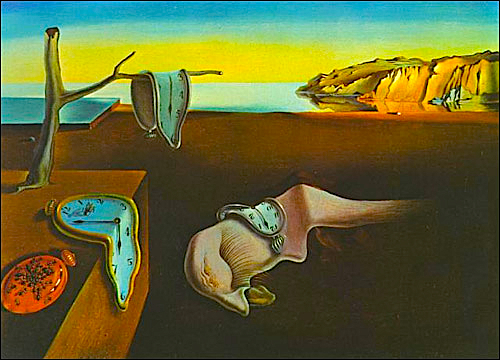
dali-clocks

Clocks are not the only thing melting out here in Seattle, friends and neighbors: so are local writers. And butchers, bakers, and cabinet makers. The city’s simply not built for this type of heat.

But enough about the weather: back to the topic at hand, the care and feeding of the elevator speech, a.k.a. the 3-line pitch.

What a lot we’ve learned in the past couple of weeks, eh? We’ve talked about how to identify your book’s category (July 17 and 20), identify your target market (July 21-23), figure out what about your book is fresh (July 23), come up with a few strong selling points (July 23 and 27), develop a snappy keynote statement (July 27), and pull all of these elements together into the magic first 100 words (July 28). All of that, my friends, will enable you to move gracefully and professionally into conversation with anyone even vaguely affiliated with the publishing industry.

Now you’re ready to start practicing what to say after that. From here on out we’re going to be talking about what you should say after the agent of your dreams responds to your magic first hundred words with, “Why, yes, Stalwart Writer, I would like to hear more about this marvelous book of which you speak. Enlighten me further, and awe me.”

Okay, so maybe the average Manhattanite agent doesn’t speak like an extra in a production A MIDSUMMER NIGHT’S DREAM. (Not that anyone in my neck of the woods is dreaming much on these sticky midsummer nights. We had an impromptu block party at 3 am, just because no one could sleep.) The fact remains, if you’ve been following this series and doing your homework, you already have something prepared for that precious moment when someone in the industry turns to you and asks that question so dreaded by aspiring writers, “So, what do you write?”

Now, we’re preparing for that even more fruitful moment when an agent sighs, glances longingly at the pasta bar just a few feet ahead of her, and says, “Yeah, sure, intrepid writer who has just accosted me, you may have 30 seconds of my time.”

Perhaps it’s self-evident, but moments like this were just made for the elevator speech.

For those of you joining us late in the series, an elevator speech is a 3 – 4 sentence description of the protagonist and central conflict of your book, couched in the present tense. As we discussed last time, it is not a plot summary, but an introduction to the main character(s) by name and an invitation to the listener to ask for more details.

If the idea of constructing an elevator speech makes you shake in your proverbial boots, I have some good news for you: you probably already have a fair amount of experience doing it.

How so, you cry, and wherefore? Well, such a description is typically the second paragraph of a classically-constructed query letter. That, too, may well be self-evident — a pitch is, after all, more or less a verbal query letter. (If anything I’ve said in this paragraph is a major surprise to you, I would strongly advise checking out the mysteriously-titled HOW TO WRITE A QUERY LETTER category on the list at right.)

Not entirely surprisingly, then, query letters and elevator speeches often share focus problems. All too often, for instance, the constructors of both will go off on tangents, detailing how difficult it is to find an agent or boasting about how this is the best book ever written. Or how it’s a natural for Oprah.

And like the descriptive paragraph of a query letter, elevator speeches all too often get bogged down in plot details. But summarization is not what’s required, in either instance — and if more aspiring writers realized that, people on both ends of the querying and pitching processes would be significantly happier.

Do I hear some of you out there moaning, or are you merely thinking dissent very loudly indeed? “But Anne,” disgruntled pitch- and query-constructors the world over protest, “I spent MONTHS over my query letter, and I never managed to trim the descriptive part to under two-thirds of a page! How do you expect me to be able to make my book sound fascinating in half that many words, and out loud?”

In a word: strategy. To be followed shortly by a second word, as well as a third and a fourth: practice, practice, and practice.

You can feel a step-by-step list coming on, can’t you? Here goes.

(1) Don’t panic or berate yourself about not coming up with a great pitch the first time you sit down to do it.
Oh, you may laugh, but these are the two most common responses amongst most would-be pitchers confronted with the task of writing a 3-line pitch. That’s not a particularly rational response: contrary to popular belief amongst aspiring writers, the mere fact of having written a good book does not magically endow one with the skills necessary to construct a 3-line pitch.

Like querying, pitching is a learned skill; nobody is born knowing how to do it. So calm down and learn the skills before you start to judge yourself.

Feeling better? Good. Let’s move on to step 2.

(2) Sit down and write a straightforward description of the central conflict or argument of your book.
I’m not talking about summarizing the plot here, mind you, but the answer to a very simple, albeit multi-part, question:

a) Who is your protagonist?

b) What does s/he want more than anything else?

c) What’s standing in the way of getting it?

Easier to think of summing things up when you limit the parameters that way, isn’t it? It also works for memoir:

a) Who is the narrator of this book?

b) What does s/he want more than anything else?

c) What’s standing in the way of getting it?

Got that firmly in hand? Excellent. Now let’s mop our perspiring brows and proceed to the next step.

(3) Replace generalities with specifics.
Be specific about who your protagonist(s) is (are) and what’s happening to him/her/it/them. Nothing makes a pitch hearer’s eyes glaze over faster than a spate of generalities that might apply to the nearest 100,000 people.

Besides, a generalized description usually isn’t even accurate, at least on a philosophical level. In a novel or memoir, events do not happen to people in general: they happen to a specific person or group of people with individual quirks. Give a taste of that.

I know it’s hard in such a short speech, but believe me, a single memorable character trait or situational twist is worth paragraphs and paragraphs of generalities.

Have you obliterated summary and gotten concrete? Great. Now let’s work on making your elevator speech sound original.

(4) Emphasize what is fresh about your story, not its similarities to other books.
If I had a penny for every time I’ve heard a pitcher say, “It’s just like BESTSELLER X, but with Twist Y,” I would build a rock-candy mountain just south of Winnipeg and invite all the children in Canada to feast for a month and a half. It’s just not very efficient use of brief elevator speech time; the keynote is a better place to draw such parallels, if you feel you must.

Why isn’t it efficient? Because the elevator speech is NOT about indicating genre or book category — which, to someone in the industry, is precisely what citing an earlier successful book in your chosen book category achieves — but once you’ve told an agent or editor what your book category is, getting specific about a similar book is actually a trifle redundant.

It also makes your book seem less original, at least at the elevator speech stage — here is where you need to wow your hearers with the uniqueness of your premise, your protagonist, and your approach. Making your book sound like a rehash of a well-worn concept is not usually the best way to accomplish that.

All freshened up? Fabulous. Let’s sharpen our critical eyes still further.

(5) Try not to bottom-line the plot — and definitely avoid clichés.
That advice about cliché-hunting doesn’t just apply to hackneyed concepts: well-worn phrases are notorious pitch-killers, too. Bear in mind that someone who hears pitches for a living may have a stronger sense of what’s a cliché than does the population at large. While a romance-reader may not exclaim, “Oh, no, not another heroine with long, flowing red hair!”, an agent or editor who routinely handles romance might.

So fine-tune your phraseology. Steer clear of sweeping statements on the order of, “…and in the process, he learned to be a better axe murderer — and a better human being.” Or “Their struggles brought them closer together as a couple AND won her the election.”

Or, heaven preserve us, “Can they learn to live happily ever after?”

Remember, you’re trying to convince the hearer that you can write; echoing the latest catchphrase — or one that’s been floating around the zeitgeist for forty years — is generally not the best way to achieve that. Writers often incorporate the sort of terminology used to promote TV shows and movies — but in an elevator speech (or a query letter — or a pitch, for that matter), the last reaction a writer wants to evoke is, “Gee, this sounds like the movie-of-the-week I saw last night.”

Translation: this technique doesn’t show off your creativity as a plot-deviser, any more than the use of clichés would display your talent for unique phraseology. You want to make your story sound original and fresh, right?

Is your draft now free of time-worn concepts and wording? Marvelous. Now comes the hard part.

(6) Enliven your account with concrete, juicy details that only you could invent. Include at least one strong, MEMORABLE image.

Create a mental picture that your hearer will recall after you walk away, business card and request for the first fifty pages clutched firmly to your heaving bosom. Ideally, this image should be something that the hearer (or our old pal Millicent, the agency screener) has never heard before.

And it needn’t be a visual detail, either: the other senses tend to be seriously under-utilized in elevator speeches. Just makes sure it sticks in the mind.

Yes, in 3-4 sentences. You’re a writer: making prose interesting is what you DO, right?

Have you come up with an original image, vividly described? Tremendous. Now let’s make your plot sound fascinating.

(7) Present your protagonist as the primary actor in the plot, not as the object of the action.
Don’t underestimate the importance of establishing your protagonist as active: believe me, every agent and editor in the biz has heard thousands of pitches about protagonists who are buffeted about by fate, who are pushed almost unconsciously from event to event not by some interior drive or conflict, but because the plot demands it.

Long-time readers of this blog, chant with me now: “Because the plot requires it” is NEVER a sufficient answer to “Why did that character do that?”

Stop laughing — you wouldn’t believe how many pitches portray characters who only have things happen TO them, rather than characters who DO things to deal with challenging situations. If I had a penny for each of THOSE I’ve heard, I’d build THREE of those rock-candy mountains, one in each of the NAFTA nations, for the delight of local children.

The books being pitched may not actually have passive protagonists — but honestly, it’s very easy to get so involved in setting up the premise of the book in an elevator speech that the protagonist can come across as passive, merely caught in the jaws of the plot.

There are a few code words that will let an industry-savvy listener know that your protagonist is fully engaged and passionately pursing the goals assigned to her in the book. They are, in no particular order: love, passion, desire, dream, fate (kismet will do, in a pinch), struggle, loss, and happiness. Any form of these words will do; a gerund or two is fine.

I’m serious about this. This is recognized code; take advantage of it.

Does your protagonist come across as passionately engaged in the struggle to pursue her dream, embrace her fate, and assure her happiness. Pat yourself on the back. Time to talk about voice.

(8) Make sure that the tone of your elevator speech matches the tone of your book.
You’d be astonished — at least I hope you would — at how often this basic, common-sense principle is overlooked by your garden-variety pitcher. Most elevator speeches and pitches come across as deadly serious.

While that tone is usually more a reflection of the tension of the pitching situation than the voice of the book, the practice tends to undersells the book.

Particularly if the tone happens to be one of the manuscript’s primary selling points. If the book is a steamy romance, let the telling details you include be delightfully sensual; if it is a comic fantasy, show your elves doing something funny. Just make sure that what you give is an accurate taste of what a reader can expect the book as a whole to provide.

(9) Try saying the result out loud to someone who hasn’t read your book, to see how she/he/the lamp responds.
The lamp is a suggestion for those of you too shy to buttonhole a co-worker or that guy sitting next to you at Starbucks, but my point is, you can’t know how a pitch is going to sound out loud until you say it out loud.

I’m not merely talking about coherence here — I’m also thinking of practicalities like breath control. Is it possible to speak your three-line speech in three breaths, for instance? If not, you’re not going to be able to get through your elevator speech within 30 seconds without fainting.

Don’t laugh; I’ve seen it happen. Writers just keel over sideways because they forget to breathe.

Remember not to lock your knees. Oh, and write a 3-line pitch that’s possible to say without turning blue.

Be on the look-out, too, for words that are hard to say — or are hard to say together. Tongue-twisters and rhymes may seem cute on the page, but trust me, you’re not going to want to say, “Tina Tweezedale tried tremendously to tie Trevor up with twine.”

Also, if you’re not ABSOLUTELY POSITIVE how to pronounce a word, look it up. Ditto if you aren’t sure that you’re using it correctly. Writers often read words that they’ve never heard spoken aloud; do you really want the agent to whom you’re pitching to correct your pronunciation of solipsistic, or to tell you that you didn’t actually mean that your protagonist implied something, but that he inferred it?

Check. Double-check. And if you’re still not certain, track down the best-read person you know and ask her to hear your pitch. And to define solipsistic, while she’s at it.

I sense some furrowed brows out there. “Okay, Anne,” I hear some perplexed souls say, “I get why I might want to make sure that I can say my entire elevator speech out loud correctly. But if I’m sure that I can, why do I need to say it to — ugh — another living, breathing human being?”

For a couple of very good reasons, oh shy brow-knitters. First, you’re going to have to say it out loud sometime; it’s literally impossible to give a verbal pitch silently. All saving your elevator speech for the great moment when you are face-to-face with the agent of your dreams actually achieves is depriving you of the opportunity to practice.

Or, to put it less obliquely: if your elevator speech doesn’t make sense aloud, would you rather find that out in the midst of giving the pitch, or before, when you can fix it?

I thought as much. Second, if you’ve never pitched before, saying your 3-line pitch is going to sound ridiculous to you the first few times you do it. Again, would you rather feel silly while you’re pitching, or before?

Third — and this is the most important — if you practice on a reasonably intelligent hearer, you can ask a vitally important follow-up question: “Would you mind telling the story back to me?”

If s/he can’t, you might want to take another gander at your elevator speech: chances are, it’s not particularly memorable.

I’m itching to give a few concrete examples, so you may see these rules in action, but it’s time to sign off for the day. Try to avoid heat prostration, Seattleites, and everybody, keep up the good work!

Pitching 101, part IX: getting all conceptual, or, Anne Frank meets Godzilla at the Eiffel Tower and love blooms!

+ +

Did you enjoy your weekend, readers, or were you too busy racking your brains, trying to come up with a list of your book’s selling points? Here in Seattle, where a writers’ organization to which I used to donate a tremendous amount of time is gearing up for its annual Conference That Shall Remain Nameless, aspiring writers are walking into walls, muttering to themselves, the sure sign that they’ve embraced the antiquated pitching method so favored by conference organizers, and so hated by everyone else: trying to cram the entire plot of a book into three sentences, memorizing them (thus the muttering and wall-battery), and spitting them out in one long breath at the pitch meeting.

As some of the brighter wits among you MAY have figured out by this point in the series, I eschew this approach. In my experience, it’s far, far better pitching strategy for a writer to learn to talk about her book effectively and in professional terms than to swallow a pre-fab speech whole, hoping to God that the agent or editor at whom she plans to spit it won’t do anything disorienting like ask follow-up questions.

News flash to those who adhere to the three-line approach: asking follow-up question is what agents and editors do when they hear a pitch they like. It’s the happy outcome — so why not prepare for it?

With that laudable goal in mind, I sent you off last Thursday with some homework. So I ask again: how is coming up with a list of why your book will appeal to your target audience going?

If you find you’re getting stuck, here’s a great way to jump-start your brainstorming process: hie ye hence to the nearest well-stocked bookstore (preferably an air-conditioned one, if you happen to reside in the northern hemisphere right now), stand in front of the shelves holding your chosen book category, and start taking a gander at how those books are marketed to readers.

Don’t try this at your local library — the idea is to discover at whom new releases in your field are being aimed, and how. The front and back covers are a fabulous place to start, since every syllable that appears on either will have been specifically crafted by the publisher’s marketing department to reach the book’s target demographic.

That last term, for those of you tuning in late, refers to the people who have already demonstrated interest in buying similar books. How, you ask? Generally, by that most straightforward means of fan self-identification: by actually plunking down the cash for a book in that category.

I don’t mean to alarm any of you with my psychic powers, but here’s a modest prediction: once you’ve made a small pile of books aimed at a specific group of readers, you may well notice that they all have something in common. In all probability, several somethings: back jacket blurbs aimed at a particular readership often repeat key words.

That’s not only true of book marketing, by the way. In the late 1980s, I got a job writing back labels for wine bottles. (Oh, you thought those colorless little quips just wrote themselves?) Since I was new to the game, I wrote lengthy, adjective-heavy descriptions for each and every wine, in the apparently mistaken impression that my job was to describe to the potential buyer what the wine within might taste like.

After a week or two, the marketing manager called me into his office. “You’re making this harder on yourself than it needs to be — and you’re going to make it harder for the buyer.”

I was flabbergasted. Hadn’t I been tying myself in knots, to assure an accurate description?

He waved away my objection. “Sweetie, the people who would understand your descriptions don’t buy wine based on the label copy; they buy it based upon knowledge of the winery, the year, the soil conditions, and every other piece of information you’re cramming onto the back label. But the back label is for people who don’t know much about wine, who want to know what the varietal is like. Every varietal has five or six adjectives already associated with it: oaky, for instance, or vanilla undertones. If you’re writing a description of a Chardonnay, haul out the Chardonnay adjectives and make sure you use most of them somewhere on the back label. Got it?”

As a writer, I was crushed, but I must admit, it was great marketing advice: I had mistaken the target market for my wine descriptions. To those readers, an overly-technical description was off-putting.

The same logic holds true for the language of a pitch or a query letter: since agents and editors think of manuscripts in terms of target demographics, book categories, and what has already proven successful in selling to a particular market, not speaking of your work in those terms isn’t the most effective way to present your book. An overly -detailed description, not matter how accurately it represents the book, is not what they’re hoping to hear.

So let’s turn our attention to pith, shall we? Shout hallelujah, citizens, for we are finally ready to tackle reducing your book to a single quip of bon mot-iness that would make Oscar Wilde blush furiously, if discreetly, with envy. Today, I am going to talk about coming up with your book’s KEYNOTE, also known colloquially as a BOOK CONCEPT.

(Did you know that when Wilde gave public readings, he NEVER read the published versions of his own work? Ditto with Mark Twain, another writer known to wow ‘em with great readings, and I’m quite sure I’ve never heard David Sedaris read the same story the same way twice. Sedaris seems — wisely — to use audience feedback to judge what jokes do and do not work, but Wilde and Twain apparently deliberately added extra laugh lines, so that even audience members very familiar with their published writing would be surprised and delighted. But I digress)

Brevity is the soul of the keynote. It is the initial, wow-me-now concept statement that introduces your book to someone with the attention span of an unusually preoccupied three-year-old.

Why assume you’ve got that little time? Because if you can impress someone that distrait, my friends, you can certainly catch the ear of a perpetually rushed agent — or the eye of Millicent the exhausted agency screener.

Before you pooh-pooh the idea of WANTING to discuss your marvelously complex book with someone whose attention span precludes sitting through even an average-length TV commercial, let me remind you: sometimes, you have only a minute or so to make a pitch. After a very popular class, for instance, or when your dream agent happens to be trying to attract the bartender’s attention at the same time as you are.

I ask you: since any reasonably polite hello will take up at least half a minute, wouldn’t you like to be READY to take advantage of the remaining 30 seconds, if the opportunity presents itself?

I know, I know: it’s not very glamorous to approach the agent of your dreams in the parking lot below the conference center, but the market-savvy writer takes advantage of chance meetings to pitch, where politeness doesn’t preclude it. (Just so you know: it’s considered extremely gauche to pitch in the bathroom line, but at most conferences, pretty much any other line is fair game.) You’re not going to want to shout your keynote at her the instant you spot an agent, of course, but a keynote is a great third sentence after, “I enjoyed your talk earlier. Do you have a moment for me to run my book concept by you?”

Here’s a thought that might make you feel a whole lot better about doing this: if you have a keynote prepared, you honestly ARE going to take up only a few seconds of her time. (Hey, you didn’t think I was just going to urge you to buttonhole agents in conference hallways without showing you how to do it politely, did you?)

But there I go, digressing again. Back to the business at hand.

The keynote’s goal is to pique your listener’s interest as quickly as possible, so s/he will ask to hear more. Like the pitch as a whole, the keynote’s purpose is not to sell the book unread, but to intrigue the hearer into wanting to read your manuscript — and to act upon that feeling by asking the writer to submit the manuscript.

Often by way of asking those pesky follow-up questions I mentioned earlier.

How do you arouse this level of interest without drowning the hearer in details? By providing a MEMORABLY INTRIGUING PREMISE in a swift single sentence.

Think of it as the amuse-bouche of the publishing world: just a bite, designed to intrigue the hearer into begging to hear the pitch. In your keynote, your job is to fascinate, not to explain — and certainly not to summarize.

Allow me to repeat that, because it’s crucial: the goal of the keynote is NOT to summarize the plot of the book; merely to make its PREMISE sound exciting enough to make a hearer want to know more. Just in case anyone is still confused, I am not suggesting that you routinely utilize only a single sentence to promote your book in person or in print — the keynote is designed to help open doors, not to serve as a substitute for the pitch.

Some of you are becoming a trifle impatient with my vehemence, aren’t you? “Jeez, Anne,” these finger-drummers observe, “don’t you think I’ve been paying attention? Why on earth would I limit myself to a single sentence when I have a ten-minute pitch appointment scheduled?”

Well, it could be because at literally every conference I attend, I see aspiring writers knocking themselves out, trying to come up with a single sentence that summarizes everything good about a book, but that’s really not the point here. The point is that the keynote is NOT a substitute for a full-blown pitch; it is a conversational appetizer to whet the appetite of the hearer so he ASKS to hear the entire pitch.

In that moment, you’re there to tease, not to satisfy. And did I mention that it should be both memorable and brief?

There are two schools of thought on how best to construct a keynote statement. The better-known is the Hollywood Hook, a single sentence utilizing pop culture symbolism to introduce the basic premise of the book. (Note: the Hollywood Hook should not be confused with a hook, the opening paragraph or line of a book or short story that grabs the reader and sucks him into the premise. Unfortunately, conference-going writers get these two terms confused all the time, leading to sometimes-tragic communication lapses.)

Hollywood hooks tend to run a little like this:

“It’s SPIDERMAN meets DRIVING MISS DAISY!”

It’s JAWS, but on dry land and with turtledoves!

“Paris Hilton is suddenly penniless and forced to work in a particle physics lab on the day Martians invade!”

It’s no accident that the example above ends in an exclamation point: you WANT your HH to be just a bit jarring; a spark of the unexpected will make your book concept sound fresh. Logical contradiction provides the shock of a Hollywood Hook, the combination of two icons that one would not generally expect to be found together.

For instance, a Hollywood Hook for:

…a book that teaches children the essentials of the Electoral College system might be, “Bill Clinton teaches Kermit the Frog how to vote!”

…a book on alternative medicine for seniors might be expressed as, “Deepak Chopra takes on the Golden Girls as patients!”

…a novel about sexual harassment in a tap-dancing school could conceivably be pitched as “Anita Hill meets Fred Astaire!”

See all those exclamation points? There’s a certain breathlessness about the Hollywood Hook, a blithe disregard for propriety of example. There’s a reason for this: in order to be effective as an enticement to hear more, the icons cited should not go together automatically in the mind.

Otherwise, where’s the surprise?

The whole point of the exercise is to intrigue the listener, to make him ask to hear more. If someone pitched a book to you as “A private investigator chases a murderer!” wouldn’t you yawn? If, on the other hand, if someone told you her book was “Mickey Mouse goes on a killing spree!” wouldn’t you ask at least one follow-up question?

Again, the point here is not to produce a super-accurate description, but a memorable sound bite.

All that being said, I should mention that I’m not a big fan of the Hollywood Hook method of keynoting. Yes, it can be attention-grabbing, but personally, I would rather use those few seconds talking about MY book, not pop culture.

And that’s not just about ego, honest. Not every storyline is compressible into iconic shorthand, whatever those screenwriting teachers who go around telling everyone who will listen that the only good plotline is a heroic journey.

Use the Force, Luke!

The other school of thought on constructing a keynote statement — and my preferred method — is the rhetorical teaser. The rhetorical teaser presents a thought-provoking question (ideally, posed in the second person, to engage the listener in the premise) that the book will presumably answer.

For example, a friend of mine was prepping to pitch a narrative cookbook aimed at celiacs, people who cannot digest gluten. Now, there are a whole lot of celiacs out there, but (as we should all know after our recent discussion on the helpfulness of statistics) she could not legitimately assume that any agent or editor to whom she pitched the book would either be unable to eat wheat or know someone who couldn’t. (Remember that great rule of thumb from last week: you can’t assume that an agent or editor has ANY knowledge about your topic.)

So she employed a rhetorical tease to grab interest: “What would you do if you suddenly found out you could NEVER eat pizza again?”

Thought-provoking, isn’t it? It may not have been a strictly honest way to present a book proposal that, if memory serves, included a recipe for gluten-free pizza dough, but it does present the problem the book solves vividly to the hearer.

Rhetorical teasers are more versatile than Hollywood Hooks, as they can convey a broader array of moods. They can range from the ultra-serious (“What if you were two weeks away from finishing your master’s degree — and your university said it would throw you out if you wouldn’t testify against your innocent best friend?”) to the super-frivolous (“Have you ever looked into your closet before a big date and wanted to shred everything in there because nothing matched your great new shoes?”).

Remember, you don’t want to give an overview of the plot here — you want to intrigue.

Again, the keynote is NOT a summary of your book; it’s a teaser intended to attract an agent or editor into ASKING to hear your pitch. So you will want to make it — say it with me now — both BRIEF and MEMORABLE.

By now, the mere sight of those two words within the same line is making you squirm a bit, isn’t it? “I understand WHY that might be a good idea,” I hear some of you grumble, “but I’m a writer of BOOKS, not one-liners. How does a novelist accustomed to page-long descriptions pull off being simultaneously brief and memorable?

That’s a great question, disgruntled murmurers, and it deserves a direct answer: don’t be afraid to use strong imagery, particularly strong sensual imagery that will stick in the hearer’s mind for hours to come.

If you’re ever going to use adjectives, this is the time. “What would you do if you suddenly found yourself knee-deep in moss everywhere you went?” is not as strong a keynote as “The earth will be covered thirty feet deep in musty grey lichen in three days — and no one believes the only scientist who can stop it.”

Notice how effective it was to bring in the element of conflict? Your keynote should make your book sound dramatically exciting — even if it isn’t. You shouldn’t lie, obviously, but this is the time to emphasize lack of harmony.

I’m quite serious about this. If I were pitching a book set in a convent where nuns spent their days in silent contemplation of the perfections of the universe, I would make the keynote sound conflict-ridden.

How? Well, off the top of my head: “What would you do if you’d taken a vow of silence — but the person you worked with every day had a habit that drove you mad?”

Okay, perhaps habit was a bit much. But you get my drift: in a keynote, as in a pitch, being boring is the original sin.

Thou shalt not bore on my watch.

I would advise emphasizing conflict, incidentally, even if the intent of the book were to soothe. A how-to book on relaxation techniques could accurately be keynoted as, “Wrap your troubles in lavender; this book will teach you how to sleep better,” but that’s hardly a grabber, is it? Isn’t “What would you do if you hadn’t slept in four nights?” is actually a better keynote.

Why? Experienced book-promoters, chant it with me now: because the latter encourages the hearer to want to hear more. And that, by definition, is a more successful come-on.

You WERE aware that both pitching and querying were species of seduction, right?

Or, if you prefer, species of storytelling. As Madame de Staël so memorably wrote a couple of centuries ago, “One of the miracles of talent is the ability to tear your listeners or readers out of their own egoism.”

That’s about as poetic a definition of marketing artistic work that you’re going to find. Use the keynote to alert ‘em to the possibility that you’re going to tell them a story they’ve never heard before.

Another effective method for a keynote is to cite a problem — and immediately suggest that your book may offer a plausible solution. This works especially well for NF books on depressing subjects.

A keynote that just emphasizes the negative, as in, “Human activity is poisoning the oceans,” is, unfortunately, more likely to elicit a shudder from an agent or editor than, “Jacques Cousteau said the oceans will die in our lifetimes — and here’s what you can do about it.”

Fact of living in these post-Enlightenment days, I’m afraid: we like all of our problems to have solutions. Preferably ones that don’t require more than thirty seconds to explain.

I can tell you from recent personal experience that the problem/solution keynote can be very effective with dark subject matter: there were two — count ‘em, TWO — dead babies in the sample chapter of the book proposal I sold a couple of years ago, and scores of preventably dying adults. It was a fascinating story, but let me tell you, I really had to sell that to my agents, even though they already had a high opinion of my writing.

If I’d just told them, “There are scores of people dying because of a plant that produces something that’s in every American household,” we all would have collapsed into a festival of sobs, but by casting it as, “There are scores of people dying because of a plant that produces something that’s in every American household — and this is the story of a woman who has been fighting to change that,” the book sounds like a beacon of hope.

Or it would have been, if I hadn’t caught mono and pneumonia simultaneously, forcing me to cancel the book contract. These things happen.

My point is, if I had stubbornly insisted upon trying to pique everyone’s interest with only the sad part of the story, I doubt the proposal would have gotten out of the starting gate. My agents, you see, harbor an absurd prejudice for my writing books that they believe they can sell.

They were right to be concerned, you know. Heads up for those of you who deal with weighty realities in your work: even if a book is politically or socially important, heavy subject matter tends to be harder to sell, regardless of whether you are pitching it verbally or querying it.

Particularly if the downer subject matter hasn’t gotten much press attention. This is true whether the book is fiction or nonfiction, interestingly enough.

Why? Well, think about it: an agent or editor who picks up a book is committing to live with it on a fairly intensive basis for at least a year, often more. Even with the best intentions and working with the best writing, that can get pretty depressing.

So it’s a very good idea to accentuate the positive, even in the first few words you say to the pros about your book. And avoid clichés like the proverbial plague, unless you put a clever and ABSOLUTELY original spin on them.

Actually, steering clear of the hackneyed is a good rule of thumb for every stage of book marketing: you’re trying to convince an agent or editor that your book is UNIQUE, after all. Reproducing clichés without adding to them artistically just shows that you’re a good listener, not a good creator.

If you can provoke a laugh or a gasp with your keynote, all the better.

Remember, though, even if you pull off the best one-liner since Socrates was wowing ‘em at the Athenian agora, if your quip doesn’t make your BOOK memorable, rather than you being remembered as a funny or thought-provoking person, the keynote has not succeeded.

Let me repeat that, because it’s a subtle distinction: the goal of the keynote is not to make you sound like a great person, or even a great writer — it’s to make them interested in your BOOK.

I’m continually meeting would-be pitchers who don’t seem to realize that. Instead, they act as though an agent or editor who did not ask to see pages following a pitch must have based his decision on either (a) whether he liked the pitcher personally or (b) some magically intuition that the manuscript in question is poorly written. Logically, neither could be true.

Okay, so that’s a bit of an exaggeration: if a pitcher is extremely rude to the pitchee, the latter usually won’t ask to see pages. But logically, no assessment of a VERBAL pitch could possibly be construed as a MANUSCRIPT critique.

In other words, they can’t possibly learn that you’re a fabulous writer until they read some of your prose, and while I’m morally certain that to know, know, know my readers is to love, love, love them, that too is something the industry is going to have to learn over time.

And remember, good delivery is not the same thing as book memorability. I once went to a poetry reading at conference that STILL haunts my nightmares. A fairly well-known poet, who may or may not come from a former Soviet bloc country closely associated in the public mind with vampire activity, stalked in and read, to everyone’s surprise, a prose piece. I don’t remember what it was about, except that part of the premise was that he and his girlfriend exchanged genitals for the weekend.

And then, as I recall, didn’t do anything interesting with them. (Speaking of the downsides of not adding artistically to a well-worn concept.)

Now, this guy is a wonderful public reader, a long-time NPR favorite and inveterate showman. To make his (rather tame) sexual tale appear more salacious, every time he used an Anglo-Saxon word relating to a body part or physical act, he would lift his eyes from the page and stare hard at the nearest woman under 40. I’ll spare you the list of words aimed at me, lest my webmaster wash my keyboard out with soap; suffice it to say, some of them would have made a pirate blush.

By the end of his piece, everyone was distinctly uncomfortable — and to this day, almost a decade later, everyone there remembers his performance. But when I get together with writer friends who were there to laugh about it now, can any of us recall the basic storyline of his piece? No.

Not even those of us who happened to be under 40 at the time.

What went wrong, you ask? He made his PERFORMANCE memorable by good delivery, rather than his writing. Sure, I remember who he is — I’m hardly likely to forget a man who read an ode to his own genitalia, am I? (I suspect all of us would have been substantially more impressed if someone ELSE had written an ode to his genitalia, but that’s neither here nor there.)

Did his flashy showmanship make me rush out and buy his books of poetry? No. Did it make me avoid him at future conferences like the aforementioned proverbial plague? You bet.

Exaggerated showmanship is a problem shared by a LOT of pitches, and even more Hollywood Hooks: they tend to be merely about delivery, rather than promoting the book in question. Please don’t make this mistake; unlike other sales situations, it’s pretty difficult to sell a book concept on charm alone.

Even if you’re the next Oscar Wilde, Mark Twain, or strange Eastern European sex fiend/poet.

Drama, conflict, vivid imagery, shock, cause for hope — these are the elements that will render your keynote memorable. And that’s extremely important, when you will be talking to someone who will have had 150 pitches thrown at him already that day.

Next time, I shall show you how to transform what you’ve already learned into a great opening gambit for striking up a conversation with anyone — and I do mean ANYONE — you might meet at a writers’ conference.

Think of it as my midsummer present to the shy. Keep up the good work!

Onion loaf, OCD, and other indispensable accoutrements of the comedy writer: an interview with AND HERE’S THE KICKER author Mike Sacks

sacks-cover
Hello, campers —

Since we’ve all been working so hard throughout this series on pitching, I have a treat for you today — or at any rate, I had planned a treat: an interview between Mike Sacks, author of the recently-released AND HERE’S THE KICKER: CONVERSATIONS WITH 21 TOP HUMOR WRITERS ON THEIR CRAFT and legendary comedy writer Merrill Markoe.

I was excited about this, because the book is a good one, full of the kind of serious analysis the craft of comedy writing seldom receives, performed by writers who have spent years honing their craft.

By the time I was halfway through the book, I was even more excited, because quite a lot of the interviews speak very directly to our pet subject of the moment: AND HERE’S THE KICKER contains some amazing anecdotes about the difficulty of pitching comedy to the humorless — or to funny people who are just bad listeners.

Who among us couldn’t use some advice from the pros on that?

To render it even more useful for those of you out there who write comedy, the interviews are bookended with sections billed as Quick and Painless Advice for the Aspiring Humor Writer, on topics that should make aspiring writers’ hearts sing:

Getting Your Humor Piece Published in The New Yorker

Finding a Literary Agent for Your Humor Book Idea

Acquiring an Agent or Manager for Your Script

You’re starting to feel the excitement now, too, aren’t you?

Seriously, ever since I’ve had the book in the house, I’ve been picking it up every time I start to feel even the vaguest twinge of depression. Nothing cheers me up like learning something new about my art form, you see — and frankly, I’ve been pretty astonished at how much solid information about craft and marketing is crammed into these relatively brief interviews.

We often hear super-serious authors discussing the inspiration and difficulties underlying their craft, but comedy writing is usually treated like magic: all the audience really knows is whether the bit works. How it is done remains a mystery. Here, however, the pros actually do talk about the tricks o’ the trade, sometimes in quite extensive detail.

How much detail, you ask? Well, let me put it this way: it’s always a good sign, I think, when I pick up a book aimed at aspiring writers and exclaim ten pages in, “Wow, why hasn’t someone written this before?”

I have to admit, though, that as a reader, much of what I’ve enjoyed about AND HERE’S THE KICKER has had little to do with insights into craft or illuminating marketing tips. I’ve been getting a big kick out of some of the behind-the-scenes peeks into pitch sessions and writers’ meetings.

Who’d have thought, for instance, that the catchphrase-based humor that took over skits at Saturday Night Live would annoy some former SNL writers as much as it does yours truly? (Catchphrases are antithetical to genuine humor, in my opinion: the laugh comes merely because the line is expected.) Or that an actor/director/writer whose work I’ve always felt was hugely overrated would strike me as similarly full of himself in the context of a serious interview about the far, far more talented artists with whom he’s had the good fortune to work?

Hey, I’m only human; I enjoy having my prejudices confirmed as much as the next person.

In short, I was pretty psyched at the prospect of bringing Mike here to Author! Author! to talk about his book. So, as I always do when I’m considering introducing an author of a new book to you fine people, I tracked down the publisher’s blurb:

Every great joke has a punch line, and every great humor writer has an arsenal of experiences, anecdotes, and obsessions that were the inspiration for that humor. In fact, those who make a career out of entertaining strangers with words are a notoriously intelligent and quirky lot. And boy, do they have some stories.

In this entertaining and inspirational book, you’ll hear from 21 top humor writers as they discuss the comedy-writing process, their influences, their likes and dislikes, and their experiences in the industry. You’ll also learn some less useful but equally amusing things, such as:

* How screenwriter Buck Henry came up with the famous “plastics” line for The Graduate.
* How many times the cops were called on co-writers Sacha Baron Cohen and Dan Mazer during the shooting of Borat.
* What David Sedaris thinks of his critics.
* What creator Paul Feig thinks would have happened to the Freaks & Geeks crew if the show had had another season.
* What Jack Handey considers his favorite “Deep Thoughts.”
* How Todd Hanson and the staff of The Onion managed to face the aftermath of 9/11 with the perfect dose of humor.
* How Stephen Merchant and Ricky Gervais created the original version of The Office.
* What it’s really like in the writers’ room at SNL.

Funny and informative, And Here’s the Kicker is a must-have resource – whether you’re an aspiring humor writer, a fan of the genre, or someone who just likes to laugh.

And that, my friends, is how a not-very-stirring pitch can undersell a marvelous book. Oh, it drops the relevant names well enough, but does that very mainstream list tell you that this book is filled with insights that will startle you? Or educate you as a comedy writer?

Did it, in short, stir in you excitement to rush out and read this book?

For me, it didn’t, and that’s a real shame — the interviews with Bob Odenkirk and Dick Cavett alone offer more genuine insight into figuring out what is and isn’t going to be funny to an audience than anything else I’ve seen on the subject in years.

Call me zany, but when a reader already in love with a book takes a gander at the blurb and thinks, “Wow, that certainly undersells what’s between the covers,” I suspect that it might not be doing its job as well as it should.

Ditto with a pitch, whether it is given verbally or in a query letter: if it doesn’t make the hearer or reader long to read the manuscript in question, it’s not an effective pitch, by definition. As we’ve just seen, simply listing a book’s attributes — a strategy embraced by many a pitcher — isn’t always the best means of grabbing potential readers.

So eschew the blurb above, which also, I notice from the book at my elbow, happens to be the back jacket copy. I suspect that the interview below will give you greater insight into why AND HERE’S THE KICKER might be the book for you. As would flipping through it in a bookstore — which, contrary to the dire moans we keep hearing from the general direction of the publishing industry, inveterate readers still do on a regular basis.

For those of you who prefer the new-fangled, less-browsable route, AND HERE’S THE KICKER is also available on Amazon, naturally. And for those of you who like to support independent bookstores but don’t happen to live near any, you can always pick it up at Powell’s.

As for me, I’ve depressed myself into a stupor, thinking about all of the great books out there that are languishing, under-pitched. I’m just going to have to read another interview to cheer myself up.

Enjoy!

sacks-pizza-coney-island-1

My name is Mike Sacks. I have a new book out this month from Writers Digest Press called “And Here’s the Kicker.” The book contains full-length interviews that I conducted over the past two years with 21 famous humor writers.

One of those writers is the great Merrill Markoe, who was a huge influence not only on me, but on my entire generation. Merrill was the first head-writer for Late Night with David Letterman, and she’s also published a ton of great articles and seven fantastic humor books that every comedy fan should own.

I asked Merrill if she’d be willing to talk with me about my book, exclusively for Author! Author!, and she said yes. Last month, in a private room in the Santa Monica Outback Steakhouse, over a giant onion loaf and two orders of sweet-glazed roast pork tenderloins, we sat down to talk about various subjects, including what it really takes to become a humor writer, beyond merely depression and OCD…

Hope you enjoy…

MERRILL: Mike, did you know I was a vegetarian when I agreed to do this interview with you?

SACKS: Onion loaf is a vegetable, is it not?

MERRILL: Moving on…What did you do at the Washington Post?

SACKS: I worked in the Washington Postsyndicate office. We edited and then sent out the work of various blow-hard columnists, such as George Will and Charles Krauthammer, EJ Dionne, etc. I’m from the DC area originally, but I don’t miss the bowties, lawyers in suspenders, and self-important vice-presidents of do-nothing associations.

Can you tell I didn’t fit in?

MERRILL: What do you on the editorial staff at Vanity Fair?

SACKS: Mostly what I do is editorial, although I also write for the magazine. Also, and I’m not thrilled about this, I’m in charge of Dominick Dunne’s ever-changing hairdo.

MERRILL: You’ve freelanced for various magazines, such as The New Yorker, GQ, Esquire, Time, Radar and Vice. Were those freelance pieces that you submitted or did you contact them and pitch?

SACKS: Most of those pieces were the result of me coming up with an idea and sending it to someone on staff, usually someone I knew.

It’s up to you to make a pitch, and (this is important) you should never send your pitch to the editor-in-chief. They just don’t care. Send it to either someone you know or someone further down the editorial ladder, who might have time to read a query and help you through the process.

I’d say that most of the younger editorial staffers prefer email. So, make your pitch very short, no longer than four paragraphs. You can always add details later.

MERRILL: What did you want to be when you grew up?

SACKS: I wanted to be a pilot and then a brain surgeon, but I got dizzy easily and I nearly flunked high school biology. No joke.

Failing that, I really wanted to work in a record store in suburban Maryland, as a clerk making $5.65 an hour . . . and I did so, off and on, for the next ten years! A dream come true!

MERRILL: Where did the idea for doing the KICKER book begin? Were there things you wanted to know about the comedy writing process, or were you just aware that there wasn’t a book like this and you wanted to read one?

SACKS: Both, really. I could never find a contemporary book of interviews with today’s humor writers. The only books I found dealt with shows from the 50s through 70s, such as Your Show of Shows or Saturday Night Live. Those programs are great, but how much can you read about them already?

Another problem with a lot of humor books is that they tend to be written by people who have not made a living in comedy (at least at the highest level). I wanted to ask successful humor writers what to do and (just as importantly) what NOT to do.

For instance, if you want to get a humor piece published in a magazine, don’t try to be funny in the cover letter. It just annoys the editor.

Here’s another bit of advice from the pros: when you apply to become a writer at a late-night show, never include with your submission the funny T-shirt you created, or bumper sticker you printed up, or Rupert Pupkin–style tape you made of yourself telling jokes in your bedroom. I’m sure you can concur. It just doesn’t help your chances.

The book is filled with such advice that will hopefully help younger writers navigate the system to becoming a success.

MERRILL: When you interviewed me, you seemed to have a lot of information about things I’d done. Did you just Google people and read or what?

SACKS: I try to read as much as possible about each of the interviewees. It shows the interview subjects that you’ve done your homework and that you respect them enough to have done the hard work of preparation. Second, and most importantly, the interview will turn out better for it. It will be more comprehensive and, most likely, a lot more interesting.

MERRILL: How long did the book take to write?

SACKS: Two years, every night after work, and on every weekend. My wife just loved it.

MERRILL: Who turned out to be the least like you thought they would be?

SACKS: Truthfully, I did so much research for each interview (up to 30 hours) that I could basically predict how it was going to go. Of course, there are exceptions to that. I conducted a total of 40 interviews and I would say that three or four subjects were either very, very busy or very, very rude.

MERRILL: Did any interview turn out so badly that you didn’t end up using it? Does that happen much with interviews?

SACKS: Yes, sometimes my fault, sometimes theirs. And sometimes you think an interview has gone beautifully, but when you begin to edit the interview and put it together, you realize that it’s kind of weak. You can then perform follow-up interviews, but sometimes you just realize that you’re never going to get what you want no matter how many questions you ask. It might just be a bad fit between you and the interviewee.

MERRILL: A lot of writers like attention because writing is so damn solitary. But were there some who were reluctant? Hard to interview?

SACKS: Sure, there were many who didn’t want to be interviewed, and most of them were (for some strange reason) women. I asked about 15 top female humor writers, and all said no (or never got back to me). I don’t know why this was the case, although I’m guessing two reasons: one, a lack of ego, and two, there are so few top women humor writers that they are constantly being asked to give interviews and are tired of it already.

Do you find this to be the case, Ms. Top Woman Humor Writer?

MERRILL: No. That doesn’t make any sense to me and certainly doesn’t sound like a typical gender trait. Or I’m such an egomaniac that I can’t recognize it. Maybe between work and home life, they were all just too busy . Or maybe their OCD was kicked off by mere proximity to you and they had to wash their hands.

Who was the hardest one to get to agree that he/she would do the interview?

SACKS: No one was really too hard to pin down, but I found that the older generation (Larry Gelbart, Al Jaffee, Irv Brecher) was the easiest to get a hold of. I think it took Larry Gelbart five minutes to get back to me by email (and not from an assistant, mind you). All these senior guys were incredibly classy. I’m sure Al Jaffee had other things to be doing, and yet he could not have been more gracious and more of a sweetheart.

Irv Brecher was 93 when I interviewed him, and he spoke to me for hours. It was one of the last interviews he conducted before he died at the age of 94.

MERRILL: You mentioned a high incidence of OCD among comedy writers. I have never been especially aware of this among writers, although comedians are so insane that I don’t know if there is any mental disabilities that they DONT have. OCD stands for Original Comedian Disorder. But what indications did you have that the people you were interviewing had OCD?

SACKS: Well, for the simple reason that I came right out and asked. And I only asked because I, too, suffer from it. I would say that 70% of those I interviewed said they had it.

I emailed Dr. Oliver Sacks (no relation, minus the mental illness factor) and asked if there was a connection. He said he wasn’t aware of one. Maybe there isn’t, I don’t know.

I just found it all to be, at the very least, a strange coincidence.

MERRILL: Seventy percent is NO coincidence.

Are you comfortable talking about your OCD in this interview? What are your symptoms and do they keep you from writing or force you to write?

SACKS: I don’t mind talking about it, as long as I can talk about it for exactly three minutes and forty seconds. My symptoms are excessive thoughts, hand washing and the urge to kiss the homeless on the subway.

I would say that the OCD does absolutely help with the writing, if only because I literally think about the writing all day and most of the night. And I feel I have to get it perfect, even though that’s an impossible trick. If I don’t write every day, I get nervous.

MERRILL: Oh my God. I definitely do that. I also do it about going to the gym. Maybe I should give hand-washing a shot and see if it takes.

On an unrelated topic: whither The Freedonian?

SACKS: The Freedonian was a humor website that I ran with some friends in the early 2000s. We published a lot of writers who went on to have great careers, like Neal Pollack and a few writers for The Daily Show.

But we got burned out, and, truthfully, it was too difficult to consistently find good pieces. We were thinking of putting the best pieces out in a book compilation…

MERRILL: When you were Nerve’s Crush of the Week, did you get a lot of interest? Didn’t your wife freak out?

SACKS: My wife couldn’t have cared less, truthfully. She thought it was ridiculous. I did hear from some women, but they mostly wanted to talk about splitting infinitives. Dirty, dirty women writers…

MERRILL: Of the writers you talked to, what advice or approach did you come away thinking about? Did anyone have a method you hadn’t considered before?

SACKS: Larry Gelbart talked about how one’s writing style is formed by what you can’t write. I thought this was really interesting, and I think it’s a good lesson for beginning writers.

In other words, if you want to write comics, write comics. If you want to write short humor pieces, that’s fine, too. You should be content writing whatever works for you and whatever interests you. Don’t feel guilty if you don’t want (or can’t) write short stories like Hemingway. Not everyone has to do that; there are plenty of other niches to fill.

MERRILL: Was there a common denominator among the writers in terms of approach to writing?

SACKS: The common denominator was to just keep working, day after day, even though the writing may not be going well. Just keep at it. Everyone, even the writers at the top of their game, struggle from time to time. The trick is to remain consistent; sit yourexpletive deleted down and keep at it, day after day, week after week, year after year.

MERRILL: Was there any one thing besides OCD that these people all had in common?

SACKS: Just this inability to feel content. All of the writers, no matter how popular or famous, still want to achieve a lot more. They each have a tremendous hunger to keep going and to keep writing and to keep achieving.

MERRILL: Did anyone actually LIKE writing?

SACKS: It seems as if the great writers have no choice BUT to write, even if they don’t necessarily love the day-to-day process. But all seem to love having accomplished something that they’re proud of, even if getting there was brutally difficult.

MERRILL: Do you have a favorite quote? I shouldn’t ask this because you will piss off all the writers you overlook, but…what the hell. You don’t have to see them now, do you?

SACKS: I liked Harold Ramis’ quote: find the smartest person in the room, and if isn’t you, go stand next to them.

I think this is great advice. Find like-minded people with similar goals who are also talented and try to make it together. It’s very important to network and to have support, rather than making a go of it alone. It’s tough enough as it is…

Thank you, Merrill. Now let’s get back to our onion loaf, shall we?

MERRILL: Do you mind if we put a napkin over the dismembered pig carcasses?

SACKS: I do not. Pass the hot sauce.

sacks-pizza-coney-island-1Mike Sacks has written for Vanity Fair, Esquire, GQ, The New Yorker, Time, McSweeney’s, Radar, MAD, New York Observer, Premiere, Believer, Vice, Maxim, Women’s Health, and Salon. He has worked at The Washington Post, and is currently on the editorial staff of Vanity Fair.

Pitching 101, part VIII: you’ve gotta have heart, miles and miles and miles of heart — oh, and a professional pitch for your work doesn’t hurt, either

damn-yankees

“A little brains, a little talent — with an emphasis on the latter.”

Welcome back to my fourth annual series on building the toolkit to construct a stellar pitch — or a brilliant query letter, for that matter. While I’m taking my time this year, walking you through the essential elements, if you happen to be in a great big hurry — if, say, you happen to be attending a Conference That Shall Remain Nameless in the greater Seattle area weekend after next — feel free to take the express route. The posts gathered under the HOW TO WRITE A PITCH AT THE LAST MINUTE category on the archive list at right will take you through this process at record speed.

How do I come up with those esoteric category names?

Even if you do not plan on pitching anytime soon — or, indeed, ever — I would strongly encourage you to work through this series as if you were. As I may PERHAPS have intimated before, the essential skills a writer uses for creating a pitch and crafting a query are, if not the same, at least closely related.

Note that I called them skills, and not talents. Contrary to popular belief, success in marketing one’s work is not entirely reliant upon the quality of the writing; it’s also about professional presentation.

Which is, in fact, learned. As in any other business, there are ropes to learn. No shame in that.

Stop shaking your head in disbelief: pitching and querying well require skills that have little to do with writing talent. No baby, no matter how inherently gifted in finding la mot juste, has ever crawled out of the womb already informed by the celestial talent-handlers how to make her work appealing to the publishing industry, I assure you.

I wish this were a more widely-accepted truth on the conference circuit. Writers so often plunge into pitching or querying with sky-high hopes, only to have them dashed by what is in fact a perfectly acceptable response to a pitch: a cautious, “Well, it all depends upon the writing. Send me the first three chapters.”

That’s if everything happened to go well in the pitch, of course. If it didn’t, a polite but firm, “I’m sorry, but that’s just not for my agency/publishing house,” is the usual dream-crusher.

In the stress of pitching or querying, it can be hard to remember that quite apart from any interest (or lack thereof) an agent might have in the story being told, an unprofessionally-presented pitch or query letter is often rejected on that basis alone, not necessarily upon the book concept or the quality of the writing. So until a book has been marketed properly, it’s virtually impossible to glean writing-related feedback from rejections at all.

Onerous as it is, it truly behooves writers to start to think like marketers, at least for the few weeks immediately prior to attending a literary conference or sending out a flotilla of queries.

Okay, that’s enough justification for one day. Back to the business at hand.

Last time, I suggested that a dandy way to prepare for a conversation with a real, live agent or editor was to sit down and come up with a list of selling points for your book. Or, if you’re pitching nonfiction, how to figure out the highlights of your platform.

Not just vague assertions about why an editor at a publishing house would find it an excellent example of its species of book — that much is assumed, right? — but reasons that an actual real-world book customer might want to pluck that book from a shelf at Barnes & Noble and carry it up to the cash register. It may seem like a pain to generate such a list before you pitch or query, but believe me, it is hundreds of times easier to land an agent for a book if YOU know why readers will want to buy it.

Trust me, “But I spent three years writing it!” is not a reason that is going to fly very well with agents and editors.

Why? Well, pretty much everyone who approaches them has expended scads of time, energy, and heart’s blood on his book; contrary to what practically every movie involving a sports competition has implicitly told you, a writer’s WANTING to win more than one’s competitors is not going to impress the people making decisions about who does and doesn’t get published.

I’m bringing this up advisedly — sad to report, a disproportionately high percentage of pitchers (and quite a few queriers as well) make the serious marketing mistake of giving into the impulse to tell the pitchee about how HARD it was to write this particular book, how many agents have rejected it, at how many conferences they’ve pitched it, etc. The more disastrously a pitch meeting is going, the more furiously these pitchers will insist, often with hot tears trembling in their eyes, that this book represents their life’s blood, and so — the implication runs — only the coldest-hearted of monsters would refuse them Their Big Chance. (For some extended examples of this particular species of pitching debacle, please see my earlier post on the subject.)

Sometimes, these pitchers will get so carried away with the passion of describing their suffering that they will forget to pitch the book at all. (Yes, really.) And then they’re surprised when their outburst has precisely the opposite effect of what they intended: rather than sweeping the agent or editor off her feet by their intense love for this manuscript, all they’ve achieved is to convince the pro that these writers have a heck of a lot to learn about why agents and editors pick up books.

Surprised? Don’t be. A writer who melts down the first time he has to talk about his book in a professional context generally sets off flashing neon lights in an agent’s mind: this client will be a heck of a lot of work. Once that thought is triggered, a pitch would have to be awfully good to wipe out that initial impression of time-consuming hyperemotionalism.

Sadly, pitchers who play the emotion card often believe that it’s the best way to make a good impression. Rather than basing their pitch on their books’ legitimate selling points, they fall prey to what I like to call the Great Little League Fantasy: the philosophy so beloved of amateur coaches and those who make movies about them that decrees that all that’s necessary to win in an competitive situation is to believe in oneself.

Or one’s team. Or one’s horse in the Grand National, one’s car in the Big Race, or one’s case before the Supreme Court. You’ve gotta have heart, we’re all urged to believe, miles and miles and miles of heart.

Given the pervasiveness of this dubious philosophy, you can hardly blame the pitchers who embrace it. They believe, apparently, that pitching (or querying) is all about demonstrating just how much their hearts are in their work. Yet as charming as that may be (or pathetic, depending upon the number of tears shed during the description), this approach typically does not work. In fact, what it generally produces is profound embarrassment in both listener and pitcher.

Which is why, counterintuitively, figuring out who will want to read your book and why IS partially about heart: preventing yours from getting broken into 17 million pieces while trying to find a home for your work.

I’m quite serious about this. Whenever I teach pitching classes, I like to ask writers about their books’ selling points before they pitch or query in order to pull the pin gently on a grenade that can be pretty devastating to the self-esteem. A lot of writers mistake professional questions about marketability for critique, hearing the fairly straightforward question, “So, why would someone want to read this book?” as “Why on earth would ANYONE want to read YOUR book? It hasn’t a prayer!”

Faced with what they perceive to be scathing criticism, some writers shrink away from agents and editors who ask this perfectly reasonable question — a reluctance to hear professional feedback which, in turn, can very easily lead to an unwillingness to pitch or query ever again.

“They’re all so mean,” such writers say, firmly keeping their work out of the public eye. “It’s just not worth it.”

This response makes me sad, because the only book that hasn’t a prayer of being published is the one that is never submitted at all. There are niche markets for practically every taste, after all.

Your job in generating selling points is to SHOW (not tell) that there is indeed a market for your book.

Ooh, that hit some nerves, didn’t it? I can practically hear some of you, particularly novelists, tapping your feet impatiently. “Um, Anne?” some of you seem to be saying, with a nervous glance at your calendars, “I can understand why this might be a useful document for querying by letter, or for sending along with my submission, but have you forgotten that I will be giving VERBAL pitches at a conference just a week or so away? Is this really the best time to be spending hours coming up with my book’s selling points?”

My readers are so smart; you always ask the right questions at precisely the right time. So here is a short, short answer: yes.

Before you pitch is EXACTLY when you should devote some serious thought to your book’s selling points. Because, you see, if your book has market appeal over and above its writing style (and the vast majority of books do), YOU SHOULD MENTION IT IN YOUR PITCH.

Not in a general, “Well, I think a lot of readers will like it,” sort of way, but by citing specific, fact-based REASONS that they will clamor to read it. Preferably backed by the kind of verifiable statistics we discussed last time.

Why? Because it will make you look professional in the eyes of the agent or editor sitting in front of you — and, I must say it, better than the seventeen pitchers before you who did not talk about their work in professional terms. Not to mention that dear, pitiful person who wept for the entire ten-minute pitch meeting about how frustrating it was to try to find an agent for a cozy mystery these days.

The more solid reasons you can give for believing that your book concept is marketable, the stronger your pitch will be. Think about it: no agent is going to ask to see a manuscript purely because its author says it is well-written, any more than our old pal Millicent the agency screener would respond to a query that mentioned the author’s mother thought the book was the best thing she had ever read with a phone call demanding that the author overnight the whole thing to her.

“Good enough for your mom? Then it’s good enough for me!” is not, alas, a common sentiment in the industry. (But don’t tell Mom; she’ll be so disappointed.)

So let’s get back to constructing that list of selling points for your manuscript, shall we?

Yesterday, I concentrated on the standard writing résumé bullet points. To recap:

(1) Any experience that makes you an expert on the subject matter of your book.

(2) Any educational credentials you might happen to have, whether they are writing-related or not.

(3) Any honors that might have been bestowed upon you in the course of your long, checkered existence.

(4) Any former publications (paid or unpaid) or public speaking experience.

All of these are legitimate selling points for most books, but try not to get too bogged down in listing the standard prestige points. Naturally, you should include any previous publications and/or writing degrees on your list of selling points, but if you have few or no previous publications, awards, and writing degrees to your credit, do not despair. We shall be going through a long list of potential categories in order that everyone will be able to recognize at least a couple of possibilities to add to her personal list.

Let’s get cracking, shall we?

(5) Relevant life experience.
This is well worth including, if it helped fill in some important background for the book. Is your novel about coal miners based upon your twenty years of experience in the coalmining industry? Is your protagonist’s kid sister’s horrifying trauma at a teen beauty pageant based loosely upon your years as Miss Junior Succotash? Mention it.

And if you are writing about firefighting, and you happen to be a firefighter, you need to be explicit about it. It may seem self-evident to YOU, but remember, the agents and editors to whom you will be pitching will probably not be able to guess whether you have a platform from just looking at you.

There’s a reason that they habitually ask NF writers, “So what’s your platform?” after all.

What you should NOT do under any circumstances, however, is stammer out in a pitch meeting (or say in a query letter) that your novel is “sort of autobiographical.” To an agent or editor, this can translate as, “This book is a memoir with the names changed. Since it is based upon true events, I will be totally unwilling to revise it to your specifications.”

The distinction I am drawing here is a subtle one, admittedly. Having the background experience to write credibly about a particular situation is a legitimate selling point: in interviews, you will be able to speak at length about the real-life situation.

However, industry professionals simply assume that fiction writers draw upon their own backgrounds for material. But to them, a book that recounts true events in its author’s life is a memoir, not a novel. Contrary to the pervasive movie-of-the-week philosophy, the mere fact that a story is true does not make it more appealing; it merely means potential legal problems.

Translation: until folks in the industry have forgotten about the A MILLION LITTLE PIECES fiasco, it’s not going to be a good idea to highlight the fact that a novel is semi-autobiographical in your pitch. Especially since — again, it pains me to be the one to tell you this, but how else are you going to find out? — a good third of fiction pitches include some form of the phrase, “Well, it’s sort of autobiographical…”

Just don’t do it. Trust me on this one.

(6) Associations and affiliations.
If you are writing on a topic that is of interest to some national organization, bring it up here. Also, if you are a member of a group willing to promote (or review) your work, mention it. Some possible examples:

The Harpo Marx Fan Club has 120, 000 members in the U.S. alone, as well as a monthly newsletter, guaranteeing substantial speaking engagement interest.

Angelina Jolie is a well-known graduate of Yale University, which guarantees a mention of her book on tulip cultivation in the alumni newsletter.

Currently, the Yale News reaches over 28 million readers bimonthly.

(Perhaps it goes without mentioning, but I pulled all of the examples I am using in this list out of thin air. Probably not the best idea to quote me on any of ‘em, therefore.)

(7) Trends and recent bestsellers.
If there is a marketing, popular, or research trend that touches on the subject matter of your book, add it to your list. If there has been a recent upsurge in sales of books on your topic, or a television show devoted to it, mention it. (Recent, in industry terms, means within the last five years.)

Even if these trends support a secondary subject in your book, they are still worth including. If you can back your assertion with legitimate numbers (see last weekend’s earlier posts on the joys of statistics), all the better. Some possible examples:

Novels featuring divorced mothers of small children have enjoyed a considerable upswing in popularity in recent years. A July, 2008 search on Amazon.com revealed over 1,200 titles.

Ferret ownership has risen 28% in the last five years, according to the National Rodent-Handlers Association.

Last year’s major bestseller, THAT HORRIBLE GUMBY by Pokey, sold over 97 million copies. It is reasonable to expect that its readers will be anxious to read Gumby’s reply.

(8) Statistics.
At risk of repeating myself, if you are writing about a condition affecting human beings, there are almost certainly statistics available about how many people in the country are affected by it. As we discussed earlier in the week, including the real statistics in your pitch minimizes the probability of the agent or editor’s guess being far too low.

Get your information from the most credible sources possible, and cite them. Some possible examples:

400,000 Americans are diagnosed annually with Inappropriate Giggling Syndrome, creating a large audience potentially eager for this book.

According to a recent study in the Toronto Star, 90% of Canadians have receding hairlines, pointing to an immense potential Canadian market for this book.

(9) Recent press coverage.

I say this lovingly, of course, but people in the publishing industry have a respect for the printed word that borders on the mystical. Minor Greek deities were less revered.

Thus, if you can find recent articles related to your topic, list them as evidence that the public is eager to learn more about it. Possible examples:

So far in 2009, the Chicago Tribune has run 347 articles on mining accidents, pointing to a clear media interest in the safety of mine shafts.

In the last six months, the New York Times has written twelve times about Warren G. Harding; clearly the public is clamoring to hear more about this important president’s love life.

(10) Your book’s relation to current events and future trends.
I hesitate to mention this one, because it’s actually not the current trends that dictate whether a book pitched or queried now will fly off the shelves after it is published: it’s the events that will be happening THEN.

Current events are inherently tricky as selling points, since it takes a long time for a book to move from proposal to bookstand. Ideally, your pitch to an agent should speak to the trends of at least two years from now, when the book will actually be published.

(In response to that loud unspoken “Whaaa?” I just heard out there: after you land an agent, figure one year for you to revise it to your agent’s specifications and for the agent to market it — a conservative estimate, incidentally — and another year between signing the contract and the book’s actually hitting the shelves. If my memoir had been printed according to its original publication timeline, it would have been the fastest agent-signing to bookshelf progression of which anyone I know had ever heard: 16 months, a positively blistering pace.)

However, if you can make a plausible case for the future importance of your book, go ahead and include it on your list. You can also project a current trend forward. Some examples:

At its current rate of progress through the courts, Christopher Robin’s habeas corpus case will be heard by the Supreme Court in late 2009, guaranteeing substantial press coverage for Pooh’s exposé, OUT OF THE TOY CLOSET.

If tooth decay continues at its current rate, by 2012, no Americans will have any teeth at all. Thus, it follows that a book on denture care should be in ever-increasing demand.

(11) Particular strengths of the book.
You’d be surprised at how well a statement like, BREATHING THROUGH YOUR KNEES is the first novel in publishing history to take on the heartbreak of kneecap dysplasia can work in a pitch or a query letter. If it’s true, that is.

So what is your book’s distinguishing characteristic? How is it different and better from other offerings currently available within its book category? How is it different and better than the most recent bestseller on the subject?

One caveat: avoid cutting down other books on the market; try to point out how your book is GOOD, not how another book is bad.

Why? Well, publishing is a small world: you can never be absolutely sure that the person to whom you are pitching DIDN’T go to college with the editor of the book on the negative end of the comparison. Or date the author. Or represented the book himself.

I would STRONGLY urge those of you who write literary fiction to spend a few hours brainstorming on this point. How does your book deal with language differently from anything else currently on the market? How does its dialogue reveal character in a new and startling way? Why might a professor choose to teach it in an English literature class?

Again, remember to stick to the FACTS here, not subjective assessment. It’s perfectly legitimate to say that the writing is very literary, but don’t actually say that the writing is gorgeous.

Even if it undeniably is.

Why not? Well, that’s the kind of assessment that publishing types tend to trust only if it comes from one of three sources: a well-respected contest (in the form of an award), the reviews of previous publications — and the evidence of their own eyes.

Seriously, this is a notorious industry pet peeve: almost universally, agents and editors tend to respond badly when a writer actually SAYS that his book is well-written; they want to make up their minds on that point themselves. It tends to provoke a “Show, don’t tell!” response.

In fact, it’s not at all unusual for agents to tell their screeners to assume that anyone who announces in a query letter that this is the best book in the Western literary canon is a bad writer. Next!

So be careful not to sound as if you are boasting. If you can legitimately say, for instance, that your book features the most sensitive characterization of a dyslexic 2-year-old ever seen in a novel, that will be heard as a statement of fact, not a value judgment.

Stick to what is genuinely one-of-a-kind about your book — and don’t be afraid to draw direct factual comparisons with other books in the category that have sold well recently. For example:

While Jennifer Anniston’s current bestseller, EYESHADOW YOUR WAY TO SUCCESS, deals obliquely with the problem of eyelash loss, my book, EYELASH: THE KEY TO A HAPPY, HEALTHY FUTURE, provides much more detailed guidelines on eyelash care.

(12) Any research or interviews you may have done for the book.
If you have done significant research or extensive interviews, list it here. This is especially important if you are writing a NF book, as any background that makes you an expert on your topic is a legitimate part of your platform. Some possible examples:

Leonardo DiCaprio has spent the past eighteen years studying the problem of hair mousse failure, rendering him one of the world’s foremost authorities.

Bruce Willis interviewed over 600 married women for his book, HOW TO KEEP THE PERFECT MARRIAGE.

(13) Promotion already in place.
Yes, the kind of resources commonly associated with having a strong platform — name recognition, your own television show, owning a newspaper chain, and the like — but more modest promotional efforts are worth listing as well.

Having a website already established that lists an author’s bio, a synopsis of the upcoming book, and future speaking engagements carries a disproportionate weight in the publishing industry — because, frankly, the publishing industry as a whole has been a TRIFLE slow to come alive to the promotional possibilities of the Internet, beyond simply throwing up static websites.

So almost any web-based marketing plan you may have is going to come across as impressive. Consider having your nephew (or some similarly computer-savvy person who is fond enough of you to work for pizza) put together a site for you, if you don’t already have one.

(14) What makes your take on the subject matter of your book fresh.
Remember a few weeks back, when I was talking about the distinction between a fresh book concept and a weird one? Well, this is the time to bring up what makes your work new, exciting, original. (And if you missed that discussion, you might want to check out the FRESHNESS IN MANUSCRIPTS category at right.)

I like to see EVERY list of selling points include at least one bullet’s worth of material addressing this point, because it’s awfully important. If YOU don’t know what makes your book different and better than what’s already on the shelves, how can you expect an agent or editor to guess?

Again, what we’re looking for here are not merely qualitative assessments (“This is the best book on sailboarding since MOBY DICK!”), but content-filled comparisons (“It’s would be the only book on the market that instructs the reader in the fine art of harpooning from a sailboard.”)

Finished brainstorming your way through all of these points? Terrific.

Now go through your list and cull the less impressive points. Ideally, you will want to end up with somewhere between 3 and 10, enough to fit comfortably as bullet points on a double-spaced page.

Then reduce each point to a single sentence. Yes, this is a pain for those of us who spend our lives meticulously crafting beautiful paragraphs, but trust me, when you are consulting a list in a hurry, simpler is better.

When your list is finished, label it MARKETING POINTS, and keep it by your side until your first book signing. Or when you are practicing answering the question, “So, what’s your platform?”

Heck, you might even want to have it handy when you’re giving interviews about your book, because once you’ve come up with a great list of reasons that your book should sell, you’re going to want to bring those reasons up every time you talk about the book, right?

Oh, and keep a copy handy to your writing space. It’s a great pick-me-up for when you start to ask yourself, “Remind me — why I am I putting in all of this work?”

Yes, generating selling points IS a lot of trouble, but believe me, in retrospect, you will be glad to have a few of these reasons written down before you meet with — or query — the agent of your dreams.

Trust me on this one. And remember me kindly when, down the line, your agent or editor raves about how prepared you were to market your work. There’s more to being an agent’s dream client than just showing up with a beautifully-written book, you know: there’s arriving with a fully-stocked writer’s toolkit.

Exhausted? I hope not, because for the next couple of weeks, we’re going to be continuing this series at a pretty blistering pace. Next week, I shall move on to constructing those magic few words that will summarize your book in half a breath’s worth of speech.

But since you’ve all been working so hard, I have a treat in store for you this weekend. Be sure to tune in; it’s going to be a good one. (Hint: those of you who write comedy are going to be really, really happy.)

So prepare yourselves to get pithy, everybody — and, as always, keep up the good work!

Constructing effective interview scenes, part IX: fox-trotting with squids and other less-than-stellar argumentative techniques deployed by your garden-variety protagonist

postcardsquiddancer

Okay, okay, I guess it’s finally time to admit it: I was overly-optimistic in predicting that I’d get to the basics of pitching to an agent this week. Mea culpa. That series, always popular during literary conference season, will start Monday, barring hell, high water, or the kind of deadline that both agented authors and book doctors like yours truly know so well, the kind that is announced with the phrase, “I know I should have told you about this months ago, but I need it next week!”

Take heart, however, good people: I’ll be wrapping up my ongoing series on effective interview scenes today.

We’ve talked about quite a number of ways that a protagonist can (and so often does) annoy Millicent by being a bad interviewer — that is, by thwarting the reader’s desire to know what’s going on by failing to ask good questions, omitting to ask logical follow-up questions, and generally not stepping fully into his role as the audience’s surrogate detective. Since these flaws are so very pervasive in manuscripts, professional readers tend to feel that scenes that contain them drag.

“Pick up the pace, already,” Millicent mutters darkly into her latte. “Don’t just sit there, waiting for something to happen.”

Millicent doesn’t have much patience for passive protagonists in general, as all of us here at Author! Author! are only too sorrowfully aware. (And if you’re not, you might want to check out the PURGING PROTAGONIST PASSIVITY category on the archive list located at the lower right-hand side of this page, to learn precisely why a slow-moving hero irritates her so.) Even in a submission stuffed to the gills with conflict, a protagonist who doesn’t invest much energy into an interview, even for a half a page, is likely to raise her hackles.

The professional reader’s distaste for low-conflict dialogue often comes as a great big shock to novelists (and memoirists, for that matter), especially those who write literary fiction. In trying to avoid spending the entire narrative inside the protagonist’s head, they tend to regard dialogue as action — there’s exchange between the characters, right? But if the stakes aren’t very high in the discussion, or if the protagonist doesn’t take a definite side, dialogue is not necessarily conflictual, in the literary sense.

Or, to put it another way: after reading literally thousands of manuscript submissions, Millicent no longer believes that a protagonist is active just because her lips happen to be moving. Talk is as cheap on the page as it is in real life.

In fact, a protagonist can become more passive by talking. Let’s revisit one of my all-time favorite examples of a classic bad interview scene, a rather lengthy excerpt from the 1625 opera La liberazione di Ruggiero dall’isola d’Alcina by Francesca Caccini. (Hey, I told you it was a classic.)

The brave knight Ruggiero, ensnared by the love spells of the evil sorceress Alcina (who had a nasty habit of turning her exes into trees; opera gives one a lot of room for imaginative touches), has deserted both his fighting obligations and his warrior girlfriend, Bradamante. So another sorceress, Melissa, turns herself into an image of Ruggiero’s father, Atlante, to try to free him. Dressed as Atlante (and turning from an alto into a baritone for the occasion, a nifty trick), Melissa berates Ruggiero for lying around in sensual bliss when there’s work to be done.

A single three-minute solo later, Ruggiero’s mind is changed, with no argument from the big guy himself: he is free from the spell, and goes on to bellow some extraordinarily nasty insults at Alcina while Punchinello dances around with a squid.

Try not to be distracted by the squid for the moment. (Although would you believe that I wrote the line about squid-jiggery first, then found the antique postcard image above? The Internet is a weird and wonderful place.) Concentrate on how too-easy agreement scuttles what could be some interesting argument.

Or, as Millicent might put it, a scene that might keep her reading.

This type of persuasion in an interview scene — where the protagonist’s mind is changed on an issue about which he is supposedly passionate simply because someone TELLS him he’s wrong, without engaging in convincing argument — occurs in novel submissions more often than you might think. Many a protagonist who is downright tigerish in defense of his ideals elsewhere in the book becomes positively lamblike when confronted by a boss, a lover, a child, etc. who points out his flaws.

And that, unfortunately, makes the conflict seem much less important than if the characters argue the pros and cons at least a little. Usually, the result is a more compelling scene — and better character development for the arguers.

Oh, heck, I’ll go out on a limb here: it’s almost always better storytelling.

Why? Everybody haul out your hymnals and sing along with me now: because conflict is more interesting in a scene than agreement. As we discovered last time, unending harmony, as delightful (and rare) as it may be in real life, can be a real snooze-fest on the page.

Even the injection of just a little good, old-fashioned passive-aggression can ginger up a scene no end. (Stop speculating about that squid, I tell you. We’ve moved on.)

Nor does being easily persuaded, non-confrontational, or generally — brace yourself — nice necessarily render a protagonist (or any other character) more likeable to the reader. No, not even if the reader happens to enjoy the company of such sterling souls in real life.

Why, you cry? Because endlessly making nice tends to kill dramatic tension dead, dead, dead.

That seems to come as a surprise to many aspiring writers, judging by the number of first novels and memoirs where the protagonist bends over backwards never to offend anyone — especially common in manuscripts where the protagonist happens to be female, I notice. Butter wouldn’t melt in some of these ladies’ mouths, as the saying goes. Which pretty much inevitably results in either a relatively conflict-free plot or a passive protagonist who stands on the sidelines while the less scrupulous (and more interesting) characters act.

Make something happen: let your characters disagree, equivocate, be downright obstructionist. Interpersonal conflict will usually bring a smile to Millicent’s over-caffeinated face faster than agreement. (Conflict on the page, at least; don’t argue )

And while you’re at it, here’s a radical thought: why not have more going on in a dialogue scene than just the dialogue?

Ooh, that one raised as many hackles as confused eyebrows, didn’t it? I’m not entirely surprised — many, many novelists (and, again, memoirists are not exempt from the practice) cling tenaciously to that old warhorse of writerly advice, the notion the dialogue should show absolutely everything necessary for the reader to know about a situation, without the added distraction of commentary, insight into thought processes, or physical reactions.

Oh, dear, how to break the realities of professional writing gently to those of you fond of this classic piece of 11th-grade writing guidance? Here’s the best I can do: Millicent would be far, far happier if far, far fewer 11th-grade English teachers had given this advice.

Why? Because approximately 95% of novel submissions contain extensive sections that might as well be written as plays. And while dialogue-only scenes can convey all the reader needs to know, they have a nasty tendency to minimize nuance.

Or, as Millicent has been known to put it, to produce scenes where all that’s going on is what’s going on.

To be fair, chucking all the narrative out of an interview scene is a strategy we’ve all seen work brilliantly, particularly for comedy. Sticking solely to dialogue enables the reader to move quickly through banter, without having her attention drawn away by side comments from the narrator. To haul out yet another of my favorite examples (hey, I had to do something to get your mind off that squid), take a gander at this bit of self-sufficient dialogue from Joseph Heller’s CATCH-22:

“What’s your name, son?” asked Major — de Coverley.

“My name is Milo Minderbinder, sir. I am twenty-seven years old.”

“You’re a good mess officer, Milo.”

“I’m not the mess officer, sir.”

“You’re a good mess officer, Milo.”

“Thank you, sir. I’ll do everything in my power to be a good mess officer.”

“Bless you, my boy. Have a horseshoe.”

“Thank you, sir. What should I do with it?”

“Throw it.”

“Away?”

“At that peg there. Then pick it up and throw it at this peg. It’s a game, see? You get the horseshoe back.”

“Yes, sir, I see. How much are horseshoes selling for?”

This is a pretty admirable use of pure dialogue, isn’t it? It tells us everything we need to know about characters that the book is not going to explore in much depth: Major — de Coverley is a whimsical commander who regards his own word as law, and Milo is obsessed with the art of the deal.

Not bad character development, for only thirteen lines of dialogue. As a technique, no-frills dialogue can undoubtedly be extremely useful, and I applaud its use in moderation. However — and this is one of my patented BIG howevers — like the rule about perspective in third-person narration, a lot of writers and writing teachers get carried away with it.

In fact, you can’t throw a piece of bread at a writers’ conference without hitting someone who will tell you, with an absolutely straight face, that dialogue should NEVER be encumbered by non-spoken information.

Those of you who have been reading the blog for awhile should be able to predict my reaction to this: I’m no fan of the hard-and-fast stylistic rule, generally speaking. The rules of grammar I can respect as immutable (as I wish more writers, particularly those who crank out copy for magazines and newspapers, did), but I am always mistrustful of any rule that tells me that I must dismiss a particular piece of writing automatically, without really reading it, on the basis of a stern stylistic preference.

Perversely, so does Millicent, usually, at least in this particular case. Yes, I know that’s a bit odd in someone whose job is to dismiss many pieces of writing automatically, often based on rather cursory readings, on the basis of stern preconceived notions of, say, how a professional manuscript should be formatted (if you’re not absolutely positive, please see the HOW TO FORMAT A MANUSCRIPT category at right before you even dream of passing your pages under her bloodshot eyes) or current conceptions of style within her boss agent’s chosen genre.

But believe me, if you read manuscripts for a living, you might start resenting dialogue-only scenes as well. I must admit it: like Millicent, I often find long stretches of pure dialogue rather boring.

Yet despite the pervasiveness of this attitude amongst professional readers — yes, including contest judges — aspiring writers keep submitting manuscripts crammed with lengthy dialogue-only scenes, probably for much the same reason that the other dialogue weaknesses we’ve discussed in this series are so incredibly common. Movies and television have accustomed us to stories told entirely by dialogue, visuals, and background music, after all.

Is this the right time to remind everybody that novels and memoirs are not limited to those storytelling techniques? Would it be too cruel to suggest that utilizing only those means in a manuscript is rather like an orchestra conductor’s telling the woodwind, brass, and percussion sections that they might as well go home, since the tune’s going to be carried entirely by the strings?

There’s nothing wrong with violin music, of course — but if you’re going to the symphony, is that all you want to hear?

I’m sensing some disgruntlement amongst those of you who have been hanging out at writers’ conferences lately — particularly conferences that feature those ever-popular speakers, screenwriters eager to share the tricks of their trade with book writers. If you took that same piece of bread you were trying to fling above and cast it at the speakers’ table at the same average conference, you might well hit some expert who had come to tell novelists that their work would be best served by embracing screenwriting techniques with vigor, and keeping thought and physical sensation reportage to a minimum.

I can tell you the source of this advice: a very common fledgling writer tendency to get so bogged down in reporting every thought the protagonist has that the text slows down to the rate of molasses flowing uphill. It is definitely possible to stay too much in a character’s head.

Yes, yes, we all know about Proust and Dostoyevsky’s characters who languish in bed for scores of pages at a stretch, contemplating their lives. It was fresh when they did it, but it’s been done so many times now that it’s bound to seem derivative.

For my sins, I once sat through a five-hour version of HAMLET that so catered to the title character that the actor (who, since he is now a rather famous political blogger and former editor-in-chief of THE NEW REPUBLIC, shall remain nameless) was allowed to take FIFTEEN MINUTES to get from “To be or not to be” to “Soft you now, the fair Ophelia” — a mere 33 lines of text, according to the Riverside Shakespeare that every college student of my generation owns.

And this for a speech that, as any Shakespearian actor can tell you, half the audience knows well enough by heart to chant softly along with the actor. It was a bit de trop. (Truth compels me to own that since it was the late 1980s, the audience of this particular production of HAMLET was also plagued by repeated playings of Frankie Goes to Hollywood’s dubious hit, RELAX, DON’T DO IT. I’ve witnessed more subtle directorial symbolism.)

From the reader’s perspective, a too-long sojourn into any character’s thoughts, feelings, and doubts (a particular favorite for writers of literary fiction, perhaps due to too many viewings of HAMLET in their early youths) can feel interminable. I am not necessarily an advocate of the hard-and-fast rule that some conflict should occur on every single page (although it’s not a bad rule for a first-time self-editor to follow), but most readers do tend to get a bit restive after the fourth or fifth page of a character’s sitting around and thinking.

And we already know how Millicent tends to react to it, right?

If you are not of the sit-and-ponder school, but are still wondering if you are staying too much in a character’s head in a third-person narrative, here’s a self-editing tip: go through the text and note every time the reader is given information outside dialogue by the protagonist’s specifically NOTICING something. Pay attention to whether the text lets the narration mention that the truck stop waitress has red hair, or whether Joe Protagonist SEES her have red hair.

If you find that more than about a tenth of the information is conveyed as protagonist sensation, you should think about moving the perspective outside him more. Or consider switching to first-person narration, where thought may be intermingled seamlessly with narration.

All that being said, I am still a fan of exposition alternated with dialogue, particularly in emotionally-charged scenes. We writers live so much in our heads that we tend to create characters who do so, too. However, in real life, people have physical reactions to things: discomfort in their guts when meeting someone smarmy, tightness in the chest when yelled at by the boss, slumping of the shoulders when receiving the news of the death of a friend.

These are legitimate pieces of information to include in characterization; they often add depth to dialogue-based scenes. Not to mention being a great way to introduce more to the scene than is apparent in the words spoken. Because, let’s face it, there are plenty of human interactions that cannot be adequately conveyed in all of their nuanced glory by dialogue alone.

Frankly, I’m skeptical about the idea that dialogue can ALWAYS convey everything that is going on in a scene, either emotionally or factually. People very frequently do not say what they are thinking, and Freudian slips, though common in post-war literature, actually do not occur with great frequency in real life. Frequently, what a character is NOT saying can be as telling as what she is. Even in comedy, where speed of exchange is most desirable, adding exposition amid the verbal exchanges of wit can considerably heighten the tension of a scene.

Since I’m trotting out so many of my pet exemplars today, let’s take a look at this excerpt from E.F. Benson’s LUCIA IN LONDON, the second installment in Benson’s brilliantly funny Mapp and Lucia series. Here, social climber Lucia is sitting in the boudoir of duchess Marcia, chatting with her newly-acquired friends about lovers; she has been pretending to be having an affair with fey Stephen, to make herself appear more interesting, and Marcia et alia are trying to grill her about it. Lucia has just finished saying:

“… If you all had fifty lovers apiece, I should merely think it a privilege to know about them all.”

Marcia longed, with almost the imperativeness of a longing to sneeze, to allude directly to Stephen. She raised her eyes for a half second to Adele, the priestess of this cult in which she knew she was rapidly becoming a worshipper, but if ever an emphatic negative was wordlessly bawled at a tentative enquirer, it was bawled now. If Lucia chose to say anything about Stephen, it would be manna, but to ask — never! Aggie, seated sideways to them, had not seen this telegraphy, and unwisely spoke with her lips.

“If an ordinary good-looking woman,” she said, “tells me that she hasn’t got a lover or a man who wants to be her lover, I always say, ‘You lie!’ So she does. You shall begin, Lucia, about your lovers.”

Nothing could have been more unfortunate. Adele could have hurled the entire six rows of Whitby pearls at Aggie’s face…The effect of her carelessness was that Lucia became visibly embarrassed, looked at the clock, and got up in a violent hurry.

“Good gracious me!” she said. “What a time of night! Who could have thought our little chat had lasted so long?”

There is a LOT of information conveyed in this excerpt, and all of it contributes to Benson’s comic effect. Now look at the same passage after the dialogue-only rule has been applied to it:

“… If you all had fifty lovers apiece, I should merely think it a privilege to know about them all.”

“If an ordinary good-looking woman,” Aggie said, “tells me that she hasn’t got a lover or a man who wants to be her lover, I always say, ‘You lie!’ So she does. You shall begin, Lucia, about your lovers.”

“Good gracious me!” Lucia said. “What a time of night! Who could have thought our little chat had lasted so long?”

Quite a bit flatter, isn’t it? Aggie’s fluke and Lucia’s reaction are still there, but the other two women might as well not have been in the room. We have entirely lost the delicious sense of conspiracy between Marcia and Adele, and Aggie’s blunder has been reduced to simple gaucherie. As a direct result, it’s substantially less funny — and less nuanced.

Again, the enriched dialogue method should be used in moderation, just as the dialogue-only method should be. Like profanity, stylistic restrictions are far more effective when used sparingly than constantly; who pays attention to the profanity of a constant swearer? Select the time when your dialogue choice will have the greatest effect.

And that, thank heavens, is my last word on dialogue, at least for the moment. Brace yourself for our giddy, headlong upcoming plunge into pitching — and, as always, keep up the good work!

PS: when’s the last time you made a back-up of your computerized writing files? If you haven’t done it within the last week, humor me, please, and do it as soon as possible; I’d hate to think of any of you losing pages or chapters in the event of a hard disk crash. If you’re unclear on what your backing-up options are, please rush post-haste to the BACK-UP COPIES category on the list at right.

Constructing effective interview scenes, part VIII: like I said, yeah, and other snore-inducing perils of dialogue lifted from real life

Waiting for the next pile of submissions to hit the editorial desk

Waiting for the next pile of submissions to hit the editorial desk


Much like the career writer’s life, the life of a professional reader like me is singularly devoid of holidays. The struggling economy sure is pulling a lot of dusty manuscripts out of bottom desk drawers, so this summer, even the nicest weather seldom pulls me away from my editorial desk. At best, I move it outside.

All of that intensive reading leaves me with an unusually high level of sympathy for our old friend, the infamous Millicent agency screener. You remember her, right? She’s the luckless soul employed by an agency to sift through the hundreds of query letters they receive every week — and, more often than not, to read requested submissions to see if they should be passed along to the agent who requested them.

Was that giant sucking noise I just heard all of you who are approaching agents for the first time gasping at the notion that the agent to whom you addressed your query — or worked up nerve to give a pitch at a conference — might not be the one making the decision whether to reject your manuscript? Sorry to disillusion anyone, but at a large agency, and even most of the small ones, the agent is seldom the first reader.

Why? Long-time readers of this blog, chant it with me now: time. If the average agent read every single incoming letter, e-mail, and manuscript sent by an aspiring writer, she’d never have time to sell any books. Millicent’s eagle eye assures that she will see only the submission that she might realistically end up representing.

Try not to resent that too much: folks in agencies tend to work exceptionally long hours. Heck, Millicent’s boss is probably reading her existing clients’ next books on the subway on her way home to Brooklyn, or after she tucks her kids into bed at night; she has to squeeze work by potential clients into her schedule wherever she can.

Which means, incidentally, that she’s every bit as likely to be bleary-eyed and grumpy when her pupils hit a manuscript’s first few pages as the submission-inundated Millicent is. Remember that, the next time you’re tempted to complain that agency screeners — who are, after all, employed primarily in order to reject manuscripts, since any agent can only take on a tiny fraction of the writers that approach it in any given year — are too harsh in their expectations. She was very likely instructed to be that touchy about manuscript megaproblems.

Why, what a remarkable coincidence — we’ve just been talking about one of the most pernicious manuscript megaproblems, poorly-constructed interview scenes, haven’t we? Let’s get back to it by examining one of my –and Millicent’s — perennial least-favorites, repetitious dialogue.

Yes, it does turn up all the time in interview scenes, especially in that annoying species of unrealistic dialogue that consists of lightly-disguised monologue with a monosyllabic second character thrown in. These sterling specimens of prose tend to run a little something like this:

“I can’t believe how arrogant that car dealer was!” Sandy fumed. “You’d think he’d never met a woman who wanted to buy a car.”

“Yeah,” Jeff replied.

“I should have told him that I was going home to e-mail the National Organization for Women, to get them to issue a general boycott of his lot.” Angrily, she wrestled to undo the bungee cords that held the driver’s side door onto her 1978 Saab, provided that she never attempted to accelerate above thirty miles per hour. “Did you see how surprised he was that we left?”

“Um-hm.”

“You don’t suppose his telling me that women don’t know anything about cars is his standard sales technique, do you? Other women can’t actually have bought cars after a line like that.”

“No,” Jeff said, crawling into the passenger seat via the smashed back window. “I imagine not.”

Sandy dug under the visor to retrieve the seatbelt. “Well, I wouldn’t be so sure. It’s like those construction workers who yell disgusting things at women walking by their worksites: if it didn’t provoke a positive response at least once every 10,000 times, would they keep doing it? Or do you think that’s just blaming the victims?”

“Could be.”

“Anyway,” she concluded after she had successfully hot-wired the car, so she would not have to force the mangled key into the half-melted ignition, “I guess he won’t be offering five dollars on a trade-in again!”

“Absolutely,” Jeff said, clinging for dear life to what was left of the dashboard.

I ask you: what purpose is Jeff serving in this conversation, other than listener? And if he isn’t in the scene for any other reason, why doesn’t he just shut up and let Sandy blurt out her entire speech, instead of adding line after excisable line of entirely colorless dialogue?

Not to mention repetitious. And, lest we forget, a rather poor interview scene, because it’s not actually a conversation; all Jeff has to do to obtain Sandy’s opinion (of a scene he’s apparently just witnessed, no less) is to be there.

Stop jumping up and down — I see all of those raised hands out there. “But Anne!” the first realism-lover I call upon protests. “Isn’t this a common type of real-life conversation? Mightn’t Jeff just be a monosyllabic guy, and couldn’t the fact that he’s basically not participating in this scene be indicative of something about his relationship with Sandy? Couldn’t it, in fact, be justified as character development?”

Yes, yes, yes, and maybe. But let me ask you something: are you planning to be sitting next to Millicent when she reads this particular piece of dialogue, in order to explain why Jeff’s being so darned uninteresting?

I didn’t think so, but you’d be amazed at how often aspiring writers believe that if an authorial choice can be explained — even if it needs to be explained, when the text itself doesn’t reward the choice — then it’s perfectly fine. The fact is, it’s unlikely to the point of laughability that the author will be in the room when an agent, editor, or contest judge first encounters a scene like this, so when precisely is the writer going to defend it? After the manuscript’s already been rejected?

If you don’t like that answer, you’ll be happy to hear that I can suggest another, even better reason not to reproduce this type of dialogue on the page: it’s usually boring for the reader. Never forget that part of the novelist’s goal is to entertain.

Trust me: Millicent never forgets it. A submission that bores her is going to end up in the rejection pile, inevitably.

But you do indeed have a point, reality-huggers: in life as we know it on a quotidian basis, people really do talk like this. Sometimes, it isn’t even deliberate. I recently enjoyed a long, gossipy conversation with a very old friend of mine with a very distinctive speech pattern: she says, “Like I said…” every other minute or so. In a long anecdote — to which she is quite addicted, as a world traveler with unusual tastes in traveling companions — she often uses this phrase ten or fifteen times.

In a single two-minute anecdote.

Since we grew up together, you would think I would know where she had picked up this rare trope, but I don’t; it’s an adult acquisition. We have both wandered far from home, evidently. But still, you’d think I would have some inkling as to its origin: she and I were so closely allied in high school that at her wedding, her father spent 45 minutes grilling my boyfriend about his prospects and intentions toward me.

You might say that we come from a close-knit community.

Our hometown does in fact have a distinct speech pattern, a mixture of the lilt remaining when a small town in Switzerland (cow and wine country) picked up and became a small town in California (wine and cow country), certain Mexican-influenced words, a smattering of barrel-related French, and a linguistically inexplicable tendency to pronounce “mirror” as “meer.”

Being a farming community (the aforementioned wine), of course, certain agricultural tropes abound in season, such as, “How about this rain? Sure do need it,” “The grapes would have been in by now, 20 years ago” (untrue, incidentally), “Did you hear that bears have been at Farmer X’s grapes?” (true, incidentally; brown bears like expensive fruit), and “Damned drunken tourists have been at my vines again. They think every grape in sight is a free sample. Don’t they know that I make my living from growing them?”

But “like I said,” no.

Now, being a sharp-eyed writer with a strong sense of verisimilitude in dialogue, you may have noticed something about all of these phrases, real-life tropes that actual human beings actually say quite bloody often in my native neck of the woods. Chant it with me now: they would all be DEADLY dull in written dialogue.

As would a character who constantly punctuated her personal stories with “like I said…” Or indeed, almost any of the small talk which acquaintances exchange when they bump into one another at the grocery store. Take this shining piece of Americana, overheard in Sunshine Foods in my hometown not so long ago:

A: “See you got some sun today, Rosemary.”

B: “I was picking peaches. How did your dentist appointment go?”

A: (Laughs.) “The dentist won’t be buying his new boat on my dime. Was that the Mini girl who just dashed by?”

B: (Craning her head around the end of the aisle.) “Could be. Must be visiting family. She’s not married yet, is she?”

A: (Shakes her head.) “Oh, hi, Annie. Visiting your mother?”

Me: (Seeking escape route.) “Yes. How’s your son? I haven’t seen him since high school. (Murmurs to boyfriend, covered by Mrs. A’s lengthy description of the relative heights, ages, and weights of her grandchildren.) Thank God.

A: And how’s your mother?

Me: Oh, fine, fine. I’d better be going. Nice to see you.

B: Give my regards to your mother.

Me: I will. (Wheeling cart away.) Remember me to Bobby, his third wife, and his eighteen children from various marriages.

A: Well?

B: (Sighing.) Still no wedding ring.

Okay, what’s wrong with this scene as dialogue on the page, over and above its repetition? You can hardly fault this exchange for verisimilitude — it not only is more or less a transcript of an actual conversation, but it sounds like one, literary traits that do not necessarily go hand-in-hand — but it’s missing something, right? Any guesses, wild or otherwise?

Award yourself three gold stars if you yelled, “Well, it’s hardly character-revealing, is it? Who are these people as individuals, as opposed to representatives of a collective small-town mentality?”

See it now? This exchange might as well have been said by actors, rather than specific people with personal quirks. Granted, as is, it might tell you a little something about the spying capability of my home town’s feared and respected Little Old Lady Mafia, but it doesn’t tell you much about the characters as human beings, or their relative positions within society.

And if there was a plot (other than to get me married off to someone with whom I might produce more little winemakers, a quest that is ongoing and perpetual), its intricacies are not particularly well revealed by this slice o’ life.

Oh, how often writers forget that real-life dialogue generally does not reproduce well on the page! If I had a nickel for every time I’ve heard a writer say, “But s/he really said that!” or “But that’s what people really sound like!” I would buy my own Caribbean island and send the entire Little Old Lady Mafia on annual vacations there.

“But Anne,” I hear some of you protest, “speaking of boring one’s readers, haven’t we already talked about this, and relatively recently? I get it, already: just as real-life events often don’t translate well into fiction, neither does most dialogue. Am I missing a nuance here?”

Perhaps one: aspiring writers also tend to forget that real-life dialogue is SELDOM character-revealing — and thus reproducing it in a manuscript will often not convey as much about a character as they sometimes expect.

Or, to put it less gently, Millicent couldn’t care less whether the dialogue on the page actually happened, unless the manuscript is nonfiction; what concerns her in a novel submission is whether it’s entertaining.

In fact, you’d have to search long and hard to find a Millicent who wouldn’t argue that novel dialogue should specifically not be like real speech — it should be much, much better. Take, for instance, the oh-so-common writerly habit of placing the speeches of an annoying co-worker, relative, ex-lover, nasty dental receptionist, etc. into fictional mouth of a minor novel character as a passive-aggressive form of revenge. (Come on, every writer’s at least thought about it.)

To a professional reader, the very plausibility of this type dialogue often labels it as transcripts of reality:

“Oh, wait a minute, Sarah.” Pausing in mid-gossip, Theresa picked up the overturned plastic cup before anyone else could step on it, placing it neatly on the dining hall checker’s desk.

Dina the checker glared at it as if it was covered in baboon’s spit. “Don’t you dare leave your trash on my desk. Do you think I have nothing to do but clean up your messes?”

“It was on the floor,” Theresa stammered awkwardly.

“Don’t you give me your excuses.” Dina grew large in her seat, like a bullfrog about to emit a great big ribbet. “You walk that right over to the trash can. Now, missie.”

“I thought you had dropped it.”

“Go!”

“I’ll save you a seat,” Sarah offered, embarrassed.

Inwardly seething and repenting of her Good Samaritanism, Theresa obediently gave up her place in the block-long lunch line in order to take the walk of shame to the garbage receptacles on the far end of the dining hall. How quickly a good mood could evaporate.

Tell me: what about this scene would tip off Millicent that this really happened, and that Dina is a character from the author’s past? And why would her being able to tell this be a liability? Why, in fact, would Millicent be surprised if Dina ever showed later in the book any side other than the touchy one displayed here — or, indeed, if she ever appeared again?

Actually, that was a trick set of questions, because the answer to each part is the same: because the narrative doesn’t provide enough motivation for the intensity of Dina’s response — and fairly clearly, the writer doesn’t think that any such explanation is necessary. That’s usually an indication that the writer has a fully-formed mental image (negative, in this case) of the villain in question.

In other words, this is a rather subtle manifestation of the telling, rather than showing phenomenon: because the writer experienced this exchange as nasty because Dina was nasty, she has assumed that the reader will perceive it that way as well. But without more character development for Dina — or indeed, some indication of whether this kind of insistence was typical for her — the reader isn’t really getting enough information to draw that conclusion…or any other. It’s just an anecdote.

Yet without reader feedback, most aspiring writers wouldn’t notice this narrative problem — any guesses why?

If you said it was due to the fact that the writer’s memory of Dina the real person is so strong, run out and get yourself a chocolate sundae with jimmies on top. In his mind, her character is so well established that he can just write about her, rather than helping the reader get to know her.

The other tip-off that this was a real exchange, in case you were wondering, is that Theresa is presented as a completely innocent victim of an unprovoked attack. The pure villain vs. completely blameless protagonist is a dead giveaway that dear self is concerned.

And yes, thank you, I WAS darned annoyed when Dina — in real life, a very nice woman named Ellen who happened to be having a spectacularly bad day — misinterpreted my act of good citizenship. But if I crave well-deserved vindication from the total strangers who might conceivably read this story, I’m going to have to do quite a bit more character development.

Not to mention integrating the incident into the storyline well enough that it’s actually interesting to read. And, dare I say it, entertaining.

Stop scowling at me; expecting writing to be interesting and entertaining is not a Philistine’s objection. Of course, writers want to be true-to-life in our dialogue: as Virginia Woolf wrote, “fiction must stick to the facts, and the truer the facts, the better the fiction.” But let’s not forget that in order to maintain a reader’s interest, a book has to have entertainment value, too — and that however amusing a verbal tic might be in person, repetition is often annoying in a character on the printed page.

This is especially true when a character is tired, angry, or in pain, I notice: all of a sudden, the dialogue sounds as though all of the characters are trapped in one of those interminable Samuel Beckett plays where the people are doomed to move immense piles of sand from one end of the stage to the other with teaspoons. See if this dialogue sounds familiar, theatre-goers:

A: “Oh. You’re home.”

B: (nursing the thumb the elephant trod upon in the last scene) “Yeah.”

A: “Have a nice day?”

B: “Um-hm.”

A: “I was cleaning out the attic today, and I came across that picnic blanket we used when we went out to Goat’s Rock Beach to scatter Father’s ashes to the four winds and the tides. How it rained that day, and then the sun broke out as if Father and God had joined forces to drag the clouds aside to smile upon our picnic.”

B: “Yeah.”

A: “Ham sound good for dinner?”

B: “Yeah.”

Since it’s my job as a book doctor to be irritated by exchanges that might irritate Millicent, I like to flag any piece of dialogue that contains more than one use of yeah, really, yes, no, uh-huh, um, or a linguistic trope such as our old pal “like I said…” Almost invariably, these are an indication that the dialogue could either be tightened considerably or needs to be pepped up.

“Like I said…” would be a particularly easy edit, because it would be a pretty sure indicator that the speaker is repeating herself (although interestingly enough, my old friend habitually uses this phrase when she ISN’T repeating herself, I notice). Similarly, anyway and however in dialogue are pretty reliable flares, indicating that the speaker has gotten off-topic and is trying to regain his point — thus warning the manuscript reviser that perhaps this dialogue could be tightened so that it stays ON point.

My fictional characters tend to be chatty (dialogue is action, right?), and I was once taken to task for it by a fairly well-known writer of short stories. She had just managed to crank out her first novella — 48 pages typeset, so possibly 70 in standard manuscript format — so perhaps unsurprisingly, she found my style a trifle generous with words. “Only show the dialogue that is absolutely necessary,” she advised me, “and is character-revealing.”

Now, since the dialogue in her published works has seldom, if ever, strayed beyond three lines, regardless of situation or character, I was not particularly inclined to heed this advice — have you noticed how often it’s true that established writers with little or no teaching background spout aphorisms that all boil down to “Write as I do”? — but I have to say, it has been useful in editing, both for others’ work and my own.

I can even derive an axiom of my own from it: if a person said it in real life, think twice before including it wholesale.

Because, like I said, if it isn’t either interesting or character-revealing, does it really need to be there? Keep up the good work!

Constructing effective interview scenes, part VII: spicing up the dialogue with conflict, or, keeping the reader from dozing off in the midst of all of that loving harmony

\"If you call me darling ONE more time, I\'ll turn you into lover tartare.\"

In my last post, I clued you in to the dangers of including too much physical description of your characters and/or backstory in your interview scenes, particularly in ones near the opening of the book. (If you have not given a physical description of your protagonist or some insight into her primary relationships by page 182, the manuscript has a different problem.) Within this context, I asserted — perhaps rashly — that conversation where Person A describes Person B’s physical attributes TO Person B are relatively rare.

It hit me in the wee hours, however, that I had neglected to mention the primary real-life situation where speakers ROUTINELY engage in this sort of banter: people in the first throes of being in love. Especially if one or both are in love for the first time, their vocal cords are likely to emit some otherwise pretty unlikely dialogue. As in:

“Wow, your eyes are SO blue, Snuggums!” (Giggle.)

“Your nose is adorable, Muffin. I love that little freckle right there especially.” (Smack.)

“Who’s a little snuggle bunny? Is it you? Is it?”

Or the ever-popular:

“Do you love me?”

“Of course I love you. Do YOU love ME?”

“How can you even doubt it? I love you twice as much every time I blink. You can’t possibly love me even half as much as I love you.”

“That can’t be true, because I already love you five times more than anyone has ever loved anyone else.”

“Oh, darling, what a wonderful thing to say. I love you so much.”

“And you know what? I love you.”

Zzzz…oh, pardon me; I must have been indulging in a well-deserved nap while waiting for something interesting to happen during this love scene.

Do I sound cynical? Actually, I have nothing against love, in principle — truly, I don’t. It has produced some fairly spectacular poetry, and most of the human race. But allow me to suggest that this particular species of conversation, even when spoken live, is properly only interesting to Snuggums and Muffin themselves.

Why? Well, it’s just a TAD conceptually repetitious, is it not? Not to mention the fact that entirely self-referential dialogue becomes intensely boring to any third-party listener with a rapidity that makes the average roller coaster ride seem languid by comparison.

Don’t believe me? Tag along on a date with two people (or heck, three or four) deep in the grip of the early stages of infatuation with each other and count the seconds until the quotidian problems of which way to hang the toilet paper roll and not being able to sleep for more than five consecutive minutes before being awakened by a snore that would put Godzilla to shame have reared their ugly heads.

News flash: it can be equally deadly on the page — but naturally, as writers, when we write about the enamored, we want to capture that breathless feeling of discovery inherent in infatuation.

Nothing wrong with that, if it’s done well. Yet in print, rhapsodies on eyes of blue all too often produce prose of purple:

“Tiffany, your eyes are the most astonishing color, blue like Lake Tahoe on a cloudless day. Not a cloudless day in midwinter, mind you, when you might drive by the lake on your way to a ski slope, but the blue of midsummer, of long, dreamy days on Grandfather’s boat. Or still later, when you and I were in junior high school, and our parents shipped us off to that Episcopalian summer camp — the one that used the 1929 prayer book, not the modern edition — when we swam beneath skies of azure…”

True, someone MIGHT conceivably say something like this in real life, but let’s not kid ourselves here: you’d have to be Charles Boyer to pull off a speech like this without prompting gales of laughter in Tiffany and bystander alike. And snores from Millicent the agency screener.

Generally speaking, extensive physical descriptions like this work far, far better in narration than as dialogue. Most people already have some fair idea what they look like: while it’s always nice to be told that one is pretty (anyone? anyone?), one seldom needs to be told that one is 5’6″ (“Ooh, darling, I love all 66 inches of your length!”), even if that is indeed the case.

In fact, mentioning the latter fact in real life might actually engender some resentment. Height and weight are the two self-descriptors the average person is most likely to fudge. Lopping 20 pounds off your weight in casual conversation isn’t usually considered lying, precisely — after all, you’re not standing on a scale at that very moment, are you? It’s not completely inconceivable that you’ve shrunk radically since breakfast — but it’s not precisely court testimony, either.

I find this kind of misrepresentation fascinating, as it so seldom fools anyone. Most people would never dream of perjuring themselves about their eye color on a driver’s license application — but don’t most people subtract a few pounds, or perhaps 30 or 40, on general principle, on the same form?

While we’re on the subject of doubting self-serving statements, aren’t personal ads living proof that many people are, at best, rather optimistic about their height? Don’t we all get at least a vague sense that the average movie star’s date of birth is somewhat variable, when she admitted to being five years older than we are when her first movie came out, two years older at the time of her first real hit, and yet asserts that she has now, a long, full career behind her, aged at about half the normal human rate?

Can’t we all live with that? I mean, River Phoenix’s four years at nineteen were good years for all of us, weren’t they?

Ethically, I don’t have much of a problem with these harmless little pieces of self-aggrandizement; for the most part, they’re victimless crimes. (“That’s he, officer — he says he’s six feet tall, but he’s 5’9″ in his stocking feet!”) In fact, being aware of this tendency can add a certain piquancy to an interview scene.

Love scenes in particular. I hate to seem cynical, but is it entirely beyond the bounds of probability the Boyer-wannabe above might have slightly exaggerated the blueness of Tiffany’s eyes for romantic effect?

In other words, what if instead of depicting your infatuated lovers commenting upon the REAL physical attributes of one another, the dialogue made it plain that a certain amount of hyperbole was going on? Or if one professed blindness to a physical defect in the other? Such a scene might not provide just-the-facts-ma’am physical descriptions of the characters, but it might conceivably be more character-revealing — and more interesting to the reader — than the transcripts of either sweet nothings or undiluted praise.

If a writer REALLY wanted to get tricky, the narrative might not even make it clear in the moment precisely how and why Lover A is choosing to lie to Lover B. Conveying a subtle sense that there’s something more going on in this scene than meets the enamored eye is a great to increase tension.

Provided, of course, that the narrative doesn’t immediately stab the rising conflict in the heart by explaining in minute detail precisely what’s going on. This has been the death blow to many a promising love scene.

What do I mean by this, you ask? Let’s take a look at a scene where mixed motives have been handled with restraint.

Angelica backed off slightly, instinctively when Desmond kissed her, but lips pressed to hers, he failed to notice. Or if he did, any qualms he may have had were soon quelled by her enthusiastic embraces.

After a few minutes’ slurping passion, she loosed her lips enough to ask, “When do you need to be back at the White House, darling?”

He toyed with the come-hither straps of her meter maid uniform. “Not until half-past one. And even if I’m late, the republic won’t fall if the President gets his security briefing is a few minutes behind schedule.”

Angelica sighed, pulling him closer. “Promise me that I’ll always be more important to you than national security.” She glanced over his shoulder at the alarm clock. “Right now, I feel as though we’re the only two human beings left on earth.”

“Oh, sweetheart,” he murmured into her shapely neck.

Gives a pretty strong impression that Angelica’s motives in pursuing the tryst might not be completely identical to his, doesn’t it? The slight tension between her actions and her words convey that easily, without a lot of heavy-handed justification or acres of internal monologue.

Which, alas, is how many manuscript submissions would have approached it. Here’s a sample — note all of the named emotions, explanations through thought, and just how quickly the reader’s ability to speculate about what might be going on evaporates:

Oh, God, Angelica thought, stunned by the onslaught of Desmond’s cologne, not again. Didn’t this lummox ever think of anything but sex, sex, sex? Still, she had been ordered to keep him here until after the President had been assassinated, and if a little nookie was the most pleasant way to achieve that, well, so be it.

She hoped that it would not take very long; her husband, Ivan, would be expecting her home soon.. “When do you need to be back at the White House, darling?”

“Not until half-past one,” Desmond panted. “And even if I’m late, the republic won’t fall if the President gets his security briefing is a few minutes behind schedule. It’s not as though anyone out there is planning to perch atop the Washington Monument during his speech on the Mall and shoot him with a crossbow in front of 210,000 people!”

Angelica stiffened with fear. How on earth had he ferreted out the details of their plan? Had she been betrayed by a careless or treacherous fellow spy? Was Desmond merely toying with her, in order to extract further information?

She pulled him close. “Promise me that I’ll always be more important to you than national security,” she whispered, shuddering inwardly at the irony of her own words. She glanced over his shoulder at the alarm clock; if only she could keep him here until after Reginald had charged the herd of maddened elephants into the assembled throng, all might still be well. “Right now, I feel as though we’re the only two human beings left on earth.”

“Oh, sweetheart,” he murmured into her shapely neck.

Kind of stops the tension dead in its tracks, doesn’t it? See how the suspense builds naturally when the narrative merely hints at the underlying plot, rather than screams it from the rooftops?

The same technique also works beautifully in anti-love scenes, by the way: if you want to ramp up the tension, try both muddying the players’ motivations a little and conveying those mixed emotions through action, rather than having them say precisely what they mean at all times.

Yes, yes, I know: your tenth-grade composition teacher told you that good dialogue should be able to convey all of the emotional nuances of a scene without additional narration. Let me guess — s/he came up with that pearl of wisdom while either trying get you to read Hemingway or to stop relying so heavily upon adverbs to express a character’s feelings, right?

I tend to doubt that s/he intended it as a lifetime embargo upon certain parts of speech. Adults don’t let ten-year-olds drive Mac trucks, either; one needs to be trained to use dangerous tools safely before running amok with them. In case you’re curious, the kind of writing s/he was trying to avoid with her prohibition probably ran a little something like this:

“I can’t pay the rent!” Polly exclaimed distressedly.

“But you must pay the rent,” dastardly Donald declaimed determinedly.

“But I can’t pay the rent!” she wailed helplessly.

“But you must pay the rent,” Donald insisted violently.

“But I can’t pay the rent!” she sobbed unhappily.

“I’ll pay the rent!” nattily-dressed Nathan called helpfully.

“My hero!” Polly cried relievedly.

“Curses,” Donald said morosely, “foiled again.”

I seriously doubt that s/he was hoping you would never use another adverb as long as you lived, just that you would use them with discretion.

But as with so many of the old writing saws, the creaky old chestnut has mutated over time in the conversation of the literal-minded from don’t use adverbs to describe how every speech was said; how about letting the dialogue itself show tone? to it’s bad writing to use an adverb ever, under any circumstances. Purge your manuscript NOW of all -ly verbs, or you’ll tumble into a pit of burning pitch.

Just a SLIGHT difference between those two iterations of that rule of thumb.

I know I’m going out on an editorial limb here, but I suspect you’ve progressed enough as a writer to be trusted not to over-use adverbs, haven’t you? There, I absolve you: from now on, you’re allowed to use all available parts of speech, if you do it with discretion. Fly on your merry way, allowing your shackles to fall to the ground.

Just don’t start using adverbs to describe how every character says every speech, okay?

Oh, and while you’re at it, you don’t need to add a tag line (he said, she avered, they bellowed) to every line with quotation marks. Use them sparingly, just enough to keep the reader abreast of who is speaking when.

Which means, in case your tenth-grade composition teacher forgot to mention it to you, that in a two-person exchange where the opinions expressed are not identical, simply alternating speeches after the text identifies who is saying what initially is usually sufficient.

If you feel ready to implement a more advanced writing technique, try varying the tone a little throughout confrontation scenes; watching two characters spit vitriol at each other unceasingly can get a little old rather fast. For instance:

“I hate you, Ted Fairfax, more than any human being I’ve ever known in my life.”

“Yeah? Well, I’ve got a message for you, Tammy: I haven’t been able to stand you since high school.”

“But you and I dated in high school!”

“Precisely.”

“Ooh, you’re a jerk, Ted.”

Perhaps I’m an overly-critical reader (actually, I’d better be, or I wouldn’t be good at my job), but a little bit of barb-trading goes a long way for me. Call me zany, but I would rather be shown Tammy and Ted’s mutual loathing through action, rather than merely hearing it in their words.

Or, to put it as your crusty old writing teacher might have, by showing, rather than telling.

Ted could, for instance, be lying about his feelings in high school. That would automatically render their relationship more complex — and thus more interesting — than simple mutual hatred. In fact, mixed emotions are almost always more intriguing on the page than simple, straightforward feelings.

Especially if, as we’ve seen in pretty much all of today’s examples, the characters are going around bellowing about their feelings as if they were traipsing about in the last act of La Bohème — and expressing those emotions with a pinpoint accuracy that would make living and dead poets alike turn bright green with envy.

Allow me to make a subversive suggestion: people aren’t always telling the truth when they say that they’re in love.

Or in hate, for that matter. Occasionally, they have been known to change their minds on the subject. Some are reluctant to name their emotions at all, and still others are prone to aping the emotion that they believe the person sitting across from them expects them to be feeling.

Here’s a shocker of a revelation: human beings are complex critters, far more so than they appear in the average interview scene in a manuscript submission. Individuals have even been known — sacre bleu! — to mislead total strangers who show up, demanding information about that set of sextuplets who fell down the well thirty years ago.

Or DID they?

Actually, in any interview scene, it’s worth giving some serious thought to having the information-imparter lie, distort, or soften the facts he’s conveying. If the protagonist has to guess what is and is not true, the scene automatically becomes more dynamic than if she’s just nodding and saying, “Oh, that must be so hard for you,” or “What do you mean, Uncle George has left me his once-lucrative sheep ranch in Bolivia?”

After all, logically speaking, in scenes where the protagonist is extracting information from a stranger, why SHOULD the imparter tell the absolute and complete truth? Would you tell your deepest, darkest secret to a complete stranger who showed up on YOUR doorstep demanding answers?

I ask this rhetorically, coming from a family where total strangers regularly show up on our respective doorsteps and demand answers about what certain well-known deceased writers were REALLY like.

But even among those not used to being trapped into impromptu interviews, I would suspect that compulsive truth-telling to strangers is not the norm. People have been known to equivocate a bit when someone they’ve never seen before abruptly appears and demands to be told intimate life details. Even very nice people.

I know; shocking.

But such a possibility amazingly seldom seems to trouble the daydreams of your garden-variety protagonist. A good 90%, interviewers in novel submissions just accept that they are being told the truth, the whole truth, and nothing but the truth.

Yet in an interview scene — especially one that opens a book — certainty is almost always less interesting than doubt, just as reading about complete amity is less gripping than interpersonal friction. And in the real world, complete understanding, let alone agreement, between two people is rare enough that I think it should be regarded as remarkable.

There;s a reason that most professional readers will advise against writing much in the first person plural, after all, despite the success of the Greek chorus first person plural narration in Jeffrey Eugenides’ THE VIRGIN SUICIDES: interpersonal conflict is, generally speaking, far more interesting than pages at a time of harmonious agreement.

Let your characters disagree; let them quibble. And let them lie to one another occasionally. Both your plot and your characters will thank you for allowing them to be more complex.

More thoughts on dialogue follow next time — and after that, on to pitching. In the meantime, keep up the good work!

Constructing effective interview scenes, part VI: professor, how can I make my dialogue more realistic?

masters-hoods-en-masse

Did everyone have a nice Fourth of July? In order to teach me a lesson about realistic dialogue, apparently, Someone Up There arranged for me to spend it with a bevy of college professors. Nice people, all, full of charming chat about…

Wait a minute; I’ll bet I can read your minds. 90% of you have already decided that the conversation was stuffy, learned, and generally uninteresting to anyone who doesn’t happen to be conversant with particle physics, James Joyce, and/or the Bourbon Dynasty, haven’t you?

What makes me leap to that (in your case, possibly unwarranted) conclusion? Reading manuscripts for a living, that’s what. Rare is the professorial character who walks into a bar, sits down, and doesn’t immediately start spouting the greatest hits from his latest lecture. Usually right before he does something spectacularly absent-minded.

Seriously, the prating professor is one of the great unsung stereotypes of the literary world. Just ask any professional reader (agent, editor, contest judge, writing teacher, Millicent the agency screener) who happens to hold an advanced degree herself: it’s bound to be her pet peeve.

And with good reason: even manuscripts that conscientiously eschew the sulky teenager, the ditsy flight attendant, the corrupt politician, and the unattractive computer genius have been known to embrace the ever-lecturing lecturer with a vim that makes one wonder just how many aspiring writers were bored to death in college. Or high school. Or merely have never had the good fortune to hobnob with doctorate-holders at a social function.

The ugly, ugly result: like many a reader before her, a Millicent with a master’s degree is fated to roll her eyes over unrealistic dialogue.

Why, we were talking about that just the other day, weren’t we? If memory serves — and I’m quite positive that it does — just before I elected to ski down the slippery slope of dissecting all of the problems Hollywood narration can bestow upon a manuscript, I was already perched upon a soapbox, pointing out the pacing, voice, and storytelling dangers inherent to sneaking too much background information or physical description into interview scenes early in a novel submission.

Today, I’m clambering back up on that soapbox. Because, honestly, I’m reading as fast as I can, but I’m just not going to be able to read every manuscript in the English language before it lands upon the always-crowded desk of our old pal Millicent.

No doubt spilling her too-hot latte on her master’s hood, like the ones depicted above. Because, naturally, like everyone who has ever earned an advanced degree, she never takes off her robes, right?

While I’m adjusting my purple velvet doctoral tam — yes, really — allow me to recap a bit for those of you who missed the earlier posts in this series: an interview scene is one where a character, generally the protagonist, obtains information critical to the plot and/or character development from another character, extracted through dialogue. An inefficient interview scene is one in which, as is all too often the case in submissions, the narrator is not a particularly good interviewer. Or thinks that s/he is being clever by not just coming out and demanding the information s/he has ostensibly walked into the scene to collect.

Can you blame a reader for becoming a tad impatient with an interviewer who NEVER ASKS THE LOGICAL FOLLOW-UP QUESTION or JUST SITS THERE WITHOUT ASKING ANYTHING, waiting for the interview subject to spill his guts spontaneously?

If the reader in question happens to be Millicent, her cousin Maury the editorial assistant, or her Aunt Mehitabel the noted contest judge (hey, they’re a literary-minded family; advanced degree-holders, all), the consequences are usually even more serious: if s/he loses interest in the manuscript before her, she tends to stop reading.

In other words, “Next!”

How may a writer avoid this grisly fate? Here’s a good rule of thumb: while not everything that people say in real life makes good dialogue, it’s an excellent idea to make sure that all of your dialogue is in fact something a real person MIGHT say.

And here’s a secondary rule of thumb — a rule of forefinger, so to speak: that goes double for any dialogue that sounds anything remotely like Hollywood narration. Yes, if you have heard with your own tiny, shell-like ears a real person speak that way.

Remember, please, that dialogue is not automatically realistic just because a real person has at some point uttered it. As I have been pointing out none too gently throughout this series, real human beings tend not to tell one another things they already know — except, of course, about the weather (“Some heavy rains we’ve been having, eh?”), the relative progress of sports teams (“How about them Red Sox?”), and tidbits from the latest celebrity death scandal (in the interests of moving this along, I’ll spare you all my eulogistic renditions of Ben and I’ll Be There, despite the fact that they happen to fall smack in the middle of my flute-like soprano range).

In print, such iterations of mundane issues are notably primarily for their soporific value. (Translation: zzzzz.) As storytelling, such homely gems just tend to slow down the action of the scene.

Interestingly enough, adhering to these two rules while revising almost always results in trimming interview scenes substantially. This is particularly true for interviews that provide the opening conflict in novels, where Hollywood narration and dialogue stuffed to the gills with visual clues about characters tend to congregate — and thus are likely to do the most damage.

I sense some shifting in seats out there. “Yeah, yeah,” the impatient are murmuring. “You already yammered at us about this last week, Anne. Cut to the chase, already.”

Funny, that last sentence is precisely what Millicent is often heard muttering over interview scenes. Without the last week part, that is.

But you have a legitimate point, impatient mutterers. However, in my earlier discussion of the phenomenon, I left out one of the primary reasons Millicent tends to have that particular knee-jerk reaction: if the first couple of pages of text are a bit heavy-handed, agency screeners, contest judges, and other professional readers usually leap to the conclusion that the ENTIRE text reads the same way.

An assumption, as you no doubt have already guessed, that conveniently enables Millie and her ilk to reject the descriptively front-loaded submission immediately and move swiftly on to the next.

I have seen a LOT of good manuscripts done in by this tendency. Because this is such a common problem, as an editor, one of the first places I look to trim is that first scene — which, as I mentioned a few days back, is very, very frequently an interview scene. My editing antennae perk up particularly strongly if the opening scene relies far more heavily upon dialogue than narration.

Why, all of you interview-writers ask in trembling tone? Well, see for yourself, in this piece of purple-tinted prose:

“Don’t you go rolling those large hazel eyes at me, Thelma,” Marcel warned. “It hasn’t worked on me since our days in the chorus twelve years ago, in that bizarre road company of Auntie Mame. And you can save the eyelash fluttering, too. You’re wearing too much mascara, anyway.”

Thelma laughed. “That’s a fine criticism, coming from a man wearing false eyelashes. Just because you’re a drag queen doesn’t mean you can’t dress with some taste. I mean, bright red lipstick with a pale lavender sweater? Please.”

“What about you?” Marcel shot back. “In your puce bathrobe with purple magnolias dotted all over it still, at this time of day!”

Thelma walked around him, to check that the seams on his stockings were straight. “Because you’re my best friend in the world, I’m going to be absolutely honest with you: you’re too heavy-set for a miniskirt now, darling. Certainly if you’re not going to shave your legs. What are you now, forty-five and a size twenty-four?”

Marcel smoothed down his Technicolor orange wig. “At least at six feet, I’m tall enough to wear Armani with style. Your cramped five foot three wouldn’t even be visible on a catwalk.”

Admittedly, the banter here is kind of fun, but a judicious mixture of dialogue and narration would convey the necessary information less clumsily, without rendering the dialogue implausible. Try this moderately snipped version on for size:

Thelma rolled her large hazel eyes. Even ensconced in a ratty puce bathrobe that barely covered her short, round form, she carried herself like the Queen of the Nile.

Unfortunately for her dignity, her icy hauteur act had grown old for Marcel twelve years ago, three weeks into their joint chorus gig in that chronically under-attended road tour of Auntie Mame. “You can save the eyelash fluttering, sweetheart. You’re wearing too much mascara, anyway.”

Thelma laughed. “You’re a fine one to talk taste. Bright red lipstick with a pale lavender sweater? Please.”

His thick, black false eyelashes hit where his pre-plucked eyebrow had originally been; his current fanciful impression of an eyebrow swooped a good four inches higher, threatening to merge with his Technicolor orange wig. Even for a career drag queen, his moué of surprise was a bit overdone. “Will you be getting dressed today, darling?” he asked brightly. “Or should I just get you another bottle of gin, to complete your Tallulah Bankhead impression?”

Thelma walked around him, to check that the seams on his stockings were straight. He was getting too heavy to wear fishnets every night; still, not bad gams, for a forty-five-year-old. “If you insist upon wearing a miniskirt, my sweet, you might want to consider shaving your legs.”

Same information, but more naturally presented, right? By having the narration take over the bulk of the descriptive burden, a rather amusing narrative voice has emerged, conveying a point of view distinct from either Marcel or Thelma’s.

I can hear my mutterers muttering again, can I not? “Okay, so the second version has a stronger narrative voice,” they concede. “But even so, all of that physical description makes the scene drag a bit, doesn’t it?”

Yes, and that brings me back to my closing question from earlier in this series: other than the fact that television and movies have accustomed us all to having an instantaneous picture in our heads of a story’s protagonist, is there a reason that a narrative must include a photographic-level description of a character the instant s/he appears in the book?

I’ll go ahead and answer that one myself: no, there isn’t; TV and movies have simply accustomed us to the notion that our first impressions of any character should be visual, just as in radio, we first hear him speak.

In a visual medium, there’s plenty of reason to give the audience a snapshot, but books are not visual media; narratives can appeal to all of the senses. So the next time you sit down to ponder revising the first few pages of a novel, it’s worth investing a moment or two in pondering the possibility that there is no such reason.

Consider it, perhaps, while sitting with a hard copy of your first few pages in your hand. Is there backstory or physical description in your opening dialogue that could come more gradually, later in the chapter — or even later in the book?

Or – and this is a possibility that occurs frequently to professional readers of interview scenes, let me tell you — is that Hollywood narration or description-laced dialogue the book’s way of telling us that perhaps the book opens at the wrong part of the story?

I hope that didn’t make anyone out there faint; my kind of doctorate doesn’t allow me to resuscitate the fallen with impunity.

Might, for instance, we learn more about Thelma and Marcel in a more graceful manner if, instead of beginning the novel with the dialogue above, it opened with a short prologue showing them twelve years ago, bright-eyed, innocent, and slim — and then jumped ahead to this scene, to show how they and their relationship have changed?

Dramatic, eh? One might even say character-revealing.

Of course, front-loading an opening scene with physical description is not necessarily an indicator of a structural problem. I suspect that often, writers who use this technique as a means of introducing description are driven primarily by a panicked sense that the reader must be told what the characters look like the instant they appear in the text – combined with a recollection that their high school writing teachers said that too-extensive physical descriptions in the narrative are dull. So they’re sort of trying to, you know, sneak the physical description in when the reader isn’t looking.

Trust me, a professional reader is ALWAYS looking. It’s her job.

Looking specifically, in the case of an agency screener or editorial assistant plugging through a mountain of submissions, for a reason to reject the manuscript in front of her. By avoiding the common twin traps of overloading the first scene with crammed-in backstory and physical description, a manuscript stands a much greater chance of cajoling Millicent into reading on to scene #2.

And we all want that, don’t we?

I sense more impatient shifting in the peanut gallery. “Um, Anne?” these fed-up folks say. “Isn’t this the same point you made above? I get it, already: don’t use dialogue to have characters describe one another. Have you considered that there might not be a reason to keep telling us this?”

Ah, but you’re assuming that I’ve already made my primary point. Far from it; like other doctors, we book medicos bill for our advice by the hour. Relax; we’ve still got some time left in our session.

So here comes some professional wisdom: after a screener has had the privilege of scanning a thousand manuscripts or so, it becomes pretty clear that many aspiring writers don’t really understand what the writing gurus mean when they urge us all to open with a hook.

A hook, for those of you new to the term, is a grabber located within the first paragraph of a story or book — preferably within the first sentence, according to some writing teachers — that so intrigues the reader that s/he is instantly sucked into the story. (This is not to be confused with a Hollywood hook, a one- or two-sentence pitch for a script or book. See the so-named category on the list at right, if you are curious about the care and feeding of the latter.)

Often, aspiring writers will interpret the advice to open with a hook to mean that a storyline must open with violent or even bloody action, a mystery that the reader will want to solve, or a conflict-ridden scene. While admittedly Millicent sees a whole lot of manuscripts that open with a bang (with or without gushes of blood), all of these strategic choices can indeed work, if handled well.

Although let me tell you, they are such common choices that it’s a downright relief to most professional readers when a writer elects to open with a powerful visual or sensual image instead.

What’s even more common than the book that kicks off with conflict? An beginning that insists that the reader must be 100% up to speed on the plot and characters by the bottom of page 1 — or page 5 at the latest.

Again, that vexing question rears its ugly head: is this strictly necessary?

Brace yourselves, because I’m about to suggest a revision technique that may shock some of you: just as an experiment, try removing the first scene of your book.

Not permanently, mind you — and certainly not without having made a backup copy of the original first, in case you decide after mature and careful consideration that what I’m about to suggest next was a stupid idea: cut it just long enough to find out whether the story would make sense to the reader without it. If it can fly that way, consider cutting the scene entirely and starting fresh slightly later in the plot.

I’m quite serious about this — you wouldn’t believe how many good manuscripts don’t actually begin until a couple of scenes in, or that allow absolutely gorgeous opening sentences or images to languish on page 4. Or page 15.

Or the beginning of Chapter Three.

Yes, I know: what I’m suggesting is potentially pretty painful; as we discussed in the GETTING GOOD AT ACCEPTING FEEDBACK series (still conveniently accessible in the category list at right, in case you missed it), many, many aspiring writers regard the approach of the reviser’s pen with every bit of the fear and loathing that the published writer feels for governmental censorship. But it’s just a fact that when we’re first constructing a narrative, we writers are not always right about where the story should begin and end.

If you don’t believe this, I can only suggest that you take a gander at THE BROTHERS KARAMAZOV, an undoubted masterpiece that could have lost most of the first 200 pages without bugging the reader much at all.

(That’s a professional opinion, by the way. One of the great fringe benefits of having walls lined with diplomas from prestigious institutions is the ability make sweeping judgments like that about classics without fear of sounding ignorant. While I’m at it, allow me to add: THE TAMING OF THE SHREW is a stupid play, and I found A TALE OF TWO CITIES far-fetched. So there.)

Try to keep an open mind while you’re revising. Be willing to consider the possibility that your story might be more effective — and hook the reader better — if you began it at a different point. Or at least do a little field testing to rule it out.

Believe me, you’ll sleep better at night if you do.

How do I know this, you ask? Because now, I’ve planted the doubt in your mind. As much as you might pooh-pooh the idea that all or part of your opening could be snipped away without fundamental harm to the storyline, you can’t be ABSOLUTELY sure that it’s a stupid suggestion without going back over it pretty rigorously, can you?

You’re welcome — and I mean that very seriously, because an aspiring writer who is willing to examine and reexamine her writing before she submits it is going to have a much, much easier time coping with editorial feedback later on in the process.

Trust me; I’m a doctor. That diploma over there says so.

By the way, what the group of professors were discussing when I walked into the Fourth of July party was Charles Dickens’ BLEAK HOUSE. After I laughed and told them that this was precisely the type of conversation people who didn’t know any professors would write for them, one of them said, “Yes, and the funny thing is, this is a conversation we normally wouldn’t have outside a Dickens conference.”

I rest my case. Keep up the good work!

Constructing effective interview scenes, part V: Hollywood Narration, poor public communication, and what’s the difference between a narrative voice and a voice-over, anyway?

Aspiring writer on the job, keeping the metropolis safe from Hollywood Narration

Aspiring writer on the job, making the world safe from Hollywood Narration

You know how I keep saying that real life perpetually volunteers examples at just the point I could really, really use them on the blog? Well, it’s happened again: I was actually writing yesterday’s post on Hollywood Narration and how annoying a poor interviewer character can be, when the phone rang: it was a pre-recorded, computerized political opinion poll. Now, I don’t find polls much fun to take, but since I used to do quite a bit of political writing, I know that the mere fact that the polled so often hang up on such calls can skew the accuracy of the results.

Case in point: the number of percentage points by which most polls miscalled the last presidential election’s results.

So I stayed on the line, despite the graininess of the computer-generated voice, so poorly rendered that I occasionally had trouble making out even proper names. A minute or so in, the grating narrator began retailing the respective virtues and aspirations of only two candidates in a multi-player mayoral race — neither of the candidates so lauded was the current mayor, I couldn’t help but notice — asking me to evaluate the two without reference to any other candidate.

In politics, this is called a push poll: although ostensibly, its goal is to gather information from those it calls, its primary point is to convey information to them, both as advertisement and to see if responders’ answers change after being fed certain pieces of information. In this poll, for instance, the inhumanly blurred voice first inquired which of nine candidates I was planning to honor with my vote (“I haven’t made up my mind yet because the primary is a month and a half away” was not an available option, although “no opinion” was ), then heaped me with several paragraphs of information about Candidate One, a scant paragraph about Candidate Two, before asking me which of the two I intended to support.

Guess what they wanted my answer to be?

Contrary to popular opinion, although push polls are usually used to disseminate harmful information about an opponent (through cleverly-constructed questions like, “Would you be more or less likely to vote for Candidate X if you knew that he secretly belonged to a cult that regularly sacrifices goats, chickens, and the odd goldfish?”), the accuracy of the information conveyed is not the defining factor, but the fact of masking advertisement under the guise of asking questions, In a well-designed push poll, it’s hard to tell which candidates or issues are being promoted, conveying the illusion of being even-handed, to preserve the impression of being an impartial poll.

Yesterday’s call, however, left no doubt whatsoever as to which local candidates had commissioned it: the list of a local city councilwoman’s attributes took almost twice as long for the robot voice to utter, at a level of clarity that made the other candidates’ briefer, purely factual blurb sound, well, distinctly inferior. Even his name was pronounced less distinctly. To anyone even vaguely familiar with how polls are constructed, it was completely obvious that the questions had, at best, been constructed to maximize the probability of certain responses, something that legitimate pollsters take wincing pains to avoid, as well as to cajole innocent phone-answerers into listening to an endorsement for a political candidate.

To be blunt, I haven’t heard such obvious plugging since the last time I attended a party at a literary conference, when an agent leaned over me in a hot tub to pitch a client’s book at the editor floating next to me. In fact, it’s the only push poll I’ve ever encountered that actually made me change my mind about voting for a candidate that I formerly respected.

Why am I telling you fine people about this at all, since I seldom write here on political issues and I haven’t mentioned who the commissioning candidate was ? (And I’m not going to — the pushed candidate is someone who has done some pretty good things for the city in the past, and is furthermore reputed to be a holy terror to those who cross her — although something tells me it may crop up when I share this story with my neighbors at the July 4th potluck. Unlike the polling firm, I’m not out to affect the outcome of the election.)

I’m bringing it up because of what writers can learn from this handily-timed phone call. True, we could glean from it that, obviously, far too much of my education was devoted to learning about how statistics are generated. A savvy interpreter might also conclude that cutting campaign expenditures by hiring polling firms that use badly-faked human voices is penny-wise and pound-foolish.

But most vital to our ongoing series, it’s important in an interview scene to make it clear who is the information-solicitor and who the information-revealer.

If the interviewer’s biases are heavy-handedly applied, he/she/the computer-generated voice appears to be trying to influence the content of the answers by how the questions are phrased. (As pretty much all political poll questions are designed to do; sorry to shatter anyone’s illusions on the subject, but I’ve written them in the past.) While a pushy interviewer can make for an interesting scene if the interviewee resists his/her/its ostensibly subtle blandishments, the reader may well side against a protagonist who interviews like a push poller.

The moral of the story: impartial questions are actually rather rare in real life. When constructing an interview scene, it’s vital to be aware of that — and how much interviewees tend to resent being push-polled, if they realize that’s what’s happening.

Got all that? Good. Because the plot is about to thicken in an even more instructive way. Let us return to our story of civic communicative ineptitude, already in progress.

Being a good citizen — happy Fourth of July, by the way — as well as having more than a passing familiarity with how much a poorly-executed campaign ad (which this poll effectively was) can harm an otherwise praiseworthy candidate, I took the time out of my busy schedule to drop the campaign manager an e-mail. I felt pretty virtuous for doing this: I was probably not the only potential voter annoyed by the pseudo-poll, but I was probably the only one who would actually contact the campaign to say why.

You know me; I’m all about useful feedback.

So I sent it off and thought no more about it — until this morning, when the campaign manager sent me the following e-mailed reply:

Dear Dr. Mini,

Thank you for your comments. We appreciate the feedback on any of our voter contact and outreach efforts. In everything we do, we want to make the best and most professional impression. You are right that automated surveys are cost competitive {sic}. In this situation, the need for feedback from voters was important {sic} and we hope that almost everyone was able to hear the questions clearly.

I have included the following link to an article on what push polling is {sic} (address omitted, but here’s the relevant link). I assure you that our campaign does not and will not ever be involved in push polling.

Thank you for supporting (his candidate) for Mayor {sic}.

At first glance, this appears to be a fairly polite, if poorly punctuated, response, doesn’t it? He acknowledged the fact that I had taken the time to communicate my critique, gave a justification (albeit an indirect one) for having used computerized polling, and reassured an anxious potential voter that his candidate’s policy was to eschew a practice that I had informed him I found offensive.

On a second read, he’s saying that he’s not even going to check in with the pollsters to see if my objections were valid, since obviously I am stone-deaf and have no idea what push polling is. Oh, and since push polling is bad, and my candidate is not bad, therefore no polls commissioned on her behalf could possibly be push polling. Thank you.

In short: vote for my candidate anyway, so I may head up the future mayor’s staff. But otherwise, go away, and you shouldn’t have bugged me in the first place.

To add stupidity icing to the cake of insolence, the article to which he referred me for enlightenment on how I had misdefined push polling confirmed my use of the term, not his: “A call made for the purposes of disseminating information under the guise of survey is still a fraud – and thus still a ‘push poll’ – even if the facts of the ‘questions’ are technically true or defensible.”

Wondering again why I’m sharing this sordid little episode with you? Well, first, to discourage any of you from making the boneheaded mistake of not bothering to read an article before forwarding the link to somebody. An attempt to pull intellectual rank is never so apparent as when if falls flat on its face.

Second, see how beautifully his resentment that I had brought up the issue at all shines through what is ostensibly a curt business letter, one that he probably thought was restrained and professional when he hit the SEND key? If any of you is ever tempted to respond by e-mail, letter, or phone to a rejection from an agent or editor, this is precisely why you should dismiss the idea immediately as self-destructive: when even very good writers are angry, they tend not to be the best judges of the tone of their own work.

And when a writer is less talented…well, you see the result above.

Another reason you should force yourself not to hit SEND: such follow-ups are considered both rude and a waste of time by virtually everyone in the industry. (For a fuller explanation why, please see my earlier post on the subject.) Like a campaign manager’s telling an offended voter that her concerns are irrelevant for semantic reasons, it’s just not a strategy that’s at all likely to convince your rejector that his earlier opinion of you was mistaken.

Trust me: I’ve been on every conceivable side of this one. Just hold your peace — unless, of course, you would like the recipient of your missive to do precisely what I’ve done here, tell everyone within shouting distance precisely what happened when you didn’t observe the standing norms of professionalism and courtesy.

Yes, it happens. As you see, the anecdote can be made very funny.

Okay, back to the business at hand. Last time, I sensed some of you writers of first-person narratives cringing at the prospect of minimizing the occurrence of Hollywood Narration — when one character tells another something that both parties already know, purely in the interests of bringing the reader up to speed — in your manuscripts.

Oh, don’t deny it: at least 10% of you novelists, and close to 100% of memoir-writers — read through my excoriation of Hollywood Narration and thought, “Oh, no — my narrator is CONSTANTLY updating the reader on what’s going on, what has gone on, other characters’ motivations, and the like. I thought that was okay, because I hear that done in movies all the time. But if Hollywood Narration on the printed page is one of Millicent the agency screener’s numerous pet peeves, I’d better weed out anything in my manuscript that sounds remotely like screenplay dialogue, and pronto! But where should I begin? HELP!”

Okay, take a deep breath: I’m not saying that every piece of movie-type dialogue is a red flag if it appears in a manuscript. What I’ve been arguing is that including IMPLAUSIBLE movie-type dialogue can be fatal to a manuscript’s chances.

Remember, in defining Hollywood Narration, I’m not talking about when voice-overs are added to movies out of fear that the audience might not be able to follow the plot otherwise — although, having been angry since 1982 about that ridiculous voice-over tacked onto BLADE RUNNER, I’m certainly not about to forgive its producers now. (If you’ve never seen either of the released versions of the director’s cut, knock over anybody you have to at the video store to grab it from the shelf. It’s immeasurably better — and much closer to the rough cut that Philip K. Dick saw himself before he died. Trust me on this one.)

No, I’m talking about where characters suddenly start talking about their background information, for no apparent reason other than that the plot or character development requires that the audience learn about the past. If you have ever seen any of the many films of Steven Spielberg, you must know what I mean. Time and time again, his movies stop cold so some crusty old-timer, sympathetic matron, or Richard Dreyfus can do a little expository spouting of backstory.

You can always tell who the editors in the audience are at a screening of a Spielberg film, by the way; we’re the ones hunched over in our seats, muttering, “Show, don’t tell. Show, don’t tell!” like demented fiends.

I probably shouldn’t pick on Spielberg (but then, speaking of films based on my friend Philip’s work, have I ever forgiven him for changing the ending of MINORITY REPORT?), because this technique is so common in films and television that it’s downright hackneyed. Sometimes, there’s even a character whose sole function in the plot is to be a sort of dictionary of historical information.

For my nickel, the greatest example of this by far was the Arthur Dietrich character on the old BARNEY MILLER television show. Dietrich was a humanoid NEW YORK TIMES, PSYCHOLOGY TODAY, SCIENTIFIC AMERICAN, and KNOW YOUR CONSTITUTION rolled up into one. (He also, several episodes suggested, had a passing familiarity with the KAMA SUTRA as well — but then, it was the ‘70s.) Whenever anything needed explaining, up popped Dietrich, armed with the facts: the more obscure the better.

The best thing about the Dietrich device is that the show’s writers used it very self-consciously as a device. The other characters relied upon Dietrich’s knowledge to save them research time, but visibly resented it as well. After a season or so, the writers started using the pause where the other characters realize that they should ask Dietrich to regurgitate as a comic moment.

(From a fledgling writer’s perspective, though, the best thing about the show in general was the Ron Harris character, an aspiring writer stuck in a day job he both hates and enjoys while he’s waiting for his book to hit the big time. Even when I was in junior high school, I identified with Harris.)

Unfortunately, human encyclopedia characters are seldom handled this well, nor is conveying information through dialogue. Still, as we discussed yesterday, most of us have become accustomed to it, so people who point it out seem sort of like the kid in THE EMPEROR’S NEW CLOTHES:

”Why has Mr. Spielberg stopped the action to let that man talk for three solid minutes about backstory, Mommy?”

”Hush, child. There’s nothing odd about that. In film, it’s an accepted narrative convention.”

In a book, there’s PLENTY odd about that, and professional readers are not slow to point it out. It may seem strange that prose stylists would be more responsible than screenwriters for reproducing conversations as they might plausibly be spoken, but as I keep pointing out, I don’t run the universe.

I can’t make screenwriters –or political operatives — do as I wish; I have accepted that, and have moved on.

However, as a writer and editor, I can occasionally make the emperor put some clothes on, if only for the novelty of it. And I don’t know if you noticed, but wasn’t it far more effective for me to allow the campaign manager to hang himself with his own words, allowing the reader to draw her own conclusions about his communication skills and tact levels before I gave my narrative opinion of them, rather than the other way around? Trick o’ the trade.)

Trust me, when Millicent is pondering submissions, you want your manuscript to fall into the novelty category, not the far more common reads-like-a-movie-script pile. Which, as often as not, also serves as the rejection pile.

No, I’m not kidding about that. By and large, agents, editors, and contest judges share this preference for seeing their regents garbed — so much so that the vast majority of Millicents are trained simply to stop reading a submission when it breaks out into Hollywood Narration. In fact, it’s such a pervasive professional reader’s pet peeve that I have actually heard professional readers quote Hollywood narration found in a submitted manuscript aloud, much to the disgusted delight of their confreres.

Funny to observe? Yes — unless you happen to be the aspiring writer who submitted that dialogue.

What may we learn from this degrading spectacle? At minimum, that an over-reliance upon Hollywood narration is not going to win your manuscript any friends if your characters tell one another things they already know. There’s a lesson about bad laughter to be learned here as well: if a device is over-used in submissions — as Hollywood narration undoubtedly is — using it too broadly or too often in a manuscript can in and of itself provoke a bad laugh from a pro.

And that, too, is bad, at least for your manuscript’s prospects of making it past Millicent. As a general rule of thumb, one bad laugh is enough to get a submission rejected.

This danger looms particularly heavily over first-person narratives, especially ones that aspire to a funny voice. All too often, first-person narratives will rely upon the kind of humor that works when spoken — the anecdotal kind, the kind so frequently used in onscreen Hollywood narration — not realizing that pretty much by definition, a spoken joke does not contain sufficient detail to be funny on the printed page.

Especially on a printed page where the narrator is simultaneously trying to sound as if he’s engaging the reader in everyday conversation and provide the necessary backstory for the reader to follow what’s going on. Think, for instance, of the stereotypical voice-over in a film noir:

Someone kicked my office door down, and this blonde walked in on legs that could have stretched from here to Frisco and back twice, given the proper incentive. She looked like a lady it wouldn’t be hard to incite.

Now, that would be funny spoken aloud, wouldn’t it? On the page, though, the reader would expect more than just a visual description — or at any rate, a more complex one.

To professional readers, humor is a voice issue. Not many books have genuinely amusing narrative voices, and so a good comic touch here and there can be a definite selling point for a book. The industry truism claims that one good laugh can kick a door open; in my experience, that isn’t always true, but if you can make an agency screener laugh out loud within the first page or two, chances are good that the agency is going to ask to see the rest of the submission.

But think about why the example above made you smile, if it did: was if because the writing itself was amusing, or because it was a parody of a well-known kind of Hollywood narration? (And in the story about the campaign manager, didn’t you find it just a trifle refreshing that he didn’t speak exactly like a character on THE WEST WING?)

More to the point, if you were Millicent, fated to screen 50 manuscripts before she can take the long subway ride home to her dinner, would you be more likely to read that passage as thigh-slapping, or just another tired piece of dialogue borrowed from the late-night movie?

The moral, should you care to know it: just because a writer intends a particular piece of Hollywood narration to be funny doesn’t mean that it won’t push the usual Hollywood narration buttons.

I shudder to tell you this, but the costs of such narrative experimentation can be high. If a submission TRIES to be funny and fails — especially if the dead-on-arrival joke is in the exposition, rather than the dialogue — most agents and editors will fault the author’s voice, dismissing it (often unfairly) as not being fully developed enough to have a sense of its impact upon the reader. It usually doesn’t take more than a couple of defunct ducks in a manuscript to move it into the rejection pile.

I hear some resigned sighing out there. “Okay, Anne,” a few weary voices pipe, “you’ve scared me out of the DELIBERATE use of Hollywood narration. But if it’s as culturally pervasive as you say it is, am I not in danger of using it, you know, inadvertently?”

The short answer is yes.

The long answer is that you’re absolutely right, weary questioners: we’ve all heard so much Hollywood Narration in our lives that it is often hard for the author to realize she’s reproducing it. Here is where a writers’ group or editor can really come in handy: before you submit your manuscript, it might behoove you to have an eagle-eyed friend read through it, ready to scrawl in the margins, “Wait — doesn’t the other guy already know this?”

So can any other good first reader, of course, if you’re not into joining groups, but for the purposes of catching Hollywood Narration and other logical problems, more eyes tend to be better than fewer. Not only are multiple first readers more likely to notice any narrative gaffe than a single one — that’s just probability, right? — but when an aspiring writer selects only one first reader, he usually chooses someone who shares his cultural background.

His politics, in other words. His educational level. His taste in television and movie viewing — and do you see where I’m heading with this? If you’re looking for a reader who is going to flag when your dialogue starts to sound Spielbergish, it might not be the best idea to recruit the person with whom you cuddle up on the couch to watch the latest Spielberg flick, might it?

I just mention.

One excellent request to make of first readers when you hand them your manuscript is to ask them to flag any statement that any character makes that could logically be preceded by variations upon the popular phrases, “as you know,” “as I told you,” “don’t you remember that,” and/or “how many times do I have to tell you that…”

Ask them to consider: should the lines that follow these statements be cut? Do they actually add meaning to the scene, or are they just the author’s subconscious way of admitting that this is Hollywood Narration?

Another good indicator that dialogue might be trending in the wrong direction: if a character asks a question to which s/he already knows the answer (“Didn’t your brother also die of lockjaw, Aunt Barb?”), what follows is pretty sure to be Hollywood narration.

Naturally, not all instances will be this cut-and-dried, but these tests will at least get you into the habit of spotting them. When in doubt, reread the sentence in question and ask yourself: “What is this character getting out making this statement, OTHER than doing me the favor of conveying this information to the reader?”

Flagging the warning signs is a trick that works well for isolated writers self-editing, too: once again, those highlighter pens are a revising writer’s best friends. Mark the relevant phrases, then go back through the manuscript, reexamining the sentences that surround them to see whether they should be reworked into more natural dialogue.

And while you’re at it, would you do me a favor, please, novelists? Run, don’t walk, to the opening scene of your novel (or the first five pages, whichever is longer) and highlight all of the backstory presented there. Then reread the scene WITHOUT any of the highlighted text.

Tell me — does it still hang together dramatically? Does the scene still make sense? Is there any dialogue left in it at all?

If you answered “By gum, no!” to any or all of these questions, sit down and ponder one more: does the reader REALLY need to have all of the highlighted information from the get-go? Or am I just so used to voice-overs and characters spouting Hollywood narration that I thought it was necessary when I first drafted it but actually isn’t?

Okay, that’s more than enough homework to ponder over a holiday weekend, I think, and enough civic involvement for one day. Keep up the good work!

Constructing effective interview scenes, part IV: the interview on film, or, why mentally casting Johnny Depp as your protagonist might not be the best idea at the composition stage

edward-scissorhandsedward-scissorhands

Last time, I bent our overall focus upon effective interview scenes — i.e., dialogue wherein one character, usually the protagonist, elicits information from another — toward one of my pet peeves, Hollywood Narration. For those of you who missed the last couple of posts (hey, there’s a national holiday coming up; I’m aware that some of you are on vacation, cajoling children not to blow their fingers off with firecrackers, creating Jello-O molds, and similar American pursuits), Hollywood Narration occurs when one character tells another something that both already know perfectly well, purely for the sake of conveying those facts to the reader.

How common, you ask? Well, if you’ve ever watched a movie or a television show starring a character who did not suffer from amnesia, you’ve almost certainly encountered some; it’s one of the standard ways that screenplays introduce background information. Because we’ve all heard so much Hollywood Narration, many aspiring writers think it’s perfectly okay, if not downright clever, to fill in backstory in this manner.

The result: our old pal, Millicent the agency screener, spends day after over-caffeinated day leafing through hundreds and thousands of pages of Hollywood dialogue. Embracing it as a narrative tactic, then, is not the best means of convincing her that your writing is fresh and original.

The problem is, it’s not always a tactic. Precisely because this kind of dialogue flies at all of us from the screen every day, it’s easy to mistake for the patterns of actual speech — until, of course, a writer sits down with it and says, “All right, what is this character’s motivation for telling his long-lost aunt this? Wouldn’t she already know that his father, her brother, was a wayward youth?”

Which, in case you were wondering, is the single best way to weed out Hollywood Narration from a manuscript: reading every line of dialogue OUT LOUD to see if it’s plausible. Ideally, a writer would also — wait for it — perform this reading IN HARD COPY and on the manuscript IN ITS ENTIRETY before submitting it to an agent, editor, or contest, but as I mentioned, it’s a holiday weekend, so I shan’t be holding you to ordinary weekday standards.

Why out loud? Well, in part, to see if speeches can be said within a single breath; in real life, dialogue tends to be. If you find yourself gasping for breath mid-paragraph, you might want to re-examine that speech to see if it rings true. Also, reading dialogue out loud is the easiest way to catch if more than one character is speaking in the same cadence — which, contrary to what the dramatic works of David Mamet and Aaron Sorkin may have lead you to believe, is not how people speak on the street.

Or in offices. Or in the White House. Individual people have been known to have individual speech patterns.

There’s one other excellent reason to hear your own voice speaking the lines you have written for your characters: in this celebrity-permeated culture, many, many writers mentally cast actors they’ve seen on television or in movies as at least the major characters in their novels.

C’mon, admit it: practically every aspiring writer does it. In some ways, it’s a healthy instinct: by trying to imagine how a specific actor might sound saying a specific set of words, and how another specific actor might respond, a writer is less likely to allow the two characters speak in the same rhythms.

Unless, of course, the writer happens to cast multiple actors best associated for portraying the characters of Aaron Sorkin or David Mamet.

This practice has an unintended consequence, however: due to the pernicious ubiquity of Hollywood Narration in screenplays, we’re all used to actors glibly telling one another things that their characters already know. As a result, imagining established actors speaking your dialogue may well make passages of Hollywood Narration sound just fine in the mind.

As I mentioned yesterday, it can be genuinely hard to catch on the page. Especially difficult: ferreting out what filmmakers call bad laughs,a giggle that the author did not intend for the reader to enjoy, but arise from the narrative anyway. A bad laugh can be sparked by many things, typically arises when the reader (or audience member; it’s originally a moviemaker’s term) is knocked out of the story by a glaring narrative problem: an obvious anachronism in a historical piece, for instance, or a too-hackneyed stereotype, continuity problem, or unbelievable plot twist.

Or, lest we forget, a line of dialogue that no real person placed in a similar position to the character speaking it would actually say.
It’s the kind of chuckle an audience member, reader, or — heaven forfend! — Millicent gives when an unintentionally out-of-place line of dialogue or event shatters the willing suspension of disbelief, yanking the observer out of the story and back into real life.

You know, the place where one uses one’s critical faculties to evaluate probability, rather than the desire to be entertained.

Hollywood narration is NOTORIOUS for provoking bad laughter, because by this late date in storytelling history, the talkative villain, the super-informative coworker, and the married couple who congratulate themselves on their collective history have appeared so often that even if what they’re saying isn’t a cliché, the convention of having them say it is.

Take it from a familiar narrator-disguised-as-onlooker: “But wait! Up in the sky! Is it a bird? Is it a plane? No, it’s Superman!” Sheer repetition has made that one sound like plausible speech, hasn’t it?

To resurrect one of my favorite examples of Hollywood Narration’s power to jar a reader or audience member into a shout of bad laughter, last year, I was dragged kicking and screaming to a midnight showing of a Korean horror film, Epitaph, in which a good 10 out of the first 20 minutes of the film consisted of characters telling one another things they already knew. Most of the other ten consisted of silent shots of sheets blowing symbolically in the wind — in a GHOST STORY; get it? — and characters standing frozen in front of doors and windows that they SHOULD NOT OPEN UNDER ANY CIRCUMSTANCES.

I pass along this hard-earned nugget of wisdom to those of you who may not have a chance to catch the flick: should you ever find yourself in a haunted hospital in Korea, don’t touch anything with a latch and/or a doorknob. Especially if you happen to be standing in front of the body storage wall in the morgue. And don’t under any circumstances have truck with your dead mother; it will only end in tears.

Trust me on this one.

Now, I would be the first to admit that horror is not really my mug of java — I spent fully a quarter of the film with my eyes closed and ears blocked, which I suppose is actually a rather high recommendation for those fond of the genre — so I did not see every syllable of the subtitles. But the fact is, my film-going companions and I were not the only ones giggling audibly during the extensive backstory-by-dialogue marathons. An actual sample, as nearly as I can remember it:

Grown daughter: Dad, are you lonesome?

Doctor-who-interned-in-haunted-hospital: (chuckling ruefully) No, of course not.

Grown daughter: You’re too hard on yourself, Dad. Stepmother had a heart condition long before you married her.

Doctor-who-interned-in-haunted-hospital: But we were married for less than a year!

Grown daughter: You can’t blame yourself. Mother died in having me, and Stepmother had been sick for a long time. It’s not your fault. It’s nothing you did.

Doctor-who-interned-in-haunted-hospital: (weighed down by Ominous Guilt) Both marriages lasted less than a year.

I’m sure that you can see the narrative problem — can you imagine a more blatant telling, rather than showing, presentation? — but the laughter from the audience was a dead giveaway that this dialogue wasn’t realistic. Bad laughter is a sure sign that the audience has been pulled out of the story.

Too addled with a surfeit of Hollywood narration to sleep — and, frankly, not overly eager to dream about a maniacally-laughing, high C-singing dead mother standing by her small, terrified daughter’s hospital bed in a ward where there were NO OTHER PATIENTS — I ran home, buried myself under the covers, and reached for the nearest book to sooth my mind and distract my thoughts from the maniacally-laughing, high C-singing dead woman who was clearly lurking nearby.

As luck would have it, the volume in question was a set of Louisa May Alcott’s thrillers; I had used it as an example on this very blog not long before. Yet no sooner had I opened it when my eye fell upon this sterling opening to a story promisingly entitled, THE MYSTERIOUS KEY AND WHAT IT OPENED. Because I love you people, I have excised the scant narration of the original, so you may see the dialogue shine forth in untrammeled splendor:

“This is the third time I’ve found you poring over that old rhyme. What is the charm, Richard? Not its poetry, I fancy.”

“My love, that book is a history of our family for centuries, and that old prophecy has never yet been fulfilled…I am the last Trevlyn, and as the time draws near when my child shall be born, I naturally think of the future, and hope he will enjoy his heritage in peace.”

“God grant it!” softly echoed Lady Trevlyn, adding, with a look askance at the old book, “I read that history once, and fancied it must be a romance, such dreadful things are recorded in it. Is it all true, Richard?”

“Yes, dead. I wish it was not. Ours has been a wild, unhappy race till the last generation or two. The stormy nature came in with the old Sir Ralph, the fierce Norman knight, who killed his only sun in a fit of wrath, by a glow with his steel gauntlet, because the boy’s strong will would not yield to his.”

“Yes, I remember, and his daughter Clotilde held the castle during a siege, and married her cousin, Count Hugo. ‘Tis a warlike race, and I like it in spite of the mad deeds.”

“Married her cousin! That has been the bane of our family in times past. Being too proud to mate elsewhere, we have kept to ourselves till idiots and lunatics began to appear. My father was the first who broke the law among us, and I followed his example: choosing the freshest, sturdiest flower I could find to transplant into our exhausted soil.

“I hope it will do you honor by blossoming bravely. I never forget that you took me from a very humble home, and have made me the happiest wife in England.”

“And I never forget that you, a girl of eighteen, consented to leave your hills and come to cheer the long-deserted house of an old man like me,” her husband returned fondly.

“Nay, don’t call yourself old, Richard; you are only forty-five, the boldest, handsomest man in Warwickshire. But lately you look worried; what is it? Tell me, and let me advise or comfort you.

“It is nothing, Alice, except my natural anxiety for you…”

By this point in the text, tangling with the maniacally-laughing, operatic dead harpy was beginning to look significantly better to me. Clearly, the universe was nudging me to set forth again like the Ghosts of Christmas Past, Present, and Future to warn writers to alter their sinful ways before it was too late.

But if I had the resources to commission Johnny Depp and Kate Winslet to read those very lines to you, I think it’s a fairly safe bet that they wouldn’t have struck you as so clearly contrived. It’s their job to make speeches seem plausible, after all, and they have, bless their respective hearts and muses, given us all abundant reason to expect them to be very, very good at it.

So are theirs really the best voices to employ in your head to read your dialogue back to you?

Just in case anyone out there didn’t spot the logic problem above: generally speaking, in real life, people do not recite their basic background information to kith and kin that they see on a daily basis. Unless someone is having serious memory problems (see earlier quip about amnesiac characters), it is culturally accepted that when a person repeats his own anecdotes, people around him will stop him before he finishes.

Because, among other things, it’s BORING.

Yet time and again in print, writers depict characters wandering around, spouting their own résumés without any social repercussions. Not to mention listing one another’s physical and mental attributes, informing each other of their respective ages and marital histories, listing the articles of furniture in the room, placing themselves on a map of the world, and all of the other delights we saw above.

So yes, you’re going to find examples in print occasionally; as we may see from Aunt Louisa’s example, authors have been using characters as mouthpieces for background for an awfully long time. Dickens was one of the all-time worst violators of the show, don’t tell rule, after all. Since the rise of television and movies — and going back even farther, radio plays — certain types of Hollywood Narration have abounded still more in manuscripts.

See dialogue above, lifted from the Korean horror movie. Or any of the films of Stephen Spielberg — but of that notorious Hollywood Narrator, more below.

There’s another way in which movies and TV have warped the cultural understanding of storytelling — and thus prompted many aspiring writers to incorporate Hollywood Narration in their manuscripts, to Millicent’s teeth-gnashing chagrin. As I pointed out yesterday, openings of novels are more likely to contain Hollywood narration than any other point in a book, because of the writer’s perceived imperative to provide all necessary backstory — and usually physical description of the main characters and environment as well — the nanosecond that the story begins.

Here again, we see the influence of film upon writing norms: since film is a visual medium, we audience members have grown accustomed to learning PRECISELY what a character looks like within seconds of his first appearance. We’ve all grown accustomed to this storytelling convention, right? Yet in a manuscript, there’s seldom a good narrative reason to provide all of this information to the reader right off the bat.

Listen: TV and movies are technically constrained media; they rely upon only the senses of sight and sound to tell their stories. While a novelist can use scents, tastes, or physical sensations to evoke memories and reactions in her characters as well, a screenwriter can only use visual and auditory cues. A radio writer is even more limited, because ALL of the information has to be conveyed through sound.

So writers for film, TV, and radio have a pretty good excuse for utilizing Hollywood narration, right? Whatever they cannot show, they must perforce have a character (or a voice-over) tell. Generally speaking — fasten your seatbelts; this is going to be a pretty sweeping generalization, and I don’t want any of you to be washed overboard by it — a screenplay that can tell its story through sight and sound with little or no unobtrusive Hollywood narration is going to speak to the viewer better than, to put it bluntly, characters launching upon long lectures about what happened when.

Unfortunately for the current state of literature, I gather that not all movie producers share my view on the subject.

How many times, for instance, have you spent the first twenty minutes of a film either listening to voice-over narration setting up the premise (do I hear a cheer for the otherwise excellent THE ROYAL TENENBAUMS, where an unseen but undoubtedly huge and Godlike Alec Baldwin told us all we needed to know? Anybody?) or listening to the protagonist fill in the nearest total stranger on his background and goals?

Again, in film, it’s an accepted convention; movies have trained their audiences to continue to suspend their disbelief in the face of, among other things, giant-voiced Alec Baldwins in the Sky. It’s shorthand, a quick way to skip over action that might not be all that interesting to see played out. Here’s a very common gambit:

Pretty neighbor (noticing the fact that our hero is toting several boxes clearly marked ACME MOVING AND STORAGE): “So, are you just moving into the building?”

Hunky hero (leaning against the nearest doorjamb, which happens to be beautifully lit, as doorjambs so frequently are): “Yeah, I just drove in from Tulsa today. This is my first time living in the big city. When my girlfriend left me, I just tossed everything I owned into the car and drove as far as I could.”

Pretty neighbor (stepping into his good lighting as much as possible): “Well, I’m a New York native. Maybe I could show you around town.”

Hunky hero: “Well, since you’re the first kind face I’ve seen here, let me take you to dinner. I haven’t eaten anything but truck stop food in days.”

Now, this economical (if trite) little exchange conveyed a heck of a lot of information, didn’t it? It established that both Hunky and Pretty live in the same building in New York, that he is from the Midwest and she from the aforementioned big city (setting up an automatic source of conflict in ideas of how life should be lived, if they should get romantically involved), that he has a car (not a foregone conclusion in NYC), that they are attracted to each other, and that he, at least, is romantically available.

What will happen? Oh, WHAT will happen?

When the scene is actually filmed, call me nutty, but I suspect that this chunk of dialogue will be accompanied by visual clues to establish that these two people are rather attractive as well; their clothing, hairstyles, and accents will give hints as to their respective professions, upbringings, socioeconomic status, and educational attainments.

Writers of books, having been steeped for so many years in the TV/movie/radio culture, sometimes think such terse conveyance of information is nifty — especially the part where the audience learns everything relevant about the couple within the first couple of minutes of the story. They wish to emulate it, and where restraint is used, delivering information through dialogue is a legitimate technique.

The problem is, on film, it often isn’t used with restraint — and writers of books have caught that, too. It drives the Millicents of the worlds nuts, because she, I assure you, will not automatically cast Johnny Depp as your protagonist — or voiceover artist — in her mind. She will respond not as a filmgoer, but as a reader.

A few more tips on eschewing Hollywood Narration follow next time. Keep up the good work!

Constructing effective interview scenes, part III, in which I stop resisting the urge to nag novelists about Hollywood narration and just get on with it, already

superman-in-pink

Last time, I introduced you to that most pervasive killer of dialogue realism, Hollywood Narration, the perplexing practice wherein backstory is conveyed by dialogue between persons who both already know the information perfectly well — and thus have absolutely no legitimate reason to be having that particular conversation at all. To save you confusion in future critique groups and editorial conversations in the dim, uncertain future, I should hasten to add that the term Hollywood Narration is mine; due to the phenomenon’s widespread unpopularity, it is cursed under many names throughout the publishing world. My personal favorite is the SF/fantasy moniker, as you know, Bob… dialogue.

Whatever you like to call it, as far as I’m concerned, it’s one of the scourges of both the modern publishing industry AND the screenwriters’ guild.

What’s so wrong with it? From a reader’s perspective, Hollywood narration in dialogue is an interview scene with no interviewer but the author. Leaving the reader to wonder: why the heck is that character responding to questions that no one has actually asked him — and furthermore, whose answers must come as a mind-numbing bore to the character to whom he’s saying it?”

As we discussed yesterday, the reason’s usually quite simple: because the writer wants the reader to learn the answers to those questions, that’s why. So much so that the characters’ motivations and listening preferences are ruthlessly disregarded in favor of audience enlightenment.

Anyone see a problem with this narrative strategy? Anyone?

No? Well, I could just tell you that Hollywood Narration has the characters tell what the narrative doesn’t show — but it would be far, far more effective to show the phenomenon in action, wouldn’t it?

It isn’t always easy to catch in revision, you know. Hollywood Narration can be very subtle, as in this dialogue excerpt:

Lois did a double-take at the stranger — or was he? It was so hard to tell behind those thick, black-rimmed glasses. “You remind me of someone. Funny that I didn’t notice it before.”

Clark grinned shyly. “It is funny, considering that we’ve been working together for the last five years.”

Did you catch it? Clark is telling Lois something that she must have known for, at minimum, five years. So why is he saying it, other than to let the reader know that they’ve been working together for five years?

More often, though, Hollywood narration is laid on with a heavier hand, if not a shovel. Sometimes, the helpings are so lavish that they practically constitute a flashback:

“We could always spend the weekend at our rather derelict lake house,” Roger pointed out. “We’ve owned it for fifteen years now, and I don’t think we’ve stayed in it five times.”

Sandra shrugged, a good trick, considering that her hands were deeply imbedded in the clay turning on the wheel. She was going to need major chiropractic work on her neck some day. “That’s not true. We spent a month there when little Tina came down with the measles during the family reunion, don’t you remember? All 117 of us, the whole extended family as far as it could be traced — or at least as far as Aunt Martha managed to trace it in her three volunteer afternoons per week at the Genealogical Society, bless her heart and reading glasses — locked inside after old Doc Stephens nailed the quarantine sign on the door.”

“I remember. It was the worst three weeks of my life.”

“Worse than the time that we and our three kids fell through that hole in the space-time continuum and ended up chasing the guy we mistakenly thought was Galileo for twelve days? Don’t be ridiculous.”

“Which just proves my point,” Arnold said triumphantly. “We need to spend some serious time doing repairs at the lake house. Anyone could tumble through one of those holes and end up in the fourteenth century.”

Reads like an interview scene, doesn’t it? But Arnold didn’t ask Sandra for a recap of their previous adventures — escapades, one hopes, detailed earlier in the book in the reader’s hand, or in a prequel; they sound as though they would be interesting to see fleshed-out, rather than glossed over anecdotally in dialogue — nor did Sandra represent herself as not knowing how long they had owned the lake house. They were talking about their vacation plans — so why the sudden plunge into backstory?

Don’t all shout the answer at once; the narrative itself gave a major clue here. To a professional reader, the fact that Arnold said, “I remember,” is like a neon sign, flashing HE ALREADY KNOWS THIS! fourteen times per minute.

It’s a touch distracting.

Like pretty much every other over-used narrative devices, Hollywood narration can work effectively, if used in miniscule doses and rarely. Unfortunately for our old pal, Millicent the agency screener, manuscripts seldom display the trick sparingly, especially in the openings of novels.

Why do those first few pages tend to be prime display space for Hollywood narration, you ask in all innocence? Because, dear friends, few aspiring writers have the patience to allow backstory to reveal itself over the course of chapters; most want to get it out of the way at once. This is why, in case those of you who have been haunting literary conferences lately, so many agents are prone to advising roomfuls writers not to try to cram the entire premise onto the first page — or, when they choose to express it a trifle more politely, to consider waiting until later in the book to reveal background information.

In other words, the first page of a novel doesn’t need to include all of the information in the book’s pitch. (And if the logical beauty of that statement didn’t make you smack your head with wonder, don’t worry: we’ll start talking about pitching next week.) Confident novelists reveal character and situation over the course of an entire book, rather than within the first few paragraphs.

Was that deafening muttering indicative of some discomfort with that advice? “But Anne,” masses of reveal-it-up-fronters protest, “yesterday, you told me not to have the characters comment to one another on the first few pages; today, you’re trying to dissuade me from having them talk about what happened before the book began. So how on earth am I to introduce these characters to the reader?”

Good question, up fronters. How about by placing them in the middle of a conflict so engaging — and so central to the plot of the book — that the reader quite longs to stick around to find out more about them?

Just a thought.

There are a million other ways to introduce characters, of course. Although Hollywood narration might feel like a satisfying way to cram a whole bunch of information into just a few lines of text, it’s actually one of the weakest kind of openings — so much so that anxious conference-goers are sometimes stunned to hear an agent or editor say that he dislikes manuscripts to open with dialogue at all.

Before the 2/3rds of you whose manuscripts open with dialogue faint, reach for your heart medication, or frantically revise your first pages, let me hasten to add: what this assertion generally means is that the speaker objects to books that open with precisely the type of dialogue that we’ve been discussing all week, poor interview scenes and Hollywood narration, not to any dialogue, ever.

How do I know that, those of you currently clutching your chests demand? One of the things that a savvy writer learns by attending many conferences over the years is that exaggeration and sweeping generalizations tend to be common features of conference-given advice; something about sitting on a dais seems to bring out a desire to lay down all-inclusive axioms.

Another way I know is that I read manuscripts for a living, so I have a pretty darned good idea of just how high a percentage of the submissions agents who express this preference see that open with this type of dialogue. Trying to stuff backstory into the first few exchanges is awfully common. The result is, all too often, unrealistic dialogue — and an opening that feels contrived, as in this glorious example of a first page:

”So, Arnold, how was your work at the paper mill today?” Bertha asked, drying her rough hands on the fraying dishtowel that served her as a makeshift apron.

The burly man chuckled ruefully. “Having worked there for fifteen years — one before we married, two more before the twins were born, and five years since our youngest girl, Penelope, fell off the handlebars of Arnold Junior’s bike and sustained brain damage, forcing me to quit my beloved teaching job and stay home to help her re-learn basic life skills like walking and chewing gum — I sometimes get sick of the daily grind.”

“Did your boss, the redoubtable Mr. Andrews, terrify you for the fourth consecutive week by sticking his hand into a working chipper to demonstrate how reliable the shut-off mechanism? Doesn’t he recall the hideous accident that deprived your former foreman, Eldon Wheelford, of the use of his left arm, leaving him embittered and lopsided after that unsuccessful lawsuit against his negligent employer?”

“Which he would have won, had Mr. Andrews’ rich uncle, the mill owner, not bribed his second cousin, the judge. It probably also didn’t help that the entire jury was made up of mill workers threatened with the loss of their jobs.”

“I wish you would stand up to management more.” Bertha sighed. “But you are my husband, my former high school sweetheart, so I try to be supportive of all you do, just like that time I went down to the police station in the middle of the night in my pink flannel nightgown to bail you and your lifetime best friend, Owen Filch, out after you two drank too much near-beer and stole us the biggest Sequoia in the local national park — renowned for its geysers — for our Christmas tree.”

Tim shook his graying head ruefully. “How could I forget? I had gotten you that nightgown for Valentine’s Day the year that little Betty, then aged six, played Anne Frank in the school play. I never miss one of her performances — nor, indeed, anything that is important to you or the kids. But since our eldest daughter, the lovely and talented Selma, won that baton-twirling scholarship to State, I have felt that something was lacking in my life.”

”Why don’t you go downstairs to the workshop you built in the basement with the money from that car-crash settlement? You know how much you enjoy handcrafting animals of the African veldt in balsa wood.”

”What would I do without you, honey?” Arnold put his arms around her ample form. “I’ve loved you since the moment I first saw you, clutching a test tube over a Bunsen burner in Mr. Jones’ chemistry class in the tenth grade. That was when the high school was housed in the old building, you recall, before they had to move us all out for retrofitting.”

”Oh, Arnold, I’d had a crush on you for six months by then, even though I was going out with my next-door-neighbor, Biff Grimley, at the time! Isn’t it funny how he so suddenly moved back to town, after all those years working as an archeologist in the Sudan?” Arnold did not respond; he was kissing her reddish neck. “But you always were an unobservant boy, as your mother Gladys, all sixty-four years of her, always points out when she drops by for her weekly cup of Sanka and leftover cookies from my Tuesday night Episcopalian Women’s Empowerment Group social.”

Okay, so this is a pretty extreme example — but honestly, anyone who has read manuscripts professionally for more than a few weeks has seen Hollywood Narration almost this bald. Make no mistake: this is telling, not showing in its most easily-identifiable form.

Like so many transgressions of the show, don’t tell rule, Hollywood Narration does provide some definite benefits to the writer who incorporates it. placing backstory and description in dialogue instead of narrative text is a shorthand technique, a means of allowing the author to skip showing entire scenes — or, even more commonly, to avoid figuring out how to reveal necessary information in a slower, more natural manner.

It is, in short, a trick — which is precisely how a professional reader who has seen it used 500 times this month tends to regard it. Millicent might not see it as necessarily the result of narrative laziness (although it can be that, too), but at least as evidence of a writer’s not being conversant with the many ways a text can convey information to a reader without just coming out and telling him outright.

Is that a thicket of raised hands I see before me, or did half of my readership just spontaneously decided to stretch in unison? “But Anne,” some of you point out, and who could blame you? “I don’t quite understand. I see Hollywood narration in published novels fairly often, especially in genre works. Hasn’t it become common enough that it’s simply an accepted storytelling convention by now?”

Good question, hand-raisers or stretchers, whatever you’re calling yourselves these days: you are in fact correct that Hollywood narration has become pretty ubiquitous. But that doesn’t mean that an aspiring writer hoping to break into the book-writing biz is going to win friends and influence people in the publishing industry by embracing it. Submission is definitely one time when you shouldn’t be following the crowd in this respect.

That strikes some of you as unfair, doesn’t it? “But Anne,” I hear large numbers of you sputtering, “can you seriously be arguing that dialogue in movies, on TV shows, and in books first published in English aren’t indicative of what an agent might be looking to find in my novel? How is that possible, when I can find such dialogue on the shelves at Barnes & Noble right now?”

I’m betting that the examples you so long to wave at me, oh objectors, are not first novels by North American writers who landed their North American agents within the last five years — and for the sake of this particular discussion, the dialogue in no other books can possibly be relevant. In order to be successful, an aspiring writer’s manuscript usually has to be quite a bit better than what’s currently on the shelves, at least on average.

Why? Long-time readers of this blog, please open your hymnals and sing along with me now: the standards governing established authors — i.e., those who already have published books — is considerably less stringent than those agents tend to apply to the manuscripts submitted by writers seeking representation. Established authors have, after all, already demonstrated that their work can charm at least a few people at publishing houses, if not droves of book-buying readers. A new writer, by contrast, is effectively asking an agent to take a chance on her talent without that kind of a track record.

Speaking of relevant backstory.

Setting aside this marketing reality, however, it’s still a good idea to minimize Hollywood narration in your manuscripts — and not just because relying on it in your opening pages is usually a pretty good way to alienate Millicent’s affection for your storyline. Readers tend to have a pretty good ear for dialogue; exchanges that might pass muster when spoken by a gifted actor — whose job, after all, is to make lines read plausibly — don’t always ring true to readers. And dialogue that doesn’t ring true, unavoidably, makes it harder for the reader to suspend her disbelief and sink into the world of the story.

Give it a bit of thought, please. Your readers will thank you for it.

Next time, I’ll give you a few pointers on ferreting out Hollywood narration, bad laughter, and other inadvertent dialogue mishaps. In the meantime, keep up the good work!

Constructing effective interview scenes, part II: should the fine Italian hand of the creator be THAT apparent?

sistine-chapel-god-and-adam

Since I went on such a tear last time, producing a post of epic length, I’m going to make a valiant effort to control myself today. Must…resist urge…to…embellish…

So let’s cut right to the chase. In my last post, I brought up how frustrating many professional readers find it when a narrative forces them to follow a poor interviewer through an information-seeking process that seems one-sided or lacking in conflict. Or when — heaven forbid — the answers just seem to fall into the protagonist’s lap without significant effort on her part, exactly as if — wait for it — SOMEONE HAD PLANNED for her to happen onto precisely the clues she needed to solve the book’s central puzzle.

What a happy coincidence, eh? And just in time to wrap up the mystery by the end of the book, too.

Strange to say, even though a reader would have to be pretty obtuse indeed (or very into the postmodern conceptual denial of individual authorship) not to realize that any protagonist’s adventures have in fact been orchestrated by a writer, a too-obvious Hand of the Creator can yank the reader out of the story faster than you can say, “Sistine Chapel ceiling.”

To work on the printed page, fate has to move in slightly more mysterious ways. Or at least in interesting ones.

Which is to say: interview scenes are legendary in the biz for drooping, even in an otherwise tight manuscript. And let’s face it — almost every plot involves some element of detective work, however minor. As a result, it’s worth triple-checking ALL of your manuscript’s interviews for flow and excitement.

Especially, if you’ll forgive my saying so, toward the middle and the end of a book, where protagonists — or is it their creators? — often become a tad tired of searching for the truth. At that point, crucial clues hidden for years like Ali Baba’s treasure frequently start leaping out of the woodwork, screaming, “Here I am — discover me, already!”

Oh, like none of you have ever read a book where that happens.

Besides presenting a pacing problem, clues that seem too anxious to fling themselves in a protagonist’s way, feigning casualness when they are discovered littering the path, can actually render said protagonist less likable to readers. Why? Well, just as it doesn’t make a character seem like a stellar interviewer if he just strolls into a room at the precise psychological moment that the taciturn miner who’s kept his peace for 57 years abruptly feels the need to unburden himself to the nearest total stranger, it doesn’t make a protagonist seem smart if he happens upon a necessary puzzle piece without working to find it.

As convenient as a suddenly-garrulous secret-hider is to the plot, too-easily discovered information runs the risk of seeming…well, ordinary. If, on the other hand, the reader gets to watch the protagonist run down a false lead or two, struggle to remove that rock from in front of the cave to rescue the Brownie troop gasping for breath within, genuinely have to put two and two together in order to make four, etc., it’s not only usually more exciting, but your protagonist will come across as smarter, more active, and more determined — and the information elicited will seem more valuable.

Besides, contrary to popular belief amongst that apparent sizable portion of the aspiring writing community that wants to kill conflict on the page practically the moment it draws its first breath, readers like to see protagonists struggle to achieve their goals. It’s interesting, as well as character-revealing.

Yes, yes, I know: you’re worried about your manuscript’s getting too long, or the pace dragging, should you include a few digressions in your hero’s pursuit of whatever MacGuffin he’s desperately seeking throughout the story. While it is quite reasonable to draw a line on the length of a manuscript you’re planning to submit to an agent — if you’re not aware of how long tends to elicit a knee-jerk rejection from Millicent the agency screener, please see the BOOK LENGTH category on the archive list at right — whether a particular scene SEEMS long to a reader is largely a matter of presentation, not actual number of lines on a page.

So here’s a modest proposal: try divesting your manuscript of any and all extraneous lines and scenes — like, say, any line where anyone’s pointing out something obvious (“Hey, aren’t you the guy who’s been walking around town, asking all of those pesky questions?”), or any new development that’s not actually surprising (“Wait — you mean that your long-lost brother first described as a miner on pg. 4 might possess a map to the very mine we need to explore?”), or any scene where the interviewer doesn’t have to work to elicit information from the interviewee. In many manuscripts, making those two types of cuts alone would free up pages and pages of space for new plot twists, if not actual chapters of ‘em.

A grand chapter to start excising the unsurprising: the first, since that is the part that any Millicent, agent, or editor is most likely to read. Especially the first 5 pages or so — if you’re going to have your plot surprise or your protagonist impress the reader with her interview acumen anyplace in the book, make sure that she does it here.

Why? Chant it together now, long-term readers of this blog: because unless the opening pages grab Millicent, she’s not going to keep reading. (No, not even if her boss asked you personally to send the entire manuscript.)

It’s just common sense, really. An agent, editor, screener, and/or contest judge needs to get through the early pages of a submission before getting to its middle or end — so it would behoove you to pay very close attention to the pacing of any interview scene that occurs in the first chapter, particularly within the first few pages, as this is the point in your submission where a screener is most likely to stop reading in a huff.

Was that giant gust of wind I just heard the collective gasp of all of you out there whose novels open with an interview scene?

I’m guessing so; an AMAZINGLY high percentage of novel submissions open with interviews or discussions of the problem at hand. The protagonist gets a phone call on page 1, for instance, where he learns that he must face an unexpected challenge: violà , an interview is born, as the caller fills him in on the details.

Or the book opens with the protagonist rushing into the police station and demanding to know why her son’s killer has not yet been brought to justice: another interview scene, as the police sergeant responds.

Or the first lines of the book depict a husband and wife, two best friends, cop and partner, and/or villain and victim discussing the imminent crisis: bingo.

Or, to stick to the classics, this dame with gams that would make the 7th Fleet run aground slinks into the private dick’s office, see, and says she’s in trouble. Bad trouble — as opposed to the other kind — and could he possibly spare a cigarette?

“What kind of bad trouble?” he asks — and lo and behold, another interview begins.

There are good reasons that this scene is so popular as an opener, of course: for at least a decade now, agents and editors at conferences all over North America have been urging aspiring writers to open their books with overt conflict, to let the reader jump right into the action, without a lot of explanatory preamble. And conversation is a great way to convey a whole lot of background information very quickly, isn’t it?

Or, to put it in the language of writing teachers, dialogue is action.

My long-term readers are giggling right now, I suspect, anticipating my launching into yet another tirade on what I like to call Hollywood narration (a.k.a. Spielberg’s disease), movie-style dialogue where characters tell one another things they already know in order to provide the audience with needed data. As in:

My long-term readers are giggling right now, I suspect, anticipating my launching into yet another tirade on what I like to call Hollywood narration (a.k.a. Spielberg’s disease), movie-style dialogue where characters tell one another things they already know, apparently for no other reason than to provide the audience with background information.

Openings of novels are NOTORIOUS for being jam-packed with Hollywood narration. As in:

“So, Molly, we have been shipwrecked on this desert island now for fifteen years and seven months, if my hash marks on that coconut tree just to the right of our rustic-yet-comfortable hut. For the first four years, by golly, I thought we were goners, but then you learned to catch passing sea gulls in your teeth. How happy I am that we met thirty-seven years ago in that café just outside Duluth, Minnesota.”

“Oh, Tad, you’ve been just as helpful, building that fish-catching dam clearly visible in mid-distance right now if I squint — because, as you may recall, I lost my glasses three months ago in that hurricane. If only I could read my all-time favorite book, Jerzy Kosinski’s BEING THERE, which so providentially happened to be in my unusually-capacious-for-women’s-clothing coat pocket when we were blown overboard, and you hadn’t been so depressed since our youngest boy, Humbert — named after the protagonist of another favorite novel of mine, as it happens — was carried off by that shark three months ago, we’d be so happy here on this uncharted four-mile-square island 200 miles southwest of Fiji.”

“Well, Molly, at least for the last week, I have not been brooding so much. Taking up whittling at the suggestion of Brian — who, as you know, lives on the next coral atoll over — has eased my mind quite a bit.”

Since I have lectured so often on this VERY common manuscript megaproblem, I shall let this example speak for itself. (And if it doesn’t, I refer you to the many, many posts under the HOLLYWOOD NARRATION category on the list at right.) Suffice it to say that about the NICEST comment this type of dialogue is likely to elicit from a professional reader is, “Show, don’t tell!”

More commonly, it provokes the habitual cry of the Millicent, “Next!”

Did you notice the other narrative sins in that last example, by the way? Guesses, anyone?

Award yourself high marks if you dunned ol’ Molly for over-explaining the rather uninteresting fact that she managed to bring her favorite book with her whilst in the process of being swept overboard by what one can only assume were some pretty powerful forces of nature.

And as much as I love the work of Jerzy Kosinski, in-text plugs like this tend to raise the hackles of the pros — or, to be more precise, of those who did not happen to be involved with the publication of BEING THERE (a terrific book, by the way) or currently employed by those who did.

Besides, revealing a character’s favorite book is not a very telling detail.

I hear writerly hackles rising out there all over the reading world, but hear me out on this one. Writers who include such references usually do so in the rather charmingly myopic belief that a person’s favorite book is one of the most character-revealing bits of information a narrative could possibly include. However, this factoid is unlikely to be of even the vaguest interest to someone who hadn’t read the book in question — and might well provoke a negative reaction in a reader who had and hated it.

Out comes the broken record again: it’s never a good idea to assume that ANY conceivable reader of one’s book will share one’s tastes. Or worldview.

Okay, let’s get back to analyzing that opening. Give yourself an A+ for the day if you said immediately, “Hey, if the island is uncharted, how does Molly know so precisely where they are? Wouldn’t she need to have either (a) seen the island upon which she is currently removed upon a map, (b) seen it from space, or (c) possess the magical ability to read the mind of some future cartographer in order to pinpoint their locale with such precision?”

And you have my permission to award yourself a medal if you also cried to the heavens, “Wait — why is the DIALOGUE giving the physical description here, rather than, say, the narrative prose?”

Good call — this is Hollywood dialogue’s overly-chatty first cousin, the physical description hidden in dialogue form. It tends to lurk in the shadows of the first few pages of a manuscript:

Link glanced over at his girlfriend. “What have you been doing, to get your long, red hair into such knots?”

“Not what you’re thinking,” Gloria snapped. “I know that look in your flashing black eyes, located so conveniently immediately below your full and bushy eyebrows and above those cheekbones so chiseled that it would, without undue effort, be possible to use them to cut a reasonably soft cheese. Perhaps not a Camembert — too runny — but at least a sage Derby.”

“I’m not jealous sexually.” Link reached over to pat her on the head. “As your hairdresser, I have a right to know where those luxurious tresses have been.”

Gloria jerked away. “Get your broad-wedding-ring-bearing fingers away from my delicate brow. What would your tall, blonde wife think if you came home with a long, red hair hanging from that charm bracelet you always wear on your left wrist, the one that sports dangling trinkets from all of the various religious pilgrimage sights you have visited with your three short brunette daughters, Faith, Hope, and Gertrude?”

Granted, few submissions are quite as clumsy as this sterling exemplar, but you’d be surprised at how obvious aspiring writers can be about it. Pop quiz, children: why might introducing physical descriptions of the characters through opening-scene dialogue seem a bit clumsy to someone who read hundreds of submissions a month?

Well, again, it’s common, but this time, at least, that’s not the primary reason. Any guesses?

If you said that Link and Gloria are telling each other things they obviously already know, throw yourself a party. In this era of easily-available mirrors, it’s highly unlikely that anyone would NOT know that he possessed, say, dark eyes, and even the most lax of personal groomers would undoubtedly be aware of her own hair’s color and length.

The only reason this information could POSSIBLY appear in dialogue between them, then, is to inform a third party. Like, for instance, the reader.

That’s a pretty good test for Hollywood narration, incidentally: if a statement doesn’t serve any purpose other than revealing a fact to the reader, as opposed to the character to whom it is said, then it’s Hollywood narration. And it should go — to free up page space for more intriguing material and good writing.

If you also said that Link and Gloria are engaging in dialogue that does not ring true, give yourself extra credit with sprinkles and a cherry on top. With the exception of medical doctors, art teachers, and phone sex operators, real people seldom describe other people’s bodies to them.

It’s just not necessary. My SO has just walked into the room, but I cannot conceive of any impetus that might prompt me to say to him, “Rick, your eyes are green,” despite the fact that his eyes are indeed green, and I might conceivably want a reader to know it.

In the interest of scientific experimentation, though, I just tried saying it out loud. It did not produce scintillating conversation. Turns out that being possessed of a mirror — nay, several — he already knew.

Who could have seen that plot twist coming, eh?

There you have it — several more excellent reasons to read your manuscript OUT LOUD and IN ITS ENTIRETY before you submit it, my friends, and an even better reason to have a third party read it before you send it off to an agent or editor: to see if the dialogue sounds like something a real person might actually say (as Hollywood narration doesn’t), and to check that it is interesting enough to keep a reader moving from line to line in those interview scenes.

More on dialogue spiciness next time — that is, if I can resist the burning desire not to take another run at Hollywood Narration. Must…remain…strong…

Somehow, I suspect that I’m going to lose this particular battle. Keep up the good work!

Constructing effective interview scenes, or, you’ll never get me to squeal, copper!

rue-honore-de-balzac

No, I’m not going to be writing about my trip to France again today — since we’re already into literary conference season, I’m going to give that a break for a while. Starting next week, I’m going to revisit those two perennial conference terror-inducers, formal pitch meetings and informal hallway pitching.

Stop groaning, those of you who lived through previous summers’ accounts of these difficult tasks: every writer could benefit from spending a little time brushing up on the old verbal self-promotional skills, because, frankly, the extremely common assumption that a good book is easier to pitch than a bad one is just not true. Pitching, like query writing, is a learned skill, and speaking as a writer whose agent had told at 4 am at a literary party, “Pitch your memoir to that editor standing over there,” I can assure you that authors are indeed expected to be able to pitch their own work for the rest of their professional lives.

But relax: so as not to spoil your Fourth of July holiday, I’m not going to start right away. Have a seat; drink something cool as you watch the fireworks. I’ll just keep running pretty pictures of France and Spain because, let’s face it, people who write and edit for a living don’t get out to take pictures all that often.

In the meantime, remember how I told you a few months back that I often glean my best ideas for series from readers’ questions? Well, for the next few days, I’m going to revisit a craft issue that several readers have asked me to clarify — and to make easier to find on this website. To both ends, I’m pleased to unveil a new category on the archive list on the lower right-hand side of this page: INTERVIEW SCENES THAT WORK.

That’s right: for the next few days, I’m going to concentrate upon one of my all-time favorite species of expendable text: the kind of dialogue that results from a protagonist’s being a really, really poor interviewer.

I heard that tittering out there. Seriously, a protagonist who doesn’t ask good questions — or necessary follow-up questions — can slow a novel, memoir, or creative nonfiction book to a limping crawl.

Why does it matter how skilled a questioner the protagonist is, you ask, unless s/he is a journalist of some sort? Simple: many, many, MANY novel plots require their protagonists to learn something that they do not already know — and, more importantly, that the reader does not already know.

Who killed the Earl of Cheswick, for instance, or why so many people are interested in that darned ugly Maltese Falcon. In the pursuit of answers to these and other burning questions, the protagonist is, necessarily, frequently forced into the role of interviewer, trying to extract information from other characters.

What a pity, then, that protagonists have a nasty habit of slowing down the collective search for truth by neglecting to promising lines of questioning, failing to follow up on something just said, or just plain being too polite to ask the questions the reader is dying to ask herself, but can’t.

As so often happens when I have planned to attack a particular issue, craft or promotional, in this venue, the Fates trundled up with a wheelbarrow and dumped an excellent example right at my feet, the kind of real-life incident that novelists and memoirists alike love to incorporate into their narratives. See if you can catch the narrative problem with this tale:

Last Sunday was my mother-in-law’s 70th birthday (many happy returns, Marge!), and thus the occasion of an eight-hour buffet-and-chatting marathon in her daughter’s back yard/poultry coop. As befits my Cool Auntie status, I devoted much of my party-going time — as much as was left after making the dining room table groan with yummy, easily-portable foodstuffs, that is — to the resident children and their ever-changing interests. On this particular day, my 8-year-old niece’s interests centered primarily upon gerbils and the bread loaf-sized cupcakes she had helped me pile up temptingly at 10 am, yet was not allowed to gobble down until after 2 pm.

A child’s life is so frequently cruel.

To distract Pansy (not her real name, but a cunning substitute) from all of that sugar, I asked for a guided tour of Gerbil Central. Not unnaturally, the gerbils were not altogether pleased to be picked up, placed upon a warm tabletop, and told to sit, stay, and roll over. Clearly, this was going to end in tears. “Are they allowed on the lawn?” I asked brightly, scanning the skies for hawks. “Or will they burrow and escape?”

Pansy thought this was a terrific idea. “Oh, no. They just like to wiggle through the grass.”

The gerbils had no comment, nor did they seem to find the grass much more engaging than the shredded cardboard in their terrarium. What did seem to interest them was scurrying under a discarded paper plate, peeping out fearfully to see if some raptor had shown up to cart them off for brunch.

After some minutes, Pansy decided that their furry lives could use a bit of cultural enrichment. She leapt to her feet, a petrified gerbil in each hand. “I’m going to introduce them to the poultry!”

Now, call me timid, but had I been gerbil-sized, I would have found the two-foot turkeys my brother-in-law sees fit to be raising as a combination educational experience for his young/Thanksgiving main course quite terrifying. “I don’t think you should do that, Pansy. Since birds are their natural predators, the turkeys will scare them.”

“I know.” Since I was holding her back, Pansy held the gerbils up over her head, so they could get a good eyeful of the pecking beasts. “I want them to learn that when they’re with me, they’re safe.”

“That’s rather complex logic for rodents. They’re not all that good at drawing conclusions.”

After I had finished explaining what a conclusion was and why she was better at drawing them than anything at all likely to inhabit a terrarium, Pansy agreed to lie down in the grass and let the gerbils play. Instantly, the gerbils fled under the paper plate again.

The girl watched them for a while, mildly amused by my distracting patter. Unable to stand the sight of all of that unmolested furriness, she scooped up the nearer gerbil and tried to convince it to cuddle up on her stomach. The gerbil attempted again and again to beat a hasty retreat, but was inexorably dragged atop Mt. Pansy again, told it was loved, and ordered to stay still. Eventually, it gave up on descent, contenting itself with burrowing under her T-shirt.

“Bow chicka wow chicka WOW-WOW,” Pansy sang.

“I beg your pardon?” I cried, unaccustomed to small children belting out the greatest hits of adult movie soundtracks.

Like any good performer, Pansy was glad to provide an even more spectacular encore, accompanied by an interpretive dance. “Wow chicka WOW chicka WOW-wow chicka wow chicka WOW-WOW.”

I glanced at her uncle, the gentleman who had brought me to this shindig and a craven soul who was valiantly pretending that he had never seen this child, the gerbil, or me before. “Um, honey, do you mind telling me where you learned that song?”

“I don’t know.” She hauled the gerbil out of her shirt so she could serenade it. “Bow chicka wow chicka WOW-WOW-WOW!”

I hoisted myself off the lawn with a speed virtually guaranteed to leave grass stains. “Who’s up for a cupcake”

Catch the problem? If you pointed out the extremely common one of an actual event’s being substantially funnier to live through than to read, give yourself a gold star for the day. If you mentioned that I told the story, as so many recorders of real life do, as if any reader’s reactions would have been identical to mine in the moment, award yourself another. If you blurted out something about my having told what happened, instead of showing it — an interpretive dance could cover a lot of different types of action, right? — be mighty pleased with yourself. If you said that I was attributing thoughts to Pansy that the first-person narrator of this piece could not possibly have heard without being clairaudient, pat yourself on the back yet again.

Good job. Now — what would be the single easiest way to revise this scene to render it more engaging to the reader? (Hint: the title of this post is a major clue.)

That’s right: by making the narrator a better interviewer. Had I asked more insightful questions of either myself (why did the song disturb me so much? Did it have something to do with the time I heard an entire van full of 11-year-olds sing Madonna’s “Like a Virgin” at the top of their lungs on my first day as an after school program volunteer all those years ago?) or of Pansy (did she realize that adults associate that particular kind of music with something she’s not supposed to know about for years to come, or had she simply heard in on a commercial? Was she trying to provoke a specific reaction in me, her uncle, the gerbil?), I could have rendered the situation more dramatic while simultaneously doing more character development. I also could have avoided that hackneyed scene ender that we’ve all seen so often in TV shows and movies, the protagonist’s running out of the situation in order to avoid conflict that would have been interesting on the page.

Some of you are just dying to register an objection, aren’t you? “But wait — you were reproducing real-life dialogue,” all of you would-be objectors point out. “Wouldn’t it be less realistic if you changed it?”

In a word, no. In several words, not if I write the scene well.

As I’ve observed many times before and shall no doubt again, just because something actually happened doesn’t mean it will automatically read realistically on the page. It’s the writer’s job to craft dialogue — or any scene, for that matter — so it’s plausible, not the reader’s to make allowances because the writer observed someone saying or doing what ended up on the page. Besides, real-life dialogue is often dull.

That’s especially true in interview scenes, incidentally: few narrative devices annoy professional readers (like agents, editors, contest judges, and our old pal, Millicent the agency screener) who’ve been at it for a while than a narrator — or protagonist — who is a lousy interviewer.

Why? Well, for starters, lousy interviewers are so very common in submissions. On a manuscript’s page, a poor interview scene tends to run a little something like this:

“I swear,” Reginald claimed, one hand over his heart and the other hovering over the graying head of his sainted mother, “that’s all I know. Please don’t ask me any more questions.”

Janet drummed her long piano-player’s fingers on the rich mahogany tabletop. Her every instinct told her that he was not telling the truth — or at least not the whole truth. The very fate of Western civilization rested upon her solving this puzzle before midnight tomorrow, and this one well-protected, diamond-encrusted lady obviously held the key.

She stood and offered her hand to the old woman. “Charming to meet you, Mrs. Fezziwig. You must come to my house for brunch sometime. I hate to boast, but I make extraordinary deviled eggs.”

Reginald detached their clasped hands so quickly that Janet’s hand burned. “Must you go so soon? Here’s your coat — I’ll walk you down to the cab stand on the corner before I release the vicious dogs that prowl our estate at night to discourage post-midnight visitors.”

Janet fumed, but what could she do? “Goodbye,” she called back from the hallway.

“Don’t forget to sprinkle your eggs with paprika,” she could hear Mrs. Fezziwig bellowing after her. “I love paprika.”

Why would an exchange like this prove annoying to a professional reader? For the same reasons that my story about Pansy might strike ‘em as underdeveloped: because the scene a lost opportunity for interesting conflict — rich potential for drama presented then abandoned by the narrative for no apparent reason.

Okay, so that’s not quite fair: writers often have what they consider pretty strong reasons for rushing their protagonists away from conflict. Trying to make them more likeable to the reader by demonstrating common courtesy, for instance, or forcing them to work harder to learn the Awful Truth.

Or wanting to stretch the novel from 100 pages to 200. My point is, regardless of the motive, this practice tends to render those of us who read manuscripts for a living a trifle impatient.

Why? Well, in essence, the protagonist becomes the reader’s surrogate in ferreting out information; as a reader, it’s not as though I can jump into the storyline, grab a microphone and tape recorder, and start grilling the usual suspects. After awhile, an inept interviewer can start to annoy the reader by being a poor tour guide to the plot.

I sense some uncomfortable squirming out there, don’t I? “But Anne,” I hear some of you suspense-lovers cry, “a too-good interview could give the entire plot away! What about building tension?”

You have a fine point, suspense-mongers: revealing the truth in slow increments is one way to create suspense. It’s such a fine point that I’m going to spend most of the rest of the post talking about how to do just that.

However, before I do, allow me to observe that making information unavailable through the simple expedient of not having the protagonist ask anyone about it for 200 pages tends to fall very, very flat with readers.

Why might a lay reader object? Well, while readers do like to second-guess what’s going to happen next, trust me, it’s going to make your protagonist substantially less likeable if the reader keeps thinking, “Ask about the elephant in the room, you fool! Don’t just walk away!”

A professional reader — such as an agent, editor, contest judge, Millicent, or yours truly — is likely to react with even less sympathy, because a disproportionate percentage of submitted manuscripts create suspense by DELIBERATELY withholding information from the reader.

As in details that the protagonist already knows. We pros like to call this creating false suspense.

The most famous example, of course, is the sleuth from whose perspective the reader has viewed the entire case suddenly stops communicating his thoughts on the page — then gathers all of the still-living characters in the nearest drawing room (there always seems to be one handy, doesn’t there?) and announces, “You may be wondering why I asked you all here…”

Darned right we’re wondering — the reader wants to know why you suddenly withdrew your confidence from him, Mssr. Poirot.

Don’t start feeling too smug, those of you who write something other than mysteries — protagonists’ playing interviewer role is hardly limited to that genre. If you have ever constructed a narrative that involved dialogue, you’ve almost certainly written at least one interview scene.

What makes me so darned sure of that? It’s rare that any novel — or, indeed, any book with a plotline — does not contain a one scene where somebody is trying to extract unknown facts from someone else. Queries ranging from “Does that cute boy in my homeroom REALLY like me, Peggy?” to “Where did the cattle go, Tex?” aren’t just dialogue filler — typically, they call for character-developing and/or plot-satisfying responses.

In fact, it’s a fair bet that any scene that contains one character exclaiming, “What happened?” is the precursor to an in-text interview.

Are those of you who have survived previous craft series with me already warming up your highlighting pens, in anticipation of my ordering you to aim them at the interview scenes in your work? Good idea. Such scenes are often worth flagging for revision, because they are so very hard to pace well.

Yes, even when the information being revealed is inherently exciting (“If you do not cross the bridge before sunset, giant bats will eat you, Reginald.”), emotionally revealing (“The reason I turned to piracy is — YOU, Father!”), or downright necessary to make the plot work (“Yes, George, although I haven’t seen fit to mention it once in the course of our sixty-two-year marriage, I have always dreamed of going spelunking!”).

Why might any of these present pacing problems? Well, when the point of a scene is for information to be revealed to the protagonist (and thus the reader), many writers become so focused upon that data’s being revealed entertainingly that they run to the opposite end of the reticence spectrum and have characters (secondary ones, usually) blurt out the necessary information practically BEFORE the protagonist asks for it.

This, too, is an interviewing problem — and one of the greatest sappers of narrative tension the world has ever known.

Many, many submissions where secrets that have been kept successfully for 25 years burst out of the mouths of the secretive practically the moment that the protagonist walks into the room. So why, the reader is left to wonder, if these secret-keepers are so willing to spill their guts to the first person to ask a direct question, has this information not been revealed before?

The apparent answer: because the plot required that it NOT be revealed before. And that, my friends, is never a sufficient motivation from the reader’s point of view. Or Millicent’s.

Are you again asking why? To be blunt about it, the narrative should not make it EVIDENT that the hidden information would have been laughably easy to get all along, if only someone had thought to knock on the door of the only person who actually observed that the setting of that fire a decade before that shaped the entire town’s subsequent history.

You can just imagine all of the townsfolk slapping their heads in unison behind closed doors after that perky newcomer digs up the arsonist’s name in a single afternoon: “Why oh why didn’t it occur to any of us to ask Aunt Bessie why her nephew kept the garage stuffed to the rafters with matches? How could we have missed so self-evident a clue?”

I can answer that, perplexed villagers: because the author didn’t want you to solve the mystery before her protagonist arrived on the scene.

Surprisingly often, the protagonist doesn’t even need to ask a question to elicit the revelations of tremendous secrets from minor-but-essential characters. Often, all she has to do is show up, and the legendary recalcitrant loner begins singing like a Rhine maiden: “So, Mr. Bond, now that I have you tied to that chainsaw, it’s time for me to reveal my evil plan…”

In many instances, the protagonist is reduced to helpful nods and murmured promptings on the order of, “Oh, really?” while the imparter engages in a soliloquy so long that Hamlet himself would start looking at his watch four paragraphs into it.

A novel, the last time I checked, was not an opera: in real life, most people do not go around shouting out their deepest, darkest secrets at the top of their lungs to relative strangers.

Which what makes secrets interesting, right, the fact that they’re hard to dig up? In real life, it is actually rather difficult to convince folks to cough up the truth — partially because after one has lived with a lie long enough, one often starts to believe it oneself.

How’s THAT for an intriguing narrative possibility?

When you are trying to increase the tension throughout a novel, recognizing that truth is often hard to elicit is a powerful tool, one that can revolutionize how you handle interview scenes. They do not need to be essentially one-sided information dumps they so often are. Instead of regarding them as just necessary exposition-through-dialogue, to be rushed through quickly, why not use the opportunity to introduce some conflict?

Or heck, if you really want to get adventurous, some character development?

How does one pull that off? Actually, there’s a pretty simple narrative trick: try making the information-imparter more reluctant to cough up the goods — which both forces the protagonist to become a better interviewer and renders the information-seeking process more difficult. Automatically, this small switch will render the scene more interesting, by introducing viable (if brief) conflict between Character A (who wants to learn something) and Character B (who has very good reasons not to pass on the information).

Yes, this will probably make the scene longer, but remember, the role of a mystery in any narrative is not to be solved as quickly as possibly, but as enjoyably for the reader as possible. Not to mention — and this isn’t an insignificant consideration when trying to get a submission past Millicent to her boss, the agent of your dreams — being less like the kind of clichéd interview scenes we’ve all so often seen in TV cop dramas, where the most common interview techniques consists of:

(a) asking the suspected criminal/accomplice/victim-who-turns-out-to-be-in-on-it direct questions,

(b) instead of asking follow-up questions, threatening him/her/the accomplice if the interviewee doesn’t instantly blurt out what the interviewer wants to know (what used to be known in old pulp mysteries as “singing like a canary”),

(c) if no blurting occurs, the interviewer’s stomping off in a huff to pursue other clues, thus prematurely ending a potentially interesting conflict.

Yes, there are probably real-life police officers who interview this way, but I can’t believe that they’re very good at their jobs. And even if they are, would reproducing this kind of dialogue in every interview situation be interesting in a book? Probably not.

Think that advice applies only to mysteries? Au contraire, mon frère. (Hey, you can take the girl out of France, but you can’t take the French out of the girl.) Let’s take a look at the interviewing strategy my narrator took vis-à-vis young Pansy:

(a) Auntie asks Pansy where she learned that, um, charming little ditty.

(b) Upon not receiving an adequate explanation, Auntie does not ask follow-up questions, but instead

(c) scurries off, embarrassed, to score some cupcakes, thus prematurely ending a potentially interesting conflict.

In real life, of course, no one could blame me for side-stepping that particular conflict; I’m not, after all, one of the girl’s parents; I have no idea how they might or might not have explained the musical scoring choices of adult filmmakers to their offspring. (Or at any rate I didn’t know at the time; I’ve since mentioned the incident to Pansy’s mom, to minimize the possibility that the child’s next bravura performance of that musical number will take place in school, where she might get into some real trouble. Or in church.) In a novel or memoir, however, slinking away from conflict just because it might prove uncomfortable is about the most boring choice I could have made.

Oh, are you saying that you wouldn’t have liked that story to end with my telling you how and where Pansy learned the song? Or that you wouldn’t have liked me — in the story, at least — to have asked some follow-up questions? Or that as a reader, it doesn’t annoy you just a little bit to know that I did in fact learn the answer, but I’m just not telling you?

Starting to empathize more with Millicent’s impatience when she sees this sort of interview scene in fourteen consecutive submissions in any given week? It’s not just that she’s touchy: ineffectual interviewing and false suspense are both legitimately annoying narrative practices.

Take a page from the time-honored pirate’s manual: make your treasures hard to dig up, and don’t have your protagonist walk away from potentially interesting interview subjects at the first sign of resistance. The more difficult it is for your protagonist to ferret out the truth, the more engaged the reader will be in the search process.

So consider eschewing the magic wand that turns the timid secretary who saw her boss murdered 15 years ago and ran off to live in a cave to avoid talking to the police into the operatic diva belting out precisely the information she has devoted to her life to hiding, simply because someone finally asked her a direct question about it. Banish the clue that only required someone opening the right cupboard drawer to find. Give your protagonist some killer interview skills — and give your interview subjects stronger backbones.

Your manuscripts will be more interesting for it, I promise — but that’s all I’m going to say for now, no matter how you twist my arm, copper.

I’ve already squealed enough for one day, don’t you think? Keep up the good work!

Where our fiction really lives, by guest blogger Linda Gillard

Linda Gillard author photo II
Hello, all —
Under any circumstances, today’s guest blogger, award-winning romance novelist Linda Gillard, would require little introduction: the good folks who decide which of each year’s new fiction to honor with prizes have already seen to that. However, I have even less temptation to be long-winded this time around, because Linda has a genuinely astonishing story to share about her road to publication.

Even if romance isn’t your proverbial cup of tea, you’re going to want to read this, I suspect. So I’m just going to get out of the way and let her tell her story herself.

Except to say: for the benefit of those of you not already familiar with Linda’s writings — and so those of you new to writing blurbs for your own books may see how the pros pull it off — here is the publisher’s blurb for Linda’s EMOTIONAL GEOLOGY:

emotional-geology cover Gillard smallRose Leonard is on the run from her life. Taking refuge in a remote island community, she cocoons herself in work, silence and solitude in a house by the sea. But she is haunted by her past, by memories and desires she’d hoped were long dead. Rose must decide whether she has in fact chosen a new life or just a different kind of death. Life and love are offered by new friends, her lonely daughter, and most of all Calum, a fragile younger man who has his own demons to exorcise. But does Rose, with her tenuous hold on life and sanity, have the courage to say yes to life and put her past behind her?
Quite the grabber, eh? Here’s the blurb for her second, A LIFETIME BURNING:

A lifetime burning cover gillard‘I think I was damned from birth,’ Flora said, staring vacantly into space. ‘Damned by my birth.’
Greedy for experience but determined to be good, Flora Dunbar spends a lifetime seeking love, trying to build a future out of the wreckage of her past – an eccentric childhood spent in the shadow of her musical twin, Rory; early marriage to Hugh, a clergyman twice her age; motherhood, which brings her Theo, the son she cannot love; middle-age, when she finds brief happiness in a scandalous affair with her nephew, Colin.

‘If you asked my sister-in-law why she hated me, she’d say it was because I seduced her precious firstborn, then tossed him onto the sizeable scrap-heap marked “Flora’s ex-lovers”. But she’d be lying. That isn’t why Grace hated me. Ask my brother Rory…’

That one sounds like a real barn-burner, doesn’t it? Here’s the blurb for STAR GAZING:

star-gazing-cover gillardBlind since birth, widowed in her twenties, now lonely in her forties, Marianne Fraser lives in Edinburgh in elegant, angry anonymity with her sister, Louisa, a successful novelist. Marianne’s passionate nature finds solace and expression in music, a love she finds she shares with Keir, a man she encounters on her doorstep one winter’s night. Keir makes no concession to her condition. He is abrupt to the point of rudeness, and yet oddly kind. But can Marianne trust her feelings for this reclusive stranger who wants to take a blind woman to his island home on Skye, to ‘show’ her the stars?

It just goes to show you: even a short paragraph is enough room to tell a good story, as well as to show off one’s skills as a storyteller. Remember that, please, the next time you’re groaning over the task of compressing your 350-page plot into a two-minute pitch.

Oh, and before I sign off, those of you reading on this side of the pond might want to know that Linda’s books are available through the Book Depository in the UK. Why should that interest US and Canadian romance-lovers? Because the Book Depository ships worldwide for free.

I just mention.

So please make yourself comfortable in order to hear an interesting, informative, and dare I say it, inspirational story of one author’s climb from the Slough of Despair to successful publication. Take it away, Linda!

emotional-geology cover Gillard smallA lifetime burning cover gillardstar-gazing-cover gillardemotional-geology cover Gillard smallA lifetime burning cover gillard
When a disturbed pupil took a swing at me in the middle of a maths lesson, I saw the punch coming. I dodged and the blow landed on my shoulder. While the rest of the class waited, open-mouthed, to see what Miss would do — retaliate with a left hook? — I sent the boy out of the room, re-assembled the remnants of my shattered dignity and finished the lesson.

What I didn’t see coming was that the blow would signal the end of my teaching career and the beginning of a long mental illness. Nor could I ever have imagined that my illness would usher in a new career as a novelist.

I was teaching in a school that served a socially deprived area and I was already struggling to maintain my mental equilibrium. The kids were challenging, but lovable, despite the fact some of the boys (those who could write) would have listed their hobbies as martial arts and drug dealing. Gallows humour kept the teaching staff going, but we taught in a climate of fear — fear of verbal and physical abuse from pupils and their parents — and fear takes its toll.

My doctor signed me off sick, suffering from stress. Stress became profound depression. I was prescribed a series of anti-depressants, none of which seemed to help. My moods fluctuated wildly, from highs that took me on shopping sprees, to lows that had me planning the perfect suicide.

Teaching had been my vocation, but I was too ill to return to my old job or look for a new one. I was 47 and, as far as I was concerned, on the scrap heap. I sat at home, alternately doped and hyper, not getting any better. For some reason — the teacher in me, I suppose — I kept a chart of my mood swings, the black days and the better days. I became convinced there was a pattern and concluded that perhaps what I was suffering from was severe pre-menstrual syndrome, so I asked to be referred to a gynaecologist.

We were no more than ten minutes into the consultation when this wonderful man pronounced the words that would change my life (and possibly saved it.) He said, “You aren’t suffering from PMS. I think you’re suffering from bipolar affective disorder.”

Manic depression.

I knew nothing about this illness that wasn’t seriously bad news. I seemed to be the first person in my family to suffer from it (it runs in families) but as I learned more about the spectrum of behaviour, old tales of temperament and eccentricity took on a new perspective. And so did I. As I stood in a bookshop, poring over a medical textbook, I was appalled to see myself described in forensic detail. What I’d thought was my mercurial personality turned out to be a life-threatening illness. My world fell apart.

But I was a teacher. I’d also been a journalist, so I made it my business to educate myself on the subject of bipolar. I read psychiatrist Kay Redfield Jamison’s memoir, AN UNQUIET MIND. She’s bipolar herself and was the first person to alert me to the idea that there could actually be some positive aspects to the disease. (On my website. you’ll find a Mental Health section and a celebration of famous manic depressives: a long list of high-achieving people, dead and alive, many of them creative artists, some of them geniuses, all known or suspected to have been bipolar.)

My condition is mild and once on the correct medication, I stabilised. With the help of a supportive psychiatrist, I began to rebuild my life. Unemployed, technically disabled, I had a lot of time on my hands, so I read a lot of books and sewed a lot of patchwork quilts.

I read all sorts of fiction but struggled to find any that reflected my life and experience. There was very little that featured women of my age. Romantic heroines over forty simply did not exist. Mature women appeared only as somebody’s mother or somebody’s wife and they never had sex, unless for comic effect. (The publishing world appears to think that, although most books are bought and read by women over 40, they actually like to read about women much younger and thinner than themselves.)

Then one day, when I was reading Louise DeSalvo’s WRITING AS A WAY OF HEALING, I came upon a paragraph that changed my life:

I didn’t know that you could write simply to take care of yourself, even if you have no desire to publish your work. I didn’t know that if you want to become a writer, eventually you’ll learn through writing — and only through writing — all you need to know about your craft. And that while learning, you’re engaging in soul-satisfying, deeply nurturing labour. I didn’t know that if you want to write and don’t, because you don’t feel worthy enough or able enough, not writing will eventually begin to erase who you are.”

That was how I felt. Erased.

I laid the book aside and — as if in a trance — walked over to my PC, sat down and started to type. I wrote about “a woman alone in a light, white room”. I could see the room and sense the atmosphere. I could see the woman and she was writing a letter, but I didn’t know who she was or who she was writing to. With no thought of publication or even of writing well, I just started typing the first page of what was to become my first novel, Emotional Geology.

emotional-geology cover 2 Gillard

I didn’t plan to become a novelist and I didn’t plan my first book. I was a sick woman. On bad days, compiling a shopping list was a challenge, so I just wrote.

To begin with, I wrote lots of short, self-contained pieces that could be read in any order. If they told a story, it would be cumulatively, as a sort of collage. As I wrote, I noticed two things. The pain stopped. All kinds of pain. Writing, it seemed, was morphia for the soul. (And, incidentally, just as addictive.) I also noticed that time passed. I looked up and it was lunchtime. I looked up again and it was midnight. Hooray! I was exhausted and could sleep.

The word count grew, but still I avoided planning. Ducking the issue, I wondered if I could I write a “book-in-a-box,” a non-linear novel that didn’t need to be bound because the pages could be read in any order. (As a teacher I’d been a big fan of those Choose Your Own Adventure books.)

That idea worked for a while, but in the end I realised it did matter — from a dramatic point of view — what order you read the pages in. A final running order had to be established so I had fun carpeting the floor with printed sheets of A4, “designing” my book in much the same way I arranged blocks when assembling my quilts.

storm-at-sea-quilt

Emotional Geology wasn’t autobiography, nor was it fictionalised memoir. I managed to avoid some first novel pitfalls by wanting so very badly to escape. It was bad enough living my life; I certainly didn’t want to write about it. But I did want to tackle the issues.

I didn’t know it then, but what I was did was reject veracity in favour of emotional authenticity. Later, I realised this is an essential digestive process if the raw material of our lives is to be transformed into palatable fiction. Student writers often think a faithful, unflinching account of real-life events and feelings is enough to make something readable, possibly publishable. This is not the case.

As writers we have to accept the difference between something being true and something being convincing. Paradoxically, fiction can tell truer truths. If a reader is to believe (or suspend her disbelief), truth must be edited for fictional purposes and presented in the best form to do the job. This is what good fiction is: true lies.

If you find this idea difficult, think about raising money for charity and the photographs or news footage you might use in your campaign. You wouldn’t use material so upsetting that people would turn the page of the magazine or switch channels. You want to disturb, not repel, so unvarnished truth might not serve your purpose.

This isn’t a cop-out, it’s careful mediation. If we record “undigested” truth in our therapeutic writing, its therapeutic value exists for the author, not the reader. (To be sure, all writing is therapeutic to an extent and probably all writers begin writing therapeutically, but we need to move on from there if we’re to develop our skills, especially if we seek publication.)

When I wrote my first novel, what I wrote — instinctively and therapeutically — was an alternative autobiography, what my life might have been like under very different circumstances. I was married; my heroine was single. I quilted as a hobby; she was a professional textile artist. I lived in a Norwich suburb; she lived on the bleak and remote, Gaelic-speaking Hebridean island of North Uist, which I knew from family holidays on the west coast of Scotland.

I set out to write a thinking-woman’s love story that tackled real issues. I wanted to put a sensitive, creative woman in the spotlight and ignore her age, just look at her heart and mind. I was able to write with passion and paint-stripper honesty because I knew my novel would never be published. (My mentally ill romantic heroine was 47, and so was I. A less commercial proposition would be hard to imagine.) Hooked on writing, in love with both my heroes, I was fascinated to the point of obsession by the technical challenges of my story.

Was it possible to make a bipolar heroine sympathetic?

How could I convey her bouts of “madness”?

Could I depict the dreadful toll manic depression took on carers?

Was it possible to explore the undisputed links between creativity and bipolar without glamorising a potentially lethal illness?

Could I make depression interesting?

Could I, in short, come up with some good news about living, loving and working with bipolar?

I hadn’t the faintest idea, but I needed to do these things if I was to make sense of my own life, so I set about my self-imposed tasks with a will. I was writing for my life. Gradually writing became my life.

Structure was a problem from the start. Emotional Geology is a book in which nothing much happens, but all sorts of tumultuous events have occurred in the past. What the characters are dealing with in the present is fall-out. My heroine, Rose, lives alone but is haunted by her past. At times she’s barely able to distinguish the new man in her life from the one who got away. And that was the point. There is no escape. (My teacher-hero quotes Milton to her: “The mind is its own place, and in itself/Can make a Heav’n of Hell, a Hell of Heav’n.”)

I tried to construct a book that was confused, but not confusing. (My working title was SCRAPBOOK.) I came up with a kaleidoscopic structure, moving backwards and forwards in time, sometimes writing in first person, sometimes third. As I wrote, I delved into the layers of Rose’s memory, all of which existed simultaneously, like an archaeological dig. Landscape and particularly geology became the book’s dominant metaphors and so I arrived at my final title: Emotional Geology.

rockstrata

I wanted to take the reader inside my heroine’s troubled mind, so I opted to write in the present tense throughout, to create an “as it happens” feel for all events, past and present, since for Rose, the past was just as vivid as the present. (I discovered the present tense also stops you over-writing. It’s very exposing, like those bright, unforgiving lights in changing rooms. Verbal flab is spotlit.)

But how was I to convey Rose’s manic states? The problem with conveying mania from the inside (i.e. from Rose’s point of view) was that I had to portray a state of mind unfamiliar and alarming to most people. Was there a way to draw a reluctant reader in?

I’d noticed that at moments of drama or emotional stress my prose was straining toward a different, heightened style. Eventually I acknowledged — with considerable surprise — that what I was repressing was an urge to write poetry. (If I’d had any aspiration to publication, the introduction of poems as part of the narrative surely sounded the death knell for my literary hopes.)

The poems seemed to write themselves, even though I’d never written one before. This might have been because I wasn’t trying to write good poetry. (It’s wonderfully liberating when you stop trying to be “a good writer.” I recommend it. Aspiration can be artistically crippling. I never ask myself now if what I’ve written is any good, the question is rather, “Have I said what I wanted to say in the way I wanted to say it?” If I have, then for me it’s good writing. How could it be better?)

Emotional Geology depicted an internal, dislocated world of shifting time and place. The present tense and the poems allowed the book to float in various limbos and the layout of the poems on the page drew useful boundaries: Rose occasionally went off the deep end. When she did, she broke out in poems.

Well, it all made perfect sense to me. That white room was both Rose’s island home and her “cell” in the mental hospital. It was also the deeply medicated blank space of her mind. There was a process going on and, in Zen-like fashion, I just needed to get out of its way.

Even now, working on my fifth novel, I find I don’t always understand what I’ve written, or rather why I’ve written it. I don’t actually think it’s necessary to understand. I do think you need to be able to trust what you’ve written, which means trusting in yourself as a writer. That’s hard.

It’s also hard to trust intelligent readers to complete the process; to bring, as co-creators, their own experience and understanding to your text. It wasn’t until I started getting feedback from readers that I realised a book isn’t just the words we write, it also exists in the spaces in between the words. As authors we have no control over those spaces, but we can (and should) create them. They are where our fiction really lives.

I wrote my first novel just as a treat for myself, but I had a change of heart and decided to try and publish it after I read the results of a Depression Alliance survey in the UK which said 26% of those questioned did not believe mental illness was a genuine illness.

That’s one in four. Clearly, there was work to be done.

Encouraged by my writers’ e-group, I sent my weird but now completed typescript to agents. To my astonishment, one took me on. (I think she fell in love with my hero. Or maybe it was the Hebrides.) Then we struck lucky. A new imprint, Transita, was looking for books written by, for and about mature women. (This is no longer the case, so please don’t send them unsolicited manuscripts.)

Transita bought Emotional Geology and published a wide variety of novels which were a hit with readers of all ages, but were dismissed by the UK media as “HRT Lit” (Anne here: that’s Brit-speak for hormone replacement therapy, i.e., menopause treatments), “Hag Lit” and “Romance for Wrinklies.”

Aged 53, with my first novel published, I concluded that my biggest “disability” as an author was not that I suffered from bipolar affective disorder, but that I was middle-aged, female and had had the temerity to write about a sexually active middle-aged female. (The ageism and misogyny of British culture beggars belief. But hey, they used to burn us as witches! Things are definitely looking up.)

Emotional Geology fared better than some of Transita’s lighter books, perhaps because it defies categorisation. It comforts and confronts. It has appealed to people who have no knowledge of, or particular interest in mental illness and was short-listed for the Waverton Good Read Award, given to the year’s best first British novel. Well received by the mental health press, Emotional Geology was also runner-up in Pure Passion a light-hearted library promotion of romantic reads.

linda-gillard-author-photo

At author events readers complain to me in a good-natured way that they’ve been up till 2.00 am, unable to put the book down. But very little actually happens, so how can it be un-put-downable?

My theory is, since I write my books not knowing what happens next, nor even the final outcome, suspense and “hooks” for the reader are built in. Nobody wants to know what happens more than I do, so I’m writing as fast as I can, to find out. And that’s how readers like to read.

For this reason I’m anti-synopses. Publishers need them, but many writers don’t. Your subconscious — if you let it — will write a better and braver book than your conscious mind. After that, it’s all in the editing.

Planning a novel and writing a synopsis might encourage you to opt for the obvious in character and plot. You won’t arrive at your artistic decisions in an organic way. (E.M. Forster is supposed to have said, “How do I know what I think until I see what I say?”) Would I have dared plan poems for Emotional Geology? The idea wouldn’t have occurred to me and, if it had, I would have dismissed it as pretentious. It was only in the writing of the book that poems presented themselves as the solution to a technical problem.

Faced unexpectedly with publication and the inevitable PR, I had to decide whether to be “out” about my own mental health history. Was I going to set myself up to be dismissed as a one-book wonder or an author of fictionalised memoir? (I didn’t realise then grounds for dismissal could just be middle age.)

I’d complicated matters by moving to Skye, another Scottish island, which made my novel look far more autobiographical than it was. (Be careful what you wish for… Writing my alternative life gave me the courage to go and live it.) A double bereavement and both our children leaving home had led to some domestic stock-taking. My husband and I decided to live our dream and move to a big house on a hillside, facing the spectacular Cuillin mountain range on the Isle of Skye.

cuillin-mountains-isle-of-skye

So I did what I thought was the only honest thing. I’d written a book in which manic depression was just one aspect of my heroine and secondary to her creativity. That’s how it had to be for me too. So from the start I was “out” about my mental health history. Readers have come forward, in emails and in person, to thank me for the book and for standing up in public to demonstrate that there’s life after breakdown, after diagnosis; that it is never, ever too late to reinvent yourself.

I no longer live on Skye but I live a quiet, creative and productive life. I write, teach workshops and speak to groups about writing and mental health. My third novel, Star Gazing, set on Skye, was short-listed earlier this year for the Romantic Novel of the Year Award, organised by the Romantic Novelists’ Association.

star-gazing-cover gillard

This time, I created a romantic heroine whom most readers would regard as disabled. Marianne is middle-aged, widowed and congenitally blind. Much of Star Gazing is written in the first person, from Marianne’s blind point of view and this raised a number of technical problems. I learned a lot as I solved them — and not just about writing. I began the book thinking of blindness as a disability, but by the time I was halfway through, I was convinced the blind have other ways of “seeing”. (Or as the sighted hero, Keir says to Marianne, “You have perfectly good eyes, they’re just not in your sockets.”)

As writers we agonise about originality and commercial appeal. The more anxious among us fret about copyrighting our ideas. But Christopher Booker says there are only seven basic plots. (Did you know LORD OF THE RINGS incorporates all of them?)

But what is unique to each of us is our way of seeing the world. That is the commodity writers have to sell, the “story” we have to tell. When we discover our true voice, it’s as unique as our fingerprint. But it might take a long time — and a lot of writing — to find.

In the meantime, aim to say what you want to say, in the way you want to say it. That’s good writing.

How could it be better?
emotional-geology cover Gillard smallA lifetime burning cover gillardstar-gazing-cover gillardemotional-geology cover Gillard smallA lifetime burning cover gillard
Linda Gillard author photo IILinda Gillard studied Drama and German at Bristol University, then trained as an actress at the Bristol Old Vic Theatre School. Whilst under-employed at London’s National Theatre, Linda developed a sideline as a freelance journalist. She ran two careers concurrently for a while, then gave up acting to raise a family and write from home.
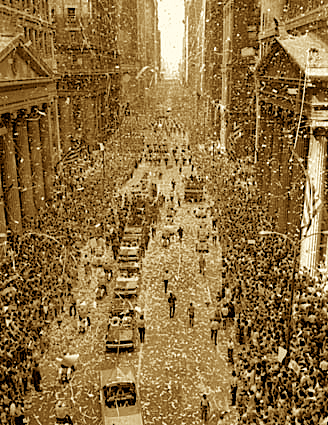
Twelve years later, she re-trained as a teacher and taught in Norfolk for some years. She moved to the Isle of Skye where she lived for six years in a house on a hill overlooking the Cuillin mountain range, featured in her first novel, EMOTIONAL GEOLOGY (short-listed for the 2006 Waverton Good Read Award.) Linda now lives near Glasgow.

Her second novel, A LIFETIME BURNING was published by Transita in 2006 and STAR GAZING, set partly on Skye, was published by Piatkus in 2008.

Hobnobbing with the famous, however briefly

ticker-tape-parade

No time for a long-winded missive today, I’m afraid: you’d be amazed at how much the work can pile up while a writer’s on retreat. I’m fairly confident that my desk is in fact underneath all of the papers in front of me, but it’s going to take another week or two of digging to confirm that.

Since I’ve been back from my writing retreat, I’ve noticed that acquaintances’ inquiries have been falling into two basic categories. Non-artist inquirers, without exception, ask about the touristy aspects of getting to and from a medieval village in the mountains of southwestern France; they want to be regaled with photographs of ruined castles. Admittedly, they probably don’t actually want to hear as much about the 12th-century Albigensian heresy as I tend to tell them while showing them the requisite pictures — I was in the part of France where the Cathars ran to escape folks who wanted to burn them at the stake for their beliefs — but they’re very nice about it.

Mysteriously, artists seem less interested in who got massacred where and if I have a photograph of the church built upon the spot. They ask, “Did you get a lot of writing done?” and, if they’re savvy about artists’ colonies, “Were there any famous artists/writers at the retreat?”

Don’t laugh — the answers to neither are foregone conclusions.

As anyone who has ever been on a lengthy group retreat could tell you, it’s far from uncommon that writers and other artists show up on a long-anticipated retreat — and then don’t work much on their art. There are plenty of reasons for this, of course, ranging from having unrealistic expectations about how much one can get done in a week, two, or a month; being totally exhausted due to working double shifts in the weeks leading up to the retreat, in order to be able to afford to come (it’s really, really rare that even a top-flight, highly competitive residency will give you money to pay your bills while you’re taking time off your day job), wanting to hang out with all of the other fascinating people who tend to turn up at artists’ retreats, and/or just needing a vacation really, really badly.

And then there’s the most common reason of all, writer’s block.

Did that giant collective gasp I just heard indicate that some, most, or all of you weren’t aware that even well-established writers who win fellowships to luxurious artists’ colonies sometimes fall prey to writer’s block? Of course they do: all writers do, from time to time; it seldom has anything to do with talent.

So what does it have to do with, you ask? Usually, in a retreat situation, the kind of elevated expectations I mentioned above: the prospect of writing/starting/finishing a big chunk of a book (or a short story, or a proposal) within a short, intense period of time can be darned intimidating.

Whether a time-challenged writer is at a retreat or at home, the very notion of wasting so much of a second of time and space that was so hard to carve out can be paralyzing. And if the writer in question has, as so many first-time retreatants do, been putting off working on a particular piece of writing until he’s safely ensconced, the pressure to write quickly roughly triples.

If this happens to you, take a deep breath. Remember that part of what artists do on retreat is think — and that thinking is a legitimate part of the artistic process.

After you’ve taken a nice, long walk and thought about your project, come back to your writing space (which, I hate to break it to you, will probably be much, much smaller than the palatial digs I enjoyed at my most recent retreat; chandeliers are in fact optional), take out several sheets of scratch paper, and diagram your story or the argument you’re making in what you’d planned to write. (Everyone knows how to do that, right? If any of you don’t, drop me a line in the comments on this post, and I’ll do a short how-to.)

Once you have a visual representation of your project in front of you, circle or highlight the bits you have not yet written. Which parts would be the easiest or quickest to do? Which would be next easiest, quickest, least emotionally jarring, etc.?

Once you’ve decided which would be least challenging, sit down and start there. Don’t even think of tackling any other part of your writing project until it’s done. Once it’s completed, move on to the next on your list.

Repeat as often as necessary until you get into a writing groove.

Do I hear some sounds of scoffing out there? “But Anne,” some folks who have dreamed long about running away on retreat protest, “I could work incrementally at home. If I have a big, unbroken chunk of time free of distractions in front of me, shouldn’t I be using it for, you know, something more ambitious?”

Not if you’ve come down with a bad case of writer’s block, you shouldn’t. Demonstrating to the frozen creative part of your psyche that it’s also productive to chip away at smaller portions is a great way to loosen up the writing muscles.

That’s not the only strategy for overcoming writer’s block, of course, or the only one that would work in this situation. For more suggestions, check out the aptly-named WRITER’S BLOCK category on the archive list at the bottom right-hand corner of this page.

The second question, the one about running into anyone famous, arises from the fact that many artists’ colonies will offer residencies to well-established writers and other artists as an inducement to the less-established to cough up the change to come to the retreat as well. And that’s not just my cynical take on it, either: just as writing workshops and conferences use the famous names for marketing purposes, many retreats are perfectly up front about selling access to big-name artists-in-residence.

Don’t believe me? Check out the grants, fellowships, and residencies section of Poets & Writers magazine, one of the best sources for tracking down same.

A quick caveat emptor to those of you who find the prospect of hobnobbing with the illustrious tempting: check the fine print. Just as a famous author’s speaking at a conference doesn’t necessarily mean that any individual attendee is going to have one-on-one time with him, being in residence simultaneously with a literary bigwig doesn’t automatically translate into long literary lunches and impeccable feedback on your work. Unless the retreat’s promotional materials actually mention that God’s Gift to Literature will be offering classes or critique to co-residents, assume that the answer is no.

Remember, established authors occasionally like to go on retreat for precisely the same reason that any other writer does — to get some time alone with their manuscripts. Unless they’re specifically being paid to help out those struggling along the earlier steps of the path to publication — as many retreats do — they’re under no obligation to invest their retreat time in reading or critiquing your work.

Or in providing you with contacts, finding you an agent, writing you a blurb…

I always feel a little funny saying this point-blank, as this just seems like basic courtesy to someone who grew up around famous writers, but established authors are not required to help the aspiring. Yet writers trying to break into the biz rush up to the famous all the time, essentially demanding their attention and a leg up, as if it didn’t take a darned long time to read a total stranger’s manuscript. If you want their assistance in a situation where they’re not being paid to provide it, approach with the awareness that you are in fact asking a pretty darned big favor of someone you’ve just met.

As luck would have it, an extremely well-known Irish poet was in residence with me at La Muse, but thankfully, everyone was too polite to thrust poems-in-progress at him. (Although not everyone was similarly restrained when they learned that I edited professionally, unfortunately. It’s amazing how single-minded writers can be in pursuit of publication.)

The good news is that if the retreat is indeed paying the lauded one to help out the other residents, they’re not going to make a secret of it. Since it’s actually rather difficult for the average mid-list author to make a living out of book sales alone (again, hate to be the one to break it to you), plenty of very good writers supplement their income through teaching gigs, conference presentations — and, yes, hanging out at residencies.

Do be aware, though, that being a well-known — or even brilliant — author doesn’t necessarily render one a good teacher of the craft. Or a good reader and feedback-giver, especially outside of one’s own particular book category.

Heck, it doesn’t even guarantee being a nice person who won’t gratuitously hurt an aspiring writer’s feelings. As I believe I may have pointed out 1700 or 1800 times before in this venue, professional feedback is harsh, and standards do in fact vary a bit from genre to genre.

Again, this may be self-evident, but before you take the emotional risk and plunk down the cash for cohabitating with, taking a class from, or showing your manuscript to a famous writer, make sure that that the illustrious one has at least a passing familiarity with your type of book. Otherwise, you’re not likely to get as much usable feedback as you have a right to expect.

If it’s part of what you’re paying to receive at a retreat, that is.

The best way to assure a good fit, of course, is to select a residency (class, conference) that features a laurelled one with a consistent track record of publishing in your chosen book category. Preferably recently, as being treated to long, well-meant lectures on what agents and editors were looking for thirty years ago may not help you please them now.

Even then, you may need to take what you hear with a grain of salt.

Many years ago, I spent a month at an artists’ colony that routinely imported both well-established sculptors and painters to give emerging artists feedback on their works-in-progress and a famous author or two every couple of weeks to impart wisdom to those treading the earlier steps of the path to greatness. Excited at the prospect, but aware that I would get more out of the feedback if I were familiar with these authors’ most recent work, I naturally rushed right out and indulged in an orgy of literary preparation.

The first of these authors, a well-established author not yet a household name and the one whose work I preferred of the two, spent a week on-site. She read excerpts, gave constructive feedback, helped writers over manuscript difficulties, and even gave a couple of impromptu lectures on craft.

Yet I couldn’t help but notice that not all of my fellow retreatants were as happy with her input as I was — but then, she wrote comedy, and so did I. She liked the chapter I submitted for critique, so we spent a charming hour chatting about my work, hers, and how I could make my writing more marketable.

Those whose work was less similar to hers did not fare so well, I’m told.

This mixed result is far from unheard-of at retreats that offer brushes with the Great — or at conferences, workshops, or even literary contests judged by them. There’s no way to assure that you are absolutely exempt from falling victim to it, but doing your reading in advance can certainly help. If your writing style is radically different from the critiquing author, consider seeking feedback elsewhere.

In any contest with celebrity judges — i.e., famous writers who make the final selections from amongst the finalist pool — this goes double, or even triple. If your writing doesn’t resemble the famous judge’s in form, think twice before bothering to enter.

I can feel you wincing. Crunching a few dry crackers should help with the nausea.

Back to our story already in progress. A couple of weeks later, the Living Legend scheduled to shed her effulgence on the residents sent word that she would be arriving a trifle too late for the meetings the retreat organizers had insisted that we book a week in advance, but in the meantime she was reading the excerpts we had submitted to her industriously.

One forgives such things in National Book Award winners, naturally. Good-naturedly, all of the writers in residence rescheduled our appointments with her to the next day. And then to the day after that.

When she arrived late in the afternoon of day 3 of her week-long residency, again too late for any but the last of the scheduled meetings, she announced that she could stay for only a couple of days — the absolute minimum, the cynical speculated, to collect her honorarium for meeting with us.

She wanted, she said, to meet with each of us right away. As in could each of us drop what we’re writing in mid-sentence and genuflect at her feet now?

Because I was — believe it or not of a writer on retreat — deep in the midst of a chapter, I signed up for one of the latest of the possible appointments. The Great Lady didn’t like that much, but one-on-one meetings we had all paid for, so she couldn’t just give us feedback in one big group, could she?

Seriously, could she? She honestly wanted to know — and seemed annoyed when we all demurred.

Now, I have to be honest here: I wasn’t expecting a whole lot from the much-delayed meeting, and not just because she had been, well, not delivering what we had been told to expect. I was prepared to be very diplomatic about it, but the fact is, I didn’t find her writing very engaging. Not to blow my own horn, but this restraint did require some near-heroism on my part, as my extensive reading binge had revealed that her literary output since 1957 had consisted largely of telling and retelling the (apparently autobiographical) plot of her first critically-lauded novel in slightly different forms.

None of which evinced the smallest modicum of humor. So I was quite prepared for her to dislike my chapter, of course, but I made the mistake of assuming that as long as I didn’t let her feedback vex me into blurting out some version of, “Why on earth did anyone ever consider you for the Pulitzer?” I would survive the occasion with aplomb.

You can feel the impending doom, can’t you? Wait — it’s even worse than you’re imagining.

Practically the moment I walked into my scheduled meeting — yes, it did eventually occur — She Whose Name Will Live Forever launched into a vigorous diatribe about the inherent weakness of a particular scene in the submitted chapter. The only trouble was, I hadn’t written the scene that had so upset her sensibilities; another writer in residence had.

Entirely disregarding my polite, gentle hints that perhaps she had mislaid my manuscript, the august lady proceeded to blast my fellow writer’s work for a good ten minutes. As nearly as I could tell from her tirade, she had decided that I must have written the short story in question — although I do not write short stories — because the character in the story looked a bit like me. ( As do literally millions of adult women of Mediterranean extraction, I might add.)

I had absolutely no idea what to do. Surely, when the other writer came for her session (which, because Nemesis has a dandy sense of humor, was scheduled for immediately after mine), the grande dame would realize her mistake — and something in her regal bearing gave the impression that she was not overly fond of admitting her own mistakes.

It took me several minutes to convince the Grande Dame of Literature that I was telling the truth about who I was and what I had written — she actually ARGUED with me about whether I’d written the chapter she’d been lambasting. By the end of our brief argument, both of us had realized that she had not yet read my piece at all.

Embarrassed for her — far more than she, apparently — I offered to reschedule our appointment on the following day, but she was adamant that she was only prepared to give me (her phrase) an hour of her time, period. As about 35 minutes of that time had already elapsed, I proposed that we should devote it to chatting about the writing life in general; again, no.

Somehow, this was my fault; if the writing in the piece in question — i.e., the one by somebody other than me — had been better, she implied, she never would have been confused at all.

After an intensive five minutes of rooting about in her battered Serious Literary Person’s satchel, she finally managed to dig up my submitted pages, mangled and folded into an intriguing shape that resembled a failed attempt at an origami swan. With a sigh of irritated relief, she plumped herself down to read them in front of me.

I sat uncomfortably, marveling at her speed-reading prowess. Fortunately for my ego — or unfortunately; I’ve never been able to come to a satisfying conclusion on the subject — she evidently did not find any error glaring enough to point out. I suspect it would have been a relief to her if she had, because then she would have had an excuse to dismiss me, or at any rate to vent her evidently copious spleen.

About two pages in, she gave the kind of titter that frightens dogs and small children, then announced with finality, “Well, you have some good lines here. But Greeks have been done.”

Because I have been to graduate school — the untrained should not attempt this level of logical gymnastics at home — I was able to translate this to mean that she’d seen MY BIG, FAT GREEK WEDDING (which had come out a year before) and had decided that single point of view represented the experience of every Greek-American currently roving the planet.

Clearly, she was not the ideal audience for this particular chapter.

But did I fight with her about the reasonableness of rejecting writing about an entire ethnic group at one fell swoop? Did I take her to task for not having read what it was her obligation to read? Did I dip into my well-justified dislike of her literary output to point out that she had been writing about her Irish-American family since the late 1950s — and that, in fact, had been done once or twice before, too?

No — because the literary world is small enough that if I blew up at that moment, I might end up as the butt of an anecdote about how bad writers are at accepting honest critique, the last thing I needed while my agent was shopping a book of mine around to editors.

(Did a light bulb just switch on over your head? Yes, it can be that easy to get a reputation as a feedback-resenter.)

Eventually, I talked her into reading the remaining 15 pages. After she finished, she glanced up at me warily. “It’s good,” she conceded, clearly cudgeling her well-laurelled brains for something constructive to advise.

Having been well brought-up, I waited politely for her to continue — and I must say, I’m still waiting. To fill up the remaining five minutes of our meeting, we chatted about the writing life in general, as I originally suggested.

Specifically, I engaged her in a discussion of the relative merits of the writing of David Sedaris (whose work she reported disliking, presumably because it is humorous) and Jeffrey Eugenides, that’s what. I didn’t even bother to point out that they are both Greek-Americans who write habitually about, you guessed it, Greek-Americans; I trusted that the irony of the situation would strike her in a week or two.

True, I didn’t glean any useful feedback from the exchange, but we did part on cordial terms (overtly, at least), which is more than merely maintaining a stoic, frozen visage or screaming at her would have achieved. To this day, in fact, she says hello to me by name at literary events. She has even introduced me to other authors as “an unbelievably good sport.” I doubt she divulges what made her draw that conclusion.

And that, boys and girls, is how flexible a new author sometimes has to be.

I wish I could state positively that La Belle’s behavior was uniquely horrible, but the sad fact is that one frequently hears similar stories about write-your-way-in conferences and artists’ retreats that offer on-site professional feedback from well-established authors as an incentive for writers to apply for residencies. It just goes to show you: not all feedback from professionals is professional feedback, nor will all of it be helpful.

But I’m relatively certain that had I not already sought out and received scads of genuinely thoughtful, well-informed critique of my work before I watched the Famous Gentlewoman unsuccessfully trying to critique my work on the fly, I would have been crushed by her lack of professionalism.

The moral: just because someone famous reads your work doesn’t necessarily mean that their feedback is going to be useful; just because a conference brochure touts a critique opportunity doesn’t mean it will be a good fit for your manuscript. Do your homework, invest your conference-going dollars carefully — and accept that sometimes, you’re going to encounter a dud. That’s the nature of one-size-fits-all critiquing.

All of which is to say: retreats can be marvelous things for a writer; so can feedback from the famous. But if you walk into both expecting something less than perfection, you’re probably going to end up happier with the overall experience.

Okay, that’s enough terrifying you for one day, I think. Caveat emptor — and keep up the good work!

Hansel and Gretel go on an artists’ retreat, or, that’s me in the corner

hansel-and-gretel

Jet lag does in fact go away sometime, doesn’t it? I’ve been home for several days now, and I’m still a bit out of it. Of course, that may be the result of a small part of my brain’s continuing to operate in French — specifically, the part that governs what I say to people who bump into me in grocery stores — while the rest is merrily going about its business in English.

Which is why, in case you’ve been wondering, I’ve been holding off on launching into my long-promised series on the ins and outs of formal writing retreats. The spirit is willing, but the connective logic is weak.

So brace yourself for a couple of segue posts, please, to move us from craft to artists’ colonies. In the great tradition of Reese’s Peanut Butter Cups, I’ll try to work in writing retreat examples into my discussions of craft, and craft tips into my treatment of retreats, to ease the transition.

In yesterday’s post, I covered a broad array of topics, ranging from voice to submission strategies to the desirability of learning something about one’s subject matter before writing about it. In the midst of a blizzard of advice on that last point, I mentioned in passing that when writers just guess at the probable life details and reactions of characters unlike themselves, they tend to end up with characters whose beauty and brains are inversely proportional, whose behavior and/or speech can be predicted as soon as the narrative drops a hint about their race/gender/sexual orientation/national origin/job/whatever, and/or who act exactly as though some great celestial casting director called up the nearest muse and said, “Hello, Euterpe? Got anything in a bimbo cheerleader?”

In other words, the result on the page is often a stereotype. And because, let’s face it, since television and movies are the happy hunting ground of stereotypes, writers may not necessarily even notice that they’ve imbibed the odd cliché.

A pop quiz for long-time readers of this blog: why might that present a problem in a manuscript submission? For precisely the same reason that a savvy submitter should avoid every other form of predictability in those first few pages: because Millicent the agency screener tends not to like it.

Even amongst agents, editors, and judges who are not easily affronted, stereotypes tend not to engender positive reactions. What tends to get caught by the broom of a sweeping generalization is not Millicent’s imagination, but the submission. If it seems too stereotypical, it’s often swept all the way into the rejection pile.

Why, you ask? Because by definition, a characterization that we’ve all seen a hundred times before, if not a thousand, is not fresh. Nor do stereotypes tend to be all that subtle. And that’s a problem in Millicent’s eyes, because in a new writer, what she’s really looking to see is originality of worldview and strength of voice, in addition to serious writing talent.

When a writer speaks in stereotypes, it’s extremely difficult to see where her authorial voice differs markedly from, say, the average episodic TV writer’s. It’s just not all that impressive — or, frankly, all that memorable.

I’m bringing this up today in part because yesterday’s post talked so much about the perils of writing the real, either in memoir form or in the ever-popular reality-thinly-disguised-as-fiction tome. Many, many people, including writers, genuinely believe various stereotypes to be true; therein lies the power of a cliché. The very pervasiveness of certain hackneyed icons in the cultural lexicon — the dumb jock, the intellectually brilliant woman with no social skills, the morals-deficient lawyer, the corrupt politician, to name but four — render them very tempting to incorporate in a manuscript as shortcuts, especially when trying to tell a story in an expeditious manner.

Don’t believe me? Okay, which would require more narrative description and character development, the high school cheerleader without a brain in her head, or the one who burns to become a nuclear physicist? At this point in dramatic history, all a pressed-for-time writer really has to do is use the word cheerleader to evoke the former for a reader, right?

Unless, of course, a submission that uses this shortcut happens to fall upon the desk of a Millicent who not only was a high school cheerleader, but also was the captain of the chess team. At Dartmouth. To her, a manuscript that relies upon the usual stereotype isn’t going to look as though it’s appealing to universal understandings of human interaction; it’s going to come across as a sweeping generalization.

Can you really blame her fingers for itching to reach for the broom?

Interestingly, when Millicents, their boss agents, and the editors to whom they cater gather to share mutual complaints in that bar that’s never more than 100 yards from any writers’ conference in North America, it’s not just the common stereotypes that tend to rank high on their pet peeve lists. The annoying co-worker, however defined, crops up just as often.

Why, you ask? Well, for several reasons, chief among which is that every writer currently crawling the crust of the earth has in fact had to work with someone less than pleasant at one time or another. That such unsavory souls would end up populating the pages of submissions follows as night the day.

If these charming souls appeared in novel and memoir submissions in vividly-drawn glory, that actually might not be a problem. 99% of the time, however, the annoying co-worker is presented in exactly the same way as a stereotype: without detail, under the apparent writerly assumption that what rankles the author will necessarily irk the reader.

Unfortunately, that’s seldom the case — it can take a lot of page space for a character to start to irritate a reader. So instead of allowing the character to demonstrate annoying traits and allowing the reader to draw her own conclusions, many a narrative will convey that a particular character is grating by telling the reader directly (“Georgette was grating”), providing the conclusion indirectly (through the subtle use of such phrases as, “Georgette had a grating voice that cut through my concentration like nails on a chalkboard”), or through the protagonist’s thoughts (“God, Georgette is grating!”)

Pardon my asking, but as a reader, I need to know: what about Georgette was so darned irritating? For that matter, what about her voice made it grating? It’s the writer’s job to show me, not tell me, right?

I cannot even begin to count the number of novels I have edited that contained scenes where the reader is clearly supposed to be incensed at one of the characters, yet it is not at all apparent from the action of the scene why. Invariably, when I have asked the authors about these scenes, they turn out to be lifted directly from real life. (No surprise there: these scenes are pretty easy for professionals to spot, because the protagonist is ALWAYS presented as in the right for every instant of the scene, a state of grace quite unusual in real life. It doesn’t ring true.)

The author is always quite astonished that his own take on the real-life scene did not translate into instantaneous sympathy in every conceivable reader. Ultimately, this is a point-of-view problem — the author is just too close to the material to be able to tell that the scene doesn’t read the way he anticipated.

Did I just see some antennae springing up out there? “Hey, wait a minute,” alert readers of yesterday’s post are muttering just about now, “isn’t this sort of what Edith Wharton was talking about yesterday? Mightn’t an author’s maintaining objective distance from the material — in this case, the annoying co-worker — have helped nip this particular problem in the bud long before the manuscript landed on Millicent’s desk?”

Why, yes, now that you mention it, it would. What a remarkable coincidence that she and I should have been discussing this on consecutive days.

Let’s look at the benefits of some objective distance in action. Many writers assume (wrongly) that if someone is irritating in real life, and they reproduce the guy down to the last whisker follicle, he will be annoying on the page as well, but that is not necessarily true. Often, the author’s anger so spills into the account that the villain starts to appear maligned, from the reader’s perspective. If his presentation is too obviously biased, the reader may start to identify with him, and in the worst cases, actually take the villain’s side against the hero. I have read scenes where the case against the villain is so marked that most readers would decide that the hero is the impossible one, not the villain.

This character assassination has clearly not gone as planned. A little more objective distance might have made it go better. Who was it that said, revenge is a dish best served cold?

Yes, I called it revenge, because revenge it usually is. Most writers are very aware of the retributive powers of their work. As my beloved old mentor, the science fiction writer Philip K. Dick, was fond of saying, “Never screw over a living writer. They can always get back at you on the page.”

Oh, stop blushing. You didn’t honestly think that when you included that horrible co-worker in three scenes of your novel that you were doing her a FAVOR, did you?

My most vivid personal experience of this species of writerly vitriol was not as the author, thank goodness, but as the intended victim. And at the risk of having this story backfire on me, I’m going to tell you about it as nonfiction.

Call it a memoir excerpt.

More years ago than I care to recall, I was in residence at an artists’ colony. (See? I told you I was going to work in an example from a writers’ retreat!) Now, retreats vary a great deal; mine have ranged from a fragrant month-long stay in a cedar cabin in far-northern Minnesota, where all of the writers were asked to remain silent until 4 p.m. each day (ah, dear departed Norcroft! I shall always think of you fondly, my dear – which is saying something, as I had a close personal encounter with an absolutely mammoth wolf there, and a poet-in-residence rode her bicycle straight into a sleepy brown bear. And both of us would still return in an instant) to my recent sojourn in a medieval village in southwestern France to a let’s-revisit-the-early-1970s meat market, complete with hot tub, in the Sierra foothills.

Had I mentioned that it pays to do your homework before you apply?

This particular colony had more or less taken over a small, rural New England town, so almost everyone I saw for a month was a painter, a sculptor, or a writer. The writers were a tiny minority; you could see the resentment flash in their eyes when they visited the painters’ massive, light-drenched studios, and compared them to the dark caves to which they had been assigned.

I elected to write in my room, in order to catch some occasional sunlight, and for the first couple of weeks, was most happy and productive there. Okay, so sharing meals in a dining hall was a bit high school-like, conducive to tensions about who would get to sit at the Living Legend in Residence’s table, squabbles between the writers and the painters about whether one should wait until after lunch to start drinking, or break out the bottles at breakfast (most of the writers were on the first-mentioned team, most of the painters on the latter), and the usual bickerings and flirtations, serious and otherwise, endemic to any group of people forced to spend time together whether or not they have a great deal in common.

An environment ripe, in other words, for people to start to find their co-residents annoying.

Now, one classic way to deal with the inevitable annoying co-resident problem is to bring a buddy or three along on a retreat; that way, if the writer in the next cubicle becomes too irritating, one has some back-up when one goes to demand that she stop snapping her gum every 27 seconds, for Pete’s sake. Personally, when I go on a writing retreat, I like to leave the trappings of my quotidian life behind, but there’s no denying that at a retreat of any size, there can be real value in having someone to whom to vent about that darned gum-popper. (Who taught her to blow bubbles? A horse?)

Doubtless for this reason, several artists had brought their significant others to the New England village retreat — or, to be more accurate, these pairs had applied together: writer and photographer, painter and writer, etc. (Generally speaking, one of the tell-tale differences between a serious artists’ retreat and a casual one is whether you have to write, paint, sculpt, or photograph your way in; at a retreat that takes just anyone, the application will not require you to submit any of your work.)

One of these pairs was a very talented young couple, she a writer brimming with potential, he a sculptor of great promise. Although every fiber of my being longs to use their real names, I shall not. Let’s call them Hansel and Gretel, to remove all temptation.

Hansel was an extremely friendly guy, always eager to have a spirited conversation on topics artistic or social. Actually, he was sort of the dining hall’s Lothario, flirting with…hmm, let’s see how best to represent how he directed his attentions…everything with skin. In fairness to him, none of the residents was all that surprised that he often brought the conversation around to sex; honestly, once you’d seen his sculpture studio packed with representations of breasts, legs, pudenda, buttocks, and breasts, you’d have to be kind of dense not to notice where his mind liked to wander.

Being possessed of skin myself, I was naturally not exempt from his attentions, but generally speaking, I tend to reserve serious romantic intentions for…again, how to put this…people capable of talking about something other than themselves. Oh, and perhaps I’m shallow, but I harbor an absurd prejudice in favor of the attractive.

An artists’ retreat tends to be a small community, however; one usually ends up faking friendliness with an annoying co-resident or two. Since there was no getting away from the guy — believe me, I tried — I listened to him with some amusement whenever we happened to sit at the same table. I loaned him a book or two. We had coffee a couple of times when there was nobody else in the town’s only coffee shop. And then I went back to my room and wrote for 50 hours a week.

Imagine my surprise, then, when Gretel started fuming at me like a dragon over the salad bar. Apparently, she thought I was after her man.

Now, I don’t know anything about the internal workings of their marriage; perhaps they derived pleasure from manufacturing jealousy scenes. I don’t, but there’s just no polite way of saying, “HIM? Please; I DO have standards” to an angry wife, is there? So I started sitting at a different table in the dining hall.

A little junior high schoolish? Yes, but better that than Gretel’s being miserable — and frankly, who needed the drama? I was there to write.

Another phenomenon that often characterizes a mixed residency — i.e., one where different types of artists cohabitate — is a requirement to share one’s work-in-progress. At this particular retreat, the fellowship that each writer received included a rule that each of us had to do a public reading while we were in residence.

Being a “Hey – I’ve got a barn, and you’ve got costumes!” sort of person, I organized other, informal readings as well, so we writers could benefit from feedback and hearing one another’s work. I invited Gretel to each of these shindigs; she never came. Eventually, my only contact with her was being on the receiving end of homicidal stares in the dining hall, as if I’d poisoned her cat or something.

It was almost enough to make me wish that I HAD flirted with her mostly unattractive husband.

But I was writing twelve hours a day (yes, Virginia, there IS a good reason to go on a retreat!), so I didn’t think about it much. I had made friends at the retreat, my work was going well, and if Gretel didn’t like me, well, we wouldn’t do our laundry at the same time. (You have to do your own laundry at every artists’ retreat on earth; don’t harbor any fantasies about that.) My friends teased me a little about being such a femme fatale that I didn’t even need to do anything but eat a sandwich near the couple to spark a fit of jealous pique, but that was it.

At the end of the third week of our residency, it was Gretel’s turn to give her formal reading to the entire population of the colony, a few local residents who wandered in because there was nothing else to do in town, and the very important, repeated National Book Award nominee who had dropped by (in exchange for a hefty honorarium) to shed the effulgence of her decades of success upon the resident writers. Since it was such a critical audience, most of the writers elected to read highly polished work, short stories they had already published, excerpts from novels long on the shelves. Unlike my more congenial, small reading groups, it wasn’t an atmosphere conducive to experimentation.

Four writers were scheduled to read that night. The first two shared beautifully varnished work, safe stuff, clearly written long before they’d arrived at the retreat. Then Gretel stood up and announced that she was going to read two short pieces she had written here at the colony. She glanced over at me venomously, and my guts told me there was going to be trouble.

How much trouble, you ask with bated breath? Well, her first piece was a lengthy interior monologue, a first-person extravaganza describing Hansel and Gretel — both mentioned by name on page 1, incidentally — having sex in vivid detail. Just sex, without any emotional content to the scene, a straightforward account of a mechanical act which included – I kid you not – a literal countdown to the final climax: “Ten…nine…eight…”

It was so like a late-1960’s journalistic account of a rocket launching that I kept expecting her to say, “Houston, we’ve got a problem.”

I cringed for her — honestly, I did. I have no objection to writers who turn their diaries into works for public consumption, but this was graphic without being either arousing or instructive. I’d read some of Gretel’s other work: she was a better writer than this. So what point was she trying to make by reading this…how shall I put it?…literarily uninteresting junk?

Maybe I just wasn’t the right audience for her piece: the painters in the back row, the ones who had been drinking since breakfast, waved their bottles, hooting and hollering. Still, looking around the auditorium, I didn’t seem to be the only auditor relieved when it ended. (“Three…two…one.”) Call me judgmental, but I tend to think that when half the participants are pleased the act is over, it’s not the best romantic coupling imaginable.

Gretel’s second piece took place at a wedding reception. Again, it was written in the first person, again with herself and her husband identified by name, again an interior monologue. However, this had some legitimately comic moments in the course of the first few paragraphs. As I said, Gretel could write.

Somewhere in the middle of page 2, a new character entered the scene, sat down at a table, picked up a sandwich – and suddenly, the interior monologue shifted from a gently amused description of a social event to a jealously-inflamed tirade that included the immortal lines, “Keep away from my husband, bitch!” and “Are those real?”

Need I even mention that her physical description of the object of these jabs would have enabled any police department in North America to pick me up right away?

She read it extremely well; her voice, her entire demeanor altered, like a hissing cat, arching her back in preparation for a fight. Fury looked great on her. From a literary standpoint, though, the piece fell flat: the character that everyone in the room knew perfectly well was me never actually said or did anything seductive at all; her mere presence was enough to spark almost incoherent rage in the narrator. While that might have been interesting as a dramatic device, Gretel hadn’t done enough character development for either “Gretel” or “Jan”– cleverly disguised name, eh?– for the reader either to sympathize with the former or find the latter threatening in any way.

There was no ending to the story. She just stopped, worn out from passion. And Hansel sat there, purple-faced, avoiding the eyes of his sculptor friends, until she finished.

The first comment from the audience was, “Why did the narrator hate Jan so much? What had she done to the narrator?”

I was very nice to Gretel afterward; what else could I do? I laughed at her in-text jokes whenever it was remotely possible, congratulated her warmly on her vibrant dialogue in front of the National Book Award nominee, and made a point of passing along a book of Dorothy Parker short stories to her the next day.

Others were not so kind, either to her or to Hansel. The more considerate ones merely laughed at them behind their backs. (“Three…two…one.”) Others depicted her in cartoon form, or acted out her performance; someone even wrote a parody of her piece and passed it around.

True, I did have to live for the next week with the nickname Mata Hari, but compared to being known as the writer whose act of fictional revenge had so badly belly flopped, I wouldn’t have cared if everyone had called me Lizzie Borden. And, of course, it became quite apparent that every time I went out of my way to be courteous to Gretel after that, every time I smiled at her in a hallway when others wouldn’t, I was only pouring salt on her wounded ego.

Is there anything more stinging than someone you hate feeling sorry for you?

If your answer was any flavor of yes, you might want to consider waiting until you’ve developed some objective distance from your annoying co-worker before committing her to print. Think at least twice about what you’re putting on the page, particularly for work you are submitting to contests, agencies, or small presses – or, heaven forbid, reading to a group of people you want to like you, or at any rate your narrator.

Believe me, revenge fantasies tend to announce themselves screamingly from the page, at least to a professional reader. If you’re still angry, maybe it’s not the right time to write about it for publication. Your journal, fine. But until you have gained some perspective — at least enough to perform some legitimate character development for that person you hate — consider giving it a rest. Otherwise, your readers’ sympathies may ricochet, and move in directions that you may not like.

It’s always a good idea to get objective feedback on anything you write before you loose it on the world, but if you incorporate painful real-life scenes into your fiction, sharing before promotion becomes ABSOLUTELY IMPERATIVE. If you work out your aggressions at your computer — and, let’s face it, a lot of us do — please, please join a writing group.

To be blunt about it, finding good first readers you can trust can save you from looking like an irate junior high schooler on a rampage.

And Gretel, honey, in the unlikely event that you ever read this, you might want to remember: revenge is a dish best served cold. Or, as Philip used to say, never screw over a living writer. You never know who might end up writing a blog.

Hey, I’m only human. Which is precisely why I wasn’t writing blog posts on my most recent retreat while I was in residence. It can take some time — and in this case, distance, judging by my lingering jet lag — to gain perspective.

Keep up the good work!

Musings on an airplane: the return of Edith Wharton, or, the heavy, heavy responsibility of original selectivity

pyranees
Sorry about the lapse in posting; I honestly meant to start blogging again a few days ago. I’ve been just exhausted.

To restate that more positively: I’m back from my fabulous writing retreat in the beautiful mountains of southwestern France — or to be precise, I wrote most of this post while I was on a plane from Zurich to Chicago. (Props to Swiss Air: the flight attendants had no problem with my co-opting three middle seats for a mid-air office. Much easier to use a laptop with your legs stretched out, I find, than folded underneath an unstable tray table. Oh, and they let you know that you’re about to land by offering you wee bars of chocolate.) Truth compels me to say, though, that I took this photo on the way to the retreat, not from it: those dark blobs are the Pyrenees.

If any of you map-huggers out there are thinking that I was neither retreating anywhere near Zurich nor do I generally reside in the vicinity of Chicago, you’re right: it took a van ride, two train trips, and three airplanes to get me from La Muse to Seattle.

Now that’s what I call retreated.

So if I still seem a bit jet-lagged, well, I’m entitled. Which is perhaps why I’ve elected to devote today’s post to yet another extensive discussion with a dead person.

Hey, it’s not as crazy as it sounds. A while back, I started a conversation with Edith Wharton — or, if you want to be pedantic about it, with a few choice excerpts from her THE WRITING OF FICTION, as good a discussion of the craft as you’re likely to find anytime soon.

Should anyone happen to be in the market for one, that is. Stephen King’s ON WRITING is pretty good, too, as is Annie Lamott’s BIRD BY BIRD. I don’t think any female writer should even consider skipping Joanna Russ’ HOW TO SUPPRESS WOMEN’S WRITING. And I’ve never made a secret of my admiration for Carolyn See’s MAKING A LITERARY LIFE.

I could go on all day, but does anyone else have suggestions to share?

My point is, THE WRITING OF FICTION is a fascinating book for anyone interested in, well, the writing of fiction. Particularly, I suspect, for those acclimated to the episodic ramblings endemic to blogs. (Who, me? Episodic? Rambling? Perish the thought.) Although our Edith wrote the book back in the 1920s, her highly opinionated, self-referential argumentative style would be right at home in the blogosphere.

So I’m dragging her into it.

When last I crossed literary swords with Edith, we were talking about whether it’s possible for a writer to imagine a character from a different background sufficiently to render actual research into the conditions under which that character might have lived superfluous.

She seemed to think it was possible, if not necessarily desirable, for imagination to hold the reins of probability, provided that the author maintained an objective distance from the subject matter. Quoth she:

The chief difference between the merely sympathetic and the creative imagination is that the latter is two-sided, and combines with the power of penetrating into other minds that of standing far enough aloof from them to see beyond, and relate them to the whole stuff of life out of which they but partially emerge. Such an all-around view can be obtained only by mounting to a height; and that height, in art, is proportioned to the artists’ power of detaching one part of his imagination from the particular problem in which the rest is steeped.

Myself, I think objectivity is overrated in fiction. Perhaps because the intervening 80 years since she wrote this book have offered so many spectacular examples of authors who decided to ignore the old writing saw write what you know with disastrous results — and if you doubt that, check out some of the female characters that turned up in the works of male authors in the 1950s — I am of the opinion that just guessing how a character unlike oneself might respond to certain stimuli can lead to both unrealistic and stereotyped characters.

How off the mark, you ask? To haul out my favorite example again, the collected short stories of F. Scott Fitzgerald contain SEVEN instances of a female character’s saying to another human being, “I’m so beautiful; why can’t I be happy?”

Need I say more? Except perhaps that what an author regards as his own objectivity might well strike a reader who has something in common with the character on the page as ignorance?

However, for about a century, objectivity was all the rage, so much so that if you bump into an author or editor trained in the 1940s or 1950s, you may well be treated to a lecture on how first-person narratives are inherently flawed. They’re so subjective.

Or good first-person narratives are, anyway.

I didn’t revive the debate on objectivity in order to blame Edith for the pseudo-objective failings of some of the writers who followed in her quite broad wake. (Okay, not merely for that purpose.) I wanted to draw your attention to this little gem of writerly wisdom:

One of the causes of the confusion of judgment on this point[i.e., the difference between mere human sympathy and writerly empathy] is no doubt the perilous affinity between the art of fiction and the material it works in. It has been so often said that all art is re-presentation — the giving back in conscious form of the shapeless raw material of experience — that one would willingly avoid insisting on such a truism. But while there is no art of which the saying is truer than fiction, there is none in respect of which there is more danger of the axiom’s being misinterpreted.

Or, to put it another way, just providing a transcript of what happens in real life isn’t art; it’s court reporting. Good realistic writing is by definition a selective recreation of reality.

Which tends to come as a surprise to advocates of slice-of-life fiction, who believe that the primary goal of writing is to reproduce quotidian reality as closely as possible. That can work very well in a short story or scene in a novel or memoir, but just listing everything that happened in even the most fascinating human interaction tends to overwhelm the reader with detail — and annoy Millicent the agency screener, incidentally.

So how can a writer decide what parts of reality are and are not essential to conveying the story at hand? Ah, there’s the rub. As, indeed, Edith herself points out:

The attempt to give back any fragment of life in painting or sculpture or music presupposes transposition, “stylization.” To re-present in words is far more difficult, because the relation is so close between model and artist. The novelist works in the very material out of which the object he is trying to render is made. He must use, to express soul, the signs which soul uses to express itself. It is relatively easy to separate the artistic vision of an object from its complex and tangled actuality if one has to re-see it in paint or marble or bronze; it is infinitely difficult to render a human mind when one is employing the very word-dust with which thought is formulated.

In case she’s being too polite here, let me make it a bit blunter: one of the difficulties of this art form as opposed to others is that your average Joe on the street doesn’t suddenly whip out a block of marble or embark upon an interpretive dance to react to, say, someone cutting in front of him in a long line — although you must admit that either would be an interesting tactic. No, he uses words, so it’s darned tempting for a fledgling writer to believe that just quoting what he says on that particular occasion will in fact convey the entire situation to the reader.

The usual result? Pages upon pages of dialogue uninterrupted by narrative text, like a radio play, as though the writer believes that no further elucidation could possibly be necessary — one of Millicent’s better-known pet peeves, by the way. Or writers who are flabbergasted to hear professional readers (agents, editors, contest judges, writing teachers, Millicents) castigate their stories as unbelievable or unrealistic.

“Unbelievable?” they gasp. “Unrealistic? But that’s impossible: the scene you’ve targeted really happened!”

I hate to be the one to break it to those of you who love to write the real, but this cri de coeur almost never carries any weight with professional readers. In fact, if I’m going to be honest about it, this incredibly common protest is much, much more likely to elicit a chuckle, or even an eye-roll, than a cry of, “Wow, touché, dear writer. Let’s leave that scene entirely untouched.”

Why can I predict that with such certainty? Well, I’ve said it before, and I’ll no doubt say it again: just because something happened in real life doesn’t mean that it will strike the reader as realistic when it appears on the page.

As the pros like to say, it all depends on the writing. (For a far more detailed analysis of this quandary, check out John Irving’s TRYING TO SAVE PIGGY SNEED, speaking of established authors’ books about the writing life.)

So if Edith hadn’t brought this up, I would have: this is a classic point upon which aspiring writers who have yet to see their words in print and those authors who have (and give advice to the former) so often don’t see eye-to-eye. It’s rare that an established author will argue that all a good writer needs to do to offer fresh insights to the reader is simply to reproduce exactly what she observes in real life. If all a good writer had to do was hold, as ’twere, the mirror up to nature, there would be little difference between the documentary filmmaker and the novelist except medium.

Good art is a lot more complicated than that.

However, you can’t throw a piece of bread at your garden-variety writers’ conference without hitting a writer who will insist that his manuscript — or, in classes, his scene — must have the resonance of truth because IT REALLY HAPPENED THAT WAY. And then these aspiring writers wonder why the pros just stop listening.

Edith, would you mind telling the class why, please?

Still the transposition does take place as surely, if not as obviously, in a novel as in a statue. If it did not, the writing of fiction could never be classed among works of art, products of conscious ordering and selecting, and there would consequently be nothing to say about it, since there seems to be no way of estimating aesthetically anything to which no standard of choice can be applied.

Did some of you get lost in the verbiage there? Basically, Edith is saying that just throwing your diary onto the printed page isn’t art, any more than simply setting up a camera to film every second of everyday life would be, because that would remove the artist from the process as anything but transcriptionist. A good writer, however, picks and chooses what parts of reality are important to the story and leaves out the rest.

Or, to use a glaring modern example, do you honestly think that reality TV would be bearable for even fifteen consecutive minutes’ viewing if no one were editing the footage?

Think about that the next time you hear someone say that the point of written dialogue is just to reproduce the speech of everyday life. (And yes, school-age readers, you have my permission to print out what I just said and wave it in your English composition teacher’s face.)

Before the young and the daring think Edith and I are taking their side too completely, let’s see what she has to say about the perennial bugbear of the young writer, the desire to do something that’s never been done before in print:

Another unsettling element in modern art is that common symptom of immaturity, the dread of doing what has been done before; for though one of the instincts of youth is imitation, another, equally imperious, is that of fiercely guarding against it. In this respect, the novelist of the present day is in danger of being caught in a vicious circle, for the insatiable demand for quick production tends to keep him in a state of perpetual immaturity, and the ready acceptance of his wares encourages him to think that no time need be wasted in studying the past history of his art, or in speculating on its principles.

“Ha!” I just heard half of you exclaim. “Ready acceptance of his wares! You try landing an agent in the current literary market, Edith.”

Before you dismiss this portion of her argument accordingly, consider a moment: I think a case could be made, and a pretty good one, that the extreme difficulty of selling first fiction, combined with how much busier our lives are than writers who lived a hundred years ago, tends to have the same effect that she’s describing here.

Don’t believe me? Okay, line up ten unpublished novelists and ask them to name not only the bestsellers in their categories in which they write, but the back-list perennials. Don’t accept any answer that names a book that’s been out for more than two years. Ask them to give you thumbnail reviews of each, and explain how their own books are similar or different.

8 of them will not be able to it; at least 5 will not have read anything in their chosen category that has come out within the last two years, which means that they are unfamiliar with the market. And 2-3 will laugh and tell you that they don’t have time to read at all.

But if you ask them if their novels are original, all ten will promptly say yes. But if they’re not familiar with the market in their book categories, how on earth do they know?

This, I’m afraid, is one of the things that render professional writers fairly easy to spot at a conference. Ask ten recently published novelists the same question, and you’ll probably get some pretty detailed analysis of the current book market. (Not to mention a plethora of complaints about their agents and editors.)

“Ah,” some of those non-readers will say, “but I don’t want my vision sullied by contact with others’. Nothing tamps down originality more than listening to what other people say.”

Really? Interesting. Let’s hear Edith’s opinion on the subject.

True originality consists not in a new manner but in a new vision. That new, that personal, vision is attained only by looking long enough at the object represented to make it the writer’s own; and the mind which would bring this secret germ to fruition must be able to nourish it with an accumulated wealth of knowledge and experience.

This, my friends, is one of the best definitions I’ve ever seen of what the publishing industry means by fresh, an elusive quality that tends to catch Millicent’s eye and warm the cockles of her boss agent’s cold, cold heart. Many, many writers could write the same story, but the difference between a fresh take and something that Millicent has seen fifteen times in the last week lies largely in how the writer chooses to tell the story, right?

Think the various writers’ respective decisions about how to narrow down what parts of reality do and do not add to the story might have anything to do with that?

Uh-huh; Edith’s not just whistling Dixie here: this is serious writing advice.

Not to mention a killer self-editing philosophy: when in doubt, ask yourself: could anyone but me have written this particular sentence/scene/character? If so, how can I revise it to render my voice and worldview more apparent? Repeat with every sentence/scene/character in your manuscript.

A lot of work? You bet. But as Edith says:

At any rate {the myth of originality without study} is fostering in its young writers the conviction that art is neither long nor arduous, and perhaps blinding them to the fact that notoriety and mediocrity are often interchangeable terms. But though the trade-wind in fiction undoubtedly drives many beginners along the line of least resistance, and holds them there, it is far from being the sole cause of the present quest for short-cuts in art.

That’s her really, really nice way of saying that if a writer’s only goal is to get published, the art is likely to suffer. Ditto if the writer is too lazy to learn what being a writer in her chosen category entails before taking a crack at it herself.

But she’s not about to let off the hook those who assume that if

(a) their own writing is having a hard time getting published, then

(b) all good writing must be having a hard time getting published, therefore

(c) everything currently being published is rubbish.

You will literally never hear a published author arguing this, incidentally, for obvious reasons, which is why, in case those of you who hang around writers’ conferences have been wondering, agents and editors simply stop listening to anyone who makes this particular argument. Which may be why Edith is so unsympathetic to it:

There are writers indifferent to popular success, and even contemptuous of it, who sincerely believe that this line marks the path of the true vocation. Many people assume that the artist receives, at the outset of his career, the mysterious sealed orders known as “Inspiration,” and has only to let that sovereign impulse carry him where it will.

We all know writers who say that, right?

Inspiration does indeed come at the outset to every creator, but it comes most often as an infant, helpless, stumbling, inarticulate, to be taught and guided; and the beginner, during this time of training his gift, is as likely to misuse it as a young parent to make mistakes in teaching his first child.

Wow. I think every writer who has ever even been tempted to say, “Oh, I don’t need to learn about the marketing side of the business; that will be my agent’s job. I handle the creative part,” should think long and hard about what Edith just said. Especially those who subscribe to the astonishingly pervasive writerly belief that all good writing will inevitably get published, regardless of how poorly its author happens to market it.

So does that mean that an aspiring writer should invest all of her writing time in boning up on what’s already on the market? Or that only after a writer has read everything published in the last hundred years should he attempt to write his own book?

Of course not; total immersion in other people’s books and absolute ignorance of the market are not the only two possible courses here. A savvy aspiring writer is going to want to forge a middle path.

And that can be difficult, especially now that finding a mountain of writerly advice is as simple as typing a question into a search engine. As Edith admits,

Study and meditation contain their own perils. Counsellors intervene with contradictory advice and instances.

See? I told you she seems surprisingly up on the current state of blogging about writing.

In such cases these counselors are most often other people’s novels: the great novels of the past, which haunt the beginner like a passions, and the works of his contemporaries, which pull him this way and that with too-persuasive hands. His impulse, at first, will be either to shun them, to his own impoverishment, or to let his dawning individuality be lost in theirs.

Or, to put this as Millicent the agency screener might, the vast majority of the submissions she sees are either completely out of step with the current literary market or quite derivative of a recent bestseller.

…but gradually he will come to see that he must learn to listen to them, take all they can give, absorb it into himself, and then to turn his own task with the fixed resolve to see life only through his own eyes.

In other words, to develop his own voice — and to demonstrate his own unique worldview through the details he chooses from real life to incorporate into his writing.

You had thought I was just rambling on without an ultimate point in mind, hadn’t you? Jet-lagged as I am, I still try to be selective.

I’m looking forward to a less befogged brain on the morrow, however. Keep up the good work!