I had intended to launch into the promised topic of cover letters for submissions over the weekend, campers, but I was inundated by quiet cries of distress. “But there’s so much to absorb!” post-pitch submitters have been moaning softly. “I had no idea that pulling my already-written manuscript together to submit to that nice agent/editor that requested it would be so complicated. How about giving us the weekend to catch up?”
Fair enough; I know that the strictures of standard format for book manuscripts is pretty hard to wrap one’s head around the first time one hears about it. That’s something those of us that read for a living are all to apt to forget, I’m afraid: until one has seen a few hundred professionally-formatted manuscripts up close and personal, there’s quite a lot about the process of putting one together that’s counterintuitive. If not downright insulting to a writer’s sense that if the writing is good enough, the presentation shouldn’t count.
If those of you planning to submit your work anytime soon have taken anything from this series, however, I sincerely hope it’s that to people in publishing, how a manuscript looks on the page is an indicator of a writer’s having done the necessary homework in order to work well with an agent or editor — and thus of that writer’s seriousness about becoming a professional author.
Speaking of counterintuitive, the vast majority of first-time submitters believe quite the opposite: that agents and editors will read a new writer’s manuscript with a kind eye, looking to like. Or so the pros surmise from the fact that so many submissions, even very good ones, contain non-standard formatting, misspelled words, grammatical mistakes, and other matters that would be hard for anyone that handled manuscripts for a living to overlook.
The result, I’m afraid, is all to often a failure to communicate. And that’s likely to be fatal, in a business devoted to communication.
I’m going to be talking later in the week about how to improve communication throughout the submission process. For today, however, we shall be concentrating upon a communication opportunity that submitters in general and post-pitch submitters in particular tend to skip entirely: the cover letter in the submission packet.
And already, the atmosphere is thick with huffs of derision. “Oh, please, Anne,” those of you on the cusp of submission murmur. “That agent to whom I pitched/queried asked to see my manuscript (or a portion thereof) knows it’s coming — thus the term requested materials. By definition, he knows who I am and what I write. So why on earth should I waste my time and his by writing a cover letter to explain something that requires no explanation ?”
Oh, I can think of plenty of reasons. Just off the top of my head: even if you send those page right after receiving the request, the agent or editor in question will not necessarily have you at the front of his mind; agents and editors at writers’ conferences frequently hear so many pitches that they begin to blur in retrospect; agents and editors often don’t open their own mail, and Millicent, their screener, has no reason to recognize your name; aspiring writers send unrequested submissions all the time, resulting in instant rejection.
Not including it is, in short, strategically unwise.
And at the risk of sounding like your mother, just slapping a manuscript into a box without any message of greeting is, let’s face it, rather rude. In an industry that actually does value manners to a charming, if old-fashioned, extent, I would strenuously advise anyone within the sound of my voice to avoid coming across as that.
Not sure why it might be considered rude? Well, think about it: even if you were expecting company, would you be comfortable opening your front door to someone that consistently refused to identify himself?
Unfortunately, a staggeringly high percentage of otherwise well-mannered submitters don’t think about that, apparently — and evidently do not give much thought to how much harder a submission sent sans cover letter would be to accept.
Frankly, the contents of the submission packet very often render it downright difficult for the agent to say yes if he likes the pages within. How so? Well, what’s the first thing he sees upon opening that box — or, more commonly, what his screener sees? Usually, something like this:
Or, should the submitter be somewhat better-versed in submission etiquette, something like this:
Not a lot to like there, eh? Just look at the poor paper quality: you can see page 1 vaguely outlined right through the title page.
Nor is that all. Not only does the sender evidently believe that the agent or editor that requested this asks to see so few manuscripts that hers would be instantly memorable — extremely unlikely — but she’s left Millicent to guess whether this is a requested or unsolicited submission.
Why is that not very wise? Unsolicited submissions almost always get rejected unread.
Still, the second example is better than the first. The sender of the first submission above has make herself almost impossible to sign as a client, at least without the recipient’s doing a good deal of record-searching that would not have been necessary if this writer had been more polite.
Not seeing why? Okay, let’s step into Millicent’s moccasins and take a closer look at the top page of the first submission box. You cut open what is probably your twentieth submission of the day to find this:
Did you study it carefully? If not with the scrutiny you wish the agent of your dreams would apply to your page 1, at least with respectful attention? (If you had too much trouble focusing on the details to do so, try holding down the COMMAND key and pressing + to enlarge the image.)
I hope you read it closely, because I have a couple of very serious questions to ask you, faux Millicent: who wrote this manuscript? And if your boss happens to like it, how will you get in touch with the writer in order to offer a representation contract?
The cover letter’s starting to seem like a better idea, isn’t it? If not, allow me to ask those of you still resisting the concept another serious question: if you were Millicent and had opened two submission boxes, one like our first example and one that contained a cover letter, which writer would you think would be less work for your boss to represent?
Shall I take the universal shudder that just went through my readership as an indication of understanding? “Okay, Anne,” those of you that sniffed at me a week ago when I urged you to include a title page with your submission, “I get it now: not placing my contact information at the top of my submission packet is a bad idea. But that’s not a problem if I include that title page you’ve been yammering about, is it? Since a good title page includes the writer’s contact information, why would the second submission example raise Millicent’s hackles at all?”
Good point, former title page-resisters. The short answer is that the overwhelming majority of title pages submitted do not include this information. They are merely decorative. Commonly, there’s a trade-off between what the writer perceives as beauty and Millicent is at all likely to consider either professional or informative. Like, for instance, this:
Colorful, yes; imaginative, certainly. But once again, it begs the question: how the heck would the requester of this manuscript get in touch with Cat in order to offer to represent her?
Trust me, the last response you want your submission to generate is a heart-felt, “Oh, it’s too bad we have no idea who sent us this or how to contact him or her; all we have is the author’s last name in the slug line. This saddens me, because I really liked this manuscript!”
As you say, though, a professionally-formatted title page would in fact provide any agent, editor, or Millicent with all the information necessary to contact the writer. The title page in our example, however, contains a red flag that might well convince any of the three just to ship the manuscript below it back unread. Take a closer look.
If you flung your hand into the air, leapt to your feet, and shouted, “Hey, that manuscript is well over the word count limit for its genre!” you get a gold star for the day. As we discussed last time, most agencies do have a target upper page limit in mind for first novels in a particular genre. That’s why, in case any of you had been wondering, agency submission guidelines often ask that a query letter should include a word count: so they can reject the over-long and the too-short without having to request the manuscript.
There’s another potential rejection reason here, however. Any guesses?
If you immediately screamed, “The book category listed does not exist,” help yourself to a second gold star out of petty cash. Aspiring writers do this all the time: believing that book category is primarily descriptive, rather than a quick reference to established marketing designations, they cram together mutually exclusive categories to form a hybrid.
Since that effort alone could have gotten this submission rejected, what should Cat have called this instead? Based on that first page, science fiction. And in her shoes, I would have either cut the manuscript in half and presented it as a series, or just left the word count off the title page.
Hey, agents do it all the time when submitting to editors; it honestly is extraordinarily difficult to sell a first-novel by a non-celebrity that’s much over 100,000 words. But you didn’t hear that from me.
Even if our friend Cat made both of these fundamental changes to her title page — after, perhaps, having checked to ascertain that using an estimated word count (250 words/page in Times New Roman x # of pages = a valid estimation) would not be less likely to engender instant rejection than the actual word count she seems to have used here — she would still be better off topping her submission with a nice, polite cover letter than merely relying upon the title page.
I hear some of you groaning. “Oh, come on. Haven’t I written enough for these people? The agent/editor has asked for my manuscript or a portion thereof; she’s also asked for a synopsis. And heaven knows I spent enough time writing my pitch and/or submission. Isn’t enough in fact enough?”
I sympathize with the submission fatigue, weary ones, but I think you’re overestimating the task at hand. In the first place, there’s no need for a long-winded missive — a simple thank-you to the agent for having asked to see the materials enclosed will do.
It’s hardly onerous. Seriously, for either a post-pitch or post-query submission, it could be as simple as the note penned by a colleague of Cat’s that’s done his homework, our old pal Literate McAuthorly.
Seriously, that’s all there is to it. Like any other thank-you letter, the courtesy lies more in the fact that the sender took the time to write it, rather than in what it actually says.
Still not convinced it’s worth your time to write? Okay, let’s move on to the second place: the submitter is the one who benefits from including a cover letter containing all of his contact information — all the more so because so few writers remember to tuck one into their packets, especially if they received the request for materials after a pitch. Suffice it to say that it’s in your best interest to assume that the person who heard your pitch or read your query won’t be the first person to screen your submission, for the exceedingly simple reason that it is, in practice, often a different human being.
Conveniently enough (and we’re up to the third place now, if you’re keeping track), the cover letter provides an excellent means of reminding the agent or editor that she did indeed request the pages enclosed. That minimizes the possibility that Millicent might slit open your submission packet and assume, wrongly, that it was just another unsolicited manuscript.
And we all know what happens to those, right? “Next!”
If the submission is the result of a conference pitch and Cat really wanted to be fancy about it — and believe me, you do — she could go ahead and say where you pitched the book to the agent. After a nice, long chat with her friend Literate, she might well come up with something like this:
See how easy it is for anyone who might open that box to contact Cat now? And see how little effort it took for her to establish herself from the get-go as a courteous, charming writer with whom it might be a pleasure to work?
It’s also apparent, I hope, just how close to effortless it would be to copy and paste this delightful little missive into an e-mail accompanying an electronic submission. The date and the agent’s address would be omitted, of course, but otherwise, it could go as is, with no further embellishment.
Do not, however, make the exceedingly common mistake of not including ALL of your contact information in an e-mailed submission. Writers do this all the time, assuming, with some justification, that all the agent would have to do is hit REPLY in order to get back to them. But electronic submissions sometimes get forwarded around agencies. Hitting REPLY, then, might well send a response to Millicent.
Besides, do you really want to limit the number of ways your future agent can contact you in order to offer you representation? Wouldn’t you be equally pleased with a positive phone call or letter as an e-mail?
Yes? You, with your hand in the air? “I can see that both Cat’s and Literate’s versions are polite, but I can’t help but notice that the formatting is different. And as someone who panics if I’m faced with more than one viable option, that distresses me!”
I’m afraid I can’t relieve your distress much, option-haters. Either format would be just fine: placing the sender’s contact information at the top or bottom of the page is equally permissible. Just don’t go over the top and do both.
What, your hand is still raised? Ask away, intrepid one. “But Anne, Cat’s met this agent face-to-face, right? Doesn’t that mean that she can call the agent by her unpronounceable first name?”
Well, she could, but it would be pushing the etiquette envelope a little. Unless a conference conversation extended beyond a pitch meeting to some social interaction, I would advise against becoming too familiar too soon. In an exchange with an agent or editor, it’s always safe to allow the pro to set the level of address intimacy.
What does that mean, in practice? Err on the side of formality in the cover letter; if the agent or editor addresses you as Dear Emile in a response, feel free to use first names from there on out.
Provided, of course, your name actually is Emile. If your name is Suzette, you might want to drop the agent a courteous, formal note, enclosing the missive to Emile and suggesting, gently, that your submission might have been confused with his.
Lordy, your hand is still up? “I’m still feeling a mite insecure, Anne. I would feel better if you gave me a list of what absolutely must be in my cover letter.”
A reasonable enough request. In fact, I’ll do even better: I’ll include some of the optional stuff, too. A cover letter with a submission should include:
(a) The writer’s full name
(b) All of the writer’s contact information Not just some of it: your street address, telephone number, e-mail address should all be there, to render yourself as easy to contact as humanly possible.
(c) The title of the book, just in case the letter and the manuscript end up on different desks. (Yes, it happens. Don’t ask; just prepare for the contingency.)
(d) What is actually enclosed Mention the number of pages enclosed, if the agent or editor asked for a partial. If the request included other materials — like, say, a synopsis or an author bio — go ahead and bring ‘em up in the cover letter.
Fringe benefit: if you are sending out more than one submission at a time (and you should, if you pitched successfully to more than one pro at a conference, unless one of them asked you for an exclusive), noting the contents of each packet in the cover letter will give you a record of what you sent to whom and when.
(e) The information that the manuscript enclosed was requested
(f) If you met the agent at a conference, mention that in the first paragraph of the letter, to help place your submission in context. As crushing as it may be for the writerly ego to contemplate, an agent who spent days on end listening to hundreds of pitches probably is not going to remember each one. No need to re-pitch, of course, but a gentle reminder never hurts.
While you’re at it, it’s not a bad idea to write the name of the conference on the outside of the envelope, along with REQUESTED MATERIALS. Heck, it’s a very good idea to write the conference’s name on the outside of a query to an agent one has heard speak at a conference, too, or to include the conference’s name in the subject line of a query e-mail. The point here is to render it pellucidly clear to the agent why you’re contacting her.
Do not, please, make the surprisingly common mistake of erring on the other side of caution, assuming that the requester didn’t really mean the request. You’d be astonished at how many successful pitchers send, instead of the pages the agent or editor asked to see, a query asking if the requester still wants to see the pages that — wait for it — the agent or editor asked to see.
Why would they double-check? Usually, because they don’t fully understand that a verbal pitch is a substitute for a query, not an additional hurdle. Sending a post-pitch query is totally unnecessary, a waste of everyone’s time, and sometimes even annoying enough that the request gets withdrawn. Just comply with the original request, okay?
(g) If another agent is already reading all or part of the manuscript you’re sending — or has asked to see it — mention this in your cover letter. No need to say who it is or how long s/he has had it; just tell the recipient that s/he’s not the only one considering representing this book. It’s only polite. Unless the agency has a policy forbidding simultaneous submissions, withholding this information will only generate resentment down the line if more than one agent wants to represent your book.
Yes, even if that agent to whom you submitted nine months ago has yet to respond. Actually, it’s in your strategic interest to contact that non-responder to let her know that another agent now has your manuscript.
One caveat: if you have heard with your very own personal ears the agent or editor say — at, for instance, the conference at which you pitched to him — that he doesn’t care whether anyone else is looking at a submission, go ahead and omit this information. Ditto if the requester has made this statement on his blog or the agency’s website.
You were intending to check these sources before you submitted, right, to make sure that the requester does not harbor any individual preferences? As always, if an agent or editor has been forthcoming enough to make a submission preference plain, honor it. It’s the polite thing to do.
It’s considerably less polite, though, to impose the non-standard preferences of another agent, editor, or some Yahoo given to spouting writing guidance online upon someone that has not expressed a desire to receive anything but a manuscript in standard format. This, too, is a small infraction of etiquette that well-meaning aspiring writers commit inadvertently all the time: since they’ve heard ONE agent say this or that — or, even more commonly, saw someone mention online that he heard that someone else heard an agent say this or that — they presume that this is the new rule, applicable to every other agent currently drawing breath.
Instead of trying to pretend that all agents share identical preferences — which a simple half-hour’s scroll through a random selection of agency websites would tell you was not true — a writer will always be better off treating those in a position to bring her book to publication as individuals. As, I suspect, you would like to be treated yourself: few aspiring writers, in my experience, relish feeling that Millicent will think of their work as generic.
Of course, you want your writing to stand out from the crowd. Another way to make your submission memorable: be the one submitter in fifty that includes a nice, polite, professional cover letter with your manuscript.
Your mother was right, you know: people really will like you better if you treat them with courtesy. Keep up the good work!
I have to admit, campers, that after my last post’s almost purely visual foray into the specifics of professional formatting for book manuscripts and proposals, a single-post summary for which many just-the-facts-ma’am-oriented writers have been clamoring for quite some time, I quite wilted. Not so much from exhaustion (although that was an immense amount of practical how-to to cram into such a short space) as from the sense that, having at long last accomplished something that will please the folks that want to believe that no human enterprise cannot be successfully explained to everyone’s satisfaction in a single post — the searchers, in other words, rather than the habitual blog readers — I may return in good conscience to what I believe this blog does best, demonstrating thoughtfully how to avoid the many complex pitfalls that await the talented writer on the notoriously curvy road to publication.
Why, yes, that it a rather long sentence, now that you mention it. The late Henry James would be so proud.
Given how detail-oriented he was — his characters can scarcely feel an emotion without the reader’s being treated to it from fourteen different levels of analysis — I’m sure he would also be proud that I am once again reverting to lengthy explanation mode about something as seemingly simple as a professionally-formatted title page. Since it’s the first thing an agent, editor, or our old pal and nemesis, Millicent the agency screener, will see in your manuscript, it’s important to get it right. As the clich?goes — and you’re keeping an eye out for those while you’re reading those pages the pro requested you send IN THEIR ENTIRETY, IN HARD COPY, and preferably OUT LOUD, right? Almost everyone that reads for a living twitches at the sight of a clich?– you get only one chance to make a first impression.
Yet, surprisingly often, aspiring writers overlook odd formatting as a possible reason that an otherwise well-written manuscript might have been rejected. Oh, not all by itself, generally speaking, unless the violation was truly egregious by industry standards, something along the lines of submitting unnumbered pages or not indenting paragraphs, for instance, the kind of faux pas that might actually cause Millicent to cast the entire submission aside unread.
Yet surprisingly little conference time seems to be devoted to deviations from standard format for manuscripts. Why shouldn’t conference speakers take thirty seconds of their speaking gigs to pointing out, for instance, that the ways in which a professional manuscript does not resemble a published book — ways that are unfortunately quite obvious to an agent, editor, contest judge, etc., from practically the moment their bloodshot eyes light upon a submission?
Why is it so very apparent, you ask? Because much of the time, submitting writers will work overtime to make it apparent.
Seriously, many aspiring writers clearly go out of their way to format their submissions to resemble published books, in the mistaken belief that this will make their work seem more professional. As we’ve already discussed in this series, this effort generally causes Millicent readers to regard a submission as less professional — and often, it’s apparent in her first glance at the first page of a submission.
Yes, really, the vast majority of submissions are rejected not only on page 1, but within the first few lines of page 1. Heck, a harried Millicent may even derive a negative impression of a manuscript even prior to page 1.
Keep taking nice, deep breaths. That dizziness will pass shortly.
Ah, some of you have found your breaths again, haven’t you? “Oh, come on, Anne,” I hear some hard-boiled submission veterans scoff, “she makes up her mind that this isn’t a submission to take seriously before to page 1? How is that even possible?”
Well, the most common trigger is the absence of any title page whatsoever. Many submitters, for reasons best known to themselves, omit the title page altogether — often, I suspect, because they are unaware that a professional manuscript always features a title page.
Why? Long-time readers (or even those that simply paid attention to my last post), pull out your hymnals and sing along with me now: a properly-formatted title page tells an agent precisely how to contact the brilliant author who wrote it — and tells an editor precisely how to contact the agent who represents her.
Was that gargantuan gasp a signal that those of you who have title page-free submissions circulating at the moment are just the teensiest bit worried? If so, relax: forgetting to include a title page almost certainly won’t prevent Millicent from reading your submission at all. She generally reads even the most bizarrely-formatted submissions for at least a line or two (although frequently no more than that). But that initial impression of an author’s lack of professionalism — or, to call it by a kinder name, of a writer’s having a lot to learn about how the publishing industry does and doesn’t work — often translates into a rather jaundiced reading of what comes next.
Are you once again barking, “Ye gods, why?” Well, let’s take a peek through her reading glasses, The first thing Millicent’s work-wearied peepers fall upon when she opens the average requested materials packet is something like this:
As always, I apologize for the fuzziness with which my blogging program reproduces page shots. If you’re having trouble making out the details with Henry James-level specificity, try holding down the COMMAND key and pressing + to enlarge the image.
Have it in focus now? Good. Our Millie might also encounter a first page like this:
Or, heaven help us, like this:
Why might Millicent take one look at these and conclude that the respective submitters of these three first pages could use a good class on manuscript formatting — and thus would be time-consuming clients for her boss to sign? Because, dear friends, both of these examples have failed as both title pages and first page of text.
How? By not including the information that a pro would expect to see on either.
What makes me so sure she would find this discovery disappointing, at best? Because what she — or her boss, the agent to whom you successfully pitched — would have expected to see on top of that pile of paper was this:
This is a standard professional title page for the same book — strikingly different, is it not? Visibly different, in fact, from several paces away, even if Millicent isn’t wearing her reading glasses.
Again, though, submitting the earlier examples rather than that last would not necessarily be instantly and automatically fatal to a manuscript’s chances. However, human nature and agency denizens’ punishing reading schedule being what they are, if Millie has already decided that a submission is flawed, just how charitable an eye do you think she is likely to cast upon that typo in line 13?
To use every screener’s favorite word: next!
To be fair to Millicent, while it may well be uncharitable of her to leap to the conclusion that Faux Pas’ or Ridiculous’ manuscripts are likely to be unpolished because they did not include a proper title page, agencies do have a vested interest in signing writers who present themselves professionally. For one thing, they’re cheaper to represent, in practical terms: the agent doesn’t have to spend as much time working with them, getting their manuscripts ready to submit to editors.
Among other things, then, including a properly-formatted title page tells him right off the bat that — wait for it — he won’t have to teach the writer how to produce a title page. That’s important, as no agent in his right mind would send out a manuscript that didn’t include a standard title page. It serves a number of important — nay, vital — marketing functions.
To understand why, let’s take another look at the professional version. So you don’t have to keep scrolling up and down the page, here it is again:
Did you take a nice, long look? Good. While we’re at it, let’s also take a gander at a proper title page for a book with a subtitle:
Pop quiz: how precisely do Rightly and Collie’s first sheets of paper promote their respective books than Faux Pas or Ridiculous’ first pages?
Well, right off the bat, a good title page tells a prospective agent or editor what kind of book it is, as well as its approximate length. Both of these are pieces of information that will tell Millicent instantly whether the submission in her hand would meet the requirements of the editors to whom her agency tends to sell.
How so? Well, think about it: if Millicent’s boss had decided not to represent Action/Adventure anymore, or if editors at the major houses had started saying that they were only interested in seeing Action/Adventure books longer than 90,000 words, Rightly Stepped would be out of luck.
But then, being a savvy submitter, ol’ Rightly would also want his work to be represented by an agent who just adores very long Action/Adventure novels — and regularly goes to lunch with scads and scads of editors who feel precisely the same way, right?
I sense some raised hands out there. “Um, Anne? I notice you mentioned approximate length. Since my word processing program will tell me precisely how many words are in my manuscript, why should I pretend I’m guessing?”
Your logic would be quite sound, estimate-eschewers, if we were talking about a magazine article or a short story. There, you should use actual word count.
For a book manuscript, however, the convention is to estimate word count. Since manuscripts shrink around 2/3rds in the transition to published book, the number of pages is actually a better measure of how much it will cost to print and bind the thing. A page in standard format in 12-point Times New Roman is assumed to run about 250 words, a page in Courier 200. So the conversion formulae run like this:
# of pages in Times New Roman x 250 words/page = estimated word count
# of pages in Courier x 200 = word count
Fair warning: the result will bear virtually no resemblance to your actual word count; it will usually be far lower. But that’s okay, because when Millie spots a title page indicating that the manuscript it covers is 100,000 words, she’ll instantly think, “Oh, that’s 400 pages.” In other words, well under the 125,000-word threshold at which printing and binding the book abruptly becomes quite a bit more expensive.
So if you are one of the many, many literal-minded writers that believe being absolutely factual will win Brownie points with Millicent — and I constantly meet writers that insist that because Word will provide an exact word count, providing anything else on the title page is tantamount to lying — I invite you to consider this: given that she has experience making this conversion, what do you think her first reaction will be to encountering a title page that proclaims up front that it’s a cool 112,452 words?
That’s right: “Oh, that’s too long for our agency.” Which is a pity, really, as it’s not beyond the bounds of belief that a 400-page manuscript’s actual word count would be 112,452.
Did that just make those of you that grew up on the classic 19th-century novels do a double-take? “Whoa, there!” length-lovers everywhere cry. “I’ve heard all over the place that the maximum word count most agents will consider is between 100,000 and 125,000 words, depending upon the book category, far shorter than many of the great works of literature. This is the first time I’ve ever heard that the actual cost of producing the physical books played a role in coming up with those figures. I just thought that in recent years, agents and editors had just made a collective decision — due, perhaps, to the hugely increased volume of submissions since the advent of the personal computer — not to read as much.”
That’s an interesting theory, length-lovers, and one that might make abundant sense if requested manuscripts were invariably read from beginning to end before being accepted or rejected. As we have discussed, however, the average submission gets rejected on page 1.
The disinclination for the long has much more to do with fact that paper is far more expensive than it was a hundred years ago — and at 500 pages, the binding costs take a remarkable leap. Now, we’ve all seen books that long for sale, but in recent years, they’re usually by already-established authors — i.e., ones with a track record of selling books to readers that might be willing to cough up a slightly higher amount of money for a new book by a favorite author.
But if a manuscript by a first-time author begins to bump up against that limit, publishers know from experience that the extra cost will be a harder sell to readers. Which means, in turn, that a manuscript much over 400 pages will be more difficult for an agent to sell to an editor. And that’s why, in case any of you had been wondering, aspiring writers so often hear the pros say at conferences that they’re not looking for anything over 100,000 words.
“Wait just a nit-picking minute!” those of you clutching lengthy manuscripts cry. “A couple of paragraphs ago, we were talking about 125,000 words (500 pages in Times New Roman x 250 words/page) as the reject-on-sight limit. So where does the 100,000-word (400 pages in Times New Roman x 250 words/page) barrier come from?”
Theories vary on this one, actually. A rather pervasive explanation claims that a prudent agent will want to leave room for revision; a second, almost as common, holds that since writers new to the craft usually have minimal experience in editing their own work, accepting a longer manuscript effectively means signing on to edit extraneous text, redundancy, and the like.
A third theory — and I don’t think you’re going to like it much — is that aspiring writers’ reportage of word count is too often off by quite a bit. Possibly because they’ve heard that old saw about how any submission over 100,000 words is toast. You must admit, that kind of rumor does provide a certain amount of incentive for inaccuracy.
In my experience, though, most first-time submitters are simply unaware of the estimation rules — or that they should estimate. Even with the best intentions, it’s not hard to see how Millicent might have derived this impression: it’s not all that uncommon for submitters to take an actual word count, round it to the nearest big number, and hope for the best.
How might that work in practice? Let’s say for the sake of argument that Bunny McNewatit’s novel was actually 85,487 words the last time she checked, but she’s tinkered with it a bit since. Now, she’s just given a successful pitch, and she’s too eager to get those requested first 50 pages out the door to redo the word count. But it doesn’t matter, she figures: she’s planning on working on the rest of the book while the agent of her dreams is reading the opening.
So, completely innocently, she adds a bit of a cushion to the estimate on the title page: there, she reports that her baby is 86,250 words. Since professional readers expect the font on the title page to be the same as the font in the text, and the title page is in Times New Roman, Millicent just assumes that the manuscript that follow is 345 pages (345 x 250 = 86,250), rather than flipping to the bottom of the stack of papers to check.
That’s fine — but if the title page is in Courier, Bunny’s in a spot of trouble. Doing the mental math, Millie would conclude that the book is 431 pages — and that Bunny’s math skills are not particularly good. In fact, because 86,250 does not divide evenly by 200, she’s going to wonder how our friend Bun came up with that word count. She may even — brace yourself — speculate that Bunny has not yet finished writing the book.
Now, in actual fact, a 400-page manuscript in TNR is usually closer to 115,000 words than 100,000; as any writer who has compared the estimated word count for her book with the total her word processing program so kindly provides, they tend to differ wildly. But word count, like beauty, is in the eye of the beholder: a novelist whose title page reported, accurately, that her 400-page novel was 115,000 words might well see it rejected out of hand on the grounds that it was too long.
Why? Well, math may not have been Millicent’s best subject, either (as one might expect, the inmates of agencies tend overwhelmingly to have been English majors), but she can do third-grade multiplication in her head: 115,000 words at 250 words/page would equal a 460-page manuscript. Next!
Boy, those hackles are getting a workout today, aren’t they? “But Anne, why is Millicent estimating at all? If she wants to know how long it is, why doesn’t she just flip to the last page and check the last page number, for heaven’s sake?”?
I could give you a long song and dance about how much her wrists hurt from opening all those query envelopes all day, or how her secret midnight e-mail orgies have rendered pinching a torture, but in practice, the answer is far less personal than practical: because the word count is right there on the title page.
Tell me, oh submitters: why on earth should she doubt its accuracy? Unless, say, the title page were in a non-standard typeface like Helvetica, she’s going to assume that an aspiring writer familiar enough with standard format to include the word count on the title page would also know how to estimate it accurately.
I know, I know: from a writerly perspective, that’s kind of a wacky assumption. But her chair boasts a different view than ours.
Besides, how exactly could she manage to turn to page 400 of a manuscript, when her boss requested that the writer send only the first 50, without resorting to some pretty impressive maneuvering through time and space?
Swiftly averting our eyes from the depressing fact that a number on the title page (or in a query) could potentially harm the manuscript that much, let’s consider how the other information on the page can boost that same manuscript’s chances of getting picked up. How about the undeniable fact that a standard title page also tells Millicent precisely how to contact the author to offer representation?
If I’ve said it once, I’ve said it a thousand times: it’s always in an aspiring writer’s interest to make it easy for the fine folks that work at the agency of her dreams to help her. I might be wrong, of course, but I suspect that not forcing Millicent to forage through the mountain of paper on her desk to find a misplaced cover letter with your phone number on it might be a good start toward being easily helpable.
Which is yet another way in which Faux Pas’ first page falls short, professionally speaking. It doesn’t really do anything but announce the title of the book and leap right into the story. That’s one underachieving piece of paper.
But that’s not the only way a title page can fall down on the job. Let’s take a gander at another type of title page Millicent often sees — one that contains the right information, but is so unprofessionally formatted that the care with which the writer followed the content rules gets entirely lost:
Where should I even begin with this one? It’s pretty, undoubtedly, but would anyone care to start listing any of the five things wrong with it?
If you immediately zeroed in on the picture, give yourself a gold star for the day; since there is literally no chance that any image a writer chooses to place on a manuscript or proposal’s title page will end up on the published book’s cover (the usual rationale for including them at this stage), decorating your submission’s title page with photos or drawings will just seem bizarre to Millicent. And that goes double for Mehitabel, the veteran literary contest judge.
Award yourself two gold stars if you said Ms. White should nix the red lettering — or any lettering that isn’t black, for that matter — or that her contact information should not have been centered. Pin a great big blue ribbon on yourself, too, if you also pointed out that Ms. White used two different typefaces here, a classic standard format no-no. Not to mention the fact — although I do seem to be mentioning it, don’t I? — that the type size varies.
I feel a rule coming on: like everything else in the manuscript, the title page should be entirely in 12-point type. It should also be in the same font as the rest of the manuscript. With the usual caveat: unless an agent specifically requests otherwise, of course.
Otherwise, you may place the title in boldface if you like, but that’s it on the funkiness scale. No matter how cool your title page looks with 24-point type or the picture you would like to see on the book jacket, resist the urge, because Millicent will be able to tell from across the room if you didn’t.
Don’t believe me that size matters? See for yourself:
Quite a difference, isn’t it? Apart from Mssr. Smith’s tragic font choice and his not having countermanded Word’s annoying propensity to reproduce e-mail addresses in blue ink, did you notice any potentially eye-distracting problems with this title page?
If you said that it included both a slug line (the author’s name and title in the upper right margin of the page) and a page number in the bottom right corner, snag yourself yet another gold star from petty cash. Add whipped cream and walnut clusters if you mentally added the reason that those additions are incorrect: because the title page is not the first page of text, and thus should not be formatted as if it were. Nor should title pages be numbered.
This means, incidentally, that the title page should not be counted as one of the 50 pages in those 50 pages the agent of your dreams asked you to submit, either. Nor would it count toward the total number of pages for a contest entry.
That loud whoop you just heard was contest-entering writers everywhere realizing that they could squeeze another page of text into their entries. Perhaps seconded by the many, many pitchers asked to send the standard first 50 pages that just realized my insistence upon professional presentation was not going to cost them a page of text.
I’m hearing some discontented murmuring amongst aesthetes out there in the ether. “But Anne,” visually-oriented aspiring writers murmur under their breath, so as not to attract the wrath of Millicent, “I feel that the rules of standard format for books and book proposals– not to be confused with the formatting norms for short stories, magazine articles, screenplays, or any other kind of writing intended for professional submission — are stepping all over my right to creative expression. If I believe my writing looks best in a special font like Abadi MT Condensed Extra Bold, why shouldn’t I run with it? It’s how I want my words to look in the published book, so why shouldn’t I present my manuscript that way?”
Because, murmuring aesthetes, Millicent will take your writing more seriously if you format it as she expects to see it. While two-inch margins and a cursive typeface may strike a writer as the perfect expressive extension of the spirit of his novel, to someone who reads manuscripts for a living, they’re just puzzling. And, frankly, distracting from the writing.
So yes, Virginia, a choice as small as a typeface honestly can make an astonishingly great difference to how professional your work looks to the pros, even on the title page. That comes as something of a surprise to most aspiring writers — who, it should astonish no one to learn, tend to regard that particular decision as a purely aesthetic one. “Why,” they ask, and not unreasonably, “should it matter? Good writing’s good writing, isn’t it?”
Well, yes and no. Yes, good writing is a thing of beauty and a joy forever. No, insofar as good writing tends to have less impact on the average Millicent when it’s presented in an unusual font.
Yes, really. To see why, let’s take a peek at the same title page in three different typefaces. Here it is in 12-point Times New Roman:
That’s what anyone sitting in Millicent’s seat would expect to see. Now let’s look at exactly the same information, assuming that Aunt Jane had favored 12-point Helvetica so strongly that she just couldn’t resist submitting in it:
The letters are quite a bit bigger, aren’t they? Not enough so to appear to be, say, 14-point font, but large enough to make Millicent wonder whether the word count is accurate. (Lest we forget, word count does vary by typeface: Times New Roman is estimated at 250 words/page, Courier at 200.) And do you really want her speculating about your credibility before she reaches the first page of your manuscript?
Now that we have seated ourselves firmly in Millicent’s office chair, we can see that Aunt Jane’s choice of Helvetica, while not a deal-breaker, does not necessarily present her manuscript to its best advantage. But does the increased volume of disgruntled ethereal muttering mean some of you want to see a typeface that might be a deal-breaker? Happy to oblige.
Can’t really blame Millicent for not wanting to turn the page on that one, can we? Despite containing all of the information that a title page should include, in the right places and in the right order, it’s unprofessional-looking. Not to mention hard to read.
Got Millicent’s perspective firmly imbedded in your mind? Excellent. If you want to switch back to the writer’s point of view, all you have to do is remember that the manuscript that follows even this last title page is SENSE AND SENSIBILITY.
The moral: even the best writing may be placed at a competitive disadvantage by unprofessional presentation. Yes, it’s a pain to implement at first, but in the long run, standard format is the good writer’s friend, not her enemy.
Adopting the norms of standard format and clinging to them like an unusually tenacious leech carries a fringe benefit, too: it will also help you preserve your sanity throughout the often-protracted submission process. Honestly, trying to apply every single one of the expressed (and not always well-informed) opinions floating around out there to your manuscript will drive you 100% nuts. The anecdotal agents’ pet peeves one hears bouncing around the Internet are too often mutually contradictory, for one thing.
But, naturally, if an agent to whom you are submitting asks for something different, for heaven’s sake, give it to her. If, as is almost always the case, you just don’t know, keep the presentation unprovocative and professional so that your writing may shine.
In other words, adhere to the strictures of standard format, rather than assuming, as so many aspiring writers do to their cost, that the writing is the only thing that matters.
Is that deafening clank the sound of a thousand writers’ hackles being raised? I can’t say I’m surprised; the very topic of presentation seems to be emotionally trying for a lot of writers — disproportionately so, from where Millicent is sitting. Tell an aspiring writer that his dialogue is turgid, or his pacing drags, or that he’s left a necessary section out of his book proposal, and most of the time, he’ll be at least curious about why you think so. (If a bit defensive.)
Yet suggest to the same writer that he might be better off reformatting his manuscript to include such niceties as paragraph indentation or moving his page number to the slug line, and a good quarter of the time, he’ll look at you as though you’d just kicked his grandmother. Thrice.
So pardon me if I duck behind a handy large piece of furniture while I reiterate: from the perspective of someone who reads manuscripts for a living, standard format is simply the least distracting way a book can possibly be presented.
Which is, of course, the primary reason to rely upon either Times, Times New Roman, or Courier typefaces, both on the title page and in the manuscript. These are the standards of the industry, and thus the least likely to raise Millicent’s ever-knitted eyebrows.
And that’s going to be true regardless of the quality of the writing. First impressions count.
To see how much of a difference font and typeface can make at first glance, here’s a correctly-formatted page 1 in Times New Roman. Just for giggles, I’m going to use that notorious editor’s nightmare, the opening paragraphs of A TALE OF TWO CITIES:
Pretty spiffy, eh? And definitely not how this opening would appear in a published book, right?
Now let’s take a peek at the same page, also correctly formatted, in Courier. Note how many fewer words per page it allows:
Got both of those firmly imbedded in your brainpan? Good. Now format your first pages that way for the rest of your natural life. My work here is obviously done.
Just kidding — you want to see why it’s a good idea, don’t you? Okay, take a gander at the same first page, not in standard manuscript format. See how many differences you can spot:
Fascinating how just a few small formatting changes can alter the presentation, isn’t it? It’s exactly the same writing, but it just doesn’t look as professional. To Millicent, who reads hundreds of pages per day, the differences between the last three examples could not be clearer.
And yet, if we’re going to be honest about it, there were really very few deviations from standard format in the last example. For those of you playing at home, the typeface is Georgia; the chapter title is in the wrong place, and there isn’t a slug line. Also, the page is numbered in the wrong place — the default setting, incidentally, in many word processing programs.
In all probability, none of these infractions against the rules of standard format are serious enough to cause Millicent to toss a submission aside as soon as she notices them. But when poor formatting is combined with literary experimentation — like, say, that paragraph-long opening sentence ol’ Charles managed to cough up — which do you think she is going to conclude, that Dickens is a writer who took the time to polish his craft, or that he just doesn’t know what he’s doing?
Don’t tempt a professional reader to draw the wrong conclusion about your devotion to your craft. Remember, where a manuscript stands depends upon where the reader sits.
Before any hackles start rocketing skyward again, I hasten to add: where the submitting writer sits often makes a difference to Millicent’s perception, too. Her reception of that last example is very likely to be different before Dickens became a household name or after, although once he was established.
Unless you happen to be famous, I wouldn’t advise taking the risk. And if you do happen to be famous, could I interest you in writing a back jacket blurb?
In fairness to Millicent, though, it’s highly unlikely that it would even occur to our Charles to deviate this markedly from standard format, if he already had experience working with an agent or editor. The longer you remain in the business, the more those little things will strike you as just, well, matters of right and wrong. As, fortunately or not, they do Millicent and her ilk.
Come to think of it, that sense of fitness may well be the reason that discussions of formatting tend to become so vitriol-stained: we all like to be right, and after all, propriety is in the eye of the beholder. After all, each of us is most familiar with the view from her own chair.
Which is why, I suspect, so many aspiring writers become enraged at the very notion that something — anything — but the style of the writing could possibly play a role in a professional assessment of a manuscript’s potential. As Millicent is only too painfully aware, there’s more to working well with an agent or editor than writing like a muse-inspired bard.
There’s being willing and able to take direction, for instance, because working authors often do need to make revisions on very short notice. There’s being willing and able to take criticism without flying into a passion — because, believe me, the pros don’t pull their punches; when everyone’s trying to meet a deadline, it’s a waste of valuable time. And there’s being willing and able to adhere to the standards of the industry one is lobbying so hard to join.
Make it easy to help you do that. And make it apparent that you will be easy to help from the very top of your manuscript.
I can sense some of you recent pitchers getting antsy about sending out those requested materials, so that’s it on the formatting front for the nonce. Next time, I shall be talking about how to construct a professional-sounding cover letter to accompany your submission — and over the weekend, we shall be discussing how to pack up your work and send it off with style.
I’m going to try something a little different today, campers. This post is for all of you strong, silent types: instead of explaining at my usual great length how to put together a manuscript for submission to the agent of your dreams, I’m going to show you.
What brought on this change in tactic? Well, last time, I gave those of you that had just pitched your work successfully to an agent — which, contrary to astoundingly pervasive opinion amongst conference-goers, means that the agent asked to see all or part of your manuscript or book proposal, not offered on the spot to represent you — a brief overview of what that agent would expect to see in a submission. I did that not only to aid writers in a whirl about how to get their work out the door, but also to provide advance knowledge to those of you planning upon pitching at a writers’ conference in the months to come and those of you planning to send out queries. In fact, I shall be devoting the rest of the week to this worthy endeavor.
Why devote so much energy to talking about something as seemingly simply straightforward as packing up a manuscript and sending it to someone that has asked to see it? Because knowing what’s expected can both streamline the submission process and render the preparation stage substantially less stressful. Because there’s more to it than meets the eye. And, frankly, because most submitters do some part of it wrong.
How? Oh, in a broad array of ways. Some manuscripts are formatted as if they were published books. Others are mostly correct, but do not apply the rules consistently or present the text in a wacky font. Still others cherry-pick which rules to follow, or combine the rules for short stories and those for book-length works into an unholy mish-mash of styles.
And those are just the manuscripts put together by writers that are aware that some standards for professional presentation exist. Agents see plenty of submissions from those that evidently believe that everything from margin width to typeface is purely an expression of individual style.
Back in the decadent days when being asked to submit a manuscript meant, if not an offer of representation, then at least an explanation of why the agent was passing on the project, rejected writers were often firmly but kindly told to learn the ropes before submitting again. And today, many agencies have been considerate enough to post some indication of their formatting requirements on their websites. But more often than not, submitters whose manuscripts deviated from expectations never find out that unprofessional presentation played any role at all in their rejection.
So how are they to learn how to improve their writing’s chances of pleasing the pros?
This evening, I’m going to be concentrating on the cosmetic expectations for a manuscript. But before my long-term readers roll their eyes — yes, yes, I know, I do talk about standard format quite a bit — let me hasten to add that in this post, I am going to present manuscript pages in a different manner than I ever have before.
You see, I’ve been talking about standard format for manuscripts for almost seven years now at Author! Author!, long enough to notice some trends. First trend: this is one of the few writer-oriented online sources for in-depth explanations of how and why professional manuscripts are formatted in a very specific manner — and are formatted differently than short stories, magazine articles, or published books. As the sharper-eyed among you may have gleaned from the fact that I devote several weeks of every year to discussing standard format and providing visual examples (the latest rendition begins here), I take that responsibility very seriously.
Which is why the second trend troubles me a little: whenever a sponsor a writing contest — and I am offering two this summer, one aimed at adult writers writing for the adult market and a second for writers under voting age and adult YA writers — a good two-thirds of the entries are improperly formatted. Not just in one or two minor respects, either. I’m talking about infractions serious enough that, even if they would not necessarily prompt our old pal, Millicent the agency screener, to reject those pages on the spot, they would at least encourage her to take the writing less seriously.
Why might someone that reads submissions for a living respond that drastically? Chant it with me now, long-time readers: because all professional book-length manuscripts handled by US-based agencies and publishing houses look essentially the same, writing presented in any other manner distracts Millicent. So if you want your work to claim her full attention, it’s very much to your advantage to present it as the pros do.
All of that would be helpful, I suspect, to the many, many aspiring writers who have never seen a professionally-formatted manuscript in person. Yet I must confess, I worry about writers that learn more easily from visual examples than extensive explanation. Not to mention those that are in just too much of a hurry to read through post after post of careful demonstration of the rules in practice.
Today, then, I am going to present standard format for book manuscripts in the quickest, visually clearest way that I can: I’m going to draw you a map.
Or, to be a trifle more precise about it, this post will provide a guide to the professional manuscript page that will allow those new to it to navigate around it with ease. Let’s start by taking a peek at the first three pages an agent would expect to see in a manuscript, as the agent would expect to see it: the title page, page 1, and page 2.
Pretty innocuous presentation, isn’t it? (If you’re experiencing difficulty seeing the details, try holding down the COMMAND key and pressing + repeatedly to enlarge the images.) As we may see, book manuscripts differ from published books in many important respects. Some respects that might not be obvious above:
Book manuscripts should be typed or printed in black ink on 20-lb or heavier white paper.
I encourage my clients to use bright white 24-lb paper; it doesn’t wilt.
Manuscripts are printed or typed on one side of the page and are unbound in any way.
The preferred typefaces for manuscripts are 12-point Times New Roman or Courier.
No matter how cool your desired typeface looks, or how great the title page looks with 14-point type, keep the entire manuscript in the same font and typeface.
Due to the limitations of blog format, you’re just going to have to take my word for it that all of these things were true of the manuscript pages I am about to show you. I printed them out and labeled their constituent parts, so we could talk about them more easily. Then I slapped the result onto the nearest table, and snapped some glamour shots. The lighting could have been better, but here they are, in all their glory.
I’ll go into the reasoning behind including a title page in a submission (it’s a good idea, even if you’ve been asked to send only the first few pages) in tomorrow’s post, so for now, let’s just note what information it contains and where it appears on the page. A professionally-formatted title page presents:
A professionally-formatted title page should include all of the following: the manuscript’s book category (c), word count (d), author’s intended publication name (e), author’s real name (f), and author’s contact information (b).
Don’t worry; I shall be defining all of these terms in my next post.
The title and author’s pen name should be centered on the page. (h)
The book category, word count, and contact information should all be lined up vertically on the page. (g)
The easiest way to pull this off is to set a tab at 4″ or 4.5″.
Do not use boldface anywhere in the manuscript but on the title page — and even there, it’s optional.
As you may see here, I have elected not to use it. If I did, the only place where it would be appropriate is at (aa), the title.
Contact information for the author belongs on the title page, not page 1. (b)
Which is, of course, a nicety that would escape the notice of a submitter that believed that short story format (in which the word count and contact information are presented on page 1) and book manuscript format were identical. By including a title page, you relieve yourself of the necessity to cram all of that information onto the first page of a chapter. As you may see, the result is visually much less cluttered.
Every page in the manuscript should be numbered except the title page. The first page of text is page 1. (5)
In other words, do not include the title page in a page count.
Everyone finding everything with relative ease so far? Excellent. In order to zoom in on (5), let’s take a closer look at the first page of Chapter 1.
Got that firmly in your mind? Now let’s connect the dots.
All manuscripts are double-spaced, with 1-inch margins on all four edges. (1)
Do not even consider trying to fudge either the line spacing or the margin width. Trust me, any Millicent that’s been at it a while will instantly spot any shrinkage or expansion in either. The same holds true of using any font size other than 12 point, by the way.
The text should be left-justified, not block-justified.
This one often confuses writers, because text in newspapers, magazines, and some published books is block-justified: the text is spaced so that every line in the same length. The result is a left margin and a right margin that visually form straight lines running down the page.
But that’s not proper in a book manuscript. As we see here, the left margin should be straight (2), while the right is uneven (3).
Every page of text should feature a standard slug line in the header (4), preferably left-justified.
That’s the bit in the top margin of each page containing the Author’s Last Name/Title/#. As you can see here, the slug line should be in the header — in other words, in the middle of the one-inch top margin — not on the first line of text.
The slug line should appear in the same plain 12-point type as the rest of the manuscript, by the way. No need to shrink it to 10 point or smaller; Millicent’s too used to seeing it to find it visually distracting.
The page number (5) should appear in the slug line and nowhere else on the page.
Another one that often confuses writers new to the biz: word processing programs are not, after all, set up with this format in mind. Remember, though, that the fine people at Microsoft do not work in the publishing industry, and every industry has the right to establish its own standards.
Every page in the manuscript should be numbered. The first page of text is page 1.
Do not scuttle your chances submitting an unpaginated manuscript; 99% of the time, it will be rejected unread. Yes, even if you are submitting it via e-mail. People who read for a living consider unnumbered pages rude.
The first page of a chapter should begin a third of the way down the page (6), with the chapter number (7) and/or title (8) centered at the top.
If the chapter does not have a title, just skip line (8).
Is everyone comfortable with what we have covered so far? If not, please ask. While I’m waiting for trenchant questions, I’m going to repost page 2, so we may contemplate its majesty.
Awesomely bland, is it not? Let’s check out the rest of the rules.
The beginning of each paragraph should be indented .5 inch. (9)
Yes, including the first paragraph of each chapter, no matter what you have seen in a published book. The decision not to indent the first paragraph of the chapter rests with the publisher, not the writer; if you have strong preferences on the subject, take it up with the editor after you have sold the book.
It may seem counterintuitive, but the manuscript is not the right place to express those preferences. No formatting choice in the manuscript will necessarily end up in the published book.
That includes, by the way, an authorial preference for business format. If you happen to prefer non-indented paragraphs that force a skipped line between paragraphs, too bad. Which leads us to…
Don’t skip an extra line between paragraphs (10), except to indicate a section break. (11)
As we see here, section breaks are formed by skipping one double-spaced line. Do not indicate a section break by # # # or any other marker UNLESS you are writing a short story, article, or entering a contest that requires the inclusion of a specific symbol. (Check the rules.)
Words in foreign languages should be italicized (12), as should emphasized words (13) and titles of copyrighted works like songs (14). Nothing in the text should be underlined.
This one’s pretty self-explanatory, I think, except for the always-burning question of whether to italicize thought (as I’ve done here at a) or not. There is no hard-and-fast rule on this one: some agents like it, some consider it a narrative cop-out. Because its acceptability varies wildly between book categories, your best bet is to check five or ten recent releases similar to yours to see if italicized thought appears there.
If you ultimately decide to embrace the italicized thought convention, you must be 100% consistent in applying it throughout the text. What you should never do, however, is make the common mistake of both saying that a character is thinking something and italicizing it. To an agent or editor, this
I’m so frightened! Irma thought.
is redundant. Pick one means of indicating thought and stick to it.
All numbers under 100 should be written out in full: twenty-five, not 25. (15)
This one is not quite as straightforward as it sounds. As we can see in the text, dates, times, and currency is sometimes expressed as numbers. When a time is specific (16), it is written in number form, but a general time (17) is written out in full. September 4, 1832 is fine, but without the year, the fourth of September is correct. By the same token, a specific amount of money (18) is in numeral form, but a round number (19) is conveyed in words.
Dashes should be doubled (20), with spaces at either end, but hyphens are single, with no spaces. (21)
Why? So a typesetter can tell them apart. (Okay, so that made more sense when manuscripts were produced on typewriters. Humor Millie on this one.)
#22 is not precisely a formatting matter, but manuscript submissions so often misuse them that I wanted to flag it here. In American English (and thus when submitting to a US-based agency), ellipses contain only three periods UNLESS they come at the end of a quote that ends in a period. When an ellipsis indicates a pause in speech, as it does here at (22), there should not be a space between it and the words around it.
And that’s it! Unless an agency’s submission guidelines specify some other formatting preferences, you will not go wrong with these.
I shall now tiptoe quietly away, so you may study them in peace. Tune in tomorrow for more discussion of title pages, and, as always, keep up the good work!
P.S.: there’s a good discussion in the Comments section about formatting quotes and citations in manuscripts and book proposals.
Okay, okay, so I didn’t manage to get our planned whew-I-survived-PNWA treat up yesterday, as I had hoped, as a quick breather between talking about how to handle conference pitching with aplomb and today’s plunge into how to handle a request for manuscript pages — which will still be happening later today, you will be delighted to hear. I have an excellent excuse, however: the other day, a truck burst into flames outside the salon where I was having my hair cut.
The first those of us inside the salon heard of it was the giant pop when the windshield exploded. Not the best time to have one’s head in a sink, as it turns out. Both my stylist and I jumped so much that I have a gigantic bump on the back of my noggin. It’s rendered it just a trifle difficult to focus on a computer screen.
And that, in case any of you had been wondering, is why fiction has to be so much more plausible than nonfiction — and why simply slapping real-life events on the novel page so often doesn’t ring quite true. Quite a lot of what happens in this zany world of ours would seem completely absurd if it popped up in a novel.
Case in point: would you believe it if Our Heroine not only rushed to her blog the instant she could see straight after that out-of-nowhere explosion, but posted twice in one day? Surely, that pushes the bounds of credulity; the fact that it is actually going to happen would be irrelevant.
Is my vision still a bit blurry, or are some of you sighing and shifting impatiently in your chairs? “Yes, yes, Anne,” those of you eager to get requested materials out the door mutter, “I’m sorry for your whacked head, but we’ve been talking about practical matters for the last week. I’ve appreciated that, as I have a manuscript request burning a hole in my metaphorical pocket from my recent successful conference pitch and/or a query that hit the right note. I’m begrudgingly honoring your advice to read my submission IN ITS ENTIRETY, IN HARD COPY, and perhaps even OUT LOUD before I send it off to the agent of my dreams. But honestly, a cozy chat about plausibility in fiction? Or a discussion of craft with a respected historical fiction author, as the title of this post implies you’re about to have? How can I do that and remain monomaniacally focused upon popping my manuscript into the mail as soon as I have satisfied your insane demands?”
All part of my evil plan, impatient shifters (but please, don’t say popping to me right now; it makes my head throb). As it happens, evil plans, plausibility in fiction, craft, and the all-important issue of how to keep the faith throughout what can be a long, attenuated submission process — even if you hit SEND immediately after today’s late-night post on how to present your work professionally, it’s not at all uncommon for submitters not to hear back for months — are all part of this afternoon’s treat.
So is the question of how to render over-the-top realities plausible on the page. Or wasn’t plausibility something for which you had been scanning while you were re-reading the pages you intend to submit IN THEIR ENTIRETY, IN HARD COPY, and, if you want to make me happy, OUT LOUD?
Okay, that’s why you might want to pay close attention to the content of this discussion, impatient shifters. Now, allow me to introduce my discussant, a highly-respected historical novelist deeply gifted at bringing even the most over-the-top events of years past into vivid, plangent, and utterly plausible life on the page: Nicole Galland.
Nicole Galland’s terrific new retelling of OTHELLO, I, Iago came out a few months back, and although you of all people know I am not prone to gushing, I think it’s one of the best historical novels of recent years. I also think it’s both a terrific read and a great example for those of you toiling away in the currently popular vineyard of reconceiving classic tales. From the publisher’s blurb:
From earliest childhood, the precocious boy called Iago had inconvenient tendencies toward honesty—a “failing” that made him an embarrassment to his family and an outcast in the corrupted culture of glittering, Renaissance Venice. Embracing military life as an antidote to the frippery of Venetian society, he won the glowing love of the beautiful Emilia, and the regard of Venice’s revered General Othello. After years of abuse and rejection, Iago was poised to win everything he ever fought for…
…until a cascade of unexpected betrayals propel him on a catastrophic quest for righteous vengeance, contorting his moral compass until he has betrayed his closest friends and family and sealed his own fate as one of the most notorious villains of all time.
Pretty exciting, eh? Actually, for once, a blurb has undersold the dramatic action — and the genuinely astonishing twists of the plot.
Yes, even if one happens to know Othello awfully darned well. I do, as it happens: I’ve acted in it. Heck, I’ve played more than one role in it. And more than one turn of events made me not only gasp out loud, but put that pen with which a prudent author interviewer always takes marginal notes right through the page.
Think about that. Usually, I don’t jump for anything less than a nearby explosion.
Seriously, one of the occupational hazards of being an editor is the deadening of one’s capacity for surprise. Editors are notorious for rolling their eyes over mild foreshadowing on page 14 and murmuring, “Oh, great, now I know how the book ends.” If you are the type of person that likes to receive a story arc in sequential chunks, I would strenuously advise against accompanying an editor to a movie.
That suggestion is brought to you, incidentally, by the unlucky soul that happened to be occupying the adjacent loge seat when I saw The Sixth Sense. The first time the mother appeared onscreen and did not ask how her child’s therapy session had gone, everyone within three rows heard my annoyed huff, if not my whispered, “Oh, so the mother can’t see the therapist; he must be a ghost. I’m bored now.”
As you might imagine for a reader with that kind of attitude problem, it’s rare that a plot catches me by surprise. So how is it possible that reading a story whose ending I know as well as Othello’s kept me up all night reading because I wanted to know how it was going to turn out?
Which is, of course, the central problem in retelling any well-known classic. It’s always a writing challenge to draw readers into a story, particularly one that takes place long ago, but it’s an especially high dive with Shakespeare — and not merely because of the intimidation value of tackling one of the theatrical world’s greatest tragedies. Even readers that routinely turn pale at the very thought of their high school English class’ discussion of Hamlet may reasonably be expected to be familiar with the outlines of the plot: General Othello and the lovely Desdemona are in love, Iago convinces Othello to become madly jealous, and the stage quickly becomes littered with corpses.
To make the dive even higher, the literary world has in recent years applauded — and even expected — new takes on culturally well-known tales not only to render them fresh and accessible for current readers, but to do so from the point of view of the villain. In reimagining Othello, that presents quite a difficulty: Iago does some pretty loathsome things to the people around him, rendering him hard to like — and, unusually for chatty Shakespeare, the play’s audience is actually not treated to much explanation of his motives.
How did Nicole conquer these twin challenge? By means of a writing choice that I think will delight and instruct those of us devoted to writing fiction: by delving so thoroughly into Iago’s past and personality development that as he takes each step toward infamy, the reader is cajoled into saying, “Oh, okay — I can go along with that.”
The result is hugely engaging. I, IAGO not only seduced me into liking the villain — something I would not have thought possible — but left me feeling by the tumultuous last quarter of the book that by having empathized with his increasingly warped sense of right and wrong, I had become enmeshed in his fate. Yet even though I could see it coming, even though I had picked up the book knowing that it had to come, the trip there kept catching me off guard, because I was experiencing it moment-to-moment with the protagonist-villain.
And that, my friends, is not something that happens all that often to those of us that murmur at the first mention of a character’s hard childhood, “Oh, so he’s the serial killer.”
An unexpected fringe benefit that friends of the Bard will love: this story is so steeped in the Shakespearean ethos that small hints of his other works seem to have been built into the very plaster of the ballrooms and steel of the swords. Here is an image plucked from a sonnet; there is descriptor reminiscent of Juliet. And could that possibly be a reference to Pericles, Prince of Tyre?
It is, in a word, fun — not word I generally associate with tragedy. If I have a critique (other than having lost sleep to this story), it’s that I would have liked to see both Desdemona’s very genuine wit and Othello’s descent into overwhelming paroxysms of jealousy in a bit more detail. Why was this great mind so easily overthrown?
But that’s a minor quibble. As an established fan of Nicole’s writing — and, in the interest of full disclosure, as someone who first met her during an audition for Measure for Measure at Harvard, back in the Reagan era — naturally, I expected to be charmed by the writing. I have to say, though, I think this is far and away her best book to date, and certainly one I have been frantically handing to every aspiring historical novelist I meet as a prime example of how it’s done.
So, equally naturally, when she made a flying visit to Seattle recently, I dragged her into my back yard, turned a camera on her, and implored her to share her writing secrets. Unfortunately, before we began, I took off the hat I had been wearing on that hat day first, so you’ll have to excuse my hair.
Seriously, its state requires excuse, so much so that had this not been such a meaty interview with such an old friend, I might have held off on posting it until I could find a gifted retoucher of videotape. But I promised you a treat, so I shall cast vanity to the winds.
How I suffer for your art, eh? Concentrate instead, please, on this year’s bumper crop of lilacs — and a great conversation about craft with one of the best. Enjoy!
I wasn’t kidding about the hair, was I? Those of us whose tint is, as Truman Capote put it so succinctly for all time, somewhat self-induced would do well to get into the habit of peeking at oneself in a mirror prior to doing any book promotion at all, much less a taped interview. Don’t say I didn’t warn you, present and future authors.
But let’s get back to the problem of constructing an inherently hard-to-like protagonist so that the reader will like him well enough to want to follow him throughout an entire book. First-time novelists — especially those writing in the first person for the first time, and that’s a lot of firsts — often don’t think about this crucial part of the author’s tacit agreement with the reader, but in either a first-person or tight third-person narrative, the protagonist is the reader’s guide to the story. We’re committed to seeing everything from his point of view.
So if that protagonist is too passive to ask relevant questions the reader wants to know, or not sufficiently nuanced in his worldview to be able to observe in useful detail, or too unpleasant to be good company for a few hundred pages, the reader may feel slightly cheated. Yes, even if the plot is very exciting: would you want to go on a tour of a haunted house with a guide that steered you away from the dark corners, did not seem to know much about the house’s history, or declared every fifteen seconds that anyone who believed in ghosts was an idiot?
Of course not. You want your guide to fit with the atmosphere. By the same token, in a historical novel, you want your protagonist to be both plausibly of his era and fascinating to follow.
Nicole’s protagonist and narrator is abundantly both, on both overt and subtle levels. At first, Iago seems merely sensitive and observant, a boy not born into a social class that would permit him the luxury of picking his own career. Increasingly determined to set his own course despite a demanding father’s demands (especially well-drawn) and a frivolous social order not given to recognizing real worth, he has to fight hard to remain honest, and it frequently costs him dearly.
So when he begins to feel just a bit resentful of others’ advancement, who can blame him? Why shouldn’t he gain the wife he wants, the promotion he craves, the spot at the exotic newly-minted general’s side? Shown through Iago’s eyes, his wants seem so reasonable, even moderate, and his opposition so privileged that we cannot help but cheer him on as he navigates the complex world of Venetian military and social politics.
By the time he starts to display enough sharp-edged jealousy to startle us, the reader is already implicated in what gradually emerges as a slow-acting, closely-observed madness from the point of view of the madman. Iago genuinely wants to believe he is doing the right thing as he continues to do more and more egregiously wrong ones.
The great characterization trick that keeps the reader following him: his justifications remain insidiously plausible, right up to the point when not even he can believe what he has done. But by then, as in all great tragedy, self-knowledge can no longer save him — or anybody else. The die is cast.
That’s not a characterization feat that could have been pulled off by just telling the reader all of these things. But how the heck does one show progressive madness from the increasingly mad character’s point of view?
So there’s another tip for those planning to give or conduct video interviews: don’t sit under a large, bug-attracting tree. Or add nice, juicy chunks of fruit to your iced tea.
Apparently, flying insects are real camera hogs. Stick with water, okay?
That practical tip out of the way — you know me; I’m always toiling to help make the life literary a bit easier for writers — I don’t want to set up the next clip too much. The discussion turned shortly thereafter from perspective and craft to more fundamental characterization issue of inhabiting one’s character thoroughly enough to be able to see his world through his eyes — and feel it with his skin.
But I promised you a solid discussion of plausibility, did I not? Here it is — and, as plausible fiction always is, it’s detail-oriented and down-to-earth. Those of you constructing fight scenes might want to pay particularly close attention to this segment; it’s full of practical tips.
Here’s the promised link to Nicole’s previous novel, Crossed: A Tale of the Fourth Crusade. Heck, while we’re at it, let’s take a gander at the publisher’s blurb for that, too:
In the year 1202, tens of thousands of crusaders gather in Venice, preparing to embark for Jerusalem to free the Holy City from Muslim rule. Among them is a lowly vagabond Briton, rescued from damnation by a pious knight who burns with zealous fire for their sacred undertaking. And so they set sail, along with dedicated companions—and with a beautiful, mysterious Arab “princess” whom the vagabond liberates from a brutish merchant. But the divine light guiding their “righteous” campaign soon darkens as the mission sinks ever deeper into catastrophe, disgrace, and moral turpitude—as Christians murder Christians in the Adriatic port city of Zara, tragic events are set in motion that will ultimately lead to the shocking and shameful fall of Constantinople.
Impeccably researched and beautifully told, Nicole Galland’s Crossed is a stunning tale of the disastrous Fourth Crusade—and of the hopeful, brave, and driven who were caught up in and irrevocably changed by a corrupted cause and a furious battle beyond their comprehension or control.
And now let’s move on to the my favorite clip, a discussion of how the opinions of others so often shape writers’ conceptions of their own talent. Those of you prone to late-night anxieties about your writing may want to bookmark this part.
Let me underscore one of those points: never give anybody else the power to tell you not to write. Because we live in a society that believes that if a book is any good, it will automatically get published — since, as we all know, the Book Fairy magically appears on every talented aspiring writer’s doorstep the instant after the writer has typed THE END, bearing the perfect agent and a publication contract — it’s incredibly easy for aspiring writers to come to believe that they are not real writers until they have a book out. Or until they land an agent, or win a literary contest.
Yes, talent is necessary to achieve these laudable goals, but it’s not the only requisite. Luck plays a role, too, as does perseverance. As literally everyone who has ever handled manuscripts for a living could tell you — yet surprisingly seldom do — plenty of brilliant books never make it into print. Plenty of marvelous writers never land an agent. And plenty of agents and editors shake their heads every day over promising queries and submissions, murmuring, “Gee, I would love to live in a world in which I could sell this book.”
One could regard that as depressing. One could also regard it as a fabulous reason to keep writing — and querying, and submitting. The literary world’s tastes change all the time. Perhaps today isn’t the day that agent or editor is living in the right world for your book, but tomorrow may well be.
You’ll never know unless you have your manuscript ready and waiting, will you?
Please join me in thanking Nicole Galland for sharing her wit, wisdom, and insight with us — and please, have faith in your writing. These two pros are here to tell you that ultimately, you need no one’s permission to write.
I could begin today’s post with my usual humorous take on the topic at hand, but if my inbox is any indication, quite a few local writers pitched their books at a conference near the airport, and did it well. And, if the past couple of posts are to be believed — and they are! They are! — I had suggested to the lucky folks that received requests for pages hold off on sending off any or all of a manuscript to an agent or editor that requested it. Why would I advise such a thing? To allow time to read it through IN ITS ENTIRETY, IN HARD COPY, and preferably OUT LOUD. That way, I opined, my readers could avoid the sinking feeling so common amongst successful pitchers a month or two after the conference, stemming from the realization that they’ve mailed or e-mailed a manuscript with a big, glaring, and easily-fixable error on page 1. Or 2. Or 58.
Oh, it happens. More often than writers would like to admit, as a group, we tend to become hugely excited by positive reinforcement from agents or editors. Rushing a manuscript out the door before it’s completely polished is perhaps an inevitable result.
Or is it? I hope not. Let’s face it, though, it is stressful to have a pro say yes to a pitch or query.
Oh, stop rolling your eyes, writers who have yet to pitch or query. Okay, so it’s not as stressful as when an agent says, “No, thank you,” but you would be astonished at how many pitchers and queriers work tremendously hard to cajole a “Yes, I would like to read your work” — and then realize with a shock that they have very little idea how to comply with that delightful request.
To help last weekend’s successful pitcher over that particular hurdle, as well as to arm the rest of you with the practical know-how you will need when your turn comes, I am devoting this post to a bread-and-butter discussion of what a request for pages actually entails. We shall be discussing the niceties of submission later in the week, but for now, let’s just concentrate on the basic question: what does an agent or editor actually expect?
What a writer should do if an agent requests pages If a query or pitch operates as you hope it will, an agent will typically ask the writer to send either the entire manuscript (rare), a specified number of pages from the beginning of the book (substantially more common), or, for nonfiction, the book proposal. Unless the agent specifically tells you otherwise, this means that he is expecting to receive it as hard copy, sent by regular mail.
Yes, even if you queried the agent via e-mail or through the agency’s website. Publishing is still largely a paper-based enterprise, after all.
If an agent prefers e-mailed submissions, she will tell you point-blank, asking you to send it as an attachment to an e-mail. (Under no circumstances should you ever send a computer disk or CD-R with your book on it — it will be returned or tossed in the trash without being opened.) Occasionally, an agent will request a PDF, but again, unless the agent specifically tells you otherwise, send any requested electronic materials in Microsoft Word.
What’s that you say? You prefer another word processing program? Too bad. A US-based agent will be expecting to see a document in Word. Sending it in any other format will generally get a submission rejected unread.
Why? Word is what the major publishing houses use, so if the agent of your dreams is going to submit electronically to a publishing house, that’s how the editor would expect to receive it. It’s also the format a publishing contract will specify for the soft copy Author X must deliver to the publisher by Date Y.
I hear the Word-averse groaning, but submitting in another format — or sending a document the agent cannot open — is widely considered unprofessional. Try to think about the necessary conversion in terms of all the time it will save you in the long run. If the agent of your dreams likes to submit to editors electronically, you would have to present her with a Word file for your work, anyway. You’re just jumping the gun a little.
Speaking of the horrific possibility that the agent or editor will not be able to open your attachment, be sure to send it as a .doc file, not .docx, so even an agent operating on a very old computer will be able to read it. If you work on a Mac, make sure to send it as a Windows-friendly document — and do be aware that older versions of Windows prefer shorter document names than any version of Word for the Mac.
Make sure, too, to title the file with your last name and the title of the work (abbreviated, if necessary); you wouldn’t believe how many files agencies receive entitled first chapter for {agent’s name} or something similar. Mighty hard to tell ‘em apart.
Sometimes, an agent will ask for attachments as rtf (rich text format), a version without the formatting bells and whistles that render documents hard to translate across word processing systems; if you don’t habitually work in Word, but send your document in rtf, any Word user should be able to open it. As I mentioned above, some agents request submissions in PDF format — especially those who choose to read submissions on a Kindle, rather than on a computer screen, as is becoming increasingly common — but it’s seldom preferred, as it’s hard to edit.
Other than that, an electronically-submitted manuscript should be identical to one to be submitted in hard copy: in standard format for book manuscripts (don’t worry; I’ll be showing you what that looks like on the page later this week) and containing a title page, so the agent of your dreams may contact you to tell you how much she loved it. Include the title page as the first page of the manuscript document, not as a separate file. The title page should not be numbered; the first page of text is page 1.
If the prospect of figuring out how to make any page other than the first page 1 induced a swoon, never fear: it’s actually quite easy in Word. Under the FORMAT menu, select DOCUMENT, then LAYOUT. You will find an option for DIFFERENT FIRST PAGE. Once you click that, you can go into the header and remove the slug line for the first page of your document, and thus the page number.
I see some raised hands waving frantically out there in the ether. “But Anne,” disembodied voices everywhere cry, “that would only get rid of the page number as it appears on the first page. If I copy-and-paste my title page into my text document, wouldn’t the first page of text end up being labeled page 2?”
Why yes, it would, disembodied questioners — unless you were clever enough to have set the pagination to begin at zero. To accomplish that, while you are tinkering with the header, choose the FORMATTING PALETTE from under the VIEW menu, then select HEADER AND FOOTER. The FORMAT PAGE NUMBER option will offer you the opportunity to select what number the pagination will START AT… Type in 0, and you’re home free.
Sound like a lot of work? It can be. Yet another reason that, given the choice, a savvy writer might want to opt to submit in hard copy.
If the agency accepts submissions in both hard or soft copy, which should I choose? Given my druthers, I would always opt for hard copy. Why? Because the human eye reads much more quickly on a backlit screen than on a printed page. It’s more conducing to skimming than hard copy, even for professional readers. (Perhaps especially for professional readers, who have a lot of submissions to get through in a day.)
It’s also more work for an agent to reject a paper copy, as opposed to the single action of hitting the DELETE key required to remove an e-submission from her life forever. Don’t believe me? Okay, think about it: to reject a hard-copy manuscript, Millicent has to pull the SASE out of the submission packet, grab a form letter off the top of the stack on her desk, fold it, and stuff it into the SASE. Rejecting an electronic query, on the other hand, requires at most pasting form-letter rejection into a return e-mail — or, again, simply hitting the DELETE key. Much less work.
“But Anne,” some of you shout, and who could blame you? “I could understand just hitting the DELETE key for a query, but surely, if an agent or editor has requested a manuscript, she would take the time to inform the writer if she’s rejected it, right?”
Actually, not always. An increasing number of agencies get back to submitters, as well as queriers, only if the answer is yes. Checking submission guidelines carefully can save a writer months of nail-biting worry.
And yes, you might end up biting your nails endlessly even if you have had a face-to-face meeting with an agent or editor. While a successful pitch usually means being able to skip the query stage, it does not always mean that those requested materials will be handled any differently than any other submission. If the agency in question generally relies upon form-letter rejections or does not contact the submitter unless the answer is yes, chances are good that these policies will apply to a rejected post-pitch manuscript as well.
However an agent has asked you to submit, though, do as he asks. If there is one inviolable rule to bear in mind while preparing a submission packet, it is surely send the agent precisely what he has asked you to send.
Not following this basic precept can — and usually does — result in instant rejection. That deserves its own heading, does it not?
How do I know what to put in my submission packet? Chant along with me, campers: send precisely what the agent asked to see — no more, no less. Plus a SASE, if you’re submitting by mail.
Being hyper-literal often doesn’t serve an aspiring very well along the frequently perilous road to publication, but submission is one instance where it’s a positive boon. If the agent asked to see the first 50 pages, send the first 50 pages — not the first 49, if a chapter happens to end there, or 55 if there’s a really exciting scene after page 50.
And if page 50 ends mid-sentence, so be it. Trust the agent or editor that asked you to send 50 pages to be familiar enough with how manuscripts work to understand that very few of them feature scenes or chapters that end precisely at the bottom of page 50.
Why is it so very important to follow submission instructions exactly? Because the quality of the writing is not necessarily the only factor an agent weighs in deciding whether to represent a client. The ability to follow directions tends to be a quality that agents LOVE to see in writers, since it implies the writers in question possess two skills absolutely essential to working well with an editor — no, make that three: an ability to listen or read well, a capacity for setting goals and meeting them, and a professional attitude.
That’s right, those of you who did a double-take at that first one: the reading comprehension problems on the SAT actually did relate to something practical in adult life. A writer who has a hard time reading an e-mail from her agent and doing what she’s been asked to do is — wait for it — inherently more time-consuming to represent than a writer with good reading comprehension skills.
It’s just that simple. As your first opportunity for demonstrating your sterling reading comprehension skills to the agent of your dreams, getting the contents of the submission packet right is monumentally important.
Yes, even if you receive the request for materials verbally, at the end of your pitch meeting. No matter how you receive your instructions, however, here are a few tips for making sure you’ve got them all handy for the moment when you actually begin assembling your submission packet.
If an agent asks you for pages in the course of a pitch meeting, take the time to write down a list of what the he is asking you to send. Read it back to him, to make sure you caught everything. (Trust me, if you’re face-to-face with an agent who has just said yes to you, you won’t be thinking with your usual clarity.)
If an agent has already asked you for pages in the course of a pitch meeting, but you did not think to write down specifics in the moment, try doing it now. Then track down the agency’s website and compare your list with its submission guidelines, if any are listed.
If the agent makes the request in writing, read the missive through several times, then sit down and make a list of what he’s asked you to send. Wait at least 24 hours before re-reading the communication to double-check that every requested item made it onto the list. THEN assemble your submission packet, checking off each element as you place it into the envelope or box.
Clever longtime reader Tad came up with a brilliant extra level of fail-safe reading comprehension security: after you have assembled the submission packet, hand it, your list, and a copy of the letter from the agent to someone you trust — a parent, a significant other, a best friend, or any other friendly, detail-oriented person you’re relatively certain isn’t harboring a secret desire to see you miserable — and ask that person to check that (a) the letter and the list correspond exactly and (b) you’ve included every necessary element in the packet.
Yes, it’s that vital to get it right. (And yes, I’m aware that I’m using the yes device quite a lot in this post. Just trying to keep things positive.)
I’m sensing some confusion out there in the ether. “But Anne,” a few timid souls pipe up, “am I missing something here? How difficult could it possibly be to print up the number of pages the agent requests, place them in an envelope, and pop it in the mail? Are you saying that she might ask to see something other than the manuscript?”
Often, yes. There are also a couple of elements that virtually any US-based agent will expect to see in a submission packet, whether or not she asks you to include them. To understand why, let’s go through the possibilities of what you might be asked to send.
What might an agent ask to be sent — and what should you always send anyway? Since there is no industry-wide standardization of what precisely belongs in a submission packet, any given agent may ask for a different array — and you already know to send precisely what each asks you to send, right? However, the most commonly-requested elements are:
The requested pages in standard manuscript format, unbound. The most popular lengths to ask for are the first chapter, the first three chapters, the first 50 pages, the first 100 pages, and the entire manuscript. Every page should be in standard format for manuscripts. In other words, it should not resemble a published book, nor should it be identical to a short story submission. (Again, we’ll be talking about this at greater length later in the week.)
A few cautionary notes, for the benefit of those of you new to formatting books or book proposals: manuscripts absolutely must be double-spaced, in 12-point type (preferably Times, Times New Roman, or Courier), printed on only one side of the page with one-inch margins, and feature indented paragraphs. (No, business format is not proper here — for a full explanation, please see the BUSINESS FORMAT VS. INDENTED PARAGRAPHS category at right.)
A synopsis. For fiction, this is a description of the major twists and turns of the plot, told as vividly as possible. (And don’t kid yourself that the writing doesn’t count here: every syllable you submit to an agent being a writing sample,) For nonfiction, it’s a summary of the central question the book will address, why the question is important to answer, and a brief indication of what evidence you will use to bolster your arguments. (For tips on how to pull this off in what is often an intimidatingly small number of pages, please see the HOW TO WRITE A SYNOPSIS FROM SCRATCH and/or HOW TO WRITE A NONFICTION SYNOPSIS categories at right.)
An author bio. This is an extended version of the query letter’s 1-paragraph description of your life, with emphasis upon your writing credentials, your education, and any experience that would lead an observer to regard you as an expert on the subject matter of your book. For a crash course on how to write one, please see the HOW TO WRITE AN AUTHOR BIO category.
The book proposal. Book proposals are marketing packets used to sell nonfiction. For an explanation of what should go into it and how to put it together, please see the HOW TO WRITE A BOOK PROPOSAL category. (This is starting to read like the back of a greatest hits album, isn’t it?)
A marketing plan. This request was unheard-of for novels until just a couple of years ago, but beginning five years ago or so, the marketing plan enjoyed a vogue as a submission packet addendum for fiction. Essentially, it’s a toned-down version of the marketing plan in a nonfiction book proposal (and thus a description of how to write one may be found under the HOW TO WRITE A BOOK PROPOSAL category): a description the target audience for the book and how to reach them. Bear in mind that what anyone who asks to see a marketing plan has in mind is what the author will be doing to promote the book, not the publishing house’s efforts, so just saying, “I will make myself available to go on a book tour,” probably isn’t going to impress anybody.
Think creatively: who is your target reader, and where do folks like that congregate, physically or virtually?
Those are what an agent will probably ask to see. For tips on how to present these professionally, how to box them up, in what order they should be stacked, etc., please tune in later in the weeks. (Oh, you thought I would send you into that minefield without any guidance?)
Here is a list of what he will almost certainly not mention in his request, but your submission will appear substantially more professional if you also include:
A cover letter thanking the agent for asking to see the requested materials and repeating the writer’s contact information. I’m always astonished at how many aspiring writers just throw a manuscript into an envelope without even attempting any polite preliminaries. It’s rude — and, given how many queries an agency processes in any given week, it’s not a grand idea to assume that the person who opens your submission envelope — almost certainly Millicent, not the agent herself — will instantly recall who you are. We’ll be talking about how to construct this important missive later in the week.
A title page for your manuscript or partial. Again, most submitters omit this, but an already-established writer would never dream of submitting a manuscript anywhere without a title page, since a professional title page includes information absolutely vital to marketing the book: the book category, the word count, the title (of course), the author’s contact information. (For an explanation of all of these elements, how to put them together on a page, and illustrations of what a professionally-formatted title page looks like, see me later in the week.)
If you are submitting via mail, a stamped, self-addressed envelope (SASE) large enough to send the entire submission packet back to you. As with queries, not including a SASE is generally considered an instant-rejection offense. While it’s classy to include a letter-sized SASE in case the agent wants to respond in writing, the SASE in a submission is an envelope or box labeled with your address and enough postage (stamps, not metered) to get it back to you in one piece. (If that sounds complicated, don’t fret: we’ll be talking about how to handle the many permutations of SASE soon.)
Some indication on the outside of the envelope that the agent or editor asked to see what is within. Since agencies receive many, many submissions, both requested and not, with every single mail delivery, it’s an excellent idea to write REQUESTED MATERIALS in great, big letters on the top of the envelope or box containing your submission packet. This will help ensure that your package ends up in the right pile on the right desk. As unsolicited manuscripts are almost universally rejected unread, the last thing in the world you want is for your requested materials to be mistaken for them, right?
For the same reason, if an agent has asked you to submit pages via e-mail, it’s prudent to include the words REQUESTED MATERIALS in the subject line of the e-mail. Better safe than sorry, I always say.
Oh, and never, ever send an agent — or anybody else, for that matter — your only copy of anything. To that, allow me to add Anne’s Axiom of Submission: never spend the money to ship anything to an agent overnight unless they specifically ask you to do so.
Contrary to popular opinion amongst aspiring writers, overnight shipping will not get your packet read any quicker, so it’s just a waste of money. Within the US, the significantly less expensive USPS Priority Mail will get it there within 2-3 business days, and at a fraction of the cost. That is quite fast enough.
Assuming that at least some of you are still with me, I shall now move on to the single most-asked question amongst submitters everywhere:
Okay, now I’ve sent my submission packet. How soon will I hear back? Well, let me put it this way: I wouldn’t advise holding your breath. Even if you submit a partial and an agent decides that she’d like to see the rest of the book, you’re probably not going to hear about that exciting development right away.
Stop glaring at me like that. You’ll save yourself a lot of heartache if you understand this: as I explained over the weekend, no matter how enthusiastically an agent solicited a manuscript, trust me, she will neither have cleared her schedule in anticipation of receiving your materials nor will drop everything to read it the instant it arrives. Agents are extremely busy people, after all.
So expecting to hear back within a few days or weeks is not particularly realistic. As with query letters, the length of time an agency takes to make a decision on a manuscript varies wildly, but in these days of shrinking agency staffs — are you sitting down? — it’s typically measured in months.
And not necessarily one or two, either. It’s not unusual for a writer not to hear back for 3-6 months on a submission. Heck, I know writers who have been startled by representation offers after more than a year.
There is one grand exception to this general rule, however: if an agent knows that there are other agents actively competing to represent you, he — or, more likely, his assistant — will sometimes bump your manuscript up in the reading queue. If you can legitimately tell him that another agent has already made an offer, you will be astonished at how quick a turn-around time can be.
Otherwise, expect your packet to have to do some serious time in a pile, along with all of the other submissions awaiting review. Most agencies list their average turn-around times on their websites or in their agency guide listings, to alert aspiring writers to what can be an extended wait.
Why does it take so long, you wail? Well, as I said, there will probably be quite a few manuscripts that arrived before yours. If waiting in a queue seems unfair now, think about it again after an agent has had a manuscript for a month: how would you feel if one that arrived the next day were read before yours?
Another reason that turn-around times tend to be slow is — again, you might want to brace yourself against a large, supportive piece of furniture– the agent who requested the materials is not usually the only, or even the first, person to read a submission. Remember our pal Millicent the agency screener? Guess what her job entails after she finishes screening all of those query letters?
That’s right: she’s usually the one deciding whether a submission makes the first cut; at some agencies, two Millicents have to agree that a manuscript is of publishable quality and a good fit for the agency before the agent sees it.
Hey, I told you to brace yourself.
Unfortunately, as long-time readers of this blog are already glumly aware, Millicents are trained to find reasons to reject manuscripts first and foremost, rather than reasons to accept them: since her job is to thin the number of submissions her boss will have to read (often in the agent’s spare time, rather than at work, incidentally: yet another reason that turn-around times tend to be slow), a good Millicent may reject as many as 90% of submissions before they get anywhere near the agent. (For a truly frightening look at some of the most common criteria she uses to thin the herd, you might want to check out the FIRST PAGES AGENTS DISLIKE or AGENCY SCREENERS’ PET PEEVES OF THE NOTORIOUS VARIETY categories at right. I warn you, however, these posts are not for the faint of heart.)
Even more unfortunately, submitters are seldom given concrete reasons for rejection any more. (For a thoroughly depressing explanation why, please see the FORM-LETTER REJECTIONS category at right.) This means, in practice, that an aspiring writer may not gain any useable revision information from the submission process at all.
I know; it’s awful. If I ran the universe, or even just the publishing industry, it would not be this way. Queriers and submitters alike would receive meticulous kindly-worded explanations of why Millicent or her boss had decided to reject them, so it would be easier to learn something from the process. Public libraries would also be open 24 hours per day, staffed by magnificently well-read and well-paid staff more than willing to stock good self-published and print-on-demand books (as most US libraries currently will not, as a matter of policy), and hand out ice cream to every child departing with a checked-out book, in order to instill in wee ones the idea that the library is the best place ever.
Under my benevolent régime, schoolteachers would also be paid exceptionally well, every citizen could afford to buy a few books by promising new authors every week, and municipal fountains would flow freely with chocolate milk for all to enjoy. Oh, and Truman Capote, Dorothy Parker, and Madame de Staël’s birthdays would be international holidays.
In case you may not have noticed, none of these delightful things is yet true — I share a birthday with ol’ Truman, and I have yet to observe any significant public rejoicing. So I think it’s safe to assume that I don’t yet run the universe. Sorry about that.
Despite deviating sharply from what I personally would like to see happen, the submission process is far from impossible to navigate: every year, hundreds of first-time authors impress agents enough to land representation contracts. But there is a reason that acquiring an agent is so often described in fishing terms: she landed a great agent, his agent is a great catch.
Sometimes they’re biting; sometimes they aren’t.
Being aware of that going into the process can help a writer keep pushing forward. Which is precisely what you need to keep doing while that pro is pondering your manuscript: keep your chin up, keep writing on your next book — and keep querying and submitting to other agents.
That’s the sane and sensible way for a savvy writer to make her way through this often intimidating and mysterious process — don’t put all of your proverbial eggs into a single basket, especially not one being toted by someone as professionally touchy as Millicent. That way lies despair.
Feeling slightly overwhelmed? That’s understandable: there’s a great deal more to responding professionally to a request for pages than most aspiring writers realize. Don’t worry, though — by the end of the week, you’ll understand the process so well that you’ll be able to do it in your sleep.
Now may I suggest that all of us get some? Keep up the good work!
I hope that those of you attending the PNWA’s annual shindig this weekend will pardon my delaying the promised final post on writing conferences — after the tragic events of Thursday night and Friday morning, I felt that we could all use a bit of a breather from stark reality. Besides, I thought my online time would be better used responding to individual questions: I’ve heard from about a dozen conference attendees who have apparently been taking breaks between sessions to nip back to their respective hotel rooms, log onto the Internet, and shoot me a question about pitching. Or look up a how-to in the Author! Author! archives. Or just to remind themselves that, contrary to what eager aspiring writers often hear from the dais at writers’ conferences, the outlook for publishing is not all gloom and doom.
We try to be upbeat here at Author! Author! Which is why what I’m about to tell those of you who have just successfully pitched your work to an agent or editor may come as something of a surprise: no matter how excited you are about receiving a request for pages, do not even consider sending your manuscript to that agent or editor right away. Take the time to re-read it yourself first.
Half of you just turned pale with dread, right? “But Anne,” post-pitch writers everywhere exclaim, “that will take hours, or maybe even days! I want to get this out the door!”
Of course you do; it’s tremendously exciting when a real, live agent or editor wants to read your work. If you’re like most conference pitchers, you’re probably thinking that it would be a good idea to get it under his or her nose as soon as humanly possible, while s/he is still excited about it. Or, to put it more cynically, while s/he still remembers your pitch.
That’s an understandable impulse, but relax — pitch-hearers typically take good notes; they also often hear dozens of pitches at any given conference. That means, in practice, that you don’t need to rely upon that agent or editor’s memory of your pitch to guarantee a warm reception for the requested pages. All you have to do is include a cover letter thanking the agent or editor for asking for your manuscript.
And, realistically, yours is not going to be the only manuscript that agent or editor has requested over the last six months. That means, to get cynical again for a moment, that no matter how excited that agent or editor seemed to be about your book concept, it’s not standard practice for them to clear their schedules immediately after returning from a writers’ conference in order to read all of the requested materials super-eager writers will have e-mailed within hours of the pitch meeting. Nor do they tend to stand by the incoming mail chute, fretting about why that writer has not yet mailed that manuscript. Why, it’s been a whole week!
Trust me, that’s not going to happen. Contrary to what you may have heard on the conference rumor mill or read on the Internet, there’s no ambient expectation that a writer will send requested materials the day she receives the request, or even within a few weeks. Nor will cranking out pages instantly win a pitcher Brownie points at most agencies. Especially if, as is so often and so unfortunately the case with super-swift submissions, the manuscript is not either professionally formatted or what the pros call clean: free of typos, spelling gaffes, missing words, grammar problems, or any other writing faux pas that might detract — and distract — from the quality of the writing.
Translation: you not only have time to make sure that every word in those pages creates precisely the impression you want; it’s very much in your best interest to make the time to do it. You have time to spell-check; you have time to grammar-check; you have time to fine-tune characterization. That being the case, and knowing that any well-established agent receives enough well-written, book category-appropriate, perfectly clean manuscripts in any given year to fill the agency’s new client requirements many times over, why would a savvy writer not be willing to take the time to make sure that his work will make the best possible impression?
That question is not entirely rhetorical, by the way. Our old pal, Millicent the agency screener, mutters it above promising-but-flawed submissions pretty much every day of conference season.
See why I was a trifle reluctant to dump that much hard reality upon everyone when the national news was already depressing? Don’t worry; the rest of this post will be much more upbeat. It will, however, be stuffed to the gills with practical advice about handling yourself professionally in a pitching situation — and after the fact.
But first, let’s cheer ourselves up by contemplating the photo at the top of this post. That’s an actual stone in my yard, believe it or not, one that apparently went out of its way to anthropomorphize itself for my illustrative pleasure. If rocks can be that helpful and friendly, it gives me great hope for human beings.
It also reminds me of a friendly hillside that featured prominently in one of the UNCLE WIGGLY books, but that’s not why I like to run this photograph every year when I talk about pitching. I post it to remind all of you writers brave enough to sit down in front of an agent or editor and make an argument for your book that getting into print is often a long haul, even for the most beautifully-written manuscript or most trenchant book proposal.
You’re going to want to pace yourself.
Part of pacing your efforts involves — and you may well have seen this coming — not becoming so excited about a successful pitch or query that you submit your writing to professional scrutiny before it’s sufficiently polished. As we discussed last time, no matter how well you and the agent or editor to whom you pitched your book seemed to hit it off, no professional reader in his right mind would take on a manuscript simply because she liked the writer, or even because the pitch sounded good. Unless you happen to be a celebrity, a pro’s decision about whether to take on a manuscript is based primarily upon — wait for it — the manuscript.
Or, as agents and editors like to say, “It all depends on the writing.”
That often comes as a gigantic surprise to writers riding the heady adrenaline rush of having given a successful conference pitch. It also, unfortunately, also tends to come as a huge surprise to writers whose pitches were greeted with, “No, thanks,” as well as the many, many conference-attending writers that do not work up the nerve to pitch at all.
There’s a pretty good reason for that, actually: the overwhelming majority of writers’ conferences that feature pitching imply in their literature that if a pitch is good enough, the agent or editor hearing it will sign the writer on the spot. Since that simply does not happen — chant it with me now: no agent in her right mind would take on a manuscript or book proposal without reading it — it’s not altogether astonishing that writers that walk into conferences with this expectation often walk out of even the most successful pitch feeling somewhat let down.
Equally understandably, given such unrealistic expectations, they often walk into their pitch meetings believing that presentation is more important than substance. First-time pitchers often harbor fears of inadvertently making a poor impression upon an agent or editor in a social situation, thereby nullifying their chances of being able to wow ‘em with a pitch in a formal meeting.
I wish I could say that this is an unfounded fear, but actually, it’s pretty reasonable: one doesn’t have to spend much time hanging around that bar that’s never more than 100 yards from any writers’ conference in North America to hear a few horror stories about jaw-droppingly rude writers. And I don’t know about you, but one of my more dubious gifts as a human being is an uncanny ability to find the most institutionally powerful person in the room and catch him in a misstatement or crack a joke that skewers his ego, generally before I know who he is.
Hard to imagine how this particular trait would have provided my ancestors with enough of a survival advantage to justify its being passed down the evolutionary line, but I do seem to have been born with it. Many are the family stories about the toddler critiquing the pediatrician’s sartorial choices.
Honestly, does anybody look good in those tacky white polyester coats?
Before any of my fellow compulsive truth-tellers begin to panic, let me hasten to add that agents’ and editors’ anecdotes are almost invariably about genuinely outrageous approach attempts, not minor faux pas. And that’s not just because “You’re not going to believe this, but a pitcher just forgot to tell me whether is book is fiction or nonfiction” isn’t nearly as likely to garner sympathetic murmurs from fellow bar denizens as “This insane writer just grabbed my arm as I was rushing into the bathroom and refused to stop talking for 20 minutes.”
For one thing, the former is too common a phenomenon to excite much of a response from other agents. Unhappily, though, the latter happens often enough that some agents turn against hallway pitching for life. As, indeed, many a product of the post-conference rumor mill can attest.
However — and this is a big however — in my experience, the aspiring writers who sit around and fret about being the objects of such anecdotes are virtually never the folks that ought to be worrying about it. These are not the kind of gaffes that your garden-variety well-mannered person is likely to commit.
The result: polite people end up tiptoeing around conferences, terrified of doing the wrong thing, while the rude stomp around like Godzilla with P.M.S. And then, once an agent who has been smashed into by one Godzilla too many complains on a blog or in an interview about how impolite writers are, the naturally courteous cringe, while the rude remain unfazed. Thus are the polite rendered more and more fearful of running afoul of an unspoken rule or two.
Case in point: a technologically-savvy reader wrote in a couple of years back to ask if it was considered appropriate to take notes on a laptop, iPad, or phone during conference seminars. It’s still not very common (surprising, given how computer-bound most of us are these days) but yes, it is acceptable, under two conditions.
First, if you do not sit in a very prominent space in the audience — and not solely because of the tap-tap-tap sound you’ll be making. Believe it or not, it’s actually rather demoralizing for a lecturer to look out at a sea of faces that are all staring at their laps. Are these people bored out of their minds, the worried speaker wonders, or merely taking notes very intensely?
Don’t believe me? The next time you attend a lecture of any sort, keep your eyes on the speaker’s face, rather than on your notes, your Blackberry, or that Octavia Butler novel you’ve hidden in your lap because you can’t believe that your boss is making you sit through a talk on the importance of conserving paper clips for the third time this year.
I guarantee that within two minutes, the speaker will be addressing half of his comments directly to you; consistent, animated-faced attention is THAT unusual in a lecture environment. The bigger the audience, the more quickly she will focus upon the one member visibly interested in what he is saying.
Heck, at the university where I used to teach, active listening was so rare that occasionally, one or another of my colleagues would get so carried away with appreciation that he would marry a particularly attentive student. One trembles to think what these men would have done had they been gripping enough lecturers to animate an entire room.
Back to the iPad issue. It’s also considered, well, considerate to ask the speaker before the class if it is all right to use any electronic device during the seminar, be it computer, iPhone, or tape recorder.
Why? Think about it: if your head happens to be apparently focused upon your screen, how is the speaker to know that you’re not just checking your e-mail? If you grin suddenly, how can the speaker be sure that it was at the one-liner she just tossed off, and not at some friend’s quip on Facebook? Also, in these decadent days, when the antics of unwary pets and clumsy humans often go viral, how may a speaker be sure that you are not recording her with an eye to posting her speech beneath unflattering lighting on YouTube?
Enough about the presenters’ problems; let’s move on to yours. Do be aware that attending a conference, particularly your first, can be a bit overwhelming. You’re going to want to– and this should sound familiar by now — pace yourself.
“But Anne!” conference brochure-clutching writers everywhere pipe up. “The schedule is jam-packed with offerings, many of which overlap temporally! I don’t want to miss a thing!”?
Yes, it’s tempting to take every single class and listen to every speaker, but frankly, you’re going to be a better pitcher if you allow yourself to take occasional breaks. Cut yourself some slack; don’t book yourself for the entire time.
Why? Well, let me ask you this: would you rather be babbling incoherently during the last seminar of the weekend, or raising your hand to ask a coherent question?
Before you answer that, allow me to add: since most attendees’ brains are mush by the end of the conference, it’s generally easier to get close to an agent or editor who teaches a class on the final day. Fewer lines, less competition.
Do make a point of doing something other than lingering in the conference center for three or four days straight. Go walk around the block. Sit in the sun. Grab a cup of coffee with that fabulous literary fiction writer you just met. Hang out in the bar that’s never more than 100 yards from any writers’ conference; that tends to be where the already-agented and already-published hang out, anyway.
And don’t you dare feel guilty about doing any of these things. Skipping the occasional seminar does not constitute being lax about pursuing professional opportunities: it is smart strategy, to make sure you’re fresh for your pitches. If you can’t tear yourself away, take a few moments to close your eyes and take a few deep breaths, to reset your internal pace from PANIC! to I’m-Doing-Fine.
I know that I sound like an over-eager Lamaze coach on this point, but I can’t overemphasize the importance of reminding yourself to keep breathing throughout the conference. A particularly good time for a nice lung-filling is immediately after you sit down in front of an agent or editor.
Trust me: your brain could use the oxygen right around then. It will help you calm down so you can make your most effective pitch.
And at the risk of sounding like the proverbial broken record, please, please, PLEASE don’t expect a conference miracle. Writing almost never sells on pitches alone, no matter how many times you have heard that apocryphal story about THE HORSE WHISPERER. You are not going to really know what an agent thinks about your work until she has read some of it.
Wait — haven’t I heard something like that before?
Seriously, it’s almost unheard-of for an agent to sign up a client during a conference — and it’s been practically unheard-of since roughly the advent of the personal computer. So I have no idea why so many conference-organizers blithely hand out feedback forms asking if you found an agent at the event. Even the most successful conference pitchers generally don’t receive an offer for weeks, if not months.
See how having realistic expectations can help improve the conference experience, even in retrospect? Remember, your goal here is not to be discovered on the spot, but to get the industry pro in front of you to ask to read your writing. Period.
Yes, I know: I’ve said this before. Repeatedly. And I’m going to keep saying it as long as there are aspiring writers out there who walk into pitch meetings expecting to hear the agent cry, “My God, that’s the best premise since OLIVER TWIST! Here’s a representation contract — and look, here’s my favorite editor now. Let’s see if he’s interested. I want this book sold by midnight!”?
Then, of course, the editor falls equally in love with it, offers an advance large enough to cover New Hampshire in $20 bills, and the book is out by Christmas. As an Oprah’s Book Club selection, naturally, even though neither the Oprah show nor her book club exist anymore.
Long-time readers, chant along with me now: this is not how the publishing industry works. This is not how the publishing industry works. This is not how the publishing industry works…
Did I say that you could stop repeating it?
The key to being a happy conference-goer — and, even more importantly, a happy post-conference writer — is not only to realize that the popular conception of how books move from manuscript to publication is dead wrong, but to believe it. Having to make a significant effort in order to get an agent to read your manuscript is normal.
Thus the appeal of conference pitching: done well, it will allow you to skip the querying stage and pass directly to the submission stage. So being asked to send pages is a terrific outcome for this situation, not a distant second place to an imaginary reality.
Admittedly, though, that is easy to forget in the throes of a pitch meeting. Almost as easy as forgetting that a request to submit is not a promise to represent or publish. Out comes the broken record again:
Whatever an agent or editor says to you in a conference situation is just a conversation at a conference, not the Sermon on the Mount or testimony in front of a Congressional committee. There is no such thing as an implied offer of representation or publication; there are only concrete offers and preliminary conversations. Everything is provisional until some paper has changed hands.
This is equally true, incidentally, whether your conference experience includes an agent who actually starts drooling visibly with greed while you were pitching or an editor in a terrible mood who raves for 15 minutes about how the public isn’t buying books anymore. (Not true, incidentally.) Until you sign a mutually-binding contract, no promises — or condemnation, for that matter — should be inferred or believed absolutely.
Try to maintain perspective. If you can’t, stop and take a few deep breaths.
Admittedly, perspective is genuinely hard to achieve when a real, live agent says, “Sure, send me the first chapter,” especially if you’ve been shopping the book around for eons. But it is vital to keep in the back of your mind that eliciting this request is not the end of your job as a marketer. To slap another golden oldie from the broken record collection on the turntable:
Regardless of how much any given agent or editor says she loves your pitch, she’s not going to make an actual decision until she’s read at least part of it. And she’s not going to clear her schedule for the rest of the month to read it, either.
So even if you are over the moon about positive response from the agent of your dreams, please, I beg you, do not stop pitching to any other agent that might conceivably be a good fit for your book. Try to generate as many requests to see your work as you can.
Why, yes, you’re right: that is going to be a heck of a lot of work. Your point?
No matter who says yes to you first, you will be much, much happier two months from now if you have a longer requested submissions list. Ultimately, going to a conference to pitch only twice, when there are 20 agents in the building, is just not efficient.
Far too many aspiring writers will just give up after one successful pitch, assuming, often wrongly, that a friendly pitch meeting means a predisposition to like a submission or an implied promise to read it quickly. It doesn’t, and it isn’t. So it is very much in your interest to send out submissions to several agents at once, rather than one at a time.
I heard that gasp, but no, there is absolutely nothing unethical about this, unless (a) one of the agencies has a policy precluding multiple submissions (rare) or (b) you actively promised one agent an exclusive. (I would emphatically discourage you from granting (b), by the way — and if you don’t know why, please see the EXCLUSIVES TO AGENTS category at right before you even consider pitching at a conference.)
Some of you look concerned, but trust me, this is what the agents will be expecting you to do. If an agent wants an exclusive peek, she will ask for one point-blank; there’s no such thing as a tacit request for a solo submission. By all means, tell each of the agents in the cover letter that others are looking at it, but don’t make the hugely pervasive mistake of granting an effective exclusive that the agent does not expect, simply because she was the one you liked best.
I see some of you blushing: you were thinking that, weren’t you, conference-goers? Or you have in the past, and then ended up waiting six months to hear back from that agent. Or did not hear back at all, right?
“Wow, Anne!” gasp those of you who have lived through this highly unpleasant experience. “What kind of a crystal ball are you wielding these days? That’s precisely what happened to me!”
No crystal ball needed on this one: it happens to pitchers all the time. They misunderstand the level of connection they made with agents at conferences, committing themselves in principle before the agents in question have even seen their work. “Well, we just clicked,” these writers say.
What they tend not to add is that let’s face it, it’s a heck of a lot less work — not to mention less wearing on the nerves — to send out one submission than, say, seven or eight. It’s also less stressful not to keep querying while that nice agent from the conference considers your submission.
And then one sad day, months after the conference, pitchers that think this way receive the rejection, often as a form letter. “What happened?” one-at-a-timers cry. “I thought we clicked! And now I feel like it’s too late to send out those requested materials to other agents.”
Actually, if less than a year has passed since the conference, it isn’t. But just think how much happier a writer who could say, “Well, I’m sad that the agent I liked best decided against representing my book, but at least those four other agents are still considering it,” would be in that moment. Or even one in a position to sigh with relief and murmur, “Wow, am I ever glad that I kept querying throughout these last six months. Now, I have other requests for materials.”
Besides, your time is valuable: sending out those post-conference submissions one at a time, waiting for a response from each before moving on to the next, could eat up months. Years, even, if you’re dealing with agencies that practice the increasingly common rejection tactic of simply never contacting the writer if the answer is no.
Yes, really. Even if the agent requested the entire manuscript. See now why a savvy writer never grants a tacit exclusive?
Just mention in your cover letter to each that other agents are also reading it, and keep moving forward. Trust me, hearing that it’s a multiple submission not going to annoy anyone that did not explicitly tell you that he does not expect an exclusive peek. That old saw about agents’ getting insulted if you don’t submit one at a time is absolutely untrue. Let’s toss another broken record onto the turntable:
Unless an agent asks for an exclusive look at your work, it’s neither expected nor in your interest to act as if s/he has. In fact, hearing that others are interested may even make your book seem more attractive.
Yet another reason you should keep on pitching in those hallways: it tends to be a trifle easier to get to yes than in a formal pitch. Counter-intuitive, isn’t it? Yet in many ways, casual pitches are more persuasive.
Why? For one simple reason: time. In a hallway pitch, agents will often automatically tell a writer to submit the first chapter, simply in order to be able to keep on walking down the hall, finish loading salad onto their plates, or be able to move on to the next person in line after the agents’ forum.
Seriously, it’s true. If the agent handles your type of work, the premise is interesting, and you are polite, he will usually hand you his business cards and say, “Send me the first 50 pages.”
Okay, pop quiz to see who has been paying attention over the past few days. After the agent says this, do you:
(a) regard it as an invitation to talk about your work at greater length?
(b) regard it as an invitation to a lifetime of friendship?
(c) regard it as a promise to make you the next bestselling author?
(d) say, “Gee, you’re a much nicer human being than {insert name of other agent here}. He turned me down flat,” and go on to give details about how mean he was?
(e) launch into a ten-minute diatribe about the two years you’ve spent querying this particular project?
(f) thank her profusely and vanish in a puff of smoke, so you may pitch to another agent? And before you send out the requested pages IN THEIR ENTIRETY, IN HARD COPY, and OUT LOUD?
If you said anything but (f), I can only advise you run, not walk, to read my Pitchingpalooza series — conveniently gathered for your perusing pleasure under the PITCHING heading on the archive list at right — and as well as the entirety of the INDUSTRY ETIQUETTE category. You need to learn what’s considered polite and reasonable in the industry, pronto.
It will also help you gain a more realistic sense of the immense importance agents and editors attach to their time. In a face-to-face pitch in a formal meeting, agents tend to be more selective than in a hallway pitch. The reason is, you guessed it, time: they’ve got more of it than in a hallway pitch. In a ten-minute meeting, there is actual leisure to consider what you are saying, to weigh the book’s merits.
In short, enough time to save themselves some down the line by rejecting your book now.
Why might this seem desirable to them? Well, think about it: if you send it to them at their request, someone in their office is ethically required to spend time reading it, right? By rejecting it on the pitch alone, they’ve just saved their Millicent 5 or 10 minutes.
In a perverse way, a formal pitch can be significantly harder to give successfully than a casual one. Sitting down in front of an agent or editor, looking her in the eye, and beginning to talk about your book can be quite a bit more intimidating than launching into a hallway pitch.
Think of it this way: every time you buttonhole an agent and say those words is one less query letter you’re going to need to send out.
Still breathing at least once an hour? Good; I’ll move on.
As a veteran of many, many writers’ conferences all over the country, I can tell you from experience that they can be very, very tiring. Especially if it’s your first conference. Just sitting under fluorescent lights in an air-conditioned room for that many hours would tend to leech the life force out of you all by itself, but here, you will be surrounded by a whole lot of very stressed people while you are trying to learn as much as you possibly can.
As you may have noticed, most of my advice on how to cope with all of this ambient stress gracefully is pretty much what your mother said to you before you went to your first party: be polite; be nice to yourself and others; watch your caffeine and alcohol intake, and make sure to drink enough water throughout the day. Eat occasionally.
And you’re not wearing that, are you?
Actually, on the only occasion when my mother actually made that comment upon something I was wearing, she had made the frock in question. For my senior prom, she cranked out a backless little number in midnight-blue Chinese silk that she liked to call my Carole Lombard dress for an occasion where practically every other girl was going to be wearing something demure and flouncy by Laura Ashley. It was, to put it mildly, not what anyone expected the valedictorian to wear.
She hastened to alter it. Even with the addition of quite a bit of additional fabric, most of the male teachers followed me around all night long. The last time I bumped into my old chorus teacher, he spontaneously recalled the dress. “A shame that you didn’t dress like that all the time,” he said wistfully.
Oh, what a great dress that was. Oh, how inappropriate it would have been for a writers’ conference — or really, for any occasion that did not involve going out for a big night on the town in 1939. But then, so would those prissy Laura Ashley frocks.
Which brings me back to my point (thank goodness).
I wrote on what you should and shouldn’t wear to a conference at some length in an earlier post, but if you find yourself in perplexity when you are standing in front of your closet, remember this solid rule that will help you wherever you go within the publishing industry: unless you will be attending a black-tie affair, you are almost always safe with what would be appropriate to wear to your first big public reading of your book.
And don’t those of you who have been hanging around the industry for a while wish someone had shared that little tidbit with you sooner?
To repeat a bit more motherly advice: do remember to eat something within an hour or two of your pitch meeting. I know that you may feel too nervous to feel hungry, but believe me, if you were going to pick an hour of your life for feeling light-headed, your first encounter with your future agent is not a wise choice. If you are giving a hallway pitch, or standing waiting to go into a meeting, make sure not to lock your knees, so you do not faint.
And practice, practice, practice before you go into your meetings. This is the single best thing you can do in advance to preserve yourself from being overwhelmed.
Fortunately, conferences are peculiarly rich in opportunities to practice talking about your book. As I pointed out last time, you will be surrounded by hundreds of other writers. Introduce yourself, and practice pitching to them. Better still, find people who share your interests and get to know them. Share a cookie; ask whether they know a good place to get lunch; talk about your work with someone who will understand.
Because, really, is your life, is any writer’s life, already filled with too many people who get what we do? You will be an infinitely happier camper in the long run if you have friends who can understand your successes and sympathize with your setbacks as only another writer can.
I was thinking about this the other day, when I snuck into the PNWA conference to videotape an interview with a recently-published author and longtime member of the Author! Author! community about his novel. Had the muses abruptly snatched me up, carried me through the air, and flung me down at any similar gathering in the world, I would have known within seconds that I was at a writers’ conference, and on the first day, too.
How did I know? Because the lobby, the bar, and the restaurant in the hotel where the conference was being held was filled with nervous-looking people sitting by themselves. Half of them were peering at pieces of paper, their mouths moving: clearly, they were practicing their pitches. While just a few feet away, a perfectly nice fellow writer was doing precisely the same thing.
As someone who has over the years met hundreds of fabulous people by the simple expedient of turning to the nearest pitch-practicer in a situation like this and saying, “So what do you write?”, I have to say, I find this dynamic sad. I hope that these isolated souls did eventually work up the nerve to say hello to one another, but astonishingly often, I see writers leaving conferences without seeming to say goodbye to anyone.
I cannot urge you strongly enough not to be one of those conference attendees. Make some friends. Because, honestly, a writer’s life cannot be too full of other writers.
Why not? Well, who else is going to be as thrilled to hear that you have landed an agent? Or sold a manuscript? Who else is going to rush out and buy your book the instant it appears in print, because it’s so empowering to see a fellow writer succeed?
Again, I speak from experience: the first people I told about my first book deal — after my SO and my mother, of course — were writers I had met at conferences. Why call them before, say, my college roommate? Because ordinary people, the kind who don’t spend their spare time creating new realities out of whole cloth, honestly, truly, sincerely, often have difficulty understanding the pressures and timelines that rule writers’ lives.
I was lucky: I already knew a lot of writers, including my college roommate — who recently sold her first novel to Algonquin, by the way. (Well done, Julie!) But the very first words my erstwhile SO’s mother uttered after hearing that my memoir had sold were, “What do you mean, it’s not coming out for another couple of years? Can’t you write any faster than that?”?
This kind of response is unfortunately common, and frankly, most people’s eyes glaze over about 42 seconds into an explanation of how a print queue works. I don’t think any writer ever gets used to seeing her non-writer friends’ faces fall upon being told that the book won’t be coming out for a year or two, at least, after the sale that’s just happened, or that upon learning that signing with an agent does not automatically equal a publication contract, or upon receiving the startling revelation that not every book is headed for the bestseller list.
Thought I got off track from the question of how to keep from getting stressed out, didn’t you? Actually, I didn’t: finding buddies to go through the conference process with you can help you feel grounded throughout both the conference and your writing life.
Not only are these new buddies great potential first readers for your manuscripts, future writing group members, and people to invite to book readings, they’re also folks to pass notes to during talks. (Minor disobedience is a terrific way to blow off steam, don’t you find?) You can hear about the high points of classes you don’t attend from them afterward.
And who wouldn’t rather walk into a room with 300 strangers and one keynote speaker with a newfound chum than alone?
Making friends within the hectic conference environment will help you retain a sense of being a valuable, interesting individual far better than keeping to yourself, and the long-term benefits are endless. To paraphrase Goethe, it is not the formal structures that make the world fell warm and friendly; friends make the earth feel like an inhabited garden.
So please, for your own sake: make some friends at the conference, so you will have someone to pick up the phone and call when the agent of your dreams falls in love with your first chapter and asks to see the entire book. And get to enjoy the vicarious thrill when your writing friends leap their hurdles, too.
Oh, you think it didn’t make my day when Julie’s book sold? It made my month. It showed that being serious, talented, and smart can indeed pay off in the long run.
Writing can be a very lonely business. Nothing brightens the long, slow slog like opening your e-mail when you’re really discouraged to find a message from a friend who’s just sold a book or landed an agent.
Well, okay, I’ll admit it: getting a call from your agent telling you that YOU have just sold a book is rather more of a day-brightener. As is the call saying, “I love your work, and I want to represent you.”
But the other is still awfully darned good. Start laying the groundwork for it now.
Something else that can help keep you from stressing out too much: while it’s always nice if you can be so comfortable with your pitch that you can give it from memory, it’s probably fair to assume that you’re going to be the teensiest bit nervous during your meetings. So do yourself a favor — write it all down; give yourself permission to read it when the time comes, if you feel that will help you.
Really, it’s considered perfectly acceptable, and it will keep you from forgetting key points. Please humor me by writing on the top of the paper, in great big letters: BREATHE!
I sense some of you shifting uncomfortably in your seats, stubbornly refusing to breathe. “But Anne,” you point out, “I keep seeing pitching advice online that says if I can’t recite my pitch from memory, I might as well not give it at all.”
Ah, I have seen that advice, too. Almost invariably, it’s talking about pitching a script, not a manuscript — snd a script pitch, my friends, is much, much shorter than the average book pitch. Isn’t it amazing how often terms cross industry lines, yet people assume that since the word is that same, it must mean the same thing in every context in which it is used?.
Besides, people who work with manuscripts for a living understand wanting to write things down. Don’t be ashamed to consult your notes if you get stuck; believe me, everyone involved will be much, much happier to see you read it than to sit there uncomfortably while you struggle to remember the next bullet point on your list.
Do remember to pat yourself on the back occasionally, by the way, for being brave enough to put your ego on the line for your work. As with querying and submitting, it requires genuine guts to submit your ideas to the pros; I don’t think writers get enough credit for that.
In that spirit, I’m going to confess: I have one other conference-going ritual, something I do just before I walk into any convention center, anywhere, anytime, either to teach or to pitch. It’s not as courteous or as public-spirited as the other techniques I have described, but I find it is terrific for the mental health. I go away by myself somewhere and play at top volume Joe Jackson’s song Hit Single and Jill Sobule’s (I Don’t Want to Get) Bitter. Here’s the first:
A charming story about dumbing down a song so it will stand a better chance of making it big on the pop charts, HIT SINGLE includes the perfect lyric to hum while walking into a pitch meeting:
And when I think of all the years of finding out What I already knew Now I spread myself around And you can have 3 minutes, too.
If that doesn’t summarize the difference between pitching your work verbally and being judged on the quality of the writing itself, I should like to know what does. (Sorry, Joe: I would have preferred to link above to your site, but your site mysteriously doesn’t include lyrics.) Here’s the second song:
For those of you reading this at work (hey, it happens) and thus not able to play the song, this ditty about complaining concludes with a pretty good mantra for any writing conference-goer:
So I’ll smile with the rest, wishing everyone the best. And know the one who made it made it because she was actually pretty good. ‘Cause I don’t want to get bitter. I don’t want to turn cruel. I don’t want to get old before I have to. I don’t want to get jaded. Petrified and weighted. I don’t want to get bitter like you.
I hum that one a lot during conferences, I’ll admit — and not because you can’t throw a piece of bread at a major writers’ conference without hitting someone just delighted to moan about how hard it is to get published these days. Cynicism often masquerades as knowledge. I tend to start humming when a bestselling author who landed his agent 25 years ago, when the task was significantly easier, but does not seem aware that ambient conditions for aspiring writers have changed radically. Or a more recent success whose agent is her cousin’s next-door neighbor’s husband tells a roomful of people who have been querying for the past five years that good writing will inevitably find a home.
Perhaps, but certainly not easily. The Agency Fairy just receives too many requests for help these days. Anyone who tells you that the only possible barrier to landing an agent is the quality of your writing simply isn’t familiar with the current reality of the representation market.
What you’re trying to do is not easy or fun, but you can do it. You are your book’s best advocate; act like it. And remember, all you’re trying to do is to get these nice people to take a look at your writing.
No more, no less. It’s a perfectly reasonable request for an aspiring writer to make to an agent, and you’re going to be terrific at making it. How do I know? Because you’ve been sensible and brave enough to face your fears and prepare like a professional.
Kudos to you for taking your writing that seriously. Beginning Monday, I shall be talking about how to go about doing something that will help that agent or editor that asked to see your manuscript take your writing seriously: presenting it professionally and packing it off sensibly.
Oh, you thought I had stopped harping on the whatever you do, don’t send requested materials right away. Far from it. But first, I shall be keeping my promise from earlier in the week: tomorrow, I have a treat in store for you.
Keep breathing, everyone, and keep up the good work!
I had intended to devote the rest of July’s post to what all of us like best, in-depth discussion of craft issues and self-editing tips, honest. However, I’ve been hearing enough local whimpers of terror about this weekend’s PNWA conference that I think another couple of days of practical, stress-reducing posts for conference pitchers might well be in order.
Oh, stop rolling your eyes, pitch-eschewers; I know that you would rather feed your toes to a starving lion than plop yourself down across a table from a real, live agent and try to convince her that you’re the best writer since Ernest Hemingway and Dorothy Parker had a love child and let Pearl S. Buck raise it for them. Even if you are not planning on pitching your book or attending a writers’ conference anytime soon, I suspect these chats will be helpful: after all, the more successful an author is, the more likely she is to be attending writers’ conferences to promote her book.
And already, a forest of hands has sprouted out there in the ether. “But Anne,” some of you point out, and who could blame you? “The conference I am planning to attend does not provide attendees the opportunity to pitch to agents and editors. Or there are just a few pitching slots, and they’re already taken. Or the additional charge for those pitch meetings is so great compared to purchasing a stamp, printing out a query, and mailing both to the agent of my dreams that I would not even consider conference pitching. So why would attending a writers’ conference be remotely stressful for me?”
An excellent question, forest. Let me see if I can explain via analogy.
A few years ago, in the midst of the test of human endurance and sheer grit known as the Seattle Ring Cycle — four Wagner operas performed over the course of five days, presented by the same small group of singers — I saw something I had never seen before: the orchestra leaving its pit during the curtain call. And very pointedly, too, at precisely the moment when the singer playing the lead in Die Walk?re was walking forward for her solo curtain call.
Why would this very respectable and accomplished body of musicians have done such a rude and unprofessional thing? Were they simply exhausted, as the audience was, by so many consecutive hours of sitting? Did the golden hour of overtime click in thirty seconds hence? Had a swarm of hornets abruptly descended upon the string section?
All valid possibilities, I suppose, but my guess would be that they staged a walk-out for the same reason the audience members in my part of the balcony stopped yelling “Bravo,” sat down, and engaged in barely-audible golf claps when Br?nnhilde tripped lightly to the front of the stage. They felt disappointed.
It wasn’t that the singer didn’t have a marvelous voice; far from it, as she had demonstrated in Act III. Nor was the problem her acting: the lady was — and is — world-famous for playing this particular role. Unfortunately, though, in anticipation of Act III, she had chosen not to sing at full voice in Act II.
So the Valkyrie most closely associated with belting out the top notes was barely audible past the tenth row for a good hour. An hour, alas, that contained the single best-known aria in Western opera, a little ditty that runs something like this:
To an audience committed enough to risk permanent nerve damage to its collective derri?re in order to hear the famed lady with the horns on her head call her similarly-hatted siblings home, this was, at best, perplexing. Did Br?nnhilde have a sore throat? Had she lost her nerve? Did her command of German fail her? Or did she merely figure that since this was Seattle, not New York or Berlin, she could afford to phone in half of her performance?
Performance anxiety or medical excuse, linguistic difficulties or apathy — we in the audience will never know. The only basis we had for judging her was how she had sung that night.
Entirely fair? Perhaps not; I have heard that Br?nnhilde was pretty spectacular on subsequent nights. It may not be over until the fat lady sings, but certainly, if any audience in the world was going to wait to hear her, it was this one. But once that audience had to start calling the Valkyrie themselves, because the rather thin lady on the stage was apparently not up to doing so, I doubt that any amount of beautiful belting in subsequent acts, let alone subsequent performances, would have changed our collective opinion of her.
She had not, in short, pulled off the extraordinary difficult role she had tackled. Not to underestimate the height of that dive, but in art, execution does matter. We in the audience could not reasonably be expected to judge her by anything other than the notes that emerged from her voice box that evening.
Just as, say, an agent or editor hearing a pitch can only respond to what actually tumbles out of the writer’s mouth during the meeting. As much as a writer might prefer that the pitch itself matter less than the earnestness with which she longs for the agent to say, “I’ve heard enough — send me the manuscript,” part of the conceit of conference pitching is that what the writer says in the course of that two minutes is in fact an accurate reflection of the writing in the manuscript being offered.
Which is, of course, quite unfair, on one level. A poorly-executed pitch may not be any reflection at all of the quality of the writing in the book in question — one of my perennial reservations about the rise of conference pitching, actually; a well-performed pitch is not a necessary indicator of a well-written manuscript, either — but the only way to judge writing is to read it. In a pitch meeting, the agent or editor seldom has that opportunity.
That means, in practice, that it doesn’t matter how brilliantly the writer may have described his book out in the hallway 15 minutes ago, or how trenchant and gripping the pitch is on paper, or even how beautifully-written the manuscript may be. If the pitcher is inaudible due to nerves, loses his place in the middle of his tale, or falls prey to any of the million other perfectly understandable contretemps that routinely befall writers approaching agents and editors at literary conferences, the pitch’s chances of success are inevitably going to suffer.
Had I mentioned that it would behoove you to practice?
Performance anxiety is much on my mind today, campers, because I’m going to be concentrating in this post upon the delicate art of working up nerve to approach agents to pitch. Rather than focusing primarily upon what could go wrong — that way lies madness — I would encourage you to try to think of the pitching process as your interviewing agents as much as their interviewing you.
Okay, perhaps not quite as much, given just how competitive the agent-finding market is these days, but certainly, it’s not a meeting to approach uncritically. As, alas, the vast majority of pitchers (and queriers, for that matter) seem to do.
Oh, I’m not saying that it isn’t understandable. In the soul-grinding crush of pitching and querying, signing with an agent can start to feel like the end goal, the point at which all of the hard work is going to cease, rather than a fleeting victory to be celebrated along the long, long road to publication. Yes, you do want an agent to fall in love with your writing — but never forget that the point of having an agent is to market your book.
Before an army of Valkyries shouts, “Well, duh!” at me at a volume certain divas would have done well to emulate, allow me to add a spin to that observation that may not have occurred to some pitchers. Since a pitch meeting is a professional encounter, not a social event, it is very much in your interests to consider whether the person in front of you is a good bet for helping you meet your ultimate goal of publication, rather than whether you happen to like this person.
Yes, even if you happen to feel an instant personal rapport with the interesting soul across the pitching table — perhaps especially so. You’d be stunned how often a successful pitcher’s assessment of a meeting that went like gangbusters is not, “Wow, that agent really seems like she would be good at marketing my book, ” but, “I really felt like we clicked.”
That’s great, but the goal here is not to get the agent to like you personally — it’s to convince the agent to ask to see your writing, right? However simpatico an agent and writer may be at first, a pitching situation is not primarily about making friends or interpersonal chemistry; it’s about both parties trying to figure out whether they would be a good fit to work together on an ongoing basis.
There’s more to an agent-writer relationship than friendship, you know. In fact, that’s often a relatively small element. Obviously, you’re going to want to be able to trust your agent — whose fingerprints will, after all, be all over every cent you make as a writer — but whether the two of you hit it off during your ten-minute chat is far less important to how well you will work together than your ability to communicate.
And, yes, the agent’s contacts with editors who happen to publish books in your category. No matter how much you might like an agent lacking those connections, it’s going to be harder for her to sell your book than someone with a better track record.
So the common writerly fantasy that a friendly pitch meeting automatically equals a long-term connection is not only seldom true in actual practice; it can lead aspiring writers do make foolish choices. “Oh, but I felt such a strong connection with Agent Z,” they will protest. “I couldn’t possibly submit those pages Agent Q requested until I hear back from Z.”
Sound familiar, conference-goers? No? How about this one: “Since I had such a great pitch session with Agent R, why should I bother to pitch to anyone else at this conference? He’s sure to sign me.”
Or the ever-popular: “Yeah, it’s been 10 months since I submitted those pages Agent B requested, but I’m not going to keep querying or contact the agency to see if they have lost my submission packet. She seemed to like me; I don’t want to mess up our relationship by being pusher.”
News flash: you don’t have a relationship with Agent B, or a connection with Agent Z, or a commitment from Agent R. What you did have, pitchers, was a nice conversation at a conference. Period.
All of the statements above reflect poor strategic choices, based upon a misunderstanding of the pitching relationship. Successful pitchers’ hopes often rise sky-high, leading them to confuse a request for pages for an implied commitment. It isn’t, and it shouldn’t be interpreted as such.
Far too few pitchers seem to understand that. As a general rule, this is not a business in which handshakes count — or in which working relationships are not spelled out. Until an actual offer is on the table, a savvy writer regards a good pitch meeting as just — wait for it — a nice conversation at a conference.
Even if a smilingly-presented request for materials did imply more (and it doesn’t), the mere fact of liking an agent personally is not the best determinant of whether this is the right person to represent your manuscript. Or even whether the two of you can work well together under stressful conditions.
Yes, I did repeat the phrase work together, now that you mention it, and with good reason. Believe me, the author’s work does not end when the ink dries on the agency contract.
Its nature merely changes. It’s rare that a manuscript or proposal does not go through at least some revisions after the agency contract is signed, generally at the new agent’s request. The agent will also be the person deciding which editors will be seeing your writing, how many will be seeing it at a time, and how many rejections add up to tabling the project.
They will, in short, have a heck of a lot of power over you and your manuscript. So before you think about committing your manuscript or proposal to anyone’s hands, you’re going to want to ask some questions about who these people are, what they typically represent, and how they like to work with writers.
Stop cringing — if you’re going to be a successful author, this is crucial information.
Why? Well, agenting styles vary wildly. Some are very hands-on, line-editing the work they represent, and some prefer to, as the saying goes, leave the writing to the writers. Some enjoy explaining the publishing process to their clients, and some are infuriated by it. Some want their authors to check in regularly, while others roll their eyes if a client has the temerity to inquire whether the manuscript the agent sent out six months ago has met with any results yet.
It’s really in the best interests of everyone concerned, therefore, that such preferences be aired up front. If it drives you nuts when people don’t return phone calls within a day, you’re going to be miserable if that agent with whom you clicked is a habitual message-ignorer, right? By the same token, if the agent is given to supplying his clients with tons of marginalia, he’s going to be unhappy if you’re the type of writer who regards even the slightest revision suggestion as an occasion to challenge the critiquer to a duel.
Wordplay at twenty paces. Have your second meet mine at dawn by the unabridged dictionary stand at the nearest public library.
I know: a pitch meeting is an intimidating situation, and you don’t want to offend anybody. But remember, these people come to a conference to discover writers like you. Don’t talk yourself out of approaching them — and don’t be intimidated out of finding out what you need to know. Yes, the deck is stacked, but that does not mean that it’s impossible to make it: writers find agents at conferences all the time. Including, incidentally, yours truly.
After asking simply mountains of very pointed questions. I was merely being honest about the kind of client I would be.
Fortunately, you need not wait until your pitching appointment or you have buttonholed an agent in the hallway to ask: most writers’ conferences feature panels where agents and editors talk about what kind of books they are seeking and how they like to work. Almost invariably, the moderator will ask for questions from the audience.
That prospect should make you start rubbing your hands in glee like the villain in a melodrama. Here’s a risk-free chance to ask many agents at once about what they like in a book — and in a client.
It’s a golden opportunity, yet much of the time, it is squandered by what I shall politely term apple-polishing, rather than hard-hitting inquiries. Let’s face it, “Isn’t it difficult to choose between so many marvelous submissions?” isn’t exactly cross-examination. Nor is it likely to elicit information that might enable a savvy pitcher to choose which agents to approach in the hallways and which to eschew.
Another common question-time misstep: the too-specific inquiry of the conference newbie who thinks being called upon by the moderator constitutes an invitation to make a mass pitch to everyone on the dais. “Would you be interested,” such a fellow will stand up and ask, “in a book about a starship captain who finds himself marooned on a deserted planet where only mistletoe grows, and his only chance of escape is to court the ancient Druidic gods?”?
Now, personally, I would probably want to take a gander at that particular book, if only for giggles, but that’s not really the issue here. Universally, this kind of approach-disguised-as-question falls flat on its face.
Why? Manners, my dears, manners. This guy is trying to side-step the rules by which every other pitcher at the conference has tacitly agreed to abide; why should any of the agents on the panel reward that kind of behavior?
Let me reformulate that, as it may sound a bit strange coming from the patron saint of the hallway pitch: the agents’ and editors’ fora should not be construed as pitch sessions. You may, if you can work up the nerve, walk up to the panelists after this forum to try out your hallway pitch, but you will make a much, much better impression if you use the question time for — hold your horses, there, Br?nnhilde — questions.
Still not convinced? Okay, let’s take a gander at what happens when our misguided friend ignores this dictum — as, I assure you, someone invariably does at every major conference. If the agents are feeling kind that morning, one of them will try to turn this too-specific question into an issue of more general concern, as in, “It’s interesting that you ask that, because the SF market right now is very much geared toward (some other focus entirely that would preclude serious consideration of the pitch above).”?
The other, less charitable, and significantly more common response is for the agents all to say no in various tones of disgust and the moderator to ask for the next question from the audience. End of pitch attempt. Like hallway pitching, the response all depends upon the mood and generosity level of the agents approached — and how politely the writer has made the request.
Even if you are Emily Post personified, however, don’t bother with the broadcast pitch approach. In all probability, the only result will be your getting talked about negatively in the bar that’s never more than 100 yards from any writers’ conference in North America.
Trust me on this one. I’ve been there; I’ve heard the anecdotes.
A popular variation on this faux pas is a writer’s standing up, describing her book, and asking how much she could expect to receive as an advance. From the writer’s point of view, this certainly seems like a reasonable question, doesn’t it? Yet to industry-trained ears, it says very clearly that the asker has not gone to the trouble of learning much about how publishing actually works.
Why is that so evident from the question? In the first place, advances vary wildly. Think about how deal memos are constructed: pretty much everything that has to do with the author’s cut is a matter of negotiation. (If you have no idea what a deal memo is, you might want to take a gander at the HOW DO MANUSCRIPTS GET PUBLISHED? category on the archive list at right. Even aspiring writers who have done their homework often harbor misconceptions about how the process works.) Second, the manuscript that attracts competitive bidding today may not interest any editor at all six months from now.
So when a starry-eyed aspiring writer asks such a question, what an agent tends to hear is, “I want you to predict the market value of a book you know absolutely nothing about, which may or may not be any good, and I expect this advice to be applicable at any time I may try to market this book concept. Ready, set — speculate!” Again: not really how the writer should be presenting herself, strategically speaking.
So how does one use question time wisely, you ask? The keys to a good conference question are simple: be polite, ask something that you really want to know, and don’t be too specific. You’re going to want to keep your question general and, if at all possible, have everyone on the panel answer it, so you don’t appear to be targeting one of them for critique.
Oh, it happens, and let me tell you, the response is swift. It’s pretty to see how quickly agents — who, after all, are in competition with one another just as much as writers are — will rush to defend one of their own.
Another common faux pas is to challenge what an agent on the panel has already said. Often, the writers who go this route will cite another source, for added credibility, “You said X ten minutes ago, but {fill in online source here} says!”?
If you carry nothing else I say into the Q&A session, remember this: this type of question will not help you win friends and influence people. Human nature, I’m afraid: no one particularly likes to be contradicted in front of a roomful of people. Being told that yahoo out there is laying down rules for agents’ conduct is far more likely to raise hackles than provide clarification.
And it’s not as though the average agent reads the many writing blogs out there, even if she happens to write one herself. So any name you cite is unlikely to seem like an unimpeachable source.
Trust me: as an opening gambit, it just won’t work.
Although should you happen to bump into may agent at a conference — and he is scheduled to be hearing pitches at one in the greater Seattle metro area this weekend — you may certainly feel free to preface your remarks to him with, “I really like Anne Mini’s blog,” should you be so moved. He gets a kick out of it. As long, that is, as you do not add immediately thereafter, “?and she says that what you told us a moment ago is wrong.”?
So what should you ask that intimidating row of agents? Here are few suggestions that designed to elicit information you would probably have a hard time gleaning anywhere else. As a fringe benefit, these will generally provoke interesting comments, rather than the usual bleak diagnoses of how tough the market is right now:
“What was the last book each of you picked up at a conference? What made that book stand out from the others you heard pitched?” I love this question, as it gives pitchers hints about how the agents like to hear a book described; darned useful information.
“Who is your favorite client, and why?” Agents tend to love this question, as it enables them to promote a client’s work. Make a great show of writing down names, nodding vigorously to indicate that you either you are intending to rush to the nearest brick-and-mortar bookstore the instant the conference is over and buy all of that author’s books or already own that author’s entire literary output and believe that s/he is the best thing to happen to literature since Homer first got the idea of telling the story of the Trojan war.
Hey, agents make a living from their clients’ royalties. You think they don’t mention their clients at conferences in the hope of stimulating some book sales?
“How long do you stick with a book you really love that’s not selling before you give up on it?” In many ways, this is the single most important thing to know about an agent with whom you’re considering signing — and it’s an agent-friendly question, because they almost invariably answer it by talking about a pet project that was hard to place, but eventually did get published.
Word to the wise: while it’s tempting to be impressed by the story about how the agent showed a particular manuscript to 43 editors before it got picked up, it’s worth asking the follow-up question, “Is that your regular practice, or did you especially love that book?” It’s not unheard-of for an established agent to recycle a single heroic incident from the very beginning of his career throughout a couple of decades’ worth of writers’ conference panels.
What he was willing to do for the best manuscript he had ever read back in 1982 isn’t necessarily indicative of how he might handle your book now. It was a heck of a lot easier to sell books back in 1982.
“If I were looking to understand what a great first novel (or first book in your chosen category) would read like from an agent’s point of view, what books recently out would you suggest I read?” Another question that tends to be popular with panelists — because, trust me, no agent currently treading the earth’s crust is going to name a book that s/he didn’t represent.
“How is selling a first-time author’s book different from selling the work of someone more established?” They’ll like this question less, but it will give you a pretty good idea of who has sold a debut novel lately and who hasn’t.
“When you consider a submission, are you looking for a career-long relationship with that writer, or are you only thinking about the book in front of you? If you thinking in the long term, how often do you expect your clients to produce new books?” This last varies a lot, but since the economic downturn, many fiction agents have specifically been on the look-out for career writers, rather than those with only one great book in them. Asking panelists this question will let you know to whom to mention the other three manuscripts you have sitting in a drawer.
“How much feedback do you give your clients before you submit their manuscripts? Do you usually ask for a revision before you send a book out? How much do you like to get involved in the revision process?”? Yes, this is an enormous, multi-part question, but the agents who never edit at all will usually say so immediately, in self-defense.
Why is this useful information? If an agent does not like to take on unpolished manuscripts, even if they have great market potential, wouldn’t you prefer to know that before you submit, rather than after?
“Is there any kind of book you specifically do not want to hear pitched this weekend?”? Hey, someone’s got to pull the pin on that grenade. Sometimes they will answer this question unsolicited, however, so do keep an ear out during the forum.
“What was the last book you picked up from a conference pitch and why? What made that pitch stand out to you?” The benefits of this question are twofold: it will enable agents to gush about clients whose books have not yet been released (always fun for them), and you might just glean a solid pitching tip or two.
Do be aware, however, that some agents will respond defensively to this type of question, disliking the implication that they might ever sign a writer without having read the manuscript in question. The usual deflecting response: “Well, I don’t really judge by the pitch; it all depends upon the writing.”
Which would, you must admit, beg the question, “So why are you at a conference to hear pitches, then?” Whatever you so, though, don’t ask this logical follow-up: agents are not always happy about being their agency’s pick to attend a prestigious conference. It can be a touchy subject.
The other reason this question can be a bit risky is — you are sitting down, I hope? — there are some agents who habitually attend conferences, but rarely pick up new clients. Perhaps they just like talking to writers, or maybe they just want a tax-deductible excuse to get out of town for a long weekend. For this reason, pay attention to which agents on the panel don’t volunteer to answer this question; you might want to do a little behind-the-scenes checking about how many first books those agents have sold within the last couple of years.
“I’ve been hearing that many of the big agencies employ submission screeners. How many other people need to read a submission before it will reach your desk, and what kinds of comments do you like to see from them?” It can be difficult to elicit an answer to this question, but it can reveal quite a lot about the unwritten rules of screening.
“What’s the worst query letter you ever got, and why?”? This is a great question to ask if you’re not planning to do any hallway pitching, but only intend to query the attending agents after the conference is over. (Beginning your query, naturally, with the magic words, I so enjoyed hearing you speak at the recent XYZ conference…)
The responses are usually pretty colorful. Take good notes; every other aspiring writer you know will probably want to see them.
“Do you have any automatic red flags for submissions? Any pet peeves we all should avoid?” This will feel daring as it exits your mouth, but you are well within your rights to ask — and everyone in the room will bless you for it. Every agent has a different representation style, and you want to know about any pet peeves or preferences before you stick your pages under their respective noses, right?
Fair warning about the response to this one: it’s very, very common for agents to imply that their individual pet peeves are shared by every other agent currently treading the earth’s crust. Sometimes it’s true; sometimes it isn’t.
However, should you ever hear an agent mention a personal pet peeve on a panel, scour your work for that problem before you send that agent anything. If an agent makes the effort to warn you, she means it.
What about the editors’ forum, you ask? After all that, you’ll be pleased to hear that there is really only one question that someone absolutely needs to ask the attending editors — although most of the questions above will work in this context, too. Since most publishing houses now have policies forbidding their editors from picking up unagented work, everyone in the room will be happier in the long run if you just pluck the pin from the grenade:
“If you found a fabulous book here at the conference, may I ask which of you could sign the author directly, and which of you would refer him to an agent?”?
Yes, it’s a bit in-your-face, but the fact is, all of the major US publishing houses currently have policies forbidding editors from signing unrepresented writers — a policy of which editors tend to assume that pitchers are already aware. So much so that editors new to conferences are sometimes surprised that writers want to pitch to them. Often, senior editors are at the conference merely to give classes, network, or make connections with the already-established authors that often hang out at their local conferences; they may only have agreed to participate in pitch meetings to fill the time in between. (Hey, not all conferences are thrilling.)
Asking to know whether you’ll be pitching to someone who could act directly or not can help you streamline your pitching attempts. Generally speaking, an editor from a small publishing house is more likely to be able to say yes to a manuscript, but if, for instance, an editor at HarperCollins is given to perusing its online competitive submission site, asking about direct submissions will probably elicit that information.
These questions will also help you decide to whom to pitch on a more professional basis than whether the agent or editor struck you as a nice person whilst speaking on the dais. This is not the best criterion to use, and certainly not the best sole criterion to use, because:
(a) Most people are rather different when speaking to large groups than one-on-one, which is how a signed writer would be dealing with an agent. Thus, your first impression from twenty feet away might not be an accurate predictor of what it would be like to work with them.
(b) Agent and editor fora tend to be rather early in the morning, and folks in the arts are often not morning people. (See conclusion on previous point).
(c) The pro who comes across as least receptive may in fact just be trying to save writers some chagrin. Telling the hard truth from a podium is not usually a big audience-pleaser, but the truth about the publishing industry is what you paid to come to the conference to hear, right?
(d) The pro who just oozes affection for writers and good writing may not have the best track record for picking up clients.
Finding out more about these people’s personal tastes and professional interests is also just good manners — and this is an industry where manners do count, to a surprisingly great extent. From a more self-interested perspective, wouldn’t you rather learn in an impersonal forum that Agent A isn’t remotely interested in your kind of book than during a face-to-face, one-on-one meeting?
Once you have figured out which agents and editors from small houses (again, all of the major US publishers currently have policies against picking up unagented authors for the adult market) handle books in your category and like your type of voice (not always the same thing, in practice), try to schedule appointments with ALL of them. Standing by the appointment desk and listening for cancellations is a good way to do this; so is talking to other prospective pitchers, to see if anyone is looking to switch or was so discouraged by what he heard coming from the dais that he’d changed his mind about pitching at all.
Fair warning: both practices can annoy the volunteers manning the appointment desk, so do make sure to request, not demand. Also, many conferences lay down rules barring signing up for extra appointments or expect you to pay for them. However, even at such conferences, the eager beaver who happens to be standing by the desk when someone cancels can sometimes nab the extra slot.
A great, great time to take your stand: immediately after the agents’ forum. Would-be pitchers who have just heard their assigned agents declare from the dais that the appointment was a mismatch are often overjoyed to switch appointments with someone else, or even just cancel their own.
If you can’t get appointments, try to pitch to your likely candidates in the hallways, unless the contest rules expressly forbid it. Again, immediately after the agents’ forum is an opportune moment for this. So is right after an agent or editor has finished participating in a panel or teaching a class.
I felt your chest seize up, but please, don’t be afraid: you’re there to learn how to market your work better, and they are there to pick up new writers. You are not a peon begging the nobility for a favor, as so many first-time pitchers seem to think. You are trying to find the best collaborators for your writing career.
As Francis I of France put it: “?The sun shines for me as for others. I should very much like to see the clause in Adam’s will that excludes me from a share of the world.”?
You deserve to be heard. Don’t let “?em intimidate you. But do ask before you pitch: a simple “Excuse me, but do you mind if I talk to you about my book?” will allow an agent in a hurry to say no — and you the opportunity to ask if you can schedule another time to pitch.
But if you do find yourself too intimidated to walk up to someone in the industry and gasp out your magic first hundred words, do not despair: that information you gathered at the agents and editors’ forum will still serve you well. After the conference, you can query all of them — or at least the ones on your narrowed-down list.
And do you know what I would do in your quivered-in shoes? (Hint: I mentioned it above.)
If you said, “By Jove, you would go ahead and write the name of the conference on the outside of the envelope or put it in the subject line an e-mailed query,” give yourself a gold star for the day.
Why is this a dandy idea? Because in most agencies, conference-goers are regarded as a bit savvier than the average querier; their queries, therefore, tend to be taken a bit more seriously, and even read with greater attention. So it’s well worth your while.
Oh, and before I forget: if an agent or editor asks you to send pages, make sure to write REQUESTED MATERIALS in great big letters on the outside of the envelope or place it in the subject line of your e-mail, for the reasons above. (Assuming, of course, that an agent or editor did indeed request those materials. Don’t scrawl it otherwise.)
But whatever you do, don’t be a wallflower at a writers’ conference. Take a few polite risks, and don’t be afraid to approach editors from smaller presses. The Br?nnhilde who perpetually saves her voice for the final act has a hard time making a good first impression.
Sing out, Hildy. This could be your big break.
Tomorrow, I’ll be sharing a few hints on maintaining your energy throughout what can be a pretty exhausting event — and then, I have a treat in store for the weekend. Keep up the good work!
The biggest writers’ conference in my part of the country will be happening this coming weekend, yet for the first time in many years, I haven’t been inundated with the annual chorus of “Help! I have a pitching appointment with an agent, and I have no idea what to do!” I would like to think that because I spent so much of last summer delving into the ins and outs of pitching, the rather surprising scarcity of panicked questions means that you’re all so comfortable pitching your work that the prospect of sitting across a table from a real, live agent or editor and discoursing charmingly about your book holds no terrors for you.
It seems unlikely that a warm, fuzzy blanket of authorial confidence has settled over the writing world over the past year, yet how else am I to explain the uncharacteristic lack of clamoring? Oh, I have seen quite a few quiet questions popping up in the archives over the last few months — these days, only a tiny fraction of reader post their questions on the most recent posts — but overall, there’s seemed to be substantially less interest this year than in previous ones.
Is that a response, I wonder, to a sense that the publishing industry has contracted to the point of being less interested in the new talent it might discover at conferences? Certainly, one hears fewer I-landed-my-agent-at-my-local-conference stories than in days of yore, as well as less wait-’til-you-hear-about-this-great-writer-I-met-at-a-conference stories from agents and editors. But as long as pitching permits aspiring writers to bypass the often-attenuated process of querying, it seems unlikely that its popularity would wane much.
Maybe the drop-off can be attributed to the multiplicity of writers’ forums. Over the years, an established writers’ conference will be as commented-upon as the Rosetta stone: a savvy writer usually doesn’t have to search very intensely to turn up attendees’ reviews. In my experience, though, first-time writers’ conference-goers frequently don’t do much research beyond checking out what agents are scheduled to attend.
Sometimes — and I tremble to tell you this, but you would not believe how often it occurs — they don’t even double-check to make sure that the conference has invited agents that represent the kinds of books they like. Why is that a problem, potentially? Chant it with me, long-time members of the Author! Author! community: agents and editors specialize.
Yes, really. Contrary to popular opinion amongst aspiring writers, none of them represent every single type of book. And that can come as a gigantic surprise to a writer walking into a pitch meeting for the first time, only to hear, “Your book sounds interesting, but I’m afraid it’s not the kind of work I handle.”
That’s about the most depressing thing a writer with only one pitch meeting scheduled for the conference can hear. Next to, “Oh, that agent that would be perfect for your manuscript, the one with whom you had an appointment? He couldn’t make it; he’ll be coming next year.”
So I suppose it’s possible that enough writers disillusioned by these sort of encounters have shared their experiences online and amongst their kith and kin to drive down overall conference attendance. Or perhaps it’s due to the economy: compared to the cost of sending a query to an agent (paper + envelope + stamp, or just your time to compose the query and hit the SEND key), writers’ conferences do indeed constitute a major investment in one’s writing career.
Let’s face it, they tend to run on the expensive side, especially if one does not happen to live in the city that hosts them. In addition to the often rather hefty registration fee (somewhere between $250 and $600, on average), writers from out of town should also figure in hotel costs, food, and transportation. And that’s assuming that the conference does not charge extra for pitch meetings, as many do.
Nor does it include drinks in that bar that’s never more than 100 yards from any writers’ conference in North America. Which is why, in case you had been wondering, I have elected to introduce this post with a glamour shot of a gin-and-tonic. I would hate for any of you not to recognize it in its natural habitat.
Admittedly, there are writers’ conferences at which neither gin nor tonic make an appearance. It isn’t actually a necessity of conference life. However, if an alien descended from the planet Targ to make the rounds of a few dozen writers’ conferences, you could hardly blame him/her/it from reaching the conclusion that it is impossible to discuss the life literary without bubbles tickling one’s nostrils.
I’m not saying that people drink a lot at writers’ conferences. I’m just saying that if Dorothy Parker, Ernest Hemingway, F. Scott Fitzgerald, and Graham Greene stumbled into the aforementioned bar that’s never more than a hundred yards from any writers’ conference in North America, they probably would not be drinking alone.
Why might that be useful information for a first-time writers’ conference attendee? Simple: because the hired hands — agents, editors, conference presenters, visiting authors, etc. — have been known to congregate in that bar, it’s typically a pretty good place for an aspiring writer to make some literary connections. Or at least to strike up the ilk of conversation that leads to being asked, “So what do you write?”
Word to the wise: you’re going to want to be able to answer this question in a lucid manner, even very late in the evening or very early in the morning. It’s not at all unheard-of for a writer to meet her agent at a conference party, after all, or for a chance meeting next to the coffee and tea urns to turn into an actual conversation.
So, if you don’t mind my asking, conference-goers: what are you planning to say?
That might seem like an odd thing to bring up at a time when I have good reason to believe that more than a few of you are even now seated at your desks, rending your garments at the prospect of having to boil down your 400-page novel into a two-minute description for a formal pitch meeting. If I have not yet made it clear, I would be more than happy to devote the rest of this week to fielding questions about pitch construction. All you have to do is ask.
For the moment, though, I would like to spend the rest of today’s post talking about the practicalities of navigating a writers’ conference. And the issue of how to carry oneself like a pro in that bar that’s never more than 100 yards from any — well, you know by now — is one we writers discuss astonishingly seldom amongst ourselves. Yet like so much else, it’s a learned skill, a bit of finesse that will help a writer not merely at the agent-seeking stage, but throughout his writing career.
Don’t believe me? Want to hear about the time my agent turned to me at 4 a.m., shouted over a party in full swing, “This editor from {publishing house omitted} needs to hear about your novel. Go tell him about it,” and shoved me toward a total stranger who, if his subsequent discourse was to believed, thought I was a dead ringer for the long-term girlfriend that had just broken up with him?
So I say from long experience: if you want to keep in fine pitching fettle 100% of the time at a writer’s conference — and you do — watch what you’re drinking, and remember to eat something occasionally. If you feel the heavy weight of peer pressure (or just don’t want a drink), club soda and lime is cosmetically identical to the aforementioned gin concoction.
I just mention. It’s also pretty good for rehydration — and believe me, after spending a day in most conference centers, your body will probably need it.
Do those aghast faces and low moans mean that I have introduced the rigors of the conference world too quickly? If so, my apologies; I realize that the prospect of hobnobbing with the pros can be pretty darned terrifying the first few times around. So let’s take the tension down a few notches and begin with something less intimidating: what materials should you bring with you to a conference — and, more importantly, to your pitch sessions with agents and editors?
Other than strong nerves, an iron stomach, and a firm conviction that your book is the best literary achievement since MADAME BOVARY, of course.
At minimum, you’re going to want to bring a trusty, comfortable pen and a notebook, so you can take good notes during conference classes, agents’ speeches, and the like. If you want to make friends quickly, throw a few extra pens and paper into your bag, for handing around to total strangers less prepared than you, you clever person.
I’m not kidding about this. Even if you have no interest in making friends and influencing anyone other than an agent or editor, consider being the friendly neighborhood pen supplier. They are inexpensive, easily portable, and a small price to pay for making the acquaintance of some kind souls who will buy your books someday.
Oh, you weren’t planning on jotting down all of your new writer friends’ contact information, so you could let them know when your first book is about to come out? Why ever not? Who is going to understand better what a triumph that is — or be more likely to understand that the best way to support a writer is to buy her books?
It’s also a good idea to tote along all of the paperwork the conference organizers sent you after you registered, including a copy of your conference registration, information about your scheduled agent and/or editor appointments, and tickets to any dinners, luncheons, etc. for which you may have paid extra. (As, alas, one so frequently does now at literary conferences. I can remember when rubber chicken banquets were thrown in gratis, and folks, I’m not particularly long in the tooth.)
“But Anne,” those of you new to writing great big checks to conference organizers protest, “why would I need to burden myself with all of that paperwork? I already signed up for those events, as well as my pitch appointments. Won’t the conference folks have all that on file?”
I hate to burst anyone’s bubble or weigh down anyone’s carry-on bag, but not necessarily. Remember, most writers’ conferences are organized by hard-working, dedicated, and sometimes overwhelmed teams of volunteers, not crack teams of hyper-efficient event organizers assisted by an army of support staff with Krazy Glue gracing their fingertips. Details have been known to fall through the cracks occasionally.
It’s not very prudent, in short, to assume that your paperwork has not been crack fodder — or even that the selfless volunteers working the registration tables will have access to their computers to double-check what you paid to attend or which agent you asked to see. Few literary conferences are held in the offices or homes of the organizers, after all, and while being able to get into the dinner where you paid $60 to hear the keynote speaker may be vitally important to you, the volunteers on site will probably neither have the time nor the inclination to run home to double-check a misprinted list of attendees.
If you registered electronically, make sure to bring along a hard copy of the confirmation. And if everything goes perfectly when you check in, please remember to thank the volunteer who helped you.
As my grandmother used to say: manners cost nothing. And as I said only moments ago, who do you think is going to buy your book? You may well want to be a speaker at this conference someday, and that nice person helping you find your name badge may well still be helping organize the conference. Be charming.
While you’re printing things out, go ahead and produce a hard-copy confirmation of your hotel reservation as well, if you’re not attending a conference that permits you to sleep in your own bed at night. Again, I hate to be the one to break it to you, but it is not at all unheard-of for a hotel hosting a conference to over-book.
Starting to sound like you’ll be carrying a lot of stuff? You will — so it’s a good idea to bring a shoulder bag sturdy enough to hold all of the handouts you will accumulate and books you will buy at the conference. This is not an occasion to rely upon a flimsy purse or nice, deep jeans pockets. Think grad student backpack, not clutch bag.
Don’t underestimate how many books you may acquire, either. It’s rare that a literary conference doesn’t have a room — or at least a table — devoted to convincing you to buy the collected works of conference speakers, local writers, and the fine folks that organized the conference. Don’t expect to receive discounts on books sold at a conference, though: because the conference typically gets a cut of book sales, offering a members’ discount seldom seems to occur to organizers. Go figure.
On the bright side, it’s usually child’s play to get ‘em signed. Even if the author is not hovering hopefully behind a pile of his literary output, if he’s at the conference at all, he’s going to be more than happy to autograph it. So if you are looking for an excuse to walk up to a world-famous author and burble how much you love his writing, this is your chance.
Yes, even if the author in question is a household name. It’s rare to find an author so jaded that she will not be willing to take a few minutes to sign the book a fan was kind enough to purchase.
Don’t be shy about walking up to ‘em in hallways and after speeches to ask; this is basic care and feeding of one’s readership. And if you’re polite about it — introducing yourself by saying how much you loved the author’s latest work and/or speech last night, perhaps — who knows? You might just end up having a marvelous conversation about writing with someone you have admired for years.
Which is one of the reasons you signed up to go to a writers’ conference in the first place, right?
Use discretion, though. No one likes to be accosted with a pen and a hardback in the bathroom, or while deep in conversation with a friend one has not seen for seven years. The words, “Excuse me,” are your friends here.
Be aware, too, that when major bookstore chains organize these rooms (and at large conferences, it’s often a chain, not an indie), they sometimes take an additional payment off the top, so a self-published author may well make less per book in such a venue. And if an author with a traditional publisher has shown up with her own copies, purloined from the sometimes generous stash of promotional copies publishers often provide authors because the expected copies did not show up on time for the conference (yes, it happens), the sales may not count toward official sales totals.
This is not to say that you should hesitate to purchase a book from the writer with whom you’ve been chatting in the book room for the last half an hour. You should, if the book sounds interesting. However, you might want to ask the author if s/he would prefer for you to buy it elsewhere. An author with a strong preference will be only too glad to steer you in the right direction.
Don’t be surprised if the question results in a book’s being shoved under your nose the next moment, though. The author may well elect to carry around half a dozen copies in his shoulder bag, just in case an eager reader turns up when the bookstore is closed. You may also be treated to a long litany of complaints about how much lower the royalties are when books are sold someplace like Costco (much of that steep discount typically comes out of the author’s end), or how much more work book promotion is for the author now than ten years ago.
But that’s precisely the kind of behind-the-scenes insight you came to the conference to glean, right?
Speaking of requests folks in the industry are thrilled to get, you can hardly ask an agent or editor a more flattering question than, “Are there any books for sale here that you worked upon? I’d like to read a couple, to get a sense of your taste/style/why on earth anyone would want to spend a decade editing books about flamingos.” Hard for even the surliest curmudgeon scowling at early morning light not to be pleased by that question.
By the way, at a conference that offers an agents’ or editors’ panel (and most do), do not even consider missing it. Attendees are expected to listen to what the agents and editors are seeking at the moment and take note where it does not match what was said in the conference guide blurb or on the agents’ websites.
Oh, did I forget to tell you to sit down before I mentioned that?
Tastes change. So does the market. But blurbs tend to get reused from year to year. Even the standard agency guides, resources that actually are updated yearly, don’t always represent what any given member agent wants right this minute.
No comment — except to say that you will be a much, much happier camper if you keep an ear cocked during the agents’ and editors’ forum to double-check that the agent to whom you were planning to pitch a vampire romance isn’t going around saying, “I swear, if I see one more vampire romance in my natural lifetime, I shan’t be responsible for my actions.”
Because attendees are expected to memorize such preferences — and, if necessary, to switch pitching appointments accordingly — it’s a good idea to jot ‘em all down. Yes, all, even if an agent is declaring her undying love for semi-explicit love scenes in science fiction, and you happen to write futuristic Westerns. I guarantee you that at least one of those writers who showed up without pens or paper will be asking within the next few hours, “Wait — what did that SF agent say she was looking for in a manuscript?”
Help him out, if only for the karma. And who do you think is going to buy…oh, you know the tune by now.
In addition to noting all such preferences in my trusty notebook, I always like to carry a few sheets of blank paper in my bag, so I can draw a diagram of who was sitting where during the agents’ forum, and another of the editors’. I also note a few physical characteristics for each, along with their expressed preferences in manuscripts.
Why should a writer care what they look like and where they were sitting? Well, these fora are typically scheduled at the very beginning of the first full day of the conference — a very, very long day. By the time people are wandering into their appointments later in the festivities, dehydrated from convention hall air and overwhelmed with masses of professional information, they’re often too tired to recall which editor had struck them the day before as someone with whom to try to finagle a last-minute appointment.
Or to figure out whether the agent that just plopped a plate of rubber chicken onto the other end of one’s table at lunch was the fellow whose remarks about dialogue made you think, “Wow, I would be lucky to land an agent like that,” or if that was the guy next to him. Wouldn’t you want to be sure before you slid over to introduce yourself?
Or to ascertain that the redhead to whom they were just introduced in the bar was the agent with the dystopian tastes in science fiction — or the one who said she was interested primarily in historical fiction about nuns. You wouldn’t want to mix them up after your third gin-and-tonic, would you?
Being able to whip out those diagrams for a surreptitious last-minute check can be very helpful. It’s likely to be even more helpful a month or two after the conference, to assist you in remembering which of the dozen agents who spoke struck you as worthwhile to query instead of pitching, and which left you with the impression that they eat books, if not aspiring writers, for breakfast, consume illustrators for lunch with an amusing côte de Rhone, and chew copyeditors thirty-seven times before swallowing.
Even armed with accurate information and nerves of steel, however, it can be awfully hard to introduce yourself gracefully to the agent of your dreams with a frog in your throat. I always, always, ALWAYS advise writers to bring a big bottle of water to a conference — even to ones where the organizers tend to be very good about keeping water available. A screw-top bottle in your bag can save both spillage and inconvenience to your neighbors.
How so? Well, when you’re wedged into the middle of a row of eager note-takers, it’s not always the easiest thing in the world to make your way to the table with the pitcher on it, nor to step over people’s legs with a full glass in your hand.
If I seem to be harping on the dehydration theme, well, I am. But it’s not without good reason: every indoor conference I have ever attended has dried out my contact lenses unmercifully. Personally, I prefer to meet people when my lenses are not opaque with grime.
I’m wacky that way. I also prefer for my voice to be audible when I speak, rather than rasping.
If your eyes dry out easily, consider wearing your glasses instead. Men may not make passes at girls who wear ‘em, to paraphrase the late great Ms. Parker, but looking bookish is seldom a drawback at a writers’ conference.
Even if you have perfect vision, there’s a good reason to keep on sippin’. If you are even vaguely prone to nerves — and who isn’t, while preparing to pitch? — being dehydrated can add substantially to your sense of being slightly off-kilter. You want to be at your best. Lip balm can be helpful in this respect, too.
And don’t underestimate the time-buying value of taking a drink of water. Like, for instance, immediately after an agent has said, “Well, I’m not taking on books in this category right now, but are you working on any other book concepts?” Many a plot has been manufactured out of thin air between a gulp and a swallow.
Conferences and hotels, like airports, see a lot of traffic, so the week leading up to the conference is most emphatically the time to skip the vitamins. I go one step further: at the conference, I dump packets of Emergen-C into my water bottle, to keep my immune system strong. I’ve also been known to hand out chewable Vitamin C tablets like candy and bars of chocolate like medicine to those waiting in hallways for their pitch appointments.
If this seems like frou-frou advice, buttonhole me at a conference sometime, and I’ll regale you with stories about nervous pitchers who have passed out in front of agents. To stave off feeling woozy during a pitch meeting, here are some tips:
* Take nice, deep breaths. Not just every so often, but on a regular basis. You might even consider taking it up habitually.
* Don’t lock your knees if you happen to be standing while talking to an agent or editor. People who do tend to fall over.
* If you need to sit down, say so right away. Trust me, that editor from Random House doesn’t want to have to pick you up off the floor, no matter how much she liked your pitch.
* Don’t drink too much coffee, tea, or alcohol prior to your pitch meeting. (Even though everyone else you see will probably be doing so with enthusiasm.) You will want your perceptions sharp, not wired or dulled.
* Go outside the conference center every so often. A glimpse of blue sky can provide a lot of perspective.
* At a large conference, it can be very easy to turn into a pure observer, rather than a participant. Don’t be afraid to ask questions; the speakers are there to help you understand the publishing world.
* Make some friends. You’ll have more fun, and you can meet in the hallway later to swap notes about seminars happening simultaneously.
* If you’re feeling nervous or scared, talk about it with some nice person you met in the hallway, rather than keeping it bottled inside.
* Be willing to act as someone else’s sounding board. Do it for the karma. And who do you think is going to buy your books in years to come?
* Even if you are the shyest person in the world, make a point of speaking to someone else in the hour or two before you pitch. Believe me, you will be much happier talking to that agent if you haven’t been listening non-stop to your own internal critic all day — and if it isn’t the first time in hours you have heard your own voice.
This is a time to be very good to yourself. A conference should not be an endurance test. If I had my way, the hallways at any pitching conference would be lined with massage chairs, to reduce people’s stress levels.
While I’m sounding like your mother, I shall add: don’t try to pitch on an empty stomach. Even if your stomach is flipping around like the Flying Wallendas on speed, you’ll feel better if you eat something.
I’m very serious about this — no matter how nervous you are, try to choke something down an hour or so before your pitch appointment. You’d be amazed how many first-time pitchers don’t, and in my experience, it makes many feel quite a bit more easily overwhelmed. When I ran the Pitch Practicing Palace (a safe space for those new to the game to run their pitches by agented writers before trying them out on an agent or editor, to weed out potential problems), I used to keep a bowl of candy on hand, simply because so few pitchers had remembered to feed themselves.
If you are anticipating doing a lot of hallway pitching, or dislike the type of rubber chicken and reheated pasta that tends to turn up on conference buffets, you might want to conceal a few munchies in your bag, to keep yourself fueled up. I like to toss a couple of oranges into my conference kit: in a room with stagnant air, the aroma produced in the peeling process can lift everyone’s spirits. Even people who hate oranges may ask for a section.
The generous person with the tin of Altoids also tends to be rather popular in the waiting area near the pitching appointments. Even if you don’t aspire to being the waiting room’s Easter Bunny, it’s not a bad idea to bring along some mints or ginger candy for your own use, just in case you start to feel queasy.
Since you will most likely be sitting on comfortless chairs for many, many hours over the course of the conference, you might want to bring a small pillow, either to sit upon or for back support. Those metal chairs can be brutal. I once attended a conference where instead of tote bags, the organizers distributed portable seat cushions emblazoned with the writers’ organization’s logo to attendees.
You should have heard the public rejoicing.
In the spirit of serious frivolity, I’m going to make another suggestion: carry something silly in your bag, a good-luck charm or something that will make you smile when your hand brushes against it. When you’re stressed, it can be delicious to have a concealed secret.
Honest, this works. I used to advise my university students to wear their strangest underwear on final exam day, for that reason — it allowed them to know something that no one else in the room knew. (It also resulted in several years’ worth of students walking up to me when they turned in their bluebooks and telling me precisely what they were wearing under those athletic department sweats — and, on one memorable occasion, showing me. So I say from experience: resist the urge to share; it’s disconcerting to onlookers.)
If you suspect you would be uncomfortable wearing your 30-year-old Underroos or leather garter belt under your conference attire, a teddy bear in your bag can serve much the same purpose. Anything will do, as long as it is special to you.
So far, my advice has been concerned with your comfort and welfare. From here on out, the rest of today’s tips will be all about networking.
That’s right, I said networking. Conferences are about CONFERRING, people.
Because you will, I hope, be meeting some God-awfully interesting at your next writers’ conference, you will want to bring some easily transferable pieces of paper with your contact information printed on it. A business card, for instance, or comparably sized sheets from your home printer.
I mention this now, so you may prepare in advance. Having to scrabble around in your tote bag for a stray scrap of paper upon which to inscribe your vitals every time you meet someone nice gets old fast.
Besides, if you file a Schedule C to claim your writing as a business, the cost of having the cards made is usually tax-deductible –- and in the US, you don’t necessarily have to make money as a writer in every year you file a Schedule C for it. (I’m not a tax attorney, though, so talk to a tax advisor experienced in working with writers, not artists in general.) Heck, all of those books you buy might just be deductible as market research.
Consider having some inexpensive business cards made, print some up at home, or to ask Santa to bring you some professional-looking jobs for Christmas. It’s always a good idea to be able to hand your contact info to an agent or editor who expresses interest in your work. They don’t often ask for it, but if they do — in a situation, say, where an editor from a major press who is not allowed to pick up an unagented book really wants to hook you up with an agent — it’s best to be prepared.
Even if the agent of your dreams just ends up using your card as a bookmark, she will see your name again. And that’s bad because?
Second, unless you make a point of sitting by yourself in a corner for the entire conference, you are probably going to meet other writers that you like. Maybe even some with whom you would like to exchange chapters, start a writers’ group, or just keep in contact to remind yourself that we’re all in this together. Or to add to that Notify When the Book Comes Out list I sincerely hope you have been maintaining for years. (How do you think all of those people who have said, “Gee, I’d like to read some of your work sometime,” will find out about your book if you do not tell them?)
It works the other way around, too, of course. The easier you make it for those nice writers to contact you, the more likely they are to remain in contact. It’s that simple. Especially if you happen to have a name so common that a nice writer looking you up on Facebook will be greeted with 152 options, most without photos.
I’m sensing some ambient rustling again. “But Anne,” some rustlers exclaim, “I’m going to the conference to meet folks in the industry who can help me get my work published. Why would I waste my time chatting up other aspiring writers, who are ostensibly there for precisely the same reason?”
A very good question, oh rustlers, and one that deserves a very direct answer: because it’s far from a waste of time.
Besides, avoiding the unpublished is just a wee bit snobbish, isn’t it? I would urge you to avoid the extremely common mistake of walking into any writers’ gathering thinking that the only people it is important for you to meet are the bigwigs: the agents, the editors, the keynote speakers. In the long run, casting a wider acquaintance net will pay off better for you.
Why? For one very, very simple reason — and it’s not that these are the loyal friends who will not only buy your books, but sneak into bookstores across this fine land of ours and turn them cover-out, so browsers are more likely to notice them. The more writer friends you have, the easier it is to learn from experience.
Why learn from only your own mistakes, when you can learn from your friends’, and they from yours? What better source for finding out which agents are really nice to writers, and which are not? And who do you think is going to come to your book signings five years from now, if not that sweet writer with whom you chatted about werewolves at lunch?
Obviously, if you can swing a one-on-one with the keynote speaker, go for it. (An opening line that I’ve seldom seen fail: “Excuse me, but I wanted to thank you for that speech. You said exactly what I needed to hear right now.” Few public speakers, no matter how talented, are so secure that they won’t want to know what in particular struck you so.) But try not to let star-gazing distract you from interacting with the less well-known authors teaching the classes — who are there to help you, after all — or the writer sitting next to you in class. I have met some of the best writers I know by the simple dint of turning to the person rummaging through the packaged teas on the coffee table and saying, “So what do you write?”
It requires less energy to keep to yourself, true, but it is a tad elitist, not to say shortsighted. Realistically, can you rule out the possibility that the person sitting next to you in the session on writer’s block isn’t the next Stephen King?
That’s just simply probability, right? Someday, some of your fellow conference attendees are going to be bigwigs themselves. Won’t you want to be able to say that you knew them when?
And even if this were not true (but it is), writing is an isolating business. For every hour that even the most commercially successful writer spends interacting with others in the business, she spends hundreds alone, typing away. The more friends you can make who will understand your emotional ups and downs as you work through scenes in a novel, or query agents, or gnaw your fingernails down to the knuckle, waiting for an editor to decide whether to buy your book, the better.
Even the world’s most charmed writer, blessed with immense talent and vast quantities of pure, dumb luck, has days of wondering whether all the effort is worth it. Not all of us are lucky enough to live and work with people who appreciate the necessity of revising a sentence for the sixth time. Writers’ conferences are the ideal places to find friends to support you, the ones you call when your nearest and dearest think you are insane for sinking your heart and soul into a book that may not see print for a decade.
So stuff some business cards into your conference bag. While you’re at it, toss in a folder containing several copies of your synopsis and the first five pages of your book, as a writing sample.
Why five pages, specifically? Well, not all agents will want to see them, but many, when they are seriously taken with a pitch, will ask to see a few pages on the spot, to see if the writing is good enough to justify the serious time commitment of reading the whole book. It’s the same basic principle governing agency submission guidelines that request a few pages to be tucked into the query packet.
Having these pages ready to whip out at a moment’s notice will make you look substantially more professional than if you blush and murmur something about printing it out, or simply hand the agent your entire manuscript. Especially if you had the foresight to carry them in a folder, so they would not wrinkle, and to print them on 20-lb or better bright white paper.
Don’t, however, bother to bring your entire manuscript with you to the conference, unless you are a finalist in one of the major categories of the conference’s literary contest. You will never miss an opportunity by offering to mail or e-mail it instead. In fact, agents almost universally prefer it. This is often true, bizarrely, even if they insist that they want to read it on the airplane home.
Why the exception for contest finalists? Well, I don’t think it should come as much of a surprise to anyone that agents tend to be pretty competitive people. The primary reason that an agent asks for the whole thing right away, in my experience, is if he is afraid that another agent at the conference will sign you before he’s had a chance to read it. The writers who tend to be the objects of such heart-rending scenes of jealousy are almost invariably those sporting blue ribbons.
So while agents have been known to read a chapter or two of a contest winner’s work in their hotel rooms, the chances of its happening in the normal run of a pitch day are roughly the same as finding the complete skeleton of a dinosaur in your back yard. It could happen — but it doesn’t really make sense to plan your life around a possibility that remote.
Don’t hurt your back lugging the manuscript box around; the sample will do just as well. And don’t bother to bring an electronic copy of your book — it’s actually considered rather rude to hand out CD-ROMs willy-nilly.
Why? Well, because not everyone is as polite as my lovely readers. It’s not at all uncommon for an eager writer to come charging up to an agent, editor, or someone like yours truly at a conference, shove a soft copy into our astonished hands, and disappear, calling back over her retreating shoulder, “My contact information’s on there, so you can let me know what you think of it.”
Without exception, electronic media presented in this manner ends up in the trash, unread.
Why? Well, apart from the general rudeness involved in insisting that just because someone reads manuscripts for a living, s/he has an obligation to read every stranger’s work, there’s also the very real risk that a stranger’s disk is going to be infected with a computer virus; it would be rather imprudent even to try to check out its contents.
Even if the recipient happened to have a really, really good firewall, this method of accosting agents and editors also conveys a tacit expectation that the recipient is going to go to the trouble and expense of printing the book out — or risk considerable eyestrain by reading an entire book on his computer. Not very likely.
These days, if an agent or editor wants an electronic copy of your book, s/he will ask you to e-mail it. Trust me on this one.
Regardless, your 5-page sample should be in hard copy. Ideally, it should be the opening of the book, but if you feel that an excerpt from the end of the book showcases your work better, use that. Using the first five pages is widely considered more professional, though — it just exudes more confidence in your writing, as these are the first pages a screener would see in a submission.
From the writer’s perspective, the sole purpose of the writing sample is to get the agent to ask you to send the rest of the book, so although I hammer on this point about twice a month here, I’m going to say it again: as with everything else you submit to any industry pro, make sure that these pages are impeccably written, totally free of errors, and in standard format for book manuscripts. Short story format will not do here, and to people who deal with professionally-formatted writing every day, presentation factors like font or margins are not a matter of style.
Seriously, this is not a moment when you want your pages to cry out, “The author’s unfamiliar with the norms of the industry!” You want the formatting to be unprovocative, showcasing rather than distracting from your writing.
If the fact that there is a standard format for manuscripts — and that it does not resemble the formatting of published books or short stories– is news to you, I can only advise you to run, not walk into the archives at right immediately, and take a gander at the posts under the HOW TO FORMAT A BOOK MANUSCRIPT category. Even if you’re relatively sure you’re doing it right, it isn’t a bad idea to double-check.
Or you could take a gander at either one of the last two posts; both contain both lists of the rules of standard format and page examples. Yes, this probably is overkill, but as long as I am writing this blog, no reader of mine is going to have his or her work rejected simply because no one told him or her what the rules of submission were.
Again, I’m funny that way.
Okay, that’s enough practicality for one day. Avoid dehydration, make some friends, and if you are harboring even the slightest qualm about pitching, give a shout in the comments. I, too, am here to help. Keep up the good work!
As I hope every young writer within the reach of my keyboard is aware, I am now and have always been deeply committed to making age no barrier to membership in the Author! Author! community. I encourage questions and comments from writers just starting out; I try to keep the voice and vocabulary here at an extremely democratic reading level; I don’t allow profanity, even in the comments, so that filter programs at libraries or parental controls won’t block readers’ access. Heck, I once wrote a three-week series on how publishing does and doesn’t work in response to an extremely intelligent question from an 13-year-old.
He’d just completed his first novel and wasn’t sure what to do with it.
I do all of this, among other reasons, because in my opinion, there’s not enough good, solid discussion of writing for the under-18 crowd. Much of what is there strikes me as, well, a trifle condescending. And despite the fact that the fine print on the back of my adult card dictates that I should believe that youthful pursuers of my chosen profession could not possibly understand how it works, I can’t think that vague advice that would have insulted my intelligence in middle or high school would be a boon for writers in middle or high school now.
Call me zany, but I’m inclined to think that a smart, sensitive, creative person is a smart, sensitive, creative person at any age. I’m also inclined to think that it’s much, much harder for young writers to rack up the types of writing credentials that impress agents than it is for adults.
That massive groan you just heard was every aspiring writer in the continental United States writhing with frustration. It’s not easy for them, either. But let’s face it, there just are not a lot of contests out there for young writers that are not academically-oriented.
Which is why this year, instead of sponsoring only one Author! Author! Awards for Expressive Excellence competition, I’m offering two: one aimed at adult writers writing for the adult market and one for writers currently in middle school and high school, as well as those writing for readers in those age groups. Thus was the Make Us Want to Eat It Literary Competition of 2012 born, to create what we here at Author! Author! like to call Eye-Catching Query Letter Candy, writing credentials that will make your query letter stand out from the crowd.
I could have just felt good about that and gone home, of course. But having talked to a lot of young writers over the years, I have learned that one of the most common reasons that they don’t enter the few contests out there is that they’re afraid they are not going to put the entry together right.
At the risk of having my adult card revoked, allow me to let you in on a little secret: adult aspiring writers harbor that fear, too. In fact, they’re a bit more likely to be afraid of what a contest judge or agent will say; if they have been trying to get published for a while, they have probably been rejected quite a bit. And while anyone currently working within the publishing industry could tell them — and you — that getting rejected is a perfectly normal experience for writers that later end up selling their books to perfectly reputable publishers, it still hurts to hear no.
So many aspiring writers of all ages just give up, believing — not always correctly — that their work got rejected because their writing wasn’t good enough. Or because the market just wasn’t buying books like theirs. Or due to some deep hatred the staff at the agency of their dreams feels toward innovative prose stylings.
In practice, though, many, if not most, rejections do not stem from any of these sources — or, indeed, have much to do with what a writer would consider quality of writing. Queries and manuscripts get rejected all the time for purely technical reasons. Misspellings, for instance, or grammar problems. Lack of clarity. Overuse of clich?s. Not punctuating dialogue correctly. Not having been sent to an agent that represents that type of book.
Or — and this is one of the most common rejection triggers of all — not presenting the writing professionally.
Actually, I think younger writers have an easier time understanding technical rejections than those of us who have been kicking around the world longer typically do. Students are constantly running up against seemingly arbitrary rules and snap judgments. It may not be fair, but on the whole, smart kids learn to regard silly regulations and stereotyping philosophically. They’re just a part of going to school.
They’re just a part of holding a job, too, but writers often forget that professional writing is in fact a profession, with rules and standards just like any other. All too often, aspiring writers fall into the trap of believing that the publishing industry in general and agencies in particular are non-profit enterprises, selflessly devoted to the promotion of literature. So when an agent responds to a well-written manuscript like the businessperson she is, saying that she does not think she can sell it in the current literary market, aspiring writers often react with horror.
Or by giving up. Or by assuming that all agencies and publishing houses are uninterested in previously-unpublished writers. Or all of the above.
The fact is, though, that good writing by unknown writers gets published all the time. Previously-unpublished writers land agents literally every day. But I’m not going to lie to you: among the other factors that separate these writers’ manuscripts from, well, everybody else’s is that they are spelled correctly, grammatically sound, clearly written, free of clich?s, contain properly punctuated dialogue, and have been submitted to an agent that represents that type of book.
Oh, and they’re virtually always formatted correctly. In publishing circles, having taken the time to learn how book manuscripts are supposed to look is considered a sign of seriousness in a writer.
Which is why, in case you had been wondering, I spend so much time here on the blog talking about — wait for it — spelling, grammar, clarity, clich? avoidance, dialogue, and book category. And perhaps my favorite topic of all, standard format for book manuscripts. (Which, contrary to popular online opinion, is not identical to either what a published book looks like or proper format for short stories and articles.) I want my readers’ writing to be taken seriously.
In order to encourage learning the skills that will help them be taken seriously, I both explain the rules of standard format frequently and at great length here (with visual examples!) and require entrants in Author! Author! contests to format their entries correctly. Why, just the other day, I wrote aimed at helping entrants in the adult contest adhere to the rules of standard format. It’s not enough, I think, merely to provide writers with the opportunity to pick up some ECQLC; I want their manuscripts to be able to wow everybody’s favorite agency screener, Millicent. Like most of us that read manuscripts for a living, she’s distracted by improper formatting.
Which is a much better way to think of having to learn the rules of putting a manuscript together than to dismiss them as unimportant or ridiculous: not presenting your pages properly will make Millicent concentrate on something other than your good writing. She might not reject a submission or disqualify a contest entry on that basis alone, but it will almost certainly — chant it with me now, those of you who have been paying attention — take it less seriously.
Do I spot some raised hands out there? “But Anne,” those of you brand-new to the writing world will protest, “how do I get started? I’m more than willing to learn, but I’m frightened that Millicent won’t treat my early attempts with scorn. Why isn’t there a less high-stakes way I can try out my new presentation skills than sending my manuscript to an agency?”
Ah, but there is, bright rookies. You can enter a writing contest for practice.
Less intimidating than risking rejection, is it not? To make it even less scary, tell you what I’m going to do: for the rest of today’s post, I’m going to walk you through every syllable of the rules for Make Us Want to Eat It Literary Competition, giving you visual examples of how to apply those guidelines to your contest entry. And if you have questions, please ask them — I honestly do want to render the learning process as easy for you as possible.
Just remember to thank me on the Acknowledgements page of your first published book, okay?
Everybody ready? Okay, here goes. The contest’s rulesare in boldface; my explanations and helpful hints are in regular text.
The Make Us Want to Eat It Literary Competition of 2012
As I mentioned when I announced the previous contest for adult writing, although people experience life via all of their senses — sight, sound, taste, smell, touch — many, many of the manuscripts those of us who read them for a living see on a daily basis seem to assume that characters can only see and hear. Or that readers expect to know nothing about a character’s sensations except what an actor might be able to convey to us if we saw him playing that character on T.V.
But you’re a better writer than that, aren’t you? And you’re certainly a better reader.
This opening bit might not seem as though it’s important, but often, writing contest organizers will tell entrants up front what they want to see in a winning entry. It’s a good idea, then, not just to zoom in on the rules. It’s an even better idea to come back after you have finished writing your entry and re-read how the contest is presented, to make sure that what you are planning to send matches what the organizers are seeking.
This contest’s opening paragraphs will show you why: this says point-blank that the judges will be looking for entries that use all of the human senses in their descriptions. That means, in practice, that no matter how good the writing may be in the scene you were planning to enter, it’s unlikely to win unless the main character or the narration experiences what’s going on through many different sense organs — eyes, ears, nose, mouth, skin.
That’s the goal of the contest. Let’s move on to see if the contest’s organizers have told us how they want us to achieve that goal.
Because I’m pretty confident that my readers are good at writing about what it’s like to be alive, I’m calling for young writers and adults that write for young readers to enter short scenes — anywhere from 2 to 8 pages in length — that present food in a manner that incorporates more than two senses.
Here’s the catch: the scene can’t take place in a kitchen — or at a dining table.
Why? Because I’d love to see you exercise your creativity, that’s why. That’s my idea of a proper reader-oriented spectator sport.
Ah, now we know what the entry will need to be: a 2-8 page scene about food, set somewhere other than a kitchen or table. Since it would be really, really easy to spend your entire writing time just coming up with new material for literary contests, the first thing a savvy writer should do with this kind of information is ask: have I already written a scene that might meet this description?
If the answer is no, that’s fine; this is a short enough page limit that you could write something fresh before the deadline (which, although we haven’t yet gotten to it in the rules, is September 30th). But your next question should be: do I have enough time to write a scene that I like before the entry is due?
Please consider this question carefully; it’s more important than most contest entrants realize. Having been a very good English student, I’m perfectly aware that it is in fact possible to toss off something good enough at the last minute — oh, as if you’ve never done that with a class assignment! — but in a writing contest that’s not for school, it really isn’t worth your time to do a half-hearted job. If you don’t think you will have the time to create something that you will be proud to share with the world, you’ll be better off investing your creative energies in something else.
Yes, yes, I know: pretty much every teacher you have ever had will have told you something different on this point. But writing for a reading audience is a completely different thing than writing for a grade; it takes one heck of a lot of bravery to bare your creations to the world.
Why? Well, readers will be basing 100% of their impressions of you upon those pages. You’re going to want them to see your writing at its absolute best, right?
While you are mulling over that one, let’s see if there are other restrictions on what you can enter. After all, you might be able to adapt something you already have on your hard drive.
In order to give young writers more freedom to stretch those creative limbs, you may enter either fiction or nonfiction. (Sorry, adult writers: you may enter only YA fiction. You can always enter your memoir in this summer’s adult contest ) If you are entering memoir and don’t want to use your real name, it’s fine to use a fake one; just make sure that you let us know, so we announce the right name when you win.
Either way, no profanity, please — and please have all of your characters fully clothed. I want to keep this site accessible for young writers whose parents have set up content filters on their computers. So if you wouldn’t want your parents to find a YouTube video of you doing something your characters do, give it a pass in the entry, okay?
My, that’s a lot of information a contest entrant in too much of a hurry to read anything but the numbered rules might have missed, isn’t it? (Try saying that sentence three times fast. I dare you.) Basically, it’s saying that the rules are different for adults that write for young readers and for young writers: if you’re in middle or high school, you can enter everything from a completely made-up piece of writing or one that’s a direct transcript of something that happened to you. Except, of course, without any swearing.
And you don’t even have to do it under your own name! Talk about risk-free.
If this is starting to sound as though I’m asking you to have an active conversation with any writing contest’s rules, you’re catching on. Literary competition organizers assume that writers can read really well; they will expect a winning entrant to have sat down with the rules and made a list of what is required. Being a passive reader — or, even more common, just giving a quick glance at the rules and assuming that you know what they are asking — is not a good strategy for pleasing contest judges.
Or anyone that reads for a living, for that matter. You would not believe how many college essays get bad grades because the student seems not to have understood the question being asked. A good half the time, students will just glance at an essay question, pick out a few words here and there — and go on to write an answer to the question they expected to be asked, not the one the professor actually did. This type of bad reading is so common that when I was teaching at a large state university with a rather well-known football team, the graders had an acronym to scrawl at the ends of tests that had this problem: R.T.F.Q.
It stood for read the question. (Hey, I told you this was a family-friendly blog.)
Now that we know in broad terms what the contest organizers want us to do, let’s see what’s in it for us if we win:
Winners will not only receive fabulous prizes (hold your horses; we’re getting to those), but may have their scenes and accompanying synopses both published and critiqued in a post here at Author! Author! for all the world to see and admire. And, if you’re a student, we’re going to recognize the teacher you feel has helped you most with your writing as well.
The grand prize winner in each category will receive a half-hour Mini Consult in order to discuss any aspect of writing. That means I will read up to 20 pages of your writing — a query? A synopsis? The opening pages of the manuscript you’ve been writing? — and call or Skype you in order to have a lovely, long talk about it. I’m also going to post your winning entry here on Author! Author! and tell everyone you know just how terrific your writing is.
Talk about having your writing taken seriously! This is your chance to get a professional editor take a look at your writing — not just the contest entry, but any writing you choose — and give you feedback. And since anything posted online is technically published (and this blog is pretty well respected in publishing circles, if I do say so myself), not only will thousands of people be able to read your entry, but you will have a publishing credential.
Think how good that’s going to look in a query letter someday. Not to mention on a college application.
It’s always a good idea, though, to find out what entries that don’t win top honors will get. Let’s take a gander.
First and second place winners will have their entries posted and critiqued on this blog.
So you don’t have to win the whole thing in order to get feedback on your work. Even better, if you choose to enter under a pen name, you can get that feedback anonymously — yet still use the contest placing years from now, when you are querying agents under your own name. (Had I mentioned that in the literary world, there’s no expiration date on writing credentials? Or pointed out that the name of the contest says nothing about how old you were when you won or placed in it?)
All winners will also be asked to nominate the teacher that they feel helped them most in their quest to become a writer. Choose carefully: if the nominated teachers agree, I shall posting their names, a short bio, and a photograph here at Author! Author!, thanking them publicly for having done such a good job with these students. The judges and I shall also be putting our heads together on a pretty fabulous certificate of appreciation, recognizing the teacher as one of the great encouragers of future authors.
Obviously, this means that you will eventually have to ask the teacher’s permission, but if you’re shy — and many, many writers are — you don’t need to do that until after you have won. And then it’s going to be a pretty pain-free question, “Hey, how would you like international recognition for being a great teacher?”
Incidentally, adult YA writers, this part applies to you, too. As the rules go on to explain:
And yes, I do mean all winners, even in the adult writers of YA category. You think their favorite teachers shouldn’t be recognized? I couldn’t disagree more.
Hadn’t I mentioned that my mother was not only an editor, but also my junior high school librarian? Or that my completely fabulous seventh-grade English teacher is still one of my heroes?
Congratulations: you’ve made it through the contest’s description. That already gives you a significantly greater chance of winning or placing than the average entrant, regardless of age. Let’s move on to the more nit-picky rules.
Here are the specific steps required to win. Do read them all carefully, and post any questions you may have.
1. Write or select a scene no more than eight pages in length from your manuscript or manuscript-in-progress that best shows off a sense-based description of food.
Did that make the sharper-eyed among you do a double-take? If so, good for you: someone who read only the numbered rules might not have caught what you just did.
Oh, you missed it? Earlier, the contest’s description said that the entry must be 2-8 pages. In Rule #1, however, the phrasing leaves open the logical possibility that you could enter a 1-page story. (Don’t laugh; perhaps because reading contest entries is really, really time-consuming, there are plenty of writing competitions out there that call for what are called short-short stories.)
Literary contest rules do this kind of thing all the time, saying the rules calls for something in one part of the contest’s description and something else in another part. See why it might be a good idea to read everything the contest organizers post, making a list of requirements as you go?
That’s not a bad approach to answering an essay question for school, by the way, especially if it’s a question you’re expected to take a long time to answer. Read it in its entirety, making a list of all of the things it is asking you to do. If you are taking the test in a blue book, you might even want to construct an outline for your essay — college professors routinely give partial credit for items mentioned in outlines that a student did not have time to include in the answer. Then start writing.
Hey, I wasn’t kidding about the skills a writer has to learn to work as a professional being helpful in school. And that Godzilla-like shriek you’re hearing is all of the adults reading this wishing someone had explained about reading the whole question to them when they were in school.
“But Anne,” some of you ask, cradling your weary heads, “which of these two rules should I follow? Since it implies at some point in the contest rules that I can enter a single page, I’m safe if I do, right?”
Actually, usually not. When in doubt, go with the more restrictive rule.
So in this instance (which, if I’m honest about it, I didn’t notice until I began writing this post; that particular species of conflict-blindness is also not all that uncommon on contest websites), that would mean sticking with the 2-8 pages. But what length of pages does that mean? Let’s see if the rules address that.
How will you figure length? Glad you asked.
2. Pages must be double-spaced in 12-point Times, Times New Roman, or Courier., with one-inch margins and a slug line at the top containing your last name/title/page #.
That’s pretty specific, isn’t it? The left and right margins must be 1″. So must the top and bottom margins. It must be in one of the fonts mentioned here — which are, incidentally, the standard ones for the book publishing industry. It must also contain what the pros call a slug line: the entrant’s last name, separated by a slash, followed by the title of the piece (or the book from which it comes), slash, plus the page number.
Would it surprise you to learn that even with the requirements spelled out this much, many contest entries will disqualify themselves? (Again, most contest entrants don’t read the rules very closely.) So you don’t run that risk, here’s what the result would look like in 10th-grader Ima Newatit’s entry. If you’re having trouble seeing all of the details, try holding down the COMMAND key and pressing + to enlarge the image.
So far Ima has followed the rules pretty well, right? But wait — has she? The rules continue:
“Good,” Ima says with satisfaction. “I looked up what a slug line is — if Anne hadn’t just described it here, there are many examples of how to do it under the SLUG LINE ILLUSTRATED category on the archive list conveniently placed at the lower right-hand side of this page — and it always contains the page number. So my formatting work is done, right?”
Actually, it isn’t, Ima, as you would know had you followed the link the contest organizers so thoughtfully placed in that rule, leading you to the rules of standard format. Since most contest entrants would have done precisely as you did, however, let’s move on. That way, we can see just how disastrous the effects of not reading the rules in their entirety can be.
3. All entries must be in English. Whether you choose to write in American English, Canadian English, or U.K. English, however, is entirely up to you. Just let us know which — and make sure it’s spelled correctly.
Oh, this is an interesting one: it tells us that we can expect entries to be coming from all over the English-speaking world, as well as that the judges will expect Ima to have spell-checked her entry. (Always a good idea, right?) When a contest’s rules go out of its way to mention this, it usually means that the judges will stop reading after the first or second misspelling or grammar mistake.
That’s pretty common for college applications as well, by the way. In fact, e-mails from adults that you may have seen to the contrary, in the literate world, spelling always counts. So does grammar.
And think about it: why should Millicent take a writer seriously if he hasn’t taken the time to spell-check? If her boss, the agent of that writer’s dreams, did pick him up as a client, who does he think will correct the typos? Not the agent.
There’s another, less obvious contest requirement here, though, something that might also disqualify an entry from a writer that did not read carefully. Any guesses?
If you immediately leapt to your feet, crying, “I know! Even if I’m sending this from within the U.S., I must say that I am writing in American English,” you deserve a gold star for the day. Publishers, agents, and contest organizers alike virtually always expect submissions to be in the form of English prevailing in the city in which they operate. So pervasive is this expectation that most of the time, agency submission guidelines and contest rules will not even mention it. They’ll just consider spellings from other places wrong.
Since this contest’s rules made a point of talking about it, Ima should assume that this restriction is going to be taken seriously at judging time — and that she can’t just presume that if she doesn’t specify, American English is the default setting. She needs to say.
But where? Relax; we’ll be getting to that later in the rules. Let’s keep going through them in the order they were presented.
4. The scene must center on food, but it cannot take place in a kitchen or at a dining table. That should sound familiar, right?
Why, yes, it does: we talked about that one earlier. But let me ask you: do you think that Ima’s entry is focused enough on food to qualify? Yes, she’s just eaten a big sandwich, but that happened before the scene began.
I’m not going to answer that one — it’s a genuine judgment call. That means it’s up to you, creative writer.
5. The scene must include depictions of at least two human senses, but cannot include any profanity or references to sexual activity. No exceptions. Humans have a lot of other senses. Remember, too, that the judges will be looking for a variety of senses to be addressed in the scene.
“Check,” Ima says, “check, and check. Moving right along…”
Not so fast, Ima. Yes, this entry is free of the forbidden elements, but let’s go through and count the number of senses used. Since the contest is specifically focused upon sensation, it’s a good idea to double-check. Sound is highlighted in green, touch in yellow, sight in purple, and taste in gray.
Ima didn’t do so badly here, did she? She has definitely included more than two senses. But did you notice how the second page keeps alternating between just touch and hearing? In a contest devoted to writing about sensation, the judges are probably going to want her to mix it up more.
“But Anne!” I hear some of you shout, and who could blame you? “Why didn’t you highlight all of that food in the first paragraph? Surely, that’s sense-based detail.”
Actually, it isn’t — it’s just a list of sandwich ingredients. It would be possible for the reader to guess what each tasted like, but here, Ima seems to be going out of her way not to describe them.
Now that you’ve read the text of her entry through twice (at least, I hope you have), though, did you happen to catch the typo that would have disqualified this entry in most contests? Hint: it’s in line 6 of page 1.
The swimming pool stretched out before him, the stench of chlorine rising from its depths.
See it now? Clearly, in an earlier draft, this scene was about a boy.
Yes, it’s a relatively simple leftover from that earlier version, but contest judges, like Millicents, don’t really care why typos happen. It’s not their job, after all. And since this is not a gaffe that a spell-checker would have caught, what should Ima have done here?
Take 14 stars out of petty cash if you exclaimed, “Why, she should have read her entry IN ITS ENTIRETY, IN HARD COPY, and OUT LOUD!” Yes, even for a contest that accepts only electronic entries. Since the human eye reads about 70% faster on a backlit screen than on a page, it’s quite a bit more difficult to catch small blunders like this if you’re only rereading your work on your computer screen.
And no, it’s not safe to assume that a contest judge or Millicent will not spot it in an electronic entry. They read for a living; trust them to be good at it. Besides, it’s not all that unusual for the finalists in an e-mailed-entry contest to get printed out so the judges can discuss them in a face-to-face meeting.
So a word to the wise: proofread. Always.
6. Polish your scene to a high gloss and save it as a Word document, as a .doc file. Only .doc entries in Word will be accepted — not TextEdit, PDF, or any other formats, please. Please title the Word file your name and the abbreviated title of your book (Austen Pride & Prejudice), not just as contest entry or the ever-popular Anne Mini contest (The last time I ran a contest like this, I received 42 entries with one of the other file name.)
All of this is fairly self-explanatory, I hope — and even if a contest’s rules do not specify file format, it’s usually a better bet to send your work as a .doc file than as .docx. That way, it will be possible for someone running any of the last decade’s worth of Word versions to open it.
Oh, you may laugh, but believe it or not, many, many offices devoted to the promotion and production of books do not operate on the most recent versions of any word processing program. Heck, I know agents still working with Windows 95.
7. In a separate Word document, give your name, state (or country, if entering from outside the U.S.), age, name of your school (if you are enrolled in one), and e-mail address, as well as the category you are entering.
That seems fairly straightforward, doesn’t it? Yet here again, we can see the benefits of reading all of the rules, not just the numbered ones.
Oh, you didn’t spot what’s missing from this list? How about some mention of what English-speaking country’s version of the language the entrant will be using?
If you have been jotting down contest requirements — and you should be — make sure that you get each and every element on that list. It’s not at all unheard-of for writing contest entries to get disqualified, or at least knocked out of finalist consideration, because the writer simply forgot some technical bit like this. It may not have anything to do with the quality of the writing in the entry, but remember, in order to make a living as a writer, you’re going to have to be able to follow your agent and editor’s directions. This is one place that a writer demonstrates a willingness to do that.
One of the most common omissions in an entry: the category. This drives contest organizers nuts by making it harder to make sure that the entry ends up in the right judge’s hands. Since it’s in your best interest that it does turn up in the right place — almost universally, if a contest entry is not categorized correctly, it will be disqualified — why not make their lives as easy as possible?
To that laudable end, let’s take a peek at the categories, shall we?
Telling the judges the category will save a lot of confusion. The possible categories are:
Category I: Fiction on food by writers currently attending or about to enroll in middle school
Category II: Nonfiction/Memoir on food by writers currently attending or about to enroll in middle school
Category III: Fiction on food by writers currently attending or about to enroll in high school
Category IV: Nonfiction/Memoir on food by writers currently attending or about to enroll in high school
In theory, it should be quite simple to figure out which category to enter, right? Ima has only to match her grade with the category, then choose the fiction or nonfiction category, as appropriate. Yet you would be surprised at how often writers will glance at a list like this — which often, like this one, contain repeated words and phrases — and select the wrong option. Since this can get an entry disqualified, make sure to read carefully,
Hmm, where have I heard that before?
You have noticed, I hope, that in this section, the rules have not said whether this page needs to be in a particular typeface or have a specific format. When in doubt, though, it will look more professional if you submit any extra materials in the same format as the entry itself. So Ima’s second document would look like this:
Even though Ima had more room here, and the rules didn’t specifically rule out using a different font, sticking with the same as the entry is less distracting. Remember, people in publishing don’t consider typeface in a manuscript a legitimate stylistic choice. You’re better off sticking to the ones they are used to seeing.
Part of reading closely — and of jotting down notes as you do — involves figuring out whether any of the rules listed don’t apply to the category you are entering. But you can’t know whether you can afford to skip a section unless you read it all, right?
Category V: YA fiction on food by adult writers If you are entering Category V, please see Rules #8 and #9. Everyone else can skip to Rule #10.
8. If you are entering in the adult writer category, on the same page as the material in Rule #7, please include a 1-paragraph explanation of how the scene you are entering fits into the overall story of the book. This is the only chance you’re going to get to set up the scene for the judges, so make it count!
9. If you are entering in the adult writer category, on the second page of the document described in #7, please include a synopsis of no more than 1 page, giving the judges an overview of the book’s premise, its main characters, and its central conflict. Again, this synopsis must be in standard format. If you are unfamiliar with either standard format or how to write a 1-page synopsis, you will find explanations (along with examples) under the HOW TO FORMAT A BOOK MANUSCRIPT and HOW TO WRITE A 1-PAGE SYNOPSIS categories on the archive list located on the right-hand side of this page.
Since all of these rules apply only to the adult YA writers’ category, Ima may safely disregard them. (But if any of you adult writers have questions about what to do here, please drop me a line in the comments.)
Rule #10, however, applies to everybody. And wow, does it have major implications!
10. Make sure that both documents are properly formatted: precisely as they would appear in a manuscript submission. Part of the goal here is to help young writers learn how to submit their work professionally. If it is not double-spaced, in 12-point type, and featuring a slug line (Author’s last name/book title/page #) in each page’s header, the judges will not consider the entry.
At first glance, this reads like Rule #1, doesn’t it? But actually, it clarifies why the contest’s organizers wanted entrants to follow that link to the rules of standard format: in order to win this contest, we now learn, it’s not enough for the manuscript to be double-spaced, with one-inch margins all around and a slug line in the header. It has to be in standard format for book manuscripts.
How is that different? To save you some clicking time, here are the restrictions of standard format (which, again, are not the same as the proper format for short stories or articles). As we go through them, I shall keep modifying Ima’s entry, to reflect each new rule.
a) Standard format for manuscripts is not identical to the format of a published book; book manuscripts differ from published books in many important respects and for many reasons. To a classically-trained agent or editor, presentation is not a matter of style: what may appear to a writer to be a cool, self-expressive choice will strike a professional reader as a distraction from the writing.
b) All manuscripts should be typed or printed in black ink on 20-lb or heavier white paper. (I encourage my clients to use bright white 24-lb paper; it doesn’t wilt.)
c) All manuscripts are double-spaced, with 1-inch margins on all four edges.
d) All manuscripts are printed on ONE side of the page and are unbound in any way.
No worries here: we knew about (a) and (c) already, right? And (b) and (d) don’t apply to contest that accepts only e-mailed entries. No text change required yet, therefore. Let’s move on.
e) The text should be left-justified, not block-justified. The left margin should be straight, the right uneven.
Actually, Ima’s text did this one pretty much automatically: a straight left margin (meaning that every line of the text starts at the same point on the page) and an uneven right margin (although 1 inch is the smallest the white space can be, every line ends at a different point, as the words in it dictate) is the default setting for Word. Just to make sure that everyone understands what’s being requested here, let’s take a look at what Ima’s page would look like block-justified, as you might see it in a published book or magazine.
Making that right margin fall in a straight line down the page does all kinds of strange things to the spacing within the lines of text, doesn’t it? If you’re having trouble spotting it, check out the pages above again, then take a gander at the same pages with the proper ragged right margin.
Everybody clear on the difference now? If not, please speak up.
While you are thinking about whether to ask a question, let’s zoom through a few rules that should by now seem awfully familiar.
e) The preferred typefaces for manuscripts are 12-point Times New Roman or Courier.
f) No matter how cool your desired typeface looks, or how great the title page looks with 14-point type, keep the entire manuscript in the same font and typeface.
g) Each page should feature a standard slug line in the header, preferably left-justified: Author’s Last Name/Title/# This should appear in the same plain 12-point type as the rest of the manuscript. The page number should appear in the slug line and nowhere else on the page.
We’ve already taken care of all of those under Rule #1, right? And the next few rules, as it happens, do not apply to this contest. Just so you will know how your book’s manuscript should be formatted, though, let’s give them a quick once-over.
h) Every page in the manuscript should be numbered except the title page. Do not include it in a page count. The first page of text is page 1, regardless of whether it is the beginning of Chapter 1 or a preface.
i) The first page of a chapter should begin a third of the way down the page, with the chapter title centered at the top.
j) Contact information for the author belongs on the title page, not page 1.
Got all of that filed away in your brainpan for future use? Good. Here’s something more directly applicable to entering this contest:
k) The beginning of each paragraph should be indented .5 inch, including the first paragraph of each chapter, no matter what you have seen in a published book.
l) Don’t skip an extra line between paragraphs, except to indicate a section break.
m) Section breaks are formed by skipping one double-spaced line, not by # # # or any other marker UNLESS you are writing a short story, article, or entering a contest that requires the inclusion of a specific symbol.
We’ve already taken care of these, right? The first lines of all of Ima’s paragraphs are indented (instead of being lined up against the left margin, as they would be in an e-mail), so there is no need to skip a line between paragraphs (as, again, you usually need to do in an e-mail, because most e-mail programs discourage indented text). And since this contest calls for just one scene, and section breaks come between scenes, (m) is not likely to be relevant here.
n) Do not use boldface anywhere but on the title page — and even there, it’s optional.
o) Words in foreign languages should be italicized, as should emphasized words and titles of copyrighted works like songs. Nothing in the text should be underlined.
Ima has gotten all of these right, too. The easiest way to remember these two rules: don’t do anything fancy to your text, if you can possibly help it — or unless you are borrowing a title (from a song or a publication) or a phrase from another language (sacre bleu!). While you can use italics to emphasize words (I’m so angry!), it’s usually not the best strategy in a contest entry: judges, agents, and editors tend to prefer writing that relies upon words for meaning, not italics that tell the reader how to read them.
Still hanging in there? Good, because our example has violated the last two rules of standard format — and in this contest, that could result in disqualification. Take a peek:
p) All numbers under 100 should be written out in full: twenty-five, not 25.
q) Dashes should be doubled — hyphens are single, as in self-congratulatory. Dashes should also have spaces at each end — rather than—like this.
Didn’t spot either in the last example, did you? If so, I’m not surprised — since these are peculiarities of book manuscripts, they usually only jump out at those of us that read professional writing for a living. But remember how I said earlier that formatting your writing like a pro will make it look more polished to Millicent?
To everyone else, the differences will be pretty subtle, I admit. Here’s Ima’s entry again, completely in standard format.
I sense some of you rolling your eyes, and frankly, I can’t really blame you. From the writer’s side of the submission desk, it’s not apparent why these changes are necessary. But from the editor’s side, it couldn’t be plainer: both (p) and (q) are guarantees that a typesetter in a hurry won’t misread the author’s intended symbols.
And congratulations — you have now learned all of the rules necessary not only to enter this contest, but also to submit a manuscript to an agency in the U.S. That wasn’t such a painful learning curve, was it?
Okay, perhaps I don’t really want a reply to that question. Let’s finish up the rest of the rules of the contest.
11. Attach both Word documents to an e-mail. Please include FOOD! and the category number in the subject line. Please also mention the category In the body of the e-mail. (It makes it easier to process the entries.)
Make sure to say who you are, too, so we don’t get entries mixed up. It’s also a nice touch to say something pleasant (like “Howdy, Anne!”) in the e-mail itself. Just a nice habit for a writer to have acquired before starting to work with an agent.
Yes, these are just logistical requests, now that you mention it; they don’t really have anything to do with the writing in your entry. But honestly, it’s a false saving of energy to ignore common-sense rules like this. Just trust that the contest’s organizers have good reasons for asking — you wouldn’t believe how much more interesting it is for me to receive entries with notes attached — and be polite enough to honor these requests.
And if you’re not naturally polite enough to go along with this, consider: a contest entrant can never know for sure whether ignoring rules like this will get an entry disqualified. I’m just saying.
12. E-mail the whole shebang to contest(at)annemini(dot)com by Sunday, September 30, 2012, at midnight in your time zone. If you are entering more than one category, please submit each entry in a separate e-mail.
Don’t even try to push a deadline in a writing contest — they’re not movable. But in a web-based contest like this one, it’s always worth checking a few days before an entry deadline to see if it’s been extended. Surprisingly often, they are.
13. Because winners will also be awarded life-long bragging rights and coveted ECQLC , the judges reserve the right to award as many (or as few) prizes as the quality and quantity of the entry pool in any given category warrants. That’s a fancy way of saying that if we don’t receive enough wonderful entries in one of the categories, we may not give an award for it. So you might want to urge your friends to enter.
Most contests will include statements like this, although usually not with the motivations behind them so clearly explained. Since contest organizers tend to value their prizes quite highly — even if the monetary value of the prize is low, they want a contest win to count for something special — it’s not at all unusual for organizers to add a clause saying that if the overall quality of the entries is not high enough, they will not award one or more of the prizes. It’s also pretty common for writing contests, especially those that ask readers to vote for winners, to eliminate a category if not enough people respond. Read carefully before you enter.
But that’s the overall moral of today’s exceedingly lengthy lesson, isn’t it? Be an active reader of contest rules, and you’re much more likely to end up in the winner’s circle.
And again, if any of this does not make complete sense to you, please ask. Helping aspiring writers is what I’m here to do, after all. Best of luck with your entries — and, as always, keep up the good work!
Every since I announced Author! Author!’s Sensual Surfeit Literary Competition of 2012 a couple of weeks ago, I have been barraged with questions. Admittedly, these questions have not, by and large, been posted as comments here on the blog — where, say, my response to them might be visible to potential entrants other than the one that happened to buttonhole me in a bookstore or e-mail me privately. (The comment section is there for a reason, people!)
If seven years of blogging (as of next month) have taught me anything, though, it’s that for every one aspiring writer brave enough to post a question or accost me in a dark alley, demanding literary answers, there are hundreds or even thousands that never work up the nerve to ask. Or perhaps have not yet progressed from a vague feeling of discomfort to a fully-formulated question. Or, as those that come up and tap me on the shoulder at the grocery store keep insisting is their problem, simply not having the time or the patience to type out a nuanced concern on the tiny keyboards of their smartphones in between quick peeks at the blog.
Whatever the reason, I worry about all of those shy questioners. Writing for a contest entry — or for publication — is a pretty complex business; it’s not as though I could just toss off a 500-word column that would answer every conceivable question floating around out there in the ether. As much as fans of brevity might like me to make the attempt (oh, those people comment!), there are plenty of websites out there that profess to tell aspiring writers everything they need to know about formatting a manuscript or writing a successful contest entry in just a few hundred words, if not a few dozen bullet points, that I have no qualms about not adding to the number.
Besides, in my experience, pretending that complex matters are simple just confuses people. As my extensive archives (conveniently organized by category at the lower right-hand side of this page) demonstrate, I’m perfectly happy being the blogger that aspiring writers seek out for detailed answers to difficult questions.
But in order for me to do that, I need to know what those questions are.
And no, I’m not always able to guess. As I have pointed out many times in this very forum, the issues I might speculate that my readers would like me to address are not necessarily those that would occur to someone brand-new to the challenges of entering a writing contest or submitting to an agency.
Why? Well, to those of us that read manuscripts for a living, matters of formatting and style are fairly self-evident: like our old pals, Millicent, the agency screener, and Mehitabel, the veteran contest judge, I have seen so many professionally-formatted, beautifully-written manuscript pages, as well as myriads that missed the mark, that I can tell at a glance if something’s off. And, like Millie and Hitty, if something’s off with the presentation, it makes it harder for me to concentrate upon the writing itself.
Well might you roll your eyes, contest entrants and submitters: ideally, it would be nice if all that counted in a submission or entry were the writing itself. But Millie, Hitty, and I all know that’s not a realistic expectation — and, frankly, that we would not be doing aspiring writers any favors in the long run if we pretended presentation did not count. Millicent knows that in order for her boss, the agent of your dreams, to be able to sell your manuscript to an editor, it would first need to be free of typos, misspellings, and grammatical errors; Mehitabel is aware that if an entry she likes is to have a fighting chance in the finalist round, it must adhere to the contest’s rules.
And my years of experience helping writers move from concept to publication have taught me that if I just nodded and smiled when those writers insisted that it was a waste of their time to adhere to the rigors of standard format for book manuscripts, they would have gotten rejected by Millicent before their good writing had a chance to impress her. Because there’s just no getting around the fact that to a professional reader, improper presentation is every bit as eye-distracting as a page that repeats the word being on every other line or never contains a single correct spelling of either.
So it honestly wasn’t merely a matter of nit-pickery when I included in the rules for this season’s adult writing competition the stark requirement that entries must be in standard format for book manuscripts, in 12-point Times, Times New Roman, or Courier. Work that is not double-spaced, contains shrunken margins, or otherwise differs from standard format will be disqualified. Nor was it an accident when I included a link to the rules of standard format immediately thereafter.
A lesser writing contest organizer might have left it at that. So might a writing guru with less experience fielding questions from aspiring writers. But I know that everybody learns slightly differently — and not everyone has the time, patience, or web access minutes left this month to follow such a link.
I know, in short, enough to ask those of you contemplating entering the contest: how many of you have ever actually seen a professionally-formatted book manuscript in person? Or a contest entry that won a major prize?
I thought not. So today, for your viewing pleasure, I am going to walk potential entrants (and anyone else that might be interested) through the contest rules, giving visual examples of how an entry that clung to them tenaciously would look on the page.
That’s right, campers: today, I’m going to show you the technical side of how to win.
You’re welcome. And please, should anything in this set of explanations puzzle you, even for an instant, do me a favor and leave a comment asking for clarification. Believe me, if you are wondering, others will be, too. And I can’t answer questions I don’t know readers have.
(Okay, so I frequently do. Humor me this time, will ya?)
One caveat before we start: for reasons best known to itself, my blogging program chooses to reproduce page shots small, dark, and inexplicably blurry. I’ve cleaned them up as best I can, but since the details are the point here, I would strenuously advise those of you reading this on a computer to hold down the COMMAND key and pressing + repeatedly to enlarge the images. (Those of you reading this on smartphones are on your own.)
Everyone seated comfortably? Excellent. Let’s begin where all sensible contest entrants start when figuring out how to pull together a contest entry, at the top of the rules.
The Sensual Surfeit Literary Competition of 2012
Although the last time any of us here at Author! Author! checked, human beings experience the known world through their sensory organs, the overwhelming majority of manuscripts seem to rely mostly upon just two: sight and sound. That’s understandable, of course, since the world is stuffed to the gills with television, online, and movie storylines that must depend upon only those two senses to convey meaning. On the printed page, however, there’s seldom a reason for a narrative to limit itself to only what could be observed on a screen.
In order to encourage aspiring writers to incorporate more senses — and more specific sense-oriented detail — in their manuscripts, the Sensual Surfeit Literary Competition of 2012 is calling upon you to wow the judges with just how thoroughly you can make them feel that they are there for one scene in your book.
The catch: it cannot be a scene that contains overtly sexual activity. Find other ways to engage the senses. And the scene in question must be 8 pages or less.
Winners will not only receive fabulous prizes (hold your horses; we’re getting to those), but may have their scenes and accompanying synopses both published and critiqued in a post here at Author! Author! for all the world to see and admire. To be specific:
The grand prize winner in each category will receive a half-hour Mini Consult on a query, synopsis, and first 10 pages of the manuscript from which the winning scene was excerpted, as well as having the winning entry, bio, and an author photo posted on Author! Author!
First and second place winners will have their entries posted and critiqued on this blog.
That’s pretty self-explanatory so far, is it not? The crux of the contest entry is a scene of 8 pages or less that contains nicely-written and creatively-conceived writing about the senses. Smut disallowed.
And already, I spot a forest of hands sprouting up out there. “But Anne,” those of you new to how people in publishing paginate point out, and rightly so, “why doesn’t this contest give a word count as a guideline, instead of a maximum page count? After all, 8 pages single-spaced would contain quite a few more words than the same number of pages triple-spaced — and my computer can produce type in a wide array of sizes, ranging from very small to very large. So am I reading the rules correctly to say that as long as I can cram everything I want to say onto 8 pages, it’s fair game?”
In a word, no. Contest judges are like Goldilocks: they like those pages to be just right.
What would just right mean in this context? Let’s scroll down to the specific rules and see if they offer any further elucidation.
1. Select a scene no more than eight pages in length from your manuscript or manuscript-in-progress that best demonstrates the use of sense-oriented description and/or imagery. Scenes may be excerpted from any point in the book, but do be aware that the judges will be assessing the writing by only this scene and your synopsis (see Step #5).
Pages must be in standard format for book manuscripts, in 12-point Times, Times New Roman, or Courier. Work that is not double-spaced, contains shrunken margins, or otherwise differs from standard format will be disqualified.
Ah, there we go: the entry must be 8 or fewer pages in standard format — in other words, precisely the way a savvy writer would present the scene in a book manuscript intended for the eyes of an agent or editor. So that those of you without the time/inclination/remaining minutes won’t have to follow the link above, here are the rules.
a) Standard format for manuscripts is not identical to the format of a published book; book manuscripts differ from published books in many important respects and for many reasons. To a classically-trained agent or editor, presentation is not a matter of style: what may appear to a writer to be a cool, self-expressive choice will strike a professional reader as a distraction from the writing.
b) All manuscripts should be typed or printed in black ink on 20-lb or heavier white paper. (I encourage my clients to use bright white 24-lb paper; it doesn’t wilt in the hand.)
c) All manuscripts are printed on ONE side of the page and are unbound in any way.
d) The first page of a chapter should begin a third of the way down the page, with the chapter title centered at the top.
e) Contact information for the author belongs on the title page, not page 1.
Okay, all of that is useful to know for manuscript-formatting in general, but this is a contest that you will be entering via e-mail, right? So for the moment, we don’t need to worry about paper quality or a title page. Let’s move on.
f) All manuscripts are double-spaced, with 1-inch margins on all four edges.
g) The text should be left-justified, not block-justified. The left margin should be straight, the right uneven.
That’s helpful, right? If a contest entrant (let’s call him Grover) were constructing his scene from scratch, he would begin by setting up the page like this:
Everybody clear on the margin requirements? Now is the time to speak up, if not. In the meantime, let’s move on with the rules of standard format — which, lest we forget, do not apply only to this contest entry. These are the requirements of a professional book manuscript for the U.S. market.
But for now, we’re still trying to figure out how many words you can fit on a page, are we not?
h) The preferred typefaces for manuscripts are 12-point Times New Roman or Courier.
i) No matter how cool your desired typeface looks, or how great the title page looks with 14-point type, keep the entire manuscript in the same font and typeface.
That last one, frankly, gets broken so often that many Millicents just roll their eyes over 24-point italics on the title page and flip impatiently to page 1. Mehitabel, however, cannot afford to be so tolerant. In most contests, the quickest way to get disqualified is to ignore font restrictions.
Since our last visual aid adhered strictly to both (h) and (i), I don’t feel the need to post another positive example. Just in case any of you might fall prey to that most common of contest-entrant brainstorms, the one that goes gee, no one will notice if I tinker just a little with the font and/or margins, to get a bit more on the page, though, let’s take a gander at what that same page would look like with both fudged.
Do your best to trick us, Grover. I’m curious to see if our audience can figure out on a first quick read what precisely is different.
Any guesses how Grover bought himself some extra lines here? First, the text was transmuted into Arial Narrow, a smaller font than Times New Roman. Then he changed it to 11 point. The margins also shrunk: each is .9 inch, instead of a full inch.
I ask you, though: looking at these two examples next to each other, is there any chance you would not have noticed that there were quite a few more words in the second version? The probability’s even lower for Mehitabel and Millicent, who scan many, many properly-formatted pages at a sitting.
The result in either context? “Next!”
Now that Grover’s presumably learned his lesson about cheating, let’s not rub it in. Instead, let’s proceed to a couple of more standard format requirements that could benefit from practical demonstration.
j) Each page of text should feature a standard slug line in the header, preferably left-justified:
Author’s Last Name/Title/#
This should appear in the same plain 12-point type as the rest of the manuscript. The page number should appear in the slug line and nowhere else on the page.
k) Every page in the manuscript should be numbered except the title page. Do not include it in a page count. The first page of text is page 1.
Let me tackle (k) first, because aspiring writers so often misconstrue it. In any manuscript, the title page is not numbered, because it is not a page of text. Thus, it should not include a slug line, either.
That means, in practice, that if a contest calls for a certain page limit for entries, the title page is not included in the total. In this contest, for example, if Grover decided to include a title page with his entry — not required, but not forbidden, either — he could submit up to nine pages: the title page plus up to eight pages of text. The first page of the scene would be page 1.
Millicent and Mehitabel are perennially shocked at how often submissions and entries disregard (j), by the way. Since manuscripts are not bound (unless a contest’s rules specifically call for them to be), it seems flatly crazy to professional readers that any writer would seriously expect them to read unnumbered pages — or to track down pages that might go wandering into what is often an entire desktop of manuscript.
So (h) is for your benefit as much as theirs, really: it enables M & M to make sure that they are reading the right person’s submission in the right order. Adding a slug line in the header is a small price to pay for that security.
That’s right — I said in the header, not on the first line of text on the page. The slug line is the only text permissible in the top margin; it should fall .5 inch from the top of the page. Like so:
Everyone clear on where it should go? Note, please, that the page number appears in the slug line, not anywhere else on the page. Some contests and agencies do harbor other preferences; check rules and submission guidelines carefully. If they do not mention a specific alternate location, though, you will never go wrong placing the page number in the slug line.
l) The beginning of each paragraph should be indented .5 inch, including the first paragraph of each chapter, no matter what you have seen in a published book.
This is an especially important one to observe in a contest that allows entry via e-mail. Why? Because the rise of e-mail has prompted many, many aspiring writers to believe — wrongly — that indentation is no longer required in English prose. As a direct and deplorable result, both Millicent and Mehitabel very frequently open both paper and e-mailed submissions to find entries that look like this:
Or — sacre bleu! — like this:
While an unusually tolerant Millicent might conceivably keep reading beyond the first line of the former (but don’t count on it), contest rules will almost always force Mehitabel to disqualify an entry like this on the spot. Or at least to dock the entry points for it. And neither professional reader is likely to read the second faux pas at all.
Oh, pick your jaws up off the floor; the publishing industry perceives itself, and rightly, as the protector of a language that’s increasingly seeing its rules blurred. Perhaps that’s why professional readers find standard format so undistracting to read — it enforces norms that have been around for quite a while.
Ignoring the indentation imperative is not the only reason that last example would raise M & M’s umbrage, however. This use of spacing confuses a paragraph break with a section break.
m) Don’t skip an extra line between paragraphs, except to indicate a section break.
n) Section breaks are formed by skipping one double-spaced line, not by # # # or any other marker UNLESS you are writing a short story, article, or entering a contest that requires the inclusion of a specific symbol.
I would show you an example of a section break, but since the Sensual Surfeit contest calls for only a single scene, it should not be necessary for entrants to use one. (Puzzled? Don’t be: section breaks come between scenes, not within them.)
Continuing our practice of concentrating our efforts upon what will help a contest entrant most, let’s proceed to something that might well crop up in a sense-heavy scene: the urge to emphasize.
o) Words in foreign languages should be italicized, as should emphasized words and titles of copyrighted works like songs. Nothing in the text should be underlined.
p) Do not use boldface anywhere but on the title page — and even there, it’s optional.
Basically, these two can be boiled down to a very simple precept: in a book manuscript, the only permissible fancy variant upon plain text is italicized text. (Short story format is different, but it’s not applicable here.) Use it where appropriate. As Grover has here:
Ah, that’s starting to look more like a scene that might appeal to this contest’s Mehitabels, isn’t it? Just two more rules, and we’ll have the formatting down pat.
q) All numbers under 100 should be written out in full: twenty-five, not 25. Dates, times, and currency, however, are rendered as numbers when they are precise (3:02 p.m., June 12, 2012, $1,257), but in words when they are more general (a quarter to three, the fifteenth or sixteenth of June, a thousand dollars).
r) Dashes should be doubled, while hyphens are single, as in self-congratulatory. Dashes should also have spaces at each end — rather than—like this.
Oh, you want to see those in action, do you? Well, it’s late, but I think I have another example in me. Here you go:
(q) genuinely confuses a lot of aspiring writers, and with good reason: in A.P. style (what’s used in U.S. magazines and newspapers), only numbers under 10 are written out. Every part of publishing has its own standards; it’s not worth your energy to try to argue that the norms in one area are equally applicable to another.
Pay particular attention to (r), please — you would be astonished at how often simply employing an emdash (that long line between words that my blogging program favors, much to my chagrin) will set off a red flag for a professional reader. Why? It instantly tells her that the writer is unfamiliar with the rigors of standard format — and thus that the writer will need more coaching than one that is better prepared for professional writing.
But you won’t require that extra coaching, right? We’ve just gone through all of the rules of standard format — and none of them were particularly oppressive to individual writing style, were they?
I’m going to leave you to ponder the implications for your entry. Yes, there are a few more rules to this contest (which you will find in full here), but most of them are matters of content — most notably, restrictions on profanity and sexual content required so that all readers may read the winning entries, without fear of their being blocked by content filters — or simply logistics. (You can handle saving your scene and your synopsis as two different Word documents, right?)
For those of you who would like a guided tour of an entire set of contest rules, tune in next time, when I shall be going over all of the nuances for this summer’s contest for young writers and adult YA writers. That will be as specific as it is possible to be.
A quick reminder before I sign off: if you wish to enter the Sensual Surfeit competition, you will need to whip your entry into shape by Tuesday, October 30, 2012 Monday, December 3, 2012, at midnight in your time zone — so please, if you have any questions about the entry requirements, ask them sooner, rather than later. That way, everyone can benefit from the answers during the brainstorming phase of creation.
I really am looking forward to seeing your entries. The Mehitabels and I are anxious to hand out a broad array of Eye-Catching Query Letter Candy. Keep up the good work!
Here, as promised, is the companion piece to yesterday’s back-by-popular-demand guest post: Joel Derfner’s lovely piece on revamping his comic memoir voice for his second book. I thought it might come in handy in case, say, anyone might be thinking about entering the Humor or Memoir categories of our recently-announced literary contest.
As those of you familiar with the labyrinthine coilings of my mind may already have suspected, I have an ulterior motive for reposting these two helpful bits of professional insight. Writing comedy well is a heck of a lot harder than it looks. And, as also-hilarious memoirist Bob Tarte shared with us yesterday, contrary to popular belief, even the most effortless-sounding humorous voice is not equally applicable to every story.
Or, to break would-be humorists’ hearts a bit more thoroughly: sometimes, just being a funny person who happens to be able to write well isn’t enough to make a reader laugh.
Or even smile wanly. At the risk of repeating myself — fatal to a comic voice on the page, yet a sitcom and skit comedy staple — just because an event is funny in real life does not mean it will automatically generate yucks on the printed page. Ditto with jokes that slay ‘em when told out loud and/or anecdotes that have left one’s kith and kin gasping with helpless laughter for years.
Comedy in a book is not, in short, exempt from the demands of craft. And if you’re going to listen to anyone (other than, naturally, your humble correspondent) on the craft of being funny, you might as well listen to the best, I always say.
I was thinking just the other day about how hard it is for humor writers new to the craft to be able to tell whether material that has been, as previously noted, killing ‘em at cocktail parties is working on the page. An acquaintance of mine — a friend of a friend of a friend, to be precise — walked up to me at a recent social function that may or may not have had anything to do with the 236th anniversary of the founding of our nation, yanked out her iPad, and demanded that I tell her if something she had just written was funny enough to get published.
If your jaw is currently grazing the ground at the very idea of bearding someone in the publishing industry this way, I can only assume that you don’t attend social functions with us much. Baseball may be the national pastime, but aspiring writers’ leaping out from behind tables of canap?s to demand professional feedback on the spot from authors, agents, and editors surely runs a close second.
Because it’s not as though, “Could I make a living as a comedy writer?” isn’t a question that can be answered after a 32-second perusal of a rough draft thrust under one’s nose while fireworks are going off, after all. It’s not the kind of question someone who actually does make a living at it might want to give some serious consideration or anything.
But a friend is a friend (or at least a friend of a friend of a friend is…well, you know), and frankly, I was curious — this is not someone I have ever actually heard tell a joke. Or recount an anecdote with humor and verve. Or, indeed, talk about anything with a sense of whimsy. Yet still waters have occasionally been known to run hilarious; if this person was funny on the page, I would be genuinely pleased.
So I peered at the piece on the screen: an anecdote about a party suspiciously like the one at which we were currently mingling. Single-spaced, in ten-point type, no less. And not, I’m afraid, remotely amusing.
I attempted to hand the iPad back to her, but she wouldn’t take it. “I think it needs a bit more work,” I suggested gently. “It’s awfully hard to break into the humor market. Also, you might want to let your humor sit for a bit before you run it by others — right after something funny happens in reality, it can be hard to get all of it down on the page. It’s just too easy to assume that the reader is seeing what you still have fresh in your mind.”
She looked back at me unblinkingly. “But you didn’t laugh. You must not have read it closely enough.”
In response to that fresh thud of jaws on the parquet: this is a more common type of response to professional feedback than one might think. She wasn’t unfunny; I was merely distracted. Or incompetent. Take two!
“I have a better idea.” I forced her fingers around the edges of the iPad. “Why don’t you read it out loud to me? That way, I can get a better sense of the tone you have in mind.”
Which, of course, is a completely unfair test of written humor — it’s not as though the author can stand next to a reader, bawling in his ear, “No, you read that wrong.” I, however, was thirsting for a piece of that watermelon on the other side of the patio, far, far away from the insistent lady trying to make me work on my day off.
She read it. In a passable impression of Jerry Seinfeld’s voice. I still didn’t laugh.
“Ah, I see,” I told her, edging toward the rapidly-disappearing watermelon. “You were probably thinking of this in your favorite comedian or sitcom character’s cadence. Since the reader won’t be, though, that’s always a dangerous strategy in print.” In the interest of scoring some melon, I did not add that sounding like a ten-year-old sitcom is not typically the best way to impress an agent that represents comic writing today. “There’s a professional trick for that: the more you can sound like you on the page, the less likely your humor writing is to fall prey to this common trap.”
I could have said more, but by then, the “Ooh!” and “Ahh!” of the fireworks-watchers would have drowned out further speech. While her head was turned, I snuck away. The last slice of watermelon was in fact very nice.
What, if anything, do I expect you to take away from this grisly little anecdote, other than the undeniable fact that chilled watermelon is popular on hot summer nights? Well, first, just because a pro is nice to a writer that accosts her at a social function — which, as I MAY have mentioned, happens all the time — doesn’t mean that the pro doesn’t resent it. Asking someone who reads for a living to peruse your work gratis is not all that dissimilar to expecting a doctor to perform an appendectomy while standing in line for a buffet at a wedding: we could both do it if it were an emergency, but honestly, wouldn’t it be more considerate to call our offices during business hours and make an appointment? The results in both instances are substantially less likely to leave a scar.
Second — and here’s the part that’s most applicable to Joel’s post — while part of every writer’s learning curve involves shortening the differential between the scene he’s envisioning and what’s actually on the page, that gap tends to be a bit wider for comic scenes. My accoster was actually pretty wise to seek outside feedback. Her mistake (other than timing the request) lay in not having enough faith in her own comic vision to present the scene from her unique perspective.
Why is that a problem, necessarily? Because the last time I checked, the world already had a Jerry Seinfeld. For my fellow party-goer to make a name for herself as a humorist, she was going to need to develop her own voice, not his.
With all of that firmly in mind, please join me in re-welcoming someone who actually is as funny in real life as he is on the page, Joel Derfner. Enjoy!
And no, you didn’t misread the blurb on the cover: it’s that Elton John. The little bird that flies around telling people things told me that he liked the original release of Joel’s memoir so much that he volunteered to blurb the second edition.
If you prefer not to receive your news from passing waterfowl, you can read a fuller account of this remarkable publication story in Joel’s earlier guest post on book promotion. While we’re on the subject of guest posts, Joel also charmed the Author! Author! community with an exceedingly useful guest post on obtaining permission to use song lyrics in your books, should any of you be contemplating setting foot on that particular Yellow Brick Road. (Or were you under the impression that memoirs and novels could quote songs willy-nilly? Au contraire, mon frère.)
Mssr. John was not the only one to fall in love with Joel’s deeply human, devastatingly honest, and often howlingly funny voice. I already knew how amusing and insightful Joel was before the book came out, yet as the neighbors that did not move away instantly at the sight can attest, certain sections of this book made me rush into the street, tap-dancing with glee. Sparklers may or may not have been involved.
Was I that hard up at the time for some humorous memoir? you ask, bemused. No, thank you, I write, read, and edit funny memoir all the time. What separated Joel’s first book from, well, everything else was not merely how consistently diverting it was — not an easy trick, with a life fully and well lived — but how unblinkingly truthful it was.
Yes, those of you rolling your eyes? “Oh, come on, Anne,” the memoir-jaded snort. “The whole point of memoir is that it’s true, isn’t it?”
Ah, but there’s true in the sense of having actually occurred — and true that sends shivers through your membranes because it shows you life in a way you had not seen it on a page before. There’s true that reads plausibly — and true that makes the reader gasp, “Wow, my therapist does not know me as well as I now know this memoirist.” And, as any memoir editor worth her salt and/or pepper could tell you, there’s true that’s well-written — and there’s true that’s so prettily phrased that one’s socks, shoes, and pinky rings get blown off.
Or, at the very least, that causes one to go running out into the street, looking for an innocent bystander to whom to read a particularly striking passage. (My neighborhood used to be so quiet before I met Joel.)
I’m certainly not the only professional reader that felt this way when his bombshell of a first memoir came out, incidentally. Some other bon mots from those that know about such things:
In a culture where we disguise vulnerability with physical perfection and material success, Derfner skewers heartache with Wildean wit . . . [Derfner is] the next No?l Coward.? — Out.com
“Searing” — Washington Blade
“Derfner’s writing is perfect. . . . He’s your best friend. He’s your brother. He is you.? — EDGE Los Angeles
“Sometimes hilarious, sometimes poignant, always clever, and unpredictable.? — Philadelphia Gay News
What’s that you say? You’d like me to stop telling you the man can write and let him get on with showing you same? Reasonable enough. Let’s start with the publisher’s blurb for Swish:
Joel Derfner is gayer than you.
Don’t feel too bad about it, though, because he has made being gayer than you his life’s work. At summer day camp, when he was six, Derfner tried to sign up for needlepoint and flower arranging, but the camp counselors wouldn’t let him, because, they said, those activities were for girls only. Derfner, just to be contrary, embarked that very day on a solemn and sacred quest: to become the gayest person ever. Along the way he has become a fierce knitter, an even fiercer musical theater composer, and so totally the fiercest step aerobics instructor (just ask him—he’ll tell you himself).
In Swish, Derfner takes his readers on a flamboyant adventure along the glitter-strewn road from fabulous to divine. Whether he’s confronting the demons of his past at a GLBT summer camp, using the Internet to meet men — many, many men — or plunging headfirst (and nearly naked) into the shady world of go-go dancing, he reveals himself with every gayer-than-thou flourish to be not just a stylish explorer but also a fearless one. So fearless, in fact, that when he sneaks into a conference for people who want to cure themselves of their homosexuality, he turns the experience into one of the most fascinating, deeply moving chapters of the book. Derfner, like King Arthur, Christopher Columbus, and Indiana Jones — but with a better haircut and a much deeper commitment to fad diets — is a hero destined for legend.
Written with wicked humor and keen insight, Swish is at once a hilarious look at contemporary ideas about gay culture and a poignant exploration of identity that will speak to all readers — gay, straight, and in between.
Here again, we smack head-first into that bugbear of memoirists everywhere, the distinction between true and true. All of these statements are factually accurate about the book, but what struck me most about Joel’s memoir, what set my membranes humming, my feet tap-dancing, and my neighbors scurrying into the street to see why I was shouting is not mentioned in this blurb.
What’s missing, in my view? The fact — oh, okay, my opinion — that this is one of the best memoirs ever written on how darned hard it is to be a smart, sensitive human being in a world that habitually rewards neither.
And that, my friends, is what has made this book among the most tattered on my memoir shelf. Occasionally, life will throw a meandering curveball that knocks one of Joel’s beautifully-phrased insights out of my at this point stuffed-to-bursting memory vaults, sending me rushing right back to the text.
Oh, and in the spirit of this series, I should add: the guy’s paid his dues as a writer, and then some. He’s done it with wit, humor, and perseverance in the face of some pretty long odds. All of which has not only garnered my completely ungrudging respect (and you of all people know how high my threshold for grudge-free respect is), but a feeling that somewhere up there in the Muses’ palace, the Ladies in Charge have already reserved some serious shelf space for Joel’s subsequent literary achievements.
Ah, but there’s the rub, isn’t it? After a debut memoir like that, what precisely does one do for an encore?
I asked Joel that question, and rather than fleeing with the flailing arms and piercing screams such a seemingly flippant but subversively difficult question deserves, he gave it the alternately serious and humorous literary attention that has caused me to come to think of him as the memoirist little brother the Muses should have seen to it that I had. (With all requisite apologies to the nonfiction author big brother with whom they actually provided me — oh, you thought my parents would have put up with offspring that didn’t write?)
Here, then, is his response, and I have to say, I wish I had read it before I first sat down to write a memoir. In my checkered experience, it’s not only true — it’s true. Take it away, Joel!
Wait, that wasn’t Joel. Although, come to think of it, I’ve never seen him and Judy Garland in a room together. I’ve never seen Superman and Joel in a room together either, though, so…hey, wait a minute…
Here, then, is Joel as his usual charming self — and his usual wise self vis-? -vis the difficult path of the memoirists. Five, six, seven, eight!
I’m about to sign a contract for the publication of my second real book, whose working title is Lawfully Wedded Husband: How I Tried to Destroy America With my Gay Marriage.
When my last book, Swish: My Quest to Become the Gayest Person Ever and What Ended Up Happening Instead, came out, many reviewers praised its combination of funny and wistful. It “bounce[d] back and forth,”? wrote one, “from tender and touching and deeply sad to wildly funny, sometimes in the space of a paragraph, or even a single sentence.”?
Yes! I thought when I read this. It’s a good thing this reviewer has a distinctive name, because now I can look him up online and stalk him and make him fall in love with me and then we can be happy together for the rest of our lives.
Part of what had allowed me so to bounce back and forth in Swish was that I was incredibly, incredibly depressed. I hadn’t been quite on the verge of suicide while writing the book, but I had certainly been within spitting distance, and I’d found it easy somehow to reach inside, touch a raw, exposed nerve, and twist it until something funny came out and I started crying.
I began Swish in 2005, and it was published in 2008. At some point in 2009, my agent said to me, “Joel, I need another book from you.” (I realize this sounds incredibly glamorous, but really I’d just begged her for a meeting because all I’d been able to afford for months was Taco Bell and I was hoping she would at least take me to TGIFridays or something.) (She didn’t.) So I said, “Okay, no problem, I’ll start working on another book.” My boyfriend had just proposed to me, and the issue of marriage equality seemed topical enough to be worth writing about, so I went home, turned my computer on, and started typing.
After an hour or so, I looked at what I’d written, realized it wasn’t interesting at all, deleted it, went to the bodega on the corner, bought a couple candy bars, came back, ate them both, and started over again.
A couple hours later, I looked at what I’d written, realized it wasn’t true at all, deleted it, went to the bodega on the corner, bought five candy bars, came back, ate them all, and spent the rest of the evening staring morosely at the television, because I had a very serious problem:
I was no longer unhappy enough.
In the years between 2005 and 2009, I had made a great many positive changes in my life, including but not limited to getting a therapist, going on massive doses of selective serotonin reuptake inhibitors, and moving in with my boyfriend, and all those nerves that had been so raw and exposed before now had a modicum of protective covering. My two-candy-bar attempt had been uninteresting because I hadn’t been twisting any nerves; my five-candy-bar attempt had been dishonest because I was only pretending to twist nerves that weren’t in fact twistable, at least not in the way to which I was accustomed in writing.
My muse had disappeared.
Please don’t think for a second that I’m saying you have to be unhappy to write well. It wasn’t my writing that had suffered, you see; it was my subject matter.
I came quickly to think of this as the Tolstoy problem. Even if you haven’t read Anna Karenina you’re probably familiar with its famous opening sentence, “Happy families are all alike; every unhappy family is unhappy in its own way.”?
It was easy to write with deep sadness and wild humor when that was all I had, and I had them in my own way, and could convey them with idiosyncratic verve.
But what was I going to write now? “?I cooked my boyfriend dinner. It was yummy. Then we watched Tabatha’s Salon Takeover and went to sleep. I love him.”? Who would want to read that for even a page, much less an entire book? I certainly wouldn’t.
But if I faked it–”?I cooked spaghetti for my boyfriend and accidentally used only one clove of garlic instead of two in the spaghetti sauce and he didn’t say anything about it so now I’m lying awake staring at my ceiling trying to figure out whether he didn’t notice or he noticed but didn’t want to say anything about it because it was the last straw and he’s going to break up with me tomorrow”?–well, that could work for a paragraph or two, maybe even a few pages, but it wasn’t true, and I knew there was no way I could sustain it for an entire book.
So what was I going to do?
This question paralyzed me for about a year. Occasionally I would sit down and start writing something, trying to be both interesting and honest, fail, and then stop thinking about it for another month or two, because not thinking about it allowed me to avoid discovering I could no longer write.
The problem was that not thinking about it was great as a strategy to avoid discovering I could no longer write, but as a strategy to write it left something to be desired. If the only way to avoid confronting my inability to write was refusing to write, then the whole thing sort of turned in on itself until everything collapsed and at some point the bodega was going to run out of candy bars.
So I figured, okay, why don’t I ease into this by writing about the issue itself first, not about my own experiences? If you’re quoting legal statutes you can hardly be expected to be wildly funny and deeply sad.
So I started with a sort of analytical/philosophical/whateverical chapter, and went from there. And as I wrote, I tried to find ways to touch and twist indirectly those nerves to which I no longer had easy access.
I think I’ve succeeded, to some degree. I think that when this book is at its best I’m able to explore things about feeling alone even in a relationship, about what a relationship can’t give you, about the difference between expectation and reality.
I’m sorry not to have a better or clearer way to talk about how I was about to get started again or what those indirect ways are. I think it’s because I’m still in the middle of the story–the story of me writing this book, I mean, not the story the book is telling–and I don’t have the perspective I need to understand what I’m doing differently.
I’m still very afraid that this book isn’t as good as my last one, because its sadness isn’t as deep nor its humor as wild. One reason I went with this particular publisher, though, was that the editor said he liked this book more than Swish, which was incredibly heartening, because it allowed me to hope that whatever I’ve replaced twisting raw nerves with might be equally valuable, or even more valuable–to hope that I’ve found a way, all unawares, to skirt the Tolstoy problem.
And if that’s the case, then, if I’m lucky enough to be invited to post again on this blog in a few years, maybe I can tell you how I did it.
Swish: My Quest to Become the Gayest Person Ever and Gay Haiku author Joel Derfner is from South Carolina, where his great-grandmother had an affair with George Gershwin. After fleeing the south as soon as he possibly could, he got a B.A. in linguistics from Harvard. A year after he graduated, his thesis on the Abkhaz language was shown to be completely wrong, as the word he had been translating as “who” turned out to be not a noun but a verb. Realizing that linguistics was not his m?tier, he moved to New York to get an M.F.A. in musical theater writing from the Tisch School of the Arts.
Musicals for which he has written the scores have been produced in London, New York, and various cities in between (going counterclockwise). In an attempt to become the gayest person ever, he joined Cheer New York, New York’s gay and lesbian cheerleading squad, but eventually he had to leave because he was too depressed. In desperation, he started knitting and teaching aerobics, though not at the same time. He hopes to come to a bad end.
Yes, yes, faithful readers, your eyes are not playing tricks upon you: I am, uncharacteristically, re-running a guest blog, and one from only a couple of months ago, too. Why would a do such a thing? Might it perhaps have something to do with Seattle’s bizarrely winterish recent weather’s finally having given way to something that resembles, if not precisely summer in a reasonable climate, than at least a rather pleasant spring?
Unfortunately, no: a horrible head cold has carried off my voice in toto for days on end now, so blue skies are merely the painted backdrop I see through my windows while I sneeze. But my misfortune doesn’t mean that you fine people should not be treated to some fine writing advice, does it?
Actually, I had been intending to re-run today’s and tomorrow’s guest posts sometime this summer in any case. Originally, I had planned them as companion pieces on developing and maintaining memoir voice, but then Godzilla came stomping through my studio in the midst of the series in which they both played such an admirable role, and the running order got all mixed up…
Oh, you doubt that’s how it happened, do you? Well, maybe you’re right; perhaps that was the week that marauding pirates invaded my lair. It’s been an eventful year.
In any case, I think these two posts have an alchemy read back-to-back that they don’t when read, say, a week apart, so do tune in tomorrow for the second, even if you should happen to remember Bob’s incisive advice from last time around. And if, as is so often the case, you’re one of the readers that adjust your reading habits seasonally — the end of the school year brings an annual radical shift in the hit stats — welcome!
Either way, enjoy!
Before I introduce today’s installment in our guest blog series by hardworking authors about the ins and outs of moving smoothly from one book to the next, let me ask you: is this not one of the best, most mood-evocative book covers you have ever seen?
It is, for those of you reading this in some strange universe in which the Internet does not come with pictures, the cover art for the always-hilarious Bob Tarte‘s latest foray into memoir, Kitty Cornered. I’m going to have a lot to say in praise of Bob — for my money, one of the consistently funniest memoirists working in American English, and certainly one of the best documenters of the wackiness of life — but first, let’s talk about why this is such a tremendously good book cover.
Actually, scratch that, so to speak: before we slide into first, allow me to pause a moment to let you in on how I know for a fact that this is an unusually eye-catching book cover: my 13-year-old neighbor was absolutely riveted by it when he visited the other day. Not only did he instantly pounce upon the book and begin leafing through it — the moment he walked into my library, he made what can only be called a beeline for it.
Actually ran to get his I’m sorry to report grubby paws upon that book. As if it were — sorry, but it must be said — catnip.
Now that’s a cover that does its job, and then some. Kudos to the marketing and art departments at Algonquin Press for a magnificent achievement in a notoriously difficult medium.
Fair warning: if read this book in a public place, be prepared for total strangers to come running up to you and ask what on earth you’re reading. I’ve seen it with my own eyes. If I were planning into, say, a crowded writers’ conference anytime soon and wanted to make some friends fast, I would nonchalantly tote this book under my arm. (Again, well done, Algonquin.)
Why am I so impressed by this cover? Well, you try to come up with a photo that makes that winsome kitty appear intent upon beating Godzilla in a race to stomp on Tokyo. It provides a great twist on the expected. But that’s not the only reason I like it: it’s rare that a cover captures the spirit of the book within this well. That mad-eyed cat, combined with the offbeat lettering, tell the reader pretty plainly that this is going to be — and having read the book, I’m not too afraid of going out on an interpretive limb here — an uproarious memoir about living with a small battalion of marauding cats.
Which, as luck would have it, is precisely what the book is about. Check out the publisher’s blurb:
Bob Tarte had his first encounter with a cat when he was two and a half years old. He should have learned his lesson then, from Fluffy. But as he says, “I listened to my heart instead, and that always leads to trouble.” In this tell-all of how the Tarte household grew from one recalcitrant cat to six — including a hard-to-manage stray named Frannie–Tarte confesses to allowing these interlopers to shape his and his wife’s life, from their dining habits to their sleeping arrangements to the placement and furriness of their furniture.
But more than that, Bob begins seeing Frannie and the other cats as unlikely instructors in the art of achieving contentment, even in the face of illness and injury. Bewitched by the unknowable nature of domesticated cats, he realizes that sometimes wildness and mystery are exactly what he needs.
With the winning humor and uncanny ability to capture the soul of the animal world that made Enslaved by Ducks a success, Tarte shows us that life with animals gives us a way out of our narrow human perspective to glimpse something larger, more enduring, and more grounded in the simplicities of love–and catnip.
Just between us, Bob has a pretty great eye for image composition himself. I would highly encourage those of you interested in marvelous critter pics to check out his Facebook page and/or follow me on Twitter @BobTarte; he posts new bird and beast photos there with charming regularity.
Of course, authors seldom have any direct say over their cover art — you knew that, right? — but they do often provide their author photos. Bob always has superlative ones. Check out his latest:
Bob with Maynard and Frannie
Doesn’t leave you in much doubt about the subject matter of his memoir, does it? Nor does it leave his platform in question: the guy obviously knows cats.
Again, that’s good promotional strategy: what’s more boring than the standard-issue, flatteringly-lit jacket photo? I say hear, hear for author photos that actually make the author look like he might have some real-world experience with his subject matter. And isn’t it a perennial source of astonishment how few author photos actually do?
But all of that is secondary to the purpose of this series: to blandish hardworking, successful authors into sharing their thoughts on something we literary types virtually never talk about amongst ourselves, the difficult task of switching gears — and sometimes authorial voices — between books. That’s a rather strange topic to avoid, from my perspective, because if one is going to be a working author, one presumably will need to tinker with one’s original voice to fit the next story.
Oh. you thought the Voice Fairy stole with little cat feet into writing studios across this fine land of ours, whacking established authors on their august noggins, and twittering, “There, my dear — write away!”
Obviously, that’s not happening — but let’s face it, writers new to writing humor often believe something almost as implausible. They (and, if the author does her job right, her readership) often labor under the mistaken impression that a funny voice pops out of a gifted storyteller as spontaneously as breathing. Or — sacre bleu! — that all a person that’s good at telling amusing anecdotes has to do is provide a transcript of what she might sound like in a bar, and poof! Hilarity ensues.
Cue the Humor Fairy. You’ll find her in the dressing room she shares with the Pathos Pixie, the Dialogue Dervish, and the Opening Grabber Genie.
Mind if I inject a little reality into that fantasy? Yes, a great humorous memoir voice will come across on the page as effortless, but a truly fine, memorable, and in Bob’s case simultaneously side-splitting and deeply honest voice doesn’t happen all by itself. It takes work. And throughout this series, I’m going to be asking authors to be generous and brave enough to talk about that often-difficult process.
I’m particularly delighted to be able to bring you Bob’s thoughts on the process. Not only is he a well-recognized master of spinning a yarn, but he also had to mine his creativity to fine-tune his already quite successful voice to a new breed of story.
And no, I’m not going to cut out the cat puns anytime soon, but thanks for asking.
As tempted as I am to let the cat out of the bag (don’t say I didn’t warn you), far be it from me to stand between a gifted storyteller and his audience. I suspect, though, that what follows will be even more instructive — and even more fun — if I give you a swift guided tour of Bob’s earlier work, on the off chance that some of you have not yet had the opportunity to become familiar with Bob’s work (or perchance missed his earlier guest blogs on developing a unique authorial voice for memoir and dealing with reader expectations).
When Bob Tarte left the city of Grand Rapids, Michigan for the country, he was thinking peace and quiet. He’d write his music reviews in the solitude of his rural home on the outskirts of everything.
Then he married Linda. She wanted a rabbit. How much trouble, he thought, could a bunny be?
Well, after the bunny chewed his way through the electrical wires and then hid inside the wall, Bob realized that he had been outwitted. But that was just the beginning. There were parrots, more rabbits, then ducks and African geese. The orphaned turkeys stranded on a nearby road. The abandoned starlings. The sad duck for sale for 25 cents.
Bob suddenly found himself constructing pens, cages, barriers, buying feed, clearing duck waste, spoonfeeding at mealtime. One day he realized that he no longer had a life of quiet serenity, but that he’d become a servant to a relentlessly demanding family: Stanley Sue, a gender-switching African grey parrot; Hector, a cantankerous shoulder-sitting Muscovy duck; Howard, an amorous ring-neck dove; and a motley crew of others. Somehow, against every instinct in him, Bob had unwittingly become their slave.
He read all the classic animal books — The Parrot Who Owns Me, The Dog who Rescues Cats, Arnie the Darling Starling, That Quail Robert, The Cat Who Came for Christmas — about the joys of animals, the touching moments. But none revealed what it was really like to live with an unruly menagerie.
Bob Tarte’s witty account reveals the truth of animal ownership: who really owns who, the complicated logistics of accommodating many species under one roof, the intricate routines that evolve, and ultimately, the distinct and insistent personalities of every animal in the house – and on its perimeter. Writing as someone who’s been ambushed by the way in which animals — even cranky ones — can wend their way into one’s heart, Bob Tarte is James Herriot by way of Bill Bryson.
Bob Tarte’s second book, Fowl Weather, returns us to the Michigan house where pandemonium is the governing principle, and where 39 animals rule the roost. But as things seem to spiral out of control, as his parents age and his mother’s grasp on reality loosens as she battles Alzheimer’s disease, Bob unexpectedly finds support from the gaggle of animals around him. They provide, in their irrational fashion, models for how to live.
It is their alien presences, their sense of humor, and their unpredictable behaviors that both drive Bob crazy and paradoxically return him to sanity. Whether it’s the knot-tying African grey parrot, the overweight cat who’s trained Bob to hold her water bowl just above the floor, or the duck who bests Bob in a shoving match, this is the menagerie, along with his endlessly optimistic wife Linda, that teaches him about the chaos that’s a necessary part of life.
No less demanding than the animals are the people who torment Bob and Linda. There’s the master gardener who steps on plants, the pet sitter applicant who never met an animal he didn’t want to butcher, and a woman Bob hasn’t seen since elementary school who suddenly butts into his life.
With the same biting humor and ability to capture the soul of the animal world that made Enslaved by Ducks such a rousing success, Bob Tarte shows us that life with animals gives us a way out of our small human perspectives to glimpse something larger, more enduring, and more wholly grounded in the simplicities of love — even across species lines.
With both of those intriguing premises firmly in mind, let’s see what words of wisdom on strategizing voice are wiggling on the end of the string that’s…I mean, let’s get on with stalking…wait — fireman, what’s that up in that nearby tree?
Oh, I give up. Please join me in welcoming back Bob Tarte!
I had big, fat, goose-size hopes for Enslaved by Ducks back in 2003. In my fantasies, the book would become such a huge honking success that I could spend the rest of my days humming cheerily as I effortlessly churned out sequels.
Unfortunately, I had overestimated the clout of readers who kept ducks as pets. The total population of duck owners in the US probably couldn’t fill a single theater in a shopping mall multiplex. In fact, they probably couldn’t fill a jumbo popcorn tub. So their enthusiasm only got me so far. Enslaved by Ducks sold steadily, but slowly. I wanted to do better.
For my second book, I decided that I would break out of the traditional pet book mold and vault into the ample lap of the general public. I didn’t take the ducks, geese, parrots, rabbits, cats, and other critters out of Fowl Weather. Instead I wrote about how they affected my life during a stressful period of time in which I lost my dad, my mom was diagnosed with Alzheimer’s disease, and ghost cats haunted our basement. The result was a book that some folks thought was the funniest thing that they had ever read and others decided was mega-depressing.
NPR’s Nancy Pearl occupied the former camp, and thanks to her enthusiastic January 22, 2008 “Under the Radar” review on Morning Edition, Fowl Weather was briefly the sixty-third best selling book on all of Amazon. But after that it sunk like a rock tied to an anvil, never making it out of hardcover — even as Enslaved by Ducks gradually waddled into its thirteenth paperback printing in 2012.
So what went wrong with my sequel? Lots of things. Pushing the animals even slightly into the background wasn’t the smartest approach, since critters were what my readers wanted. And the subject matter was dark compared to Enslaved by Ducks. Because there were so many narrative threads and no single string strong enough to hang a catchy subtitle on, Fowl Weather also proved to be tricky to market. Death and Alzheimer’s weren’t suitable subjects for a humorous back cover blurb. And the non-waterfowl-owning segment of the population that had enjoyed Enslaved by Ducks presumably spotted the duckling on the cover of Fowl Weather and decided that it was a rerun.
In other words, Fowl Weather was simultaneously too different and too similar to my first book. It took me years to figure out how to follow it up, even though the solution lay right under my nose. It was as close as the nearest litter box.
It took me twice as long to write Kitty Cornered as it had to write either of my first two books. It didn’t start out as a cat book. I kept trying to find new ways to write about our birds and other pets. While the cats kept clawing their way into the narrative, I never even considered making them the subjects of a book, because I couldn’t shake loose of the image of myself as the duck guy. I couldn’t shake loose of any good ideas, either. In an attempt to add some verve to a sagging repertoire of avian anecdotes, I concocted an increasingly unlikely series of devices, culminating in — I’m embarrassed to admit — a goose egg crystal ball that revealed incidents from my pre-pet past. This didn’t work out any better than it sounds here.
Fortunately a skittish white-and-black stray cat showed up to rescue me from author’s oblivion. As soon as I decided to write about this complicated little being that we named Frannie, I felt as if a huge goose-size burden had been lifted from my shoulders. I incorporated the strongest aspects of my first two books into Kitty Cornered, keeping the sunny-to-partly-cloudy tone of Enslaved by Ducks and the overlapping narratives of Fowl Weather, all the time returning the focus to Frannie as I wrote about all six cats.
My re-invention as a cat guy seems to have worked. Kitty Cornered was on the independent bookstore indie bestseller list during its first two weeks on the shelves, and when it was just short of a month old, it went into a second printing. Naturally, I’m hoping that it continues to gain momentum. It sure would be great to be able to knock out a couple of sequels, you know?
Bob Tarteand his wife Linda live on the edge of a shoe-sucking swamp near the West Michigan village of Lowell. When not fending off mosquitoes during temperate months and chipping ice out of plastic wading pools in the depths of winter, Bob writes books about his pets.
Emmy Award-winning actress Patricia Heaton has taken on an option on the dramatic rights to Enslaved by Ducks. Fowl Weather was selected as an “Under The Radar” book for 2008 by Nancy Pearl on NPR’s Morning Edition.
Bob wrote the Technobeat world music review column for The Beat magazine from 1989 to 2009. He has also written for The New York Times, The Boston Globe, and The Miami New Times newspapers.
Bob also hosts a podcast for PetLifeRadio.com called What Were You Thinking? that’s supposedly about “exotic pets” as a general topic, but the show just as often turns into a chronicle of life with his own troublesome critters.
Bob and Linda currently serve the whims of parrots, ducks, geese, parakeets, a rabbit, doves, cats, and hens. They also raise and release orphan songbirds (including woodpeckers) for the Wildlife Rehab Center, Ltd. in Grand Rapids and have the scars to prove it.
Normally, I would open with a few remarks on the occasion — observing, perhaps, that the actual vote on independence in 1776 occurred on July 2, not July 4 — but given that I actually intended to post news about the summer’s second Author! Author! writing competition a good a week and a half ago, who am I to quibble about dates? Just because the nastiest head cold ever to visit a North American intervened between the announcement of our first literary contest of the season, aimed at adult writers and writers for the adult market, and what I had planned as the next day’s revelation of the rules for a competition devoted exclusively to young writers and those that write YA doesn’t mean that I should equivocate for a few more seconds now.
Except that I should say a few words about today’s guest blogger — and, not entirely coincidentally, the author that is going to be graciously giving away some copies of the charming middle-grade reader novel you see above. Since her book’s protagonist is in fact a writer who is herself very young when the story begins, young Marie has inspired me to create a contest that not only rewards good writing in YA, but great writing by writers currently in middle school and high school.
Well might you champ at the bit. Trust me, though, today’s guest blogger is here to help you polish up the writing skills you will want to have bright and shiny before you construct a contest entry.
Continuing what would have been a logical progression to self-evident to require explanation had my sinuses permitted me to post these two contest announcements back-to-back, I asked today’s guest, Stacy Demoran Allbritton, author of the recently-released The Diary of Marie Landry, Acadian Exile, to share her thoughts on how to write well about food in fiction. Not just in any fiction, mind you: in prose intended for young readers.
I see some of you purists scrunching up your noses, do I not? “But Anne,” you cry, “isn’t good, showing-not-telling writing pretty much the same, regardless of the intended audience?”
Heavens, no, campers. Good writing takes its target readership into account, always.
And before anyone wrinkles so much as a single proboscis at me, let me hasten to add: no, that’s not sacrificing art to market concerns. It’s simply good writing courtesy to craft one’s novel in such a way that the reader will enjoy it.
While being familiar with the conventions and overall vocabulary expectations of one’s chosen book category is, of course, one of the first steps a writer serious about treating potential readers politely is to familiarize herself with what’s currently being published for that readership. (Conveniently, that also happens to be excellent marketing strategy, too.) For all stripes of YA, though, writers also have to be extremely sensitive to presenting age-appropriate vocabulary and situations.
Which is precisely why I asked Stacy to blog on the subject: she has taken some quite dark historical subject matter and transformed it into a debut novel I was completely comfortable giving my 10-year-old neighbor. That’s quite a trick. Take a gander at the publisher’s blurb:
During the Great Upheaval of 1755, the British forced the Acadians to leave their homes in the Canadian provinces. After having lived in exile in Maryland for ten years, fourteen-year-old Marie Landry and her family prepare to join a mass exodus to Louisiana. In her diary, Marie describes the Acadians’ journey to Louisiana while simultaneously including the details of their removal from Acadia ten years earlier. This historically accurate account of Louisiana’s Cajuns depicts tales of hardship and friendship, anguish and hope. Because of their perseverance and faith, Marie and her loved ones are able to survive and find happiness in Louisiana. Illustrations enhance this engaging portrayal of human strength.
An intriguing bit of American and Canadian history to tackle for a young readership, isn’t it? Stacy does it both sensitively and surprisingly unblinkingly. I love it when YA authors respect their youthful readers’ intelligence enough not to sugarcoat tough reality.
She also did something quite clever on the vocabulary front: although the writing overall is age-appropriate, she peppered the manuscript with slightly higher-level vocabulary — and added a glossary of those terms to the back. I wish writers for the young would do this more often; one does not always have a dictionary handy at any age, after all.
The other reason that I blandished Stacy into writing on this particular topic is that her novel includes some actual recipes. Since I know that many of you that write about food in fiction have at least toyed with the concept of writing a cookbook, I thought it might be both fun and useful to ask her to show you the same recipe formatted to appear in a nonfiction manuscript and to show how she might write about the resulting foodstuff for a young readership.
Why might that particular distinction come in handy? Glad you asked. Once again, in the fine tradition of the Author! Author! Awards for Expressive Excellence, then, and as part of my ongoing quest to provide good writers with much-needed Eye-Catching Query Letter Candy (which, let’s face it, is harder for young writers to accumulate), I am proud to announce:
The Make Us Want to Eat It Literary Competition of 2012
As I mentioned when I announced the previous contest for adult writing, although people experience life via all of their senses — sight, sound, taste, smell, touch — many, many of the manuscripts those of us who read them for a living see on a daily basis seem to assume that characters can only see and hear. Or that readers expect to know nothing about a character’s sensations except what an actor might be able to convey to us if we saw him playing that character on T.V.
But you’re a better writer than that, aren’t you? And you’re certainly a better reader.
Because I’m pretty confident that my readers are good at writing about what it’s like to be alive, I’m calling for young writers and adults that write for young readers to enter short scenes — anywhere from 2 to 8 pages in length — that present food in a manner that incorporates more than two senses.
Here’s the catch: the scene can’t take place in a kitchen — or at a dining table.
Why? Because I’d love to see you exercise your creativity, that’s why. That’s my idea of a proper reader-oriented spectator sport.
In order to give young writers more freedom to stretch those creative limbs, you may enter either fiction or nonfiction. (Sorry, adult writers: you may enter only YA fiction. You can always enter your memoir in this summer’s adult contest ) If you are entering memoir and don’t want to use your real name, it’s fine to use a fake one; just make sure that you let us know, so we announce the right name when you win.
Either way, no profanity, please — and please have all of your characters fully clothed. I want to keep this site accessible for young writers whose parents have set up content filters on their computers. So if you wouldn’t want your parents to find a YouTube video of you doing something your characters do, give it a pass in the entry, okay?
Winners will not only receive fabulous prizes (hold your horses; we’re getting to those), but may have their scenes and accompanying synopses both published and critiqued in a post here at Author! Author! for all the world to see and admire. And, if you’re a student, we’re going to recognize the teacher you feel has helped you most with your writing as well.
The grand prize winner in each category will receive a half-hour Mini Consult in order to discuss any aspect of writing. That means I will read up to 20 pages of your writing — a query? A synopsis? The opening pages of the manuscript you’ve been writing? — and call or Skype you in order to have a lovely, long talk about it. I’m also going to post your winning entry here on Author! Author! and tell everyone you know just how terrific your writing is.
First and second place winners will have their entries posted and critiqued on this blog.
All winners will also be asked to nominate the teacher that they feel helped them most in their quest to become a writer. Choose carefully: if the nominated teachers agree, I shall posting their names, a short bio, and a photograph here at Author! Author!, thanking them publicly for having done such a good job with these students. The judges and I shall also be putting our heads together on a pretty fabulous certificate of appreciation, recognizing the teacher as one of the great encouragers of future authors.
And yes, I do mean all winners, even in the adult writers of YA category. You think their favorite teachers shouldn’t be recognized? I couldn’t disagree more.
Hadn’t I mentioned that my mother was not only an editor, but also my junior high school librarian? Or that my completely fabulous seventh-grade English teacher is still one of my heroes?
Here are the specific steps required to win. Do read them all carefully, and post any questions you may have. And if you would like to see me walk through each and every requirement of contest entry, showing you step-by-step visual examples, all you need to is click here.
1. Write or select a scene no more than eight pages in length from your manuscript or manuscript-in-progress that best shows off a sense-based description of food.
How will you figure length? Glad you asked.
2. Pages must be double-spaced in 12-point Times, Times New Roman, or Courier., with one-inch margins and a slug line at the top containing your last name/title/page #.
All pages must be numbered, in accordance with standard format for book manuscripts. You’ll find examples of it in the guest post below. (And don’t worry — next week, I shall be showing you precisely what standard format would look like in a contest entry.)
3. All entries must be in English.
Whether you choose to write in American English, Canadian English, or U.K. English, however, is entirely up to you. Just let us know which — and make sure it’s spelled correctly.
4. The scene must center on food, but it cannot take place in a kitchen or at a dining table.
That should sound familiar, right?
5. The scene must include depictions of at least two human senses, but cannot include any profanity or references to sexual activity.
No exceptions. Humans have a lot of other senses. Remember, too, that the judges will be looking for a variety of senses to be addressed in the scene.
6. Polish your scene to a high gloss and save it as a Word document, as a .doc file
Only .doc entries in Word will be accepted — not TextEdit, PDF, or any other formats, please. Please title the Word file your name and the abbreviated title of your book (Austen Pride & Prejudice), not just as contest entry or the ever-popular Anne Mini contest (The last time I ran a contest like this, I received 42 entries with one of the other file name.)
7. In a separate Word document, give your name, state (or country, if entering from outside the U.S.), age, name of your school (if you are enrolled in one), and e-mail address, as well as the category you are entering.
Telling the judges the category will save a lot of confusion. The possible categories are:
Category I: Fiction on food by writers currently attending or about to enroll in middle school
Category II: Nonfiction/Memoir on food by writers currently attending or about to enroll in middle school
Category III: Fiction on food by writers currently attending or about to enroll in high school
Category IV: Nonfiction/Memoir on food by writers currently attending or about to enroll in high school
Category V: YA fiction on food by adult writers
If you are entering Category V, please see Rules #8 and #9. Everyone else can skip to Rule #10.
8. If you are entering in the adult writer category, on the same page as the material in Rule #7, please include a 1-paragraph explanation of how the scene you are entering fits into the overall story of the book.
This is the only chance you’re going to get to set up the scene for the judges, so make it count!
9. If you are entering in the adult writer category, on the second page of the document described in #7, please include a synopsis of no more than 1 page, giving the judges an overview of the book’s premise, its main characters, and its central conflict.
Again, this synopsis must be in standard format. If you are unfamiliar with either standard format or how to write a 1-page synopsis, you will find explanations (along with examples) under the HOW TO FORMAT A BOOK MANUSCRIPT and HOW TO WRITE A 1-PAGE SYNOPSIS categories on the archive list located on the right-hand side of this page.
10. Make sure that both documents are properly formatted: precisely as they would appear in a manuscript submission.
Part of the goal here is to help young writers learn how to submit their work professionally. If it is not double-spaced, in 12-point type, and featuring a slug line (Author’s last name/book title/page #) in each page’s header, the judges will not consider the entry.
11. Attach both Word documents to an e-mail.
Please include FOOD! and the category number in the subject line. Please also mention the category In the body of the e-mail. (It makes it easier to process the entries.)
Make sure to say who you are, too, so we don’t get entries mixed up. It’s also a nice touch to say something pleasant (like “Howdy, Anne!”) in the e-mail itself. Just a nice habit for a writer to have acquired before starting to work with an agent.
12. E-mail the whole shebang to contest(at)annemini(dot)com by Sunday, September 30, 2012, at midnight in your time zone. If you are entering more than one category, please submit each entry in a separate e-mail.
Do I need to explain that the (at) should be typed as @, or that (dot) should appear as a period? Nah, probably not; you all understand why reasonable people don’t post their e-mail addresses online.
13. Because winners will also be awarded life-long bragging rights and coveted ECQLC , the judges reserve the right to award as many (or as few) prizes as the quality and quantity of the entry pool in any given category warrants.
That’s a fancy way of saying that if we don’t receive enough wonderful entries in one of the categories, we may not give an award for it. So you might want to urge your friends to enter.
Those are the rules! Please follow them closely. As I said, I shall be writing a post next week that goes over them in detail, with visual examples, but in the meantime, you might to bookmark this page. As well as “the one on which I provide examples of how to follow each and every rule. (Oh, you thought I would leave my young readers to guess? How little you know me!)
And seriously, please ask if anything at all seems puzzling. It’s actually very helpful to know what could use more explanation.
And do read the guest post that follows. As I said above, I think you’re going to find Stacy’s insights into food writing very thought-provoking. You might even want to ask her some questions in the comments.
One last word before we begin: my apologies about the blurriness of the page shots here; I had asked Stacy to show you all how to format a recipe in a manuscript — because, presumably, some of you would-be cookbook writers would like to know — but the shots she sent me were exceedingly blurry. No one’s fault, as nearly as I can tell. I’ve fixed them the best I can, but if you would like to see the details better, I would suggest holding down the COMMAND key and pressing the + key repeatedly to enlarge the image.
Take it away, Stacy!
When you think back on a Christmas dinner, a birthday party, or a crawfish boil, the festivities were centered on food, but the experience was so much more than food. They involved the people who shared that food with you; the circumstances in which you ate that food; where you were, and when.
That is what makes writing about food in fiction so flavorful — the story, the emotion, the people surrounding the fare.
The use of food and recipes in fiction can be a tool by which you define and develop your characters, and by which you move your plot forward. Food can also expose your readers to a different world. So, though the scene might be focused on dining, it is what the food brings to the table, so to speak, that opens the window to an entirely new dimension — both for your character and for your readers.
In my novel for middle-grade readers, The Diary of Marie Landry, Acadian Exile, the multi-layered capabilities of food propel the story and reveal character. For example, on the surface, the cook Bernardine teaches Marie some Creole recipes, but more than learning about the food itself, Marie is able to learn about another life and another way of life. Through these recipes, she is able to share a piece of herself as well.
Let me give you some very concrete suggestions on how to use food in fiction to achieve such goals.
1. Use memory
I think almost everyone recognizes how memories can resurface simply from the taste of something long-since forgotten, or from a smell that morphs us back to another time and place. The most notable example I can give (from Remembrance of Things Past) is Marcel Proust’s biting into a petite Madeleine cake after he had dunked it into a cup of tea — the way he remembered doing at his aunt’s house when he was a child. Memories flood the forefront of his mind based on that simple act of tasting a tea-soaked cake.
Anne here: the passage to which Stacy refers is so wonderful that I cannot resist breaking in to share it with you, at least in part. If you’re not in a frantically Proustian frame of mind, feel free to skip past everything in boldface: Stacy’s guest blog resumes at the first plain text.
“I put down my cup and examine my own mind. It is for it to discover the truth. But how? What an abyss of uncertainty whenever the mind feels that some part of it has strayed beyond its own borders; when it, the seeker, is at once the dark region through which it must go seeking, where all its equipment will avail it nothing. Seek? More than that: create. It is face to face with something which does not so far exist, to which it alone can give reality and substance, which it alone can bring into the light of day.
“And I begin again to ask myself what it could have been, this unremembered state which brought with it no logical proof of its existence, but only the sense that it was a happy, that it was a real state in whose presence other states of consciousness melted and vanished. I decide to attempt to make it reappear. I retrace my thoughts to the moment at which I drank the first spoonful of tea. I find again the same state, illumined by no fresh light. I compel my mind to make one further effort, to follow and recapture once again the fleeting sensation. And that nothing may interrupt it in its course I shut out every obstacle, every extraneous idea, I stop my ears and inhibit all attention to the sounds which come from the next room. And then, feeling that my mind is growing fatigued without having any success to report, I compel it for a change to enjoy that distraction which I have just denied it, to think of other things, to rest and refresh itself before the supreme attempt. And then for the second time I clear an empty space in front of it. I place in position before my mind’s eye the still recent taste of that first mouthful, and I feel something start within me, something that leaves its resting-place and attempts to rise, something that has been embedded like an anchor at a great depth; I do not know yet what it is, but I can feel it mounting slowly; I can measure the resistance, I can hear the echo of great spaces traversed.
“Undoubtedly what is thus palpitating in the depths of my being must be the image, the visual memory which, being linked to that taste, has tried to follow it into my conscious mind. But its struggles are too far off, too much confused; scarcely can I perceive the colorless reflection in which are blended the uncapturable whirling medley of radiant hues, and I cannot distinguish its form, cannot invite it, as the one possible interpreter, to translate to me the evidence of its contemporary, its inseparable paramour, the taste of cake soaked in tea; cannot ask it to inform me what special circumstance is in question, of what period in my past life.
“Will it ultimately reach the clear surface of my consciousness, this memory, this old, dead moment which the magnetism of an identical moment has travelled so far to importune, to disturb, to raise up out of the very depths of my being? I cannot tell. Now that I feel nothing, it has stopped, has perhaps gone down again into its darkness, from which who can say whether it will ever rise? Ten times over I must essay the task, must lean down over the abyss. And each time the natural laziness which deters us from every difficult enterprise, every work of importance, has urged me to leave the thing alone, to drink my tea and to think merely of the worries of to-day and of my hopes for to-morrow, which let themselves be pondered over without effort or distress of mind.
“And suddenly the memory returns. The taste was that of the little crumb of madeleine which on Sunday mornings at Combray (because on those mornings I did not go out before church-time), when I went to say good day to her in her bedroom, my aunt L?onie used to give me, dipping it first in her own cup of real or of lime-flower tea. The sight of the little madeleine had recalled nothing to my mind before I tasted it; perhaps because I had so often seen such things in the interval, without tasting them, on the trays in pastry-cooks’ windows, that their image had dissociated itself from those Combray days to take its place among others more recent; perhaps because of those memories, so long abandoned and put out of mind, nothing now survived, everything was scattered; the forms of things, including that of the little scallop-shell of pastry, so richly sensual under its severe, religious folds, were either obliterated or had been so long dormant as to have lost the power of expansion which would have allowed them to resume their place in my consciousness. But when from a long-distant past nothing subsists, after the people are dead, after the things are broken and scattered, still, alone, more fragile, but with more vitality, more unsubstantial, more persistent, more faithful, the smell and taste of things remain poised a long time, like souls, ready to remind us, waiting and hoping for their moment, amid the ruins of all the rest; and bear unfaltering, in the tiny and almost impalpable drop of their essence, the vast structure of recollection.
“And once I had recognized the taste of the crumb of madeleine soaked in her decoction of lime-flowers which my aunt used to give me (although I did not yet know and must long postpone the discovery of why this memory made me so happy) immediately the old grey house upon the street, where her room was, rose up like the scenery of a theatre to attach itself to the little pavilion, opening on to the garden, which had been built out behind it for my parents (the isolated panel which until that moment had been all that I could see); and with the house the town, from morning to night and in all weathers, the Square where I was sent before luncheon, the streets along which I used to run errands, the country roads we took when it was fine. And just as the Japanese amuse themselves by filling a porcelain bowl with water and steeping in it little crumbs of paper which until then are without character or form, but, the moment they become wet, stretch themselves and bend, take on color and distinctive shape, become flowers or houses or people, permanent and recognizable, so in that moment all the flowers in our garden and in M. Swann’s park, and the water-lilies on the Vivonne and the good folk of the village and their little dwellings and the parish church and the whole of Combray and of its surroundings, taking their proper shapes and growing solid, sprang into being, town and gardens alike, from my cup of tea.”
This very phenomenon happened to me as an adult one year at a Christmastime cookie swap. When I bit into a cookie that a colleague had shared, memories of my childhood summers spent with my grandmother in Bay St. Louis, Mississippi demanded my attention. So important were those memories that I never again wanted to forget the taste of that cookie — and everything that I associated with it.
I just had to have that recipe! I’m happy to report that my colleague was not stingy with her recipe, and to this day I still bake that cookie every Christmas.
Paulette Rittenberg, a columnist with The Times Picayune in New Orleans understands the importance of stories connected to recipes: her food column includes the stories inextricably linked to the recipes she publishes. Lucky me, she included my cookie story in her column years ago. Her column will give you many examples of using memories of food to fuel a story.
What recollections do you have that revolve around a particularly meaningful food to you? Ask yourself a series of questions, and listen to your answers.
Where did you first taste it?
With whom?
How old were you?
What did you think of it –- liked it, hated it?
Be as specific as you can, then put the most evocative details into your tale.
As for me, many of my fondest memories go way back to when I learned how to cook the summer I was twelve years old. Thinking that my maternal grandmother was ancient at sixty-two years of age, I figured that time was of the essence — I needed to get those recipes out of her head, and soon!
That’s not entirely true. My biggest motivations for learning to cook were that I loved spending time in the kitchen with her, and I thought that she was the greatest cook on the planet. The lagniappe — the little bit extra — that I got when learning to cook from my grandmother was all those wonderful memories that became fodder for stories.
I so enjoyed cooking with my grandmother that I based Bernardine the Cook on her and turned those memories into scenes in my novel. Cooking was a natural way for my protagonist, Marie, to make a new friend. It was also the catalyst by which she was able to adapt to a new environment, to feel less frightened in unfamiliar surroundings, and to learn new ways of doing things. Food is her path to finding familiarity and acceptance in a new environment, in a different culture.
Using your own memories of food can help reveal your character’s values and personality traits in an oblique manner. How? Take a look at my grandmother’s recipe for drop biscuits — delicious hunks of dough, I assure you — and then, later in this post, I’ll show you how I turn it into a story for young readers.
Quick note from Anne to those of you planning on using this page shot as a guideline for formatting a cookbook manuscript: many publishers prefer that at the submission stage, abbreviations be written out. Do check small publishers’ submission requirements before you send so much as a page; if they do not specify that the standard American measurement abbreviations are acceptable, I would advise writing everything out.
Try to think about the difference between this example and the next as a matter of audience. As a recipe, this page contains all of the elements someone would need to bake this delicious biscuit, right? But novel readers are looking for more than that: they want to feel they are there.
2. Use all five senses
Let’s face it — eating is more than just a gustatory experience. Not only do we taste it: we see food, smell food, enjoy (or not) the texture of food. And when we are in the kitchen, the sounds of preparing and cooking it can entice us. We anticipate the act of eating for more reasons than just filling our bellies.
Every scene with food does not have to include every sense, of course, but you should give your readers more than just a description of what is being served. Let them in on the sensory indulgence that your character is experiencing.
Another way to think of it is allowing the reader to feel what it was like to be in your character’s body at that moment. To take an example from my novel, is Marie’s first experience of seafood gumbo:
[Bernardine] leaned her ample arms on the table as she pushed herself up and said, “Come see. I’ll show you just what gumbo is.” She limped slightly as she shambled over to the hearth. Then she swung the kettle out of the fire and grabbed her paddle without taking her eyes off of the pot. As she stirred the thick soup, steam whirled past my nose, and I unconsciously said, ‘Ummmm,’ and closed my eyes to savor the luscious smell.
Anne here again: sorry to keep interrupting, but since Stacy’s example is taken from a middle-grade fiction work, I do feel compelled to point out that in YA or adult fiction, this passage would be considered a bit skeletal, as food descriptions go. Why? Well, let me ask you: if you had never smelled gumbo before, what specific scents would you think Marie was experiencing in this moment?
Not to criticize Stacy’s choice of example, of course: it’s a great illustration of something that aspiring writers are all too prone to forget, that the prevailing style standards and expectations for one type of fiction are not necessarily what prevail in another. I’m grateful for the opportunity to show that important reality so explicitly. I’ll shut up now.
Eating is a multi-sensory experience, and a universal one to boot, so use what is naturally at your disposal to develop your characters. And I’m not just talking about culinary knowledge. Remember that bare-bones drop biscuit recipe? Here it is again as the opening to a story I’ve entitled Camelia’s Christmas Day Biscuits.
Notice how Camelia’s senses are tickled throughout the experience. And why not consider it an example of how to properly format a manuscript, while we’re at it? (Yes, this is a short story, but for the sake of usefulness, let’s imagine that it’s a novel I plan to submit to an agent.)
3. Use Details
Writing about food is more than just description — it was bland; it was spicy. Where is it? On the table? How did it get there? Who put it there and why?
If you are going to write a recipe into the scene, remember that if it is your character who is conveying the recipe to someone else, you must make sure that the retelling of it on the page is appropriate for the character’s personality, age, gender, etc. A ten-year-old girl would not have the same recollection of baking gingerbread cookies as a world-renowned gourmet chef.
You can propel the plot (and/or teach the lesson) through detailed preparation, consumption, and discussion of a particular dish or recipe. In my novel, for example, I don’t just have Marie and Maman discuss beignets: my readers learn that Marie has a remembrance of them, but she needs Maman’s validation of this memory because she was too young to recall them vividly. She wants to be sure, because she has discovered a recipe that had faded from her family’s daily life because of circumstances beyond their control. She learns that she loved this confection when her family was intact, when life was full of promise for them. For her, poignant emotion is attached to the taste of a doughnut.
But she didn’t understand this until she had a conversation about it with Maman. It is much more believable for Marie — a teenager — to understand her feelings by accident through food than through calculated introspection.
To show you how this dynamic might play out on the manuscript page, let’s take a look at rest of “Camelia’s Christmas Day Biscuits.” As you are reading, ponder what you learn about Camelia and her grandmother through the story’s food details. What is their relationship? How old do you think Camelia is? What kind of man is her father? What, if anything, did she learn here — about herself, about baking, about life?
Did you notice how the answers the questions above were not addressed overtly on the page? Instead, they are revealed to the reader only through details. That’s the essence of showing, not telling.
4. Read!
When it comes to writing about food in fiction (or writing about anything, for that matter), my last piece of practical advice is to read, read, read. Find out what you do and don’t like on the page. Good readers make good writers. And how!
Stacy Demoran Allbritton, a New Orleans native, has always been fascinated by the multi-faceted history of her home state. She holds a B.A. in French and an M.A. in Romance Languages from the University of New Orleans, where she received the 2005 James Whitlow Award for Excellence in Romance Languages. She was a high school French and English teacher in Louisiana until 2009, when she decided to pursue opportunities in writing and travel. The Diary of Marie Landry, Acadian Exile is her first published novel. She is currently working on her second novel in the Louisiana Heritage series. Stacy and her husband divide their time between Monroe, Louisiana and Paris, France. You can visit her on her blog.


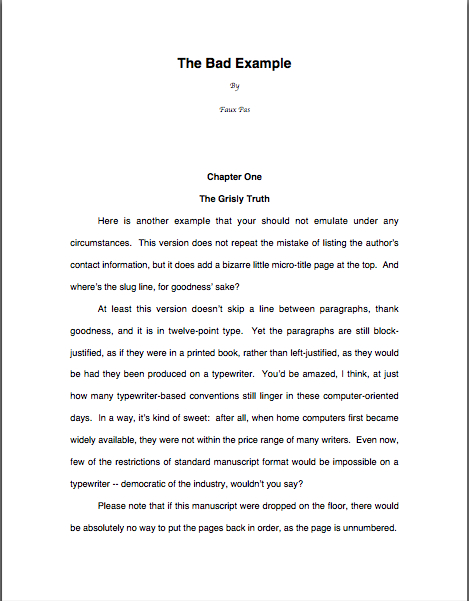
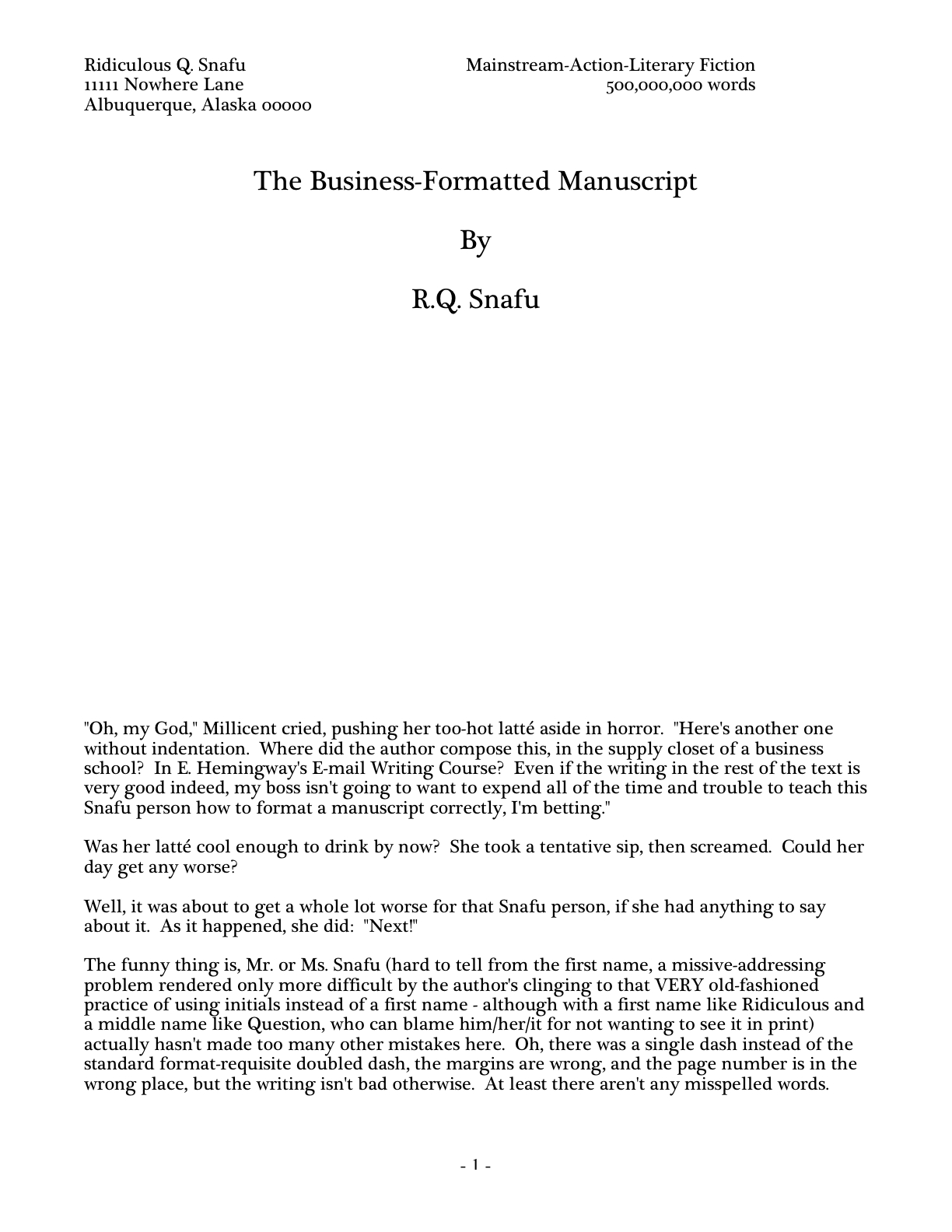


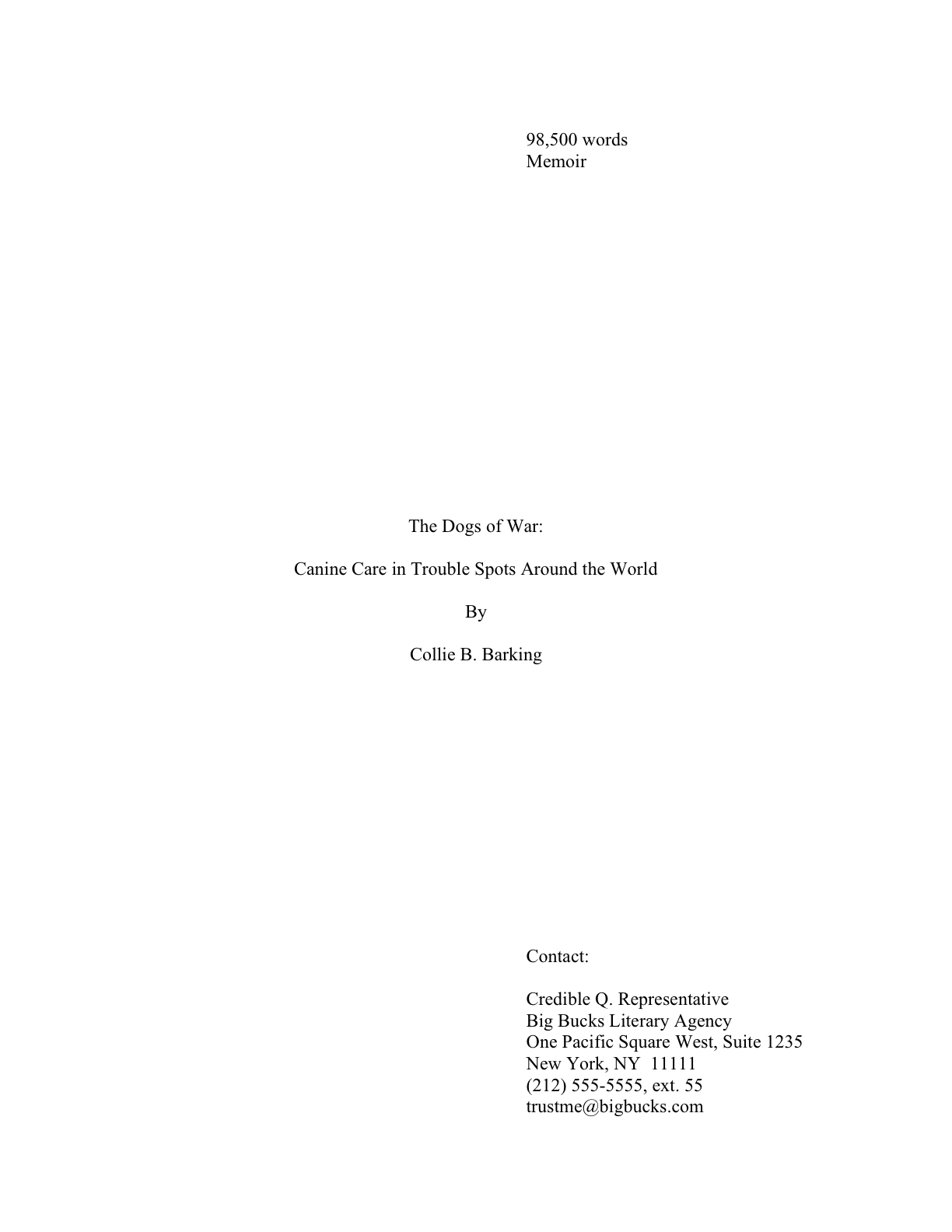
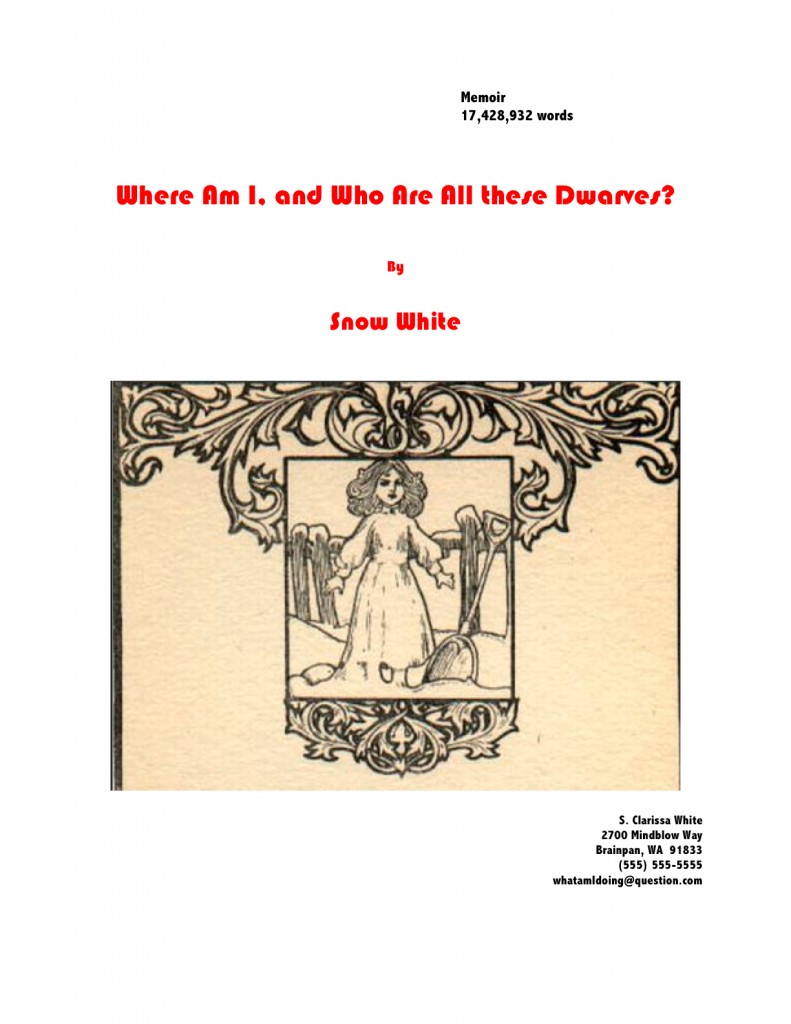

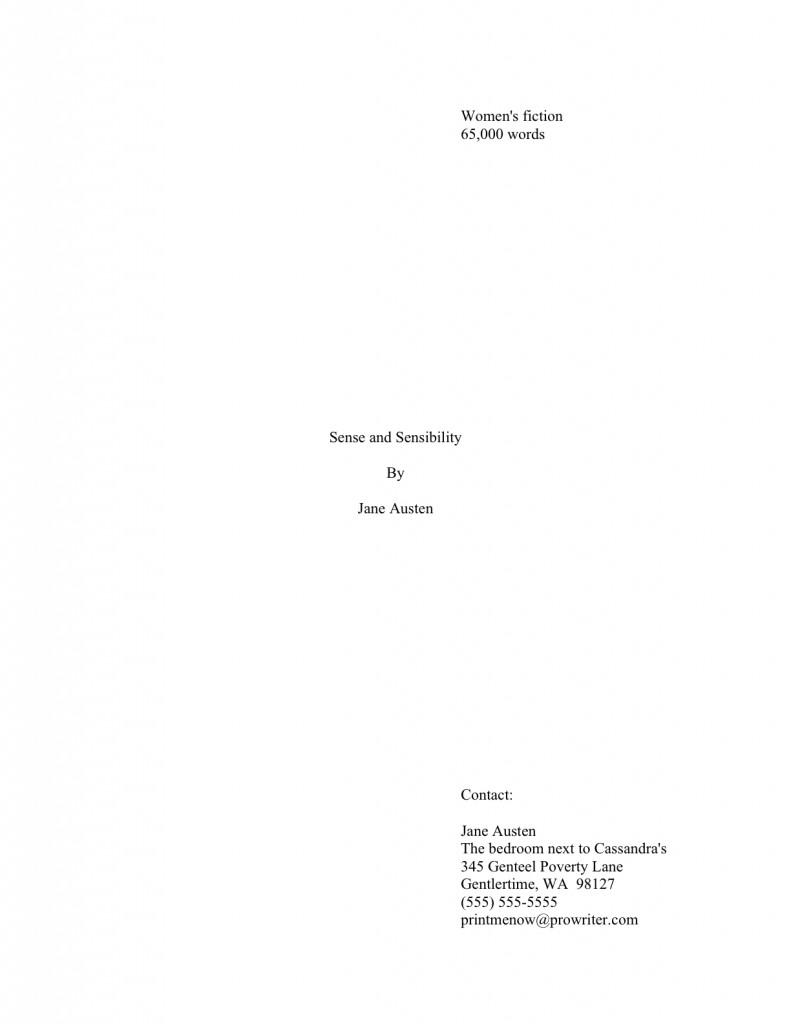
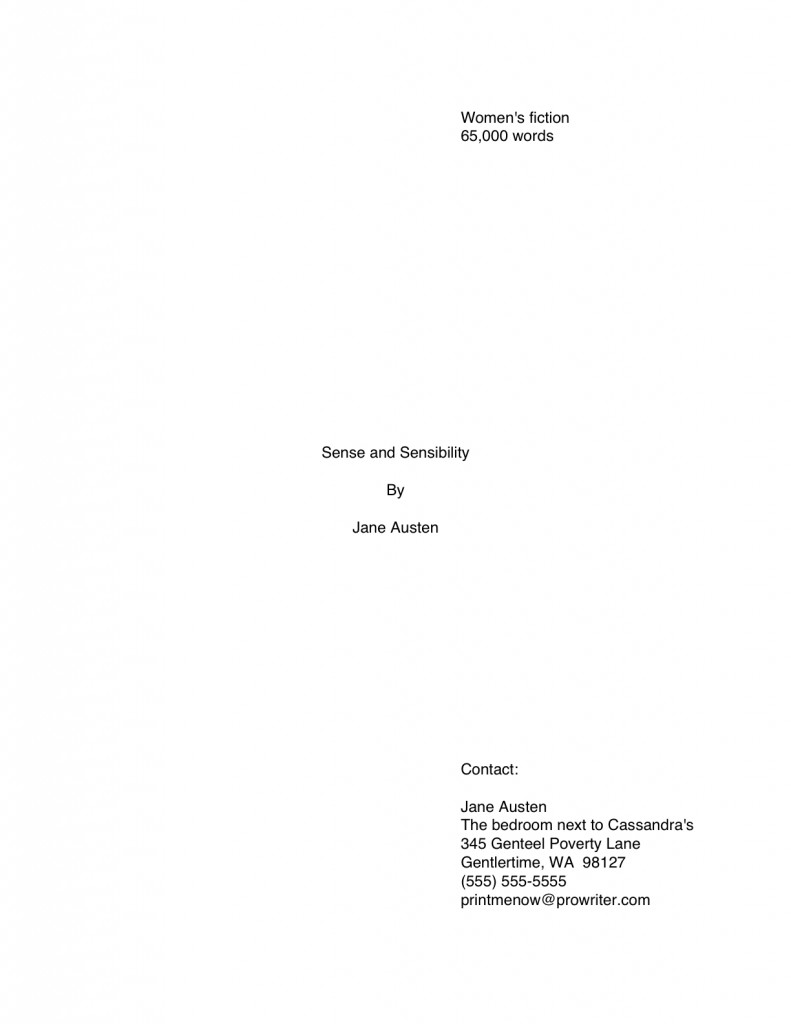
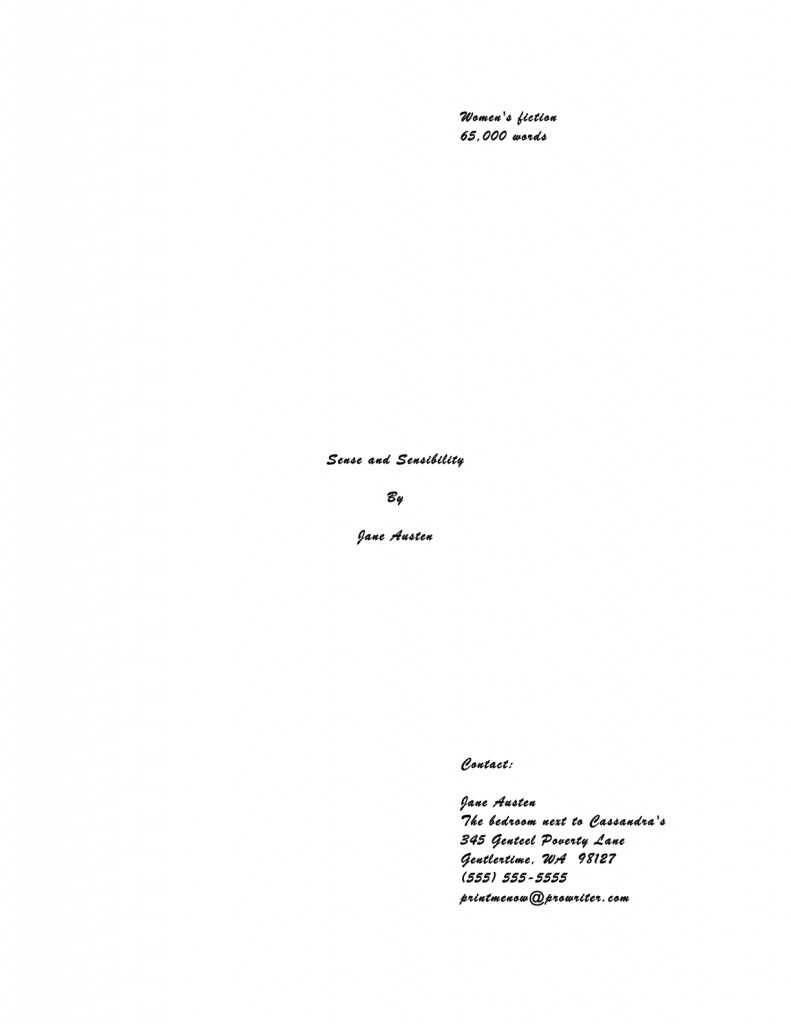
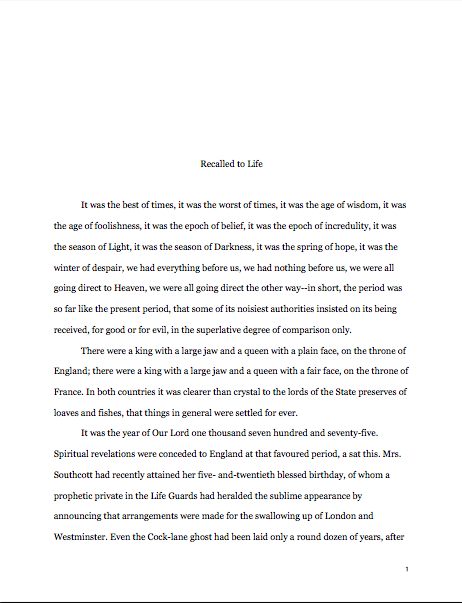
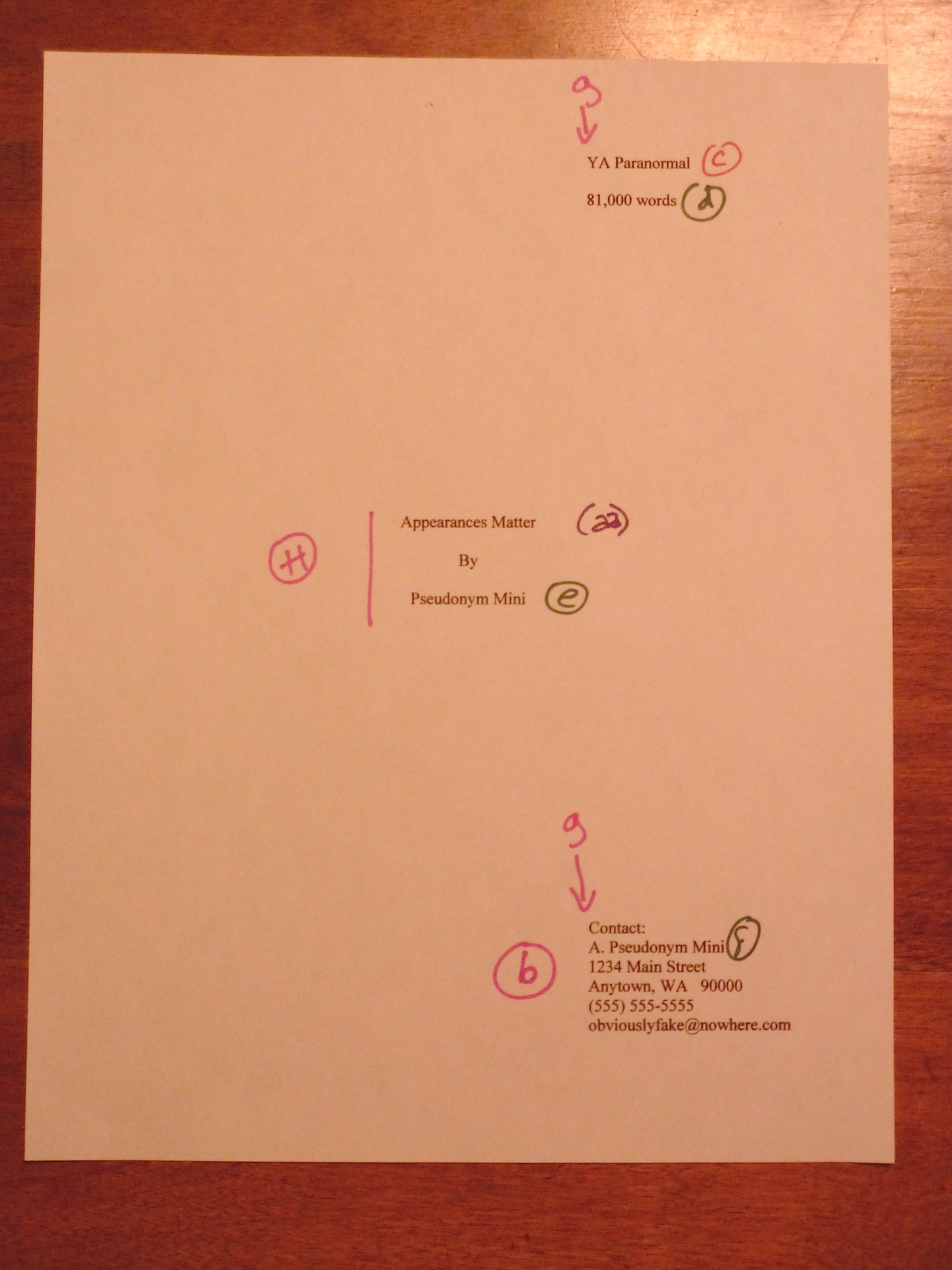
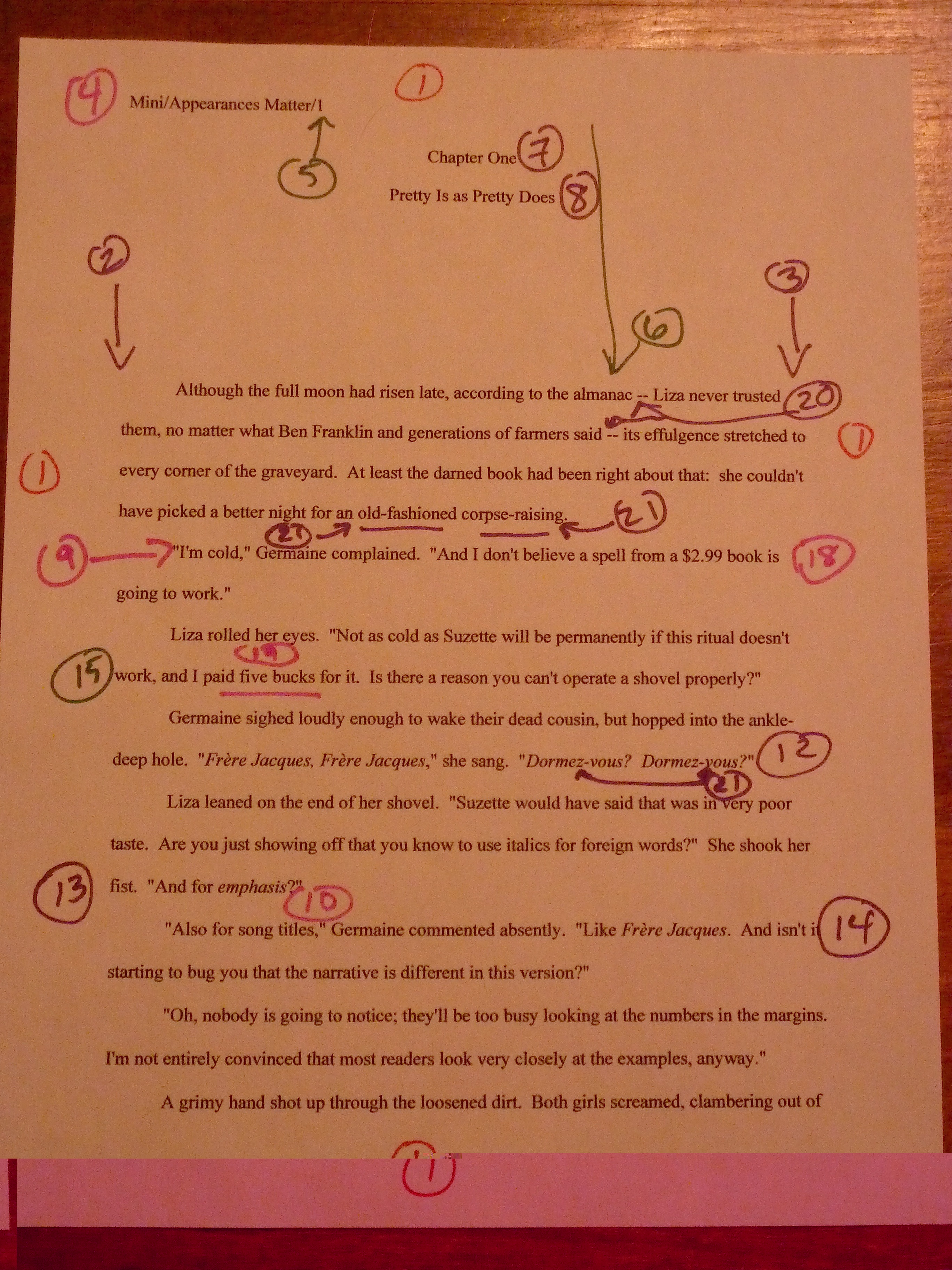
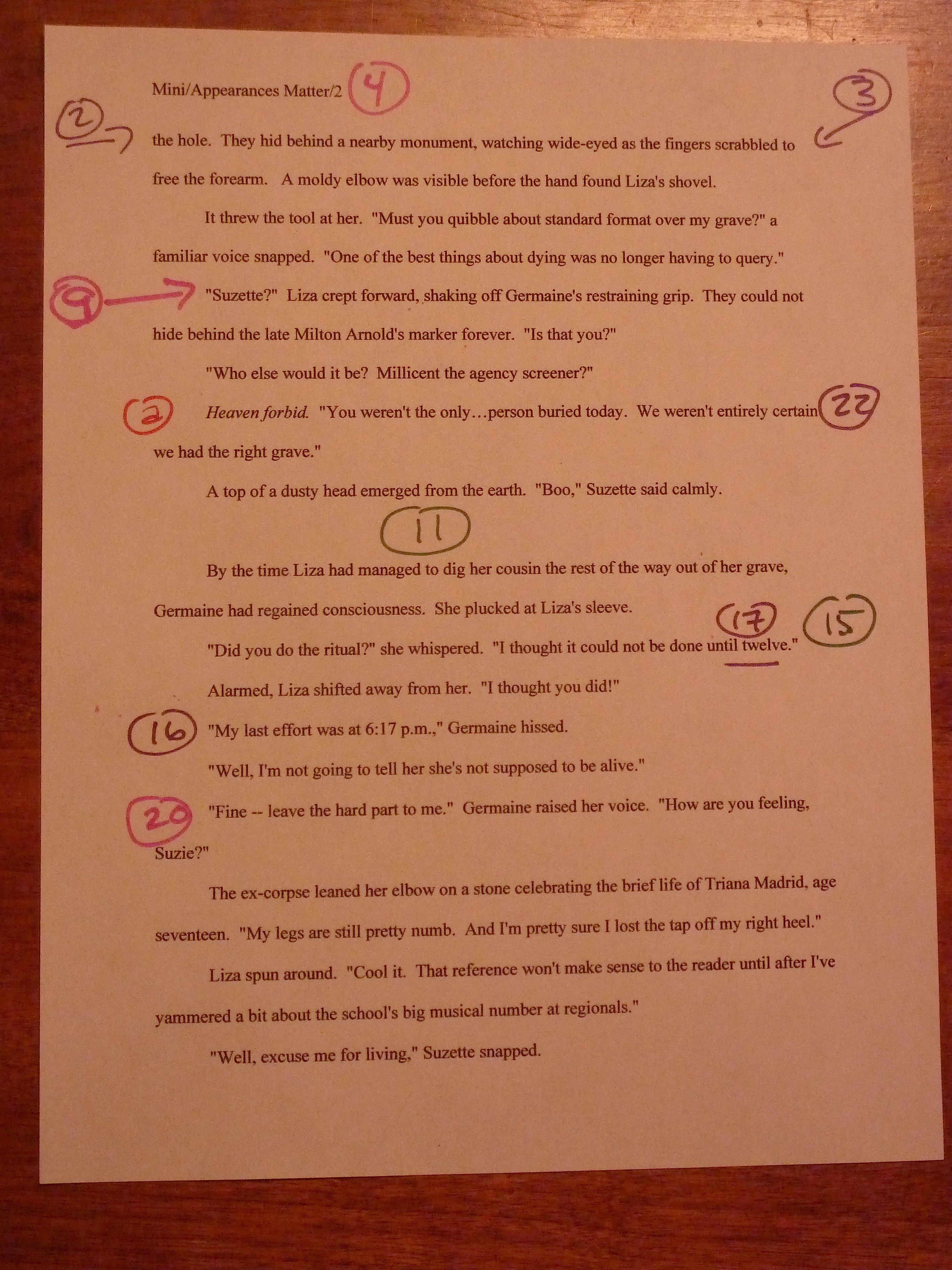
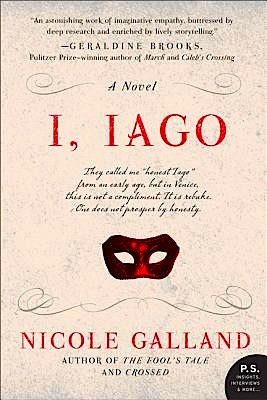







 When Bob Tarte left the city of Grand Rapids, Michigan for the country, he was thinking peace and quiet. He’d write his music reviews in the solitude of his rural home on the outskirts of everything.
 Bob Tarte’s second book, Fowl Weather, returns us to the Michigan house where pandemonium is the governing principle, and where 39 animals rule the roost. But as things seem to spiral out of control, as his parents age and his mother’s grasp on reality loosens as she battles Alzheimer’s disease, Bob unexpectedly finds support from the gaggle of animals around him. They provide, in their irrational fashion, models for how to live.