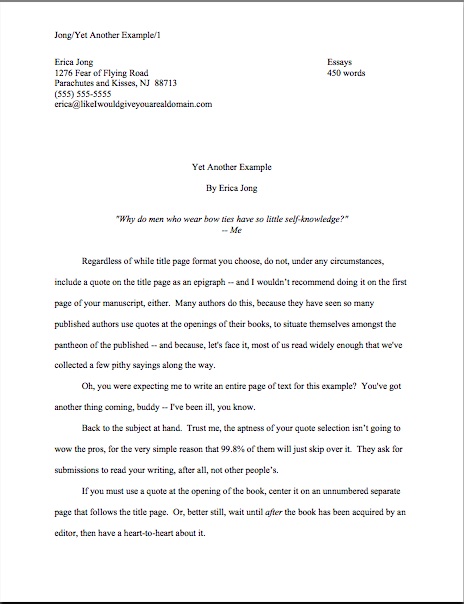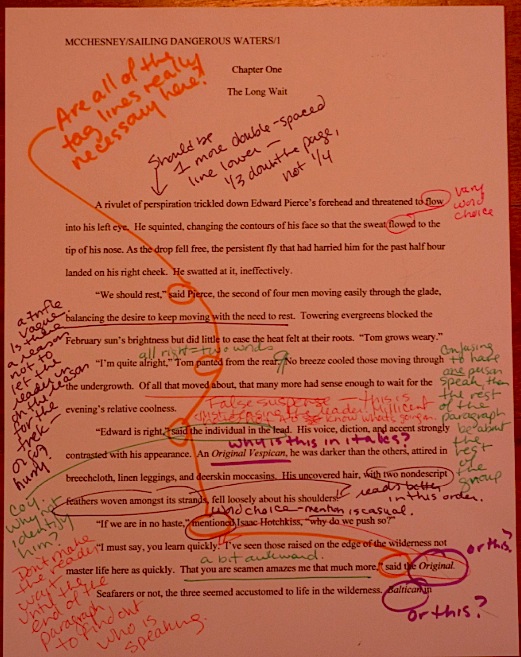
Formatpalooza, part XIV: proclaim joy to the world, or at least broadcast consistent punctuation to it

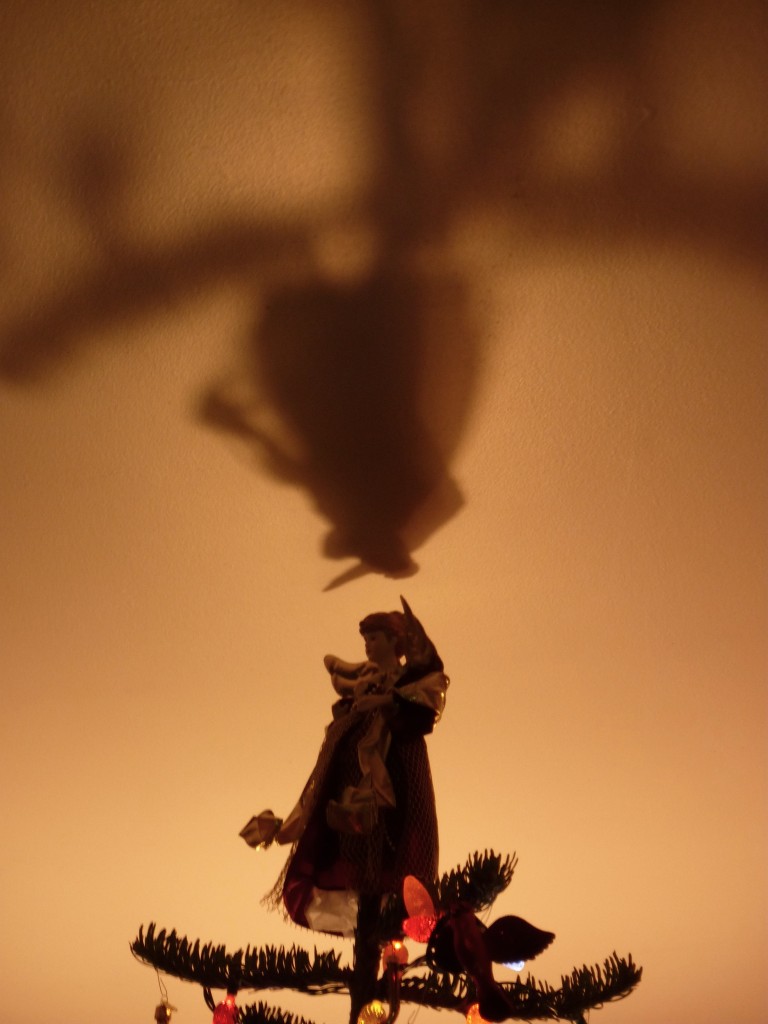
angel on top of tree

Before I launch today, I have a genuinely delightful announcement: please join me in a big round of applause for Julie Wu, who has just sold her first novel to Algonquin! Congratulations, Julie, and I’m really looking forward to its publication!

I know: in this market. After an amazingly swift round of submissions. I’m excited about this book.

Although I always get a kick out of trumpeting the glad tidings that a good writer has at last been recognized for her talent, I have a more personal reason to be gleeful over this one: Julie was one of my freshman roommates at Harvard — which tells you a little something about how seriously the Housing Office took the rooming application essays in those thrilling days of yesteryear. Our dorm contained so many aspiring writers that the click-click-click of fingertips on keys was actually more deafening during the early weeks of the semester than when term papers were due.

Perhaps I do not need to underscore the moral, but when has that ever stopped me? It can be done, people. Keep on plugging away.

On a not entirely unrelated note: sincere congratulations, campers, for making so far in this extended series on standard format for manuscripts — book manuscripts, that is; once again, let me remind you that short stories, magazine articles, theses, dissertations, and other types of writing are subject to other restrictions. We’ve been tackling the big stuff all year, and I’m proud of all of you for having the gumption, not to mention the faith in your writing, to work through it with me.

Over the next few days (with perhaps a brief hiatus on a silent night I could mention), I shall be tying up the last few loose ends of standard format, including a reader-requested intensive discussion of the ins and outs of dialogue formatting and punctuation. As if that weren’t enough reason to tune in as soon as the turkey-induced stupor begins to subside a little, I have it on pretty good authority that a certain Furtive Non-Denominational Gift-Giver will be dropping by on Boxing Day with the announcement of a contest that may be very interesting to those of you who write either literary fiction or memoir.

Or even both. Perhaps while I’m sitting on the FNDGG’s lap, we can discuss adding a third contest category for that pervasive kind of writing that walks the sometimes very thin line between the two.

Today, I would like to talk about two hallmarks of the professionally-presented manuscript, proper punctuation and consistency. Before any of you yawn prodigiously and turn one eye to watching yet another sitcom version of A CHRISTMAS CAROL, please hear me out on this one, because these are two areas where the vast majority of submissions fall down on the job.

Perhaps because — feel free to pull out your hymnals and sing along, campers — the aforementioned vast majority of submissions are sent off without their writers taking the time to read the manuscript IN ITS ENTIRETY, IN HARD COPY, and OUT LOUD. And yes, Virginia, this is an excellent strategy, even if you happen to be planning to submit exclusively via e-mail.

Why is there honestly no substitute for that dramatic reading? It’s simply easier to catch typos, inadvertently skipped words, and punctuation gaffes in hard copy than on a computer screen — and as we discussed in last summer’s foray into the dreaded Frankenstein manuscript, some of the most common outcomes of repeated self-editing passes are style that varies markedly between one section of the manuscript and another, accidentally deleted words and punctuation, and yes, Virginia, uneven voice.

I’m not talking merely about manuscripts that require revision (although most submissions could use more liberal helpings of that, frankly), but also the fruits of repeated revision. Often, such errors are not the result of compositional carelessness, but of repeated revision. Zeroing in on the same page, paragraph, or even sentence over and over again without re-reading the entire section can easily result in a Frankenstein manuscript, one that reads in hard copy as though it were cobbled together from the corpses of several drafts, sometimes ones written in different voices.

Is it any wonder, then, that to a professional reader like our old pal Millicent the agency screener — happy holidays, Millie! — a manuscript whose author appears to know the rules of punctuation and grammar on page 5, but not on page 6, or whose authorial voice sounds substantially different on p. 1 and page 241, might seem ripe for rejection, on the assumption that the submitter needs to give it another round of polishing?

The same principle holds true for formatting, I’m afraid. Whether you choose to adhere to the rules of standard format we’ve been discussing over the last couple of weeks is ultimately, of course, up to you. But once you choose to follow a particular rule, you must obey it 100% of the time in your manuscript.

Let me repeat that, because it’s monumentally important: it’s not enough to adhere to a formatting rule most of the time; you must cleave to it in every single applicable instance in the text.Inconsistency — be it of voice or punctuation, spelling or format — simply isn’t going to look professional to people who read manuscripts for a living.

See now why it might behoove you to curl up in a comfy chair and start reading your manuscript out loud, Virginia? It’s the single best way to identify and root out Frankenstein tendencies.

I used to think that I didn’t actually need to state this requirement whenever I taught about standard format. After all, isn’t the part of the point of a rule that it should be followed on a regular basis, rather than merely periodically, as the whim strikes? However, I’ve seen enough manuscripts and contest entries (yes, I still judge from time to time; my, but you’re full of good questions today, Virginia) by good writers who sometimes use a single dash and sometimes a doubled one (if you’re not absolutely certain which is correct, I can only suggest that you reread this earlier ‘Palooza post), or whose Chapters 1-3, 6, and 17 have a (ugh) single space after periods and colons, whereas Chs. 4, 5, and 10-12 have two, and the rest feature both…

Well, you get the picture. Apparently, the need for consistency is not as self-evident as I — or Millicent — might like to believe. The overwhelming majority of aspiring writers simply do not reread their own work enough to have a clear sense of either its liabilities or its strengths.

Or so we must surmise from all of that inconsistent formatting. And spelling errors. And repeated words. And scenes where characters do or say things that they’ve done or said half a page before.

You know, the kind of stuff that any reader would catch if she sat down with the physical pages and read them closely. As in– wait for it — actually sitting down and reading a manuscript IN ITS ENTIRETY, IN HARD COPY, and OUT LOUD after every major revision pass.

Come closer, and I’ll let you in on a secret of good writing: it flows smoothly.

A sure narrative voice is a consistent one. That’s why writers brand-new to the writing game so often labor under the quite mistaken impression that their favorite books were their respective authors’ first drafts, and thus (one assumes) that their own first drafts should be marketable without further revision: because a the author of a well-crafted narrative works hard to create the illusion of spontaneous consistency.

Awfully hard. Seamlessness is no accident, you know.

So what do you think a professional reader like Millicent, her cousin Maury the editorial assistant, or their Aunt Mehitabel the veteran contest judge thinks when they encounter, say, one sentence that’s in the past tense, followed by three that are in the present? Or a character named George on page 8 and Jorge on page 127?

“Inconsistency,” they breathe in unison. “This manuscript needs more work.”

Or at least a good authorial read-through IN ITS ENTIRETY, IN HARD COPY, and OUT LOUD. If not after every revision, then at least prior to submitting it.

It’s also not a bad idea to have more than one set of eyes go through it, because all of us simply see a great many more grammatical errors and formatting oddities than we did, say, fifteen years ago. Remember back when everyone thought it was so funny that the vice president at the time (I didn’t call that one) corrected a child at a spelling bee who had spelled potato correctly, causing him to change it to potatoe?

At the time, the literate world rocked with laughter. Now, we routinely see supermarket signs advertising potatoe and tomatoe prices. And that’s a bad thing for literacy, because the more you see the error, the more likely is to make it yourself.

Why? Like Millicent and standard formatting, sheer repetition can make it start to look right to you.

Especially when you spot such errors in ostensibly credible sources. It used to be a rarity to see a spelling mistake in a newspaper or magazine article, because they were so closely edited; since the advent of on-screen editing, it’s now not uncommon to see a misspelling or grammatical error in a published book.

Had I mentioned that there’s just no substitute for reading a piece of writing IN ITS ENTIRETY, IN HARD COPY, and OUT LOUD? The eye is simply too likely to skip an error on-screen, partially because people read about 70% faster.

Then, too, AP standards — i.e., what governs what is considered correct in a newspaper or magazine — have, as we have discussed, recently adopted a number of practices that would not be kosher according to the dictates of standard format. The aforementioned single space after the period or colon, for instance, or capitalizing the first word after a colon.

All together now: sacre bleu!

While eliminating the extra space has been seen in published books for a while (but that doesn’t mean it’s necessarily proper in a manuscript, right?), post-period capitalization was practically unheard-of in published books until just a couple of years ago. Now, one sees it periodically (often, not entirely coincidentally, in books by journalists), along with some rather peculiar interpretations of the semicolon and the ellipsis.

And what happens, Virginia, when you see rules routinely bent in this manner? That’s right: confusion. Inevitably resulting, no matter what my agent friend says, in good writers raising questions like this:

I tried searching for this, but didn’t find an answer. Ellipses! Is the proper format:?.[space].[space].?or … with no spaces? Thanks as always.

This is a perfectly reasonable question now, of course, but it’s not one that was at all likely to come up even five years ago. Prior to that, pretty much any printed source would have adhered to the traditional rules governing ellipses, with the natural result that fewer writers were confused. Heck, they might even have learned the contextual rules governing ellipses in school.

What’s that, Virginia? You want to know what those rules are, since I’ve brought them up? Happy to oblige.

1. Ellipses are most commonly used mid-sentence, to mark a pause in speech. In this context, the periods in the ellipse should appear without spaces between them — and without spaces between them and the surrounding words, either. In other words, they should look like this:

“I’m appalled,” Ghislaine said. “More than appalled. I’m…horrified.”

2. Ellipses may also be used to alert the reader to skipped text in the middle of a quote. In these instances, whether an ellipse should have a space between its end and the end of the next word is entirely dependent upon whether the beginning of the next quoted part is a new sentence. Thus, if the original quotation was,

“I am in no way endorsing this policy or any other, because I feel it would be bad for the nation. I cannot be held responsible for its unhappy results.”

It would be proper to reproduce excerpts as:

The prime minister’s statement was unequivocal: “I am in no way endorsing this policy…because I feel it would be bad for the nation.”

Or as:

The prime minister’s statement was unequivocal: “I am in no way endorsing this policy… I cannot be held responsible for its unhappy results.”

3. Ellipses may also be used to show where the narration expects the reader to fill in the subsequent logic, as well as when speaker’s voice has trailed off into silence. As in:

Harry smiled, slipping one arm out of a sleeve that didn’t cover too much of his arm in the first place. A quick wiggle, and the rest of his shirt was off. Then he reached for his belt…

As much as some of you might want me to complete that paragraph, this is a family-friendly website. Besides, you’re perfectly capable of imagining the rest for yourself, are you not? In this case, the ellipse indicates my faith in your imaginative powers.

As would this, if I were writing dialogue — the most common use of this type of ellipsis:

“My, it’s hot in here.” Coyly, Harry shrugged his Flashdance-style sweater off one shoulder. “If only there were a way we could cool off…”

4. In reproducing a quote, an ellipsis can tell the reader that the quote continued, despite the fact that the writer chose not to show it in its entirety. This can come in handy, especially when writing about the kind of speaker who drones on and on:

“I deny the allegations,” the senator said. “I deny them absolutely, unequivocally, and in every other way. I deny that I cavorted in the House; I deny that I cavorted with a mouse. I deny that I cavorted in socks; I deny that I cavorted with a fox…”

Makes sense, doesn’t it? (And just between us, Virginia, wasn’t this a clever way of me to answer a reader’s question in a post that’s really about a larger issue?)

As nit-picky as all of these rules are, sometimes, good writers over-think them. So much so that they sometimes extrapolate extra rules of their own — but don’t necessarily apply them consistently throughout their manuscripts.

Yes, you read that correctly, Virginia. (She’s getting quite a workout today, is she not?) In my experience, most aspiring writers are very good about following the rules, once they know about them. In fact, really conscientious writers are quite a bit more likely to subject their manuscripts to extra restrictions than to ignore any of the established rules.

What kind of extra rules, you ask? Well, in our last sojourn on the standard format merry-go-round, two different readers asked how to format apostrophes and quotation marks. Ripped ruthlessly from their original context:

Could you in one of your really wonderful (and I really mean wonderful) posts on standard manuscript formatting devote a paragraph to quote marks and apostrophes? Times New Roman can have them both straight and curly, so which should I use? Or should I just make sure I’m consistent and leave it at that?

and

A related problem I have is in trying to place an apostrophe at the beginning of a word, particularly when writing dialogue and attempting to add a bit of the vernacular. To just type it, the apostrophe ends up being a “front-end” single quotation mark. I have to resort to some spacing and deleting shenanigans to get to appear correctly.

I freely admit it: I’m always a bit nonplused when I get questions like this, ones that assume a rule that just isn’t observed in professional manuscripts. As tempting as it might be to dust off my personal preferences on the subject and present them as a binding rule — which, as we’ve discussed throughout each of this autumn’s ‘Paloozas, is not an unheard-of thing for either a professional reader or a writing advice-giver to do — but the fact is, the expectations about both apostrophes and quotation marks in manuscripts have remained unchanged since the days when every submission was produced on a manual typewriter.

Which, in case you haven’t seen one lately, provided precisely one option for an apostrophe (‘) and exactly one for a quotation mark (“). On the same key, on most typewriters.

What does this mean for manuscript format? Good news, insofar as it translates into less work for writers: as long as the format is consistent and the punctuation is correct, Millicent’s not going to care one way or the other. Pick the one you prefer, and cling to it like an unusually tenacious leech.

I can completely understand why the two writers who brought it up — or any aspiring writer — would have wondered about this point: as readers, we do see various styles of apostrophe and quotation mark turning up in published books. Many readers also seem unaware that while U.S. publishers use doubled quotation marks (“), U.K. publishers use single quotation marks (‘), resulting in a whole lot of writers on both sides of the pond wondering vaguely if those other types of quotation mark mean something different — to mark text as ironic, perhaps?

Oh, you may laugh, but actually, it’s not all that great a logical leap. Given how counter-intuitive some of the rules of standard format are, it would not be at all astonishing if the publishing industry harbored some formatting preference that half of the writers in the world had heard nothing about.

But that’s not the case here; there is no special punctuation for irony. You have my full permission never to think about it again. Go sleep the undisturbed sleep of the just.

Before you go, though, one more piece of formatting advice: as you make your way through the bewildering forest of advice out there, toting your massive grain of salt, be aware of the fact that many seemingly authoritative sources out there disagree on certain points for the very simple reason that they’re talking about different things.

Pay close attention to context, because advice-givers often do not say explicitly, as I do, “Look, what I’m talking about here applies to book manuscripts and proposals, not other types of writing. So if you are trying to format a short story for submission to a magazine, please seek elsewhere.” Because such a high percentage of the aspiring writers’ market wants easy answers, preferably in the form of a single-page list of rules universally applicable to every writing venue, the temptation to produce a short, one-size-fits-all list of rules is considerable.

That doesn’t mean you should disregard such lists entirely, of course. Just keep in mind that any list that purports to cover every type is necessarily going to run afoul of some established standard somewhere — and that occasionally, rules pop up online and at conferences that would make Millicent’s eyes pop out of their sockets with astonishment.

Which is why, in case you’ve been curious, I have been going over even the simplest of the actual rules in such great detail, and with practical illustrations; I want all of you not only to adhere to the strictures of standard format, but to understand why each rule is to your advantage to embrace. That’s why I keep asking (and asking, and asking) if anybody has any questions. I just don’t think handing creative-minded people a brief list of mysterious orders is the best means of helping you become comfortable with the industry’s expectations.

So if anyone is looking for terse, bullet-pointed to-do lists for writers, I think any of my long-term readers can tell you that this blog is NOT the place to start. As the thousands of pages of archived posts here can attest, I am the queen of elaboration. Lots and lots of elaboration.

Speaking of elaboration and unnecessary doohickeys writers sometimes shoehorn into their book manuscripts and proposals, let’s talk about what should happen on the last page. Here, too, aspiring writers often give themselves extra trouble.

For a book manuscript, the proper way to end it is simply to end it. No bells, no whistles, no # # #, no -86-. Just stop writing.

Even the ever-popular THE END is not needed. In fact, I know plenty of Millicents (and their bosses, and editors, and contest judges) who routinely giggle when they see THE END typed on a last page, presumably — excuse my going out on an interpretive limb here — to indicate that a manuscript is not, in fact, going to continue.

“What is this writer thinking?” they ask one another, amused. “That I’m going to keep reading all of that blank space after the last paragraph, wondering where all of the ink went? That I’m incapable of understanding why there aren’t any more pages in the submission? Please!”

Remember what I was saying earlier in this series about professional critique being harsh? Don’t even get me started on professional ridicule.

Personally, I have sympathy for how confusing all of the various advice out there must be for those who have never seen a professional manuscript up close and personal. But honestly, some of the rules that commenters have asked about over the last three years must be from sources that predate World War II, or perhaps the Boer War. I’ve been editing book manuscripts for most of my adult life (and proofing galleys since early junior high school), and I have to say, I’ve literally never seen a single one that ended with “-86-”

So truth compels me to admit that I can sort of see where Millicent might find it amusing to see in a submission. Or might not find it amusing to see punctuation used inconsistently, or chapters begun without an indented paragraph (more on that one next time), or dashes that are sometimes doubled and sometimes not. Because while much of writing is a matter of style, and might thus vary throughout a manuscript, format, punctuation, and voice require consistency. Otherwise, how is Millicent to tell what is a fluke, what a typo, and what a daring experiment in the English language?

To people who read book manuscripts for a living in the US, the very notion of there not being a consensus about formatting, punctuation, spelling, grammar, and the other rule-based aspects of writing is downright odd: why, the evidence that there is a consensus is sitting right in front of them. The mailman brings stacks of it, every single day.

“Oh, come on — everyone doesn’t already know these rules?” agents and editors frequently ask me, incredulous. “This information is widely available, isn’t it?”

That’s a quote, people — but as someone who regularly works with folks on both sides of the submission aisle, I have come to believe that the wide availability of the information is actually part of the problem here. The rules governing book manuscripts haven’t changed all that much over the years, from an insider’s perspective, but from the point of view of someone new to the game, the fact that they have changed at all, ever — coupled with these rules not being applicable to every conceivable type of professional writing — can look an awful lot like inconsistency.

And we all know how Millie, Maury, and Mehitabel feel about that, don’t we?

If the flurry of rules starts to seem overwhelming, remind yourself that although submissions do indeed get rejected for very small reasons all the time, it’s virtually unheard-of for any manuscript to have only one problem. Like ants, manuscript red flags seldom travel alone.

So I would caution any aspiring writer against assuming that any single problem, formatting or otherwise, was the only reason a manuscript was getting rejected. Most of the time, it’s quite a few reasons working in tandem — which is why, unfortunately, it’s not all that uncommon for Millicent and her cohorts to come to believe that an obviously improperly-formatted manuscript is unlikely to be well-written. The notion that changing only one thing, even a major one, in the average manuscript would render it rejection-proof is not particularly easy for a professional reader to swallow.

There is no such thing as a rejection-proof manuscript, you know — although there is definitely such a thing as a manuscript that rejects itself. While it would indeed be dandy if there were a magical formula that could be applied to any manuscript to render it pleasing to every Millicent out there, that formula simply doesn’t exist; individual tastes and market trends vary too much. Not to mention the fact that the slow economy is making most agents and editors really, really cautious about picking up any manuscript at all right now.

This is vital to understand about standard format: it’s not a magic wand that can be waved over a submission to make every agent, editor, and contest judge on the face of the earth squeal with delight at the very sight of it. But it is a basic means of presenting your writing professionally, so your garden-variety Millicent will be able to weigh it on its non-technical merits.

All I can claim for standard format — and this isn’t insignificant — is that adhering to it will make it less likely that your submission will be rejected on a knee-jerk basis. However, I’m not going to lie to you: even a perfectly-formatted manuscript is going to garner its share of rejections, if it’s sent out enough.

Why? Because every agent out there, just like every editor, harbors quirky, individuated ideas about how the perfect book should be written.

Sorry. If I ran the universe…

Well, you know the rest. Try not to lose too much sleep through trying to second-guess what Millicent and her ilk want to see. Just do your best: writing well and presenting a clean manuscript honestly is how pretty much all of us landed our agents.

Keep plugging ahead — I’m counting upon you to provide me the joyous literary announcements of years to come. Keep up the good work!
First Pages that Grab: Gayton Gomez’ Book Worms

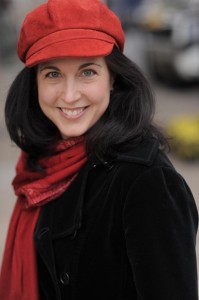
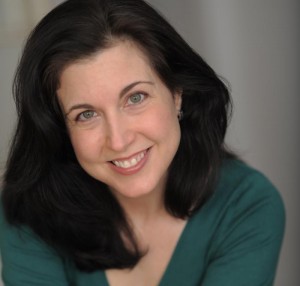
Gayton Gomez author photo 2Gayton Gomez author photo 1

Sorry that your promised reward for virtue is coming a couple of days late, campers — I was following the inviolate rule chez Mini that migraines and blogging do not mix. A wacky standard, true, but mine own.

Fortunately, the treat is, in my humble opinion, well worth the wait: the final winner in the YA category of the Author! Author! Great First Pages Made Even Better Contest, Gayton Gomez’ delightful BOOK WORMS. That’s the lady herself, depicted twice above.

Is she her own identical twin? No, merely kind enough to afford me an opportunity to discourse on the always-burning subject of author photos.

Remember back in the heady days of Authorbiopalooza, when I mentioned that it’s an excellent idea for an aspiring writer to start early to try to come up with a great author photo, because for most of us, finding one we like is a rather protracted process? At the time, you probably muttered, “Oh, yeah, Anne, it might take me months — nay, years — to find a photo that is both flattering and appropriate to my book’s subject matter. Because, alas, I do not have a professional photographer following me around on a daily basis, and I have never so far in the long and fascinating course of my life stumbled upon a non-professional shot of myself that I like, I am inclined to believe you when you say it is going to be a struggle.”

Well, yes, both of those are pretty common reasons that authors have a hard time coming up with an author photo on that happy day when the editor of their dreams says, “Oh, and we’ll need a photo for the jacket by Tuesday. You already have one, right?”

And the author, trooper that she is, does violence to her initial impulse to blurt out that she had been laboring under the widely-held misconception that publishing houses maintained in-house battalions of shutterbugs for this very purpose. Instead, she replies brightly, “Tuesday? No problem. Would you like a hard copy, or should I mail you a jpeg version?” Then she hands up the phone — and dissolves into a little pool of deadline panic.

At the risk of repeating myself: start asking either your friends or a pro to get snapping now. You will be infinitely happier once you have a book contract in hand — or once the agent of your dreams wants to start submitting your work to editors accompanied by a bio graced with your smiling mug.

Gayton has been savvy enough start grinning early at those shutters, and has ended up with the other species of author photo dilemma: how does one choose between two awfully good pictures?

I know, I know: we should all be lucky (and photogenic) enough to have this problem, but actually, it’s a serious one. Looking good is not the only criterion for judging an author photo, after all: one also wants to look smart, interesting, approachable, and, well, authorial, right?

Yet from a professional perspective, what authorial looks like would necessarily vary depending upon the book itself. And that often comes as a great big surprise to first-time authors, used to those 1970s-80s glamour shots that made every inside back dust flap seem more or less identical.

The photo on the right falls very firmly into this category: it is more or less precisely what most of us have in mind when we think author photo, isn’t it? It’s attractive, polished, filmy of background, and conveys seriousness of purpose. This, it says, is an intellect to take seriously.

But does this photo also say that this is someone who writes genuinely funny YA? Or does the one on the left convey that spirit better?

A forest of hands has sprouted up all across the English-writing world. “But Anne,” the visually-oriented cry, “how can I know which of these is a better photo of today’s winner? And surely, that eye-catching red would not be appropriate for every book jacket. Isn’t this an instance where playing safe is the better bet?”

Not necessarily, hand-raisers, but you are quite right that Gayton’s future (and lucky) publisher’s marketing department might well want to weigh in on the bright red issue. (Although generally speaking, book covers with red on them sell better than those sporting other colors, probably because the eye is attracted to red faster than any other color in the spectrum. Rumor has it that when Cary Grant first started making color pictures, he used to wander around the set, grabbing every red object and carting it out of shot. Too distracting from his handsome mug, he believed.)

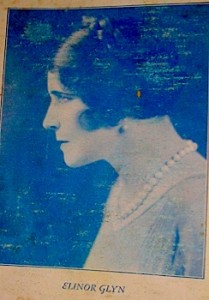
Let’s assume for the sake of argument, however, that this photo is intended not for a book jacket — at least not right away — but for the top of an author bio to be tucked into a submission packet. Yes, credibility is important in a bio photo, but so is personality and book-appropriateness. After all, this rather intense shot of Elinor Glyn was perfect for her classic of romantic introspection, IT:

elinor-glyn-author-photo

Not to be confused, of course, with Stephen King’s horror classic, IT. Here’s what his author photo looks like these days:

Stephen King

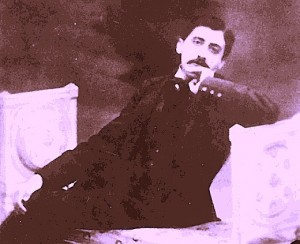
Not exactly a 1980s glamour shot, is it? But you cannot deny that it is appropriately menacing for his chosen genre — that’s horror lighting if I have ever seen it. By the same token, Marcel Proust’s author photo just screams ravishing sensibilities.

Marcel Proust

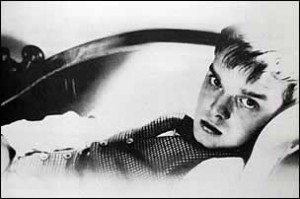
What constitutes an appropriate visual clue to ravishing sensibilities changes over time, naturally. When Truman Capote’s first novel, OTHER VOICES, OTHER ROOMS, was released, its publishers shocked the literary world with this author photo:

Truman Capote's first author photo

Quick, those of you who have never read this lovely debut: based upon the photo alone, what was the novel about? (Hint: this photo was an impeccable choice.)

What does all of this mean for Gayton’s photo choice? Well, you tell me. Let’s take a gander at some of her writing and see which you think would be a more appropriate match.

Here is the winning first page of BOOK WORMS — and, as always, if you are having trouble catching the details, try enlarging the image by holding down the COMMAND key and pressing + until it is big enough to read.

Book Worms p 1

Quite the grabber, eh? Actually, Gayton piqued the judges’ interest with her answer to what her book would add to her chosen book category:

Cassandra Wainwright is the first teenage protagonist in the Young Adult genre to use a magical bookpass to jump into the plots of classic novels. She’s the first heroine of any genre to foil a Ponzi scheme run by Heathcliff of Wuthering Heights, who is dating Cassandra’s unsuspecting older sister.

While there was a fair amount of debate about whether that first sentence is empirically true — several of us had dim recollections of having read something like this as children, but none could recall an actual book title — the second is almost certainly true. (Which just goes to show you, campers: book descriptions are not the best places for superlatives or claims to be the first writer to do anything. You can never be absolutely certain that (a) some Victorian spinster didn’t write a book with a similar premise that’s been out of print since Henry Ford invented the assembly line and (b) some agent, editor, or contest judge won’t have read the last extant copy as a preadolescent. Literary types find their way into all kinds of archives.)

All that is quibbling, however. Just look how charming the fleshed-out premise is:

Book Worms synopsis

Before we move on, I would just like to applaud Gayton for writing a really solid 1-page synopsis — which, as those of you brave souls who worked your way through Synopsispalooza can attest, is no mean feat. As a quick review, what makes this such a good example?

If you immediately cried out, “I was blown away by the fact that Gayton managed to present not just the premise, main characters, and central conflict, but some indication of how that conflict is resolved,” give yourself an A for the day. That’s a lot to pull off in a single page of text without making it real like a laundry list — well done, Gayton!

If you also shouted, “There are unique, telling details here!” go ahead and move to the top of the class for the entire weekend. Gayton has made the very smart move of including specifics in her synopsis, rather than the more common generalities — and done so in a light-hearted manner. I defy Millicent not to smile at the very sight of the phrase catches Cassandra and Eugene red-handed in Romeo and Juliet.

But all of you are getting impatient for the close textual analysis for which these prize posts are famous, are you not? Okay, here is that first page again, decorated with Millicent the agency screener’s patented scrawl.

Gayton edit

Surprised that such a grabber of an opening — and one that so perfectly captures the ambient mood of Ann Radcliffe’s Gothic thriller, THE MYSTERIES OF UDOLPHO, too — would attract this much editorial ink? Actually, there’s a red flag in that first sentence that would, unfortunately, prevent quite a few Millicents from reading beyond it. Can anyone tell me what it is?

If you are jumping up and down, shrieking, “It’s in the passive voice! It’s in the passive voice!” take yourself out for ice cream. It was constructions, while both traditional in fairy tales and more accepted in YA than in adult fiction, tend to be eschewed in professional writing, for the very simply reason that most Millicents (and their bosses, as well as the editors to whom they sell manuscripts) have been specifically trained to regard it as low-quality writing. While generally speaking, it’s a good idea to avoid the passive voice anywhere in a submission, the first line of the first page is a particularly fine place to excise it.

And why is that, ‘Palooza followers? Chant it with me now: professional readers do not read like other people. Instead of scanning an entire scene, page, or even paragraph before deciding whether they find the writing engaging, they read a single sentence at a time. If they like it, they move on; if they do not, they will usually just stop reading.

Or, as Millicent likes to put it: “Next!”

Gayton’s first page is a textbook example of a submission that might well charm a reader who picked it up in a bookstore, yet get rejected without comment by many pros. And that’s a real pity, for if Millicent would just keep reading, she would find a great premise here.

The tension is also very well established by the end of the page (speaking of sentences in the passive voice), but I have a couple of suggestions to heighten it even more. First — and I don’t know why writing teachers don’t bring this one up more — having the sentences get shorter and choppier as soon as Cassandra gets scared would automatically crank up the suspense.

Why? Well, think about it: a switch to shorter, pithier sentences conveys the impression of panting. Subconsciously, that seems scarier: a frightened person would tend to speak in shorter, breathier bursts than one relaxing on a couch like Uncle Truman above; her heart would pound, and she would look around quickly. While it would certainly be possible to describe all of that in long, luxurious sentences (as, indeed, I just did), why not allow the narrative structure to help draw the reader into the mood of the piece?

Another means of keeping that tension high, at least from Millicent’s point of view, is not to have the yes/no question in paragraph 4 answered with a no. This is not a bad general rule for any first page — or indeed, any dialogue: answering a yes/no question with yes or no is almost invariably the least interesting response, and most of the time not even necessary. Frequently, as here, the very next sentence or phrase will answer the question more fully than the binary choice.

There’s also a more conceptual reason that no tends to be a pet peeve for professional readers: it cuts off possibilities in a way that a less categorical response will not. While this tends to be more true in dialogue than in narration, we can see quite plainly in paragraph 4 how completely no prevents our heroine from exploring one of her previously viable options.

A third way that this page cuts tension is through describing the unfamiliar room in mostly negative terms, rendering it harder for the reader to picture than a more fleshed-out description would allow. Since the reader has not yet seen Cassandra’s normal bedroom, it’s simply not as startling to see it disappear than if we had seen it before. Even a couple of familiar details in the first paragraph would help establish a firm image of her reading in her cozy bed, all set to be shattered in the next paragraph.

The judges and I would also have liked to see the room in which she finds herself in more detail, particularly in terms of sensual specifics. Was the new room the same temperature as her bedroom, for instance? Did it smell the same? Was she alerted to the change by an abrupt shift from electric light to candlelight?

And so forth. YA is known for its lush and detailed physical descriptions, so it would be hard to go overboard here. The goal would be to immerse the reader in a completely unfamiliar space, to make her feel as though she, too, has been suddenly transported into another realm.

Which just goes to show you: even a grabber of an opening can often be improved. With just a little bit more polishing, Gayton’s hook could provide more alluring bait for Millicent.

I’m genuinely pleased that this protracted series on winning first pages has illustrated that point so beautifully. Often, aspiring writers think of their opening hooks purely in terms of premise (Godzilla meets the Nazis — who will win?), opening with conflict (His medals melted from the Godzilla’s breath, the Nazi drew his pistol…), or just plain pretty writing (Flames spurted lazily across the tar macadam, a modern-day Wotan surrounding his wayward daughter Brünnhilde with protective fire…). In practice, a true grabber incorporates all three, and does so in a manner so appropriate for the book’s chosen category that Millicent knows immediately precisely where it would sit on a shelf in Barnes & Noble.

A tall order? You bet. Doable for a good writer? Absolutely.

Have you reached a decision about which author photo fits the voice and story best? Personally, I would go for the more adventurous one — it comes across as both more dynamic and a trifle younger. The blurred traffic in the background gives the impression that she’s going places, just as Cassandra is in the book.

That being said, were this author to be writing across several book categories (am I remembering correctly that you do some travel writing, Gayton?), I would opt for the other photo for a general author bio. It’s a lovely example of a particular type of professional photo: as we discussed above, it does just scream this is an author.

That’s something I suspect no one who reads your manuscript will ever doubt, Gayton. Great job, and I’m sure all of us here at Author! Author! are looking forward to reading the rest of the book!

Refreshed from our little foray into close textual analysis? Excellent. Next time, we’ll be diving right back into the mysteries of standard format. Keep up the good work!

Formatpalooza, part IX: areas of authorial discretion, or, there are rules, and there are rules

full moon in the gutter

At the risk of seeming trite, I would like to point out that it has been raining a great deal in Seattle of late. Not the normal constant misty drizzle that characterizes our dark Pacific Northwest winters, but sheets. Buckets. The proverbial cats and dogs, with an antelope or two thrown in by whatever celestial water-monger has seen fit to try to drown us.

I’m not saying we’re worried. I’m saying my neighbors came over this evening to ask how long a cubit was, so they could read the blueprints for their ark.

But enough idly wondering where on earth they found a pair of yeti for their menagerie. Time to get back to the matter at hand: manuscript formatting.

Over the last couple of posts, we have been gladdening our hearts (okay, gladdening my detail-loving editorial heart) with discussion of something that Millicent the agency screener just loves to see, a properly-formatted first page of a manuscript, as well as phenomena she sees more often, but likes less, various species of improperly formatted page 1. The Millicent-pleasing version looked, if you will recall, a little something like this — and, as always, if you’re having trouble seeing the details, try enlarging the image by holding down the COMMAND key and pressing + repeatedly.

good example revised

Now that’s a lovely page 1: unprovocative, professional-looking, and flaunting lots of nice, clean white space at the top. “Ah,” Millicent murmurs, settling back into her chair, “now I can concentrate on the writing and the story.”

Contrast that, please, with the much more cluttered short story format all too many book and book proposal submitters mistakenly believe is universally applicable to any writing on paper:

Pretty distracting to the eye, is it not? Admittedly, not all embracers of this format will choose to clutter the space up further with an epigraph — which, as we discussed last time, it not generally the best idea at the submission stage, no matter what you want the published version of your book to look like — but one does not need to be the Amazing Kreskin to predict that their submission packets all share another unprofessional characteristic: no title page.

How do I know that? Well, think about it: since all of that eye-displacing verbiage — title, book category, word count, contact information — would in a properly-constructed submission packet appear on the title page, why would a submitter repeat all of it at the top of page 1?

Both page 1 and the opening of each subsequent chapter should include all of the spaciousness of that first example, not launching into the text until 14 single lines from the top of the page. (Or, to put it another way, 6 double-spaced lines under the chapter title. And for those of you who do not know how to insert a hard page break into a Word document, it’s located under the INSERT menu. Select BREAK, then PAGE BREAK.)

Did that bit about the subsequent chapters catch any of you by surprise? To prevent that kind of confusion in future, let’s go ahead and hatch a new axiom: each new chapter should begin on a fresh page, but the first page of every chapter should be formatted exactly like page 1.

Yes, Virginia: exactly, at least in terms of formatting. Since the book’s title should appear on the title page, why would the opening of the book and the opening of Chapter 6 be different?

So you may see that in action (and to prove that I practice what I preach), here’s what could be the first page of Chapter Six my memoir:

Memoir wo title

I said could, because actually, I’m not a big fan of chapters named Chapter Six, even if they happen to be the sixth chapter in the manuscript. It’s sort of like dubbing a suburban street lined with elm trees Elm Street: there’s nothing inherently wrong with a straightforward, descriptive title, but you must admit, it’s not startlingly original.

It’s not precisely going to come as a shock to many readers when Chapter Six appears immediately after Chapter Five, after all. At least not readers whose counting skills have moved past their first hand.

Speaking of hands, I see many of them waving in the air, apparently trying to attract my attention. “Okay, Anne,” those of you fond of naming things inquire, “how should a chapter title appear on the page, if I also want to number it? Or do I need to choose between numbering and titling?”

Not at all — go ahead and include both, if that makes you happy. In fact, it’s actually a little easier for agents and editors if you do number titled chapters; it’s simpler for a feedback-giver to say, “Please tone down the snarkiness in Chapter 6 of your memoir, Ermintrude,” than “You know the snarky tone in the chapter called something like How I Had My Way with Ocelots, or, Twenty-seven Ways to Skin a Cat? Give it a rest, Ermintrude.”

The formatting is very simple: just add the chapter title on the second double-spaced line of text, centered under the chapter number designation. (Freeing up mental space to speculate: what was Ermintrude doing with all of those ocelots?)

This format should sound at least a trifle familiar: we’ve already seen it in action in today’s first example. But in furtherance of my ongoing mission to place so many examples of correctly-formatted manuscript pages in front of your weary eyes that you’ll start automatically recoiling from pages in published books, muttering, “Well, that wouldn’t work in a manuscript submission, let’s take a gander at another one:

memoir w ch title

Actually, I had an ulterior motive in showing you that last example: in comparing it to the example just before it, do you notice anything about the amount of space between the chapter number and the beginning of the text?

If you immediately shot your hand into the air, exclaiming, “By gum, Anne, the area between the two appears identical! You’ve simply placed the chapter title within it, you clever lady,” award yourself an extra helping of hot fudge on your sundae. (If devoting a couple of weeks to discussing standard format doesn’t entitle an aspiring writer to dessert, nothing does.)

Regardless of whether a chapter’s opening page contains a chapter designation, a title, or both, the text should begin the same distance from the top of the page. The same logic would apply to any other information you might see fit to include at the beginning of a chapter — alerting the reader to a break between Part I and Part II of a book, for instance.

Since so many aspiring writers ask me about part breaks — hey, I’m not known as the Format Queen for nothing; I would much, much rather that my readers ask me than misformat their submissions — let’s take a look at the phenomenon in action. If Chapter 6 were the beginning of Part II of my memoir (it isn’t, but we aim to please here at Author! Author!), I would have formatted it thus:

memoir w part break

Starting to get the hang of this? Okay, let’s talk about inserting another common piece of introductory information in that heading: identifying a narrator-du-chapter in a multiple point-of-view novel.

If the switch comes at the beginning of a chapter, it couldn’t be easier: it’s simply another reader-signal that belongs above the pre-text white space, right? To see this principle in action, let’s pretend our ongoing example is fiction (which it isn’t; my middle school honestly was pelted with migratory spiders) and place the narrator’s name in the traditional spot:

new chapter with name

That’s the way one would handle the matter in a multiple POV manuscript like, say, Barbara Kingsolver’s THE POISONWOOD BIBLE, where the narrator changes with the chapter. If there were also a chapter title (perhaps not advisable in this case, as there’s already significant information at the top of that page for the reader to absorb), it would go between the chapter heading and the narrator identifier.

The important thing here is to be consistent — and that’s not always easy. Most seasoned authors probably wouldn’t appreciate my revealing a working secret, but pretty much everyone worries that someday her will forget to hit return one of the necessary times, so that Chapter 5 will begin — gasp! — twelve lines from the top, while Chapter 1-4 and 6 on will begin fourteen lines down.

Gives you the willies even to contemplate how Millicent might react to that level of formatting inconsistency, doesn’t it? Double-check each and every chapter opening before you submit; trust me, you’ll be happier in the long run.

Oh, my — that was an unpopular suggestion, wasn’t it? Fully a third of you have your hands waving impatiently in the air. “That would be absurdly time-consuming, Anne,” the irate third huff. “Oh, I understand that the chapter number or title needs to appear at the top of the first page and each subsequent chapter; I’m perfectly happy to leave six double-spaced blank lines between it and the first line of text, so the first paragraph starts seven lines down. But surely there’s an easier way to do this — a template or something? Perhaps Word has some sort of default setting I can employ so I need never worry about the issue again as long as I live?”

Standard format templates do exist, now that you mention it, but frankly, Word is already equipped with two perfectly dandy features for reproducing formatting exactly in more than one place in a document: COPY and PASTE.

In other words, create your own template. It’s very simple to do: just copy from “Chapter One” down through the first line of text, then paste it on the first page of Chapter 2, 3, etc. Once the format is in place, it’s a snap to fill in the information appropriate to the new chapter.

Oh, dear — now another group of you have raised your hands. Yes? “But Anne,” exclaim those of you who favor switching narrator (or place, or time) more often than once per chapter, “we are, as we believe the tag line identifying us as speakers just mentioned, advocates of those nifty mid-chapter signposts that we see all the time in published books, boldfaced notifications that the time, place, or speaker has just changed. How would I format that in a manuscript?”

You’re talking about incorporating subheadings into a novel, right? Or at least what would be a subheading in a nonfiction manuscript: a section break followed by a new title.

I’m fully prepared to answer this question, of course, if only to show all of you nonfiction writers out there what your subheadings should look like. Before I do, however, I’d like to ask novelists interested in adopting this strategy a quick question: are you absolutely positive that you want to do that?

That’s not an entirely flippant question, you know. There are plenty of Millicents out there who have been trained by old-fashioned agents — and even more editorial assistants who work for old-fashioned editors. And that’s important to know, because even in an age when mid-chapter subheadings aren’t all that uncommon in published books, there are still plenty of professional readers whose knee-jerk response to seeing ‘em is invariably, “What is this, a magazine article? In my day, fiction writers used language to indicate a change in time or place, rather than simply slapping down a subheading announcing it; if they wanted to indicate a change of point of view, they would either start a new chapter, find a graceful way to introduce the shift into the text, or have the narrative voice change so markedly that the shift would be immistakable! O tempore! O mores!

I just mention.

To this ilk of pros, the practice of titling a section, or even a chapter, with clear indicators of time, place, or speaker will always seem to be indicative of a show, don’t tell problem. And you have to admit, they sort of have a point: novelists have been indicating changes of time and space by statements such as The next day, back at the ranch… ever since the first writer put pen to paper, right?

As a result, fiction readers expect to see such orienting details emerge within the course of the narrative, rather than on top of it. Most of the time, this information isn’t all that hard to work into a narrative — and if a novelist is looking to please a tradition-hugging agent or editor, that’s probably a better strategy to embrace, at least at the submission stage. As with any other authorial preference for how a published book should look, you can always try to negotiate an editorial change of heart after a publisher acquires your novel.

At least if you don’t happen to write in a book category that routinely uses such subheadings. If recent releases in your book category are crammed with the things, don’t worry your pretty little head about editorial reaction to ‘em. An editor — or agent, Millicent, or contest judge — who routinely handles books in that category may be trusted to realize that you’re simply embracing the norms of your genre.

Millicents tend to approve of that. It shows that the submitter has taken the time to become conversant with what’s being published these days in the category within which he has chosen to write.

Which is to say: these days, plenty of very good fiction writers prefer to alert the reader to vital shifts with titles and subheadings. And nonfiction writers have been using them for decades; in fact, they’re more or less required in a book proposal. (More insight on those follows later in this series, I promise.) I just didn’t want any of you to be shocked if the agent of your dreams sniffs in the early days after signing you, “Mind taking out these subheadings? Seven of the ten editors to whom I’m planning to submit this hate them, and I’d rather be spared yet another lecture on the pernicious influence of newspapers and magazine formatting upon modern literature, okay?”

All that being said — and now that I’ve completely unnerved those of you who are considering submitting manuscripts with subheadings — you do need to know how to do it properly.

It’s quite straightforward, actually: a subheading is just a section break followed by a left-justified title. The text follows on the next double-spaced line.

Want to see that in action? Okay. Just to annoy traditionalists who draw a sharp distinction between fiction and nonfiction writing, let’s take a peek at a nonfiction page by a well-respected novelist:

Wharton subheading example

That caused some bloodshot eyes to pop wide open, didn’t it? “But Anne!” the detail-oriented exclaim, “that subheading is in BOLDFACE! Didn’t the rules of standard format specifically tell me never, under any circumstances, to boldface anything in my manuscript?”

Well caught, sharp-eyed ones: boldfacing the subheading does indeed violate that particular stricture of standard format. However, since nonfiction manuscripts and proposals have been routinely boldfacing subheadings (and only subheadings) for over a decade now — those crotchety old-fashioned editors are partially right about the creeping influence of article practices into the book world, you know — I thought that you should know about it.

It’s definitely not required, though; Millicent is unlikely to scowl at a nonfiction submission that doesn’t bold its subheadings. Like font choice, you make your decision, you take your chances.

In a fiction submission, though, I definitely wouldn’t advise it; traditionalists lurk in much, much higher concentrations on the fiction side of the industry, after all. Here’s the same page, formatted as fiction — and since we’re already talking about exceptions to the rules, let’s make this example a trifle more instructive by including a date and time in the subheading:

Wharton example2

Unsure why I used numerals in the subheading, rather than writing out all of the numbers under a hundred, as standard format usually requires? Full dates, like specific times and currency, are rendered in numeric form in manuscripts. Thus, I paid $14.17 for a train ticket at 12:45 a.m. on November 3, 1842, officer is correct; I paid fourteen dollars and seventeen cents for a train ticket at twelve forty-five a.m. on November three, eighteen hundred and forty-two is not. (It would, however, be perfectly permissible to include quarter to one in the afternoon on November third.)

Everybody clear on all of that that? Now would be a dandy time to start waving your hand at the Format Queen, if not.

Next time, we shall be continuing our in-depth look at chapter openings. In the meantime, keep up the good work!

First Pages That Grab: Janine Southard’s Which Star My Destination

Janine Southard author photo

Have you been enjoying these last few winning entries in the Author! Author! Great First Pages Made Even Better Contest, campers? I have — they’ve been providing us with a great deal of material for discussion, especially about the joys and challenges of writing YA. I’m toying with running a similar contest in January specifically for literary fiction and memoir, so we could have a nice, jolly time delving into the peculiarities of those highly specialized book categories.

Hands up, readers who would be interested in that.

While you’re giving that some thought, let’s turn to another winner in the YA category, Janine Southard’s WHICH STAR MY DESTINATION. I’ve got to say, by the time I finished reading Janine’s book description, I had already thought of four YA readers for whom I would buy this book for Christmas were it already out. It’s a real grabber of a premise. Take a gander:

When high school is over, Zheng still doesn’t know what to do with his life. Worse, his friends are all moving on, following their dreams, and getting off the planet Hartwell. As one last adventure together, Zheng packs up his interstellar automobile — which he modified in his parents’ garage — for a road trip, taking his university-bound friend to college.

When he and his best friends reach Luna City, Zheng stumbles across what looks like a scholarship scam, but his investigative mind uncovers the truth…revealing an alien organization quietly preparing the human race for galactic culture. Now Zheng knows what he wants to do: he intends to culturally prepare the aliens for humanity.

Yet from the first page of text, it is not entirely clear whether this is a YA book. Why not? See for yourself — and, as always, if you are having trouble reading it, try holding down the COMMAND key and pressing the + key to enlarge the image.

Southard page 1

Actually, let’s pause a moment before we consider the content in order to examine this page cosmetically. While this page is very close, it isn’t entirely in standard format for manuscripts: there’s a double-spaced line of empty space missing between the chapter heading and the first line of text, and while the dashes are properly doubled, there should be spaces between each end and the words immediately preceding and following them.

Let’s look it again without those distractions, shall we?

Southard revision1

And already, hands have sprouted up all across the galaxy. “But Anne,” the sharper-eyed residents of the universe point out, “you added more space at the top. How on earth did you manage to cram all of the sentences in the original onto the revised page?”

Oh, that was easy, galactic nitpickers: I merely eliminated one of the two single-sentence paragraphs. As we have discussed before, in English prose — at least of the non-journalistic variety — it takes at least two sentences to make up a narrative paragraph. So while single-sentence paragraphs are fine in dialogue, Millicent tends to frown at them anywhere else, at least in fiction submissions. (Due to the phenomenon’s ever-increasing prevalence in journalism, she’s less likely to react negatively to them in nonfiction submissions.) The higher the education level of the intended audience, the more negative her reaction will be.

So if you like how a single-sentence narrative paragraphs look on the page, and you happen to be writing mainstream, literary, or high-end women’s fiction, you might want to reserve the convention for only those moments when what is revealed in that single sentence is genuinely startling enough to be able to carry its own paragraph. That way, the very rarity of its occurrence will add to its impact.

Behind you — aliens!

See? Standing all by itself, that statement is much more startling than if it were merely tacked onto the end of the preceding paragraph — or, sacre bleu! buried in the middle of it. A skimming eye (like, say, a weary Millicent’s when screening her 57th page 1 of the day) may well skip lines mid-paragraph, so if an action is important, a piece of characterization essential, or a sentence particularly lovely, you might want to make sure it appears in either the first or the last line of the paragraph.

Or, if the information is once-in-a-manuscript important, in its own one-line paragraph. There’s a reason that journalists tend to present the most important planks of their arguments in single-sentence paragraphs: the eye jumps right to ‘em.

Speaking of things to which the reader’s eye jumps, did you find all of the capitalization distracting? Most Millicents would have. Obviously, some of it is unavoidable — place and people names do need to sport capital first letters, after all — but some is by choice. Compounding the problem: many of these choices appear quite close to each other in the text.

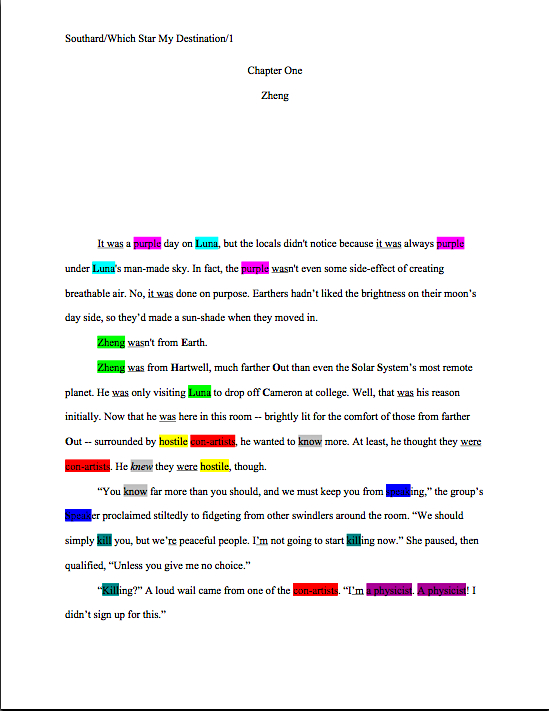
Not sure why that might be distracting for our Millie? Okay, let’s look at the page again, a capitalization-sensitive reader might see it. While I’m at it, I’m going to highlight the word and phrase repetition as well. See if anything in particular jumps out at you:

Janine repetition sheet

There’s a fair amount of word and phrase repetition here — more acceptable in YA than in adult fiction, of course, but still a pet peeve for many Millicents — but I’d like you to focus on the underlined bits in particular. Do you notice anything about them?

If you squinted at those little lines and immediately cried, “Wow, that’s quite a few instances of the verb to be,” you get a gold star for the day. That particular verb appears in various forms no fewer than 14 times on this page. 4 of those times are in the first paragraph — and in a type of sentence structure that is an even more common submission red flag. Any guesses?

If you pointed to the first few sentences of the story and said, “Hey, those are in the passive voice,” pat yourself on the back sixty-seven times. All of those it was constructions are indeed in the passive voice: instead of actors doing things, the sentences presents things as occurring all by themselves.

Again, this is rather more accepted in YA than in adult fiction, and the younger the target reader, the more acceptable the passive voice is deemed to be. (And yes, both of those last two sentences were in the passive voice. Take another gold star out of petty cash.) Unfortunately for lovers of to be and it was, most Millicents — indeed, most professional fiction readers — are explicitly taught that the passive voice is the least creative way of saying, well, almost anything. So opening a book with several instances of it in a row might well raise some professional eyebrows.

It is worth noting, however, that the only judges who were not bothered by this were the YA authors. But then, they didn’t mind the single-sentence paragraphs, either.

Again: norms vary by book category. If you want to find out what is and is not considered good writing in yours at the moment, there’s just no substitute for going to a well-stocked bookstore on a regular basis, seeking out the shelves devoted to the type of book you write, and plopping yourself down to read the opening pages of some recent releases.

Even better, you could buy new releases in your chosen category. Or ask Santa to do it for you, because what’s a better gift than professional development in the career you want most in your heart of hearts to pursue?

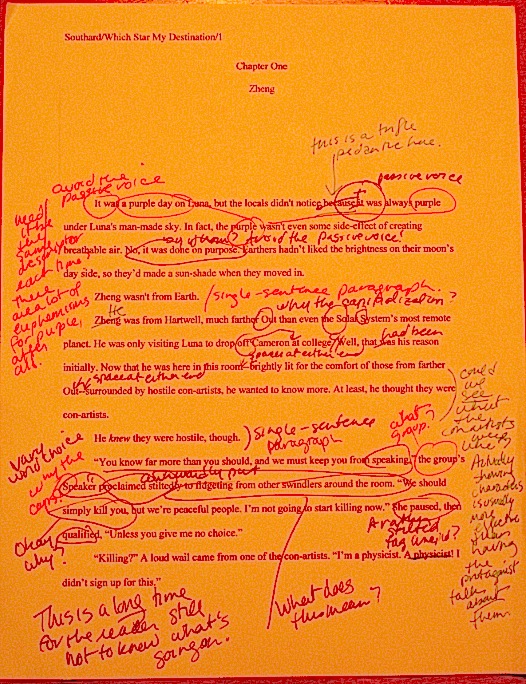
Did you spot any other potential distractions from the story here? Let’s take a gander at what Millicent might have scrawled in the margins.

Janine's edit1

Ah, at last we are starting to talk about plot and characterization. The story definitely drops the reader into an exciting conflict right away — good move, Janine! — but by YA standards, the description of the environment is rather scanty. YA is known for its vivid, sensual descriptions, but other than that very vivid purple imagery in the first paragraph — again, nice choice, Janine — the reader doesn’t gain a very strong sense of what it feels like to be on Luna.

Including just a few more physical details would make all the difference here — and for YA, a great way to do that is through the protagonist’s bodily sensations. Is the gravity heavier on Luna than on Hartwell, for instance, or lighter? Is Does the sunshade affect how plants grow? Are there any plants — and if so, could Zheng be allergic to one of them, because he’s not used to it?

Another prime target for descriptive expansion is the crowd. Are the people in the room all humanoid? Are any of them humanoid? Who is the group, and how can Zheng tell that they are the ones in authority — over and above the death threats, that is? Are the con artists restrained in any way? Is he? Are they close enough together to create a distinctive smell, or to increase the heat in the room?

And so forth. The possibilities here are practically endless; just remember that unless the narrative gives the reader hints of what the environment and characters looks, sound, smell, taste, etc., the author cannot be certain that every reader will envision the same thing. For some details, it’s fine to let the reader’s imagination run free; for others, it can throw off understanding of the plot.

Not sure what the latter might look like in practice? Well, if Zheng’s captors had three arms, when would you want to learn about it, when they first appear in the book, or just after one of them grabs our hero and two other captives as they try to escape?

I want to talk about two more pieces of marginalia, then I shall move to the punch line. In the next-to-last paragraph, the narrative between the dialogue indulges in a few devices quite common for a submission, but rare in published books. Here’s the relevant piece of dialogue, ripped out of context for your tag line-considering pleasure:

“You know far more than you should, and we must keep you from speaking,” the group’s Speaker proclaimed stiltedly to fidgeting from other swindlers around the room. “We should simply kill you, but we’re peaceful people. I’m not going to start killing now.” She paused, then qualified, “Unless you give me no choice.”

Did you spot all three? No? Okay, let’s take them in the order they appear. First, the adverb in the initial tag line, stiltedly, is a trifle awkward — and all the more likely to be noticed as such, because there was an entire generation of English students taught to avoid using adverbs in tag lines at all. Some of you must remember that old writing truism, right? The dialogue itself should demonstrate to the reader just how things were said; lose the -ly words, already.

This writing advice is far less common now, and its adherents certainly less vitriolic, than way back in the day, but it was so influential that millions of Baby Boomers ran terrified out of their English classes, absolutely convinced that they should never use adverbs, ever.

Why should a writer of today worry about that misconception? Millicent may be the child of one of those students. Or the grandchild. Or — brace yourself — the employee.

Just use adverbs with discrimination, okay?

Let’s move on to the second issue: what’s going on just after that adverb isn’t completely clear, is it? The causative to construction is fairly common in submissions, used to indicate that what happens after the to was in response to what came before it.

Unfortunately, a skimming eye often misses the implication. In a manuscript, then, it’s usually safer to spell out causation. Heck, we can even toss in one of those much-maligned adjectives:

“You know far more than you should, and we must keep you from speaking,” the group’s Speaker proclaimed. The swindlers around the room fidgeted uncomfortably.

The third issue is a subtle one, but a surprisingly pervasive professional readers’ pet peeve. “Why, in heaven’s name,” Millicent mutters under her breath, “do aspiring writers insist upon telling me every time a speaker hesitates for so much as an instant? In and of itself, it’s seldom either character- or situation-revealing.”

It’s pretty clear why Janine chose to insert a pause here — to increase the menace of the threat — but you must admit, Millie has a point. The mere fact of pausing doesn’t add all that much to the speech. If the speaker did something more specifically threatening, the menace in could be heightened considerably. Perhaps even by employing an adverb!

“We should simply kill you, but we’re peaceful people. I’m not going to start killing now.” Her ice-gray eyes swept the room contemptuously. “Unless you give me no choice.”

Now that your eyes are sharpened to the particulars, I’m going to ask you to step back, consider the overall picture again — and revisit that burning issue from the beginning of the post. Re-read that first page: does this voice and worldview strike you as inherently and necessarily YA?

If you’re unsure, ask yourself this question: based upon this page alone, just how old do you think the protagonist is?

To the judges’ collective eye, there was no indication here that Zheng was not a full-fledged adult — not the usual choice for the protagonist of a YA book. (Adults drop students off at college all the time, right?) Admittedly, there’s also nothing here that indicates he couldn’t be a teenager, but that might not be enough to stop an impatient Millicent looking to screen out the overwhelming majority of the submissions on her desk that day from huffing, “Oh, this isn’t YA. Next!”

Since we liked the voice, the premise, and the leap right into conflict — well done, Janine! — we wanted to flag this problem. It’s one that dogs many a YA submission, particularly now that so many writers of adult fiction have been tempted by the category’s popularity into switching teams, as it were. Out comes the broken record player again:

broken-record8YA has its own distinctive conventions, particularly with respect to voice and subject matter. If it is not apparent from the first paragraph of page 1 that a manuscript is YA, even the best-written YA manuscript runs the risk of rejection on that ground alone.

Not sure in this case? Take another peek at that first page, then ask yourself: is the central conflict of this scene one to which a teenager could relate?

The judges felt — and I concur heartily — that being lectured by an authority figure because one has found out a truth one shouldn’t have might strike teen readers as somewhat familiar. Particularly the part about not speaking up about it. The black-and-white nature of the authority figures’ logic (I’m not going to start killing now… Unless you give me no choice.) would also be more likely to appeal to teenage sensibilities than those of adult readers; in adult fiction, superlatives and extremes tend not to play as well.

A different definitional ambiguity troubled the judges in the book category description. In answer to the question how will this manuscript add something new and exciting to its book category? Janine provided the judges with a rather interesting response:

Which Star My Destination takes the themes of exploration and road trips to grand scale by involving the entire universe. It also reminds us that, different personalities aside, teenagers are faced with the same situations and feelings, even in the far-flung future. Plus, spaceships!

Plus, spaceships! saved this description at judging time, frankly; blanket assertions often raise more questions than they answer in book descriptions. While the notion of a universe-wide road trip was amusing (if rather reminiscent of Douglas Adams’ The Hitchhiker’s Guide to the Galaxy), the fantasy writer on the panel was nonplused by the assertion that an exploration story was unusual simply because its extent was intergalactic — that has been a staple of science fiction since its inception, has it not? Other, more historically-minded judges wondered how we could be certain that teenagers in the far future would face the same situations as those today, as it would be difficult to argue that the teenagers of two hundred years ago did, or even the teens of thirty years ago, when feelings-based YA really hit its stride as a book category.

Unsure if that’s true? Try reading Paul Zindel’s classic, Pardon Me, You’re Stepping on My Eyeball; the protagonist’s frequent emotional and even physical abuse of his love interest barely raised eyebrows in 1978, but it would have to be handled as the central problem of the story today. Or E.L. Konigburg’s 1967 Newberry Award-winning From the Mixed-up Files of Mrs. Basil E. Frankweiler, where two children run away from an apparently perfect home to live in the Metropolitan Museum of Art; if it were written now, there would be some serious problems in that household, and at least one responsible adult would experience some qualms about sending those kids back.

Fortunately, the first page was enough of a grabber to cause even the skeptical judges to want to read more — and the book description’s nod to Jerome Beatty, Jr.’s much-loved Matthew Looney series brought a smile to many a child of the 1970s’ face. All agreed that the combination was a potentially powerful one.

There’s a moral to all of this library-oriented reminiscence, should you care to know it. Any given manuscript will not be the first book in an agent’s chosen book category that she or her staff will have read; if they like those kinds of books enough to devote their lives to representing them, it’s a good bet that everyone concerned has read a wide array of them.

Why is that important for a submitter to know? Because in order to wow Millicent the agency screener, a manuscript is not merely competing with the other submissions of recent months; it’s also competing with all the similar books she has ever read. It had better compare favorably.

While competing with the classics in one’s genre is a tall order, the writers of today enjoy a considerable advantage: you are aware of today’s cultural expectations (“Wait — the female protagonist is supposed to DO something, not just wait around to be rescued? “YA writers of the 60s and 70s marvel), demographic trends (“Hey, when did living with one’s still-married birth parents stop being the norm?”), and, yes, recent bestsellers. (“Tell me why precisely we’re supposed to find vampirism sexy?”)

Current YA writers also reap the benefits of writing during an exciting burgeoning of the category. Boundaries are being pushed; experiments are being wrought, and a diverse array of individual voices of unprecedented complexity is being welcomed. (And yes, all of that was in the passive voice; good eye.)

Janine is poised to take advantage of this expansion with a story that seems interesting, exciting — and a whole lot of fun. Just what a road trip should be.

Keep pressing those boundaries, everyone — and, as always, keep up the good work!

First Pages that Grab: Carolin Walz’ Gothic Wars, or, reading on a jet plane

Carolin Walz author photo

Yes, yes, I know: I have not been in the habit of giving subtitles to the prize posts in the Author! Author! Great First Pages Made Even Better Contest, but frankly, I felt that my feedback on today’s winning entry, GOTHIC WARS by Carolin Walz, warranted it. Turbulence fought penmanship, and I fear that for the most part, turbulence won. Since this has historically been the fate of many a manuscript whose marginalia was penned on the way to or from a writers’ conference — oh, you can think of a better use of flying time than reading submissions? — I felt that it was only fair to present all of you with the results, so you may recognize travel-skewed comments when the agent of your dreams presents them to you.

With the advent of electronic submissions — still not universally accepted, but climbing steadily in popularity — you’d be astonished at how many agents reading submissions on airplanes around this time of year. Specifically, on their electronic readers.

Surprised? Or even alarmed at the prospect of your meticulously-formatted pages being read on that small a screen? Well, think about it in practical terms: if you were an agent traveling over the river and through the woods to Grandmother’s house, which would be more efficient to tote as reading material, a couple of heavy manuscripts — or 30 electronic submissions on your Kindle?

Of course, this is only likely to be the case at agencies that accept electronic submissions. And even then, typically, those Grandmother’s house-bound submissions (or, at this point in the weekend, those returning from Grandmother’s) will have had to make it past Millicent the agency screener’s strict scrutiny before making it onto the boss’ Kindle.

Which just goes to show you: electronic submissions can be pretty well traveled. Yet all too often, aspiring writers assume, wrongly, that the simple fact that they’ve sent their manuscripts as Word attachments to an e-mail automatically means that everyone who might conceivably read their submission will have access to their contact information.

“After all,” these submitters reason, “all Millicent or her boss has to do to say yes to me is to hit the REPLY key. What could be easier than that?”

What, indeed? Unless, of course, your electronic submission has been downloaded to an electronic reader. Then, it actually isn’t inconceivable that an agent could fall in love with a manuscript — and yet have no idea how to get in touch with the person who wrote it. Or even be sure who did write it.

Scary prospect, is it not? Breathing into a paper bag should reverse that hyperventilation within a couple of minutes.

“But Anne,” some of you wheeze, “couldn’t the agent just ask his Millicent to comb through the agency’s e-mail inbox? Surely, my original e-mail would be in there, right?”

Possibly, but do you have any idea how many e-mails an agency that accepts electronic submissions receives in any given week? Or even on any given day? Forget about finding a needle in a haystack — Millicent would be looking for a needle in a hay field.

Fortunately, this dire extremity is easy to avoid with a little advance preparation on the submitter’s end. First, it’s always a good idea to include one’s full contact information with any submission, electronic or otherwise; don’t you want the agent of your dreams to be able to call you with any follow-up questions she might have? Second, it’s an even better idea to include precisely the same title page a savvy submitter sends along with a paper submission in an electronic submission.

How is that possible? It’s not particularly difficult in a Word file: just copy and paste your title page at the top of your manuscript document as its first page. To avoid the title ending up with the slug line that every other page in the manuscript should feature in its top margin, select DOCUMENT from the FORMAT menu in Word, then choose LAYOUT. Click “Different first page.” Then you can just clear the header for the title page, while leaving the rest of the document as is.

Ah, I hear some of you murmuring, but doesn’t that mean that the first page of Chapter 1 would be numbered as page 2 in the slug line? (For those of you who are not in fact murmuring that, but instead are wondering what the heck a slug line is, it’s the AUTHOR’S LAST NAME/TITLE/PAGE # that appears in the upper-left corner of a professionally-formatted manuscript. For some visual examples and explanation of how to include this important information correctly on your pages, take a gander at the SLUG LINES ILLUSTRATED category on the archive list at right.)

There’s a way around that, too: under the INSERT menu, choose PAGE NUMBERS…, then FORMAT. Under PAGE NUMBERING, simply set the “Start at…” number to 0. Voilà! The second page of the document is now page 1!

“Aha!” those of you still breathing crossly into your paper bags gasp. “I’ve got you now, Anne. Why wouldn’t the agent of my dreams simply look at the top of any page of my manuscript to see what my name was? If Millicent misplaced my original e-mail, she could just do a search of her inbox under my last name. Problem solved!”

Quite true, oh gaspers — provided that you included a slug line. You would be positively amazed at how many electronic submitters (or, heck, paper submitters) do not.

How much difference could the omission possibly make to a submission that did not go astray, you ask? Well, since the fine folks who read manuscripts for a living expect every page of every manuscript to include a slug line, quite a bit.

See for yourself. Here is today’s winning entry in the format that the judges first encountered it:

Carolin Walz page 1

A bit bare on the top end, isn’t it? Here it is again, properly formatted:

Carolin revised

Makes more of a difference than you would have expected, doesn’t it? As does another small formatting change: two spaces after the colon in the Part I designation, rather than the original one. Again, it’s a seemingly small thing, but to eyes sharpened to the norms of professional manuscripts, it would jump out.

Some of you former wheezers have your hands in the air now, I see. “But Anne, didn’t you do something else to the formatting? There are more words in the second version, are there not? The last sentence on each page is different.”

Well spotted, ex-hyperventilators. The difference between the first page and the second is that the first is in TextEdit, the second Word.

About 10% of the entries in this contest arrived in TextEdit, although the rules had specified sending the first page as a Word attachment to an e-mail. The judges decided not to disqualify entrants for this, primarily because it would afford me such an excellent opportunity to talk about why this would not be a good way to submit electronically to an agency or publishing house.

Word is, quite simply, the U.S. industry standard — when an agency asks submitters to send pages as attachments to e-mails, they mean a Word attachment. Specifically, a .doc document, not a .docx document, since many agencies are running older versions of Word. (If they are running a really old version of Word, you may have to send your pages as a .rtf document, so they will be able to open it.)

You should honor this expectation; send any requested materials in Word, not TextEdit or any other word processing program you happen to favor. The fact that it is possible for a Word user to do as I did, convert a TextEdit document into Word, does not mean that Millicent will necessarily be willing to do it; after all, her boss would not be able to submit your book electronically to an editor at a publishing house that way. A U.S.-based agent would certainly expect any writer it signed to convert all manuscript documents to Word, anyway, so in the long run, it will actually save time to just write your documents in Word in the first place. (If you are unsure how to format a manuscript page in Word, please see the obscurely-titled HOW TO FORMAT A MANUSCRIPT category on the archive list at right. Or just stick around here at Author! Author! for December, when I shall be going over the rigors of standard format again. So dig out your long-harbored formatting questions, people!)

Besides, as we saw above, the formatting is not always identical. In a submission where length is an issue — if, say, the manuscript goes over 400 pages, Millicent’s usual oh, dear, that’s a bit on the long side limit in most fiction categories — even those few extra words per page may make an overall difference. Sometimes, standard format is the writer’s best friend.

Don’t believe me? Okay, let me ask you: how much time have we spent so far talking about technical and presentation issues in Carolin’s fine first page, and how much about either the writing or the content? THAT’s how distracting these issues are to professional readers.

It’s genuinely a pity here, because Carolin has a terrific book concept. Here’s the way she described it to the judges:

The historical novel Gothic Wars tells the story of Emperor Justinian’s reconquest of Gothic Italy in the sixth century CE from the point of view of the last Goth king, Teja. It provides a fresh look at a war that is usually seen through the victors’ eyes (like Robert Graves’ Count Belisarius).

Interesting, eh? Here’s her 1-page book description.

Gothic Wars description

Again, fascinating — but once again, we’re distracted by formatting, aren’t we? The slug line contains a first name, sixteen-year-old is not hyphenated (a mistake that I have been seeing more and more over the last couple of years; is this rule not being taught anymore?), and there is odd, additional spacing between the lines. Here’s that page again, with just simple double-spacing:

Walz description revised

Once again, we see what a big difference seemingly small formatting issues can make. Actually, tinkered-with spacing between paragraphs is fairly common in submissions. It puzzles the pros: since just selecting double-spacing under the FORMAT menu (it’s one of the choices under PARAGRAPH) is actually far easier for the writer than manually changing the spacing between the lines, why does anyone go to the extra trouble? It’s not necessary; Word will do it for you.

And once again, we’ve been distracted from the engaging story and the writing by technical issues. Let’s see what Millicent would have to say about something other than presentation, shall we?

Carolin's edit1

Hey, I wasn’t kidding about that turbulence. (Don’t worry; the copy I shall send Carolin will be legible.) But as you may see, Millicent’s first instinct was to point out the formatting issues. She also raises an interesting point that affects the marketability of many realistic novels.

Carolin has done a beautiful job here of giving the gritty feel of Teja and Gertruda’s quotidian life, hasn’t she? And she does it primarily through showing, not telling: the level of practical detail here is excellent. It’s also quite clear — and this is rarer in historical fiction submissions than any of us might like to hear — that she’s done her homework: as a reader, I believe that these specifics are historically accurate.

That’s all going to be great for readers after GOTHIC WARS is published, of course, but it could present a problem at the submission stage. Teja comes across here as an ordinary person, not an extraordinary one. From the synopsis, of course, we know that’s not the case in his life overall. However, as we have seen throughout our discussions of all of our Great First Page Made Even Better winning entries, Millicent tends to make up her mind about whether she wants to follow a protagonist onto page 2 based exclusively on page 1, not the synopsis or brief description in the query letter, a too-ordinary-seeming protagonist may not provide the temptation to read on she wants.

Fortunately, this is a very easy fix: Teja merely has to exhibit some extraordinary quality on page 1. If Carolin likes the dramatic arc of having a young boy develop extraordinary qualities over time — as most historical novelists tend to prefer — she can always resort to the tactic I suggested for yesterday’s winning post: open with a prologue set later in the book, then revert to this scene after.

In historical novels, this strategy often works beautifully. I would be especially pleased to see Carolin try it here, because it’s fairly likely that Millicent will not know much about the wars in question. A well-crafted, informative prologue could go a long way toward convincing her that readers will consider this historical event inherently interesting and important.

Hey, it’s not always a foregone conclusion. And Millicent is far more likely to have been an English major than an ancient history concentrator, if you catch my drift.

Did you catch the nit-pick in the first line, or did turbulence prevent your being able to read the handwriting? Any guesses why Millicent might ask is it actually necessary to have these two things happen at precisely the same moment?

If you immediately shouted, “By Jove, it’s in response to the use of as in that sentence,” take a gold star out of petty cash. X happened as Y happened is an immensely popular sentence structure in novel submissions; one sees it less in published fiction. And that’s a bit surprising to many aspiring writers, because, let’s face it, quite a few things do happen simultaneously in the real world.

Why the differential? Because editors have been scrawling in the margins for decades is it actually necessary to have these two things happen at precisely the same moment?

Most of the time, it isn’t. Nor is it here: it doesn’t actually add either plot or character development to Carolin’s page 1 that Teja’s rubbing his eyes as Aunt Gertruda gives him the water. If the actions came one after the other, or even if they were reversed, it would not affect the reader’s understanding of what’s going on here, right?

The simultaneity implied by as is often not necessary to the reader’s understanding of what is going on; it’s simply the writer’s attempt to be factually accurate about a series of events. But by using this structure when the simultaneous nature of two different happenings is not relevant to the scene, a narrative can both (a) mislead the reader about what actually is important for the reader to notice in the scene and (b) over time, cause the reader to tune out as as an indicator of timing.

That last one is problematic, potentially, in a story with a lot of action in it. At some point in the story, it’s going to be vital that the reader understand that X happened as Y happened. So it’s an excellent idea to reserve as, like profanity, for only those moments when it will have the most effect.

Let’s see, what else did our Millie flag? How about the Hollywood narration in the second paragraph?

We’re all familiar with Hollywood narration, right? It’s a staple of television and movies: one character tells another something they already both know, simply so that the audience may learn it, too. As in:

Joyce: Oh, Kent, my husband of twelve years, how glad I am to see you safely home! You know how your job as a test pilot of experimental aircraft frightens me.

Kent (chuckling ruefully): Honey, you have been worrying about me since that long-ago day in college when you first saw me slip on the ice-covered library steps and slide head-first onto the quad. You should know by now that my head’s as hard as a rock!

Joyce: Well, you’re not the one who is going to have to explain your sudden, fiery demise to our three children — Lara, eight; Timothy, twelve, and little Ghislaine, six — are you?

Kent: I suppose not. Nor would I have to face your father, the senator from our fair state, should you become widowed. As you yourself heard me tell not only him, but a crowd of two hundred of our nearest and dearest at our fifth anniversary party — which, as you may in fact recall, was held at Chez Georges, the fanciest French restaurant in town — your well-being and happiness is my highest priority.

Joyce: Except, of course, for our children’s. Why, just six months ago, when Lara rode her bike into the side of that truck and you had to rush her to see old Doc Courtland — he who delivered both all of our children and myself — you were magnificent.

Kent: So, too, were you that time that our youngest, not yet out of diapers, went wandering off into that cornfield and got kidnapped by aliens. I was so impressed when you…

Well, I won’t bore you with what happened after Joyce followed Ghislaine into that field; suffice it to say that the next ten minutes of dialogue concern her many lacerations and burn scars. But why should Joyce and Kent be reminding each other of these major life events at all, when it’s completely beyond the realm of possibility that either party should have forgotten about any of them?

Evidently, just so you, dear readers, will know about them, too. Trust me, Millicent will not find this presentation subtle.

Which is a shame in this case, where the Hollywood narration is rather subtle: Gertruda might actually have asked this question. However, since this information would also have been perfectly easy to introduce in a couple of narrative sentences — unlike TV and movies, novels do not rely exclusively upon dialogue and visual cues to convey information to their audiences — it’s probably best to err on the side of giving even the implication of Hollywood narration a wide berth.

Especially if, as here, it comes with a signpost. Generally speaking, any time a character says, “You know…” there’s an excellent chance that what she is about to say next is Hollywood narration, and thus could be cut.

We wouldn’t want to distract Millicent from that nice description in the first paragraph, would we? Or from those evocative details in the last one?

So nicely done, Carolin — you’re a set of quite minor revisions away from a genuinely stellar first page. Which is, I hope, precisely why members of the Author! Author! community will find this and our other winning entries both helpful and inspiring: the difference between a manuscript that wows Millicent and one she rejects is often based upon not her overall perception of a manuscript’s writing quality or marketability, but the cumulative effect of a series of small, rather subtle problems that could, with patient revision, be polished away.

Keep plugging ahead, Carolin — and everybody, keep up the good work!

First Pages That Grab: Linda McCabe’s The Legend of the Warrior Maid and the Saracen Knight

Linda McCabe author photo

Before I launch into what I anticipate will be a juicy discussion of today’s winning entry in the Author! Author! Great First Pages Made Even Better Contest, I have some good news about a long-time member of the Author! Author! community. Remember memoirist and blogger Shaun Attwood, whose guest blog on the difficulties of bringing horrific jail conditions to light moved in last year’s censorship series? If you don’t recall his first guest post here, perhaps you will recall his second post last summer, which I introduced by both celebrating the U.K. release of his memoir, HARD TIME: A Brit in America’s Toughest Jail (Mainstream Press), and bemoaning the fact that although he was writing about his experience in a U.S. jail, his memoir was not available in this country.

I am delighted to announce that is about to change: an American edition of HARD TIME will be coming out from Skyhorse Publishing this coming spring. In fact, it is already available for preorder on Amazon, but so you may recognize it later in brick-and-mortar bookstores, it will look a little something like this:

Attwood Hard Time US cover

And that’s not all: somewhat to my surprise, I am writing the introduction for it. Perhaps it is not entirely surprising to all of you, for I have been a tireless booster of Shaun’s writing since I first clapped eyes upon it, shortly after he left his first comment here.

Quite apart from the extraordinary subject matter, Shaun’s is a writing success story. As those of you who have been hanging out here at Author! Author! for the last couple of years may recall, Shaun first joined us as a memoirist struggling to write his first book proposal — and as one of the most fascinating bloggers out there on the web. Shortly after he shared his extraordinary story with us here he landed an agent and a U.K. book deal. And soon, his story will be available in the land that gave rise to it.

Which just goes to show you, campers: it can be done. Congratulations, Shaun!

While we’re in a celebratory mood, let’s turn to another long-time member of the Author! Author! community, Linda McCabe. With genre-appropriate fanfare, even.

knight-shieldknight-shieldknight-shieldknight-shield

The co-third place winner in the Author! Author! Great First Pages Made Even Better Contest, the first page of THE LEGEND OF THE WARRIOR MAID AND THE SARACEN KNIGHT struck the judges as a delightfully traditional addition to the epic fantasy market. At a time when so many fantasy submissions are stuffed to their proverbial gills with trendy paranormal elements — fine in themselves, naturally, but in the fifteenth similar work Millicent the agency screener sees on any given day, bound to seem a trifle on the common side — Linda has made the very interesting choice of grounding her tale’s opening in solid realism.

What renders it even more interesting is that the book itself contains a fairly untraditional twist. As Linda’s entry explained to the judges:

The Legend of the Warrior Maid and the Saracen Knight is an epic historical fantasy in the time of Charlemagne with a tale of impossible love between sworn enemies. It deviates from traditional quest stories by having the heroine, and not the hero, receive the call to adventure.

Piques your interest, doesn’t it? Given that laudable ambition, one would expect the heroine to appear on page 1, right?

That actually doesn’t happen here — leading the judges to wonder whether a rushed Millicent would read far enough to realize just how untraditional this traditionally-voiced tale actually is at its core. While the opening page was interesting, evocative, and promised excitement to come, it is very solidly in the tradition (there’s that word again) of male-centered battle epics.

Take a gander and judge for yourself. As always, if you are having trouble making out the individual words, try holding down the COMMAND key and pressing + repeatedly to enlarge the image.

McCabe page 1

Engaging, certainly, but it doesn’t exactly display its most exotic wares up front, does it? Equally important, if you were the Millicent who requested this manuscript based upon the descriptive paragraph above, would you feel that the page fulfilled the description’s promise? Or even that this book was about the expected protagonist?

Pick your jaws off the floor, multiple character-jugglers. Sad but true, 99% of Millicents will simply assume that the first-named character in the manuscript — or at any rate, the primary actor in the opening scene — is the protagonist.

So what about this page 1 would alert her that this is a story that stretches the well-established boundaries of battle epics? Unfortunately, nothing. And that’s genuinely a problem, since Linda’s telling quite a story here.

Don’t believe me? Okay, take a peek at her synopsis, then glance again at that first page.

A love foretold between sworn enemies will determine the fate of Christendom.

Bradamante, the niece of Charlemagne, and Ruggiero, a Saracen knight descended from Hector of Troy, are renowned warriors who meet and fall in love on a battlefield before being separated.

Bradamante is later sent on a mission to rescue Ruggiero who is being held captive by the wizard Atallah. She learns of dueling magical forces trying to influence which of two prophecies regarding Ruggiero will come to pass. He is either destined to convert to Christianity, marry her, and sire a line of heroes before dying tragically or he will remain a Saracen and bring about the destruction of the Frankish Empire devastating Christendom. Atallah is aware of these divergent prophecies and is determined to protect Ruggiero from harm; he views Bradamante’s love as a threat to Ruggiero’s life.

The tale of impossible love between Bradamante and Ruggiero is set against the backdrop of a holy war between Islamic and Christian armies shown in bloody sieges in Marseille and Paris. Other legendary heroes such as Orlando and Renaud de Montauban are featured in this retelling of a classic tale of chivalry, betrayal, revenge and magic.

Sounds exciting, eh? But try to wiggle yourself into Millicent’s snow boots for a moment: does it seem as though there’s a slight disconnect between the story as told in the synopsis and the one that appears to be starting on page 1? To put it in another, more positive way, is this page 1 an effective salesperson for the unusual twist on a chivalric romance promised by the synopsis?

The judges reluctantly answered these questions no and yes — despite the fact that the writing here is clear (less common in submissions than one might think), the voice category-appropriate, and the opening a good hook into what is to come. Yet with the quirky logic that often dictates which entries end up as finalists and which place in literary contests, the judges decided to include this first page in the winners’ circle precisely because of this inherent marketing tension.

The fact is, well-written manuscripts fall into this trap all the time, and it places their work at a significant competitive disadvantage at submission time. By assuming that Millicent will not base her decision on whether to read, say, the truly genre-busting material in Chapter 5 upon her impression of page 1, a submitter runs the risk of having his fascinating premises, characters, and plot elements simply overlooked.

Well might you gnash your teeth. “But it’s clear by page 15 how different my story is from what’s currently available in my book category! Heck, by page 31, it’s completely apparent how it is better!”

I can well believe it, teeth-gnashers. You wouldn’t believe how many otherwise excellent submissions don’t really get going — or have a terrific opening line — until page 4. Or 14, or 44. But by then, alas, Millicent has probably already made up her mind about what kind of book it is and whether it adds something new to the market.

I can feel the laser-like heat of your glares through my computer screen, but it’s far, far better that you hear this from me than have your manuscript rejected on page 1, is it not?

So let’s go ahead and coin an axiom on the subject: unless it is pellucidly clear on page 1 what kind of book this is and who will want to read it, even a well-written, book category-appropriate story may get rejected. It’s savvier submission strategy, then, to open the book with the element that you feel is the most marketable, rather than hiding it later in the manuscript.

Yes, this may well run afoul of the way you originally envisioned telling the story, but pull it off, and trust me, you’ll bless Linda to your dying day for bringing this subtle submission problem to your attention.

Oh, and unless you happen to be writing in a book category where it is not the norm to open the book with a scene centered on the protagonist — which is to say, if you are not writing science fiction, fantasy, thriller, or literary fiction — you might want to structure your book so the first name Millicent sees is your hero/ine’s. Even in those categories, you might consider at least a prologue featuring your protagonist front and center.

Hey, Millicent reads a lot of submissions in your chosen book category in any given week. In that vast sea of characters, can you really blame her for wanting to latch onto a protagonist as soon as she possibly can.

I heard that. But the proper answer is: no, I can’t. She has a hard job, and honestly, it’s not her fault that she doesn’t have time to read all the way to page 15, let alone 30, to find out how genuinely innovative your premise is. Or how beautifully written that line that would have made a great opening is if it’s hidden on page 6.

She’s essentially a treasure-hunter, you know. Make her discovering you a trifle less challenging.

The classic means of correcting this problem — and I’m sure you’ve seen this in published novels — is to lift an exciting scene featuring the protagonist from later in the story and open the book with it. Such scenes are often presented as a very brief prologue, sometimes just a couple of pages long. The idea here is to toss the reader directly into the center of a conflict, bring it to the boiling point — then end it abruptly. Appetite whetted, the reader then will proceed to Chapter 1 more or less in its original form.

Another means of making your pot of gold shine better: impeccable formatting. There’s actually only a single formatting problem here — did you catch it?

No? Okay, let’s see how Millicent would have responded to this page:

Linda's edit

What can we learn from this, other than that our Millie’s handwriting can get a trifle wobbly when she’s editing on a plane that’s just hit turbulence? (Don’t worry; I’ll mail Linda a more legible copy.) First, that single-spacing is not appropriate for a subtitle: if Linda simply double-spaced the first line on the page, it would be perfect.

Not certain what that would look like on the page? Here you go.

Linda revised

Millie’s turbulence-influenced scrawls also point up a couple fairly standard professional readers’ pet peeves. She’s noted the single-sentence paragraphs at the top and near the bottom of the page, for instance: a narrative paragraph in English prose is made up of at least two sentences, so many a Millicent would have flagged this one. (A single-sentence paragraph is perfectly acceptable in dialogue, of course.)

Yes, I know Joan Didion uses single-sentence paragraphs all the time. So do journalists. That doesn’t mean a novelist trying to land an agent for a first book should take the risk.

Let’s see, what else? In line 3, she’s crossed out and realized, which actually could have stayed. Any guesses why she recommended cutting this little bit of verbiage?

This is a subtle one: in a tight third-person narrative, what is described is generally assumed to be from the protagonist’s perspective — and thus conclusions drawn in the text are assumed to be his. But that’s not the only reason this cut might be a good idea: using short, choppy sentences at moments of stress echoes the breathlessness of surprise.

Hey, I wasn’t kidding about it being subtle.

There’s another element that might annoy some Millicents, although it clearly did not trouble ours: showing Ruggiero’s thoughts in italics. Some professional readers positively hate this; they feel, and with some justification, that a talented writer should be able to differentiate between thought, speech, and narrative without resorting to funky type.

“What’s wrong with he thought?” such Millicents fume — and their boss agents may even have instructed them to fume so. “Or just showing someone calling the guy’s name?”

As our Millicent’s leniency on this point demonstrates, however, such fuming is not universal amongst professional readers. There is no one-size-fits-all solution here; tolerance of italicized thought varies from book category to book category, and even agency to agency. Generally speaking, though, the more educated the intended readership, the lower the tolerance for this device.

What’s a good test for whether thought italicization acceptable in your chosen book category? Hie yourself to a brick-and-mortar bookstore well stocked in that category and start pulling volumes off the shelves. Not just any books in your category, mind you: stick to ones published within the last three years. If none of the first ten you select feature italicized thought within the first ten pages, I would avoid it.

Does this seem like a lot of possible pet peeves for just a first page of text? Actually, in practice, it’s remarkably few: the average submission tends to be rife with potential for Millicent-annoyance.

Admittedly, this particularly page 1 promises enough adventurous delights to come that Millie might turn down her annoyance meter a little — and turn to page 2. You know, just to see what happens.

And that, my friends, is how you know when a first page is a grabber: when a professional reader can’t wait to get to page 2. The writer won’t be there to see it, of course, but given how many submissions get rejected on page 1, it’s definitely a triumph.

Well done, Linda! Best of luck to your warrior princess and her knight.

Be sure to tune in tomorrow, when we shall be examining another grabber of a first page. In the meantime, keep up the good work!

P.S.: the nifty animation appears courtesy of the fine folks at Feebleminds. Let’s take another look at it before I sign off for the evening, shall we?

knight-shieldknight-shieldknight-shieldknight-shield

Authorbiopalooza, Part II: crossing the bio bridge sooner rather than later, or, let’s face it, the impossible will take a little while

billie

My, but we’ve been spending a hefty proportion of this fall on the potential contents of the query and submission packet, have we not? First Querypalooza, then Synopsispalooza, and now Authorbiopalooza. Why, it’s almost as though I were reluctant to send the dedicated members of the Author! Author! community out into the cold, hard world of manuscript marketing unprepared.

Was that massive wind that just blew my cat sideways a collective gusty sigh from those of you not currently operating under a I-must-have-it-by-Friday deadline for an author bio? “Okay, Anne,” sighers across the English-speaking world groan, “I can understand why I would need to polish my query into professionalism, and I’m grateful for the guidance on the synopsis. But honestly, why should I take the time now to compose a bio no one has yet asked to see? I’m happy that you have a clearly-marked HOW TO WRITE AN AUTHOR BIO category on the archive list conveniently located on the bottom right-hand side of the page for me to rush to the moment I actually need to write the darned thing, but hey, I’m an exceedingly busy person. Can’t I just, you know, cross the bio bridge if and when I come to it?”

Well, I suppose that you could, sighing groaners, if you were a procrastinating sort. (Not that I believe that you are. I mean, come on — a procrastinating writer? Who has ever met one of those mythical creatures?) But believe me, your life will be substantially easier down the road if you put some thought into at least drafting a bio now.

Why? Well, think about it: if your queries and submissions are successful, it will be a matter of when you will need a bio, not if. Like a well-crafted synopsis for one’s current book project, the author bio is a document that any professional writer of book-length works for the U.S. market is simply expected to be able to produce on demand. Unless you happen to enjoy last-minute scrambling around — which you might, if you are that rara avis, the procrastinating writer — I cannot sufficiently emphasize how good an idea it is to start working on your author bio well in advance of when you will need it.

The sighing groaners are rolling their eyes now, I see. “Well, obviously, it would be nice if I had the time to construct a bio before I need it. Heck, it would have been nice if I’d had a beautifully-crafted query letter just lying around before I worked up nerve to query, or a stellar synopsis lingering on my hard drive before the agent of my dreams asked to see it. But since brownies are apparently not in the habit of dropping by my writing space in the dead of night to provide me with book marketing material, I guess I shall have to — wait for it — cross that bridge when I come to it.”

You’re more than welcome to do as you please, of course, but I would be remiss if I did not reiterate something already familiar to those of you who read your way through yesterday’s long-but-I-hope-entertainingly-persuasive post already know, the necessity of writing an author bio is often sprung upon an aspiring writer our of proverbially clear blue sky. Not in a delightful, playful, hands-over-the-eyes way, but in brusque, business-like manner.

“You’ll have it to me in the morning, right?” requesting agents, editors, and the fine folks who organize literary contests are prone to say. “Or you can just e-mail it to me right now, if you like.”

Some writers never get the resulting lump out of their throats again.

Those of us who have been at the writing game for a while have learned not to voice dismay at this kind of request. Surviving in the ultra-competitive literary environment is just easier for be an upbeat, can-do kind of writer, the sort who says, “Rewrite WAR AND PEACE by Saturday? No problem!” than the kind who moans and groans over each unreasonable deadline. Or reasonable one, for that matter.

It’s all a matter of mindset — and time management. The energy that you expend in complaining about an outrageous request could be put to good use in trying to meet that deadline, after all. If one thinks about energy expenditure over the course of an entire writing career, it’s clearly more efficient — and substantially less time-consuming overall — to plan ahead, rather than wait until the deadline is already imminent.

In a business where it’s routine for the deadline the writer thought was months away to get moved to next Thursday, as well as for next Thursday’s deadline to shift without warning to the end of November (“But you wouldn’t mind redoing Chapter 6, would you?”), it’s far, far more efficient to start, at least, composing anything that you know you’ll have to submit eventually. Believe me, you’ll want the time that you had planned to spend pulling a panicked all-nighter for other things.

For revising Chapter 6, for instance. Possibly in a panicked all-nighter.

Hey, tight deadlines are just a fact of a working writer’s life. The most annoying part, typically, but that doesn’t mean it’s going to be in your best interest to squander energy in resenting it. Trust me, the agent of your dreams will want you to embrace the axiom the late great Billie Holiday so often sang:

The difficult
I’ll do right now.
The impossible
will take a little while.

Will it vitiate my moral too much if I add that the name of the song was “Crazy, He Calls Me”? Or will you simply assume that Billie must have spent a lot of time hanging out at my agency?

Seriously, though, writing a compelling author bio is not something that most writers can toss off in an afternoon, especially if they haven’t thought about it before — or if, as we discussed last time, they aren’t altogether sure what in their respective backgrounds would be of interest to an agent, editor, or even the general reading public. Which is why, if memory serves, I spent yesterday encouraging you to put together an author bio for yourself as soon as possible, against the day that you might need to produce one, immediately and apparently effortlessly, in response to a request from an agent or editor.

And a good two-thirds of you groaned audibly. Don’t think I didn’t hear you.

I know, I know: we writers are expected to produce a lot on spec; it would be nice, especially for a fiction writer, to be able to wait to write something affiliated with one’s first book after an advance was already cooling its little green heels in one’s bank account. But, again, when that happy day comes, you may not have the time. At that point, you’ll be asked to write more for your publisher’s marketing department, a whole lot more –heck, if you’re a nonfiction writer, you’ll be asked write the rest of the book you proposed — so you’ll be ecstatic to have even one task already checked off the list.

And yes, I am going to say it again: it would behoove you to get the bio out of the way now.

Even if juggling the demands of your publishers’ many departments seems impossibly far away to you, think of bio-writing as another tool added to your writer’s toolkit. Not only the bio itself, although it’s certainly delightful to have one on hand when the time comes, but the highly specialized skills involved in writing one.

You’d be surprised at how often just knowing in your heart that you already have the skills to write this kind of professional document can be marvelously comforting. Every time I have a tight deadline, I am deeply, passionately grateful that I have enough experience with the trade to be able crank out the requisite marketing materials with the speed of a high school junior BSing on her English Literature midterm. It’s definitely a learned skill, acquired through having produced a whole lot of promotional materials for my work (and my clients’) over the last decade or so.

Frankly, at this point, I can make it sound as if all of human history had been leading exclusively and inevitably to my acquiring the knowledge, background, and research materials for me to write the project in question. Any project. The Code of Hammurabi, you will be pleased to know, was written partially with my book in mind.

Which book, you ask, since I have several in progress? Well, which one would you like to acquire for your publishing house, Mr. or Ms. Editor?

Another reason to start penning the thing well in advance of when you need it (and had I mentioned that you absolutely will need it, if your writing career is even moderately successful) is that it will give you time to experiment with how you would like to present yourself to the literary world — and to your future fans. And I’m not merely talking about the many, many tries it takes most of us to come up with an author photo we like enough to want to see on a dust jacket.

Oh, didn’t you know that you should be starting to work on that, too? Publishing houses almost never pay for photo sessions for first-time authors anymore; in the age of digital photography, it’s not at all unusual for a friend’s snapshot to end up on a book cover. Do you honestly want to bet that your best friend who has been dabbling in photography for the past couple of years is going to catch the real you on the first try?

But the author photo is not the only part of the author bio page (yes, many do include photos; we’ll be getting to that in a couple of days) that shows readers who you are — or, more important at the querying and submission stage, shows your future agent or editor what you’re like. And I’m not just talking about the startling revelation that you are an amateur pigeon-racer, either.

I’m talking about you as a writer. As those of you who have been following the pageant of ‘Paloozas will probably not be entirely astonished to hear, your author bio, like any other promotional material for a book, is a writing sample. The bio is also a creative writing opportunity. Not an invitation to lie, of course, but a chance to show what a fine storyteller you are.

This is true in spades for nonfiction book proposals, by the way, where the proposer is expected to use her writing skills to paint a picture of what does not yet exist, in order to call it into being. Contrary to popular opinion (including, I was surprised to learn recently, my agent’s — I seem to be talking about him a lot today, don’t I? — but I may have misunderstood him), the formula for a nonfiction proposal is not

good idea + platform = marketable proposal

regardless of the quality of the writing, or even the ever-popular recipe

Take one (1) good idea and combine with platform; stir until well blended. Add one talented writer (interchangeable; you can pick ‘em up cheaply anywhere) and stir.

Well might you snort in disbelief. Just as which justice authors a Supreme Court decision affects how a ruling is passed down to posterity, the authorship of a good book proposal matters. Or should, because unlike novels, which are marketed only when already written (unless it’s part of a multi-book deal), nonfiction books exist only in the mind of the author until they are written.

That’s why it’s called a proposal, and that’s why it includes an annotated table of contents: it is giving a picture of the book that already exists in the author’s mind.

For those of you who don’t already know, book proposals — the good ones, anyway — are written as if the book being proposed were already written; synopses, even for novels, are written in the present tense. It is your time to depict the book you want to write as you envision it in your fondest dreams.

Since what the senior President Bush used to call the vision thing is thus awfully important to any book, particularly a nonfiction one, the author bio that introduces the writer to the agents and editors who might buy the book is equally important. Why? Well, think about it: the author bio is the stand-in for the face-to-face interview for the job you would like a publisher to hire you to do: write a book for them.

The less of your writing they have in front of them when they are making that hiring decision — which, again, is usually an entire book in the case of a novel, but only a proposal and a sample chapter for nonfiction, even for memoir — the more they have to rely upon each and every sentence that’s there, obviously. Do you really want the words that describe your background to be ones that you wrote in 45 minutes in the dead of night so you could get your submission into the mail before you had to be at work in the morning?

Let me answer that one for you: no, you don’t. In fact, the very notion should make you break out in a cold sweat.

Are you chomping at the bit to get at your own author bio yet? Good. Then you are in the perfect mindset for your homework assignment: start thinking about all of the reasons you — yes, you — are far more interesting than anyone else on the planet.

I’m not talking about boasting, mind you; I’m talking about uniqueness. To put it another way, what makes you different from anyone else who might have written the book you are trying to sell?

And your mind went directly to writing credentials, didn’t it, even after yesterday’s lecture on the subject? Yet another reason that writing a compelling author bio usually takes a while: it’s not always self-evident to the writer what will or will not be memorable in a bio.

So don’t think about that for the moment. Just make a brief list of the most interesting things about yourself without worrying about how, or even whether, these things have any direct connection to the subject matter of the book you’re writing or don’t sound like very impressive credentials. Just get ready to tell me — and the world! — how precisely you are different from everybody else currently scurrying across the face of the planet.

Don’t tell me that you’re not. I shan’t believe it.

“Aw,” the former sighers and groaners say bashfully, scuffing their shoes on the floor, “you’re just saying that to give me confidence. What makes you so sure that I’m so gosh-darned interesting?”

Actually, I can answer that one right off the top of my head, scuffers: I know, as surely as if I could stand next to one or more of the muses and take an in-depth reading of each and every one of your psyches, that there is no one out there more truly interesting than someone who has devoted her or his life to the pursuit of self-expression. I’ve met writers I didn’t like, certainly, but I’ve never met a genuinely boring one.

Which is saying something, as I’ve certainly met plenty of writers more than eager to talk at length about book projects that made me long for the sweet embrace of sleep. If not death. But as people, even the ones with stultifying plotlines tend to be pretty interesting.

Let me guess, though: you think that you’re the exception. “But Anne, I’ve always heard that agents just laugh at non-writing credentials in a query letter or bio. People say that if you don’t have articles or an MFA, you should just shut up.”

That gust of wind you just heard was I sighing this time. As long-time Author! Author! devotées are no doubt already aware, I have mixed feelings about the utility of much of the traditional old chestnuts. I often advise all of you dear folks to take the usual old writing truisms with a massive grain of salt.

Write what you know, for instance, has been radically over-used, and not always to good effect. All too often, it’s been used as a battering ram to deprecate the genuinely original and exciting work of science fiction and fantasy writers, for instance. “Stop being all imaginative,” WWYK-mongers have historically snarled at those who have eschewed slice-of-life storylines. “Stick to what actually happened; it won’t be plausible otherwise.”

Don’t you just hate it when someone uses imaginative as an insult? In some genres, it’s one of the highest compliments a writer can get on her work.

As a freelance editor, I see a heck of a lot of manuscripts in any given year, and I hate to tell you this, WWYK-huggers, but being lifted from real life most emphatically does NOT render something plausible on the page. Or even enjoyable. And who said that holding the mirror, as ’twere, up to nature was the only way to produce good writing, anyway?

Well, perhaps most famously, the renowned editor Maxwell Perkins, for one. I imagine that many of you who have spent much time in writing classes have already been bored by the oft-repeated story of how Perkins browbeat poor Marjorie Kinnan Rawlings into abandoning her first love — historical romance, if memory serves — to delve deep into real life and produce THE YEARLING, so I’ll spare you.

And yes, I’ll grant you, THE YEARLING is a very good book; it won the Pulitzer Prize in 1939, and I’m quite fond of it. Rawlings was an exceptionally talented writer, by virtually everyone’s admission.

So why is it that one NEVER hears this particular write-what-you-know story told as though Rawlings were a talented enough writer to genre-jump, or as evidence that even the greatest editors harbor personal tastes that may or may not have anything to do with the actual demands of the marketplace? Or that although the real-life story was about a girl, both she and Perkins thought the book would sell better if it were about a boy?

Literally every time I have ever heard a writing teacher share this anecdote, it’s always been told with sense a smug satisfaction that Rawlings hadn’t managed to gain literary recognition until she stopped fighting her editor. She approached editorial critique with a can-do attitude, you see. The impossible will take a little while.

Of course, I wouldn’t want to rewrite history so THE YEARLING was never written. But aren’t you just a bit curious about what might have happened if Rawlings had bumped into an editor who actually liked historical romance?

Instead of one who rolled his eyes over her manuscripts and sighed, “”Stop being so imaginative, Marjorie.”

Why do I bring this up today — other than the obvious reason that the overuse of write what you know is, as you may perhaps have noticed, a pet peeve of mine? Because the author bio is one instance where Perkins’ advice to Rawlings is indeed quite applicable: in an author bio, you should absolutely write what you know — and only what you know — rather than trying to inflate your background into something it is not.

Didn’t see that conclusion coming after all that build-up, did you?

Before I get too carried away on the vital importance of sticking to the truth in your bio, let’s define what we’re talking about: an author bio is an entertaining overview of the author’s background, an approximately 200-250 word description of your writing credentials, relevant experience, and educational attainments, designed to make you sound like a person whose work would be fascinating to read.

Go back and re-read that last bit, because it will prevent your making the single biggest mistake to which first time bio-writers fall prey: if your bio does not make you sound interesting, it is not a success. Period.

Aren’t you glad that I asked you to come up with a list of all the ways that you are fascinating before I mentioned that last little tidbit? I thought it might make you feel better at this juncture.

While you are going to want to hit many of the points you brainstormed during Querypalooza (if you don’t have a list of your book’s selling points handy, please see the category at right that I have named, with startling originality, YOUR BOOK’S SELLING POINTS), you will also want to include some of your personal quirks and background oddities, especially if they are relevant to the book.

I can hear the wheels of your brains turning, reeling at the possibilities. While they do, let me get the logistics out of the way. An author bio should:

(1) be written the third person, not the first.

(2) Open with whatever fact on your fascination list is most relevant to the book at hand, not with the extremely old-fashioned The author was born…

(3) Mention any past publications (in general terms), columns, lecturing experience, readings, as well as what you were doing for a living at the time that you wrote the book.

(4) Bring up any and all educational background (relevant to the book’s subject matter or not), as well as any awards you may have won (ditto). But naturally, if your last book won the Pulitzer Prize, for instance, this would be the place to mention it. (I’m looking at you, Marjorie.)

(5) If the most interesting thing about you is not even remotely relevant to the book, consider mentioning it anyway. You want to be memorable, don’t you?

(6) Bios are virtually always single-page documents. Don’t make it longer unless an agent, editor, or contest guidelines ask you to do so.

#6, at least, should sound bit familiar. In case it doesn’t (and so I don’t get an avalanche of comments from readers worried that their bios are 15 words too long), what we’re talking about here is 2-3 paragraphs, a 1/3 – 1/2 page (single-spaced) or 2/3 – 1 full page (double-spaced) in 12-pt. type, Times, Times New Roman or Courier, with 1-inch margins.

I sense some restlessness out there, don’t I? “But Anne,” I hear some conscientious rule-followers murmur, “haven’t you misspoken here? I could have sworn that you just said that the bio could be single-spaced — but that’s absurd, because you’re always telling us that everything that passes under professional eyes MUST be double-spaced with standard margins.”

Well-caught, rules lawyers: this is indeed the rare exception to the general axiom. Stand back, and I’ll shout it: unlike positively everything else you will ever produce for passing under an agent or editor’s beady eyes, it is sometimes acceptable to single-space an author bio. Generally speaking, though, bios are only single-spaced when the author bio page contains a photograph of the author.

“Wait!” the camera-shy shout. “Does that when mean I could dispense with the photo altogether?”

Why, yes, now that you mention it: unless an agent, editor, or contest rules specifically request a photo, a bio doesn’t necessarily need one. A query bio seldom does, but as always, check submission guidelines carefully: the expectations vary from agency to agency.

You also might want to check out the bios of first-time authors in your book category. Like pretty much everything else in a query or submission packet, the tone and parameters of what is and isn’t acceptable content in an author bio vary by book category.

So before you launch into writing your own bio, you might want to slouch your way into a bookstore on your day off and start pulling books of the shelves in the area where you hope one day to see your book sitting. Many of my clients find this helpful, as it assists them in remembering that the author bio is, like a jacket blurb, a sales tool, not just a straightforward list of facts.

Don’t just look at recent releases in general; be category-specific. Find books like yours. If you write tragic romances, read a few dozen bio blurbs in tragic novels already on the market. If you write cyberpunk, see what those authors are saying about themselves, and so forth. Is there a pattern?

In good bios, there tends to be: the tone of the author bio echoes the tone of the book. This is a clever move, as it helps the potential book buyer (and, in the author bio, the potential agent and/or editor) assess whether this is a writer in whose company she wants to spend hours of her life.

For two fabulous examples of such matching, check out ENSLAVED BY DUCKS and FOWL WEATHER author Bob Tarte’s bio, as well as Author! Author! guest blogger and comic genius Jonathan Selwood’s. Both of these writers do an amazing job of not only giving a genuine taste of the (wildly different) senses of humor inherent to their books, but making themselves sound like no one else on the face of the earth.

Yet if you read their bios closely, apparently, the Code of Hammurabi itself was written as a precursor to their bringing their respective works to the reading world. Now that’s a great author bio.

Why? Because it’s a terrific way to establish a credible platform without hitting the reader over the head with one’s credentials — yet, true to the bio-writing author’s brief, it presents the author as he actually is: interesting. REALLY interesting.

Don’t believe me? Think a stodgy list of credentials might have done it better? Take another gander at Bob Tarte’s. His animal-related background is genuinely impressive and might well look good just listed, but doesn’t this:

Bob Tarte and his wife Linda live on the edge of a shoe-sucking swamp near the West Michigan village of Lowell…Bob and Linda currently serve the whims of parrots, ducks, geese, parakeets, rabbits, doves, cats, hens, and one turkey.

make you more likely to pick up his books than a simple, straightforward list of past publications?

Clever authors often tailor their bios to the book being promoted — because, let’s face it, the personality traits and background that might help a writer push a dead-serious political book would probably not be all that useful if the same writer was trying to sell chick lit. Fortunately, most of us creative types are pretty darned complex people; few writers have so few quirks in their backgrounds that they cannot afford to pick and choose the bits most appropriate to the book being promoted.

Are you not believing me AGAIN? Okay, you asked for it — here’s the opening to the bio Jonathan Selwood posted on his website to promote his serious comic novel, THE PINBALL THEORY OF APOCALYPSE, a story of pop art, dinosaur bone theft, and partying with billionaires punctuated by a massive earthquake, LA style:

I was born in Hollywood, California. In other words, the first time I played doctor as a kid was on a neighbor’s circular fur-covered waterbed with a mirror on the ceiling. The girl’s parents and two younger siblings were busy out by the pool hosting a nude cocaine party.

Not a traditional author bio, admittedly — but do you believe that Mssr. Selwood might have just a bit of insight into the partying habits of that part of the world? Absolutely.

And that’s one of the reasons that I really like these two authors’ bios: they have not — and this is unusual for an author bio — leaned on their formal credentials too heavily. In fact, I happen to know (my spies are everywhere, after all) that one of these gentlemen holds an MFA from a rather prestigious writing program, but you’d never know it from his bio.

And no, I’m not going to tell you which it is.

Why might he have left that juicy tidbit out of his bio? Well, this is just a hunch on my part — my spies may be everywhere, but they’re not mind-readers — but I would imagine it’s because he’s a savvy marketer: mentions of Ivy League MFAs generally conjure heavily introspective books of exquisitely-crafted literary short stories about tiny, tiny slices of life in the suburban world. Such exquisite little gems are known in the biz as “MFA stories,” a term that is often spoken with a slight, Elvis-like curl of the lip. Since they tend not to sell very well, they have as many detractors in the industry as enthusiasts.

So I would imagine that he left off that genuinely impressive credential so he wouldn’t send the wrong signal about the book he is trying to sell NOW. Because an author bio is, ultimately, not a cold, impersonal Who’s Who blurb, designed merely to satisfy the reader’s curiosity, but a piece of marketing material. If it doesn’t help sell the book, it’s just book flap decoration.

Next time, I shall talk a bit about what makes a less-effective bio, well, less effective, and then delve further into the mechanics of constructing your own. Because like so many other things worth doing, writing a good author bio isn’t something that should be done at the very last minute — or the very last hour.

Like the impossible, it will take a little while. Keep up the good work!
Synopsispalooza, Part XVIII: the story’s not just about that melancholy Dane, is it?

Ophelia's mad scene

All aglow with excitement, writers of multiple-protagonist novels? I sincerely hope so, because last time, we whiled away an autumn Sunday evening discussing an array of strategies for folding spindling mutilating gently compressing a work of literature told from several distinct points of view — or by several different narrators — into (gusty sigh) the 1-page synopsis that so many agency guidelines and contest rules seem to be requiring these days.

And what did the golden rule of not driving yourself crazy in a valiant attempt to squish 400 pages of narrative told from 8 perspectives into 1 page of readable text? Not those panicked 40-pages-boiled-down-to-a-sentence generalizations so popular with first-time synopsizers everywhere, but not even trying to replicate the narrative complexity of the book in a space that scanty. Instead, in a 1-page synopsis for a multiple-perspective book, tell the story of the book, not of the individual protagonists.

I suspect that conclusion did not altogether astonish those of you who had been following the rest of last weekend’s expedited Synopsispalooza posts: as we saw in Saturday morning’s post on 1-, 3-, and 5-page novel synopses, Saturday evening’s dizzying array of memoir synopses, and Sunday morning’s multiple takes on a nonfiction synopsis, a 1- or 2-page synopsis has different goals than its longer counterparts.

Oh, the primary purpose of any query or submission synopsis, regardless of length, is to generate a great longing in our old pal, Millicent the agency screener, to see all or part of the actual manuscript, of course, but in a 1-page synopsis, all a novelist really has space to pull off is to demonstrate the book’s central conflict, the primary characters involved with it, and what they have to gain or lose from it. Preferably entertainingly, and ideally, in a voice and tone similar to that of the book.

Or, to put it in the checklist format we’ve been embracing throughout Synopsispalooza, a 1-page synopsis should:

(1) introduce the major characters and premise(s),

(2) demonstrate the primary conflict(s),

(3) show what’s at stake for the protagonist(s), and

(4) ideally, give some indication of the tone and voice of the book.

Those expectations remain basically the same, regardless of how many protagonists or narrators any given manuscript might happen to be able to boast. It’s not as though a querier, submitter, or contest entrant can shout at Millicent or Mehitabel, “Wait — my manuscript has more narrators than all of those other queriers/submitters/competitors for a blue ribbon in your fine literary contest. It’s only fair to give me more space for my synopsis, since I have more to summarize. About ten times as much should be about right,” and expect her to waive any pre-set length restrictions.

Oh, s/he can shout it until s/he is blue in the face, if s/he wants to give Millicent and Mehitabel a good laugh. That one should have ‘em rolling in the aisles. But the instant they stop chuckling, either will say, “No, but seriously, where’s your 1-page synopsis?”

So just tell the story of your book, as any other novelist would. As we saw last time, a successful 1-page synopsis for a multiple-perspective novel need not — and should not — contain any discussion of the narrative choices at all. To revisit our favorite plotline:

1-page Hamlet

Yes, this 1-page synopsis would work equally well for a single-voiced telling of HAMLET as for one that followed Hamlet, his father, his mother, Ophelia, and Horatio around in the tight third person in alternating chapters, now that you mention it. Or even, since a novel synopsis should always be in the third person, no matter what the narrative voice of the book might be, a version where Ophelia and Hamlet narrate in the first person, Hamlet, Sr. and Gertrude’s perspectives are presented in the third person, and the reader is implicitly drafted into operating as both a castle guard and Greek chorus throughout versions told in the second person plural.

The possibilities are endless. A very flexible document, that 1-page synopsis.

Actually, since the synopsis is not the proper place to be discussing point of view choices, anyway, all of you multiple perspective-mongers could extend the same logic to a 3-, 4-, or 5-page synopsis: tell the book’s story precisely as you would if the manuscript did not feature interestingly different point-of-view choices. Seriously, it could work, and very well, too.

Do those hundreds of pencils, pens, and wadded up pages of synopsis draft flying in my general direction mean that some of you don’t believe me? Okay, let’s try an experiment: take a gander at this 3-page synopsis of the same story — and, as always, if you find you are having trouble making out the individual words, try holding down the COMMAND key and pressing + to enlarge the image.

Hamlet-3-page-1

Hamlet 3 page 2

Hamlet 3 page 3

All through? Excellent. Now let me ask you: how does the manuscript described in that synopsis tell the story? Is it written in the tight third person? A distant third person? Is it in the voice of an omniscient narrator, or the voice of one of the characters?

Come on, admit it: it’s possible that the book is told in the voices of several of the characters, isn’t it?

Again, that’s not entirely accidental, since a novel synopsis for any of those narrative choices would need to be written in the third person, rather than the voice(s) of the book, and eschew English Lit-class discussion of protagonists and antagonists, right? In fact, any 3-, 5-, or even 8-page novel synopsis could share essentially the same structure — and definitely shares the same goals.

All together now — a longer synopsis should:

(1) introduce the major characters and premise(s),

(2) demonstrate the primary conflict(s),

(3) show what’s at stake for the protagonist(s),

(4) show the central story arc(s) through BRIEF descriptions of the most important scenes.

(5) show how the plot’s primary conflict(s) is resolved.

(6) ideally, give some indication of the tone and voice of the book.

#6 just put some wind back into some diversity of voice-lovers’ sails, didn’t it? “But Anne,” the full-sailed crow triumphantly, “aren’t you hoist with your own petard? How can I possibly demonstrate the voice of the book in my synopsis when my novel is written in 14 distinctly different voices? Obviously, I’m going to need to reserve some page space to explain that — because, equally obviously, I don’t want my beautifully differentiated array of perspectives to be mistaken for some manuscript told entirely from (ugh!) one point of view.”

I hate to be the one to break it to you, but Millicent expects voice and perspective choices to be a pleasant surprise not revealed to her until she actually starts reading the manuscript. So no matter how cleverly constructed your 14 voices might be — and kudos if you’ve managed to make each distinct; after 2-3, multi-voiced narratives often begin to blur a trifle — the synopsis is not the right place to bring them up.

I feel your pain, though, former crowers: this approach probably sounds an awful lot like being told to ignore all of your protagonists but one. “Here we go again,” you’re probably muttering under your breath, “expecting my book to be just like everybody else’s: the story of an interesting person in an interesting situation. By definition, though, a GOOD multiple-protagonist novel is the story of LOTS of interesting people in LOTS of interesting situations! How can I possibly choose?”

How about by not choosing to privilege one protagonist over the others? Even in a 3- or 5-page synopsis, your best bet is to tell the story of the book, not the various stories of the characters.

Hey, you did it for the 1-page synopsis, right?

Stop wincing; repeating that nifty trick for the higher dives of the longer synopses may not be as hard as you think. For a novel with multiple protagonists to work, it must have an underlying unitary story — necessarily, unless the chapters and sections are a collection of unrelated short stories. (Which would make it a short story collection, not a novel, and it should be queried and submitted as such.) Even if it is told from the point of view of many, many people, there is pretty much always some point of commonality.

That commonality makes far more sense as focus of your synopsis than many characters’ perspectives it takes to tell the story in your book. Strip the story to its basic elements, and talk about that for 3-5 pages. To be absolutely blunt about it, at the synopsis stage, you’ll probably have an easier time pleasing Millicent with a simplified version of a complex storyline, anyway.

Why, you demand in horrified tones? Well, there’s a practical reason — and then there’s a different kind of practical reason.

Let’s take the most straightforward one first: from Millicent’s point of view, once more than a couple of characters have been introduced within those first couple of sentences, new names tend to blur together like extras in a movie. That’s even more likely to happen in a pitch — unless the pitcher makes it absolutely clear right off the bat how all of those names are all tied together, the pitch-hearer’s eyes will begin to glaze over.

How might that affect even a very careful synopsizer of a multiple-protagonist plot? As I mentioned earlier in Synopsispalooza, it’s actually fairly common for novel synopses to talk about several characters in some detail, leaving Millicent to guess which is the main character. As a matter of expedience, then, most experienced Millicents will simply assume that the first character mentioned by name in a synopsis is the protagonist.

Well might you gasp, writers of multiple points of view. If a synopsis for a multiple protagonist novel were written to be purely reflective of the order of events in the plot — the most popular means of structuring a fiction synopsis, always — and the person who happens first to take action on page 1 is not the primary plot-mover in the rest of the book, Millicent is likely to wonder where he’s gone. She’s also, unfortunately, prone to stop reading if the welter of names gets too confusing.

Yes, yes, I know: for writers of character-heavy prose, this may seem grossly unfair, but try to picture what’s going through Millicent’s head just before she makes the decision to move on to the next query or submission packet. She’s been reading packets for hours on end; if all of the named characters from all of those synopses suddenly rushed into her office, the floor would collapse. Then, with all of those proper names and premises swirling around in her head, her next synopsis begins like this:

Hamlet chronological synopsis

Come on, own up: all of those names had your head spinning by the middle of the second paragraph, didn’t they? Even the most open-minded professional reader would be likely to zone out at that point. There’s just too much to remember.

To those of you who are chortling at the notion that remembering twelve names in two paragraphs might strike anyone as being a heavy intellectual burden, I have a question for you: if you didn’t already know what the play was about, which of those 12 characters would you think was the most important to the story, based upon this account?

Not so easy when you’re on the other side of the submission packet, is it? The play’s not called FRANCISCO, GUARD OF ELSINORE, campers — but I think we can all begin to appreciate why a weary-eyed Millicent in her fifth hour of opening query packets might leap to that conclusion.

Still not convinced that a laundry list of plot points is not the best synopsis strategy for a complex narrative like yours? Including that much detail is an incredibly inefficient use of space. Lest you doubt: the full page above takes us only up to midway through Act I, Scene V; HAMLET has five acts.

At that rate of summation, how many pages would the synopsis have to be to contain the whole plot? 15? 20?

No wonder so many writers of multiple POV novels find themselves banging their foreheads against their computer monitors in frustration over requested synopses, shrieking, “5 pages? That’s impossible! I mean, if they allowed me 10, I might have a chance, but…” A completely understandable reaction, if the goal actually were to boil down the entire plot and narrative choices of a 500-page novel down to those 5 pages.

Fortunately, it’s not. While I sympathize heartily with the angst those head-bangers experience, the problem here isn’t really the length of the synopsis — it’s the writer’s insistence upon seeing the plot and the narrative structure as so inextricably interwoven that story cannot be broken out from it. Thus the frustration: the task of summarizing everything in the manuscript is, in fact, an impossible one.

First-time pitchers often set themselves the same mile-high hurdle, by the way. They charge into pitch meetings and tell the story as written in the book, concentrating on each perspective in turn as the agent or editor stares back at them dully, like a bird hypnotized by a snake. And ten minutes later, when the meeting is over, the writers have only gotten to the end of Chapter 4.

Out of 27.

How does this happen? Thinking of the book as an integrated whole incapable of dissection, mostly — that, and not having much practice talking about their work with professionals, or even other writers. I’m perpetually astonished by how often first-time pitchers have never talked about their books out loud before approaching an agent. Not having had the experience of observing just how quickly the average hearer’s eyes glaze over, they think that the proper response to the innocent question, “So, what’s your book about?” is to reel off the entire plot.

And I do mean ENTIRE. By the end of it, an attentive listener would know not only precisely what happened to the protagonist and the antagonist, but the neighbors, the city council, and the chickens at the local petting zoo until the day that all of them died.

Poor strategy, that, in either a pitch or a synopsis. If you ramble on too long in either, the person on the receiving end may well draw some unflattering conclusions about the pacing of your storytelling preferences, if you catch my drift.

Word to the wise: keep it snappy, and emphasize the storyline.

If you are totally at a loss about how to begin to figure out what is essential, enlist the assistance of a sympathetic friend who has not yet read your manuscript. (No fudging on this point, or the exercise won’t work.) Ideally, you’ll want to choose someone with a fine memory and a good sense of humor, as the favor you are about to ask is likely to try her patience.

Find her a comfortable seat, hand her a pad of paper and a pen, and ask her to take notes on the story you are about to tell. Set a kitchen timer for 15 minutes and start talking about your book.

If the time runs out before you have finished with the story, have her tear up her notes before your doubtless watering eyes. (Yes, it’s cruel, but nobody ever said trimming a complex plot was easy, right?) Then reset the timer and start again at the beginning of the book.

Once you have made it all the way through the plot in the allotted time, take a quick glance at her notes, your handy highlighters in hand. Mark every reference to perspective; do the same with any bottom-lining summary statements about characterization along the lines of Bertrand was a busy man. Hand the pad back to your long-suffering friend, grab your own notepad, and ask her to tell the story back to you, leaving out the highlighted parts. Make a note of every major plot point and scene she mentions — and no fair correcting her if she leaves out elements you consider essential.

After you have praised your helpful friend to the skies, promised to heap her with appropriate tokens of your undying gratitude, and sent her home for some well-deserved rest, take a long, hard look at your notes. If someone unfamiliar with the book heard just those bullet points, would he be able to follow the story? If not, what patches would be necessary before he could?

If your list of plot points does not yield an outline that you can use as a structure for a 3-, 4-, or 5-page synopsis, don’t be downhearted — that wasn’t the point of the exercise. The goal here is to help you become comfortable of thinking of your manuscript as a story, not as a collection of words on paper.

Didn’t see that coming, did you? I freely admit it: this is not the kind of practical exercise I usually assign, but it’s essential for anyone tackling the daunting task of writing a synopsis for a multiple-protagonist novel to stop thinking of the book as a collection of disparate characters’ stories. There’s a communal story there somewhere. The more often you tell your story out loud beginning to end — and, I must say it, the more sensitive you become to the points at which your hearer begins to fidget with impatience because you’re going into too much detail — the more prepared you will be to sit down and write a synopsis that focuses upon that story, not the narrative tricks.

I know that it’s counterintuitive, but in a synopsis for a complex plot about complex characters, the fewer the narrative tricks, the better, generally speaking. Remember, yours is almost certainly not going to be the only synopsis that Millicent has read recently, and if she is even remotely backlogged, she will be skimming: drawing your plot in broad strokes is more likely to draw her in than super-intense blocks of minute twists.

One of the simplest ways to steer her in the right direction is to talk about only one or two characters in the opening paragraph, setting the stage, as it were, for the rest of the synopsis to be about those people. Clearly, this may not be a viable solution for a novel about, say, 7 or 8 people, unless there happens to be a scene near the opening of the book where they all appear.

In practice, the opposite is often the case: many, many multiple perspective manuscripts don’t bring all of the protagonists together until the final chapter or scene. Yet another reason that organizing the synopsis to be slavishly reflective of the book’s running order, including each and every plot point, may not be helpful at all. In fact, it might even be harmful to the story’s clarity.

But before any of you run rushing I hasten to add: that doesn’t mean that it’s a good idea to open your synopsis with, Once upon a time, there were 18 protagonists…, either. Or even, in the case of our last example: My version of the Hamlet legend is told from the points of view of five protagonists: Prince Hamlet, his father, his mother, his girlfriend, and his best friend.

Oh, I realize that stating the perspective rules up front might seem like the most straightforward way to minimize the probability of Millicent’s spending the first three pages of your 5-page synopsis waiting for Francisco and Bernardo to dominate the plot once more. I also, from years of teaching pitching and querying classes, am aware that to most writers of multiple-protagonist novels, the point of view choices are the very first thing mentioned when describing their books.

If the number of voices is not the most important fact for Millicent to grasp about the manuscript, this emphasis seems to imply, it’s certainly the most interesting. Actually, from the writer’s point of view, there’s an excellent reason to think of a multiple POV manuscript in this manner: the different perspectives are an integral part of the story being told.

From the writer’s perspective, the structural choices are indeed monumentally important. But from a marketing point of view — which is to say: the view of anybody who has worked at an agency or publishing house, ever — they’re substantially less so.

Don’t believe me? Okay, when’s the last time you walked into a bookstore, buttonholed a clerk, and asked, “Where can I find a good book told from many points of view? I don’t care what it’s about; I just woke up this morning yearning for multiplicity of perspective.”

I thought not. Although if you want to generate a fairly spectacular reaction in a bored clerk on a slow day, you could hardly ask a better question.

Yes, the reader’s experience of the story is going to be inextricably tied up with how it is written — and yes, that would be a problem, if Millicent genuinely expected a 3- or 5-page synopsis to provide her the same experience as reading the book. Fortunately for the sanity of synopsizers everywhere, however, she knows the difference between a 450-page manuscript and a 5-page synopsis of it.

When I say that a good synopsis gives some indication of the voice and tone of the book, I’m not referring to the literal voices that make up a multi-narrator narrative. I’m talking about literary voice: the way of using words, the rhythm, the vocabulary choices, the sentence structures. In a smoothly integrated multi-voiced narrative, the authorial voice carries over into each and every protagonist’s narration, right?

What I’m suggesting, then, is that for the purposes of writing your longer synopsis, you should mentally separate the overall story from how you have chosen to tell it in the book; continuing to think of them as inextricably linked will render writing a compelling overview significantly more difficult. Instead, try creating an new character — an omniscient third-person narrator who stands outside the story, yet knows everything that’s going on.

Why, that’s you, isn’t it? Who better to tell the book’s story to Millicent in the synopsis?

What’s that you’re wailing, campers? That this advice would require you to come up with yet another narrative voice? Why is that problematic, when part of the point of shoving this synopsis into your query or submission packet is to show Millicent that you can write. If you can — and you can, can’t you? — telling the book’s story in your own voice as the novel’s creator, rather than from the POV of any individual character, should be, if not a walk in the park, at least a doable jog several times around the duck pond.

And, honestly, isn’t it a more interesting challenge than either trying to show each protagonist’s initial situation and conflict in succession in such a short amount of page space or just listing the book’s events in chronological order? It’s certainly more likely to show off your writing talents than the usual first-time synopsis-writer’s method of just summarizing everything in the book as bluntly as possible.

I mean, you could conceivably pitch Barbara Kingsolver’s multiple-narrator THE POISONWOOD BIBLE as, “Well, a missionary takes his five daughters and one wife to the middle of Africa. Once they manage to carve out a make-do existence in a culture that none of them really understand, what little security the daughters know is ripped from them, first by their father’s decreasing connection with reality, then by revolution.”

That isn’t a bad summary of the plot, but it doesn’t really give much of a feel for the book, does it? The story is told from the perspectives of the various daughters, mostly, who really could not agree on less and who have very different means of expressing themselves.

And that, really, is the charm of the book. But if you’ll take a gander at Ms. Kingsolver’s website, you’ll see that even she (or, more likely, her publicist) doesn’t mention the number of narrators until she’s already set up the premise. Any guesses why?

Okay, let me ask the question in a manner more relevant to the task at hand: would it make for a strong synopsis tell the story in precisely the order it is laid out in the book, spending perhaps a paragraph on one narrator, then moving on to the next, and so on? We tried that yesterday, recall; it looked a little something like this:

Hamlet 1 p synopsis bad

All of those perspectives are distracting from the story, are they not? Not only is the plethora of characters likely to confuse Millicent, but the structure here is repetitious: in granting each protagonist a separate set-up, the synopsis necessarily revisits the premise of the book over and over again. Is that really the best way to convince Millicent that here is a strong story by a writer worth reading?

Don’t let the innovative structure and perspective choices of your book become a liability in your synopsis; you want your storytelling skills to shine. Instead, highlight the major characters by ramping up the character development. And why not show off your good writing and trenchant insights through the inclusion of unexpected little details here and there that she won’t have seen before?

You’re expecting me to toss off a 5-page synopsis for a multiple-protagonist version of HAMLET abounding in such details and character development, aren’t you? Well, I’m not going to do it — and not merely because this post is running awfully long, even by my standards. After all, those charming little touches, vivid images, and startling insights into the human condition are going to be different for each authorial voice, aren’t they? So I won’t encourage you to copy me; I’m sure your own literary voice is just itching to come out and play.

Next time, we shall once again be discussing synopsis length — and, if I know myself, probably a few more concrete examples as well. Keep up the good work!
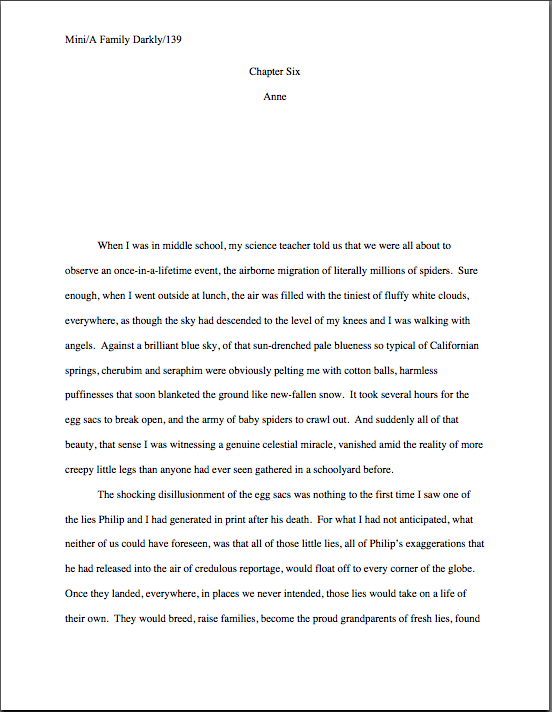
Synopsispalooza, Part XVII: you tell your side of the story, Hamlet; I’ll tell mine. Later, perhaps.

sarah-bernhardt_hamlet

Still hanging in there, campers? I hope so, because we’ve been covering a whole lot of material in this expedited Synopsispalooza weekend: various lengths of novel synopsis on Saturday morning, an assortment of memoir synopses that evening, and this morning, different flavors of nonfiction synopsis. This evening, I had planned on blithely tossing off 1-, 3-, and 5-page versions of HAMLET told from multiple perspectives, as an aid to the many, many writers out there struggling with queries and submissions for multiple-protagonist novels — and then I noticed something disturbing.

As I often do when I’m about to revisit a topic, I went back and checked our last substantive Author! Author! discussion of diverse perspective choices. Upon scrolling through last April’s lively discussion of multiple-protagonist narratives (which began here, if you missed it), I realized that I had inadvertently left all of you perspective-switchers with a cliffhanger when I injured my back last spring: I devoted a post to writing a 1-page synopsis for a multiple-protagonist novel, fully intending — and, heaven help us, promising — that I would return to deal with 3- and 5-page synopses on the morrow.

You poor patient souls are still waiting, are you not? I’m so sorry — after my injury, I took a two-week hiatus from blogging, and I completely forgot about finishing the series. Then, to add insult to injury, I’ve been chattering about complex novel synopses under the misconception that those of you who followed last April’s discussion were already conversant with the basic strategy of synopsizing a multiple-protagonist novel.

Why on earth didn’t any of you patient waiters tell me that I had left you hanging? Who knows better than a writer juggling multiple perspectives that no single actor in a drama, however important, has access to the same sets of information that each other actor does?

No matter: I’m going to make it up to you perspective-jugglers, pronto. This post and the next will be entirely about writing a synopsis for a multiple-protagonist novel.

So that those new to the discussion will not have to play catch-up, this evening, with your permission, I would like to revisit the substance of that last post before I went silent, as it honestly does (in my humble opinion, at least) contain some awfully good guidelines for pulling off one of the more difficult tricks in the fiction synopsizer’s repertoire, boiling down a story told from several perspectives into a 1-page synopsis. To render this discussion more relevant to this weekend’s festivities, I shall be both updating it and pulling in examples from our favorite story, HAMLET.

You didn’t expect me to banish the melancholy fellow before the weekend was over, did you?

Let’s leap back into the wonderful world of the 1-page synopsis, then. I would not be going very far out on a limb, I suspect, in saying that virtually every working writer, whether aspiring or established — loathes having to construct synopses, and the tighter the length restriction, the more we hate ‘em. As a group, we just don’t like having to cram our complex plots into such short spaces, and who can blame us? Obviously, someone who believes 382 pages constituted the minimum necessary space to tell a story is not going to much enjoy reducing it to a single page.

Unfortunately, if one intends to be a published writer, particularly one who successfully places more than one manuscript with an agent or editor, there’s just no way around having to sit down and write a synopsis from time to time. The good news is that synopsis-writing is a learned skill, just as query-writing and pitching are. It’s going to be hard until you learn the ropes, but once you’ve been swinging around in the rigging for a while, you’re going to be able to shimmy up to the crow’s nest in no time.

Okay, so maybe that wasn’t the happiest metaphor in the world. But it is rather apt, as the bad news — you knew it was coming, right? — is that even those of us who can toss off a synopsis for an 800-page trilogy in an hour tend to turn pale at the prospect of penning a synopsis for a multiple-protagonist novel. It makes even the most harden synopsizer feel, well, treed.

Why? Well, our usual m.o. involves concentrating upon using the scant space to tell the protagonist’s (singular) story, establishing him as an interesting person in an interesting situation, pursuing interesting goals by overcoming interesting obstacles. Even if you happen to be dealing with a single protagonist, that prospect be quite daunting — but if you have chosen to juggle multiple protagonists, the mere thought of attempting to show each of their learning curves within a 1-page synopsis may well make you feel as if all of the air has been sucked out of your lungs.

Nice, deep breaths, everybody. It’s a tall order, but I assure you, it can be done. The synopsis-writing part, not just returning air to your lungs.

How? By clinging tenaciously to our general rule of thumb for querying a multiple-protagonist novel: the key lies in telling the story of the book, not of the individual protagonists.

Indeed, in a 1-page synopsis, you have no other option. So let’s spend the rest of this post talking about a few strategies for folding a multiple-protagonist novel into a 1-page synopsis. Not all of these will work for every storyline, but they will help you figure out what is and isn’t essential to include — and what will drive you completely insane if you insist upon presenting. Here goes.

1. Stick to the basics.
Let’s face it, a 1-page synopsis is only about three times the length of the average descriptive paragraph in a query letter. Basically, that gives you a paragraph to set up the premise, a paragraph to show how the conflict comes to a climax, and a paragraph to give some indication of how you’re going to resolve the plot.

Not a lot of room for character development, is it? The most you can hope to do in that space is tell the story with aplomb, cramming in enough unusual details to prompt Millicent the agency screener to murmur, “Hey, this story sounds fresh and potentially marketable — and my, is this ever unusually well-written for a single-page synopsis,” right?

To those of you who didn’t answer, “Right, by jingo!” right away: attempting to accomplish more in a single-page synopsis will drive you completely nuts. Reducing the plot to its most basic elements will not only save you a lot of headaches in coming up with a synopsis — it will usually yield more room to add individual flourishes than being more ambitious.

Admittedly, this is a tall order to pull off in a single page, even for a novel with a relatively simple plotline. For a manuscript where the fortunes of several at first seemingly unrelated characters cross and intertwine for hundreds of pages on end, it can seem at first impossible, unless you…

2. Tell the overall story of the book as a unified whole, rather than attempting to keep the various protagonists’ stories distinct.
This suggestion doesn’t come as a very great surprise, does it, at this late point in the weekend? Purely as a matter of space, the more protagonists featured in your manuscript, the more difficulty you may expect to have in cramming all of their stories into 20-odd lines of text. And from Millicent’s perspective, it isn’t really necessary: if her agency asks for a synopsis as short as a single page, it’s a safe bet that they’re not looking for a blow-by-blow of what happens to every major character.

Still not convinced? Okay, step into Millicent’s dainty slippers for a moment and consider which species of 1-page synopsis would be more likely to make her request the manuscript (or, in the case of a synopsis submitted with a partial, the rest of the manuscript). First, consider the common multiple-perspective strategy of turning the synopsis into a laundry list of what parts of the story are told from which characters’ perspectives:

Hamlet 1 p synopsis bad

Poor Will is so busy accounting for all of his narrative perspectives that he does not have room to present much of the plot, does he? This structural choice forces him to cover the same plot elements over and over again. Compare this to the same story told as a single storyline, a smooth, coherent narrative that gives Millicent a sense of the actual plot of the book:

1-page Hamlet

There really is no contest about which presents Shakespeare as the better novelist, is there? That’s no accident: remember, in a 1-page synopsis, the primary goal is not to produce a carbon-copy of the entire book, but to tell what the book is about in a manner that will prompt the reader to want to hear more.

So tell Millicent just that, as clearly as possible: show her what a good storyteller you are by regaling her with an entertaining story, rather than merely listing as many of the events in the book in the order they appear.

In other words: jettison the subplots. However intriguing and beautifully-written they may be, there’s just not room for them in the 1-page synopsis. Trust me, Millicent is not going to think the worse of your book for having to wait until she actually has the manuscript in her hand to find out every nuance of the plot — or, indeed, how many individual perspectives you have chosen to weave together into a beautifully rich and coherent whole.

That last paragraph stirred up as many fears as it calmed, didn’t it? “But Anne,” complexity-lovers everywhere cry out in anguish, “I wrote a complicated book because I feel it is an accurate reflection of the intricacies of real life. I realize that I must be brief in a 1-page synopsis, but I fear that if I stick purely to the basics, I will cut too much. How can I tell what is necessary to include and what is not?

Excellent question, complexity-huggers. The short answer is that in a 1-page synopsis, almost everything should be excluded except for the book’s central conflict, the primary characters involved with it, and what they have to gain or lose from it.

If you still fear that you have trimmed too much, try this classic editors’ trick: write up a basic overview of your storyline, then ask yourself: if a reader had no information about my book other than this synopsis, would the story make sense? Equally important, does the story sound like a good read?

Note, please, that I most emphatically did not suggest that you ask yourself whether the synopsis in your trembling hand was a particularly accurate representation of the narrative as it appears in the manuscript. Remember, what you’re going for here is a recognizable version of the story, not a substitute for reading your manuscript.

Which leads me to suggest…

3. Be open to the possibility that the best way to tell the story in your synopsis may not be the same way you’ve chosen to tell it in the manuscript.
Amazingly, rearranging the running order in the interests of story brevity is something that never even occurs to most struggling synopsizers to try. Yet in a multiple-perspective novel that skips around in time and space, as so many do, or one that contains many flashbacks, telling the overarching story simply and clearly may necessitate setting aside the novel’s actual order of events in favor of reverting to — gasp! — a straightforward chronological presentation of cause and effect.

Chronological order may not be your only option, however: consider organizing by theme, by a dominant plotline, or another structure that will enable you to present your complex story in an entertaining manner on a single page. Opting for clarity may well mean showing the story in logical order, rather than in the order the elements currently appear in the manuscript — yes, even if doing so necessitates leaping over those five chapters’ worth of subplot or ten of closely-observed character development.

Oh, stop hyperventilating. I’m not suggesting revising the book, just making your life easier while you’re trying to synopsize it. If you try to do too much here, you’ll only drive yourself into a Hamlet-like state of indecisive nuttiness: because no version can possibly be complete in this limited amount of space, no over-stuffed option will seem to be right.

For those of you still huffing indignantly into paper bags in a vain attempt to regularize your breathing again: believe me, #3 is in no way a commentary on the way you may have chosen to structure your novel — or, indeed, upon the complexity that tends to characterize the multiple-perspective novel. It’s a purely reflection of the fact that a 1-page synopsis is really, really short.

Besides, achieving clarity in a short piece and maintaining a reader’s interest over the course of several hundred pages can require different strategies. You can accept that, right?

I’m choosing to take that chorus of tearful sniffles for a yes. Let’s move on.

Storyline rearrangement is worth considering even if — brace yourselves; this is going to be an emotionally difficult one — the book itself relies upon not revealing certain facts in order to build suspense. Think about it strategically: if Millicent’s understanding what the story is about is dependent upon learning a piece of information that the reader currently doesn’t receive until page 258, what does a writer gain by not presenting that fact until the end of the synopsis — or not presenting it at all? Not suspense, usually.

And before any of you shoot your hands into the air, eager to assure me that you don’t want to give away your main plot twist in the synopsis, let me remind you that part of purpose of any fiction synopsis is to demonstrate that you can plot a book intriguingly, not just come up with a good premise. If that twist is integral to understanding the plot, it had better be in your synopsis.

But not necessarily in the same place it occupies in the manuscript’s running order. It may lacerate your heartstrings to the utmost to blurt out on line 3 of your synopsis the secret that Protagonist #5 doesn’t know until Chapter 27, but if Protagonists 1-4 know it from page 1, and Protagonists 6-13′s actions are purely motivated by that secret, it may well cut pages and pages of explanation from your synopsis to reveal it in the first paragraph of your 1-page synopsis.

Some of those sniffles have turned into shouts now, haven’t they? “But Anne, I don’t understand. You’ve said that I need to use even a synopsis as short as a single page to demonstrate my fine storytelling skills, but isn’t part of that virtuoso trick showing that I can handle suspense? If my current running order works to build suspense in the book, why should I bother to come up with another way to tell the story for the purposes of a synopsis that no one outside a few agencies and publishing houses will ever see?”

You needn’t bother, if you can manage to relate your storyline entertainingly in the order it appears in the book within a requested synopsis’ length restriction. If your 1-page synopsis effectively builds suspense, then alleviates it, heaven forfend that you should mess with it.

All I’m suggesting is that slavishly reflecting how suspense builds in a manuscript is often not the most effective way of making a story come across as suspenseful in a synopsis, especially a super-short one. Fidelity to running order in synopses is not rewarded, after all — it’s not as though Millicent is going to be screening your manuscript with the synopsis resting at her elbow, so she can check compulsively whether the latter reproduces every plot twist with absolute accuracy, just so she can try to trip you up.

In fact, meticulous cross-checking wouldn’t even serve her self-interest. Do you have any idea how much extra time that kind of comparison would add to her already-rushed screening day?

Instead of worrying about making the synopsis a shrunken replica of the book, concentrate upon making it a compelling road map. Try a couple of different running orders, then ask yourself about each: does this synopsis tell the plot of the book AS a story, building suspense and then relieving it? Do the events appear to follow logically upon one another? Is it clear where the climax falls? Or does it merely list plot events?

Or do those frown lines on your collective forehead indicate that you’re just worried about carving out more space to tell your story? That’s a perfectly reasonable concern. Let’s make a couple of easy cuts.

4. Don’t invest any of your scant page space in talking about narrative structure.
Again, this should sound familiar to those of you who have been following this Synopsispalooza. It’s not merely a waste of valuable sentences to include such English Lit class-type sentiments as the first protagonist is Evelyn, and her antagonist is Benjamin. Nor is it in your best interest to come right out and say, the theme of this book is…

Why? Long-time readers, chant it with me now: just as this kind of language would strike Millicent as odd in a query letter, industry types tend to react to this type of academic-speak as unprofessional in a synopsis.

Again you ask why? Veteran synopsis-writers, pull out your hymnals and sing along: because a good novel synopsis doesn’t talk about the book in the manner of an English department essay, but rather tells the story directly. Ideally, through the use of vivid imagery, interesting details, and presentation of a selected few important scenes.

Don’t believe me? I’m not entirely surprised: convinced that the proliferation of narrators is the single most interesting and marketable aspect of the novel — not true, if the manuscript is well-written — most perspective-juggling aspiring writers believe, wrongly, that a narrator-by-narrator approach is the only reasonable way to organize a synopsis.

On the page, though, this seldom works well, especially in a 1-page synopsis. Compare the second example above with the following, a synopsis entirely devoted to analyzing the book as a critic might, rather than telling its story:

Hamlet 1 p synopsis bad 2

Not particularly effective at giving Millicent a sense of the overall plot, is it? Because the story is so complex and the individual characters’ perspectives so divergent, the seemingly simple task of setting out each in turn does not even result in an easily-comprehended description of the premise. Heck, the first three perspectives ran so long that our Will was forced to compress his fourth protagonist’s perspective into a partial sentence in the last paragraph.

Minimizing one or more narrators in an attempt to save space is a tactic Millicent and her aunt, Mehitabel the veteran literary contest judge, see all the time in synopses for multiple-protagonist novels, by the way. Protagonist-juggling writers frequently concentrate so hard on making the first-named protagonist bear the burden of the book’s primary premise that they just run out of room to deal with some of the others. In a synopsis that relies for its interest upon a diversity of perspectives, that’s a problem: as we saw above, an uneven presentation of points of view makes some look more important than others.

I sense the writers who love to work with multiple protagonists squirming in their chairs. “But Anne,” these experimental souls cry, “my novel has five different protagonists! I certainly don’t want to puzzle Millicent or end up crushing the last two or three into a single sentence at the bottom of the page, but it would be flatly misleading to pretend that my plot followed only one character. What should I do, just pick a couple randomly and let the rest be a surprise?”

Actually, you could, in a synopsis this short — which brings me back to another suggestion from earlier in this series:

5. Pick a protagonist and try presenting only that story arc in the 1-page synopsis.
This wouldn’t necessarily be my first choice for synopsizing a multiple-protagonist novel, but it’s just a defensible an option for a 1-page synopsis as for a descriptive paragraph or a pitch. As I pointed out above, the required format doesn’t always leave the humble synopsizer a whole lot of strategic wiggle room.

Concentrate on making it sound like a terrific story. You might even want to try writing a couple of versions, to see which protagonist’s storyline comes across as the best read.

Dishonest? Not at all — unless, of course, the character you ultimately select doesn’t appear in the first 50 pages of the book, or isn’t a major character at all. There’s no law, though, requiring that you give each protagonist equal time in the synopsis. In fact…

6. If you have more than two or three protagonists, don’t even try to introduce all of them in the 1-page synopsis.
Once again, this is a sensible response to an inescapable logistical problem: even if you spent a mere sentence on each of your nine protagonists, that might well up to half a page. And a half-page that looked more like a program for a play than a synopsis at that.

Remember, the goal here is brevity, not completeness, and the last thing you want to do is confuse our Millicent. Which is a very real possibility in a name-heavy synopsis, by the way: the more characters that appear on the page, the harder it will be for a swiftly-skimming pair of eyes to keep track of who is doing what to whom.

Even with all of those potential cuts, is compressing your narrative into a page still seeming like an impossible task? Don’t panic — there’s still one more wrench left in our writer’s tool belt.

7. Consider just making the 1-page synopsis a really strong, vivid introduction to the book’s premise and central conflict, rather than a vague summary of the entire plot.
Again, this wouldn’t be my first choice, even for a 1-page synopsis — I wouldn’t advise starting with this strategy before you’d tried a few of the others — but it is a recognized way of going about it. Not all of us will admit it, but many an agented writer has been known to toss together this kind of synopsis five minutes before a deadline. That’s a very good reason that we might elect to go this route: for the writer who has to throw together a very brief synopsis in a hurry, it’s undeniably quicker to write a pitch (which this style of synopsis is, yes?) than to take the time to make decisions about what is and is not essential to the plot.

Yes, yes, I know: I said quite distinctly farther up in this very post that the most fundamental difference between a descriptive paragraph and a synopsis is that the latter demonstrates the entire story arc. In a very complex plot, however, sketching out even the basic twists in a single page may result in flattening the story, rather than presenting it as a good read.

This can happen, incidentally, even if the synopsis is well-written. Compare, for instance, this limited-scope synopsis (which is neither for a genuinely multi-protagonist novel nor for HAMLET, but bear with me here; these are useful examples):

pride-and-prejudice-synop

with one that covers the plot in more detail:

P&P synop vague

See how easy it is to lose track of what’s going on in that flurry of names and events? (And see, while we’re at it, proof that it is indeed possible to hit the highlights of a complicated plot within a single page? Practice, my dears, practice.) Again, a pitch-style synopsis wouldn’t be my first choice, but for a 1-page synopsis, it is a respectable last-ditch option.

An overstuffed 1-page synopsis often falls prey to another storytelling problem — one that the last example exhibits in spades but the one just before it avoids completely. Did you catch it?

If you instantly leapt to your feet, shouting, “Yes, Anne, I did — the second synopsis presents Elizabeth primarily as being acted-upon, while the first shows her as the primary mover and shaker of the plot!” give yourself seventeen gold stars for the day. (Hey, it’s been a long post.) Over-crammed synopses frequently make protagonists come across as — gasp! — passive.

And we all know how Millicent feels about that, do we not? Can you imagine how easy it would be to present Hamlet’s story as if he never budged an inch on his own steam throughout the entire story?

Because the 1-page synopsis is so short, and multiple-protagonist novels tend to feature so many different actors, the line between the acting and the acted-upon can very easily blur. If there is not a single character who appears to be moving the plot along, the various protagonists can start to seem to be buffeted about by the plot, rather than being the engines that drive it.

How might a savvy submitter side-step that impression? Well, several of the suggestions above might help. As might our last for the day.

8. If your draft synopsis makes one of your protagonists come across as passive, consider minimizing or eliminating that character from the synopsis altogether.
This is a particularly good idea if that protagonist in question happens to be a less prominent one — and yes, most multiple-protagonists do contain some hierarchy. Let’s face it, even in an evenly-structured multi-player narrative, most writers will tend to favor some perspectives over others, or at any rate give certain characters more power to drive the plot.

When in doubt, focus on the protagonist(s) closest to the central conflicts of the book. Please don’t feel as if you’re slighting anyone you cut — many a character who is perfectly charming on the manuscript page, contributing a much-needed alternate perspective, turns out to be distracting in a brief synopsis.

Speaking of distractions, I’m going to sign off for the night before I provide you with any more. Next time, I shall be discussing strategies for folding your many protagonists into 3- and 5-page synopses.

I really do mean it this time, honest. Tune in tomorrow, everybody, and keep up the good work!

Synopsispalooza, Part XIV: to be or not to be — 1, 3, or 5 pages

olivier hamlet

Welcome to this weekend’s expedited Synopsispalooza offerings. For those of you who missed yesterday evening’s teaser, I shall be posting twice per day this weekend (at roughly 10:30 am and 7:30 pm Pacific time) in order to cram as many practical examples of solid synopses of various lengths in front of my readers’ astonished eyes.

Why go to such great lengths? Well, perhaps I’m mistaken, but my bet is that most of you have never seen a professional synopsis before, other than the few fleeting glimpses I’ve given you throughout Synopsispalooza. So while I’ve given you formatting examples, a few 1-pagers, counterexamples, and a whole lot of guidelines, some of you may still be having difficulty picturing the target at which you are shooting.

Amazing how often that’s the case with the pieces of paper commonly tucked into a query or submission packet, isn’t it? The overwhelming majority of queriers have never seen a successful query; a hefty proportion of synopsizers have never clapped eyes upon a professionally-written synopsis; herds and herds of submitters have never been within half a mile of a manuscript in standard format, and a vast multitude of newly-signed writers have absolutely no idea even how to begin to organize an author bio on the page.

And some people wonder why I keep blogging on the basics. I’m not a big fan of guess what color I’m thinking submission standards.

Since my brief for this weekend is to generate a small library of practical examples, contrary to my usual practice, I’m not going to dissect each synopsis immediately after they appear. Instead, I’m going to leave them to you to analyze. In the comments, if you like, or in the privacy of your own head.

I can already feel some of you beginning to panic, but fear not — you already have the tools to analyze these yourself. We’ve just spent 13 posts going over what does and doesn’t work well in a synopsis, right? I’m confident that you are more than capable of figuring out why the various elements in these examples render them effective.

My goal here today is to give you a sense of the scope of storytelling appropriate to three commonly-requested lengths of synopsis. Because deny it as some of you might, I still harbor the sneaking suspicion that there are a whole lot of aspiring writers out there who are mistakenly trying to cram the level of detail appropriate to a 5-page synopsis into a 3- or 1-page synopsis.

That way lies madness, of the O, that this too too solid text would melt, thaw and resolve itself into a shorter synopsis! variety. Trust me, unless you actively long to be complaining that the Everlasting had not fix’d
His canon ‘gainst self-slaughter
, you don’t want to venture down that primrose path.

Besides, the ever-popular cram-it-all-in strategy isn’t likely to produce a successful shorter synopsis. As I’ve pointed out repeatedly throughout this series, the goal of a 1-page synopsis is not the same as a longer one. No one who requests a single-page synopsis seriously expects to see the entire plot summarized in it, as is routinely expected in a 5-page synopsis.

What might those different expectations yield on the synopsis page? Glad you asked; read on.

A quick caveat or two before you do: these are not intended to be the only possible synopses for this particular story; they’re quick-and-dirty stabs at it in a couple of hours while icing my knee. (I overdid this week; I’m reclining on pillows as I write this.) So kindly spare me quibbles about how I could have improved these or made them conform more closely to the text. I already know that once or twice, I presented some of the events out of chronological order, for ease of storytelling.

But guess what? If Millicent the agency screener asks to read your entire manuscript based upon your synopsis, she is not going to call you up to yell at you because they did not match up precisely. Nor will her boss, the agent of your dreams, or a contest judge. In fact, there is literally no point along the road to publication, except perhaps in a writing class, that anyone with the authority to yell at you is at all likely to perform a compare-and-contrast between your synopsis and your manuscript, checking for discrepancies.

Again, absolute literal accuracy is not expected in a synopsis; the pros are aware that plotlines will change slightly with subsequent revisions. What’s important here is presenting the story arc well — and that it comes across as a good story.

I am anticipating that many of you will know the story well enough to catch minor chronological rearrangement, by the way; this is a far more useful exercise if the story being presented is one with which you’re familiar. Besides, I wanted to stick with something in the public domain.

With those broad hints, and the assistance of that moody pick of Sir Larry above, most of you have probably tumbled to it already: you’re about to read several synopses of HAMLET.

Why HAMLET, and not, say, ROMEO AND JULIET, which is a bit better-known in this country? Partially, I chose it because in many ways, it’s the ultimate literary fiction storyline: it’s about a passive guy who sits around thinking about all of the negative things going on in his life and planning that someday he’ll do something about them.

Okay, so that’s a stereotype about literary fiction, but it’s a cliché for a reason. As any Millicent working in a LF-representing agency would happily tell you, far too many would-be LF writers mistakenly believe that the less that happens in a manuscript, the more literary it is.

That’s a misconception: what differentiates LF from other fiction is usually the vocabulary and sentence structure choices; LF assumes a college-educated readership (whereas most mainstream fiction is pitched at about a 10th-grade reading level), and often engages in experimental storytelling practices. Let’s face it, the kinds of sentences that Toni Morrison can make sing most emphatically would not work in other book categories. But I digress.

The other reason to choose HAMLET is that while most of you have probably seen it at least once, I’m betting that very few of you have ever seen it performed live in its entirety. Even the most text-hugging of theatre companies usually cuts an hour or so out of the play. (The major exception: Kenneth Branaugh’s film version does in fact contain every word. You’ll feel as though you’ve spent a month watching it, but there is a lovely Hamlet-Horatio scene that I’ve never seen performed in any other version.)

So I’m synopsizing a story that pretty much everybody has seen or heard synopsized, at least a little. That should prove helpful in understanding what I have chosen to include and exclude in each version.

To head off whining at the pass: yes, the lettering here is rather small and a bit fuzzy at the edges; that’s the nature of the format. To get a clearer view, try holding down the COMMAND key and hitting + repeatedly, to enlarge the image.

But before anybody out there gets the bright idea to steal any of this and turn it in as a term paper, this is copyrighted material, buddy. So you wouldn’t just be cheating; you’d be breaking the law.

So there. I didn’t go to all of this trouble so some con artist could avoid reading a classic. (Hey, I said that writing synopses was easy for a pro, not that it was even remotely enjoyable.)

Caveats completed; time to leap into the fray. Here, for your perusing pleasure, is a 5-page synopsis of The Tragedy of Hamlet, Prince of Denmark:

Hamlet 5 page 1

Hamlet-5-page-2

Hamlet-5-page-3

Hamlet-5-page-41

Hamlet-5-page-5

Pop quiz: I’ve deliberately made a really, really common mistake here, to show you all just how easy it is not to notice when tossing together a synopsis in a hurry. Did anyone catch it?

If you immediately raised your hand and shouted, “You misspelled Yorick’s name!” give yourself a gold star. You wouldn’t believe how often writers misspell the names of their own characters in synopses — or forget that between the time they originally wrote the synopsis for that contest that sounded so promising and when an agent asked for the first 50 pages and a 5-page synopsis, the protagonist’s best friend’s name had changed from Monica to Yvette, because Monica might strike a skimming reader as too similar to Mordred, the villain’s name.

And what’s the cure for that type of gaffe, everyone? Sing out loudly, please: read your synopsis IN HARD COPY, IN ITS ENTIRETY, and OUT LOUD before you send it anywhere, anytime. And do it every single time you are asked to send it out; things change.

The 5-page synopsis was the industry standard for many years, and probably still the one you will be asked to produce after you have signed with an agent. In these decadent days of wildly different submission guidelines across agencies and contests, however, aspiring writers are asked to produce something shorter.

As I believe I have mentioned about 1700 times on the blog at this point, read the guidelines several times over before you submit or enter so much as a syllable. If the requester doesn’t specify how long the synopsis should be, then the length is up to you.

Just keep it under 5 pages. Longer than that, and you’ll just look as though you don’t have any idea how long it should be. If you go less than 5, fill the pages in their entirety (or close to it), so the length will seem intentional.

Tell the entire story in a 3- or 4-page synopsis. If you already have a 5-page version handy, you can often get there by simply lightening the level of detail. Like so:

Hamlet-3-page-1

Hamlet 3 page 2

Hamlet 3 page 3

For a 1- or 2-page synopsis, the goal is different. While it is perfectly acceptable to depict the entire story arc, introducing the major characters, central conflict, and what’s at stake will do very nicely.

Which is to say: don’t even try to cut down a 5-page synopsis into a 1-page; it will only irritate you to the hair-yanking stage. Instead, start fresh:

1-page Hamlet

As you may see, I actually have covered the entire plot here, if a bit lightly. I’ve introduced the major characters and their main conflicts — and no more. I didn’t waste a paragraph describing the castle; I didn’t feel compelled to show what the characters looked like; I avoided incorporating clichés about procrastination. Yet I’ve demonstrated that this story is interesting and holds together.

In other words, I did the writer’s job: I wrote a 1-page overview of the plot. Ta da!

Or rather, I wrote a 1-page synopsis geared toward convincing a literary or mainstream fiction-representing agent to ask to see the manuscript. If I were trying to market HAMLET as, say, a paranormal thriller, I would present it differently.

How differently, you ask? Take a gander. Just to keep things interesting, this time, I’ll do it as a 2-page synopsis:

Hamlet ghost page 1

Hamlet ghost page 2

Reads like quite a different story, does it not? Yet all that was required to pull that off was a slight tone shift, a tighter focus on the grislier aspects of the story, and an increased emphasis on the ghost’s role in the plot, and voilà! Paranormal thriller!

That was rather fun, actually. Want to see the same story as a YA paranormal? Here you go:

YA Hamlet page 1

YA Hamlet page 2

The moral, should you care to know it: although most first-time novelists feel utterly controlled by the length restrictions of a requested synopsis, ultimately, the writer is the one who decides how to present the story. Only you get to choose what elements to include, the tone in which you describe them, and the phrasing that lets Millicent know what kind of book this is.

Makes you feel a bit more powerful, doesn’t it?

Tune in this evening for more empowering examples. Enjoy the control, campers, and keep up the good work!

Synopsispalooza, Part XV: alas, poor Yorick; I knew him in his 1-, 3-, and 5-page versions

hamlet and yorick

Is everyone excited about this weekend’s expedited Synopsispalooza schedule, or, as I like to think of it, the Saturday and Sunday of Synopses? In this morning’s post, I provided you with concrete examples of 5-, 3-, 2-, and 1-page synopses for the same story, so you might see the different level of detail expected in each, as well as how the content selection and tone might be varied to fit the story into a couple of other book categories.

To that noble end, I borrowed from a story most of you were likely to know, a little number called THE TRAGEDY OF HAMLET, PRINCE OF DENMARK, by an up-and-coming writer named William Shakespeare. This evening, I am going to use that same storyline to come up with examples of 1-, 3-, and 5-page synopses for memoir.

Hey, if you weren’t familiar with it before this morning’s post, you’ve certainly seen enough versions of it to be conversant with it now, right?

Why go over memoir synopses in their own post, since a savvy memoirist could use the same storytelling techniques as a novelist does to shape a compelling narrative? (For some tips on how to pull that off, please see my previous Synopsispalooza post on the subject.) Several reasons, actually.

First, as I mentioned in this morning’s post, the vast majority of aspiring writers in general — and, it’s safe to conclude, first-time memoirists in particular — have never seen a professional synopsis for their type of book. As, indeed, I surmised from plaintive-yet-practical questions like the following, posted by intrepid memoirist Pamela Jane on an earlier Synopsispalooza installment:

Is there any place where we can view an successful memoir synopsis? That would be wonderfully helpful.

As an experienced writing teacher, I make bold to interpret requests like this as an indication that I might not have been generating enough practical examples of late. Surely, that alone would make for an excellent second reason to devote an entire post to making up the shortfall. (And don’t worry, nonfiction-synopsizers who do not write memoir: I shall be churning out concrete examples for you tomorrow a.m.)

Third, and perhaps most important for instructive purposes, while memoir synopses share basic formatting and goals with novel synopses — chant them with me now, campers: any synopsis should be in standard manuscript format, and the primary purpose of a query or submission synopsis is not to summarize the book so well that every question is answered, but to prompt Millicent the agency screener to ask to see the manuscript — there are some essential differences. To name but three:

(1) A memoir synopsis should be written in the past tense, whereas a novel synopsis should be written in the present tense.

(2) A memoir synopsis should be written in the first person singular, whereas a novel synopsis should be written in the third person, regardless of the narrative voice of the book.

(3) A memoir synopsis should tell the story of the book in standard manuscript format, without special formatting for the introduction of new characters, whereas a novel synopsis should alert the reader to the first appearance of a character (but only the first) by presenting his name in all capital letters, preferably followed by his age in parentheses.

I suspect that none of those will come as a complete surprise to any of you memoirists out there, but as I’m not entirely sure whether I’ve covered #3 explicitly in a previous Synopsispalooza posts (hey, cut me some slack — do you have any idea how many pages of text it has already run?), let’s talk about it now. Although the capitalization convention is specific to fiction, Millicents (and their contest-judging aunts, Mehitabels) do frequently see memoir synopses with characters introduced as JOAN OF ARC (19). Heck, they occasionally break open submission envelopes to encounter memoirists introducing themselves as I, ARNETTE (7 at the beginning of the story).

That’s neither necessary nor expected in a memoir synopsis. Thus, while a memoir synopsis would mention that Milton Sedgwick sat next to me in my first-grade class. Evidently, he intended to major in yanking my pigtails, a novel synopsis might herald ol’ Milton’s advent in the story with MILTON SEDGWICK (6) devoted our first-grade year to yanking Janelle’s pigtails.

Yes, yes, I know: some of you have probably heard otherwise, but having sold a couple of memoirs, I know whereat I speak. Trust me, both Millicent and Mehitabel may be relied upon to understand that the perpendicular pronoun appearing frequently throughout the memoir synopsis refers to the author/protagonist; neither is at all likely to confuse you with your constantly-weeping track coach or your sociopathic sister just because you haven’t capitalized their names on the synopsis page.

Everybody clear on that? Please chime in with questions, if not; I would hate to have Millicent or Mehitabel perplexed by a half-capitalized set of characters on the synopsis page.

The fourth reason — yes, I’m still justifying, thanks — is the first cousin the first: since very few aspiring writers ever get a chance to take a peek at a professionally-formatted synopsis, some of you might not be aware that under no circumstances should a synopsis of any length be in business format. Or, to put it in terms every user of e-mail can understand, unless an agency’s guidelines, requested materials letter, or contest’s rules specifically ask you to include your synopsis in the body of an e-mail, a synopsis should NEVER be single-spaced, devoid of indentation at the beginning each paragraph, block-justified (i.e., with straight margins on both the left and right sides of the page), or contain a skipped line between paragraphs.

Again, is everybody clear on why that is the case? Not all aspiring writers are: Millicent and Mehitabel shake their heads on a daily basis at synopses formatted as though the writer were unaware (as is, indeed, often the case) that indenting paragraphs is not optional in English prose. Save the non-indented paragraphs and single-spacing for business letters and e-mail, where such barbaric practices belong.

Don’t you tell me that a query letter is a business letter. Part of presenting yourself professional entails adhering to the formatting standards of the industry you are seeking to join. Believe me, the fine folks who work in agencies and publishing houses think of their business as exceptional.

So what should a properly-formatted memoir synopsis look like, whether it will be gracing a query packet, livening up a submission packet, or increasing your chances of winning in a contest entry? A little something like this 5-page synopsis for HAMLET — written, for your educational pleasure, from the melancholy Dane’s own point of view. (As always, if you are having trouble making out the individual words, try holding down the COMMAND key while pressing + to enlarge the image.)

Hamlet memoir 5.1a

Hamlet memoir 5.2

Hamlet memoir 5.3

Hamlet memoir 5.4

Hamlet memoir 5.5

See how easy it would be for Millicent to tell from a quick glance at the first couple of lines that this is a synopsis for a memoir, not a novel? Or for Mehitabel to notice that an entry in the memoir category of her contest had accidentally ended up in the fiction category pile?

While we’re straining our eyeballs, trying to read like these two worthy souls, did anyone catch the gaffe on page 4? (Hint: it’s in the first line of the third full paragraph.)

Spot it now? To Millicent or Mehitabel, it would be fairly obvious what happened here: this synopsis was originally written as if it were for a novel, in the present tense. In the rush to change it over to the proper presentation for a memoir — possibly because the writer had only just learned that the past tense was proper for memoir synopses — one verb got missed.

And what’s the best preventative for that kind of Millicent-annoyer, campers? That’s right: reading your synopsis IN ITS ENTIRETY, IN HARD COPY, and OUT LOUD before you stuff it into an envelope or hit the SEND button.

As you may see, a 5-page synopsis (or the rare one that’s even longer) permits the memoirist to tell his story in some fairly complete detail. Like the novel synopsizer, he’s usually better off describing individual scenes within the story than simply trying to summarize huge chunks of activity within just a few quick sentences.

The same principle applies to the 3- or 4-page synopsis. Obviously, though, since there’s less room, Hamlet can describe fewer scenes:
Hamlet memoir 3.1

Hamlet memoir 3.2

Hamlet memoir 3.3

Admittedly, there are a few more summary statements here — the first paragraph contains a couple of lulus — but for the most part, this synopsis is still primarily made up of descriptions of scenes, not just hasty summaries of activity. Cause and effect remain clear. Notice, too, that the sentence structure varies throughout: none of the repetitive X happened and Y happened and Z happened that dog the average mid-length synopsis here.

As we saw in this morning’s post, quite a different strategy is required to pull off the dreaded 1-page synopsis. Here, our boy is going to have to rely pretty heavily on summary statements — but that does not mean specificity need be abandoned altogether.

Hamlet memoir 1 page

Still a pretty gripping yarn, isn’t it? That’s because Hamlet managed to retain the essential story arc, even when forced by length restrictions to jettison most of the scenes upon which his longer synopses rested.

If you’re still having trouble either seeing the difference between these levels of detail and/or are having trouble translating from theory into practice, don’t start out trying to synopsize your own book. Pick a story you know very well and try writing 5-, 3-, and 1-page versions of it. Repeat as often as necessary until you get the hang of it, then go back to your own opus.

Hey, writing a synopsis is a learned skill. What made you think you would be good at it without some practice?

Why start with somebody else’s book, you ask? If you’re not close to the story, it’s often easier to catch its essence — and that goes double if your story actually is your story.

Remember, the key to writing a great memoir synopsis of any length is to treat yourself as the most interesting character in the most interesting story in the world. Tell that story — but don’t leave either why you are fascinating or why your situation is compelling to Millicent or Mehitabel’s imagination. Make sure both show up on the page.

Hey, if Hamlet can compellingly retell the five-hour play of his life in 5-, 3-, and 1-page versions, so can you. Join me tomorrow for some nonfiction synopsis examples, and keep up the good work!

Synopsispalooza, Part XIII: all of the elements your synopsis needs — and none it doesn’t

no dumping sign 2

Today, I’m going to wrap up the synopsis troubleshooting checklist — you didn’t think you would get off with only two posts’ worth of admonishments, did you? Actually, I’m going to be heaping even more synopsis-polishing information upon you than that over the weekend: while it was a teensy bit ambitious of me to think we would polish off Synopsispalooza by Sunday evening, I do think we can polish it off early next week, provided that I post twice per day this weekend.

Stop groaning. Checking in twice per day may not be a picnic, admittedly, but there’s going to be some dandy goodies in this weekend’s pic-i-nic baskets, as Yogi Bear used to say.

What kind of goodies, you ask? After the last few posts’ emphasis upon how to prune and reshape an already-existing synopsis draft, I shall be turning my attention to how to take a plus-sized plot and present it compellingly on the synopsis page. By popular request, I am going to make a j a 5-page, 3-page, and 1-page synopsis for the same book, to help give those of you new to the game a clearer idea of the scope of each.

Yes, that’s right: tomorrow morning, I’m VOLUNTARILY sitting down and writing three separate synopses of the same story. Perhaps more, if I can figure out a way to fit the story into a different book category. Then, tomorrow evening, I shall be performing the same feat for memoir, followed by a Sunday morning command performance of non-memoir nonfiction.

Ah, the things I’m willing to do to convince you fine people that this gets easier with practice. Believe me, when I first started off, writing that many synopses would have taken me months.

So it should be an exciting few days of synopsis-mongering here at Author! Author! To start the weekend off on the right conceptual foot, let’s review the questions we’ve already asked ourselves about any synopsis draft we might happen to have handy.

(1) Does my synopsis present actual scenes from the book in glowing detail, or does it merely summarize the plot?

(2) If the reader had no information about my book other than the synopsis, would the story or argument make sense? Or is more specific information necessary to render the synopsis able to stand alone?

(3) Does the synopsis make the book sound like a good story? Does it hang together? Does this presentation make me eager to read it?

(4) Does the synopsis tell the plot of the book AS a story, building suspense and then relieving it? Do the events appear to follow logically upon one another? Is it clear where the climax falls? Or does it merely list all of the events in the book in the order they appear?

(5) Have I mentioned too many characters in the synopsis? Does each that I mention come across as individually memorable, or are some mentioned so quickly that they might start to blur together in the reader’s mind?

(6) If this synopsis is for a novel, is it clear who the protagonist is — and that s/he is the most interesting person in the story?

(7) Does my protagonist/do my protagonists come across as an interesting, unusual person(s) involved in an intriguing, unpredictable, and unusual situation?

(8) Does the synopsis make it plain enough how not only that the protagonist isn’t dull, but how? If a reader had no other information than what’s on the memoir page, would he be aware s/he is different from every other potential protagonist out there? What quirks render her or him fascinating on the page? What about her/his situation is unique?

(9) In a memoir synopsis, is it clear who the protagonist is? Does s/he come across as an interesting, unusual person involved in an interesting, unusual situation?

(10) In either a novel or a memoir synopsis, is it clear what the protagonist wants and what obstacles are standing in the way of her getting it? Is it apparent what is at stake for the protagonist if she attains this goal — and if she doesn’t?

(11) In a nonfiction synopsis that isn’t for a memoir, is it clear what the book is about? Does the subject matter come across as interesting, and does the synopsis convey why this topic might be important enough to the reader to make him/her long to read an entire book about it?

(12) Does my synopsis make the book sound just like other books currently on the market, or does it come across as original?

(13) If the book is fiction, does my synopsis make the story I’m telling seem plausible?

(14) If my book is nonfiction, does it come across as both plausible and as though I’m a credible source?

Is everyone happy with all of those? More importantly, is everyone’s synopsis happy with all of those? For the sake of getting on with it, I’m going to assume that the answer is a resounding, “By gum, Anne, YES!” But if you have any questions about what I’ve covered so far, please feel free to bring ‘em up in the comments.

Let’s move on, shall we? All of the following apply equally well to a synopsis intended to rest within a query packet, a submission packet, and a contest entry, by the way.

(15) Does the synopsis’ tone and voice echo the tone and voice of the manuscript?

We talked about this a bit in our recent Querypalooza discussion of the importance of the descriptive paragraph in a query letter: it’s extremely helpful if the query and synopsis give some indication of the language and tone of the manuscript, if that’s humanly possible. The vast majority of the time, it is — but you’d never know it to read the average synopsis or query letter.

Why? Well, as we’ve discussed earlier in this series, the overwhelming majority of query, submission, and contest synopses fall into four categories:

a) replicas of back-jacket blurbs, ostensibly more concerned with praising the manuscript than describing it. (As in: this is the best book about mollusks since the bestselling SHELLFISH AND YOU!)

b) generalization-ridden, list-like documents apparently devoted to cramming the greatest amount of plot points into the least possible space. (One day, Janet walks down to the pier, gets kidnapped by pirates, and spends the next twenty-seven years boxing up and shipping out plunder. She gets abandoned on a desert island, builds a tree fort, and makes friends with the local ape population. She gets rescued, moves to Lithuania, and marries the crown prince.)

c) seemingly random collections of characters and events evidently thrown together at the last possible nanosecond, regardless of whether it hangs together as a story. This group is often characterized by the vaguely hysterical tone of the clock-watcher. (Mortimer is a barista. {Insert paragraph about espresso here.} Angela is a pearl diver. {Insert paragraph about diving for pearls here.} Terence is a first-grade teacher. {Insert paragraph about tot-teaching here. Then add on the last line of the 1-page synopsis:} They all unwittingly get embroiled in a bank robbery.)

d) grimly literal presentations of the story, apparently told through the gritted teeth of someone being forced to leap through a pointlessly flaming hoop and pretend he likes it. (Kenneth longs to be a drum major, but so does his archrival, Ernest. Complications ensue. May I get back to my actual writing now?)

All of these popular approaches to synopsis-writing miss the central point of the exercise: whether a synopsis is intended to grace a query packet, a submission, or a contest entry, its primary purpose is to convince the reader that this is a manuscript worth reading — and that the writer is a talented crafter of prose. Neither self-praise, generalities, poor storytelling, or the minimal possible effort are particularly likely to achieve either of those goals.

Instead, why not try telling your story in the voice and vocabulary you use in the manuscript? It tends to give Millicent a stronger sense of the writing in the book. And that’s important in a synopsis, because — well, you know the tune by now, Synopsispalooza faithful: every syllable a writer submits to an agency or contest is a writing sample.

A forest of hands just sprouted up out there. “But Anne,” perplexed synopsis-revisers everywhere protest, “I’m a novelist. If I were a specialist in brevity, I would write short stories or poetry instead. So how can I show off the genuine literary talent that shines so beautifully on a manuscript page in a piece as short as a query, submission, or contest synopsis?

Glad you asked, length-lovers. Here’s a trick o’ the trade.

(16) Does the first couple of paragraphs of my synopsis contain an indelible image that the reader can take away, rendering my work memorable?

Since part of the goal in a synopsis is to convince a reader that the manuscript is fresh, unique, and well-written, wowing her with the first paragraph is essential. So wiggle your way into Millicent’s moccasins and ask yourself: does the opening of the synopsis contain something both unique and memorable? A vivid sensual image, for instance? A surprising juxtaposition of words? A fresh emotional dilemma?

In short, something that she hasn’t already seen — preferably never, but at least not within the hour.

Don’t tell me, please, that there’s something terrific at the bottom of the page, or that if Millie will only have the patience to make it to the middle of page 3, she’ll be hooked. All of that may well be true, but remember, you can’t be sure that Millicent will make it to page 3, or even the bottom of the page.

Why, you exclaim in horror? Long-time readers of this blog, pull out your hymnals and sing along: professional readers tend to stop reading as soon as they’ve reached a conclusion about a submission or contest entry. If a synopsis does not give them a strong reason to keep reading — unexpected plot twists, for instance, or an interesting protagonist in an interesting dilemma — they probably will not read it in its entirety.

This isn’t a matter of laziness, meanness, or a hatred of literature — Millicent has to get through a lot of these in any given workday. So as with a contest entry, screeners tend to pass judgment upon synopses pretty fast. Also, in order to approve a query or submission for continuing on to the next step of the screening process, screeners often need to be able to describe the book in just a sentence or two. Giving Millicent (or a contest judge) a fantastic detail will make that part of her job significantly easier.

Trust me, you want to make her job easier.

Still want to believe that she’ll read on if the writing is good enough? Okay, let’s assume for a moment that she will. (Although 9 times out of 10, she won’t.) Let’s further assume that she likes what she sees when she does read on. Which would you rather be, the synopsizer whose pages prompt Millie to run into her boss’ office and cry, “Wow, I’ve just seen an image I’ve never seen before!” or the one whose synopsis requires two minutes of explanation about why it caught her interest?

Believe me, Millicent isn’t the only one who keeps glancing at her watch. Her boss’ timepiece is set even faster than hers.

What you most emphatically do not want to do — oh, you may think you do, but it’s not in your best interest — is to make your job as a synopsizer easier by simply reusing text from the first chapter of the book. Especially, as synopsis-writers for contests so often do, by recycling the opening paragraph of the book.

Which leads me to…

(17) Does the opening of the synopsis read too like the opening of the book?

This may make some of you giggle — this checklist has been a real laugh riot, hasn’t it? — but you wouldn’t believe how often the first paragraph or two of manuscript are identical to the first paragraph or two of its synopsis. Yes, even in contest entries, where the synopsis and chapter are almost invariably read within the same sitting. Strategically, that’s just not very bright, in a context where a writer is trying to prove within a scant allotment of pages that it’s worthwhile to read his entire book.

Millicent and her ilk tend to regard this as a symptom of authorial laziness, but I suspect that there is usually more to it than that: I think that aspiring writers, having slaved to create a memorable opening for their books, often regard those opening paragraphs as some of their best writing. If it really is so, they reason, why not feature it in a document where it’s likely to do them some good?

If you believe nothing else I tell you today, please believe this: it won’t do you any good. People in the publishing industry tend to remember what they’ve read, especially within the last 15 minutes. Make sure every sentence you submit within a packet is different.

Perhaps this goes without saying, but you should also make sure each sentence is well-written. Oh, you may laugh, but all four of the most popular synopsis-styles we discussed above are conducive to pages on end of simple declarative sentences, each a structural carbon copy of the one before it. And had I mentioned how often synopses read like lists of plot points?

The writing actually does matter here. Which brings us to…

(18) Does this synopsis avoid clichés entirely? Is it also free of jargon and sentences in the passive voice?

Remember, just because a synopsis is short does not mean that Millicent will necessarily read it in its entirety. A synopsis crammed with hackneyed phraseology (like, say, Arleen had come to the end of her rope and was ready to throw in the towel because her heart was broken. Yet straining her last nerve, she gave 110% and made it over the finish line.) is a positive invitation to a busy pro to stop reading. So is a synopsis crammed full of jargon.

Yes, even if that jargon is authentically the way people in your protagonist’s line of work speak. While industry-specific terminology can make dialogue ring true (“Metzenbaum scissors, nurse, stat!”), it isn’t usually an adequate substitute for vivid description in a synopsis. Or in a narrative paragraph in a manuscript, for that matter. Save the jargon for the time when it will have the most effect: not in the synopsis.

And everyone is aware, I hope, that almost universally, the passive voice is considered poor writing by the pros? So if you want to impress Millicent with your writing talent, you should actively eschew sentences like that last one.

(19) Is my synopsis in the present tense and the third person, regardless of the tense and voice of the book itself? For a memoir, is it in the first person and past tense?

Yes, we’ve gone over this before in Synopsispalooza, but it bears repeating. This is one of those secret-handshake things that render a rookie’s submission so apparently different from an experienced writer’s, from Millicent’s perspective: a professional synopsis is ALWAYS in the present tense and third person, unless the book in question is a memoir.

Yes, even if the book being synopsized is written in the first person. Don’t bother to try to fight this one; it’s just a convention of the trade.

(20) If the synopsis is longer than one page, are its pages numbered?

Even after years of reading synopses intended for both submission and contest entry, I remain perennially shocked at how few of them identify either themselves or the author. I can only attribute this pervasive tendency to a faith in the filing systems of literary agencies and volunteer contest-organizing entities that borders on the childlike.

Why do I attribute this to faith, and not to, say, laziness? Well, like everything else in a manuscript or book proposal, the synopsis should not be bound in any way; like pretty much everything else on earth, paper responds to gravity.

Translation: things fall; pages get separated, and some luckless soul (generally, the person under Millicent on the agency’s totem pole, if you can picture that) is charged with the task of reordering the tumbled pages.

Place yourself in that unhappy intern’s Doc Martens for a moment: given the choice between laboriously guessing which page follows which by perusing content, and pitching the whole thing (into what we devoutly hope is the recycling bin, but is probably merely the overloaded wastepaper basket) and moving on to the next task, which would YOU choose?

Okay, so maybe you’re ultra-virtuous. Allow me to rephrase: what if you were Millicent, had 20 other submissions to screen before lunch, and had just scalded your tender tongue on a too-hot latte?

Even if you cried, “Of course I would take the time!” both times, Pollyanna Karenina, don’t rely upon the kindness of strangers. Especially busy ones who have been trained to believe that unnumbered pages are unprofessional in a submission. Make it easy to put the pages back in the proper order.

(21) Does the first page of the synopsis SAY that it’s a synopsis? Does it also list the title of the book, or does it just begin abruptly? And does every page of the synopsis contain the slug line AUTHOR’S LAST NAME/TITLE/SYNOPSIS/#?

Standard format for a synopsis dictates that the title (either all in caps or bolded) is centered at the top of the first page of the synopsis, with “Synopsis” on the line below it. Then skip one double-spaced line, and begin the text of the synopsis.

Having trouble picturing that? Here’s a crib for the visually-minded:

Looking familiar, I hope? And is everyone clear on why those paragraphs absolutely must be indented in order for Millicent to take a gander at it at all?

If it seems a bit silly to tell the nice people who asked you to send a synopsis that what they’ve got in their trembling hands is in fact a synopsis, remember that in a largish agency, the person who requests a submission is often not the person who subsequently reads it. Not the first person, anyway.

Even if it were, from the envelope-opener’s perspective, being expected to recall one request for further materials from — how long? Perhaps a month? — before is tantamount to being asked to guess how many fingers the author is holding up.

In Nebraska, when the guesser is standing in midtown Manhattan. Don’t make ‘em guess.

(22) Is the synopsis absolutely free of errors of any kind? Not just what your word processing software tells you is an error, but an actual error?

Naturally, like every other piece of paper you intend to send anywhere near an agency, you should both spell-check and read the ENTIRETY of your synopsis IN HARD COPY, ALOUD, before you send it anywhere.

Period. No excuses. I’m not listening.

Why double-up on the proofing? 95% of writers — and 99.99998% of non-writers — fall into the trap of thinking that if a document passes muster with their computers’ spelling and grammar checkers, it must therefore be spelled correctly and grammatically sound. That is, alas, generally not true. Word processing programs’ dictionaries are NOTORIOUSLY inaccurate — and often surprisingly outdated. I am fascinated by the fact that mine evidently does not contain any words that relate to the Internet or computer operations.

Don’t believe me? At this point in human history, should I really have had to introduce blogger into my spell-checker’s vocabulary?

And don’t even get a professional editor started on the chronic inadequacies of most word processing programs’ grammar checkers. Mine disapproves of gerunds and semicolons, apparently on general principle, strips necessary accent marks off French words, leaving them obscenely naked, and regularly advises me to use the wrong form of THERE. (If anybody working at Microsoft does not know the ABSOLUTELY IMMUTABLE rules governing when to use THERE, THEIR, AND THEY’RE, I beg you, drop me a comment, and I shall make everything clear.) When I was not looking, it incorrectly changed a word in this very blog post from here to hear.

Get thee behind me, Bill Gates.

Editors like to fantasize about the special circle of hell reserved for those amoral souls who teach our children that the differences between these don’t matter. I’ll spare you the details, but they include the constant din of fingernails on chalkboards, a cozy relationship with angry skunks, and the liberal application of boiling oil to tender parts.

Grammar checkers also typically butcher dialogue, especially if it contains necessary slang. Suffice it to say, most standard word processing spelling and grammar checkers would condemn the entirety of Mark Twain’s opus outright.

My point is, like a therapist who doesn’t listen well enough to give good advice, a poor grammar checker cannot be sufficiently disregarded. Even in the unlikely event that your grammar checker was put together by someone remotely familiar with the English language as she is spoke, you should NEVER rely solely upon what it tells you to do.

Read the manuscript for yourself. And if you’re in doubt on a particular point, look it up. In a well-regarded dictionary, not on the Internet: contrary to popular opinion, most search engines will list both the proper spelling of a word and the most common misspellings. There is no gigantic cosmic English teacher monitoring proper spelling and grammar on the web.

So get up, walk across the room, and pick up a physical dictionary, for heaven’s sake. After so much time spent sitting in front of a monitor, the walk will do you good.

(23) Are all of the proper nouns spelled correctly?

You’re chortling again, are you not? Don’t: this is a perennial agents’ pet peeve, and with good reason. Believe it or not, misspelled cities, states, and even character names are rife in synopses.

Why? Because these are words often omitted from standard spell-checkers — or are entered with a number of possible variations. So unless you have inserted all of the proper nouns in your work into your spell-checker’s memory, it will often overlook the difference between your elegant heroine, Sandy, and that trollop who wandered into your synopsis unbidden, Sandie.

Quadruple-check all character and place names before you tuck that synopsis into an envelope. Seriously.

(24) Does this synopsis read like this manuscript will fit well into its chosen book category?

Again, we discussed this one at length in Querypalooza, so I shan’t go on about it here. Suffice it to say that the last thing any sane querier, submitter, or contest entrant should actively desire a professional reader to murmur over her synopsis is, “Wow, this doesn’t read like a {fill in book category here} at all.”

(25) Does the synopsis read as though I am genuinely excited about this book and eager to market it, or does it read as though I am deeply and justifiably angry that I had to write a synopsis at all?

Yes, I’ve talked about this one before — and as recently as earlier in this post — but it’s often not as visible to the author as it is to a third party. This is a subtlety, a matter of tone rather than of content.

So once more, with feeling: writerly resentment shows up BEAUTIFULLY against the backdrop of a synopsis, even ones that do not breathe an overt word about marketing. The vast majority of synopses (particularly for novels) simply scream that their authors regarded the writing of them as tiresome busywork instituted by the industry to satisfy some sick, sadistic whim prevalent amongst agents, a hoop through which they enjoy seeing all of the doggies jump.

If you have even the vaguest suspicion that your synopsis — or, indeed, any of your marketing materials — may give off a even a whiff of that attitude, hand it to someone you trust for a second opinion.

Made it through all of the questions above? After you have tinkered with the synopsis until you are happy with all of your answers, set your synopsis aside. Stop fooling with it.

Seriously, there is such a thing as too much tinkering: make it sound good, and leave it at that. Then, just before you send it out, read it again (IN HARD COPY and OUT LOUD, of course), and ask yourself a final question:

(26) Does my synopsis support the image of the book I want the requesting agent or editor to see? Would it be worth my while to modify it slightly in order to match more closely to what I told this sterling individual my book was about?

”Wait!” I hear some sharp readers out there cry. “Is Anne saying that it’s sometimes a good idea to tailor the synopsis to the particular agent or editor? Catch me — I’m about to faint with surprise!”

Well caught, ironic fainters. Yes, I am the queen of specialized submission packets. Down with genericism, I say!

It’s just common sense, really. If you heard an agent or editor expresses a strong personal preference for a particular theme or style in her speech at an agents’ and editors’ forum or during a pitch meeting, isn’t it just common sense to tweak your already-existing synopsis so it will appeal to those specific likes? If your dream agent let slip in your meeting that she was really intrigued by a particular aspect of your story, doesn’t it make sense to play that part up a little in the synopsis?

A word of warning about pursuing this route: do NOT attempt it unless you have already written a general synopsis with which you are pleased and have saved it as a separate document. Save your modified synopsis as its own document, and think very carefully before you send it out to anyone but the agent or editor who expressed the opinions in question.

Why? Well, contrary to popular belief amongst aspiring writers and as I have been pointing out for several years now in this very forum, agents and editors are not a monolithic entity with a single collective opinion on what is good and what is bad writing. They are individuals, with individual tastes that vary wildly, sometimes even moment to moment — and certainly over the course of a career.

Think about it: was your favorite book when you were 13 also your favorite book when you were 30? Neither was any given agent’s.

And isn’t your literary opinion rather different on the day you learned that you were being promoted at work and the day that your cat died? Or even the moment after someone complimented your shirt (that color brings out your eyes, you know, and have you lost a little weight?), as opposed to the moment after you spilled half a cup of scalding coffee on it?

Again, what’s true for you is true for any given agent, editor, or screener: a LOT of factors can play into whether they like the pages sitting in front of them right now. As the old international relations truism goes, where you stand depends upon where you sit.

Bear this in mind when you are incorporating feedback into your synopsis — or, indeed, any of your work. Just because one agent (or an editor, or a contest feedback form, or every last member of your writers’ group, or the Wizard of Oz) has advised you to tweak your story this way or that, it doesn’t necessarily mean everyone in the industry will greet that tweak rapturously.

Use your judgment: it’s your book you’re synopsizing, after all. But by all means, if you can modify your synopsis for the SPECIFIC eyes of the individual who expressed the particular opinion in question, do it with my blessings.

Next time, we’re going to tackle the entire proverbial ball of wax: starting with a whole story, boiling it down to its essentials, and serving up the result on the synopsis page. Tune in tomorrow, campers, and keep up the good work!

Synopsispalooza, Part XII: burning the candle at both ends. Or even in the middle.

candle-flames-at-lourdes

Hey, we’ve reached a milestone this evening, campers: this is my 1300th post here at Author! Author! Should any of you have been stunned by the bewildering array of categories on the archive list located on the bottom right-hand side of this page, there you have your answer.

I had planned something special to mark the occasion, but then, I keep waking up each morning, murmuring, “Yes, today is going to be my day for gloating about Mario Vargas Llosa’s finally winning the Nobel Prize in Literature on the blog,” because, really, the guy’s been on the short list for my entire adult life. Then, too, it’s honestly a very, very big deal for a comic novelist to grab the prize — offhand, I can’t think of a remotely funny winner since John Steinbeck, and his humor was not particularly consistent. But then I look over my plans for Synopsispalooza, weigh them against my ever-variable post-crash energy levels, and put it off another day. But rest assured, I shall indeed be talking about Vargas Llosa’s work here shortly.

In the meantime, brace yourselves, campers: today is going to be a long one, if my energy holds out. (Not a foregone conclusion, I’m afraid; this afternoon’s noble experiment in city walking has caused my knee to resemble a relief map of Madagascar.) I missed a few days of posting over the last week, and I honestly would like to try to wrap up Synopsispalooza this coming weekend, so we may get back to more close textual analysis.

At least until Authorbiopalooza. And Formatpalooza. There’s a lot on the agenda this fall.

So let’s get right back to our synopsis troubleshooting checklist. For those of you joining us mid-series, this checklist is intended less to help any aspiring writer who might happen to stumble upon it to create a jim-dandy synopsis from scratch, but to improve an already-existing draft. So haul out those highlighter pens, print up a copy of your synopsis, and we’ll dive right into the fray.

Lest those of you not currently in the throes of updating your synopsis should turn away at this point, I hasten to add: of course, the description already-existing draft could logically be applied to a synopsis that you polished off ten minutes ago as easily as one you’ve been using for the last year. And these questions would be quite useful even if you have only just begun thinking about your synopsis, too.

So wherever you are in the process, please feel free to jump right in. My goal here is to encourage you to regard synopsis-writing as an opportunity to encapsulate your writerly brilliance in capsule form, rather than treating it as a tedious bit of marketing trivia, yet another annoying hoop for the aspiring writer to jump through on the way to landing an agent.

Okay, so the darned thing is still probably going to be tedious and annoying to produce, but addressing these the following issues will help it show off your talent more effectively. Before I suggest anything new, however, let’s take a gander at the points we’ve hit so far:

(1) Does my synopsis present actual scenes from the book in glowing detail, or does it merely summarize the plot?

(2) If the reader had no information about my book other than the synopsis, would the story or argument make sense? Or is more specific information necessary to render the synopsis able to stand alone?

(3) Does the synopsis make the book sound like a good story? Does it hang together? Does this presentation make me eager to read it?

(4) Does the synopsis tell the plot of the book AS a story, building suspense and then relieving it? Do the events appear to follow logically upon one another? Is it clear where the climax falls? Or does it merely list all of the events in the book in the order they appear?

(5) Have I mentioned too many characters in the synopsis? Does each that I mention come across as individually memorable, or are some mentioned so quickly that they might start to blur together in the reader’s mind?

Is everyone happy with those? Or, if not precisely happy, because revising a synopsis can be a heck of a lot of work, at least comfortable with the underlying logic for suggesting such darned fool things?

I’m electing to take all of that silence out there in the ether as a resounding, “By jingo, yes!” from each and every one of you. (If by some strange fluke that’s not your personal reaction, by all means, chime in with a question in the comments; folks have been a trifle quiet of late.) Let’s move on.

(6) If this synopsis is for a novel, is it clear who the protagonist is — and that s/he is the most interesting person in the story?

Hey, don’t laugh — fiction synopses frequently imply the book is about every character, rather than following the growth of a single one. For a multiple-protagonist or multiple point of view novel, this kind of ambiguity is a bit hard to avoid, but for the vast majority of novels that focus on a particular individual, or at most two, it’s unnecessarily confusing to Millicent the agency screener if the synopsis doesn’t specify who the protagonist is.

Ditto, surprisingly, for memoir synopses — but of that, more follows anon.

And no, in answer to what some of my more literal-minded readers just thought very loudly indeed, you should NOT clarify this point in either a fiction or memoir synopsis by the ham-handed inclusion of such English class-type sentences as The protagonist is Mildred, and the antagonist is Brooke, any more than you should come right out and say, the theme of this book is… Industry types tend to react to this type of academic-speak as unprofessional in a query, synopsis, or book proposal.

Why? Veteran synopsis-writers, take out your hymnals and sing along: a good novel synopsis doesn’t talk ABOUT the book in the manner of an English department essay, but rather tells the story directly. Ideally, through the use of vivid imagery, interesting details, and presentation of a selected few important scenes.

I sense the writers who love to work with multiple protagonists squirming in their chairs. “But Anne,” these experimental souls cry, “my novel has five different protagonists! I certainly don’t want to puzzle Millicent, but it would be flatly misleading to pretend that my plot followed only one character. What should I do, just pick a couple randomly and let the rest be a surprise?”

Excellent question, lovers of many protagonists. Essentially, my suggestion for handling this particular dilemma in a synopsis would be the same as my advice for handling it in a pitch: in a query or synopsis, the perspective choices are not relevant; let the manuscript demonstrate those choices. In your synopsis or descriptive paragraph, tell the story of the book, not of a particular character or array of characters.

And before anybody points it out: yes, I’m aware that this approach might cause a conscientious writer to run afoul of Point #6 for a paragraph or two, but honestly, the multiple-protagonist format doesn’t leave the humble synopsizer a whole lot of strategic wiggle room. Concentrate on making the whole sound like a terrific story — and the characters sound fascinating.

(7) Does my protagonist/do my protagonists come across as an interesting, unusual person(s) involved in an intriguing, unpredictable, and unusual situation?

You’d be surprised at how often novel synopses stress the averageness of their protagonists, the everydayness of their dilemmas, and seem to taunt Millicent with a lack of clear motivation or major plot twists. “How on earth,” she is wont to exclaim, “is this super-ordinary character/this very common situation going to maintain my interest for 350 pages, when s/he/it is already starting to bore me a little in this 5-page…zzzz.”

Trust me, you don’t want Millicent to have to take an extra a sip or two from one of her favorite too-hot lattes to make it through your synopsis. Contrary to popular opinion amongst enthusiasts of slice-of-life literature, if a story sounds mundane on the synopsis page, particularly at the query packet stage, most Millicents are not going to be eager to read the book.

Everyman may be a popular protagonist, but super-ordinariness has been the death knell for many a novel synopsis. Many aspiring writers deliberately go out of their respective ways in order to present their protagonists as completely ordinary, normal people leading lives so aggressively mainstream that George Gallop is inclined to sit up in his grave at the very mention of them and shout, “At last! People so average that we don’t need to perform broad-based polling anymore! We’ll just ask these folks!”

Before any of you get huffy at the prospect of soft-selling your aim of holding, as ’twere, the mirror up to nature, listen: in the current market, no agent, no matter how talented, is going to be able to sell a novel to an editor by saying, “Oh, this book could be about anybody”. No matter how beautiful the writing may be, the agent of your dreams is eventually going to have to tell an editor what your book is about.

Besides, in industry-speak, ordinary is more or less synonymous with dull. Sorry to have to be the one to break that to you, but it’s true.

I’m guessing, though, that your protagonist actually isn’t dull. I also feel another set of questions coming on.

(8) Does the synopsis make it plain enough how not only that the protagonist isn’t dull, but how? If a reader had no other information than what’s on the memoir page, would he be aware s/he is different from every other potential protagonist out there? What quirks render her or him fascinating on the page? What about her/his situation is unique?

Actually, the questions above are dandy ones to ask about any fictional protagonist, not just those who grace the pages of literary fiction. What makes this character interesting and different from the protagonist of any other novel currently on the market — and how can you make those traits apparent on the synopsis page? Better still, how can you make those traits apparent through unusual phrasing, unexpected plot twists, and juicy details Millicent isn’t likely to have seen in the 9 of the last 14 synopses she read?

Pulling this off can be especially challenging for are fond of slice-of-life writing. The problem is, book-length slice-of-life fiction is usually pretty hard to sell — and nearly impossible to synopsize excitingly. Even the most character-driven of literary fiction needs to have a plot of some sort and a protagonist engaging enough (or appalling enough) to render the reader willing to follow him/her through the relevant high jinks, right?

Stop wailing, please, literary fiction writers: yours is a highly specialized market, and you shouldn’t be sending out synopses to agents who don’t represent your kind of book, anyway.

“Okay, Anne,” some of you literary fiction writers say, bravely wiping your eyes, “I realize that I’ve chosen to write in a book category that represents only about 3-4% of the fiction market; I know that I’m going to have to target my queries and submissions very carefully. But I have a wonderful slice-of-life novel here about Everyman and Everywoman’s universal struggles to deal with the everyday. How should I go about synopsizing it?”

In a way that may well strike you as running counter to your goal in writing such a book: instead of squandering valuable synopsis space on making the case that your protagonist is Everyman, concentrate on the ways that he isn’t just like the people you expect to be reading the book. Trust the manuscript to delight the reader with your trenchant insights into everyday life, to elicit the gasp of recognition; the synopsis is not the proper venue for demonstrating your capacity for gleaning such meaning from the mundane.

In a synopsis, your job is to make your protagonist sound interesting enough to justify having an entire book devoted to his escapades. To put it more prescriptively, emphasize what is different, fresh, and unusual about your protagonist and his/her dilemmas.

(9) In a memoir synopsis, is it clear who the protagonist is? Does s/he come across as an interesting, unusual person involved in an interesting, unusual situation?

Sounds eerily familiar, doesn’t it? Yet you would have thought that the identity of a memoir’s protagonist would be awfully hard to hide for long, wouldn’t you?

In a manuscript, yes, but on the synopsis page, no. I’ve seen many a synopsis tell the overall story of a memoir well, but leave the reader guessing which member of the five-person family, thirty-person ball team, or twenty-member presidential cabinet is the central figure of the story and author.

How does this happen? All too often, memoirists simply follow general guidelines for synopsis-writing — it should be written in the third person, regardless of the narrative voice of the manuscript; it should be in the past tense, etc. — assuming, wrongly, that anything labeled synopsis should be more or less identical. But a memoir synopsis should always be written in the first person and the past tense, leaving no doubt whatsoever whose story is being told and by whom.

Memoir synopses scuttle themselves even more frequently by running afoul of that second criterion — the one about being an interesting character embroiled in an interesting situation — for the very simple reason that memoirists are prone to regard their stories as self-evidently interesting just because the events in them really happened. Or so I surmise from how often synopses, queries, and pitches include an insistent refrain of “But it’s a true story! It really happened!”

As any memoir-representing agent could tell you, real-life events are not always interesting on the page. In fact, s/he is very likely to tell you that s/he sees very dull-sounding memoir synopses all the time.

Why? Partially, the synopsis format: they tend to abound in generalizations and summaries of action, rather than intriguing details and sketched-out scenes. Verbal anecdotes often share these defects, sacrificing storytelling for brevity. The combined effect can be very flattening: just as an inherently exciting plot may be scuttled by an uninspired telling in a manuscript, an over-summarized account of even the most thrilling real-life event can sound pretty dull in a synopsis.

Thus, the memoirist has an additional goal in her synopsis: not only to present her life story as important and intriguing, but also to render it pellucidly clear precisely how her life has differed from other people’s. A memoir synopsis that doesn’t convey this information within the first paragraph or so — ideally, by showing, rather than telling — tends not to maintain Millicent’s interest thereafter.

If you find it hard to figure out what to emphasize, try thinking of yourself as a fictional character. What are the reasons a novel-reader would be delighted to follow you throughout a 500-page plotline? Emphasize those aspects of your character and story in the synopsis.

Having trouble casting yourself as the hero/ine of a novel, even temporarily? Here’s a good trick for making any protagonist come across as more complex on the synopsis page.

(10) In either a novel or a memoir synopsis, is it clear what the protagonist wants and what obstacles are standing in the way of her getting it? Is it apparent what is at stake for the protagonist if she attains this goal — and if she doesn’t?

Or, to twist these questions in a slightly different direction, does the synopsis present the book’s central conflict well? If ordinariness tends to raise Millicent’s uncannily sensitive am-I-about-to-be-bored? sensors, the prospect of conflict usually makes her ooh-this-is-interesting antennae twirl around in circles.

So when in doubt, ratchet up the conflict on the synopsis page — and make it clear that the protagonist is vitally interested in the outcome. Nothing flattens a reader’s perception of conflict like the impression that the outcome doesn’t matter very much to the characters.

Trust me on this one. In Millicent’s mind, conflict = interesting. She probably works for an agent who goes around spouting the old industry truism, a good manuscript has conflict on every single page.

Yes, yes, I know: that’s debatable. But if Millicent rejects your query packet or submission at the synopsis-reading stage, that’s a debate you’re never going to get to have with the agent of your dreams.

(11) In a nonfiction synopsis that isn’t for a memoir, is it clear what the book is about? Does the subject matter come across as interesting, and does the synopsis convey why this topic might be important enough to the reader to make him/her long to read an entire book about it?

Again, this is a stakes issue: remember, however passionately you may feel about your chosen topic, Millicent, her cousin Maury the editorial assistant, and her Aunt Mehitabel will probably not already be conversant with it. It’s your job as the writer to get them jazzed about learning more.

Yes, even at the synopsis stage. Remember, the goal of the synopsis is to get Millicent, Maury, and/or Mehitabel excited enough to want to read the manuscript.

One of the more reliable methods of achieving this laudable goal is not only to present your subject matter as fascinating, but also to demonstrate precisely why your readers will find it so. In other words, why does your subject matter, well, matter?

Not just matter in general, but to readers already buying books on similar topics. Which leads me to…

(12) Does my synopsis make the book sound just like other books currently on the market, or does it come across as original?

When agents specialize in a particular kind of book (virtually all of them do limit themselves to just a few types), you would expect them to receive many submissions within their areas of specialty, right? A Millicent at an agency that represents a lot of mysteries would probably not be reading synopses of SF books, NF books, romances, and westerns, mixed in with only a few mysteries. Instead, that Millie is probably reading 800 mystery synopses per week.

Translation: she sees a whole lot of plot repetition in any given pay period.

Unfortunately, most aspiring writers do not pause to consider that probability before blithely sending off their query or submission packets. That screener is inundated with plots in the genre…and your synopsis is the 658th she’s read that week…so what is likely to happen if your synopsis makes your book sound too much like the others?

Most likely, the application of Millicent’s favorite word: next!

”Wait just a cotton-picking second!” conference-goers everywhere protest. “I’ve heard agents and editors jabbering endlessly about how much they want to find books that are like this or that bestseller. They say they WANT books that are like others! So wouldn’t an original book stand LESS of a chance with these people?”

Yes, you are quite right, anonymous questioners: any number of agents and editors will tell you that they want writers to replicate what is on the bestseller lists right now. Actually, though, this isn’t typically what they mean in practical terms.

Since it would be completely impossible for a book acquired today to hit the shelves tomorrow, and extremely rare for it to come out in under a year — and that’s a year after an editor buys it, not a year from when an agent picks is up — what is selling right now is not what agents are seeking, precisely.

They are looking for what will be selling well, say, a couple of years hence. Which, common sense tells us, no one without highly-specialized psychic abilities can possibly predict with absolute accuracy.

So when agents and editors tell writers at a conference that they are looking for books that resemble the current bestseller list, they really mean that they want you to have anticipated two years ago what would be selling well now, have tracked them down then, and convinced them (somehow) that your book was representative of a trend to come, and thus had your book on the market right now, making them money hand over fist.

I’ll leave you to figure out by yourselves the statistical probability of that scenario’s ever happening in our collective lifetimes. Just make your book sound original, okay?

Some of you are pouting at that last bit, aren’t you? “But Anne,” inveterate bestseller-readers point out, “I’ve done my homework; I’ve gone to conferences. The same authors sell well year after year, so I’ve written a manuscript that’s more or less in the style of (fill in bestseller here), except mine is far, far better. Why wouldn’t that excite any market-minded agent?”

Your question made me smile, oh pouters: there was a good joke on the subject making the rounds of agents a couple of years back.

A writer of literary fiction reads THE DA VINCI CODE, doesn’t like it, and calls his agent in a huff. “It’s not very well written,” he complains. “Why, I could write a book that bad in a week.”

”Could you really?” The agent starts to pant with enthusiasm. “How soon could you get the manuscript to me?”

Given how fast publishing fads fade, I will make a prediction: the same agent who was yammering at conference crowds last month about producing book X will be equally insistent next months that writers should write nothing but book Y. You simply cannot keep up with people who are purely reactive.

Frankly, I don’t think it’s worth your time or energy to get mixed up in someone else’s success fantasy. The fact is, carbon copies of successful books tend not to have legs; the reading public has a great eye for originality.

What does sell quite well, and is a kind of description quite meaningful to agents, is the premise or elements of a popular work with original twists added. So at this point in literary history, you’re better off trying to pitch LITTLE WOMEN MEETS GODZILLA than LITTLE WOMEN itself, really.

Don’t believe me? Have you checked out the sales figures on PRIDE & PREJUDICE & ZOMBIES?

The fact is, a too-close imitation of a bestseller is always going to strike Millicent as rather derivative of the bestseller — and doubly so if the bestseller in question happens to be a classic. Which is why, I suspect, that much-vaunted recent experiment where someone cold-submitted (i.e., without querying first, and without going through an agency) a slightly modified version of PRIDE AND PREJUDICE to an array of major publishers, only to have it summarily rejected by all.

At the time of the experiment, there was much tut-tutting discussion of how this outcome was evidence that editors wouldn’t know great literature if it bit them, but my first thought was, how little would you have to know about the publishing industry to think that an unsolicited, unagented novel would NOT be rejected unread by the big publishers? Mightn’t this have actually been a test not of how literature fares, but what happens to submitters who do not follow the rules?

My second thought, though, was this: at this point in publishing history, wouldn’t even an excellent rehashing of PRIDE AND PREJUDICE seem old hat? How could the submitter possibly have presented it in a manner that seemed fresh?

After all, it’s been done, and done brilliantly — and re-done in many forms, up to and including PRIDE & PREJUDICE & ZOMBIES and BRIDGET JONES’ DIARY. I can easily imagine pretty much any English-speaking editor’s taking one look, roll her eyes, and say, “Oh, God, here’s somebody ripping off Jane Austen again.”

My point, in case you were starting to wonder, is that agents and editors tend to be pretty well-read people: a plot or argument needs to be pretty original in order to strike them as fresh. The synopsis is the ideal place to demonstrate how your book differs from the rest.

And what’s the easiest, most direct way of doing that, for either fiction or nonfiction? By including surprising and unique details, told in creative language.

Even if your tale is a twist on a well-known classic (which can certainly work: THE COLOR PURPLE is a great retelling of the Ugly Duckling, right?), you are usually better off emphasizing in the synopsis how your book deviates from the classic than showing the similarities. Here again, vivid details are your friends.

One big caveat, however: please bear in mind that Millicent (like Maury and Mehitabel) tends to make a strong distinction between original and weird, as well as between plausible and implausible. Which brings me to…

(13) If the book is fiction, does my synopsis make the story I’m telling seem plausible?

I could sense some of the novelists out there rolling their eyes before I even finished typing that one. “Um, Anne?” a few of you scoffed. “What part of FICTION don’t you understand? By definition, fiction writers make things up.”

Quite true, oh scoffers, but for even the most outrageously fantastic storyline to hang together, it must be plausible — at least in the sense that the characters would actually do and say the things they do and say on the page. If the internal logic of the premise doesn’t seem to be applied consistently in the synopsis (or in the manuscript, for that matter), Millicent is likely to pass.

Yes, even if the synopsis in question happens to be for a novel where obeying the law of gravity is merely optional and every other character has a couple of extra arms, toes, or senses. If a plot doesn’t seem to be following its own rules, it’s hard for the reader to remain involved in the story.

Why? Well, when a reader is swept up in a drama (or a comedy, for that matter), she engages in behavior that Aristotle liked to call the willing suspension of disbelief. Basically, she enters into a tacit understanding with the author: the rules that govern the world of the book, no matter how wacky or impractical they may be for the reader’s world, are precisely what the narrative says they are. Most of the time, as long as the narrative abides by them, the reader will be willing to go along for the ride.

Note that as long as clause. If a narrative violates its own rules, the agreement is violated: in thinking, “Wait, that doesn’t make sense,” the reader is knocked out of the story.

(Ditto, incidentally, when a first-person or tight third-person narrative suddenly switches, however momentarily, from the protagonist’s perspective to something that the protagonist could not possibly perceive. That’s usually an automatic-rejection offense for Millicent. But perspective-surfing is a subject for another blog post when I finally polish off this run of series on practicalities and get back to craft issues.)

Millicents are notoriously sensitive to being pulled out of a story by a plausibility problem. So are their bosses, the agents who employ them to reject as high a percentage of submissions as possible, and the editors to whom those bosses sell books.

I just felt some of you go pale. “How sensitive?” those of you who have submitted recently enough that you haven’t yet heard back squeak in unison. “Is it one of those automatic-rejection reasons you mentioned up there in the parentheses when you thought nobody was looking? I’d really have to do it a lot to annoy her, right?”

Got the smelling salts handy? In a manuscript submission, a single instance is often an automatic rejection offense.

Yes, even in a synopsis.

Why? Well, any gaffe that breaks the reader’s suspension of disbelief is, ultimately, a storytelling problem. So it really isn’t all that surprising that Millicent’s first inclination upon being knocked out of the story is to mutter, “Oh, this writer isn’t a very consistent storyteller.”

Okay, so this may be an unfairly broad conclusion to draw from a line or two in a synopsis — especially when, as we’ve discussed earlier in this series, many, many talented aspiring writers simply throw together their synopses at the last possible minute prior to sealing the submission or contest entry envelope. But lest we forget, Millicents are in the business of making snap judgments; otherwise, they couldn’t even begin to get through the hundreds of queries and submissions they see every week.

Aren’t you glad you had those smelling salts handy?

If you’re not absolutely certain that your synopsis is internally consistent enough to pass the plausibility test, have someone else (NOT someone who has read the manuscript, ideally) read it and tell the story back to you. Better yet, have someone else read it, tell the story to a third party, and have the third party try to reproduce it for you AND a fourth person.

Why such a mob? You may not catch the “Hey, wait a minute!” moments, but chances are that at least one of #2-4 will. Listen carefully to any follow-up questions your experimental victims may have; address them in the synopsis, so that Millicent will not be moved to ask them of the ambient air at the screening stage.

Pay particular attention to any spot in the synopsis that provokes an unexpected giggle. Few narrative gaffes provoke bad laughter — the giggles that spring from readers or audience at a spot where the writer did not intend for them to laugh — as readily as deviations from the internal logic of a story.

This isn’t a bad fix-it strategy for nonfiction, either, especially for memoir. Which brings me to…

(14) If my book is nonfiction, does it come across as both plausible and as though I’m a credible source?

Again, not self-evident. Too often, nonfiction writers in general and memoirists in particular assume that just because they are recounting true events, their narratives will be inherently plausible. Unfortunately, it’s just not true.

Just as a novel’s plausibility depends upon the narrative’s consistently following its story’s internal logic, a nonfiction account or argument needs to hang together, with no missing steps. In a manuscript, plausibility problems tend to arise from incomplete set-ups and telling stories out of chronological order.

Where nonfiction synopses usually fall down on the job is by providing insufficient background — prompting questions like, “Why did this happen?” Again, you will be much, much better off if you can solicit such questions from someone other than Millicent, so you may address them before she reads your synopsis.

My, that was a lot to absorb in a single post, wasn’t it? Lucky that I kept the laureate-pushing to a minimum, eh? Keep up the good work!
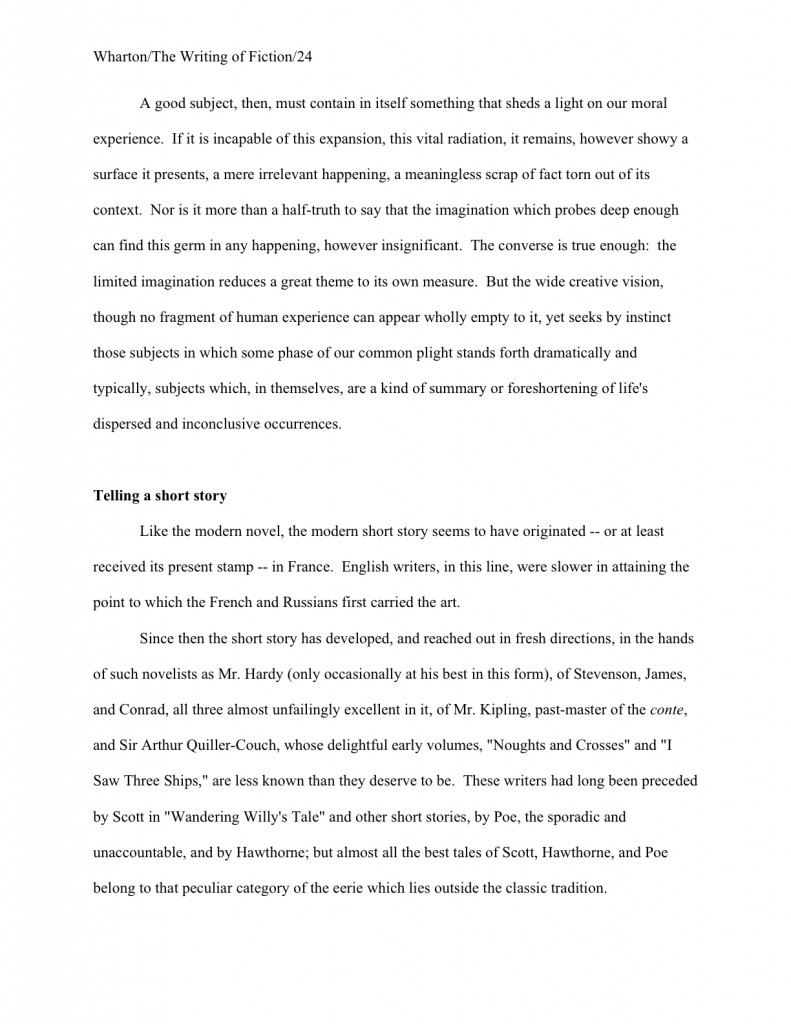
Synopsispalooza, Part XI: an all-time high for the Peanut Butter and Jelly Index, or, time to haul out those highlighting pens again!

Is everybody comfortable? Would you like to grab yourself a cup of tea, a cookie or two, perhaps a nice sandwich? Before we resume our ongoing discussion of synopsis troubleshooting, I need to talk to you about something serious, so you might want to have sustenance readily to hand, to fortify you.

Before any of you start to panic, let me hasten to add: please note that I didn’t send you to the liquor cabinet to pour yourself a stiff one, or the medicine cabinet to dig out your heart medication. The last thing I want to do is to add to the general air of gloom pervading pretty much every source of information in the continental U.S. at the moment, but I’d like to put a bug or two in your ear — who ever came up with that revolting expression, I wonder, and why did anyone think to perpetuate it? — about what hard economic times tend to do to the publishing industry.

Don’t worry, though: I come not to bury the industry, but to praise it, at least indirectly.

As pretty much everyone who has heard a Manhattan-based agent or editor speak within the last couple of years is already aware, the mainstream publishers have been rather nervous about the economy for quite some time now. Rumor has it that it’s rendered some already risk-averse people even more risk-averse. What does that mean translated out of economic-speak? It’s harder than ever to convince an editorial committee to take a chance on an unusual book — or an untried author.

Not that it’s ever been a particularly easy sell, of course. But one does hear a great deal of sighing these days, accompanied by exclamations of, “Oh, I could have sold that five years ago.”

What’s the rationale behind this increased difficulty, you ask? Well, when the average Joe (he of the much-vaunted six-pack, presumably) faces economic uncertainty — or, for that matter, the certainty of a lost job — he tends to slow his purchase of non-necessities. Apparently, to those benighted souls not hopelessly enslaved to the power of the written word, books fall into the non-essential category.

I know; weird. But there’s no accounting for taste.

What does sell well to ol’ Joe in uncertain times? In the U.S., peanut butter and jelly, cereal, ramen, and other inexpensive comfort foods. In fact, PB & J sales are such a good indicator of consumers’ feelings about the economy that trend-watchers keep an eye on ‘em.

Seriously — it’s called the Peanut Butter Index. (One also hears about it as the PB&J Index, the Oreo Index, or the Mac & Cheese Index, but these terms all refer to the same basic trend.) It may sound a bit silly, but I assure you, folks in the publishing industry take it very seriously: when the PBI is high, the prevailing wisdom goes, new book sales tend to be low.

Library card usage, interestingly, tends to rise. (Hey, readers are smart. And good sandwich-makers, apparently.)

What does a high PBI mean for the average aspiring writer, you ask? Well, typically, the difficulty of landing an agent increases, especially for writers of books that do not easily fit into the traditional big-sales categories. This has absolutely nothing to do with anyone concerned wanting to be mean to the aspiring: agents, bless their ever-picky hearts, don’t like to take on books that they aren’t relatively certain they can sell in the current literary market.

The second reason may surprise you a little: submissions to agencies and publishing houses have historically rises fairly dramatically in tough economic times. (You didn’t think the Great Depression’s literary richness was a coincidence, did you?)

Why? Well, as you may have noticed in chatting at cocktail parties with people who say they want to write but produce a million and twelve reasons why they haven’t been able to finish a book/screenplay/that e-mail they’ve been meaning to respond to for months, authorship is not an uncommon Plan B for people who don’t write habitually. And, let’s face it, as hobbies go, writing is a relatively inexpensive one, at least until one starts to query and submit.

Human nature in all of its hopeful glory: when ambient circumstances block the road leading toward one dream, the intrepid soul often seeks out another. Kind of sweet, isn’t it?

Yes, but it can also be problematic for the habitual writer, because I can tell you now, in the months to come, agencies and small publishers are going to see an upsurge in queries and submissions. Which means, unfortunately, that Millicent the agency screener is almost certainly going to find even higher piles of reading material on her desk.

Those of you who have been visiting Author! Author! for a while are probably already cringing, aren’t you? Let’s let the whole class in on why: when Millicent has more to read, she must perforce scan each query and/or submission faster. Her rejection rates may be expected to rise accordingly.

Why? Time, my dears, time. It’s not as though time expands when she has more to read each day — or as if her agency is likely to increase the number of writers it intends to sign this year just because the absolute number of queries rises.

I’m telling you this not to depress you — honest! — but so that you may adjust your expectations and plans accordingly. In the months to come, it’s probably reasonable to expect Millicent’s critical eye to be just a little sharper than normal, her boss to be just a little less eager to fall in love with a new author, and turn-around times in general to be just a little bit lengthier.

None of which will have anything to do with you personally, the quality of your manuscript, or your potential as a writer. Remind yourself of that early and often, please. I would also strenuously suggest that those of you who were considering sending out a raft of queries anytime in the near future (or have been tinkering with a promised submission in an effort to get it perfect) to plan on mailing them out sooner rather than later.

I know — it may seem like poor timing to submit during a sharp stock market decline, but if the PBI remains high for the rest of the year, the always heavy post-New Year query and submission avalanche will probably be of epic proportions. (It certainly was last year.) Not to send you into a flurry of panic, but if you could manage to get those queries and submissions out before Thanksgiving, you’ll probably be even better off. The publishing industry tends to slow to a crawl during the winter holidays, anyway, so why not beat the proverbial Christmas rush?

There’s something else you can do to improve your chances of being one of the lucky few who will manage to get their books published within the next couple of years: even in the face of grim economic news, don’t stop buying books in your book category.

Ideally, books that share some significant characteristics with what you write so well. Written by first-time authors, if you can manage it, or at least penned by those who are still walking amongst the living. And no, checking them out from the library will not do, alas.

This advice may sound flippant, but listen: agents and editors are smart, too; they keep a close eye on trends. We’ve also seen how even a single bestseller in a previously lax category can suddenly send the pros scrambling to find similar manuscripts — think about what COLD MOUNTAIN did for historical fiction, for instance, or BRIDGET JONES’ DIARY for chick lit.

By the same token, when new sales decline in any book category, everyone who writes that type of book suffers.

It’s sort of a domino effect. When a certain type of book stops selling well — or never sold well in the first place — denizens of publishing houses start muttering amongst themselves, “Well, I guess, I won’t be acquiring any more of those books anytime soon.”

When editors begin so muttering, agents who make their livings by selling that sort of book turn pale — and tell their Millicents that they’re really not looking to pick up clients in that category just now. And guess what that does to her rejection rates?

What’s the best way to change their collective minds about how marketable a particular book category is? Increasing sales in it, that’s how. Industry types tend to be very sensitive to even minor upsurges in sales.

So I repeat: this would be a very, very good time to continue — or get into — the habit of purchasing the kind of book that you write, especially books published within the last 5 years (the industry’s definition of the current market). Think of it as market research, a way to keep up with what the industry is interested in seeing these days. Heck, I know many authors who routinely claim buying competitors’ books as income tax deductions — although I since neither they nor I are tax experts, you should talk to someone who is familiar with taxes for artists before you start filling out those forms.

I hear some incredulous huffing out there. “Yeah, right,” some cynics will sneer. “My buying a single book is going to reverse a major economic trend. While I’m at it, I think I’ll juggle the Empire State Building, the Statue of Liberty, and the Golden Gate Bridge.”

In a way, you’re right, oh cynics: naturally, no single book sale will alter conditions for aspiring writers everywhere. But if you get into the habit of buying books in your chosen category and encourage all of your kith and kin to do the same, it’s a start. If aspiring writers all across the English-speaking world embraced the same laudable practice, editorial minds could indeed be changed — and where editors’ minds go, good agents’ are never slow to follow.

Yes, even when the PBI is at an all-time high.

Okay, that’s enough economic theory for one day; let’s get back to the business at hand, learning how to craft a winning synopsis.

Mirabile dictu, yesterday’s nagging feeling that I was about to produce a checklist of common synopsis mistakes to avoid was 100% accurate. Kind of predictable, actually, as I am addicted to such lists and synopses vary so much that there honestly is no single reliable formula for producing the perfect one. But you can steer clear of the problems agents and their screeners see every day, right?

Let’s assume that you have completed a solid draft of your synopsis, and are now in the editing phase. While we’re at it, let’s be even more optimistic and further assume that you have launched upon the synopsis-creating process long enough before you need one that you have time for an editing phase.

So where should you start? Print out your synopsis, ensconce yourself in the most comfortable reading chair you can find, and read it over to yourself OUT LOUD and IN ITS ENTIRETY.

Why out loud, and why in hard copy? And why does that question make my long-time readers chuckle?

I freely admit it: this is one of my most dearly-held editing rules. It is infinitely easier to catch logical leaps in any text when you read it out loud. It is practically the only way to catch the redundancies that the space constraints of a computer screen virtually guarantee will be in the text, and it will make rhythm problems leap off the page at you.

Please don’t kid yourself that you can approximate the hard-copy reading experience from just reading your synopsis out loud from your computer screen, either: the eye reads screen text roughly 70% faster than page text, so screen editing is inherently harder to do well. (And don’t think for an instant that publishing professionals are not aware of that: as an editor, I can tell you that a text that has not been read in hard copy by the author usually announces itself with absolute clarity — it’s the one with a word missing here or there.)

After you have read it through a couple of times, clearing out repeated words, ungraceful phrases, and stuff that you don’t quite remember why you wanted to include in the first place, ask yourself the following questions. Be honest with yourself, or there is no point in the exercise; if you find that you are too close to the work to have sufficient perspective, ask someone you trust to read the synopsis, then ask THAT person these questions.

(1) Does my synopsis present actual scenes from the book in glowing detail, or does it merely summarize the plot?

You want the answer to be the former, of course. Why? Well, if you’ve been following Synopsispalooza, you should be chanting the reason in your sleep by now, but allow me to repeat it: the synopsis is, in fact, a writing sample that you are presenting to an agent or editor, every bit as much as the first 50 pages are.

Which means what, readers who have been following this series? Chant it with me now: you need to make sure it demonstrates clearly that you have writing talent.

Not merely that you had the tenacity to sit down and write a book, because in these days of steeply-rising PBI, agents and editors will be hearing from tens of thousands of people who have done that, but that you have a gift with words and sharp, clearly-delineated insights.

It is far, far easier to show off your writing in detailed summaries of actual scenes, rather than in a series of generalities about the plot and the characters. And if your favorite line or image of the book does not make a guest appearance in the synopsis, whyever not?

(2) If the reader had no information about my book other than the synopsis, would the story or argument make sense? Or is more specific information necessary to render the synopsis able to stand alone?

This is another excellent reason to read the synopsis out loud: to make sure it holds up as a story. Since part of the point of the synopsis is to demonstrate what a good storyteller you are, flow is obviously important.

If you have even the tiniest reservations about whether you have achieved this goal, read your synopsis out loud to someone unfamiliar with your project — and then ask your listener to tell the basic story back to you. If there are holes in your account, this method will make them leap out at you.

Insofar as a hole can leap, that is.

(3) Does the synopsis make the book sound like a good story? Does it hang together? Does this presentation make me eager to read it?

This is where most synopses stumble, frankly, because it is hard for a writer to notice about his own work: many synopses summarize plot or argument adequately, but in the rush to fit everything in, the telling becomes a bit dry. The goal here is not merely to provide a laundry list of major plot points, after all, but to give an overview of the dramatic arc of the book.

And yes, that is significantly harder to pull off in a 1-page synopsis than a 5-page one. Here’s a revision strategy that will work with either.

(a) Hand your synopsis to someone who has NOT been around you while you have been writing the book (trust me, you’ve been talking about your plot or argument, if only in your sleep). Ask her to read it over a couple of times.

(b) Chat with her about something else entirely for half an hour.

(c) Ask her to tell you the plot of the book — WITHOUT looking at the synopsis again. Don’t comment while she does it.

(d) Make notes on the points that fell out of her account.

(e) After you have thanked this kind soul profusely and sent her on her way, glowing with virtue, sit down with the hard copy and highlight the missed points on the synopsis pages.

(f) Read through the synopsis, omitting the highlighted bits: does the story hold together without them?

If so, are those bits really necessary?

(g) If the storyline suffers from the omissions, go back over the individual sentences that depict those plot points. Are those sentences representative of your best writing?

9 times out of 10, they won’t be. Chances are, your reader found these points unmemorable because they were summarized, rather than enlivened with specific details — or because they concerned subplots that aren’t strictly necessary to understanding the central storyline.

Does all of that pitiful whimpering out there in the ether indicate that some of you are reluctant to treat your synopsis with the respect due to all of your writing? “But Anne,” some whimperers point out, “my story IS my plot. How can I cut any of it from the synopsis?”

May I suggest that perhaps you are focusing on the trees, rather than the forest? Usually, when hopeful synopsizers don’t think they can trim their account, they’re trying to cram too much of the plot into just a couple of pages. Obviously, you’re going to want to include the major plot twists, but a this happened, then this happened, then that happened… account is less interesting to Millicent than, well, just being told the story. Not every detail is relevant to the central story, is it?

So what is the central story of your book? Try telling that in your synopsis, rather than including the various subplots. Even better…

(4) Does the synopsis tell the plot of the book AS a story, building suspense and then relieving it? Do the events appear to follow logically upon one another? Is it clear where the climax falls? Or does it merely list all of the events in the book in the order they appear?

You wouldn’t believe — at least, I hope you’re far, far too good a storyteller to believe it readily — what a high percentage of the fiction synopses Millicent sees consist simply of X happened, then Y happened, then Z happened. Yes, a synopsis is short, but this is not the most effective way to tell even a truncated story, is it?

Fortunately, to a professional eye, there are a couple of pretty good structural indicators that a synopsis has fallen into laundry-list mode. Once again, your trusty highlighting pen is your friend here.

(a) Firmly grasp said highlighter.

(b) Go through the synopsis and mark every use of the word AND and THEN.

(c) While you’re at is, mark every sentence written in the passive voice.

(d) After you’ve finished, revisit each marked sentence with an eye to revision. Again, do those sentences represent your best writing — or are they just laundry lists of happenings, tossed together in a hasty attempt to get through the most important plot points as quickly as humanly possible?

Why hunt for AND, THEN, and the passive voice in particular? All of these phenomena tend to be symptomatic of rushed storytelling.

Of course, it’s perfectly understandable that a writer trying to crush an 80,000 word story or argument into three pages might conceivably feel a mite rushed. But trust me on this one: that is not the primary impression you want to give an agency screener.

Another good indicator of a tendency toward laundry-listing is…

(5) Have I mentioned too many characters in the synopsis? Does each that I mention come across as individually memorable, or are some mentioned so quickly that they might start to blur together in the reader’s mind?

Including a cast of hundreds, if not thousands, is an extremely common first novel phenomenon. Mentioning too many of them in a synopsis is another.

Why is a too-large cast problematic? Well, lest we forget, Millicent tends to scan synopses awfully darned quickly — that’s why it’s a good idea to capitalize each character’s name the first time it appears in the synopsis, right? If too many character names show up too close together in the synopsis, she’s not necessarily going to keep all of them straight in her mind.

Don’t be too hard on her about this, please: remember, she won’t just have your 27 characters tumbling about in her head, but also the 15 characters in the synopsis she read immediately before yours, the 38 from the one before that, and the 183 from that novel she was scanning on the subway.

She’s a Tolstoy fan, apparently.

How many is too many, you ask? The hand-the-pages-to-a-relative-stranger trick is dandy for determining this.

(a) Ask a kind soul to read the synopsis. Ideally, someone who had not previously read a syllable of your writing, but has at some point in the recent past purchased and read a similar book.

(b) Chat about other things for ten minutes.

(c) Have him tell the story back to you. Unless your characters’ names are unusually wacky, chances are good that the teller will remember only the names that are most active in the plot.

If you’re too shy or too rushed to attempt this test, trot out your highlighter pens and get to work on a fresh copy of your synopsis.

(a) Mark all of the names the first time they appear in the synopsis. This should be easy, in theory, if you have embraced the convention of presenting each character’s name in all caps (MARTA, 32) the first time around, to alert a skimming Millicent to the advent of a new character.

(b) Arrange the pages along a table, countertop, or even along the floor, so you may simultaneously see each page in its entirety.

(c) Go do something else for twenty minutes. Move the laundry from the washer to the dryer, for instance, or take a nice, brisk walk around the block.

You spend too much time sitting in front of your computer screen, you know. I worry about you.

(d) When you return, stand a couple of feet away from the pages, admiring the proportion of highlighted to non-highlighted text.

In most professional synopses, the highlighting will be heaviest in the first couple of paragraphs, with occasional swipes every paragraph or two later on. If, on the other hand, your pages look as though they fell into an unusually vivid inkwell, you might want to consider reducing the number of characters you mention.

More of the synopsis-troubleshooting checklist follows next time, of course. Keep munching those PB&Js, everybody, and keep up the good work!

Synopsispalooza, Part VI: you can tell the truth and nothing but the truth in a synopsis, but you just don’t have the space for the whole truth

I am Oz, the Great and Terrible, spoke the Beast, in a voice that was one great roar. Who are you, and why do you seek me?

I am Oz, the Great and Terrible, spoke the Beast, in a voice that was one great roar. Who are you, and why do you seek me?

Brace yourselves, campers: I’m going to be a positive fountain of apologies today. First, I’ve only just noticed that the post that I had scheduled for Thursday afternoon, then gone merrily on my way, assuming I had left you entertained and informed, apparently did not actually go up on Author! Author! until earlier today. I have no idea why. Technically, that is; I know why I took a couple of days off from posting. (Hint: dum de dum dum TO ME.)

Second, I’m sorry about the resolution of the picture above; something went wrong in the uploading process that I didn’t have time to figure out and fix because I’m currently writing on a pretty tight deadline. Third, my regrets about the fact that the dialogue I quoted above does not include the grammatically-necessary quotation marks found in the original text; my blogging program would not allow them in a caption, for some reason best known to its programmers. Fourth, I beg the forgiveness of every L. Frank Baum fan out there: I’ve only just noticed that the quote I used is not from Dorothy’s first visit to the Wizard — the subject of the drawing — but one of her companions’.

Fifth, my profound apologies to those of you who have been following this series on synopsis-writing who happen to be promoting a nonfiction book. Not everything I’ve covered so far in Synopsispalooza has applied to you.

In my defense, like so much of the above, that’s not entirely my fault: outside forces dictate that the fiction, memoir, and nonfiction synopsis must all be slightly different. Since novel and memoir synopses are typically closer than nonfiction synopses are to either, I tackled them first.

In the middle of this festival of summary I like to call Synopsispalooza, I’ve been concentrating for so far primarily upon the specialized problems of novel and memoir synopses. Specifically, I went on (and on and on) about the importance of a novel synopsis’ demonstrating beyond a shadow of a doubt that its writer is a gifted storyteller.

For a memoir, this too is crucial: the most gripping real-life account is going to fall flat on the page if it’s not told well, right? So basically, a memoirist should use the same tactics as a novelist, except in the first person and the past tense: make the book sound like a terrific story.

Have I been gone so long that anybody out there does not remember how to pull that off in a 1-page synopsis? Just in case, let’s review its goals:

(1) introduce the major characters and premise,

(2) demonstrate the primary conflict(s),

(3) show what’s at stake for the protagonist, and

(4) ideally, give some indication of the tone and voice of the book.

All of these aims are easily transferable to a memoir, right? All you have to do is think of the memoir as story, rather than autobiography, and yourself as the protagonist, and summarize accordingly.

Does that seem a trifle vague? Okay, I’ll be more specific: A 1-page synopsis for a memoir should answer all of these burning questions — and some of these should sound awfully familiar:

Who am I? (other than the memoir’s author, that is)

What is my background? (Specifically, the part of it that renders it interesting enough to read about for 350 pages — and no, neither rampaging narcissism nor “But I spent all of this time writing it!” are adequate answers.)

How and why was/am I an interesting person in an interesting situation?

Who were the people in my life in the midst of all of this interestingness, and how do they move my story along?

What were my hopes and dreams — and what were the major barriers to my bringing them to fruition? Alternatively, what were my fears and how realistic were they?

What would I have gained by attaining these goals — and what would I have lost if I did not?

Here is how charming I am to follow on the page. Please fall in love with me as a protagonist, me as a writer, and ultimately, me as a client/new author signed to the publishing house/contest winner.

Piece of proverbial cake to pull off in a page, right? Now let’s add in the loftier additional goals of the slightly longer synopsis:

(5) show the primary story arc through BRIEF descriptions of the most important scenes.

(6) show how the plot’s primary conflict is resolved or what the result of adopting the book’s argument would be.

Again, it’s not all that hard to envision synopsizing a memoir in this manner in 3 or 5 pages. Like a novel, a memoir — a good one, anyway — consists of fully-realized scenes, not just a litany I did this and I felt that. Treat Millicent the agency screener to snippets of those scenes, depicted as vividly as possible.

In other words: as for a novel synopsis, you should minimize the number of generalizations in your memoir synopsis. Instead, use as many concrete details as possible — and make sure to include some tidbits Millicent is highly unlikely to see in anybody else’s synopsis. Instead of concentrating upon cramming as much material as possible on the page, focus on making yourself sound original and fascinating.

My, I’m leaning upon the boldface button heavily this evening, amn’t I? It must be the weighty presence of Oz, the Great and Terrible.

Yet for nonfiction — and, if I’m going to be honest about it, some memoir as well — the task of constructing a synopsis is a trifle more complicated. Yes, you do need to come across as a great storyteller with a fascinating story to tell (and argument to make), but you also are charged with the sometimes heavy burden of convincing Millicent that your subject matter as interesting and important, as well as that you are the best possible writer in the universe to consult about it.

Naturally, that case is quite a bit easier to make if your subject matter is already widely recognized as interesting and important. Especially if you happen already to be celebrated internationally for your prowess in explaining it. In that case, you already have what people in publishing call a platform: a demonstrated ability to be able to get people to pay attention to you when you talk on this particular subject.

(Speaking of which, I’ve a favor to ask: over the years, quite a number of you have asked when I am planning to release this blog in book form, so you may have it sitting on your desk as you write. I am seriously considering pulling together a book proposal for a blog-based book this fall, and I could use some glowing blurbs of entreaty and/or testimonials from blog readers to dress up the proposal. If you’d like to help me out and earn my undying gratitude, drop me a line in the comments, and I shall contact you off-site. Thanks!)

If you are not already commanding public attention for your wit and wisdom on the subject matter of your nonfiction project, don’t worry — contrary to depressed murmurings on the writers’ conference circuit, a writer does not need to be already famous in order to have a platform for a particular book.

Yes, really. Trust me, I have a LOT of experience writing all three types of synopsis, as it happens: in recent years, I’ve sold both a memoir and a nonfiction book to publishers, and my second novel is making the rounds even as I type this. Not to mention all of the synopses I see as a frequent contest judge and even more frequent freelance editor. So yours truly has spent quite a bit of time in the last few years hunkered over the odd synopsis, let me tell you. I know whereat I speak.

In fact, just go ahead and imagine the following words of wisdom booming from the mouth of Oz, the Great and Terrible. It will save time and energy in the long run. (And if someone would be willing to say in a blurb that I’m more respected and feared than Oz in his heyday, there might be a candy bar in it for you. I just mention.)

In a nonfiction synopsis of any length, your goal is sixfold — and as those annoying disembodied voices on business’ voice mail systems so love to say, please listen carefully, as our options have changed in recent years:

(1) to present the problem or question the book will address in a way that makes it seem fascinating even to those not intimately familiar with the subject matter (even at an agency that specializes in your type of nonfiction, it’s unlikely that either Millicent or the agent will be very well-read in your particular area of expertise);

(2) to demonstrate why readers should care enough about the problem or question to want to read about it (or, to put it another way: why should Millicent care about it?);

(3) to mention in passing who specifically is already interested in this problem or question, to demonstrate already-existing public interest in the subject (the Sierra Club, Mothers Against Drunk Driving, the Harpo Marx Fan Club, the entire scientific community, etc.);

(4) to give some indication of how you intend to prove your case, showing the argument in some detail (hey, you’re on your own on this one);

(5) to demonstrate why the book will appeal to a large enough market niche to make publishing it worthwhile (not the same thing as official, organized interest, necessarily), and

(6) to show beyond any reasonable question that you are the best-qualified person in the universe to write the book (not, alas, always self-evident to our Millie).

In answer to that immense gulp I just heard: yes, a nonfiction writer does need to pull that off in anywhere from 1-5 pages, depending upon what the agent, publishing house, or contest rules request. I’m not entirely sure that I proved half that much in my master’s thesis.

And let me tell you, it was a pretty good master’s thesis. Oz was impressed, I’m told.

Nonfiction writers tend to have been stellar students, so I’m not at all astonished to see a plethora of hands politely raised already. Good students are frequently full of questions. “But Anne,” many of you point out politely — and believe me, I appreciate it. “That list above reads strikingly like the goals of a book proposal, a lengthy, heavily-detailed document that, correct me it I’m wrong, entire multi-page sections devoted to each of the numbered issues above. If I’m expected to accomplish all of that heavy lifting in the synopsis, what on earth am I supposed to be accomplishing in the proposal?”

The same thing, actually, but at greater length and with more evidence. Next question?

Just kidding; no need to burst into tears at the prospect. Lean in closer, and I’ll let you in on a little well-kept professional secret: a good nonfiction synopsis is not just a summary of the book’s argument, but a super-short book proposal.

Think of it as proposal concentrate. Add a sample chapter, a competitive market analysis, and an annotated table of contents, stir, and hey, you’ve got a book proposal. Not as tasty as fresh-squeezed, perhaps, but Millicent doesn’t have time to watch you argue it from scratch at the query packet stage.

I can feel you tensing up, but seriously, there’s no need. If you can write a book proposal — and you can, if you know enough about your subject matter to write a book — you can construct a really good nonfiction synopsis.

Where to begin, you ask? Well, I used to tell everyone who would listen that the argument was the most important element of a nonfiction synopsis — if it doesn’t come across as coherent and well-reasoned, after all, the book project is sunk. However, watching how nonfiction books are being marketed and bought these days, I’ve changed my tune. (To Dum de dum dum TO ME, apparently.)

Now, Oz the Great and Terrible is telling you that the single most vital aspect of a successful nonfiction synopsis lies in framing the central question of the book in a way that makes it appear not only interesting to Millicent – who, let’s face it, is almost certainly not going to be a specialist in your subject area; she was (or is) an English major, probably at a highly respected New England college — but likely to catch the notoriously fickle eye of the media. Basically, the synopsis needs to present the book’s concept as easy to promote to an already-existing audience.

If you doubt that, take a quick run to your local megabookstore and take a gander at how many political memoirs are coming out this month. It’s not that their subject matter is necessarily more fascinating than other nonfiction topics, or even, in many cases, that the author has such a terrific platform for telling the behind-the-scenes story. (The classic response of White House officials to tell-all books has historically been, “Who? Oh, didn’t he work here once for a week? I don’t even remember what he looked like.”) No, it’s that even the most poorly-written of these books are likely to be discussed on television and radio shows already devoted to such topics.

Hey, the 24-hour news cycle doesn’t feed itself, you know.

Thus, at the risk of observing the obvious, a query packet synopsis that makes Millicent exclaim by the end of the first paragraph, “Oh, this one would be a cinch to promote!” is far, far more likely to generate a request to see the book proposal than one that prompts her to muse, “Hmm, this is beautifully written. Too bad only four people in Southwestern Montana will be interested.”

Up go the hands again. “Excuse me, Anne? I had gathered from your Querypalooza series — conveniently gathered for the benefit of those who missed it under the category of that name on the archive list at the bottom right-hand side of this page — that I was supposed to use the platform paragraph of my query to make the case that a readership already exists for my book. Wouldn’t tackling that again here be redundant?”

Ah, but synopses often end up places that query letters do not. A 1-page nonfiction synopsis might, for instance, sit by the phone for easy reference while an agent pitches the proposal to an editor; a 5-page synopsis might get circulated to an editorial committee before the acquiring editor makes and offer. The better a micro-proposal it is, the better legwork it can do for its writer.

That being said, the synopsis’ presentation of how and why the central problem of the book is typically a bit different from the query’s. It’s longer, for one thing, and less likely to include an explicit statement of how many articles The New York Times has run on the subject within the last two years.

It’s also more likely to be in the form of a story — and before any of you writing books on particle physics start guffawing, hear me out.

Every problem can be framed in the form of a tale; if you doubt that, just crack open any 7th-grade math textbook and take a gander at the word problems. While a purely technical exposition may well seem dry to the non-specialist, vividly-told real-world example of what can and does go wrong if the central problem of the book is not solves can instantly answer the questions, “So why will anybody care about this?” A gripping anecdote can serve the same function for a historical account.

So why not open your synopsis with a gripping one- or two-paragraph anecdote that illustrates what’s at stake in solving the problem tackled by the book?

Don’t laugh — it works. Especially for any sort of biography or memoir, a brief foray into storytelling can demonstrate not only that the writer is a fine storyteller, but can provide an intriguing entree to a subject that might at first glance appear dull to the non-specialist. Which, for example, does a better job of explaining the importance of breakthrough in sewing machine technology, this:

In the old days, a surprising number of textile workers lost fingers or even hands in industrial sewing machine accidents. Tamlyn Baker pondered the problem for forty-five years, invented a new kind of threading machine, then died in obscurity.

Or this:

The thread broke: for the eighth time that month, a burlap sack-maker lost a finger. Like the others, this woman would be fired and go home to tell her children to prepare to starve. Tamlyn swore once again to perfect her hands-free threading device, even if she had to burn every candle in the Midwest staying up to do it.

Okay, so the latter is a trifle melodramatic — but if you were Millicent, which book proposal would you request?

The second most important element of a nonfiction synopsis is the argument: it’s imperative that the synopsis-reader be able to follow it. Show it in logical order, rather than jumping around or leaving pieces out. No need to be pedantic about it, of course: In Chapter Eight… is not a transition likely to impress Millicent with your storytelling acumen.

Why is showing the basic argument of the book so important? Well, in a nonfiction synopsis, you should not only show the content of the book, but also that you can argue coherently.

Yes, you in the tenth row? “But Anne, this seems counterintuitive. Wouldn’t the best way for an agent or editor to check out my argumentative style be to, you know, read my manuscript? Or at least my proposal?”

I could shoot that one down right away, but first, let’s all take a refreshing mental holiday and picture how much easier all of our lives would be people in the publishing industry actually thought that way. Ah, that’s nice: a world where writers’ talent was judged solely by thoughtful, well-paid, prose-loving agents and editors, lounging on comfy sofas in sun-drenched lofts, languidly turning over page after page of entire manuscripts sent to them by aspiring authors because they have literally nothing else to do all day.

And look, outside that massive loft window — do I see a pig flying by, with Jean Harlow on his back, waving sparklers and smooching Clark Gable?

Okay, back to the real world: realistically, a nonfiction synopsis does indeed need to encapsulate the argument that it takes an entire book to make in just a couple of pages — or at least to establish the central question and indicate how you’re going to go about answering it.

Think of it as a tap-dancing audition, your two-minute chance to show your fancy footwork: if you argue well enough here, an agent (or editor at a small publishing house) will ask to see the argument in the book.

Did I just hear some gasps out there? “Two minutes?” a few of you squeak. “How closely can she possibly read my synopsis in that short amount of time? The one-page version perhaps, but the 5-page?”

I didn’t mean to startle you — but yes, that’s about the maximum your synopsis will have under an agent’s (or, more likely, Millicent’s) bloodshot, overworked eyes. Contrary to popular opinion, nonfiction queries and submissions tend not to be treated to much closer or more respectful readings than novels these days — and that’s saying something.

Popular opinion may have a point here, at least at the agency level, because nonfiction has historically been quite a bit easier to sell to the major publishing houses than fiction. At this point in publishing history, though, the market is so tight that it just doesn’t make strategic sense for nonfiction writers to assume that they — or, more accurately, we — don’t need to present book projects as professionally and eye-catchingly as novelists do.

So assume two minutes, maximum, possibly less. Let’s face it, this isn’t a lot of time to establish an argument much more complicated than the recipe for your sainted mother’s cream of tomato soup.

Even if Mom’s methodology consisted primarily of opening a can of Campbell’s, you may find yourself in a descriptive pickle.

It is more than enough page space, however, to demonstrate that you have the writing skills to make an argument where each sentence leads logically to the next. It’s also enough time to show that you have a coherent plan for proving your propositions, and for indicating what evidence you intend to use.

If I seem to be harping on the necessity of making a COMPLETE, if skeletal, argument here, it’s because the single most common mistake nonfiction synopsizers make is to give only PART of the argument, or still worse, only the premise, with no indication of how they intend to make their case. Instead, they use the space to go on a rant about how necessary the book is, essentially squandering precious argumentative space with marketing jargon and premise.

But a solid underlying argument is the sine qua non of the nonfiction synopsis. Period. If it doesn’t appear to hold water — yes, even in a 1-page synopsis — the book simply isn’t going to strike the industry as marketable.

To make it appear as solid in the synopsis as I’m sure it is in the proposal and/or manuscript, don’t forget to mention what kind of evidence you will be using to support your claims. Have you done extensive research? Exhaustive interviews? Hung out with the right people?

If you have a professional background in the subject matter of your book that unquestionably renders you an expert, or personal experience that gives you a unique insight into the subject, try to work that into the synopsis, early on. Otherwise, stick to the subject matter and explain what your book is going to teach people about it;

I use the term teach advisedly, because it is often quite helpful for synopsis writers to think of the task as producing a course overview for the lesson that is the book’s content: how will this book help readers, and what kind of readers will it help? Ultimately, how will both these readers and the world around them be better off because they read this book?

Oh, you don’t think your work is that important? If you don’t believe that your writing is capable of making the world a better place, why put in all of the effort to write it, break your heart querying, or bite your nails down to the elbow while you are waiting to hear yea or nay on your book proposal?

Once you have made the book’s worth clear, how about demonstrating precisely what about your approach will captivate those readers as no other will? Of course, I’m not talking about TELLING a potential agent or editor how terrific the book is — that’s the book proposal’s job, right? — but SHOWING that you can write the heck out of this topic.

Remember, it’s your job to make your subject matter sound absolutely fascinating. To achieve this successfully, a good nonfiction synopsis needs to show how the book’s take on the topic on it is original.

At the risk of repeating myself, in order to do that, you are going to have to spell out your argument. Not merely in generalities, but in sufficient detail that — everyone chant it with me now — an agent, editor, or contest judge could understand it sufficiently to describe it to someone else without having read the book.

Because, let’s face it, that’s precisely what Millicent the agency screener is going to have to do in order to get her boss to ask to see your book proposal or manuscript — and what her cousin Maury the editorial assistant will have to do to get his boss even to consider publishing it.

Have I convinced you yet that you really do need to present a cohesive, well-argued theory here? And did I happen to mention the importance of its being cohesive?

Easier said than done, of course. In the author’s mind, the argument often lies the details, not in the larger, more theoretical points. How can you narrow it down? It’s helpful to have an outline of your proposed chapters in front of you, so you can use the synopsis to demonstrate how each chapter will build upon the next to make your overall case.

Oh, don’t groan. If you’re writing a nonfiction book, you are going to need to pull together a chapter-by-chapter overview anyway, to include in your book proposal: it’s called the annotated table of contents. This moniker is a tad misleading, because it brings to mind the simple chapter title + page number tables of contents we’ve all seen in published books. An annotated table of contents consists of the titles in order, yes, but it also contains a paragraph or two about the argument or material to be presented in that chapter.

For tips on how to pull this off successfully, please see the HOW TO WRITE A BOOK PROPOSAL category on the list at right. I’ll still be here when you get back.

Don’t get so caught up in reproducing the argument in the synopsis, though, that you overlook working in a brief explanation of why the world needs your book, and why you are the best person imaginable to write it. This is typically the greatest difference between a fiction and a nonfiction synopsis: while a platform always helps for a novelist, it’s often not practicable for a science fiction writer to say, “I’m an expert on life on the planet Targ, having lived there for forty-seven Targian years (two months our time),” is it?

If you are writing on a subject that has already been well-trodden by past authors, it’s even more vital to make these points clear. The synopsis needs to render it apparent to Millicent and Maury at a glance why your book is different and better than what’s already on the market.

In answer to the small, instinctive moans of protest that just escaped from your gullet: yes, this is repetitive with material you will cover in your book proposal. As I mentioned above, in most of the contexts in which your synopsis will travel — tucked into an envelope with a query letter; accompanying a sample chapter or contest entry; floating around a publishing house after an editor has already fallen in love with your proposal — the reader will not also be clutching your proposal.

In other words: don’t count on its being available to make your case. Your goal should be to produce a synopsis that shows off your writing skills, the strength of your argument, and the inherent marketability of your book in a fraction of the space allotted to a proposal.

As always, there is no need to be heavy-handed in your own praise to achieve this, either. To prove it to you, I’m going to give you a sample opening, modest enough that it would strike no one as overbearing. Read carefully, as there will be a pop quiz afterward to see if you can spot the ways that this paragraph achieves Goals #3 and #4:

Have you ever wondered what goes on underneath the snow while you are skiing on top of it? Although there are many books currently on the market for the US’s 1.3 million snowboarding enthusiasts, MOUNTAINS MY WAY is the first to be written by a geologist. Seen through the eyes of a professional rock hound with thirty years of experience in the field, the reader is introduced to mountains as more than an array of cold, hard rocks: mountains emerge as a historical document, teeming with life and redolent of all of the stages of human history.

How did you do? Give yourself points if you noticed that the opening question was an excellent hook: it grabbed the reader, showing immediately how this book might relate to the reader’s practical life; a rhetorical question for which the book itself provides an answer is a great way to establish a book’s appeal at the very beginning of the synopsis.

Also, pat yourself on the back fifty times if you zeroed in on the subtle way in which this paragraph dissed the competition — the implication here is that the authors all previous books on the subject were such boneheads that THEY thought mountains were just collections of rocks.

No one is naming names here, but those authors know who they are. Shame on you.

Take yourself out for a cupcake if you noted the clever (if I do say so myself) use of demographic information. (Which I made up wholesale for example’s sake, so for heaven’s sake, don’t quote it elsewhere.) If you have statistics on your prospective market, this is the place to mention them — here, and in your query letter, and in your pitch. As in:

Currently, two million Americans have been diagnosed with agoraphobia, yet there are few self-help books out there for them — and only one that is actually written by an agoraphobic, someone who truly understands what it feels like to be shut in by fear.

Why is it so important to hammer home the statistics in every conceivable piece of marketing material for your book? Well, no matter how large the prospective audience for your book is (unless it is an already such a well-covered market that anyone in the industry could reasonably be expected know about it, such as golf fans), you can’t ever, ever assume that an agent or editor will be aware of its size.

ALWAYS assume that they will underestimate it — and thus the market appeal of your book. Oz, the Great and Terrible, tells you that more often than not, they will.

While Oz’ booming tones are echoing around in your brainpan, I think I shall end for the day, so all of your nonfiction writers out there may go off and meditate upon your target demographic and why it desperately needs your book. Join me tomorrow for another Synopsispalooza post, everyone, and keep up the good work!

What’s so funny about comedy writing? A conversation between novelist Jonathan Selwood and SEX author Mike Sacks

ourbodiesourjunkcover

I’m taking a quick break from Synopsispalooza to bring you a treat, campers: a conversation on comedy writing between two of the best out there: Jonathan Selwood, author of one of my all-time favorite comic novels, The Pinball Theory of Apocalypse, and Mike Sacks’, one of the authors of Random House’s recently-released SEX: OUR BODIES, OUR JUNK. Since FAAB (Friend of Author! Author! Blog) Jonathan has already regaled us with a couple of funny and insightful guest posts on the art of writing dark comedy (links: post 1 and post 2), I asked him to sit down with Mike to talk about being funny in general and being funny about sex in particular.

The result was absolutely hilarious, in a very explicit way, as one might expect from two authors who write about sex. I wish I could share that interview with you, but if I did, every parental Internet blocking program and every public library’s web screener would light up like a Christmas tree.

Which is, in a way, very much to Jonathan and Mike’s credit: they know their respective audiences. But if I shared that particular interview with mine, my teen readers might not be able to read it; I am very committed to keeping this site accessible to them. So I asked the gentlemen concerned to do a nuts-and-bolts interview on comedy writing instead, something in the style of Mike’s guest post last year, a fabulous discussion of the art of being funny with legendary comedy writer Merrill Markoe, and they graciously assented.

As some of you may recall from my announcement of Mike’s book release in August, this was not the first time I had run into this problem. If I so much as posted the publisher’s blurb for SEX verbatim, as is my wont with new releases, most Internet filters of the type employed by parents and public libraries would have blocked the post. At the time, we all tittered together at a screening program’s not being bright enough to tell the difference between comedy and {WORD EXPUNGED}, but such is the world in which we live.

So how did I end up handling it? I did in fact post the publisher’s blurb in my publication announcement, but to ascertain that the post would be accessible to as many of my regular readers as possible, though, I placed a few discreet visual barriers in front of the words and concepts that might prove problematic. Here is the result.

Mike Sacks sex cover

GOOD GOD—YOU’RE DOING IT ALL WRONG . . . 

The Association for the Betterment of Sex (A.B.S.) presents Sex: Our Bodies, Our Junk, a radical and invaluable resource for improving your sexual communication—whether you have been in a committed relationship for years, or have just moments ago removed the shrinkwrap from your new {EXPUNGED}.

Here are just a few sensual revelations you’ll find within these pages:

– The precise location of the female {EXPUNGED} (latitude and longitude)

– “Going on tour with Midnight Oil” and more outmoded {EXPUNGED}slang

– Forced perspective and other techniques for visually enhancing the size of {EXPUNGED}

– The Top Five pastry-related euphemisms for {EXPUNGED}

– How to score big at your next {EXPUNGED} party, with our crowd-pleasing ambrosia-salad recipe

– Listings of “Don’t ask, Don’t tell” dry-cleaning services, for freshening up your vinyl {EXPUNGED} or adult-sized {EXPUNGED}costume

– Your first {EXPUNGED}, and how the ancient Mayans predicted it wouldn’t go over so hot

Exhaustively researched and fully illustrated, Sex: Our Bodies, Our Junk is a must-read for you, your sexual partner(s), and anyone who wishes there was more to sex than {EXPUNGED} for a few seconds and begging for forgiveness.

Nor is Jonathan, our interviewer du jour, to be outdone on the subversive comedy on sexuality front. His novel’s frank, hilarious presentations of {EXPUNGED} reconstructive surgery and {EXPUNGED}{EXPUNGED}{EXPUNGED} during an earthquake set the LA ethos on its proverbial ear. Here’s the relatively clean publisher’s blurb for THE PINBALL THEORY OF APOCALYPSE:

pinball theory cover selwood

For years, painter Isabel Raven has made an almost-living forging Impressionist masterpieces to decorate the McMansions of the not-quite-Sotheby’s-auction rich. But when she serendipitously hits on an idea that turns her into the It Girl of the L.A. art scene, her career takes off just as the rest of her life heads south. Her personal-chef boyfriend is having a wild sexual dalliance with the teenage self-styled Latina Britney Spears. If Isabel refuses to participate in an excruciatingly humiliating ad campaign, her sociopathic art dealer is threatening to gut her like an emu. And her reclusive physicist father has conclusively proven that the end of the world is just around the corner. 

Now, with the Apocalypse looming — and with only a disaffected Dutch-Eskimo billionaire philanthropist and his dissolute thirteen-year-old adopted daughter to guide her — there’s barely enough time remaining for Isabel to reexamine her fragile delusional existence…and the delusional reality of her schizophrenic native city.

As I said, these two authors had a lot to talk about, and I genuinely regret that I cannot bring you their original, unexpurgated conversation. But what would have been the fun of your trying to decipher what they had to say between all of those {EXPUNGED} barriers? Here instead, for the benefit of all of you aspiring comedy writers out there, is their second conversation. Enjoy!

Oh, and Synopsispalooza will be starting up again on Saturday evening — I’m taking a couple of days off to celebrate my birthday. Back to the grindstone soon!

pinball theory cover selwoodMike Sacks sex coverpinball theory cover selwoodMike Sacks sex coverpinball theory cover selwoodMike Sacks sex coverpinball theory cover selwood

Jonathan Selwood: First, could you please give a brief (ahem, PG-13) description of your new book, SEX: OUR BODIES, OUR JUNK for any of our blog readers who have yet to pick up a copy?

Mike Sacks: Sure. It’s a parody of a sex manual, the type you might have found
next to your parents’ bed when you were growing up. You know the kind:
illustrations of aging hippies, strange words, even stranger
descriptions. The premise of our book is that it was written by an
association in Washington DC called The Association for the Betterment
of Sex. It’s run by five guys (us), all of whom know very little about
sex. We find women very mysterious and sex sort of puzzling. In short,
we’re idiots, not to be trusted.

How did you get into comedy writing? Was it something you always knew you wanted to do?

I didn’t know what I wanted to do when I was growing up, but I read a
lot of books and I always loved comedy. For a time I wanted to be a
pilot and then a surgeon. Alas, my grades were really mediocre, so I
began to write, just for fun. After college I worked in a record store
for a few years until I figured that writing was a more interesting
way to make a living than retail, which is the worst. I began to sell
articles to Cracked magazine, as well as MAD and National Lampoon. And
there began my rise to the middle.

I’m sure you’ve heard the phrase “Dying is easy. Comedy is hard.” Many “serious” writers (and readers) fail to recognize how hard it is to be truly funny on the page. Are you ever frustrated by the fact that so many people believe funny = easy?

Not really, no. It’s not necessarily a reader’s job to know how
difficult it is to write comedy for the page, but I can tell you that
they quickly learn if they try it for themselves. It does take a
specific set of chops. So even if you’re a good writer, you’re not
necessarily going to be good at writing something that’s funny. And
the page is a whole different beast than writing for TV or the movies
or the stage. But it’s not impossible, of course. It’s like learning
any sort of skill set: playing the piano, cooking a soufflé, or
learning how to sing. The difference with writing, I suppose, is that
you have to teach yourself. People may disagree with this, but I think
you really do have to sit down, day after day, and just write. And
learn from your mistakes.

You worked with four other top tier comedy writers in writing SEX: OUR BODIES, OUR JUNK. Do you find that this type of collaboration leads more towards supportive teamwork or cutthroat competition? In other words, are you helping each other along the way, or always trying to one-up each other with your jokes?

No, at a certain level, a writer knows that a group project shouldn’t
be looked at as a competition. If a joke doesn’t work, it doesn’t
work. And if that bothers you, you should probably not write with
others. The end product is what matters. If another writer’s joke is
better than yours, you should go with that. You can always use your
joke in another piece, down the road. I loved working with these guys.
In a sense, it was a lot easier than writing alone. I’m now associated
with jokes that I didn’t write and never could have thought of for
myself. It was a pleasure. But you do have to be willing to be a
little flexible and put aside your ego for the common good.

I often find that once I can nail down the appropriate “tone” in a comedic work, things start to fall into place. How important is finding the right tone in your own work, and how on earth did you manage to keep a consistent tone with so many different writers on SEX: OUR BODIES, OUR JUNK?

Well, that is extremely important, especially when you work with
others. We started the project with a general idea of what we wanted
to do, and through trial and error, finally came up with a tone that
we were all happy with. It was pretty easy sticking with that tone
throughout the process of writing the book. We all just sort of fell
into it. And if one of us strayed from it, we would just tweak that
joke to make it more consistent. But, yes, finding that right tone is
a vital part of the process in writing any humor piece.

As a follow-up, do you ever sacrifice a joke to keep the appropriate tone (no matter how funny it is), or does a great joke trump consistency of tone?

There are definitely cases where a joke is not “pitch perfect” with
the rest of the jokes, but as long as they hold true to the
characters, then we kept it in. There was some margin for error–as
it’s not a serious sex book. Also, all of the characters are sort of
moronic and capable of saying anything. So that worked in our favor.
When you have stupid characters, you’re allowed more freedom.

Do you have any pre-writing rituals to put yourself in a comedic mindset? Say, putting on a pair of fuzzy bunny slippers, or chugging a half-gallon of cheap scotch?

No. Just booting up the computer, putting on headphones and wearing my
“DO NOT DISTURB” baseball cap.

And last, now that book is done and bestsellerdom is merely a technicality, what’s next for Mike Sacks? More work with the SEX: OUR BODIES, OUR JUNK team? Or do you have solo projects in mind?

I have a third book coming out in March 2011 from Tin House Books.
It’s a collection of 55 published short humor pieces from The New
Yorker, Esquire, Vanity Fair, McSweeney’s and other publications. It’s
called “Your Wildest Dreams, Within Reality.” After that, I’m free.
Free for what I don’t know yet, but I’ll be free. In the meantime,
write to me at mikebsacks(at)gmail(dot)com Or just send me a new “DO NOT
DISTURB” cap.

selwood-1Jonathan Selwood is the author of the dark comedy THE PINBALL THEORY OF APOCALYPSE. Like all native Oregonians, Selwood was born in California. He enjoys talking very loudly when intoxicated, composting kitchen scraps, excessively rolling his Rs when ordering burrrrrritos… using ellipses…

mikesackslogoMike Sacks has written for Vanity Fair, Esquire, GQ, The New Yorker, Time, McSweeney’s, Radar, MAD, New York Observer, Premiere, Believer, Vice, Maxim, Women’s Health, and Salon. He has worked at The Washington Post, and is currently on the editorial staff of Vanity Fair.

His first book, And Here’s the Kicker: Conversations with 21 Humor Writers About Their Craft, was released in Summer 2009. Some of those interviewed include: George Meyer, Harold Ramis, Al Jaffee, Buck Henry, Bob Odenkirk, Stephen Merchant, David Sedaris, Jack Handey, Robert Smigel, and Daniel Clowes.

Synopsispalooza, Part V: feeling a trifle hemmed in by those length restrictions, are we?

centurians in bondage

For the last few posts, I’ve been concentrating upon that bane of writers everywhere, the 1-page synopsis. A 1-page synopsis should be a quick, pithy introduction to the premise, the protagonist, and the central conflict of the book. Or, to cast it in terms that those of you who followed my recent Querypalooza series should find very familiar, an extended version of the descriptive paragraph in a query letter.

So hey, all of you queriers who have been clutching your temples and moaning about the incredible difficulty of describing your 400-page manuscript in a single, pithy paragraph: I’ve got some good news. There are agencies out there who will give you a whole page to do it!

Does that deafening collective groan mean that you’re not grateful for triple or even quadruple the page space in which to describe your book? Is there no pleasing you people?

Okay, okay — so it may not be a piece o’ proverbial cake to introduce the premise, the protagonist, and the central conflict of the boo within a single page in standard format, but by this point in the series, I hope the prospect at least seems preferable to, say, confronting an angry cobra or trying to reason with pack of wolves. Constructing an eye-catching 1-page synopsis is more of a weeding-the-back-yard level of annoyance, really: a necessarily-but-tedious chore.

Seriously, successfully producing a 1-page synopsis is largely a matter of strategy, not creativity, and not even necessarily talent. As long as you don’t fall down the rabbit hole of one of the most common short synopsis-writing mistakes — trying to replicate each twist and turn of the plot/argument; generalizing so much that the book sounds generic; writing book jacket promotional copy rather than introducing the story — it’s simply a matter of telling Millicent what your book is ABOUT.

Preferably in a tone and at a vocabulary level at least vaguely reminiscent of the manuscript. Is that really so much — or so little, depending upon how you chose to look at it — to ask?

By contrast, the 5-page synopsis – which, until fairly recently, was far and away the most common requested length, as it still is for those already signed with agents and/or working with editors at publishing houses — should tell the STORY of your book (or state its argument) in as much vivid, eye-catching detail as you may reasonably cram into so few pages. Preferably by describing actual scenes, rather than simply summarizing general plot trends, in language that is both reflective of the manuscript’s and is enjoyable to read.

Why concentrate upon how you tell the story here, you ask, rather than merely cramming the entire plot onto a few scant pages? Why, to cause the agent, editor, or contest judge reading it exclaim spontaneously, “Wow — this sounds like one terrific book; this writer is a magnificent storyteller,” obviously.

Again, piece of cake to pull off in just a few pages, right?

Well, no, but don’t avert your eyes, please, if you are not yet at the querying stage — as with the author bio, I strongly recommend getting your synopsis ready well before you anticipate needing it. As I MAY have mentioned before, even if you do not intend to approach an agent whose website or agency guide listing asks for a synopsis to be tucked into your query packet, you will be substantially happier if you walk into any marketing situation with your synopsis already polished, all ready to send out to the first agent or editor who asks for it, rather than running around in a fearful dither after the request, trying to pull your submission packet together.

Even if you think that both of the reasons I have just given are, to put it politely, intended to help lesser mortals not anywhere near as talented than your good self, whatever you do, try not to save writing your synopsis for the very last moments before you stuff a submission or entry into an envelope. That route virtually guarantees uncaught mistakes, even for the most gifted of writers and savviest of self-promoters.

In fact, you take nothing else away from Synopsispalooza, please remember this: writing a synopsis well is hard, even for the most seasoned of pros; be sure to budget adequate time for it. Forcing yourself to do it at the last minute may allow you to meet the technical requirement, but it is not conducive to producing a synopsis that will do what you want it to do and sound like you want it to sound.

If the task feels overwhelming — which would certainly be understandable — remind yourself that even though it may feel as though you effectively need to reproduce the entire book in condensed format, you actually don’t. Even a comparatively long synopsis shouldn’t depict every twist and turn of the plot.

Yes, even if the agency or contest of your desires asks for an 8- or 10-page synopsis. Trust me, people who work with manuscripts for a living are fully aware that cutting down a 370-page book to the length of a standard college term paper is not only impossible, but undesirable. So don’t even try.

What should you aim for instead? Glad you asked: in a 3-8 page synopsis, just strive to give a solid feel of the mood of the book and a basic summary of the primary plot, rather than all of the subplots. Show where the major conflicts lie, introduce the main characters, interspersed with a few scenes described with a wealth of sensual detail, to make it more readable.

Sound vaguely familiar? It should; it’s an extension of our list of goals for the 1-page synopsis. Let’s revisit those, shall we?

(1) introduce the major characters and premise,

(2) demonstrate the primary conflict(s),

(3) show what’s at stake for the protagonist, and

(4) ideally, give some indication of the tone and voice of the book.

Now let’s add in the loftier additional goals of the slightly longer synopsis:

(5) show the primary story arc through BRIEF descriptions of the most important scenes. (For nonfiction that isn’t story-based, present the planks of the overarching argument in logical order, along with some indication of how you intend to prove each point.)

(6) show how the plot’s primary conflict is resolved or what the result of adopting the book’s argument would be.

I sense some squirming from the summary-resistant out there. “But Anne,” some of you protest, “am I missing something here? You’ve just told us not to try to summarize the entire book — yet what you’re suggesting here sounds a heck of a lot like sitting down and doing just that!”

Actually, I’m not doing any such thing, summary-resisters. The distinction lies in the details: I’m advising you to winnow the story down to its most essential elements, rather than trying to list everything that happens.

Yes, of course, there’s a difference. What an appallingly cynical thought.

If you’re having serious difficulty separating the essential from the merely really, really important or decorative in your storyline, you may be staring too closely at it. Try to think of your story as a reader would — if a prospective reader asked you what your book was about and you had only a couple of minutes to answer, what would you say?

And no, I’m not talking about that ubiquitous writerly response that begins with a gigantic sigh and includes a fifteen-minute digression on what scenes in the novel are based on real life. I’m talking about how you would describe it if you were trying to sound like a professional writer trying to get published — or, if it helps to think of it this way, like an agent describing a terrific new client’s work to an editor.

You wouldn’t waste the editor’s time rhapsodizing about the quality of the writing or what a major bestseller it was destined to be, would you? No, that would be a waste of energy: pretty much every agent thinks his own clients’ work is well-written and marketable. Instead, you would relate the story or argument in the terms most likely to appeal to readers who already buy similar books.

If you absolutely can’t get that account down to 5 minutes or so, try giving the 20-minute version to a good listener who hasn’t read a syllable of your manuscript, then asking her to tell the plot of the book back to you. The elements she remembers to include are probably — wait for it — the most memorable.

Or, if you don’t want to go out on a limb by recruiting others to help you, sit down all by your lonesome, picture your favorite English teacher standing over you, set the actual happenings of the novel aside for a moment, and write a brief summary of the book’s themes.

Oh, stop rolling your eyes; most authors are delighted to analyze their own books. Pretend that your book has just been assigned in a college English class — what would you expect the students to be able to say about it on the final?

No, the result will almost certainly not be a professional synopsis; this is an exercise intended to help you identify the essential of your storyline. It will also help you separate the plot or argument’s essentials from the secondary issues.

Why is that a necessary step? Well, lest we forget, a synopsis is a writing sample. It would hardly show off your scintillating literary voice or world-class storytelling acumen to provide Millicent with a simple laundry list of events, would it?

Please at least shake your head, if you cannot provide me with a ringing, “No, by jingo!” If you can’t even muster that, take a gander at how such a list might read:

SUZIE MILQUETOAST (34) arrives at work one day to find her desk occupied by a 300-pound gorilla (MR. BUBBLES, 10). She goes and asks her supervisor, VERLANDA MCFUNNYNAME (47) what is going on. Verlanda isn’t sure, but she calls Human Resources, to find out if Suzie has been replaced. She has not, but who is going to ask a 300-pound gorilla to give up his seat to a lady? Next, Verlanda asks her boss, JAMES SPADER (52), what to do, and he advises calling the local zoo to see if any primates might by any chance have escaped. Well, that seems like a good idea, but the zoo’s number seems to have been disconnected, so Suzie and Verlanda traipse to Highlander Park, only to discover…

Well, you get the picture: it reads as though the writer had no idea what to leave out. Not entirely coincidentally, it reads like a transcript of what most aspiring writers do when asked, “So what’s your book about?”

How does a seasoned author answer that question? As though she’s just been asked to give a pitch:

GORILLAS IN OUR MIDST is a humorous novel about how rumors get out of hand — and how power structures tend to cater to our fears, not our desires. It’s aimed at the 58 million office workers in the US, because who understands how frustrating it can be to get a bureaucracy to move than someone who actually works within one? See how this grabs you: Suzie Milquetoast arrives at work one day to find a 300-pound gorilla sitting at her desk. Is the zoo missing an inmate, or did HR make another hideously inappropriate hire?

A full synopsis? Of course not — but you have to admit, it’s a pretty good elevator pitch. It also wouldn’t be a bad centerpiece for a query letter, would it?

Which means, by the way, that it could easily be fleshed out with juicy, interesting, unique details lifted from the book itself. Add a couple of paragraphs’ worth, and you’ve got yourself a 1-page synopsis. Add more of the story arc, including the ending, toss in a few scene descriptions, stir, and voilà! You’ve got yourself a 3-page synopsis.

And how might you turn that into a recipe for a 5-page synopsis? Get a bigger bowl and add more ingredients, naturally.

But in order to select your ingredients effectively, you’re going to have to figure out what is essential to include and what merely optional. A few quiz questions, to get you started:

(a) Who is the protagonist, and why is s/he interesting? (You’d be astonished at how few novel synopses give any clear indication of the latter.)

To put it another way, what about this character in this situation is fresh? What about this story will a Millicent who screens submissions in this book category not have seen within the last week?

(b) What does my protagonist want more than anything else? What or who is standing in the way of her/his getting it?

(c) Why is getting it so important to her/him? What will happen if s/he doesn’t get it?

(d) How does the protagonist grow and change throughout pursuing this goal? What are the most important turning points in her/his development?

(e) How does the protagonist go about achieving this goal?

See? Piece of proverbial…hey, wait just a minute! Why, those questions sound a mite familiar, don’t they?

Again, they should: they’re the underlying issues of goals 1-3 and 5-6, above. If you answer them in roughly the same voice as the book, you will have met goal #4, as well — and, almost without noticing it, you will have the basic material for a dandy synopsis.

I told you: piece of cake.

Don’t, I implore you, make the extremely common mistake of leaving out point #6 — the one that specifies that you should include the story’s ending in the synopsis. Too many aspiring writers omit this in a misguided endeavor to goad Millicent and her ilk into a frenzy of wonder about what is going to happen next.

“But I want to make them want to read the book!” such strategists invariably claim. “I don’t want to give away the ending. Leaving the synopsis on a cliffhanger will make them ask to see it right away. Besides, how do I know that someone won’t steal my plot and write it as their own?”

To professional eyes, leaving out the ending is a rookie mistake, at least in a synopsis longer than a page. In fact, it’s frowned-upon enough that some Millicents have been known to reject projects on this basis alone.

Half of you who currently have synopses out circulating just went pale, didn’t you?

Perhaps I should have broken it to you a bit more gently. Here goes: from a professional point of view, part of the goal of an extended synopsis is to demonstrate to someone who presumably hasn’t sat down and read your entire book that you can in fact plot out an entire novel plausibly. Agents and editors regard it as the writer’s job to demonstrate this in an extended synopsis, not theirs to guess how the plot might conceivably come to a halt.

I hate to be the one to break it to you (at least before I’ve helped you all to a slice of cake), but a talented sentence-writer’s possessing the skills, finesse, and tenacity to follow a story to its logical conclusions is not a foregone conclusion. In practice, the assumption tends to run in the opposite direction: if the synopsis leaves out the how the plot resolves, Millicent and her cousin Maury (the editorial assistant at a major publishing house) will tend to leap to one of four conclusions, none of which are good for a submitter. They are left to surmise that:

a) the synopsis’ writer isn’t aware of the purpose of an extended synopsis, having confused it with back jacket copy, and thus is a fish that should be thrown back into the sea until it grows up a little.

In other words, next!

b) the synopsis’ author is a tireless self-promoter and/or inveterate tease, determined not to cough up the goods until there is actual money on the table. Since this is simply not how the publishing industry works, the fish analogy above may reasonably be applied here as well.

Again, next!

c) the synopsis’ author is one of the many, many writers exceptionally talented at coming up with stupendous premises, but less adept at fleshing them out. S/he evidently hopes to conceal this weakness from Millicent and Maury until after they have already fallen in love with the beauty of her/his prose and plotting in the early part of the book, in an attempt to cajole their respective bosses into editing the heck out of the novel before it could possibly be ready to market.

The wily fiend! Next!

d) or, less charitably, the synopsis’ author hasn’t yet written the ending, and thus is wasting their respective boss’ time by submitting an incomplete novel.

All together now: next!

Include some indication of how the plot resolves. Millicent, Maury, and their Aunt Mehitabel (the veteran contest judge) will thank you for it. They might even give you a piece of that delicious cake I keep mentioning.

Does that monumental gusty sigh I just heard out there in the ether mean that I have convinced you on that point? “All right, Anne,” synopsizers everywhere murmur with resignation, “I’ll give away the goods. But I have a lingering question about #4 on your list above, the one about writing the synopsis in roughly the same voice and in the same tone as the novel it summarizes. I get that a comic novel’s synopsis should contain a few chuckles; an ultra-serious one shouldn’t. A steamy romance’s synopsis should be at least a little bit sexy, a thriller’s a trifle scary, and so forth. But I keep getting so wrapped up in the necessity of swift summarization that my synopsis ends up sounding nothing like the book! How should I remedy this — by pretending I’m the protagonist and writing it from his point of view?”

Um, no. Nor should you even consider writing it in the first person, unless you happen to have written a memoir.

Nor is there any need to get obsessed with making sure the tone is absolutely identical to the book’s — in the same ballpark will do. You just want to show that you are familiar with the type of writing expected in the type of book you’ve written and can produce it consistently, even in a relatively dry document.

Piece of — oh, never mind.

There’s a practical reason for demonstrating this skill at the querying and submission stages: it’s a minor selling point for a new writer. Increasingly, authors are expected to promote their own books; it’s not at all uncommon these days for a publishing house to ask the author of a soon-to-be-released book to write a magazine or online article in the book’s voice, for promotional purposes, for instance. Or a blog, like yours truly.

Yes, I know; you want to concentrate on your writing, not its promotion. The muses love you for that impulse. But would you rather that I lied to you about the realities of being a working author?

I thought not. Let’s move on.

What you should also not do — but, alas, all too many aspiring writers attempt — is to replicate the voice of the book by lifting actual sentences from the novel itself, cramming them indiscriminately into the synopsis. I know that you want to show off your best writing, but trust me, you’re going to want to make up some new verbiage here.

Why, you ask? Hint: people who go into the manuscript-reading business tend to have pretty good memories.

Trust me, they recall what they’ve read. When I was teaching at a university, I was notorious for spotting verbiage lifted from papers I’d graded in previous terms; the fraternities that maintained A paper files actively told their members to avoid my classes.

Similarly, a really on-the-ball Millicent might recognize a sentence she read a year ago — and certainly one that she scanned ten minutes ago in a synopsis if it turns up on page 1 of the attached manuscript.

See the problem? No? What if I tell you that in a submission packet, the chapters containing the lifted verbiage and the synopsis are often read back-to-back?

Ditto with query packets. And good 30% of contest entries make this mistake, reproducing in the synopsis entire sentences or even entire paragraphs from the chapters included in the entry. Invariably, the practice ends up costing the entry originality points.

Do I see some raised hands from those of you who habitually recall what you’ve read? “But Anne,” some of you point out huffily, and who could blame you? “Didn’t you tell us just yesterday that it was a grave error to assume that Millicent, Maury , and/or Mehitabel will necessarily read both our synopses and the rest of our submissions?”

Excellent point, sharp-eyed readers: the operative word here is necessarily. While it’s never safe to assume that EVERYONE who reads your synopsis will also read your opening chapter, it’s also not a very good idea to assume that NO ONE will. Shooting for a happy medium — including enough overlap that someone who read only one of them could follow the plot without indulging in phrase redundancy — tends to work best here.

Should you be tempted to repeat yourself, I implore you to counter that impulse by asking this question with all possible speed: “Is there a vibrantly interesting detail that I could insert here instead?”

To over-writers, it may seem a trifle odd to suggest adding detail to a piece of writing as short as 5 pages, but actually, most synopses suffer from overgrowths of generalization and an insufficiency of specifics. So once you have a solid draft, read it over and ask yourself: is what I have here honestly a reader-friendly telling of my story or a convincing presentation of my argument (don’t worry, NF writers: I’ll deal with your concerns at length in a separate post), or is it merely a presentation of the premise of the book and a cursory overview of its major themes?

For most synopses, it is the latter.

Do I hear some questions amid the general wailing and gnashing of teeth out there? “But Anne,” a couple of voices cry from the wilderness, “How can I tell the difference between a necessary summary statement and a generalization?”

Again, excellent question. The short answer: it’s hard. Here’s a useful litmus test.


(1) Print up a hard copy of the synopsis, find yourself a highlighting pen, and mark every summary statement about character, every time you have wrapped up a scene or plot twist description with a sentence along the lines of and in the process, Sheila learns an important lesson about herself.


(2) Go back through and take a careful look at these highlighted lines.

(3) Ask yourself for each: would a briefly-described scene SHOW the conclusion stated there better than just TELLING the reader about it? Is there a telling character detail or an interesting plot nuance that might supplement these general statements, making them more interesting to read?


I heard that gasp of recognition out there — yes, campers, the all-pervasive directive to SHOW, DON’T TELL should be applied to synopses as well. Generally speaking, the fewer generalities you can use in a synopsis, the better.

I’ll let those of you into brevity for brevity’s sake in on a little secret: given a choice, specifics are almost always more interesting to a reader than vague generalities. Think about it from Millicent’s perspective — to someone who reads 100 synopses per week, wouldn’t general statements about lessons learned and hearts broken start to sound rather similar after awhile?

But a genuinely quirky detail in a particular synopsis — wouldn’t that stand out in your mind? And if that unique grabber appeared on page 1 of the synopsis, or even in the first couple of paragraphs, wouldn’t you pay more attention to the rest of the summary?

Uh-huh. So would Millicent.

It’s very easy to forget in the heat of pulling together a synopsis that agency screeners are readers, too, not just decision-makers. They like to be entertained, so the more entertaining you can make your synopsis, the more likely Millicent is to be wowed by it. So are Maury and Mehitabel.

Isn’t it fortunate that you’re a writer with the skills to pull that off?

If your synopsis has the opposite problem and runs long (like, I must admit, today’s post), you can also employ the method I described above, but with an editorial twist:

(1) Sit down and read your synopsis over with a highlighter gripped tightly in your warm little hand. On your first pass through, mark any sentence that does not deal with the primary plot or argument of the book.

(2) Go back through and read the UNMARKED sentences in sequence, ignoring the highlighted ones.

(3) Ask yourself honestly: does the shorter version give an accurate impression of the book?

(4) If so — take a deep breath here, please; some writers will find the rest of this question upsetting – do the marked sentences really need to be there at all?

If you’ve strenuously applied the steps above and your synopsis still runs too long, try this trick of the pros: minimize the amount of space you devote to the book’s premise and the actions that occur in Chapter 1.

Sounds wacky, I know, but the vast majority of synopses spend to long on it. Here’s a startling statistic: in the average novel synopsis, over a quarter of the text deals with premise and character introduction.

So why not be original and trim that part down to just a few sentences and moving on to the rest of the plot?

This is an especially good strategy if you’re constructing a synopsis to accompany requested pages or even unrequested pages that an agency’s website or agency guide listing says to tuck into your query packet, or contest entry. Think about it: if you’re sending Chapter 1 or the first 50 pages, and if you place the chapter BEFORE the synopsis in your submission or query packet (its usual location), the reader will already be familiar with both the initial premise AND the basic characters AND what occurs at the beginning in the book before stumbling upon the synopsis.

So I ask you: since space is at a premium on the synopsis page, how is it in your interest to be repetitious?

Allow me show you how this might play out in practice. Let’s continue this series’ tradition of pretending that you are Jane Austen, pitching SENSE AND SENSIBILITY to an agent at a conference. (Which I suspect would be a pretty tough sell in the current market, actually.) Let’s further assume that you gave a solid, professional pitch, and the agent is charmed by the story. (Because, no doubt, you were very clever indeed, and did enough solid research before you signed up for your agent appointment to have a pretty fair certainty that this particular agent is habitually charmed by this sort of story.) The agent asks to see a synopsis and the first 50 pages.

See? Advance research really does pay off, Jane.

Naturally, you dance home in a terrible rush to get those pages in the mail. As luck would have it, you already have a partially-written synopsis on your computer. (Our Jane’s very into 21st-century technology.) In it, the first 50 pages’ worth of action look something like this:

Now, all of this does in fact occur in the first 50 pages of SENSE AND SENSIBILITY, at least in my well-worn little paperback edition. However, all of the plot shown above would be in the materials the agent requested, right? Do you really need to spend 2 of your allotted 5 pages on this small a section of the plot, even if it is the set-up for what happens later on?

Of course not. Being a wise Aunt Jane, you would streamline this portion of your submission synopsis so it looked a bit more like this:

And then go on with the rest of the story, of course.

See what space-saving wonders may be wrought by cutting down on the premise-establishing facts? The second synopsis is less than half the length of the first, yet still shows enough detail to show the agent how the submitted 50 pp. feeds into the rest of the book. Well done, Jane!

While all of you novelists are hard at work, trying to perform a similar miracle upon your synopses, next time, I shall be tackling the specialized problems of the nonfiction synopsis. Yes, that’s right: we’re going to have our cake and eat it, too.

Don’t just ignore that 300-pound gorilla; work with him. And, of course, keep up the good work!

Synopsispalooza, Part III: keeping some of those plot cats concealed in the bag

concealed cat

Last time, I let the cat out of the bag, all right: I divulged the secret that just because many diverse people — agents, editors, contest rule-writers, fellowship committees, etc. — use the term synopsis, it does not mean that they are necessarily all talking about an identical document. Different individuals, agencies, and institutions want different lengths, so it always behooves an aspiring writer to double-check each entity’s individual requirements. Being an intrepid soul, I jumped right in and tackled the most feared of such requests, the single-page synopsis.

And the crowd went wild; perhaps I should have begun with a 5-page synopsis and worked my way down. There seems to be something about the very idea of a 1-page synopsis that sends aspiring writers spiraling into an oh, my God, I have to write this in the next five minutes tizzy. Or so I surmise from the fact that my e-mail inbox (not the way I prefer to receive questions, folks; post ‘em in the comments, please) has been stuffed to the gills for the past two days with behind-the-scenes pleas to explain further.

I find this a trifle odd, there was absolutely nothing in that last post to indicate that I did not intend to give much, much more insight into the subject. Seriously, did the 27 posts of Querypalooza really leave any doubt about my great love of explaining things down to the last comma?

Relax, campers: this is only the third post into what promises to be a several-week series. To set your mind even more at rest, I’m going to go ahead and respond to a comment on the subject from eager-to-go reader Christie:

Great post, Anne. Just to clarify though, are you suggesting that a one-page synopsis doesn’t have to include the ending of the book? Should it just be a teaser?

Yes and no, Christie. Yes, a 1-page synopsis does not have to include the ending, just the premise and the central conflict. But no, it should most emphatically not be mistaken for a teaser or a back jacket blurb, intended just to provoke interest: a teaser typically just includes the premise, while a back jacket blurb usually consists of teaser + praise for the book.

The overwhelming majority of 1-page synopses both Millicent the agency screener and her aunt Mehitabel, the veteran contest judge, see in query packets are either teasers or back jacket copy. Neither fulfills the intended purpose of a 1-page synopsis: to convince a professional reader to ask to see the manuscript.

In order to do that, even a 1-page synopsis is going to have to convey something of the feel of the manuscript. But unlike a longer synopsis, where the writer actually is expected to provide a brief-but-complete overview of the book in question’s plot or argument (more on that later in this series), a 1-page synopsis is essentially a movie trailer for the book, intended only to perform a limited number of functions.

What functions, you ask? Glad you asked:

(1) introduce the major characters and premise,

(2) demonstrate the primary conflict(s),

(3) show what’s at stake for the protagonist, and

(4) ideally, give some indication of the tone and voice of the book.

These goals should sound very, very familiar to those of you who made the hard trek through Querypalooza series: a 1-page synopsis shares essentially the same objectives as the descriptive paragraph in a query. The synopsis merely allows more room to achieve them. In both, the goal is NOT to tell everything there is to tell about the book — these formats are simply too short to permit it — but to give the reader/hearer enough of a taste to whet his or her appetite.

In order to provoke what kind of response, ideally, campers? Everybody open your hymnals and sing along: the goal of a synopsis tucked into a query packet is to get the agent reading it to ask to see the manuscript, not provide so much information that reading it would be redundant.

Actually, this isn’t a bad list of goals for any length synopsis. Certainly, it’s quite a bit more than most that cross Millicent’s desk actually achieve. However, for a longer synopsis — say, the 5-page version most frequently requested by agents of their already-signed clients, or a slightly shorter one intended for contest submission — I would add to the list:

(5) for a novel or memoir, show the primary story arc through BRIEF descriptions of the most important scenes.

For nonfiction that isn’t story-based, present the planks of the overarching argument in logical order, along with some indication of how you intend to prove each point.

(6) show how the plot’s primary conflict is resolved or what the result of adopting the book’s argument would be.

Does that sound like an overwhelming set of tasks to pull off in a few short pages — or the dreaded one page? I can see how it might feel that way, but believe it or not, the vast majority of synopsis-writers attempt to do far, far more.

How so? Well, the first time you tried to write a synopsis, didn’t you try to tell the entire story of the book?

I shall take that behemoth sigh of disgusted recognition as a yes — and if I had to guess (do I? Do I? Apparently, I do), I would wager that those of you who didn’t answer that question in the affirmative have not yet tried to write a synopsis.

At least, not since you learned the difference between a synopsis and a back jacket blurb. Again, I’m not talking about those oh-so-common soi-disant synopses that don’t summarize the book so much as promote it. (This is the best novel since MIDDLEMARCH, only less depressing!) But of that pitfall, more follows anon.

If you find the necessity for brevity intimidating, you are hardly alone. I am perpetually meeting aspiring writers agonizing over it — and interestingly, the level of panic about writing them doesn’t seem to bear any relationship to how confident the writer feels about the manuscript itself, its level of polish, or even, in many cases, the writer’s level of familiarity with the publishing industry.

What that gut-wrenching fear does have to do with, evidently, is the imperative for brevity. Which is not, let’s face it, the natural impulse of those of us who sit down and write books.

Some years ago, I met a marvelous writer at a conference in New Orleans. Naturally, as conference etiquette demands, I asked her over crawfish etouffée what her first novel was about.

Forty-three minutes, two excellently-becreamed courses, and a dessert that the waiter took great delight in lighting on fire later, she came to the last scene.

“That sounds like a great novel,” I said, waving away the fourth waiter bent upon stuffing me until I burst. “And I really like that it’s an easy one to pitch: two women, misfits by personality and disability within their own families and communities, use their unlikely friendship to forge new bonds of identity in a lonely world.”

The author stared at me, as round-eyed as if I had just sprouted a second head. “How did you do that? I’ve been trying to come up with a one-sentence summary for the last two years!”

Of course, it was simpler for me than for her: I have years of experience crafting synopses and pitches. It is, as I mentioned last time, a learned skill.

To be fair, I also hadn’t lived through any of the real-life events that I had every reason to expect formed major incidents in the book. (What tipped me off that her novel might border on the autobiographical? What tips off so many pitch-hearers and query-readers: the fact that the author not only prefaced her summary with that statement so beloved of first-time novelists, “Well, it’s sort of based on something that really happened to me…” but she also very kindly told me after her descriptions of each fact-based incident in her 43-minute plot summary how the actual events had been different, as an interesting compare-and-contrast exercise. Quick hint to those of you writing autobiographical fiction: to a professional reader like an agent, editor, or contest judge, such statements almost never render a writer more credible as a narrator; if people in the publishing industry want real stories, they turn to memoir and other nonfiction. Save the accounts of how closely your novel mirrors your life for interviews after your book is published; trust me, your biographers will be agog to hear all about it.)

Still more importantly, because I had not yet read the book, I did not know the subtle character nuances that filled her pages. I could have no knowledge of how she had woven perspective with perspective in order to tease the reader into coming to know the situation fully. I was not yet aware of the complex ways in which she made language dance. All I knew was the premise and the plot — which put me in an ideal position to come up with a pithy, ready-for-the-conference-floor pitch.

Or — and I can feel that some of you have already jumped ahead to the next logical step here — a synopsis.

This is why, I explained to her, I always draft my pitch and synopsis before I write the book. About 1/3-1/2 of the way through the writing process seems to be the best time: less distracting than if I wait until the manuscript’s completely polished. I know that I can always tweak it down the road.

Stop clutching your chests; this honestly does make sense. Naturally, early-penned synopses and pitches will evolve as the book develops and the plot thickens, but I’ve never known a writer who could not easily give a one-page synopsis of her book when she was two weeks into writing it — and have seldom known the same author to be able to do so without agony a year later.

Those of you locked in mid-novel know what I’m about to advise, don’t you?

That lump in the pit of your stomach is not lying to you: I am seriously suggesting that you sit down and write at least a concise summary of the major themes of the book — if not actually a provisional 1-page synopsis (and, to be on the safe side, a 5-page one as well) — BEFORE you finish writing it.

At least as a rough draft: you can always revise it later on. Why get the constituent parts on paper first, while the plot elements are still painted in broad strokes in your head?

Synopses, like pitches, are often easier to write for a book that has not yet come to life. At the beginning of the writing process, it is easy to be succinct: there are not yet myriad plot details and marvelous twists to get in the way of talking about the premise and central conflict.

Everyone who has ever sighed in response to the ubiquitous question, “Gee, what is your book about?” knows this to be true, right?

I can tell that some of you still are not convinced. Okay, here is an even better reason to take the time early in the process to start thinking about the synopsis: in the long run, if you multi-task throughout the creation process, you will have an easier time at the querying and submission stage.

How so? Well, think how much happier you will be on the blessed day that an agent asks you for a synopsis. Wouldn’t you rather be able to say, “Sure; I’ll get that out to you right away,” instead of piping through mounting terror, “Wow, um, I guess I could pull one together and send it with the chapter you requested…in a month or two…will you excuse me while I track down my heart medication?”

More to the point, if you start earlier, you’ll have a better chance of writing a good synopsis that does credit to your writing skills. As I mentioned earlier in this series, too many aspiring writers seem to forget that the synopsis is a writing sample — and will be judged accordingly.

A panicked state is not, I have noticed, the most conducive to smooth summarization. Especially if the summarizer in question is trying to cram a 380-page plot into a scant couple of pages.

But just what does summarization mean in this context? Is it, as my dinner companion assumed, simply a shortened version of a long tale, including all of the twists, turns, subplots, and descriptions of what perspective and voice each of the mentioned scenes is in?

Of course not. In a synopsis, a writer is supposed to tell her story compellingly: basically the plot of the book, minus the subplots. Which is why, in case you’d been wondering, it’s a mistake to overload the synopsis with detail, instead of sticking to the major plot points.

Don’t believe me? Okay, let’s send Aunt Jane into a the agent of my dreams just asked me to tuck a synopsis into my submission packet, and I haven’t even begun to think about writing one! frenzy and aim her toward her book. (If you’re having trouble reading the words, try holding down the COMMAND key and typing + in order to enlarge the image.)

Contrast that, if you please, with the solid 1-page synopsis for the same book we discussed last time:

The difference is pretty stark, isn’t it? At the rate that the first example is crawling, it would almost be quicker to read the manuscript itself.

I heard you think that, synopsis-writers who already have requests to send pages: sorry to be the one to break it to you, but in a submission that includes a synopsis, Millicent will NOT immediately turn to the manuscript if she finds the synopsis unsatisfying. This is not like pretending you couldn’t hit the volleyball to save your life to get out of P.E. class in junior high school: a writer can’t wiggle out of the necessity of producing a professional synopsis by doing it poorly.

Besides, it’s not in your best interest to underestimate the potential importance of the synopsis in Millicent’s decision-making process. In the rather unlikely circumstance that she reads the synopsis first (submission screeners tend to pounce upon the first page of the manuscript right away, to see if they like the writing, then move on to a requested synopsis later), all a poorly-constructed synopsis is likely to impel her to do is reach for her already-prepared stack of form-letter rejections.

Hey, I don’t make the rules; I merely tell you about them. Pass the crawfish etouffée and tell me about your novel.

Some of you have had your hands in the air for quite some time. Yes? “Okay, Anne,” many of you call out, rubbing life back into your tingling appendages, “I get it why I need to take the time to produce a synopsis that presents my book’s premise and central conflict well. But the length of the synopsis listed in the agency of my dreams’ guidelines is not all that much longer than a standard back jacket blurb, so why not just write it as such. And while I’m at it, why shouldn’t I tuck the same highly flattering 1-page synopsis into my next contest entry to run a little promotional copy past Mehitabel?”

Well, the first reason that comes screaming to mind is that Millicent and Mehitabel have back jacket blurb-style synopses tossed at them all the time. You’re not going to win any points for originality, and frankly, telling an agent or contest judge how terrific your writing is never works out as well as showing them that you’re talented.

Why not? This style of synopsis-writing lends itself to a series of vague generalities and unsupported boasts. The result often looks a little something like this:

Yes, I know that there’s a typo in the last paragraph, smarty pants — and I sincerely hope that you caught some of the many standard format violations as well. (If you didn’t spot any, or if this is the first you’ve ever heard that there is an expected format for book submissions, please dash as swiftly as your little legs will carry you to the archive list at right, click on the HOW TO FORMAT A MANUSCRIPT or STANDARD FORMAT ILLUSTRATED heading, and absorb, absorb, absorb.)

But is this synopsis-cum-blurb a successful description of the book? Of course not. To understand why, let’s evaluate the effectiveness of all three of today’s synopses. Force yourself to ignore the many cosmetic excesses of that last example: try to read it purely for content. Then go back and take another gander at our first two examples of the day.

How do they compare? Setting aside the most important writing distinction between these three examples — the third TELLS that the book is good, whereas the first and second SHOW that why it might be appealing through specifics — let me ask you: how well does each fulfill the criteria for 1-page synopsis success that we established above?

Oh, have you forgotten what they are in the haze of panic at the prospect of having to write a 1-page synopsis yourself? Okay, let’s recap:

(1) introduce the major characters and premise,

(2) demonstrate the primary conflict(s),

(3) show what’s at stake for the protagonist, and

(4) ideally, give some indication of the tone and voice of the book.

Obviously, the last example fails in almost every respect. It does (1) introduce a few of the main characters and part of the premise, but this description dumbs them down: Lizzy seems to be the passive pawn of Mr. Wickham, and not too bright to boot. It mentions (2) one of the conflicts, but neither the most important nor the first of the book. It also entirely misses the book’s assessment of (3) what’s at stake for Lizzy (other than the implied possibility of falling in love with the wrong man). Most seriously, (4) this blurb actively misrepresents the tone and voice of the book, presenting it as a torrid romance rather than a comedy of manners.

Why is this a mistake? Well, think about it: would an agent who represents steamy romantica be a good fit for PRIDE AND PREJUDICE? Would s/he be likely to have the editorial connections to place it under the right eyes quickly?

And think about it: isn’t an agent who gets excited about the book described in this third example likely to be hugely disappointed by the opening pages of PRIDE AND PREJUDICE?

Example #1 — what I like to call the run-on synopsis — performs better on a lot of levels, doesn’t it? It presents both (1) the characters and premise fairly well. It doesn’t leave enough cats in the bag (Aunt Jane hasn’t left much to Millicent’s imagination, has she?), but you have to admit, it is an accurate representation of the plot, up to a certain point.

Unfortunately, a querier or submitter is not being graded on completeness. Aunt Jane should be concentrating on telling this story well, not in its entirety.

Especially since the brevity of the synopsis renders thoroughness impossible. By getting sidetracked by a minor conflict, its writer rapidly runs out of room to present the (2) primary conflict of the book. By focusing so exclusively on what happens, rather than upon establishing, say, the protagonist’s motivations and desires, it underplays (3) what’s at stake for her.

Hmm, I seem to have placed that last bit in boldface. One might almost take it for an aphorism on synopsizing.

Isn’t it interesting, though, how little actual quotation from the text (as I’ve done several times throughout) helps demonstrate the tone and voice of the book? PRIDE AND PREJUDICE is one of the great comedies of the English language — so shouldn’t this synopsis be FUNNY?

The middle example — the one that, if you will recall, is little more than a reformatted and slightly expanded version of the descriptive paragraph of the query letter — succeeds in fulfilling each of our goals. Or does it? Can you think of ways to improve upon it without extending the length beyond a single page?

Quick, now: Aunt Jane needs to know immediately, because the agent of her dreams asked her today to send the first 50 pages and a synopsis, and page 45 has just popped out of her printer. Can you pick up the pace, please?

See how much harder it is to come up with good synopsis ideas when you’re trying to do it in a hurry? Wouldn’t have been nice if Aunt Jane already had a synopsis on hand to send when the request came in?

I know, I know: it’s exceedingly tempting to procrastinate for as long as you possibly can about embarking upon a task as difficult and as potentially annoying as this, but working on the synopsis well before anyone in the industry might reasonably ask to see it guarantees that yours will have a significant advantage over the vast majority that cross Millicent’s desk: it won’t have been tossed together at the last possible nanosecond before sealing the submission packet. Or the query packet, if the agency of your aspirations accepts unsolicited synopses.

The results of last-minute synopsizing, as Millie herself would be the first to tell you, are not always pretty. Your manuscript deserves better treatment than that, doesn’t it?

I’ll leave you chewing on all of these big issues for the nonce; I don’t want to send any of you reaching for your heart medication again. After all, writing an eye-catching synopsis takes time.

So take a few nice, deep breaths. You don’t need to polish it off today.

Next time, I’m going to be returning to these same examples with a more technical eye, to see how the smaller structural and presentation issues play into a synopsis’ success. Keep up the good work!
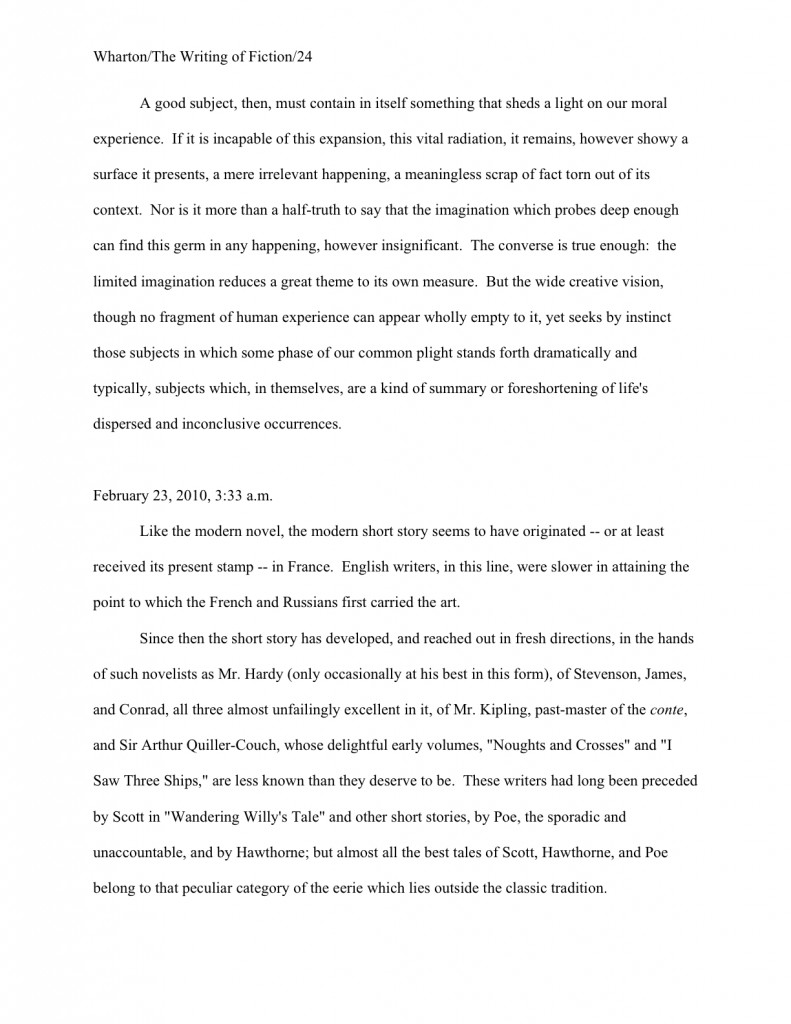
First pages that grab: Author! Author! Great First Page Made Even Better second-place winners in YA: Suzi McGowen’s A Troll Wife’s Tale and Sherry Soule’s Dark Angel (a.k.a. Beautifully Broken)

Suzi McGowen author photoSherry Soule author photo

No, I haven’t taken a look at the daunting task that is Synopsispalooza and abandoned it in terror — I shall be posting again in that excellent endeavor this evening. This morning, however, I would like to press forward with the next of the winning entries in the Author! Author! Great First Page Made Even Better Contest, the takers of second-place honors in Category II: YA, Suzi McGowen and Sherry Soule.

That’s Suzi on the left, Sherry on the right. Today, they are going to take us into the very trendy worlds of YA urban fantasy and YA paranormal.

Take a good gander at those well-constructed author photos — one of the reasons I asked the A!A!GFPMEB winners to provide them was to start all of you thinking about your author photos well before Authorbiopalooza in October. (It’s a Paloozapalooza this autumn at Author! Author!) Why think begin to ponder it well in advance? Well, two reasons. First, for most writers, coming up with a photo they like takes a few tries. Or a few hundred. Second, when the request for an author photo (or author bio, for that matter), it tends to be rather last-minute.

As in, “Oh, I’m going to start sending out your manuscript to editors tomorrow, Author McWriterly. Can you e-mail me a bio with a photo tonight?”

Trust me, you’ll be a much, much happier camper if you already have that photo — and that bio — in hand. (That’s true of synopses, too, actually, so be sure to tune back in tonight for more guidance on that front.)

Back to the business at hand. One of the problems faced by aspiring writers trying to break into a book category that happens to be hot at the moment — and remember, all publishing trends are temporary; what’s hot today may not be next year — is that, inevitably, there will be greater competition for the admittedly greater number of publishing slots. It’s an industry truism, as predictable as the flowers in spring: 1-2 years after a breakout bestseller appears, agencies will be flooded with queries and submissions with eerily similar premises.

And if there’s a series like TWILIGHT or HARRY POTTER that hits the big time? So many submissions for books like them will appear that entire subgenres may be formed.

In a way, this phenomenon is good for aspiring writers, especially for those who happened to be working on, say, YA paranormal romances when the first TWILIGHT book came out. The nice thing about the ever-changing book market is that it actually does tend to reward writers who keep weeding their own particular patch of it year in, year out: eventually, their chosen category may well become trendy.

That’s important to bear in mind, because there are always plenty of people, including agents and editors at conferences, eager to declare a particular book category dead — or impossible to sell, which in the publishing world amounts to the same thing. Just ask anyone who was trying to land an agent for historical fiction six months before COLD MOUNTAIN was a surprise bestseller.

That’s why they’re called surprise bestsellers: even the pros don’t necessarily see ‘em coming. Then they spend the next two years actively soliciting similar manuscripts, the following two tolerating similar manuscripts, and the next four wondering why in heaven’s name aspiring writers keep sending them similar manuscripts. Don’t they know the market has moved on to the next trend?

Of course, the cycle is longer with a breakout series; one has only to read the daily acquisitions listings on Publishers’ Marketplace or Publishers’ Weekly to see that books similar to TWILIGHT are still being picked up in droves. So naturally, thousands upon thousands of writers continue to describe their YA paranormals in TWILIGHTish terms, their YA fantasies in Potterish language, etc.

That strategy makes quite a bit of sense at the front end of a trend, or even at its height. The longer a wave continues, however, the harder it is to make a case that a manuscript by a writer who has never published before in that book category — like, say, the million or so adult fiction writers who have stampeded into the YA market over the past few years — is adding something new and original to the current offerings. And all too often, queriers abet that difficulty by emphasizing how their work is akin to the iconic bestseller in the category, rather than how it is different.

Which brings me back to today’s winning entries. As those of you who entered the contest may recall, one of the required elements was an identification of the entry’s book category and a brief explanation of what this manuscript would bring to that category’s already-existing target market. As so often happens with the descriptive paragraph of the query letter, most entrants mistook this requirement for either a request for a boasting back-jacket-style puff piece (This book will revolutionize Westerns!) or, you guessed it, an invitation to compare one’s own work with bestsellers.

Both of these approaches tend to sell original writing radically short. No matter how many times agents march into writers’ conferences and declaim, “I’m looking for books like Bestseller X,” the publishing industry has never been very taken with carbon copies. What these agents actually mean is, “Since editors are eager to replicate the success of Bestseller X, I am looking for new writers whose manuscripts will appeal to the same target demographic, those folks who have already demonstrated that they are willing — nay, excited about — buying similar books. So I want to see a manuscript with a fresh voice that nevertheless shares certain selling points with Bestseller X.”

Given that motivation, such an agent is unlikely to tell her agency screener (our old pal Millicent, natch) just to request pages from every querier whose descriptive paragraph says this book is just like Bestseller X, right? If a book category happens to be trendy, 70% of what crosses Millicent’s desk will be able to make that claim; by definition, surprise bestsellers change the expected selling points for new manuscripts in their book categories.

So what’s a better strategy for catching her eye? Assuming that any agency that represents that book category is already aware of Bestseller X’s selling points. Instead of telling her that your book shares them, why not show her how it is different, yet will appeal to the same target audience?

I can feel some of you who write in currently hip categories fighting that last paragraph. “But Anne, you said throughout Querypalooza that a querier has only a few lines to grab Millicent’s attention. So how can labeling my book as one with similar bestseller potential possibly undersell it?”

Glad you asked, conclusion-resisters. A lot of aspiring writers believe that a generic comparison to an established author’s work — which most this is the next Bestseller X! claims boil down to being, right? — is inherently more effective at promoting a manuscript than a specific demonstration of the book’s original elements.

As it happens, today’s winning entries disprove that assumption quite nicely. Here is Suzi’s brief description for A TROLL WIFE’S TALE:

You’ve heard of urban fantasy? That dark and gritty world of modern day cities, where elves and witches roam? My novel is the Young Adult version. Call it a suburban fantasy, where a female troll sets out to right wrongs, save the world, oh, and become a tooth fairy.

And here is Sherry’s for Dark Angel. (Please note: between the time that Sherry entered the contest and when we informed the winners — admittedly, a long time; my apologies — she changed the book’s title to BEAUTIFULLY BROKEN. A good call, I think — BEAUTIFULLY BROKEN is a perfectly marvelous title — but obviously, the judges had to work with the original entry. I hope this does not cause any confusion in future web searches, after the book comes out.)

DARK ANGEL is a twist on the young adult, boy meets girl, supernatural love story. This time the boy is the “normal” one and the girl is the supernatural and attractive teenager.

Both of these descriptions make the books in question sound rather generic, don’t they? The first doesn’t bring up an original element until the last few words. Not the best structure, strategically, as Millicent is likely to find the first three sentences a trifle perplexing: there is already a well-established YA urban fantasy category, so why not just state the book category up front and move swiftly on to what’s fresh, original, and exciting about this book?

Especially since there is so very much that is fresh, original, and exciting about this book. Take a gander at Suzi’s one-page description:

Troll Wife could use a job, so when she finds the poster on the telephone pole that says, “Any fae may apply,” she does. She’s as surprised as anyone when she’s accepted for training as a tooth fairy.

She’s also surprised by the impressive number of injuries she racks upon the job. A broken bone and a concussion? Eh, maybe she should have expected that. After all, learning to fly isn’t as easy as it sounds. But the gunshot wound? That was because she was fighting a monster that she ran into while collecting teeth.

The monster, called Oubliette, was a soldier in the war between the humans and the fae, hundreds of years ago. Now Oubliette wants to start the war all over again. This time, it wants to kill all the humans, not just most of them. The other tooth fairies should be her allies in this war against Oubliette, but Troll Wife doubts that any fae that smells like cotton candy can help save the world.

Troll Wife only has days to learn how to fight the Oubliette, protect the human children from it, and make sure that she collects her quota of teeth. While she’s at it, she needs to find out what dark secret the tooth fairies are hiding, and rescue herself from their tangled web.

Sounds like a genuine hoot, eh? But did you gain a sense of that delightful whimsy in the brief description?

DARK ANGEL’s brief description falls into an even more common querying trap: it presents the story as merely a gender-flipped twist on a bestseller. It also assumes — wrongly, based upon the longer description and the first page — that the similarity to that bestseller’s premise is the most interesting thing about this manuscript.

That made the judges rather sad, since on the page, it’s the least interesting thing about this story. Furthermore, the stories do not seem very similar. Take a peek at her longer description:

A sixteen-year-old impetuous outcast has seen ‘shadows’ for as long as she can remember and they always turn up when something bad is about to happen.

When those dark companions follow, Serenity Broussard to church with her family it begins no differently than any other day, except that she gets her first glimpse of the hot new guy in town. It’s a small town so it doesn’t take long for the gossip to spread about Trent Donavon, especially when he moves into his family’s rumored-to-be haunted mansion.

Trent and Serenity began to date and the seemingly perfect state of their relationship is thrown into chaos after she takes a job as an intern, helping restore his family’s estate. It doesn’t take Serenity long to realize that something is terribly wrong. The mansion is full of ghosts and secrets.

The house awakens latent psychic powers in Serenity, who finds herself being stalked by a ghost who tries to communicate with her in terrifying ways. The shadows lurking around Serenity—ever present and insubstantial are something else. Lacking in the description is one common denominator unifying the different types of shadows entering our world—darkness—malevolence.

Shadows had another thing in common—an attraction to Serenity.

When Serenity finds Trent’s mother’s diary, it sends her on a quest to uncover the mystery surrounding the woman’s untimely death. Except things aren’t as black and white as Serenity thinks. Because not all ghosts want help crossing over, some want vengeance.

Admittedly, a few of the narrative choices here are genuinely distracting from the storyline being presented (are the dark companions in paragraph 2 the same as the shadows in paragraph 1, for instance, and if so, are they individual characters? Why is shadows in quotation marks — and why, for an American audience, in single quotation marks? Why risk Millicent’s wrath with two technically incorrect single-sentence paragraphs, when it would be so easy to form the concepts there into narrative paragraphs with at least two sentences? Why aren’t there spaces at the ends of the dashes, since any synopsis should be in standard manuscript format?), but those would all be quite easily fixed. What I want you to notice here is that the brief description and the longer description could be for entirely different books.

That wouldn’t be too surprising to Millicent — aspiring writers undersell their manuscripts’ originality this way all the time. Sad, but true. Yet if we’re honest with ourselves, can we really blame Millicent for not being able to look at the first description of either of these books and extrapolate the second description?

That outcome would be a particular shame in the case of TROLL WIFE, because its premise is so darned charming and full of potential. (All of the judges preferred the title shortened, by the way, Suzi, although several of the judges — yours truly included — wondered if young girl readers would be a bit disturbed that the protagonist’s name and her social role are apparently identical.) That charm is apparent on page 1:

Suzi McGowen p1

Now, this page could use some revision — I suspect, for instance, that a hard-copy read-through would have caught that the narrative tells the reader twice that the protagonist is a tooth fairy, once at the end of paragraph one and again at the beginning of paragraph 2 — but is that why Millicent might start reading this with a jaundiced eye? Chant it with me now, campers: because professional readers stare at manuscripts all day, any deviation from standard format will leap off the page at them, distracting them from the writing.

There’s a reason I keep showing you so many before-and-after page 1s, after all. Take a peek at the same page after 2 minutes of cosmetic revision, and see if it doesn’t come across as more professional. For extra credit, compare it to the original revision and tell me what I changed.

Suzi revised

How did you do? I made five changes here: (1) moved the slug line to left margin (not mandatory, but the norm), (2) changed the chapter title from all caps to title case (thus the name: title case), (3) changed the spacing from an odd specific set to double-spaced, (4) changed the font from Courier to Times New Roman (again, not mandatory, but the norm for novel manuscripts), and (5) changed 14 in line 2 to fourteen. Of these five, only #5 — not writing out numbers under 100 in full — might have prompted Millicent to stop reading.

Yes, it really is that serious an offense against standard format — unfortunate, since so many aspiring writers mistakenly believe that the AP style restriction of writing out only numbers under ten applies to manuscripts. It does not: AP is for newspapers and magazines, and not all literary magazines adhere to it.

Having worked with Suzi and Sherry’s entries in soft copy (the better to show you before-and-after formatting, my dears), I suspect that both were relying on some sort of macro for the PC for their formatting — it was impossible, for instance, to alter the paragraph heading without deleting the title and the space above the text entirely and starting again from scratch. I realize that macros that purport to format a manuscript for a writer may be comforting, but actually, the restrictions of standard format are so simple that anyone reasonably familiar with Word should be able to set them up in five minutes flat. (If you don’t know what the requirements of standard manuscript format are, or indeed that there is a specific professional format for manuscripts, it would behoove you to take a peek at the HOW TO FORMAT A MANUSCRIPT category on the archive list located on the bottom right-hand side of this page.)

I hear some impatient huffing out there, do I not? “But Anne,” macro-huggers across the globe wail, “that sounds like a lot of extra work! I want my computer to do it all for me.”

Well, it is a touch of extra work — although not nearly as onerous as writers tend to speak of it as being — but let me put it this way: if a macro is wrong, its feelings are not going to get hurt when the submission gets rejected. The writer’s will. So who really should be in charge of making sure that the formatting is in apple-pie order?

True, one or two minor formatting gaffes are probably not going to be enough to trigger an automatic rejection. But then, it’s exceedingly rare that a first page gets rejected for only one reason. Presentation problems, like wolves, tend to run in packs.

So is it really all that astonishing that an experienced Millicent might open a submission packet, glance at a misformatted page 1, and assume that more presentation, proofreading, or even writing problems await her? Or that her patience for subsequent problems might be lower than for a perfectly-formatted page 1? Or, more to the point at submission time, that the first typo, grammatical error, or missing word in the text might combine in her mind with formatting problems to equal rejection?

See why I harp on formatting so much? To sharpen your eye for presentation, let’s see how the macro treated Sherry’s page 1:

The problems affect the sharp-eyed reader almost subliminally, don’t they? However, there’s one formatting error here that would draw Millicent’s eye as quickly as if the lines containing it were printed in red ink.

Oh, you didn’t catch it? Here is the same page, properly formatted.

Did you catch it that time? If you are already jumping up and down, shouting, “I saw it the first time, Anne! The text uses an emdash instead of the standard format-requisite spacedashdashspace!” give yourself a gold star for the day. (Hey, I told you there was going to be extra credit for the eagle-eyed.) Because manuscripts do not resemble published books in many important respects, the emdash — the Autoformat fix for dashes in Word that transforms them into straight lines connecting the surrounding words with no intervening spaces — is not correct in a manuscript. As you may see in the revised version above, the first word should be followed by a space, then two dashes, another space, then the second word. No exceptions.

Yes, I know that Autoformat will change what I just suggested into an emdash. Change it back, or risk the wrath of Millicent.

Okay, what else did I change? Interestingly, not what Suzi’s use of apparently the same macro might have lead us to expect: (1) moved slug line from the right to the left, (2) removed extra spaces in slug line (why have so many aspiring writers started adding spaces before and after the /s within the last year? It’s not correct, and it was not nearly so common before. It’s not as though standard format has changed in this respect.) (3) Moved the chapter title to the top line of the page, and, while I was at it, (4) changed the single space after the period to two, since that’s still the standard for manuscripts.

Long-time readers, chant it with me now: if the agent requesting your pages prefers the published book-style single-space convention, her agency’s submission guidelines should tell you so. If that’s what she wants, for heaven’s sake, give it to her, because for the agents who feel strongly enough about this to make public statements about it, it often is a rejection-worthy offense. Not only because they dislike the normal spacing, but because violating an individual agency’s stated submission standards just screams, “This writer not only cannot follow directions — he may not even have taken the time to check whether this agency had its own preferences!”

Why might that in itself render Millicent more likely to reject a submission? Because this is a detail-oriented business, writers who neglect the small stuff tend to be substantially more time-consuming for agencies to take on as clients.

“But Anne,” some of you new to the Author! Author! community — specifically, those of you who have not yet worked your way through one of my famous standard format series yet, I’m guessing — protest vehemently, “this is ridiculous. Surely, it’s the writing and the book concept that determine whether a manuscript gets accepted or rejected, not the petty little details. The agent or editor can always fix the small stuff before publication, after all. Even if a bunch of tiny, insignificant gaffes appear on page 1, I can’t believe that Millicent would just stop reading my submission.”

Oh, dear. I wasn’t going to do this, but if it saves even one good writer from undeserved rejection on formatting grounds, it’s worth it. Since Sherry revised her manuscript after the contest winners were announced, she was kind enough to send along the new version — indeed, the entire first chapter — for the judges to peruse. Obviously, it would not have been fair to the other entrants to judge the revised version, or even to provide extensive commentary upon it, but because it contained a couple of formatting problems that the original entry did not, I cannot in good conscience not flag them. One of them is, in fact, a presentation problem that might actually lead to Millicent’s not reading the submission featuring it at all.

So yes, you caught me: I have in fact structured this discussion to lead us to this point, necessitating showing you the revised version. Please, everybody, take these next examples in the spirit they are intended. (Seriously, I don’t want to see any snarky snickering about this in the comments; a tremendous number of aspiring writers make these particular mistakes, and we should all be grateful to Sherry for bringing them to our attention.)

So calmly, respectfully, wiggle your tootsies into Millicent’s moccasins and pretend you have just opened a submission packet to find this first page:

Beautifully Broken title

And this second one:

Beautifully Broken page 1

When you were expecting to find this:

Sherry's title

And this:

Sherry #2

Still don’t believe that formatting makes a difference to how Millicent perceives a manuscript? From the aspiring writer’s perspective, it might not seem to make much of a difference whether the title page is professionally formatted, or if it is in a wacky typeface, or if the first page of text is numbered 2 instead of one. But to her — and to agents, editors, and well-informed contest judges — there’s more than just words on a page at stake.

This is about respecting tradition. The publishing world values its traditions, and even if it did not on general principle, as those of you who have followed my past series on standard format are aware, manuscripts look a particular way for a variety of practical reasons. Every industry has the right to establish and maintain its own standards; most of the assertions that this or that has changed in manuscript format come from the outside.

Also, favoring professionally-formatted submissions a matter of practicality: an aspiring writer who takes the time to learn how to present his writing professionally is usually also one who has found out how publishing does and does not work. Thus, he is more likely than the average aspiring writer (who does not do his homework, as a general rule) to have realistic expectations about what an agent can and cannot do for him, the kind of turn-around times to expect on submissions to publishing houses, the necessity for not pouting when the editor asks for revisions, the imperative to promote one’s own book after it comes out, rather than passively waiting for the publishing house (or one’s friends who happen to be bloggers) to do it for him, and so forth. He’s just an easier client to promote.

What are we to conclude from all of this? Well, first, that I should plan to add a Formatpalooza to this autumn’s festivities; it actually was quite surprising to me how few of this contest’s entries arrived properly formatted. I don’t want any of my readers to get rejected on technical grounds, if a few weeks of my effort every year can help prevent it.

Second, have you noticed that since I’ve had to spend so much time going over the presentation and formatting problems, I haven’t had the luxury of talking about the writing much? That’s a pretty accurate representation of how distracting these issues are for professional readers: if the presentation and formatting are off, it’s awfully hard for good writing even to get noticed.

And that’s a real shame here, because there were some writing choices that we could have discussed productively. The prevalence of the incorrect single-sentence paragraph that we’ve already discussed in this series, for instance — in English prose, a narrative paragraph properly consists of at least two sentences; established authors like Joan Didion began breaking the rule not because they were unaware of it, but because to the hyper-literate, it is genuinely shocking to see a non-dialogue single-sentence paragraph. Thus the emphasis that this narrative choice places on the offset sentence: it shouldn’t be that way without a very good reason.

Unfortunately, in common usage, as well as in both of these pages, single-line paragraphs are used not for emphasis, but for rhythm. To a professional reader, this is not a very sophisticated way to establish beats. Save the single-sentence paragraphs for only that occasion when what is being said in them is going to come as a genuine surprise to the reader.

I would also have liked to talk about the and then convention, a notorious Millicent’s pet peeve. In a written narrative that does not involve time travel, events are assumed to be presented in the order that they happened chronologically. Thus, professional writing typically avoids the and then so dear to aspiring writers’ hearts, because it is logically redundant. The pros reserve it for only those occasions when the then part seems to come out of nowhere.

Hey, where have I heard that logic before?

Then, too, there’s the trailing off with an ellipsis… trope. Quite a few Millicents, especially the classically-trained ones, will have a knee-jerk negative to a narrative sentence or paragraph that ends in that manner. It’s fine in dialogue, where those three dots are expressing an audible phenomenon (the speaker’s voice trailing off or the effect of being interrupted in mid-thought), but the practice of borrowing that dialogue convention to make a narrative voice seem more conversational is, again, considered a not very sophisticated writing trick.

Because, really: aren’t there thousands of ways a narrative paragraph could generate suspense without resorting to punctuation?

Oh, how I wish I had time and space to talk about all this. In lieu of that, I’ll have to content myself with just posting the marked-up versions. (And mailing them to their authors, of course, but I do that routinely, so those brave enough to submit their work for critique here do not have to squint.) Here’s Suzi’s:

Suzi edit 2

And here’s Sherry’s:

Sherry edit 2

Moral: there’s no such thing as a detail too small to escape a professional reader’s notice — and no such thing as a first page that could not use one last going-over before being submitted. Join me at 7 pm PST for the resumption of Synopsispalooza, everyone, and keep up the good work!

First pages that grab: Author! Author! Great First Page Made Even Better second-place winners in adult fiction, David A. McChesney’s SAILING DANGEROUS WATERS and Ellen Bradford’s PITH AND VINEGAR

Dave McChesney author photoEllen Bradford author photo

My apologies for the must-have-been-agonizing delay between the prize posts for the first-place winners of the Author! Author! Great First Page Made Even Better Contest and the second-place winners. Believe me, the lapse was not intended to be editorial: I’m excited about both of today’s winners, but I had a bit of a car-crash recovery setback earlier in the week. I didn’t want to risk sounding grumpy about two writers whose narrative voices I like quite a bit.

So a drum roll, please, for the joint winners of second prize in Category II: Adult Fiction: David A. McChesney’s SAILING DANGEROUS WATERS and Ellen Bradford’s PITH AND VINEGAR.

While all of that portentous rumbling is still hanging in the air, let me take a moment to air one of my pet peeves: gratuitous quotation marks. The other day, a staffer at my physical therapist’s office handed me a special-ordered piece of medical equipment in this bag:

misused quotes

What, one wonders, was the writer’s intent in placing quotation marks around my name? Was he in some doubt about whether it was my real name — as in, This belongs to the so-called Anne Mini? Did he mistakenly believe that he was shipping this not particularly personal piece of equipment not to my PT, but to a monogrammer, and he wanted to make sure the right spelling stitched into it? Or had someone immediately behind him just shouted my name, and he was quoting her?

Was this merely a case of forgotten attribution? Is this an obscure quote from a book I do not know — a minor work of Charles Dickens, perhaps? Or, still more disturbingly, is this kind soul trying to let me know, albeit in code, that somebody out there is talking about me?

None of the above, probably: my guess would be that the guy with the marking pen thought, along with a surprisingly high percentage of the marking-things population, that quotation marks mean the same thing as underlining. He is mistaken.

Don’t ever follow his example. To a professional reader, the common practice of placing things in quotation marks to indicate either emphasis in speech (“Marvin K. Mooney, will you ‘please go’ now?”), a stock phrase (everybody laughed, because “all the world loves a lover”), or just to call attention to individual words on a sign (Fresh “on the vine” tomatoes, 3 for $2) simply looks illiterate. Sorry to be the one to break the harsh news, but it’s true.

So how should one use quotation marks? How about reserving them for framing things that characters actually say?

I know; radical. The next thing you know, I’ll be calling for aspiring writers to use semicolons correctly.

I do not bring any of this up lightly — or, indeed, purely to rid the world of a few more sets of perplexingly-applied quotation marks. Both of today’s entries grabbed the judges with their strong, distinct authorial voices, but each left us murmuring amongst themselves, speculating about what the writer’s motivations might have been.

Although these two first pages don’t actually have a great deal else in common — other than both beginning the text 1/4 of the way down the page, rather than 1/3; the addition of a single additional double-spaced line would have made a positive cosmetic difference in both — the judges agreed that they shared a certain kinship: the unanswered question might well lead even an agency screener who admired the writing to hesitate about reading on.

Why? Well, Millicent isn’t all that fond of unanswered questions on page 1, and with good reason: in order to be able to recommend a novel manuscript to her boss, she is going to have to be able to tell him (a) who the protagonist is, (b) what the book is about, (c) the book category, (d) to what specific target audience within that book category’s already-established readership it should be marketed, and (e) how this book is different/better than what is already on the market for the folks mentioned in (e).

If Millicent can’t answer any of these questions. she’s going to have a hard time convincing the agent even to read the submission. (Actually, she prefers to be able to answer all of them by the bottom of p. 1, but she’s prepared to change her mind between then and p. 50.) And no, “But the writing is so good!” is no substitute for being able to come up with answers: books are pitched to editors within well-established categories.

So when a fresh, new narrative voice that does not appear to fit comfortably within an existing book category, our Millie is left in something of a quandary. How, she wonders, is she going to make the case for this book?

That’s a good exercise to apply to any manuscript, incidentally: reading a first page or book description and trying to figure out the book’s category is excellent practice for narrowing down your own. In that spirit, take a gander at Dave McChesney’s first page and book description; tell me, what do you think the category is?

Dave McChesney's p 1

If you found yourself murmuring, “Hmm, this reads like Naval Adventure,” you agree with most of the judges. Even more so if you additionally told yourself, “I’d bet a doubloon that there’s adventure awaiting those characters within the next page or two.” Although some of the judges felt that it might have been more of a Millicent-grabber to toss the characters straight into that imminent action, none denied that page 1 set up the expectation for excitement.

Cast your eyes over the book’s description, though, and see if you think the proverbial shoe still fits the assumed book category:

McChesney synopsis

Still sounds like a rollicking Naval Adventure, doesn’t it? Or do I sense some puzzled head-scratching out there?

“Wait just a doggone minute, Anne,” head-scratchers across the English-speaking world protest. “He hopes to quickly set out for his world, England, and Evangeline, but finds obstacles continually placed in his path? In the known world? Does this take place in a different world, or this one? And if it’s the former, shouldn’t that be made clear to Millicent on page 1?”

Well caught, head-scratchers — and in answer to that last question, a resounding yes. Let’s take a gander at how Dave himself categorizes his book:

SAILING DANGEROUS WATERS, the second Stone Island Sea Story, combines Naval Adventure and Fantasy. An additional yet similar world gives these voyagers of the early nineteenth century more seas to sail and challenges to meet. Uniquely, they are aware of and able to control their journeys between the two worlds.

An interesting notion, right? But you can already hear Millicent slapping her forehead and muttering, “How on earth am I going to define this book for my boss?”

Universally, the judges felt that in fairness to Millicent, some fantasy elements should appear on page 1. Otherwise, they argued, it was simply too likely that when she came upon fantastic happenings later in the manuscript, she might conclude — wrongly in this case — that Dave did not know that he was genre-jumping, or that the authorial choice to present a fantasy premise in a completely dedicated naval fantasy voice was in fact a choice, not a misunderstanding of how book categories work.

That’s why Dave’s taking the quite large risk of telling Millicent in his brief book description (and presumably in his query) that this is a category-crosser is quite smart. True, there is not a great deal of demonstrable overlap between the readership of these two categories. (Which is why I am bound to mention marketing advice agreed-upon by a full half of the judges: since this is such a strong Naval Adventure voice, why not write a straight Naval Adventure first, land an agent that way, and then segue into fantasy with the NEXT book?) Also, if an agency is not open to the possibility of combining these two disparate categories in a single book — or, in this case, a series — its Millicent may well reject the query on that basis alone.
So why is it smart to give her the opportunity up front? Because for a truly genre-expanding novel to make it into print, it’s going to need an agent willing — nay, eager — to take on the challenge. Trust me, it’s far, far easier on a writer emotionally to find out a particular agent is not up for it at the querying stage, rather than several years into an unhappy writer-agent relationship.

Let’s assume for the moment that Dave’s query has already passed muster with the Millicent guarding an agency very much up for this challenge. How might Millie respond to this first page?

Dave's edit

As you may see (and we have continually seen throughout this series), how a professional reader responds to a page of text can be extraordinarily different from how an ordinary reader might. I would be surprised, for instance, if many of you had caught the verb repetition in lines 1 and 2, or the lack of a necessary paragraph break on line 8. (It’s a bit confusing to have one person speak and another — or in this case, several others — act within the same paragraph.) Or, really, to be actively annoyed by the almost universal Baby Boomer tendency to compress the phrase all right into alright.

I blame album cover lyrics for the ubiquity of that last one. (If you don’t know what album covers are, children, ask your grandparents.)
Nor would the average reader be likely to gnash her teeth over the preponderance of tag lines, those pesky he said, he mentioned, he groaned speaker-identifiers, but Millicent’s choppers are unlikely to remain ungnashed. Why? Well, one of the standard measures of the reading level of the target audience is the frequency with which tag lines appear: in books for early readers, for instance, who may well be reading aloud or having the book read to them, tag lines are virtually universal.

“See Spot run, Dick,” Jane said.

“I see Spot run,” Dick replied. “Run, Spot, run.”

In most adult fiction, on the other hand, tag lines are deliberately minimized. Although the frequency with which they are expected to appear does vary from book category to book category (chant it with me, campers: there is no substitute for reading widely in your chosen book category, to learn its norms), most of the time, it’s simply assumed that the reader will be able to figure out that the words within quotation marks are in fact being spoken aloud by a character without the narrative’s having to stop short to tell us so.

After all, quotation marks around words can only mean that either those words were spoken out loud or the narrative is trying to cast doubt upon the authenticity of something (as in “I see you’re wearing your ‘designer’ dress’ again, Alice.”), right?

Typically, tag line minimization is achieved by incorporating other action or thought into a dialogue paragraph — or simply to alternate between already-established speakers. Like so:

“Oh, there’s Spot at last.” Jane blew on her freshly-filed nails to free them from dust before she applied screaming red polish. “And there he goes. See Spot run, Dick.”

Dick backed against the wood-paneled wall, eyes wide. “I see Spot run. Run, Spot, run!”

Jane lowered one heavily-lashed lid, the better to aim her gun. “How would you feel about following Spot’s example, Dick?”

“Pretty darned good.”

“Then run, Dick, run, before I change my mind and turn you into Swiss cheese.”

These are all easily-fixed matters of style, however. There was one obviously deliberate authorial choice, however, that left the judges scratching their heads as if they had wandered into a dandruff convention. Millicent almost certainly would have the same reaction. Any guesses as to what on this page might engender that response?

If you flung your hand into the air, shouting, “Oh, I’ve been scratching my head raw over this one, too! Why are Original Vespican, Original, Baltican all in italics? They aren’t foreign words, are they, or the names of ships, which could legitimately be italicized?”

Apparently not — from how they are used here, they may be the names of nationalities or tribes. If that’s the case, however, it’s hard to guess what the authorial point of italicizing them could possibly be: one does not, after all, routinely employ italics when talking about Swedish fjords or Navaho rugs.

Presumably, there is a perfectly sound rationale behind this authorial choice — Dave’s been an active member of the Author! Author! community for years, and never have I known him to set at naught the rules of standard format for frivolous reasons. I said as much to the other judges, in fact. But they felt — and I must say I concur — that however valid it might be to include those italics in the published version of the book, at the submission stage, the manuscript should omit them.

Why? Well, as we all know (at least I hope we do), manuscripts do not resemble published books in many important respects. Double-spacing, for instance, and doubling dashes. While it might conceivably be possible for a writer to justify an occasional deviation from standard format, remember, the submitter is literally never there when Millicent screens his manuscript; it is going to need to stand on its own merits. And Millicent is not all that keen on formatting originality: she knows all too well that any fancy formatting in the published book would be the editor’s call, not the author’s.

In Dave’s case, then, it could certainly be argued that no one but his future editor is genuinely qualified to determine whether those italics should remain or not. However, that perfectly legitimate point is not likely to help him much at submission time, if Millicent gets tired of scratching her head over it.

So I offer up this question for your pondering pleasure: since Millicent’s delicate eyebrows are so very likely to be lifted beyond the point of comfort by those page 1 italics, wouldn’t it be more prudent for Dave to hold off on those italics-by-choice until he can discuss it with his future editor? That way, the risk of the italics triggering rejection drops to zero, and he can still make a case for including those italics in the eventual book.

Isn’t it amazing how much issues ostensibly unrelated to either the quality of the writing, the strength and consistency of the narrative voice, or even the inherent excitement of the story can affect its submission chances?

With that capacious question ringing in our ears, let’s turn to Ellen Bradford’s extremely likable page 1:

Ellen Bradford p1

Engaging, isn’t it? I must say, this one won me over in spite of myself: as a professional reader, I tend to be a trifle suspicious of self-deprecating narrators; it’s hard to keep it up for the entire length of a book. It’s even harder to do if the narrative is genuinely funny, as this page is — self-deprecating humor often lends itself to one-note storytelling, and even when it doesn’t, those who do not get the jokes are wont to write off the narrator as whiny.

Hey, I don’t control readers’ reactions. I just tell you about ‘em.

This is a voice that a lot of readers would quite happily follow for chapters on end — but is it compelling enough to carry Millicent on to page 2?

That’s not at all a frivolous question, or even a reflection upon the writing here: let’s face it, Millicent doesn’t make it to page 2 in most submissions. And contrary to popular opinion amongst aspiring writers, the quality of the writing is not always the determinant of whether she flips the page.

Remember, our Millie likes to be able to answer the basic questions about a submission in at least a cursory way by the bottom of page 1. To recap: (a) who the protagonist is, (b) what the book is about, (c) the book category, (d) to what specific target audience within that book category’s already-established readership it should be marketed, and (e) how this book is different/better than what is already on the market for the folks mentioned in (e).

Take another gander at Ellen’s page 1. How many of those questions would you be comfortable answering?

Oh, it establishes the protagonist and the tone of the book beautifully; one could even make a pretty good guess that the target market is women insecure about their appearance — which is to say pretty much all of us. But what is this book about? Where would it sit on a shelf in Barnes & Noble?

Because the judges were all about book category-appropriateness, the contest’s rules asked entrants to provide a brief paragraph dealing with questions (b) – (e). Here’s Ellen’s response:

Pith and Vinegar will turn the world of adult fiction on its ear. Or its kidney. Take your pick. But what remains non-negotiable and absolutely, undeniably 100 percent pure fact is that adult fiction will be resting on an unfamiliar body part.

As will the story’s heroine.
Again: funny, even charming. But did it answer those professional questions, beyond alerting us that it is fiction aimed at adults?

Is it Mainstream Fiction? Women’s Fiction? Chick lit? The judges were inclined toward the latter, but let’s take a peek at the longer book description, to see if we can find out more.
Pith and Vinegar synopsis

Okay, so the book sounds like a hoot; I give you that. And now we know that it is Women’s Fiction — which is fabulous, as this is a voice that would appeal to many, many readers in that target market. There is surprisingly little funny fiction out there right now featuring larger female protagonists, so you go, Ellen!
But this description would be at a very serious competitive disadvantage at most US-based agencies. Care to guess why?

If you already had your hand in the air, crying out, “But Anne, those paragraphs are not indented, and she skipped a line between paragraphs!” give yourself a hearty pat on the back. You are quite right: in dealing with the publishing industry, every paragraph should be indented. Block-formatting just looks illiterate to Millicent.

You wouldn’t want her to think you were the kind of person who would shove quotation marks around perfectly innocent words and phrases for no apparent reason, would you?

No, but seriously, folks, this is a trap into which well-meaning aspiring writers inadvertently stumble all the time. An agency’s submission guidelines ask for an unusual addition to the query packet, or the form-letter positive response to a query requests a much shorter synopsis than the writer has on hand. So he tosses something off — only to realize with horror a few days after he sent it that those additional requested materials were not in standard manuscript format.

If that doesn’t seem like a big deal to you, think of it this way: which would you prefer, Millicent’s starting to read your synopsis with an open mind, or her harrumphing at the first sight of it, “Oh, no — I wonder if the manuscript is improperly formatted, too,” and beginning to peruse your word with a pre-jaundiced mind?

There’s another common generator of Millicent’s knee jerks back on page 1. Let’s take a gander:

Ellen's edit

A couple of those points caught you by surprise, didn’t they? Almost universally, Millicents are a mite touchy about having jokes explained to them, at least on the page. After the tenth time it happens in a single day of screening, it can start to feel like a minor insult to one’s intelligence.

And there’s some justification to that: the writerly impulse to over-explain has does typically have its roots in a fear that the average reader won’t get it. Much of the time, those fears are unfounded; inveterate readers are a pretty savvy bunch, and professional readers even more so.

Here, those fears are definitely unjustified — it would be perfectly easy to follow the metaphor without, say, the narrative’s informing us three times that it is indeed a metaphor, or repeating the word potato every few lines. With an image that strong, it’s a safe bet that the reader is going to remember it.

Yet our amusing narrator seems far more afraid that the reader’s mind will stray off the relevant spud than to let us know where the story is set, how the narrator fits into the world she is depicting (perhaps she works at the Bloodworthy News?), or even the time frame — because, let’s face it, a lot of women have felt potato-shaped across a broad array of contexts for at least the last century. (They might well have felt that way before, but bathroom scales were not widely available until the 1920s, so they didn’t have numbers to back up the general impression.)

Are you seeing a running theme here, though? Both of these winning entries left Millicent guessing about a few significant matters at the bottom of page 1 — and in both cases, one of those significant somethings was the book category.

But that’s actually not the primary reason that a well-trained Millicent might not turn the page. Any guesses?

Hint: the problem I have in mind is noted twice on the marked-up example above.

Yes, that’s right: the single-sentence paragraphs. Aspiring writers just love these, and as we’ve discussed, they can work well in moderation — to introduce a bit of genuinely startling information or a plot twist that might get lost to the skimming eye if the sentence were attached to the paragraph above or below.

The vast majority of the time, that’s not how such one-line paragraphs turn up in manuscript submissions, however. A surprisingly high percentage of writers who aspire to be funny seem to believe that a single-line paragraph is the only way to designate a punch line, a tactic about as subtle as following Millicent around with a drum kit and executing a rim shot each and every time she reads a joke.

Think about it: if the reader can see from across the room that a joke is coming, because every joke that preceded it in the text was also in a single-sentence paragraph, hasn’t the narration lost the element of surprise so crucial to maintaining a humorous tone all the way through the book?

That doesn’t appear to have been Ellen’s motivation in creating the single-sentence paragraphs here, though; my guess is that they are intended to reflect the greater-than-full-stop pause these statements might carry in verbal speech. Regardless, breaking the it takes at least two sentences to form a narrative paragraph rule doesn’t actually provide any benefit to the narrative — certainly not a large enough bang to outweigh the risk of a very well-read Millicent’s knee jerking over it.

Don’t believe me? Okay, here are the opening three sentences as submitted:

If eyes were the windows to the soul, I was a potato.

Well, metaphorically speaking, I was a potato. Physically, I didn’t look like a root vegetable unless I turned sideways in one of those nasty change-room mirrors that sadistic shops selling Barbie-sized clothing always mounted on their flimsy doors.

Got those firmly in mind? Now cast your eyes over them with the single-sentence paragraph problem removed in the most obvious manner imaginable — although while I’m at it, I’ll do a spot of trimming.

If eyes were the windows to the soul, I was a potato. Well, metaphorically speaking. Physically, I didn’t look like a root vegetable unless I turned sideways in one of those nasty change-room mirrors that sadistic shops selling Barbie-sized clothing always mounted on their flimsy doors.

Was any meaning lost in that transition? Any nuance, even? Is there anything to prevent someone reading it out loud from emphasizing that first sentence?

Of course not. The same holds true for the other single-sentence paragraph. Let’s review it in context:

A few stray hairs perhaps, under harsh fluorescent lighting, but everyone knew how cruel those lights could be.

All right.

I may in some tiny and insignificant way, have resembled a potato. But some potatoes on eBay looked like the Virgin Mary or Albert Einstein, so there was a lot of genetic variance. And metaphorically speaking, I was covered with many eyes, like a potato.

And here it is again, cleaned up a trifle:

A few stray hairs, perhaps, under harsh fluorescent lighting, but everyone knew how cruel those lights could be.

All right, I may, in some tiny and insignificant way, resemble a potato. But some potatoes on eBay looked like the Virgin Mary or Albert Einstein, so there was a lot of genetic variance. And metaphorically speaking, I was covered with many eyes.

Okay, so that was more than a trifle, but you know how I (and Millicent) feel about word repetition and comma use. My point is — and you probably saw this coming, right? — that stand-alone paragraph wasn’t actually adding anything significant to the text. The next paragraph was able to absorb it into its first sentence with no loss of meaning at all.

What lesson are we to derive from all of this? Several, actually. First, I clearly was eager to jump back into the swim of commenting on these entries — this is a long post, even by my standards. Second, while it may require a bit of plot massage, the more you can show Millicent of the book’s tone, what it’s about, who the protagonist is, and so forth by the bottom of page 1, the happier she will be.

Finally, as we’ve been seeing throughout this series, even a very well-honed narrative can often benefit from a bit of judicious revision. Just to stick that bug in the ear of all of you who are going to receive requests for pages in the months to come: fight the urge to send off those pages instantly; it’s well worth your time to re-read those pages IN THEIR ENTIRETY, IN HARD COPY, and OUT LOUD before popping ‘em in the mail or hitting SEND.

Do I need to remind you about Millicent’s jumpy knee? Don’t make me pull out another quotation mark example to get her going.

A few more contest entries to come, then it’s on to Synopsispalooza, beginning on Saturday. Well done, Ellen and Dave, and keep up the good work!