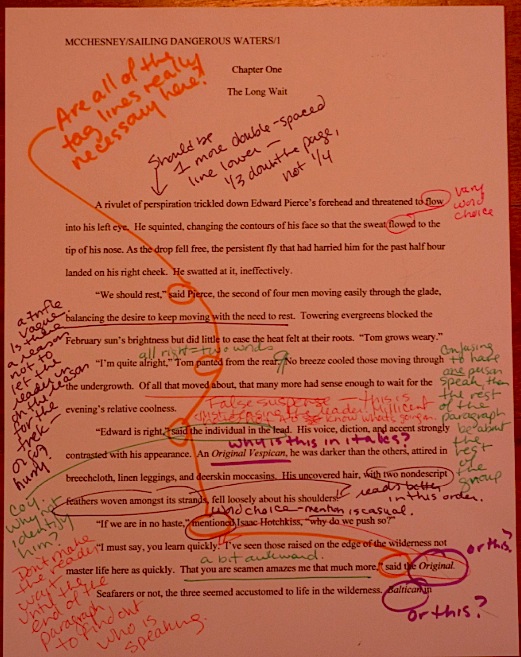
Pet peeves on parade, part XV: speak to me, protagonist. Or blink twice to let me know that you’re alive.

After yesterday’s unusually lengthy post, even by my standards (which is saying something), I thought I’d limit myself this evening to a light, sparkling addendum to last time’s intensive session of nit-picking. It will be a struggle, I fear; well-constructed dialogue is a subject upon which I, like Millicent the agency screener, hold quite passionate views.

Why work ourselves into a lather over dialogue, you ask, instead of, say, punctuation placement? Well, while I, for one, have been known to wax eloquent about our friend, the humble comma, its placement is largely a technical issue: it’s rare that a great new writer will stake her claim to fame upon her bold and innovative use of commas.

Seriously, would you want your name to be passed down to posterity as King of the Commas? Wowing the literary world with an unusually good ear for dialogue, on the other hand, is a goal to which many a fledgling writer of fiction and/or memoir aspires. It’s certainly a worthwhile one: writing dialogue well requires not merely a strong sense of what people actually say and the rhythms in which they say it, but also the creativity to pepper the dialogue with enough originality that it won’t seem ho-hum.

Yet for some reason that perpetually escapes me, even writers who pride themselves on their fresh, original notions and execution frequently choose to bore poor Millicent to extinction with uninteresting dialogue. “But people really talk like that,” they hedge. “It’s not my fault if most people are not scintillating conversationalists.”

Well, that’s not entirely true, realism-huggers. While no one can hold you accountable if the couple at the next table elects to immerse themselves in dull chit-chat (“How about this rain?” “We sure do need it.” “I’ll say.”), it’s not fair to expect readers to suffer through dialogue that has no legitimate claim to attention other than its fidelity to real-life talk.

Or, to put it a bit more bluntly: not everybody in the world is under an obligation to produce entertaining sentences. Writers are.

Messes with your head a little to think of dialogue in those terms, doesn’t it? If so, you’re not alone: most dialogue in submissions is clearly aimed at realism, rather than entertainment. Only a relatively small percentage of submissions demonstrate a commitment to developing character through speech by having characters say interesting and unexpected things in their own distinct voices.

Which is to say: you’d be amazed — at least, I hope you would — by how frequently otherwise creative narratives are bogged down by mundane, unrevealing, or cliché-ridden dialogue.

How common is it? Let me put it this way: if an alien from the planet Targ were to drop from the sky into Millicent’s cubicle tomorrow, determined to learn about how human beings communicate by leafing through a few hundred submissions, it would stroll out of her office sounding just like that couple at the next table. If you ran into it at a cocktail party, you’d be eavesdropping on nearby conversations within a couple of minutes.

What a pity — it might be fascinating to hear about living conditions on Targ these days. But even someone with something interesting to say can seem boring if he doesn’t express himself in interesting terms.

Or if, as we saw last time, if he chooses not to vouchsafe an opinion of his own. All too often, supporting characters — or even more common, passive protagonists whose idea of solving a mystery is to ask one or two questions, then sit back and wait while someone who has defined her very existence by the secret she has kept just blurts out the long-hidden truth — are only nominal participants in dialogue scenes. By not engaging the primary speaker with an alternate point of view, the character becomes simply a monologue-encourager.

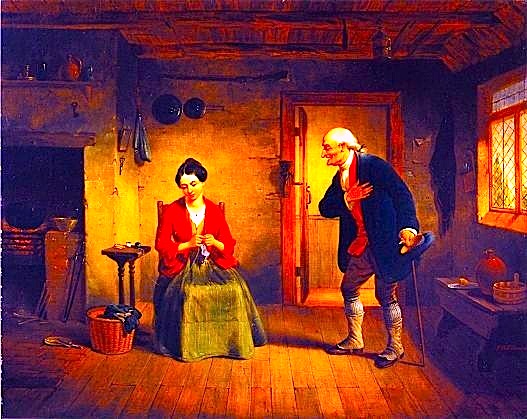
Trevor glanced around the musty basement, wondering how anyone could possibly survive for an hour there, much less thirty-eight years. “So you have been in hiding all of this time?”

“You call it hiding.” Veronica’s teeth wobbled visibly with every word. “I call it saving my skin.”

“Really?”

“Oh, yes. When I first sought out the basement, it was merely as temporary shelter from the horrors of the street. I had no idea that I would be spending the better part of my life here.”

“Wow.”

She flipped her lank gray bangs out of her eyes, and just for a second, she resembled the seventeen-year-old she had been when she last stood in natural light. “Well might you say wow. Do you know how long it took me to figure out how to transform the disused washer/dryer unit into a convection oven? Eight long years. Before that, I had to eat the rats that sustain me raw.”

“Eww.”

“Oh, you get used to it. It’s the right seasoning that’s the trick. The same holds true for cockroach goulash, incidentally.”

“Weren’t you going to tell me about the horrible incident that drove you underground?”

She clutched her mouse fur bed jacket around her fiercely. “I swore I would never tell. Never!”

Trevor’s heart sunk within him. He had come so far in the last forty-eight hours; he couldn’t turn back without one last push. “Pretty please? With sugar on top?”

Veronica looked at him, and her last reservation melted. “It was a dark and stormy night in 1973. I was just a girl then, getting ready for the prom. My dress was hanging over my David Cassidy poster, waiting for me to pick out which of my six sets of platform shoes I would wear. Suddenly, I had the eerie feeling I was being watched.”

“Uh-huh,” he prompted breathlessly.

Trevor’s not adding very much to this interaction, is he? By choosing to be a mostly passive listener, rather than a participant in the conversation, he’s done more than abdicate his role as the reader’s guide through this part of the plot; he’s basically pulled up a chair and plopped himself down right next to the reader, drinking in Veronica’s story as though he were just another audience member.

But at least he is responding in a manner that reveals his feelings about what she is saying. All too often, passive protagonists in interview don’t even do that.

Trevor glanced around the musty basement. “So you have been hiding here all this time?”

“You call it hiding.” Veronica’s teeth wobbled visibly with every word. “I call it saving my skin.”

“Saving your skin?

“Oh, yes. When I first sought out the basement, it was merely as temporary shelter from the horrors of the street. I had no idea that I would be spending the better part of my life here.”

“The better part of your life? Why, how long has it been?”

“That depends. What year is it?” She laughed loudly before he could answer. “Just kidding. It’s been thirty-eight years.”

“Thirty-eight years!”

“The trick was keeping myself busy. Do you know how long it took me to figure out how to transform the disused washer/dryer unit into a convection oven? Eight long years. Before that, I had to eat the rats that sustain me raw.”

“Rats? Raw?”

“Oh, you get used to it. It’s the right seasoning that’s the trick.”

Pardon my asking, but couldn’t Trevor’s part in this scene be very adequately played by a parrot? Or a very high, cavernous ceiling that could echo Veronica’s words back to her?

Certainly, he’s providing neither conflict nor any additional information to the scene. Heck, he’s barely contributing any new words.

So what is he doing in the scene at all? Perhaps he is seeking clues to an ongoing mystery he is trying to solve, and is merely going about it poorly. Or maybe he is actually an immensely clever sleuth, trying to lull poor Veronica into a false sense of security by giving incisive questions about what he wants to know a wide berth. Or he could have just suffered a brain injury that deprived him of the ability to understand what someone is saying until he’s heard every part of it twice.

Or maybe he’s just rather stupid. At least, he appears so on the page.

That made some of you real dialogue-echoers sit bolt upright in your desk chairs, didn’t it? “But Anne,” you point out with some vim, “I know that you’ve just been saying that the fact that people actually talk that way shouldn’t be the only justification for a line of text, but people actually do talk this way. Repeating what’s just been said is a standard means of asking for clarification. Why, I can barely watch five minutes of any TV drama without hearing a character repeat a phrase that’s just been said to her.”

I believe it — and that alone might be a good reason not to embrace this conversational tactic in your dialogue. Since the rise of reality television (does anyone but me remember that producers originally embraced the format because the writers’ guild was on strike?), we’ve all become accustomed to highly repetitious speech pouring out of characters’ mouths, often with a blithe disregard for the rules of grammar. Heck, it’s become quite normal for even speakers who should know better to misuse words.

And I’m not talking about tiny gaffes, like saying further when the speaker really meant farther, either. (In response to that silent plea for clarification: the first refers to concepts, the second to distance.) I’m talking about the increasingly common practice of substituting the intended word or phrase with one that sounds similar to it — a doggy-dog world instead of a dog-eat-dog world, for instance, or mano y mano instead of mano a mano — as if getting it right simply didn’t matter. Or simply using a term so loosely that its original meaning dissipates, as when someone dubs an outcome ironic when it’s merely symbolically apt (in itself ironic, since irony is when the intended and literal meaning are at odds). Or says unironically, “We will be landing momentarily,” when he means “We will be landing in a few minutes,” not “We will be landing for a few moments, then taking off again.”

Yes, yes, I know: if I were correcting these commonly-misused phrases in the middle of an actual conversation, I would come across as a joy-killing curmudgeon. (Blame my upbringing: children in the Mini household were expected to be both seen and heard, but never to end a spoken sentence with a preposition.) And to tell you the truth, I wouldn’t have a problem with a writer’s reproducing these gaffes on the manuscript page — provided that their use was limited to dialogue and not every character made similar mistakes.

Which character would I select to talk this way? The one the reader is supposed to regard as a little slow on the uptake, of course.

Oh, you laugh, but back when writers composed and refined every word that fell out of characters’ mouths on TV and in movies, placing improper grammar and malapropisms into dim-witted characters’ mouths was a standard comic device. It was also a time-honored means of establishing a character’s level of education, social class, or susceptibility to prejudice: much of the recent furor over whether it was legitimate to clean up the language in HUCKLEBERRY FINN so that it could be assigned in more high school classrooms turned on Mark Twain’s devastatingly frequent use of a certain pejorative term to illustrate his protagonist’s change of perspective on issues of race throughout the book.

Even now, one of the quickest means of making a character come across as less intelligent on the page is to have him misuse words or repeat what’s just been said to him. The latter can be particularly effective, enabling the dialogue to convey that he doesn’t understand what’s going on without having to resort to the blunt expedient of having another character call him stupid.

Don’t believe that a few misused or repeated words can have that great an impact on character development? Well, they might not to a reader who habitually makes similar mistakes, but to a literate reader — and Millicent, her boss the agent, and the editor to whom the agent pitches pride themselves on their literacy — conversational faux pas will leap off the page. They’re a way to show, not tell, that a character has trouble expressing himself.

I sense that some of you are still not convinced. Okay, here’s an anecdote about how the repetition of a single misused word made a university professor seem substantially less intelligent.

When I was in graduate school, I took several small seminars with Professor Baker, an elegant, well-spoken woman who delighted in quoting Ancient Greek playwrights in even the most informal conversations. No mere cold intellectual, she was deeply interested in her students’ personal development. “Don’t cut off your options,” she would tell us frequently. “Go out and explore. I want to see you living a fulsome life!”

The first time she said this, I was convinced that I must have misheard. Fulsome, after all, means grossly overabundant or insincere; a fulsome complimenter would heap on praise after exaggerated praise until it was impossible to believe anything he said at all. It can also mean disgusting or offensive to the sensibilities. Somehow, I doubted that my professor was wishing me a life that resembled rotting meat.

Yet at the end of practically every seminar session, she would repeat her admonition: she seemed pretty darned insistent that my fellow students and I should be actively pursuing fulsome lives.

What she meant, of course, was that we should lead full lives; she must have just thought the -some bit added emphasis. But when I suggested that she truncate the word, she snapped at me like an irate turtle.

“Are you questioning my erudition?” she demanded. “I would hardly use a word if I were unaware of its definition.”

In that moment, to paraphrase Emily Dickinson, she dropped so low in my regard/I heard her hit the ground. Not because she had consistently been using her favorite word incorrectly, but because she was too inflexible even to consider the possibility that she might have been wrong. And because had she been right, all she would have had to do was stretch that elegant, beringed hand across her well-appointed desk, open a dictionary, and show me the definition.

If she had wielded her pet piece of advice with more discretion, she would probably have gotten away with it, right? I might have chuckled over my notebook, but her momentary gaffe would soon have been obliterated in my memory by other, more lucid statements. But by repeating it so often, essentially turning it into her catchphrase, she made sure that single mistake would become entrenched in my mind as the key to her entire character.

Would this tactic work on the page? You bet, although I would advise giving a fictional character a wider array of conversational missteps. Repeating the same one over and over might well backfire: since professional readers are trained to spot textual repetition — how else would they be able to point out to you that you used the same metaphor twice in 157 pages? — the second iteration might strike Millicent as unintentional. (In answer to what half of you just shouted mentally: oh, you’d be surprised how often aspiring writers will plagiarize themselves within a manuscript. They don’t mean to be repetitious; they simply forget that they have used an image or even a sentence earlier in the book.)

Speaking of low-level carelessness, there’s another reason it might behoove Trevor’s creator to ramp up his contribution to the scene. You really don’t want Millicent to start wondering if the only reason he’s in the scene is to provide the narrative an excuse to show the reader what it’s like down there.

You’re chuckling again, aren’t you? Think about it: in a close third-person (or first-person) narrative, Trevor would have to be there to justify the reader’s venturing into that basement. Including a scene in which he did not appear would necessarily entail jumping into someone else’s perspective — or slipping out of the dominant voice of the book into an omniscient point of view.

“Whoa!” Millicent cries. “This manuscript is breaking its own rules!”

You can hardly blame her for being hyper-sensitive on this point: since tight third person and first person are the two most popular point of view choices, she sees an awful lot of protagonists wander into an awful lot of situations where they have no business being, simply because writers want to include specific scenes in their books. She’s also privy to a great many instances of a narrative’s abandoning the strictures the writer had been following for the rest of the story — sticking to a single perspective, allowing the narrative to be colored by the chosen character’s prejudices, and so forth — because the writer apparently could not figure out a way to show a desired activity from the dominant perspective.

In answer to that collective gasp: yes, she will notice, whether the point of view slips for an entire scene or a single paragraph. She’s going to be on the lookout for such voice inconsistency problems, in fact. It’s all a part of her fulsome rich and meaningful life.

Make sure your protagonists pursue existences almost as full as hers: don’t allow them to become bystanders in their own lives, even for a page. Show them engaging in the world around them; let their presences add substantially to any scene they grace. Those contributions do not need to be limited to the dialogue, either: in a close third-person or first-person narrative, even a protagonist forced to remain stock-still and silent can interrogate her boss in her thoughts, signal another prisoner with a poke of her toe, struggle to breathe calmly while that cursed monologue-happy teacher bellows in front of the chalkboard…

The possibilities are, as they say, limitless. In a universe both frequently fulsome and perpetually full, why restrict the scope of your creativity by not taking complete advantage of your protagonist’s ability to react?

Worth pondering, anyway. Keep up the good work!
Pet peeves on parade, part XIV: am I talking to myself, or is this guy not holding up his end of the conversation?

“A man of genius can hardly be sociable, for what dialogues could indeed be so intelligent and entertaining as his own monologues?” – Schopenhauer

Last time, I went on a rampage about one type of dialogue that tends to get professional readers’ proverbial goats: the astonishingly common practice of constructing tag lines centered upon verbs that do not imply speech. This one’s a goat-napper for good reason: since the whole point of the he said part of a dialogue paragraph is presumably to alert the reader to who is speaking those words encased within quotation marks, it’s both illogical and rather annoying when the text chooses to shoehorn a non-speaking activity into the sentence. As in:

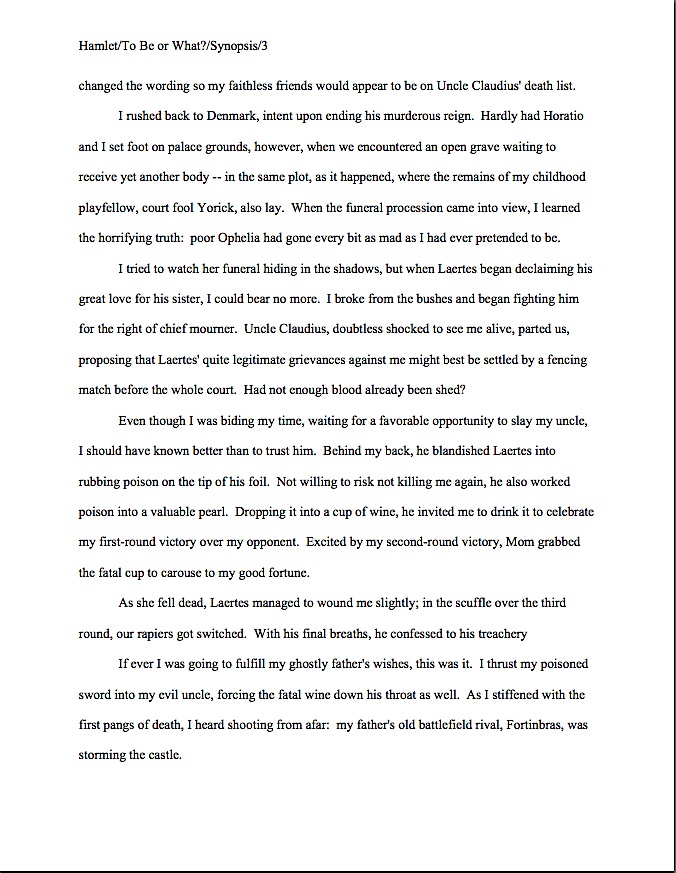
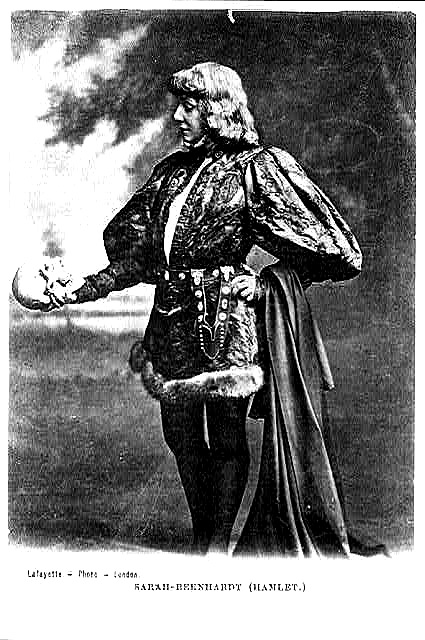
“My uncle may be a murderer,” Hamlet carelessly scooped a nearby scull off the ground and contemplated it, “but you can’t fault his taste in wine.”

Since neither scooped nor contemplated are speaking verbs, they cannot reasonably be expected to form the basis of a tag line, right? What the writer actually meant was this:

“My uncle may be a murderer,” Hamlet said, carelessly scooping a nearby scull off the ground and contemplating it, “but you can’t fault his taste in wine.”

Now, that first comma makes sense: Hamlet said is the tag line completing the dialogue sentence. If a reviser were looking to minimize the number of tag lines in a scene — advisable in most types of adult fiction or memoir, to avoid a Jane, see Dick chase Spot feel to the text — that comma could be replaced by a period, and the original pseudo tag line transformed into an ordinary narrative sentence.

“My uncle may be a murderer.” Hamlet carelessly scooped a nearby scull off the ground and contemplated it. “But you can’t fault his taste in wine.”

After raising this issue and suggesting a couple of viable solutions, I was all set to go merrily on my way — then, as so often happens, some thoughtful readers took issue with one of the fixes. The quite interesting debate in the comments centered around the question of whether the actual speech in a sentence like

“My uncle may be a murderer,” Hamlet said, carelessly scooping a nearby scull off the ground and contemplating it, “but you can’t fault his taste in wine.”

meant something different than

“My uncle may be a murderer.” Hamlet carelessly scooped a nearby scull off the ground and contemplated it. “But you can’t fault his taste in wine.”

The literal meaning is the same, of course; the question here is a matter of rhythm. In the first version, the speeches before and after the tag line are presented as a single sentence: “My uncle may be a murderer, but you can’t fault his taste in wine.” The comma implies only a minimal pause in between the two halves. In the second version, the period indicates a longer pause: “My uncle may be a murderer. But you can’t fault his taste in wine.”

Unquestionably, there is a difference, but would it really matter to most readers? Probably not, unless Hamlet were in the last stages of emphysema, rendering the utterance of a sentence of the length of the first too great a strain on his lung capacity to be plausible. Even Millicent, our favorite long-suffering screener of submissions to agencies, would regard both versions as acceptable, unless the text had already established a speech pattern for Hamlet that rendered either length of pause uncharacteristic.

Was that giant collective gasp I just heard an indicator that some of you had not been carefully constructing individual speech patterns for your major characters? Or did half of you just realize that a professional reader might well be paying attention to how and whether the dialogue permits those characters to breathe?

If you’re like most aspiring novelists, it was probably a little of both. Writers new to dialogue usually concentrate almost exclusively upon the content of what their characters are saying, rather than how they are saying it: it’s no accident that in most submissions, any given line of dialogue could come as easily out of one mouth as another. The vocabulary or grammar might vary a little, but essentially, all of the characters are speaking in the same voice.

“I’m tired,” Hamlet said.

Ophelia sighed. “So am I.”

“Are you hungry? We could grab some cheeseburgers on the way home.”

“That would work for me. We could also swing by that all-night taco stand.”

Hamlet turned the wheel so the truck veered across three lanes. “I like tacos. Let’s do that.”

“You’re crazy,” Ophelia said, clutching the armrest for dear life. “I don’t like tacos enough to die for them.”

In short bursts, this type of dialogue can work very well. It’s not particularly character-revealing, but it gets the job done.

It’s a lost opportunity for character development, though. Look what a difference simply giving one of the characters a different cadence and larger vocabulary makes to this perfectly straightforward scene.

“I’m tired,” Hamlet said.

Ophelia sighed. “I believe it. It’s been an utterly exhausting day.”

“Are you hungry? We could grab some cheeseburgers on the way home.”

“If you that sounds tasty to you. We could also swing by that delightfully greasy all-night taco stand.”

Hamlet turned the wheel so the truck veered across three lanes. “I like tacos. Let’s do that.”

“You’re insane,” Ophelia said, clutching the armrest for dear life. “No taco in the world is worth spattering our brains on the pavement.”

The literal meaning is quite similar, but now, a reader could tell simply by the cadence and vocabulary who is speaking when. There’s also more tension in this version: because most readers assume that complexity of speech is an indicator (although not an infallible one) of complexity of thought, the differential in vocabulary could hints at the potential for underlying conflict. Does she want him to talk more, so she is being wordier — and does that attempt annoy him sufficiently that he wants to scare her by driving dangerously? Was he fired that day, and he’s working up nerve to tell her that their days of going out to fancy restaurants are gone for the foreseeable future? Or has he simply been angry with her for the entire exchange, and was expressing it by being terse with her?

Quite a bit of bang for the revision buck, is it not?

The individuated speech patterns also could reflect what occurred just before this exchange, or ongoing conflict. Her lines would take more breath to say than his simple declarative sentences, as well as more effort: is he conserving his energy because he is dog-tired, or is he the strong, silent type? Did he perceive her statement about the greasiness of the food at the taco stand as a dig about his eating habits, something she has been nagging him about for the entire book? Or do these two people suffer under a chronic failure to communicate, and so they take refuge in discussing only mundane topics like whether they would prefer cheeseburgers or tacos?

Seem like a lot to read into an ostensibly ordinary exchange? Professional readers tend to like dialogue that operates simultaneously on several different levels, not only dealing with what is happening in the moment, but with ongoing dynamics. Such exchanges are not only about what is said, but what is left unsaid.

The pros even have a name for this kind of scene, albeit a rather cumbersome one: there’s more happening than is happening. One also hears it as there’s more going on than is going on, but you get the point. Instead of using the dialogue as a blunt instrument to move the plot along, reserving character development for the narrative sections, complex exchanges move the plot along while revealing character, conflict roiling under a seemingly placid surface, long-concealed resentments, etc.

That’s a nifty trick, one that requires a sophisticated understanding of the characters and the story to pull off. It also requires an acceptance of the notion that the point of dialogue is not merely to reproduce how people speak in real life. Just as not every real-world action is worth depicting on the page, the bare fact that someone might actually say something does not necessarily render it entertaining dialogue. A novelist is not, after all, just a transcriptionist: a writer’s job is to improve upon reality, to embroider upon it, to show it to the reader in new and unanticipated ways.

Which is why, should anyone out there have been wondering, Millicent tends to get bored pretty by conversations that don’t seem to be going anywhere, even if the actual exchange is, as they say, ripped directly from real life. It’s hard to blame her, either, when so much of the dialogue she sees runs rather like this:

“Have a hard day?” Ophelia asked.

“Yes.”

“I did, too.” She glanced at the clouds swiftly gathering over the moat. “Looks like rain.”

“Sure does. Did you bring the cat in?”

“Of course. You might want to bring the car into the garage, in case it hails.”

“It’s certainly been cold enough,” Hamlet agreed, “especially at night.”

“Um-hmm. Could you take the recycling to the curb on your way out?”

“Of course, hon.”

Yawn. We’ve all heard a million conversations like this, but since they are not particularly interesting to bystanders in real life, why would we buy a book to see them reproduced on the page? Or, to recast this in revision terms, if a discussion neither advances the plot nor reveals some heretofore-unseen aspect of character, why keep it?

Perhaps I’m an unusually demanding reader — I hope so; it’s my day job — but if dialogue is not entertaining or informative, I’m just not interested. If a character is spouting things that anyone might say, those stock phrases tell me nothing about who she is as an individual. All that standard chit-chat tells me is that the author has conflated realistic dialogue — i.e., speech that sounds as though a real human being might actually have said it — with real dialogue, actual speech transcribed on the page.

Learning to tell the difference is an essential skill for a novelist (and it’s pretty helpful for a memoirist as well). Why? To a professional reader, every line of dialogue has to earn its place on the page.

I heard all of you slice-of-life lovers gasp and mutter, but honestly, you would be hard-pressed to find even a single professional reader who would agree that any given line of dialogue has a right to appear on a manuscript page just because an actual person said it. Selectivity is the soul of good writing, after all. Realism is fine, in moderation, but after one has read a few thousand manuscripts in which characters say scads of not-very-interesting things simply because people talk that way, dialogue that is merely realistic can lose a lot of its charm.

Hey, didn’t someone mention something about the desirability of dialogue that serves more than one narrative purpose? Or did I dream that?

Exchanges that rely solely upon sounding like actual speech can seem especially trying if the one in front of Millicent happens to be the 10th or 20th of the day’s crop of manuscripts that features dialogue-only scenes. Why are they so common in submissions? Because an astonishingly high percentage of aspiring writers believe that dialogue in a novel is supposed to read like an excerpt from a play.

We’ve all read dialogue-only scenes, right? These exchanges that take the classic writing advice to make the dialogue itself, not an adverb in the tag line, say everything that needs to be said. After establishing who the two (seldom more) discussants are, the speeches alternate, sometimes for pages on end. Due to the subsequent absence of tag lines, descriptions of tone, mental asides, etc., the writer necessarily relies upon the reader to keep track of who is speaking when.

“To be or not to be,” Hamlet observed, “that is the question.”

“No, it isn’t,” Ophelia retorted. “Stop being melodramatic.”

“But I want to die.”

“You don’t want anything of the sort. You just don’t want to tell your mother that you accidentally smashed the vase she gave us as an engagement present.”

“If you had grown up with my mother, the sweet embrace of death would seem like the preferable option here.”

“If I had grown up with your mother, I would have stopped speaking to her by the age of ten and a half.”

“Easy for you to say.”

“And it’s easy for you to avoid telling her the truth. I’m tired of being the one who always has to break bad news to her.”

“You’re not always the one.”

“Who told her last year that our dog had dug up her prize begonias?”

“I was the one who broke it to her that we were getting married.”

“Along the broad spectrum of global disasters, that ranks pretty low.”

“Again, we clearly grew up with very different mothers. Whatever affects mine is a global disaster, by definition.”

This isn’t terrible dialogue, but you must admit, there’s nothing much happening here except what’s happening. Because of the presentation style, all the reader sees is what is on the surface. That’s not entirely coincidental: such exchanges are usually predicated on the assumption that human beings say precisely what is on their minds 100% of the time.

“So much for subtext,” Millicent mutters. “When I bicker, I like to think that my jibes connect on a variety of complex levels.”

I’m with you, Millie: I seldom find long dialogue-only scenes especially realistic, even if the speeches themselves ring true. Why? Well, the import of face-to-face human interactions seldom lies entirely in the words spoken. Tone, body language, nervous tics, grandiose gestures — all of these play into how one party interprets another’s intended meaning. By presenting the dialogue only, the writer is leaving the reader to fill in all of these potentially important details herself.

Then, too, at the risk of shocking you, it’s been my experience that few people say precisely what they mean every time they open their mouths. No one is perfectly articulate at all times, and frankly, who would want to be? Good manners alone dictate that not everything one thinks should come hopping out of one’s mouth.

Ask your mother. She’s with me on this one.

Speaking of not speaking out of turn, I’ve been sensing those of you who favor dialogue-only scenes squirming in your chairs for quite some time now. “But Anne,” tone-eschewers everywhere point out, “my high school English teacher told me that really good dialogue doesn’t need additional narrative text. If the dialogue genuinely fits the character and the situation, all of that body language stuff is merely window-dressing.”

I mean no disrespect to your sainted English teacher, squirmers, but that’s ridiculous. Admittedly, it was a very common type of ridiculousness in high school classrooms for about 40 years — specifically, the years when it was fashionable to try to teach every freshman to write like Ernest Hemingway. In recent years, adjectives and adverbs have come back into style.

The fact that there was a period in 20th-century American literature when they went out of style is why your English teacher encouraged you to minimize their use in tag lines, by the way. S/he was trying to discourage you from engaging in 19th century-style tag lines, known for their heavy reliance upon adverbs to add meaning to speech. Basically, s/he didn’t want you to write like this:

“To be or not to be,” Hamlet observed laconically, “that is the question.”

“No, it isn’t,” Ophelia retorted with some asperity. “Stop being melodramatic.”

“But I want to die,” he said morosely.

“You don’t want anything of the sort,” she replied irritatedly. You just don’t want to tell your mother that you accidentally smashed the vase she gave us as an engagement present.”

“If you had grown up with my mother,” he pointed out angrily, “the sweet embrace of death would seem like the preferable option here.”

“If I had grown up with your mother,” she said understandingly, “I would have stopped speaking to her by the age of ten and a half.”

A little of this style of tag line goes a long way, doesn’t it? Your teacher had a point: if the narrative relies upon how a character said something to convey the primary meaning of the speech, rather than the content or word choice, the dialogue plays a less important role in the scene. The practice discourages packing the maximum meaning into every line of dialogue.

What those of us for whom English class is but a far-off memory tend to forget, however, is that having students write dialogue-only scenes was an exercise intended to break the habit of leaning on tag lines, not a prescription for good dialogue. To extend that exercise and pretend that play-like exchanges are the only way to write dialogue well is to ignore the fact that most of the good novels of the last century have not embraced dialogue-only scenes as the norm.

In fact, acknowledging that human beings sometimes experience mixed motivations and respond to stimuli not in words or thoughts, but with their bodies has been a hallmark of literary and women’s fiction for several decades now. Or, as editors like to put it, “Could we get out of the protagonist’s head and into her body every so often, please?”

That’s not to say, of course, that dialogue-only scenes are never effective on the page — but like so many other high school English teacher-endorsed narrative tricks, it’s radically overused, and often applied to scenes where a fuller presentation of character, motivation, and non-verbal clues about what is going on would provide the reader with a better reading experience.

How so? Well, isn’t one of the primary benefits of a close third-person or first-person narrative the ability to show the reader what’s going on inside the protagonist’s head, torso, legs, and psyche? Dialogue-only scenes take that advantage and throw it out the window.

And with it often flies the sense that more is going on that meets the eye. Take a gander at how easy it is to add complexity to Hamlet and Ophelia’s philosophical debate by allowing for the possibility that the protagonist in this tight third-person scene has mixed motivations — and that her discussant is sending her non-verbal clues as to his mood.

Hamlet hung up the phone with a bang. “To be or not to be, that is the question.”

Oh, God, he was at it again. “Stop being melodramatic.”

“But I want to die.”

Ophelia hauled out her standard soothing argument and dusted it off for reuse. “You don’t want anything of the sort. You just don’t want to tell your mother that you accidentally smashed the vase she gave us as an engagement present.”

He slumped in his chair like a schoolboy waiting outside the principal’s office. “If you had grown up with my mother, the sweet embrace of death would seem like the preferable option here.”

“If I had grown up with your mother, I would have stopped speaking to her by the age of ten and a half.”

He picked at his nails, even though he knew it annoyed her. “Easy for you to say.”

Her jaw ached with the strain of not nagging him to stop. “And it’s easy for you to avoid telling her the truth. I’m tired of being the one who always has to break bad news to her.”

His face lit up; was he enjoying this? “You’re not always the one.”

She pictured him wrapping the lamp cord around his neck, jumping off the nearest bridge, sticking his pinkie into the light socket, but her tone remained sympathetic. “Who told her last year that our dog had dug up her prize begonias?”

“I was the one who broke it to her that we were getting married.”

Yeah, well, you’ve turned out to be no bargain, either, sweetheart. “Along the broad spectrum of global disasters, that ranks pretty low.”

“Again, we clearly grew up with very different mothers. Whatever affects mine is a global disaster, by definition.”

Quite a different scene, isn’t it? Not a syllable of dialogue is changed from the previous two examples, but now that we can see Hamlet’s behavior and hear Ophelia’s thoughts, the scene is infused with an adrenaline burst of conflict. On the surface, it’s not a fight, but few readers would not catch the underlying tension between these two characters.

To put it bluntly, that makes this a more interesting scene. Why? It operates on more than one level.

“But Anne,” those of you who shrink from depicting conflict on the page pipe up gently, “this makes Ophelia seem really hostile. If she were my protagonist, I would worry that readers would find her completely unlikable.”

That’s a completely legitimate concern, sweetness-mongers, but remember, in that last example, she’s not saying any of those things out loud. In fact, she is making a substantial effort not to be aggressive. She’s merely disagreeing with him.

And that would tend to render her a more interesting protagonist, from Millicent’s perspective; her inbox is perennially stuffed to the gills with books about people too nice (or too shy) to disagree with anyone, ever. Interpersonal harmony may be quite nice on the page, but it can make for some pretty stultifying dialogue.

Not sure why unvarying sugar and spice might get a tad tedious? Here is a representative sample of the kind of conflict-avoiding dialogue super-nice protagonists tend to utter.

Ophelia ran to meet Hamlet at the door. “You look exhausted, sweetheart. A bad day?”

“The worst.” He collapsed onto the couch without taking off his dust-covered jacket. “First, my stupid uncle yelled at me for being thirty seconds late to court this morning.”

“That’s awful.”

“After starting off on that delightful note, he then proceeded to lecture me for half an hour about how it was my responsibility to bring Laertes’ sword skills up to standard.”

“That’s so unfair.”

“I mean, why can’t he hire his own fencing tutor? It’s not as though I don’t have anything else to do. Dad keeps me up half the night, roaming the battlements, and Fortinbras is just waiting for my uncle to do something diplomatically stupid, so he would have an excuse to invade.”

“You’re only one person. You can’t do everything.”

He covered his face with his hand. “Sometimes, I just want to end it all.”

“Don’t say that.”

“It’s true.”

“Really?”

Had enough yet? Millicent has. If you’re not sure why, allow me to ask you: what precisely do Ophelia’s lines add to this scene, other than a vague undercurrent of supportiveness?

On the fence about that one? Okay, let’s apply a standard editorial test for whether a section of dialogue has slipped into the realm of monologue. Here it is again, with all but Ophelia’s first line excised.

Ophelia ran to meet Hamlet at the door. “You look exhausted, sweetheart. A bad day?”

“The worst.” He collapsed onto the couch without taking off his dust-covered jacket. “First, my stupid uncle yelled at me for being thirty seconds late to court this morning. “After starting off on that delightful note, he then proceeded to lecture me for half an hour about how it was my responsibility to bring Laertes’ sword skills up to standard. I mean, why can’t he hire his own fencing tutor? It’s not as though I don’t have anything else to do. Dad keeps me up half the night, roaming the battlements, and Fortinbras is just waiting for my uncle to do something diplomatically stupid, so he would have an excuse to invade.”

He covered his face with his hand. “Sometimes, I just want to end it all.”

Pretty much the same, isn’t it? By lobbing softball questions that do little more than prompt Hamlet to continue, Ophelia is not a full participant in this scene — she’s a bystander.

Surprisingly, while this kind of monologue-enabling behavior can seem quite supportive in real life — who doesn’t like someone to make sympathetic noises while pouring out one’s woes? — it usually does not render a protagonist more likable on the page. Why not? Well, think about it: is Ophelia helping move the plot along in the last set of examples? Or is she slowing it down by contributing dialogue that doesn’t add anything substantial to the exchange?

To be fair, a single scene of harmonious agreement is probably not going to lead the average reader to begin muttering, “Get on with it, plot.” That sort of response tends to greet the habitually non-confrontational protagonist.

But Millicent is not the average reader, is she? Particularly in dialogue gracing the opening pages of a manuscript, she wants to see not only conflict — external or internal — but dialogue that reveals character. Beyond the fact that Ophelia is generally supportive of Hamlet, what does her dialogue in that last example reveal?

So if the protagonist seems passive and not prone to complex reactions on page 1, would you keep reading just because she seems like a human being who might be nice to know in real life? Or would you shout, “Next!” and move on to the next submission in the hope of discovering a protagonist more likely to do something to move the plot along or surprise you with unexpected depth?

Don’t worry; I shan’t make you give your answer out loud. It might make you seem less likable to other writers.

Softball questions like “Really?” and “How so?” are one means of disguising monologue as dialogue. Another is to have one of the participants in a discussion go on far longer than most real-life hearers would tolerate. In everyday life, people can’t wait to give their opinions: they interrupt, ask questions, contradict, offer anecdotes from their own experience.

On the manuscript page, however, characters are all too given to waiting in tranquil silence while another character lectures them. Often, such speeches devolve into Hollywood narration, permitting the writer to wedge information that both parties already know into the dialogue, so the reader can learn about it, too.

Go ahead and pitch that softball, Ophelia, so Hamlet can take a swing at it.

“But I don’t understand,” Ophelia said. “You think your uncle did what?”

Hamlet took a deep breath, as if he were about to deliver a monologue in front of a packed house. “He poured poison into Dad’s ear while he slept in the garden. You see, Dad was still exhausted from battle; Uncle Claudius always did know how to keep refilling a wine glass without Dad’s noticing. He was a sitting duck. You know how loudly he snored; an elephant could have lumbered across the lawn, and he wouldn’t have been able to hear it. Uncle Claudius must have seen his chance to hold onto the throne — which, as you may recall, he had been occupying while Dad was off at war. Now that Dad was back, he was in line for a serious demotion.”

She shrugged impatiently. “Other people manage to adjust to a workplace organization without resorting to murder. This seems completely far-fetched to me.”

“That’s because you aren’t taking into account Uncle Claudius’ feelings for my mother. You’ve seen how he looks at her during banquets, after the mead gets flowing. He’s been after her for years, and while she’s done nothing but encourage him in public, she’s been sending him awfully mixed messages. Remember that time he nearly knocked Dad’s block off when Mom said only married or engaged couples could compete in the limbo contest? You thought she was only trying to prevent us from winning, or to push me to pop the question, but I’m positive that she was making sure no one would catch on about her secret limbo sessions with Uncle Claudius.”

“I did think that at the time, I’ll admit. But you still could be imagining most of this.”

Given how strongly Ophelia disagrees with what Hamlet is saying, it’s rather surprising that she lets him go on at such length before she even attempts to chime in, isn’t it? If this were a real-world argument, she would have jumped in every time he paused for breath.

How might a reviser know when that might be? You probably saw this one coming: by reading the scene IN ITS ENTIRETY and OUT LOUD. Unless Hamlet has the lung capacity of an Olympic swimmer, he’s not going to be able to get the extensive arguments above out of his mouth in single breaths. The exchange would probably be closer to this:

“But I don’t understand,” Ophelia said. “You think your uncle did what?”

Hamlet took a deep breath, as if he were about to deliver a monologue in front of a packed house. “He poured poison into Dad’s ear while he slept in the garden.”

She hated it when he stopped taking his medication. “Where anyone might have seen him do it?”

“But the garden was empty. Dad was still exhausted from battle; Uncle Claudius always did know how to keep refilling a wine glass without his noticing.”

“Claudius was wearing body armor that night. He couldn’t have budged without waking every bird in the garden.”

“You know how loudly Dad snored; an elephant could have lumbered across the lawn, and he wouldn’t have been able to hear it.”

She changed tactics. Maybe humoring his fantasy would calm him down. “Okay, let’s assume for the moment that it was possible. Why would your uncle want to kill his own brother?”

He looked at her as though he thought she’d tumbled off her rocker. “Because he didn’t want to give up the throne, of course. Now that Dad was back from the war…”

She shrugged impatiently. “Other people manage to adjust to a workplace organization without resorting to murder.”

“You aren’t taking into account Uncle Claudius’ feelings for my mother. You’ve seen how he looks at her during banquets, after the mead gets flowing.”

Not that old court gossip again. “Do you honestly believe that he has a chance? He’s her brother-in-law, for heaven’s sake.”

“Remember that time he nearly knocked Dad’s block off when Mom said only married or engaged couples could compete in the limbo contest?”

Darned right she remembered: Gertrude had never been light-handed with her hints about their getting married. “She just didn’t want us to win. I could limbo circles around her.”

He leaned close, whispering conspiratorially. “She was making sure no one would catch on about her secret limbo sessions with Uncle Claudius.”

Reads more like an argument, doesn’t it? That’s not only the effect of editing out the Hollywood narration: by breaking up Hamlet’s soliloquies into reasonable bursts of breath expenditure, the rhythm of the scene increases markedly.

Speaking of energy expenditure, that’s quite a few examples for a single post. Rather than lecture you further, I shall save my breath for future posts. Keep up the good work!
Pet peeves on parade, part XII: give that horn a rest, Bozo. Or at least save it for the moment when it will have the most effect.


Every spring, I like to go on a media fast for a few days, just to reset my perspective: I eschew newspapers, television, radio, and yes, even my own blog. Instead of these shiny, frenetic distractions, I walk outside, breathe the fresh air, and bask in light that isn’t reflected from a screen. Then, refreshed, I can return to my work.

Normally, I wait until Seattle is warm enough for me to take those aforementioned walks without being bundled up to my nose in sweaters, jackets, and mufflers. This year, however, the muses were kind enough to provide me with tap on the shoulder and a murmured, “It’s time to go, sweetie.”

Actually, if I’m honest about it, their hint was more of a gigantic shove and a bellow of “Get a move on, doll!” that would have made the late and loud Ethel Merman wheel around in alarm, exclaiming, “What the heck was that?” But omen-watchers can’t be choosers, so out the door I went.

What happened, you ask? Well, at the end of last week, I logged into Facebook (where I have recently erected a fanpage, incidentally) to check in with some friends in Tokyo, as one does when natural and manmade disasters occur simultaneously. When I tried to post a comment, a brusque message informed me that the system had experienced a technical error. The dialogue box invited me to click on an ostensibly helpful link entitled Try Again.

That seemed like sensible advice: I clicked it once. The system then proceeded to post my comment 94 times, of its own accord. And frankly, what I’d had to say would have been interesting to even the most avid reader three or four times, at most.

But in the best tradition of false suspense, Facebook did not show me those 94 comments. Instead, it simply sent me back to my own homepage, as though nothing out of the ordinary had happened. So how did I find out about the infamous 94 at all? Because when I tried commenting on another friend’s page, up popped a genuinely nasty message saying that I was blocked from posting for some indefinite period of time, ranging (it said) anywhere from a few hours to a few days, because of my ongoing patter of (unnamed) malicious behavior annoying or abusive to other users.

What that behavior was, I was left to guess; the message merely referred me to a FAQ page. In the manner of badly-designed FAQ pages everywhere, it simply repeated verbatim what the message that had sent me there said. Grumbling, I went back to my friend’s page and did something that the harsh rebuke had not advised, but should have: I manually deleted 93 of those messages, one at a time. Because the system isn’t set up do mass deletions, this took almost 20 minutes.

Now, I could have taken this blatantly unfair series of events in any number of ways. I could have shaken my head over just how much time advancing technology manages to waste in all of our lives — as any aspiring writer trying to blandish a recalcitrant PC into printing a document in standard format (it’s easier on a Mac), unless the program’s designers happened to envision the problem one wants to solve, even the simplest change can eat up hours. I could also have wondered whether Facebook had invented this glitch on purpose, as an excuse to get rid of subscribers. I could even have thrown up my hands and concluded that the computers have become sentient — if not particularly intelligent — and are now turning on their masters.

But I’m an editor by trade. The very first words I uttered when I finally tracked down what the problem was: “94 posts that all say the same thing! That’s almost as repetitious as dialogue in the average submission.”

Hey, my assistant laughed when I said it. Shortly before I told her to take a long weekend and walked out the door myself, seeking a soothing walk in the rain, early spring flowers, and some peace from computer systems that have apparently decided the next step toward world domination is to create a class of unjustly accused computer outcasts.

Early in my walk, I had intended to use that anecdote as a springboard for a well-justified lecture about the dangers of replicating the extreme redundancy of everyday speech on the manuscript page, but by the time I returned home, rivulets streaming from my hair, the muses had talked me into a sneakier way to make a literary point. Ahem: did you catch the rather fundamental storytelling error I deliberately inserted into that story?

Hint: it happens in comic manuscripts so often that our old pal, Millicent the agency screener, automatically twitches a little at the very sight of it.

If you flung your hand in the air and yelled, “I know, Anne! The narrative had another character, your assistant, laugh as a means of demonstrating that a joke was funny,” you already have an A for the day. If you added, “And the assistant character didn’t appear in the story until she was needed to provide the laugh track,” make that an A+.

What about this narrative trick sets Millie a-twitching, you ask? To a professional reader, it’s a telltale sign of authorial insecurity: if the writer were positive that the joke were really funny, Millicent reasons, why would he think the reader needed a prompt to laugh?

Comedic insecurity’s shows up in a few other twitch-inducing manifestations on the manuscript page. I’ve included specimens of four kinds in the following sterling piece of prose — and, just for kicks, another common non-humor pet peeve. See if you can spot them all.

Melvyn glanced stealthily over his shoulder. No one had ever caught him hacking into someone else’s account to post endlessly redundant messages; he wasn’t even sure what dire punishment would await a brave soul caught doing such a thing. Trembling, he reached a hairy forefinger toward the ENTER key.

“Hey, geek.” Clarice came bouncing into the room, a stack of invoices wedged under her arm. “You hiding from the boss? She’s on a fourteen-apple rampage.”

Melvyn chuckled. Arnette was always on some kind of rampage, so he and the other staffers had come up with a rating scale like the one used for diamonds: the weightier her mood, the bigger the number of carats. Bill had just gotten engaged at the time, so solitaire classifications were much discussed around the office. Then some office wag decided that carats weren’t funny enough and changed them to apples. A fourteen-apple rampage must have been impressive to behold.

If you guessed that one of the problems was that the explanation in the last paragraph was boring enough to send Millicent’s weary eyes wandering morosely toward the window to contemplating the sweet spring day outside, well, you have a point. Like so many inside jokes ripped from real-life situations and reproduced faithfully on the page, this bit of office humor falls a bit flat.

A word to the wise: jokes like this should be test-driven verbally before you even consider typing them into your manuscript — and driven by people who do not know anything about the original context of the joke. If total strangers do not respond with mirth, chances are that, as the saying goes, you had to be there in order to find it funny.

Millicent was most assuredly not there. Need I say more?

What else is wrong with this bit of failed office humor? Did you notice that the text laid no foundation for the joke? Had an earlier scene featured some reference to the carat rating system, Clarice’s changing it to apples might have been spontaneously funny. Heck, there could be a running joke where each staffer substitutes his or her own favored fruit, vegetable, or legume.

Okay, so maybe you still would have had to be there. But there’s no denying that the last paragraph was funnier because it contained the word legume.

Unexpected words can often liven up an otherwise so-so bit of humor. As we saw in the example above, the opposite is also true: uninspired word choices can flatten even a funny situation on the page. And when the situation isn’t all that funny in the first place…

Well, I don’t think any of us want to be there, do we?

I spot a few clowns with their oversized gloves in the air. Yes, Bozo? “But Anne,” the red-nosed one points out, and who am I to deny the request of someone in a rainbow-hued fright wig? “How do we know that the author of that example hadn’t set up the joke earlier in the book? This is just an isolated excerpt; we really don’t know anything about context.”

Good point, but would you mind not honking that ooga horn in my face? Thank you so much. Something in the passage itself told me as clearly as if the author had hoisted a ten-foot banner reading FIRST WE’VE HEARD OF THIS over the page that the text had been a trifle light on set up. Any guesses what it was?

If you immediately started jumping up and down, shouting, “If a foundation had been laid for that joke, the turgid paragraph-long explanation would have been unnecessary,” your cup runneth over with editorial virtue. Properly set-up humor does not require further explanation — in fact, telling someone who didn’t laugh why a joke was funny is one of the surest ways to kill any residual humor that might have been lingering in the atmosphere.

Is that plain, or shall I re-explain it? Over and over again, until you wish I had never brought it up in the first place?

On the manuscript page, explanation after the fact is one of the surest signs that the writer has doubts about the joke. “If she thought that it could stand alone,” Millicent mutters, “why would she have slowed the scene down with a paragraph of explanation. Next!”

In response to what half of you just thought: yes, failed humor is often an instant-rejection violation, at least within the first few pages of a submission — and not merely because it’s a high dive that ended in a belly flop. It’s a voice issue, and a marketing one. While the genuinely funny is quite refreshing to find in the middle of a stack of manuscripts, if only because of its rarity, jokes that don’t work tell professional readers that the writer is not yet closely in tune with his audience.

His intended reading audience, that is, not just first readers he may have plucked from his doubtless wide and admiring acquaintance to serve as first readers. It’s an unavoidable reality of comedy writing that people who know and love the author are far more likely to laugh at his jokes than total strangers.

Trust me, Millicent has heard, “But it made my mom/husband/wife/sibling/coworker howl with laughter!” many, many times; to the pros, it’s simply irrelevant. No matter how much a joke or situation may have ‘em rolling in the aisles of your favorite dispenser of alcoholic beverages, if it doesn’t make a stranger laugh as it is written on the page, it’s likely to be a liability at submission time.

Okay, writers without comedic aspirations, your time has come: what was the other common Millicents’ pet peeve? Hint: it appeared in the following sentence.

Then some office wag decided that carats weren’t funny enough and changed them to apples.

Give up? It’s that pesky then, used in a manner that is actually rare not to find in a novel or memoir submission. (Again, don’t underestimate how much sheer repetition can contribute to a professional reader’s negative reaction to a manuscript gaffe. You try seeing the same narrative device in 75 different submissions in a week, and you might well start twitching, too.)

Okay, so that’s a tiny pet peeve — but as we have seen throughout this series, a series of small missteps can add up to rejection fairly quickly. Especially if several of them have chosen to congregate on page 1.

But why might this innocent-seeming word have begun annoying the pros in the first place? An editorial antipathy toward redundancy, mostly: when used in the way we see it above, to indicate that what came next occurred after what’s just been described, then — and its even more popular sibling, and then — are technically unnecessary. In English prose, unless the reader is specifically told that time is not running in a linear manner, events described are assumed to have occurred in the order they appear on the page.

That being the case, why is it necessary to tell the reader that the office wag’s decision came after the carat joke had spread throughout the office? Does the reader have any reason to think that it didn’t happen next?

Instead, why not reserve then to introduce turns of event that might genuinely startle the reader? Millicent is far less likely to object to it as the clarion call of an unexpected sudden plot twist than as a simple and unnecessary notation of the passage of time. Take a gander:

Bill had just gotten engaged at the time, so solitaire classifications were much discussed around the office. Then in the middle of the fifth straight day of coffee-break chat on the subject, Arnette swept into the employee lounge, wielding a roll of duct tape. She slapped a piece across every kisser that so much as uttered the word carat. Thereafter, we were careful to use euphemisms.

Didn’t see that coming, did you? That’s a surprise more than worthy of being introduced to Millicent by then.

Yes, Bozo? You honked your horn? “I wouldn’t really mind Millicent’s objecting to my use of then, or even not finding my jokes funny; I get that my humor might not be everyone’s proverbial cup of tea. I also get that agency screeners read a lot of submissions in a day. What I object to is not being told what specifically triggered the rejection. How hard would it be to scrawl a single sentence fragment in the margins at the point where they stopped reading, so the submitting writer would know why the manuscript was rejected? Or even just make a mark on the page, so the writer would know where the screener stopped reading?”

I have to say, I’m with you on this one, campers: a simple checklist of the most common rejection reasons would take Millicent very little time to fill out. It would be even speedier to print up a few hundred thousand stickers reading, “Show, don’t tell!” or “Where’s the conflict?” so she could slap ‘em on the manuscript page at the precise point where her pet peeve got to her. At least then, the writer could learn enough from the submission experience to improve the manuscript before trying again.

But that, alas, is not the reality of submission in the current hyper-competitive literary environment. We could expend a great deal of energy resenting that the process is set up not to help aspiring writers learn how to get better at submission, but for Millicent to be able to reject as high a proportion of requested materials as possible, to narrow the masses down to the happy few her boss has time to read and consider.

I don’t know about you, but I would rather invest my energies in teaching you to rid your submissions of the most frequent red flags. For the rest of today’s post, I shall concentrate on the rejection reasons that would make the most sense for agency screeners to rubber-stamp upon submissions: ubiquitous problems that are relatively easy for the writer to fix.

If she knows to fix them, that is.

One of my favorite easily-fixed common problems: a manuscript aimed at an adult audience that has a teenage protagonist in the opening scene. If the teenager is the focus of page 1, Millicent is prone to say, “Oh, this is YA — the writer must think that we represent it. Next!”

Remember, there is no easier rejection than a book category that an agency does not handle. (That’s one reason that most agencies prefer query letters to contain the book category in the first paragraph, FYI: it enables agency screeners to reject queries about types of books they do not represent without reading the rest of the letter.) In an agency that represents both, the submission would be read with a different target market in mind, and thus judged by the wrong rules.

“Wait just a cotton-picking minute!” I here some of you out there murmuring. “This isn’t my fault; it’s the screener’s. All anyone at an agency would have to do to tell the difference is to take a look at the synopsis they asked me to include, and…”

Stop right there, oh murmurers, because you’re about to go down a logical wrong path. As we discussed earlier in this series, you can’t legitimately assume that Millicent is going to read your synopsis prior to reading your submission — or indeed at all. Nor is she even remotely likely to have your query letter at her elbow when she begins your manuscript, so she may refresh her recollection of what the book is about. As an unfortunate but direct result, it’s never safe to assume that the screener deciding whether your first page works or not is already familiar with your premise.

Why? Limited time. Millicent needs to figure out whether the submission in front of her is a compelling story, true, but she also needs to be able to determine whether the writing is good AND the style appropriate to the subject matter. An adult style and vocabulary in a book pitched at 13-year-olds, obviously, would send up some red flags in her mind.

Or even in a book she assumes is aimed at 13-year-olds. For those of you who write about teenagers for the adult market, I have a bold suggestion: make sure that your title and style in the opening pages reflect a sensibility that is unquestionably adult, so your work is judged by the right rules. This can be genuinely difficult if your narrator is a teenager.

Which brings me to another easily-fixed rejection reason: narration in a kid’s voice that does not come across as age-appropriate. This issue crops up all the time not just in YA, but in books about children aimed at adult readers — as a general rule of thumb, if your protagonist is a pre-Civil War teenaged farmhand, he should not speak as if he graduated from Dartmouth in 2002. Nor should a narrator who is a 6-year-old girl wield the vocabulary of an English Literature professor.

Oh, you may laugh. Care to guess how many novels like that the average Millicent sees in a year?

Usually, though, the misfit between narrator and voice is not quite so obvious. Often, teenage protagonists are portrayed from an adult’s, or even a parent’s, point of view, creating narrators who are hyper-aware that hormones are causing their mood swings or character behavior apparently motivated (from the reader’s point of view, anyway) solely by age, not individual personality or the ambient conditions. But teenagers, by and large, do not think of themselves as moody, impossible, or even resentful; most of them, when asked, will report that they are just trying to get along in situations where they have responsibilities but few rights and little say over what they do with their time and energy.

Yet screeners are constantly seeing openings where teenage girls practice bulimia simply because they want to fit in, teenage boys act like James Dean in REBEL WITHOUT A CAUSE, teenage characters flounce off to their rooms to sulk — and everyone between the ages of 10 and 19 habitually says, “Whatever,” and rolls his or her eyes on the slightest provocation. Yes, some teenagers do these things, undoubtedly, but in novels, these behaviors have been documented so often that they come across as clichés. Compounding the problem: teenage characters and narrators who diagnose these activities as an adult would are accordingly rife.

That might not bug a 45-year-old professional reader very much, but agency screeners and editorial assistants tend to be really young: many weren’t teenagers all that long ago. Sometimes, they are still young enough to resent having been pigeonholed in their recent youths, and if your manuscript is sitting in front of them, what better opportunity to express that resentment than rejecting it is likely to present itself?

So do be careful, and make sure you are showing Millicent something she doesn’t see twenty times per week. When in doubt, take a long, hard look at your teenage characters and ask yourself, “Is this kid continually emitting martyred signs because of what’s going on, or because of who he is as an individual? Or — and I need to be honest here — is he doing this simply because this is how I think teenagers in general act?”

Those questions are worth acting with any character who happens to be a member of a commonly-stereotyped group (“Are all of the pretty characters in my book dumb, and the homely ones smart?”), but perhaps because so many first-time novelists of books about teens are the parents of same, Millicent tends to be especially sensitive to stereotyping of the young. And I have to say, I’m with her on this one: the best opening with a teenage protagonist I ever saw specifically had the girl snap out of an agony of self-doubt (which could easily have degenerated into cliché) into responsible behavior in the face of a crisis on page 1. To submission-wearied professional eyes, reading a manuscript where the teenaged protagonist had that kind of emotional range was like jumping into a swimming pool on a hot day: most refreshing.

One of the most common ways to tactics up a teenage scene in the past is an opening including quotes from song lyrics. Yes, this can be an effective way to establish a timeframe without coming out and saying, hey, reader, it’s 1982, but it is also very, very overused. I blame this tactic’s use in movies and TV: in the old days, soundtracks used to contain emotionally evocative incidental music, but in recent years, the soundtrack for any movie set in the 20th-century past is a virtual replica of the K-Tel greatest hits of (fill in timeframe), as if no one in any historical period ever listed to anything but top 40.

I’m fairly confident, for instance, that there was no period in American history where dance bands played only the Charleston, where every radio played nothing but American Pie, or every television was tuned to THE ED SULLIVAN SHOW. Yes, even when Elvis or the Beatles appeared on it. Writers are creative people — don’t we owe it to ourselves as a group to mix it up a bit more?

Other than ubiquity, there are other reasons that agents and their screeners tend to frown upon the inclusion of song lyrics in the opening pages of a book. Unless the song is within the public domain — and the last time I checked, Happy Birthday still wasn’t, so we are talking about a long lead time here — the publisher will need to get permission from whoever owns the rights to the song in order to reproduce it.

Translation: song lyrics on page one automatically mean more work for the editor. And possibly expense. Think that will make the book harder or easier for Millicent’s boss to sell?

Also, one of the benefits of setting a sentiment to music is that it is easier to sound profound in song than on the printed page. No disrespect to song stylists, but if you or I penned some of those lines, we would be laughed out of our writers’ groups. For this reason, song lyrics taken out of context and plopped onto the page often fall utterly flat — especially if the screener is too young to have any personal associations with that song.

Yes, that makes me feel rather old sometimes, too.

It is unclear whether the narrator is alive or dead started cropping up on a lot of agents’ pet peeve lists immediately after THE LOVELY BONES came out. Ghostly narrators began wandering into agencies with a frequency unseen since the old TWILIGHT ZONE series was influencing how fantasy was written in North America on a weekly basis. And wouldn’t you know it, the twist in many of these submissions turns out to be that the reader doesn’t learn that the narrator is an unusually chatty corpse until late in the book, or at any rate after the first paragraph of the first page.

Remember what I was saying the other day about Millicent’s not liking to feel tricked by the early pages of a submission in to thinking the story is about something that it isn’t? Well…

I’ll leave you to ponder the possibilities. I’m off to have dinner with a sulky teenager who prattles on about peer pressure, a child who speaks as though she is about to start collecting Social Security any day now, and a fellow who may or may not have kicked the bucket half a decade ago. Honestly, if agents and editors would only recognize that we writers are merely holding, as ’twere, the mirror up to nature, all of our lives would be infinitely easier.

Insert eye roll here. Followed by a nice, long blast on Bozo’s horn, just in case anyone didn’t get that the last suggestion was a joke. Keep up the good work!
It’s all about the writing: Author! Author! Rings True literary fiction winners Daniel Light and Austin Gary


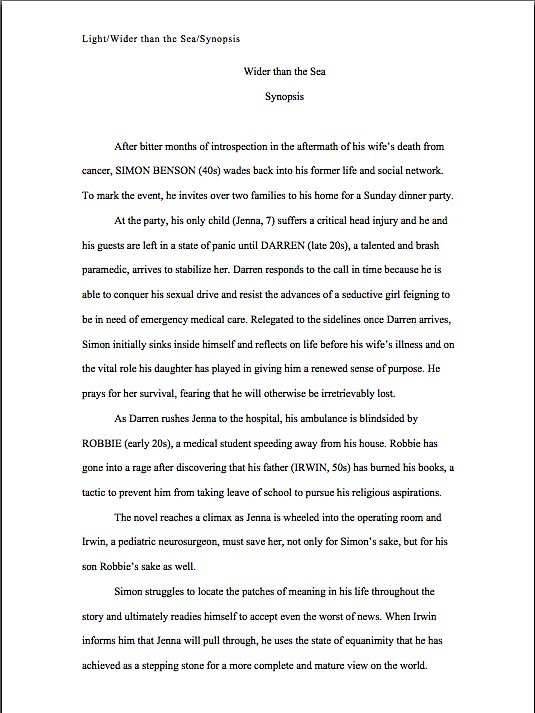
Daniel, author of Wider Than the Sea


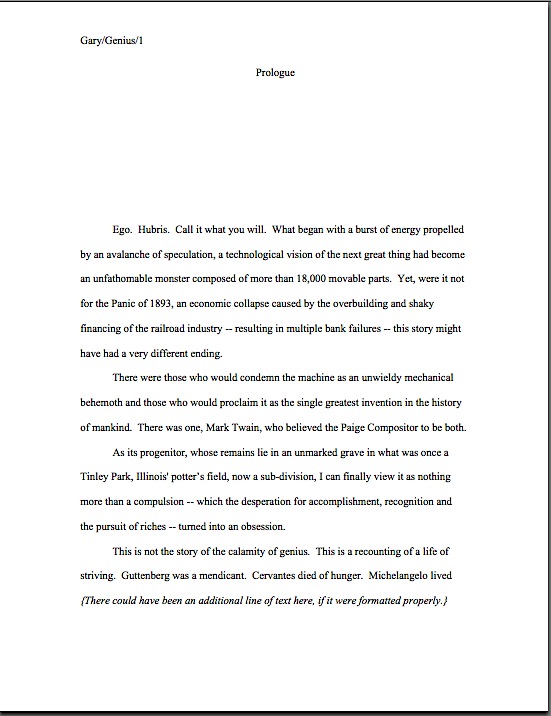
Austin, author of Genius

I’m most excited about today’s group of winners in theAuthor! Author! Rings True literary competition — and not just because they write in a category near to my heart, literary fiction. Daniel Light and Austin Gary’s entries are a far cry from the literary fiction stereotype of being about nothing but the writing: their pages and synopses present strong storylines, interesting premises, and interesting writing, told in unique authorial voices. Well done, both!

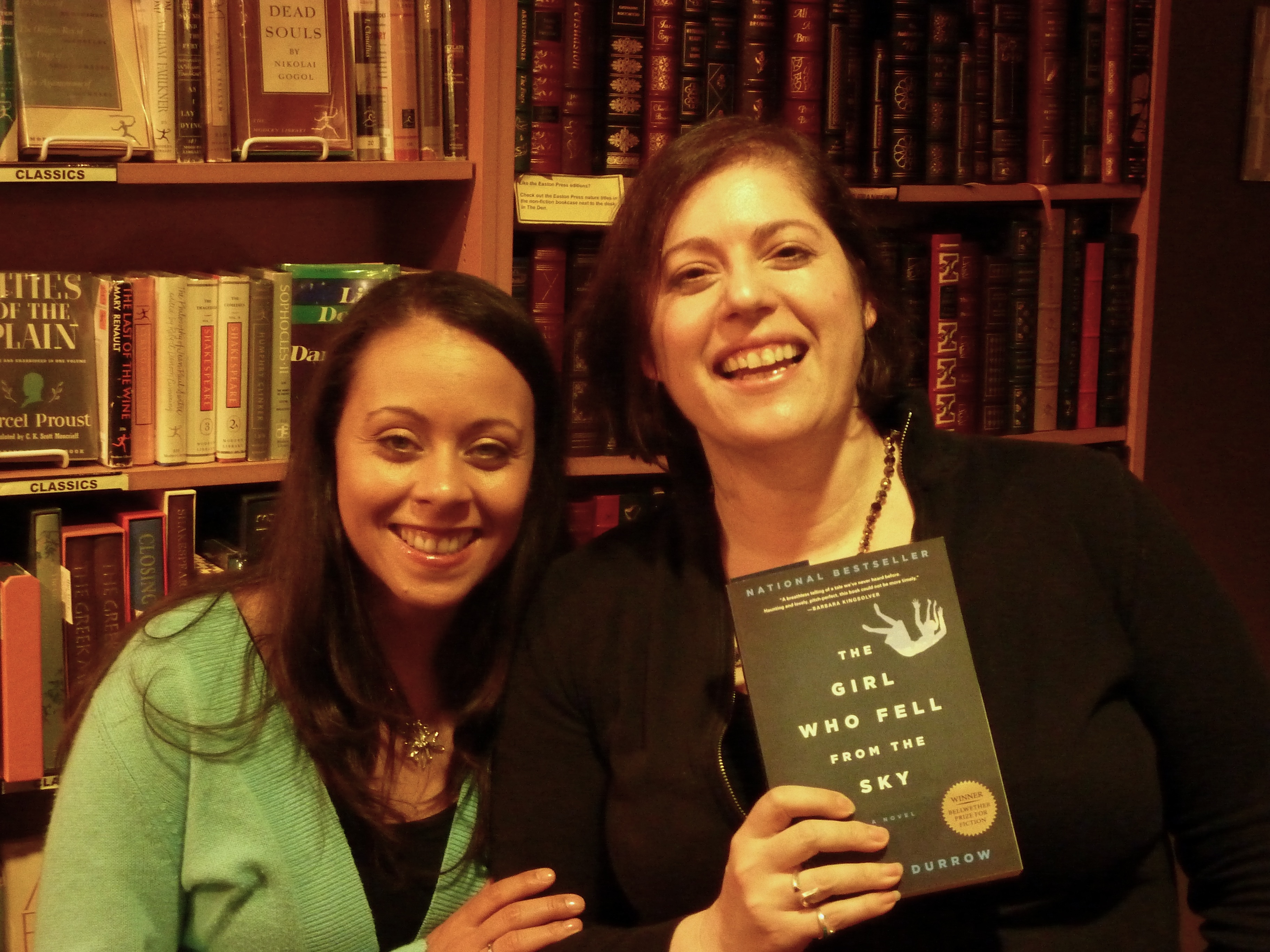
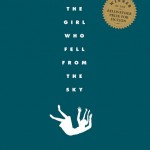
Adding to the excitement: I shall be discussing these intriguing entries with the ever-fabulous Heidi Durrow, author of the blockbuster literary fiction debut, The Girl Who Fell from the Sky. (Now available in paperback!) Since Heidi writes literary fiction and I edit it, we both waxed poetic in discussing it.

I’m also rather tickled by how many of this contest’s array of winners (and entrants in general) come from far-flung corners of the earth. Daniel wins the long-distance entrant prize — he lives in Jerusalem — while Austin inhabits lovely British Columbia. John Turley and Fiona Maddock, of Rings True freestyle category fame hail from Colorado and the United Kingdom, respectively; memoir winners Kathryn Cureton and Margie Borchers are from Missouri and Washington state. For a blog that started out five and a half years ago as the voice of a regional writers’ association, the diversity of entries is most gratifying.

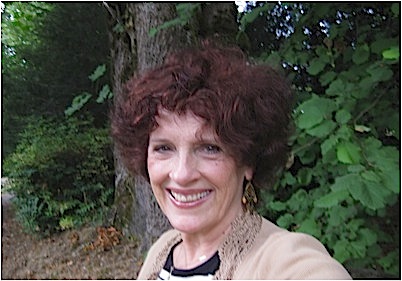
This contest’s winners are really interesting people, too; I’m so glad that I asked for author bios this time around. Fair warning: I’m going to make this a regular feature for Author! Author! contests, so now would be a great time to start thinking about your own bio, as well as what you would use as an author photo if the agent of your dreams asked for either or both tomorrow. (For tips on pulling your own together, take a peek at the aptly-named HOW TO WRITE AN AUTHOR BIO category on the archive list at right.)

A moral that I hope everybody will take from these winners’ posts: an author bio need not be crammed to the gills with publication credentials in order to make the writer sound interesting. Austin and Daniel’s bios are very different, but they both would make Millicent the agency screener want to chat with these writers over a steaming-hot latte. First, check out Austin’s more traditional bio:

Austin Gary is a BMI award-winning songwriter (as Gary Heyde), with recordings by artists such as Tammy Wynette, John Berry & Jeff Carson. He’s been an editor of a weekly newspaper; an actor/director; copywriter; director of radio and TV broadcast; a jingle writer; owner of a music production company; and a teacher of English, speech, drama and film. Austin’s been seriously writing since 2007. In 2008, he was a fiction finalist in the PNWA lit contest (“Ask Me No Secrets:); 2009 semi-finalist in the Faulkner-Wisdom fiction competition (“Miss Madeira”); and 2010 a finalist in the Faulkner-Wisdom novel-in-progress (“Genius”). He recently moved from Des Moines, WA to Port Moody, B.C., where he’s writing full-time.

Makes him sound pretty formidable, does it not? Now take a gander at Daniel’s less standard, but equally interesting bio:

Daniel Light is an ordained rabbi who has taught Talmud and Bible part-time in several schools in Israel and has run a listserv dedicated to essays that harmonize between Judaism and popular culture. He holds a Bachelor of Commerce from McGill University and a Bachelor of Law from Hebrew University and, following a year-long internship in corporate law, is currently living in Jerusalem and studying for the Israeli Bar exam. WIDER THAN THE SEA is his first novel and the fruit of his experiences in, and knowledge of, law, medicine, religion, psychology, morality, and life.

Not as many publishing credentials, admittedly — but if you were inviting luminaries to a literary luncheon, you would want both Austin and Daniel on your guest list, wouldn’t you? So would Millicent. Except as someone who habitually thinks in terms of book marketing, she would also make a mental note that either of these writers would probably give a great interview and be genuinely interesting public speakers.

If you think those are not a selling points for a writer, I can only assume that you do not attend many book readings. Unfortunately, new authors (and even established ones) who spend entire hours-long promotional events with their noses three inches from their own books, assiduously avoiding eye contact, are the norm, not the exception. It’s not even all that uncommon to see authors who evidently experience difficulty reading out loud.

Yet another reason to get into the habit of reading your manuscripts IN THEIR ENTIRETY, IN HARD COPY, and OUT LOUD, should you need another. If your critique group doesn’t set aside time for members to read to one another, you have my permission to tell yours that I said it was excellent training for future author readings. (And while we’re on the subject, would any of you regular readers be interested in my running a series of public reading dos and don’ts?)

As interesting as the bios are, however, for literary fiction, what matters most is on the manuscript page: more than in any other book category, literary fiction readers pay attention to sentence structure, vocabulary, and imagery. As folks in the industry like to say, it all depends on the writing.

Specifically, how literary the writing is. Lest we forget, in publishing terms, there is no such thing as universally good writing: what constitutes good writing on the literary fiction page is quite different from stylistic excellence in a mystery and vice-versa. And while agents have been known to say, “It’s a {fill in book category here}, but in a literary voice,” they don’t mean that the author of the book in question has jettisoned the conventions and expected vocabulary of the category; they merely mean that the narrative contains unusually pretty writing.

Do I spot some raised hands out there? “But Anne,” the many, many aspiring writers who have been assuming that their work was literary fiction protest, “isn’t pretty writing half the definition of literary fiction? And isn’t the other half a story driven by character, rather than by the needs of the plot?”

Well, yes and no on both counts, literary assumers. Yes, nice writing and a character-driven story are standard elements of literary fiction. No, that doesn’t mean a book without a plot that features impeccably-crafted sentences. Nor — and this may come as more of a surprise to some of you — does it mean that any well-written character development is literary fiction.

Don’t feel bad if you thought this — if that giant gulping sound we just heard out there in the ether is any indication, you were certainly not alone in conflating good writing with literary writing. Aspiring writers presume that literary fiction is merely a euphemism for good writing; if their writing is stylistically strong, they reason, and if it is fiction, it must therefore be literary fiction.

Which renders it rather confusing when the pros state categorically that there is good writing in every book category, doesn’t it?

But book categories are not subjective judgments about authorial voice and style; they are marketing containers for books that share certain expectations about plot, character development, subject matter, and audience. Literary fiction is its own distinct book category — consisting of narratives more prone to dwell on character, true, but also written in a vocabulary and sentence style aimed to please a college-educated readership. In the U.S. market, that readership is between 90-95% female, depending upon whom you ask and whether the respondent considers John Irving’s work literary or mainstream fiction.

Oh, you may laugh, but for many years, debate raged over how to categorize THE WORLD ACCORDING TO GARP. (If you don’t believe me, check out The New York Times’ extremely uncomfortable original review.) Until fairly recently, one of the best ways to find out how a literarily-aware person felt about the desirability of high literature’s being accessible to a mainstream readership was to bring up the inimitable Mssr. Irving and ask whether the aforementioned reader regarded him as a writer of literary fiction or not.

Bearing this ongoing debate in mind, let’s step gingerly into Millicent’s moccasins and peruse Daniel’s page 1. (As always, if you are having trouble making out the details, try holding down the COMMAND key and pressing + to enlarge the image.) Is it literary fiction, or is it just good writing?

Have you made up your mind? Good. Now take a gander at Daniel’s synopsis, and see if your opinion about the book category changes.

Have you come to a conclusion? Or, after our discussion last time about the differences between fiction and nonfiction synopses, did the analytical statement the novel reaches a climax distract you too much to be able to form a firm opinion? If it’s the latter, you’re thinking like Millicent: in a synopsis for a novel, regardless of book category, she expects to see the story told directly, not to see the plot talked about indirectly, in academic terms.

That’s another common misconception amongst aspiring writers: the notion that using technical terms like climax, protagonist, antagonist, central conflict, etc. will make their queries and synopses sound professional. In practice, however, while people in the publishing industry do occasionally use these terms, an agent pitching fiction to an editor or an editor pitching it to an editorial committee would rarely describe it this way.

Instead, they would tell the story — as should the writer. As beautifully as possible. After all, part of what’s being sold here is the writing style, and (feel free to chant it with me now, long-term readers) every sentence a writer submits to an agency, publishing house, or contest is a writing sample.

Again, those assessments are not going to be based solely upon whether the writing is strong in a general sense; every book category has slightly different standards for what constitutes good writing. As you may see for yourself, even two habitual readers of literary fiction may disagree on whether an opening page is or not. (Please forgive the giant BOOM! in the background; we know not whence it came.)