Purging the plague of passivity, part IV: please, please, please, please, please love me. Please?

prosperity cat, swift

I honestly meant to continue this series yesterday, campers, but I was waylaid by my eye doctor. Those of us who read and write for a living tend not to miss our annual check-ups.

“Now, these dilating drops will leave your vision just a bit blurry for the next three or four hours,” he assured me mid-exam. “Six at the most. I’m sure your blog readers won’t begrudge you a few hours for eye health.”

Okay, so I made up that last part. But Dr. H’s estimate was equally fanciful: nine hours passed, and I was still scowling at the world through the silly eye filter you see above, pupils the size of dimes.

And if that’s not a passive protagonist in an anecdote, I’d sure like to see one.

I’m back on the move today, however. I am delighted to report that I no longer look like a startled mole abruptly dragged out of a nice, comfortable dark hole at noon.

Back to business. Last time, I stirred up the deep waters of controversy underlying the placid surface of many a novel, memoir, and creative nonfiction manuscript by suggesting (and rather forcefully, too) that submissions with scene after scene spent amongst the limpid pools of smooth, conflict-free interaction — particularly if that interaction is merely observed by the protagonist (the boat in the metaphor? A passenger in that boat? A passing seagull?), rather than caused by or integrally involving him — might be less successful, in marketing terms, than ones that set the protagonist adrift amid a storm or two. (Okay, so s/he is IN the boat. Glad we got that settled.)

Oh, heck, I’m going to abandon the metaphor (toss it overboard, as it were) and just say it boldly: passive protagonists tend to bore readers, professional and unprofessional alike. After this many posts in a row on protagonist passivity, I would hope that doesn’t come as a big shock to anybody out there.

Yet in general, aspiring writers do tend to be shocked, or even appalled, at the very suggestion that their protagonists aren’t doing enough. All too often, they hear critique of their protagonists as criticism of themselves, believe it or not — as if a dull character’s appearance in a manuscript must by extension mean its creator is…well, let’s just say non-scintillating, shall we?

Surprised by that reaction? Don’t be. It’s really, really common for writers new to the wonderful world of serious feedback to respond to it as though it were, if not precisely a personal attack, at least unkindly motivated.

Many, if not most, writers have difficulty hearing manuscript critique as critique of — wait for it — their MANUSCRIPTS, rather than of themselves, their self-worth, their talent, and/or their right to be expressing themselves in print at all. (A phenomenon I have dissected at great length in the GETTING GOOD AT ACCEPTING FEEDBACK series, conveniently available under the self-named category on the archive list at right, should anybody be interested.)

This response is equally likely, by the way, whether the manuscript is fiction, memoir, or academic book. I suppose this particular logical leap shouldn’t still give me pause at this late date. Over the years, I’ve seen writers draw similar conclusions from feedback that indicates that their work is slow-paced, too long, hard to market, or even poorly punctuated.

“Why me?” they shriek, rending their garments. “What have I done to deserve this torture?”

Okay, so that was a bit of an exaggeration, but just a bit. And that’s a great pity, because a tendency to take feedback personally is unfortunate in the long-term. As personal characteristics go, it’s a difficult one to reconcile with an author’s work life.

Why? Well, being a professional writer pretty much requires not only getting used to hearing such critiques from one’s agent and editor — yes, Virginia, even an agent who adores your writing style will want you to make revisions from time to time — but being able to incorporate feedback into a manuscript. Often very quickly.

How quickly, you ask with fear and trembling? Well, it varies. Let’s just say that I’ve actually heard my agent utter the words, “Oh, you know that editor who liked your manuscript? She’d like you to give it a different ending, and I told her I could have the revised version to her in three weeks. That’s not going to be a problem, is it?” and leave it at that.

Oh, dear — that wee anecdote made some of you unconsciously clutch your chests, didn’t it? “But Anne,” critique fearers across the globe whisper, darting their eyes thither and yon, “I try to take feedback as constructive criticism, but I like my manuscript as it is. So I worry that when faced with professional critique — i.e., the completely honest examination of every last syllable and comma in a manuscript, that agents and editors convey without pulling any punches — my resolve to act like a pro may wilt a trifle.”

I have faith in you, critique fearers. When the time comes, I’m sure you’ll take it on the chin. (Speaking of unpleasant metaphors…) Unless, of course, the first serious feedback you’ve ever gotten on your work comes from your agent or editor.

Why did half of you just turn pale? You weren’t planning to have the first human eyes to have the pleasure of sliding over your manuscript be Millicent the agency screener’s, were you?

A hint to those of you who are hesitating about how to answer that question: we’re talking about Millicent the Merciless here. You know, the one who just stops reading a query at the second typo — and a requested manuscript at the third? The gal that works for the agent who reserves, “Well, you’re just going to have to rewrite this to this ten-point list of specifications,” for manuscripts she likes?

If you’re thin-skinned about feedback on your writing — and what writer who doesn’t have a lot of experience hearing critique isn’t? — it’s an excellent idea to rack up some experience listening to constructive criticism of your work before you expose your baby to professional critique. Like any other muscle, the part of your psyche that enables you to keep a quiver out of your voice as you say, “Oh, lose my protagonist’s best friend and relocate the whole story from Cleveland to Madagascar? No problem!” gets stronger with practice.

Besides, if you’re going to have a meltdown — and I’ve known many relatively stoic writers who’ve suddenly gone ballistic in the face of their first professional feedback, where nothing goes unnoticed — wouldn’t you rather do it in front of your writers’ group or a trusted first reader, rather than, say, on the phone with the agent of your dreams?

Oh, it hadn’t occurred to some of you that sometimes, the response to a successful submission is, “Yes, I’d love to represent this. Let me just dig out my revision list,” followed by the sound of 17 pages shuffling into place?

While that mental image sinks slowly into your brainpan, let’s try a little critique-desensitization exercise. Close your eyes, breathe deeply, and picture yourself sitting at a table in that bar that’s never more than a hundred yards from any writers’ conference in North America. The agent of your dreams is sitting across from you, about to order a second round.

“Oh, by the way,” he says casually, just as you were thanking your lucky starts that since you’ve already landed an agent, you were not at the conference to pitch, “your protagonist isn’t all that active, and it’s slowing down the book. You can pump up the energy in the next revision, right?”

Quick: how does that make you feel? Like getting right back to work on your manuscript, or as if tossing your half-finished club soda with lime into his smiling face might feel pretty darned good?

If it’s the latter, go punch a sofa cushion until that urge goes away. Repeat the visualization as often as necessary until your gut stops seizing up at the very notion of being on the receiving end of such a sweeping critique.

Or join a good writers’ group and participate like mad. Over time, it can have a similar response-numbing effect.

Your protagonist doesn’t do much, does he? seems to be an especially hard critique for many writers to swallow. I suspect that’s because so many first books, fiction and nonfiction alike, tend to be at least partially autobiographical. Not everyone is thrilled to be told that she would be more interesting (or, heaven help us, more likeable) if she were a more active participant in her own life. Or if her life were more interesting in general.

If she were a rhinoceros-wrestler, for instance, instead of sitting at home and writing a book about it.

In answer to that very loud unspoken question all of your minds just shouted at me: yes, I can tell you from personal experience that memoirists actually are very frequently told by their agents and editors that their books’ protagonists could get into the game more. And yes, even if a writer is experienced at handling critique, that can feel quite a bit like a personal attack.”

“Wait,” I found myself thinking as my editor and I worked on my memoir, “my publisher is allowed to edit my LIFE? What am I supposed to do, travel backward in time so I may pick a few more fights or join the Foreign Legion?”

But I’m getting ahead of myself; writing the real to make it more interesting on the page — without, you know, lying — is near the top of my to-blog list at the moment.

Darn — now I’ve gone and ruined the surprise. And I wanted Flag Day to be so special this year.

A slight case of identification with one’s own protagonist is not the only reason that many aspiring writers squirm at the suggestion that s/he might be a tad on the inactive side, though. Even for non-autobiographical fiction, the very notion that something that one wrote oneself could possibly be less than marvelous seems to come as an immense shock.

I’m quite serious about this. I’m perpetually running into writers in my classes, at conferences, and online who seem to believe that the publishing industry should buy their books simply because they have written them.

“Target market?” these well-meaning souls echo, wrinkling their noses at the inference that a true artiste ever considers why someone out there might want to buy his or her art. “That’s the publisher’s job to figure out.”

Um, yes, in the long term, but in the short term, it’s very much the writer’s job to figure out. How can you revise with an eye to pleasing readers if you have no idea who your ideal reader is? Or what she likes about the kind of book you write?

While writing is unquestionably art — some might argue the most inherently creative one, since the writer uses fewer outside materials than other artists to create her effects — if one has any intention of doing it for a living, it just doesn’t make sense not to think about who might buy one’s books and why.

Why not, you ask? Well, would you expect an aspiring doctor to work all the way through medical school without first ascertaining that there were sick people in the world?

Again, perhaps a too-colorful analogy. But you know what I mean.

Yet many, if not most, aspiring writers seem to have genuine trouble seeing their own books as a third party might. That’s a major stumbling-block to marketing one’s book to agents and small presses, because, let’s fact it, no matter how much a writer adores his manuscript, at least a few people other than one’s mother, spouse, and/or best friend will have to admire it at least at much in order for it to get published.

Again, that’s not too great a shock to any of my long-term readers, is it?

So it is perfectly reasonable, and even necessary, to step outside your role as author to try to view your story as an outside reader might. (If you have trouble pulling this off — and the vast majority of writers do — you might want to take a gander at the GETTING GOOD FEEDBACK category at right.) Specifically, to make a valiant attempt to see your protagonist as a reader might — and from a reader’s point of view, an active, decisive character in the driver’s seat of the plot can be a mighty fine thing.

Why, that’s what we’ve been talking about for the last week, isn’t it? Funny how that worked out.

One of the first things a writer needs to accept in order to read from a reader’s perspective is that conflict is not something to be avoided — it’s to be courted, because moving from conflict to conflict is how the protagonist typically moves the plot along. Protagonists who are purely reactive, as popular as they may be in movies (the trailer for half the dramatic films released within the last few years: “Coming soon to a theatre near you: the story of an ORDINARY MAN drawn against his will into EXTRAORDINARY events…”), are frequently frustrating.

“DO SOMETHING!” Millicent is likely to shout in their general direction.

Of course, in most book categories, you don’t want to go overboard in the opposite direction, driving the plot forward so quickly that there’s little time for character development. (Unless, one presumes, you happened to be writing THE DA VINCI CODE.) Non-stop conflict can result in a one-note narrative, one with very few dramatic highs and lows punctuating the story — but in most genres, if a book is going to be consistent, it’s much better to be consistently exciting than consistently low-key.

I’m going to make some of my higher-brow readers cringe by bringing this up, but one of the best recent examples of a protagonist who ostensibly has little control of the forces controlling his life, yet manages to fight back on practically every page is Harry Potter of the self-named series. (Don’t laugh; many of the English-reading adults currently in their twenties grew up on that series, and thus drew their ideas of exciting pacing from it.)

How did JK Rowling keep the tension high in books that are largely about a child with little autonomy going to school in what frankly seems to be an educational system intent upon punishing students? The old-fashioned way: by including some kind of conflict on every page.

But not all of it has to do with fighting He Who Shall Not Be Named. More than half the time (until the last couple of books in the series, at least), Harry is beset not by the forces of ultimate evil, but by teachers who don’t like him, a crush he doesn’t know how to handle, mixed feelings about his elders, and so forth.

All that’s conflict, too, right?

Rowling also tends to have more than one threat looming over her protagonist at any given time, as well as forces buffeting about his friends, and even his enemies. All of this contributes to a complex plot — and plenty of occasion to introduce conflict on any given page.

If you genuinely feel that it’s important to your story that your protagonist is acted-upon (true in virtually every memoir professional readers see, incidentally, as well as most first novel manuscripts), adding subsidiary action can go a long way toward pepping up the pace. Why not add conflict over something very small and not related to the bigger causes of resentment in a plot, for instance?

For example, consider a story set in an office with an intensely sexist boss of the “Hey, good-looking, why don’t you sit on my lap while I discuss our new policy for file-sharing” variety. Now, our heroine and her cronies could type away in resentful silence while their boss leers at one of them for fifty pages on end, obviously.

But what if, in addition to all of that glorious silent passivity, some of the typers happened to be going through menopause — and started responding to their autocratic boss’ systematic harassment by violently quarreling amongst themselves over where the thermostat should be set during their various hot flashes?

Inherently quite a bit more dramatic, isn’t it? Lots of room for ongoing conflict there.

But not everyone out there is comfortable with this strategy, I’m sensing. “But Anne,” some of you passivity-penners cry, “you told us last time that there were a lot of reasons an agent, editor, or contest judge might take a dislike to a protagonist. Even if mine is just one of several coworkers being nasty to one another, won’t they like her even less?”

Ah, that old bugbear: the belief that a character must be a nice person to be likeable on the page.

Likeability tends to be a sore point amongst fiction writers, especially for those of us who write about female protagonists: when we include characters in our work whose political views are a bit challenging, for instance, or have sexual kinks beyond what the mainstream media currently considers normal, or even pursue their goals too straightforwardly, we fear being told that our characters are not likeable enough. So we tend to self-edit for harmony.

Translation: many writers will deliberately make a protagonist passive, on the theory that if she isn’t, this chick might not play in Peoria, according to someone in a New York agency or publishing house.

Frankly, I think the industry tends to underestimate Peorians, but the fact remains, it actually isn’t all that unusual for an agent or editor to ask a writer to tone down a particular character’s quirks. Usually, though, these requests refer to secondary characters (as in, “Does Tony’s sister really have to be a lesbian?” or “Could the Nazi brother be just a little bit right-wing instead?”) or to specific scenes (“Need she tie Bob down?”).

Occasionally, though, the request is not quite so helpfully phrased: “I liked the story, but I didn’t like the protagonist,” an editor will say. “If you fix her in X, Y, and Z ways, maybe I’ll pick up the book.”

You were hoping my earlier example of an editor asking for revisions prior to offering a book contract was just an anecdotal misstep, weren’t you? How shall I break it to you?

Directly is probably the best way: it has become quite common for editors to ask for major revisions prior to making an offer on a novel. Agents will frequent make similar requests prior to being willing to market a novel to editors. Sometimes several rounds of revisions, even, so the writer is essentially performing rewrites on command for free.

That’s how tight the fiction market is right now; ten years ago, most good agents would have laughed outright at such an editorial request before a contract was signed.

Much of the time, though, the author responds to critique about character likability by making the character more passive — a very bad move, strategically.

So why do they do it? As I mentioned, it’s a common writerly misconception to believe that a passive protagonist is automatically a likeable one. An interesting conclusion, isn’t it, given how often first novels and memoirs feature at least semi-autobiographical protagonists?

Which begs the question: is the common writerly obsession with protagonist likeability at some level a cry to the industry: “Love my character — and me!”?

Bears a spot of thinking about, doesn’t it? Psychology aside, it’s understandable that writers might mistake a propensity for avoiding confrontation for likeability.

Passive Paul the protagonist is a courteous fellow, typically, always eager to step aside and let somebody else take the lead. Courteous to a fault, he’s always doing nice things for others, generally thanklessly. A good employee, fine son/husband/potential partner, he is dependable. Almost all of his turmoil is in his head; he tends to be polite verbally, reserving his most pointed barbs for internal monologue.

Why, his boss/friend/wife/arch enemy can taunt him for half the book before he makes a peep — and then, it’s often indirect: he’ll vent at somebody else. His dog, maybe, or a passing motorist.

Romantically, Paul’s a very slow mover, too; he’s the grown-up version of that boy in your fifth-grade class who had a crush upon you that he had no language to express, so he yanked on your pigtails. Or, better still, silently drew amorous cartoons of you in the margins of his notebook, plotting how he’s going to show up at your 10th reunion as a rock star and sweep you off your wee feet. In real life, it might take this guy until the 20th reunion and after his second divorce to work up the nerve to tell you that he ever had a crush on you at all.

On the manuscript page, Paul’s been known to yearn at the love of his life for two-thirds of a book without saying word one to her. Perhaps, his subconscious figures, she will spontaneously decide she likes me with no effort on my part.

And astonishingly, half the time, his subconscious ends up being right about this! Go figure, eh?

A delightful person to encounter in real life, in short; the kind of person you might like to see serving on your city council, library board, or living next door to you in a time of natural disaster. But think of Paul from a reader’s point of view: he makes so few moves that he’s practically inert.

So why, if you’ll pardon my asking, would someone pay $25 to read a book in which he is the central figure — other than the beauty of the writing, of course?

That may sound like a cruel or dismissive question, but actually, it isn’t — it’s precisely the question that Millicent is going to need to be able to answer if she’s going to recommend that her boss, the agent of your dreams, should read it, right? It’s also the question the agent of your dreams is going to have to make to the editor of your fantasies in order to get her to acquire it.

And isn’t it, ultimately, a question your target reader will, at the very least, find of interest between the shelf and the cash register?

Next time, I shall talk a bit more about Passive Paul — and what, short of challenging him to a duel (for which he would probably not show up, we can only assume), his creator can do to get him into the game of his own life a bit more. In the meantime, keep up the good work!
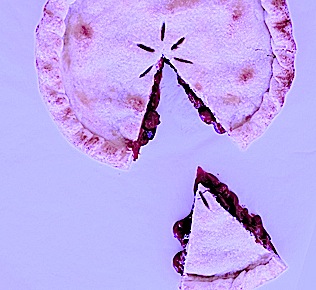
Partials, part II: slicing the pie attractively and stuffing it in a box. Or envelope.

slice of pie3slice of pie4slice of pie 6
slice of pie2slice of pie 5slice of pie

We open today with two pieces of bittersweet news from the embattled world of brick-and-mortar bookstores. First, a local tidbit: this weekend would be a phenomenal time to hurry on in to Seattle indie stalwart Elliott Bay Books, because in preparation for their relocation, all used books are 80% off though Monday, March 22; EBB’s last day of business in its beloved Pioneer Square location will be March 31. Booklovers need not despair, however: EBB plans to reopen in its new (smaller?) Capitol Hill location by April 14th.

In other creative-response-to-a-wildly-changing-market news, the Borders chain has just instituted a policy of offering free meeting space to book groups — and no, they’re not going to dictate what books the groups so housed will read. (A policy they tried out last year, I’m told.) I think this is a stupendously smart idea: hang a medal on the marketing executive who stood up in a meeting in the best Judy Garland/Mickey Rooney tradition and cried, “Wait! We’ve got a bookstore…and they love books…let’s put on a show!”

So now would be a great time for those of you currently congregating in an overstuffed living room to relocate. It’s unclear whether the megastores would be equally open to hosting, say, a weekly or monthly writers’ group, but it couldn’t hurt to track down a manager to ask the next time you’re in your local Borders, could it?

And to any indie bookstore owners who happen to be reading this: if you would willing to match this offer — or, better yet for the Author! Author! community, to host a writers’ group on a semi-regular basis — please feel free to leave a comment with your location, the link to your website, and the person whom local writers should contact at the end of this post. Let’s see if we can’t hook you up with some serious writers looking for a home to commune over craft.

Okay, that’s enough matchmaking for one day. Back to the business at hand, talking about how a savvy writer should respond to a request for a partial manuscript.

REQUESTED MATERIALS — and well, everything else
To be absolutely clear, I’m not talking about sending pages to an agency whose guidelines specify that queriers should include the first chapter, a few pages, or a synopsis with a query — all of these would, in the industry’s eyes, be unsolicited manuscript pages. Yes, yes, I know: it’s a bit counter-intuitive that a blanket statement that the agent would like to see these materials from all queriers doesn’t constitute solicitation, but it doesn’t.

Why am I raining on the partials parade by bringing this up right now, you ask? Because the consequences of confusing solicited and unsolicited manuscripts tend to be very, very high for the submitter. So let’s run over the difference in a touch more detail, shall we?

A solicited submission consists of manuscript pages that an agent is waiting to see, usually following a successful pitch or query. An unsolicited submission consists of a stack of manuscript pages from a writer who has not yet been personally asked to send anything.

Ne’er the twain shall meet, my friends. If an agency or small publishing house’s submission guidelines do not SPECIFICALLY state that it wants to see pages, sending unsolicited materials almost universally results in those pages being rejected immediately, unread.

Everyone clear on the distinction? Okay, here’s a pop quiz, just to be sure: why is a partial invariably a solicited submission? For bonus points, work into your answer the magic words a savvy submitter always writes on the outside of an envelope or places in the subject line of an e-mail bearing the partial to an agent.

If you immediately leapt to your feet and shouted, “By jingo, a partial in the sense we’ve been discussing it for the past two days is a solicited submission by definition, because a partial is the precise number of pages the agent in question asked to see,” pat yourself on the back three times. If you took a deep breath and added, “And I would never dream of sending any manuscript, partial or otherwise, that an agent or editor had asked to see without whipping out my trusty black marker and writing REQUESTED MATERIALS in 3-inch-high letters on the front of the envelope and/or in the subject line of the e-mail,” award yourself another couple of hearty congratulatory slaps.

Then fling yourself onto the nearest chaise longue and take a few nice, deep breaths. That lulu of a second answer must have used up every square millimeter of oxygen in your lungs.

Now that you’ve caught your breath, shall we enlighten the rest of the class about why a savvy writer always scrawls those particular words on a requested submission? The answer to this one’s as easy as pie: so the requested materials can’t possibly be mistaken for an unsolicited submission.

That, and so those pages the agent asked to see will end up on the right end of Millicent’s desk — or, at a large agency, on the right Millicent’s desk, period. As painful as it may be for aspiring writers to contemplate, submissions can and sometimes do get misplaced; good labeling renders that dreadful eventuality less likely.

(It’s less painful for agented writers to contemplate, typically; most of us have already lived through having a manuscript go astray. A certain agency that shall remain nameless as long as I remain signed with them not only lost one of my manuscripts once; it sent me another writer’s rejected manuscript in my SASE. They were quite apologetic when I returned it to them, along with a note suggesting that the author might be a better recipient for it.)

Oh, did the implication that submitting electronically might require some different steps catch you off-guard? Let’s rectify that with all deliberate speed.

Submitting your partial via e-mail
When submitting via e-mail — a route a savvy writer takes only when an agent specifically requests it; even at this late date, many are the agencies that do not accept electronic submissions at all, even if they accept e-mailed queries — include your partial as a Word attachment. (As much as some writers may prefer other word processing programs, Word is the industry standard.) If you work on a Mac, make sure to check the Send Windows-friendly attachments box; most agencies operate on PCs, and not particularly new ones at that.

You want the agent of your dreams to be able to open your document, don’t you? Millicent tends to be very, very cranky when she can’t open an attachment — and the sooner any writer gets used to the idea that any computer compatibility problems are considered the writer’s problem, not the agent’s, the happier your working life will be.

Speaking of difficulties opening files — or, as Millicent likes to call them, “what happens when writers don’t know what they’re doing” — it’s also an excellent idea for those working on the newest generation of Word to send the document in an older version. Specifically, send it as .doc file (Word 97-2004), not as a .docx file (anything more recent). The Save As… option under the FILE menu will allow you to make this switch easily.

Yes, I know it’s 2010. Try explaining that to a Millicent who’s stuck working on a decade-old PC that’s running a 2003 operating system.

If you are submitting requested materials via e-mail, use the body of the e-mail for your cover letter, but include any additional requested materials as separate attachments. In other words, unless the agent actually asked you to combine elements or place the whole shebang into the body of an e-mail (rare, but it happens; agents are as reluctant to download viruses as anybody else), the author bio should not be in the same document as the partial, and Millicent should be able to open your synopsis without having to scroll through the first 50 pages of your manuscript.

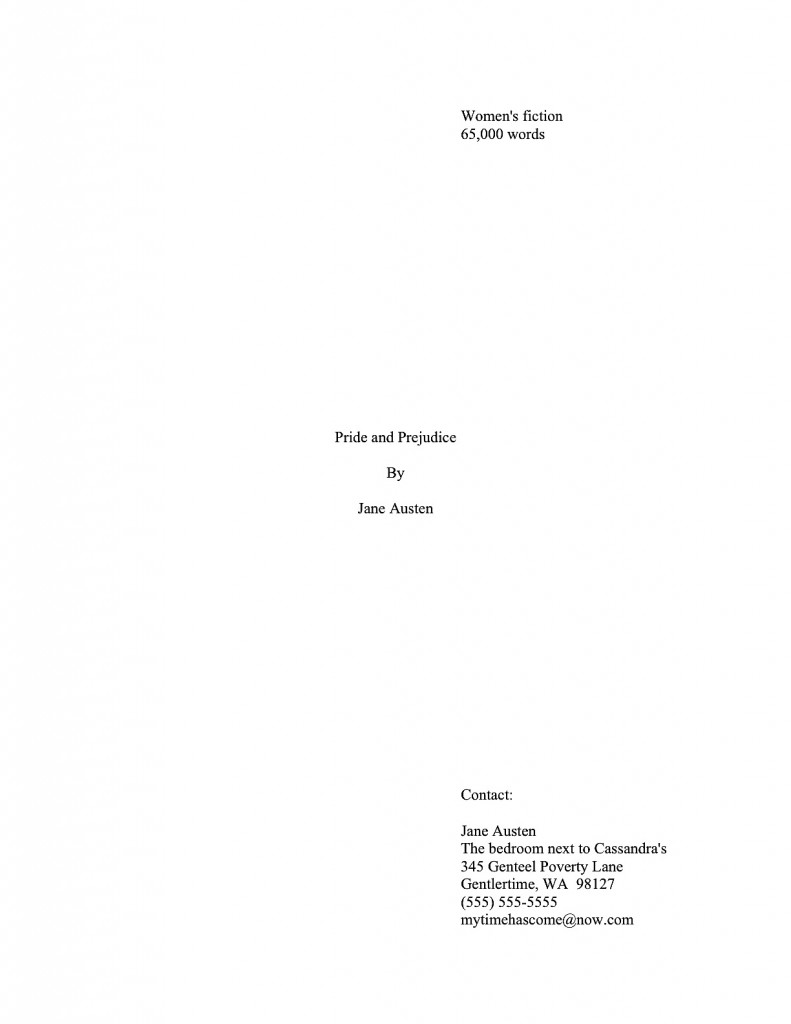
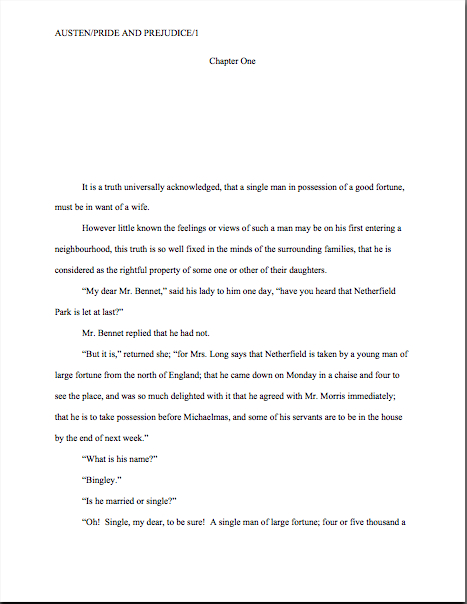
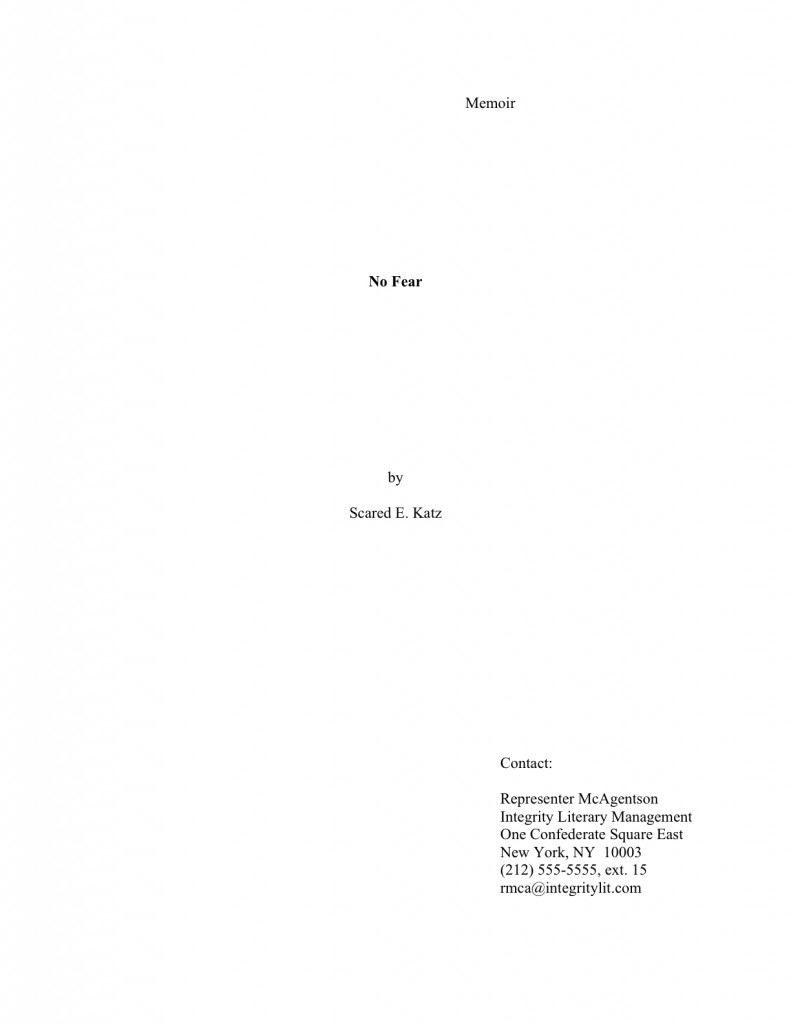
The sole exception: include your title page in the partial’s file, not as a separate document. Or, to put it another way, the title page should be the first page in the partial document, followed by the first page of text. Remember, though, that the title page should neither be numbered nor carry a slug line:

Austen title P&P2

Unlike the first page of text — or any other page of text, for that matter:

austen-opener-right

Is that wheezing sound an indicator that those of you who meticulously constructed your title pages as separate documents have begun to hyperventilate? Not to worry — adding your title page to your partial file is as easy as copying it, pasting it into the beginning of the partial, and adding a page break. No fuss, no muss, and very little bother.

And yet the wheezing continues. “But Anne,” a few of you gasp, “if I send the title and the body of the partial in the same Word document, won’t the title page automatically have a slug line — and be numbered, too?”

Not necessarily — but there is a trick to it. Under the FORMAT menu, select Document, then Layout. Here, select the Different First Page option, then click OK. That, as the option’s name implies, will give your first page a different header and footer than the rest of the partial. After that, it’s simply a matter of placing the slug line in the header for the first page of text.

Before you have to waste breath asking, allow me to add: in order to prevent Word from counting the title page as page 1 and the first page of text as page 2, use the Format Page Number option under VIEW/Header and Footer to set the Start at… number to zero. Voilà! The first page of text is now page 1!

Hey, what did you mean, any additional requested materials?
As I mentioned last time, just as some agencies’ guidelines call for pages to be included in a query packet and some do not, some partial-requesting agents ask writers to slip additional materials into a submission packet. Obviously (and I do hope that it is indeed obvious to you by this point in our discussion), you should not include any extra materials unless the agent asks for them — but it never hurts to have any or all of the following on hand at querying time, just in case somebody requests one of them.

To continue the lengthy tradition that I started yesterday — ah, those were good times, were they not? — let’s run through the most popular additions in the order they should appear in a hard-copy submission packet:

1. Cover letter

2. Title page

3. The requested pages in standard format.

4. Synopsis, if one was requested, clearly labeled AS a synopsis.
Here again, terminology may not be the writer’s friend: with fiction or memoir, when an outline is requested, they usually mean a synopsis, not an annotated table of contents. For nonfiction, an outline means an annotated table of contents.

Most of the time, though, what an agent will ask to see for any types of book is a synopsis: a 1-5 page (double-spaced) overview of the basic plot or argument of the book. If you don’t already have one handy, you’ll find a step-by-step guide to writing one in the HOW TO WRITE A REALLY GOOD SYNOPSIS category at right. (How do I come up with these category titles?)

5. Marketing plan, if one was requested.
These were all the rage a few years ago for fiction and memoir, but since the economy slowed down, they seem to have fallen out of favor as a submission-packet request, especially for partials. But just in case you get asked to produce one, a marketing plan is a brief (2-5 pages, double-spaced) explanation of who the target audience is for a particular book, why this book will appeal to those readers, and what you — not the publishing house’s marketing department, but YOU, the author — will do in order to alert potential readers to that appeal.

Sound familiar? It should –there’s an entire section of the book proposal devoted to this very subject. That’s where fiction agents got the idea. And if a first-time novelist happens to have a terrific platform for the book she’s writing — if she’s the world’s leading authority on drive-in movie theatres, for instance, and her novel happens to be set in one — an agent may well wish to tuck a marketing plan that talks about all the lectures on drive-ins (and in drive-ins) the author is going to be giving over the next couple of years.

As I said, though, it’s largely fallen out of fashion. But let me turn it around to you: have any of you novelists been asked to provide marketing plans with your submissions lately? If so, let me know, and I’ll run a brief series on how a novelist might go about pulling one together.

6. Author bio, if one was requested.
An author bio is a one-page (double-spaced) or half-page (single-spaced) plus photo account of the submitting writer’s professional credentials. Typically, when an agent submits a manuscript or book proposal to editors, the author Since these are far from easy to write, I always recommend that aspiring writers construct them well in advance, so they have a great one on hand to tuck into the submission packet.

I suspect that I’m going to yield to those nagging voices in the ether and revisit how to write an author bio soon — but dag nab it, I really want to get back to craft. For those of you who need to toss one together while this internal debate rages, you can find a step-by-step guide to writing one under the AUTHOR BIO category on the list at right.

7. A SASE big enough that everything you’re sending the agent can be returned to you
That’s a self-addressed, stamped envelope, for those of you new to the game. Always use stamps, not metered postage, for the SASE.

Why? Because since 9/11, someone who wants to mail a pre-metered package that weighs over two pounds via USPS has to tote it to a post office. Due to the paper-consumptive rigors of standard format, one rarely, if ever, meets a full-length manuscript that weighs less than two pounds.

“But Anne,” my formerly-wheezing readers point out, and rightly so, “isn’t the whole point of this mini-series to address the specific challenges of the aspiring writer who hasn’t been asked to send the entire manuscript? Correct me if I’m wrong, but wouldn’t the first three chapters of most manuscripts fit into a 10″ x 17″ Manila envelope?”

You are far from wrong, ex-wheezers: a nice, crisp Manila envelope is just the thing for submitting a partial. Fold a second envelope in half and poke it into the first for the SASE.

8. Optional extras.
If you want to send a second, business-size envelope SASE as well, to make it easy for them to request the rest of the manuscript, place it at the bottom of the packet (and mention it in your cover letter.)

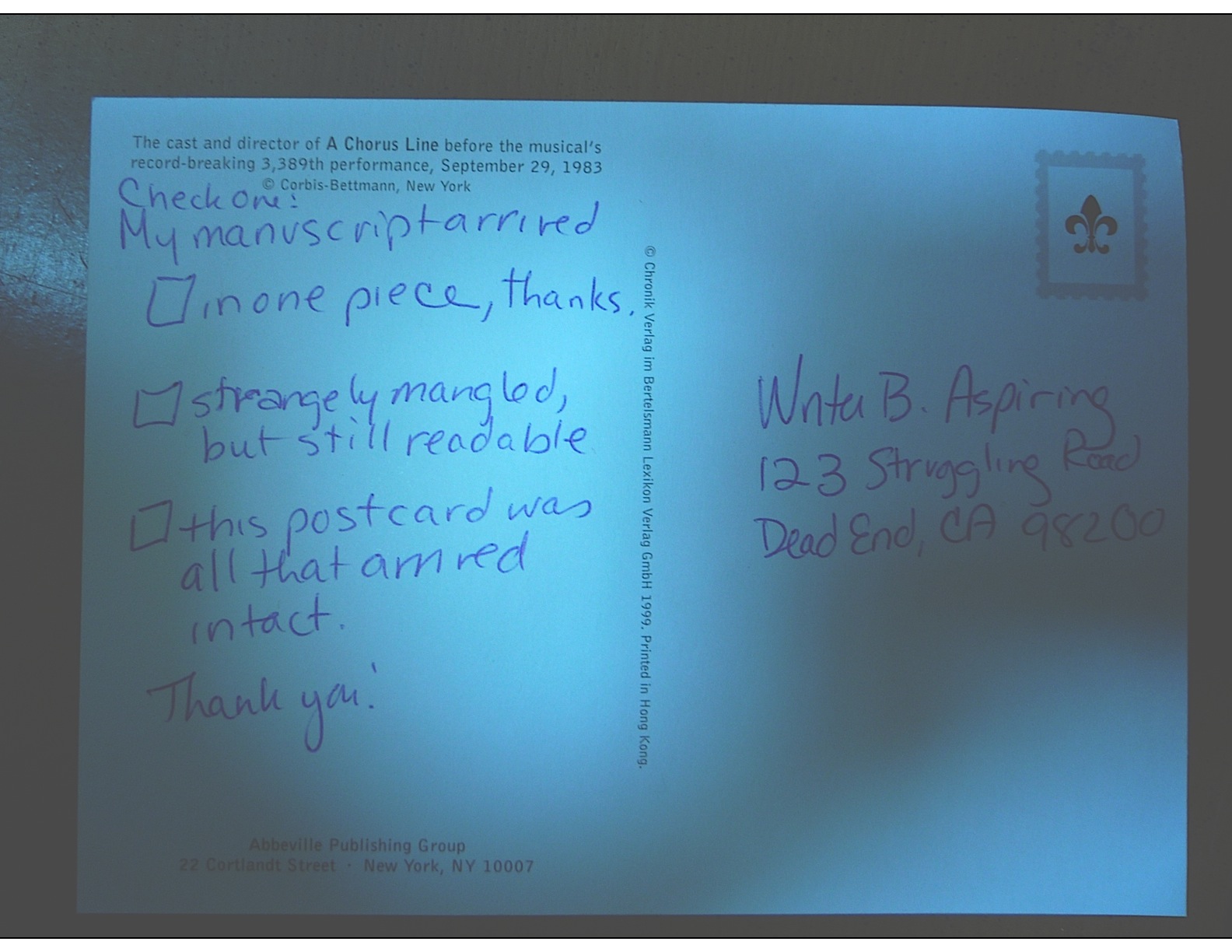
Since the vast majority of agencies are congenitally allergic to submitters calling, e-mailing, or even writing to find out if a manuscript actually arrived — check the agency’s website or guide listing to be sure — it’s also a fair-to-middling idea to include a self-addressed, stamped postcard for the agency to mail to you to acknowledge receipt of the manuscript. To generate a chuckle in a hard-worked Millicent, I always liked to send a SASP that looked like this — although with a stamp attached, of course:

Don’t worry about this causing trouble; it doesn’t, provided you do it courteously, and you will have proof that they received it. This is important, because as I MAY have mentioned, manuscripts do go astray from time to time.

Want to get the same information without running the risk that a witty postcard won’t elicit a chuckle? Pay a little more at the post office for the Delivery Confirmation service; they’ll give you a tracking number, so you may follow your submission’s progress through the mail.

What you should most emphatically not do is send your submission via a delivery service that will require someone at the agency end to sign for the packet. This is one of Millicent’s most notorious pet peeves — why, she reasons, should she (or the guy in the mail room) have to take time out of her (or his) busy day just because a writer’s nervous?

9. Pack it all in your Manila envelope and write REQUESTED MATERIALS on the front.
Straightening up the stack of paper will minimize the possibility of in-transit mutilation, incidentally. If the envelope you have selected is a tight fit — snug enough, say, that the pages might get wrinkled in the stuffing-in process — for heaven’s sake, find yourself a larger envelope. It’s in your interest for it to arrive pretty.

Oh, and no matter how many pages or extra materials you were asked to send, do remember to read your submission packet IN ITS ENTIRETY, IN HARD COPY, and OUT LOUD before you seal that envelope. Lest we forget, everything you send to an agency is a writing sample: impeccable grammar, punctuation, and printing, please.

Next time, we’ll be wrapping up this discussion via a quick tour of the major mistakes submitters make in constructing their partials. Until then, slice that pie and pack it for traveling nicely, everybody, and keep up the good work!

The skinny on partials — at least the ones that are skinnier than entire manuscripts

skeleton1ani-mirrorballdancinghat
showtime-skeleton
skeltw2skeleton-gif

Okay, so I didn’t actually set out to bring a skeletons’ disco extravaganza to you today, even if it is St. Patrick’s Day. You’d be surprised at what comes up in a web search of skinny; it was either this or models, interestingly enough. (All of these fabulous animated bones appear courtesy of Feebleminds, by the way.)

No, I have a much nobler goal for today: answering a good question from a reader. Quoth the intrepid Kim a few posts back:

An agent recently requested a partial of ms. and not being able to find much on how to format that I just included the title page, and the requested pages of the ms. Is there a correct format or protocol for partials?

I’m very glad you brought this up, Kim. Although a partial always refers to a manuscript by definition — the term is shorthand for partial manuscript — this is yet another one of those situations where aspiring writers often get confused by publishing industry terminology.

Yes, I said yet another, because as so often seems to happen in the rumor echo chamber in which those trying to break into the biz must operate, many are the terms that mean more than one thing, or which would mean one thing to an agent and another to, say, a submitting writer. Here we have a prime example of the former: a partial can refer to two different kinds of manuscript, depending upon the context.

So let’s start this discussion by defining our terms before we really give the skeletons something to cavort about, shall we?

The two distinctly different flavors of partial: the first pages
The first kind of partial, the kind to which Kim refers here, is the a specified number of pages an agent may request from a successfully querying or pitching writer who is not yet a client. Emphasis on specified: no agent is simply going to tell an aspiring writer, “Send me a partial,” leaving the writer to guess how many pages and from what part of the book.

Instead, she will typically say, “Send me the first chapter/first 50 pages/first three chapters/first 100 pages.” In this context, then, a partial is precisely the number of pages an agent has requested to see.

Again, emphasis on precisely: if an agent asks to see the first 50 pages, don’t make the mistake of sending 52, even if page 50 ends in mid-sentence or the chapter ends on page 56. From an agent’s point of view, an ability to follow directions well is a very, very desirable trait in a potential client.

Basically, this type of partial is a writing sample, similar in function to the pages agents sometimes list in their submission requirements as addenda to the query packet or the 5-page writing sample agents sometimes ask pitchers to produce: the agent is asking for these pages primarily in order to see whether this aspiring writer can write; judging whether the book would be a good fit for the agency comes a close second, but if the agency’s screener (our old pal, Millicent, naturally) isn’t caught by the style, even a perfect plotline for that agent’s interests is likely to be rejected.

Oh, should I have warned you not to take that great big sip of coffee just before you read that rather disturbing paragraph? Go ahead and clean up; I don’t mind waiting.

I understand your shock at hearing it so bluntly put, oh spit-takers, but as we have discussed throughout our recent series on standard format, ruling out 90% of submissions as quickly as humanly possible is a big part of Millicent’s job. Her boss can only take on a handful of new clients in any given year, right? In order to save the agent time, she makes sure that the only requested materials to reach his desk are well-written, properly formatted, and the kind of story or argument the agent is actively looking to represent.

When an agency requests a partial rather than the entire manuscript, it’s essentially a means of streamlining this winnowing-down process even further. Not to mention saving her from having to shuffle, and thus lift, a ton of paper: instead of Millicent’s desk being piled up to her chin at any given moment with boxes of full manuscripts, the monthly influx of requested partials may reach only up to her sternum. Once she has screened those, her boss can decide which of the surviving partials have piqued their interest sufficiently to request the entire manuscript.

A process known, both colloquially and within the industry, as asking to see the entire manuscript.

So asking for a partial adds an intervening step between the initial query or pitch and the request for the full manuscript — but before those of you who would prefer your work to be judged in its entirety invest too much energy in glowering in Millicent and her boss’ general direction for sending writers jumping through this additional hoop, let me hasten to add that until fairly recently, most agencies almost always asked for a partial first; requesting the entire manuscript right off the bat used to be a sign that an agent was really, really excited about a book project and wanted to get the jump on any other agent who might have merely requested a partial.

Nowadays, the decision whether to request a partial or entire manuscript is less often an indicator of enthusiasm than a matter of agency policy. In fact, contrary to pervasive writerly opinion, being asked for a partial rather than a full can sometimes be an advantage: at some agencies, having the entire manuscript on hand earlier can enable even speedier rejection of a near-miss project. Think about it: instead of having to ask for pages 51-372 and wait for them to arrive in order to pass a final judgment on a book, Millicent can simply read to page 60.

If the verdict is yes, this can lop quite a bit of time off the agent-seeking process, from the writer’s perspective. Unfortunately, if the verdict is no, and the agency is one of the vast majority that utilize form-letter rejections, the submitter ends up with no idea whether the impetus to reject came on page 1 or page 371.

Renders it rather hard to improve the manuscript prior to the next submission, doesn’t it?

Before that rhetorical question depresses anybody too much, let’s return to defining our partials. 99% of the time, the kind of partial an aspiring writer will be asked to provide is this first kind: a requested number of pages, beginning on p. 1 of the manuscript, for submission to an agent. There is, however, another kind.

The two distinctly different flavors of partial: the taste of what is to come
After a novelist is already established, it is not unheard-of for her agent to be able to pull off a conjuring trick known as selling the next book on a partial. This is pretty much what it says on the box: the author produces the first X number of pages of a not-yet-completed novel, and the agent convinces an editor that it will be to the publishing house’s advantage to snap the book up before the author has polished it off.

This can be a good deal for the publisher: buying a book on a partial prevents other publishers from bidding on the finished work. Also, earlier involvement in the writing process often enables the editor to help shape the book more, in much the same way as an editor on a nonfiction book (typically sold on a book proposal, not the full manuscript, lest we forget) is able to dictate which of the proposed chapters will and will not be in the finished manuscript.

Not to mention the fact that if the book happens to be written by a famous author or celebrity in another field, the bidding could potentially get quite high. This is why, in case you’d been wondering, we all occasionally hear of a publisher’s acquiring a half-written novel at a cocktail party, because some celebrity simply handed ten pages to him along with his seventh martini: the publisher recognizes the potential marketing value of the name.

For your garden-variety serious novelist, however, such a situation is unlikely to arise. If her agent manages to sell her next book on a partial, it’s generally to the editor who acquired her last. Since so many first-book publishing contracts grant the publisher right of first refusal over the author’s next book, anyway — meaning that the publisher gets an exclusive peek at the book before anyone else can place a bid on it — selling on a partial is mostly a means to speed up the approval process.

Everyone clear on the difference between that kind of partial and the first kind? Excellent. Now let’s assume for a moment that, like Kim, you have just been asked to submit a partial to the agent of your dreams. What specifically are you being asked to do?

Let’s further assume that your manuscript (or whatever portion of it an agent or editor has requested that you send to be perused by Millicent, the Platonic agency screener) is already in tip-top formatting shape, all typos and logic problems removed, and thus what the industry calls clean — and if you’re not absolutely positive that your pages meet ALL of those conditions, stop right here and make a plan for tidying up your pages.

Trust me, this is a situation where spelling counts. As does grammar, punctuation, and everything else your 9th grade English teacher begged you to take seriously.

But once your work is in apple-pie order, as Louisa May Alcott used to say so frequently, what next?

What should a partial submission packet include, and in what order?
In part, this is a trick question, because — chant it with me now, readers — any submission packet should include precisely what the agent asked you to include, no more, no less. In the words of the immortal Fats Waller, find out what they like and how they like it, and let ‘em have it just that way.

Okay, so he wasn’t talking about literature when he sang that. Roll with me here.

As I mentioned above, agents are usually quite specific about what they want in a submission, up to and including how many pages they want to see. If you doubt this, check out an agency’s website or one of the standard agency guides, then attend a conference where agents are scheduled to speak. Raise your hand and ask whether it’s okay to send, say, the 55 pages it would take to round out a chapter when an agent has asked to see the first 50. You will be astonished at how people who say their preferences in clients are as vague as writers who produce “good writing in any genre” will suddenly transform into rule-hugging lovers of draconian efficiency, appalled at the very notion of extending the length of the partial.

To save you the trouble of asking, let me tell you what they will say: never, ever, EVER send what you THINK they want to see instead of what they have ASKED to see. Of course, you may offer in your cover letter to send more, but that is all.

So pull out your hymnals and sing along, campers: if you’ve been asked for the first 50, and the chapter ends in a blow-your-socks-off cliffhanger on p. 51, you should still only send the first 50, exclusive of the title page. (Since the title page is not numbered, it is not included in the page count, either.)

Of course, if you wanted to be Machiavellian about it, you could always perform a little strategic snipping prior to that, so said cliffhanger topples just on the bottom of p. 50. No one would fault you for that, for the very simple reason that it’s extremely unlikely that Millicent will ever sit down with your partial and full manuscript simultaneously. Partially, this is due to the fact that if an agency approves enough of a partial submission to want to see the rest of the novel, they’re going to ask for the entire manuscript, not, say, pages 51 through 373.

Oh, you thought Millicent was going to invest time in digging out your partial, unpacking your second submission, and fitting the two together like a jigsaw puzzle? Does that really sound like reasonable behavior to expect from the person too impatient to allow her latte to cool before taking her first sip?

Again, send precisely what you are asked to send. However — and this should sound familiar on the secret handshake front — any agent is going to assume that a writer of your caliber is already aware that certain requests imply certain inclusions. Here are the extra bits, in the order in which they are generally expected to appear in a packet containing a partial:

1. Cover letter
An astonishingly high percentage of submissions arrive without a cover letter, and often without a title page as well, begging the question: what makes these writers so positive that the requesting agent will still remember their queries or pitches well enough to render page one of chapter one instantly recognizable?

I hate to burst anyone’s bubble, but it’s not going to be — in fact, in many agencies, the person who heard the pitch or read the query won’t even be the first person to screen the submission. There may even be several Millicents who need to approve it before it gets anywhere near the agent of your dreams. So it doesn’t honestly make sense to assume that everyone who sets eyes on your manuscript will already be familiar with your work.

Besides, including a cover letter is polite. No need for a long-winded missive — a simple thank-you to the agent for having asked to see the materials enclosed will do. Something, perhaps, along the lines of this little gem:

cover letter for partial

A miracle of professional blandness, is it not? That’s all right — the cover letter isn’t where you’re going to wow Millicent with your sparkling prose and trenchant insight, anyway. All you have to be here is polite.

If you met the agent at a conference, mention that in the first paragraph of the letter, to help place your submission in context. (As crushing as it may be to the writerly ego to contemplate, an agent who spent days on end listening to hundreds of pitches probably is not going to remember each one. No need to re-pitch, but a gentle reminder never hurts.

If another agent is already reading all or part of the manuscript you’re sending — or has asked to see it — mention this in your cover letter. No need to say who it is or how long s/he has had it; just tell the recipient that s/he’s not the only one considering representing this book. Unless the agency has a policy forbidding simultaneous submissions, withholding this information will only generate resentment down the line if more than one agent wants to represent your book.

Yes, even if that agent to whom you submitted 9 months ago has just never responded. Actually, it’s in your strategic interest to contact that non-responder to let her know that another agent is interested; it often speeds up the evaluation process. (If you’re unclear on why, please see the WHAT IF MORE THAN ONE AGENT ASKS TO SEE MY MANUSCRIPT? category on the archive list at right.)

Most importantly, make sure all of your contact information is on the letter, either in the header (letterhead-style, as in the example above) or just under your signature, and do be absolutely certain that the letter includes the title of your book, just in case the letter and the manuscript end up on different desks.

Yes, it does happen. You want them to be able to get ahold of you to tell you how much they love your writing, don’t you?

2. Title page
Always include this, if any manuscript pages have been requested — yes, even if you have already sent the first 50 pages, and are now sending the rest of the book.

No need to state on the title page that it’s a partial, either — Millicent will be able to figure that out from your cover letter and the thickness of the stack of paper. Just use the same title page that you would have used if the agent of your dreams had requested the entire manuscript, and you’ll be fine:

Austen title good

Again, not precisely a thrill-fest, but undoubtedly professional-looking. Just make sure that it’s in the same typeface as the rest of the attached manuscript. (If this all sounds completely cryptic to you, or if you have never formatted a professional manuscript before, don’t panic — you’ll find a step-by-step explanation of what to do under the HOW TO FORMAT A TITLE PAGE category at right.)

Why is it so very important to include the title page? Long-time readers, chant it with me now: because the submission looks more professional that way. Also, like the cover letter, the title page renders it easy for an agent to track you down. Believe me, if the agent of your dreams falls in love with your manuscript, you’re going to want to hear about it right away.

3. The requested pages in standard format.
Again: only the pages they’ve asked to see, beginning on page 1, professionally formatted. No substitutions, unless the agency website specifically asks for something else. (If you’re new to reading this blog, or have somehow avoided the last few weeks of repeated and vehement posts on standard format, please see the HOW TO FORMAT A MANUSCRIPT and STANDARD FORMAT ILLUSTRATED categories on the list at right._

For the benefit of those of you who are going to blow off that last piece of advice because you’re in a hurry — oh, I know that you’re out there — allow me to add something you would have learned from those posts on formatting, had you been paying attention: a manuscript intended for submission should not be bound in any way.

Oh, and do use at least 20-lb, bright white paper when you print it out. Cheaper paper can begin to wilt after the first screener has riffled through it. Yes, it does increase the already quite substantial cost of submission, but this is one situation where being penny-wise can cost you serious presentation points.

“So basically what you’re saying, in your patented lengthy and meticulously-explained manner,” those of you who have been paying close attention point out, and rightly, “is that Kim did everything right. Aren’t you?”

Why, yes, I am — kudos for your submitting savvy, Kim! You’re an example to aspiring writers everywhere, all the more so, in my opinion, because you were brave enough to ask the question. Now, everyone who has been wondering about it can benefit.

Sometimes, though, agents ask to see additional materials slipped into a submission packet with a partial. Next time, we’ll be taking a swift barefoot run through the usual suspects, as well as revisiting the difference between a partial and a writing sample — or a partial for a contest entry and a writing sample, for that matter.

Hard to contain the excitement, isn’t it? No wonder the skeletons are dancing up a storm. Happy St. Patrick’s Day, everyone, and keep up the good work!

The mysteriously mysterious strictures of standard format, part XVII: excuse me — you’re proposing WHAT?

marriage-proposal1

For the last couple of posts, we have bent our collective gaze — steely, to be sure — away from the green pastures of manuscript formatting to turn our attention to the wind-swept plains of book proposals and their proper formatting. As we have seen in our brief sojourn amid the majestic buffalo and skipping lambs, while the text of a book proposal is formatted largely in the same matter as a manuscript’s, the various headings and subheadings are often different.

Before I move on, allow me to digress: did you notice how I dropped that running metaphor when it became apparent that it wasn’t working? That’s a good editing tip for any kind of writing: don’t force it if it doesn’t fly. An even better one: while proofing you work, make sure you read all the way to the end of every sentence; it’s the only way to catch metaphors abandoned mid-stream. (And yes, Virginia, I do see orphaned metaphors wandering about ostensibly well-revised manuscripts. All the time.)

As we saw last time, a professional book proposal contains a wide range of marketing materials, all written in the proposer’s best possible prose, cleverly fitted together in a manner to convince an agent or editor that not only is the proposed book an interesting idea that will appeal to a very specific (and, ideally, well-established) target audience, but that the proposer is the best (and, ideally, the only) conceivable person currently drawing breath to write this particular book. Or, to put it in the language of the industry, it’s a marketable concept presented by a writer with a great platform.

A thousand hands just shot into the air mid-paragraph, didn’t they? “Um, Anne?” many would-be proposers inquire nervously. “You didn’t really mean that bit about the proposal written in the proposer’s best possible prose, did you? After all, the proposal is just a formality, a series of hoops through which I have to jump before a publisher buys my book, right?”

Actually, no — although I can certainly see why you might think so. Unlike novels, nonfiction books (yes, even most memoirs) are sold not because someone falls in love with the manuscript, but because a prospective author has made a convincing case in a proposal that a book that does not yet exist will be marketable to a specific audience and that s/he is the right person to write it. Since the book concept and the argument for it are the primary sales pitch, most first-time proposers conclude that the writing in a proposal is of secondary importance.

They’re absolutely wrong. Every syllable of a book proposal is a writing sample — the only writing sample, in fact, upon which an agent or editor will base his or her conclusions about whether to pick up the book.

If you’ll join me in a wee flight of fancy, I think you’ll see why that absolutely must be the case.

Picture, if you will (and you will, right?), Maury the editorial assistant, diligently scanning the day’s submissions from agents for the next promising nonfiction project. He has reason to be careful: he needs to be very, very selective about what he passes on to his boss, the editor of your dreams. (Let’s call her Ermintrude, just for giggles.) If he simply sends Ermintrude every proposal that sounds as if it might make a good book, he’s not really doing his job, is he? It’s not as though she can offer a publication contract to every interesting-sounding project, after all; at most, even an extremely busy editor might be able to take on somewhere between one and ten a year.

Yes, you read that correctly.

It’s Maury’s job to prevent Ermintrude’s desk from becoming so over-stacked with proposals that she can’t find her phone. So yes, he’s going to weed out any proposal that doesn’t sound interesting right off the bat. He’s also going to reject those that don’t have a clearly-defined concept — which, in a screener’s world, means one that’s both grabbed his attention instantly and is comprehensible within the first few pages of the proposal — as well as those that either don’t define their target market well or do not strike him as likely to appeal to the readers already buying such books. Not to mention those that don’t seem to have a well laid-out marketing plan or chapters likely to deliver fully upon the premise of the proposal, or those proposed by writers who haven’t made a good case for their platforms to write the book.

That’s going to weed out most of ‘em. (I hate to be blunt about it, but because the book proposal is such a widely misunderstood marketing tool, Maury sees a whole lot of rambling proposals. And rambling, unprofessional proposals are most of what Millicent, his cousin who screens agency submissions, sees on a weekly basis.) But let’s be generous and assume that Maury’s had an unusually strong selection of proposals submitted this week: out of 300, 10 are fascinating ideas for books aimed for a well-established audience.

He can’t possibly send them all — ten is Ermintrude’s entire year’s allotment of books, even if she works nights, weekends, and funds the last two herself. So how does he decide which one or two to send upstairs to his boss?

Uh-huh. The ones where the writing screams, “Excuse me, but had you noticed that there’s some talent here?”

Think about that, any of you who were planning to toss together your book proposals over the next long weekend, or stuff them into the mailbox without running the text by another literate human being not already familiar with your book’s concept. (Word to the wise: if that literate human can’t tell you what the book is about and why you’re the best person on earth to write it by the time she is halfway through page 4, you might want to think about some serious revision. And if she doesn’t want to read the book by the middle of page 2, run, don’t walk, back to the drawing board to work on your prose and presentation.)

Now that I’ve scared the living daylights out of you, let’s review the constituent parts of the book proposal — at least, the ones we have covered so far:

1. The title page

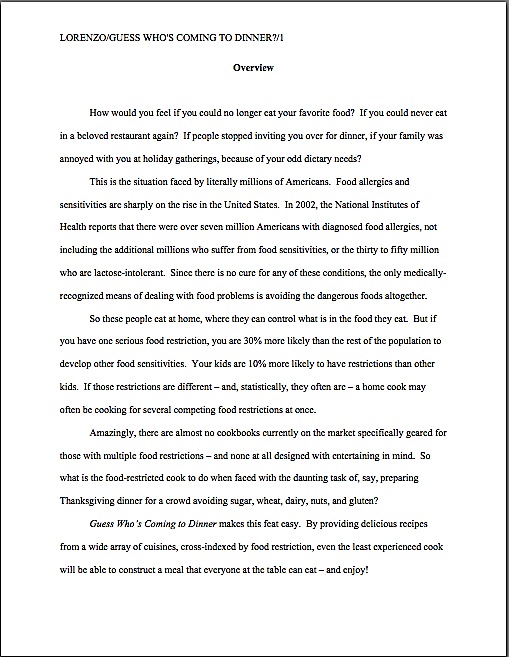
2. The overview, a comprehensive document that leaves Maury with no doubt whatsoever about how to answer the following questions:

(a) What is the proposed book will be about, and why are you the single best being with an operational circulatory system and fingers to write about it?

(b) What is the central question or problem of the book? Why the topic is important, and to whom?

(c) Why is this book needed now, as opposed to any other time in literary history?

(d) Who is the target audience for this book?

(e) Why will this book appeal to the target audience as no book currently on the market does?

(f) How will your platform enable you to reach this target audience better than anyone else who might even think about writing this book?

(g) How strong a writer are you, and is this voice appropriate to the proposed book’s subject matter and target audience?

Okay, okay, so I kind of slipped that last one up the back staircase, but it’s a great asset to a book proposal if it is written in the same voice (and with the same vocabulary) as the eventual book.

Those aren’t the kind of things you want to leave to Maury’s imagination, are they? As we discussed last time, a fantastic way to establish authorial voice and interest in the subject matter is to open with a vividly illustrative anecdote or other method of direct appeal to the reader’s reason and emotions. Opening with dry marketing material tends not to grab Maury’s attention anywhere near as well.

3. The competitive market analysis
This section, as I hope you will recall from last time, is a brief examination of similar books that have come out within the last five years, accompanied by an explanation of how the book being proposed will serve the shared target audience’s needs in a different and/or better manner. Not intended to be an exhaustive list, the competitive market analysis uses the publishing successes of similar books in order to make a case that there is a demonstrable already-existing audience for this book.

Sound familiar? It should here is where the proposer proves the contentions he made in the overview with hard data.

Which of the many, many contentions, you ask, and how does talking about your competition prove them? Well, for starters, who the target audience is for your book? Answer: the readers who have already bought the books listed in the competitive market analysis. (The implicit logic: if those books sold well, that means these people buy a lot of books — and might be eager to buy more.)

Yet another reason that you might want to say something nice about your competition, eh?

You can also use this section to demonstrate how your book is different and better than what’s already on the market — and yes, that can (and should) be done without running down the competition, as long as you’re specific. Think about it: if you mention the best points of the other books and can still make the case that your proposed volume will either do what they do, only more effectively (do you have a stronger platform than another author, for instance, or is the other book outdated now?) and/or not in the same way (what does your take on the subject offer that those other books do not?), your book is going to end up looking better by contrast than if you merely say that everything else is terrible.

Trust me on this one. If you can’t say something nice about a particular comparable book, consider contrasting yours to one that you can praise with a straight face.

Some of you have had your hands raised since yesterday, have you not? “But Anne,” proposers everywhere exclaim, rubbing circulation back into their exhausted arms, “one of the reasons I wanted to write my book in the first place is that there isn’t another recent book on the subject. So how do I come up with a list for the competitive market analysis? Make things up?”

Glad you asked, patient arm-raisers — there’s a pro’s trick to this. But first, indulge me in a short exercise in understanding your book’s appeal.

First, equip yourself with some scratch paper (the back sides of earlier drafts of your proposal, perhaps?) and a comfortable pen. I would suggest selecting a comfortable chair, too, because you’re not to budge until you come up with five different ways to describe your proposed book. And I’m not talking about descriptors like well-written, either — describe your book the way a clerk in a bookstore might to a potential reader.

Got that list firmly in hand? Good. Now hie yourself and your list hence to the nearest well-stocked brick-and-mortar bookstore. (Seriously, what I’m about to suggest is considerably harder to pull off online.)

Standing in the store, feeling silly for carrying that list around. Excellent. Ready, set — don’t find a book like yours.

Yes, really. Instead, go to the first descriptor on your list and find several books that could be described the same way. Proposing a memoir, for instance? Stand in front of the memoir section and keep pulling books off the shelves until you discover a few that are similar in some way to yours.

It can be a very, very small way. Is it a childhood memoir by someone who grew up in the same part of the country as you did? Start taking notes. Is another by a dog-lover, while two chapters of your proposed book cover your relationship with beloved Fido? Sounds close enough to me.

After you’ve ferreted out a few useful titles, move on to the next descriptor on your list. If your memoir set in the mid-1960s, find a few good nonfiction titles that cover similar aspects of the period. If your cookbook is for vegans, how about including as few of the well put-together vegetarian cookbooks out recently? Not too hard to see how your book would be different and better for vegan readers than those, right?

And so forth. The goal here is not necessarily to find a dozen books exactly like yours; it’s also perfectly permissible to devote a paragraph or two each to several different book categories into which your unique book might conceivably fall. By demonstrating that there is already a market for books that match your five descriptors — as there must be, according to industry logic, or those recently-released books would not be on the shelves* — the implication is that past readers of each of those types of book will be interested in yours.

(* Don’t waste your energies questioning this quite questionable assumption; you’ve got a proposal to write.)

Everyone clear now on the purpose and proper formatting of the competitive market analysis? If not, now would be a fabulous time to shout out a question or two. While I’m waiting with my hand cupped around my ear, let’s move on to the next section.

4. The annotated table of contents
This section has some odd conventions, ones that tend to come as a surprise to most first-time proposers, so before I launch into a discussion, let’s take a gander at out example from the other day.

Notice anything here that might offend the muses of standard format? How about the fact that the title of the book appears at the top of the page, as if Annotated Table of Contents were a subtitle? Or the phenomenon of adding a section break between each chapter’s description? Or that the descriptions were in the present tense, like a synopsis?

Actually, there’s a pretty good explanation for the first two of these conventions. (Sorry; you’re on your own for the last.) Remember how I mentioned earlier in this sub-series that unlike a manuscript, book proposals are often broken up into their constituent parts on the reading end, so folks working in different departments at publishing houses may take a gander at ‘em? Titling the annotated table of contents renders it easier to get those pages back into the right proposal. And skipping a line between chapters makes it simpler for an editor to find the chapter she is seeking when she’s in an editorial committee meeting or arguing with your agent about what will be in the final book.

Oh, you weren’t aware that editors often ask writers to change the proposed chapters? Happens all the time, so gird your loins and prepare to play ball.

If the very notion of being asked to remove your meticulously-researched chapter on steam engines (in order to replace it with a similar section on cotton gins, about which the acquiring editor did her undergraduate thesis at Columbia) or to reduce your seven intended chapters on your life prior to the age of 17 into as many paragraphs (so you may concentrate at greater length on your four subsequent years as a sword-swallower) causes your skin crawl in revulsion, do not despair. You actually do have a means of making sure your favorite chapters pass the editorial test: write about them brilliantly in the annotated table of contents.

Seriously, if ever there was a time to show, not tell, this is it.

Why, you ask? Because the vast majority of first proposals just summarize what’s going to be in each chapter, instead of using each chapter to tell a compelling separate story. Because you’re selling your talents as a storyteller here, as well as the subject matter of the book, right?

It’s not surprising that this section falls flat in so many proposals; again, many, if not most, proposers don’t seem to understand the purpose of the annotated table of contents. As we discussed the other day, many, many proposers labor under the misconception that what agents and editors expect to see in this section is simply a list of chapter titles, accompanied by guesstimated page numbers. Many, many other proposers assume that they should devote a page to each chapter.

Or even several. For my sins, I’ve seen proposal drafts with 20-page annotated tables of contents. Believe me, Maury was far from pleased.

Avoid that dreadful fate in yours; keep it brief, but substantial. One to two paragraphs on each envisioned chapter is about right — remembering, of course, that everything in a book proposal is a writing sample. At the risk of repeating myself, show, not tell.

How does one pull that off when covering so much territory in so short a space as a paragraph or two? The same way you came up with the summary paragraph of your query letter, ideally: instead of trying to summarize everything that happens in a chapter in general terms, pick a particularly interesting scene or argument and present it in vivid terms.

In other words: be specific, not general. If you can possibly manage it, try to include details that Maury is unlikely to see in another proposal.

If you just muttered to yourself, “Hey, might this not be an amazingly good place to demonstrate just how my book is different and better than the ones I was discussing in the last section?” congratulations — you’re thinking like a pro. Especially in a memoir or cookbook proposal, this is the precise spot to work in mention of how your book is uniquely yours:

annotated table of contents2

And if you eagerly shot your hand into the air as you glanced over that last example, eager to point out that this example was formatted slightly differently than the one before it, congratulations again — your eye is sharpening. The last version is in the version my agency prefers; the desire for bolding and all caps is not universal.

Just thought you might like to see both. And if I haven’t said it often enough yet: if the agent of your dreams wants you to format your proposal differently from what I advise here — in, for example, clearly laid-out guidelines on the agency’s website — for heaven’s sake, give him what he wants. In the book proposal as well as the manuscript, the average agent is looking for evidence that a potential client can follow directions.

Don’t see why that would be an essential quality in a book-proposing client? Okay, let me ask you: if you were an agent, would you rather represent the writer who says, “Lose my Chapter 13 and dumb down the book’s vocabulary to an 8th-grade reading level? Can do, Editor!” or the one who flies into an uncontrollable fury?

Oh, come on — you didn’t really hesitate over that choice as long as you pretended, did you?

I’ll be wrapping up book proposal formatting next time — literally: I’ll be talking about the folders that encase them. Until we meet again in that happy, not-too-distant future, keep up the good work!

The mysteriously mysterious strictures of standard format, part XVI: how to format a book proposal, revisited

star magnolia blooms

Our star magnolia has finally come back to life! I can’t even begin to tell you how much the sight cheered me up — even after more than a decade and a half in the Pacific Northwest, my native Californian synapses droop drastically during the long, gray winters here. So hooray for an early spring-blooming tree that goes from dead-looking to beflowered in three days flat.

Speaking of lengthy periods of anticipation, way back in early February, eagle-eyed reader Kim pointed out a fairly extensive omission in my twice-yearly examinations of standard format for manuscripts: although I have been providing illustrations of same for several years now, I’d never shown the innards of a properly-formatted book proposal. In fact, as Kim explained,

Anne — Thank you for this glorious blog. It is a wealth of information. I am putting together a submissions package (requested materials, yea!), which includes a book proposal. After searching through your site, I still can’t find a specific format for the thing. For example, should the chapter summaries be outlined? double-spaced? Should I start a new page for each subheading? Also, my book has several very short chapters (80 in total). Should I group some of them together in the summaries, lest it run too long? Or is it better to give a one sentence description of each? Thanks again.

My first response to this thoughtful set of observations, I must admit, was to say, “No way!” After all, I had done a fairly extensive series entitled HOW TO WRITE A BOOK PROPOSAL (beginning here) as recently as…wait, does that say August of 2005?

As in within a month of when I started this blog? More to the point, since before I sold my second nonfiction book to a publisher? (No, you haven’t missed any big announcements, long-time readers: that one isn’t out yet, either.)

Clearly, I have a bit of catching up to do. Equally clearly, I am deeply indebted to my intrepid readers for telling me when they cannot find answers to their burning questions in the hugely extensive Author! Author! archives.

In the interests of responding to Kim’s quite legitimate concerns, let’s continue the page-level look at a professional book proposal we began yesterday. Rather than assume, as I apparently have for the last four and a half years, that merely saying that book proposals should be in standard manuscript format (with certain minimal exceptions), let’s see what that might look like in action. In fact, since I’ve been going over the constituent parts in order, let’s go ahead recap from the beginning, talking a little about what purpose each portion of it serves.

Here, ladies and gentlemen of the Author! Author! community, are the building blocks of a professional book proposal, illustrated for your pleasure. As you will see, much of it is identical in presentation to a manuscript.

1. The title page
Like any other submission to an agent or editor, a book proposal should have a title page. Why? To make it easier to contact you — or your agent — and buy the book, of course.

proposal title

2. The overview
First-time proposers often shirk on this part, assuming — usually wrongly — that all that’s required to propose a nonfiction book is to provide a 4-6 page synopsis of it. In practice, however, a successful overview serves a wide variety of purposes:

(a) It tells the agent or editor what the proposed book will be about, and why you are the single best person on earth to write about it. (Pretty much everyone gets that first part, but presenting one’s platform credibly is often overlooked in an overview. If an agent or editor makes it to the bottom of page 3 of your proposal without understanding why you are a credible narrator for this topic, your proposal is going to fall flat.)

(b) It presents the central question or problem of the book, explaining why the topic is important and to whom. (Amplifying on the argument in (a), couching it in larger terms and trends. Or, to put it another way: why will the world be a better place if this book is published?)

(c) It demonstrates why this book is needed now, as opposed to any other time in literary history.

(d) It answers the burning question: who is the target audience for this book, anyway? (To reframe the question as Millicent’s boss will: how big is the intended market for this book, and how do we know that they’re ready to buy a book on this subject?)

(e) It explains why this book will appeal to the target audience as no book currently on the market will. (In other words, how are potential readers’ needs not being served by what’s already on the market, and why will your book serve those needs in a better, or at any rate different, manner?)

(f) It shows how your platform will enable you to reach this target audience better than anyone else who might conceivably write this book. (Tying together all of the foregoing, adding your platform, and stirring.)

(g) It makes abundantly clear the fact that you can write. (Because lest we forget, a book proposal is a job application at base: the writer’s primary goal is to get an agent or editor to believe that she is the right person to hire to write the book she’s proposing.)

In the interest of establishing points (a), (b), and (g) right off the bat, I like to open a book proposal with an illustrative anecdote or direct personal appeal that thrusts the reader right smack into the middle of the central problem of the piece, reducing it to an individual human level. Basically, the point here is to answer the question why would a reader care about this? within the first few lines of the proposal, all the while showing off the writer’s best prose.

For a general nonfiction book — particularly one on a subject that Millicent might at first glance assume to be dry — this is a great opportunity for the writer to give a very concrete impression of why a reader might care very deeply about the issue at hand. Often, the pros open such an anecdote with a rhetorical question.

overview NF page 1

The opening anecdote gambit works especially well for a memoir proposal, establishing both the voice and that the memoir’s central figure is an interesting person in an interesting situation. While it’s best to keep the anecdote brief — say, anywhere between a paragraph and a page and a half — it’s crucial to grab Millicent’s attention with vividly-drawn details and surprising turns of event. To revisit our example from yesterday:

overview1

overview2

As we saw in that last example, you can move from the anecdote or opening appeal without fanfare, simply by inserting a section break (in other words, by skipping a line). While many book proposals continue this practice throughout the overview, it’s a good idea to mark its more important sections with subheadings, like so:

subheading in proposal

As you may see, incorporating subheadings, while not strictly speaking necessary, renders it very, very easy for Millicent to find the answers to the basic questions any book proposal must answer. If the text of the proposal can address those questions in a businesslike tone that’s also indicative of the intended voice of the proposed book, so much the better.

Please note, however, that I said businesslike, not in business format: under no circumstances should a book proposal either be single-spaced or present non-indented paragraphs.

This one confuses a lot of first-time proposers, I’ve noticed. “But Anne!” they protest, and not entirely without justification. “A book proposal is a business document, isn’t it? Doesn’t that mean that it should be in business format?”

The short answer is no. The not-so-short answer is: not if you want Millicent to read it. To the fine folks in the publishing industry, a writer who does not indent her paragraphs is presumed illiterate.

Long-time readers, chant it with me now: the publishing industry does not use business format, even in its business letters; always, always, ALWAYS indent your paragraphs.

3. The competitive market analysis
The competitive market analysis is probably the most widely misunderstood portion of the book proposal. What the pros expect to see here is a brief examination of similar books that have come out within the last five years, accompanied by an explanation of how the book being proposed will serve the shared target audience’s needs in a different and/or better manner. Not intended to be an exhaustive list, the competitive market analysis uses the publishing successes of similar books in order to make a case that there is a demonstrable already-existing audience for this book.

But that’s probably not how you’ve heard this section described, is it? Let me take a stab at what most of you have probably heard: it’s a list of 6-12 similar books. Period. The result usually looks like this:

competitive market analysis bad

Makes it pretty plain that the writer thinks all that’s required here is proof that there actually have been other books published on the subject, doesn’t it? Unfortunately, to Millicent’s critical eye, this doesn’t just seem like ignorance of the goal of the competitive market analysis — it appears to be proof positive of the authorial laziness of a writer who hasn’t bothered to learn much about either how books are proposed or the current market for the book he’s proposing.

To be fair, this is the section where first-time proposers are most likely to skimp on the effort. Never a good idea, but a particularly poor tactic here. After all of these years, the average Millicent is awfully darned tired of proposers missing the point of this section — and it’s hard to blame her for being miffed, considering how often first-time proposers assume that it has no point, other than to create busywork. As you may see above, the bare-bones competitive market analysis makes the writer seem as if he’s gone out of his way to demonstrate just how stupid he thinks this particular exercise is.

That’s because he’s missed the point of the exercise. The goal here is not merely to show that other books exist, but that the book being proposed shares salient traits with books that readers are already buying. And because the publishing industry’s conception of the current market is not identical to what is actually on bookstore shelves at the moment, the savvy proposer includes in his competitive market analysis only books that have been released by major houses within the last five years.

That last point made some of you choke on your tea, didn’t it? Don’t you wish someone had mentioned that little tidbit to you before the first time you proposed?

Even when proposers do take the time to research and present the appropriate titles, a handful of other mistakes tend to mark the rookie’s proposal for Millicent. Rather than show you each of them individually, here’s an example that includes several. Take out your magnifying glass and see how many you can catch.

competitive market analysis 2

How did you do?

Let’s take the more straightforward, cosmetic problems first, the ones that would immediately leap out at anyone familiar with standard format. There’s no slug line, for starters: if this page fell out of the proposal — as it might; remember, proposals are unbound — Millicent would have no idea to which of the 17 proposals currently on her desk it belonged. It does contain a page number, but an unprofessionally-presented one, lingering at the bottom of the page with, heaven help us, dashes on either side.

Then, too, one of the titles is underlined, rather than italicized, demonstrating formatting inconsistency, and not all of the numbers under 100 are written out in full. Not to mention the fact that it’s single-spaced!

All of this is just going to look tacky to Millie, right?

Okay, what else? Obviously, this version is still presented as a list, albeit one that includes some actual analysis of the works in question; it should be in narrative form. Also, it includes the ISBN numbers, which to many Millicent implies — outrageously! — a writerly expectation that she’s going to take the time to look up the sales records on all of these books.

I can tell you now: it’s not gonna happen. If a particular book was a runaway bestseller, the analysis should have mentioned that salient fact.

There’s one other, subtler problem with this example — did you catch it?

I wouldn’t be astonished if you hadn’t; many a pro falls into this particular trap. Let’s take a peek at this same set of information, presented as it should be, to see if the problem jumps out at you by contrast.

competitive market analysis3

Any guesses? How about the fact that the last example’s criticism is much, much gentler than the one before it?

Much too frequently, those new to proposing books will assume, wrongly, that their job in the competitive market analysis is to make the case that every other book currently available has no redeeming features, as a means of making their own book concepts look better by contrast. Strategically, this is almost always a mistake. Anybody out there have any ideas why?

If it occurred to you that perhaps, just perhaps, the editors, or even the agents, who handled the books mentioned might conceivably end up reading this book proposal, give yourself three gold stars. It’s likely, isn’t it? After all, agents and editors both tend to specialize; do you honestly want the guy who edited the book you trashed to know that you thought it was terrible?

Let me answer that one for you: no, you do not. Nor do you want to insult that author’s agent. Trust me on this one.

No need to go overboard and imply that a book you hated was the best thing you’ve ever read, of course — the point here is to show how your book will be different and better, so you will need some basis for comparison. Just don’t go overboard and use phrases like terrible, awful, or an unforgivable waste of good paper, okay?

I had hoped to get a little farther in the proposal today — at least farther than we got yesterday — but as I’m already running long, I’m going to sign off for the day. But since you’re all doing so well, here’s one final pop quiz before I go: what lingering problem remains in this last version, something that might give even an interested Millicent pause in approving this proposal?

If you immediately leapt to your feet, shouting, “I know! I know! Most of these books came out more than five years ago, and of those, The Gluten-Free Gourmet is the only one that might be well enough known to justify including otherwise,” give yourself seven gold stars for the day.

Heck, take the rest of the day off; I am. Keep up the good work!

The mysteriously mysterious strictures of standard format, part XIV: contested real estate, or, the battling schools of thought on chapter headings

Dempsey fight drawing

“In all matters of opinion,” Mark Twain tells us, “our adversaries are insane.”

Nowhere in modern life is this axiom more apt than in the vicious battleground that is airline seating. In recent years, most airlines have opted to make the space between rows of passengers smaller; in order to cram more seats per plane, many have also quietly made the window seats and even the seatbelts on window seats slightly smaller as well. (Try comparing sometime.)

The result for anyone who, like your humble correspondent, enjoys glancing out a window from time to time, is a seat tray rammed directly into one’s solar plexus if one happens to be trying to, say, use a laptop in flight. And that’s if the window-lover in the row ahead of me decides not to recline his seat.

On the particular flight upon which I am typing this, the last condition did not, alas, apply. A honeymoon couple — he awash in some pepper-based cologne, she beamingly bouncing her ring upon every row she passed, so all might see it glimmer in the light — evidently mistook their seats for two single beds. Not only were their activities in them not, as my grandmother would have said, appropriate for every audience, but they seemed disappointed — nay, convinced — that their seats would not recline into a completely flat position, presumably so they could (ahem) elevate their performance art piece to the next level.

After the first time the lady in question caused my laptop to emit a loud crack of protest, I politely explained through the crack in the seats (now about five inches from my face) that the nearness of the rows rendered their desired level of reclining impossible. Even if I had not needed to be working on my computer throughout the flight — an absolute necessity, I assured them, due to the standard formatting educational needs of all of you fine people waiting impatiently for me to land — the only way I could possibly accommodate the angle they desired would involve my balancing my paperback on the bride’s forehead as it hovered a few inches above my lap.

Apart from the book part, the honeymoon couple thought that would be just fine. How nice of me to suggest it.

The hard-argued subsequent compromise involved my turning sideways, twisting one of my legs underneath me while resting, if it could be called that, my back against the window-side armrest. If I gingerly balanced my laptop on the tray table of the seat to my left, I could barely manage to type. My left hip and elbow swiftly fell asleep, and the position required my staring fixedly at the profile of the guy in 23C (whose wife, you will be astonished to hear, apparently doesn’t understand him), but that was a small price to pay for the approximately 19 degree incline my gymnastics permitted the honeymooners.

At least for the first twenty minutes or so. After that, they kept trying to recline their seats farther. Apparently, I was being unreasonable to expect enough personal space to keep my laptop open the 90 degrees recommended by the manufacturer for optimal screen visibility. I can now tell you from personal experience that while it’s still possible to read the screen down to roughly 49 degrees, the lower the lid, the less accurate the typing.

Also, the lower the lid, the more one is tempted to draw conclusions about the fundamental difference between content producers and content consumers. To the recliners, the notion that I would so need to express myself on any subject that it could not wait until after we had landed was, I gathered, completely incomprehensible.

Oh, wasn’t I done yet? They’d like to lean back and enjoy themselves properly.

As much as I would like to blame the honeymooners’ frankly not-very-neighborly attitude upon either a poor set of upbringings (raised by airline-phobic wolves, perhaps?) or some bizarre wedding-induced solipsism that made them sincerely believe that no other human happiness was important compared to theirs, I suspect something very simple was happening here: all three of us were basing our expectations of personal space not upon the current lay-out of the airplane, but our sense memories of what air travel had been in the past.

My body remembers fondly being able to operate a laptop in comfort on an airplane, and not all that long ago. And I can only assume that somewhere deep in the honeymooners’ musculature, their forms remembered equally well being able to flop backward with impunity, without violating anyone else’s space bubble.

Or they were appallingly brought up. Either way, nobody was happy with the outcome.

A similar failure to communicate often characterizes the initial interactions between an aspiring writer and those he hopes will help his work get into print: agents, editors, contest judges, freelance editors, and of course, our old pal, Millicent the agency screener. From the new writer’s point of view, many of the hoops through which he’s expected to jump seem arbitrary, if not actively hostile to his progress; from the other side of the divide, it’s practically incomprehensible that any serious writer would not be aware of prevailing standards.

Each side, in short, typically expects something different from the other than what the other believes he is expected to provide. If the communication gap is severe enough, each may even begin to suspect the other of violating expectations on purpose, just to be annoying.

But that’s very seldom the case, on either end. The expectations are simply different, as often as not because each side has in mind some mythical period when perfect communication was the norm, rather than the exception. Millicent sighs for the days when the truly gifted tumbled out of the womb with a complete understanding of both standard format and changing market conditions; the aspiring writer longs for the era when every submission was read in its entirety, every time, and editors took the time to work with promising new authors.

Both sides are perfectly at liberty to sigh nostalgically, of course. But the fact is, none of these conditions ever prevailed on a large scale.

Oh, well-advertised submission standards used to render looking professional a trifle easier, admittedly; back when the slush pile still existed at major publishers, a new author could occasionally leap-frog over a few levels of testing. And undoubtedly, editors formerly had more time to work with writers. Things change. But contrary to what many an aspiring writer would like to think, there’s never been a point in publishing history when mainstream publishers were purely non-profit enterprises, devotes solely to bringing new voices to the admiring masses, nor have the bulk of submissions ever been completely professional and market-oriented.

Those seats never reclined as fully as you remember them doing, either. And those tray tables have never been particularly spacious.

All of which, I devoutly hope, will place you in the right frame of mind for confronting what seems to be a perennial controversy amongst aspiring writers: whether to place a chapter title (or just “Chapter One”) on the first line of a page or twelve lines below that, on the line just above where the text proper starts.

Don’t laugh, those of you who are new to this particular debate: this one has generated quite a body count over the years. Former comrades in arms, veterans of the writing trenches, have ceased speaking altogether over this issue; even judges within the same literary contest have been known to differ sharply on the subject.

Which is a trifle puzzling to those of us who deal with professional manuscripts for a living, frankly, because there actually isn’t a debate on our end. Nor do the Millicents gather over steaming lattes to debate the niceties of labeling a chapter. One way looks right to us for a book manuscript, period: the first page of a chapter should be formatted

What does that mean in practice? The chapter title belongs at the top of the page (centered) if the manuscript is a book; as with the first page of a manuscript, the title appears at the top, with the text beginning twelve lines below. In a short story or article, by contrast, the title belongs ten lines from the top of the page, on the double-spaced line above the text.

So yes, the spacing honestly does matter to the pros. As always, it’s to an aspiring writer’s advantage to use the format appropriate to the type of writing because it will look right to the Millicent screening it.

The answer really is as simple as that. Why, then, the rampant confusion? And why, given that the difference is a relatively small one not necessarily reflective of the quality of the writing involved, might a professional reader like Millicent or Mehitabel the contest judge particularly care if a talented aspiring writer chose the wrong version?

As is my wont, I shall let you see for yourselves. To place the two vitriol-stained possibilities before you in all of their lush magnificence, the question here is should the first page of a book chapter look like this:

Or like this:

Quite a visceral difference, no? The first version is in standard format for a book manuscript; the second is for a short story or article.

Oh, how tempting it is to leave it at that…but truth does compel me to tell you that Millicents, the agents who employ them, and contest judges see far, far more examples of version #2 than #1 in book submissions. Many, many times more. So much so that — prepare to rejoice, because I haven’t said this very often throughout this series — although an agent would almost certainly make you move a low chapter title aloft, at this point in publishing history, you could probably get away with either in a book submission.

I know — it sort of creeps me out to hear myself saying such a thing, too.

I hasten to add, though, that I would be reluctant to buy into the astonishingly pervasive theory that if masses and masses of people do something, it automatically becomes correct. No matter how many times all of us see apostrophe + s used to make a noun plural, it’s just not proper — unless, of course, we’re talking about the Oakland A’s, where the erroneous apostrophe is actually part of the proper name.

Ditto with manuscript submissions: as anyone who screens manuscripts for a living could tell you, a much higher percentage of them are incorrectly formatted than presented properly. But that doesn’t make improper formatting right, does it? Nor does it render it reasonable to expect that Millicent will be pleased to see a chapter title lolling about just above the text.

As everyone’s mother was wont to say (at least on the West Coast), if everybody else jumped off the Golden Gate Bridge, would you, too?

I was delighted to discover when I moved to the East Coast for college that the moms out there were prone to asking the same question with reference to the Empire State Building. There must be something about that particular period of architecture (the GGB was built in 1933-37, the ESB in 1930-31) that promotes suicidal ideas.

Speaking of body counts.

The weird thing about this particular formatting oddity — I’m back to talking about chapter titles now, not suicide attempts, in case you found that last segue a mite confusing — is how often the incorrect version appears in otherwise perfectly presented manuscripts. That fact sets Millicent’s little head in a spin. As, I must admit, it does mine, as well as the brainpan of virtually every other professional reader I know.

Why is it so very puzzling to us, you ask? Because at least in my case — and I don’t THINK I’m revealing a trade secret here — although I have literally never seen an agent submit a manuscript to a publishing house with format #2, I’m constantly meeting aspiring writers who have been told by writing teachers and even contest judges that #2 is the only acceptable version. And that’s just weird to me, as I have literally never even heard of an agent, editor, or anyone else in the publishing industry’s asking for a chapter heading to be moved from the top of the page to just above the text. Although as I said, I do know agents who routinely ask for the shift in the other direction.

And believe me, I’ve heard some pretty strange requests from agents and editors in my time; I’m not easily shocked anymore. But to hear a professional reader insist upon placing the chapter heading where you have to skip down a third of a page to read it…well, that would have me reaching for my smelling salts.

(Do they even make smelling salts anymore? And if everyone else jumped off the Golden Gate Bridge clutching them, would I?)

Clearly, somebody out there is preaching the place-it-just-above-the-text gospel, because agents, editors, and contest judges are simply inundated with examples of this formatting anomaly. We see bushels of ‘em. Hordes of aspiring writers are apparently absolutely convinced that the sky will fall in if that chapter heading is located anywhere but immediately above the text. Sometimes, when those die-hard advocates become contest judges, they even dock correctly-formatted first pages for having the title in the right place.

In fact, many aspiring writers are so convinced of the rightness of the drooping title heading that it’s not all that uncommon for an editor to find that after she has left a couple of subtle hints like this that the writer should change the formatting…

…the subsequent drafts remain unchanged. The writer will have simply ignored the advice.

(A word to the wise: editors universally HATE it when their advice is ignored. So do agents. Contest judges probably wouldn’t be all that fond of it, either, but blind submissions mean that in order to get dunned for brushing off a judge’s feedback, a writer would have to submit the same chapter two years running to the same contest, have the entry land in the same judge’s pile — in itself rather rare — and the judge would have to remember having given that feedback. Oh, and for the entrant to hear about it, the contest would have to be one of the few that gives editorial feedback.)

The up v. down debate may seem like a rather silly controversy — after all, in the cosmic scheme of things, why should it matter if the white space is above or below the title? — but sheer repetition and writerly tenacity in clinging to version #2 have turned it from a difference of opinion into a vitriol-stained professional reader pet peeve.

See earlier comment about how we tend to react to our advice being ignored; it’s seldom pretty.

Which, unfortunately, tends to mean that in discussions of the issue at conferences degenerate into writing-teacher-says-X, editor-at-Random-House-says-Y: lots of passion demonstrated, but very little rationale produced, beyond each side’s insisting that the other’s way just looks wrong.

However, there is a pretty good reason that moving the chapter heading information to just above the text looks wrong to someone who edits book manuscripts for a living: short stories’ first pages are supposedto look quite, quite different from those belonging to book manuscripts or proposals. Take a gander:

As you may see, for a short story like this one, there’s a mighty fine reason to list the title just above the text: a heck of a lot of information has to come first on the page, because short stories, unlike book manuscripts, are not submitted with a title page.

But that would not be proper in a book-length manuscript, would it? Let’s see what Noël’s editor might have said upon viewing this as the first page of a book:

Ouch. (That last bit would have been funnier if the entire page were readable, by the way, but my camera batteries were running low. Sorry about that.) Yet you must admit that at some level, the editor’s ire would have been justified: as Millicent and that angry mob of pitchfork-wielding ignored editors would be only too happy to tell you, short stories don’t HAVE chapters, so who on earth are they to be telling those of us in the book world how to format our manuscripts?

So I say it again: for a book manuscript, stick with version #1.

Which is not to say, of course, that this particular small deviation will automatically and invariably result in instantaneous rejection. It won’t, even in the latté-stained hands of the most format-sensitive Millicent. (See, she spilled coffee on her hands after she took a sip while it was still too hot — and if you didn’t get that joke, you probably haven’t been reading this blog for very long.) If a submission is beautifully written and technically correct in every other respect, she might only shake her head over the location of the chapter heading, making a mental note to tell you to change it between when her boss, the agent, signs the writer and when they will be submitting the manuscript to editors at publishing houses.

But if you don’t mind my saying so, that’s a mighty hefty set of ifs.

While I’ve got the camera all warmed up (and miles to go before I’m ready to let the honeymooners recline into my lap), this would probably be a good time to illustrate another ubiquitous agent and editor pet peeve, the bound manuscript — and you’re going to want to pay close attention to this one, as it is almost universally an automatic-rejection offense.

Manuscript submissions, and I don’t care who hears me say it, should not be bound in any way. Ditto with book proposals.

There’s an exceedingly simple reason for this: binding renders it impossible (or at least a major pain in the fingertips) to pull out a chapter, stuff it in one’s bag, and read it on the subway. Hey, paper is heavy. Would you want to lug home ten manuscripts every night on the off chance you’ll read them?

As with other ploys to make a manuscript appear identical to a published book, binding the loose pages of a manuscript for submission will not win you friends in the publishing world. Not only does this not look right (I spared you the chanting this time), but it seems so wrong that Millicent will be positively flabbergasted to see a submitter to do it.

She might, for instance, forget that her latte is still too hot to drink, take a sip, and scald her tongue. It’s been known to happen.

Seriously, the unbound manuscript is one of those rules so engrained in the professional reader’s mind that it seldom even occurs to authors, agents, or editors to mention it as a no-no at writers’ conferences. Heck, I’m not sure that I’ve mentioned it once within the first two years I was writing this blog — and by anyone’s standards, I’m unusually communicative about how manuscripts should be presented.

Talk about it all day, I will.

So I’m going to repeat myself, because you’re not going to hear this very often: by definition, book manuscripts should NEVER be bound in any way. Not staples, not spiral binding, not perfect binding. If you take nothing else away from this series, binding-lovers, I implore you to remember this.

Why am I making you swear to follow my advice this time around? Well, in practice, I’m sorry to report, a bound manuscript will seldom survive long enough in the screening process for the chapter-separation dilemma to arise, because — and it pains me to be the one to break this to those of you who’ve been submitting bound manuscripts, but if I don’t tell you, who will? — those pretty covers tend never to be opened at all.

Did you just exclaim, “Ye gods, WHY?” again? I can’t say as I blame you, but try for a moment to envision what a bound manuscript might look like from Millicent’s perspective.

To ramp up your stress levels to the proper level to understand her, envision a desk simply smothered with an immense pile of submissions to screen before going home for the day. Envision further that it’s already 6:30 PM, and eyeballs already dry as dust from a long, hard day of rejecting query letters.

Just lost your sympathy, didn’t she? Try, try again to place yourself in her proverbial moccasins.

Picturing that immense pile of envelopes clearly again? Okay, now slit open an envelope that reads REQUESTED MATERIALS on the outside. (You do know that you should ALWAYS scrawl that in two-inch letters in the lower left-hand corner of a submission envelope, don’t you, so your requested materials don’t get buried in the slush pile?)

If you’re Millicent — and right now, you are, singed tongue and all — you fully expect to see something like this lurking between the cover letter and the SASE tucked underneath:

But in the case of the bound manuscript, you would instead encounter something like this:

Kind of hard to miss the difference, isn’t it? Unfortunately, 999 times out of 1000, the next sound a bystander would hear would be all of that nice, expensive binding grating against the inside of the SASE, just before Millicent tucks a photocopied form rejection letter on top of it.

Honestly, it’s not that she is too lazy to flip open the cover; she just doesn’t see why she should.

Her logic may not seen particularly open-minded, from a writerly perspective, but it’s a fairly common argument throughout the industry: if this submitter does not know this very basic rule of manuscripts, how likely is he to know the rules of standard format? And if he does not know either, how likely is he to be producing polished prose? If he hasn’t taken the time to polish his prose, is this manuscript really finished?

And if it isn’t finished, why should I (you’re still Millicent, remember?) bother to invest my time in reading it before it is?

I know, I know — this logic may well not hold water when it comes down to an individual case. Despite my best efforts over the last few years, there are plenty of good writers out there who happen to be clueless about the rules of standard format.

But even if they all jump off the Golden Gate Bridge, you shouldn’t.

Here’s why: this is yet another expectation-differential problem. From Millicent’s perspective, the fact that good writers aren’t necessarily born aware of the norms of the industry matters less than we writers would like — because, as unpleasant as it is for aspiring writers to realize, her agency is going to see enough technically perfect submissions this week to afford to be able to leap to unwarranted conclusions about this one.

The moral: don’t waste your money on binding.

Seem arbitrary? From a professional reader’s point of view, it isn’t — the enforcement of standard formatting isn’t actually any more complicated than the simple axiom that any game has rules, and you will play better if you take the time to learn them.

Think about it: if you saw a batter smack a baseball, then dash for third base instead of first on his way around the diamond, would you expect his home run to count? Would an archer who hit the bulls-eye in her neighbor’s target instead of her own win the grand prize? If you refused to pay the rent on Park Place because you didn’t like the color on the board, would you win the Monopoly game?

I can go on like this for days, you know. Please, I beg you, say that you are getting the parallels, so I may move on. The flight attendant’s about to tell me to shut off my computer in preparation for landing.

Submitting art to the marketplace has rules, too, and while your fourth-grade P.E. teacher probably did not impart them to you (as, if I ran the universe, s/he would have), you’re still going to be a whole lot better at playing the game if you embrace those rules, rather than fight them.

You’ll also, in the long run, enjoy playing the game more. It may not seem that way the first time one is struggling to change an already-written manuscript into standard format, but trust me, it will be much more fun when you finish your next manuscript and realize that there’s nothing that needs to be changed.

Let all of those other folks jump off the Golden Gate Bridge without you, I say. Remember, you’re playing this game by choice: you could, after all, make your own rules and publish your book yourself. If you want to play with the big kids, you’re going to need to abide by their rules.

At least at the submission stage.

Until you know the expectations of the lovely folks seated in the row behind you, don’t assume you can recline all the way back into their laps. Everyone on the plane is trying to get to the same place, after all. By following the rules, you can make it a more enjoyable trip for all concerned.

Okay, okay, flight attendant; I’ll stop milking that metaphor and shut down my laptop. Just promise me that you’ll make the honeymooners straighten up their seats for the trip to the ground.

Keep up the good work!

The mysteriously mysterious strictures of standard format, part XI: page 137 deserves your loving scrutiny, too, or, no time for napping yet, gargoyle!

napping gargoyle in Carcassonne

Have you been enjoying our in-depth guided tour of the manuscript from the top down? Literally: so far, we’ve talked about the piece of paper on top of the submission stack, the title page; we’ve talked about the next sheet of paper, the first page of text and how it differs from both the title page and the pages that come after it; we’ve extrapolated from that first page to standards for the first page of each chapter and any titled section breaks.

Now, it’s time to talk about all of those pages in the middle, don’t you think? Perhaps, while we’re at it, we could engage in some more of those nifty compare-and-contrast exercises we engaged in so fruitfully yesterday.

I know, I know: hard to contain your enthusiasm, isn’t it?

Okay, so it’s not a particularly sexy topic, but as I mentioned yesterday, it’s a really, really good idea for an aspiring writer to devote a spot of time in comparing properly and improperly formatted manuscripts. Yes, yes, writing time is precious for all of us — and scarce for most of us — and school compare-and-contrast exercises left most graduates with but think of it as an investment in your writing career: once you’re learned to spot formatting problems easily, you’ll be a much, much more effective proofreader. Not to mention being able to format your manuscripts correctly from the get-go.

Oh, that doesn’t sound like much of a door prize to you? Just wait until you’re trying madly to pull a submission packet together in response to a request for materials, or frantically constructing a contest entry four hours before it needs to be postmarked. Or, even more stressfully marvelous, responding to a last-minute revision request from your editor. Believe me, you’ll be very grateful then for every nanosecond that you don’t have to devote to wondering if your margins are consistent.

With an eye to building up those vital professional skills, I have been running through the strictures of standard manuscript format and some common deviations from it, to demonstrate just how clearly our old pal, Millicent the agency screener, discerns the differences between a professionally-formatted manuscript and, well, everything else. At the end of a long day’s reading, they definitely jump out at her, and with good reason: once a professional reader gets used to seeing the similarities that pretty much all professional manuscripts share, submissions formatted in other ways might as well have UNPROFESSIONAL stamped on them in bright red ink.

And while Millicent may strive valiantly not to allow that impression to color her reading of the submission itself, it’s just not a good idea to assume that it won’t. She’s only human, after all.

It’s an even worse idea to assume a charitable reading for a contest entry, by the way. If anything, contest judges tend to be even more sensitive to the beauty of standard format than Millicent, for the simple reason that they’ve usually been reading a whole lot longer. The agency gig may well be Millie’s first job out of college, but the judge handed your entry may well have just retired from a long and fruitful career teaching English composition.

Her fingers positively ache for the red pen of correction.

This is not entirely accidental — most well-respected contests require some professional credentials from their judges, either as writers, editors, or teachers. Which means, in practice, that judges have often been writing in standard format themselves for years or bludgeoning other writers into compliance with its requirements.

Translation: other kinds of formatting won’t look right to them, either. By now, you’re having a similar reaction, aren’t you?

Don’t think you’re developing professional eyes? Or don’t want to believe you could conceivably share any traits with Millicent? Let’s test the proposition by trying a little Aphra Behn on for size.

If you don’t know her work, you should, at least historically: as far as we know, she was the first woman paid for writing in English — which, as Virginia Woolf pointed out, means that every female writer who earns so much as a sou from it now should be laying wreaths on her grave in gratitude.

Our girl Aphra’s also hilarious — and if you think it’s easy for a joke written in 1688 to remain funny today, well, I look forward to reading your comedic stylings in the year 2332.

Don’t believe me? Here is a page from THE FAIR JILT. (If you’re having trouble reading the small writing, try double-clicking on the image, then enlarging the resulting window.) Try not to be too distracted by the story to notice how the page is put together.

You clever souls could tell instantly that there was something wrong here, couldn’t you, and not just because Miranda’s trying to seduce her priest? (For convent, read monastery.) Set aside Aphra’s practically Dickensian affection for semicolons for the moment — which would tend to turn off a modern Millicent pretty quickly — why might this page have a hard time as a submission.

Before you commit to a final answer, here’s what it should have looked like in standard format:

Let’s take the problems in the first version from the top of the page: the incorrect version does not have a proper slug line. Seeing this lone page out of context, it’s quite obvious why a slug line is a dandy idea, isn’t it? Without it, how would it be even remotely possible to return this wandering page back into the manuscript from whence it came.

“Who wrote this?” Millicent cries in ire, glaring around her cubicle at the 47 manuscripts lying there. “This stray piece of paper could be from any of these!”

At least Ms. Behn thought to number the pages of Example #1 — but did you catch the problem with how she did it? The page number is in the bottom right-hand margin, rather than in the slug line, where it belongs.

Okay, that’s enough review from my last post. Did you catch any other problems that might register on Millicent’s umbrage meter??

What about the 10-point type, which will strain Millicent’s already overworked eyes? Or the Ariel typeface? There is nothing inherently wrong with either, but when she’s used to see practically every manuscript that heads out of the agency to publishing houses in 12-point Times New Roman, (chant it with me here) it just doesn’t look right.

Anything else? What about that right margin? Mighty straight, isn’t it? That look proper to you?

What’s going on here is called block-justification, another problem that can be laid squarely at the feet of those who insist that a manuscript and a published book should be identical. The text in many published books, and certainly in many magazines and newspapers, is spaced so that each line begins at exactly the same distance from the left-hand edge of the page and ends (unless it’s the last line of a paragraph) at exactly the same distance from the right-hand edge of the page.

Which, to let you in on why this type of neatness bugs the heck out of professional readers, renders skimming quite a bit more difficult.

Why? Well, as you may see for yourself, block formatting provides fewer landmarks, as it were; to the glancing eye, practically every line of narrative text resembles every other. To those of us used to the ragged right margins and even letter spacing of standard format, it’s actually kind of hard to read.

So there’s quite a bit in Example #1 that’s distracting from the actual writing, isn’t there? Doesn’t help sell the text, does it?

Okay, all of these rhetorical questions in a row are beginning to make me dizzy, so I’m going to wind down for the day. But before I do, let’s take one more look at Example #2, the one Millicent and a contest judge would like:

Now, let’s take a gander at the same page in — ugh — business format; if you don’t know why it’s ugh-worthy, you might want to revisit this series’ earlier post on the immense value of indentation.

Startlingly different, isn’t it, considering that I made a grand total of two formatting changes?

You did catch both of them on your skim through, right? All I did was I eliminate the indentations at the beginning of each paragraph and skipped a line between paragraphs to produce the norm for business correspondence, as well as for most of the text currently posted on the Internet.

Including this blog, unfortunately. As a professional writer and reader of manuscripts, it drives me nuts that my blogging program won’t allow me to indent paragraphs.

Why? Because — wait for it — it just doesn’t look right. So much so that in a contest entry, as in a submission, business format is often grounds all by itself for knocking a manuscript out of finalist consideration.

Finding yourself asking why again? Well, technically, indented paragraphs are grammatically requisite, so to a judge, non-indented paragraphs may well seem as great a violation of everything we hold dear as frequent misspellings or use of the wrong form of there, their, and they’re.

Fortunately for judges and Millicents who care deeply about the health of the language, errors seldom come singly in entries and submissions. Like spelling errors, formatting mistakes are apparently social: they like to travel in packs, roving all over a manuscript like Visigoths sacking Rome.

As a result of this convenient phenomenon, a manuscript that contains errors within the first few lines (or on the first page) is easy for a professional reader to dismiss; statistically speaking, it’s a pretty good bet that if Millicent kept reading after a technically flawed opening, she would find more causes for umbrage.

Given how many submissions she has to screen between now and lunch, do you think she is going to (a) press on in the hope that the first error was a fluke, or (b) leap to the (perhaps unwarranted) assumption that there is more of the same to come and reject it right away?

I leave that one to your fine critical faculties to answer. Let’s just say that her umbrage-taking threshold tends to be on the low side.

Why am I bringing this up in the middle of a discussion of the perils of business format, you ask? Well, for starters, an ever-increasing number of agents are not only accepting e-mailed queries (a genuine rarity until astonishingly recently), including some who ask queriers to include the opening pages, a synopsis, and/or other writing samples with their queries. Since few agents open attachments from writers with whom they’ve had no previous contact, many request that those opening pages be included in the body of the e-mail, pasted just below the letter.

See a potential problem there? That’s right: most e-mail programs are not set up for easy tabbing; consequently, business format is the norm for e-mail communications. But that doesn’t mean that the Millicent assigned to screen those queries won’t turn up her nose at non-indented paragraphs in those pages.

Again, why? Are you sitting down, dislikers of indentation?

I hate to be the one to break this to you, but there are Millicents out there (and agents, editors, and contest judges as well) who will leap directly from noticing a lack of indentation and unwarranted spaces between paragraphs to our friend, option (b): if the submitter is not aware of how to format a paragraph of English prose properly, she reasons, aren’t there inevitably more snafus to come?

Not every Millicent — or agent, judge, etc. — will have this knee-jerk reaction, of course. But do you really want to take the chance that she’s not going to seize the opportunity to save herself a little time?

The specter of illiteracy is not the only reason using business format is likely to cost you, either. To a professional reader, the differences between the last two examples would be more than visually jarring — they’d be downright confusing. In standard format, the only reason for a skipped line between paragraphs would be a section break, so Millicent would be expecting the second paragraph to be about something new.

Okay, so a misconception like that might distract her attention for only few consecutive seconds, but let’s not kid ourselves: your garden-variety Millicent is spending less than a minute on most of the submissions she rejects — it’s actually not all that uncommon for her not to make into the second or third paragraph before reaching for the SASE and a copy of that annoying form rejection letter.

Take a moment for the implications of that to sink in fully. Don’t worry; I’ll wait.

While those of you new to the speed with which rejection typically occurs are already in shock, let me add for the sake of anyone who doesn’t already know: those who regard business format as a symptom of creeping illiteracy — hey, I just report the news; I don’t dictate it — are every bit as likely to frown upon it just as much in a query letter or synopsis as in a manuscript submission.

Time loss is not the only reason she might take umbrage at momentary confusion. Let me let you in on a little secret: professional readers, especially those who inhabit agencies and publishing houses, tend not to be overly fond of having their mental image of the story they are reading at the moment jarred. How do I know this? Well, for one thing, they commonly refer to it as being tricked.

As in, “I hate being tricked by a first paragraph that is about someone other than the protagonist.”

There’s a practical basis to this dislike, of course, but it’s kind of complicated. I wrote a couple of fairly extensive posts on the subject a while back (here’s a link to the first, and here’s a link to the second, in case you’re interested), but I’ll run over the thumbnail version now.

Is everybody comfortably seated? My thumbnails are a tad long. (Just try to get THAT image out of your head anytime soon.)

To get through all of those manuscripts she’s assigned to screen each week, Millicent has to read quite quickly, right? If she doesn’t, she’ll get buried in paper, as basically, she’s got to make it through WAR AND PEACE several times over in a week.

That’s a whole lot of material to remember, by anyone’s standards — and remembering actually is important here. If she decides to allow a manuscript to make it to the next level of consideration, she is going to need to be able to tell her boss what the book is about: who the protagonist is, what the conflict is, why that conflict is important enough to the protagonist for the reader to be drawn into it, and so forth.

In essence, she’s going to need to be able to pitch it to the higher-ups at the agency, just as the agent is going to have to do in order to sell the book to an editor, and an editor is going to have to do in order to convince his higher-ups that the publishing house should acquire the book.

And, often, as first-round contest judges will need to do on an evaluation form in order to pass an entry onto the next round.

Okay, brace yourself, because explaining what comes next involves delving into one of the great cosmic mysteries that has long perplexed aspiring writers the world over. It’s not for the faint of heart.

Remember earlier in thus series, when I mentioned that agents and editors don’t read like other people? Well, one of the primary differences is that from line one of page one, they’re already imagining how they’re going to pitch this book. So if paragraph 2 or 3 (or page 2 or 3) suddenly informs them that their mental patter has been about the wrong character, they feel as if they’ve been backing the wrong horse.

And while there may have been any number of perfectly reasonable narrative reasons for the text to concentrate upon an alternate character for the opening, unless the writing and the story have already really wowed Millicent, her resentment about being tricked mistaken about the identity of the protagonist is often sufficient to make her reach for that SASE and form letter.

Feel free to go scream into the nearest pillow over that last piece of convoluted logic; you don’t want to keep that kind of existential cri de coeur pent up inside. I’ll wait until it’s out of your system.

Feel better? Good.

Before you go rushing off to see if your opening paragraphs might possibly be laying you open to a charge of trickery — because, for instance, you might have taken the bold authorial step of noticing that there is more than one human being in the world, and written about an interpersonal relationship accordingly — let’s return to the formatting issue that prompted my little segue into the psychology of resentment. Can we extrapolate any practical lesson about business format from it?

You bet your boots we can: it’s not a good idea to give the impression of a section break where there isn’t one. And when producing pages for people who read all day, you might want to stick to the rules governing written English and indent your paragraphs.

Starting to feel more at home with standard format? Excellent; my evil plan plot for world domination teaching strategy is working. More compare-and-contrast exercises follow in the days to come, so keep up the good work!

The mysteriously mysterious strictures of standard format, part IX: and then there are the rules that are sort of bendy sometimes

ice dancers

I’m posting a trifle later than usual tonight, campers, resulting in more of a Tuesday morning post than my planned Monday evening billet-doux to standard format for manuscripts. I blame the Olympics; does the coverage ever stop? Just when I manage to tear my weary eyes away from ice dancing, three hours of curling magically appear after midnight. It’s as if somebody in the programming department said, “You know what I’d really like to do this year? Schedule seven-hour blocks of competition in events where the athletes wear jewelry on ice.”

Oh, you may laugh, but have you taken a gander at the wrists, earlobes, and/or necks of the women curlers over the last few days? My eyes may be bleary from overuse, but I could have sworn that the U.K.’s wunderkind was sporting a charm bracelet today. On her throwing hand.

Enough frivolity. Back to business.

A few days ago, I introduced something that Millicent the agency screener just loves to see, a properly-formatted first page of a manuscript. It looked, if you will recall, a little something like this:

good example

This is also, in case you had been wondering, what the opening of each subsequent chapter should look like as well: on a fresh page, 14 single lines from the top. Or, to put it another way, 6 double-spaced lines under the chapter title. (For those of you who do not know how to insert a hard page break into a Word document, it’s located under the INSERT menu. Select BREAK, then PAGE BREAK.)

Not certain what that might look like in practice? Okay, here’s an example I have ready to hand: the first page of the sixth chapter of my memoir might conceivably look like this:

Memoir wo title

I said might, because actually, I’m not a big fan of chapters named Chapter Six, even if they happen to be the sixth chapter in the manuscript. It’s sort of like dubbing a suburban street lined with elm trees Elm Street: there’s nothing inherently wrong with a straightforward descriptive title, of course, but you must admit, it’s not precisely going to come as a shock to many readers when Chapter Six appears immediately after Chapter Five.

All of which is a rather heavy-handed lead-in (inevitable, perhaps, after having spent so many hours watching curling) to a question I’m sure many title-namers out there have been harboring: how should a titled chapter be formatted? Specifically, if a chapter has a title, should it also be numbered?

In a word, yes. The chapter title appears, centered, on the first double-spaced line under the chapter number, also centered.

As, indeed, we’ve already seen in today’s first example. But in furtherance of my ongoing mission to place so many examples of correctly-formatted manuscript pages in front of your weary eyes that you’ll start automatically recoiling from pages in published books, muttering, “Well, that wouldn’t work in a manuscript submission, let’s take a gander at another one:

memoir w ch title

Actually, I had an ulterior motive in showing you that last example: in comparing it to the example just before it, do you notice anything about the amount of space between the chapter number and the beginning of the text?

If you immediately shot your hand into the air, exclaiming, “By gum, Anne, the area between the two appears identical! You’ve simply placed the chapter title within it, you clever lady,” award yourself 1700 Brownie points. (Or a bronze medal — there seem to be an awful lot of them lying around these days.) Regardless of whether a chapter’s opening page contains a chapter designation, a title, or both, the text begins the same distance from the top of the page.

The same logic would apply, of course, to any other section-breaking information you might care to include at the beginning of a chapter — alerting the reader to a break between Part I and Part II of a book, for instance. While we’re at it, let’s take a look at that in practice: if Chapter 6 were the beginning of Part II of the book (it isn’t, but we aim to please here at Author! Author!), I would have formatted it thus:

memoir w part break

Starting to get the hang of this?

Not yet completely comfortable? Okay, let’s try inserting another common piece of introductory information: identifying a narrator-du-chapter in a multiple point-of-view novel.

If the switch comes at the beginning of a chapter, it couldn’t be easier: it’s simply another reader-signal that belongs above the pre-text white space, right? To see this principle in action, let’s pretend our ongoing example is fiction (which it isn’t; my middle school honestly was pelted with migratory spiders) and place the narrator’s name in the traditional spot:

new chapter with name

That’s the way one would handle the matter in a manuscript like, say, Barbara Kingsolver’s THE POISONWOOD BIBLE, where the narrator changes with the chapter. If there were also a chapter title (perhaps not advisable in this case, as there’s already significant information at the top of that page for the reader to absorb), it would go between the chapter heading and the narrator identifier.

I would show you an example of that, but it’s late; there’s curling on, and I’m positive that you can extrapolate.

You’re thinking that there must be an easier way to format the first page of a chapter than to memorize the way it should look and reproduce it from scratch each time, aren’t you? You’re not alone, if so; most seasoned authors probably wouldn’t appreciate my revealing a working secret, but pretty much everyone worries that someday her will forget to hit return one of the necessary times, so that Chapter 5 will begin — gasp! — ten lines from the top, while Chapter 1-4 and 6 on will begin twelve lines down.

I know: gives you the willies even to contemplate how Millicent might react to that level of formatting inconsistency, doesn’t it? Double-check each and every chapter opening before you submit; trust me, you’ll be happier in the long run.

Ooh — that was an unpopular suggestion, wasn’t it? Fully a third of you have your hands waving impatiently in the air. “That’s an absurdly time-consuming suggestion, Anne,” the irate third huff. “Oh, I understand that the chapter number or title needs to appear at the top of the first page and each subsequent chapter; I’m perfectly happy to leave five double-spaced blank lines between it and the first line of text, so the first paragraph starts six lines down. But surely there’s an easier way to do this — a template or something? Perhaps Word has some sort of default setting I can employ so I need never worry about the issue again as long as I live?”

Standard format templates do exist, now that you mention it, but frankly, Word is already equipped with two perfectly dandy features for reproducing formatting exactly in more than one place in a document: COPY and PASTE.

The easiest way to make sure from the outset each chapter opening is identical is to create your own template. It’s very simple to do: just copy from “Chapter One” down through the first line of text, then paste it on the first page of chapter 2, 3, etc. Once the format is in place, it’s a snap to fill in the information appropriate to the new chapter.

Easy as the proverbial pie, right?

Oh, dear — now another group of you have raised your hands. Yes? “But Anne,” exclaim those of you who favor switching narrator — or place, or time — more often than once per chapter, “we are, as we believe the tag line identifying us as speakers just mentioned, advocates of those nifty mid-chapter signposts that we see all the time in published books, boldfaced notifications that the time, place, or speaker has just changed. How would I format that in a manuscript?”

You’re basically talking about incorporating subheadings into a novel, right? Or at least what would be a subheading in a nonfiction manuscript: a section break followed by a new title.

I’m fully prepared to answer this question, of course, if only to show all of you nonfiction writers out there what your subheadings should look like. Before I do, however, I’d like to ask fiction writers interested in adopting this strategy a quick question: are you absolutely positive that you want to do that?

That’s not an entirely flippant question, you know. There are plenty of Millicents out there who have been trained by old-fashioned agents — and even more editorial assistants who work for old-fashioned editors. And that’s important to know, because even in an age when mid-chapter subheadings aren’t all that uncommon in published books, there are still plenty of professional readers whose knee-jerk response to seeing ‘em is invariably, “What is this, a magazine article? In my day, fiction writers used language to indicate a change in time or place, rather than simply slapping down a subheading announcing it; if they wanted to indicate a change of point of view, they would either start a new chapter, find a graceful way to introduce the shift into the text, or have the narrative voice change so markedly that the shift would be immistakable! O tempore! O mores!

I just mention.

To pros of this ilk, the practice of titling a section, or even a chapter, with clear indicators of time, place, or speaker will always seem to be indicative of a show, don’t tell problem. And you have to admit, they sort of have a point: novelists have been indicating changes of time and space by statements such as The next day, back at the ranch… ever since the first writer put pen to paper, right?

As a result, fiction readers expect to see such orienting details emerge within the course of the narrative, rather than on top of it. Most of the time, this information isn’t all that hard to work into a narrative — and if a novelist is looking to please a tradition-hugging agent or editor, that’s probably a better strategy to embrace, at least at the submission stage. As with any other authorial preference for how a published book should look, you can always try to negotiate an editorial change of heart after a publisher acquires your novel.

At least if you don’t happen to write in a book category that routinely uses such subheadings. If recent releases in your book category are crammed with the things, don’t worry your pretty little head about editorial reaction to ‘em. An editor — or agent, Millicent, or contest judge — who routinely handles books in that category may be trusted to realize that you’re simply embracing the norms of your genre.

Millicents tend to approve of that. It shows that the submitter has taken the time to become conversant with what’s being published these days in the category within which he has chosen to write.

Which is to say: these days, plenty of very good fiction writers prefer to alert the reader to vital shifts with titles and subheadings. And nonfiction writers have been using them for decades; in fact, they’re more or less required in a book proposal. (Of those, more follows later in this series, I promise.) I just didn’t want any of you to be shocked if the agent of your dreams sniffs in the early days after signing you, “Mind taking out these subheadings? Seven of the editors to whom I’m planning to submit this hate them, and I’d rather be spared yet another lecture on the pernicious influence of newspapers and magazine formatting upon modern literature, okay?”

All that being said — and now that I’ve completely unnerved those of you who are considering submitting manuscripts with subheadings — you do need to know how to do it properly.

It’s quite straightforward, actually: a subheading is just a section break followed by a left-justified title. The text follows on the next double-spaced line.

Want to see that in action? Okay. Just to annoy traditionalists who draw a sharp distinction between fiction and nonfiction writing, let’s take a peek at a nonfiction page by a well-respected novelist:

Wharton subheading example

That caused some weary eyes to pop wide open, didn’t it? “But Anne!” the sharper-eyed exclaim, “that subheading is in BOLDFACE! Didn’t the rules of standard format specifically tell me never, under any circumstances, to boldface anything in my manuscript?”

Well caught, sharp-eyed ones: boldfacing the subheading does indeed violate that particular stricture of standard format. However, since nonfiction manuscripts and proposals have been routinely boldfacing subheadings (and only subheadings) for over a decade now — those crotchety old-fashioned editors are partially right about the creeping influence of article practices into the book world, you know — I thought that you should know about it.

It’s definitely not required, though; Millicent is unlikely to scowl at a nonfiction submission that doesn’t bold its subheadings. Like font choice, you make your decision, you take your chances.

In a fiction submission, though, I definitely wouldn’t advise it; those traditionalists I was talking about lurk in much, much higher concentrations on the fiction side of the industry, after all. Here’s the same page, formatted as fiction — and since we’re already talking about exceptions to the rules, let’s make this example a trifle more instructive by including a date and time in the subheading:

Wharton example2

Unsure why I used numerals in the subheading, rather than writing out all of the numbers under a hundred, as standard format usually requires? Full dates, as well as specific times, are rendered in numeric form in manuscripts. Thus, 12:45 a.m. on November 3, 1842 is correct; twelve forty-five a.m. on November three, eighteen hundred and forty-two is not. (It would, however, be perfectly permissible to include quarter to one in the afternoon on November third.)

Everybody clear on that? Now would be a dandy time to raise your hand, if not. Or perhaps engage in some ice dancing; I like watching that.

I have quite a bit more to say on the subject of first pages of chapters, but I’ve just noticed the clock: I seem to have written straight through the curling match! If only I had reason to believe a similar match would be televised in the wee hours of tomorrow night…oh, wait; one is.

Who could have predicted that, eh? Keep up the good work!

The mysteriously mysterious strictures of standard format, part VIII: but I see it done in published books all the time!

Seattle moss

Okay, I’ll admit it: I’m a big fan of artists’ looking at ordinary, everyday things and showing us the beauty of them. Take the photograph above, for instance: that’s perfectly ordinary moss on a perfectly ordinary concrete wall, photographed during a perfectly ordinary Seattle rainstorm. (And while I was clicking away, crunching my body sideways in order to get this particular shot, a perfectly ordinary mother told her perfectly ordinary wee daughter to veer away from the crazy lady. Yet another case of a misunderstood artist — and another a child being warned that if she tries to look at something from an unusual perspective, people are bound to think she’s strange.)

Perhaps not astonishingly, writers tend to find beauty in found words. An overhead scrap of conversation, perhaps, or a favorite phrase in a book. And often — far too often, from Millicent the agency screener’s perspective — aspiring writers celebrate these words lifted from other places by quoting them at the beginning of their manuscripts.

That’s right, campers: today, I’m going to be talking about proper formatting for that extremely common opening-of-text decoration, the epigraph.

You know, those nifty little quotes from other sources that we writers so adore — and it’s not as though the publishing industry doesn’t encourage us to think of them this way: in a published book, the epigraph, if any, is almost always presented in a place of honor, either at the top of each chapter or by itself on the page before the text proper starts. Take, for example, the placement of the well-known epigraph to Alice Walker’s THE COLOR PURPLE, an excerpt from Stevie Wonder’s DO LIKE YOU:

The color purple's epigraph

Okay, so that picture didn’t really do the words justice; not all of my photos can be winners, you know. (In case you don’t happen to have a copy of the book handy, the epigraph runs thus: Show me how to do like you/Show me how to do it.) It does, however, show the prominent placement the epigraph affords: even in my cheap, well-worn paperback edition, it scores a page all to itself.

In other words, not only is it allocated space; it’s allocated white space, to set it off from the other text. In an age when acknowledgments pages are routinely omitted, along with the second spaces after periods and colons, in order to save paper, that is quite an honor. Especially since nobody but writers like epigraphs much — of that, more later.

But we writers think they’re great, don’t we? Especially if they’re from obscure sources; they feel so literary, don’t they? Or deep-in-the-national-psyche, know-your-Everyman populist, if they’re from songs. By evoking the echo of another writer’s words, be it an author’s or a songwriter’s, we use them to set the tone for the story to come.

I don’t think conceptual aptness is all there is to the appeal, though. There is something powerfully ritualistic about typing the words of a favorite author at the beginning of our manuscripts; it’s a way that we can not only show that we are literate, but that by writing a book, we are joining some pretty exalted company.

Feeling that way about the little dears, I truly hate to mention this, but here goes: it’s a waste of ink to include them in a submission. 99.9998% of the time, they will not be read at all.

Stop glaring at me; it’s not my fault. I don’t stand over Millicent with a bullhorn, admonishing her to treat every syllable of every submission with respect. (Although admittedly, it’s an interesting idea.)

The sad fact is, most Millicents are specifically trained not to read epigraphs in manuscripts; it’s widely considered a waste of time. I’ve literally never met a professional reader who doesn’t simply skip epigraphs in a first read — or (brace yourselves, italics-lovers) any other italicized paragraph or two at the very beginning of a manuscript, even if it was .

Oh, dear — I told you to brace yourselves. “Why on earth,” italics-lovers the world over gasp in aghast unison, “would any literature-loving human do such a thing? Published books open all the time with italicized bits!”

A fair question — but actually, there’s a pretty fair answer. Most Millicents just assume, often not entirely without justification, that if it’s in italics, it doesn’t really have much to do with the story at hand, which (they conclude, not always wrongly) begins with the first line of plain text.

Of course, there’s another reason that they tend to skip ‘em, a lot less fair: at the submission stage of the game, no one cares who a writer’s favorite authors are. A writer’s reading habits, while undoubtedly influential in developing his personal voice, are properly the subject of post-publication interviews, not manuscript pre-screening time. After all, it’s not as though Millicent can walk into her boss’ office and say, “Look, I think you should read this submission, rather than that one, because Writer A has really terrific literary taste,” can she?

Whichever reason most appeals to the Millicent who happens to have your submission lingering on her desk (just under that too-hot latte she’s always sipping, no doubt), she’s just not going to be reading your carefully-chosen epigraph. She feels good about this choice, too.

Why? Well, the official justification for this practice — yes, there is one to which Millicents will admit in public — is not only reasonable, but even noble-sounding: even the busiest person at an agency or publishing house picks up a submission in order to read its author’s writing, not somebody else’s.

Kinda hard to fault them for feeling that way, isn’t it, since we all want them to notice the individual brilliance of our respective work?

Sentiment aside, let’s look at what including an epigraph achieves on a practical level, as well as its strategic liabilities. Assume for a moment that you have selected the perfect quotation to open your story. Even better than that, it’s gleaned from an author that readers in your chosen book category already know and respect. By picking that quote, you’re announcing from page 1 — or before page 1, if you allocate it its own page in your manuscript — you’re telling Millicent that not only are you well-read in your book category, but you’re ready and able to take your place amongst its best authors.

Sounds plausible from a writerly perspective, doesn’t it? That’s one hard-working little quote.

But what happens when Millicent first claps eyes on your epigraph? Instead of startling her with your erudition in picking such a great quote, the epigraph will to prompt her to start skimming before she gets to the first line of your text — AND you will have made her wonder if you realized that manuscript format and book format are not the same.

So you tell me: was including it a good idea? Or the worst marketing notion since New Coke?

If that all that hasn’t convinced you, try this on for size: while individual readers are free to transcribe extracts to their hearts’ contents, the issue of reproducing words published elsewhere is significantly more problematic for a publishing house. While imitation may be the sincerest form of flattery, reproduction of published text without the author’s permission is known in the biz by another, less flattering name: copyright infringement.

What does that mean in practice? Well, if the epigraph is from a book that is not in the public domain, the publisher will need to obtain explicit permission to use any quote longer than fifty words. Ditto for any quote from a song that isn’t in the public domain, even if it is just a line or two.

So effectively, most epigraphs in manuscripts might as well be signposts shouting to an editor: “Here is extra work for you, buddy, if you buy this book! You’re welcome!”

I’m sensing some disgruntlement out there, amn’t I? “But Anne,” I hear some epigraph-huggers cry,
“the material I’m quoting at the opening of the book is absolutely vital! The book simply isn’t comprehensible without it!”

Before I respond, let me ask a follow-up question: do you mean that it is crucial to the reader’s understanding the story, or that you have your heart set on that particular quote’s opening this book when it’s published?

If it’s the latter, including the epigraph in your manuscript is absolutely the wrong way to go about making that dream come true. Like any other book formatting issue, whether to include an epigraph — or acknowledgements, or a dedication — is up to the editor, not the author. And besides, a submission manuscript should not look like a published book.

Consequently, the right time to place your desired epigraph under professional eyes is after the publisher has acquired the book, not before. You may well be able to argue successfully for including that magically appropriate quote, if you broach the subject at the right time.

And just to set my trouble-borrowing mind at ease: you do know better than to include either acknowledgements or a dedication in your manuscript submissions, right? It’s for precisely the same reason: whether they’ll end up in the published book is the editor’s call. (I wouldn’t advise getting your hopes up, though: in these paper-conserving days, the answer is usually no on both counts, at least for a first book.)

Quite a few of you were beaming virtuously throughout those last three paragraphs, though, weren’t you? “I know better than to second-guess an editor,” you stalwart souls announce proudly. “I honestly meant what I said: my opening quote is 100% essential to any reader, including Millicent and her cohorts, understanding my work.”

Okay, if you insist, I’ll run through the right and wrong ways to slip an epigraph into a manuscript — but bear in mind that I can’t promise that even the snazziest presentation will cajole Millicent into doing anything but skipping that quote you love so much. Agreed?

For starters, do not, under any circumstances, include a quote on the title page as an epigraph — which is what submitters are most likely to do, alas. Let’s take a gander at what their title pages tend to look like:

Does that leave you wondering Millicent will notice the quote at all, much less find it obnoxious? I’m guessing she will, because this is was what she was expecting to see:

Actually, that was sort of a red herring — that wasn’t precisely what she expected. Pop quiz: did you catch the vital piece of information he left off his title page?

If you said that Eeyore neglected to include the book category on the second example, award yourself a pile of thistles. (Hey, that’s what he would have given you.) His title page should have looked like this:

Eeyore good title

And yes, I am going to keep showing you properly-formatted title pages until you start seeing them in your sleep; why do you ask? Take a moment to compare the third example with the first: the quote in the first example is going to stand out to Millicent like the nail in a certain critter’s tail, isn’t it?

Other submitters choose to eschew the title page route in order to place an epigraph on the first page of text. The result is immensely cluttered, by anyone’s standards — especially if the submitter has made the very common mistake I mentioned in my discussion of title pages last time, omitting the title page altogether and cramming all of its information onto page 1:

Where did all of our lovely white space go? Into quoting, partially.

The last popular but ill-advised way to include an introductory epigraph is to place it on a page all by itself in the manuscript, between the title page and the first page of text. In other words, as it might appear in a published book:

What’s wrong with this, other than the fact that Poe died before our boy D.H. wrote Sons and Lovers? Chant it with me now, everyone: a manuscript is not supposed to look just like a published book; it has its own proper format.

At best, Millicent is likely to huffily turn past this page unread. At worst, she’s going to think, “Oh, no, not another writer who doesn’t know how to format a manuscript properly. I’ll bet that when I turn to page one, it’s going to be rife with terrible errors.” Does either outcome sound especially desirable to you?

I thought not. So what should an epigraph-insistent submitter do?

Leave it out, of course — weren’t you listening before?

But if it is absolutely artistically necessary to include it, our pal Mssr. Poe actually wasn’t all that far off: all he really did wrong here was include a slug line. The best way to include an introductory epigraph is on an unnumbered page PRIOR to page 1. On that unnumbered page, it should begin 12 lines down and be centered. But I’m not going to show you an example of that.

Why? Because I really, truly would advise against including an epigraph at all at the submission stage. Just in case I hadn’t made that clear.

That doesn’t mean you should abandon the idea of epigraphs altogether, however. Squirrel all of those marvelous quotes away until after you’ve sold the book to a publisher — then wow your editor with your erudition and taste. “My,” the editor will say, “this writer has spent a whole lot of time scribbling down other authors’ words.”

Or, if you can’t wait that long, land an agent first and wow her with your erudition and taste. But don’t be surprised if she strongly advises you to keep those quotation marks to yourself for the time being. After all, she will want the editor of her dreams to be reading your writing, not anyone else’s, right?

If you are submitting directly to a small press, do be aware that most publishing houses now place the responsibility for obtaining the necessary rights squarely upon the author. If you include epigraphs, editors at these houses will simply assume that you have already obtained permission to use them. Ditto with self-publishing presses.

This expectation covers, incidentally, quotes from song lyrics, regardless of length.

I’m quite serious about this. If you want to use a lyric from a song that is not yet in the public domain, it is generally the author’s responsibility to get permission to use it — and while for other writing, a quote of less than 50 consecutive words is considered fair use, ANY excerpt from an owned song usually requires specific permission, at least in North America. Contact the American Society of Composers, Authors, and Publishers (ASCAP) for assistance in making such requests. (For a very funny first-hand view of just what a nightmare this process can be, please see FAAB Joel Derfner’s guest post on the subject.)

Have I talked you out of including an epigraph yet — particularly an excerpt from a copyrighted song, like Alice Walker’s? I hope so.

I know that it hurts to cut your favorite quote from your manuscript, but take comfort in the fact that at the submission stage, no cut is permanent. Just because you do not include your cherished quotes in your submission does not mean that they cannot be in the book as it is ultimately published.

Contrary to what 99% of aspiring writers believe, a manuscript is a draft, not a finished work. In actuality, nothing in a manuscript is unchangeable until the book is actually printed — and folks in the industry make editing requests accordingly.

In other words, you can always negotiate with your editor after the book is sold about including epigraphs. After you have worked out the permissions issue, of course.

There’s nothing like a good practical example to clarify things, is there? More follow next time. Keep noticing the beauty in the everyday, everybody, and keep up the good work!

The mysteriously mysterious strictures of standard format, part IV: drawing some lines in the sand

seagull in the sand

I’m so sorry, everyone — my website experienced a wee meltdown late Thursday night. Some hidden toggle evidently got switched, and ever since, apparently, it has been impossible to post a comment on my last post. Rather unfriendly, wasn’t it, since I’d specifically asked all of you to comment with questions?

Rest assured, any reluctance to hear from you rested firmly on the technology side, not the human one. So please, feel free to comment away.

This would be an especially good time to bring up any long-smoldering concerns about formatting, actually, since I’m going to be devoting next week’s posts to showing you how standard format for manuscripts looks on the printed page. Some of my best examples were derived from readers’ questions; this time around, in fact, in response to a recent reader’s request, I’m going to be adding an entire post on how to format a book proposal.

So if there’s a principle we’ve discussed within the last few days that you’d like to see in action, please, don’t be shy.

Today, I’m going to be wrapping up my theoretical discussion of standard format. In the interest of having all of the rules listed in a single post, let’s recap what we’ve already covered.

(1) All manuscripts should be printed or typed in black ink and double-spaced, with one-inch margins around all edges of the page, on 20-lb or better white paper.

(2) All manuscripts should be printed on ONE side of the page and unbound in any way.

(3) The text should be left-justified, NOT block-justified. By definition, manuscripts should NOT resemble published books in this respect.

(4) The preferred typefaces are 12-point Times, Times New Roman, Courier, or Courier New — unless you’re writing screenplays, in which case you may only use Courier. For book manuscripts, pick one (and ONLY one) and use it consistently throughout your entire submission packet.

(5) The ENTIRE manuscript should be in the same font and size. Industry standard is 12-point.

(6) Do NOT use boldface anywhere in the manuscript BUT on the title page — and not even there, necessarily.

(7) EVERY page in the manuscript should be numbered EXCEPT the title page.

(8) Each page of the manuscript (other than the title page) should have a standard slug line in the header. The page number should appear in the slug line, not anywhere else on the page.

(9) The first page of each chapter should begin a third of the way down the page, with the chapter title appearing on the FIRST line of the page, NOT on the line immediately above where the text begins.

(10) Contact information for the author belongs on the title page, NOT on page 1.

(11) Every submission should include a title page, even partial manuscripts.

(12) The beginning of EVERY paragraph of text should be indented .5 inch. No exceptions, ever.

(13) Don’t skip an extra line between paragraphs, except to indicate a section break.

(14) NOTHING in a manuscript should be underlined. Titles of songs and publications, as well as words in foreign languages and those you wish to emphasize, should be italicized.

All of those make sense, I hope, at least provisionally? Excellent. Moving on…

(15) All numbers under 100 should be written out in full: twenty-five, not 25. But numbers over 100 should be written as numbers: 1,243, not one thousand, two hundred and forty-three.

I’m surprised how often otherwise industry-savvy aspiring writers are unaware of this particular rule, but the instinct to correct it in a submission is universal in professional readers. Translation: NOT doing it will not help you win friends and influence people at agencies and publishing houses.

Like pointing out foreign-language words with special formatting, this formatting rule was originally for the benefit of the manual typesetters. When numbers are entered as numbers, a single slip of a finger can result in an error, whereas when numbers are written out, the error has to be in the inputer’s mind.

There are only two exceptions to this rule: dates and, of course, page numbers. Thus, a properly-formatted manuscript dealing with events on November 11 would look like this on the page:

ABBOTT/THE GREAT VOYAGE/82

On November 11, 1492, fifty-three scholars divided into eighteen parties in preparation for sailing to Antarctica. It took 157 rowboats ten trips apiece to load all of their books, papers, and personal effects onboard.

And not like this:

ABBOTT/THE GREAT VOYAGE/Eighty-two

On November eleventh, fourteen hundred and ninety-two, fifty-three scholars divided into eighteen parties in preparation for sailing to Antarctica. It took a hundred and fifty-seven rowboats ten trips apiece to load all of their books, papers, and personal effects onboard.

Do I see some hands waving in the air? “But Anne,” inveterate readers of newspapers protest, “I’m accustomed to seeing numbers like 11, 53, 18, and 10 written as numerals in print. Does that mean that when I read, say, a magazine article with numbers under 100 depicted this way, that some industrious editor manually changed all of those numbers after the manuscript was submitted?”

No, it doesn’t — although I must say, the mental picture of that poor, unfortunate soul assigned to spot and make such a nit-picky change is an intriguing one. What you have here is yet another difference between book manuscript format and, well, every other kind of formatting out there: in journalism, they write out only numbers under 10.

Unfortunately, many a writing teacher out there believes that the over-10 rule should be applied to all forms of writing, anywhere, anytime. Yes, this is true for newspaper articles, where space is at a premium, but in a book manuscript, it is WRONG, WRONG, WRONG.

Did I mention it was wrong? And that my aged eyes have actually seen contest entries knocked out of finalist consideration over this particular issue? More than once? And within the year?

AP style differs from standard format in several important respects, not the least being that in standard format (as in other formal presentations in the English language), the first letter of the first word after a colon should NOT be capitalized, since technically, it’s not the beginning of a new sentence. I don’t know who introduced the convention of post-colon capitalization, but believe me, I’m not the only one who read the submissions of aspiring book writers for a living that’s mentally consigned that language subversive to a pit of hell that would make even Dante avert his eyes in horror.

That’s the way we nit-pickers roll. We like our formatting and grammatical boundaries firm.

Heck, amongst professional readers, my feelings on the subject are downright mild. I’ve been in more than one contest judging conference where tables were actually banged and modern societies deplored. Trust me, you don’t want your entry to be the one that engenders this reaction.

So let’s all chant it together, shall we? The formatting and grammatical choices you see in newspapers will not necessarily work in manuscripts or literary contest entries.

Everyone clear on that? Good, because — are you sitting down, lovers of newspapers? — embracing journalistic conventions like the post-colon capital and writing out only numbers under ten will just look like mistakes to Millicent and her ilk on the submission page.

And no, there is no court of appeal for such decisions; proper format, like beauty, is very much in the eye of the beholder. So if you were planning to cry out, “But that’s the way USA TODAY does it!” save your breath.

Unfortunately, although my aforementioned heart aches for those of you who intended to protest, “But how on earth is an aspiring writer to KNOW that the standards are different?” this is a cry that is going to fall on deaf ears as well. Which annoys me, frankly. The sad fact is, submitters rejected for purely technical reasons are almost never aware of it. With few exceptions, the rejecters will not even take the time to scrawl, “Take a formatting class!” or “Next time, spell-check!” on the returned manuscript. If a writer is truly talented, they figure, she’ll mend her ways and try again.

And that, in case any of you had been wondering, is why I revisit the topic of standard format so darned often. How can the talented mend their ways if they don’t know how — or even if — their ways are broken?

(16) Dashes should be doubled — rather than using an emdash — with a space at either end. Hyphens are single and are not given extra spaces at either end, as in self-congratulatory.

Yes, yes, I know: you’ve probably heard that this rule is obsolete, too, gone the way of underlining. The usual argument for its demise: books no longer preserve these spaces, for reasons of printing economy, so many writing teachers tell their students just to go ahead and eliminate them. An AP-trained teacher will tell you to use the longer emdash, as will the Chicago Manual of Style.

In this, however, they are wrong, at least as far as manuscripts are concerned. (You’re starting to get used to that, right?)

Standard format is invariable upon this point: a doubled dash with a space on either end is correct; anything else is not. And yes, it is indeed a common enough pet peeve that the pros will complain to one another about how often submitters get it wrong.

They also whine about how often they see manuscripts where this rule is applied inconsistently: two-thirds of the dashes doubled, perhaps, sometimes with a space at either end and sometimes not, with the odd emdash and single dash dotting the text as well. It may seem like a minor, easily-fixable phenomenon from the writer’s side of the submission envelope, but believe me, inconsistency drives people trained to spot minor errors nuts.

Your word-processing program probably changes a double dash to an emdash automatically, but CHANGE IT BACK. If only as a time-saver: any agent would make you do this before agreeing to submit your manuscript to an editor, so you might as well get into this salutary habit as soon as possible.

(17) Adhere to the standard rules of punctuation and grammar, not what it being done on the moment in newspapers, magazines, books, or on the Internet — including the rule calling for TWO spaces after every period and colon.

In other words, do as Strunk & White say, not what others do. Assume that Millicent graduated with honors from the best undergraduate English department in the country, taught by the grumpiest, meanest, least tolerant stickler for grammar that ever snarled at a student unfortunate enough to have made a typo, and you’ll be fine.

Imagining half the adults around me in my formative years who on the slightest hint of grammatical impropriety even in spoken English will work, too.

The primary deviation I’ve been seeing in recent years is leaving only one space, rather than the standard two, after a period. Yes, printed books often do this, to save paper (the fewer the spaces on a page, the more words can be crammed onto it, right?). A number of writing-advice websites, I notice, and even some writing teachers have been telling people that this is the wave of the future — and that adhering to the two-space norm makes a manuscript look obsolete.

At the risk of sounding like the harsh grammar-mongers of my youth, poppycock. Although some agents and editors do now request eliminating the second space at the submission stage, the doubled space is still the norm. Agents, very good ones, routinely submit manuscripts with doubled spaces to editors, also very good ones, all the time. Successfully.

So when in doubt, adhere to the rules of English. Unless, of course, you happen to be submitting to one of those people who specifically asks for single spaces, in which case, you’d be silly not to bow to their expressed preferences. (Sensing a pattern here?)

Fortunately, for aspiring writers everywhere, those agents who do harbor a strong preference for the single space tend not to keep mum about it. If they actually do tell their Millicents to regard a second space as a sign of creeping obsolescence, chances are very, very good that they’ll mention that fact on their websites.

Double-check before you submit. If the agent of your dreams has not specified, double-space.

Why should that be the default option, since proponents of eliminating the second space tend to be so very vocal? Those who cling to the older tradition are, if anything, more vehement.

Why, you ask? Editing experience, usually. Preserving that extra space after each sentence in a manuscript makes for greater ease of reading, and thus editing. As anyone who has ever edited a long piece of writing can tell you, the white space on the page is where the comments — grammatical changes, pointing out flow problems, asking, “Does the brother really need to die here?” — go.

Less white space, less room to comment. It really is that simple.

Oh, and it drives the grammar-hounds nuts to hear that time-honored standards are being jettisoned in the name of progress. “What sane human being,” they ask through gritted teeth, “seriously believes that replacing tonight with tonite, or all right with alright constitutes progress? Dropping the necessary letters and spaces doesn’t even save significant page space!”

Those are some pretty vitriol-stained lines in the sand, aren’t they?

Let’s just say that until everyone in the industry makes the transition editing in soft copy — which is, as I have pointed out many times in this forum, both harder and less efficient than scanning a printed page — the two-space rule is highly unlikely to change universally. Just ask a new agent immediately after the first time he’s submitted to an old-school senior editor: if he lets his clients deviate from the norms, he’s likely to be lectured for fifteen minutes on the rules of the English language.

I sense that some of you are starting to wring your hands and rend your garments in frustration. “I just can’t win here! Most want it one way, a few another. I’m so confused about what’s required that I keep switching back and forth between two spaces and one while I’m typing.”

I hate to be the one to break it to you, but inconsistent formatting is likely to annoy both sides of the aisle. Whichever choice you embrace, be consistent about it throughout your manuscript; don’t kid yourself that an experienced professional reader isn’t going to notice if you sometimes use one format, sometimes the other.

He will. So will a veteran contest judge. Pick a convention and stick with it.

But don’t fret over it too much. This honestly isn’t as burning a debate amongst agents and editors as many aspiring writers seem to think. Both ways have advocates, and frankly, there are plenty of agents out there who report that they just don’t care.

As always: check before you submit. If the agent’s website, contest listing, and/or Twitter page doesn’t mention individual preferences, assume s/he’s going to be submitting to old-school editors and retain the second space.

And be open to the possibility — brace yourselves; you’re not going to like this — that you may need to submit your manuscript formatted one way for a single agent on your list, and another for the other nineteen.

I told you that you weren’t going to like it.

(18) Turn off the widow/orphan control; it gives pages into an uneven number of lines.

That one’s pretty self-explanatory, isn’t it? Think of it as my Valentine’s Day present to you.

What, too practical? You would have preferred something made out of lace or chocolate?

There you have it: the rules. Practice them until they are imbedded into your very bones, my friends: literally every page of text you submit to an agent, editor, or literary contest (yes, including the query letter and synopsis) for the rest of your professional life should be in standard format.

Okay, so maybe that’s not the most romantic view of the future imaginable, but we’re all about practicality here at Author! Author! That, and drawing some much-needed lines in the sand.

Happy Valentine’s and Presidents’ Days, everybody. Keep up the good work!

The mysteriously mysterious strictures of standard format, part III: pretty is as pretty does

yard with petals

Another pretty picture for you today, campers, to soothe the fractured soul and as a refresher for those you trapped in that magnificent East Coast blizzard. As Shelley wrote, if winter comes, can spring be far behind?

It’s also a reward for virtue, both for those brave enough to be learning the contours of standard format for the first time and those dedicated many who stick with it every time I revisit the topic. Believe me, feedback and questions from both categories of intrepid reader have made Author! Author! an infinitely better, more useful, and friendlier place for writers. You all deserve far more than a nice photo of my back yard, of course, but I am, as always, most grateful.

So here’s another gift, a little trifle that I was going to save for the end of this series: working your way first through this series, then through your manuscript, while undoubtedly time-consuming, will in the long term save you a whole heck of a lot of time.

Was that massive sound wave that just washed over my studio two-thirds of you suddenly crying, “Huh?”

It’s true, honest. While the applying these rules to a manuscript already in progress may seem like a pain, practice makes habit. After a while, the impulse to conform to the rules of standard format becomes second nature for working writers. Trust me, it’s a learned instinct that can save a writer oodles of time and misery come deadline time.

How, you ask? Well, to a writer for whom proper formatting has become automatic, there is no last-minute scramble to change the text. It came into the world correct — which, in turn, saves a writer revision time. Sometimes, those conserved minutes and hours can save the writer’s proverbial backside as well.

Scoff not: even a psychic with a very, very poor track record for predictions could tell you that there will be times in your writing career when you don’t have the time to proofread as closely as you would like, much less check every page to make absolutely certain it looks right. Sometimes, the half an hour it would take to reformat a inconsistent manuscript can make the difference between making and missing a contest deadline.

Or between delighting or disappointing the agent or editor of your dreams currently drumming her fingers on her desk, waiting for you to deliver those minor requested changes to Chapter 7. (You know, that lighthearted little revision changing the protagonist’s sister Wendy to her brother Ted; s/he is no longer a corporate lawyer, but a longshoreman, and Uncle George dies not of a heart attack, but of 12,000 pounds of under-ripe bananas falling on him from a great height when he goes to the docks to tell Ted that Great-Aunt Mandy is now Great-Uncle Armand. If only Ted had kept a better eye on that load-bearing winch!)

Or, for nonfiction writers, delivering the finished book you proposed by the date specified in your publishing contract. Trust me, at any of these junctures, the last thing you’ll want to have to worry about are consistent margins.

Perversely, this is a kind of stress that makes writers happy — perhaps not in the moment we are experiencing it, but on a career-long basis. The more successful you are as a writer — ANY kind of writer — the more often you will be in a hurry, predictably. No one has more last-minute deadlines than a writer with a book contract.

Just ask any author whose agent is breathing down her neck after a deadline has passed. Especially if the writer didn’t know about the deadline until it had already come and gone. (Oh, how I wish I were kidding about that.) And don’t even get me started on the phenomenon of one’s agent calling the day after Thanksgiving to announce, “I told the editor that you could have the last third of the book completely reworked by Christmas — that’s not going to be a problem, is it?”

Think you’re going to want to be worrying about your formatting then? Believe me, you’re going to be kissing yourself in retrospect for learning how to handle the rote matters right the first time, so you can concentrate on the hard stuff. (What would many tons of bananas dropped from that height look like, anyway?)

That’s the good news about how easily standard format sinks into one’s very bones. The down side, is that once people — like, say, the average agent, editor, or Millicent — have spent enough time staring at professionally-formatted manuscripts, anything else starts to look, well, unprofessional.

The implications of this mindset are vast. First, as I mentioned yesterday, if an agent or editor requested pages, it would behoove you to send them in standard format, unless s/he SPECIFICALLY tells you otherwise. Ditto with contest entries: it’s just what those who read manuscripts professionally expect to see. It’s so much assumed that s/he probably won’t even mention it, because most agents and editors believe that these rules are already part of every serious book-writer’s MO.

So much so, in fact, that agents who’ve read my blog sometimes ask me why I go over these rules so often. Doesn’t everyone already know them? Isn’t this information already widely available? Aren’t there, you know, books on how to put a manuscript together?

I’ll leave those of you reading this post to answer those for yourselves. Suffice it to say that our old pal Millicent the agency screener believes the answers to be: because I like it, yes, yes, and yes.

Second, this mindset means that seemingly little choices like font and whether to use a doubled dash or an emdash — of which more below — can make a rather hefty difference to how Millicent perceives a manuscript. (Yes, I know: I point this out with some frequency. However, as it still seems to come as a great surprise to the vast majority aspiring writers; I can only assume that my voice hasn’t been carrying very far the last 700 times I’ve said it.)

I hate to be the one to break it to you, but professional-level critique is HARSH; it’s like having your unmade-up face examined under a very, very bright light by someone who isn’t afraid to hurt your feelings by pointing out flaws. In the industry, this level of scrutiny is not considered even remotely mean.

Actually, if your work generates tell-it-like-it-is feedback from a pro, you should be a bit flattered — it’s how they habitually treat professional authors. Yet the aforementioned vast majority of submitting writers seem to assume, at least implicitly, that agents and their staffs will be hugely sympathetic readers of their submissions, willing to overlook technical problems because of the quality of the writing or the strength of the story.

I’m not going to lie to you, though — every once in a very, very long while, the odd exception that justifies this belief does in fact occur. If the writing is absolutely beautiful, or the story is drool-worthy, but the formatting is all akimbo and the spelling is lousy, there’s an outside chance that someone at an agency might be in a saintly enough mood to overlook the problems and take a chance on the writer.

You could also have a Horatio Alger moment where you find a billionaire’s wallet, return it to him still stuffed with thousand-dollar bills, and he adopts you as his new-found son or daughter. Anything is possible, of course.

But it’s probably prudent to assume, when your writing’s at stake, that yours is not going to be the one in 10,000,000 exception.

Virtually all of the time, an agent, editor, contest judge, or screener’s first reaction to an improperly-formatted manuscript is the same as to one that is dull but technically perfect: speedy rejection. From a writerly point of view, this is indeed trying. Yet as I believe I may have mentioned once or twice before, I do not run the universe, and thus do not make the rules.

Sorry. No matter how much I would like to absolve you from some of them, it is outside my power. Take it up with the fairy godmother who neglected to endow me with that gift at birth, okay?

Until you have successfully made your case with her, I’m going to stick to using the skills that she did grant me, a childhood surrounded by professional writers and editors who made me learn to do it the right way the first time. As in my fifth-grade history paper was in standard format; I can still hear my mother blithely dismissing my poor, befuddled teacher’s protests that none of the other kids in the class were typing their papers with, “Well, honestly, if Annie doesn’t get into the habit of including slug lines now, where will she be in twenty years?”

Where, indeed? The strictures of standard format are hardly something that she would have wanted me to pick up on the street, after all.

So let’s start inculcating some lifetime habits, shall we? To recap from earlier posts:

(1) All manuscripts should be printed or typed in black ink and double-spaced, with one-inch margins around all edges of the page, on 20-lb or better white paper.

(2) All manuscripts should be printed on ONE side of the page and unbound in any way.

(3) The text should be left-justified, NOT block-justified. By definition, manuscripts should NOT resemble published books in this respect.

(4) The preferred typefaces are 12-point Times, Times New Roman, Courier, or Courier New — unless you’re writing screenplays, in which case you may only use Courier. For book manuscripts, pick one (and ONLY one) and use it consistently throughout your entire submission packet.

(5) The ENTIRE manuscript should be in the same font and size. Industry standard is 12-point.

(6) Do NOT use boldface anywhere in the manuscript BUT on the title page — and not even there, necessarily.

(7) EVERY page in the manuscript should be numbered EXCEPT the title page.

(8) Each page of the manuscript (other than the title page) should have a standard slug line in the header. The page number should appear in the slug line, not anywhere else on the page.

(9) The first page of each chapter should begin a third of the way down the page, with the chapter title appearing on the FIRST line of the page, NOT on the line immediately above where the text begins.

(10) Contact information for the author belongs on the title page, NOT on page 1.

(11) Every submission should include a title page, even partial manuscripts.

Everyone clear on all that? If not, this would be a dandy time to pipe up with questions. While you’re formulating ‘em, let’s move on.

(12) The beginning of EVERY paragraph of text should be indented .5 inch. No exceptions, ever.
The usual way this rule is expressed — and, indeed, the way I expressed it as recently as the last time I went over standard format — is indent every paragraph 5 spaces. MS Word, however, the standard word processing program of the publishing industry, automatically sets its default first tab at .5 inch.. Yet unless you happen to be using an unusually large typeface like Courier, you’ve probably noticed that hitting the space bar five times will not take you to .5 inches away from the left margin; in Times New Roman, it’s more like 8 spaces.

This discrepancy leaves some aspiring writers perplexed, understandably. Clearly, a choice needed to be made here — so why is standard indentation at .5 inch now, rather than at five characters?

History, my dears, history: the five spaces rule is from the days of typewriters. Back in the days when return bars roamed the earth, there were only two typefaces commonly found on typewriters, Pica and Elite. They yielded different sizes of type (Pica roughly the equivalent of Courier, Elite more or less the size of Times New Roman), but as long as writers set a tab five spaces in, and just kept hitting the tab key, manuscripts were at least consistent.

After the advent of the home computer, however, computer-generated manuscripts have become the norm. The array of possible typefaces exploded. Rather than simply accepting that every font would have slightly different indentations, the publishing industry (and the manufacturers of Word) simply came to expect that writers everywhere would keep hitting the tab key, rather than hand-spacing five times at the beginning of each paragraph. The result: the amount of space from the left margin became standardized, so that every manuscript, regardless of font, would be indented the same amount.

So why pick .5 inch as the standard indentation? Well, Elite was roughly the size of Times New Roman, 12 characters per inch. Pica was about the size of Courier, 10 characters per inch. The automatic tab at .5 inch, therefore, is pretty much exactly five spaces from the left margin in Pica.

All of which is a long-winded way of saying that in this instance, at least, Word’s default settings are the writer’s friend. Keep on hitting that tab key.

Which brings me back to the no exceptions, ever, part: NOTHING you send to anyone in the industry should EVER be in block-style business format. And for a pretty good reason: despite the fact that everyone from CEOs to the proverbial little old lady from Pasadena has been known to use block format from time to time (blogs are set up to use nothing else, right?), technically, non-indented paragraphs are not proper for English prose.

Period. That being the case, what do you think Millicent’s first reaction to a non-indented page 1 is likely to be?

That loud clicking sound that some of you may have found distracting was the sound of light bulbs going on over the heads of all of those readers who have been submitting their manuscripts (and probably their queries as well) in block paragraphs. Yes, what all of you newly well-lit souls are thinking right now is quite true: those submissions may well have been rejected at first glance by a Millicent in a bad mood. (And when, really, is she not?)

Yes, even if the writer submitted those manuscripts via e-mail. (See why I’m always harping on how submitting in hard copy, or at the very worst as a Word attachment, is inherently better for a submitter?) And that’s a kinder response than Mehitabel the veteran contest judge would have had: she would have looked at a block-formatted first page and sighed, “Well, that’s one that can’t make the finals.”

Why the knee-jerk response? Well, although literacy has become decreasingly valued in the world at large, the people who have devoted themselves to bringing good writing to publications still tend to take it awfully darned seriously. To publishing types, any document with no indentations, skipping a line between paragraphs, and the whole shebang left-justified carries the stigma of (ugh) business correspondence — and that’s definitely not good.

Why, you ask? Well, do you really want the person you’re trying to impress with your literary genius to wonder about your literacy?

I thought not. And which do you think is going to strike format-minded industry professionals as more literate, a query letter in business format or one in correspondence format (indented paragraphs, date and signature halfway across the page, no skipped line between paragraphs)?

Uh-huh. And don’t you wish that someone had told you THAT before you sent out your first query letter?

Trust me on this one: indent your paragraphs in any document that’s ever going to pass under the nose of anyone even remotely affiliated with the publishing industry.

Including the first paragraph of every chapter, incidentally. Yes, published books — particularly mysteries, I notice — often begin chapters and sections without indentation. But again, that lack of indentation was the editor’s choice, not the author’s, and copying it in a submission, no matter to whom it is intended as an homage, might get your work knocked out of consideration.

(13) Don’t skip an extra line between paragraphs, except to indicate a section break.

I’m serious about that being the ONLY exception: skip an extra line to indicate a section break in the text, and for no other reason.

Really, this guideline is just common sense — so it’s a continual surprise to professional readers how often we see manuscripts that are single-spaced with a line skipped between paragraphs (much like blog format, seen here in all of its glory).

Why surprising? Well, since the entire manuscript should be double-spaced with indented paragraphs, there is no need to skip a line to indicate a paragraph break. (Which is, in case you were not aware of it, what a skipped line between paragraph means in a single-spaced or non-indented document.) In a double-spaced document, a skipped line means a section break, period.

Also — and this is far from insignificant, from a professional reader’s point of view — it’s practically impossible to edit a single-spaced document, either in hard copy or on screen. The eye skips between lines too easily, and in hard copy, there’s nowhere to scrawl comments like Mr. Dickens, was it the best of times or was it the worst of times? It could hardly have been both!

So why do aspiring writers so often blithely send off manuscripts with skipped lines, single-spaced or otherwise? My guess would be for one of two reasons: either they think business format is proper English formatting (which it isn’t) or they’re used to seeing skipped lines in print. Magazine articles, mostly.

But — feel free to shout it along with me now; you know the words — a professional book manuscript or proposal is not, nor should it be, formatted like any published piece of writing.

A few hands have been waving urgently in the air since I started this section. “But Anne!” those of you who have seen conflicting advice point out, “I’ve always heard that there are specific markers for section breaks! Shouldn’t I, you know, use them?”

I wouldn’t advise including these throwbacks to the age of typewriters — the * * * section break is no longer necessary in a submission to an agency or publishing house, nor is the #. So unless you’re entering a contest that specifically calls for them, or the agency to which you’re planning to submit mentions a preference for them in its submission requirements, it’s safe to assume that professional readers won’t expect to see them in a book manuscript or proposal.

Why were these symbols ever used at all? To alert the typesetter that the missing line of text was intentional.

That being said, although most Millicents will roll their eyes upon seeing one of these old-fashioned symbols, they tend not to take too much umbrage at it, because the # is in fact proper for short story format. A writer can usually get away with including them. However, since every agent I know makes old-fashioned writers take these markers out of book manuscripts prior to submission, it’s going to save you time in the long run to get into the habit of trusting the reader to understand what a skipped line means.

(Actually, I do know a grand total of one agent who allows his clients to use short-story formatting in book manuscripts. But only if they write literary fiction and have a long resume of short story publications. He is more than capable of conveying this preference to his clients, however.)

One caveat to contest-entrants: do check contest rules carefully, because some competitions still require * or #. You’d be amazed at how seldom many long-running literary contests update their rules.

(14) NOTHING in a manuscript should be underlined. Titles of songs and publications, as well as words in foreign languages and those you wish to emphasize, should be italicized.

Fair warning: if you consult an old style manual (or a website that is relying upon an old style manual), you may be urged to underline the words and phrases mentioned above. And just so you know, anyone who follows AP style will tell you to underline these. As will anyone who learned how to format a manuscript before the home computer became common, for the exceedingly simple reason that the average typewriter doesn’t feature italic keys as well as regular type; underlining used to be the only option.

DO NOT LISTEN TO THESE TEMPTERS: AP style is for journalism, not book publishing. They are different fields, and have different standards. And although I remain fond of typewriters — growing up in a house filled with writers, the sound used to lull me to sleep as a child — the fact is, the publishing industry now assumes that all manuscripts are produced on computers. In Word, even.

So DO NOT BE TEMPTED. In a submission for the book industry, NOTHING should be underlined. Ever.

Professional readers are AMAZED at how often otherwise perfectly-formatted manuscripts get this rule backwards — seriously, it’s a common topic of conversation at the bar that’s never more than 100 yards from any writers’ conference in North America. (You already knew that the conference center’s bar is the single best place to meet most of the agents, editors, and authors presenting at the average writers’ conference, didn’t you?) According to this informal and often not entirely sober polling data, an aspiring writer would have to be consulting a very, very outdated list of formatting restrictions to believe that underlining is ever acceptable.

Again, since your future agent is going to make you change all of that underlining to italics anyway, you might as well get out of the habit of underlining now. Like, say, before submitting your manuscript — because if Millicent happens to be having a bad day (again, what’s the probability?) when she happens upon underlining in a submission, she is very, very likely to roll her eyes and think, “Oh, God, not another one.”

Italics are one of the few concessions manuscript format has made to the computer age — again, for practical reasons: underlining uses more ink than italics in the book production process. Thus, italics are cheaper. So when should you use them and why?

(a) The logic behind italicizing foreign words is very straightforward: you don’t want the agent of your dreams to think you’ve made a typo, do you?

(b) The logic behind using italics for emphasis, as we’ve all seen a million times in print, is even more straightforward: writers used to use underlining for this. So did hand-writers.

(c) Some authors like to use italics to indicate thought, but there is no hard-and-fast rule on this. Before you make the choice, do be aware that many agents and editors actively dislike this practice. Their logic, as I understand it: a good writer should be able to make it clear that a character is thinking something, or indicate inflection, without resorting to funny type.

I have to confess, as a reader, I’m with them on that last one, but that’s just my personal preference. There are, however, many other agents and editors who think it is perfectly fine — but you are unlikely to learn which is which until after you have sent in your manuscript, alas.

Which means — again, alas — there is no fail-safe for this choice. Sorry. You submit your work, you take your chances.

I have a few more rules to cover, but this seems like a dandy place to break for the day. Don’t worry if you’re having trouble picturing what all of this might look like on the page: next week, I’m going to be showing you so many images of actual manuscript pages that you’re going to feel as if you’d gotten locked inside Millicent’s mailbag.

You want to be able to recognize a pretty manuscript when you see one, right? Keep up the good work!

The getting-a-book-published basics, part XVII: the fine art of figuring out what you want, or, planning for life inside the chocolate factory

Willy-Wonka-in-Chocolate-Factory

We have so much time and so little to see. Wait a minute! Strike that…reverse it! Thank you.

Has this series on how manuscripts move from great idea to publishing contract left your collective heads spinning, campers? It wouldn’t be surprising — as we’ve seen over the past few weeks, the prevailing notion of how, and even why, books get published is frequently at odds with what first-time authors actually experience. I constantly meet aspiring writers who walk in expecting to land an agent with their first query, their agents to generate a bidding war for their books within days of having signed them, their unchanged manuscripts bound and available for sale at Barnes & Noble a month after that, and their smiling visages filling the screen next to Oprah a week later.

It’s the writer’s version of that magical moment in Charlie and the Chocolate Factory when our downtrodden little hero realizes that he — yes, HE — is one of the lucky few who will get to see first-hand how Willie Wonka makes his marvelous candy. Suddenly, all of Charlie’s troubles are over, and a magical world opens up to him.

As those of you who read the book may recall, it wasn’t that simple for Charlie. It isn’t for a writer who lands an agent, either.

Believing otherwise while trying to get published will just leave an aspiring writer feeling astonished, bruised, and undervalued. And hurt feelings aren’t the only danger here: if a writer insists upon clinging to the amazingly pervasive twin fantasies that (a) agents and editors are workers in a non-profit industry solely devoted to the discovery and revelation of literary talent, and (b) therefore the only possible reason a manuscript might meet resistance is low writing quality, he often ends up concluding, wrongly, that it’s not worth his while to keep trying.

Many a marvelous manuscript has been lost to the world as a result. That should sadden all of us who love good writing.

What should a talented newcomer expect instead? Well, for starters, a great deal of homework, to ferret out which agents have the best track records for selling her kind of book and learn how to present her work professionally; a fairly high percentage of rejections on the way to acceptance; an agent who demands changes to the manuscript or book proposal before submitting it to editors; months of submission to editors; further revisions after a publishing house acquires the book, and an expectation that she will have to do a good deal of the legwork to market her own book after it comes out.

In other words, a long, hard road. And when you get inside the chocolate factory, it isn’t all that magical; it’s just a business, albeit a glamorous one.

Accepting that, and learning not to stress too much over the vast majority of the process that’s completely outside a writer’s control, is crucial to writerly happiness. The stress-control method I recommend may not be as immediately appealing as some of the ostensibly sure-fire quick query fixes out there, but it has been road-tested: find out what the pros expect and learn how to present your writing in that way.

I know, I know: I may be fighting a losing battle here, urging creative people to be practical. For many, many writers — published and aspiring both — concentrating on the creation of beautiful prose to the exclusion of dealing with mundane practicalities is not only a way of life; it’s a point of pride.

Case in point: last April, I was sharing a delightfully steamy bowl of Thai coconut soup with an exceptionally talented author of literary fiction (who shall remain nameless for the nonce, but rest assured, I’ll let you know when his next novel comes out) when the waitress informed us that we had just spent many hours discussing things writerly, and the kitchen would like to close. At the end of a roughly ten-minute discussion of the locations of places that might conceivably be willing to serve us coffee at that hour, the author sighed and said, “Well, maybe I should just go home and start my taxes.”

Since it was by then 10:30 pm on the night before said taxes were due, I naturally assumed that he was joking. Judging from his reaction to my hearty guffaw, though, he hadn’t meant it as a joke: he honestly had not begun to think about his imminently-due return.

I would be tempted to think of this reluctance to plan for the hard realities of life as merely part of his substantial and complicated personal charm, but the fact that most of the working artists of my acquaintance seem to indulge in this particular form of procrastination leads me to suspect that it may be endemic to our breed of creative dreamers.

Let’s face it: as a group, we tend to defer serious thought on the business side of being an artist until we actually find ourselves in the situation, don’t we? As we’ve discussed throughout this series, many, if not most, aspiring writers long for publication with a major house, but don’t take the time to learn what that would actually mean in practical terms, let alone prepare for it.

For example, several years ago, I had the great pleasure of teaching a class on how to craft attention-grabbing queries to a room stuffed to the gills with intelligent, well-read writers. These folks had really done their homework, and most of them had novels, memoirs, and nonfiction proposals very close to being ready to be sent out the door.

As widely diverse as their writing projects were, I was struck, as I always am, by the great similarity of their descriptions of their dream agents. Everyone, without exception, wanted a well-established agent at a well-known agency to fall in love with the book in question, particularly with the writing, and represent it with intelligence and verve.

“That’s great,” I said, when the last student had expressed this hope. “What else do you want from your agent?”

The room fell silent, as if I’d just said something tremendously rude. And no wonder: like most aspiring writers, my students wanted desperately to believe that once Willie Wonka had cracked the gate for them, all of their dreams would come true.

I am used to this; it always happens at this point in my classes. “What about an agent with experience in selling your type of book?” I suggested. “An agent who has built up the connections to be able to get your book or book proposal under the right eyes right away?”

Well, yes, the students conceded, that would be nice. As we discussed why that might be a plus, however, I could tell that they were uncomfortable with the prospect of adding something this specific to their wish lists — an interesting reluctance, considering that as we saw earlier in this series, an agent who does not have those connections is going to have a significantly harder time selling a writer’s manuscript than one that does.

So I persisted: “What about an agent who is hungry? Would you be happy to be represented by someone with a hundred clients, so the success of your book will be only a small proportion of her year’s income, or would you prefer to be one of twenty, where each sale counts more to the agent?”

This one was difficult even to get the students to talk about in theory, let alone express a personal preference; again, these are bright, talented, well-read people, yet their body language made it obvious that the very idea of setting anything but the most minimal expectations for representation scared them a little. It was unfamiliar territory, and in a sense, by even asking them to think about it, I had broken one of the most sacred of the writers’ conference taboos: implying the possibility that not every agent who likes an author’s work is necessarily a good fit for it.

This truth is so important to a writer’s happiness in working with an agent that I’m just going to go ahead and restate it as a rule: a writer needs not just any agent to represent her work; she needs the right agent.

Given that most aspiring writers give up before they’ve given their manuscripts a sufficient chance to succeed, I’m going to round out this series by talking about how they can falter after they do succeed, at least at clearing the first major hurdle on the path to publication. Today, we’re going to discuss the often astonishingly disorienting moment when a writer receives an offer of representation.

Yes, yes, I know: we’ve already talked about this. I’m revisiting it because in this decision, above all others, it’s vital for a writer to be practical, rather than romantic.

Because, really, do you know much more about what goes on in that agency than what Charlie knew about how Willie Wonka made his chocolate? Most of the time, all a writer offered representation really knows is that the agent in question sells books to publishers for a living.

Pardon me for asking, but are there Oompah-Loompahs involved?

Seriously, process is important to consider. As we discussed earlier in this series, how an agent chooses to handle a manuscript can have almost as strong an impact upon its market prospects as whether he chooses to handle it in the first place. It’s not all that uncommon for good writers to end up feeling that their careers are being stymied by agents who, while not actually bad at their jobs, at least do not apparently share the same goals for the book in question. Anyone who has ever attended a writing conference has probably met at least one writer who gave her soul to an agent for a year or two, only to find herself dropped when the book did not sell right away.

For a writer who has yet to find representation — and if you are one of these, don’t be hard on yourself; there are plenty of brilliant writers out there who are unrepresented or between agents — it may be hard to feel sympathy for a writer in this situation. After a long, hard spell of querying and/or submission, ANY agent willing to represent a book can start to look pretty good. So when the aspiring hear such complaints, they may be tempted to conclude that if the complainer’s book did not sell, or if the agent stopped sending it out, or if the agent never sent it out at all, it was because the manuscript itself had some irredeemable fault.

Sound familiar? They should: if you’ve ever queried or submitted, you’ve probably heard one or more of them ringing in your head throughout countless hours of self-doubt. They’re the same set of justifications aspiring writers often level at themselves when their queries or submissions don’t immediately get picked up.

Whether the writer thinks these things of herself or others think it of her, these unwarranted critiques stem from the same source — those twin fantasies I mentioned above, the myths about how publishing is supposed to work. And why shouldn’t we think that of one another? Most of the writing manuals and pretty much all of the classes and conferences teach us to believe that the blame must lie with either the book or the writer.

There is a perfectly good reason that this is the case: what the manuals and experts are selling, generally speaking, are ways in which the writer can alter the book, the pitch, the query letter, even her own work habits, in order to make the book more marketable. Many, many self-styled experts make quite good livings in this manner.

And more power to the ones who are gifted at it, I say: when aspiring writers improve the aspects of the road to publication that actually lie within their control, while learning not to obsess about the myriad aspects of querying, submission, marketing, and publication that are utterly outside the author’s ability to affect them, the process becomes not only easier, but substantially less frightening. Like using language correctly and effectively, promoting one’s writing utilizes a set of learned skills.

I regularly teach this type of class myself (for both writers’ organizations and small writers’ groups, should any of you be interested), regarding it as a way to arm writers with the tools that will help them succeed in a genuinely difficult endeavor: getting their work noticed by people who can bring it to publication. After all, it would make little sense to teach Ten Tips on Being a Better Agent or Sharpen Your Eye for Talent: Make Yourself a Better Editor to groups of aspiring writers. The fact remains, though, that even the best-prepared author of the best-written book is hugely dependent upon the skills, tastes, and connections of her agent and ultimately, her editor.

The power that agents wield has gone up astronomically within our lifetimes, as we saw earlier in this series. The reason for this easy to explain — the consolidation of the major publishing houses, abetted by fears about the recent contraction of the economy and the perceived threat of electronic publication — but hard for a gifted writer trying to break into the biz to accept. Agents and editors at small publishing houses (who sometimes also prefer to work with agented writers, but often make exceptions) have become the arbiters of what does and doesn’t get published in the United States. The editors at the major houses see only a hand-picked minority of the writing actually being produced.

This should all sound familiar to you by now, right? Since you are already aware of the importance of having an agent, I shall not continue to harp upon this point, except to say: since the author now does not participate in the selling process, it is more vital than ever to find an agent who will represent your work well.

Whenever I point this out to my classes, however, my students do not like this conclusion at all. “If an agent loves my work,” one of them will inevitably ask, “won’t he automatically represent it well?”

The short answer is a resounding NO, but the long version requires a two-part answer. First, a certain percentage of the people working in any field will be still learning how to do it, and in the publishing industry, where success is so heavily based upon connections and luck, the agent who likes your book best (or, as usually happens, the one who likes your book FIRST) may not necessarily be the one with the right connections.

Thus, that story writers so often hear at conferences: the agent falls in love with a book, signs the author pronto, sends the book out to an editor or two — then sits helpless after the first few contacts reject it.

Since it is traditional for a book to be submitted to only one editor at each imprint, having your work sent out by an agent with the wrong contacts may actually endanger its chances of being seen by the right editor. Especially if the agent has a track record of giving up after just a handful of submissions.

What may an aspiring writer learn from this? As with querying, until a manuscript has been circulated for a while, no one can really say for sure how marketable it actually is.

The second answer to the question is less well-recognized amongst writers. Now, it is the norm for good agents to ask for significant revisions on a book or a book proposal before sending it out to editors. Effectively, this means that the agent you choose — and who chooses you — is your first editor.

Which means — chant it with me now, campers – it is absolutely vital to sign with an agent whose taste and integrity you trust.

I want to get the word out there about the edited-by-the-agent phenomenon, because I have found that most unagented writers are quite unaware of it (or were before we discussed it in this series). Not all agents require up-front revisions, but a significant minority amongst those who work with previously unpublished writers do. I spent the first two and a half months of my memoir’s representation contract revising and re-revising my book proposal, at her behest; one of the best novelists I know spent a YEAR AND A HALF in agent-required revisions before her agent so much as photocopied it.

Other agents prefer to suggest only minor tweaking before sending out the first round of submissions, then, once they have garnered significant editorial feedback, ask the author to revise the book in accordance with the changes editors said they would like to see. (Be warned in advance: if three editors saw it, in all probability two of them will ask for mutually contradictory changes. A good agent can help you figure out which advice is worth taking.) Here again, many first-time authors are astonished to find themselves, a year or two after signing with a terrific agent, still in the throes of revising an as-yet unsold book.

Naturally, I explain all of this to my classes. By this point, my students are usually sitting speechless, aghast and disappointed. As much as I would like to reassure each and every one of them that their work would sell well and immediately, the fact is, a quick sale of an unrevised work to a major publishing house has become quite rare.

As I MAY have intimated once or twice earlier in this series, I think it is quite unfair to aspiring writers everywhere that the prevailing wisdom so often says otherwise. Yes, from the agents’ and editors’ points of view, publishing is a fast-moving business, but from the authors’, it sometimes seems as if it barely runs on electricity.

I feel a trifle disingenuous saying this, because actually, my first book was one of the few exceptions: from winning a major nonfiction award at a conference to signing with my agent to book sale was only eight months, positively lightning speed. To put this in perspective, though, my book was only being circulated to editors for the last two of those months. The period between when I signed the agency contract through when the book was first sent out to editors was entirely devoted to tweaking my book proposal my agent’s behest.

Let that sink in for a moment: that revision time was unusually rapid, with my getting pages back to her significantly prior to the deadlines we had agreed upon.

This realization, as you may well imagine, made my students groan, as it would many writers. We all like to think that once the inspiration fairy has bonked us on the head often enough to get us to churn out a complete manuscript, that’s that. Since attracting an agent’s interest is so very arduous, the vast majority of unagented writers tend to idealize just how much of a relief it will be to sign that contract. (Again, I know I’m reviewing material we’ve covered already in this series, but since this is the last post, I’m entitled to a spot of review.)

“Phew!” these writers tend to think. “I’m working my fingers to the elbow now, but once I sign with an agent, my period of hard work will be over. I can just hand my finished book (or book proposal) to my agent, and wait for her to sell it. And because she will adore my writing, that will happen in a matter of weeks.”

With such expectations, it’s no wonder that so many writers give little thought to the personality of their dream agent: they are not expecting to have much interaction with this paragon. The agent, in this fantasy, is just a one-time broker.

Now that you know from having slogged faithfully through this series that working with an agent is quite a bit more complicated — and lengthier — than that, I ask you the question I put to my students: what do you want your agent to do for you other than to sell your book?

Ponder that for a moment, please. It honestly couldn’t be more important to your long-term happiness as a writer.

Remember a few posts ago, when I mentioned that too many aspiring writers take the time to learn a little about their soon-to-be agent before gasping a grateful “YES!” to that long-awaited offer of representation from someone who may or may not be the agent of their dreams? The best antidote to an uninformed decision, I suggested, is to ask the offerer a few questions: will you be working with the agent directly, for instance, or an assistant? (If the latter, it is definitely worth your while to have a conversation with the assistant before you decide, too.) Will the agent want revisions to what you submitted, and if so, would she be open to setting aside some serious time to discuss them? What exactly does the agent LIKE about your book, your ideas, your writing style? If you are not a person who likes hand-holding, is the agent willing to give you your space to work?

Again, this should all be sounding familiar, right? So why am I bringing up this discussion yet again?

For practical reasons, I assure you. While the answers are important to figuring out how the agent will expect you to work with her, the ensuing discussion actually serves an even more important secondary purpose: it gives you are foretaste of what it will be like in the weeks and months after you sign, when your new agent is ruling your writing life.

Strange to think of your future agent that way, isn’t it? It’s a pragmatic view of working with an agent, rather than a romantic one.

How might a savvy writer go about being pragmatic in this conversation? Well, by asking practical questions. It behooves you, for instance, to make very sure that this person is someone with whom you would be willing to be in frequent e-mail contact; is this a person you would be comfortable picking up the phone to call if you run into problems with your editor? If you’re the type of person who is driven crazy by uncertainty, for whom no news is definitely not good news, you will want to know whether the agent prefers to issue periodic updates on the status of books being circulated, or whether you should feel free to ask whenever the wait starts to seem long. Knowing in advance how frequent contact has to be before the agent starts to feel hounded can save a writer a heck of a lot of chagrin down the line.

Ask about her taste in literature, to get some indication if this is a person you can trust to give you writing feedback. (You should ask the same question, incidentally, of ANYONE you ask for feedback, from your best friend to a freelance editor. If you do not like the same kinds of writing, chances are lower that the feedback will be truly useful to you.) Find out whether the agent likes to give extensive, line-specific feedback, general feedback, or no feedback at all on a manuscript. If you are the kind of writer who hesitates to change so much as a comma without double-checking with someone else, you’ll probably be happier with a heavier commenter.

If, on the other hand, you tend to fly into an ungovernable rage at the slightest suggestion that your work is less than perfect…well, you’re probably going to want to see a doctor about your blood pressure before you sign either an agency or publication contract; the professional writer’s life tends to be stuffed to the gills with agents, editors, marketing specialists, etc., suggesting forcefully that changes really ought to be made to a manuscript. But if you already know that you would prefer to keep editorial input minimal, a more hands-off agent may be a better choice for you.

You should also ask for a current list of clients — listings on agency websites are not always up-to-date — and for a few days to rush to the bookstore and see what those writers’ books are like. (Don’t even CONSIDER skipping this step; skimming over the first chapter of several of an agent’s clients’ books can tell you a great deal about both her literary tastes and how heavy-handed an editor she is.) You would even be well within your rights to ask if the agent to pass your phone number along to another client who writes similar books, so you can chat about what it is like to work with this particular agent.

That’s not to say, of course, that what makes another author happy will necessary work for you. Just as all of our manuscripts are different, so are each of our needs and desires for this peculiarly intimate relationship. It is, however, more information for you to consider as you walk into representation with your eyes wide open.

So I ask you again: what do you want from your agent, other than to sell your books? How do you want to work together? Or, if you’re being honest about it, has your only criterion been that the agent in question would say yes to you?

Bears a bit of thought, I think.

Especially for those of you who are hoping to be career writers, rather than simply the authors of a single, well-respected book. While the common fantasy of being swept off one’s feet by someone spouting fabulous promises of fame, fortune, and a spot on Oprah’s book club list is all very nice, being aware of the realities of how books actually get published, what role your agent will play in that process, and how you would like your work to be handled will enable you to come up with realistic expectations that will help preserve you from the awful fate that often dogs aspiring writers who suddenly find themselves with agent: having gotten precisely what you thought you wanted, yet still feeling disappointed because what you got was not a fairy tale.

Down-to-earth expectations can, perversely, render it easier to achieve magnificent outcomes — and not just for you. If you choose well, aligning yourself with an agent who both has the connections to sell your work, expectations for it that similar to yours, and communication preferences compatible with your own, you’re probably going to end up being a better client. By approaching finding an agent deliberately, cautiously, and with an understanding of your own goals and working style, rather than blindly rushing into a contract with anyone who is interested in representing you, you are much, much likelier to feel supported throughout the publication process — and end up with the results you want.

So investing some thought in figuring out just what it is you do want is writerly time well spent.

If all of this sounds like dating, well, it is: writer-agent relationships often outlast the average marriage. You don’t want to wake up in a year and find yourself in a long-term relationship with an agent who no longer makes you feel your work is special, do you?

Why am I bringing this up at the very end of a dense series on publishing realities, you ask? So you may lift your eyes from the long, hard road to publication and ponder not only the ultimate goal of seeing your book in print, but the professional marketer — which is, after all, what an agent is, right? — you hope will help you get it there.

Congratulations on making it all the way through this long, serious series; I hope it will prove helpful to you. May each and every one of your books end up in the chocolate factory best suited to it.

Next week, I shall get even more practical, delving into the often-misunderstood nitty-gritty of how professional writers present their work. As always, keep up the good work!
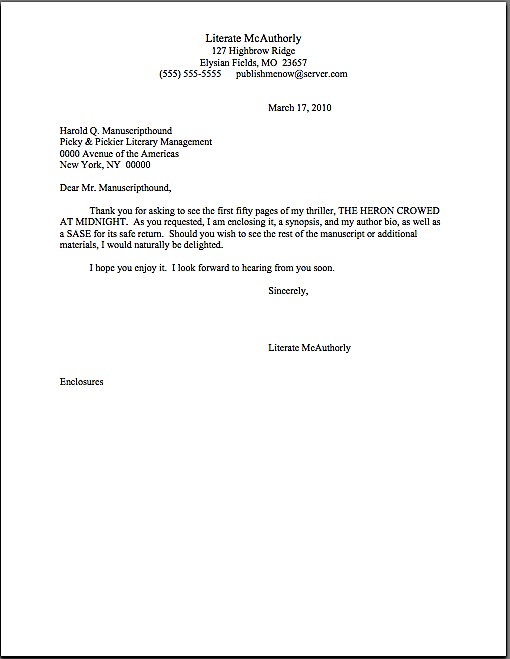
The getting-a-book-published basics, part XV: the rapidly-changing face of self-publishing, or, objects in motion may not look the same as objects at rest

sunshine-moving-in-trees

This, believe it or not, is a photo of something exceedingly straightforward: a wind-blown stand of trees alongside a rural road in Oregon, shot as I was driving by at sunset. Unfortunately — or fortunately, depending upon how one chooses to look at it — my camera has an annoyingly stubborn propensity to assume, contrary to all empirical input, not only that any object I might choose to photograph is going to be stationary, but that I am as well.

News flash, camera: I move occasionally. So do objects in the material world.

(And I don’t appreciate how judgmental you’ve become lately, camera. Yes, I am a writer, and like so many of my breed, may generally be found in front of my computer, day and night. It’s my natural habitat, but I’m not a mushroom. I’ve been known to uproot myself and walk around. Look, I’ve just wiggled my toes. But did you bestir yourself to capture it? Not a chance.)

To give the camera creative credit, sometimes the clash of logically-exclusive presuppositions can lead to unexpectedly interesting results. Since both the trees and I were moving, the camera elected to move from the realm of realism, its usual forte, to impressionism.

Keep this heavy-handed (and tree-filled) metaphor in mind as you read merrily through today’s post, please: clinging too rigidly to preconceived notions of how things are supposed to work may lead to a distorted view of what’s actually going on. So can taking a brief preliminary peek at a process in motion and assuming that momentary snapshot is in fact representative of the whole.

I assure you, forests in Oregon don’t really look like that. My camera’s opinion notwithstanding.

That observation should feel at least a trifle familiar by now: throughout this series, we have seen a number of ways in which the prevailing wisdom about how books get published is, to put it charitably, a tad outdated, if not outright wrong. Contrary to popular opinion, sheer speed of landing an agent or garnering a publishing contract is not a particularly reliable indicator of how good a manuscript is, presenting a manuscript or book proposal professionally does make a difference in how agency screeners respond to it, and advances, particularly for first books, are seldom so large that the writer can afford to quit her day job and live on it, unless she happens to have an unusually developed capacity for deriving nutrition from the air she breathes. If it was ever true that the instant a brilliant writer wrote THE END, agents and editors magically appeared on her doorstep, clamoring to represent and publish, respectively, the just-finished book, well, let’s just say that it hasn’t happened recently.

To be precise, since the days when Cinderella’s fairy godmother was still making regular house calls. If you catch my drift.

At least, it doesn’t work that way for writers who weren’t already celebrities in another medium. If you happen to have won the Nobel Prize in economics, spent your formative years starring in movies, or are the recently-deposed dictator of some interesting small country, I’m afraid that different rules apply; you’re going to need to find guidance somewhere else.

For the rest of us, getting our writing recognized as marketable by those in a position to do something practical about it — like, say, an agent with connections to editors who regularly handle your book category — is darned hard work. And, as I pointed out earlier in this series, all of that nerve-wracking labor and waiting doesn’t stop once one lands an agent to represent one’s manuscript. What the work entails may change, but the imperative to produce one’s best writing, presented in the best possible manner, never goes away.

It’s part of the job description of the professional writer. (Sorry to be the one to break that to you. But if I don’t, who will? Last I heard, the fairy godmothers’ guild was still on strike. Must have been all of those house calls. )

But that does not necessarily mean that someone else will be calling the shots.

Which brings be back, thank goodness, to the matter at hand. Last time, I touched upon several reasons that an aspiring writer might decide to bypass the traditional agent-to-major-publisher route to publication in favor of other options such as approaching a small publisher directly or self-publishing. A writer might conclude that his life was too short to spend querying every agent in the last three years’ editions of the Guide to Literary Agents, for instance; rather than shooting for the big publishing contract, he might be thrilled to see his book in print, even sans advance, through an indie press.

Or, to borrow the rather more poetic rendering of the late, great Hilaire Belloc: When I am dead, I hope it may be said, “His sins were scarlet, but his books were read.”

Strategic reasons might weigh into the decision to go indie as well. A writer might feel, for example, that a regional press would be a better bet for her book on migratory waterfowl of the Mississippi delta. (There must be some, right?)

Or the writer might just find the prospect of an agent’s having the right — nay, the obligation — to dictate changes in his manuscript, changes that may well be countermanded by the editor who acquires the book. Even that’s not necessarily the end of the revision road: since editors come and go with dizzying frequency at the major houses these days, the editor who acquires the book may not be the editor in charge of the project when it’s time for the writer to deliver the manuscript, or when she’s finished making the changes requested in the initial editorial memo. Or in the days before the book goes to print.

Yes, it’s been known to happen. So have requested revisions — sacre bleu! — after the review copies have gone out to the advance reviewers (i.e., the one that review books before distributors get them, such as Kirkus, Library Journal, and Publishers Weekly). If those reviews are dismal enough, editors have been known to get a mite nervous, and the editorial memos start flying.

The moral: what a writer regards as a finished book — which is how most aspiring writers think of their books prior to submission, right? — often isn’t. In the traditional publishing world, a whole lot of people have the right to request changes, right up to the point that the spine is about to be pressed against the pages. And sometimes even after.

If I haven’t already hammered this particular point home throughout this series, let me do it now — and since it’s a truth that long-time readers of this blog should find familiar, feel free to open up your hymnals and sing along: in the eyes of the publishing industry, no manuscript is beyond revision until it is actually sitting on a shelf in Barnes & Noble.

Some writers find this rather trying, as you might imagine. Being a writer, Lawrence Kasden wrote, is like having homework every night for the rest of your life.

I am hardly the first to point out that art and the business of promoting it have not invariably been on the friendliest of terms, historically speaking. One of the perennial frustrations of the aspiring writer’s life is the paradoxical necessity of bringing one’s submissions into conformity with what an unknown agent (or agency screener, editor, editorial assistant, contest judge, etc.) expects to see on the page without unduly compromising one’s authorial voice and artistic vision.

Last time, I brought up an increasingly attractive way out of this dilemma: self-publishing.

Don’t roll your eyes, those of you dead-set on traditional publishing — it’s an increasingly attractive option, especially for nonfiction. These days, you can hardly throw a piece of bread at a respectable-sized writing conference without hitting an aspiring writer who, exasperated by the ever-increasing difficulty of breaking into the world of the major houses, are at least toying with striking out on his own.

Self-publishing has come a long way in the last few years. The rise of print-on-demand (POD) and Internet-based booksellers’ increasing openness to featuring POD books has rendered the self-publishing route a viable option for those who balk at the — let’s face facts here — often glacial pace of bringing a book to publication via the usual means, working with the usual suspects.

Yet if you wander into a writers’ conference and ask representatives of the traditional publishing houses about self-publishing, you’re likely to receive a dismissive, if not overly scornful, answer. Often, agents and editors will act as though self-publishing was purely an act of vanity reserved for those who couldn’t hack it in the big time– unless, of course, the book about which you are inquiring happened to sell exceptionally well and ultimately got picked up by a major publisher as a result.

Which does indeed happen — not often, but from time to time.

In case you were wondering, exceptionally well in this context usually translates into something over 10,000 books, give or take a hundred or two depending upon book category. That’s not only good ECQLC (Eye-Catching Query Letter Candy, for those of you new to the Author! Author! community); that’s a statistic that an agent can carry to an editor at a publishing house as evidence that there’s already a demonstrated readership eager for your next book.

Those are the exceptions, though. The last time I checked, the average self-published book was selling less than 500 copies.

Yes, even the ones posted on Amazon. Just as the mere fact of throwing up a website doesn’t automatically result in the world’s beating a path to one’s virtual door, having a book available for sale online doesn’t necessarily translate into sales. The web is, after all, search-oriented: if a potential reader doesn’t know that a particular book exists, s/he’s unlikely to be Googling it, right?

Someone needs to give that reader a heads-up. Increasingly, that someone is the author.

The many, many obstacles facing the self-published book
There’s a reason for the comparatively low sales statistics, of course: self-publishing generally means that the author is solely responsible for promoting his own book — and placing it in bookstores. At a traditional publishing house, large or small, while authors are increasingly expected to invest their own time and resources in hawking their writing (it’s fairly common now for an author to be responsible for setting up her own website, for instance, and to handle virtually all web promotion), but the publisher will handle getting the book to distributors and book buyers.

A self-published book, on the other hand, almost always has a promotional staff of one: the author.

In practice, this can make self-publishing a pretty hard row to hoe, unless the author happens already to have her pretty mitts on some hefty promotional credentials, a mailing list of thousands, or connections at bookstores nationwide that would make the late Jacqueline Susann weep with envy. (Any writer seriously considering self-publishing, or even promoting her own book, should run, not walk, to rent the uneven but often very funny Susann biopic, Isn’t She Great?. It has some problems on a storytelling level, as real people’s lives often do, but there’s no denying that it’s a great primer on how to promote a book, based upon the undisputed mistress of the art. Seriously, she would stop in every bookstore she passed, sign every copy of her books they had, and send individual thank-you notes to everyone who worked in the bookstore afterward. The lady worked for her sales.)

Also, as I mentioned yesterday, self-published works (as well as POD books) currently face some pretty formidable structural obstacles in a literary world that is still very much oriented toward traditional publishing. Most US newspapers and magazines won’t even consider reviewing a self-published or POD book, for instance; even the standard advance review sources won’t do it.

So there goes the standard source for free publicity. But what about distribution?

In practice, anti-review policies mean it’s harder to convince a library or bookstore to carry a non-traditionally published book. And since fiction is traditionally more review-dependent than nonfiction — it all depends on the writing, right? — almost anyone in the traditional book selling or buying biz will tell you that self-publishing a novel is just a poor idea. (Which isn’t necessarily true anymore — as tomorrow’s guest blogger will be here to attest. But shh; I’m not letting that particular cat out of the bag just yet.)

Then, too, since bookstores must purchase self-published and POD books up front, they don’t have the option to return them to the publisher if they don’t sell. As a result, it can be substantially more expensive for a bookstore to carry them than books from a traditional publisher. So both big chains and small indie stores tend to shy away from self-published books; the author tends to have to talk his book into some shelf space, venue by venue.

And then there’s the conceptual barrier
As if all that didn’t present an intimidating enough obstacle course for the self-published writer, there’s also quite a bit of lingering prejudice against self-published work — an attitude still strong enough in literary circles that an author’s already having brought out even a comparatively successful self-published book will not necessarily impress an old-school agent or an editor.

Yes, really. Despite some notable recent successes, reviewers, librarians, agents, and editors still remain, at least overtly, relatively indifferent to the achievements of self-published books, to the extent that not all of them even make the decades-old distinction between so-called vanity presses (who print short runs of books, often at inflated prices, solely at the author’s expense, so the author may distribute them), subsidy presses (who ask authors to contribute some portion of the printing expenses; the press often handles distribution and promotion), desktop publishing (where the author handles the whole shebang herself), and print-on-demand (which refers to how the books are actually produced, rather than who is footing the bill to produce them).

Why would any reasonable human being lump all of those quite disparate categories together, you ask? Well, practical reasons, mostly: as I mentioned above, the average self-published book does not sell awfully well, so the whole species tends to be dismissed by those who sell books for a living as irrelevant to the book market as a whole.

Interestingly, the prevailing opinion on this point hasn’t changed all that much over the last decade or so, despite the fact that many POD and self-published works have proved quite profitable. Remember what I said above about rigid assumptions sometimes leading those who cling to them to misapprehend reality?

The other reason is philosophical: they just don’t think self-published books are inherently as good as those produced by traditional publishers. If the book in question were genuinely of publishable quality, they reason, why didn’t an agent pick it up? Why didn’t a mainstream publisher bring it out?

Yes, what you just thought is absolutely correct: this logic is indeed circular. However, that doesn’t mean the argument doesn’t have any merit — we’ve all seen dreadful self-published books that have only too obviously never passed under the eyes of a reasonably competent proofreader, let alone editor. — or that the publishing industry and those who feed it for a living are simply hostile to any book they didn’t handle themselves.

Like so much of reality, it’s substantially more complicated than it appears at first glance.

So what precisely do they have against self-publishing, other than that it’s not what they do?
In essence, the underlying objection here is that for a book to be self-published, only its writer has to consider it of publishable quality — which is to say, it has inherently violated the rules by which traditional publishing operates. Breaking into print via single person’s say-so is, as we have seen throughout this series, a far, far cry from how mainstream publishing works. Traditionally published books must jump through a rigorous series of hoops before hitting print, hurdles intended (at least ostensibly) to sift out the manuscripts that are not yet up to professional standard by passing them through an increasingly fine set of mesh screens, as it were.

A trifle startling to think of it that way, isn’t it? To try to understand the traditional publishing industry’s view of self-publishing, let’s take a gander at why they might consider it their selection process akin to panning for gold:

The querying stage: agencies evaluate hundreds of thousands of queries and verbal pitches in order to weed out book projects that don’t fit easily into an established book category (if you don’t know what that is, I implore you to peruse the BOOK CATEGORIES posts on the archive list at right without delay), concepts that have been done too many times (every bestseller spawns thousands of copycats), premises that are unlikely to sell well in the current literary market (which changes all the time), and works by writers that cannot write clearly (I’m sure that all of my readers are sending off gems, but you’d be amazed at how many query letters border on the incoherent).

Based upon these assessments — and other criteria, of course, but we’re thinking in generalities for the moment — the agent (and her Millicents) select a small fraction of the queried or pitched projects to read in manuscript form. In theory, then, any book project that makes it past this stage is considered to be conceptually acceptable and in accordance with professional querying standards.

The agency submission stage: Millicent and her boss agent remove from the pool of possible manuscripts that exhibit grammatical errors, spelling mistakes, formatting problems, storytelling difficulties, pacing angst, a not-very-compelling voice, and a whole host of composition problems. Not to mention those that just don’t grab the agent’s interest or he doesn’t think he can sell in the current market.

By this point, the initially immense applicant pool has been narrowed down to just a few thousand of any year’s queriers — or, depending upon book category, possibly a few hundred. Ostensibly, the manuscripts that make it past this stage are all professionally formatted, grammatically impeccable, are written in a voice and style appropriate to the chosen book category, and are stories well told and/or arguments well made.

Yes, yes, there are other criteria at play, too. Keep picturing those sieves and prospectors panning for gold.

The editorial submission stage: agents take manuscripts and book proposals to editors (and their assistants, known here at Author! Author! as Maury, Millicent’s cousin; their aunt Mehitabel is a veteran contest judge) who assess the submissions for voice, content, and pacing appropriateness for the audience the imprint or press is already targeting (like agents and editors, imprints within major publishing houses specialize, right?), potential marketing pluses and minuses, cost of publishing (one of the primary reasons too-long manuscripts have a hard time making the cut), and what the publishing house’s powers that be believe readers will want to buy a year or two hence.

The miniscule fraction of the original querying pool that clear the hurdles of this stage AND impress an editor more than books by already-established authors (whose books always make up the overwhelming majority of releases in any given year) will then move on to the editorial committee. Every book that makes it to this stage should be of publishable quality by professional standards; in theory, the selections from here on are amongst the best the current aspiring writers’ market has to offer right now.

The decision-making stage: editors pitch the books they have selected of an editorial committee and/or higher-ups at the publishing house who will make the ultimate decision about which books to publish, possibly after consultation with the good folks in the production, marketing, and legal departments. By now, the original querying pool has usually been narrowed so much that the group of accepted first-time authors in a given year could fit quite comfortably into a good-sized movie theatre.

Contrast all of this to the process of self-publishing a book, as an agent or editor might conceive it:

Step 1: write book.

Step 2: pay publisher.

Step 3: receive a stack of books with one’s name on the cover.

Of course, there’s far, far more to it than that, but you can see their point, right? Unless a self-published book really wows the market, the streamlined road to publication itself more or less guarantees that the mere fact that it is in print is not going to impress those who work in traditional publishing.

Again, sorry to be the one to report that, aspiring self-publishers. But wouldn’t you rather know the pros and cons up front, rather than finding out about them after you have already invested in bringing out your book yourself?

Criminy.
Yes, yes, I know: I could feel many of you slowly going pale throughout that last part. I’m sorry to sadden anybody, but if we’re going to understand the odds that render self-publishing attractive to many aspiring writer, it’s vital to bear in mind that in traditional publishing, it’s rare that the annual percentage of releases by first-time authors exceeds 4% of the books sold in the United States.

That statistic, by the way, is from before the recent economic downturn.

Try not to let that depress you into a stupor. Instead, take a deep breath and remember what we learned earlier in the series: draconian winnowing-down techniques are not the result of agencies and publishing houses being inherently hostile to promoting new voices, but the flat necessity of narrowing down the avalanche of book projects to the relatively few that publishers, even behemoth ones, can actually publish in a given year.

When you’ve recovered sufficiently from the shock, I would invite you to consider two possibilities that fly in the face of some of the prevailing wisdom floating around out there. Time to squint our eyes and try to pick out some trees.

First, in the unlikely event that none of you out there has noticed, it’s been getting harder and harder for a new writer to land an agent, much less get a first book published. The hurdles a first book (particularly a first novel) must clear are high and numerous enough that at least considering self-publishing is a fairly rational response to a difficult situation, if one happens to have the resources to pull it off.

Second — and this one is going to challenge some of the prevailing notions floating around the writers’ conference circuit — those who work in traditional publishing honestly do have legitimate reason to regard their acquisition process as literarily rigorous. Yet as recent literary history has shown, that does not necessarily mean that self-published books are invariably less polished than their traditionally-published counterparts.

Which is to say: just because traditional publishing types sneer at self-publishing doesn’t mean that it might not be the right route for your book. Believe me, if you have the gumption, push, and creativity to sell enough copies, they might actually be more impressed than if you’d sold the same number via a traditional publisher.

And then there’s the control
Many self-published authors report that they’re quite happy that they grabbed the proverbial bull by the horns and released their books themselves. Nowhere in the publishing world can a writer enjoy such complete control over what will and will not appear on the page; as most first-time authors working with traditional publishers can tell you to their cost, marketing departments change book titles all the time, and while authors sometimes have consultation rights over their book’s covers, it’s rare that they enjoy much actual input into the finished image.

By contrast, such decisions lie entirely in the hands of the self-publishing author. (Go ahead, take a moment to bask in the glow of that mental image. It’s a pretty one.)

While many presses that cater to self-publishers do offer design services (at a price, of course), the final call is the author’s. If a writer was absolutely married to a particular typeface — something that would be utterly beyond his control at a traditional publisher, right? — it’s his for the asking. DItto with the cover art, or the title.

Heck, if he wanted to have each character’s dialogue appear in a different font, while a press might try to talk him out of it, it would be up to him.

But how might an interested writer get started?
As always, tread with care in pursuit of your dreams. This is yet another area of publishing where it genuinely pays to do your homework.

As with any other aspect of publishing, it really does behoove a writer to think very seriously about what she wants out of the publishing process, which type of publication is most likely to meet those expectations, and to do her homework very thoroughly before committing to any route to publication. Never having self-published anything myself, I don’t pretend to be an expert, but I have collected advice from a number of happily self-published authors under the SELF-PUBLISHING category on the archive list at right. These posts do not constitute an exhaustive how-to by any means, but they will give you some tips on what to expect, how to get started, and ways to avoid getting burned.

Remember, not all presses are equally reputable, and the range of charges can vary wildly. While there are many presses that work very well with writers for a reasonable per-copy price, there are also many that operate on the assumption that self-published books should be glossy, high-cost personal calling cards. So even if you don’t have your heart set on leather binding, you’re going to want to inspect very carefully what you’ll be getting for your money.

Ask lots of questions. Not only of any press that you’re considering entrusting with your work, but of successfully self-published authors as well. Don’t be shy — trust me, if you’re willing to show up for a book reading she’s set up at great trouble, she’ll be more than happy to tell you all about her experience with her press.

But please, be kind: if you ask her for advice, buy a copy of her book. She’s probably hand-selling each one.

As a first step toward learning more about self-publishing — and as a reward for your virtue in sticking with this series to close to the bitter end — I’ve recruited a successful self-published author, the erudite and charming James Brush, to give us the low-down on what he wishes he had known before plunging into the wonderful world of doing it for himself. I’ve taken an advance peek at his guest post, and trust me, each and every one of you who has ever given a passing thought to self-financing a book is going to want to see what he has to say.

So don’t forget to tune in this weekend — same Author! Author! time, same Author! Author! channel.

I’ll be wrapping up this series next week, you’ll probably be delighted to hear, and then be moving on to that topic most vital to submitters, how to format a manuscript. Yes, it’s not a very sexy topic, but as long as I have the energy to blog, not a single one of my readers is going to get her submission rejected because she didn’t know how professional authors present their work to agents.

Besides, after all the forest-gazing of recent weeks, I thought it might be rather refreshing to zero in on some individual trees. Keep up the good work!

The getting-a-book-published basics, part XIV: and then there are the alternate — dare I say more scenic? — routes

to the village center

We’re nearing the end of our crash course on how manuscripts do — and don’t — move from the writer’s fingertips to publication, you’ll be glad to hear. And boy, have we covered a lot of territory over the last few weeks! Admittedly, I could conceivably have guided you over this trail with a somewhat speedier step, dwelling a bit less on the important details, but I consider a working knowledge of how the publishing industry in general, and agencies in particular, function an absolutely essential prerequisite for any aspiring writer intending to market her work.

If by some chance I hadn’t already made that abundantly clear. If I had my way, every writers’ association in the English-speaking world would regularly offer free weekend seminars on this stuff, to discourage any talented writer from walking into the querying and submission process blind.

Heck, I’d love to see this information taught in high schools, along with the basics of standard manuscript format. Now that would be one great English composition course.

Glancing back through the posts in this series, I was reminded of the old joke about the reporter interviewing the famous college professor about how long it typically takes him to write a half-hour lecture.

“Oh, all day,” the professor says, “if it’s a topic I’ve never lectured on before. Sometimes several days. Even a week, if I need to do background research.”

The reporter is awfully impressed at that level of dedication. “Wow, that’s a lot of work. How long to write an hour-long lecture on the same topic?”

The professor shrugs. “About three hours.”

The reporter wonders if the professor misunderstood the question, but after all, this is a learned man; no need to insult his intelligence. Slyly, he asks, “Well, how long would it take you to prepare a three-hour lecture, then?”

The professor smiles. “Would you like me to start right now?”

I suspect that I was reminded of this joke because I couldn’t help noticing that most of the posts in this series are approximately the length of my usual notes for an hour-long lecture, factoring in time for digression and questions — you can take the professor away from the rostrum, but not the rostrum out of the professor’s mind, apparently. But there’s more to it than that: I also believe that there’s a vital lesson here for those who are used to receiving their information about getting published in the kind of sound bites one hears the pros spouting at writers’ conferences and online.

It’s this: while brief, snappy advice may seem simpler, it’s actually significantly harder to produce, at least if it’s done thoughtfully. Unless, of course, the advice-giver is merely parroting the conventional wisdom on the subject, often expressed in dismissive one- or two- sentence bursts. Or as single-page, bullet-pointed to-do lists cribbed from a handout from another conference lecture or website.

Brevity may be the soul of wit, but it’s hardly best tool for explanation.

Trying to follow sound-bite advice is rather like gnawing on cubes of bouillon instead of drinking broth: the two substances may well contain the same ingredients, but it’s certainly easier to digest in the watered-down form. Particularly when, as is often the case for advice aimed at writers, the prevailing aphorisms are deceptively simple.

That’s why it’s both difficult and profoundly important for aspiring writers to come to understand that the much prevailing wisdom you hear glibly passing from mouth to mouth is the bouillon version, not the broth itself.

And frankly, the easy availability of bouillon can lead good writers astray. The combination of those over-concentrated pieces of advice that every writer has heard — the full range from basic writing tips like write what you know and show, don’t tell to the types of things agents and editors like to say at writers’ conferences like good writing will always find a home and it all depends on the writing — with the flat-out wrong popular conception that any genuinely good book will automatically find a publisher instantly can (and frequently does, alas) prompt an aspiring writer to conclude, wrongly, that the process should be easy for a genuinely marketable book. Because all that’s necessary to land an agent and/or editor is to have talent, right? So why bother to learn how to format the manuscript professionally, or to figure out the book category, or even to proofread? Isn’t it the agent and editor’s job to ferret out talent despite how it’s presented?

Um, no. It’s their job to discover writers who can reliably produce marketable prose, adhere to industry standards, and have talent. Even then, the writer’s going to have to take direction well.

Other aspiring writers who have imbibed the bouillon assume that if their manuscripts don’t get picked up right away at the query stage, the problem must be in the quality of the writing. If true talent always gets spotted, then why even speculate that an unprofessional query letter might be the culprit?

These conclusions are completely understandable, of course: it’s what the truisms have taught many aspiring writers to believe. But they are not the whole story, any more than a packet of bouillon is a vat of delicious soup.

Some of you are scratching your heads, aren’t you? “Hmm,” you muse, “is Anne being profound, or is she merely hungry?”

A little of both, I expect. Yet because I have dropped so much potentially quite intimidating information about how books typically get published upon all of you so quickly, I would imagine that the comparatively simple standard aphorisms might be sounding pretty good right about now. Just the facts, ma’am.

I could bore you all at this juncture with some ennobling platitudes about knowledge being power and valuable for its own sake — see my earlier comment about the difficulty of taking the professor out of the girl — but I’m not going to do that. Anyone with the dedication to have plowed through this, let’s face it, often-depressing series doesn’t need that pep talk. You’re all bright enough, I’m sure, to have picked up from my SUBTLE HINTS throughout this series that the archive list at right is so extensively categorized precisely so my readers may find answers to specific practical questions as they come up.

Instead, allow me to suggest something the bouillon-mongers seldom remember to mention: the primary reason that it often takes even excellent manuscripts quite a long time to find agents and a home with a major publisher is that this process is hard.

Anyone who tells you otherwise is probably either trying to promote a book or classes on how to get published — or is attempting to encourage all of the discouraged good writers out there to keep on going in the face of some pretty steep odds. Here’s an aphorism that you’re unlikely to hear at a writers’ conference that is nevertheless true: most aspiring writers give up on finding a home for their manuscripts too quickly.

Given how deeply affected by mercurial market fads agents’ and editors’ choices necessarily are, that’s truly a shame. Especially right now, when the economy is forcing the major publishing houses to be even more cautious than usual in what they acquire.

At the risk of repeating myself: hang in there. To recycle some bouillon of my own, the manuscript that gets rejected today may well not be the one that will get rejected a year or two from now.

But some of you may not be willing to wait that long to see your books in print. This, too, is completely understandable: contrary to what agents often seem to believe, most aspiring writers care more about having their writing available for others to read than about making scads of money on the deal.

Although a few wheelbarrows full of money would be nice, of course.

Which is why — to return to yesterday’s topic — it might make perfect sense to an agent to set aside a manuscript that he professes to love if it doesn’t elicit a fairly lucrative offer in its first circulation, in favor of marketing a client’s next book. In the agent’s mind, the first book hasn’t been discarded; it’s merely waiting to be part of a future multi-book deal.

Seriously, it happens all the time. If an agent thinks a writer has a voice that might hit it big someday, continuing to market that first manuscript to smaller or regional presses might seem like a bad career move, even though going with a smaller press might bring the book into print years earlier. (If these last two paragraphs sound like gibberish to you, you might want to go back and re-read the earlier posts in this series.)

Obviously, this is not necessarily logic that would make sense to a frustrated writer, particularly one who may have spent years and years landing that agent. Heck, even the expectation that there would be a second book ready to go by the time a handful of editors at big publishing houses have had a chance to take a gander at the first would make a lot of aspiring writers turn pale.

If not actually lose their respective lunches. Especially a writer who might have only intended to write one book in the first place.

Authoring only one book is a publishing strategy that often appeals to aspiring writers, particularly memoirists: you have a story to tell, and you tell it. Done. But that’s a career strategy that might not even occur to an agent excited by a new author’s voice.

There’s a reason that “So, what’s your next book?” is such a common question before the ink is dry on the representation contract, after all. Since even authors whose books are released by major publishers seldom make enough to quit their day jobs — remember, few books are bestsellers, by definition — agents tend to be on the lookout for career writers, ones ready, able, and eager to keep launching fine books into the marketplace. From their perspective, planning to write several marketable books is simply very good career sense for a writer who wants to make a living at it.

But that’s not every aspiring writer’s goal, is it? Is it?

Okay, so it is for a whole lot of aspiring writers. But if getting that first — and possibly only — book into print is a writer’s highest priority, investing a great deal of time and energy in landing an agent might not seem like a reasonable trade-off.

And that’s not the only reason a reasonable writer might have qualms about pursuing the standard major publisher route, either. Some might balk at all of the hoops through which large or mid-sized publishers expect first-time authors to leap, up to and including landing an agent first, for instance, or not be too thrilled about the prospect of an agent’s insisting upon changes to the manuscript in order to render it more marketable to the majors. Still others might feel, and rightly, that the time for their books to reach readers is now, not some dim, uncertain time several years hence.

The good news is that, contrary to the underlying assumptions of the bouillon trade, writers do have options other than the big publisher route. And I imagine those of you who have spent much of this series muttering, “Oh, God, NO!” will be overjoyed to hear that a great deal of what I’ve said so far will not apply to the next two sub-topics on our publishing hit parade: publishing through a small house and self-publishing.

No need to conceal your joy; I know, I know.

The small publishing house
Also known as an independent publisher because they are not affiliated with any of the major publishing houses (as imprints are), small presses are often willing to work with authors directly, rather than insisting upon receiving submissions only through agents. Typically, indie houses offer relatively small advances — or sometimes no advance at all — but that’s a calculated risk for an author. Sometimes, it can pay off big time: in recent years, some of the most exciting new fiction has started its printed life at a small press and gotten picked up later by a major publisher.

And because some of you will be able to think of nothing else until I answer the question you just mentally screamed two sentences ago, a writer should approach a small publisher precisely as one does an agent: after having done some research on who publishes what, find out how they prefer to be approached, and send a query.

In other words: as with an agency, it’s never a good idea to send unsolicited manuscripts. Ask first.

By the same token, it’s just as important to do a little research on an indie publisher as on an agent. A well-stocked bookstore is a great place to start; see who is bringing out books like yours these days. Both the Herman Guide and Writer’s Market have good listings of reputable small publishers. So does Preditors and Editors, a fine source for double-checking that the press whose website looks so appealing is in fact a traditional publisher, and not a printer of self-published books for pay.

Hey, you’d be surprised at how often their websites look similar.

I cannot stress sufficiently how important it is to doing your homework, and not merely to avoid being presented with a printing bill. Many an aspiring writer has wasted time and resources approaching a major house’s imprint in the mistaken impression that it’s an independent press, ending up summarily rejected.

How can a savvy writer tell which is which? Check the copyright page of a published book — you know, the one on the flip side of the title page — to see if the press that produced it is an indie or an imprint of a larger house. If it’s affiliated with a major, the copyright page will say.

Select a small press that has a track record of publishing books like yours before you approach. Rather than publishing across a wide variety of book categories, the smaller publishing house tends to specialize. This often turns out to be a plus for authors, as targeting a narrow market often means that a small press can afford to take more chances in what it acquires.

Why can they afford to take more chances, you ask with bated breath? Generally speaking, because their print runs are smaller and they spend less on promotion. And remember how I was telling you that their advances were usually small or non-existent?

Another cost-cutting move: the author usually ends up arranging — and financing the book tour himself. If, indeed, there are public readings at all. (For some useful tips on posts about how writers can set up their own readings, check out the guest posts by FAAB Michael Schein beginning here.)

In fact, over the last couple of years, it’s gotten downright common for small publishers, especially those who market primarily online, to employ the print-on-demand (POD) method, rather than producing a large initial print run, as the major houses do, and placing it in bookstores. (For an explanation of how print-on-demand works, please see the aptly-named PRINT ON DEMAND category on the archive list at right. Hey, I told you that the archive list was broken down into very specific topics!)

Check about this in advance, because POD carries some definite marketing drawbacks: POD books have an infinitely more difficult time getting reviewed (check out the GETTING A BOOK REVIEWED category for more details), and most US libraries have strict policies against buying POD books. So do some bookstore chains that shall remain nameless. (They know who they are!) Even some online retailers won’t carry POD books.

Why, you exclaim in horror? Well, for a lot of reasons, but mostly for because POD still carries a certain stigma; many, many bookbuyers who should know better by now still regard POD as the inevitable marker of a self-published book.

More on why that impression might present marketing problems follows next time. For now, what you need to know is that a small publisher that does not go the POD route is going to have an easier time placing your book on shelves and into the hands of your future readers.

Just something to keep in mind when you’re rank-ordering your list of indie publishers for querying purposes.

On the bright side, an author often has significantly more input into the publication process at a small press than a large one. Because it is a less departmentalized operation than a major publishing house, editors at indie presses often have the time to work more intensively with their authors. For a first-time author who gets picked up by a really good editor who genuinely loves the book, this can be a very positive experience.

It can also, perversely, render an author more attractive to agents and editors at the majors when he’s trying to market his next book. (Since indie presses seldom have much money to toss around, multi-book contracts are rare; see that earlier comment about miniscule advances.) A recommendation from an editor will give you a definite advantage in the querying stage for book #2: a query beginning, Editor Y of Small Publisher X recommended that I contact you about representing my book… is probably going to get a pretty close reading from any agent’s Millicent.

Why? Well, having a successful track record of pleasing an editor at an indie press is a selling point; I tremble to report it, but not all authors are equally receptive to editorial commentary. Also, from an agent’s point of view, the fact that there is already an editor at a press out there who is predisposed to read and admire your work automatically means her job will be easier — if the majors pass on book #2, the editor who worked on book #1 probably will not.

Which is to say: if your first book with a small press does well, they will probably want you to stick around — and might even become a trifle defensive if you start looking for an agent for book #2, especially if it is a press that ONLY works with unagented authors, or who prefers to do so. (Such presses are rare, but they do exist; it is undoubtedly cheaper to work with unagented writers — again, see that earlier comment about advances.)

Don’t be scared off by a presumption that signing with them would that you’re committing to a lifetime relationship. It doesn’t. Small publishers are aware their authors may HAVE to leave them in order to pursue larger markets. Consequently, they expect it. Also, people who work for small presses also understand that it’s not at all unheard-of for a writer to start out at a small press and move up to a big one with the help of an agent.

Actually, the more successful they are at promoting your first book, the more they could logically expect you to move onward and upward. Authors move from press to press all the time, without any hard feelings, and when well-meaning industry professionals genuinely respect an author, the last thing they want to do is to harm their future books’ chances of commercial success. In fact, if your subsequent books do well, the small press will benefit, because new readers will come looking for copies of your first book.

Everybody wins, in short.

That being said, a right of first refusal over your next book is a fairly standard contractual provision for publishers of any size, large or small. It means that when you sell them the first book, you agree to let them look at next before any other publisher does.

That can be very valuable to a small publisher, if your first book takes off. They already know that they like your writing (which means that it is not at all presumptuous for you to assume that they might want your next, incidentally), and they would rather not have to compete in order to retain you.

Translation: you might not see an advance for your next book, either. But if getting your work out there is your primary priority, is that really going to annoy you all that much?

The regional publishing house
This is industry-speak for small publishers located outside the publishing capitals of the world — unless you happen to be talking to someone who works at a major NYC agency or publishing house, in which case pretty much any West Coast publisher would fall into the regional category, too. Sometimes, these presses are affiliated with universities, but many are not.

I bring up conversational use of the term advisedly: if you’ve attended any reasonably large writers’ conference within the last two decades, you’ve probably heard at least one agent or editor talking about regional publishing houses as an alternative to the major publishers. Specifically, you may have heard them answer an attendee’s question with something along the lines of, “Well, I wouldn’t be interested in a romantic thriller about wild salmon conservation, but you might try a Pacific Northwest regional press.”

If you’re like most conference attendees, this response probably felt like a brush-off — which, in fairness, it almost certainly was. Most NYC-based agents who deal with major publisher houses prefer to concentrate on books (particularly novels) that have what they call national interest, rather than what they call mere regional appeal.

Basically, national interest means that a book might reasonably be expected to attract readers from all across the country; books with regional appeal, by contrast, might enjoy a fairly substantial market, but it would be concentrated in one part of the country. Or, to put it another way, books of national interest will strike agents and editors in New York City (or, to a lesser extent, Los Angeles, San Francisco, Toronto, and/or Chicago) as universally appealing.

Interestingly, books set in any of the boroughs of New York are almost never deemed of merely regional interest, even though novels set in Brooklyn do not, as a group, enjoy a demonstrably higher demand than those set in, say, Minneapolis. As far as I know, readers in Phoenix have not been storming bookstores, clamoring for greater insight into daily life in Queens, Chelsea, or Ozone Park. Yet it’s undeniable that many a Manhattan-based agent or editor would find such insights more accessible than those of the fine citizenry of eastern Nevada or the wilds of British Columbia.

Why? Well, it’s not all that uncommon for an NYC based agent or editor, as well as their respective Millicents, never to lived anywhere but the upper eastern seaboard of the United States. My agent boasts that he’s never lived more than ten miles from the hospital where he was born (and if you want to keep on his good side, learn from my sad example and don’t instantly exclaim, “Oh, you poor thing. You really need to get out more.” Trust me on this one.)

The moral: regional marketability, like beauty, most definitely resides in the eye of the beholder.

Which is precisely why a writer of a book with strong regional appeal should consider approaching a local small publisher — which, in most cases, means the local publisher, singular — or at any rate one based in your time zone. A book on homelessness in San Francisco may well strike a Bay Area editor as being of broad interest in a way that it simply wouldn’t to an agent in Manhattan; an incisive novel on the domestic trials of a Newfoundland fishing village might well make more sense to a Canadian editor, or at least can at least find Newfoundland on a map on the first try.

Unless, of course, that last book is by an author who has already won the Pulitzer Prize. Then, you have THE SHIPPING NEWS, and its interest is global. Name recognition is a great dissolver of borders.

Just because a regional press’ editors are more likely to understand the market appeal of your book, however, doesn’t necessarily mean that regional press will be able to get such a book national exposure (although it’s been known to happen.) Like other small publishers, regional presses that concentrate on a particular part of the country usually don’t have much money for book promotion.

What they have tends to be concentrated within a small geographical area. For some books, this works beautifully, but it’s unlikely to land an author on the New York Times’ bestseller list. Again: calculated risk.

Fair warning: contrary to the agent’s comment I reproduced at the beginning of this section, few regional presses actually publish fiction these days, at least in novel form. Some presses who specialize in regional nonfiction do publish short story collections; others will publish regional children’s books. But so few have published novels within the last ten years that I am always astonished when a NYC-based agent implies that they do.

Again, you’re going to want to do your homework before you query or submit. At least more homework than the agent who dismissed the Pacific Northwest novelist above.

Speaking of shifts in publishing, there’s something else you might want to know about approaching a small publisher.

Remember how I had said that things change? Well…
As pretty much any writer whose agent has been circulating a book for her recently could tell you (but might not, for fear of jinxing the submission process), selling a book to a major publisher has gotten a heck of a lot harder over the last couple of years. So much so that agents who would have huffily rejected the very notion of taking their clients’ work to an indie publisher just a few years ago have been thinking about it very seriously indeed of late.

More importantly for those of you who might be considering approaching a small publisher on your own behalf, some of them are actually doing it.

What does that mean for the unagented writer? Well, more competition, among other things, and more polished competition. In other words, an unagented writer’s book usually has to be even better than usual to land a spot in the print queue.

Also, as you may recall from earlier in this series, reputable agents only make money when they sell their clients’ books, so it’s very much in their interest to try to haggle up the advances on books sold to small publishers. In a company where there isn’t, as I mentioned above, much money to throw toward authors, guess what that tends to mean for the advances available for unagented books?

Uh-huh. But again, if your primary goal is to see your work in print, is that necessarily a deal-breaker?

Speaking of money, do make sure before you submit to a small publisher that it isn’t a subsidy press, one that requires authors to put up some percentage of the costs of publication. Unfortunately, not all subsidy publishers are up front about this; the latter’s websites can look awfully similar to the former’s. Before you cough up even one red cent — or, ideally, before you approach them at all — check with Preditors and Editors to see whether the publisher charges authors fees.

Which a traditional small publisher should not. But if chipping in to get your book published sounds like a reasonable idea to you, just you wait until next time, when I’ll be talking about self-publishing.

In any case, you’re going to want to proceed with care — and do your homework. Naturally, this swift overview isn’t the last word on small publishers: as I said, an aspiring writer thinking about going that route owes it to herself do extensive research on the subject. So hie yourself to a well-stocked bookstore, start pulling books in your category off the shelves, and see who published them. Then find out whether any of those presses are open to queries from unagented authors.

And then, who knows? Remember, the only manuscript that stands no chance of getting published is the one its writer never sends out.

I just mention. Keep up the good work!

The getting-a-book-published basics, part XIII: submission strategies under a microscope, or, many roads diverged in a yellow wood, and sorry Cerise could not travel them all…

Viewpoint sign

Still hanging in there, campers? I know, I know: this series hasn’t exactly been a beach read. We’ve been covering a massive amount of information — how manuscripts move from a bright idea to the published page, with significant stopovers at the querying, submitting, agency, revision, and publishing house stages — very rapidly, with an eye to bringing those new to trying to get published up to speed as soon as possible.

Why? Chant it with me now, long-time readers: because an aspiring writer who understands how publishing does and doesn’t work tends to have a far, far easier time treading the road to successful authorship than one who doesn’t. Not to mention being infinitely less likely just to give up on a manuscript that really does deserve to see print.

Because it often is a long and complicated road, even for the most brilliant of writers, realistic expectations are, to my mind, one of the most important — and, unfortunately, least often taught — tools in the career writer’s tool bag. Think about it: even if an aspiring writer lands the best agent currently residing in North America for her type of book, won’t it be significantly harder for her to work with that agent if she doesn’t have a clear notion of what good agents do for their clients?

To that end, I waxed poetic last time about the many, many factors that play into an agent’s decision about when and to whom to submit a book. That’s right: I said the agent’s decision: it comes as a great, big, stunning surprise to most newly-agented writers just how little say they have in how the agent handles their work. Or when the agent starts (or finishes) submitting it to editors.

See why I spent the first couple of weeks of this series harping on the importance of finding not just any agent to represent you, but the right one? I can tell you from long, long experience: a writer who doesn’t feel he can trust his agent to know the market well enough to trust her sense of when to submit his manuscript to which editor is not going to sleep well at night.

But let’s say for the sake of argument that the stars have aligned: your agent decides that your book’s submission date has arrived. What happens next?

How agents submit their clients’ work to editors
Your agent (let’s dub her Cerise, just for the heck of it) has made up a list of editors likely to be interested in it, and either spoken with each editor or communicated by letter or e-mail.

Your book is thus expected, a necessary precondition to its getting read in any of the major US publishing houses. Cerise nods her wise head, the agency sends out the manuscript, and you sit down for a nice, soothing month or two (or twelve) of gnawing your fingernails down to the elbow.

But that’s not all there is to the story, not by a long shot. As I mentioned last time, submission strategies differ from agency to agency, and sometimes agent to agent. Some popular choices:

(a) Some agents like to give a manuscript to their top pick for the book and leave it there until the editor in question has said yea or nay. If the answer is no, the agent will send the book out to the next editor on his list, and the process is repeated elsewhere.

While this can be a great approach if the agent happens to have a true sense of what that particular agent might like, it has its downsides. Most notably, time consumption: one-at-a-time submissions can stretch the submission process out, slowing it to a pace that even your average snail would find maddening.

But there’s good reason for that, so kindly resist the temptation to mutter imprecations at the editor under your breath, and still less Cerise: since editors have every bit as much material to read as agents do, garnering a definitive answer on a particular manuscript can take months.

And that’s assuming that the manuscript landed on the best desk for it in the first place. It’s not at all uncommon for an editor to pass a submission along to another editor in-house for which the project might be better suited (or, in the last couple of years, for it to show up in the inbox of the editor taking up the slack for the one who has just been laid off or quit). since most publishing houses employ editorial assistants to screen submissions, it can take a long time for a manuscript to make it up the ladder, as it were.

If you’re thinking that it could conceivably take a couple of years for a book to make the rounds of the relevant editors at the Great Big New York City-Based Publishing House (or, as it’s known around here, GBNYCBPH), congratulations: you’re beginning to understand the wait-HURRY UP!-wait rhythm inherent to the submission process.

Again, try not to take turn-around times personally. A slow response is not necessarily a reflection on your book’s quality, its ultimate marketability, or even how much the editor likes your manuscript. It’s just the way the system currently works.

While you’re pondering that, let’s move on to another submission option Cerise might choose.

(b) Some agents like to generate competition over a manuscript by sending it out to a whole list of editors at once — informing each, naturally, that she is reading the work competitively.

Cerise’s logic on this one: if somebody else is interested in what you have in your hand, it’s more likely to seem desirable to you. Human nature. And to give due credit to Cerise and her Psych 101 professor, she’s often right about this. But that doesn’t always mean a speedy turn-around time: since the editors are aware that other editors are reading it at the same time, the process tends to run a bit faster, but still, the manuscript is going to need to make it past those editorial assistants. Not to mention working its way up that to-read stack on the editor’s desk.

See my earlier comment about turn-around times. It’s not about you.

If you’re now thinking that because there are so few major publishers — and the mid-sized presses keep getting gobbled up by larger concerns — an agent who chose strategy (b) could conceivably exhaust a fairly extensive submission list in quite a short time, and thus might give up on the book earlier than an agent who embraced strategy (a), congratulations are again in order.

Hey, Cerise’s options honestly aren’t unlimited here. Cut her some slack, please.

(c) Some agents will send out a client’s work to a short list of editors — say, 3 or 4 — who are especially hot for this kind of material, or with whom the agent already enjoys a close relationship.

Although this strategy tends to pay off best for well-established agents with excellent connections, as well as those who pride themselves on identifying and pouncing on the latest new writing trend, it is also much favored by agents relatively new to the game. For good reason: its primary advantage is speed; if none of those 3 or 4 is interested in acquiring it, the agent can simply relegate the book onto the inactive list and move on to the writer’s next project.

Those of you who missed yesterday’s post just did a spit-take with your coffee, I’m guessing. “Next project?” writers across the English-speaking world gasp, wiping liquid from their chins, their computer screens, and any of their pets that happened to be passing fifteen seconds ago. “I poured my heart, soul, and two-thirds of my free time into my present book project! I’m just supposed to be able to produce the next one on command? How? By slight-of-hand?”

No, by advance planning. Pull out your hymnals, readers of yesterday’s post, and sing along with me now: it’s always to a serious career writer’s advantage to have another manuscript or two waiting in the wings.

Or at least a well fleshed-out next book idea. And not just because Cerise might decide after just a few tries that your current project would be easier to sell if you already had another book out first. (Hands up, all of you agented writers who have heard this argument, especially within the last couple of years.) It’s also possible that one of the editors will fall in love with your writing style, but decide to pass on the current manuscript.

“I like the voice,” the editor will sometimes say thoughtfully, “but this book’s not right for our list. Has this writer written anything else?”

If Cerise already knows what’s in your writing pipeline, so to speak, she’s obviously going to be in a better position to leap on this opportunity for you. Perhaps less obviously, you are going to be a much, much happier camper if that next book you’ve gushed to her about is already written. Or at least mostly.

Five thousand writerly hands have been waving madly in the air throughout the last two paragraphs, haven’t they? “But Anne!” writers of marvelous prose everywhere shout as one. “Isn’t what we’re selling here our writing? How is it even possible for an editor to love the writing, but reject the book?”

Oh, quite easily; I’ve had this happen to me several times. Remember what I was telling you yesterday about how often and how radically the literary market changes? A novel that would have flown off Barnes & Noble’s shelves three years ago might well be hard to sell to an editorial committee today.

But that novel you finished eight years ago, then set aside after it had that near-miss with the agent of your dreams? You know, the one that your new agent said might be transformable into a good second novel of a two-book deal? The market may well have changed sufficiently that it’s absolutely right for a particular publishing house now.

Chant it with me now, campers: things change. A savvy writer plans for that when strategizing a writing career.

While a third of you are leaping up to scrabble frantically through desk drawers, cabinets, and the recesses of your basements, trying to find the last extant revision of a long-ago novel, why don’t the rest of us get back to the subject at hand?

As I mentioned, short-list submission strategies tend to appeal to gents who pride themselves on keeping up with the latest publishing trends, where speed of submission is of the essence. Unfortunately from a writer’s perspective, it’s also popular with agents who are looking to break into selling the latest hot book category, regardless of what they have had been selling before.

Which, surprisingly, isn’t usually the biggest objection that writers tend to have with this technique. Where conflict usually arises is over different expectations; unfortunately, agents who embrace this strategy are often not very communicative with prospective clients about the logic they have embraced.

Even more unfortunately, lack of communication between agent and writer is not solely the province of the speed-oriented. Even very patient agents often decide after a reasonable number of submissions to table a project until the market is better for it.

Or even — are you sitting down? — to give up on a manuscript permanently. Either way, chances are slim to none that the writer of the book in question will agree in her heart of hearts with the decision.

Predictably, conflict sometimes ensues. It’s even more predictable if the writer had already been of the opinion that his Cerise had held onto the manuscript too long prior to submitting it. Or was submitting it too slowly. Or just didn’t understand in advance what the agent’s submission strategy was.

Doubt that this is stressful for the writer? Ask a few writers whose agents have found their books hard to sell. Actually, If you’ve been to many writers’ conferences, you’ve probably met a writer or two who has been on the creative end of an agent-client relationship like this.

How can you pick them out of the crowd? Easily: they’ll be the ones rending their garments and wailing about how they didn’t know that the agent who fell in love with their chick lit manuscript had previously sold only how-to books.

Make a point of listening to these people — they have cautionary tales to tell. (Hey, one of the points of attending writers’ conferences is to glean wisdom from those who have trodden the hard path before you, right?) Don’t worry about rubbing salt in the wound by asking about their experiences with their agents; if it’s been remotely negative, believe me, they’ll be only too eager to talk.

One of the things they are likely to tell you: given the downsides of short attention spans, it’s a terrific idea to ask an agent offering to representing your work if you may have a chat with a couple of his clients before signing the contract. Even if the agent cherry-picks only his most satisfied clients — and he will, if he has the sense God gave a green tomato — if he tends to discard manuscripts too quickly, his clients will probably mention it.

If asking an agent making an offer whether you can speak with several of his clients seems audacious to you, remember: a savvy writer isn’t looking for just any agent to represent her work; she’s looking for the RIGHT agent.

Is it time yet to talk about the best-case scenario?
Yes, impatient writers who have had their hands raised for a nice, long time now? “But Anne,” authors of the surprise bestsellers of 2013 inquire, “what about all of those books we hear about that make editors drool? How does an agent generate a bidding war?”

Glad you asked, future blockbuster-mongers. There is yet another way an agent might choose to handle a book.

(d) If a manuscript generates a lot of editorial interest — known as buzz — an agent may choose to bypass the regular submission process altogether and sell the book at auction.

This means just what you think it does: a bunch of representatives from GBNYCBPH get together in a room and bid against each other to see who is willing to come up with the largest advance.

I can’t come up with any down side for the writer on this one. Sorry.

Yes, eager producers of future bestsellers? “Hey, Anne: I sometimes see, in Publisher’s Marketplace, that a book was sold in a preempt. Is that some fancy industry euphemism for an auction?”

Excellent question, writers-for-the masses, but no. Actually, a pre-empt (short for preemptive offer) is an attempt to prevent a book from going to auction — or to stop another publisher from acquiring it. Pre-empts also can occur when the publisher wants more rights — North American plus world, for instance — than the agent is trying to sell at the moment.

Basically, the publisher tries to make it worth the agent’s while not to offer the book up for competitive bidding. So it will offer a bid that it hopes is high enough to tempt the agent not to take the book to auction.

Usually, though, a pre-empt comes with a catch: it’s only good for a short time, generally 24-48 hours. That way, the agent doesn’t have the option of coming back after a disappointing auction and daying, “Okay, Pre-empt Offerer, I’m ready to deal now.

Okay, you can stop drooling now; you can always return to that alluring mental picture later. Let’s get back to less-green pastures.

I’m confused. Can you tell me more about what happens if my agent decides she can’t sell the book?
Regardless of the strategy an agent selects, if she has gone all the way through her planned submission list without any nibbles from editors, one of four things can happen next. Ideally, Cerise would talk through these options with you before proceeding, but again, an inclination to issue regular informational bulletins is not standard equipment for an agent.

Which points us to yet another great set of questions to ask in that first conversation: how often do you give your clients updates on your progress selling their manuscripts? Will you be contacting me only if something exciting happens, or will we be communicating regularly? Will you call me, or should I e-mail you?

And so forth. The earlier in your working relationship you can establish realistic mutual expectations, the less likely a communication breakdown is to occur down the line.

Back to those end-game submission options. First, the agent can choose to submit the work to small publishing houses; many agents are reluctant to do this, as small publishers can seldom afford to pay significant advances. Second, as we discussed above, the agent can choose to shelve the manuscript and move on to the client’s next project, assuming that the first book might sell better in a different market.

Say, in a year or two. Remember, things change. And that’s only natural.

Third, the agent may ask the writer to perform extensive further revision before sending it out again. (Speaking of common sources of agent-client conflict.) Fourth — and this is the option most favored by advocates of strategy (c) — the agent may drop the client from his representation list.

Wait — my agent might give up on me, and not just my manuscript?
Well may your shapely jaw drop. Again, see how it might be to a writer’s advantage to have a few book projects in the pipeline, rather than staking his entire sojourn at the agency with just one?

And that’s not the worst of it, I tremble to report. Remember how I mentioned that some (c) adherents are not, shall we say, the best communicators who ever logged into e-mail? Here is where that paucity tends to shine with its most baleful splendor: it’s not at all unusual for agents fond of this strategy not even to notify their clients that they’ve been dropped. The writer simply never hears from them again.

Yes, this last is lousy to live through, now that you mention it. But in the long run, a writer is going to be better off with an agent who believes enough in her work to stick with her than one who just thinks of a first book as a one-off that isn’t worth a long try at submission.

I’m mentioning this not to depress you, but so if your agent suddenly stops answering e-mails, you will not torture yourself with useless recriminations. Either pitch that next book project to Cerise, pronto, to try to rekindle her interest, or start querying other agents right away, preferably with your next book. (It can be more difficult to land an agent for a project that has already been shopped around for a while.)

In other words: you’ll be a much, much happier human being if you’ve already been working on your next book while your agent has been submitting your current one.

But enough dwelling on the worst-case scenario. I know that I’m running long today, but I hate to end on such a grim note. On to happier topics!

What happens if an editor decides that she wants to acquire my manuscript?
Within a GBNYCBPH, it’s seldom a unilateral decision: an editor would need to be pretty powerful and well-established not to have to check with higher-ups. The vast majority of the time, an editor who falls in love with a book will take it to editorial committee, where every editor will have a favorite book project to pitch. Since we discussed editorial committees earlier in this series, I shan’t take the time to recap now. Suffice it to say that approval by the committee is not the only prerequisite for acquiring a book.

Let’s assume for the sake of brevity that the editorial committee, marketing department, legal department, and those above the acquiring editor in the food chain have all decided to run with the book. How do they decide how much of an advance to offer?

If you have been paying close attention throughout this series, your hand should have shot into the air, and you should already be shouting the answer: by figuring out how much it would cost to produce the book in the desired format, the cover price, how many books in the initial print run, and what percentage of that first printing they are relatively certain they could sell. Then they calculate what the author’s royalty would be on that number of books — and offer some fraction of that amount as the advance.

All that remains then is for the editor to pick up the phone and convey the offer Cerise.

What happens next really depends on the submission strategy that’s been used so far. If the agent has been submitting one at a time, she may haggle a little with the editor over particulars, but generally speaking, the initial offer tends not to change much; after the terms are set, the editor puts the offer in writing.

Here’s the part you’ve been waiting for, campers: the agent will then contact the writer to discuss whether to take it or to keep submitting.

With a multiple-submission strategy, events get a little more exciting at this juncture. If there are other editors still considering the manuscript, the agent will contact them to say there’s an offer on the table and to give them a deadline for submitting offers of their own. It’s often quite a short deadline, as little as a week or two — you wouldn’t believe how much receiving the news that another publisher has made an offer can speed up reading rates. If there are competing offers, bidding will ensue.

If not — or once someone wins the bidding — Cerise and the acquiring editor will hammer out the terms of the publication contract and produce what is known as a deal memo that lays out the general terms. Among the information the deal memo will specify: the amount of the advance, the date the editor expects delivery of the manuscript (which, for a nonfiction book, can be a year or two after the contract is signed), an approximate word count, the month of intended release, and any other business-related details.

Basically, it’s a dry run for the publication contract. After all of the details are set in stone, the publisher’s legal department will handle that — or, more commonly, they’ll use a boilerplate from a similar book.

What neither the deal memo nor the contract will say is how (or if) the author needs to make changes to the book already seen or proposed. Typically, if the editor wants revisions, she will spell those out in an editorial memo either after the contract is signed (for fiction) or after the author delivers the manuscript (for nonfiction). Until the ink is dry on the contract, though, it’s unlikely that your agent will allow you to sit down and have an unmediated conversation with the editor — which is for your benefit: it’s your agent’s job to make sure that you get paid for your work and that the contract is fulfilled.

Which brings us full-circle, doesn’t it? The publisher has the book, the writer has the contract, the agent has her 15%, and all is right in the literary world.

I could tell get into the ins and outs of post-contract life — dealing with a publisher’s marketing department, the various stages a manuscript passes through on its way to the print queue, how publishers work with distributors, how authors are expected to promote their books — but those vary quire a bit more than the earlier steps to publication do. Frankly, I think those are topics for another day.

If not another series. This has been a lengthy one, hasn’t it?

And besides, things are changing so much in the publishing world right now that I’d hate to predict how the author’s experience will be different even a year from now. All any of us can say for certain is that writers will keep writing books, agents will keep representing them, and publishing houses will keep bringing them out. As the author’s responsibilities for the business side of promoting her own work continue to increase — it’s now not at all unusual for a first-time author to foot the bill both for freelance editing and for at least some of the promotion for the released book, for instance — how much publishing with a GBNYCBPH will differ from going with a smaller press five or ten years from now remains to be seen.

Conveniently enough, that brings me to our next topic. Next time, I shall talk about some of the other means of getting a book into print: small presses and the various stripes of self-publication. Keep up the good work!

The getting-a-book-published basics, part XII: things change — but not as fast as many writers would like

Yes, yes, I know: I usually open our discussion and gladden your hearts with a pretty picture, or at any rate one to get you thinking about our topic du jour. Today’s marginally pretty pictures, however, require a bit of initial explanation. Specifically, I want to give you a heads-up about how I would like you to use them.

So: please stare at the photos I am about to show you for a good, long minute before moving on to the rest of the post. I would like these images burned into your cranium before we return to our ongoing topic, how manuscripts move from the writer’s brainpan, through an agency, through a publishing house, to end up on your local bookstore’s shelves.

Never mind why; just stare. First, at this snapshot I took in my yard a year ago:

a-windchime-in-the-snow

Clear in your mind? Excellent. Now contemplate, if you will, the same view at a later date (and from slightly farther away, I now notice):

crabtree-blossoms-and-windchime

Four months separate those pictures — either a very short time for such a radical alteration of the environment or an interminable one, depending upon how you choose to look at it. But whatever your attitude, the fact remains that both the wind chime and its observer feel quite different sensations now than they did then, right?

Bear that gentle observation in mind for the rest of this post, please. This series has, after all, been all about gaining a broader perspective on a great, big, time-consuming process whose built-in delays aspiring writers all too often — mistakenly — regard as completely personal.

Yes, it’s all happening to you, but the upcoming change of seasons will happen to you, too. Does that mean that nobody else experiences it? Or that today’s frosty blast of winter air was aimed at you personally?

Realistic expectations and the management of resentment
For the last couple of weeks, I’ve been sticking to the basics: an overview of the trajectory a manuscript typically travels from the writer’s hands to ultimately sitting on a shelf at your local bookstore. Since what most aspiring writers have in mind when they say they want to get their books published is publication through great big New York City-based publishing houses — GBNYCBPH for short, although admittedly, not very short — I’ve been concentrating upon that rather difficult route.

As we have seen, in order to pursue that particular path — which is, as we shall see later in the week, not the only possible route to publication; people merely act as though it is — a writer needs an agent. Yet as we also saw earlier in this series, that was not always the case: aspiring writers used to be able to approach editors at GBNYCBPH directly; until not very long ago, nonfiction writers still could. Instead, writers seeking publication at GBNYCBPH invest months — or, more commonly, years — in attracting the agent who can perform the necessary introduction.

So a historically-minded observer could conclude that over time, the road to publication has become significantly longer for the average published author, or at any rate more time-consuming. Should we writers rend our garments over this, bearding the heavens with our bootless cries, complaining to an unhearing collection of muses that it’s just a whole lot more difficult to get good writing published than it used to be?

Well, we could — and a startlingly high percentage of the public discussion of the writing life is devoted to just that. One can hardly walk into any writers’ conference in North America without tripping over a knot of writers commiserating about it. Certainly, you can’t Google how to get a book published without pulling up an intriguingly intense list of how-to sites and fora where aspiring writers complain about their experiences, sometimes helpfully, sometimes not. And don’t even try to total up all of the blogs on the subject.

Two things are clear: there’s quite a bit of garment-rending going on, and this process is hard.

Although I am never averse to a little light self-inflicted clothing damage if the situation warrants it, I am inclined to think that most aspiring writers expend too much energy on resentment. Without question, most take it too personally, given that the GBNYCBPH didn’t suddenly rearrange their submission policies the day before yesterday in order to avoid having to deal with any individual submission they might otherwise have received within the next six months. Using agents as the North American literary world’s manuscript screeners, effectively, has been going on for quite some time.

Did I just hear a few dozen cries of “Aha!” out there? Yes, your revelation is quite correct: at one level, an agency is to a major NYC-based publishing house what Millicent the agency screener is to the agent, the gatekeeper who determines which manuscripts will and will not be seen by someone empowered to make a decision about publishing it.

But it’s laughably easy for an aspiring writer in the throes of agent-seeking to forget that, isn’t it? All too often, aspiring writers speak amongst themselves and even think about landing an agent as though that achievement were the Holy Grail of publishing: it’s a monumentally difficult feat to pull off, but once a writer’s made it, the hard work’s over; the sweets of the quest begin.

It’s a pretty image, but let me ask you something: have you ever heard a writer who already has an agent talk about it this way?

I’m guessing that you haven’t, because I’m hear to tell you: seldom are garments rent more drastically than amongst a group of agented writers whose books have not yet been picked up by GBNYCBPH.

Why, the agent-seekers out there gasp, aghast? Because typically, signing with an agent doesn’t mean just handing the manuscript over to another party who is going to do all the work; it means taking on a whole host of other obligations, frequently including biting one’s lip and not screaming while absolutely nothing happens with a manuscript for months at a time.

To put it lest histrionically, working with an agent is work. Just not the same work that a writer was doing before.

In other words: things change. And that’s only natural.

Okay, so what is it like to work with an agent?
Are you sitting down? You should, because the answer to that question generally comes as a gargantuan surprise to those in the throes of agent-seeking: the main change most newly-agented writers report is no longer feeling that they have control over what happens to their books.

That’s not paranoia talking, by the way, nor is it merely the inevitable emotional letdown inherent in reaching a goal one has pursued for an awfully long time. It’s a ruthlessly accurate perception, usually.

How so, you ask with horror? Well, for starters, the agent, not the writer will be the one making decisions about:

* when the manuscript is ready for submission to editors at GBNYCBPH;

* given that the agent’s initial answer to that first question will almost certainly be not yet, what revisions need to be made in order to render it ready;

* when the market is ripe for this particular submission (hint: not necessarily when the country’s flailing its way out of a serious recession);

* what additional materials should be included in the submission packet, and your timeline for producing them (because yes, Virginia, you will be the one producing most of marketing materials your agent will wield on your behalf);

* which editors should see it and in what order;

* how it should be submitted (one at a time, in a mass submission, or something in between);

* how soon to follow up with editors who have been sitting on the submission for a while (in general, quite a bit longer than strikes an impatient first-time author as appropriate);

* whether it’s even worth bothering to follow up with certain editors (especially if it’s rumored that they’re about to be laid off or are toying with an offer from another publishing house);

* whether to pass along to the writer the reasons that an editor gave for rejecting the manuscript (not all agents do — and not all agents who do pass along all of the feedback they receive from editors, especially if it contradicts their own views of the book);

* whether enough editors have given similar excuses that the writer really ought to go back and revise the manuscript before it gets submitted again;

* when a manuscript has been seen by enough to stop submitting it, and

*when to start nagging the writer to write something new, so s/he can market that.

I make no pretense of foretelling the future, but I don’t need to be the Amazing Kreskin to state with 100% certainty that those of you who land agents between the time I post this and two years from now will disagree with those agents on at least one of the points above. Probably more. And the vast majority of the time, you will not win that particular debate, because the agent is the one who is going to be doing the submitting.

Oh, you would rather not have known about this until after you signed a representation contract? And aren’t you glad that you already had those nice, peaceful windchime images rattling around in your head? (I thought you might like a brain-soother right about now.)

Now that you’ve calmed down — oh, like the list above didn’t make you even the teensiest bit angry — let’s take another gander at it. Notice how much work the writer is expected to do under this arrangement? You produce the manuscript or proposal, revise it according to the agent’s specifications, write any additional marketing material (trust me, you’ll be glad that you already have an author bio — and if you don’t, consider devoting next weekend to going through the HOW TO WRITE AN AUTHOR BIO category on the list at right to come up with one), make any subsequent revisions (editors have been known to ask for some BEFORE they’ll acquire a book)…

And all the while, you’re supposed to be working furiously on your next book project. Why? Because “So, what are you working on now?” is one of the first questions any editor interested in your current book will ask.

Nice, deep breaths. That dizzy feeling will pass before you know it.

In fact, don’t be surprised if your agent starts asking about your next book roughly 42 seconds after you deliver the full manuscript of the book that attracted his attention in the first place. A career writer — one who has more than one book in him, as they say — is inherently more valuable to an agent or a publishing house than one who can only think in terms of one book at a time; there’s more for the agent to sell, and once a editor knows she can work with a writer (not a self-evident proposition) whose voice sells well (even less self-evident), she’s going to want to see the next book as soon as humanly possible.

And no, at that point, no one will care that you still have a day job. It’s a reasonable objection, though.

A word to the wise: you might want to start working on your next during that seemingly endless period while your agent is shopping your book around — that’s agency-speak for showing it to editors — or getting ready to shop your book around. Yes, it’s a whole lot of work to wrest your fine creative mind out of the book currently in your agent’s beefy hands — but it’s a far, far more productive use of all of that nervous energy than sitting around and fretting about whether your agent is submitting your last book quickly enough.

Or rending your garments. Trust me on this one.

Wait — so what will my agent actually do with my manuscript once s/he deems it ready to go?
Let’s assume that you’ve already made the changes your agent requests, and both you and he have pulled it off in record time. Let’s also say that he’s taken only three months to give you a list of the changes he wanted, and you’ve been able to make them successfully in another three.

If that first bit sounds like a long time to you, remember how impatient you were after you submitted your manuscript to the agent? The agent has to read all of his current clients’ work AND all of those new submissions; it can take a long time to get around to any particular manuscript.

What happens next? Well, it depends upon how the agency operates. Some agencies (like mine, as it happens) will ask the writer to send them 8-15 clean copies of the entire manuscript for submission.

Other agencies will simply photocopy the manuscript they have to send it out and deduct the cost of copying from the advance. Sometimes the per-page fee can be rather steep with this second type of agency; if it is, ask if you can make the copies yourself and mail them. Many agents will also ask for an electronic copy of the manuscript, for submission in soft copy.

While some of you are cringing, furtively adding up how much it would cost to produce 15 impeccable copies of a 400-page manuscript, I can feel others of you starting to get excited out there. “Oh, boy, Anne!” a happy few squeal. “This is the part I’ve been waiting for — the agent takes my writing to the editors at the GBNYCBPH!”

Well, probably not right away: agencies tend to run on submission schedules, so as not to overtax the mailroom staff. It also makes keeping the submission lists straight easier — because you don’t want your manuscript to be sent to either the wrong editor or the same editor twice, do you?

In a large agency, it may take a while for a new client’s book to make its way up the queue. Also, not all times of the year are equally good for submission.

That just made half of you sit up ramrod-straight in your chairs, didn’t it? Remember how I told you that much of the publishing industry goes on vacation between the second week of August and Labor Day? And that it’s virtually impossible to get an editorial committee together between Thanksgiving and the end of the year? Not to mention intervening events that draw editors away from their desks, like the spring-summer writers’ conference season and the Frankfurt Book Fair in the autumn?

The inevitable result: your manuscript may be in for a wait. Depending upon your relationship with your new agent, you may or may not receive an explanation for any delays.

But the usual reason is — shout it with me now — things change. The manuscript that couldn’t interest an editor even if the agent did a striptease during the pitch (oh, there are stories) five years ago might get snapped up in a flash two years from now. And while the bookstores may be crammed with vampires and zombies now, they will be just as crammed with future fads next year.

See why it’s of critical importance to sign with not just any agent, but one whose judgment you trust, one who believes in your talent? A good agent is not just some guy who can take a brilliantly-written book and sell it — ideally, he’s the writer’s partner in long-term strategic planning of the literary variety.

And that kind of partnership, my friends, is well worth searching a while to find.

Because although this is a hard business, it’s also an ever-changing one. You want an agent who understands that ultimately, literary success is a long-term game. Myopically insisting that is true today is eternally true of the book market is just, well, historically ill-informed.

Things change — and that’s only natural. Keep up the good work!

The getting-a-book-published basics, part VIII: why no single rejection means the end of the line — or even rocks ahead

French road sign

One of the ever-changing communications phenomena that most fascinates me is the relatively new practice of people forwarding newspaper articles to one another. Or even blog posts — some of mine have ended up in some awfully odd places. Scads of people who would never dream of clipping a column out of a physical newspaper blithely forward other people’s writing on subjects that interest them all over the place, often with minimal comment.

Basically, they’re saying: I saw this and thought it would interest you, but I don’t really have anything to add to the discussion.

Okay, so maybe that’s a trifle harsh: unlike, say, aspiring writers, many people prefer to be content consumers, rather than producers. The pervasiveness of the forwarding-without-substantive comment practice is largely a side effect of so much information being available online these days. But I must confess, I don’t think it’s really a substitute for discussion, conversation, or even a friendly I was thinking of you.

In particular, I’m constantly bemused at how often I’m forwarded pieces that simply confirm things that the sender is already aware that I have known for years. How do I know that they’re aware of it? Because when I’m interested in something, I like to have discussions about it.

Case in point: last week, no fewer than fifteen people — delightful, well-meaning, quite intelligent people, fully capable of holding up their respective ends of conversations — forwarded me the link to a recent Wall Street Journal article revealing the shocking fact that major publishers in the US no longer read unsolicited submissions from unagented writers. The slush pile, the article breathlessly informed readers, is all but dead.

Which will not come as a surprise, I suspect, to any aspiring writer who has tried to get a book published within the last 15 years. The agented-only submissions policy has been in place at the majors for an awfully long time now.

As, indeed, I would hope that anyone who reads this blog on a regular basis, or even has been following this month’s posts on how the publishing industry does and doesn’t work, was already aware. In case anyone still is not: under no circumstances should a writer query or submit directly to an editor at a major (or even mid-sized US publishing house, unless the editor has specifically requested it. It’s just a waste of a writer’s time and resources.

There, now: none of you fainted, did you? Were any eyebrows even raised?

But then, I am perpetually astonished at the already pretty well-established phenomena that are evidently supposed to flabbergast otherwise reasonable adults. That TV characters who have been flirting for seven consecutive seasons suddenly end up romantically entangled during episodes aired during sweeps week, for instance: um, who precisely is not going to have seen that coming? Or that any given major political initiative is greeted by anything but the unanimous approval of any given legislative body: as nearly as I can tell from the news every night, we’re all supposed to be floored by the fact that politicians disagree with one another from time to time, even when those splits run along precisely the party lines that characterized the last 17 major disagreements. Or that anyone’s cockles wouldn’t be warmed by the magic of Christmas.

Frankly, I like to think that most people are a trifle less credulous than that — and more inclined to learn from experience. To paraphrase Abraham Lincoln, I don’t think too much of people who are not wiser today than they were yesterday.

Which is one aspect of how the publishing industry treats writers that I really like: it assumes not only that anyone who can write well enough to deserve to be published is an intelligent human being, but also that a good writer can and will learn the ropes of the business side of publishing That’s not an insignificant compliment, in this era where even news shows operate on the assumption that the average adult has the attention span of a three-year-old — and one who has been stuffing candy into his eager mouth for the last two hours at that. Actually, I find agents’ and editors’ presumption of authorial intelligence rather refreshing.

If not always completely justified. Aspiring writers often expend a great many tears, trying to capture the attention of an agent or editor when they do not know the rules for flagging ‘em down. Or that there are rules at all.

Hey, did you hear that new writers never get discovered from the slush pile? Film at 11.

Which may, I suppose, be the point of forwarding some information around. Since the pros expect writers to do their own research before trying to get their books published, those brand-new to the biz are often stunned that nobody in the industry just tells them what to do. From a first-time querier’s perspective, it can seem downright counterproductive that agents just expect her to know what a query letter should look like, what information it should contain, and that it shouldn’t just read like a back jacket blurb for the book.

Heck, how is someone who has never met an agented author in person to know not just to pick up the phone and call the agent in question? Magic? Osmosis?

Similarly, agents, editors, and contest judges presume that anyone genuinely serious about her writing will have taken the time to learn how professional writers format their manuscripts — an interesting presumption, given that many, if not most, aspiring writers are not aware that professional manuscripts are not supposed to resemble published books. (To those of you who just gasped: don’t worry; I shall be going over the differences again as soon as I wrap up my current series on how books get published.)

Correct me if I’m wrong, but that’s not information that the average writer is born knowing — which is a real shame, since professionally-formatted manuscripts tend to be taken far more seriously at submission time than those that are not.

Why? Well, partially because of that flattering supposition I mentioned above: because people who read manuscripts for a living tend to assume that since good writers are intelligent people, the common conclusion is that the only reason that a manuscript would not be formatted properly is that the submitter did not bother to do his homework.

In other words, from their perspective, a query or submission that does not conform to their expectations of what is publishable (in terms of writing) or marketable (in terms of content or authorial authority) is a sign that the writer just isn’t ready yet to play in the big leagues. That doesn’t necessarily mean that they believe that writer will never produce professional-level work; indeed, folks in the industry tend to assume (and even say at conferences) that they’re confident that if a truly talented writer gets rejected, she will take it as a sign that she needs to improve her presentation.

Since the information on how to do that is available — although nowhere near as readily or conveniently as most agents who say this sort of thing seem to think, despite the pervasiveness of the forwarding culture — why wouldn’t someone with a genuine gift invest the time and effort in learning to do it right?

In my experience as a freelance editor, writing teacher, and conference presenter, there’s a very straightforward answer to that: because the average querier or submitter, gifted or otherwise, doesn’t have a clear idea of what he’s doing wrong. And since most rejection letters these days contain absolutely no clue as to what caused the agent (or, more commonly, the agent’s screener) to shove the submission back into the SASE — or don’t respond at all if the answer is no — I don’t find it all that surprising that the aspiring writer’s learning curve isn’t always particularly steep.

You may forward the link to my saying so. Just don’t quote me without giving me credit, okay?

All of this is why I am bringing up the expectation of intelligent research toward the end of this series on how writers bring their books to publication. Indeed, it’s a large part of the reason that I write this blog: from an outside perspective, it’s just too easy to interpret the sometimes esoteric and confusing rules of querying, pitching, and submission as essentially hostile to aspiring writers.

That’s not really the case. While many of the querying and submission restrictions have indeed been established, as we have discussed, in order to narrow the field of candidates for the very, very few new client slots available at most agencies, the intent behind that weeding-down effort is not to discourage talented-but-inexperienced writers from trying to get their work published. The underlying belief is that an intelligent person’s response to rejection will not be to give up, but to analyze what went wrong, do some research about what can go right, and try, try again.

Yes, what you just thought so loudly is quite correct: the fine folks who toil in agencies and publishing houses don’t expect the writers they reject to disappear permanently, at least not the ones with genuine talent; they believe that the gifted ones will return, this time better equipped for life as a professional writer. To cite the old publishing industry truism, good writing will always find a home.

What the agents and editors who spout this aphorism seldom think to add is: but not necessarily right away. Like learning any other set of job skills, becoming a professional writer can take some time.

Which means, from the business side of the industry’s perspective, writers who give up after just a few rejections — which is the norm, incidentally, not the exception — are those who aren’t seriously interested in making the rather broad leap between a talented person who likes to write and a professional writer in it for the long haul. Trust me, they don’t waste too many tears over the loss of the former.

I don’t see it that way, personally: given how many writers I meet in my classes, at conferences, and through this blog, I see the crushed dreams. But that doesn’t mean that I don’t think that most talented aspiring writers take individual rejections from agents far, far too seriously.

That’s why, in case you were wondering, I didn’t move on to my promised topic du jour, what happens after an agent agrees to represent a manuscript. There will be time enough for that happy contingency tomorrow.

Today, I want to concentrate on the importance of keeping faith with your own work. These days, it seems as though every other aspiring writer I meet has either:

(a) had sent out a single query, got rejected, and never tried again,

(b) had a few queries rejected two years ago, and has been feverishly revising the manuscript ever since, despite the fact that no agent had yet seen it,

(c) had pitched successfully at a conference, but convinced herself that the only reason four agents asked to see her first chapter was because those agents were just saying yes to everybody,

(d) had received a positive response to a query or pitch, then talked himself out of sending the requested materials at all, because his work isn’t good enough,

(e) had sent out the requested pages, but in order to save herself from disappointment, decided in advance that none of the replies will be positive,

(f) had received the first manuscript rejection — and expanded it mentally into a resounding NO! from everyone in the industry, and/or

(g) concluded from conference chatter that no one in the industry is interested in any book that isn’t an obvious bestseller.

In short, each of these writers had decided that his or her fears about what happened were true, rather than doing the research to find out whether the response that fear and hurt dictated was in fact the most reasonable one.

How might one go about figuring out whether a fear is reasonable? Let me address each of above quickly, to save you some late-night agonizing time:

(a) A single query is not — and cannot — be indicative of how every agent on earth will respond.
A better response: why not try again?

(b) Until agents have actually seen the manuscript, there’s no way a writer can know how they will respond to it.
A better response: work on improving the query.

(c) No, the agents and editors WEREN’T asking everyone to send chapters — pitching doesn’t work that way.
A better response: assume that you did something right and send out the requested materials.

(d) How do you know for sure until you send it out?
A better response: learn how to present your work professionally, then submit it.

(e) In my experience, foretelling doom does not soften future misfortune, if it comes — it only serves to stultify present hope.
A better response: hedge your bets by continuing to query other agents while waiting to hear back from the first round.

(f) ANY individual agent or editor’s opinion of a book is just that, an opinion. It’s not the considered response of everyone affiliated with the publishing industry forever and ever, amen.
A better response: see (a)

(g) Contrary to popular opinion, the publishing industry makes MOST of its money on books that are neither bestsellers nor small-run books. Most of the time, the mid-list titles are paying the agency’s mortgage.
A better response: take the time to learn how the industry works, rather than killing your chances entirely by not continuing to try.

I don’t mean to imply that bouncing back from rejection is easy, or that landing an agent is a snap. The road from first idea to publication is long and bumpy, and seems to get bumpier all the time.

As Maya Angelou tells us, “There is no greater agony than bearing an untold story inside of you.”

Yes, it’s emotionally hard work to prep your pages to head out the door to agents and editors; yes, it is hard to wait for replies to your submissions. To give you a foretaste of what’s down the road if you’re successful, it’s also psychically difficult to watch the weeks tick by between when you sign with an agent and when that sterling soul decides that, in her professional opinion, the time is ripe for her to submit your book to editors. And then it’s rough to wait until those editors get around to reading it, just as it is agonizing to hang around, feigning patience, between the time a publisher acquires your book and it appears on the shelves.

I’m not going to lie to you: it’s all incredibly wearing on the nerves. Again, though: is film at 11 really necessary?

But if you are thinking about throwing in the towel on your book before you have given the querying and submission processes a thorough test, I’m just not the right person to look to for validation of that decision. Sorry. I’ll give you practical advice on how to query; I’ll hand you tips on how to improve your submission’s chances; I’ll share pointers on the fine art of revision; I’ll answer your questions along the way.

I will cheer from the sidelines until I’m blue in the face for your efforts as a writer — as long as you keep trying.

Why? I can only refer you to one of the few industry truisms that is actually true 100% of the time: the only book that has ABSOLUTELY no chance of being published is the one that stays hidden in the bottom drawer of the author’s filing cabinet.

Keep pushing forward; keep sending your work out. Because while it’s time-consuming, expensive, and emotionally wearing, it’s also literally the only way that your book — or any book — comes to publication.

Long-time readers of this blog will groan with recognition, but once again, I feel compelled to remind you that five of the best-selling books of the 20th century were rejected by more than a dozen publishers before they were picked up. Everybody count down with me now:

Dr. Seuss, AND TO THINK THAT I SAW IT ON MULBERRY STREET (rejected by 23 publishers)

Richard Hooker, M*A*S*H (21)

Thor Heyerdahl, KON-TIKI (20)

Richard Bach, JONATHAN LIVINGSTON SEAGULL (18)

Patrick Dennis, AUNTIE MAME (17)

And all of those books got published back in the days when new writers actually did get discovered in the slush pile. Yet the lesson to derive from these facts, I think, is not that a changing industry should make aspiring writers fling up their hands at how much more difficult it is to get into print now, but that it’s imperative to keep moving forward.

Please, please, PLEASE don’t dismiss your book too soon, on the basis of some preconceived notion of what will and will not sell — even if that preconceived notion fell from the ostensibly learned lips of the agent of your dreams.

Concentrate on what you CAN control, not what you can’t. In order to do that effectively, you’re going to need to learn about how the process actually works. The good news is that the writer does have practically absolute control over the technical and cosmetic aspects of the submission.

Yes, yes, I know — for most of us, getting our thoughts, stories, and worldviews out there is the primary goal of writing a book, so concentrating on the details seems comparatively boring. Most writers want to move directly to unfettered self-expression — and then are surprised and frustrated when the resulting book has difficulty finding an agent, getting published, or winning contests.

But this is a bad idea, both professionally and emotionally. Concentrating almost exclusively on the self-expressive capacity of the book, we tend to read rejection as personal, rather than as what it is: an industry insider’s professional assessment of whether she can sell your work within her preexisting sales network.

To return to what I was saying last week: ask anyone in the biz, and he will tell you that 99% of rejections are technically-based. The rejection usually isn’t of the submitter’s style or worldview, for the simple reason that those are not considerations unless the basic signs of good writing — in the sense of professional writing — are in the submission.

That can be a very empowering realization. As can coming to terms with the fact that while people may be born with writing talent, the ability to present writing professionally is a learned skill.

Once a writer grasps the difference between technically good writing and stylistic good writing, as well as the distinction between a well-written manuscript and a professionally-formatted one, rejections become less a personal insult than a signal that there may be technical problems with how she is presenting her writing. The question turns from, “Why do they hate me?” to “What can I do to make this submission/query read better?”

Yes, yes, I know: emotionally speaking, it’s not much of an improvement in the short term. But at least when the question is framed in the latter manner, there is something the writer can DO about it.

I’m a big fan of tackling the doable first, and getting to the impossible later. And I know I say this quite a bit on this blog, but it bears repeating: without a doubt, absolutely the best thing you can do to increase your chances is to make sure that your submission is crystal-clear and professionally formatted before you send it out.

Out comes the broken record again: pass it under other eyes, preferably those of other writers, people who both know basic good writing when they see it AND have some idea how to fix it.

Longtime readers of this blog, chant with me now: as marvelous as your kith and kin may be as human beings, they are unlikely to give you unbiased feedback — and only unbiased, knowledgeable feedback is going to help hoist your work up over the professional bar.

You can also control how many agents are considering your work, and how often. Since turn-around times tend to be long (a safe bet is to double what the agent tells you; call or e-mail after that, for they may have genuinely lost your manuscript), do not stop sending out queries just because you have an agent looking at your chapters or your book proposal. If an agent turns you down — perish the thought! — you will be much, much happier if you have other options already in motion.

What else can you control, even a little? Well, you can avoid sending your query or submission during the traditional industry dead times (between the second week of August and Labor Day; between Thanksgiving and New Year’s day), or predictable periods of heavy submission (immediately after New Year’s, right after school gets out for the summer). You don’t want to have your work end up in the “read when we get around to it” pile.

Not to be confused with the slush pile, which no longer exists. The Wall Street Journal said so.

Don’t let the hobgoblins of self-doubt carry you off, my friends. Have confidence in your talent — but work hard to learn as much as you can to maximize your book’s chances of success.

Next time, I honestly will talk about what happens if an agent decides to take on a manuscript. Keep the faith, everybody — and keep up the good work!
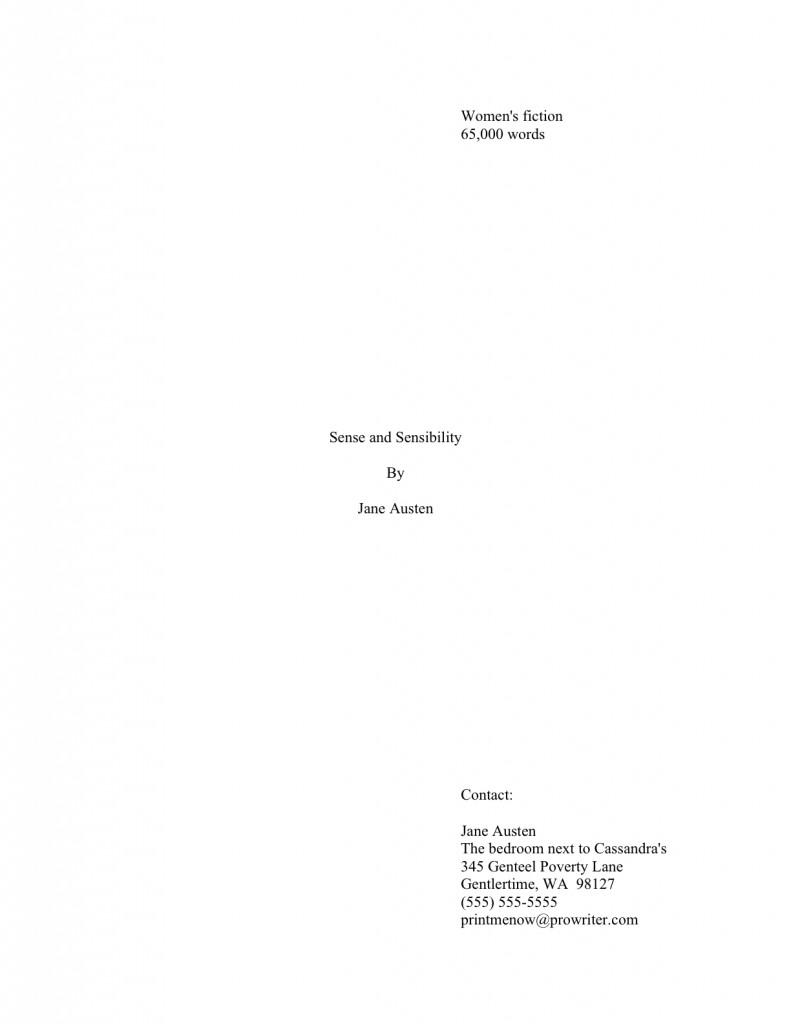
The getting-a-book-published basics, part II: the control conundrum

tug-of-war-photo

My last post was so excessively long that I wore myself out, apparently: I barely had the energy to work my way through the couple of hundred e-mails from well-meaning readers of the Wall Street Journal, asking if (a) I’d seen this article and (b) whether those mentioned within its paragraphs were the same who kept threatening to sue my publishers (although not, perversely, yours truly) over my as-yet-to-be-released memoir, A FAMILY DARKLY: LOVE, LOSS, AND THE FINAL PASSIONS OF PHILIP K. DICK. I appreciate all of you kind souls taking the time to make sure I had (a), but since the answer to (b) is yes (and with arguments similar to those mentioned in the article), it would probably be prudent for me not to comment upon it here. Or, indeed, anywhere.

Except to say: ever get that feeling of déjà vu?

Back to the business at hand. For those of you who happened to miss yesterday’s epic post, I’m going to be devoting the next couple of weeks to explaining briefly how a manuscript moves from the writer’s fingertips to publication. There are several ways that this can happen, of course, and but for starters, let’s concentrate upon what most people mean by a book’s getting published: being brought to press and promoted by a large publisher. In the US, that publisher’s headquarters will probably be located in New York.

Everyone clear on the parameters — and that what I am about to say might not be applicable to a big publishing house in Paris, Johannesburg, or Vladivostok? Or indeed, a small, independent US publisher? Good. Let’s recap a bit from last time — and while we’re at it, let’s get conversant with some of the terms of the trade.

How a manuscript typically comes to publication at a major U.S. publishing house these days (as opposed to way back when)
As we discussed last time, fiction is typically sold as a completed manuscript; nonfiction is usually sold as a book proposal, a packet of marketing materials that includes a sample chapter and a competitive market analysis, showing how the proposed book will offer the target readership something different and better than similar books already on the market. While the proposal will also include a summary of each of the chapters in the book-to-be-written (in a section known as the annotated table of contents; for tips on how to construct this and the other constituent parts of a book proposal, please see the perversely-named HOW TO WRITE A BOOK PROPOSAL category on the archive list located at the lower right-hand side of this page), the editor will often ask the writer to add or subtract chapters or change the book’s running order.

Which underscores a point I made last time: a nonfiction book proposal is essentially a job application wherein the writer is trying to convince the publisher to pay him to write the book being proposed; a novel is a product that the author is trying to sell.

I can already feel some of your eyes glazing over from jargon fatigue, can’t I? Hang in there; I assure you that there are plot twists to come. (Not to mention a self-editing tip for those of you who long for the return of my December series of same!)

A hundred years ago, writers who wished to get their books published went about it in a fairly straightforward manner, by approaching editors at major publishing houses directly. If the editor liked the book, he would take it to what was (and still is) known as an editorial committee, a group of editors and higher-ups who collectively decided what books the house would bring out in the months and years to come. If the editorial committee decided to go ahead with the project, the publisher would typically pay the author an advance against projected royalties, edit the manuscript, and have it typeset (by hand, no less).

Today, a writer who intends to approach a large U.S. publisher generally must do so through an agent. The agent’s job is to ferret out which editors might be interested in her clients’ books and pitch to them. Unless an editor happens to be exceptionally well-established at his or her house, however, s/he is not the only one who needs to approve a book’s acquisition: typically, the book will still go before an editorial committee.

At that point, back in the day as well as now, it’s the editor’s turn to be the advocate for the book s/he wants to publish — and that’s not always an easy task, because other editors will be fighting for their pet projects at the meeting as well. Since a publishing house can only afford to bring out a very small number of books in any given marketing season, the battle for whose project will see print can become quite intense, and not only amongst the editors around the table. At a large publishing house, the marketing and legal departments might weigh in as well.

If a manuscript makes it through the hurly-burly of editorial committee debate, the editor will offer the writer a publication contract. (Actually, s/he will offer it to the writer’s agent, but it amounts to the same thing.) Contractual terms vary widely, but at base, a publishing contract will state that in return for pocketing the lion’s share of the profits, the publisher would bear all of the production and promotional costs, as well as responsibility for getting the book onto bookstore shelves.

In return, the author will agree to provide the manuscript for by a particular date (usually quite soon for a novel — which, as you will recall, is already written before the agent takes it to the editor) or as much as a year and a half later for a book proposal. After the author delivers the completed manuscript (usually in both hard copy and as a Word document), if the editor wants changes, s/he will issue an editorial memo requesting them.

If your heart rate went up by more than a third at the very suggestion of being asked to alter your manuscript, you might want to sit down, put your feet up, and sip a soothing beverage whilst perusing the next section. (Chamomile tea might be a good choice.)

Why? Because when an author signs a book contract, she’s agreeing to more than allowing the publisher to print the book.

Control over the text itself
The author gets to decide what her own book does and doesn’t say, right? Not to mention how it’s expressed.

Actually, no, if she sells the rights to a publisher. While the author may negotiate over contested points, the editor will have final say over what will appear on the pages of the finished book. The contract will say so.

And no, in response to what you’re probably thinking: you’re almost certainly not going to be able to win an argument over whether something your editor wants changed will harm the artistic merit of the book. (Sorry about that, but it’s better that you’re aware of this fact going in.)

How do I know? Experience, mostly. After all, pretty much every first-time author faced with editorial demands has attempted to declare something along the lines of, “Hey, buddy, I’m the author of this work, and what you see on the page represents my artistic vision. Therefore, I refuse to revise in accordance with your (boneheaded) suggestion. Oh, well, that’s that.” Or at least thought it very loudly indeed.

That’s an argument that might conceivably work for a well-established, hugely marketable author, but as virtually all of those aforementioned first-time authors could tell you, no one, but no one, at a publishing house is going to find the “My art — my way!” argument particularly compelling.

Or even original.

Why? Well, remember my earlier quip about how publishing houses can only bring out a few titles in any book category per year, far, far more than their editors would like to bring to press?

Uh-huh. It’s never wise to issue a take-it-or-leave-it ultimatum to people so well equipped with alternatives that they can easily afford to leave it. Especially if the issue in question is something as small as cutting your favorite paragraph.

I’m telling you all this not to depress you — although it’s not all that difficult to imagine what I just typed having that effect, admittedly — but so that you will not waste your energy and reputation on battling over every single requested change with your editor. If you bring a book to successful publication, I can virtually guarantee that you will have to compromise on something; editorial control is built into the publishing process. Learning to pick your battles, figuring out when give in gracefully and when to go to the mat, will serve both your interests and your book’s best in the long run.

May I hear an amen? No? How about a few begrudging grunts of acknowledgment? Well, suit yourself, but if you found that last argument trying, you might want to find something to bite down upon before you read on.

Why, you ask with trembling voice? Well, final say over the actual text and the ability to determine the timing of publication are not generally the only authorial rights one signs over via a publishing contract.

Other matters that aspiring writers generally assume that they will control after they sign a book contract, but usually don’t
Just a few of the tidbits that most first-time authors are stunned to learn that they cannot dictate for their own books: the typeface, the type of binding, the use of italics or special fonts, the number of illustrations, if any, when it will come out, and what the cover will look like.

Also almost always beyond a first-time author’s ability to do anything about: the book’s title (that’s generally the marketing department’s call, believe it or not) and whether there is an acknowledgments page (the reason that they have become rarer in recent years is not that authors as a group have magically become less grateful, but that, like the dedication and epigraphs — those nifty quotes from other authors that often appear in published works — they take up extra page space, and thus render publishing a book more expensive).

I feel you glowering, but don’t blame me — I’m just the messenger here. As a memoirist whose title was summarily changed by her publisher from something she expected to be changed (Is That You, Pumpkin?) to one that was bizarrely ungrammatical (A Family Darkly), believe me, my sympathies are mostly on the writers’ side here. (And no, no publishing house employee was ever able to explain to me with any degree of precision what they thought their preferred title meant. The marketing department just thought it would be a good idea for the cover to make a vague reference to A SCANNER DARKLY, because the movie would be coming out around the same time.)

My point is, while landing a publication contract for a first book is certainly a coup, you’ll have a much, much happier life as a professional writer if you don’t expect it all to be one big literary luncheon where the glitterati congratulate you warmly on the beauty of your prose and the insight of your book’s worldview. It’s going to be hard work — for a crash course in just how hard many first-time authors find it, please see the GETTING GOOD AT INCORPORATING FEEDBACK category on the list at right — and if you’re going to be successful at it, you’re going to need to come to terms with what you can and cannot control.

Speaking of which…

The hows and whens of book publishing
Another matter that the publication contract will specify is the format in which the publisher will release the book. Translation: it won’t be up to you whether your book will be released in hardcover or not. That may not distress you now, but it may well come the release date: historically, the author’s percentage of the cover price (a.k.a. the royalty) has been higher for a hardcover book than for a paperback.

One reason for that: hardcover books were considered more serious, literarily speaking, than a volume a reader could fold and stuff into a back pocket. In fact, until fairly recently, newspapers and magazines habitually reviewed only hardcovers for most novel categories, since that was the standard for high-quality fiction releases.

In the last 15-20 years, however, fiction (and quite a bit of nonfiction, too) has been released in trade paper, those high-quality softcovers that so conveniently may be rolled and stuffed into a purse or backpack, so the earlier review restriction has softened. That’s definitely good news for first-time novelists, as well as those of us who like to lug around several different books when we travel. Typically, the author’s royalty on a trade paper release is lower than for a hardback, but higher than for paper.

Everyone with me so far, or are you mentally calculating how much you will end up making per hour for writing your novel. Don’t even go there; that way lies madness.

Once an editor has acquired a manuscript, it is assigned a place in the publisher’s print queue. In other words, the publisher will tell the author when the book will actually be printed. Since much must happen between the time the editor receives a finished manuscript and when it goes to press, the contracted date by which the author must provide the book is generally months prior to the print date.

This, too, often comes as a surprise to a first-time author. If you wish to see your books published, though, you will have to come to terms with the fact that an author’s life is a hurry up/wait/hurry up/wait existence.

Its main manifestation: how long it takes for a major publisher to bring out a book. Although they sometimes will do a rush job to meet the demands of a current fad, the typical minimum time between an author’s signing a book contract and the volume’s appearance in bookstores is at least a year.

And that’s for fiction — which, as you will no doubt recall, is already written before the publisher has any contact with the book at all. For nonfiction, the time lapse is often substantially longer, in order to permit the author to write the book in question.

The moral: although one does indeed see books on current news stories hitting the shelves within a matter of weeks (the OJ Simpson trial, anyone?), that is most emphatically not the norm. A savvy writer takes this into account when constructing a narrative, avoiding references that might seem absolutely up-to-the-minute when he first types them, but will be as stale as last year’s fashions a year or two hence, when the book is finally available for readers to buy.

The publishing world’s term for a book that contains references likely to spoil over time is easily dated. Unless you are trying to tie your characters to a very specific time and place (as most contemporary fiction doesn’t), excising such references prior to submission usually increases its marketability.

A market-savvy self-editing tip for novelists and memoir-writers: go through your manuscript, highlighting any cultural reference that might not make sense to a reader five years hence. When in doubt, whip out your highlighting pen. Mention of a character on a TV show? Mark it. Complaint about a politician currently in office? Mark it? Any reference at all to Paris Hilton? Perez Hilton?

You get the idea. This is not a moral judgment you’re making, but a calculation about pop culture longevity.

While you’re reading, take the time to note what the reference is and the manuscript page on which it appears. After you finish, go back and read through the list: would your target reader have recognized each of these five years ago? If you’re writing for adults, would a reader in high school now know what you’re talking about? Are you really willing to bank on whether Arby’s latest moniker for a sandwich is here to stay — or that your target reader will even know about it?

If you aren’t sure about the long-term cultural resonance of, say, the McRib, walk into your local community library, find the person reading the 19th-century novel (if you can’t find one in the stacks, try behind the check-out desk), and offer to buy that kind soul a nice cup of coffee if s/he will be nice enough to take a gander at your list. If the lady with her nose in a minor Charlotte Brontë novel doesn’t recognize a cultural reference, chances are that it’s not as pervasive a phenomenon as you may have thought.

After you have figured out which references need to be changed or omitted, go back and examine the ones you decided could stay. Is that reference actually necessary to the paragraph in which it appears? Is there another way that you could make the same point without, for instance, using a brand name?

Meanwhile, back at the ranch…
As I was walking you through that last exercise, I spotted some raised hands out there. “Um, Anne?” the folks attached to those hands inquire timidly. “I don’t mean to seem shallow about my writing, but I notice that you haven’t said much about how and when an author actually gets paid for her work. Since I will have invested years of unpaid effort in writing a novel or perhaps months in constructing a marketable book proposal, is it unreasonable for me to wonder when I might start to see some sort of a tangible return on that investment?”

Of course it isn’t shallow. Let’s take a closer look at how and when a writer might conceivably start cashing in for those manuscripts and/or book proposals she’s written on spec.

How authors get paid for their books
As I mentioned in passing above, an author who publishes through a large publisher is paid a pre-agreed proportion of the book’s sale price, known as a royalty. An advance against royalties (known colloquially just as an advance) is an up-front payment of a proportion of what the publisher expects the author’s percentage of the jacket price for the initial print run (i.e., the total number of books in the first edition).

Generally speaking, the more spectacularly the publisher expects the book to sell, the larger the advance. That’s a calculation based upon a lot of factors: how much it will cost to print the book (anything over 500 pages requires more expensive binding, for instance, and color photos are expensive to reproduce), how large the already-existing market is for similar books, how difficult the marketing department thinks it will be to reach those readers, whether Barnes and Noble is having a bad year, and so forth.

It is, in fact, a guesstimate — and as such, tends to be low, especially for first-time authors.

Why not aim high, let the author quit her day job, and hope for the best? Because the advance is by definition an estimate of a number that no human being could predict with absolute accuracy, if the publisher’s estimate was too high, and thus the advance too large for the royalties to exceed, the author is seldom expected to pay back the advance if the book doesn’t sell well. However, once the book is released, the author does not receive further royalty payments until after her agreed-upon share of the books sold exceeds the amount of the advance.

Since approximately 2/3rds of you just gasped audibly, let me repeat that last bit: the advance is not in addition to royalties, but a prepaid portion of them. An advance is not a signing bonus, as most people think, but a down payment toward what a publisher believes it will eventually owe the author.

While your jaw is already dropped, let me hasten to add that royalties over and above the advance amount are usually not paid on an as-the-books-sell basis, which could entail the publisher’s cutting a check every other day, but at regularly-scheduled intervals. Once every three or six months is fairly standard.

The moral: read your publication contract carefully. If you don’t understand what it says, ask your agent to explain it to you; it’s her job.

Those hands just shot up again, didn’t they? “I’m glad you brought that up, Anne. You’ve made it clear why I would need an agent to help me though this process, which sounds like a drawn-out and somewhat unpredictable one. So how do I go about finding the paragon who will protect me and my work?”

I’m glad you asked, hand-raisers — but I’m afraid agent-seeking is a topic for another day.

Before I signed off, allow me to add: don’t feel bad if you were previously unaware of how writers get paid; half the published authors I know were completely in the dark about that last point until their first books had been out for five months or so. It’s not something that we talk about much in the writing community, perversely. And that’s a shame, because In the current market, when advances for new are often reflective of the gloomiest projections, while those for bestselling authors keep rising, I suspect that a significant percentage of the authors who sign their first publication contracts in the months to come are going to be mystified at being offered an honorarium when they expected enough dosh, if not to allow them to retire to write full-time, at least to permit cut back their hours.

Don’t panic; conditions change. One thing you may rely upon to remain the same, however: the writer who is in it for the love of literature probably going to be happier enduring the ups and downs of getting published than the one who walks into it with dollar signs in his eyes. Good writing is a gift to humanity, after all, every bit as much as it is a commodity for its author to sell.

Keep up the good work!
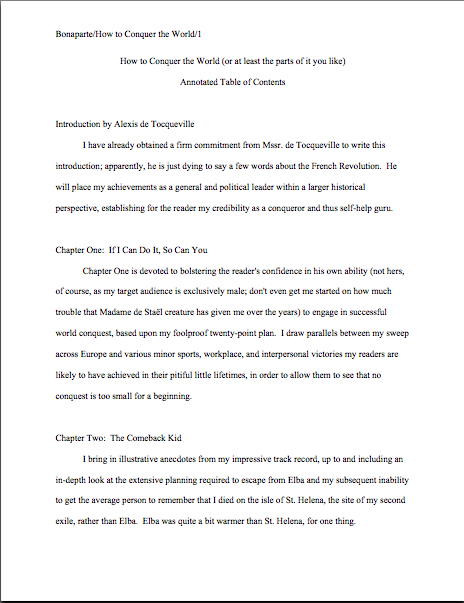
The getting-a-book-published basics, or, how does a book concept make it from a New Year’s resolution to a shelf at Borders?

gutenberg press drawing

Welcome to 2010, long- and short-term members of the Author! Author! community. May this be a year of major steps forward: starting the book of your dreams, finishing the book of your dreams, revising your manuscript until it becomes the book of your dreams, discovering the best agent on earth to represent it, convincing the best agent on earth to represent it, that agent blandishing the ideal editor into reading it, said ideal editor falling in love with it, a lucrative sale and easy publication process, readers eager to bury their noses in it, a second book (or a third, or a fifteenth) that exceeds expectations, a well-deserved Pulitzer prize.

You know, the basics of a writing life well-lived.

An especially hearty howdy-do and handshake for those of you acting on a New Year’s resolution to learn how to get your book into print. Or how to land an agent. Or why a writer might need to land an agent in order to get her book into print. You’ve happened upon this blog at an excellent time, because I’m going to spend the next couple of weeks getting down to those very brass tacks. I’m going to be addressing the two most basic questions of the writerly life:

(1) How does a book go from sitting on an aspiring writer’s desk to being sold in a bookstore?

(2) What, if anything, does an aspiring writer need to know to navigate that trip successfully?

Why go straight to the root of the quest, rather than simply handing those new to the game a couple of one-page sheets of directions? Well, first of all, because there are plenty of advice-givers out there willing to bark unexplained orders at those new to the biz. In my experience, quick-and-dirty isn’t nearly as helpful as carefully-explained. Unless a writer understands why things work the way they do, he’s not only likely to break the rules — he’s not going to be able to improve his game.

Heck, he may not be able to play with the big kids at all. So: let’s talk fundamentals.

That chorus of groans you just heard, newcomers, arose from some of the longer-term readers of this blog who were really, really into my recent series on self-editing. “But Anne,” they whimper, ink-stained fingers gesticulating, didn’t you tell us just the other day that since half the writers in North America suddenly send out queries and submissions” (you’ll be tossing around those terms very soon, newbies, never fear) “as part of their New Year’s resolutions, we should hunker down and wait until mid-February before trying afresh? Wouldn’t that hiatus be a dandy time for, you know, revision?”

Indeed it would be, ink-stained protestors. A review of the basics before leaping back into the fray is never a bad idea. But just to keep it interesting, I’ll make a valiant effort to keep tucking tidbits useful for self-editors into the corners of my next couple of weeks’ posts. I wouldn’t want you to feel that I was ignoring old friends for new.

And let’s face it: a crash course in how the publishing industry works isn’t a bad idea before leaping back into the fray. As I’m sure many of you are already well aware, when a rejection is staring a writer in the face, it’s awfully easy to forget that it isn’t personal; good book concepts and well-written manuscripts is just part of how the system works.

Didn’t expect me to be so up-front about it, did you, newbies? Fair warning: this series is going to be rather disturbing to any writer who believes that the only real test of whether a manuscript is any good is whether it gets published. Or that a good manuscript will always be able to find an agent, and swiftly.

At the risk of repeating myself, that’s just not how it works.

Honest. I’ve been in the game practically since birth, and I’m here to tell you, there is no literature fairy. No winsome sprite will guide an agent to the doorstep of a talented new writer, simply because she is talented; the writer has to take some steps to flag that agent down.

But I’m getting ahead of myself, amn’t I? I haven’t even laid the foundation of gloom-inducing yet, and here I am, waving from a second-floor window.

What I’m about to tell you may well be depressing — heck, it depresses me, and I have an agent — but please, I implore you, stick with this series, even if you are already fairly familiar with, say, how to construct a passable English sentence or to write a query. This is information that everyone even considering trying to bring his book to publication needs to know.

Seriously, it’s to your advantage. Aspiring writers who misunderstand how books do and don’t get published are likely to waste their time and resources on unsolicited submissions that will inevitably get rejected.

In other words, those of you who just murmured, “What’s an unsolicited submission?” are not the people for whom I am writing this. I’m talking to every aspiring writer within the sound of my voice. I want to help you succeed.

So let’s get this baby cranking, as Johann Gutenberg doubtless said to his assistants in 1450 or so.

Because there are several ways a book can end up on a shelf in your local literary emporium, I’m going to break up the question into several parts. First, I’m going to tackle the classic means, publication through a great big publishing house.

But first, a little history — and while we’re at it, let’s debunk a few widely-believed myths.

How books used to get published during the Theodore Roosevelt administration, or, how a surprisingly high percentage of aspiring writers (mistakenly) believe the industry still works
A hundred years ago, the publication process was pretty straightforward: an author wrote a book, contacted an editor at a publishing house, and if the editor liked it, he (it was almost invariably a he) chatted about it with senior staff, persons with whom he may well have shared a dormitory at some elite private college; if he could convince them to take a chance on the manuscript, he would edit it for publication. Printing presses were set in motion, and in due course, the book was available for sale. The publisher sent out advance copies to newspapers, so they could produce reviews.

Of course, that was back when there were few enough books published in these United States that most releases from a good-sized publishing house could garner a review in a major newspaper or magazine. Now, so many books are published in any given year that only a tiny fraction of them enjoy the substantial publicity of a well-placed review.

Which is why, in case you’ve been wondering, you’re far more likely to see a review of the eighteenth novel by an already-established author than the brilliant debut another. Assuming that the newspaper or magazine in question even carries book reviews anymore.

Heck, that’s assuming that you’re even reading newspapers anymore.

Back to days of yore. Amazingly, considering that authors often possessed only one copy of their manuscripts — remember, the photocopier wasn’t invented until 1938, and it wasn’t commonly available until two decades later — it wasn’t uncommon for writers just to pack their books into boxes and send them to publishers without any preliminary correspondence.

This is what’s known in the biz as an unsolicited submission, a manuscript an author sends to an agent or editor without said agent or editor’s having asked to see it. Today, an unsolicited manuscript that appears on an editor’s desk out of a clear blue sky is invariably rejected unread.

Not every aspiring writer believes that, however, because they’ve heard what used to happen to such manuscripts in the days of the Model A: publishers would set these books aside until some luckless employee of the publishing house had time to go through the stack.

This ever-burgeoning source of reading material was known as the slush pile. Although solicited submissions (i.e., those that the editor has actually asked to see) have probably always enjoyed a competitive advantage, slush pile manuscripts did occasionally get discovered and published.

They also, predictably, got lost on a fairly regular basis. Thus the old writerly truism: never send anyone the only copy of your manuscript.

That hasn’t always been easy advice to follow, unless one happened to command a personal army of copyists and/or a steno pool; see my earlier comment about historical access to copy machines.

Because there were fewer manuscripts (and publishing houses were more heavily staffed) before the advent of the personal computer, a writer did not need an agent: it was possible to deal directly with the editor who would handle the book, or at any rate with the luckless assistant whose job it was to go through the slush pile. But back when jolly old TR (Roosevelt hated being called Teddy) was overseeing the nation’s business, it was also still completely permissible to submit a manuscript in longhand, too.

Times change, as they say; no agent or editor in her right mind would read even a sentence of a hand-written submission today. Another way that time changed the publishing industry was that publishing houses began expecting to see fiction and nonfiction presented to them differently.

The fiction/nonfiction split
Both historically and now, novels were (and are) sold to publishers in pretty much the form you would expect: as complete manuscripts, and only as complete manuscripts. At least, editors buy first novels that way; until fairly recently, the major publishing houses quite routinely offered fiction writers who had written promising first novels could snag a multi-book contract.

It took until the 1990s for publishers to notice that a commercially successful first book is not necessarily an absolute predictor of whether the author’s second or third book will sell well. Usually, there was a pretty good reason for that: the author spent five or ten years, or even a lifetime, cranking out that first novel, but after it hit the big time, her editor began clamoring for the next immediately. The author tossed something together in a year, and poof! Everyone was astonished that the second wasn’t nearly as good as the first.

Hmm, who could have predicted that? As late as the 1980s, not the publishing industry.

As a result, while multi-book fiction contracts still exist — particularly in genre fiction, which is conducive to series-production — they have become substantially less common in the mainstream and women’s fiction markets. Which is to say: the vast majority of fiction is sold on a per-book basis. While previously-published authors can occasionally sell subsequent books based upon only a few chapters (known, unsurprisingly, as a partial), novelists should expect to write books– and have them polished into publishable form before they can sell them.

Nonfiction, however, is typically sold not on the entire book, but via a marketing packet known as a book proposal. There are several hefty categories on the archive list at right on how to put one together, but for the purposes of this post, a generalization will suffice: a book proposal is a packet consisting of a description of the proposed book, a sample chapter, descriptions of subsequent chapters, and an array of marketing materials.

Typically, these materials include everything from a detailed analysis of similar books already on the market to an explanation of who the target readership is and why this book will appeal to them to a marketing plan. Traditionally, previously published writers also include clippings of their earlier work in their book proposals — which is why, in case you’d been wondering, so many nonfiction books are authored by journalists. They tend to have stacks and stacks of clippings on hand.

Why are clippings helpful in selling a nonfiction book to a publisher? Because they prove that some other editor has thought enough of the proposer’s writing to publish it before. Basically, a book proposal is a job application: in effect, the writer is asking the publishing house to pay her to write the book she’s proposing.

That does not, however, mean that every nonfiction writer will get paid up front, at least not entirely. Why not, you ask? Because buying something that does not yet exist obviously entails running the risk that the author may not deliver, the advance for a book sold in this manner is typically paid in three installments, one when the publication contract is signed, another after the editor has received and accepted the manuscript, and a third when the book actually comes out.

Call it an insurance policy for authorial good behavior. Apparently, novelists are regarded as shiftier sorts, because to this day, the only acceptable proof that novelists can write a book is to have already written one.

Everyone clear on the fiction/nonfiction distinction? If not, please trot right to the comments and ask a pertinent question.

While we’re waiting, let’s move on to one of the other great cosmic mysteries, shall we?

The lingering demise of the slush pile
Just to clear up any misconceptions floating around out there: if you want to sell a book to a major U.S. publisher, you will need an agent to do it for you. The slush pile is no more; currently, all of the major houses will accept only represented manuscripts.

Like any broad-based policy, however, it comes with a few caveats. We’re only talking about the great big publishers here; there are plenty of smaller, independent publishers that do accept direct submission. Very good houses, some of these. One hears tell of some children’s book divisions at major houses that still accept direct submissions; if an editor meets a writer at a conference and positively falls in love with his work, it’s not unheard-of for the editor to help the writer land an agent (usually one with whom the editor has worked recently) in order to side-step the policy. Stuff like that.

But it’s not wise to assume that you’re going to be the exception. If you’re hoping for a contract with a big publisher, get an agent first.

This was not always a prerequisite, of course. Until fairly recently, one element of that fiction/nonfiction split I was regaling you with above was that while novels had to go through an agent, nonfiction writers could submit proposals directly to publishers. Not so much anymore.

You novelists out there are getting a bit restive, aren’t you? “But Anne,” I hear some of you complaining, and who could blame you? “This is starting to seem a trifle discriminatory against my ilk. Nonfiction writers are presenting substantially less writing than fiction writers; a proposal’s what, 40-60 pages, typically? As a novelist, I’m expected to produce an entire book before I approach an agent, much less a publishing house. I would have thought that if publishing houses were going to distrust anybody enough to want an agent to vouch for ‘em, it would be the author whose book they were buying at the idea stage.”

Don’t upset yourselves, oh novelists; it’s not good for your stomach acids, and besides, since everyone needs an agent now, it’s a moot point. But I suspect that the answer to your question is that that publishers habitually receive far more fiction submissions than nonfiction ones — interesting, given the long-standing industry truism that fiction is easier to sell, both to editors and to readers. (It probably also has something to do with the fact that nonfiction books are often proposed by those with clip-worthy previous publishing credentials, such as magazine articles and newspaper columns, but believe me, the other reason would be more than sufficient.)

Before petty bickering begins to break out between fiction and nonfiction writers over a situation that has more or less vanished anyway, let’s turn our attention to a more absorbing topic: why would the big publishing houses feel so strongly about agents that they would all agree upon a represented-manuscripts-only policy?

The rise of the agent
Although many aspiring writers regard the necessity of procuring an agent as at best a necessary evil, agents perform an exceedingly important role in the current publishing market: not only do they bring brilliant new writers and amazing new books to editors’ attention, but they are now also effectively the first-round submission screeners for the publishing houses.

Okay, so they bring some not-so-hot writers and less-than-amazing books to ‘em, too, but try to see the forest, not the trees here. By passing along only what they consider marketable and of publishable quality, agents thin the volume of submissions the publishers see on a monthly basis to Niagara Falls, rather than the Atlantic Ocean.

Everybody understand that? Agents reject 95% of the queries they receive, and an even higher percentage of submitted manuscripts, so the publishers don’t have to do so.

It’s easy to resent agents for this, to think of them as the self-appointed gatekeepers of American literature, but that’s not really fair. Much of what they assure that the editors never see honestly isn’t publishable, after all; I hate to disillusion anyone (and yet here I am doing it), but as Millicent the agency screener would be the first to tell you, a hefty majority of the writing currently being queried, proposed, and submitted is simply not very well written. Even very promisingly-written submissions are often misformatted, or would require major editing, or just plain are not quite up to professional standards.

Or so runs the prevailing wisdom; we could debate for weeks over the extent to which that’s really true, or how difficult it often is for genuinely innovative writing to land an agent. Suffice it to say that if the major publishers believed that agents were rejecting manuscripts that their editors should be seeing, they presumably would change their policies about accepting only agented manuscripts, right?

“Okay, Anne,” I hear some of you reluctantly conceding, “I get that if I hope to sell my book to a major U.S. publisher, I’m going to need to find myself an agent. But if you don’t mind my asking, what do I get out of the exchange, other than a possible entrée to an editorial desk?”

A good agent can do quite a bit for a writer. First, as you reluctant conceders already pointed out, an agent can make sure your manuscript or book proposal lands on the right desks: not just any old editor’s, but an editor with a successful track record in acquiring books like yours and shepherding them through the sometimes difficult publication process. (Don’t worry; I’ll be clarifying that part later in this series.) Pulling that off requires both an intimate knowledge of who is looking to buy what right now — not always an easy task, considering how quickly publishing fads change and editorial staffs turn over — but also the connections to enable a successful pitch to the right audience.

In other words, for an agent to be good at his job, he can’t just send out submissions willy-nilly; he must have the experience to target the editors who are most likely to be interested in any given book.

Agents also negotiate book contracts for their clients, act as a liaison between the author and the publishing house, and help mediate any disputes that might arise. Like, for instance, if the publishing house is being a mite slow in coughing up the contracted advance.

Yes, it happens, I’m sorry to report. And if it happens to you, you’re going to want an experienced agent on your side, fighting for your dosh.

Admittedly, it will be very much in your agent’s self-interest to make sure that you’re paid: in the U.S., reputable agents earn their livings solely from commissions (usually 15%) on their clients’ work. That means, of course, that if they don’t sell books, the agency doesn’t make any money.

Allow me to repeat that, because: agencies are seldom non-profit enterprises. Contrary to common belief amongst aspiring writers, their employees are not primarily concerned with the task of discovering great new talent, but rather with finding books they believe the agency can sell within the current literary market.

In other words, they reject books they know to be written well. Routinely. Because if they can’t sell the book, the agency does not make money.

It’s honestly as simple as that. See why knowing how agencies work might help you take a rejection less personally?

Typically, the agent will handle all of the money an author makes on her book: the publisher pays advances and royalties to the agency, not directly to the author; the agency will then deduct the agent’s percentage, cut a check for the rest, and send it to the author. In the U.S., agencies are also responsible for providing their clients and the IRS with tax information and documentation.

Since self-employed people like writers have been known to get audited from time to time, you’re going to appreciate this level of verifiability once you become successful. Trust me on this one.

To recap how things have changed since Theodore Roosevelt roamed the earth:
Way back when: aspiring writers used to be able to approach editors at major publishing houses directly to market their books.
The reality now: with few exceptions, a writer will require an agent to approach a publisher for her.

Way back when: fiction and nonfiction books were marketed in the same manner, as already-completed manuscripts.
The reality now: fiction is sold on the entire manuscript; with certain exceptions, nonfiction is sold as via a book proposal.

Way back when: nonfiction writers could approach major publishing houses directly with their book proposals.
The reality now: agents submit both fiction and nonfiction books on behalf of their authors.

Way back when: agents played a substantially smaller role in the overall dynamic of U.S. publishing.
The reality now: agents largely determine which manuscripts editors will and will not see.

Way back when: an author often formed a personal relationship with his editor and other publishing house staff, sometimes lasting decades.
The reality now: the editor who acquires a book may not still be the editor handling it by the time it goes to press; a good agent can do a lot to help smooth over any resulting difficulties.

Whew — that’s quite a lot of information to absorb in a single post, isn’t it? I’m going to stop for the day, to give all of this time to sink in. Next time, on to what happens to a book after an agent submits it to an editor at a publishing house!

Yes, yes, I know: this isn’t precisely fun material to cover, but you will be happier in the long run if you’re familiar with it.

But wait — I haven’t given you a self-editing tip yet today, have I? Here’s one that will keep many of you busy for a good, long while: in most adult fiction, professional readers like Millicent prefer to see tag lines — all of those he said, she exclaimed, they cried statements that litter the average dialogue scene — minimized, or even omitted entirely. Unless there is serious doubt about which character is speaking when, they usually aren’t necessary.

Quotation marks, after all, indicate that what falls within them is being spoken aloud. So dialogue that runs like this:

Johnny smoothed back his pompadour, copied from a torn photo of his grandfather. “Yeah?” he said. “Who’s gonna make me?”

Tina quailed in fear, but she stood her ground. “I am,” she said stoutly.

“Ooh,” Johnny said, “this is going to be fun. I haven’t created a scar in weeks.”

may often be trimmed to the following, with no real loss of meaning:

Johnny smoothed back his pompadour, copied from a torn photo of his grandfather. “Yeah? Who’s gonna make me?”

Tina quailed, but she stood her ground stoutly. “I am.”

“Ooh, this is going to be fun. I haven’t created a scar in weeks.”

Okay, so maybe that wasn’t the most graceful way to work today’s editing tip into the text. Hey, I’m just warming up here. Keep up the good work!
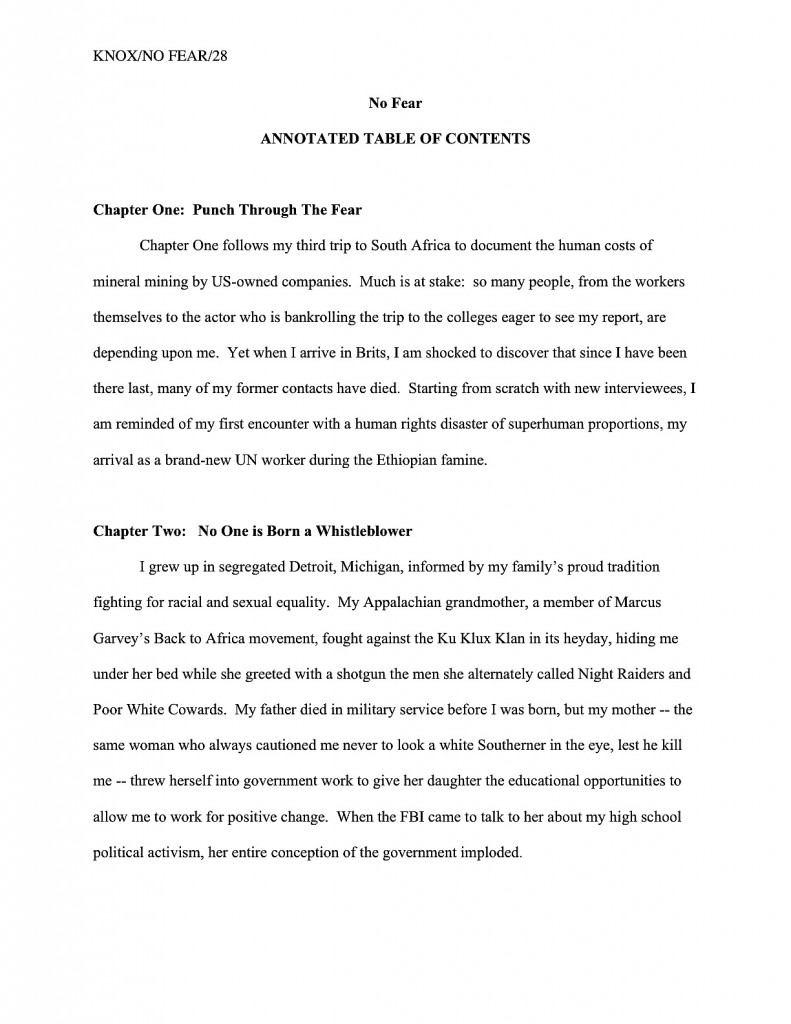
Not another best and worst of the decade list!
one-way sign in graveyard

It’s certainly been a year — and a decade — of mixed blessings, hasn’t it? Why, only last month, as I was noting with annoyance that Publishers’ Weekly’s list of the top 100 new releases of 2009 did not contain a single book by a female author, I realized with a shock that the Matthew Crawford at #8 used to sit next to me in grad school seminars. Naturally, I rushed out and bought Shop Class as Soulcraft at a brick-and-mortar bookstore right away, on general principle and to boost my writerly karma, but it made me think: the dark, dark clouds of the last year have certainly had some odd silver linings.

So, belatedly: congratulations, Matt. And here’s to finding writers I like on 10-best lists, anywhere, anytime.

I’ve been mulling over those unexpected flashes of silver in the sky all month, as I’ve been gearing up to this, my last post of the decade. I had planned to come up with one of those ubiquitous best and worst lists from a writerly perspective — you know, books I hated, editors at Random House I was sorry to see take early retirement, that sort of thing.

Frankly, coming up with a worst list was no problem at all. Took about four minutes. Yet every single one of my hard-found bests — all seven of them — were charming surprises like seeing Matt’s name turn up on the PW list, not genuine trends I could laud as harbingers of good things coming to writers everywhere. And while I could follow the excellent example of other end-of-the-decade commenters like Julianna Baggott (whose recent Washington Post article on why it is so hard for female authors to crack those top ten lists is well worth reading, by the way), devoting my last post of the year purely to criticism of the status quo, I just can’t bring myself to believe that those silver linings, however few and far between, are not something worth celebrating.

But let’s not kid ourselves: we writers have a heck of a lot to complain about these days.

So here’s what I’m going to do. First, I’ll be taking a barefoot run through what I think are the ten worst things to happen to writing over the last decade, followed by what I consider the single nastiest development for aspiring writers. Then, with all of that out of our collective system, I’ll let you in on some reasons that I think all of us should continue keeping the faith.

With me? Tremendous. Let the snarly bits begin.

The Ten Worst Things to Happen to Writing in the 2000s So Far

(10) Benefit-free simplification of the language
You know what I’m talking about, right? We’ve all picked up a newspaper — remember those? — and been knocked out of an otherwise interesting article by , say, the completely gratuitous capitalization of the first word following a colon. It’s never been correct in English — so why the heck has it suddenly become so very common in recent years? Why, in fact, has it become acceptable by AP editing standards?

For heaven’s sake, it’s not a new sentence!

Okay, so maybe that’s not the type of irritant that makes folks who don’t read or write manuscripts for a living choke on their coffee, but I assure you, such creeping attacks on literacy drive those of us who do absolutely nuts. Why? Because after enough readers have seen the incorrect version often enough and in authoritative enough sources, it will begin to look correct to them.

Can the fall of civilization be far behind?

No, but seriously, the last decade has seen the dubious legitimization of quite a lot of technically incorrect practices. More nails on the proverbial blackboard:

* The use of quality as a synonym for high-quality, without the necessary modifier. Technically, quality could be high, low, or middling. The sole exception, as far as I know, is when it refers to obsolete social class distinctions: it was obvious from her bearing that she was a lady of quality.

See? I didn’t capitalize the first word after the colon in that last sentence, and the grammar gods didn’t strike me dead on the spot.

* The use of unique with a modifier, as in she is very unique. By definition, something is unique because it is the only one of its kind.

* Leaving question marks off sentences that are clearly questions, as in do you hear me. It’s a lame writer’s trick, intended to convey flatness of tone. If only the language contained some sort of descriptors for sound, so the reader could know how a speaker’s voice sounds…oh, wait, it does.

Nit-picky? You bet. But since when did wielding the language correctly become optional for good writers?

(9) Conspiracy theories whose individual elements can be adequately exposed within a three-page scene.
I’m looking at you, Dan Brown. Just once, couldn’t a necessary clue not be instantly recognizable the second our hero stumbles upon it? Followed, perhaps, by that crusty old character who has held his tongue for the past forty-three years not blurting out everything he knows the instant the protagonist happens to ask? Or sometimes even before he asks?

Call me a complexity-monger, but if a long-unsolved mystery can be revealed to the first yahoo who bothers to glance in its direction, and that within the first four minutes, I’m just not interested. I have too much faith in the inventive capacities of mystery writers to settle for boneheaded plot twists.

(8) Single spaces after periods and colons in manuscripts.
Yes, yes, I know: eliminating these necessary spaces in published books saves a lot of paper and ink. In a manuscript, however, omitting these spaces is not only an offense to the rules of punctuation, but renders text significantly harder to edit by hand.

Which, in case you’d been wondering, is generally the only way to catch the kind of errors mentioned in (10). And why it’s so obvious to most professional readers handed a manuscript without the necessary two spaces that the writer has not worked with an editor before.

(7) A radical increase in pop culture references in published books.
Now, there’s nothing wrong with this in, say, a memoir: mentioning that the protagonist’s sister is lying on the floor, watching a brand-new Gilligan’s Island episode is a legitimate way to give a sense of place and time to a scene. But using current pop references in a novel to make it seem up-to-date now will simply render it out of date in five years.

Sorry; I don’t make the rules governing the turnover rate of pop culture. Nor of the passage of time.

I object to this one, like the last, primarily for its negative effect upon aspiring writers. It can take a couple of years for a manuscript to travel the bumpy road from sale to a publishing house to a spot on a bookshelf at Borders; what’s hip today may well be dated by then. Manuscripts still do get rejected, and often, by old-school professional readers trained to spot references that readers will not necessary catch three years from now.

Yes, I know: you’ve seen plenty of published books with these references. So have I. That doesn’t mean that it’s in your best interest to follow their example.

(6) Not dividing the YA market into as strongly-defined book categories as the adult market
Didn’t see that one coming, did you? Well, I guess you might have to talk to a lot of writers, agents, and editors to notice this problem, but since YA has taken off as a major market, more and more agents who represent primarily adult fiction have, predictably, started actively seeking out the next Harry Potter or Twilight.

Which are, correct me if I’m wrong, quite different from each other. So how is an aspiring writer to know what an agent who says she’s looking for YA, any YA, to know what she’s got in mind?

Defining YA books more precisely would be very, very helpful to agent-seeking writers — and not just by guiding those who write YA paranormal romance to agencies with a more successful record with vampire stories than horse books. Lumping too many kinds of YA together makes it harder for those who write for niche markets — like, say, the book for the smartest girl in the class, rather than for the boy who has a hopeless crush on an unattainable girl — find the right homes for their books.

There is literally nothing writers can do about this one, of course. Doesn’t mean it’s not worth grumbling over.

(5) “Whatever!”
Oh, God, how I wish that this one had never entered the language — although, as a means of irritating adults, I suppose the very fact that I want to strangle the next character who utters it indicates that it has been a rousing success.

Fine; you win, whatever-ers. Now give it a rest, already.

I’m not talking to young writers here, although I must admit that I have had a younger students hand me pages where whatever played a prominent role. (Unfortunately, the pages were in a term paper on Rousseau, and the first sentence that caught my eye was In human beings’ natural state, they all lived alone or whatever. The ensuing discussion was not pretty.) I’m aiming this complaint squarely at adult writers who shove whatever into their teenage characters’ mouths in an effort to make them sound like, well, teenagers.

Personally, I find this dismissive; most of the teenagers I know are pretty interesting people. As a reader, I want to hear what a specific teenage character has to say, not to see her merely parrot what any generic teenager might say.

And don’t tell me that young people really talk that way; real-life dialogue can be pretty boring. Astonish me with how your characters are different from anyone I might overhead in a movie ticket line, rather than lulling me to sleep with a transcript.

Want to show an attitude problem? Go right ahead. Writers have plenty of other narrative tools with which to demonstrate all kinds of emotional states.

(4) The demotion of the art of memoir to mere journalism
As recently as seven or eight years ago, memoirists signed contracts with their publishers that specified that the stories they were telling were essentially true, to the best of their knowledge. Lawsuits did occasionally happen, but pretty much everyone concerned recognized that (a) every human being recollects any shared event differently, (b) one of the things that separates a gifted memoirist from the rest of the population is the ability to hone and plane reality into a story that someone might conceivably want to read, and (c) occasionally, the effective exercise of (b) might lead to a bit of narrative fudging.

In short, no one seriously believed that all memoirists did was stand around for their entire pre-publication lives, taking notes like a court reporter. Poetic license was considered legitimate. Heck, ten years ago, you’d only have to buy a junior editor at a major publishing house one drink before he’d be assuring you that the latest celebrity memoir was a good 87% poetry.

Oh, I’m sorry — should I have warned you that the emperor’s clothes were about to be affected by gravity?

Now, memoirists are not only often required to sign iron-clad contracts, taking on all legal liability for any misstatements, but sometimes have to obtain signed releases from anyone mentioned in the book. Under the threat of negative publicity, publishers have been regarding memoirs with a far more suspicious eye. And no wonder, given how the media has reacted to the news: one established memoirist after another is outed as having made up salient facts, and some hyper-literal reporter so misunderstood David Sedaris’ essays that he meticulously fact-checked them.

Sedaris writes humor, people. Comedy writers see things differently than the general population. And may I introduce you once again to the concept of poetic license? Should I invite you all over for dinner, so you may get better acquainted?

It’s tempting to blame James Frey, he of the Million Little Pieces scandal, for this rather severe shift in publishing attitude. If only those rumors that his agent sold the book as a novel, not a memoir, would stop circulating so persistently, I might be able to jump on that bandwagon. However, as a memoirist whose publisher was dogged with lawsuit threats (unfounded) over my book, I’m inclined to think that the real culprit here is a trend for authors to be saddled with more and more of the burdens of bringing out a successful book.

If an author is now expected to, say, pay for his own book tour or hire his own publicist, is it really all that astonishing that he should be saddled with all of the risk of telling his own story? The emperor needs a new wardrobe, after all.

(3) The rise of editing on computer screens
I’m placing this one near the top of my list, since it has contributed so heavily to some of the problems lower down. Long-time readers of this blog, pull out your hymnals and sing along: since the human eye reads 70% faster on a screen than on a page, it is markedly more difficult to catch typos, logical problems, and other textual errors if one edits on a computer screen.

I could — and have — unleash an avalanche of examples at this point, but I’ll restrain myself and provide only one, a little something I like to call the according to Smith problem. See if you can spot it for yourself in this (completely fictional) article opening:

For the Anderson family, this was not the New Year’s Eve they were expecting. Last year, and every year before that, Mom Sheila, Dad Egbert, twins Drucilla and Delward, and little Ermintrude had gathered around the cheerful fire on their hearth, toasting one another with the vodka-laced grog Sheila’s grandmother used to make.

That was before the fire. Like so many now-scarred Americans, the Andersons were tragically unaware that vodka is flammable.

According to Smith, however, the turning of the year was not the only time the family used to drink. “I thought the kids were a little young. I mean, grog in the baby’s bottle? But hey, who am I to tell them how to raise ‘em?”

Did you catch it? No? Here’s a hint: WHO IS SMITH?

As an editor, this sort of editing error drives me nuts — and I assure you, it is an editing error, not a writing one. To an editorial eye, it’s fairly obvious that in an earlier draft, a sentence identifying Smith, probably including his first name and his relationship to the Andersons, appeared prior to the paragraph with the quote. In a subsequent draft, the reference was cut, and nobody noticed.

Except the confused reader, that is.

Would this be a good time to remind you to read your manuscripts IN HARD COPY, IN THEIR ENTIRETY, and, if possible, OUT LOUD? No? Okay, I’ll move on to my next point.

(2) The swiftly-widening gap between advances for bestselling authors and those less established
Do I really have to explain to a readership of writers why this one is bad for our art form? I doubt it, but just in case I need to spell it out: tiny advances mean that first-time authors can’t quit their day jobs.

Am I the only one who worries that the full-time book writer is in danger of becoming obsolete? And does anyone seriously believe that eventuality will improve the overall quality of the literary market?

Especially in combination with…

(1) The rapid turnover of editors, or, the rise of the five-editor book project
Ten years ago, it was rare that the editor who acquired a manuscript did not remain with the project all the way through the publication process. Heck, it was fairly normal for an editor to stick with a successful author for half a career.

Now, a first-time author may thank her lucky stars if her book is handled by only two or three editors; the turnover rate over the last year has been so rapid that I know no fewer than three authors whose books were overseen by five editors, all of whom wanted the book to be something different. One poor novelist got assigned a new editor less than a month before his book was scheduled to be printed.

Guess how he spent the first three weeks of that month? Oh, well, his protagonist didn’t really need that lesbian sister, anyway.

I’m not casting aspersions on any of his five editors, of course; for all I know, each of their widely divergent opinions on the book could have worked — had it been the only editorial vision. I’m merely suggesting that continually asking writers to adjust their creative process to different masters’ expectations within a single project might not be the most efficient means to get the best out of talented people.

Of course, the rate of turnover isn’t really the editors’ fault — I’ve seldom meant one who actively yearned to be fired — any more than the notoriously short average tenure of agency screeners and editorial assistants is the result of some active conspiracy of the powerless. So before we leave behind the blame portion of our evening, let’s talk about one other negative development for writers that is very much within these decision-makers’ control.

Bonus: the increasingly common practice of agents and editors not responding to submissions at all
A decade ago, an agent’s using a form letter to reject a query was the most common source of complaint among aspiring writers; now, it’s far from uncommon for that same agent not to respond to a query at all if the answer is no. But until just a couple of years ago, it was unheard-of for an agency to apply the silence-means-no practice to requested materials.

The times, they have indeed been a-changin’. Now, it’s not unusual for a submitter to hear back 6 months later, or even not at all.

Obviously, this widespread policy shift has been terrible for agent-seeking writers — and not just because it’s harder to wait five months to hear back than two. How, for instance, is a writer to know whether four months of non-response means that (a) his manuscript has been rejected, (b) his manuscript has not been rejected, but has not yet been read by all of the people who need to read it before the agent can say yes, or (c) the manuscript never got there in the first place?

Yet despite this quite radical change in how some agencies — not all, thank goodness — handle requested submissions, most aspiring writers still submit to only one agent at a time. Or even — sacre bleu! — query one at a time.

In the current environment, that means that even a writer who gets picked up unusually quickly will unnecessarily waste a year or two. Once again, I implore you: unless an agent’s website or guide listing specifically says s/he will not accept simultaneous submissions, keep sending out your work.

Unless, of course, you have an extra decade or so to kill before your book gets published?

Okay, that’s enough gloom-inducement for one night. On to the reason that all of you talented writers out there should keep pushing forward, despite an increasingly difficult publishing environment.

Come closer, and I’ll whisper it: the fact that it’s become significantly more difficult to get it published has little to do with the quality of your writing; these are systemic changes. But that doesn’t mean a good manuscript isn’t still worth promoting.

Yes, yes, I know: that sounds suspiciously similar to what I’ve been saying here at Author! Author! for the last five years. It’s still true. The primary difference is that in the face of ever-heightening barriers to good writers’ getting discovered, it’s becoming harder and harder to keep the faith.

And yet you still push forward, don’t you? That’s one of the things I love most about our Author! Author! community: we don’t give up on our talent. Even when the odds are, frankly, pretty ridiculous, good writers keep writing.

Which is why, despite my deep concerns about the future of writing, I’ve decided to end the year not with my suggestions for how to keep the faith, but yours. Here, at long last, are the winners of November’s Words to Write By contest:

“Don’t look down.” — Jennifer Crusie, bestselling romance author

Submitted by Jenyfer Matthews, who adds: “Seemingly simple, I interpret this quote to mean believe in yourself. Be brave enough to take that first step and then let the magic of the writing process carry you. Keep your head up, eyes forward, and just keep putting one word in front of the other until you reach the end. Don’t second guess yourself or the story — or else. Have faith.”

I’m with you, Jenyfer. Here’s another:

“You are allowed to suck.” — Mur Lafferty

Submitted by Bart Silverstrim, who went on to explain: “I first heard that aphorism as one of Mur Lafferty’s Rules of Writing in her podcast called “I Should be Writing.” My fears of ridicule, lack of talent, not being “good enough” to deserve the chance to become a published author melt away when I remind myself of this. It is the permission that all new (or aspiring) authors need in order to face that keyboard; you cannot edit your manuscript that sucks into something better until you have a manuscript to improve upon!”

So true, Bart. In a similar spirit:

“I write this sitting in the kitchen sink.” — Dodie Smith

Submitted by Natalie Kingston, along with this charming comment: “I love this quote; it’s the opening line of I Capture the Castle by Dodie Smith (more famous for her Disney-adapted work The Hundred and one Dalmations). It reminds me that it’s always possible to find the time and space to write, if you look hard enough. It’s Virginia Woolf’s “room of one’s own” shrunk down to fit into the most prosaic, domestic space. The quote is typical of the whole novel, which contrasts romanticism of writing and the cold reality; the father takes a forty year lease on a dilapidated but charming castle in the hopes it will help him write his second novel, but it is his daughter who takes inspiration from their struggles to survive there. It reminds me not to cut myself off, and that the best ideas come from the most unexceptional places.”

Feeling more empowered already, aren’t you? Hold that feeling, because here comes the entry the judges found most inspiring of all, the winner of a brand-spanking-new copy of Askhari Johnson Hodari and Yvonne McCalla Sobers’ excellent LIFELINES: THE BLACK BOOK OF PROVERBS:

“I am a writer. I have books to write. What am I doing building a museum?”
~ Orhan Pamuk, possibly from a New York Times interview on the creation of his new museum

Submitted by Juniper Ekman, who went on to say:

“This is a quote I post to each page of my calendar, the quote I have taped to my phone. This is the quote I write in permanent marker on my palm so I can hold it up every time I answer yes to the wrong question:

“Do you have a few hours to make fifteen puppets for the holiday puppet show?”

“I know you’re already working five jobs, but would you mind coming in for an extra shift on Thursday? We forgot to hire somebody to replace the last employee we fired.”

Or when I find myself distracted by my hobbies, my friends, my feller, my life. All the things that make life worth living but prevent me from living on.

What am I doing?

No.
I am a writer.
I have books to write.”


I can think of no better way to end the year. Congratulations, Juniper, Natalie, Bart, and Jenyfer for trumping some pretty hefty competition for top inspiring quote, and thanks for helping all of us keep the faith for another year.

I say it at the end of every post, but never have I meant it more: keep up the good work, my friends. The world needs to hear your voice.