Constructing effective interview scenes, part VI: professor, how can I make my dialogue more realistic?

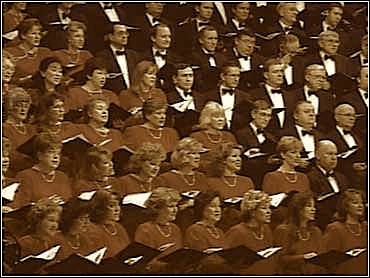
masters-hoods-en-masse

Did everyone have a nice Fourth of July? In order to teach me a lesson about realistic dialogue, apparently, Someone Up There arranged for me to spend it with a bevy of college professors. Nice people, all, full of charming chat about…

Wait a minute; I’ll bet I can read your minds. 90% of you have already decided that the conversation was stuffy, learned, and generally uninteresting to anyone who doesn’t happen to be conversant with particle physics, James Joyce, and/or the Bourbon Dynasty, haven’t you?

What makes me leap to that (in your case, possibly unwarranted) conclusion? Reading manuscripts for a living, that’s what. Rare is the professorial character who walks into a bar, sits down, and doesn’t immediately start spouting the greatest hits from his latest lecture. Usually right before he does something spectacularly absent-minded.

Seriously, the prating professor is one of the great unsung stereotypes of the literary world. Just ask any professional reader (agent, editor, contest judge, writing teacher, Millicent the agency screener) who happens to hold an advanced degree herself: it’s bound to be her pet peeve.

And with good reason: even manuscripts that conscientiously eschew the sulky teenager, the ditsy flight attendant, the corrupt politician, and the unattractive computer genius have been known to embrace the ever-lecturing lecturer with a vim that makes one wonder just how many aspiring writers were bored to death in college. Or high school. Or merely have never had the good fortune to hobnob with doctorate-holders at a social function.

The ugly, ugly result: like many a reader before her, a Millicent with a master’s degree is fated to roll her eyes over unrealistic dialogue.

Why, we were talking about that just the other day, weren’t we? If memory serves — and I’m quite positive that it does — just before I elected to ski down the slippery slope of dissecting all of the problems Hollywood narration can bestow upon a manuscript, I was already perched upon a soapbox, pointing out the pacing, voice, and storytelling dangers inherent to sneaking too much background information or physical description into interview scenes early in a novel submission.

Today, I’m clambering back up on that soapbox. Because, honestly, I’m reading as fast as I can, but I’m just not going to be able to read every manuscript in the English language before it lands upon the always-crowded desk of our old pal Millicent.

No doubt spilling her too-hot latte on her master’s hood, like the ones depicted above. Because, naturally, like everyone who has ever earned an advanced degree, she never takes off her robes, right?

While I’m adjusting my purple velvet doctoral tam — yes, really — allow me to recap a bit for those of you who missed the earlier posts in this series: an interview scene is one where a character, generally the protagonist, obtains information critical to the plot and/or character development from another character, extracted through dialogue. An inefficient interview scene is one in which, as is all too often the case in submissions, the narrator is not a particularly good interviewer. Or thinks that s/he is being clever by not just coming out and demanding the information s/he has ostensibly walked into the scene to collect.

Can you blame a reader for becoming a tad impatient with an interviewer who NEVER ASKS THE LOGICAL FOLLOW-UP QUESTION or JUST SITS THERE WITHOUT ASKING ANYTHING, waiting for the interview subject to spill his guts spontaneously?

If the reader in question happens to be Millicent, her cousin Maury the editorial assistant, or her Aunt Mehitabel the noted contest judge (hey, they’re a literary-minded family; advanced degree-holders, all), the consequences are usually even more serious: if s/he loses interest in the manuscript before her, she tends to stop reading.

In other words, “Next!”

How may a writer avoid this grisly fate? Here’s a good rule of thumb: while not everything that people say in real life makes good dialogue, it’s an excellent idea to make sure that all of your dialogue is in fact something a real person MIGHT say.

And here’s a secondary rule of thumb — a rule of forefinger, so to speak: that goes double for any dialogue that sounds anything remotely like Hollywood narration. Yes, if you have heard with your own tiny, shell-like ears a real person speak that way.

Remember, please, that dialogue is not automatically realistic just because a real person has at some point uttered it. As I have been pointing out none too gently throughout this series, real human beings tend not to tell one another things they already know — except, of course, about the weather (“Some heavy rains we’ve been having, eh?”), the relative progress of sports teams (“How about them Red Sox?”), and tidbits from the latest celebrity death scandal (in the interests of moving this along, I’ll spare you all my eulogistic renditions of Ben and I’ll Be There, despite the fact that they happen to fall smack in the middle of my flute-like soprano range).

In print, such iterations of mundane issues are notably primarily for their soporific value. (Translation: zzzzz.) As storytelling, such homely gems just tend to slow down the action of the scene.

Interestingly enough, adhering to these two rules while revising almost always results in trimming interview scenes substantially. This is particularly true for interviews that provide the opening conflict in novels, where Hollywood narration and dialogue stuffed to the gills with visual clues about characters tend to congregate — and thus are likely to do the most damage.

I sense some shifting in seats out there. “Yeah, yeah,” the impatient are murmuring. “You already yammered at us about this last week, Anne. Cut to the chase, already.”

Funny, that last sentence is precisely what Millicent is often heard muttering over interview scenes. Without the last week part, that is.

But you have a legitimate point, impatient mutterers. However, in my earlier discussion of the phenomenon, I left out one of the primary reasons Millicent tends to have that particular knee-jerk reaction: if the first couple of pages of text are a bit heavy-handed, agency screeners, contest judges, and other professional readers usually leap to the conclusion that the ENTIRE text reads the same way.

An assumption, as you no doubt have already guessed, that conveniently enables Millie and her ilk to reject the descriptively front-loaded submission immediately and move swiftly on to the next.

I have seen a LOT of good manuscripts done in by this tendency. Because this is such a common problem, as an editor, one of the first places I look to trim is that first scene — which, as I mentioned a few days back, is very, very frequently an interview scene. My editing antennae perk up particularly strongly if the opening scene relies far more heavily upon dialogue than narration.

Why, all of you interview-writers ask in trembling tone? Well, see for yourself, in this piece of purple-tinted prose:

“Don’t you go rolling those large hazel eyes at me, Thelma,” Marcel warned. “It hasn’t worked on me since our days in the chorus twelve years ago, in that bizarre road company of Auntie Mame. And you can save the eyelash fluttering, too. You’re wearing too much mascara, anyway.”

Thelma laughed. “That’s a fine criticism, coming from a man wearing false eyelashes. Just because you’re a drag queen doesn’t mean you can’t dress with some taste. I mean, bright red lipstick with a pale lavender sweater? Please.”

“What about you?” Marcel shot back. “In your puce bathrobe with purple magnolias dotted all over it still, at this time of day!”

Thelma walked around him, to check that the seams on his stockings were straight. “Because you’re my best friend in the world, I’m going to be absolutely honest with you: you’re too heavy-set for a miniskirt now, darling. Certainly if you’re not going to shave your legs. What are you now, forty-five and a size twenty-four?”

Marcel smoothed down his Technicolor orange wig. “At least at six feet, I’m tall enough to wear Armani with style. Your cramped five foot three wouldn’t even be visible on a catwalk.”

Admittedly, the banter here is kind of fun, but a judicious mixture of dialogue and narration would convey the necessary information less clumsily, without rendering the dialogue implausible. Try this moderately snipped version on for size:

Thelma rolled her large hazel eyes. Even ensconced in a ratty puce bathrobe that barely covered her short, round form, she carried herself like the Queen of the Nile.

Unfortunately for her dignity, her icy hauteur act had grown old for Marcel twelve years ago, three weeks into their joint chorus gig in that chronically under-attended road tour of Auntie Mame. “You can save the eyelash fluttering, sweetheart. You’re wearing too much mascara, anyway.”

Thelma laughed. “You’re a fine one to talk taste. Bright red lipstick with a pale lavender sweater? Please.”

His thick, black false eyelashes hit where his pre-plucked eyebrow had originally been; his current fanciful impression of an eyebrow swooped a good four inches higher, threatening to merge with his Technicolor orange wig. Even for a career drag queen, his moué of surprise was a bit overdone. “Will you be getting dressed today, darling?” he asked brightly. “Or should I just get you another bottle of gin, to complete your Tallulah Bankhead impression?”

Thelma walked around him, to check that the seams on his stockings were straight. He was getting too heavy to wear fishnets every night; still, not bad gams, for a forty-five-year-old. “If you insist upon wearing a miniskirt, my sweet, you might want to consider shaving your legs.”

Same information, but more naturally presented, right? By having the narration take over the bulk of the descriptive burden, a rather amusing narrative voice has emerged, conveying a point of view distinct from either Marcel or Thelma’s.

I can hear my mutterers muttering again, can I not? “Okay, so the second version has a stronger narrative voice,” they concede. “But even so, all of that physical description makes the scene drag a bit, doesn’t it?”

Yes, and that brings me back to my closing question from earlier in this series: other than the fact that television and movies have accustomed us all to having an instantaneous picture in our heads of a story’s protagonist, is there a reason that a narrative must include a photographic-level description of a character the instant s/he appears in the book?

I’ll go ahead and answer that one myself: no, there isn’t; TV and movies have simply accustomed us to the notion that our first impressions of any character should be visual, just as in radio, we first hear him speak.

In a visual medium, there’s plenty of reason to give the audience a snapshot, but books are not visual media; narratives can appeal to all of the senses. So the next time you sit down to ponder revising the first few pages of a novel, it’s worth investing a moment or two in pondering the possibility that there is no such reason.

Consider it, perhaps, while sitting with a hard copy of your first few pages in your hand. Is there backstory or physical description in your opening dialogue that could come more gradually, later in the chapter — or even later in the book?

Or – and this is a possibility that occurs frequently to professional readers of interview scenes, let me tell you — is that Hollywood narration or description-laced dialogue the book’s way of telling us that perhaps the book opens at the wrong part of the story?

I hope that didn’t make anyone out there faint; my kind of doctorate doesn’t allow me to resuscitate the fallen with impunity.

Might, for instance, we learn more about Thelma and Marcel in a more graceful manner if, instead of beginning the novel with the dialogue above, it opened with a short prologue showing them twelve years ago, bright-eyed, innocent, and slim — and then jumped ahead to this scene, to show how they and their relationship have changed?

Dramatic, eh? One might even say character-revealing.

Of course, front-loading an opening scene with physical description is not necessarily an indicator of a structural problem. I suspect that often, writers who use this technique as a means of introducing description are driven primarily by a panicked sense that the reader must be told what the characters look like the instant they appear in the text – combined with a recollection that their high school writing teachers said that too-extensive physical descriptions in the narrative are dull. So they’re sort of trying to, you know, sneak the physical description in when the reader isn’t looking.

Trust me, a professional reader is ALWAYS looking. It’s her job.

Looking specifically, in the case of an agency screener or editorial assistant plugging through a mountain of submissions, for a reason to reject the manuscript in front of her. By avoiding the common twin traps of overloading the first scene with crammed-in backstory and physical description, a manuscript stands a much greater chance of cajoling Millicent into reading on to scene #2.

And we all want that, don’t we?

I sense more impatient shifting in the peanut gallery. “Um, Anne?” these fed-up folks say. “Isn’t this the same point you made above? I get it, already: don’t use dialogue to have characters describe one another. Have you considered that there might not be a reason to keep telling us this?”

Ah, but you’re assuming that I’ve already made my primary point. Far from it; like other doctors, we book medicos bill for our advice by the hour. Relax; we’ve still got some time left in our session.

So here comes some professional wisdom: after a screener has had the privilege of scanning a thousand manuscripts or so, it becomes pretty clear that many aspiring writers don’t really understand what the writing gurus mean when they urge us all to open with a hook.

A hook, for those of you new to the term, is a grabber located within the first paragraph of a story or book — preferably within the first sentence, according to some writing teachers — that so intrigues the reader that s/he is instantly sucked into the story. (This is not to be confused with a Hollywood hook, a one- or two-sentence pitch for a script or book. See the so-named category on the list at right, if you are curious about the care and feeding of the latter.)

Often, aspiring writers will interpret the advice to open with a hook to mean that a storyline must open with violent or even bloody action, a mystery that the reader will want to solve, or a conflict-ridden scene. While admittedly Millicent sees a whole lot of manuscripts that open with a bang (with or without gushes of blood), all of these strategic choices can indeed work, if handled well.

Although let me tell you, they are such common choices that it’s a downright relief to most professional readers when a writer elects to open with a powerful visual or sensual image instead.

What’s even more common than the book that kicks off with conflict? An beginning that insists that the reader must be 100% up to speed on the plot and characters by the bottom of page 1 — or page 5 at the latest.

Again, that vexing question rears its ugly head: is this strictly necessary?

Brace yourselves, because I’m about to suggest a revision technique that may shock some of you: just as an experiment, try removing the first scene of your book.

Not permanently, mind you — and certainly not without having made a backup copy of the original first, in case you decide after mature and careful consideration that what I’m about to suggest next was a stupid idea: cut it just long enough to find out whether the story would make sense to the reader without it. If it can fly that way, consider cutting the scene entirely and starting fresh slightly later in the plot.

I’m quite serious about this — you wouldn’t believe how many good manuscripts don’t actually begin until a couple of scenes in, or that allow absolutely gorgeous opening sentences or images to languish on page 4. Or page 15.

Or the beginning of Chapter Three.

Yes, I know: what I’m suggesting is potentially pretty painful; as we discussed in the GETTING GOOD AT ACCEPTING FEEDBACK series (still conveniently accessible in the category list at right, in case you missed it), many, many aspiring writers regard the approach of the reviser’s pen with every bit of the fear and loathing that the published writer feels for governmental censorship. But it’s just a fact that when we’re first constructing a narrative, we writers are not always right about where the story should begin and end.

If you don’t believe this, I can only suggest that you take a gander at THE BROTHERS KARAMAZOV, an undoubted masterpiece that could have lost most of the first 200 pages without bugging the reader much at all.

(That’s a professional opinion, by the way. One of the great fringe benefits of having walls lined with diplomas from prestigious institutions is the ability make sweeping judgments like that about classics without fear of sounding ignorant. While I’m at it, allow me to add: THE TAMING OF THE SHREW is a stupid play, and I found A TALE OF TWO CITIES far-fetched. So there.)

Try to keep an open mind while you’re revising. Be willing to consider the possibility that your story might be more effective — and hook the reader better — if you began it at a different point. Or at least do a little field testing to rule it out.

Believe me, you’ll sleep better at night if you do.

How do I know this, you ask? Because now, I’ve planted the doubt in your mind. As much as you might pooh-pooh the idea that all or part of your opening could be snipped away without fundamental harm to the storyline, you can’t be ABSOLUTELY sure that it’s a stupid suggestion without going back over it pretty rigorously, can you?

You’re welcome — and I mean that very seriously, because an aspiring writer who is willing to examine and reexamine her writing before she submits it is going to have a much, much easier time coping with editorial feedback later on in the process.

Trust me; I’m a doctor. That diploma over there says so.

By the way, what the group of professors were discussing when I walked into the Fourth of July party was Charles Dickens’ BLEAK HOUSE. After I laughed and told them that this was precisely the type of conversation people who didn’t know any professors would write for them, one of them said, “Yes, and the funny thing is, this is a conversation we normally wouldn’t have outside a Dickens conference.”

I rest my case. Keep up the good work!

Constructing effective interview scenes, part III, in which I stop resisting the urge to nag novelists about Hollywood narration and just get on with it, already

superman-in-pink

Last time, I introduced you to that most pervasive killer of dialogue realism, Hollywood Narration, the perplexing practice wherein backstory is conveyed by dialogue between persons who both already know the information perfectly well — and thus have absolutely no legitimate reason to be having that particular conversation at all. To save you confusion in future critique groups and editorial conversations in the dim, uncertain future, I should hasten to add that the term Hollywood Narration is mine; due to the phenomenon’s widespread unpopularity, it is cursed under many names throughout the publishing world. My personal favorite is the SF/fantasy moniker, as you know, Bob… dialogue.

Whatever you like to call it, as far as I’m concerned, it’s one of the scourges of both the modern publishing industry AND the screenwriters’ guild.

What’s so wrong with it? From a reader’s perspective, Hollywood narration in dialogue is an interview scene with no interviewer but the author. Leaving the reader to wonder: why the heck is that character responding to questions that no one has actually asked him — and furthermore, whose answers must come as a mind-numbing bore to the character to whom he’s saying it?”

As we discussed yesterday, the reason’s usually quite simple: because the writer wants the reader to learn the answers to those questions, that’s why. So much so that the characters’ motivations and listening preferences are ruthlessly disregarded in favor of audience enlightenment.

Anyone see a problem with this narrative strategy? Anyone?

No? Well, I could just tell you that Hollywood Narration has the characters tell what the narrative doesn’t show — but it would be far, far more effective to show the phenomenon in action, wouldn’t it?

It isn’t always easy to catch in revision, you know. Hollywood Narration can be very subtle, as in this dialogue excerpt:

Lois did a double-take at the stranger — or was he? It was so hard to tell behind those thick, black-rimmed glasses. “You remind me of someone. Funny that I didn’t notice it before.”

Clark grinned shyly. “It is funny, considering that we’ve been working together for the last five years.”

Did you catch it? Clark is telling Lois something that she must have known for, at minimum, five years. So why is he saying it, other than to let the reader know that they’ve been working together for five years?

More often, though, Hollywood narration is laid on with a heavier hand, if not a shovel. Sometimes, the helpings are so lavish that they practically constitute a flashback:

“We could always spend the weekend at our rather derelict lake house,” Roger pointed out. “We’ve owned it for fifteen years now, and I don’t think we’ve stayed in it five times.”

Sandra shrugged, a good trick, considering that her hands were deeply imbedded in the clay turning on the wheel. She was going to need major chiropractic work on her neck some day. “That’s not true. We spent a month there when little Tina came down with the measles during the family reunion, don’t you remember? All 117 of us, the whole extended family as far as it could be traced — or at least as far as Aunt Martha managed to trace it in her three volunteer afternoons per week at the Genealogical Society, bless her heart and reading glasses — locked inside after old Doc Stephens nailed the quarantine sign on the door.”

“I remember. It was the worst three weeks of my life.”

“Worse than the time that we and our three kids fell through that hole in the space-time continuum and ended up chasing the guy we mistakenly thought was Galileo for twelve days? Don’t be ridiculous.”

“Which just proves my point,” Arnold said triumphantly. “We need to spend some serious time doing repairs at the lake house. Anyone could tumble through one of those holes and end up in the fourteenth century.”

Reads like an interview scene, doesn’t it? But Arnold didn’t ask Sandra for a recap of their previous adventures — escapades, one hopes, detailed earlier in the book in the reader’s hand, or in a prequel; they sound as though they would be interesting to see fleshed-out, rather than glossed over anecdotally in dialogue — nor did Sandra represent herself as not knowing how long they had owned the lake house. They were talking about their vacation plans — so why the sudden plunge into backstory?

Don’t all shout the answer at once; the narrative itself gave a major clue here. To a professional reader, the fact that Arnold said, “I remember,” is like a neon sign, flashing HE ALREADY KNOWS THIS! fourteen times per minute.

It’s a touch distracting.

Like pretty much every other over-used narrative devices, Hollywood narration can work effectively, if used in miniscule doses and rarely. Unfortunately for our old pal, Millicent the agency screener, manuscripts seldom display the trick sparingly, especially in the openings of novels.

Why do those first few pages tend to be prime display space for Hollywood narration, you ask in all innocence? Because, dear friends, few aspiring writers have the patience to allow backstory to reveal itself over the course of chapters; most want to get it out of the way at once. This is why, in case those of you who have been haunting literary conferences lately, so many agents are prone to advising roomfuls writers not to try to cram the entire premise onto the first page — or, when they choose to express it a trifle more politely, to consider waiting until later in the book to reveal background information.

In other words, the first page of a novel doesn’t need to include all of the information in the book’s pitch. (And if the logical beauty of that statement didn’t make you smack your head with wonder, don’t worry: we’ll start talking about pitching next week.) Confident novelists reveal character and situation over the course of an entire book, rather than within the first few paragraphs.

Was that deafening muttering indicative of some discomfort with that advice? “But Anne,” masses of reveal-it-up-fronters protest, “yesterday, you told me not to have the characters comment to one another on the first few pages; today, you’re trying to dissuade me from having them talk about what happened before the book began. So how on earth am I to introduce these characters to the reader?”

Good question, up fronters. How about by placing them in the middle of a conflict so engaging — and so central to the plot of the book — that the reader quite longs to stick around to find out more about them?

Just a thought.

There are a million other ways to introduce characters, of course. Although Hollywood narration might feel like a satisfying way to cram a whole bunch of information into just a few lines of text, it’s actually one of the weakest kind of openings — so much so that anxious conference-goers are sometimes stunned to hear an agent or editor say that he dislikes manuscripts to open with dialogue at all.

Before the 2/3rds of you whose manuscripts open with dialogue faint, reach for your heart medication, or frantically revise your first pages, let me hasten to add: what this assertion generally means is that the speaker objects to books that open with precisely the type of dialogue that we’ve been discussing all week, poor interview scenes and Hollywood narration, not to any dialogue, ever.

How do I know that, those of you currently clutching your chests demand? One of the things that a savvy writer learns by attending many conferences over the years is that exaggeration and sweeping generalizations tend to be common features of conference-given advice; something about sitting on a dais seems to bring out a desire to lay down all-inclusive axioms.

Another way I know is that I read manuscripts for a living, so I have a pretty darned good idea of just how high a percentage of the submissions agents who express this preference see that open with this type of dialogue. Trying to stuff backstory into the first few exchanges is awfully common. The result is, all too often, unrealistic dialogue — and an opening that feels contrived, as in this glorious example of a first page:

”So, Arnold, how was your work at the paper mill today?” Bertha asked, drying her rough hands on the fraying dishtowel that served her as a makeshift apron.

The burly man chuckled ruefully. “Having worked there for fifteen years — one before we married, two more before the twins were born, and five years since our youngest girl, Penelope, fell off the handlebars of Arnold Junior’s bike and sustained brain damage, forcing me to quit my beloved teaching job and stay home to help her re-learn basic life skills like walking and chewing gum — I sometimes get sick of the daily grind.”

“Did your boss, the redoubtable Mr. Andrews, terrify you for the fourth consecutive week by sticking his hand into a working chipper to demonstrate how reliable the shut-off mechanism? Doesn’t he recall the hideous accident that deprived your former foreman, Eldon Wheelford, of the use of his left arm, leaving him embittered and lopsided after that unsuccessful lawsuit against his negligent employer?”

“Which he would have won, had Mr. Andrews’ rich uncle, the mill owner, not bribed his second cousin, the judge. It probably also didn’t help that the entire jury was made up of mill workers threatened with the loss of their jobs.”

“I wish you would stand up to management more.” Bertha sighed. “But you are my husband, my former high school sweetheart, so I try to be supportive of all you do, just like that time I went down to the police station in the middle of the night in my pink flannel nightgown to bail you and your lifetime best friend, Owen Filch, out after you two drank too much near-beer and stole us the biggest Sequoia in the local national park — renowned for its geysers — for our Christmas tree.”

Tim shook his graying head ruefully. “How could I forget? I had gotten you that nightgown for Valentine’s Day the year that little Betty, then aged six, played Anne Frank in the school play. I never miss one of her performances — nor, indeed, anything that is important to you or the kids. But since our eldest daughter, the lovely and talented Selma, won that baton-twirling scholarship to State, I have felt that something was lacking in my life.”

”Why don’t you go downstairs to the workshop you built in the basement with the money from that car-crash settlement? You know how much you enjoy handcrafting animals of the African veldt in balsa wood.”

”What would I do without you, honey?” Arnold put his arms around her ample form. “I’ve loved you since the moment I first saw you, clutching a test tube over a Bunsen burner in Mr. Jones’ chemistry class in the tenth grade. That was when the high school was housed in the old building, you recall, before they had to move us all out for retrofitting.”

”Oh, Arnold, I’d had a crush on you for six months by then, even though I was going out with my next-door-neighbor, Biff Grimley, at the time! Isn’t it funny how he so suddenly moved back to town, after all those years working as an archeologist in the Sudan?” Arnold did not respond; he was kissing her reddish neck. “But you always were an unobservant boy, as your mother Gladys, all sixty-four years of her, always points out when she drops by for her weekly cup of Sanka and leftover cookies from my Tuesday night Episcopalian Women’s Empowerment Group social.”

Okay, so this is a pretty extreme example — but honestly, anyone who has read manuscripts professionally for more than a few weeks has seen Hollywood Narration almost this bald. Make no mistake: this is telling, not showing in its most easily-identifiable form.

Like so many transgressions of the show, don’t tell rule, Hollywood Narration does provide some definite benefits to the writer who incorporates it. placing backstory and description in dialogue instead of narrative text is a shorthand technique, a means of allowing the author to skip showing entire scenes — or, even more commonly, to avoid figuring out how to reveal necessary information in a slower, more natural manner.

It is, in short, a trick — which is precisely how a professional reader who has seen it used 500 times this month tends to regard it. Millicent might not see it as necessarily the result of narrative laziness (although it can be that, too), but at least as evidence of a writer’s not being conversant with the many ways a text can convey information to a reader without just coming out and telling him outright.

Is that a thicket of raised hands I see before me, or did half of my readership just spontaneously decided to stretch in unison? “But Anne,” some of you point out, and who could blame you? “I don’t quite understand. I see Hollywood narration in published novels fairly often, especially in genre works. Hasn’t it become common enough that it’s simply an accepted storytelling convention by now?”

Good question, hand-raisers or stretchers, whatever you’re calling yourselves these days: you are in fact correct that Hollywood narration has become pretty ubiquitous. But that doesn’t mean that an aspiring writer hoping to break into the book-writing biz is going to win friends and influence people in the publishing industry by embracing it. Submission is definitely one time when you shouldn’t be following the crowd in this respect.

That strikes some of you as unfair, doesn’t it? “But Anne,” I hear large numbers of you sputtering, “can you seriously be arguing that dialogue in movies, on TV shows, and in books first published in English aren’t indicative of what an agent might be looking to find in my novel? How is that possible, when I can find such dialogue on the shelves at Barnes & Noble right now?”

I’m betting that the examples you so long to wave at me, oh objectors, are not first novels by North American writers who landed their North American agents within the last five years — and for the sake of this particular discussion, the dialogue in no other books can possibly be relevant. In order to be successful, an aspiring writer’s manuscript usually has to be quite a bit better than what’s currently on the shelves, at least on average.

Why? Long-time readers of this blog, please open your hymnals and sing along with me now: the standards governing established authors — i.e., those who already have published books — is considerably less stringent than those agents tend to apply to the manuscripts submitted by writers seeking representation. Established authors have, after all, already demonstrated that their work can charm at least a few people at publishing houses, if not droves of book-buying readers. A new writer, by contrast, is effectively asking an agent to take a chance on her talent without that kind of a track record.

Speaking of relevant backstory.

Setting aside this marketing reality, however, it’s still a good idea to minimize Hollywood narration in your manuscripts — and not just because relying on it in your opening pages is usually a pretty good way to alienate Millicent’s affection for your storyline. Readers tend to have a pretty good ear for dialogue; exchanges that might pass muster when spoken by a gifted actor — whose job, after all, is to make lines read plausibly — don’t always ring true to readers. And dialogue that doesn’t ring true, unavoidably, makes it harder for the reader to suspend her disbelief and sink into the world of the story.

Give it a bit of thought, please. Your readers will thank you for it.

Next time, I’ll give you a few pointers on ferreting out Hollywood narration, bad laughter, and other inadvertent dialogue mishaps. In the meantime, keep up the good work!

How to format a book manuscript properly, part IX: ladies and gentlemen, I am delighted to present a brand-new chapter, brought to you in part by readers’ excellent questions

purple-tulipspurple-tulips

One of the bizarre side effects of this year’s unusually cold winter in Seattle is that the bulbs that usually come up in mid-March suddenly popped up a couple of weeks ago, along with all of the ones that were supposed to be blooming now. I’m hoping that it’s a good omen for the economy, especially the part of it that affects how many books publishers decide it’s prudent to acquire in the near future and thus how many new clients agents see fit to take on.

See why I was so adamant in the recent HOW DO MANUSCRIPTS GET PUBLISHED, ANYWAY? series (conveniently gathered under that very name on the category list on the lower right-hand side of this page) that aspiring writers be aware of how the publishing industry actually works? It’s cyclical; it’s harder to break into the biz at some points than others. If a writer believes — as so many seem to do — that the only issue determining whether an agent chooses to represent a particular manuscript, or whether a publishing house elects to publish it is the quality of the writing, frustration is practically inevitable. The response is different for every writer, of course, but let’s just say that it’s pretty easy for someone querying and submitting like crazy during a period like this that his writing just isn’t very good.

Which is sad if the actual culprit is the economy, right?

All of which is to say: this is a tremendous time to hunker down and revise. Or to write something new — when your first book lands an agent, I can guarantee that you will be astonished at just how short a time passes before she’s bugging you for your next work. Or even to add some ECQLC to your writing résumé — that’s eye-catching query letter candy, for those of you new to this blog — by entering the running for First Periodic Author! Author! Awards for Expressive Excellence.

Oh, you thought I was going to allow a day to pass without plugging it? When the deadline is as close as midnight on May 18?

Since the rules specify that only entries submitted in standard format can win some pretty fabulous prizes, let’s move swiftly to cover the last few rules of standard format left in this series. Before you start dancing in the streets accordingly, I want to make sure that I’ve covered the basics clearly enough so that you can all spot correct and incorrect format in the wild, outside of this laboratory environment. Before I institute a pop quiz, I want to go over how to format the opening to a new chapter, whether or not it’s also the first page of your manuscript.

To get the discussion ball rolling, let’s take a gander at a properly-formatted chapter opening. Here is the first page of Chapter Six of my memoir:

Every chapter of a manuscript should begin like this: on a fresh page, 12 single lines (or 6 double-spaced) from the top. (For those of you who do not know how to insert a hard page break into a Word document, it’s located under the INSERT menu. Select BREAK, then PAGE BREAK.)

Notice how both the chapter number and the chapter title appear, centered, within these parameters. If there were no chapter title in this instance, the first page of Chapter 6 would look like this:

Since sharp-eyed reader Allison asked so very nicely, here’s what it would look like if Chapter 6 were the beginning of Part II of the book (it isn’t, but we aim to please here at Author! Author!):

And since inveterate question-asker Ken inquired about how one might identify a narrator-du-chapter in a multiple POV novel, let’s pretend this is fiction (which it isn’t) and place the narrator’s name in the traditional spot:

a-memoir-title-with-narrator-name

That’s the way one might do it in a manuscript like Barbara Kingsolver’s THE POISONWOOD BIBLE, where the narrator changes with the chapter. If there were also a chapter title (perhaps not advisable in this case, as there’s already significant information at the top of that page for the reader to absorb), it would go between the chapter heading and the narrator identifier. (I would show you an example of that, but it’s late, I’m tired, and I’m positive that you can extrapolate.)

Thinking that there must be an easier way to format the first page of a chapter than to memorize the way it should look and reproduce it from scratch each time? You’re not alone, if so; even seasoned authors worry that someday they will forget to hit return one of the necessary times, so that Chapter 5 will begin ten lines from the top, while Chapter 1-4 and 6 on will begin twelve lines down.

Why, curious reader David asked not all that long ago about how to get that formatting to stick, so to speak: “The chapter line will appear at the top of each page,” quoth he, “so I leave five doublespaced blank lines so the first paragraph starts six lines down? Is there something I can do in Microsoft Word so it will stay that way?”

Standard format templates do exist, of course, but frankly, Word is already equipped with two perfectly dandy features for reproducing formatting exactly in more than one place in a document: COPY and PASTE.

Or, to put it another way, the easiest way I know to make sure each chapter opening is identical is to create your own template. Copy from “Chapter One” down through the first line of text, then paste it on the first page of chapter 2, 3, etc. Once the format is in place, it’s a snap to fill in the information appropriate to the new chapter.

Does that make sense to everyone? Excellent.

Now I want to talk a bit about pagination — don’t groan; it’s an important issue. Let’s take another gander at our first example:

This time, I would like you to notice that in each of these examples, the only reference to the author’s name or the title should appear in the slug line, located in the upper left-hand margin. This is as proper on page 139 of a book manuscript as on page one. While you’re going around noticing things, notice that the page number belongs within the slug line, rather than anywhere else on the page.

The slug line confuses a lot of aspiring writers; until you have seen piles and piles of professional manuscripts, it looks kind of funny. And when you’ve been told over and over again that a manuscript should have a 1-inch margin on all sides, it can seem counterintuitive to add a line of text, even such a short one, IN that margin.

But I assure you, it’s always been done that way. And why? Followers of this series, chant it with me now: BECAUSE IT LOOKS RIGHT.

Yes, that logic IS tautological, now that you mention it. If you have a problem with that, I would suggest taking it up with the powers that rule the universe. As I believe the fact that my memoir has been in the hands of a reputable publisher for years and still has yet to be released (due to lawsuit threats concerning who owns my memories, believe it or not) makes abundantly clear, I apparently do not rule the universe.

If I did, Microsoft Word would be set up to create documents in standard format automatically, Word for Mac and Word for Windows would be set up so those using one could easily give formatting advice to those using the other, air pollution would be merely a thing of distant memory, and ice cream cones would be free on Fridays.

As none of these things seems to be true, let’s get back to business: how does one create that pesky slug line, anyway?

Back in the days when typewriters roamed the earth, it was perfectly easy to add a slug line to every page: all a writer had to do was insert it a half-inch down from the top of the page, left-justified, floating within the 1-inch-deep top margin. For word-processed documents, it’s a trifle more complicated.

The slug line still belongs in the same place, .5 inches from the top of the paper, but instead of laboriously typing it on each page individually as writers did in the bad old days, one simply inserts it in the header. In most versions of Word (I can’t speak for all of them), the header may be found under the VIEW menu.

Before the Luddites out there trot out their usual grumble about tracking down the bells and whistles in Word, think about this: placing the slug line in the header (located in Word under the VIEW menu) also enables the writer to take advantage of one of the true boons of the advent of word processing, pages that number themselves. Every so often, I will receive a manuscript where the author has, with obviously monumental effort, typed a slug line onto the first line of TEXT of each page, so it looks like this:

See how pulling the slug line down into the text messes with the spacing of the page? An entire line of text is sacrificed to it — and let me tell you, that line is not going to go quietly.

Why not? Well, what’s going to happen if new writing is inserted on a page formatted this way? That’s right: the author is going to have to go back and move each and every one of those slug lines to match the NEW pagination.

I’d show you a picture of this, but it’s just too ugly to contemplate. Trust me, it would be a heck of a lot of work, and writers who do it are likely to end up beating their heads against their studio walls.

But wait a minute — I promised you a pop quiz, didn’t I? Okay, try this on for size: see any other problems with this last example?

How about the fact that the slug line includes the word PAGE? Shouldn’t be there; just the numbers will suffice.

Did I just hear some huffs of indignation out there? “But Anne,” I hear the formatting-ambitious cry, “it looks kind of nifty to include PAGE before the page number, isn’t it? If it’s just a matter of personal style, who could possibly be hurt by including it, if I like the way it looks?”

Well, you, for starters. And why? (Chanters, ready your lungs.) BECAUSE IT JUST WOULD NOT LOOK RIGHT TO A PROFESSIONAL READER.

I’m quite serious about this; I’ve seen screeners get quite indignant about this one. “Does this writer think I’m STUPID?” Millicent is prone to huff. (Don’t bother to answer that question; it’s rhetorical.) “Does she think I DON’T know that the numeral that appears on every page refers to the number of pages? Does she think I’m going to go nuts and suddenly decide that it is a statistic, or part of the title?”

Don’t bait her; the lady has a hard life. Do it the approved way.

Okay, did you spot any other problems? What about the fact that the first paragraph of the chapter is not indented, and the first character is in a different typeface?

The odd typeface for the first letter, in imitation of the illuminated texts hand-written by monks in the Middle Ages, doesn’t turn up all that often in manuscripts other than fantasy and YA, for one simple reason: books in that category are more likely to feature this it’s-a-new-chapter signal than others. But once again, what an editor may decide, rightly or wrongly, is appropriate for a published book has no bearing upon what Millicent expects to see in a manuscript.

Save the manuscript illumination s for someone who will appreciate it. Hop in your time machine and track down a medieval monk to admire your handiwork, if you like, but in this timeframe, keep the entire manuscript in the same typeface and size.

The non-indented first paragraph of a chapter is fairly common in mystery submissions, I have noticed, and starting to become more prevalent in other kinds of fiction as well of late. (For an interesting discussion about why, please see the comments on this post and this one..) In fact, I’ve been told by many mystery writers — and rather tersely, too — that this is an homage to the great early writers in the genre, an echo of their style, so who is yours truly to try to talk them out of that gesture of respect?

Well, someone familiar with what Millicent expects to see on a page — as well as someone who is aware that almost without exception, in Edgar Allan Poe’s time all the way down to our own, the EDITOR has determined the formatting that appeared on any given printed page, not the author.

To professional eyes, especially peevish ones like Millicent’s, a manuscript that implicitly appropriates this sort of decision as authorial might as well be the first step to the writer’s marching into Random House, yanking off a well-worn riding glove, and striking the editor-in-chief with it. It’s just not a good idea for someone brand-new to the biz to do.

Yes, you read that correctly: it’s sometimes seen as a challenge to editorial authority. And while we could speculate for the next week about the level of insecurity that would prompt regarding a minor formatting choice as a harbinger of incipient insurrection, is the manuscript of your first book REALLY the right place to engender that discussion?

Exactly. Save the formatting suggestions for a long, intimate discussion over coffee with your editor AFTER he acquires the book. You’ll probably lose any disagreement on the subject, but at least you will have made your preferences known.

Until that happy, caffeine-enhanced day, just accept that the industry prefers to see every paragraph in a manuscript indented the regulation five spaces. It just looks right that way.

While we’re at it, how about the bolded chapter number and title? Nothing in a manuscript should be in boldface. Nothing, I tell you. Uh-uh. Not ever.

Well, there is an exception, a single one, but I’ll be getting to that tomorrow. And I have seen authors get away with the title itself on the tile page, but frankly, I wouldn’t chance it on a first book.

Nor should anything be underlined — not even names of books or song titles. Instead, they should be italicized, as should words in foreign tongues that are not proper nouns.

I heard that gigantic intake of breath out there from those of you who remember constructing manuscripts on typewriters: yes, Virginia, back in the day, underlining WAS the norm, for the simple reason that most typewriters did not have italic keys.

If you consult an older list of formatting restrictions or one intended solely for short story formatting — both of which seem to be circulating at an unprecedented rate on the web of late, pretty much always billed as universally-applicable rules for any type of writing, anywhere, anyhow, a phenomenon which simply does not exist — you might conceivably be told that publications, song titles, and/or foreign words (sacre bleu!) should be underlined. But trust me on this one: any agent is going to tell you to get rid of the underlining, pronto.

And why? All together now: because IT JUST DOESN’T LOOK RIGHT THAT WAY.

All right, campers, do you feel ready to fly solo? Here are two pages of text, studded with standard format violations for your ferreting-out pleasure. (I wrote these pages, too, in case anyone is thinking about suing me over it. Hey, stranger things have happened. To my memoir, even.)

How did you do? Are those problems just leaping off the page at you now? To reward you for so much hard work, here are a couple of correctly-formatted pages, to soothe your tired eyes:

Whenever you start finding yourself chafing at the rules of standard format, come back and take a side-by-side gander at these last sets of examples — because, I assure you, after a professional reader like Millicent has been at it even a fairly short time, every time she sees the bad example, mentally, she’s picturing the good example right next to it.

And you know what? Manuscripts that look right get taken more seriously than those that don’t. And regardless of how you may feel about Millicent’s literary tastes, isn’t a serious read from her what you want for your book?

We’re in the home stretch of going over the formatting rules, everyone. Hang in there, and as always, keep up the good work!

How to format a book manuscript properly, part VII: what would we do without Millicent? Or, why spilled liquids are sometimes worth crying over

spilledmilk
How have you been enjoying our latest imaginative foray into the wonderful world of formatting book manuscripts? If you’re at a loss for words to describe the experience, how about gee, this is complicated, but it’s thrilling to know at last that I’m doing it right? Or I’d been doing it right, I see, but how fascinating to know the logic behind it?

Heck, I’d even settle for well, it’s kind of a slog, but at least now I know that my entry won’t be disqualified from the First Periodic Author! Author! Awards for Expressive Excellence when I enter on or before May 18, 2009. Phew!

Okay, so standard may not be the most scintillating subject in the world, but since it actually is sometimes the difference between a well-written manuscript that strikes Millicent, everybody’s favorite agency screener, as well-written enough to keep reading beyond the first page or two and one that makes her exclaim, “Oh, too bad — this writer isn’t ready yet. Next!” I do feel better if we run over the basics two or three times per year.

As those of you who have been reading this blog for a while have undoubtedly noticed. Hey, at least you were already prepared to enter the contest; nothing at which you should be sneezing.

Another non-sneeze-worthy achievement: after you’ve been through the rules a couple of times, the difference between a professionally formatted manuscript and one whose writer just thought it looked nice that way should be almost instantaneously apparent. As, indeed, it is to anyone who reads manuscripts for a living.

Like, say, Millicent. Pity her; she has the unenviable task of trying to see past all of those weird formatting (and spelling, and grammar) choices in order to try to discover fabulous new talent.

Wipe that smirk off your face. Even if you aren’t in the habit of empathizing with people who reject writers for a living, there’s a good self-interested reason you should care about her state of mind: even with the best will in the world, grumpy, over-burdened, and/or rushed readers tend to be harder to please than cheerful, well-treated, well-rested ones.

Millicent is the Tiny Tim of the literary world, you know; at least the Bob Cratchits a little higher up on the office totem pole uniformly get paid, but our Millie sometimes doesn’t, or gets a paycheck that’s more an honorarium than a living wage. A phenomenon that one might expect to become increasingly common, by the way: the worse a bad economy gets, the better an unpaid intern is going to look to a cash-conscious agency.

Or, heaven help us, a worried publishing house that’s been laying off editors.

Even if Millie’s not an intern, she’s still unlikely to be paid very much, at least relative to the costs of living in the cities where the major publishers dwell. Her hours are typically long, and quite a lot of what she reads in the course of her day is, let’s face it, God-awful.

Not to mention poorly formatted. But that should be obvious to you by now, right?

Millicent’s job, in short, is not the glamorous, power-wielding potentate position that those who have not yet passed the Rubicon of signing with an agency often assume it to be. Nor, ideally, will she be occupying the position of first screener long: rejecting queries and manuscripts by the score on-the-job training for a fledgling agent, in much the same way as an editorial assistant’s screening manuscripts at a publishing houses is the stepping-stone to becoming an editor.

You didn’t think determining a manuscript’s literary merits after just a few lines of text was a skill that came naturally to those who lead their lives right and got As in English, did you? Agents and editors have to learn to spot professional writing in the wild — which means, in part (out comes the broken record again) having to recognize what a properly-formatted manuscript should look like.

Actually, the aspiring writer’s learning curve is often not dissimilar to Millicent’s: no one tumbles out of the womb already familiar with the rules of manuscript formatting. (Okay, so I practically was, growing up around so many authors, but I’m a rare exception.) Like Millicent, most of us learn the ropes only through reading a great deal.

She has the advantage over us, though: she gets to read books in manuscript form, and most aspiring writers, especially at the beginning of their journeys to publication, read only books. So what writers tend to produce in their early submissions are essentially imitations of books.

The problem is, the format of the two is, as I believe that I have pointed out, oh, several hundred times before in this very forum, quite different — and not, as some of you may have been muttering in the darkness of your solitary studios throughout this series, merely because esoteric rules render it more difficult for new writers to break into the biz.

As a matter of fact, there are many reasons that a manuscript in book format would be hard for an agent or editor to handle. For starters, published books are printed on both sides of the page, manuscripts on one.

Why the difference, in these days of declining tree populations and editors huffily informing writers at conferences that paper is expensive? Simple: it’s easier to edit that way.

Which is why, even in these days of widely available word processors, scads of professional editing is still done by hand.

Again, why? Well, it’s a mite hard to give trenchant feedback while traveling in a crowded subway car if you have to maneuver a laptop (or, as I can tell you from personal experience this very minute, while squished between burly, restless fellow passengers on a plane).

Also, many agencies remain far too virus-fearful to allow their employees solicit attachments from writers who aren’t already clients. (Those who do generally have a policy that forbids the opening of unsolicited attachments, FYI.) Even in agencies that have caved in to new technology sufficiently to send their member agents on long airplane flights to writers’ conferences armed with a Kindle with 17 manuscripts on it, hand-written marginalia is still the norm, even if it means scanning hand-proofed pages and e-mailing them back to the author.

Ultimately, most editors edit in hard copy because they prefer it. The human eye is, of course, to blame for this: reading comprehension drops by about 70% when the material is presented on a computer screen; the eye tends to skim.

Which is why — you can hear this coming, can’t you? — a wise writer always reads her ENTIRE manuscript IN HARD COPY before submitting it to anyone even vaguely affiliated with the publishing industry. It’s much, much easier to catch typos and logic problems that way.

While you’ve got your hymnals out, long-time readers, let’s continue with the liturgy: manuscripts should also be typed (don’t laugh; it’s not unheard-of for diagrams to be hand-drawn, hand-number, or for late-caught typos to be corrected in pen), double-spaced, and have 1-inch margins all the way around.

Time to see why, from an editing point of view.

You had hoped that I’d gone too far afield to get back to the topic at hand, didn’t you? Not a chance. Let’s call upon our old friend Charles Dickens again to see what a page of a manuscript should look like:

Nice and easy to read, isn’t it? (If it’s too small to read easily on your browser, try double-clicking on the image.)

To give you some idea of just how difficult — or even impossible — it would be to hand-edit a manuscript that was NOT double-spaced or had smaller margins, take a gander at this little monstrosity:

I believe the proper term for this is reader-hostile. Even an unusually patient and literature-loving Millicent would reject a submission like this immediately, without reading so much as a word.

Were there a few spit-takes out there during that last sentence? “My goodness, Anne,” those of you who are wiping coffee, tea, or the beverage of your choice off your incredulous faces sputter, “why would any sane person consider it THAT serious an offense? It is, after all, precisely the same writing.”

Well, think about it: even with nice, empty page backs upon which to scrawl copy edits, trying to cram spelling or grammatical changes between those lines would be well-nigh impossible. Knowing that, Millicent would never dream of passing such a manuscript along to the agent who employs her; to do so would be to invite a stern and probably lengthy lecture on the vicissitudes of the editorial life.

She wasn’t born yesterday, you know. She’s SMART.

Don’t tempt her just to reject it unread — and don’t even consider, I beg of you, providing the same temptation to a contest judge. Given the sheer volume of submissions the average Millicent reads, she’s not all that likely to resist — and the contest judge will be specifically instructed not to resist at all.

Yes, really. Even if the sum total of the provocation consists of a manuscript that’s shrunk to, say, 95% of the usual size, it’s likely to get knocked out of the running on sight.

Some of you are blushing, aren’t you? Perhaps some past contest entrants and submitters who wanted to squeeze in a particularly exciting scene before the end of those requested 50 pages?

No? Let me fill you in on a much-deplored practice, then: faced with a hard-and-fast page limit for submission, some wily writers will shrink the font or the margins, to shoehorn a few more words onto each page. After all, the logic runs, who is going to notice a tenth of an inch sliced off a left or right margin, or notice that the typeface is a trifle smaller than usual?

Millicent will notice, that’s who, and practically instantly. As will any reasonably experienced contest judge; after hours on end of reading 12-point type within 1-inch margins, a reader develops a visceral sense of when something is off.

Don’t believe me? Go back and study today’s first example, the correctly formatted average page. Then take a gander at this:

I shaved only one-tenth of an inch off each margin and shrunk the text by 5% — far, far less than most fudgers attempt. Admit it: you can tell it’s different, can’t you, even without whipping out a ruler?

So could a professional reader. And let me tell you, neither the Millicents of this world nor the contest judges tend to appreciate attempts to trick them into extraneous reading. Next!

The same principle applies, incidentally, to query letters: often, aspiring writers, despairing of fitting a coherent summary of their books within the standard single page, will shrink the margins or typeface.

Trust me, someone who reads queries all day, every day, will be able to tell. (And if you would like to see precisely why, please check out the posts under the QUERY LETTERS ILLUSTRATED category on the list at right.)

The other commonly-fudged spacing technique involves skipping only one space after periods and colons, rather than the grammatically-requisite two spaces. Frequently, writers won’t even realize that this IS fudging: as readers have pointed out VEHEMENTLY in the comments whenever I have talked about this in the past, ever since published books began omitting these spaces in order to save paper, there are plenty of folks out there who insist that skipping the extra space in manuscripts is obsolete. Frequently, the proponents will insist that manuscripts that include the space look old-fashioned to agents and editors.

And I’m not going to lie to you here: to the agents who prefer this format, it is going to look old-fashioned. Sorry. Fortunately, however, the relatively few (and usually younger) agents who prefer the single-space option are usually exceedingly vocal about it, so aspiring writers seeking to submit to them usually don’t have a particularly hard time finding out about their preference.

How can you spot such an agent in the wild? She’s usually the one on the conference dais insisting that absolutely NOBODY accepts manuscripts with two spaces after periods and colons anymore.

Which just isn’t true; the language hasn’t actually changed, and the old-fashioned agents and editors who are aware of that tend to feel rather strongly about their preference, too. And those are the ones who will actually make the writers who work with them go through their manuscripts and add back that second space.

Yes, really — and yes, recently. One doesn’t hear of it happening the other way around.If the agent you have set your heart upon has not gone on the record about it, then, it is generally safer to go with the 2-space option.

I sense a bit of dissention out there, do I not? Perhaps a few faint whispers about how this view is old-fashioned, and is likely to be looked down upon as such?

Well, guess what, cookie — standard manuscript format IS old-fashioned, by definition; that fact doesn’t seem to stop most of the currently-published authors of the English-speaking world from using it. In fact, in all of my years writing and editing, I have never — not once — seen an already agented manuscript rejected or even criticized for including the two spaces that English prose requires after a period or colon.

I have, however, heard endless complaint from professional readers — myself included — about those second spaces being omitted. Care to guess why?

Reward yourself with a virtual candy cane if you said that cutting those spaces throws off word count estimation; the industry estimates assume those doubled spaces. (If you don’t know how and why word count is tallied, please see the WORD COUNT category on the archive list at right.)

And give yourself twelve reindeer if you also suggested that omitting them renders a manuscript harder to hand-edit. We all know the lecture Millicent is likely to get if she forgets about that, right?

Again, a pro isn’t going to have to look very hard at a space-deprived page to catch on that there’s something fishy going on. Since Dickens was so fond of half-page sentences, the examples I’ve been using above won’t illustrate this point very well, so (reaching blindly into the depths of the bookshelf next to my computer), let’s take a random page out of Elizabeth Von Arnim’s VERA:

There are 310 words on this page; I wasn’t kidding the other day about how far off the standard word count estimations were, obviously. Now cast your eye over the same text improperly formatted:

Doesn’t look much different to the naked eye, does it? The word count is only slightly lower on this version of this page — 295 words — but enough to make quite a difference over the course of an entire manuscript.

So I see some hands shooting up out there? “But Anne,” I hear some sharp-eyed readers exclaim, “wasn’t the word count lower because there was an ENTIRE LINE missing from the second version?”

Well spotted, criers-out: the natural tendency of omitting the second spaces would be to include MORE words per page, not less. But not spacing properly between sentences was not the only deviation from standard format here; Millicent, I assure you, would have caught two others.

I tossed a curve ball in here, to make sure you were reading as closely as she was. Wild guesses? Anyone? Anyone?

The error that chopped the word count was a pretty innocent one, almost always done unconsciously: the writer did not turn off the widow/orphan control, found in Word under FORMAT/PARAGRAPH/LINE AND PAGE BREAKS. This insidious little function, the default unless one changes it, prevents single lines of multi-line paragraphs from getting stranded on either the bottom of one page of the top of the next.

As you may see, keeping this function operational results in an uneven number of lines per page. Which, over the course of an entire manuscript, is going to do some serious damage to the word count.

The other problem — and frankly, the one that would have irritated a contest judge far more than Millicent — was on the last line of the page: using an emdash (“But—”) instead of a doubled dash. Here again, we see that the standards that apply to printed books are not proper for manuscripts.

Which brings me back to today’s moral: just because a particular piece of formatting looks right to those of us who have been reading books since we were three doesn’t mean that it is correct in a MANUSCRIPT.

Millicent reads manuscripts all day; contest judges read entries for hours at a time. After a while, a formatting issue that might well not even catch a lay reader’s attention can begin to seem gargantuan.

As I have perhaps pointed out once or twice throughout this series, if the writing is good, it deserves to be free of distracting formatting choices. You want agents, editors, and contest judges to be muttering, “Wow, this is good,” over your manuscript, not “Oh, God, he doesn’t know the rules about dashes,” don’t you?

Spare Millicent the chagrin, please; both you and she will be the happier for it. Believe me, she could use a brilliantly-written, impeccably-formatted submission to brighten her Dickensian day.

I shall have to sign off now, because the fellow sitting next to yours truly spilled his glass of water onto the keyboard, and I now do not appear to be able to use either the letter that follows L in the alphabet or the se()icolon. If I can get ()y co()puter fixed on the road, ()ore show-and-tell follows next time. If not, well, it was ti()e for another guest post on subtle censorship, anyway, right?

Think good thoughts for ()y ()issing letters() swift return — oh, God, the U now needs to be hit three ti()es in order to show up on the screen –and, of course, keep up the good work!

How to format a book manuscript properly, part V: beauty is not the only thing that’s in the eye of the beholder

Last week, I began a rather complicated compare-and-contrast exercise, showing common examples of the first pages of submissions and fine-tuning your binoculars so you might see how our old friend Millicent the Agency Screener might view them. As I sincerely hope those of you who read the post can attest, it was pretty obvious that the professionally-formatted title page won the beauty contest hands-down.

Or, if the bulk of you aren’t willing to attest to that, may I at least hope that everyone is now at least aware that propriety, like beauty, lies in the eye of the beholder?

Yet after I posted it last week, I heard wee pixie voices bearding me. “But Anne,” I heard these winsome creatures pipe, “aren’t you assuming that Millicent’s pretty shallow? Whenever I’ve heard agents and editors asked at conferences or on their websites about whether cosmetic issues can get a manuscript rejected, they generally disclaim the notion with scorn. I’ve even heard some of them say that they don’t care about issues like typeface, spaces after periods and colons, or where the chapter title lies — and that strikes me as significant, as I’ve never, ever heard one say it was okay to let a query letter run longer than a single page. Isn’t it the writing that matters in a submission, ultimately?”

Well, yes and no, querying sprites. Yes, the writing matters — but it’s not all that matters.

Naturally, the writing matters MOST, with freshness, audience-appropriateness, marketability, and fit with the agent or editor reading it jostling for second place. Equally naturally, and something that I often point out here, individual agents, editors, and even contest judges harbor individual preferences as well and have been known to express them at conferences. Or on their blogs. Or even on an apparently very interesting Twitter conference that reader Mike wrote in to tell us about recently.

One person’s pet peeve, however, may not be another’s, and since few aspiring writers of my acquaintance either take the trouble or have the information required to find out the preferences of every agent to whom they are submitting, adhering to standard format minimizes the probability of running afoul of unknown annoyance-triggers.

Yes, yes, I know — I’ve been harping on that last bit during this series, but it honestly is important to bear in mind, because trying to apply every single one of the expressed opinions floating around out there to your manuscript will drive you 100% nuts. The pet peeves are too often mutually contradictory, for one thing.

Which is to say: if an agent to whom you are submitting asks for something different, for heaven’s sake, give it to her; if, as is usually the case, you just don’t know, keep the presentation unprovocative so that your writing may shine.

In other words, don’t assume, as so many aspiring writers do, that the writing is the only thing that matters.

Taking the time to present your work professionally is honestly worth it. Yes, admittedly, one does hear of cases where a kind, literature-loving agent has looked past bizarre formatting in order to see a potential client’s, well, potential, one also hears of isolated cases where a manuscript rife with spelling and grammatical errors gets picked up, or one that has relatively little chance of selling well in the current market.

The age of miracles has not entirely passed, apparently.

But — and this is a BIG but — these cases get talked about because they are exceptions, and rare ones at that. 9,999 times out of 10,000, any of these problems will result in, if not instantaneous rejection, then rejection upon Millicent’s lighting upon the next problem in the manuscript.

So why don’t aspiring writers hear that more often at conferences, in articles about submission, or even just amongst ourselves?

I can’t say for sure, but I suspect that’s not just because a sane, sensible individual with a reputation to protect is unlikely to stand up in front of 500 eager potential submitters and say, “Look, if you’re planning to submit a grimy photocopy of your book, or insist upon presenting it in 10-point type, or not indenting your paragraphs, just don’t bother to query me.”

Having actually seen a well-meaning agent tell an indignant crowd that he really only took seriously query letters from writers he met at conferences (yes, really; there were many, many witnesses), I can tell you precisely what would happen if some honest soul did take this astounding step: instantly, 500 pens would scrawl on 500 programs, DO NOT QUERY THIS ONE; SHE’S MEAN.

Which would rather defeat the agent’s purpose in coming to the conference to recruit new clients, wouldn’t it?

As someone who frequently teaches writing and formatting classes, I can think of another reason that a speaker might want to be careful about such pronouncements: an agent or editor doesn’t have to speak at many conferences (or blog for very long) before recognizing that anything they about submissions is likely to be repeated with the éclat of a proverb for years to come amongst the writing community.

Seriously, it’s true. I’ve heard offhand comments made from the dais, or even jokes, being debated for hours in conference hallways, particularly if those comments happen to relate to the cosmetic aspects of querying and submission. 5-4 Supreme Court decisions are discussed with less vim. Some of Miss Snark’s pronouncements have been more commented upon than St. Paul’s second letter to the Corinthians.

Okay, so that last is a slight exaggeration. My point is, the very notion of from-the-horse’s-mouth rightness carries such a luster that such speakers are constantly in extreme danger of having everything they say quoted back to them as an inflexible rule.

Which is why, I have to say, I occasionally experience qualms about presenting the rules of standard format as inflexible rules. On the pro-regulation side, we are talking, after all, about an industry that both values creativity and considers submitting a book proposal in anything but a black folder dangerously radical. On the con side, literally nothing else I talk about here consistently raises as much ire — so much so, in fact, that every time I revisit this topic, I find myself wondering by halfway through the series if I should ever return to it again.

It’s emotionally trying for me, too. Does that make those of you new to the process feel any better about slogging through it?

It seems to be emotionally trying for a lot of writers, disproportionately so. Tell an aspiring writer that his dialogue is turgid, or his pacing drags, or that he’s left a necessary section out of his book proposal, and most of the time, he’ll be at least curious about why you think so. (If a bit defensive.) Yet suggest to the same writer that he might be better off reformatting his manuscript to include such niceties as paragraph indentation or moving his page number to the slug line, and a good quarter of the time, he’ll look at you as though you’d just kicked his grandmother. Thrice.

Go figure, eh?

Presentation issues definitely do matter — which is, again, not to say that the quality of the writing doesn’t. But — and again, this is a BIG but — as we’ve discussed, rejection decisions are often made on page 1 of a manuscript. Sometimes even within the course of the first paragraph. If the manuscript is hard to read, due to a funky typeface or odd spacing or just plain poor print quality, it may not be read at all.

While these phenomena are, in fact, quite widely recognized as true, the person who announced them this baldly from the dais at a literary conference would be covered head to foot with flung tomatoes in twenty seconds flat. Metaphorically, at least.

Which is why I’m going to keep saying it until I’m blue in the face and you die of boredom: to the eye of someone who reads manuscripts for a living, professional formatting is simply the least distracting way a book can possibly be presented. Perversely, adhering to the industry’s cosmetic expectations renders it MORE likely that an agent or editor will concentrate upon the beauty of the writing, not less.

Think about it: they can’t fall in love with your good writing until they read it, can they? So don’t you want to do everything within your power to convince them that your manuscript is the one that deserves more than a cursory glance?

Of course you do; if you didn’t, you would have given up on this series a paragraph into it, right? Instead of thinking of the rigors of standard format as a series of unimportant (or even silly) superficial choices, try regarding them as translating your calling card, a means of catching Millicent’s tired eye and informing her that this is a manuscript that should be taken seriously.

Have I got you sufficiently fired up about superficial manuscript prettiness yet? Grand; let’s tackle more practicalities.

Last time, I showed how the first page of text does not, from a professional perspective, make an adequate substitute for a title page. Instead of being a replica of a hoped-for book cover, as many submitters produce, or a shouted-out declaration of the book’s title and who wrote it, the properly-formatted title page is a quiet, practical piece of paper, containing a specific set of marketing information.

It should look, in case you missed it, like this:

Like everything else in the manuscript, the title page should be entirely in 12-point type, unless an agent SPECIFICALLY requests otherwise. (Or contest’s rules; double-check for title page restrictions, which are quite common.) You may place the title in boldface if you like, but that’s it on the funkiness scale; a title page with photos, drawings, or bizarre fonts is just distracting.

I’m quite serious about this. No matter how cool your title page looks with 24-point type or the picture you would like to see on the book jacket, resist the urge, because Millicent will be able to tell from across the room if you didn’t.

Don’t believe me? See for yourself:

Quite a difference, isn’t it? Apart from the font choice, did you notice any other potentially-distracting dissimilarities between the first example and the second?

If you said that Mssr. Smith’s title page included both a slug line (the author’s name and title in the upper right margin of the page) and a page number in the bottom right corner, give yourself a gold star for the day. Add whipped cream and walnut clusters if you mentally added the reason that those additions are incorrect: because the title page is not the first page of text.

Technically, it should not be numbered. This means, incidentally, that the title page should not be counted as one of the 50 pages in those 50 pages the agent of your dreams asked you to submit, either. Nor would it count toward the total number of pages for a contest entry.

That loud whoop you just heard was contest-entering writers everywhere realizing that they could squeeze another page of text into their entries.

On both the title page and elsewhere, I would highly recommend using either Times, Times New Roman, or Courier typefaces, both here and in the manuscript as well, as these are the standards of the industry.

I know, I know: it’s more cosmetic tinkering. But like some of the other strictures of standard format, there’s a pretty good reason for this one: word count estimation is predicated upon these typefaces. The Times family is estimated at 250 words/page; Courier at 200. So a 400-page manuscript in Times New Roman is estimated to be roughly 100,000 words. (To make the math clear, 400 x 250 = 100,000; for further explanation, please see the WORD COUNT category on this list at right.)

Now, in actual fact, it’s probably closer to 115,000 words; as any writer who has compared the estimated word count for her book with the total her word processing program so kindly provides, they tend to differ wildly. But word count, like beauty, is in the eye of the beholder: a novelist whose title page reported, accurately, that her 400–age novel was 115,000 words might well see it rejected out of hand on the grounds that it was too long.

Why? Well, math may not have been Millicent’s best subject (as one might expect, the inmates of agencies tend overwhelmingly English majors), but she can do third-grade multiplication in her head: 115,000 words at 250 words/page would equal a 460-page manuscript. That’s quite a bit longer than editors tend to expect first novels in most genres to be.

In other words, next!

“But Anne,” I hear you cry, “why is Millicent estimating at all? If she wants to know how long it is, why doesn’t she just flip to the last page and check the page number, for heaven’s sake?”

Arguably, she might, but I wouldn’t bet upon it. I could give you a long song and dance about how much her wrists hurt from opening all those query envelopes all day, or how her secret midnight e-mail orgies have rendered pinching a torture, but in practice, the answer is far less personal: because the word count is right there on the title page.

Tell me, oh submitters: why on earth should she doubt its accuracy?

Also, how exactly could she manage to turn to page 400 of a manuscript, when her boss requested that the writer send only the first 50, without resorting to some pretty impressive maneuvering through time and space?

Let’s turn to the first page of the submission, to see how much of a difference font and typeface make at first glance. Here’s a correctly-formatted page 1 in Times New Roman. Just for giggles, I’m going to use that notorious editor’s nightmare, the opening paragraphs of A TALE OF TWO CITIES:

Pretty spiffy, eh? And definitely not how this opening would appear in a published book, right?

Just for giggles, let’s take a peek at the same page, also correctly formatted, in Courier. Note how many fewer words per page it allows:

Got both of those firmly imbedded in your brainpan? Good. Now format your first pages that way for the rest of your natural life.

Well, my work here is obviously done.

Okay, okay — you want to see why it’s a good idea, don’t you? Take a gander at the SAME first page, not in standard manuscript format. See how many differences you can spot:

Fascinating how just a few small formatting changes can alter the presentation, isn’t it? It’s exactly the same WRITING — but it just doesn’t look as professional. To Millicent, who reads hundreds of pages per day, the differences between the last three examples could not be clearer.

And yet, if we’re going to be honest about it, there were really very few deviations from standard format in the last example. For those of you playing at home, the typeface is Georgia; the chapter title is in the wrong place, and there isn’t a slug line. Also, the page is numbered in the wrong place — the default setting, incidentally, in many word processing programs.

Again, none of these infractions against the rules of standard format are serious enough to cause Millicent to toss a submission aside as soon as she notices them. But when poor formatting is combined with literary experimentation — like, say, that paragraph-long first sentence ol’ Charles managed to cough up — which do you think she is going to conclude, that Dickens is a writer who took the time to polish his craft, or that he just doesn’t know what he’s doing?

Don’t tempt her to draw the wrong conclusion. Remember, literary beauty, like every other kind, is in the eye of the beholder.

Of course, there is the occasional exception — if you answered that it all depends upon whether Millicent reading it before Dickens is a household name or after, give yourself yet another gold star for the day. Unless you happen to be famous, I wouldn’t advise taking the risk.

And if you do happen to be famous, could I interest you in writing a back jacket blurb?

At the risk of hatching an axiom, it’s worth a writer’s while pay attention to the little details. The longer you remain in the business, the more those little things will strike you as just, well, matters of right and wrong. As, fortunately or not, they do Millicent and her ilk.

Come to think of it, that sense of fitness may well be the reason that discussions of formatting tend to become so vitriol-stained: we all like to be right, and after all, propriety is in the eye of the beholder.

More show-and-tell follows next time, naturally. Keep up the good work!

So how does a book go from manuscript to published volume, anyway? Part IX: things change

As illustration: before:
a-windchime-in-the-snow

And after:
crabtree-blossoms-and-windchime

Four months separate those pictures — either a very short time for such a radical alteration of the environment or an interminable one, depending upon how one looks at it. But whatever your attitude, the fact remains that both the wind chime and its observer feel quite different sensations now than they did then, right?

Bear that in mind for the rest of this post, will you, please? This series has, after all, been all about perspective.

Realistic expectations and the management of resentment
For the last couple of weeks, I’ve been sticking to the basics: an overview of the trajectory a manuscript typically travels from the writer’s hands to ultimately sitting on a shelf at your local bookstore. Since what most aspiring writers have in mind when they say they want to get their books published is publication through great big New York City-based publishing houses — GBNYCBPH for short, although admittedly, not very short — I’ve been concentrating upon that rather difficult route. (Next time, I shall consider some alternate roads.) As we have seen, in order to pursue that path, a writer needs an agent.

Yet as we also saw earlier in this series, that was not always the case: writers used to be able to approach editors at GBNYCBPH directly; until not very long ago, nonfiction writers still could. Instead, writers seeking publication at GBNYCBPH invest months — or, more commonly, years — in attracting the agent who can perform the necessary introduction. So a historically-minded observer could conclude that over time, the road to publication has become significantly longer for the average published author, or at any rate more time-consuming.

Should we writers rend our garments over this? Well, we could, and one can hardly walk into any writers’ conference in North America without tripping over a knot of writers commiserating about it. Certainly, you can’t Google how to get a book published without pulling up an intriguingly intense list of how-to sites and fora where aspiring writers complain about their experiences, sometimes helpfully, sometimes not.

Two things are clear: there’s quite a bit of garment-rending going on, and this process is hard.

Personally, although I am never averse to a little light self-inflicted clothing damage if the situation warranted it, I am inclined to think that most aspiring writers expend too much energy on resentment. Certainly, most take it too personally, given that the GBNYCBPH didn’t suddenly rearrange their submission policies the day before yesterday in order to avoid having to deal with any individual submission they might otherwise have received within the next six months. Using agents as their manuscript screeners, effectively, has been going on for quite some time.

Did I just hear a few dozen cries of “Aha!” out there? Yes, your revelation is quite correct: at one level, an agency is to a major NYC-based publishing house what Millicent the agency screener is to the agent, the gatekeeper who determines which manuscripts will and will not be seen by someone empowered to make a decision about publishing it.

But it’s easy for an aspiring writer in the throes of agent-seeking to forget that, isn’t it? All too often, aspiring writers speak amongst themselves and even think about landing an agent as though that achievement were the Holy Grail of publishing: it’s a monumentally difficult feat to pull off, but once a writer’s made it, the hard work’s over; the sweets of the quest begin.

It’s a pretty thought, but let me ask you something: have you ever heard a writer who already has an agent talk about it this way?

I’m guessing that you haven’t, because seldom are garments rent more drastically than amongst a group of agented writers whose books have not yet been picked up by GBNYCBPH. Why, the agent-seekers out there gasp, aghast? Because typically, signing with an agent doesn’t mean just handing the manuscript over to another party who is going to do all the work; it means taking on a whole host of other obligations, frequently including biting one’s lip and not screaming while absolutely nothing happens with a manuscript for months at a time.

Working with an agent is work. Just not the same work that a writer was doing before.

In other words: things change.

Okay, so what is it like to work with an agent?
The main change most newly-agented writers report is no longer feeling that they have control over what happens to their books. It’s an accurate perception, usually: the agent, not the writer will be the one making decisions about:

*when the manuscript is ready for submission to editors at GBNYCBPH, and, given that the initial answer will almost certainly be no, what revisions need to be made in order to render it so;

*when the market is ripe for this particular submission (hint: not necessarily when the country’s in a serious recession);

*what additional materials should be included in the submission packet, and your timeline for producing them (because yes, Virginia, you will be the one producing marketing materials);

*which editors should see it and in what order;

*how it should be submitted (one at a time, in a mass submission, or something in between);

*how soon to follow up with editors who have been sitting on the submission for a while;

*whether it’s even worth bothering to follow up with certain editors (especially if it’s rumored that they’re about to be laid off);

*whether to pass along the reasons that an editor gave for rejecting the manuscript (not all agents do);

*whether enough editors have given similar excuses that the writer really ought to go back and revise the manuscript before it gets submitted again;

*when a manuscript has been seen by enough to stop submitting it, and

*when to start nagging the writer to write something new, so s/he can market that.

I make no pretense to foretelling the future, but I don’t need to be the Amazing Kreskin to state with 100% certainty that those of you who land agents between the time I post this and two years from now will disagree with those agents on at least one of these points. Probably more. And the vast majority of the time, you will not win that particular debate, because the agent is the one who is going to be doing the submitting.

Oh, you would rather not have known about this until after you signed the contract?

Take another gander at the list above, taking note of just how much the writer actually does under this arrangement: produces the manuscript or proposal, revises it according to the agent’s specifications, writes any additional marketing material (trust me, you’ll be glad that you already have an author bio — and if you don’t, consider taking a weekend now to go through the HOW TO WRITE AN AUTHOR BIO category on the list at right to come up with one), makes any subsequent revisions (editors have been known to ask for some BEFORE they’ll acquire a book)…and all the while, you’re supposed to be working on your next book project.

Why? Because “So, what are you working on now?” is one of the first questions an editor interested in your book will ask — and don’t be surprised if your agent starts asking it about 42 seconds after you deliver the full manuscript of the book that attracted his attention in the first place. A career writer — one who has more than one book in him, as they say — is inherently more valuable to an agent or a publishing house than one who can only think in terms of one book at a time; there’s more for the agent to sell, and once a editor knows she can work with a writer (not a self-evident proposition) whose voice sells well (even less self-evident), she’s going to want to see the next book as soon as humanly possible.

So you might want to start working on it during that seemingly endless period while your agent is shopping your book around — or getting ready to shop your book around. It’s a far, far more productive use of all of that nervous energy than rending your garments. Trust me on this one.

Wait — so what does the agent actually do with my manuscript once s/he deems it ready to go?
Okay, let’s assume that you’ve already made the changes your agent requests, and both you and he have pulled it off in record time: let’s say that he’s taken only three months to give you a list of the changes he wanted, and you’ve been able to make them successfully in another three. (And if that first bit sounds like a long time to you, remember how impatient you were after you submitted your manuscript to the agent? The agent has to read all of his current clients’ work AND all of those new submissions; it can take a long time to get around to any particular manuscript.) What happens next?

Well, it depends upon how the agency operates. Some agencies, like mine, will ask the writer to send them 8-15 clean copies of the entire manuscript for submission; other agencies will simply photocopy the manuscript they have to send it out and deduct the cost of copying from the advance. (Sometimes the per-page fee can be rather steep with this second type of agency; if it is, ask if you can make the copies yourself and mail them.) Some agents will also ask for an electronic copy of the manuscript, for submission in soft copy.

I can feel some of you starting to get excited out there. “Oh, boy, Anne!” a happy few squeal. “This is the part I’ve been waiting for — the agent takes my writing to the editors at the GBNYCBPH!”

Well, probably not right away: agencies tend to run on submission schedules, so as not to overtax the mailroom staff, and in a large agency, it may take a while for a new client’s book to make its way up the queue. Also, not all times of the year are equally good for submission: remember how I mentioned a few days ago that much of the publishing industry goes on vacation between the second week of August and Labor Day? And that it’s virtually impossible to get an editorial committee together between Thanksgiving and the end of the year? Not to mention intervening events that draw editors away from their desks, like the spring-summer writers’ conference season and the Frankfurt Book Fair in the autumn.

In short, you may be in for a wait. Depending upon your relationship with your new agent, you may or may not receive an explanation for any delays.

But let’s say for the sake of argument that your book’s submission date has arrived: your agent has made up a list of editors likely to be interested in it, and either spoken with each editor or communicated by letter or e-mail; the manuscript is thus expected. The agency then sends it out. As I mentioned above, submission strategies differ:

(a) Some agents like to give a manuscript to their top pick for the book and leave it there until the editor in question (or the person in-house to whom the editor passes it; that happens quite a lot) has said yea or nay. Since editors have every bit as much material to read as agents do, this can take months; since most publishing houses employ editorial assistants to screen submissions, it can take a long time for a manuscript to make it up the ladder, as it were. If the answer is no, the agent will send the book out to the next, and the process is repeated elsewhere.

If you’re thinking that it could conceivably take a couple of years for a book to make the rounds of the relevant editors at the GBNYCBPH, congratulations: you’re beginning to understand the inherent slowness of the submission process.

(b) Some agents like to generate competition over a manuscript by sending it out to a whole list of editors at once. Since the editors are aware that other editors are reading it at the same time, the process tends to run a bit faster, but still, the manuscript is going to need to make it past those editorial assistants.

If you’re now thinking that because there are so few major publishers — and the mid-sized presses keep getting gobbled up by larger concerns — an agent who chose strategy (b) could conceivably exhaust a fairly extensive submission list in quite a short time, and thus might give up on the book earlier than an agent who embraced strategy (a), congratulations are again in order. The options honestly aren’t unlimited here.

(c) Some especially impatient agents will send out a client’s work to a short list of editors — say, 3 or 4 — who are especially hot for this kind of material, or with whom the agent already enjoys a close relationship. If none of those 3 or 4 is interested in acquiring it, the agent will lose interest and want to move on to the writer’s next project.

Agents who pride themselves on keeping up with the latest publishing trends, where speed of submission is of the essence, tend to embrace this strategy; unfortunately for some writers, it’s also popular with agents who are looking to break into selling the latest hot book category, regardless of what they have had been selling before. And if the book happens to sell quickly, this strategy can work out well for the client, but otherwise, the writer who signs on for this had better have quite a few other projects up her sleeve.

The problem is, agents who embrace this strategy are seldom very communicative about it with prospective clients. If you’ve been to many writers’ conferences, you’ve probably met a writer or two who has been on the creative end of an agent-client relationship like this; they’ll be the ones rending their garments and wailing about how they didn’t know that the agent who fell in love with their chick lit manuscript had previously sold only how-to books.

Make a point of listening to these people — they have cautionary tales to tell. Part of the reason to attend a writers’ conference is to benefit from other writers’ experience, right?

One of the things they are likely to tell you: short attention spans are a very good reason to ask an agent interested in representing your work if you may have a chat with a couple of his clients before signing the contract. If that seems audacious to you, remember: a savvy writer isn’t looking for just any agent to represent her work; she’s looking for the RIGHT agent.

(d) If a manuscript generates a lot of editorial interest — known as buzz — an agent may choose to bypass the regular submission process altogether and sell the book at auction. This means just what you think it does: a bunch of representatives from GBNYCBPH get together in a room and bid against each other to see who is willing to come up with the largest advance.

I can’t come up with any down side for the writer on this one. Sorry.

Regardless of the strategy an agent selects, if he has gone all the way through his planned submission list without any nibbles from editors, one of four things can happen next. First, the agent can choose to submit the work to small publishing houses; many agents are reluctant to do this, as small publishers can seldom afford to pay significant advances. Second, the agent can choose to shelve the manuscript and move on to the client’s next project, assuming that the first book might sell better in a different market.

Say, in a year or two. Remember, things change.

Third, the agent may ask the writer to perform extensive further revision before sending it out again. Fourth — and this is the one most favored by advocates of strategy (c) — the agent may drop the client from his representation list. It’s not at all unusual for agents fond of this fourth strategy not to notify their clients that they’ve been dropped. The writer simply never hears from them again.

Yes, this last is lousy to live through — but in the long run, a writer is going to be better off with an agent who believes enough in her work to stick with her than one who just thinks of a first book as a one-off that isn’t worth a long try at submission.

I’m mentioning this not to depress you, but so if your agent suddenly stops answering e-mails, you will not torture yourself with useless recriminations. Start querying other agents right away, preferably with your next book. (It can be more difficult to land an agent for a project that has already been shopped around for a while.)

Enough concentration on the worst-case scenario. On to happier topics!

What happens if an editor decides that she wants to acquire my manuscript?
Within a GBNYCBPH, it’s seldom a unilateral decision: an editor would need to be pretty powerful and well-established not to have to check with higher-ups. The vast majority of the time, an editor who falls in love with a book will take it to editorial committee, where every editor will have a favorite book project to pitch. Since we discussed editorial committees earlier in this series, I shan’t recap now; suffice it to say that approval by the committee is not the only prerequisite for acquiring a book.

But let’s assume for the sake of brevity that the editorial committee, marketing department, legal department, and those above the acquiring editor in the food chain have all decided to run with the book. How do they decide how much of an advance to offer?

If you have been paying close attention throughout this series, you should already know: by figuring out how much it would cost to produce the book in the desired format, the cover price, how many books in the initial print run, and what percentage of that first printing they are relatively certain they could sell. Then they calculate what the author’s royalty would be on that number of books — and offer some fraction of that amount as the advance.

All that remains then is for the editor to pick up the phone and convey the offer to the agent representing the book.

What happens next really depends on the submission strategy that’s been used so far. If the agent has been submitting one at a time, she may haggle a little with the editor over particulars, but generally speaking, the offer tends not to change much; the agent will then contact the writer to discuss whether to take it or to keep submitting.

With a multiple-submission strategy, events get a little more exciting at this juncture. If there are other editors still considering the manuscript, the agent will contact them to say there’s an offer on the table and to give them a deadline for submitting offers of their own. It’s often quite a short deadline, as little as a week or two — you wouldn’t believe how much receiving the news that another publisher has made an offer can speed up reading rates. If there are competing offers, bidding will ensue.

If not — or once someone wins the bidding — the agent and the editor will hammer out the terms of the publication contract and produce what is known as a deal memo that lays out the general terms. Among the information the deal memo will specify: the amount of the advance, the date the editor expects delivery of the manuscript (which, for a nonfiction book, can be a year or two after the contract is signed), an approximate word count, the month of intended release, and any other business-related details.

Basically, it’s a dry run for the publication contract. After all of the details are set in stone, the publisher’s legal department will handle that — or, more commonly, they’ll use a boilerplate from a similar book.

What neither the deal memo nor the contract will say is how (or if) the author needs to make changes to the book already seen or proposed. Typically, if the editor wants revisions, she will spell those out in an editorial memo either after the contract is signed (for fiction) or after the author delivers the manuscript (for nonfiction). Until the ink is dry on the contract, though, it’s unlikely that your agent will allow you to sit down and have an unmediated conversation with the editor — which is for your benefit: it’s your agent’s job to make sure that you get paid for your work and that the contract is fulfilled.

Which brings us full-circle, doesn’t it? The publisher has the book, the writer has the contract, the agent has her 15%, and all is right in the literary world. I could tell get into the ins and outs of post-contract life — dealing with a publisher’s marketing department, the various stages a manuscript passes through on its way to the print queue, how publishers work with distributors, how authors are expected to promote their books — but those vary quire a bit more than the earlier steps to publication do. Frankly, I think those are topics for another day, if not another series.

And besides, things are changing so much in the publishing world right now that I’d hate to predict how the author’s experience will be different even a year from now. All any of us can say for certain is that writers will keep writing books, agents will keep representing them, and publishing houses will keep bringing them out. As the author’s responsibilities for the business side of promoting her own work continue to increase — it’s now not at all unusual for a first-time author to foot the bill both for freelance editing and for at least some of the promotion for the released book — how much publishing with a GBNYCBPH will differ from going with a smaller press five or ten years from now remains to be seen.

Conveniently enough, that brings me to our next topic. Next time, I shall talk about some of the other means of getting a book into print: small presses and the various stripes of self-publication.

As always, keep up the good work!

Let’s talk about this: what do you wish you had known about how books get published before you started trying to market your work?

ducks-in-the-yard

For the last week and a half, I’ve been discussing in general terms how books make it from manuscript to publication, but the fact is, every author’s experience is slightly different. As is every submitter’s, pitcher’s, and querier’s, to a certain extent. So now that I’ve brought the trajectory of the manuscript up to the point of an agent’s offering to represent it, this seems like a good time to ask those of you who have personal experience in these areas: how was (or is, if you’re still in the throes of any of these activities) different from the norm?

Specifically, what do you wish you had known before the first time you submitted — or even queried?

If those of you farther along the path to publication have any acquired wisdom to share, this would be the place to do it: as a comment in the midst of the series I hope that aspiring writers brand-new to the biz will read first. Go ahead, make the path a little easier for those who will trod it after you; generosity is fabulous for one’s karma.

To get the ball rolling, I shall begin: I wish I had known from the very beginning that having more than one agent reading a manuscript at a time is actually a very good thing for a writer. At least, if all of the agents concerned are aware that they’re in competition over the book.

Many years ago, I had just sent out a packet of requested materials when another agent asked to see my proposal as well. Naturally, when I sent off the second package, I mentioned in my cover letter that another agent was already considering the project. Unfortunately, the old conference-circuit advice about never calling an agent who hasn’t called you first was deeply engrained in my psyche; I was too afraid to bug her to let her know that someone else was looking at my book proposal.

Big mistake — if more than one agent asked to see my manuscript (or, in this particular case, my book proposal), I should have informed all of them, pronto, so they could adjust their reading schedules accordingly. Having stumbled into this rather common error, I set myself up for another, more sophisticated one.

A month later, Agent #2 called me to offer to take on the book. Since Agent #1 had at that point held onto the proposal for over six weeks without so much as a word, I assumed — wrongly, as it turned out — that she just wasn’t interested. So I accepted the only offer on the table, and sent Agent #1 a polite little missive thanking her for her time.

Two days later, the phone rang: an extremely irate Agent #1. Since she hadn’t realized that there was any competition over the project, she informed me loudly, she hadn’t known that she needed to read my submission quickly. But now that another agent wanted it, she had dug my materials out of the pile on her desk, zipped through them — and she wanted to represent it.

I was flattered, of course, but since I had already told her that I’d accepted another offer, I found her suggestion a trifle puzzling. Yet when I reminded her gently that I’d said yes to someone else, all she wanted to know was whether I had actually signed the contract. When I admitted that it was still in the mail, she immediately launched into a detailed explanation of what she wanted me to change in the proposal so she would be able to market it more easily.

Had I been too gentle in my refusal? What part of no didn’t she get? “I don’t think you quite understood me before,” I said as soon as she paused to draw breath; the woman must have been a tuba player in high school. “I’ve already committed to another agent.”

I’ll spare you the 15-minute argument that ensued; suffice it to say that she raked me over the coals for not having contacted her the nanosecond I received a request for materials. She also — and I found this both fascinating and confusing — used every argument she would invent to induce me to break my word to Agent #2 and sign with her instead.

As it turned out, I should have listened to her, because Agent #2, being relatively new to the book category, actually had very few connections for placing the book, something I might have learned had I asked him a few more questions before saying yes. So my initial mistake in not keeping both agents concerned equally well-informed allowed an agent who probably knew that acting quickly was his best chance of competing in a multiple submission situation to shut out a better-qualified agent by the simple expedient of asking first.

So what should I have done instead? Contacted Agent #1 as soon as I received the second request, of course — and called her before I gave Agent #2 an answer.

Admittedly, that second part would have required some guts and finesse to pull off — under the circumstances, I doubt that #2 would have been particularly thrilled about my asking for some time to make up my mind — but in the long run, it would have been far better for me and my book (which ultimately never sold) had I taken the time to make sure that I knew what my options were before I took what I deemed to be an irrevocable step. (For a more tips on handling simultaneous submissions far, far better than I did that first time around, please see the WHAT IF MORE THAN ONE AGENTS ASKS TO SEE MY MANUSCRIPT? category on the archive list at right.)

Fortunately, the next time I was lucky enough to be in this position, right after having won a major award for my memoir, I had the experience to know how to handle it. (I was also fortunate enough to know several previous winners of that particular contest who were kind enough to give me excellent advice on what to do if I won; it’s amazing how nice most authors are one-on-one.)

Okay, now I’ve ‘fessed up. Your turn: what do you wish you’d known sooner and why?

Oh, and keep up the good work!

So how does a book go from manuscript to published volume, anyway? Part VIII: what happens after a writer lands an agent?

first-tulip-of-spring

This photo looks as if the tulip were growing inside an aquarium, doesn’t it? Not so: there actually are that many different colors of stone shards in my yard at the moment. (The WWL is noted for uncanny ability to pulverize seemingly solid rock.)

It’s my first tulip of the year, a good month later than usual, due no doubt to the unusually late snow. (As in a few days ago.) Oh, sure, I’ve enjoyed some minor dalliance with an early daffodil or two, and my snowdrops lost their reputation a month and a half ago, but this is the first honest-to-goodness tulip. This brave little bloom seemed like a great emblem of my topic du jour, which is all about new beginnings: what happens after an agent decides to sign a writer to a contract.

After the celebration dies down, that is.

Wait — let’s back up a moment and savor the moment of the author. Typically, if a US-based agent is offering to represent a North America-based writer, the agent will telephone, rather than send a letter or e-mail. (Agents tend to be in a hurry pretty much all the time.) She will undoubtedly have a few questions for you, so you should feel free to ask a few of your own.

To pull one at random out of thin air: “How are you planning to go about trying to sell this book, and to whom?” This is likely to elicit important information, such as whether the book category you selected for your manuscript or proposal was a good fit.

Another that you might consider blurting out: “Are you going to want any changes to the manuscript/book proposal before you start sending it out to editors?” The answer will almost certainly be yes, incidentally, but at least you will have broached the issue politely yourself, rather than having it come as the intense surprise it generally is to those new to the agent-having experience.

If these sound like far more intelligent questions than are at all likely to occur to someone totally overcome with joy, well, you’re right: I know literally dozens of now-agented writers who were able to stammer out little more than a well-nigh-incoherent, “Yes!”

So unless you are in the habit of receiving good news on this scale with aplomb, it would be prudent to prepare for this moment. (Oh, and in case I forgot to mention earlier in this series, this is not the right time to inform an agent who has been reading your manuscript that another agent is considering it, too; it will not engender a pleasant response. For tips on handling requests for materials so you never need to find yourself in a position to make such a shame-faced confession, please see the WHAT IF MORE THAN ONE AGENT ASKS TO SEE MY MANUSCRIPT category on the archive list at right.)

While an agent is reviewing your manuscript or book proposal, work off some of your nervous wait-time energy by coming up with a written list of what you want to know. You’ll find a few suggestions in the posts under the AFTER YOU LAND AN AGENT category; the US agents’ guild, the Association of Authors’ Representatives, also has a good list on its website.

Even if you already have a fairly clear idea of what you would say when that much-anticipated phone call comes, I would strenuously recommend that anyone who might be in a position to be on the receiving end of one anytime soon — like, for instance, a writer who has just popped a submission packet into the mail — check out either these posts or another reputable source prior to having a conversation about one’s work with an agent, if only to clarify in one’s mind what an agent can and cannot do for a writer.

Some things a reasonable writer should expect a reputable agent to do:
*Present a client’s manuscript and/or book proposal to editors at large and medium-sized publishing houses (even if a writer has more than one book ready to go, most agents will prefer to work on only one at a time),

*Advise a client on how to make the manuscript or book proposal more marketable,

*After selling the book, handle all of the financial arrangements between the publisher and the writer,

*Act as the client’s advocate in any subsequent disputes with the publishing house, and

*Serve as a sounding board about future book projects’ marketability.

Some things an agent cannot do (and you should start asking many, many questions if he says he can):
*Guarantee in advance that he will be able to sell a particular book to a publisher,

*Guarantee that he will be able to sell a particular book to a particular publisher,

*Dictate when the publisher who acquires the book will release it or speed up the publication process at will,

*Make a writer rich and famous overnight.

I can sense some of you squirming in your chairs — you’re not completely comfortable with the notion of cross-examining someone offering to represent your work, are you? “What if I do my homework really, really well, Anne?” I hear some of you wheedling. “If I quadruple-check in advance that the agent is legit, why will I need to ask questions at all?”

Excellent question, seated squirmers: because every agency operates slightly differently.

For instance, a very well-known agent or one at a very large agency might have a junior associate act as a first-time author’s primary contact, rather than the agent himself. (For a comparison of how large and small agencies can operate differently, please see this archived post and this one.) Some novel-representing agents prefer to approach editors one at a time, giving each a nice, long look at a manuscript (and a chance to reject it) before moving on to the next, while others favor submitting simultaneously to eight or ten editors.

If asking about such things seems a bit confrontational for a first conversation with someone you really, really want to like you, don’t worry: your agent honestly does need you to understand how her process works. As long as you don’t take umbrage at any particular piece of news and try to argue about it (“What do you mean, a royalty of 20% for foreign sales is standard? I challenge you to a duel, sir!”), this is all simple factual information that you have a right to know.

Which has long caused philosophers to ponder why all such details are not necessarily spelled out in the agency contract. In fact, representation contracts are often downright vague.

Trust me: this is generally for convenience’s sake, not to confuse prospective clients. Most agency contracts are easy-in-easy-out affairs for both parties, so it’s highly unlikely that you’ll get permanently stuck in an arrangement you don’t like.

In fact, representation clients tend to be rather short-term, specifying that the agent will either handle the entire selling process for a single book or all of the client’s work a year’s or two’s time — a choice made by the agency, incidentally, not the author. Some contracts, however, have a rollover clause, which stipulates that if the author has not notified the agency by a particular date that she wants to seek representation elsewhere, the contract is automatically renewed for the following year.

Find out which, so you are aware of the terms of renewal. If you sign with an agency that favors the rollover clause, make sure you know precisely when the opt-out date is. Mark it on your calendar, just in case. And keep marking it every year.

If you are planning to write more than one book (or already have), do be sure before you sign a per-project contract that your agent is at least willing to consider representing everything you want to write. A time-based contract minimizes this concern, but do be aware that often means that the agent has right of first refusal over everything a client writes during the agreed-upon period — i.e., you must allow her to decide whether she wants to represent an additional book before you may show it to another agent. So either way, writers with many projects going at once will want to make absolutely certain to ask about future projects.

The agency contract will also specify the percentage of your advances and royalties your agent will get. Typically, in literary agencies, the cut is 15% for English-language North American sales. Script agents generally get 10%.

These percentages are non-negotiable in virtually every agency on earth, so you will not asking about them up front and/or examining your contract in order to gain haggling ammunition: it’s to prepare you for the day when a check arrives with fewer zeroes on it than your advance led you to expect. And no, a lower percentage does not usually mean a better deal for the author – it’s usually an indication that the agency is new, and is trying to attract high-ticket clients.

Just so you know, the timing cutting the check for the agent’s cut will not be left up to the goodness of your heart and the burnings of your conscience. If you are represented by an agent, he will see to it that your publication contract will specify that the publisher will send your checks to your agent, not directly to you. This means that any money you see will automatically have the agent’s percentage deducted from it.

See why it’s so important to be positive that you can trust this person?

Pretty much every agency in the country takes a significantly higher cut of foreign sales: 20% or more is the norm. (For reasons I have not been able to fathom, my agency takes 23% of sales in the Baltic republics, so they’ll really score if my novel takes off in Lithuanian.) The higher price tag abroad is for a very practical reason: unless an agency has an outpost in a foreign country (as some of the larger agencies do) it will subcontract their foreign rights sales to agencies in other countries, who take their cut as well.

So if you suspect that your book will have a high market appeal in Turkey or Outer Mongolia, you might want to check up front whether your prospective agency has a branch there, or is subcontracting. The differential in commission percentage can be substantial.

“Um, Anne?” I hear a small, confused chorus out there piping. “Was the bit about English-language North American sales just a really complicated typo? Aren’t there other people in the world who read English — like, say, the people in England? Why aren’t all of the English-language sales lumped together, and the foreign ones together?”

Ah, because that would make sense, my friends. The industry likes to keep all of us guessing by throwing a cognitive curve ball every now and again, so this is going to require a fairly extensive and rather convoluted explanation.

Before I launch into it, you might want to pop into the kitchen and make yourself some tea, or fluff up the pillows on your ottoman. I’ll wait.

Okay, everybody comfortable? Here goes: from the point of view of your garden-variety US publisher, books published in the English language fall into three categories: those sold in North America, those sold in Great Britain, and those sold in other countries. Of the three, only those in the first category are considered English-language sales, for contractual purposes. The last two are considered foreign-language sales.

There — and you thought it wasn’t going to make sense…

So, perversely, if EXACTLY the same English-language book by a US author was sold in Canada and Great Britain, the author’s US agent would take 15% of the royalties on the first and 20% on the second. Before you laugh out loud, I should tell you that this scenario is not particularly far-fetched: all of the books in the HARRY POTTER series were sold in a slightly different form in the former Commonwealth than in the U.S. (Why? Well, chips mean one thing to a kid in London and another to a kid in LA, and while apparently the industry has faith that a kid in Saskatchewan could figure that out, it despairs of the cultural translation skills of a kid in Poughkeepsie or Omaha.)

This is why, in case you were curious, you will see the notation NA in industry discussions of book sales – it refers to first North American rights, minus Mexico. Rights to sell books south of the border, in any language, fall under foreign language rights, which are typically sold on a by-country basis. However, occasionally an American publisher will try to score a sweet deal on a book expected to be a bestseller and try to get the world rights as part of the initial deal, but this generally does not work out well for the author.

Why? Well, if a book is reprinted in a second language and a North American publisher owns the foreign rights, the domestic house scrapes an automatic 20% off the top of any foreign-language royalties accrued by the author. (If this discussion seems a trifle technical, chalk it up to the rather extended struggle I had to retain my memoir’s foreign rights; back in the day, my now-gun-shy publisher wanted ‘em, big time. But they’re mine, I tell you, all mine!)

I sense that some of you have gone a bit pale over the course of the last dozen or so paragraphs. “Um, Anne?” a few queasy souls inquire. “You’re kidding about expecting me to have an intelligent discussion of all of this with my agent in the first 30 seconds after he’s offered to represent me, right? Couldn’t I just agree to let him represent me, and sort all of this out later?”

Well, of course you could — and truth compels me to say that most aspiring writers just blurt out “Oh, God, YES!” before finding out anything about the terms to which they’re agreeing at all. I can completely understand this, even if I deplore it: mistrust is the last thing on your mind when you are thrilled to pieces that a real, live agent wants to represent YOU.

Trust your Auntie Anne on this one, though: honeymoons do occasionally end, and not generally because anyone concerned has done anything nefarious. As I mentioned above, agents move from one agency to another all the time (if this happens, you will need to know with whom you have a contract, the agency or the agent; either is possible), and it’s not unheard-of for an agent to stop representing a particular genre even though she has clients still writing and publishing in it. Writers occasionally develop a sudden urge to compose a book in a category for which their agents do not have current contacts.

This is, in short, one contract to read with your glasses ON, and paper by your side to jot down questions. Then pick up that piece of paper, get yourself to a telephone, and start asking.

If you do not have an opportunity to see a copy of the agency contract before having your first serious conversation about your future with your new agent (as will probably be the case; many agents are notoriously slow in sending out representation agreements), do make a point of asking the agent for a brief overview of its major points. Again, it’s merely good sense whenever you are going to deal with a business with which you are unfamiliar, and it would never occur to a reputable agent to take your caution at all personally.

Because, you see, by being cautious, you’re not calling the agent’s integrity into question, but making sure you know precisely what she is proposing that you do together. After all, the agent almost certainly will not have been the person who wrote the contract; the agency will have an established boilerplate. Naturally, it is in an honest agent’s best interest for a prospective client to understand the contract-to-be well enough to abide by its provisions.

Allow me to repeat something I dropped into the middle of that last paragraph, because it comes as news to a lot of newly-agented writers: unless your future agent happens to own the agency, it is the agency — not the agent whom you are prepared to love, honor, and obey for as long as you shall write and she shall sell — who will set the terms of your relationship. The agent who is being so nice to you on the phone may not be the only agency employee who will be dealing with your work.

What might other people’s involvement entail? Well, among other things, the agency, and not merely the agent, is going to be handling every dime you make as a writer — and furthermore, telling the fine folks at the IRS all about it.

Remember, your publisher will be sending your advance and royalty checks to your agency, not to you personally. (I talked a bit earlier in this series about how writers get paid for their work, but for a more in-depth examination, please see the ADVANCES and ROYALTIES AND HOW THEY WORK categories on the list at right.) If your work is going to be sold abroad, the agency will turn your book, your baby, over to a foreign rights agent of ITS selection, not yours – and will be taking a higher percentage of your royalties for those sales than for those in the English-speaking parts of North America, typically. And the agency is also going to be responsible not only for keeping the government informed about all of these transactions, but also preparing those messily-carboned royalty forms that you will be submitting with your taxes.

That’s a whole lot of trust to invest in people who you may never meet face-to-face, isn’t it?

Did I just hear a giant collective gasp out there? I hate to be the one to break it to you, but many authors never meet their agents in person; it’s not as though the agency will fly a prospective client from California to New York just to get acquainted. Since almost everything in the biz is handled by phone, e-mail, or snail mail, face-to-face contact is seldom necessary.

The result? Well, it’s not a scientific sample, of course, but I know plenty of writers who couldn’t pick their agents, much less the principal of their agency, out of a police line-up. (Not that you really want to be in the position to hiss, “That’s she, officer. SHE’S THE ONE WHO DIDN’T MAIL MY ROYALTY CHECK,” but still.)

Ideally, you want relationships with both your agent and agency so comfortable that you have no qualms — and no need to have any — about simply handing the business side of your writing over to them and letting them get on with making you rich and famous. (Which you already know that no agent cannot legitimately promise up front, right?) So perversely, while asking a whole lot of pointed questions at the outset may seem mistrustful, doing so will actually substantially INCREASE the probability that you’re going to trust and respect your agent a year or two down the road.

Do find out whether you are signing with the agency as a whole or with the agent specifically: contracts come both ways. As I mentioned in passing above, agents move around all the time, and some agencies can have pretty short lifespans.

If your agent retired, for instance, would you still be represented? What about if your agent started an agency of her own? Or, heaven forefend, died or decided to scrap her career and follow the Dalai Lama around for a decade or two?

Yes, I actually do know authors to whom each of these things has happened; thanks for asking.

Again, agencies vary quite a bit. Some are set up so the royalty money all goes into a common pool, funding the entire agency, and some are run like hairdressing establishments, where each chair, so to speak, houses an independent contractor, and no funds are mixed.

Why should your agent’s employment arrangements concern you? Well, if you are the client of an independent contractor-type agent, if she leaves the agency, you more or less automatically go with her. If your contract is with the agency, you probably will not. If your agent has a track record of agency-hopping every couple of years — as many junior agents do; it’s a smart way to build a professional lifetime’s worth of contact lists — may I suggest that this is a contractual arrangement that may affect your life pretty profoundly?

Be very wary of an agent who is not willing to offer you a written contract. Contrary to popular belief, verbal contracts may be binding (if some consideration has changed hands as a result of it, as I understand it; if you handed someone a $50 bill and the keys to your car after the two of you had discussed his painting a mural on the passenger-side door, I’m told that could be construed as a contract, even with nothing in writing, but you should definitely talk to a lawyer before you attempt anything so zany), but as I MAY have pointed out, oh, 1800 times in the last 3-plus years, this is an industry where the power differential tends not to fall in the writer’s favor until after she is pretty darned well established. Protect yourself.

Do assume, however, that you may never see another copy of the contract again after you sign it. Make yourself a photocopy — yes, even before the agent has countersigned it — so you may refer to it later.

I know that this post has occasionally read as if half the agents out there are evil trolls, waiting under every bridge into Manhattan in the hope of defrauding innocent authors, but I am only trying to get you to put up your antennae before entrusting your precious manuscript to just anyone. The vast majority of agents honestly are good people who love good writing and want to help writers – but as in every profession, not all of them are scrupulous about fulfilling their obligations toward their clients. It behooves us all to be cautious.

Please, when the time comes: don’t be so flattered by an agent’s attention that you just agree to everything you are asked — or contractual provisions you don’t know exist. That’s how good writers get hurt, and I don’t want to see it happen to any of you.

I had meant to get to what agents do with manuscripts after the contract is signed, but I seem to have run long. It will have to be a topic for another day. In the meantime, keep up the good work!

So how does a book go from manuscript to published volume, anyway? Part VI: if you don’t like the literary weather, wait a minute

ernest-hemingway-trout-fishing

Okay, so this image is a trifle on the large side — but it’s such a goofy picture of the often-dour Ernest Hemingway that I couldn’t resist. Perhaps he had just returned from time-traveling, and so was grinning because it was so much easier for a writer to get his work published in his day than ours.

Throughout this action-packed series, we’ve been taking a gander at the big picture, the general trajectory by which writers bring their manuscripts to publication in the United States — so far, via large or mid-sized publishing houses. Those last two points represent important caveats, as does the mention of generality: what I have been doing here is giving an overview of how a specific kind of publishing and the agencies that feed it work in a specific country at this specific time; like any generalization, it’s not seeking to provide a precise prediction of the publication path of every single book that comes to print.

I mention this not so much for the benefit of those of you who have been following this series on a daily basis, but rather for those who will stumble upon it in the months and years to come via web searches or in perusing my archives (conveniently grouped by category at the lower right-hand side of this page, should you be interested). Out of series context, some future readers may conclude, mistakenly, that I intend this largely theoretical discussion to be the last word on the subject or a step-by-step instruction manual.

Not at all: these are just the basic outlines, the bare-bones narrative an aspiring needs to understand in order to strategize a writing career.

Because this discussion is so general, I would strongly encourage any writer faced with the prospect of actually doing anything I’ve been talking about here to check out the appropriate in-depth posts on each step (which are, lest I forgot to mention it, arranged by category at the ride side of the page), rather than assume (wrongly) that these non-specific posts are all the knowledge a writer should have on these subjects. Usually, as regular readers of this blog no doubt already know to their cost, I go into almost compulsive levels of detail, so trust me, there’s plenty more where this came from.

That rattling noise those of you new to the blog are hearing is the sound of my longer-term readers chuckling under their collective breath. They have already guessed that a prologue like this could only be leading up to a simply whopping set of generalizations.

Well concluded, oh chucklers. On with the sweeping statements.

Tell me again why the submission process seems to take so long?
Last time, I broached the burning question at the front of the mind of every writer who has ever submitted a manuscript to an agency: how soon will the agent make a decision about whether to represent my book?

The answer, pretty much invariably: not as quickly as the writer would like. Try not to take slow turn-around times personally — or as any reflection whatsoever upon the quality or marketability of your writing. It’s just the way the system works.

As we discussed in the previous post, agents don’t draw out the submission process just to torture writers — the delays in turn-around are often due to logistical considerations, such as the number of screening levels though which a manuscript must pass prior to the agent, how backlogged the agent’s reading schedule is (remember, she doesn’t just need to peruse new clients’ books; her existing client list keeps producing manuscripts, too), and the sheer volume of submissions an agency receives.

Oh, and people who work in agencies have lives; no one, however dedicated to literature, reads 24 hours per day, 7 days per week, 365 days per year plus one in leap year. As much as impatient writers might like them to do so.

Which is to say: despite the fact that aspiring writers tend to be very, very gifted at manufacturing creative reasons that they haven’t yet received a response after submitting requested materials, the usual reason is quite prosaic: the people at the agency who need to read the manuscript just haven’t had time to get to it yet.

Or at least, as is often the case, haven’t read beyond the first few pages. But believe it or not, when an agent skims the opening of a manuscript and sets is aside to read more closely later, that’s actually good news, from the writer’s perspective. Even if the submission subsequently gathers dust and coffee stains on the corner of his desk, its author has reason to rejoice.

Why? Well, contrary to popular belief, agents and editors will seldom read an entire manuscript before deciding to reject it. Once they come to a page (or paragraph, or even sentence) that raises a red flag, they generally stop reading altogether. One frequent flag-raiser: wildly unprofessional presentation; in case you’re not aware of it, there is a standard format for book manuscripts (explained in great detail in the posts under the HOW TO FORMAT A MANUSCRIPT and STANDARD FORMAT ILLUSTRATED categories at right).

I can sense some resistance to the concept of quick rejection floating out there in the ether. “But Anne,” the dewy-eyed idealists exclaim, “that can’t possibly be right; no one seriously interested in writing would dismiss a book without reading it. If an agent asks to see my manuscript, of course he’s going to take the time to read it!”

Oh, my dears. The explanation is going to be even harder for you to accept than what has already raised your hackles, I’m afraid.

Not only are rejected manuscripts rarely read in their entirety; as long-time readers of this blog are already painfully aware, the vast majority of submitted manuscripts get rejected on page 1. This can occur for a variety of reasons, ranging from clichéd dialogue to grammatical errors to lack of excitement in the opening scene; here at Author! Author!, we tend to spend quite a bit of our energy on how to identify and excise these manuscript red flags. (For an intensive analysis of dozens of the most common rejection reasons and tips on avoiding them in your submissions, please see the HOW NOT TO WRITE A FIRST PAGE category on the list at right.)

But back to that good news I mentioned above: if an agent reads the first few pages of a submission and sets it aside to peruse later, that means he hasn’t rejected it; unlike the overwhelming majority of submissions, its opening passed muster. Hooray!

I’m sensing more disturbance in the ether. “Okay,” the idealists concede reluctantly, “I can see how rejection might be a speedier process than acceptance. But if the agent (and his Millicent who screens things for him) makes up his mind that quickly about most rejections, does his setting my manuscript aside to read later mean that he’s already basically decided to accept it?”

Oh, would that it were that simple. Once a manuscript has cleared the instant rejection hurdle, many other criteria come into play.

What makes an agent decide to take on one manuscript, rather than another?
One reason, and one reason only: she believes that she can sell the first book in the current literary marketplace.

In other words, in her professional opinion, not only is the book is well-written and might interest people who buy and read books, but she also has the connections to editors at major or mid-sized publishing houses who will be interested in bringing this particular manuscript to publication. Furthermore, she believes that the book concept and presentation are polished enough that she can begin sending it out to editors without having first to invest tremendous amounts of her time in re-editing the work. Also, based upon how the writer has presented the manuscript and handled the querying/pitching and submission process, she believes that the writer is sufficiently professional and well enough versed in how publishing works that she will not need to hold his hand throughout every step of the process.

This extremely complicated set of conclusions is, you must admit, hardly likely to be something an agent is likely to reach on a purely spontaneous basis three lines into the manuscript — or, to put it another way, it requires far, far more reasons to accept a manuscript than to reject it. In order to come up with that array of pluses, the agent will need to spend some time getting to know the book.

However, that doesn’t necessarily mean that she will be reading it with a charitable eye. Remember, reputable agents only make money if they can sell their clients’ books: she can only afford to take on what she’s confident she can sell. So since even an extremely successful agent can take on only a few new clients per year, in practice that intensive manuscript study entails reading, like Millicent the screener, with an eye peeled for reasons not to take it on.

As an agent of my acquaintance likes to say, he scours the first 185 pages of a submission from a would-be client eager to find reasons to reject it. After he’s invested the time to read up through page 185, he starts looking for reasons to accept it.

And those reasons will not necessarily be purely literary, or even aesthetic; agenting is, after all, not a non-profit enterprise devoted to the cause of art for art’s sake, but a business.

The choice to sign a client, then, is very seldom purely the result of the agent’s just falling in love with the book at first sight — although rejection often does come that quickly. She may well fall in love with it eventually, but it’s a more mature, reasoned sort of love, the result of a considered decision, not a gut impulse.

I’m bringing this up because often, the underlying assumption behind the “But what’s taking so long?” cri de coeur is not just the mistaken assumption that an agent who requested materials will drop everything in order to read them the moment they arrive, but also the belief that if a book is compelling, the reader won’t be able to put it down until she finishes reading it.

Trust me, people who read manuscripts for a living manage it. If they didn’t, they’d never be able to leave work at the end of the day or go to sleep at night.

Another frequent submitter’s assumption is that good writing is so arresting that any professional reader worth her salt should be able to identify an exciting new voice instantly, practically from the top of page 1. While it is often the case that good writing will make professional readers think, “Wow, I’m looking forward to reading on!” that does not mean that the initial tingle of hope should be confused with the ultimate decision to represent the book.

The former merely means that the latter outcome is possible, not that it is guaranteed.

Thus, the secret writerly fantasy about a literary agent’s taking one look at a query letter or hearing a pitch and crying, “STOP! I don’t need to know anything else! I must sign this writer immediately!” just doesn’t happen in real life. (Well, okay, so it does happen to the occasional celebrity, but I’m guessing that if any of you were already famous and/or internationally disreputable, my blog wouldn’t be the first place you would look to find out how to seek representation, so I’ll move on.) A reputable agent is going to want to read the manuscript in its entirety before making up her mind — or, for nonfiction, the entire book proposal.

Yes, no matter how stellar the book’s premise may be or how good the writer’s credentials may be for writing it. Many a marvelous idea has been scuttled by poor presentation. As they like to say in the industry, it all depends on the writing.

Yet that truism is a trifle misleading, because writing quality alone is not necessarily enough going to be enough to charm an agent into agreeing to represent a book. Yes, the agent generally has to like the writing, find the premise appealing, regard the characters as well-rounded and believable, and so forth, but since she will have to make a substantive argument to an editor about how this manuscript is different and better than both similar books already on the market and the other manuscripts the editor is likely to see anytime soon, she does need to pay close attention to the book’s selling points over and above the beauty of the writing.

Including, incidentally, whether the manuscript is the kind of book that’s selling right now. Not what is currently featured in bookstores at the moment, but what editors are buying now — as we discussed earlier in this series, there’s generally at least a year between when a publisher acquires a book and when it’s released, so what consumers may buy today is actually a reflection of what editors were buying 12 or 15 months ago, possibly more.

This fact is crucial for aspiring writers to understand, as it has a huge effect on the marketability of their manuscripts, from an agent’s perspective.

Since the book market is notoriously susceptible to trends — ask anyone who happened to be trying to sell a vampire romance immediately after the TWILIGHT series hit the bestseller lists, or anyone attempting to market a memoir just after the A MILLION LITTLE PIECES scandal broke — agents’ self-protective attention to what is selling now, as opposed to 5, 15, or 100 years ago, often means that a manuscript that would have experienced little difficulty finding representation in another year might seem like too big a risk to for an agent to take on now, and vice versa.

Yes, you are understanding me correctly: from an agent’s point of view, a good book is not necessarily a marketable book — and a book that is marketable today is not necessarily what will be considered especially marketable six months or two years from now.

Which is why, in case those of you who have attended writers’ conferences recently have been wondering, some agents are prone to telling rooms full of gaping aspiring writers, “Oh, no one is buying that kind of book anymore.” They don’t mean that the specified type is never going to sell again — they mean that there isn’t a particularly strong demand for it amongst editors at the major houses right now.

But as an honest agent will be the first to tell you, no one can possibly say for sure what will be selling well next year. Especially given current market conditions.

So when aspiring writers complain about how books like theirs are not finding agents these days, it’s unlikely to strike anyone affiliated with the publishing industry as a searing indictment of their collective aesthetic judgment, but rather as a simple statement of fact about the current literary market. That some types of writing will fall out of fashion from time to time is inevitable; that ones that were not hot in the past will become so is equally inevitable.

If it sounds like I’m spouting that old truism about the weather, if you don’t like it, wait a minute, then congratulations: you’re catching on to how publishing works. See why it’s so vital to a writer’s continued happiness not to take the vagaries of the literary market personally?

Next time, I shall talk about what happens after an agent decides to represent a writer; I had intended to tackle that this time — in fact, it was the original title of today’s post — but as is my wont, I became absorbed in a preliminary topic. Don’t say I didn’t warn you.

Keep up the good work!

So how does a book go from manuscript to published volume, anyway? Part IV: what happens after a writer queries or pitches?

smiling-rock

Still hanging in there? I know, I know: there’s a LOT of information in this basic overview series, but if you start to find it overwhelming, just try to concentrate on the big picture, the broad strokes, rather than feverishly attempting to memorize every detail. After all, you can always come back and refresh your memory later.

One of the many charms of the blog format lies in its archives: as long as I am running Author! Author!, these posts aren’t going anywhere. So please feel free to use this series as a general overview, delve into the more specific posts on individual topics (grouped by topic for your perusing convenience on a handy list on the lower right-hand side of this page.)

Even if you are not new to the business side of art, it’s good from time to time to distance yourself from the often-trying process of trying to get your writing published. And if you doubt that, do me a favor: rise from your chair, take two steps away from the monitor, and take a gander at the photograph above.

If you don’t see the rock smiling at you, you may be focusing too much on the small picture.

Last time, I went over the three basic means of bringing your book to an agent’s attention: querying, either by sending a letter via regular mail (the classic method), approaching by sending an e-mail (the newfangled method) or through the agency’s website (the least controlable), and verbal pitching (far and away the most terrifying. Today, I’m going to talk about the various possibilities of response to your query or pitch — which, you may be happy to hear, are relatively limited and very seldom involve anyone being overtly mean.

I heard that chortling, experienced pitchers and queriers; I said overtly mean, not dismissive. There’s a big difference. And call me zany, but I find it hard to believe that the possibility of an agent’s being genuinely rude in response hadn’t occurred at least once to all of us before the first time we queried.

So to those of you who have never queried or pitched before, I reiterate: the probability that an agent will say something nasty to you about your book at the initial contact stage is quite low. S/he may not say what you want him or her to say — which is, of course, “Yes! I would absolutely love to read the book you’ve just queried/pitched!” — but s/he is not going to yell at you. (At least, not if you’re polite in your approach and s/he is professional.) At worst, s/he is going to say “No, thank you.”

And just so you’re prepared, newbies: pretty much every writer who has landed an agent within the last decade heard “No, thank you,” many, many times before hearing, “Yes, of course.” Ditto with virtually every living author who has brought a first book out within the last ten years. (At least the ones who were not already celebrities in another field; celebrities have a much easier time attracting representation. Yes, life is not fair; this is news to you?)

That’s just the way the game works these days. Translation: you should not feel bad if your first query does not elicit a positive response. Honestly, it would be unusual if it did, in the current market.

So if an agent isn’t likely either to go into raptures or to fly into an insult-spewing rage after reading a query letter or hearing a pitch, what is likely to happen? Let’s run through the possibilities.

How can a writer tell whether a query or pitch has been successful?
As we discussed last time, the query letter and pitch share a common goal: not to make the agent stand up and shout, “I don’t need to read this manuscript, by gum! I already know that I want to represent it!” but rather to induce her to ask to see pages of the manuscript. These pages, along with anything else the agent might ask the writer to send (an author bio, for instance, or a synopsis) are known in the trade as requested materials.

So figuring out whether a query or pitch did the trick is actually very simple: if the agent requested materials, it was.

Enjoying this particular brand of success does not mean that a writer has landed an agent, however: it merely means that he’s cleared the first hurdle on the road to representation. Be pleased, certainly, but remember, asking to see your manuscript does not constitute a promise, even if an agent was really, really nice to you during a pitch meeting; it merely means that she is intrigued by your project enough to think that there’s a possibility that she could sell it in the current publishing market. So send what he asks to see, of course, but keep querying other agents, just to hedge your bets.

If the agent decides not to request materials (also known as passing on the book), the query or pitch has been rejected. If so, the writer is almost invariably informed of the fact by a form letter — or, in the case of e-mailed queries, by a boilerplate expression of regret. Because these sentiments are pre-fabricated and used for every rejection, don’t waste your energy trying to read some deeper interpretation into it; it just means no, thanks. (For more on the subject, please see the FORM-LETTER REJECTIONS category on the archive list on the lower right-hand side of this page.)

Whether the response is positive or negative, it will definitely not be ambiguous: if your query has been successful, an agent will tell you so point-blank. It can be a trifle harder to tell with a verbal pitch, since many agents don’t like watching writers’ faces as they’re rejecting them — which is one reason that a writer is slightly more likely to receive a request for materials from a verbal pitch than a written query, by the way — and will try to let them down gently.

But again, there’s only one true test of whether a pitch or query worked: the agent will ask to see manuscript pages.

If you do receive such a request, congratulations! Feel free to rejoice, but do not fall into either the trap I mentioned above, assuming that the agent has already decided to sign you (he hasn’t, at this stage) or the one of assuming that you must print off the requested pages right away and overnight them to New York. Both are extremely common, especially amongst pitchers meeting agents for the first time, and both tend to get those new to submission into trouble.

Take a deep breath. You will be excited, but that’s precisely the reason that it’s a good idea to take at least a week to pull your requested materials packet together. That will give you enough time to calm down enough to make sure that you include everything the agent asked to see.

How to pull together a submission packet is a topic for another day, however — the next day I post here, in fact. Should you find yourself in the enviable position of receiving a request for submissions between now and then, please feel free to avail yourself of the in-depth advice under the HOW TO PUT TOGETHER A SUBMISSION PACKET category on the list at right.

In the meantime, let’s talk about some other possible agently reactions.

What if a writer receives a response other than yes or no — or no response at all?
If you receive a response that says (or implies) that the agency requires writers seeking to be clients to pay for editorial services or evaluation before signing them to contracts, DO NOT SAY YES; instead, check with the agents’ guild, the Association of Authors’ Representatives, or Preditors and Editors to see if the agency is legit. You may also post a question on Absolute Write. (The last has a lot of great resources for writers new to marketing themselves, by the way.)

Why should you worry about whether an agency is on the up-and-up? Well, every year, a lot of aspiring writers fall prey to scams. Again, call me zany, but I would prefer that my readers not be amongst the unlucky many.

The main thing to bear in mind in order to avoid getting taken: not everyone who says he’s an agent is one. Some of the most notorious frauds have some of the most polished and writer friendly websites.

Scams work because in any given year, there literally millions of English-speaking writers looking to land an agent and get published, many of whom don’t really understand how reputable agencies work. Scammers prey upon that ignorance — and they can often get away with it, because in the United States, there are no technical qualifications for becoming an agent. Nor is there any required license.

Yes, really: it’s possible just to hang up a shingle and start taking on clients. Or rather, start asking potential clients to pay them fees, either directly (as in the notorious We don’t work like other agencies, but we require a paid professional evaluation up front dodge; to see a full correspondence between an actual writer and such a business, check out the FEE-CHARGING AGENCIES category at right) or by referring writers to a specific editing service (i.e., one that gives the agency kickbacks), implying that using this service is a prerequisite to representation.

Reputable agents decide whether to represent a manuscript based upon direct readings; they do not require or expect other businesses to do it for them. Nor do they charge their clients up front for services (although some do charge photocopying fees). A legitimate agency makes its money by taking an agreed-upon percentage of the sales of their clients’ work.

If any so-called agent tries to tell you otherwise, back away, quickly, and consult the Association of Authors’ Representatives or Preditors and Editors immediately. (For a step-by-step explanation of how others have successfully handled this situation, run, don’t walk to the FEE-CHARGING AGENCIES category at right.)

Heck, if you’re not sure if you should pay a requested fee, post a question in the comments here. I would much, much rather you did that than got sucked into a scam.

Better yet, check out any agent or agency before you query. It’s not very hard at all: the standard agency guides (like the Writers Digest GUIDE TO LITERARY AGENTS and the Herman Guide, both excellent and updated yearly) and websites like Preditors and Editors make it their business to separate the reputable from the disreputable.

Fortunately, such scams are not very common. Still, it pays to be on your guard.

More common these days is the agency that simply does not respond to a query at all. Agencies that prefer to receive queries online seem more prone to this rather rude practice, I’ve noticed, but over the last couple of years, I’ve been hearing more and more reports from writers whose queries (or even submissions, amazingly) were greeted with silence.

In many instances, it’s actually become a matter of policy: check the agency’s website or listing in one of the standard agency guides to see if they state it openly. (For tips on how to decipher these sources, please see the HOW TO READ AN AGENCY LISTING category on the list at right.)

A complete lack of response on a query letter does not necessarily equal rejection, incidentally, unless the agency’s website or listing in one of the standard agency guides says so directly. Queries do occasionally get lost, for instance. The single most common reason a writer doesn’t hear back, though, is that the agency hasn’t gotten around to reading it yet.

Be patient — and keep querying other agents while you wait.

Seeing a pattern here? There’s a good reason that I always urge writers to continue querying and pitching after an agent has expressed interest: as I mentioned yesterday, it can take weeks or even months to hear back about a query, and an increasing number of agencies now reject queriers through silence. A writer who waits to hear from Agent #1 before querying Agent #2 may waste a great deal of time. Because agents are aware of this, the vast majority simply assume that the writers who approach them are also querying other agents; if they believe otherwise, they will say so on their websites or in their listings in agency guides.

For some guidance on how to expand your querying list so you may keep several queries out at any given time, please see the FINDING AGENTS TO QUERY category on the list at right.

What should a writer do if her query was rejected?
Again, the answer is pretty straightforward: try another agent. Right away, if possible.

What it most emphatically does not mean is that you should give up. Contrary to what virtually every rejected writer believes, rejection does not necessarily mean that the book concept is a poor one; it may just means that the agent doesn’t represent that kind of book, or that she just spent a year attempting to sell a similar book and failed (yes, it happens; landing an agent is no guarantee of publication), or that this book category isn’t selling very well at the moment.

The important thing to bear in mind is that at the query or pitching stage, the book could not possibly have been rejected because the manuscript was poorly written . The query might have been rejected for that reason, naturally, but it’s logically impossible for an agent to pass judgment on a manuscript’s writing quality without reading it.

Makes sense, right?

One piece of industry etiquette you need to bear in mind: once a writer received a formal rejection letter or e-mail, it’s considered rude to query or pitch that book project to the same agent again. (See why it’s so important to proofread your query?) At some agencies, that prohibition extends to all of the member agents; however, this is not always the case. Regardless, unless a rejecting agent actually tells a writer never to approach him again, a writer may always query again with a new book project.

Contrary to an annoyingly pervasive rumor that’s been haunting the conference circuit for years, however, being rejected by one agency has absolutely no effect upon the query’s probability of being rejected by another. There is no national database, for instance, that agents check to see who else has seen or rejected a particular manuscript (a rumor I have heard as recently as two months ago), nor do agencies maintain databases to check whether they have heard from a specific querier before. If you’re going to get caught for re-querying the same agency, it will be because someone at the agency remembers your book project.

You really don’t want to tempt them by sending the same query three months after your last was rejected, though; people who work at agencies tend to have good memories, and an agent who notices that he’s received the same query twice will almost always reject it the second time around, on general principle. In this economy, however, it’s certainly not beyond belief that an agent who feels that he cannot sell a particular book right now may feel quite differently a year or two hence.

I leave the matter of whether to re-query to your conscience, along with the issue of whether it’s kosher to wait a year and send a query letter to an agent who didn’t bother to respond the last time around.

If your query (or manuscript, for that matter) has been rejected, whatever you do, resist the temptation to contact the agent to argue about it, either in writing or by picking up the phone. I can tell you now that it will not convince the agent that his rejection was a mistake; it will merely annoy him, and the last thing your book deserves is for the agent who rejected it to have a great story about an unusually obnoxious writer to tell at cocktail parties.

In answer to what you just thought: yes, they do swap horror stories. Seldom with names attached, but still, you don’t want to be the subject of one.

The no-argument rule is doubly applicable for face-to-face pitching. It’s just not a fight a writer can win. Move on — because, really, the only thing that will genuinely represent a win here is your being signed by another agent.

It’s completely natural to feel anger at being rejected, of course, but bickering with or yelling at (yes, I’ve seen it happen) is not the most constructive way to deal with it. What is, you ask? Sending out another query letter right away. Or four.

Something else that might help you manage your possibly well-justified rage at hearing no: at a good-sized agency — and even many of the small ones — the agent isn’t necessarily the person doing the rejecting. Agencies routinely employ agent-wannabes called agency screeners, folks at the very beginning of their careers, to sift through the huge volume of queries they receive every week. Since even a very successful agent can usually afford to take on only a small handful of new clients in any given year, in essence, the screener’s job is to reject as many queries as possible.

Here at Author! Author!, the prototypical agency screener has a name: Millicent. If you stick around this blog for a while, you’re going to get to know her pretty well.

Typically, agents give their Millicents a list of criteria that a query must meet in order to be eligible for acceptance, including the single most common reason queries get rejected: pitching a type of book that the agent does not represent. There’s absolutely nothing personal about that rejection; it’s just a matter of fit.

Why, you ask? Read on.

Book categories and why they are your friends
As I brought up earlier in this series, no single agent represents every kind of book there is: like editors at publishing houses, they specialize. While this may seem frustrating or confusing to an aspiring writer new to the agent-seeking process, in the long run, it’s actually in the writer’s interest. As we saw a few days ago, agents sell their clients’ work by taking it to editors they know already to be interested in the subject matter or genre — and because they make money only if they can sell their clients’ work, it isn’t to their benefit to show a book to anyone who isn’t likely to publish it.

Rather than relying upon vague impressions about who likes what kind of book or time-consuming descriptions of every single book on offer, everyone in the publishing industry uses specific terms when discussing them. Each type of book has a one- or two-word description known in the publishing industry as a book category.

The people an agent knows at publishing houses who she is positive will be interested in the types of books she sells AND respect her opinion about writing enough to take her calls are known as her connections. The better an agent’s track record of selling a particular type of book, the better and more extensive her connections will be. Similarly, if an agency has a long history of selling a certain type of book, even junior agents there may reasonably be expected to have pretty good connections for it.

Thus the frequent appeal of a large and/or well-established agency over a small or newer one: when the agents enjoy good connections, it’s easier for them to slip a first-time author’s manuscript under the right pair of eyes. Everyone benefits.

However, good connections require agent specialization. The publishing industry is immense and complex; it would be impossible for even the best-established agent to have connections for every conceivable type of book. By concentrating upon just a few kinds of manuscript, then, an agent can concentrate upon his established areas of strength.

What does this mean for the average aspiring writer? Glad you asked.

Writers, too, are specialists, even ones like me who write several different types of book. However broad one’s interests and capacities might be, no one is going to write in every conceivable book category, right? Therefore, it’s in each writer’s interest to have his work represented not by just any old agent, but by one who shares his interests — and, more importantly, who already has the connections to sell his books.

In other words, specialists of a feather should flock together.

Agents are well aware of the substantial benefits of such an arrangement, which is why they are seldom reticent about the kinds of books they want. They will state the book categories they represent right on their websites, in their listings in the standard agency guides, and often in their biographical blurbs in writers’ conference brochures as well. So there’s no mystery to finding out who represents what: it’s usually as easy as a straightforward Google search or opening a book.

Benefiting from knowledge so obtained, however, requires that an aspiring writer be aware of the book category into which his book most comfortably fits. If you’re not sure how to figure this out, you’ll find some guidance in the aptly-named BOOK CATEGORIES archives on the list at right.

Select one that already exists, if you please, rather than just making one up. You should also pick just one, rather than stringing a few together into an unholy hyphenate like Mystery-Women’s Fiction-Western. Generally speaking, aspiring writers agonize far too much over making the right choice: just pick one. Remember, the goal here is not to cover every topic in the book, but rather to give your future agent and editor some indication of who is likely to buy your book and on which shelf at Barnes & Noble a reader might eventually find it.

It’s a technical designation, after all, not a summary.

Do be aware, too, that many categories overlap (fiction, women’s fiction, and literary fiction, for instance, share quite a bit of common ground), so you may not find a perfect fit. That’s fine; as long as you’re close, your future agent will be able to tell you how to categorize it.

If you live in the U.S. or Canada, a good place to start is by tracking down a recently-released paperback or trade paper book similar to yours and examining the back cover. Many publishers will display the book category in one of two places, in the upper-left corner:

sarah-vowells-back-cover-ii

Actually, now that I’ve posted it, I notice that Sarah Vowell’s ASSASSINATION VACATION (a terrific book for anyone interested in political history, by the way; she’s a very funny writer) is listed in two categories: biography and travel. That makes perfect sense, because the book both talks about the lives of various murdered American presidents and follows Ms. Vowell’s journeys to their assassination sites. (Seriously, it’s funny.)

The other common locale for a book category is in the box with the barcode:

jonathan-selwood-back-cover

Okay, so that last photo was a trifle askew. However, since Jonathan Selwood’s THE PINBALL THEORY OF APOCALYPSE (six rows’ worth of passengers on an airplane thought I was having some sort of fit because I was laughing so hard at one point; once I had fended off medical assistance and read the passage in question out loud, the flight attendants came running to find out what was wrong with all of us) partially concerns the aftermath of a major earthquake, that seems rather appropriate.

I’m not sure if the photo will reproduce clearly enough for you to see it, but Mssr. Selwood’s book is designated merely as fiction. Counter-intuitively, this general-sounding moniker refers to something quite specific: novels for adults that do not fit into a genre designation. For all of you whose first thought upon my telling you that you would need to narrow down your complex 400-page book into a one- or at most two-word category choice, this might be a good selection.

It can be rather a pain to decide, admittedly, but once you have determined your book’s category, the hunt for an agent to represent it becomes substantially simpler: you don’t even need to consider approaching an agent who doesn’t represent your category.

Okay, that’s more than enough for one day. Next time, I shall give you a bird’s-eye view of what happens to requested materials after they arrive at an agency. In the meantime, keep up the good work!

So how does a book go from manuscript to published volume, anyway? Part III: we get by with a little help from our friends

crooked-wall

The World’s Worst Landscaper™ struck again yesterday, those of you who have been following the saga of our yard renovation for the last year will no doubt be delighted to hear, and with more than his usual vim. Even in a career marked by a totally illogical determination to regard both clients’ requests and local building codes as Philistinic and inexplicable barriers to the free expression of his Artistic Vision™.

What did he do this time? Well, let me ask you: notice anything slightly odd about the wall above? Say, a minor balance problem?

No? How about here?

terrible-stonework

Still no? Would it help if you knew that the dirt is currently holding the stones up, rather than the other way around? Or that the purpose of constructing this wall was to prevent the hillside from sliding down onto the patio?

I had meant to use that last picture to illustrate the problems with the wall, but now that I come to look at it, it’s not a bad representation of some of the issues with the patio as well. (Those dark bits on the ground are gaps in the paving, cleverly designed to entrap a lady’s heels and fling her onto those pretty daffodils.) Here’s a closer look at the wall itself; see if you can spot why such a construction might present certain hazards in earthquake country:

wall-after-earthquake

If God is in the details, as architect Mies van der Rohe was fond of saying, the WWL seems to be worshipping at some strange altars. I suspect that even Pan, that great ancient celestial advocate of chaos, would take one look at that wall, set down his pipes, and ask, “Um, did he actually mean it to turn out like that?”

Good question, Pan. If the WWL hadn’t vanished immediately after completing the structure above — or, indeed, if we had been aware that he would be showing up at all yesterday — we might have asked him.

The amazing thing is, the WWL’s lack of attention to detail wasn’t even the most startling “Wow, and you do this professionally?” moment I had yesterday. A cell phone provider asked me to fill out a rebate form that did not include any spaces to note my name, address, or any other information that might conceivably allow them to, say, send me a rebate. A bank teller spent a full two minutes informing me that if a wire transfer involved Euros, the bank would use the exchange rate applicable at the instant the transfer was made on Monday — and then, without missing a beat, asked me how much the transaction would be in American dollars. A billboard on my way home urged commuters, “Go humans go,” evidently on the assumption that including the grammatically necessary commas in that statement would slow all of us down. My mother called her phone company to report a line problem, and after her line had gone dead twice during the conversation, a representative tried to tell her that the line was fine.

And just a few moments ago, I noticed that a columnist for one of my local papers had used funnest in a sentence. In print. Apparently unironically.

The Visigoths are at the gate, in short, and I don’t think they’re here to deliver pizza.

Since I toil in an industry where every detail is expected to be correct before anyone else claps eyes on one’s work — and so do you, incidentally, if you intend your writing for publication — I am perpetually astonished by this kind of “Oh, well, close enough!” attitude. But then, I still find it hard to wrap my head around the notion that any aspiring writer even considering submitting a manuscript to an agent, editor, or contest without having proofread it, yet I am constantly confronted with evidence that this behavior is the norm.

Just in case any of you were pondering conformity to this particular trend, missing words, typos, and formatting inconsistencies drive people who read manuscripts for a living completely nuts. The ones who are good at their jobs, anyway. To a detail-oriented professional reader, a misspelled word or grammatical error seems just as out of place as the bizarrely-set stones in the photographs above. To them, those types of easily-preventable errors just seem unprofessional, the sign of a writer who thinks, “Oh, well, close enough!”

That may not be an entirely fair assessment of a submission or contest entry, since writers who care a great deal about their work are often in a terrible hurry to get them out the door and into the mail, but nevertheless, I can guarantee you that on any given minute of any given New York City workday, some Millicent screening submissions (or even queries, sacre bleu!) will be muttering, “Doesn’t this writer ever read his own work?”

Astonishingly, many don’t. Aspiring writers savvy enough to sit down with a hard copy of their manuscripts, a sharp pencil, and a warm, possibly caffeinated beverage represent a tiny minority of the submitting public, I’m sorry to report.

Oh, most will take a gander at a scene or chapter immediately after they compose it, of course, but not necessarily after revising it. Let’s face it, writers are prone to tinkering with already-composed pages, moving text around, sharpening dialogue, tightening pacing, and so forth. There’s nothing inherently wrong with tendency, of course, but the cumulative result of even a handful of miniscule changes in a scene can often be a paragraph, scene, or chapter that does not read with the consistency of a smooth, continuous narrative.

And don’t even get me started on how infrequently revising writers make larger changes with absolute accuracy throughout a manuscript. Every editor — and Millicent, and contest judge — has a few amusing stories about the protagonist’s brother named Joe in Chs. 1, 4, and 6, Jim in Chs. 2, 3, and 17, and Jack everywhere else.

I’m going to be talking at length about this species of revision problem over the next week or two, after I polish off the current series on how manuscripts come to publication. I’m just bringing it up now because the WWL reminded me so forcibly of the virtues of consistency — and so you may start giving some thought to the benefits of setting aside some serious time to read your own work in its current state, rather than assuming, as too many submitters and contest entrants apparently do, that what you think is on the page is precisely what is there, despite all of that tinkering.

Clutching a warm beverage while you peruse is optional, naturally.

Let’s get back to our series already in progress, shall we? For the last couple of posts, I’ve been attempting to give writers brand-new to the daunting challenge of trying to get their books published — and writers at every other stage of experience as well — an overview of how a book’s interaction with a major publisher actually works. Too many aspiring writers believe, mistakenly, that all that’s necessary for a book to get published is to write it. However, as any author whose first book came out within the last decade could tell you, bringing one’s writing to the publishing industry’s attention can be almost as much work as the composition process — and has been known to take just as long or longer.

Sorry to be the one to break it to you, but it’s vital to understand that extended, frustrating, and difficult roads to publication are the norm for first books these days, not the exception.

As a result, clinging to the common writerly misconception that if writing is any good, it will always be picked up by the first or second agent who sees it, or that a manuscript that doesn’t find a publisher within the first few submissions must not be well-written, is a sure road to discouragement. Since the competition in the book market is fierce by the standards of any industry, realistic expectations are immensely helpful in equipping even the most gifted writer for the long haul.

It can also be hugely beneficial in tracking down and working well with the helpful friend who will be toting your manuscript to publishers for you, your agent. As we saw in my last couple of posts, a writer honestly does need an agent these days in order to have any realistic hope of getting published by a major U.S. publishing house.

That much we already know. So how does a writer go about acquiring this valuable assistant? Unless one happens to be intimate friends with a great many well-established authors, one has two options: verbally and in writing. Since most aspiring writers take the written route, let’s talk about it first.

Before we begin, I should stress that the following are an aspiring writer’s only options for calling a US-based agent’s attention to his or her work. Picking up the phone and calling, stopping them on the street, or other informal means of approach are considered quite rude in the industry.

As is mailing or e-mailing a manuscript to an agent without asking first if s/he would like to see it, by the way; this is generally considered an instant-rejection offense. Unlike in the old days we’ve been discussing over the last couple of posts, simply sending to an agent who has never heard of you will only result in your work being rejected unread: uniformly, agencies reject submissions they did not actually ask to see (known as unsolicited submissions).

Is everyone clear on how to avoid seeming rude? Good. Let’s move on to the accepted courteous means of introducing yourself and your book.

Approaching an agent in writing: the query letter
The classic means of introducing one’s book to an agent is by sending a formal letter, known in the trade as a query. Contrary to popular belief, the query’s goal is not to convince an agent to represent the book in question — no agent is going to offer to represent a book or proposal before she’s read it — but to prompt the agent to ask the writer to send either the opening pages of the manuscript or the whole thing. After that, your good writing can speak for itself, right?

Think of the query as your book’s personal ad, intended to pique an agent’s interest, not as the first date.

Always limited to a single page in length, the query letter briefly presents the agent with the bare-bones information s/he will need in order to determine whether s/he wants to read any or all of the manuscript the writer is offering. A good query should include, but is not limited to, the following — and no, none of these are optional:

*Whether the book is fiction or nonfiction. You’d be surprised at how often queriers forget to mention which.

*The book category. Basically, the part of the bookstore where the publishing book will occupy shelf space. Since no agent represents every kind of book, this information is essential: if an agent doesn’t have connections with editors who publish the type of book you’re querying, he’s not going to waste either your time or his by asking to see it. (For guidance on how to determine your book’s category, please see the BOOK CATEGORIES listing on the archive list on the lower-right side of this page.)

It’s also a good idea, but not strictly required, to point out who might be interested in reading your book and why; an agent is going to want to know that at some point, anyway. Of course, I’m not talking about boasting predictions like, “Oh, Random House would love this!” or “This is a natural for Oprah!” (you wouldn’t believe how often agents hear that last one) or sweeping generalizations like, “Every woman in America needs to read this book!” Instead, try describing it the way a marketing professional might: “This book will appeal to girls aged 13-16, because it deals with issues they face in their everyday lives. (For tips on figuring out who your book’s audience might be with this much specificity, please see the IDENTIFYING YOUR TARGET MARKET category at right.)

*A one- or two-paragraph description of the book’s argument or plot. No need to summarize the entire plot here, merely the premise, but do make sure that the writing is vivid. For a novel or memoir, this paragraph should introduce the book’s protagonist, the main conflict or obstacles she faces, and what’s at stake if she does or does not overcome them. For a nonfiction book, this paragraph should present the central question the book addresses and suggest, briefly, how the book will address it.

*The writer’s previous publishing credentials or awards, if any, and/or expertise that renders her an expert on the book’s topic. Although not necessarily indicative of the quality of a book’s writing, to an agent, these are some of your book’s selling points. For tips on figuring out what to include here, please see the YOUR BOOK’S SELLING POINTS category on the list at right.

*Some indication of why the writer thinks the agent to whom the letter is addressed would be a good representative for the book. As I mentioned above, agents don’t represent books in general: they represent specific varieties. Since they so often receive queries from aspiring writers who are apparently sending exactly the same letter indiscriminately to every agent in the country, stating up front why you chose to pick THIS agent is an excellent idea. No need to indulge in gratuitous flattery: a simple since you so ably represented Book X or since you represent literary fiction (or whatever your book category is) will do.

Should any of you have been considering querying every agent in the country, be warned: it’s a sure route to rejection, especially if a writer makes the mistake of addressing the letter not to a specific person, but Dear Agent. Trust me on this one.

*The writer’s contact information. Another one that you might be astonished to learn is often omitted. Yet if the agent can’t get ahold of you, she cannot possibly ask to you to send her your manuscript, can she?

*A stamped, self-addressed envelope (SASE) for the agent’s reply. This isn’t part of the letter, strictly speaking, but it absolutely must be included in the envelope in which you send your query. No exceptions, not even if you tell the agent in the query that you would prefer to be contacted via e-mail.

I’m serious about this: don’t forget to include it. Queries that arrive without SASEs are almost universally rejected unread. (For tips on the hows and whys of producing perfect SASEs, please see the SASE GUIDELINES category on the list at right.)

Is there more to constructing a successful query letter than this? Naturally — since I’ve written extensively about querying (posts you will find under the perplexingly-named HOW TO WRITE A QUERY LETTER category on the archive list, if you’re interested) and how it should look (QUERY LETTERS ILLUSTRATED), the list above is not intended to be an exhaustive guide to how to write one.

Speaking of realistic expectations, do not be disappointed if you do not receive an instantaneous response to your query. Because a well-established agent may receive 800 to 1500 queries per week (yes, you read that correctly), it’s not uncommon for a regularly mailed query not to hear back for a month or six weeks. Some agencies do not respond at all if the answer is no. For these reasons, it’s poor strategy to query agents one at a time. (For a fuller explanation, please see the QUERYING MULTIPLE AGENTS AT ONCE category at right.)

Approaching an agent in writing, part II: the electronic or website-based query
Because of the aforementioned slow turn-around times for queries sent via regular mail, increasing numbers of aspiring writers are choosing to send their query letters via e-mail. It’s also a significantly less expensive option for writers querying US-based agents from other countries. (For an explanation of some ways e-querying differs from paper querying, please see E-MAILING QUERIES category at right._

Most of the time, e-querying involves sending pretty much exactly the letter I mentioned above in the body of an e-mail, rather than as an attachment. the There are advantages to doing it this way: if an agency does indeed accept e-mailed queries, the querier tends to hear back a trifle more quickly.

Did the Internet-lovers out there just do a double-take? Yes, it’s true: there are agents who will not read e-mailed queries.

Actually, until quite recently, the VAST majority of US-based agents refused to accept e-mailed queries or submissions; this is, after all, a paper-based business. However, after the anthrax scare of a few years back, many agencies reconsidered this policy, so they would not need to open as many potentially-hazardous envelopes; still others jumped on the bandwagon after e-mail became more popular. However, even today, not all agencies will allow electronic querying: check one of the standard agency guides (if you are unfamiliar with what these are and how to use them, please see the HOW TO READ AN AGENCY LISTING category at right) or the agency’s website.

If it has one.

Yes, seriously. Contrary to widespread assumption, not every agency has a site posted on the web. This means that simply doing a web search under literary agency will not necessarily provide you with an exhaustive list of all of your representation possibilities. (For tips on how to come up with a list of agents to query, check out the FINDING AGENTS TO QUERY category on the list at right. How do I come up with these obscure category titles, anyway?)

If an agency does have a website, it may be set up for queriers to fill out an electronic form that includes some or all of the information that’s in a traditional query letter. While some aspiring writers have landed agents in this manner, I tend to discourage this route, since typically, the word count allowed is sharply limited. (Some agency sites permit as few as 50 words for plot summaries, for instance.) Also, most writers just copy and paste material from their query letters into the boxes of these forms, substantially increasing the likelihood of cut-off words, missed punctuation, and formatting errors.

If you just cringed, remembering what I said above about how people who read manuscripts for a living tend to react to these types of tiny errors: congratulations. Your chances of querying successfully are substantially higher than someone who doesn’t know to conduct intense proofreading upon ANYTHING that’s s/he sends an agent.

Remember, literally every sentence you send a potential agent is a sample of how good your writing is. Regardless of whether you choose to query electronically or via regular mail, it’s in your best interests to make sure that every syllable is impeccably presented.

Which is why, in case you were wondering, written queries were the only means of approaching agents until just a few years ago, and still the means that most of them prefer. (Short of a personal introduction, of course. Writers whose college roommates or best friends from elementary school grew up to be agents enjoy an undeniable advantage in obtaining representation that the rest of us do not enjoy.) If a potential client has trouble expressing himself in writing, is ignorant of the basic rules of grammar, or is just plain inattentive to those itsy-bitsy details I mentioned above, a written query will tend to show it.

To be fair, aspiring writers often prefer to query in writing, because that, after all, is presumably their strength. Besides, there are a lot of very talented but shy writers out there who would infinitely prefer to present their work from a distance, rather than in person. However, direct interaction with an agent is sometimes an option.

Approaching an agent verbally: the pitch
A face-to-face presentation of a book concept to an agent is called a pitch, and it’s actually not indigenous to publishing; it’s borrowed from the movie industry, where screenwriters pitch their work verbally all the time. The reason that the publishing industry has been rather reluctant to follow suit is a corollary of the proof-is-in-the-pudding reason I mentioned above: not everyone who can talk about a book well can write one successfully, just as not every writer capable of producing magnificent prose is equally adept at describing it in conversation.

However, since writers’ conferences often import agents to speak, many set up formal pitching sessions for attendees. Sometimes they charge extra for the privilege; sometimes it’s included in the conference fee. (It’s also occasionally possible to buttonhole an agent after a seminar or in a hallway, but many conference organizers frown upon that. And no matter how much you want a particular agent to represent you, it’s NEVER considered acceptable to attempt to pitch in a conference or literary event’s bathroom. Don’t let me catch you doing it.)

Like the query letter, the purpose of the pitch is not to convince the agent to sign a writer to a long-term representation contract on the spot, but to get the agent to ask the writer to mail him or her chapters of the book. (Contrary to what conference brochures often imply, agents virtually never ask a pitcher to produce anything longer than a five-page writing sample on the spot. Since manuscripts are heavy, they almost universally prefer to have writers either mail or e-mail requested pages. I don’t know why conference organizers so seldom tell potential attendees otherwise.) In order to achieve that, you’re going to need to describe your book compellingly and in terms that will make sense to the business side of the industry.

In essence, then, a pitch is a verbal query letter.

Thus, it should contain the same information: whether it is fiction or nonfiction, the book category, the target audience, any writing credentials or experience you might have that might provide selling points for the book, and a BRIEF plot summary. Most conference organizers are adamant about the brief part: their guidelines will commonly specify that the summary portion should take no more than 2 minutes.

Did I just hear all of you novelists out there gulp? You honestly do not have a lot of time here: pitch sessions may range in length anywhere from 2-15 minutes, but most are 5-10.

Usually, they are one-on-one meetings in a cramped space where many other writers are noisily engaged in pitching to many other agents, not exactly an environment conducive to intimate chat. At some conferences, though, a number of writers will sit around a table with an agent, pitching one after the other.

Yes, that’s right: as if this situation weren’t already stressful enough, you might have to be doing this in front of an audience.

While the opportunity to spend telling a real, live agent about your book I’m going to be honest with you: the vast majority of aspiring writers find pitching absolutely terrifying, at least the first time they do it. Like writing a good query letter, constructing and delivering a strong pitch is not something any talented writer is magically born knowing how to do: it’s a learned skill. For some help in learning how to do it, please see the HOW TO PREPARE A PITCH category on the list at right.

Those are the basic three ways for writers to approach agents; next time, I’ll talk a bit about what happens to a query after it arrives at an agency, how agents decide whether to ask to see a manuscript, and the submission process. After that, we’ll loop the agent segment of this series back into the earlier discussion of how the big publishing houses acquire books, before moving on to brief overviews of how smaller and independent publishing houses work differently (and how they work similarly) and self-publishing.

As always, if you are looking for in-depth analysis on any of these subjects or step-by-step how-tos, try perusing the category list at right. Since I usually tackle these issues on a much more detail-oriented basis — a hazard of my calling, I’m afraid — I’m finding it quite interesting to paint the picture in these broad strokes.

Thank you for joining me in my ongoing quest to keep the Visigoths at bay. Keep up the good work!

While we’re on the subject of repetition, let’s keep talking about redundancy. Again and again and again.

heracles-vase-painting

Did you find my recent series on character names enlightening? Mildly entertaining? Did I at least talk you out of naming your protagonist and his five brothers Harold, Harry (as a nickname for Henry, natch), Herbert, Norbert, Bertrand, and Humbert?

No? Well, did I manage to convince you not to refer to each of them by name fifteen times per page?

Even if you chose to blow off 99.2% of my advice in the series, please tell me that you checked the first five pages of your manuscript for these problems. Or that you will definitely do so before even thinking about slipping them into an envelope with a SASE and mailing them off to an agent, editor, or contest.

Don’t just make a vague, affirmative-sounding noise: I’m waiting for an actual promise here. Aspiring writers who are lax about checking for this type of repetition keep book doctors like me up at night.

Part of being a good developmental editor — as opposed to a good copyeditor, who concentrates on making sure that the writing is clear and the sentences grammatically correct, bringing the work to the minimum standard for professional writing — involves not only checking for possible red lights that might lead to rejection, but also figuring out what a manuscript’s strengths are, as well as why it will appeal to its target audience.

(And no, Virginia, those are not necessarily the same thing — but that’s a topic for another day.)

Most aspiring writers DO need to be reminded, I’ve noticed, what is good about their work, other than the fact that they themselves sat down and wrote it. Heck, many apparently need to be told what the selling points for their books are, if the typical responses to the perfectly straightforward questions, “Who is your target audience, and why will your book appeal to those folks?” are any indication.

There’s a pretty good reason for this, actually. Throughout the writing process, it’s awfully easy to start to think of the effort you’ve put into a book as its most important characteristic, isn’t it? But realistically, books literally never get acquired and published simply because someone went to the trouble to write them.

Okay, so books by celebrities and politicians occasionally do. I’m talking about works of literary merit here.

The vast majority of the time, though, manuscripts sell because of their strengths. In fact, should you ever happen to find yourself chatting about your work with an agent or editor, the length of time it took you to write a book is precisely the WRONG thing to mention in a pitch — or in a query letter, for that matter.

Why? Well, from a professional point of view, what matters is what’s on the page, not what Herculean efforts it took to get there. Or, to put it another way, everyone concerned is perfectly aware that every book requires Herculean efforts to bring from conception to completion, much less to publication.

So what agents and editors tend to conclude when writers rattle on about those efforts is not, “Gee, this book must be worthwhile,” but “Heavens – if a single draft took five years, how long will any revisions I want take?”

I know: it’s unfair; in actual practice, how long it takes to write a book is not a particularly good indicator of how long it would take to revise.

But as submitting writers are all too prone to forget, publishing is a business, not an art form — agents and editors acquire books they believe are marketable, not just ones they believe are well-written. And, as I believe I have mentioned several hundred times before, they do not — contrary to the hope of most submitting writers — read the entire submission before making up their minds on either point.

Anyone care to tell the class at what point in the average submission Millicent stops reading? For those of you who started reading this blog in February or later: it doesn’t necessarily correlate to the number of pages her agent boss asked you to send. Not at all.

How does this relate to the revision process, you ask, or to yesterday’s insights about the perils of name repetition on the manuscript page? Well, the swift judgments endemic to agencies, publishing houses, and yes, even contest judging mean that if you have limited revision time at your disposal, it’s smart strategy to concentrate on the first 50 pages of your manuscript — the usual first request from an agent — or, in a pinch, the first 5.

If, say, you were intending to comb your work for any of the many knee-jerk rejection reasons in the FIRST PAGES AGENTS DISLIKE category at right. Or even just to minimize the name repetition.

And yes, in response to what you just thought: that’s going to be a heck of a lot of work. One might even call it a Herculean task. Sorry about that.

While you’re rolling up your proverbial sleeves to launch into it, you might want to keep an eye out for a very, very common type of textual repetition, especially in book openings end endings: invocatory rhythms that don’t quite work.

Invocatory rhythms are one of the most popular tools aspiring writers use to beautify their narratives, a kind of sing-song rhythm that alerts the reader that Something Literary is Going on Here. As so many writers have been delighted to discover, one of the easiest ways to add this music to a text is through word and phrase repetition:

Geraldine ran through the corridor, ran like the wind, ran as though lions were behind her and the open arms of a knight in shining armor in front. Didn’t she deserve her freedom, after all this time? Didn’t she deserve a life free of the incessant demands of boss, husband, co-worker, photocopy machine, cat? Didn’t she, in fact, deserve to breathe the fresh air of autonomy?

That’s a relatively moderate use of invocatory rhythm. Here’s a galloping case of it:

Bewildered, Paul hung his head in shame. Not in shame, precisely: he hung his head partially in pride, a fierce pride that he had done the right thing, made the brave choice, under extremely trying circumstances. No, it was not in shame that he hung his head — that much was clear to him, even in the midst of the wilds of bewilderment. He was proud, pleased-proud, surprised-proud, PROUD in capital letters. He wouldn’t have canceled out his supposed shame even if he could have turned back time with a wave of his hand.

Yes, the rhythm here is indeed driving, but what a heck of a lot of word repetition! That’s what a professional reader is likely to take away from this paragraph, incidentally, not the emotional intensity. In fact, here’s how it’s likely to burn itself into Millicent the agency screener’s overworked retinas:

Bewildered, Paul hung his head in shame. Not in shame, precisely: he hung his head partially in pride, a fierce pride that he had done the right thing, made the brave choice, under extremely trying circumstances. No, it was not in shame that he hung his head — that much was clear to him, even in the midst of the wilds of bewilderment. He was proud, pleased-proud, surprised-proud, PROUD in capital letters. He wouldn’t have canceled out his supposed shame even if he could have turned back time with a wave of his hand.

To put it less graphically, it’s the repetition that Millicent is likely to notice, rather than the poetic rhythm. Notice, too, that it’s not only the verbatim word and phrase repetition that will make her grind her teeth: words that scan similarly, like wild and Bewildered are likely to stick in her craw as well. As will different forms of the same verb.

Just in case any of you were thinking of using have, having, and had within the course of a single paragraph.

I’ve been sensing some head-shaking out there throughout my discussion of these examples. “I see that there are repeated words here, Anne,” these disapprovers say, “but surely that is a stylistic choice on the author’s part, a matter of bending the ordinary rules of writing in order to produce a particular type of voice — in this case, one that sounds like chanting. Unless you have just inadvertently proven your oft-made point about not every reader’s liking every voice, and you are demonstrating yourself to be the kind of knuckle-dragging troglodyte who eschews the joys of literary fiction in favor of novels that — ugh — have a plot?”

Actually, I’ve been known to read and enjoy both, oh ye quick to judge — and what’s more, I’ve read plenty of literary fiction with strong plots AND genre fiction that features beautiful language. So there.

But you are right that the example above is far more likely to have dropped from the fingertips of a writer with specifically literary aspirations than one who was aiming for a more mainstream market. Since invocatory rhythms are quite common in poetry, this style turns up very frequently in the work of writers who write it. Unfortunately for Millicent’s aching eyes, it’s also a frequent guest device in novel and memoir submissions, particularly in those that are either literary fiction or are other types of manuscript written with an overtly literary voice.

It just SOUNDS pretty, somehow.

“If the writing’s pretty,” the head-shakers argue, “how could THAT be problematic in a submission?”

In many ways, believe it or not. Rather than telling you why, let’s look at the single most famous piece of invocatory prose in English literature, the opening to Charles Dickens’ A TALE OF TWO CITIES. (Yes, yes, I know: I’m fond of this particular example, but honestly, it’s one of the best examples of how not to write a first page ever written. Bear with me here.) Just for kicks, pretend that you have never seen it before, and try to read like an agency screener:

It was the best of times, it was the worst of times, it was the age of wisdom, it was the age of foolishness, it was the epoch of belief, it was the epoch of incredulity, it was the season of Light, it was the season of Darkness, it was the spring of hope, it was the winter of despair, we had everything before us, we had nothing before us, we were all going direct to Heaven, we were all going direct the other way – in short, the period was so far like the present period, that some of its noisiest authorities insisted on its being received, for good or for evil, in the superlative degree of comparison only.

There were a king with a large jaw and a queen with a plain face, on the throne of England; there were a king with a large jaw and a queen with a fair face, on the throne of France. In both countries it was clearer than crystal to the lords of the State preserves of loaves and fishes, that things in general were settled for ever.

Or if you want to don Millicent’s eyeglasses even more thoroughly, take a gander at it in standard manuscript format:

2-cities-good

Now, this voice is certainly distinctive, isn’t it? Hard to conceive of a more memorable opening, rhythmically speaking. (Clearly, I haven’t been able to get it out of my head, since I used it as an example of something else entirely not too long ago.) But it’s also true that if these were the first two paragraphs of a submission, pretty much any professional reader today would have rejected it by line three.

Close your eyes, channel Millicent, and tell me why.

If you said that it was because the first paragraph is one interminable run-on sentence — 119 words, connected incorrectly by commas, rather than semicolons, sacre bleu! — give yourself lollipop, a pat on the head, and an A for the day.

Ditto if you zeroed in upon the apparently random capitalization of nouns, the criminal punctuation choices, the ubiquitous logical contradictions (yes, I know Dickens meant it to be ironic; stop parroting your high school English teacher and think like a screener for a moment), and the fact that two paragraphs into the piece, the reader still has absolutely no idea who the protagonist is or what’s going on.

And can’t you just picture an editor furiously scribbling in the margins: “Which was it — the best of times or the worst of times? Commit to one or the other! The reader only knows what you tell him!”

However, there is a subtler reason — which will be abundantly apparent if you stand up right now, take two steps backward from your computer monitor, and take another look at Dickens’ opening.

See the visual pattern? Millicent would have spotted it as soon as she pulled the first page out of the envelope.

If you’ve been revising for a while (or if you paid close attention to the title of this post), you might have caught that the problem was repetition without backing away: the first ten verbs are identical, after all. But it’s not just the repeated words and phrases that would raise professional readers’ weary eyebrows here: it’s the structural repetition, the phenomenon of consecutive sentences being set up in the same way.

Dickens, bless his now-still heart, has provided us with a lulu of an example of why structural repetition is problematic in print. No matter how great your high school English teacher told you this particular opening was, it’s an undeniable fact that it’s dull for the reader to read the same It was X, it was Y sentence structure over and over again.

Or, indeed, any given sentence structure, if it is repeated often enough within too few lines of text. Even had Dickens wielded all of those semicolons correctly (he didn’t, by current grammatical standards), Millicent would have known at a glance that an opening this repetitious was unlikely to be an easy sell, either to readers or to her boss, the agent.

And for precisely the same reason: it’s both conceptually boring and hard on the eyes to read that many similarly-structured sentences in a row.

Unfortunately, a lot of writers really LIKE structural repetition: it reads a bit like a prayer — or if your tastes are more secular, like a poem. As we saw in all of today’s examples, it can provide a driving, almost galloping rhythm to a page. Many aspiring writers see that rhythm in the work of authors they admire and say, “Wow, that’s cool. By jingo, I’m going to make my paragraphs read like that!”

That’s a perfectly legitimate voice choice — provided that it is used sparingly. Like any magic trick, however, repetitive structure loses its ability to charm when the reader sees it too often; after a while, it can start to come across less as an interesting stylistic choice than as a sort of narrative tic.

How often is too often? Well, let me ask you: how many iterations of It was… did Dickens put you through before you first murmured, Oh, come on, Chuck; get on with it?

For Millicent, that number is likely to be as low as two, even if the repetition isn’t in consecutive sentences. Why so few? Well, editors are trained to zero in on redundancy and excise it, so it shouldn’t come as too much of a surprise to anybody that the contest judges, agents, and Millicents who cull the herd of submissions should develop a sensitivity to something likely to offend an editor’s sensibilities. If a particular stylistic choice is unlikely to sell to a publishing house, those whose job it is to find the bestsellers of tomorrow have to pay attention that editorial preference.

So yes, in answer to what practically all of you were thinking at the beginning of the last paragraph, Millicent — or any other professional reader who has been at it a while — honestly may notice structural repetition the first time it occurs, not the seventh. But that’s a matter of speculation, as she is very, very unlikely to still be reading long enough to stumble upon #7.

Heck, it’s not all that uncommon for a professional reader to sit bolt upright in the middle of page 172, exclaiming indignantly, “Hey, this writer is reusing sentences!” if the first iteration occurred on page 3. Millicents tend to have good memories for text.

So do agents, editors, contest judges, writing coaches, and pretty much everyone else who reads work-in-progress for a living. Which is why, in case you’ve spent years wondering, recipients of professional feedback are so often stunned by assertions that their manuscripts use particular words or phrases constantly. To someone with a memory trained for editing, four times in a 300-page submission may feel pretty constant.

Don’t repeat yourself more than is absolutely necessary.

“Okay, okay,” I hear some of you rules lawyers out there murmuring, “I understand that Millicent is hyper-sensitive to reused sentences and repeated sentence structures. But as you pointed out yourself, Anne, many writers like to open and close their books with poetic rhythms; that doesn’t necessarily mean that the entire book will be written that way. A TALE OF TWO CITIES doesn’t continue repetitively, after all. So why doesn’t Millicent just assume that the device will end in a page or two and read on?”

Well, the easy answer is something that we spent most of last January discussing: Millicent seldom makes it all the way to the end of page one. She’s not in the habit of reading on until she gets to a patch of text she likes. (Too bad our pal Chuckles blew his chance by repeating himself so much, eh?)

I could sidestep the crux of the question by leaving it at that, but the real issue is why a professional reader would assume that the way a manuscript opens is necessarily indicative of what is to come. It’s an excellent question, because this assumption does underlie any rejection on page one. The fact is, though, that this presumption is not always inaccurate, at least with regard to redundancy. More often than not, when a manuscript opens with repetitive structure, it will continue with repetitive structure.

Obviously, this renders invocatory repetition dangerous for a writer to use in the first pages of a submission. Or book proposal. Agents and editors are just so used to this tendency that they’re all too likely — fairly or not — to conclude that to read on would be to be treated to the same type of sentence over and over, ad infinitum.

And that, my friends, would be less poetic than soporific.

Next time, I shall talk about ways to tell which is which in your writing, to figure out when and how invocatory rhythms will help your work. Keep up the good work!

A few more thoughts on character names, or, need your opening scene contain a cast of thousands?

choir

Did you have a nice weekend, everybody? After last Friday’s thought-provoking post on the intricacies of choosing powerful character names, I naturally spent the last couple of days reading through my latest manuscript (yes, IN HARD COPY, as I am perpetually urging all of you to do), seeking minor characters to rechristen. (Oh, as if I’m the only writer in the universe who pursues such quixotic amusements in her spare time.)

Like any sensible revisionist, I took the precaution of creating a list of characters as I read, along with notations of where they appeared throughout the text. From past experience, I know perfectly well that if a writer does not have such a list in hand when she decides to change her protagonist’s name from Georgine to Georgette, she’s almost certainly going to miss a Georgine or two.

Leading, of course, to the classic irate editor’s comment: “Who is Georgine? And is it really a good idea to have two characters with names as close Georgine and Georgette? The scan too similarly; readers are likely to mix them up.”

Okay, so that comment is a tad specific to qualify as a free-floating axiom. But it’s nevertheless true: as guest blogger Askhari pointed out last time, since a skimming reader is extremely likely to confuse characters with names that look alike — or sound alike — it’s best to give them monikers that not even the fastest reader could mistake for one another.

Readers are also likely to confuse identities if a narrative introduces too many characters too quickly — or without making it pellucidly clear which in an opening crowd scene are the ones he reader will be expected to remember. (This is equally true for fiction or nonfiction, so don’t doze off, memoirists and historians.) If the Mormon Tabernacle Choir rushes into view on page 1, the reader is going to have no idea which of those 360 singers is the protagonist unless the narrative spotlights him, so to speak.

Why is a bit of momentary confusion on the subject unadvisable? Would anyone familiar with our recent REJECTION ON PAGE 1 series care to tell the rest of the class just how much text our old pal Millicent the agency screener tends to be willing to read before knowing who and what a story is about?

That’s right: agency screeners read fast; if they aren’t sure what’s going on and who the book is about by the middle of page 1, they generally stop reading a submission. As in forever.

My playing the Millicent card hasn’t convinced all of you, has it? Very well, let me use an example with which all of you will no doubt be familiar: the plot of the opera La liberazione di Ruggiero dall’isola d’Alcina by Francesca Caccini, first performed in 1625.

Oh, you’ve forgotten some of the details of the plot? Well, I can’t say as I blame you; it contains one of my all-time editorial pet peeves, the bad interview scene, that oh-so-common literary interchange where the protagonist is trying to obtain information from another character but fails to do anything so straightforward as simply asking for it. (A craft topic that I anticipate tackling within the next few weeks, never fear.) Take a gander:

The brave knight Ruggiero, ensnared by the love spells of the evil sorceress Alcina (who had a nasty habit of turning her exes into trees; opera gives one a lot of room for imaginative touches), has deserted both his fighting obligations and his warrior girlfriend, Bradamante. So another sorceress, Melissa, turns herself into an image of Ruggiero’s father, Atlante, to try to free him. Dressed as Atlante (and turning from an alto into a baritone for the occasion, a nifty trick), Melissa berates Ruggiero for lying around in sensual bliss when there’s work to be done.

A single three-minute solo later, Ruggiero’s mind is changed, with no argument from the big guy himself: he is free from the spell, and goes on to bellow some extraordinarily nasty insults at Alcina while Punchinello dances around with a squid. (You had to be there.)

I’m going to pause at this point to vent a bit: this type of persuasion in an interview scene – where the protagonist’s mind is changed on an issue about which he is supposedly passionate simply because someone tells him he’s wrong — occurs in novel submissions more often than you might think. Many a protagonist who is downright tigerish in defense of his ideals elsewhere in the book is positively lamblike when confronted by a boss, a lover, a child, etc. who points out his flaws.

As protagonist, he has an entire book (or opera, as the case may be) to play with — couldn’t he argue back just a LITTLE? Usually, the result is a more interesting scene.

Why? Long-time readers of this blog, take out your hymnals and sing out together now: because conflict is more interesting in a scene than agreement.

Okay, I’ve cleared that out of my system for now. Time for your pop quiz: quick, without re-scanning the paragraphs where I glossed over the opera’s plot, try to name as many of its characters as you can.

How did you do?

I originally mentioned six, but don’t be hard on yourself if you only came up with one or two. Most readers would have experienced some difficulty keeping all of those sketchily-defined characters straight. Heck, seeing them introduced en masse like that, I would have trouble remembering who was who, and I’ve seen the opera!

Introducing too many characters too fast for any of them to make a strong impression upon the reader is EXTREMELY common in the opening few pages of novel submissions. Indeed, sometimes there are so many people lurching around that the reader does not know for several paragraphs, or even several pages, which one is the protagonist.

If an image of Millicent’s sliding a manuscript into the rejection pile did not just flash before your mind’s eye, you might want to go back to the top of this post and read it again.

As with so many of the manuscript traits that we’ve seen raise red flags, part of the reason Millicent tends to be touchy about openings with casts of thousands is that she sees so darned many of them. I think TV and movies are to blame for how common first-page crowd scenes have become in recent years: filmic storytelling techniques are primarily visual, so many writers want to provide a snapshot-like view of the opening of the book.

Many, many, many writers.

Strategically, then, you might want to limit the number of characters introduced within the first couple of pages of your submission. Before any literal-minded reader out there demands that I provide a chart specifying how many is many, broken down by genre, length of work, and mood of Millicent, let me hasten to add: there is no hard-and-fast rule.

There are, however, a couple of tests I like to apply when in doubt about how many is too many.

1. Does the text make the relative importance of the protagonist plain?
This first test, the simplest, is a modification of the quiz I asked you to take above: hand the first scene of your book to a non-writer, ask her to read through it as quickly as possible — and then, as soon as she’s finished, ask her to tell you who the main character is and what the book is about.

If she starts talking about characters other than your protagonist, you may have too many.

Why did I specify a non-writer, you ask? Because writers tend to be unusually good at absorbing character names; the average reader is not. And your garden-variety agency screener scans far too rapidly, and reads far too many submissions in a given day, to retain the name of any character who has not either been the subject of extensive description – which can be problematic in itself – or a mover or shaker in the plot.

Perhaps not even then. Our buddy Millicent has a lot on her mind — like that too-hot latte that just burned her full pink lip. (You’d think, after how long I have been writing about her, that she would have learned by now to let it cool, wouldn’t you? But that’s an agency screener for you: time is of the essence.)

2. Does the text portray each named character as memorable?
The other test, which is also useful to see how well your storytelling skills are coming across, is to hand the entire first scene to that non-writer (NOT a relative, lover, or someone with whom you interact on a daily basis, please; these folks’ desire to see you happy may well skew the results of the test) and ask her to read it as quickly as possible, to reproduce Millicent’s likely rate of scanning. Then take away the pages and talk with her about something else entirely for ten minutes.

In minute eleven, ask her to tell you the story of that first scene with as much specificity as possible. Note which names she can and cannot remember. If she’s like 99% of skimmers, she will probably remember only the two primary ones.

After thanking her profusely, sit down with your list of passed-over names and the manuscript: do all of these folks really HAVE to make an appearance in the opening scene?

If the answer is no, you have a few fairly attractive options for getting rid of them. Could some of them be consolidated into a single character, for instance, to reduce the barrage of names the reader will have to remember?

Or could any of them be in the scene, but not mentioned specifically until later in the book, where the protagonist encounters that character again? (A simple statement along the lines of, “Hey, Clarence, weren’t you one of the thugs who beat me to a pulp last month?” is usually sufficient for later identification, I find.)

Or are these characters mentioned here for purely photographic reasons? In other words, is their being there integral to the action of the scene, or are the extraneous many named or described simply because they are in the area, and an outside observer glancing at the center of action would have seen them lurking?

In a screenplay, you would have to mention their presence, of course — but in a crowd scene in a novel, describing the mob as monolithic can have a greater impact. For instance, which sounds scarier to you, Mr. Big threatening Our Hero while surrounded by his henchmen, Mannie, Moe, and Ambrose — or surrounded by an undifferentiated wall of well-armed baddies?

Personally, I would rather take my chances with Ambrose and Co. than with the faceless line of thugs, wouldn’t you? My imagination can conjure a much scarier array of henchmen than the named three. (Mannie has a knife; I just know it!)

I know, I know: when you create a novel, you create the world in which your characters live. And that world is peopled. But in the interest of grabbing an agency screener’s often mercurial attention, would a smaller cast of characters, at least at the outset, render your book more compelling?

Worth considering, at least, isn’t it?

You could also opt to introduce your characters gradually, rather than dumping them all upon the reader in a group scene. More gradual revelation will allow the reader to tell the players apart without a program, and thus render the ones you do introduce early on more memorable. It is worth giving some thought to how much those first few players in your story stick in the mind, anyway, particularly if your opening is — wait for it — an interview scene.

Why? Well, since the primary point of an interview scene is to convey necessary information to the reader, and the main thrust of an interview scene that opens a book is almost invariably to introduce background and premise, character development tends to fall by the wayside. Or, if it doesn’t in the text, it often does in the reader’s mind.

Think about it: if the reader is being given a great deal of history in a chunk, interspersed with relatively minor details about the tellers of that history, which is the reader more likely to remember?

Yes, yes, I know: in a perfect world, it would be enough to mention these things once in manuscript, and readers would remember them forever — or at any rate, for the next few chapters. But in practice, particularly with the rapid once-over a professional reader is likely to give a manuscript, names often start to blur together.

This is particularly the case in books where characters have similar names. I once edited an otherwise excellent book where 8 of the 11 children of the family being depicted all had names that ended in –een: Colleen, Maureen, Doreen, Marleen, Laurene, Arleen, and Coreen, if memory serves…I eventually had to draw extensive diagrams on scratch paper, just to keep track of who was allied with whom on any given page. Doubtless, there are families where such , but it made it darned hard to remember whose storyline was whose.

The ubiquitous advice to screenwriters not to feature more than one character whose name begins with the same sound is basically very good, you know — if your story has a Cindy, you’re better off not also depicting a Sydney, for instance, or a Cilla.

Again, I know: character names are vital to the writer’s relationship with them. However, trust me on this one — no agent is going to care that Sydney is your favorite name in the world, if she keeps confusing him with your protagonist Cindy; no editor is going to want to listen to your protestations that Chelsea and Charity are not in enough scenes together to confuse anyone of normal intelligence.

Argue about names AFTER a publishing house buys the book. Opt for clarity now.

Actually, it’s not a bad idea to go to the length of avoiding names that begin with the same first letter — not just similar sounds — at least for major characters. Why? Well, to the skimming eye, one of the easiest clues that it can skip a word is a capitalized first letter: if your protagonist is named Samuel, then it’s natural for the speed-reader to assume that every capital S refers to him, and move on.

Want proof? Okay, try reading this passage as rapidly as you can:

Samuel cursed his luck: thanks to Maggie, he would have to explain yet again that he had been raised by wolves. Not the kind of upbringing that made for lighthearted cocktail party conversation; people tended to back away from him at the first mention of a howl. (How Samuel missed howling! But investment bankers did not do such things in polite society.) Important people like Edgar, his boss-to-be, would definitely not be amused.

See how easily your eye slid from the first Samuel reference to the next? When the same letter is used repeatedly, however swift reading can become a tad confusing. Slide your eyes over this morsel:

Tanya had rented her in-line skates from Tucker last time she came to Taormina, but Tammy was so insistent that they frequent Trevor’s establishment this time that Tanya could not resist her blandishments. If only Tommy had joined them on this vacation, instead of fly to Toronto with Tina and the Tiny Tot Orchestra; he would have known how to handle Tammy.

See how perplexing all of those Ts are to the eye? (Not to mention extraordinarily difficult to read out loud; you may not be giving public readings at this point in your career, but…) If the facts here were important to the plot, the reader would have to go back and re-read this passage, something that agency screeners are notoriously reluctant to do.

Why? Long-time readers, chant it with me now: time, time, time. As I MAY have mentioned above (and, not to put too fine a point on it, have been mentioning periodically in this forum for the past three and a half years), the denizens of agencies and publishing houses read much, much faster than your friendly neighborhood book buyer.

Not out of any hatred of the written word, necessarily, but out of sheer self-defense. In a way, it’s perfectly understandable: tell me, if you had a hundred 50-page submissions on your desk, were anticipating another hundred within the next couple of days, AND had other work to do (including opening those 800+ queries that came this week), how much time would YOU devote to each?

It’s just a fact: no matter how good your writing is, agencies are generally awash in queries and up to their ears in still-to-be-read submissions. As one of those submitters, you really do not have very long to wow ‘em. Rather than letting this prospect make you fear that your work is going to get lost in the crowd, let it be empowering: the vast majority of the time, it’s the small errors, not the big ones, that get submissions rejected.

Why should you find that encouraging? Because you can fix the little problems with relative ease, and let your good ideas and fine writing shine through.

I’m bringing this up again, because frankly, I know it’s nit-picky of me to ask you to cull the characters in your opening scenes. I could easily understand if you felt from time to time that the standards I urge here are higher than they may actually need to be in order to get your work a fair reading.

But the fact is, it is rather rare for a submission that isn’t technically first-rate to receive a fair and complete reading at an agency, unless it happens to fall upon precisely the right desk at precisely the right time. Emphasis upon complete: as any agency screener would tell you — any honest one, at any rate — they are trained to look for reasons to reject manuscripts, not to accept them.

And that means, necessarily, that good writing often gets bypassed because of rather nit-picky reasons.

That’s a hard pill to swallow, I know. I’ve said it before, and I’ll say it again: many, if not most, aspiring writers have an unrealistic idea of what happens to those packets of requested materials they send. Naturally, we would all like for our work to be read promptly, carefully, and in its entirety by a thoughtful, intelligent professional reader well versed in the conventions of our particular genres.

And that does happen — occasionally. But significantly more often, packets sit around in agents’ and editors’ offices for weeks on end, and/or are read hurriedly, and/or are discarded after only a few pages. Frequently after only one, or even after only a few paragraphs.

As we saw in January, right?

So if I’ve seem to be harping upon small matters here lately, believe me, it’s not just to make your life harder by suggesting new and different ways for you to revise your manuscript. I’m just trying to help you minimize the technical problems — and thus maximize the probability that your fine writing will have a chance to speak for itself.

Wow, that was a dense post, wasn’t it? More thoughts on character names follow in the days to come — along, no doubt, with more tirades about those pesky interview scenes. Happy Monday, everyone, and keep up the good work!

Getting good feedback, part X: the coffee date you absolutely must keep — and a great resource for tracking down the perfect locale for a solo writing retreat

travel-expo-portlandtravel-expo-seattle

Before I launch back into our ongoing series on how to track down good feedback on your manuscripts: here’s an announcement for Pacific Northwest-based writers, particularly those who happen to reside in Portland or Seattle: this week, the HX Gay and Lesbian Travel Expo will be happening here, Tuesday the 24th for Portland, Thursday the 26th for Seattle. In general, I’m not much of an expo person, but always encourage my writing friends to check out these fun events for one simple reason — and it doesn’t have to do with the mountains of free pens, notepads, rubber duckies, and other dosh that the travel-mongers hand out on these occasions.

It’s because they’re an absolutely marvelous place to find really, really good deals on writing retreat space. Hear me out on this one.

Writing retreat space tends to be both hard to find and expensive. As we’ve discussed in the past, there are quite a few organized retreats for writers (although not nearly so many as for other kinds of artist, I notice; Poets & Writers maintains an excellent database of deadlines for application), places that will shelter and feed a humble scribbler for anywhere from a week to a year. While many of these retreats are indeed marvelously supportive places to work in peace, one generally has to write one’s way in, often via an extensive and time-consuming application; as spots are competitively awarded, it can be extremely difficult for as-yet-unpublished writers to land spots.

Even if they do, they often end up paying the retreat for the privilege, in addition to the expense of getting oneself and one’s computer to and fro. And that’s not even counting the often quite hefty application fee, or the long wait (often months) to find out if one got in, or the fact that most retreats require a writer to commit to longer stays than someone living on a budget (and who isn’t, these days?) might be able to take off from work, family, and/or other obligations.

The moral: read those application forms carefully before you sign the check for the fee.

For those with less time or resources to invest, but who would give their eyeteeth for a three-day unbroken stretch of writing away from the aforementioned distractions, a solo writing retreat can be a far less costly option. But it takes some research to find good deals, especially to track down hotels where, say, a woman traveling alone — or anyone else who might not find a well-deserved welcome mat out everywhere — might feel safe.

Beginning to catch my drift here?

If the ’09 edition of the HX expo is anything like previous years, it will be stuffed to the gills with representatives of hotels — and resorts, airlines, etc. — who have given a lot of thought to the needs of the traveler who needs to feel safe. I’ve had many productive discussions with hotel managers, assistant managers, and other eager spokespeople about precisely what I want and need in order to be able to lock myself in a room for a week in order to write. In fact, I found the sites of my last two solo retreats at these expos, thanks to information that let me figure out who had the amenities I wanted in a hideaway spot at a reasonable price. On a beach, no less.

How reasonable, you ask? Well, it varied, but both sites gave me a night for free and meal vouchers.

Oh, hadn’t I mentioned the discounts? I have walked out of these expos with literally bags full of coupons for everything from 20% off at a restaurant to 10% a round-trip airline ticket to, yes, the third night free if I stayed more than two. On a week-long retreat, those little things can add up.

So even if you Seattleites and Portlanders think you can’t afford to get away anytime soon, you might want to check out the expo, just to have those coupons handy. For locations and to download a free pass to the expo (hey, I have connections), follow this link.

Okay, time to snap out of that fantasy you’re having about locking yourself in a posh hotel room with your laptop and tossing the key off the balcony. Last time, I stirred up some lovely discussion by taking an in-depth gander at one of the most perplexing of social situations in which a writer may find herself, the friend who asks to read a manuscript — then keeps it forever and a day.

For those of you joining this series late, I have dubbed the remiss friend who turns your manuscript into a doorstop Gladys, but feel free to give her any face you like. (I tremble to think how my readers picture Millicent the agency screener by this point: the Wicked Witch of the West probably does not even come close. Go ahead and embellish; it’s a healthy way to work out pent-up hostility.)

Admittedly, I may be harping on this theme a little, but I have my reasons: although one occasionally encounters advice in writing manuals about whom to avoid as a feedback giver (it varies, but the universal no-nos: spouses, significant others, POSSLQs, and anyone else who has ever spent any time in the writer’s bedroom other than to make the bed), I’ve never seen this problem discussed elsewhere, at least in terms of strategy, or heard a brilliant solution posited by a writing guru at a conference.

And this is a shame, I think, because it’s a genuinely difficult situation for the writer, the kind of experience that can make good writers swear off seeking reader feedback forever.

But a writer needs feedback, and not all of us have the luxury of a well-read, genre-appropriate, tact-spewing writers’ group meeting within a couple of miles of our domiciles, or the time to join it if one does exist. So I like to think of this series as a survival manual for trekking through the feedback wilderness.

Advance planning can go a long way toward avoiding a negative Gladys outcome. Observing some of the earlier tips in this series — especially making sure up front that the reader has time available soon to read your work, ascertaining that your first readers fully understand what you expect them to do, and that it involves significantly more effort than merely reading a book — may cost you a few potential readers, but being scrupulous on these points will both reduce the probability of your being left without usable feedback.

Being clear about your expectations will also help you hold the moral high ground if your Gladys starts to dither as the weeks pass. And frankly, you’re going to want to cling to the high ground, because some Gladioli have been known, as I mentioned last time, to get a mite defensive when confronted with the fact that they evidently read at the speed of a third grader.

And no, I’m not talking about the precocious third grader who stayed up all night when the latest Harry Potter book came out.

To refine the taunt for those more in the know, the Gladioli of this world read with the speed of a busy editor at a major publishing house, who frequently take months to get around to a manuscript, simply because they have so many of them on their desks. Or propping up their coffee tables, gracing their couches, providing a papery pedestal that Tom Wolfe book they’ve been meaning to read forever…well, you get the point.

In fact, I suppose that an unusually broad-minded writer could construe the Gladioli of this world as prepping writers for the moment when their agents will say, “I know it’s been five months, but they haven’t gotten to it,” but unless Gladys IS an editor at a major publishing house, an agent, or another stripe of professional editor, she probably isn’t overwhelmed with manuscripts clamoring for her attention.

Enough obsessing about the problem: let’s talk solution. How does one set ground rules for first readers without sounding like a taskmaster to someone who is about to do you a great big favor?

First off, remember that giving feedback on a manuscript is indeed a favor, no matter how well-written it is. Unless Gladys happens to work in an agency or publishing house, is a member of your writing group, or you’re paying her to read your work, Gladys is under no obligation to help you and your book. Treating it like a favor from the get-go can go a long way toward minimizing problems down the line.

So why not take Gladys out to coffee or lunch to discuss it?

I would strongly advise you to sit down with your potential first reader to discuss expectations on a DIFFERENT occasion than the one upon which you intend to hand her your manuscript, to give her the opportunity to back out gracefully if she discovers that she’s bitten off, as they say, more than she can chew. Trust me, if the task IS bigger than she can comfortably take on within the next month or so, you will be MUCH happier if you learn this in advance, even if it means having to track down another first reader.

Schedule your coffee date as soon as possible after Gladys has agreed to read your work — but not so soon that you haven’t had a chance to come up with a short, preferably written, description of what you would like your first reader to do to your manuscript. Include in this list some indication of:

(a) How you would like to receive feedback.
Verbally? Writing in the margins? On a separate sheet of paper? A Post-It™ note on every page where the story flags?

(b) What level of read you are seeking.
Should Gladys go over the manuscript with a fine-toothed comb (a real bore, for most readers, FYI), or just ignore spelling errors? Do you want her to keep an eye out for inconsistencies (rife in most manuscripts), or just to tell you if the story ever seems improbable? Would you be happiest if she made it clear how much she did (or didn’t) like the protagonist, or would it float your boat if she pointed out any reason that she wouldn’t tend to assign it to college sophomores?

(c) Any specific questions about the text you might like her to answer.
Don’t assume that Gladys is automatically going to zero on the parts of the text that have been troubling you: speak up. If you’ve been staying up nights, worrying about whether that improbable love scene set on a bridge in a howling gale (“I love you.” “WHAT?”) actually works, this would be the place to bring it up. Ditto if you’ve been fretting about whether the story takes too long to get started, if your hook is genuinely a grabber, or can’t decide your extensive analysis of the hog market in 1832 is thrilling or soporific.

This level of specificity may seem a tad schoolmarmish — possibly because it is — but having the list on hand will make the subsequent discussion substantially easier on both you and Gladys, I promise. (As long-term readers of this blog MAY have noticed, I’m not a big fan of leaving expectations unspoken.)

The catch: once a writer has presented a first reader with this list, s/he has an ethical obligation to stand by it; no fair calling Gladys up in the middle of the night after you get the manuscript back, howling, “How could you not have caught that the pages were out of order, you ninny?”

While you are explaining what it is you would like your first reader to do, mention that in order for the feedback to be useful to you, you will need it within a month. Or six weeks. Or, at the outside, eight. But do set a date for the manuscript’s return.

How speedy a turn-around time is up to you, of course, but try not to make it less than three weeks — hey, a professional editor would charge you up to 25% more for a rush job — or much more than a couple of months. That’s long enough for a spare-time reader to get through pretty much any manuscript under 500 pages without pulling any all-nighters, so you need not feel as though you are proposing a pop quiz, but not so long that Gladys will simply set it aside and forget it.

The point here is to negotiate a mutually comfortable date that is NOT on top of one of your own deadlines for getting work out the door.

Yes, I’m aware that I made a similar point yesterday, but I cannot emphasize this one enough: do NOT hand your manuscript to Gladys within a few weeks of a submission deadline, even a self-imposed one. Even if she does everything perfectly, it’s not fair to ask her to share your time pressure — and if she doesn’t respond as you like, it’s just too easy to blame her disproportionately if — heaven forfend! — you miss your deadline.

Before you roll your eyes at that last part, hands up, everyone who has ever had to revise on a tight deadline. I appeal to those of you with your hands aloft: were YOU completely reasonable, or even marginally sane, two days before your deadline?

I rest my case.

If you are working on a tight deadline — say, having to revise an entire novel within the next three weeks, as I had to do a couple of years ago; that’s not an unheard-of turn-around time for an agented writer, by the way — it’s just not fair to expect a non-professional to speed-read your manuscript quickly enough for you to be able to incorporate the feedback. If you can cajole your writing friends into doing it within such a short timeframe, regard it as a great favor, of the let-me-send-you-flowers-and-clean-out-your-gutters variety.

But if you thrust Gladys, a non-writer, into that position, don’t be surprised if you never hear from her again. Or if you are still waiting to hear back months after that pesky deadline.

If you like ol’ Gladys well enough to respect her opinion, don’t put that kind of strain upon your friendship. Agree upon a reasonable deadline, one far enough from any imminent deadlines of your own that you will not freak out if she needs to go a week or two over.

Establishing a time limit will go over much better if you explain precisely why you need your manuscript back in a timely manner. If Gladys gives you feedback after the agreed-upon date (you will explain kindly in the course of this conversation), while you will naturally still value her opinion, you will not have time to incorporate it into the book before your next submission. Being able to turn the book around that quickly (you will tell her) is the difference between being the kind of helpful friend who gets thanked in acknowledgments and the kind of friend who is appreciated in private.

Very private. In fact, you may never mention it again.

After you state the deadline, ASK if it will be a problem for your first reader to meet it. Don’t assume that she will volunteer objections or tell you about that long weekend she has planned with that gaggle of friends who went to the travel expo with her: a Gladys who is too nice to say no to reading a friend’s book is frequently too sweet to mention that the next three weeks are the worst POSSIBLE time to expect her to comment intelligently upon anything at all, since her unreasonable boss is due for his annual inventory tantrum.

If Gladys hesitates at all, remind your first reader that it’s perfectly okay to say no. In fact, you would appreciate it, because you are at a point in your career where you need prompt feedback, and while she was your first choice (even if she wasn’t), you do have others lined up (even if you don’t).

Say this whether it is true or not; it will make it easier for her to decline if she feels overwhelmed. By allowing her the chance to bow out BEFORE you’ve gone to all the trouble of printing up a complete manuscript, you are underscoring that you realize that she is promising something significant, and you appreciate it.

Discuss, too, what your first reader should do if something comes up that will prevent her from turning it around as quickly as you and she would like. At minimum, ask her to call or to e-mail RIGHT AWAY, so you can find another first reader, rather than waiting until a few days before you expect to see it. Promise not to yell at her if she actually does need to make this call; tell her you’re already brainstorming about back-up readers.

As you should be, incidentally. The probability of getting genuinely useful feedback from non-professional readers goes up exponentially if the seeker tracks down more than one Gladys. Multiple first readers may lead to some conflicting recommendations, true, but many eyes are more likely to spot that embarrassing half-finished sentence in the middle of Chapter 8, the one that you never managed to get back to after your mother-in-law called during your writing time even though you’ve TOLD her a million times that creative time is sacred to you. It’s as though she sits there with a stopwatch, waiting until she’s positive that you’re going to be hard at work, then whammo! Ring goes the phone. Before she had any writers in her life, she probably specialized in predicting the moment when her nearest and dearest were just sinking into a nice, hot bubble bath — and calling then.

Oh, was I projecting again? Sorry about that.

While Gladys has your manuscript is a delightful time to re-read your own manuscript IN ITS ENTIRETY, IN HARD COPY, and OUT LOUD, if at all possible. You’re going to want to do this before you send it out to an agent, editor, or contest, anyway — you do want that, right? Right? Speak to me! — but even if that wasn’t on your to-do-before-submission list, it’s a good idea to refamiliarize yourself with your text before sitting down and discussing it in any depth with a first reader. Not only will you have a clearer notion of what aspects of the manuscript you would particularly like to talk over, but you will be a more receptive hearer of specific feedback on Chapter 2 than if you haven’t taken a gander at it for six months.

Not to mention the minor benefit that it’s the single best way for a self-editing writer to catch typos, logic problems, missing words, and other manuscript booby traps that are hard to spot on a screen.

Yes, I have urged all of you to do this before, but there’s a reason that I’m so adamant about it: despite my perennial admonitions, too few aspiring writers reread their own work — even if they’ve just spent the last two years revising it. That’s a serious mistake, since each pass at revising one chapter is likely to change some details in another. Throughout the course of many revisions, these inconsistencies tend to build up, resulting in what I have dubbed the Frankenstein Manuscript, a text cobbled together from many different revisions. If a writer doesn’t read the whole shebang again, s/he’s unlikely to notice these inconsistencies, but believe me, Millicent will, and she won’t like it.

Don’t make Millie angry. You wouldn’t like her when she’s angry.

Reviewing the manuscript isn’t the feedback-seeking writer’s only task during the anxious period when Gladys has the manuscript, however. As I suggested yesterday, a week before the agreed-upon deadline, call or e-mail Gladys, to ask how the reading is going. This will give Gladys yet another opportunity to back out, if she is feeling swamped.

No, this isn’t nagging. If she asked to read your manuscript out of simple curiosity — a very common motivation — she will have realized it by now. If this is the case, try not to make a scene; just set up a specific date and time to get the manuscript back.

And don’t forget to thank her for any feedback she has had time to give you.

If Gladys can’t make the deadline but still wants to go forward, set another deadline. It may seem draconian to insist upon specific dates, but inevitably, the writer is the person who loses if the feedback relationship is treated casually. If you are open at every step to Gladys’ backing out, you will significantly reduce the probability that she will let you down after two months.

Or four. Or a year. I’m fairly certain that at least one of the first readers of my first novel has had it since we were both in our mid-20s; perhaps she will get around to it just after we start collecting Social Security.

If you present these requests politely and in a spirit of gratitude, it will be hard for even the most unreasonable Gladys to take umbrage. If you respect her opinion enough to want her to read your book, you should respect her ability to make an informed opinion about whether she can commit to doing so. By taking the time to learn her literary tastes, ascertain that she has time to give you feedback, and not allowing your manuscript to become a source of guilt for months to come, you will be treating her with respect.

Your writing deserves to be taken seriously, my friends — by others and by yourself. The more seriously you take it, by seeking feedback in a professional manner, the better it will become.

In my next post, I shall discuss how to elicit specific information from your first readers, to gain insight upon problems you already know exist in the book. In the meantime, keep up the good work!

Getting good feedback, part IX: more wrangling with Gladioli

glad-right.jpgglad-left.jpgglad-right.jpgglad-left.jpgglad-right.jpgglad-left.jpg

I’ve been writing epic posts for the last weeks, multi-page extravaganzas even by my unusually lengthy standards, haven’t I? In order to give both myself a bit of a break and my readers sufficient time to watch at least some of this weekend’s many award shows to celebrate people who already have been applauded to the echo several times before (as the late, great Noël Coward musically observed, “Let’s hope we have no worse to plague us/than two shows a night in Las Vegas”), I’m going to rein it in today and not post tomorrow at all.

Yeah, my SO says he’ll believe it when he sees it, too.

Throughout this series, we’ve been bravely tackling the thorny and surprisingly-seldom-talked-about-amongst-writers twin topics of the necessity of getting good feedback on your manuscripts and, if you don’t happen to have either the luck to be receiving critique from the agent or editor who are handling your book or the dosh to hire a freelance editor qualified in your book’s category, the ins and outs of trying to derive that feedback from non-professional sources. While it would be nice if the readers of the world broke into spontaneous applause the moment an aspiring writer tossed off an unusually good scene or description, it doesn’t happen all that much. In order to find out how potential readers might respond to a book, its author generally has to make the effort to find first readers.

The problem is, the first readers who are likely to volunteer first may not be the best ones to give you feedback on your book. Last time, I introduced the saga of one such hapless would-be feedback-giver, Gladys, a well-meaning soul who made the mistake of saying one day to a friend who happened to be an aspiring writer, “Oh, I’d love to read your book.”

Quite unaccountably, the friend heard this as, “Give me your book to read, please, and I will give you good feedback upon it.” Unfortunately, what Gladys really meant was, “I’m not a writer. Please like me anyway.”

What we have here, my friends, is a failure to communicate, one that is likely not only to result in the writer’s not getting the kind of feedback she needs, but also rather likely to end the friendship.

This particular species of miscommunication is more common than writers like to admit — and is all too often the underlying cause of those knuckle-gnawingly frustrating situations where a first reader holds onto a manuscript for so long that the writer’s already taken the book through three more drafts.

I’ll come clean: it happened to me more than once before I cracked the code. About ten years ago, I had a first reader who BEGGED for weeks on end to read a manuscript of mine. Having quite a bit of experience with both professional and non-professional readers, I did everything right: I took her out to lunch first and explained that to read a manuscript prior to publication was a large responsibility, gave her a sheet of questions I wanted her to answer after she had read it, and took her out to lunch in order to thank her for the effort she was about expend on my behalf.

Six nail-gnawing months later, I asked for the manuscript back, even if she hadn’t read it. As I expected, she hadn’t. Yet when I got the pages back, I discovered that she had positively filled the margins of Ch. 1 with glowing praise, concluding with, “You couldn’t PAY me to stop reading now!”

Someone must have coughed up some dosh, as she apparently stopped reading three pages later. When I asked her for some clarification, she said, “I liked it so much that I wanted to wait until I had time to enjoy it.”

Moral of the story: I should have told her I would buy her lunch AFTER she finished — and should have made absolutely certain that she understood the difference between a casual read and the scrutiny expected of a first reader.

Which includes an obligation to read the manuscript within a reasonable amount of time — or to let the writer know in advance not to expect back anytime soon. Unless both sides of the equation understand what is going on, it can only end in tears. Or, at any rate, in the writer’s tapping her watch to see if it’s still running, waiting for all of that luscious feedback that is never to come.

Naturally, such behavior engenders some resentment in writers against their Gladioli. (I’ve decided that’s the plural of Gladys, for those of you who didn’t tune in last time.) “Why didst thou promise such a beauteous day,” we demand, “and make me travel forth without a cloak?”

Okay, so it was Shakespeare who said that last bit. But if you’d thought of it in the moment, I’m sure you would have put it that way, too.

Gladys intends to get back to the manuscript, really she does, but my goodness, when is she going to find the time? It’s not as though a manuscript is bound, like a book, rendering it easy to tote around and read in spare moments.

Over time, she tends to start to resent the task — NO MATTER HOW GOOD THE BOOK MAY ACTUALLY BE. Most often, this resentment manifests in holding on to your manuscript indefinitely.

Maddening, isn’t it? We expect our friends to devour our books, relish them, and call us in the dead of night to say that it’s the best book they’ve ever read. C’mon, admit it: in the depths of our dark little souls, we long for positive reinforcement.

Okay, we long for a LOT of positive reinforcement.

If we approach our work professionally, we also yearn for our first readers to make the two or three constructive suggestions that will lift our books from good to superlative.

And if we’re conscientious members of writing communities, many of us put substantial effort into providing precisely that kind of feedback. (Yet another reason that it’s a good idea to check the feedback expectations and practices of other members of a writers’ group before you join: it’s no fun giving out a whole lot more feedback than you receive.) Like most freelance editors, my earliest editorial work was unpaid. The moment at which I knew I should be doing it professionally was, in fact, when I was doing a favor for a friend.

A good novelist, my friend was living the writer’s nightmare: after having taken her book through a couple of solid drafts, an editor at a major house had dropped a raft of professional-level feedback — which is to say, a ruthless, take-no-prisoners critique — on her, feedback that, if followed to the letter, would entail axing significant proportions of the book, trashing her primary storyline, and changing the race of a significant character.

Naturally, she called me in tears. I was an excellent choice: I had read the latest draft, as well as the one before it, and was able to produce practical suggestions on the spot. If she began the story at a different juncture, I pointed out, and rearranged certain other elements, her plot could still work.

There was a long minute of silence on the other end of the phone when I’d finished talking. “My God,” she whispered, “that could work.” And it did; the editor bought the book shortly thereafter.

This is the kind of fundamental feedback that we really want our first readers to provide, if we’re honest about it, right? Since I had been giving feedback on novels since I was a bucktoothed kid in braids, I was able to come up with answers — but is it really fair to ask someone who has never pieced a plot together to pull off a similar feat?

Like, say, the well-meaning but clueless Gladys?

No wonder poor Gladys feels put on the spot. Her writer friend’s expectations are pretty high. And by the time the writer has become impatient enough to ask where the heck the feedback is, she is not only dealing with her guilt over having procrastinated, but also with the additional trauma of an angry friend.

Yes, I said ANGRY; don’t hold it in. It’s much healthier to vent it from time to time.

While most of us are astonishingly patient with agents and editors who do not respond to queries or hold on to manuscripts that they’ve asked to see for months at a time, we’re seldom as patient with non-professional first readers, are we? The writer too timid to call an agent who’s had a requested three chapters for a year will often go ballistic at the friend who’s had the same pages for a third of that time. Or a twelfth of it.

Logically, that’s a bit odd, considering that the agent is being paid to read manuscripts and the friend isn’t, but that’s the way we feel.

In recent months, I’ve been hearing even more Gladioli stories than usual, as well as many iterations of a twist of the usual writerly chagrin over long-lost manuscripts: the Gladys who volunteered to take a crack as first reader because she’s recently been laid off (or has a job she hates, or is recently retired) and has some time on her hands. Or — and this happens all the time — because she has a writer friend eager for feedback who has sought her out as a first reader, on the grounds that she may be less busy than their other friends. (Which often isn’t true: looking for work can be extremely time-consuming, as can, well, having a life.) Either through making the request herself or being too nice to say no, she just never seems to get around to reading it.

In some versions of this story, Gladys is even doing it for payment: the ranks of first-time freelance editors have been swelling bulbously of late. Yet like Gladioli everywhere, she never seems to return that manuscript or cough up any useable feedback.

In short, regardless of her motivation in agreeing to act as a first reader, Gladys is annoying a whole lot of writers these days by holding onto their manuscripts for unreasonable amounts of time. So what should a writer who discovers too late that she’s entrusted her baby to a Gladys to do?

I’m going to be straight with you here: once the situation has gone this far, it’s quite hard to fix it without generating resentment (our word du jour, apparently) on both sides. The only way to get out of it gracefully is to accept that she’s not going to give you what you want and cut your losses.

How? By calling the remiss Gladys and asking for your manuscript back.

Ignore her protests that she is really intending to get to it soon, honest, because she won’t. Offer to pay the postage, if necessary, but get those pages back from her.

Be polite, but be firm. Ideally, you’re going to want to do this BEFORE you’ve lost your temper completely, and definitely not when you’ve facing a deadline to get that manuscript out the door next week. If Gladys has already kept you in suspense too long for you to keep your voice even, send her an e-mail. Screaming at her may feel pretty good in the moment, but trust me, it will only make the situation worse.

There’s no need to be mean about it at all, actually. Cast your request as if it had nothing to do with her: “I’d love to hear what you have to say, but manuscripts are actually pretty expensive to produce, and I’ve just found the perfect person to give me feedback on it. Would you mind if I saved a little money by passing your copy on to him?”

This may sound a bit nasty, an example of patented Pacific Northwest passive-aggression, but believe me, it’s far less confrontational than almost anything else you could say. (Which, I suppose, means that it’s a really GOOD example of patented Pacific Northwest passive-aggression.) Besides, it honestly is rather expensive to keep churning out copies for first readers, especially if you’re mailing them.

If you are dealing with a retired or un- or under-employed Gladys, your argument is even easier to make, especially if you have inadvertently fallen into the oh-so-common trap of just assuming that she had time to read your book: just apologize for the imposition and insist upon rectifying it by taking your manuscript back. No need to grovel; a simple “Oh, my goodness, Gladys, I’ve just realized that I completely forgot to ask if you had the time to give me feedback on my book! No, no, you’re very kind, but I know what an imposition that amount of responsibility is, and I’ve already lined up another first reader. When can I come by and pick it up?”

See my earlier comment on the efficacy of patented Pacific Northwest passive-aggression.

Why is it crucial to get the physical manuscript out of her hands? Because you’ll keep seething about the injustice of it all otherwise, that’s why. Also, it’s good practice for setting boundaries with your next set of first readers — and for coming to terms with the fact that asking someone to give you feedback is asking a favor, as well as conveying a privilege.

Moral #2 for the day, and the axiom I hope you all will take from today’s lesson: at the revision stage, DO NOT TREAT YOUR MANUSCRIPT LIKE A BOOK.

That giant noise you just heard was the celestial choir intoning, “Huh?”

You heard me, heavenly flock of high Cs. When you are looking for feedback on a manuscript, it doesn’t make sense to think of it a book, a finished product that someone might, say, purchase or give to a friend as a gift. While it is still a work in progress, it is a lump of clay, not the bronze sculpture you will eventually cast from your clay model.

Don’t hand it to someone who will only see the clay. Hand it to someone who will help you perfect the form before you set it in bronze.

If you DO find yourself in a standoff with a Gladys, whatever you do, don’t sit around and seethe in silence. Say something, and don’t let it wait too long.

Seriously, just do it. If you do not take action, Gladys will eventually have to come up with a strategy to deal with her obligation — and what she comes up with may not be very pleasant for you. Often, Gladioli will turn their not having realized that reading a book draft is a serious time commitment into a critique of the unread book:

“Well, I would have read it, but it was too long.”

“I was really into it, but then a plot twist I didn’t like came in, and I just couldn’t go on.”

“I liked it, but it didn’t move fast enough. I always skip to the ends of books to see how the plot turns out.”

These all might be legitimate criticisms from someone who has actually read the manuscript — okay, all but that last bit — but from a non-finisher, they cannot be sufficiently disregarded. They are excuses, not serious critique.

Please do not allow such statements to hurt your feelings, because they are not really about the book — they are about the reader’s resentment of the feedback process. Gladys just didn’t know what to do with that ball of clay.

When you hear this type of critique used as an excuse for not reading, thank Gladys profusely, as if she has just given the Platonic piece of feedback — and get the manuscript back from her as soon as humanly possible.

“My secret, if I must reveal it,” quoth the illustrious Alexis de Tocqueville, “is to flatter their vanity while disregarding their advice.” Tell her that you know in your heart she is right, and you don’t her to read another word until you’ve had time to revise.

Then rush out and find another first reader, preferably one with the vision to see both the clay and the sculpture it will one day be.

Even if the prospect of dealing with defensive sniping terrifies you, don’t just write off that copy of your book. As long as she has it, her remissness going to keep sapping your energy, at least a little; resentment can suck up an awful lot of vim. Just accept that Gladys had no idea how much time it would take, and move on.

And just say no the next time she offers.

As, astonishingly, the Gladioli of the world often do. They must be insulating their attics with their hapless friends’ unread manuscripts.

If she presses you the next time around, tell her that you’ve decided to rely solely upon professional feedback for the rest of your natural life, or have joined a writers’ group that made you take a vow of exclusivity, or that you’ve decided to hide your manuscripts in your attic like Emily Dickinson. Just keep her well-meaning mitts off your writing until it’s time to send her a postcard, telling her when she will be able to purchase it in a store.

Because that is precisely what she thought you were handing her in the first place, bless her heart. Keep her out of the process until she can support you by being the first on her block to buy your book.

Is this starting to make you fear ever handing your manuscript to another human being at all? Never fear — next time, I shall talk about how to deal with a Gladys situation that has already extended past the friendship-threatening point, and give you some tips about how to plan in advance to avoid its ever getting there.

In the meantime, do any of you have a Gladys story that you would like to share? If so, why not post a comment about it, so those new to the situation won’t feel so alone? Keep it G-rated, please, and don’t name specific names, for the sake of your grandchildren’s popularity; remember, what’s posted online may be floating around the ether forever.

Well, I tried: this post is a trifle shorter than the norm for the week. Enjoy the Oscars, everybody, and keep up the good work!

Getting good feedback, part VIII: more thoughts on timing — and a book that might help you name your characters

askharis-book-cover

Before I launch back into my ongoing series on how to find good feedback for your writing, I have some joyful news to report: Askhari Johnson Hodari’s extraordinarily useful and interesting The African Book of Names, published by HCI Books, has just arrived in bookstores all over North America.

Why am I more excited about this book’s release than, say, the many others that came out this week? Well, in the first place (and in the interests of full disclosure), Askhari happens to be a friend of mine; we met at my favorite writer’s retreat of all time, the now unfortunately departed Norcroft. At Norcroft, the brainchild of mystery writer and generous soul Joan Drury, we resident artists were expected to take our work so seriously that we all operated under a vow of silence until 4 pm each day — which in my case, since I usually write in the evenings, frequently meant not speaking until 10 or 11. Which, throughout the course of a month-long residency, adds up to a whole lot of mime time.

But the fact that this book was written by the person who taught me how to build a fire successfully — while neither of us were speaking, no mean feat — is not the only reason I’m so pleased to announce its release to the Author! Author! community, or even the primary one. While this book is being marketed primarily to parents-to-be seeking names for imminent children, I think it’s going to make an additional mark as a tremendously useful book for writers.

After all, who names more people than a writer?

We’re constantly having to come up with monikers for characters — and, as we’ve discussed on this forum, it’s not always easy to come up with a name that simultaneously rings true for the character, is memorable, and looks good on the page. The right name not only identifies a character: it is integral to both the author’s and the reader’s conception of her.

Should anyone out there seriously doubt that, try this test: walk into any writers’ conference and ask all of the novelists present to raise their hands. Then ask everyone who hasn’t changed a character’s name midway through writing a book and felt differently about that character afterward to lower hers. Sometimes, not a hand in the room budges.

Askhari’s book is a wonderful place to seek out the perfect name for a character of African or African-American (or African-anywhere-else, for that matter), but it’s got a lot more to offer than the lists of names and meanings offered by the baby name books that writer so frequently troll for ideas. Yes, there are lists, but they’re organized regionally, to make it easy to find not just an African name, but a name from a particular part of Africa, from Angola to Zimbabwe. For a writer trying to establish the background of a character, this is an invaluable reference.

And that checklist of naming dos and don’ts might come in very handy.

The book also provides a great deal of insight into the technique and importance of naming — something that we don’t talk about much culturally, but a topic that will surely resonate with every writer who has ever thought, “Oh, the name I’m using just isn’t right.” I’ve been brainstorming character names for most of my life, having grown up around writers constantly searching for the apt one, and I kept finding myself saying as I read, “Oh, that hadn’t occurred to me.”

In short, this is a book that I’m definitely going to keep close to my writing desk for the foreseeable future.

Since we’re already on the subject of naming — always a topic that spurs a lot of interest on this blog, I notice — would you do me a wee favor? Over the next week, will you give some thought to how you go about picking names for your characters, what problems you have encountered, and how you have resolved them?

Why spend a week pondering it? Because I have a treat in store for you: next weekend, Askhari is going to visit Author! Author! to share some tips on how to go about it.

I’m looking forward to a very lively discussion, aren’t you?

See what I just did? Because I sincerely want to hear what all of you have to say on the subject, I didn’t just spring the question upon you or assume that you had leisure at your disposal to elaborate upon your experiences right now. Instead, I gave you fair warning that I would be asking your opinion a week from now, so that you would have time to think about it as your no doubt busy schedule permits.

As I asked you to consider yesterday, do the first readers you ask to give you feedback on your manuscript deserve less consideration?

At the risk of sounding like your mother (again), unless you are being airlifted to a trauma center, it’s seldom the best strategy to assume that other people are going to drop whatever they’re doing to pay attention to you. Not only isn’t it particularly polite — and courtesy is always due to anyone who is doing you a favor, right? — but it’s unrealistic.

To coin a phrase, people are busy.

Particularly, as I may have mentioned seventy or eighty times before, the fine folks who read manuscripts for a living. Aspiring writers who have just received requests to submit their first 50 pages almost invariably forget this, but the requesting agent or editor already has others stacked up waist-high next to her desk, waiting for her to have time to read them; so many, in fact, that they’re probably already routinely taking them home to read in their off-duty hours.

Translation: they’re not going to clear their schedules to read your 50 pages the nanosecond your submission packet arrives. Expecting them to do so, as hopeful submitters so frequently do, only leads to bitten-down fingernails, sleepless nights, and a self-destructive urge to call the agency a week after the packet arrived to demand what’s taking so %^&&^%$%! long.

Which everyone reading this already knows not to do, right? Right?

The same impulses tend to kick in after a writer has passed along a manuscript to a first reader, especially if the writer and the feedback giver did not synchronize their timing expectations in advance. Because the manuscript is so important to the writer, he often assumes — mistakenly — that the reader will more or less clear her schedule in order to read it regardless of whether he has actually asked her to do so. In his mind, he didn’t need to say so; what writer wouldn’t want to know right away whether the person he has entrusted with the dearest work of his soul liked it or not?

Of course, we want to know how our work impresses readers. We’re in this to communicate.

Just because that writer still hasn’t heard back by six weeks (or months, or years) later, his desire to know he has touched his reader probably hasn’t disappeared; it’s probably hardened into anger. Or, as often the case when an agent is slow to respond, into the writer’s feverishly constructing scenarios to explain why he hasn’t heard back. The reader’s reluctance to tell him that Chapter 3 should be cut altogether, for instance, or some sort of natural disaster. Perhaps the reader’s entire neighborhood has been quarantined for measles, preventing outgoing mail, and the commented-upon manuscript is languishing in the mailbox on the corner. Maybe the first reader submitted the book to an agent as her own work, and at this very minute, literati in some posh Manhattan loft are toasting your purloined book as the biggest hit since JAWS.

Some of you are shaking your heads ruefully right now, remembering past sleepless nights, aren’t you? Yesterday, when I was discussing the desirability of setting time limits for your first readers, I’m quite sure I heard some chuckles of recognition out there. We writers have an inborn ability to spin stories, after all.

What doesn’t make a good story, and thus seldom occurs to the waiting writer in those dark hours, is the single most likely possibility: he hasn’t heard back because that first reader hasn’t yet read the manuscript.

Which actually isn’t all that surprising, if the feedback-seeker did not have the foresight to set up a return date in advance. Unfortunately, to non-writers — i.e., the very folks that most aspiring writers neither involved in critique groups nor already committed to an agent or editor tend to select to give feedback on their work — the urgency of the situation may be far from self-evident. They may not even be aware that the writer is waiting for feedback. If the writer hasn’t told them otherwise, they may — and often do — treat the manuscript like any other book they brought home to read: something to look forward to enjoying when they have the time.

These facts are stressful to face, I know. If you find yourself hyperventilating, try breathing into a paper bag.

The important thing to remember is that lax first readers rarely delay in order to torture writers; like everyone else, they’re usually just busy — and easily distracted. Even if curiosity drives them to start reading the manuscript right away, chances are that the demands of the lives they were leading immediately prior to agreeing to read the book — small matters like going to work, eating dinner, maintaining relationships with their partners and children, and other frivolities — are not going to evaporate. Which means, in practice, that at some point, that first reader is going to want or need to put that book aside and turn his attention to something else.

Anyone with even a passing familiarity with Newton’s First Law of Motion could predict what is likely to happen next.

For those of you encountering Newton for the first time (Newton, meet writer; writer, meet Newton), an object in motion tends to remain in motion unless an outside force acts upon it; an object at rest tends to remain at rest. Or, as applied to manuscripts, while a reader is absorbed in a narrative, she tends to keep reading — until something else in her life intervenes. The phone ringing, for instance, or the necessity of getting the kids to school on time. Once she’s set down the manuscript, however, it takes more energy to pick it up again than to have kept reading in the first place.

And that, in case you had been wondering, is how feedback-seeking writers end up gnawing their nails in the dead of night, wondering what on earth could have been wrong with their manuscripts to cause their first readers to hold onto them for three months without saying anything. Most of the time, the delay has nothing to do with the manuscript itself: just as when agents and editors are slow to respond, the usual reason is that the first reader hasn’t yet gotten around to finishing the book.

An object at rest tends to remain at rest.

The less polished a manuscript is — generally meaning, from a non-writer’s point of view, the less like a published book — the more likely an inexperienced first reader is to set it aside, meaning to get back to it later. Also, the less prepared she is for the task at hand, the more likely she is to put off reading further until she can commit some serious time to it.

I can already feel my long-time readers smiling out there, anticipating what’s coming next, and I assure you, it doesn’t have anything to do with the laws of physics. Yes, you’re quite right: it’s time once again for our annual visit from Gladys, clueless first reader extraordinaire.

(Doesn’t that name help establish a strong mental picture of her? Would you be picturing the same character if I had named her Margaret?)

I’m always glad to reintroduce Gladys, because like so many kind souls who befriend writers, she just had no idea what she was getting herself into when she said, “Oh, I’d love to read some of your work sometime.” Faced with a five-pound stack of paper and the abrupt realization that she’s expected to say something intelligent about it, she feels understandably overwhelmed.

Yes, overwhelmed, perhaps to the point of panic. As I have pointed out repeatedly throughout this series, for a non-writer — or for a not-very experienced-writer, even — being handed a manuscript and asked for feedback can be awfully intimidating. Yet in a publishing environment where agents and editors simply do not have the time to give in-depth (or often even single-line) responses to queries, writers hit up friends like Gladys who burble requests to read without knowing whereat they speak.

Friends like Gladys are all too often too polite to say no or, heaven help us, think that giving feedback on a manuscript-in-progress is a jaunty, light-hearted, casual affair, as simple and easy as reading a book on a beach.

To be fair, writers proud of their own work and expecting people to plop down good money in bookstores for it frequently share this assumption. A sharp learning curve awaits both parties. At least the writer is aware that some commentary over and above, “Gee, I liked it,” is expected. A reader who is not also a writer may well be unaware of that salient fact.

Gladys isn’t. Never occurred to her.

Imagine her surprise, then, when she starts reading, spots problems — and realizes that the writer might genuinely have expected her not to be a passive consumer of prose, but an active participant in the creative process. Imagine her surprise when she is asked not just to identify what she dislikes about the book, but also to come up with suggestions about what she’d like better.

Imagine her surprise, in short, when she learns that it’s actual work. (Hey, there’s a reason that people like me get paid for doing it.)

“Oh, come on,” I hear some feedback-seekers out there mutter. “I didn’t ask Gladys to edit my book. All I want to know is what she thinks of it. She can’t even manage to tell me that, after she asked to read it?”

I understand your frustration, oh mutterers, but pause for a second and think about the position of a friend impressed into first reader duty: how clearly did her writer friend explain what he was asking her to do? Chances are, Gladys committed herself to reading the manuscript without quite realizing the gravity of the offer — or perhaps not even that she’d made a promise at all.

Stop laughing. From a non-writer’s perspective, “Oh, I’d love to read your work sometime” is not necessarily an actual invitation to share a manuscript.

Honest — for most people, it’s just a polite thing to say in response to the news that an acquaintance is a writer. Among ordinary mortals, a conversational “I can’t wait to read it!” may most safely be translated as “I’m trying to be supportive of you,” “I’m looking forward to your being famous, so I can say I knew you when,” and/or “I have no idea what I should say to an aspiring writer,” rather than as, “I am willing to donate hours and hours of my time to helping you succeed.”

This is why, in case you were wondering, the Gladyses of the world (Gladioli?) are so often nonplused when a writer to whom they have expressed such overtly welcoming sentiments actually shows up on their doorsteps, manuscript in hand. She doesn’t like to say no — but by the time she has read enough to notice that the protagonist’s sister is named Theresa in Chapters 1, 4, and 6, but Teresa in Chapters 2, 3, and 5 (an UNBELIEVABLY common phenomenon, incidentally) and realize that she should have started taking notes the first time she spotted it, it’s a trifle late to be telling her friend that she just doesn’t have time to help him out, isn’t it?

Poor Gladys was just trying to be nice — and that got her into trouble. For the sake of Gladys and every well-meaning soul like her, please consider adhering to my next tip:

Make sure that your first readers fully understand IN ADVANCE what you expect them to do — and that no matter how gifted a writer you may happen to be, reading to give feedback necessarily involves significantly more effort than merely reading a book.

Do I hear members of good critique groups shouting, “Amen!” out there in the ether?

As those of us who have been in the position of feedback-giver can attest, it’s not enough just to be able to spot the problems in the text — the additional challenge is to be able to phrase the requisite critique gently enough that it will not hurt the writer’s feelings, yet forcefully enough for him to understand why changing the text might be a good idea.

In other words, it’s a hard enough challenge for those who already know our way around a manuscript. Imagine how scary the prospect would be for someone who didn’t. In my experience, 99% of casual offerers have absolutely no idea what to do with a manuscript when it is handed to them.

In fact, Gladys is generally dismayed when someone takes her up on her request. Like most people, dear Gladys did not have a very good time in school, and you have just handed her a major reading comprehension assignment; in a flash, you have become her hated 8th-grade English teacher, the one who used to throw his keys at kids who walked in late.

Don’t worry; the school district forced him into early retirement. He’s not torturing children any longer.

It’s not that Gladys doesn’t WANT to help. But in her sinking heart, she is terrified by the book report she is going to have to give at the end of the process.

So what does Gladys do? Typically, she doesn’t read the book at all. Or she launches eagerly into it, reading perhaps ten or fifteen pages, then gets sidetracked by the phone ringing or piled-up laundry or the need to go to work.

Objects at rest, etc., etc.

And that, my friends, is where the problems begin, from the writer’s perspective. Remember, our Gladys isn’t a writer, so she does not have much experience in wresting precious minutes of concentration time out of a busy day. So she sets it aside, in anticipation of the day when she can devote unbroken time to it.

Unfortunately for writers everywhere, very few people lead lives so calm that a week of nothing to do suddenly opens up for their lowest-priority projects. However good Gladys’ intentions may have been at first, somehow the book does fall to her lowest priority — and, like the writer who keeps telling himself that he can only write if he has an entire day (or week or month) free, our well-meaning Gladys wakes up in six months astonished to find that she hasn’t made significant inroads on her task.

Hands up, everyone who has ever been the writer in this situation.

I hate to leave you with a cliffhanger in the midst of our little tragedy, but like Gladys, time is running short in my day. But being a writer, and thus used to wringing time to write from a jam-packed schedule, I shall renew the tale next time.

Trust me, appearances to the contrary, this story can have a happy ending. Keep up the good work!

Getting good feedback, part VII: clarifying those expectations, or, has my watch stopped again?

stop-the-deconstruction

Is it me, or are people who take even the slightest, most veiled criticism of their work as either deep personal insults or as proof positive that they should scrap the entire thing and start again rather, well, annoying?

Perhaps they are not to the general populace, but I’m sufficiently annoyed today to let you in on a little trade secret that we professional feedback-givers seldom admit in mixed company: for subtle critiquers, both forms of over-reaction are kind of insulting. Why bother to formulate a nuanced analysis of a work if its creator is simply going to blow up or be plunged into the depths of despair? With someone unskilled in the fine art of accepting feedback, the critiquer is in a no-win situation.

While I’m telling tales out of school, let me add that professional feedback-givers aren’t all that crazy about another species of feedback-taker: the one who doesn’t kick up a fuss upon getting critique, because he has no earthly intention of incorporating it. He either cherry-picks what he wants to hear from the feedback, blithely ignoring what doesn’t fit in with what he had already decided to do (or, even more often, not do), or simply doesn’t listen. In this case, too, the feedback-giver is left feeling that she might as well have saved her breath.

Especially when she’s staring at the next version and notices that none of the problems she pointed out last time have been fixed.

What feedback-giving crisis prompted this extended lament, you ask? Let’s just say that the World’s Worst Landscaper™ has really been getting on my nerves for the past few days. The photo above shows the current state of a wall and steps that are now in the process of being torn down and reconstructed for what I believe is the seventh time since last April. That pile of rocks you see is atop what was through Valentine’s Day a bed filled with burgeoning bulbs and other mildly decorative plant life, now demised. And when I happened to glance up from an editing project yesterday, I noticed someone tearing down yet another wall that no one had ever mentioned touching again. I had to dash outside to keep my favorite rosebush and the cat buried under it from being dug up and summarily discarded.

Talk about deconstruction.

But that’s not what you thought I was talking about at the opening of this post, was it? I would bet a wheelbarrow full of the abundant rock lying all over my yard that some of you, at least, just assumed that I was complaining about writers defensive about their work.

Well, I must say, I can’t blame you for leaping to that conclusion: writers in general (and aspiring writers in particular) are legendarily touchy — at least according to agents, editors, and any first reader who has tried to pass along a couple of suggestions to an ostensible feedback-seeker who secretly only wanted to be told that his work was the best collection of sentences ever produced in the English language; the rest of the scribblers worldwide might as well turn in their printer ribbons now.

I’ve got bad news for writers harboring this yen: from a professional point of view, there is no such thing as a manuscript that’s beyond critique.

Actually, this mythical beast doesn’t really exist for most good readers, either — have YOU ever met a published book that you didn’t think could use an alteration or two? — but professional readers are far more likely than other people to see the same manuscript twice. Given that reality, those of us who are devoted to trying to give useful feedback to writers are often left wondering: where does that astonishingly common aspiring writer’s daydream where the first reader hands back the manuscript the day after receiving it, exclaiming something along the lines of, “I stayed up all night reading this; I just couldn’t put it down. Don’t change a word!” come from?

You’re familiar with that daydream, right? It’s the first cousin of the one about the brilliant book written in secret, without the author’s revealing so much as a syllable of it to any eyes other than the faithful raven perched on the bust of Pallas above the chamber door (and if that last line didn’t make you either smile or groan, I’ve got a bone to pick with your high school English teacher), wowing the first human being to clap eyes on it — usually an agent or editor, in this fantasy — so much that it is snapped up and published without so much as the odd gerund altered. Not only does no one ever dare ask the author for revisions, even minor ones, but all of the normal rules of publishing dissolve into a mist before this august volume. Everything else in the publisher’s print run is shunted aside so that the book can come out within the month. Listing on the New York Times’ bestseller list and genteel protests that the writer never dreamed that her book would ever be so popular (“I wrote it because this was a story I just had to tell, Oprah!”) follow a week after that, and the writer is a household name by Christmas. When platoons of literary-minded interviewers trample down the overnight sensation’s shrubbery to ask neighbors how it feels to live next door to a national treasure, the local gossip is so flabbergasted that he sounds like the person whose block watch captain was just arrested as a serial killer: “Well, I just had no idea. She seemed so normal.”

You do realize that it doesn’t work that way, right?

Don’t be embarrassed if you didn’t — or if you thought, as so many aspiring writers do, that if a book is any good, it will inevitably get snatched up right away; therefore, if yours didn’t, it must not be very good. These are extremely pervasive misperceptions, harmful not only because they encourage writers to harbor unreasonable hopes that will be dashed even if they end up landing an excellent agent and selling their books to the best conceivable publisher, but because they place an amazingly heavy burden on the writer to produce perfect prose on the first draft.

Just doesn’t happen.

If you ever happen to meet an author who actually does produce perfect first drafts, will you be kind enough to introduce me? Because, frankly, I’ve never met one. And even if I did stumble on this to-be-envied freak of nature, I would still expect to hear her grumble about her agent and/or editor’s revision requests — because, I assure you, even Ms. Perfect Composer is going to receive them.

Okay, the volume of disbelieving guffaws has grown so tumultuous over the last couple of paragraphs that I can no longer ignore it. “But Anne,” some of you huffers cry, “that’s ridiculous. If an agent or editor didn’t already like a manuscript, why would she sign its writer? And if she does like it, why would she want it changed?”

Those are clear, direct questions, oh guffawers, and they certainly deserve a clear, direct answer. How I wish that I had one to give you, but at the risk of repeating myself, it just doesn’t work that way.

The fact is, a well-written book is not necessarily a book that an agent can sell to her already-existing contacts in the current market, nor a book that an editor can successfully push through an editorial committee and acquire. It’s not necessarily a tome that booksellers will instantly recognize as appealing to their customers, or one that browsers in bookstores will knock one another over to stand in line to buy. And even if the book in question is simultaneously all of those things — which it has to be, for the publishing world to consider it a success — every single individual who helps the writer bring it to publication will have — and express — his personal reading preferences about it. Unless that writer self-publishes, she’s going to need to take all of that feedback into account.

Since I may already have depressed some of you into a stupor, I shan’t even bring up what the marketing department might want a writer to do to the manuscript prior to publication. Suffice it to say that the book is almost certainly going to read differently in its published form than it did when the writer first approached her agent.

I can feel some of you clinging to that almost in the last sentence, can’t I? “But Anne,” a hopeful few point out, “it’s possible that my book will be the exception, isn’t it?”

Well, yes, it is possible, in theory. It’s also theoretically possible that you will win the lottery, give birth to sextuplets, and get struck by lightning, all on the same day. It is, however, extremely unlikely.

How unlikely, you ask? Well, let me put it this way: if I had a quarter for every writer who believed himself to be the exception to this particular rule, I wouldn’t have to win the lottery; I would be the richest nit-picker on the planet. Queen Elizabeth II would be hitting me up for loans. If I had a dollar for every superb writer whose agent or editor told her, “I love this book — now change it radically,” I would buy a small island in the South Pacific and establish the world’s first combination writers’ retreat/tap-dancing school for dolphins. And if I had five dollars for every writer who has ever heard, “I love your writing — could you give me less of it? How about cutting about a hundred pages from your perfectly delightful book?” I would…well, I don’t know what I would do after I commissioned fine Persian rugs for every drafty kitchen in Canada, but I’m sure that I’d think of something.

Yet hope is a stranger to the strictures of probability, isn’t it? One or two of you are still thinking that your manuscript is that 1 in 100,000,000 that will astonish us all. “Okay, so maybe the odds are a trifle long,” those dreamers concede. “But if clinging to that rather remote hope helps me keep moving forward with writing and submission, what’s the harm in my stubbornly refusing to apply my math skills to this particular situation?”

Apart from causing your future agent to go bald from pulling her hair out in frustration, you mean? Well, let’s me see…one common type of harm involves getting one’s hopes dashed, taking the small handful of rejections (or even just the first) that prove one’s manuscript isn’t the exception one thought it was as proof positive that one should just abandon any further attempts at submission. Another type leaves the writer so unprepared for critique of any kind that the slightest hint for improvement causes him to deconstruct his manuscript down to its very foundations and begin again. A third prompts the feedback-receiver to stomp away from the feedback-giver in a huff, or causes him to stuff his fingers into his ears, merrily whistling until the critiquer gets tired of fighting to be heard and just goes away.

Any of these behaviors sound familiar? They should: they’re precisely the behaviors I pointed out above, the ones that drive good feedback-givers nuts, because they imply that it never occurred to the writer that in producing a book, he would need to please anybody but himself.

Hadn’t thought of it that way before, had you, oh guffawers?

But once you accept the proposition — as every writer who intends to make a living at it must — that it’s part of a writer’s job to accept and incorporate feedback, then you can start to regard good critique as what it actually is in the professional reader’s world: a compliment to a writer’s talent. Because, really, would it be worth a feedback-giver’s time and energy to convey suggestions to a writer who wasn’t gifted and professional enough to use them to improve the book?

In order to work well with first readers — be they agents, editors, contest judges, or that constantly-reading coworker who has expressed interest in seeing your manuscript — that you are indeed worth the effort who ever walked the planet, though, you’re going to need to do more than write a good book. Even if you happen to be both beloved of the Muses and the best natural handler of constructive criticism ever born, you’re going to need to learn how to ask for useful feedback — and mean it.

Up until now in this series, we’ve been concentrating on the problems poorly-selected non-professional first readers — i.e., critiquers of your work who are neither freelance editors, agents, editors at publishing houses, or paid writing teachers — might have in giving feedback. Now, let’s take a gander at some of the more common frustrations feedback-seeking writers encounter, with an eye to figuring out how the writer’s way of making the request for critique might have influenced the outcome.

Of course it doesn’t sound like fun. Eliciting good feedback is hard work.

If you’ve already tried to drum up some useful critique, you’ve probably already encountered the enthusiastic friend who begs to read your manuscript…and then never mentions it again. Practically every serious writer has run into this one at some point. Or the second most common, the person who takes 6 months to read it, then hands it back with no more complex commentary than, “Oh, I liked it.” Or the reader who concentrates so hard on the minutiae (rending his garments and exclaiming, “The way you use commas is INFURIATING!” for instance) that he has nothing to report on the big picture.

“Forest?” he says, gaping at you as though you were insane. “All I saw was a single tree.”

You don’t need the chagrin of any of these outcomes, frankly, but the frustration is not the only reason such interactions hold little value for the writer. Even when such first readers do produce useable feedback, the manner of delivery often renders it either too soft-pedaled, too vague, or too harsh, or simply too late to be of any practical value.

Yet to be fair, most of the time, it isn’t precisely the first-time critiquer’s fault: these outcomes are usually the result of the writer’s not having selected readers carefully and/or not having set firm desiderata for feedback. You owe it to yourself — and the good first readers you will be asking to have faith in you — to invest the time in doing both.

Time is the operative word here, isn’t it? Even gearing up to submit your work to another human being is stressful for most writers, much less waiting to hear back. It’s nigh-impossible to explain to non-writers, but the period preparing to send work out to agents and editors can leave a writer as raw and sensitive as the time while she is waiting for a reply on a submission.

Which is another good reason to select your first readers with care, rather than just handing your baby to the first person that asks. Even when a spate of rejections may well have left you simply dying for someone — anyone, please! — to show an interest in reading your writing, it’s not a good idea to give in to that impulse without first giving the matter some extended thought.

What I am about to suggest may come across as downright prosaic, but I assure you, adding this one step to the feedback-solicitation profess can save a writer weeks or even months of teeth-gnashing and garment-rending whilst awaiting feedback:

Make sure your potential reader has time already available in his schedule to read your manuscript BEFORE you hand it off.

This is not a rude question; actually, it’s rather considerate to ask before you start handing over pages. If the reader cannot estimate a reasonable return date, thank him and move on to another choice.

I know, I know, we all wants to believe that every human being is going to be overjoyed to read our work. But the fact is, a critique-providing first read is not the same experience as reading a book for pleasure — yet far, far too many of us pretend that it is when handing our books to someone who has never given a writer feedback before.

Come on, admit it: even writers read differently for pleasure and for analysis; it’s the nature of the beast.

Reading to spot problems is considerably more time-consuming than other kinds of perusal, not to mention more stressful for the reader — and that will be the case even if the reader does not also have to worry about couching his feedback in ways that will preserve the intimate relationship between you. (For lively reader debate on this last point, I would highly recommend reading the comments on an earlier post on this topic.)

Remember, your first readers are doing you a favor, donating their time to the good cause of furthering your writing career. Even if you are giving them an advance peek at the next DA VINCI CODE so they can say they knew you back when, agreeing to give you feedback is a significant responsibility. Treat their time with respect.

It may seem counterintuitive, but setting some boundaries in advance is one of the better ways to pull that off. As in:

Ask your feedback-giver BEFORE you hand over the manuscript if you can schedule a date for her to return it to you, one that will work within her already-existing rubric of commitments.

Yes, I know: setting even a loose deadline makes it seem like an assignment, rather than a favor, but let’s not kid ourselves here: from the writer’s perspective, it is an assignment, as well as a favor. You honestly do want to hear back within a reasonable period of time, don’t you?

Being wishy-washy about the fact that you honestly do want feedback enough to stay up at night, nibbling your fingernails down to the quick because you’re terrified what your first reader might say, is not the kind of information you’re going to want to spring upon your kind friend as a surprise after the fact.

If you’re unsure why, please go back and re-read the litany of resentments at the top of this post.

Pick an actual date, rather than just saying, “Okay, I’ll expect that back in three weeks.” It’s far more difficult to follow up on a vague understanding than a specific commitment. If your potential first reader hesitates at all, ask him to suggest a date that seems reasonable, then add a week to it.

Obtain timing information even if — and perhaps even especially if — someone has expressed an interest in reading your manuscript simply out of friendship, family feeling, or curiosity. In my experience, such people, while kind and encouraging, frequently do not realize just how much time it takes to read a manuscript carefully – or even that the task is going to be any different from reading any book at the library. Often, these folks end up not finishing it at all or giving inadequate feedback, just because they did not budget sufficient time to read well.

Also, if you ask for this information courteously up front, you will have given yourself permission to take advantage of my next tip:

A week or so before the agreed-upon return date, send a polite reminder e-mail or drop a friendly note to your first reader, asking if he will find it convenient to finish the book in time for your meeting. If he says no, chuckle understandingly and set up a new date.

No, this isn’t nagging; it’s demonstrating your awareness that not everyone may consider reading a book a higher priority than eating, sleeping, and making a living. Crises do come up, and it’s only courteous for a feedback-seeker to give a first reader the option of extending the deadline.

But that’s not the real reason you’re going to want to ask. Creative civilians (or, to put it less colorfully, people who don’t write) almost never understand that writers are serious about deadlines — an opinion that many agents and editors seem to share, incidentally.) How could we be, they think, when we spend years at a time working on a single book?

Forgive them, readers: they know not what they think.

Given the pervasive belief that writers don’t own calendars, a pre-deadline reminder can go a long way toward making sure that the reading actually gets done. Just a quick heads-up, perhaps inviting the reader to coffee or lunch just after the deadline to discuss it, will help keep you from seething three weeks after the stated deadline passed, wondering if you should call now or wait another three days.

Since you will be asking for a time commitment before you hand over the manuscript, it’s a good idea to tell your first reader WHY you want her, of all people, to give you feedback. To put it bluntly, buttering ‘em up will often yield swifter results. Which leads me to my next tip:

NEVER leave a non-professional first reader guessing why you selected her to ask for feedback. If possible, couch your request for feedback in a compliment.

Ideally, you would like your potential first readers to be flattered that you asked, and thus hyper-motivated to sit down and read. There’s no need to make up extravagant praise — just be very clear about why you are asking THIS particular person for feedback, as opposed to anyone else who can read and has some time on his hands. The more specific you can be, the more likely your first reader is to regard the request as an honor, an indication that you respect his opinion enough to want to know what he thinks of your book.

So before you approach a potential reader, ask yourself: why is this person THE person to read THIS book? What special insight or experience do you believe will render this person’s perspective especially useful for this particular story? And, based upon these reasons, what type of feedback would you like from this person?

If you can’t come up with good answers to all of these question (or if the answers run along the lines of, “Um, because she asked to read it, and she’s less of an idiot than everyone else who works at my office. And I know absolutely nothing about either her reading habits or her life prior to two years ago, when she set up shop in the next cubicle.”), are you really sure that this is a good first reader for your book?

When it comes time to make the request, honesty is the best policy, just as your mother spent your youth suggesting. Try phrasing it like this:

“I trust your eye implicitly, so I am relying upon you primarily for proofreading.”

“I’ve always admired your sense of humor — would you mind flagging the jokes that you think don’t work?”

“You always know what’s about to happen in a slasher flick – may I ask you to take a quick run through my manuscript, flagging anytime you feel the suspense starts to droop a little?”

The complimentary approach kills the proverbial two birds with one stone: you will be preemptively thanking your first reader for the effort (good manners), and you will be setting some limits on the kind of feedback you would like (good strategy). Also, by setting these goals in advance, you will be better able to avoid the super-common pitfalls of either your first reader or you mistakenly believing that the manuscript-sharing process is about stoking your ego.

Or bringing you and the reader closer together as friends or lovers. Or even to reveal yourself more fully to another human being you happen to love. No, that’s what your kith and kin’s buying your published books are for: that’s support.

At the risk of sounding like a broken…broken…broken… (Allow me to pause a moment for readjustment.)

At the risk of sounding like a broken record, if you’re going to be professional about your writing, the sole purpose of ANY pre-publication manuscript-sharing should be to help prepare the book for submission and eventual publication. As the author, you are the book’s best friend, and thus have an obligation to do what is best for it.

Writers new to the game often forget that. Heck, even writers who have been published for years forget that.

Keep that foremost in your mind, and I promise you, you are far less likely to hand your beloved baby over to the first careless coworker who says, “Gee, I’d love to read some of your work sometime.” The writer may be flattered by such attention, but the manuscript deserves not to be sent on blind dates.

Nor do your first readers; it’s not fair to expect them to read your mind in order to figure out how soon you expect them to read your book, or why on earth you picked them for that honor in the first place. Believe me, even if your carefully-picked critiquer turns out not to have much to say about your book (hey, it happens), you’ll both be far happier with the experience if you made the effort to set out your expectations clearly.

More on these crucial issues follows next time, of course, most likely accompanied by — heaven help me! — more updates from the WWL front. Please keep visualizing me cavorting amid walls that go up and stay up, and as always, keep up the good work!
Getting good feedback, part VIc: gee, maybe we shouldn’t be rushing into this…

slow-sign

Last time, I went on a tear about the desirability of doing a bit of homework about anyone with whom you choose to share your unpublished manuscripts, especially electronically — and why this inspiring precept is a good idea to put into practice even when you’re planning to submit your work to an agent, editor, or literary contest. As much as we would all like to believe that every offer out there is legit, not all are, unfortunately, and it’s awfully hard to tell a scammer’s website from a legit agency’s.

We writers tend not to talk about this much amongst ourselves, but if you think about it for a moment, we spend our lives sending our most intimate productions to total strangers: agents, editors, contest judges, not to mention Millicent the agency screener and post office employees from here to Madison Square Garden. We all know that querying and submitting our work requires great personal courage — take a moment to pat yourself on the back for that, please — but it also requires quite a bit of trust, whether you are sending your work to a soi-disant agent, possibly credible publisher, contest organizer — or that nice person you met last week on a perfectly respectable writers’ forum.

Yes, I do realize what I’ve just implied. Thanks for asking.

To reiterate my main points from yesterday, it is most emphatically not paranoid to take the time to check track records before you pop your manuscript into the mail, hit the SEND key, or — heaven forbid! — write a check for a service for which reputable agencies do not charge — it is merely prudent. After all, any self-styled organization can post call for contest entries; since there is no special license required to become an agent (or an oath to serve the greater good of literature, for that matter), anyone can hang out a shingle.

To be blunt about it, scammers that prey on unsuspecting writers desperate to find agents are the only ones who benefit when writers don’t do their homework.

And while I hate to be the harbinger of doom, scams that prey on attention-hungry writers tend to enjoy greater success during periods when the publishing industry is tightening its belt. So if I seem to be uttering woe like the most Internet-fearing Cassandra of Luddites, it’s only because I worry about my readers falling prey to any of these dastardly schemes, particularly those involving so-called agencies who make their living by demanding payments from potential clients, rather then by selling their already-signed clients’ books.

All too often, agent-seeking writers presume that once an agent requests a manuscript, their role in protecting their manuscripts is over; it’s the agent’s responsibility from there on out, right? Wrong. You need to be in charge of who has your manuscript until an agent or editor takes it off your hands by signing a formal contract.

Why have I stopped my series on finding good non-professional feedback for your work in order to hammer home this point, you ask? Well, as is so often the case, readers have raised the issue when I have discussed manuscript-swapping in the past. Take, for instance, the comment insightful long-term reader Chris posted last year:

Anne, that raises an excellent point that I think a lot of unpublished writers are really worried about — people stealing their work/ideas and publishing them…I know that ideas can’t be copyrighted, only their execution can, but the issue of proving ownership of an unpublished manuscript is interesting. Have you ever seen this happen before? Presumably if the actual writer had many in-progress digital copies of the work, plus a number of marked-up printed versions (for revisions), it would be easy to convince a publisher (or the courts, I guess) that the person with the single photocopied version was a thief.

But what a hassle! And yet at the same time, it seems like some unpublished writers are worried over this issue to the point of extreme paranoia, which seems more than a bit out of perspective.

Yes, I have seen it happen, Chris, but actually, my sense is that it happened rather more often before the advent of the copy machine and home computer. Back in the old days, aspiring writers often produced only a single copy of a manuscript — and unwisely mailed off that sole record of their authorship to the first agent or editor who asked for it. Manuscripts did occasionally disappear, some because they simply got lost within institutions that handled a whole lot of paper (which still happens, by the way, and more often than writers care to think) and some because some unscrupulous soul swapped the title page, whited out the author’s name in the slug line, and submitted it as his own work.

Nowadays, of course, few writers would send out the only copy of their work (which, in case I was too subtle above, is VERY BAD IDEA), for precisely the reason Chris points out: because the original is the soft copy residing on their hard disks. A submission version is thus inherently a copy.

Does that mean that writers no longer need to worry about being able to prove that they were in fact the authors of their own books, unless they happen to enjoy the many and varied sensations that accompany advanced paranoia? No — in fact, the extreme ease of electronic transmission raises some of its own problems.

What kind of problems, you ask with fear and trembling? The first one that pops to mind: literally every time a writer e-mails all or part of her manuscript, she loses control of where it might be forwarded. Which means — are you sitting down? — that even if the person to whom she originally sent it is 100% honest, the writer needs to worry about the honesty about anyone to whom recipient #1 might choose to forward it.

Remember what I said earlier in this post about it’s being the writer’s responsibility to maintain control of who has her manuscript? Think that’s applicable here? You bet your boots — or, more accurately, your great prose.

Let’s look at a few prudent self-protective steps fans of manuscript-forwarding can take. (After the usual caveats, of course: this is intended as general advice to help writers avoid problems, not the last word on the subject. I’m not a lawyer; if you are seriously concerned about your copyright getting violated, or think that it has been I urge you to consult an attorney who specializes in publishing law.)

(1) Make frequent, well-labeled back-ups of every draft of your manuscript and keep them in a safe place.

Proving who wrote what when is substantially easier in the age of the computer than it was in either the bygone era of the typewriter or the long-lingering epoch of the bare hand. While word processing programs do keep track of when particular files are created and modified, so chances are that you already have a historical record of when you began writing your opus, as well as your practice of updating it.

Unless, of course, your computer happened to melt down, get stolen, perish in a monsoon, or fall prey to some other mishap since you started writing. Yet another good reason to make back-ups frequently, eh?

(Oh, come on — did you honestly think I wouldn’t follow up after yesterday’s plea to save your materials early and often?)

Even with computer in perfect health and a closet full of back-up disks, however, you’re still going to want to exercise some care in how you bandy your manuscript around. From a writer’s point of view, it’s a far, far better thing NOT to be placed in the position of having to prove when you wrote a piece.

(2) Always keep BOTH hard and soft copies of every syllable of your own work — and NEVER send your only copy of anything to anyone, ever.

Yes, even if your intended recipient is your twin sibling who rescued you from a burning building at risk to his own life. For obvious reasons, that used to be the FIRST piece of advice the pros gave to new writers back in the days of typewriters.

That, and to keep a pad of paper and a writing implement with you at all hours of the day or night, just in case inspiration strikes. You already do that, don’t you?

Why night as well, you ask? Because as experienced writers know, no matter how certain you are that you will remember that great idea that woke you up at 3:42 AM, if you don’t write it down, chances are very high that it will disappear into the ether like the mythical final stanzas of KUBLA KHAN.

(3) Maintain an up-to-date list of EVERYONE who has a copy of your manuscript at any given time — and don’t keep the only copy of that list on your hard drive.

I’m always surprised at how infrequently aspiring writers do this, even for the agents to whom they submit, but until sign a publication contract, you absolutely must know who has your manuscript. Make sure that you have full contact information for every single soul on that list — not just an e-mail address, a phone number, and/or a first name — so you can track down any of your writing that goes missing.

Get a physical address for the recipient even if you are communicating solely online — any reputable agency or publishing house should post a mailing address on its website. If you choose to post excerpts of it online for critique, keep a record of precisely what you posted, where, and why.

If you’re wondering why I’m suggesting that you should not keep your only copy of this list on your computer, I can only suggest that you re-read yesterday’s post. Hard drives are not immortal, you know.

(4) If you send your work via regular mail, keep records of where and when you sent it — and track delivery.

Literally every piece of your writing that you ever mail to anyone in the publishing industry with whom you do not already share an established relationship of trust should be sent via tracked regular mail, so you may prove that your manuscript actually arrived at its destination, should you ever need to do so. Within North America, manuscript tracking is quite inexpensive these days — the cost of USPS’ electronic Delivery Confirmation varies by how far it is going, but domestically, it’s less than a dollar at the moment — so there is really no excuse for not taking this reasonable precaution.

If you want to make super-sure that you can prove delivery, you can cough up the $2.70 for Certified Mail, so someone will actually have to sign for package. This is an especially good idea if the recipient is someone with whom you’ve never dealt before. That way, should it ever be necessary (pray that it won’t), you will be able to prove that you did indeed send it — and precisely when he received it, the rogue.

Why is being able to prove when he received it as important as if? Because, as I mentioned a couple of days ago, if a question ever arises about who wrote the book, you will be very, very happy that you can produce objective evidence of the first time your would-be plagiarist clapped covetous eyes (and grimy hands) upon your precious pages.

(5) Minimize how often you send any finished manuscript via e-mail to anyone with whom you do not already have a signed representation or publication agreement.

Yes, I am saying that I believe it’s in a writer’s interest to submit in hard copy, rather than electronically. As long-term readers of this blog already know, I frown upon sending original material via e-mail, anyway, for a variety of practical reasons that have nothing to do with the possibility of a manuscript’s going astray. (For a full banquet of my many tirades on the subject, I refer you to the E-MAILED SUBMISSIONS category at right.) For our purposes today, however, I’m just going to treat you to a brief recap of the highlights, by way of review.

First, many, many NYC-based agencies and publishing houses are working on computers with outdated operating systems and not the most up-to-date versions of Word — and virtually all of them are working on PCs. So the chances that they will be able to open your attachment at all, especially if you are a Mac user, are somewhere in the 50-50 range.

If you submit in hard copy, you simply don’t need to worry about this. I just mention.

Second, it’s significantly harder to read on a computer screen than on a printed page — and, unfortunately for acceptance rates, it’s also far quicker to delete a file than to stuff a manuscript into the nearest SASE. (I leave you to speculate the probable effects of these undeniable facts upon speed with which the average e-mailed submission is rejected.)

Third — and if you’ve been paying attention throughout this post, you should be murmuring this in your sleep by now — you can never really be sure where an e-mailed document will end up. It can be forwarded at the recipient’s discretion, and at the discretion of anyone to whom he forwards it, indefinitely.

Quite apart from the threat of outright theft (which, as I mentioned earlier in this series, is exceedingly rare), too-free forwarding could conceivably make it harder to enforce your claim to copyright, should you ever need to establish it: since part of the argument you would need to make if someone else claims to have written your book is that you made a reasonable effort to maintain control over how and where it could be read. Forwarding it as an attachment to anyone who asks does not, alas, convey the impression that you as the author are particularly insistent upon protecting your rights to the work.

For all of these reasons, if I had my way, aspiring writers everywhere would actively avoid sending ANY of their original material by e-mail, at least to people they don’t know awfully well. Now that some agents have started requesting electronic submissions — heck, some even ask writers to copy-and-paste the first few pages of their manuscripts into e-mailed queries — this is not always practicable, of course, but this is still largely a paper-based industry.

Feel free to use that argument when your prospective manuscript exchange partner claims that it would be SO much easier if you would just e-mail your manuscript to her; I don’t mind. If that doesn’t work, tell her that a professional editor told you that it’s infinitely harder to catch manuscript problems on a computer screen than in hard copy — true, incidentally — so you would vastly prefer that she read your work in paper form.

Do I feel some waves of panic wafting in my general direction? “But Anne,” I hear some of you inveterate e-mailers protest, “what if an agent ASKS me to e-mail all or part of my manuscript? I can hardly say no, can I?”

Well, actually, you can, if you want: in my experience, nothing brings an e-mailed submission-loving agent or editor more quickly to a recognition of the joys of the printed page than a writer’s saying, “Gee, I would love to shoot that right off to you, but I think my computer has a virus. I wouldn’t want to pass it along to you. Just this time, I’m going to have to send you a paper copy, if that’s okay.”

Care to guess just how often a reputable agent or editor will say no after hearing THAT sterling little piece of argumentation? You’re the white knight here; you’re trying to protect the world from computer viruses. You’re not uncooperative — you should be up for membership in the Justice League, along with Wonder Woman and Superman.

Ah, I can hear that some of you still aren’t satisfied by promotion to superhero(ine). “But what if the agent insists?” you demand. “Or just has a really, really strong preference?”

Well, since you asked so nicely, and since truth compels me to admit that my own agent has been known to exhibit this preference from time to time, I’ll tell you.

(6) If you choose to send your writing electronically, verify IN ADVANCE that the recipient is who you think he is.

This is a bit of a repeat from yesterday, but If you absolutely MUST send a submission via e-mail, again, double-check that the agency and/or publishing house toward which you are flinging it trustingly has a track record of being on the up-and-up. Verifying that the agent has a track record of selling books like yours or that the publishing house has in fact published them in the past will both let you sleep easier during the submission period and avoid scams. (It will also help you target your queries better, if you do this research well in advance.)

A contest should list past award winners on its website, and most do: if their winners end up getting published, they tend to like to claim credit. If a contest’s site does not provide that information, think twice before sending your entry. (Yes, I know that this stance discriminates against contest-throwing organizations that are just starting out, but my interest here is protecting you, not them.)

Double-checking is harder to pull off with an individual than a business or contest, of course, especially if you happened to meet him online; few sites require that posters prove they are who they say they are. Get to know your potential first reader as much as you can before blithely sending off your work.

And NEVER send your manuscript to anyone for whom you have only an e-mail address. Really.

(7) Whenever you send your writing electronically, e-mail or a copy to yourself — and to someone else you trust.

If an agency, small publishing house, or contest positively insists upon electronic submission, e-mail a copy of everything you’ve sent them to yourself at the same time. This will provide at least an electronic record of what you sent when.

Or print up a copy, seal it in an envelope, sign across the seal (to make it obvious if it gets opened), and mail it to yourself. Once it arrives back on your doorstep, don’t open it; just hide it away in case you need it on some dark future day.

That way, you can prove, if necessary, that as of a particular date, you were the writer in the position to send the material.

If you choose to e-mail, too, it’s also not a bad idea to send blind copies to a couple of friends whom you trust not to forward it along. Ask them to save it until you send them an all-clear signal or until your name appears prominently on the New York Times Bestseller List, whichever comes first.

(8) Maintain communication with those to whom you have submitted your work, particularly if you have done it electronically. If you don’t hear back, follow up — and keep a record of your attempts at further contact.

Admittedly, since so many agents have embraced the rather rude recent practice of not responding to submitters if the answer is no, this one can be a bit difficult to pull off, but unless an agency has actually posted this policy, a submitter can and should follow up if he has not heard back after two or three months. If the manuscript has gotten lost (which, again, does happen more often than writers tend to think it does), a reputable agent will want to know about it.

If the recipient was NOT someone within the publishing industry, you should follow up even sooner, for the most practical of reasons: the longer your work been circulating around, the harder it would be to try to rein it in again.

Think about it: if your piece has been floating around the computers of Outer Mongolia for the last six months, how are you going to prove that you held control over who did and did not read your work? (Although, again, I’m not a lawyer, so if you find yourself in this unenviable position, hie ye hence and find an attorney who specializes in this branch of the law.)

(9) Bite the bullet and register the copyright.

If you are a U.S.-based writer, you might want to just go ahead and register the copyright for your work before you begin sharing it. For the vast majority of submitters, this step isn’t really necessary, but if you are in the habit of circulating your work very widely (or are not very sure where that manuscript you sent out a month ago to a mysterious stranger you met online might have ended up), you may sleep better at night if you take the step to alert the government to the fact that you wrote your book.

Stop groaning. It’s a lot less onerous — and significantly less expensive — than most aspiring writers tend to assume. Go ahead, take a wild guess about how much time it will actually take away from your writing to gain this protection and how spendy it is.

Well, the last time I did it, it took only the time required to print up a copy of my manuscript and fill out a one-page form. And the expense was unbelievable: a $45 registration fee and the expense of having my corner copy shop spiral-bind the thing. If you register it online — through exactly the type of electronic submission I discouraged above, as it happens — it’s only $35.

And yes, nonfiction writers, you CAN register a book proposal. Jointly, even, if you have a collaborator.

What it will NOT help you to do – and what many novice writers give themselves away by doing — is place in the header or footer of every page, © 2009 Author’s Name. Yes, copyright can be established by proving intent to publish, but intent to publish is also established by submitting work to an agent or editor. Contrary to what you may have heard, the copyright bug will not protect you, should push come to shove.

It will, however, give rise to substantial mirth amongst its first readers at most agencies and publishing houses. “Look,” they will say, pointing, “here’s another rookie.”

This unseemly mirth tends to cover an undercurrent of hostility: writers who so pointedly indicate distrust of the people to whom they send their work, the logic goes, are in fact conveying a subtle insult. You are not to be trusted, such marks say, loud and clear, affronting those who would never steal so much as a modifier from an author and not scaring those who would steal entire books outright. Best to leave it out.

The beauty of the registering the copyright to a manuscript, of course, is that it can be done entirely without the knowledge of your recipients. Ditto with the blind e-mail copies. There’s no need to advertise that you are protecting yourself.

But for heaven’s sake, especially if you are dealing with someone that you do not know well enough to trust, take these few quiet steps to let yourself sleep better at night. Chances are, you will never need their help, but remember that old-fashioned sampler: better safe than sorry.

Call me zany, but I would prefer to see you get credit for your writing than the friend of the friend of the friend to whom you happened to forward it.

Whew! That was a long one, wasn’t it? Next time (which may not be for a couple of days, given how much this post took out of me), I shall delve back into the ins and outs of finding good sources of feedback. In the meantime, keep up the good work!

Getting good feedback, part VIb: not all mysterious strangers are romantic

Or, this raccoon-visitoris not the same thing as this valentino

I meant to get back to our series on how to find useful feedback on your manuscripts — or, more precisely, to my mid-series digression on protecting your work whilst sharing it — over the weekend, or at any rate yesterday. (Happy post-Presidents’ Day, everyone.) However, my Significant Other harbors some absurd prejudice in favor of our spending Valentine’s Day weekend together. Where do kids these days pick up such zany ideas?

I’m mention this not for the sake of romantic one-upsmanship, but as an explanation to those of you new commenters who may have been trying to chime in over this particular weekend. For those of you new to the blog: in order to prevent the truly epic amount of spam I receive from wasting everyone’s time in the comments, my blogging program requires that I personally approve posts by all first-time commenters. As a result, freshman comments sometimes take a few days to post.

It’s the nature of the beast, I’m afraid.

Over the weekend (which I must admit was probably significantly more romantic than it would have been had I kept sitting down to blog; my SO was quite patient while I held an editing client’s hand through a no-fault-of-her-own literary crisis), I was thinking of you, however. To be specific, I was thinking that it had been quite some time since I asked one of the most basic questions that must be faced by writers in the computer age:

When was the last time you backed up your hard disk — or, more importantly for our purposes, your writing files?

Like, say, the ones containing the novel you’ve been writing for the past two years, or the contest entry you’re planning to pop into the mail next week? If you didn’t make a back-up either today or yesterday, may I cajole you into doing it soon?

How soon, you ask? Well, not to be alarmist, but would now-ish work for you?

I’m quite serious about this; go ahead. (If you’re new to backing up your work, the BACK-UP COPIES category at right may prove helpful.) I’ll still be here when you get back, languishing on my chaise longue.

What’s with the urgency, you ask? I could answer in philosophical terms — he things of this world are, after all, ephemeral, and computer files even more so — but frankly, my reason for nagging you about it periodically couldn’t be more practical. I’ve seen far too many writers lose weeks, months, and even years of good work due to various stripes of computer failure. As a freelance editor, I can’t even begin to tally up the number of times clients have called me in tears, begging me to search my files for a hard copy of an earlier draft of their books, because the only soft copy fell victim to a virus or hard drive meltdown.

Ask anyone who works in a computer repair facility: with even the most reliable system, it’s not a matter of if it will break down; it’s a matter of when. In picking the day of demise, computers are notoriously disrespectful of a writer’s imminent deadlines, requests from agents, or even the joy that accompanies finally polishing off a complete draft. In fact, if the moans I’ve heard over the years are a representative samples of those let down by their computers, the heavy use a computer often sees just prior to the end of a major writing project seems to be conducive to bringing on system misbehavior.

Which leads me to ask again: if your hard drive died right now, would you have a copy of your current writing project? What about of that query letter you spent two months composing, or that synopsis that took you a year to perfect? Would you even have an up-to-date record of whom you queried when?

Ah, that made you turn pale, didn’t it?

Please, even if you save nothing else on your computer, make frequent backups of your writing. It only takes a few minutes, but some day, you may be deeply grateful that you did.

Back to the topic at hand — which, as it happens, will also make me sound like your mother and might make you turn pale with dread. Last time, I broached the always-hot subject of protecting one’s writing from poachers, including — and this is why we’re talking about this in the midst of a series on finding good feedback-givers — unscrupulous folks with whom you might choose to share your unpublished manuscript.

Once again, I’m not a lawyer, nor do I play one on TV, so if you were looking for actual legal guidance on a specific copyright-related matter, you’d be well advised to get advice from one who specializes in giving legal advice to such legal advice-seekers.

Everyone got that? Good.

We can, however, go over some general principles here. To see how well I made my points last time, here’s a little quiz:

Rudolf Valentino (hey, it was just Valentine’s day, after all) has written a tender novel with the following plot: boy meets girl; boy loses girl over a silly misunderstanding that could easily have been cleared up within five pages had either party deigned to ask the other a basic question or two (along the lines of Is that lady holding your hand your sister or your wife?); boy learns important life lesson that enables him to become a better man; boy and girl are reunited.

Having composed such an original story, our Rudolf, being a sensible boy, seeks out other writers to give him feedback on it, or at any rate to help him figure out why the first 74 agents he queried did not find this plotline unique enough to pique their interest. He joins a writers’ group; he posts excerpts of his first chapter on an online critique site; he sidles other romance-writers in the hallways and charms them into reading his book and giving him their honest responses. (Our Rudolf can be pretty persuasive, you know. If you don’t believe me, see SON OF THE SHEIK.) Soon, several dozen copies of his manuscript are circulating throughout his extensive acquaintance, both in hard copy and electronically. He receives feedback from some; other copies disappear into the ether.

At what point in this process should Rudolf begin worrying about protecting his writing — and at what point running, not walking, toward an attorney conversant with copyright law with an eye to enforcing his trampled-upon rights?

(a) When he notices that a book with a similar plot line has just been published?

(b) When he notices that a hefty proportion of the romantic comedy films made within the last hundred years have a similar plot line?

(c) When a fellow member of his writing group lands an agent for a book with a similar plot line?

(d) When he picks up a book with somebody else’s name on the cover and discovers more than 50 consecutive words have apparently been lifted verbatim from a Valentino designer original?

(e) Before he gave it to anyone at all?

Let’s take the point where he should be consulting a lawyer first. If you said (d), clap yourself heartily upon the back. (I know it’s tough to do while simultaneously reading this and making a back-up of your writing files, but then, you’re a very talented person.) The last time I checked, anything beyond 50 consecutive words — or less, if it’s not properly attributed — is not fair use. After that, we’re into plagiarism territory.

If you said (c), you’re in pretty good company: at that point, most writers would tell Rudolf that he should be keeping a sharp eye upon that other writer. It would be prudent, perhaps, to take a long, hard look at the other writer’s book — which, as they’re in the same critique group, shouldn’t be all that hard to pull off.

But should plot similarity alone send him sprinting toward Lawyers for the Arts? No. Plot lifting is not the same thing as writing theft.

Why? Everyone who read my last post, chant it with me now, if you can spare time from making that backup: because you can’t copyright an idea for a book; you can only copyright the presentation of it.

That doesn’t mean that there aren’t a few small steps that Rudolf might take to protect himself. Unfortunately, most of those steps would need to be taken prior to the point of discovering that some enterprising soul had made off with his writing.

Hint: the answer to the first question in the quiz, the one asking when a prudent Rudolf should begin thinking about protecting his manuscript, is (e). Especially — and this doesn’t happen as much in the age of computers as it did in the age of typewriters, but the warning still bears repeating — if Rudolf was circulating his only copy.

(That couldn’t happen to you, of course. You have a back-up of your writing files tucked away somewhere safe now, right?)

As I mentioned last time, the single best thing you can do to protect yourself is to deal with reputable agents, editors, and publishing houses. The problem is, you can’t always tell. The Internet, while considerably easing the process of finding agents and small publishers hungry for new work, also renders it hard to tell who is on the up-and-up. I hope I’m not shocking anyone when I point out that a charlatan’s website can look just like Honest Abe’s — and that’s more of a problem with the publishing industry than in many others.

Why? Well, new agencies and small publishing houses pop up every day, often for the best reasons imaginable — when older publishing houses break up or are bought out, for instance, editors often make the switch to agency, and successful agents and editors both sometimes set up shop for themselves. But since you don’t need a specialized degree to become an agent or start a publishing house, there are also plenty of folks out there who just hang up shingles.

Or, more commonly, websites.

Which is one reason that, as those of you who survived my 2007 Book Marketing 101 series (conveniently collected for those of you who missed it on the category list at right) will recall, I am a BIG advocate of gathering information about ANY prospective agency or publishing house from more than one source. Especially if the source in question is the agency’s website — and if the agency in question is not listed in one of the standard agency guides.

“Wha–?” I hear some of you cry.

Listing in those guides is not, after all, automatic, and like everything else in publishing, the information in those guides is not gathered mere seconds before the book goes to presses. The result: agencies can go in or out of business so swiftly that there isn’t time for the changes to get listed in the standard guides.

That’s problematic for aspiring writers, frequently, because start-ups are often the ones most accepting of previously unpublished writers’ work. But because it is in your interests to know precisely who is going to be on the receiving end of your submission — PARTICULARLY if you are planning to query or submit via e-mail — you honestly do need to do some homework on these people.

Happily, as I mentioned last time, there are now quite a few sources online for double-checking the credibility of professionals to whom you are considering sending your manuscript. Reputable agents don’t like disreputable ones any more than writers do, so a good place to begin verifying an agent or agency’s credibility is their professional organization in the country where the agency is ostensibly located. For the English-speaking world:

In the United States, contact the Association of Authors’ Representatives.

In the United Kingdom, contact the Association of Authors’ Agents.

In Australia, contact the Australian Literary Agents Association.

I couldn’t find a specific association for Canada (if anyone knows of one, please let me know, and I’ll be delighted to update this), but the Association of Canadian Publishers’ website does include information about literary agencies north of the border.

Not all agents are members of these organizations, but if there have been complaints from writers in the past, these groups should be able to tell you. It’s also worth checking on Preditors and Editors or the Absolute Write Water Cooler, excellent places to check who is doing what to folks like us these days. Writer Beware, a website sponsored by the Science Fiction and Fantasy Writers of America, provides a wealth of resources for those who want to learn about scams aimed at writers.

In case it might influence the decision-making process of those of you quietly rolling your eyes at the prospect of investing even more of your scant writing time in researching folks whose ostensible purpose in life is to help writers, I should add: all but the last site I listed are also pretty good places to learn about agents’ specialties, on the off chance that you might be looking for someone to query now that the Great New Year’s Resolution Plague of 2009 has receded into memory.

Again, I just mention. And have you done that backup yet?

As with any business transaction on the Internet (or indeed, with anyone you’ve never heard of before), it also pays to take things slowly — and with a massive grain of salt. An agency or publishing house should be able to tell potential authors what specific books it has handled, for instance. (In the U.S., book sales are a matter of public record, so there is no conceivable reason to preserve secrecy.)

Also, even if an agency is brand-new, you should be able to find out where its agents have worked before — in fact, a reputable new agency is generally only too happy to provide that information, to demonstrate its own excellent connections.

Also, reputable agencies make their money by selling their clients’ books, not by charging them fees. If any agent ever asks you for a reading fee, an editing fee, or insists that you need to pay a particular editing company for an evaluation of your work, instantly contact the relevant country’s agents’ association. (For some hair-raising examples of what can happen to writers who don’t double-check, please see the FEE-CHARGING AGENTS category at right.)

Actually, anyone asking a writer for cash up front in exchange for considering representation or publication is more than a bit suspect — not only according to me, but according to the AAR. Unless a publisher bills itself up front as a subsidy press (which asks the authors of the books it accepts to bear some of the costs of publication) or you are planning to self-publish, there’s no reason for money to be discussed at all until they’ve asked to buy your work, right?

And even then, the money should be flowing toward the author, not away from her.

With publishing houses, too, be suspicious if you’re told that you MUST use a particular outside editing service or pay for some other kind of professional evaluation. As those of you who have been submitting for a while already know, reputable agents and editors like to make up their own minds about what to represent or publish; they’re highly unlikely to refer that choice out of house. And any reputable freelance editor will be quite up front about the fact that while professional editing can help make a manuscript more publishable, it’s not a guarantee of publication.

Generally speaking — to sound like your mother for yet another long moment — if an agency or publisher sounds like too good a deal to be true, chances are that it is. There are, alas, plenty of unscrupulous folks out there ready to take unsuspecting writers’ money, and while many agencies and publishers do in fact maintain websites, this is still a paper-based industry, for the most part.

In other words, it is not, by and large, devoted to the proposition that an aspiring author should be able to Google literary agent and come up with the ideal fit right off the bat.

Do I hear some more doubtful muttering out there? “But Anne,” I hear many voices cry, “I certainly do not want to be bilked by a faux agency or publishing house. However, I notice that you’ve been talking about such disreputable sorts conning me out of ready cash, not potentially walking off with my submission. Weren’t we discussing about protecting our writing, not our pocketbooks?”

Well caught, disembodied voices — and that’s part of my point. The fact is, if an unscrupulous agent or editor were seriously interested in defrauding aspiring writers, stealing manuscripts would not be the most efficient way to go about it. Historically, direct extraction of cash from the writer’s pocket has been the preferred method.

But that doesn’t mean that a savvy writer shouldn’t take reasonable steps to protect both her pocketbook AND her manuscript. Even during a period where the legitimate literary agencies are being so cautiously selective, an aspiring writer should never front money for professional services without knowing precisely what s/he is getting in return. Take the time to do your homework.

Oh, and make backups regularly as well. Imagine Rudolf’s embarrassment if he had to admit to his wide circle of blandished acquaintance that he was the only one of them who didn’t possess a copy of his manuscript.

Next time, I shall delve into manuscript protection itself, I promise — and, shortly after that, return to our larger topic, tracking down sources of good manuscript feedback. In the meantime, keep up the good work!

Getting good feedback, part VIa, in which we all learn a few life lessons equally applicable to dating and getting feedback on a manuscript, or, dealing with shadowy figures

shadowy-figure1

Yesterday, I talked a little bit about that grand old tradition, the writers’ group, a mutual aid society devoted to helping its members refine and improve their writing. While surprisingly few established writers’ groups deal explicitly with the marketing side of being a successful writer — I have never understood, for instance, why so few groups of writers at the querying stage exchange queries and synopses for critique; it seems like a natural — a good writers’ group can be extremely helpful in providing the feedback that every serious writer needs.

As those of you who have been reading this blog for a good, long time may have noticed, I suggest joining a writers’ group every time I revisit the issue of getting useful feedback. Not only does it tend to be more efficient to exchange chapters with many than with just one or two, and not only does one often glean more constructive feedback from writers than from readers who have never tried to cobble a narrative together, but let’s face it, getting involved with even a group that charges for membership (as some run by well-known authors and/or editors do) is probably going to be less expensive than hiring an experienced freelance editor.

On the other hand, a freelance editor will almost certainly be able to give you that feedback considerably faster — and, if s/he’s worth her salt, be able to provide you with greater insight into how agents, editors at publishing houses, and contest judges might respond to your work. While you might eventually accumulate a similar volume of feedback from regular group participation, if you’re meeting only once per month and exchanging only one chapter each time, it could take two or three years to make it through an entire manuscript.

And that’s assuming that the group is small enough that every member receives critique every single time. While we’re engaging in cost/benefit analysis, let’s not forget to count the time and energy a conscientious group member must invest in reading and commenting upon other members’ work.

Because of the substantial and long-term commitment required to run a full manuscript through a writers’ group and potentially rather hefty price tag on professional editing, many aspiring writers turn to a third option: seeking out feedback online, either by seeking out other writers for exchange via a bulletin board, chat room, or website or by taking advantage of one of the many websites that ask writers to post excerpts of their writing online for other readers to critique.

Heck, I have it on pretty good authority that some of my frequent commenters here have ended up swapping manuscripts. After all, they already know that they have something in common, right?

As marvelous as these online exchange opportunities can be for writers, especially ones who are geographically isolated enough to render joining an in-person writers’ group impracticable, I wanted to pause in the middle of this series on feedback to address some concerns about the dangers that can result from all of that electronic manuscript exchange. Writers new to this form of community often do not prepare themselves for the possibility that the nifty writer they’ve never met face-to-face but who sounds like a perfect critique partner might not be, well, completely on the up-and-up.

Oh, and happy Friday the 13th.

To put it another way that makes me sound much more like your mother: just as not every online dater is completely honest about his or her intentions, willingness to commit, height, weight, level of baldness, or marital status, not every writer participating in online communities is representing her- or himself accurately. And it’s equally hard in both venues to weed out the boasters from the hard workers.

How might an inability to tell one from the other harm an honest feedback-seeking writer? Well, in a lot of ways, unfortunately, ranging from investing hours and hours in providing critique for an exchange partner who never bothers to reciprocate to getting one’s writing actually stolen.

So for the next few days, we’re going to veer off my pre-set path of feedback-seeking to talk about what the risks are and how a savvy writer can minimize them.

One vital disclaimer before I begin: I am NOT an attorney, much less one who specializes in intellectual property law. So it would be a GRAVE MISTAKE to take what I say here as the only word on the subject, or indeed to come to me if you believe that your writing has been stolen. (And if you did, I would send you straight to my lawyer, so why not skip a step?)

However, I’ve noticed that most of the time, writers curious about this seem to be asking questions not because they fear that their intellectual property has been lifted or that they’ve violated someone else’s rights, but because they’ve heard vague rumors to the effect that every so often, an unpublished writer’s work has gotten stolen. And those pervasive rumors I can legitimately address.

To set your minds at ease: yes, writing does occasionally get stolen — but it’s exceedingly rare, and it usually doesn’t happen in the way that most hearers of the rumor fear.

Let me introduce Sharon (not her real name, obviously), a writer who approached me a few years ago. I had the impression that she hadn’t been writing very long, but I wasn’t positive, as she was someone I barely knew — the on-again, off-again girlfriend of the brother of a friend of mine, which is as fine a definition of a casual acquaintance as I’ve ever heard. And yet she called me one day, full of questions about how to market her writing.

(A practice that I have historically tended to discourage in aspiring writers with whom I do not already enjoy some sort of professional relationship, incidentally, since effectively, it’s a consultant-client situation, and I do after all donate masses of general information to the writing community here on this blog. I understand the urge to chat with an experienced author and editor about the specifics of one’s book, however. Due to a precipitous rise in requests of this nature in recent months, I shall be unveiling a new venue for one-on-one consultation within a few weeks. So get those manuscript-specific questions ready and watch this space.)

Sharon had written a short piece — an essay, really — that she thought was marketable and had, through sheer persistence and the rare strategy of actually LISTENING to the advice she had been given by published writers of her acquaintance, gotten Ron, the publisher of a small press, to agree to take a preliminary look at it. Would she e-mail it to him with all possible dispatch, please?

In mid-celebration for this quite significant coup, she experienced a qualm: what if this guy stole her ideas, or her entire work? She knew him only through an exchange of e-mails, after all, and until she had started trolling the Internet for small presses, she had never even heard of him or his publications.

So wasn’t she in fact taking a rather large risk in sending an electronic copy of the only thing she’d ever written to a complete stranger?

Once the idea had taken hold in her brain, being a writer, she naturally embellished upon it in the dead of night: if it came down to Ron’s word against hers, who would believe {her}? And how could she ever prove that she had come up with the idea first?

When she shared her fears, however, half of her friends laughed at her, saying that she was being paranoid and unreasonable. The other half told her, in all seriousness, that she should go ahead and register the copyright for what she had written before she e-mailed it to Ron. At the very least, they advised, she should tart up her pages by adding the copyright symbol (©) on each and every one. Whereupon the first set of friends laughed even harder and told her that nothing looks more unprofessional to folks in the publishing industry than the liberal application of that pesky ©.

Understandably confused, Sharon did something very sensible: she tracked down the closest professional author and asked her what to do.

(As Gore Vidal is fond of saying, there is no earthly problem that could not be solved if only everyone would do exactly as I advise. I trust all of you will cling to that inspiring little axiom until your dying breath.)

The problem was, each set of Sharon’s friends was partially right: the vast majority of reputable publishing houses would never dream of stealing her material, and yet, as in any other business, there are always a few cads. At most writers’ conferences, you will hear speakers scoff at the possibility, but anyone who has been in the writing and editing biz for any length of time knows at least one good writer with a horror story.

Better safe than sorry, as our great-grandmothers used to stitch painstakingly onto samplers. (Actually, my great-grandmother was an opera diva who apparently regarded needlework as a serious waste of the time she could be spending being flamboyant, but I’m told that other people’s great-grandmothers embroidered such things.)

In the United States, though, outright theft of a book, or even an essay or short story, is quite rare. To wave the flag for a moment, we have the strongest copyright laws in the world, and what’s more, a writer on our turf AUTOMATICALLY owns the copyright to his own work as soon as he produces it. (Seriously; go ask a lawyer.)

So when writers talk about copyrighting a book, they’re generally not talking about obtaining the right in the first place, but rather registering it with the U.S. Copyright Office.

Which means that the friends who advised Sharon not to mar her footer with © 2008 Sharon were also partially correct: the writer owns the copyright; if Ron planned to steal her essay and she hadn’t actually registered the copyright on it, the symbol alone wasn’t going to provide much protection. In fact, her friends were passing along the prevailing wisdom she would have heard had she asked the same question at your garden-variety writers’ conference: presenters often tell aspiring writers not to use the © bug on their manuscripts when they submit them; it’s redundant.

How so? Well, everyone in the publishing industry is already aware that the author owns the copyright to her own writing — including, presumably, Ron. If the author didn’t own the copyright, a publisher wouldn’t have to sign a contract with her in order to publish it, right?

In theory, then, writers are protected from pretty much the instant that their fingers hit the keyboard. So was Sharon’s other set of advisors merely ill-informed?

Unfortunately, no: in practice, a couple of problems can arise. Rights, as Thomas Hobbes informed us so long ago, are the ability to enforce them.

In the first place, owning the rights to what you write inherently and proving that you are the original author are two different things — sometimes radically different. Occasionally, some enterprising soul will latch on to another writer’s unpublished work and claim that he wrote it first, or co-writers will squabble over who gets custody of already-written work in a partnership break-up. Or, as in the situation I raised at the beginning of this post, an aspiring writer who has trustingly e-mailed his first two chapters to that nice writer he met on a bulletin board walks into a bookstore one day and finds a book that opens just like his.

Or — and this is substantially more common, especially in academic writing — the writer is dutifully reading her former exchange partner’s published work when her hair stands on end because that paragraph on the page in front of her is one that she wrote. With a shock, it suddenly occurs to her that since they exchanged work electronically, all her dishonest ex-friend would have had to do was copy her words and paste them into another manuscript.

In each case, the inevitable result is an unseemly struggle to determine who coughed up any given page of text first — or an aspiring writer who spends the next ten years walking around grumbling to anyone who will listen about how that rat of a published writer stole her work.

Second — and you might want to be sitting down for this one, as it comes as rather a shock to a lot of writers — technically, you can’t copyright an idea; you can merely copyright the PRESENTATION of it. Which means, in practice, that it is not possible to claim ownership of your storyline, but only how you chose to write it.

Aren’t you glad I told you to sit down first?

Learning about this second condition tends to obviate a good 85% of the concerns aspiring writers express about having their work stolen. Most of the time, writers are worried that someone will steal their STORIES, not the actual writing — and I’m not going to lie to you; one doesn’t have to attend many writers’ conference before one has heard a dozen stories about the trusted feedback-giver who later came out with a suspiciously similar book.

There’s not a heck of a lot a writer can do about that, alas, except to spread the story around. So the next time you hear such a tale of woe at a conference, do remember to make sympathetic noises.

But by the same token, unless the lifted plotline becomes a major bestseller, there’s really no reason that you shouldn’t push ahead with your version. Fiction is virtually never sold on the storyline alone, anyway; plotlines and NF arguments are almost never 100% unique.

As no one knows better than a writer, however, presentation — particularly GOOD presentation — generally IS unique. As industry insiders are so fond of telling writers, it all depends upon the writing.

This is why, as some of you inveterate conference-goers may have noticed, when agents, editors, and published writers are presented with a question about book theft, they tend to respond as though the question itself were a sign of an over-large ego in the asker. Just how revolutionary would an aspiring writer’s style have to be, the logic goes, for an agent or editor to WANT to steal it?

Which perhaps leaves the wondering writer reluctant to submit his long thought-out plotline and terrific premise to a publisher, lest it be handed to a better-known writer, but doesn’t really address his concern. Once again, we have a failure to communicate.

Do I see some hands in the air out there? “But Anne,” I hear some of you protesting, and rightly so, “between the time I submit a manuscript to an agency and the time a book is published and thus equipped with a nice, clear copyright page stating precisely who owns the writing between those covers, it passes through quite a few hands. I may not even know who will end up reading it. Shouldn’t I worry about some of them deciding to make off with my actual pages and passing them off as their own?”

Having some doubts about Millicent’s integrity, are we?

Well, it’s a reasonable enough concern: some of those hands will inevitably belong to people you do not know very well. Agency screeners like Millicent, for instance. Agents. Editorial assistants. Editors. Mail room clerks. The people in the publishing house’s marketing department.

And anyone to whom you give your manuscript as a first reader. Guess which paragraph contains the most likely thief of prose?

If you said the latter, give yourself a big, fat gold star for the day; I’ll be discussing casual exchanges in tomorrow’s post. But let’s think for a moment about why manuscripts sent to agencies and publishing houses very, very rarely turn up with anyone other than the author’s name on the title page.

An exceedingly straightforward reason springs to mind: agencies and publishing houses make their livings by selling work by writers. In-house theft wouldn’t have to happen awfully often before writers would stop sending submissions, right? So sheer self-interest would tend to discourage it.

But I’m not going to lie to you: at a less-than-reputable house or agency, it could happen. And occasionally does, especially to NF book proposals. Any guesses why?

If you immediately answered, “Because you can’t copyright an idea, only the presentation of it,” give yourself another gold star. While the copyright of the proposal materials and any sample chapter(s) undoubtedly belongs to the person who wrote them, it’s not unheard-of another writer to snatch the proposal, rewrite it minimally, and submit it as his own work.

I know: chilling.

The single best thing you can do to protect yourself is to deal with reputable agents, editors, and publishing houses. Not only are well-established folks less likely to engage in dubious practices in the first place (this is, after all, a biz that relies heavily upon reputation), but there’s often a better-established chain of accountability if something goes wrong. As I MAY have mentioned before on this blog, it behooves a writer to do his homework.

And at the risk of sounding like your mother again, let me remind you: not every organization with the wherewithal to throw up a website is equally credible.

Actually, it’s not a bad idea to check anyone in the industry with whom you’re planning to do business on Preditors and Editors; if you have doubts about an individual agent, agency, or publishing house, check agents out with the AAR (Association of Authors’ Representatives). These are also good places to report any professional conduct that seems questionable to you; P&E is especially good about following up on writers’ complaints.

I always advise doing a basic credibility check before sending ANY part of your manuscript via e-mail — which clearly includes anyone to whom you might be considering trading manuscripts for critique. As I’ve mentioned several times before here, after you send out an e-mailed attachment (or any e-mail, for that matter), you have absolutely NO way of controlling, or even knowing, where it will end up.

Think about it: part of the charm of electronic communication is ease of forwarding, right? Yet another reason that I’m not crazy about e-mailed submissions. (The other reason, if you must know, is that it’s far, far quicker for Millicent to reject an electronic submission than a physical manuscript. Since rejecting the former requires the push of a single button and rejecting the latter involves stuffing pages into an envelope, which would you guess renders it more tempting not to read much before deciding?)

While it’s highly unlikely that the chapter you e-mail to an agent — or that person you just met on an Internet chat room — will end up on a printing press in Belize or Outer Mongolia, it’s not entirely unprecedented for entire e-mailed manuscripts to wander to some fairly surprising places. Yes, the same thing COULD conceivably happen with a hard copy, too, but as with Millicent’s rejection, it would require more effort on the sender’s part.

Which, believe it or not, is part of the function of the SASE: to maximize the probability that your manuscript will come back to you, rather than being carted off by goodness knows whom to parts unknown.

Stop laughing — it’s true. When you send requested materials off to an agency or publishing house, you and they both are operating on the tacit assumption that they will not reproduce your work without your permission, right? The mere fact that you give them a physical copy of your work doesn’t mean that you intent to authorize them to show it to anyone else until you sign a contract that explicitly grants them the right to do so, right?

When you include a SASE with your submission packet, you are implicitly asserting your right to control where your work is sent next. It conveys your expectation that if they reject it, they will mail it back to you, rather than forwarding it to the kind of pirate press that is currently cranking out the 8th, 9th, and 10th installments in the Harry Potter series.

The key word to remember here is control. Until you have signed a contract with a reputable agent or publishing house (or are selling copies that you published yourself), you will want to know with absolute certainty where every extant copy of your manuscript is at all times.

If that last sentence gave you even a twinge of compunction about work already written and sent upon its merry way: honey, we need to speak further, and pronto. However, that conversation, along with steps you can take to prove when you wrote a particular piece, is best left until next time.

In the meantime, don’t worry; keeping a watchful eye your work isn’t all that difficult, and it certainly doesn’t require living in a state of perpetual paranoia. Just a bit of advance thought and care.

You didn’t think that your manuscript would have an easier time dating than you would, did you? Happy Friday the 13th, everybody, and keep up the good work!