
The getting-a-book-published basics, part V: home is where…your book will sit in a bookstore?

gentleman hanging his hat3gentleman hanging his hatgentleman hanging his hat2

Remember how I was telling you that some of my best ideas for posts came from readers’ questions. Well, it’s happened again: after yesterday’s post on the various possible outcomes of a query or pitching effort and the advisability of querying more than one agent at a time, sharp-eyed reader Elizabeth asked a very important follow-up question:

Anne, ?I’ve always heard you should query one agent at a time. If they don’t want simultaneous submissions or queries, would they say so on their website or guidelines? … So far I haven’t seen anyone requesting exclusive inquiries.

I’m so glad you brought this up, Elizabeth — I’m sure that you are not the only writer who has heard that old chestnut. It’s one of the most wide-spread pieces of aspiring writer mythology. In its extended form, it runs a little something like this: agents like to get a jump upon other agents, so they insist — not just prefer — that writers query them one at a time; if a writer dares to send out multiple simultaneous queries and one of the agents decides to make an offer, he will become enraged to the point of losing interest in the book project.

Unagented writers have been whispering this one to one another for decades. It’s never been true for queries, and it’s seldom true for even requested materials today.

There’s a practical reason for that: sending out a query, waiting to hear back, getting rejected, and starting afresh would add years to most agent-searching efforts. Agents make their living by discovering new writers; they don’t want the truly talented to give up in despair. Which is what would happen, in many cases: in an environment where many agencies state on their websites that if a querier does not hear back, that means they are not interested, expecting writers to query one at a time would be downright cruel.

Now, the opposite assumption prevails: if an agency does not explicitly state on its website or agency guide listing that it will accept only exclusive queries, its member agents will generally assume that every aspiring writer who queries them are also querying other agents. Which means, in practice, that aspiring writers who have heard the pervasive rumor to the contrary are effectively granting exclusive reads of their queries unasked.

The same holds true for submissions: all too often, aspiring writers will believe that they have no choice but to wait until they receive a reply from a single agent, but most of the time, the agent does not expect such a break. (For an in-depth look at why this is the case, please see the archived posts under the EXCLUSIVES TO AGENTS category at right.)Unless an agent asks point-blank for an exclusive look at a manuscript, or her agency has a policy requiring non-competitive submissions, the writer is free to continue to query and/or submit until she signs a representation contract.

In fact, many agents actually prefer multiple submissions, as long as the writer tells them that others are reviewing the manuscript; to a competitive mind, something others covet is inherently valuable. Heck, I’ve known agents who wait for others to make an offer before even skimming the manuscript on their desks.

To be fair, there are a few — very few — agencies out there who do prefer to have solo peeks at queries, but they usually make this fact ABUNDANTLY clear on their websites and in their listings in the standard agency guides. Quite a few more like to be the only ones looking at requested materials, but again, they don’t make a secret of it; the requests for pages generally include this information. (If you’re curious about what happens to a multiply-submitting writer who already has a manuscript with one agent when another asks for an exclusive peek — a more common dilemma than one might think — please see either the EXCLUSIVES AND MULTIPLE SUBMISSION or WHAT HAPPENS IF MORE THAN ONE AGENT ASKS TO SEE MY MANUSCRIPT category on the archive list at right.)

So never fear, Elizabeth: as long as conscientious queriers like you do their homework, you’re not going to run afoul of the vast majority of agents. But it always, always pays to check before querying or submitting.

Everyone clear on that? Please ask follow-up questions, if not.

In the meantime, let’s get back to yesterday’s hot topic: how Millicent the agency screener can tell almost instantly whether a queried or submitted book is a potential fit for her agency. As it happens, it has a lot to do with whether the queriers or submitters have done their homework: the single most common rejection reason is that the agent approached does not represent that type of book.

True of queries; true of verbal pitches; true of manuscript submissions. If an agent doesn’t already have the connections to sell a book within the current market, it doesn’t make sense for him to consider representing it. (Unless, of course, it’s a type of book so hot at the moment that he believes a trained monkey could sell it.)

I can already feel some of you gearing up to equivocate. “But Anne,” wheedle those of you who believe your book is so inherently marketable that you are eager to learn that trained monkey’s address, “I’m not silly enough to try to interest an exclusively nonfiction agent in my novel, or a fiction-only agent in my memoir. But surely beyond that, a good book’s a good book, right?”

Um, no. At least not to the pros. Where a book sits on a shelf in a well-stocked bookstore is integral to who will be willing to consider representing it — and which editors will be willing to consider acquiring it.

I’ll go even farther: to an agent or editor, there is no such thing as a generic book. Every traditionally-published book currently being sold in North America falls into a book category.

Book categories and why they are your friends
As I brought up earlier in this series, no single agent represents every kind of book there is: like editors at publishing houses, they specialize. While this may seem frustrating or confusing to an aspiring writer new to the agent-seeking process, in the long run, it’s actually in the writer’s interest.

Why, you cry, clutching your pounding head at the apparent paradox? As we saw a few days ago, agents sell their clients’ work by taking it to editors they know already to be interested in the subject matter or genre — and because they make money only if they can sell their clients’ work, it isn’t to their benefit to show a book to anyone who isn’t likely to publish it.

Rather than relying upon vague impressions about who likes what kind of book or time-consuming descriptions of every single book on offer, everyone in the publishing industry uses specific terms when discussing them. Each type of book has a one- or two-word description known in the publishing industry as a book category.

The people an agent knows at publishing houses who she is positive will be interested in the types of books she sells AND respect her opinion about writing enough to take her calls are known as her connections. The better an agent’s track record of selling a particular type of book, the better and more extensive her connections will be. Similarly, if an agency has a long history of selling a certain type of book, even junior agents there may reasonably be expected to have pretty good connections for it.

Thus the frequent appeal of a large and/or well-established agency over a small or newer one: when the agents enjoy good connections, it’s easier for them to slip a first-time author’s manuscript under the right pair of eyes. Everyone benefits, potentially.

However, good connections require agent specialization. The publishing industry is immense and complex; it would be impossible for even the best-established agent to have connections for every conceivable type of book. By concentrating upon just a few kinds of manuscript, then, an agent can concentrate upon his established areas of strength.

What does this mean for the average aspiring writer? Glad you asked.

Writers, too, are specialists — even peripatetic ones like me, who write several different types of book. However broad one’s interests and capacities might be, no one is going to write in every conceivable book category, right? Therefore, it’s in each writer’s interest to have his work represented not by just any old agent, but by one who shares his interests — and, more importantly, who already has the connections to sell his books.

In other words, specialists of a feather should flock together.

Agents are well aware of the substantial benefits of flockery, which is why they are seldom reticent about the kinds of books they want. They will state the book categories they represent right on their websites, in their listings in the standard agency guides, and often in their biographical blurbs in writers’ conference brochures as well.

So there’s no mystery to finding out who represents what: it’s usually as easy as a straightforward Google search or opening a book.

Benefiting from knowledge so obtained, however, requires that an aspiring writer be aware of the book category into which his book most comfortably fits. If you’re not sure how to figure this out, you’ll find some guidance in the aptly-named BOOK CATEGORIES archives on the list at right.

Okay, now you’ve freaked me out. How on earth do I figure out what my category is?
Generally speaking, aspiring writers agonize far too much over making the right choice: just pick one. Remember, the goal here is not to cover every topic in the book, but rather to give your future agent and editor some indication of who is likely to buy your book and on which shelf at Barnes & Noble a reader might eventually find it.

It’s a technical designation, after all, not a summary.

Select one that already exists, if you please, rather than just making one up. You should also pick just one, rather than stringing a few together into an unholy hyphenate like Mystery-Women’s Fiction-Western-Nature Essay. Committing is in your interest, not Millicent’s, after all: if she receives a query for a Science Fiction-Chick Lit – Urban Vampire Epic, and her boss agent represents only chick lit, it’s not a very tough rejection choice.

I know — I would like to read that last one, too.

Do be aware, too, that many categories overlap (mainstream fiction, women’s fiction, and literary fiction, for instance, share quite a bit of common ground), so you may not find a perfect fit. That’s fine; as long as you’re close, your future agent will be able to tell you how to categorize it more accurately.

A great place to start: figure out who is already writing the kind of books you write.

Figuring out the category of already-published books
If you live in the U.S. or Canada, an excellent first step toward committing to a book category is to track down a recently-released paperback or trade paper book similar to yours and examine the back cover. Many publishers will display the book category in one of two places, in the upper-left corner:
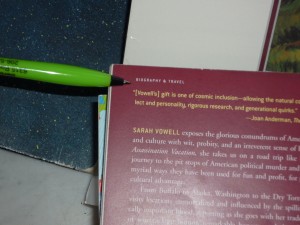
sarah-vowells-back-cover-ii

Actually, now that I’ve posted it, I notice that Sarah Vowell’s ASSASSINATION VACATION (a terrific book for anyone interested in political history, by the way; she’s a very funny writer) is listed in two categories: biography and travel. That makes perfect sense, because the book both talks about the lives of various murdered American presidents and follows Ms. Vowell’s journeys to their assassination sites. (Seriously, it’s funnier than it sounds.)

The other common locale for a book category is in the box with the barcode:

jonathan-selwood-back-cover

Okay, so that last photo was a trifle askew. However, since Jonathan Selwood’s THE PINBALL THEORY OF APOCALYPSE (six rows’ worth of passengers on an airplane thought I was having some sort of fit because I was laughing so hard at one point; once I had fended off medical assistance and read the passage in question out loud, the flight attendants came running to find out what was wrong with all of us) partially concerns the aftermath of a major earthquake, being akimbo seems rather appropriate.

I’m not sure if the photo will reproduce clearly enough for you to see it, but Mssr. Selwood’s book is designated merely as fiction. Counter-intuitively, this general-sounding moniker refers to something quite specific: novels for adults that do not fit into a genre designation. For all of you whose first thought upon my telling you that you would need to narrow down your complex 400-page book into a one- or at most two-word category choice, this might be a good selection.

Admittedly, it can be rather a pain to decide which category is right for your work, but once you have determined it, the hunt for an agent to represent it becomes substantially simpler: don’t even consider approaching an agent who doesn’t represent books in your category.

Like granting an agent an unrequested exclusive, it’s just a waste of your time. Unless, of course, you genuinely don’t care if your book gets published next year or forty years hence.

Next time, I shall give you a bird’s-eye view — or, more accurately, a Millicent’s-eye view — of what happens to requested materials after they arrive at an agency. In the meantime, keep up the good work!

The getting-a-book-published basics, part IV: what happens AFTER a successful query or pitch?

smiling-rock

Still hanging in there, campers? I know, I know: there’s a LOT of information in this basic overview series, but if you start to find it overwhelming, just try to concentrate on the big picture, the broad strokes, rather than feverishly attempting to memorize every detail.

Even if you are not new to the business side of art, it’s good from time to time to distance yourself from the often-trying process of trying to get your writing published. And if you doubt that, do me a favor: rise from your chair, take two steps away from the monitor, and take a gander at the photograph above.

If you don’t see the rock smiling at you, you may be focusing too much on the small picture.

Besides, you can always come back and refresh your memory later. Seriously, it’s easy, if a bit time-consuming. One of the many charms of the blog format lies in its archives: as long as I am running Author! Author!, these posts aren’t going anywhere, and the archives are organized by subject. So please feel free to use this series as a general overview, delving into the more specific posts on individual topics grouped by topic for your perusing convenience on a handy list on the lower right-hand side of this page. There is also a search engine in the upper-right corner, so searchers may type in a word or phrase.

And, as always, if you can’t find the answer to a particular writing question, feel free to ask it in the comments. I’m always on the look-out for new subjects for posts, and readers’ questions are far and away my best source.

Last time, I went over the three basic means of bringing your book to an agent’s attention: querying, either by sending a letter via regular mail (the classic method), approaching by sending an e-mail (the newfangled method) or through the agency’s website (the least controllable), and verbal pitching (far and away the most terrifying. Today, I’m going to talk about the various possibilities of response to your query or pitch.

Which, you may be happy to hear, are relatively limited and very seldom involve anyone being overtly mean. Or calling you and demanding that you give a three-hour dissertation about your book on the spot. Not that these are unreasonable fears, by any means: given how intimidating the querying and pitching processes can be but I find it hard to believe that the possibility of an agent’s being genuinely rude in response hadn’t occurred at least once to all of us before the first time we queried or pitched.

I heard that chortling, experienced pitchers and queriers; I said overtly mean, not dismissive or curt. There’s a big difference. Dismissive and/or curt responses are not personal, usually; overt meanness is.

So to those of you who have never queried or pitched before, I reiterate: the probability that an agent will say something nasty to you about your book at the initial contact stage is quite low. S/he may not say what you want him or her to say — which is, of course, “Yes! I would absolutely love to read the book you’ve just queried/pitched!” — but s/he is not going to yell at you. (At least, not if you’re polite in your approach and s/he is professional.)

At worst, s/he is going to say “No, thank you.”

You can handle that, can’t you? I hope so, because any writer who is in it for the long haul just has to get used to the possibility of hearing no. Because hear it you almost certainly will, no matter how good your manuscript is.

Yes, you read that correctly, newbies: pretty much every writer who has landed an agent within the last decade heard “No, thank you,” many, many times before hearing, “Yes, of course.”

Ditto with virtually every living author who has brought a first book out within the last ten years. At least the ones who were not already celebrities in another field; celebrities have a much easier time attracting representation. (Yes, life is not fair; this is news to you?) That’s just the way the game works these days.

Translation: you should not feel bad if your first query or pitch does not elicit a positive response. Honestly, it would be unusual if it did, in the current market.

Some of your hearts are still racing at the prospect anyway, aren’t they? “Okay, Anne,” a few of you murmur, clutching your chests and monitoring your vital signs, “I understand that it may take a few nos to get to yes. But if an agent isn’t likely either to go into raptures or to fly into an insult-spewing rage after reading a query letter or hearing a pitch, what is likely to happen? I’d like to be prepared for either the best or the worst.”

An excellent plan, oh ye of the racing heart rates. Let’s run through the possibilities.

How can a writer tell whether a query or pitch has been successful?
As we discussed last time, the query letter and pitch share a common goal: not to make the agent stand up and shout, “I don’t need to read this manuscript, by gum! I already know that I want to represent it!” but rather to induce her to ask to see pages of the manuscript. These pages, along with anything else the agent might ask the writer to send (an author bio, for instance, or a synopsis) are known in the trade as requested materials.

So figuring out whether a query or pitch did the trick is actually very simple: if the agent requested materials as a result of it, it was. If not, it wasn’t.

Enjoying this particular brand of success does not mean that a writer has landed an agent, however: it merely means that he’s cleared the first hurdle on the road to representation. First-time pitchers and queriers often get carried away by a provisional yes, assuming that a request for materials means that they will be able to bypass the heart-pumping, nerve-wracking, ego-shredding, and time-consuming process of continuing to query and/or pitch.

And then, a week or a month or three months later, they’re shattered to receive a rejection letter. Or, still worse, they’re biting their nails six months later, waiting to hear back from that first agent who said yes. Shattered hope renders it harder than ever to climb back onto the querying horse.

That’s the bad news. Here’s the good news: writers who walk into the querying and pitching process armed with a knowledge of how it works can avoid this awful fate through a simple, albeit energy-consuming, strategy. Send what that first agent asks to see, but keep querying other agents, just to hedge your bets.

In other words, be pleased with a request for materials, but remember, asking to see your manuscript does not constitute a promise to love it, even if an agent was really, really nice to you during a pitch meeting; it merely means that she is intrigued by your project enough to think that there’s a possibility that she could sell it in the current publishing market.

How can a writer tell whether a query or pitch has been unsuccessful?
If the agent decides not to request materials (also known as passing on the book), the query or pitch has been rejected. If so, the writer is generally informed of the fact by a form letter — or, in the case of e-mailed queries, by a boilerplate expression of regret. Because these sentiments are pre-fabricated and used for every rejection, don’t waste your energy trying to read some deeper interpretation into it; it just means no, thanks. (For more on the subject, please see the FORM-LETTER REJECTIONS category on the archive list.)

Whether the response is positive or negative, it will definitely not be ambiguous: if your query has been successful, an agent will tell you so point-blank. It can be a trifle harder to tell with a verbal pitch, since many agents don’t like watching writers’ faces as they’re rejecting them — which is one reason that a writer is slightly more likely to receive a request for materials from a verbal pitch than a written query, by the way — and will try to let them down gently.

But again, there’s only one true test of whether a pitch or query worked: the agent will ask to see manuscript pages.

Let’s get back to the happy stuff: what if I’m asked to send pages?
If you do receive such a request, congratulations! Feel free to rejoice, but do not fall into either the trap I mentioned above, assuming that the agent has already decided to sign you (he hasn’t, at this stage) or the one of assuming that you must print off the requested pages right away and overnight them to New York (or wherever the agent of your dreams may happen to ply his trade). Both are extremely common, especially amongst pitchers meeting agents for the first time, and both tend to get those new to submission into trouble.

Take a deep breath — and realize that you have a lot of work ahead of you. You will be excited, but that’s precisely the reason that it’s a good idea to take at least a week to pull your requested materials packet together. That will give you enough time to calm down enough to make sure that you include everything the agent asked to see.

How to pull together a submission packet is a topic for another day, however — specifically, the day after tomorrow. Should you find yourself in the enviable position of receiving a request for submissions between now and then, please feel free to avail yourself of the in-depth advice under the HOW TO PUT TOGETHER A SUBMISSION PACKET category on the list at right.

In the meantime, let’s talk about some other possible agently reactions.

What if a writer receives a response other than yes or no?
If you receive a response that says (or implies) that the agency requires writers seeking to be clients to pay for editorial services or evaluation before signing them to contracts, do not say yes before you have done a little homework. In the US, reputable agencies do not charge reading fees — for a good list of what an agent may charge a client, check the Association of Authors’ Representatives website. It’s also an excellent idea to look up an agency that asks for money on Preditors and Editors to see if the agency is legit. You may also post a question about the agency on Absolute Write; chances are, other aspiring writers will have had dealings with the agency. (The last has a lot of great resources for writers new to marketing themselves, by the way.)

Why should you worry about whether an agency is on the up-and-up? Well, every year, a lot of aspiring writers fall prey to scams. Call me zany, but I would prefer that my readers not be amongst the unlucky many.

The main thing to bear in mind in order to avoid getting taken: not everyone who says he’s an agent is one. The fact is, anyone could slap up a website with the word AGENCY emblazoned across the top. Some of the most notorious frauds have some of the most polished and apparently writer-friendly websites.

Scams work because in any given year, there literally millions of English-speaking writers desperate to land an agent and get published, many of whom don’t really understand how reputable agencies work. Scammers prey upon that ignorance — and they can often get away with it, because in the United States, there are no technical qualifications for becoming an agent. Nor is there any required license.

Yes, really: it’s possible just to hang up a shingle and start taking on clients. Or in the case of many scams, start asking potential clients to pay them fees, either directly (as in the notorious We don’t work like other agencies, but we require a paid professional evaluation up front dodge; to see a full correspondence between an actual writer and such a business, check out the FEE-CHARGING AGENCIES category at right) or by referring writers to a specific editing service (i.e., one that gives the agency kickbacks), implying that using this service is a prerequisite to representation.

Reputable agents decide whether to represent a manuscript based upon direct reading; they do not require or expect other businesses to do it for them. Nor do they charge their clients up front for services (although some do charge photocopying fees). A legitimate agency makes its money by taking an agreed-upon percentage of the sales of its clients’ work.

If any so-called agent tries to tell you otherwise, back away, quickly, and consult the Association of Authors’ Representatives or Preditors and Editors immediately. (For a step-by-step explanation of how others have successfully handled this situation, run, don’t walk to the FEE-CHARGING AGENCIES category at right.)

Heck, if you’re not sure if you should pay a requested fee, post a question in the comments here. I would much, much rather you did that than got sucked into a scam.

Better yet, check out any agent or agency before you query. It’s not very hard at all: the standard agency guides (like the Writers Digest GUIDE TO LITERARY AGENTS and the Herman Guide, both excellent and updated yearly) and websites like Preditors and Editors make it their business to separate the reputable from the disreputable.

Fortunately, such scams are not very common. Still, it pays to be on your guard, especially if your primary means of finding agents to query is trolling the internet.

What if a writer receives no response at all?
More common these days is the agency that simply does not respond to a query at all. Agencies that prefer to receive queries online seem more prone to this rather rude practice, I’ve noticed, but over the last few years, an ever-increasing number of queries — and even submissions, amazingly — were greeted with silence.

In many instances, it’s actually become a matter of policy: check the agency’s website or listing in one of the standard agency guides to see if they state it openly. (For tips on how to decipher these sources, please see the HOW TO READ AN AGENCY LISTING category on the list at right.)

A complete lack of response on a query letter does not necessarily equal rejection, incidentally, unless the agency’s website or listing in one of the standard agency guides says so directly. Queries do occasionally get lost, for instance. The single most common reason a writer doesn’t hear back, though, is that the agency hasn’t gotten around to reading it yet.

Be patient — and keep querying other agents while you wait.

Seeing a pattern here?

I certainly hope so. There’s a good reason that I always urge writers to continue querying and pitching after an agent has expressed interest: as I mentioned last time, it can take weeks or even months to hear back about a query, and many agencies now reject queriers through silence. A writer who waits to hear from Agent #1 before querying Agent #2 may waste a great deal of time. Because agents are aware of this, the vast majority simply assume that the writers who approach them are also querying other agents; if they believe otherwise, they will say so on their websites or in their listings in agency guides.

For some guidance on how to expand your querying list so you may keep several queries out at any given time, please see the FINDING AGENTS TO QUERY category on the list at right.

What should a writer do if her query was rejected?
Again, the answer is pretty straightforward: try another agent. Right away, if possible.

What it most emphatically does not mean is that you should give up. Contrary to what virtually every rejected writer believes, rejection does not necessarily mean that the book concept is a poor one; it may just means that the agent doesn’t represent that kind of book, or that she just spent a year attempting to sell a similar book and failed (yes, it happens; landing an agent is no guarantee of publication), or that this book category isn’t selling very well at the moment.

The important thing to bear in mind is that at the query or pitching stage, the book could not possibly have been rejected because the manuscript was poorly written.

The query might have been rejected for that reason, naturally, but it’s logically impossible for an agent to pass judgment on a manuscript’s writing quality without reading it. Makes sense, right?

One piece of industry etiquette to bear in mind: once a writer received a formal rejection letter or e-mail, it’s considered rude to query or pitch that book project to the same agent again. (See why it’s so important to proofread your query?) At some agencies, that prohibition extends to all of the member agents; however, this is not always the case. Regardless, unless a rejecting agent actually tells a writer never to approach him again — again, extremely rare — a writer may always query again with a new book project.

Contrary to an annoyingly pervasive rumor that’s been haunting the conference circuit for decades, being rejected by one agency has absolutely no effect upon the query’s probability of being rejected by another. There is no national database, for instance, that agents check to see who else has seen or rejected a particular manuscript (a rumor I have heard as recently as last week), nor do agencies maintain databases to check whether they have heard from a specific querier before. If you’re going to get caught for re-querying the same agency, it will be because someone at the agency remembers your book project.

You really don’t want to tempt them by sending the same query three months after your last was rejected, though. People who work at agencies tend to have good memories, and an agent who notices that he’s received the same query twice will almost always reject it the second time around, on general principle. In this economy, however, it’s certainly not beyond belief that an agent who feels that he cannot sell a particular book right now may feel quite differently a year or two hence.

I leave the matter of whether to re-query to your conscience, along with the issue of whether it’s kosher to wait a year and send a query letter to an agent who didn’t bother to respond the last time around.

If your query (or manuscript, for that matter) has been rejected, whatever you do, resist the temptation to contact the agent to argue about it, either in writing or by picking up the phone. I can tell you now that it will not convince the agent that his rejection was a mistake; it will merely annoy him, and the last thing your book deserves is for the agent who rejected it to have a great story about an unusually obnoxious writer to tell at cocktail parties.

In answer to what you just thought: yes, they do swap horror stories. Seldom with names attached, but still, you don’t want to be the subject of one. In an industry notorious for labeling even brilliant writers difficult for infractions as innocuous as wanting to talk through a requested major revision before making it, or defending one’s title if the marketing department wants another, or calling one’s agent once too often to see if a manuscript has been sent to an editor, writers new to the game frequently find themselves breaking the unwritten rules.

The no-argument rule is doubly applicable for face-to-face pitching. Trying to get a rejection reversed is just not a fight a writer can win. Move on — because, really, the only thing that will genuinely represent a victory here is your being signed by another agent.

It’s completely natural to feel anger at being rejected, of course, but bickering with or yelling at (yes, I’ve seen it happen) is not the most constructive way to deal with it.

What is, you ask? Sending out another query letter right away. Or four.

Something else that might help you manage your possibly well-justified rage at hearing no: at a good-sized agency — and even many of the small ones — the agent isn’t necessarily the person doing the rejecting. Agencies routinely employ agents-in-training called agency screeners, folks at the very beginning of their careers, to sift through the huge volume of queries they receive every week. Since even a very successful agent can usually afford to take on only a small handful of new clients in any given year, in essence, the screener’s job is to reject as many queries as possible.

Here at Author! Author!, the prototypical agency screener has a name: Millicent. If you stick around this blog for a while, you’re going to get to know her pretty well. And even come to respect her, because, let’s face it, she has a hard job.

Typically, agents give their Millicents a list of criteria that a query must meet in order to be eligible for acceptance, including the single most common reason queries get rejected: pitching a type of book that the agent does not represent. There’s absolutely nothing personal about that rejection; most of the time, it’s just a matter of fit.

What is fit, you ask, and how can you tell if your book and an agent have it? Ah, that’s a subject for tomorrow’s post.

For today, let’s concentrate on the bigger picture. Finding an agent has changed a lot over the last ten or fifteen years; unfortunately, a great deal of the common wisdom about how and why books get picked up or rejected has not. The twin myths that a really good book will instantly find an agent and that any agent will recognize and snap up a really good book are just not true anymore, if indeed they ever were.

I’m not going to lie to you: finding an agent is work; it is often a lengthy process, even for the best of manuscripts. More than ever before, an aspiring writer needs not just talent, but persistence.

I know you have it in you. Keep up the good work!

The getting-a-book-published basics, part II: the control conundrum

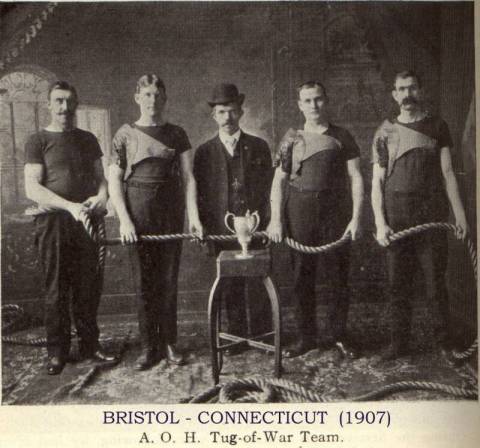
tug-of-war-photo

My last post was so excessively long that I wore myself out, apparently: I barely had the energy to work my way through the couple of hundred e-mails from well-meaning readers of the Wall Street Journal, asking if (a) I’d seen this article and (b) whether those mentioned within its paragraphs were the same who kept threatening to sue my publishers (although not, perversely, yours truly) over my as-yet-to-be-released memoir, A FAMILY DARKLY: LOVE, LOSS, AND THE FINAL PASSIONS OF PHILIP K. DICK. I appreciate all of you kind souls taking the time to make sure I had (a), but since the answer to (b) is yes (and with arguments similar to those mentioned in the article), it would probably be prudent for me not to comment upon it here. Or, indeed, anywhere.

Except to say: ever get that feeling of déjà vu?

Back to the business at hand. For those of you who happened to miss yesterday’s epic post, I’m going to be devoting the next couple of weeks to explaining briefly how a manuscript moves from the writer’s fingertips to publication. There are several ways that this can happen, of course, and but for starters, let’s concentrate upon what most people mean by a book’s getting published: being brought to press and promoted by a large publisher. In the US, that publisher’s headquarters will probably be located in New York.

Everyone clear on the parameters — and that what I am about to say might not be applicable to a big publishing house in Paris, Johannesburg, or Vladivostok? Or indeed, a small, independent US publisher? Good. Let’s recap a bit from last time — and while we’re at it, let’s get conversant with some of the terms of the trade.

How a manuscript typically comes to publication at a major U.S. publishing house these days (as opposed to way back when)
As we discussed last time, fiction is typically sold as a completed manuscript; nonfiction is usually sold as a book proposal, a packet of marketing materials that includes a sample chapter and a competitive market analysis, showing how the proposed book will offer the target readership something different and better than similar books already on the market. While the proposal will also include a summary of each of the chapters in the book-to-be-written (in a section known as the annotated table of contents; for tips on how to construct this and the other constituent parts of a book proposal, please see the perversely-named HOW TO WRITE A BOOK PROPOSAL category on the archive list located at the lower right-hand side of this page), the editor will often ask the writer to add or subtract chapters or change the book’s running order.

Which underscores a point I made last time: a nonfiction book proposal is essentially a job application wherein the writer is trying to convince the publisher to pay him to write the book being proposed; a novel is a product that the author is trying to sell.

I can already feel some of your eyes glazing over from jargon fatigue, can’t I? Hang in there; I assure you that there are plot twists to come. (Not to mention a self-editing tip for those of you who long for the return of my December series of same!)

A hundred years ago, writers who wished to get their books published went about it in a fairly straightforward manner, by approaching editors at major publishing houses directly. If the editor liked the book, he would take it to what was (and still is) known as an editorial committee, a group of editors and higher-ups who collectively decided what books the house would bring out in the months and years to come. If the editorial committee decided to go ahead with the project, the publisher would typically pay the author an advance against projected royalties, edit the manuscript, and have it typeset (by hand, no less).

Today, a writer who intends to approach a large U.S. publisher generally must do so through an agent. The agent’s job is to ferret out which editors might be interested in her clients’ books and pitch to them. Unless an editor happens to be exceptionally well-established at his or her house, however, s/he is not the only one who needs to approve a book’s acquisition: typically, the book will still go before an editorial committee.

At that point, back in the day as well as now, it’s the editor’s turn to be the advocate for the book s/he wants to publish — and that’s not always an easy task, because other editors will be fighting for their pet projects at the meeting as well. Since a publishing house can only afford to bring out a very small number of books in any given marketing season, the battle for whose project will see print can become quite intense, and not only amongst the editors around the table. At a large publishing house, the marketing and legal departments might weigh in as well.

If a manuscript makes it through the hurly-burly of editorial committee debate, the editor will offer the writer a publication contract. (Actually, s/he will offer it to the writer’s agent, but it amounts to the same thing.) Contractual terms vary widely, but at base, a publishing contract will state that in return for pocketing the lion’s share of the profits, the publisher would bear all of the production and promotional costs, as well as responsibility for getting the book onto bookstore shelves.

In return, the author will agree to provide the manuscript for by a particular date (usually quite soon for a novel — which, as you will recall, is already written before the agent takes it to the editor) or as much as a year and a half later for a book proposal. After the author delivers the completed manuscript (usually in both hard copy and as a Word document), if the editor wants changes, s/he will issue an editorial memo requesting them.

If your heart rate went up by more than a third at the very suggestion of being asked to alter your manuscript, you might want to sit down, put your feet up, and sip a soothing beverage whilst perusing the next section. (Chamomile tea might be a good choice.)

Why? Because when an author signs a book contract, she’s agreeing to more than allowing the publisher to print the book.

Control over the text itself
The author gets to decide what her own book does and doesn’t say, right? Not to mention how it’s expressed.

Actually, no, if she sells the rights to a publisher. While the author may negotiate over contested points, the editor will have final say over what will appear on the pages of the finished book. The contract will say so.

And no, in response to what you’re probably thinking: you’re almost certainly not going to be able to win an argument over whether something your editor wants changed will harm the artistic merit of the book. (Sorry about that, but it’s better that you’re aware of this fact going in.)

How do I know? Experience, mostly. After all, pretty much every first-time author faced with editorial demands has attempted to declare something along the lines of, “Hey, buddy, I’m the author of this work, and what you see on the page represents my artistic vision. Therefore, I refuse to revise in accordance with your (boneheaded) suggestion. Oh, well, that’s that.” Or at least thought it very loudly indeed.

That’s an argument that might conceivably work for a well-established, hugely marketable author, but as virtually all of those aforementioned first-time authors could tell you, no one, but no one, at a publishing house is going to find the “My art — my way!” argument particularly compelling.

Or even original.

Why? Well, remember my earlier quip about how publishing houses can only bring out a few titles in any book category per year, far, far more than their editors would like to bring to press?

Uh-huh. It’s never wise to issue a take-it-or-leave-it ultimatum to people so well equipped with alternatives that they can easily afford to leave it. Especially if the issue in question is something as small as cutting your favorite paragraph.

I’m telling you all this not to depress you — although it’s not all that difficult to imagine what I just typed having that effect, admittedly — but so that you will not waste your energy and reputation on battling over every single requested change with your editor. If you bring a book to successful publication, I can virtually guarantee that you will have to compromise on something; editorial control is built into the publishing process. Learning to pick your battles, figuring out when give in gracefully and when to go to the mat, will serve both your interests and your book’s best in the long run.

May I hear an amen? No? How about a few begrudging grunts of acknowledgment? Well, suit yourself, but if you found that last argument trying, you might want to find something to bite down upon before you read on.

Why, you ask with trembling voice? Well, final say over the actual text and the ability to determine the timing of publication are not generally the only authorial rights one signs over via a publishing contract.

Other matters that aspiring writers generally assume that they will control after they sign a book contract, but usually don’t
Just a few of the tidbits that most first-time authors are stunned to learn that they cannot dictate for their own books: the typeface, the type of binding, the use of italics or special fonts, the number of illustrations, if any, when it will come out, and what the cover will look like.

Also almost always beyond a first-time author’s ability to do anything about: the book’s title (that’s generally the marketing department’s call, believe it or not) and whether there is an acknowledgments page (the reason that they have become rarer in recent years is not that authors as a group have magically become less grateful, but that, like the dedication and epigraphs — those nifty quotes from other authors that often appear in published works — they take up extra page space, and thus render publishing a book more expensive).

I feel you glowering, but don’t blame me — I’m just the messenger here. As a memoirist whose title was summarily changed by her publisher from something she expected to be changed (Is That You, Pumpkin?) to one that was bizarrely ungrammatical (A Family Darkly), believe me, my sympathies are mostly on the writers’ side here. (And no, no publishing house employee was ever able to explain to me with any degree of precision what they thought their preferred title meant. The marketing department just thought it would be a good idea for the cover to make a vague reference to A SCANNER DARKLY, because the movie would be coming out around the same time.)

My point is, while landing a publication contract for a first book is certainly a coup, you’ll have a much, much happier life as a professional writer if you don’t expect it all to be one big literary luncheon where the glitterati congratulate you warmly on the beauty of your prose and the insight of your book’s worldview. It’s going to be hard work — for a crash course in just how hard many first-time authors find it, please see the GETTING GOOD AT INCORPORATING FEEDBACK category on the list at right — and if you’re going to be successful at it, you’re going to need to come to terms with what you can and cannot control.

Speaking of which…

The hows and whens of book publishing
Another matter that the publication contract will specify is the format in which the publisher will release the book. Translation: it won’t be up to you whether your book will be released in hardcover or not. That may not distress you now, but it may well come the release date: historically, the author’s percentage of the cover price (a.k.a. the royalty) has been higher for a hardcover book than for a paperback.

One reason for that: hardcover books were considered more serious, literarily speaking, than a volume a reader could fold and stuff into a back pocket. In fact, until fairly recently, newspapers and magazines habitually reviewed only hardcovers for most novel categories, since that was the standard for high-quality fiction releases.

In the last 15-20 years, however, fiction (and quite a bit of nonfiction, too) has been released in trade paper, those high-quality softcovers that so conveniently may be rolled and stuffed into a purse or backpack, so the earlier review restriction has softened. That’s definitely good news for first-time novelists, as well as those of us who like to lug around several different books when we travel. Typically, the author’s royalty on a trade paper release is lower than for a hardback, but higher than for paper.

Everyone with me so far, or are you mentally calculating how much you will end up making per hour for writing your novel. Don’t even go there; that way lies madness.

Once an editor has acquired a manuscript, it is assigned a place in the publisher’s print queue. In other words, the publisher will tell the author when the book will actually be printed. Since much must happen between the time the editor receives a finished manuscript and when it goes to press, the contracted date by which the author must provide the book is generally months prior to the print date.

This, too, often comes as a surprise to a first-time author. If you wish to see your books published, though, you will have to come to terms with the fact that an author’s life is a hurry up/wait/hurry up/wait existence.

Its main manifestation: how long it takes for a major publisher to bring out a book. Although they sometimes will do a rush job to meet the demands of a current fad, the typical minimum time between an author’s signing a book contract and the volume’s appearance in bookstores is at least a year.

And that’s for fiction — which, as you will no doubt recall, is already written before the publisher has any contact with the book at all. For nonfiction, the time lapse is often substantially longer, in order to permit the author to write the book in question.

The moral: although one does indeed see books on current news stories hitting the shelves within a matter of weeks (the OJ Simpson trial, anyone?), that is most emphatically not the norm. A savvy writer takes this into account when constructing a narrative, avoiding references that might seem absolutely up-to-the-minute when he first types them, but will be as stale as last year’s fashions a year or two hence, when the book is finally available for readers to buy.

The publishing world’s term for a book that contains references likely to spoil over time is easily dated. Unless you are trying to tie your characters to a very specific time and place (as most contemporary fiction doesn’t), excising such references prior to submission usually increases its marketability.

A market-savvy self-editing tip for novelists and memoir-writers: go through your manuscript, highlighting any cultural reference that might not make sense to a reader five years hence. When in doubt, whip out your highlighting pen. Mention of a character on a TV show? Mark it. Complaint about a politician currently in office? Mark it? Any reference at all to Paris Hilton? Perez Hilton?

You get the idea. This is not a moral judgment you’re making, but a calculation about pop culture longevity.

While you’re reading, take the time to note what the reference is and the manuscript page on which it appears. After you finish, go back and read through the list: would your target reader have recognized each of these five years ago? If you’re writing for adults, would a reader in high school now know what you’re talking about? Are you really willing to bank on whether Arby’s latest moniker for a sandwich is here to stay — or that your target reader will even know about it?

If you aren’t sure about the long-term cultural resonance of, say, the McRib, walk into your local community library, find the person reading the 19th-century novel (if you can’t find one in the stacks, try behind the check-out desk), and offer to buy that kind soul a nice cup of coffee if s/he will be nice enough to take a gander at your list. If the lady with her nose in a minor Charlotte Brontë novel doesn’t recognize a cultural reference, chances are that it’s not as pervasive a phenomenon as you may have thought.

After you have figured out which references need to be changed or omitted, go back and examine the ones you decided could stay. Is that reference actually necessary to the paragraph in which it appears? Is there another way that you could make the same point without, for instance, using a brand name?

Meanwhile, back at the ranch…
As I was walking you through that last exercise, I spotted some raised hands out there. “Um, Anne?” the folks attached to those hands inquire timidly. “I don’t mean to seem shallow about my writing, but I notice that you haven’t said much about how and when an author actually gets paid for her work. Since I will have invested years of unpaid effort in writing a novel or perhaps months in constructing a marketable book proposal, is it unreasonable for me to wonder when I might start to see some sort of a tangible return on that investment?”

Of course it isn’t shallow. Let’s take a closer look at how and when a writer might conceivably start cashing in for those manuscripts and/or book proposals she’s written on spec.

How authors get paid for their books
As I mentioned in passing above, an author who publishes through a large publisher is paid a pre-agreed proportion of the book’s sale price, known as a royalty. An advance against royalties (known colloquially just as an advance) is an up-front payment of a proportion of what the publisher expects the author’s percentage of the jacket price for the initial print run (i.e., the total number of books in the first edition).

Generally speaking, the more spectacularly the publisher expects the book to sell, the larger the advance. That’s a calculation based upon a lot of factors: how much it will cost to print the book (anything over 500 pages requires more expensive binding, for instance, and color photos are expensive to reproduce), how large the already-existing market is for similar books, how difficult the marketing department thinks it will be to reach those readers, whether Barnes and Noble is having a bad year, and so forth.

It is, in fact, a guesstimate — and as such, tends to be low, especially for first-time authors.

Why not aim high, let the author quit her day job, and hope for the best? Because the advance is by definition an estimate of a number that no human being could predict with absolute accuracy, if the publisher’s estimate was too high, and thus the advance too large for the royalties to exceed, the author is seldom expected to pay back the advance if the book doesn’t sell well. However, once the book is released, the author does not receive further royalty payments until after her agreed-upon share of the books sold exceeds the amount of the advance.

Since approximately 2/3rds of you just gasped audibly, let me repeat that last bit: the advance is not in addition to royalties, but a prepaid portion of them. An advance is not a signing bonus, as most people think, but a down payment toward what a publisher believes it will eventually owe the author.

While your jaw is already dropped, let me hasten to add that royalties over and above the advance amount are usually not paid on an as-the-books-sell basis, which could entail the publisher’s cutting a check every other day, but at regularly-scheduled intervals. Once every three or six months is fairly standard.

The moral: read your publication contract carefully. If you don’t understand what it says, ask your agent to explain it to you; it’s her job.

Those hands just shot up again, didn’t they? “I’m glad you brought that up, Anne. You’ve made it clear why I would need an agent to help me though this process, which sounds like a drawn-out and somewhat unpredictable one. So how do I go about finding the paragon who will protect me and my work?”

I’m glad you asked, hand-raisers — but I’m afraid agent-seeking is a topic for another day.

Before I signed off, allow me to add: don’t feel bad if you were previously unaware of how writers get paid; half the published authors I know were completely in the dark about that last point until their first books had been out for five months or so. It’s not something that we talk about much in the writing community, perversely. And that’s a shame, because In the current market, when advances for new are often reflective of the gloomiest projections, while those for bestselling authors keep rising, I suspect that a significant percentage of the authors who sign their first publication contracts in the months to come are going to be mystified at being offered an honorarium when they expected enough dosh, if not to allow them to retire to write full-time, at least to permit cut back their hours.

Don’t panic; conditions change. One thing you may rely upon to remain the same, however: the writer who is in it for the love of literature probably going to be happier enduring the ups and downs of getting published than the one who walks into it with dollar signs in his eyes. Good writing is a gift to humanity, after all, every bit as much as it is a commodity for its author to sell.

Keep up the good work!

Not another best and worst of the decade list!

one-way sign in graveyard

It’s certainly been a year — and a decade — of mixed blessings, hasn’t it? Why, only last month, as I was noting with annoyance that Publishers’ Weekly’s list of the top 100 new releases of 2009 did not contain a single book by a female author, I realized with a shock that the Matthew Crawford at #8 used to sit next to me in grad school seminars. Naturally, I rushed out and bought Shop Class as Soulcraft at a brick-and-mortar bookstore right away, on general principle and to boost my writerly karma, but it made me think: the dark, dark clouds of the last year have certainly had some odd silver linings.

So, belatedly: congratulations, Matt. And here’s to finding writers I like on 10-best lists, anywhere, anytime.

I’ve been mulling over those unexpected flashes of silver in the sky all month, as I’ve been gearing up to this, my last post of the decade. I had planned to come up with one of those ubiquitous best and worst lists from a writerly perspective — you know, books I hated, editors at Random House I was sorry to see take early retirement, that sort of thing.

Frankly, coming up with a worst list was no problem at all. Took about four minutes. Yet every single one of my hard-found bests — all seven of them — were charming surprises like seeing Matt’s name turn up on the PW list, not genuine trends I could laud as harbingers of good things coming to writers everywhere. And while I could follow the excellent example of other end-of-the-decade commenters like Julianna Baggott (whose recent Washington Post article on why it is so hard for female authors to crack those top ten lists is well worth reading, by the way), devoting my last post of the year purely to criticism of the status quo, I just can’t bring myself to believe that those silver linings, however few and far between, are not something worth celebrating.

But let’s not kid ourselves: we writers have a heck of a lot to complain about these days.

So here’s what I’m going to do. First, I’ll be taking a barefoot run through what I think are the ten worst things to happen to writing over the last decade, followed by what I consider the single nastiest development for aspiring writers. Then, with all of that out of our collective system, I’ll let you in on some reasons that I think all of us should continue keeping the faith.

With me? Tremendous. Let the snarly bits begin.

The Ten Worst Things to Happen to Writing in the 2000s So Far

(10) Benefit-free simplification of the language
You know what I’m talking about, right? We’ve all picked up a newspaper — remember those? — and been knocked out of an otherwise interesting article by , say, the completely gratuitous capitalization of the first word following a colon. It’s never been correct in English — so why the heck has it suddenly become so very common in recent years? Why, in fact, has it become acceptable by AP editing standards?

For heaven’s sake, it’s not a new sentence!

Okay, so maybe that’s not the type of irritant that makes folks who don’t read or write manuscripts for a living choke on their coffee, but I assure you, such creeping attacks on literacy drive those of us who do absolutely nuts. Why? Because after enough readers have seen the incorrect version often enough and in authoritative enough sources, it will begin to look correct to them.

Can the fall of civilization be far behind?

No, but seriously, the last decade has seen the dubious legitimization of quite a lot of technically incorrect practices. More nails on the proverbial blackboard:

* The use of quality as a synonym for high-quality, without the necessary modifier. Technically, quality could be high, low, or middling. The sole exception, as far as I know, is when it refers to obsolete social class distinctions: it was obvious from her bearing that she was a lady of quality.

See? I didn’t capitalize the first word after the colon in that last sentence, and the grammar gods didn’t strike me dead on the spot.

* The use of unique with a modifier, as in she is very unique. By definition, something is unique because it is the only one of its kind.

* Leaving question marks off sentences that are clearly questions, as in do you hear me. It’s a lame writer’s trick, intended to convey flatness of tone. If only the language contained some sort of descriptors for sound, so the reader could know how a speaker’s voice sounds…oh, wait, it does.

Nit-picky? You bet. But since when did wielding the language correctly become optional for good writers?

(9) Conspiracy theories whose individual elements can be adequately exposed within a three-page scene.
I’m looking at you, Dan Brown. Just once, couldn’t a necessary clue not be instantly recognizable the second our hero stumbles upon it? Followed, perhaps, by that crusty old character who has held his tongue for the past forty-three years not blurting out everything he knows the instant the protagonist happens to ask? Or sometimes even before he asks?

Call me a complexity-monger, but if a long-unsolved mystery can be revealed to the first yahoo who bothers to glance in its direction, and that within the first four minutes, I’m just not interested. I have too much faith in the inventive capacities of mystery writers to settle for boneheaded plot twists.

(8) Single spaces after periods and colons in manuscripts.
Yes, yes, I know: eliminating these necessary spaces in published books saves a lot of paper and ink. In a manuscript, however, omitting these spaces is not only an offense to the rules of punctuation, but renders text significantly harder to edit by hand.

Which, in case you’d been wondering, is generally the only way to catch the kind of errors mentioned in (10). And why it’s so obvious to most professional readers handed a manuscript without the necessary two spaces that the writer has not worked with an editor before.

(7) A radical increase in pop culture references in published books.
Now, there’s nothing wrong with this in, say, a memoir: mentioning that the protagonist’s sister is lying on the floor, watching a brand-new Gilligan’s Island episode is a legitimate way to give a sense of place and time to a scene. But using current pop references in a novel to make it seem up-to-date now will simply render it out of date in five years.

Sorry; I don’t make the rules governing the turnover rate of pop culture. Nor of the passage of time.

I object to this one, like the last, primarily for its negative effect upon aspiring writers. It can take a couple of years for a manuscript to travel the bumpy road from sale to a publishing house to a spot on a bookshelf at Borders; what’s hip today may well be dated by then. Manuscripts still do get rejected, and often, by old-school professional readers trained to spot references that readers will not necessary catch three years from now.

Yes, I know: you’ve seen plenty of published books with these references. So have I. That doesn’t mean that it’s in your best interest to follow their example.

(6) Not dividing the YA market into as strongly-defined book categories as the adult market
Didn’t see that one coming, did you? Well, I guess you might have to talk to a lot of writers, agents, and editors to notice this problem, but since YA has taken off as a major market, more and more agents who represent primarily adult fiction have, predictably, started actively seeking out the next Harry Potter or Twilight.

Which are, correct me if I’m wrong, quite different from each other. So how is an aspiring writer to know what an agent who says she’s looking for YA, any YA, to know what she’s got in mind?

Defining YA books more precisely would be very, very helpful to agent-seeking writers — and not just by guiding those who write YA paranormal romance to agencies with a more successful record with vampire stories than horse books. Lumping too many kinds of YA together makes it harder for those who write for niche markets — like, say, the book for the smartest girl in the class, rather than for the boy who has a hopeless crush on an unattainable girl — find the right homes for their books.

There is literally nothing writers can do about this one, of course. Doesn’t mean it’s not worth grumbling over.

(5) “Whatever!”
Oh, God, how I wish that this one had never entered the language — although, as a means of irritating adults, I suppose the very fact that I want to strangle the next character who utters it indicates that it has been a rousing success.

Fine; you win, whatever-ers. Now give it a rest, already.

I’m not talking to young writers here, although I must admit that I have had a younger students hand me pages where whatever played a prominent role. (Unfortunately, the pages were in a term paper on Rousseau, and the first sentence that caught my eye was In human beings’ natural state, they all lived alone or whatever. The ensuing discussion was not pretty.) I’m aiming this complaint squarely at adult writers who shove whatever into their teenage characters’ mouths in an effort to make them sound like, well, teenagers.

Personally, I find this dismissive; most of the teenagers I know are pretty interesting people. As a reader, I want to hear what a specific teenage character has to say, not to see her merely parrot what any generic teenager might say.

And don’t tell me that young people really talk that way; real-life dialogue can be pretty boring. Astonish me with how your characters are different from anyone I might overhead in a movie ticket line, rather than lulling me to sleep with a transcript.

Want to show an attitude problem? Go right ahead. Writers have plenty of other narrative tools with which to demonstrate all kinds of emotional states.

(4) The demotion of the art of memoir to mere journalism
As recently as seven or eight years ago, memoirists signed contracts with their publishers that specified that the stories they were telling were essentially true, to the best of their knowledge. Lawsuits did occasionally happen, but pretty much everyone concerned recognized that (a) every human being recollects any shared event differently, (b) one of the things that separates a gifted memoirist from the rest of the population is the ability to hone and plane reality into a story that someone might conceivably want to read, and (c) occasionally, the effective exercise of (b) might lead to a bit of narrative fudging.

In short, no one seriously believed that all memoirists did was stand around for their entire pre-publication lives, taking notes like a court reporter. Poetic license was considered legitimate. Heck, ten years ago, you’d only have to buy a junior editor at a major publishing house one drink before he’d be assuring you that the latest celebrity memoir was a good 87% poetry.

Oh, I’m sorry — should I have warned you that the emperor’s clothes were about to be affected by gravity?

Now, memoirists are not only often required to sign iron-clad contracts, taking on all legal liability for any misstatements, but sometimes have to obtain signed releases from anyone mentioned in the book. Under the threat of negative publicity, publishers have been regarding memoirs with a far more suspicious eye. And no wonder, given how the media has reacted to the news: one established memoirist after another is outed as having made up salient facts, and some hyper-literal reporter so misunderstood David Sedaris’ essays that he meticulously fact-checked them.

Sedaris writes humor, people. Comedy writers see things differently than the general population. And may I introduce you once again to the concept of poetic license? Should I invite you all over for dinner, so you may get better acquainted?

It’s tempting to blame James Frey, he of the Million Little Pieces scandal, for this rather severe shift in publishing attitude. If only those rumors that his agent sold the book as a novel, not a memoir, would stop circulating so persistently, I might be able to jump on that bandwagon. However, as a memoirist whose publisher was dogged with lawsuit threats (unfounded) over my book, I’m inclined to think that the real culprit here is a trend for authors to be saddled with more and more of the burdens of bringing out a successful book.

If an author is now expected to, say, pay for his own book tour or hire his own publicist, is it really all that astonishing that he should be saddled with all of the risk of telling his own story? The emperor needs a new wardrobe, after all.

(3) The rise of editing on computer screens
I’m placing this one near the top of my list, since it has contributed so heavily to some of the problems lower down. Long-time readers of this blog, pull out your hymnals and sing along: since the human eye reads 70% faster on a screen than on a page, it is markedly more difficult to catch typos, logical problems, and other textual errors if one edits on a computer screen.

I could — and have — unleash an avalanche of examples at this point, but I’ll restrain myself and provide only one, a little something I like to call the according to Smith problem. See if you can spot it for yourself in this (completely fictional) article opening:

For the Anderson family, this was not the New Year’s Eve they were expecting. Last year, and every year before that, Mom Sheila, Dad Egbert, twins Drucilla and Delward, and little Ermintrude had gathered around the cheerful fire on their hearth, toasting one another with the vodka-laced grog Sheila’s grandmother used to make.

That was before the fire. Like so many now-scarred Americans, the Andersons were tragically unaware that vodka is flammable.

According to Smith, however, the turning of the year was not the only time the family used to drink. “I thought the kids were a little young. I mean, grog in the baby’s bottle? But hey, who am I to tell them how to raise ‘em?”

Did you catch it? No? Here’s a hint: WHO IS SMITH?

As an editor, this sort of editing error drives me nuts — and I assure you, it is an editing error, not a writing one. To an editorial eye, it’s fairly obvious that in an earlier draft, a sentence identifying Smith, probably including his first name and his relationship to the Andersons, appeared prior to the paragraph with the quote. In a subsequent draft, the reference was cut, and nobody noticed.

Except the confused reader, that is.

Would this be a good time to remind you to read your manuscripts IN HARD COPY, IN THEIR ENTIRETY, and, if possible, OUT LOUD? No? Okay, I’ll move on to my next point.

(2) The swiftly-widening gap between advances for bestselling authors and those less established
Do I really have to explain to a readership of writers why this one is bad for our art form? I doubt it, but just in case I need to spell it out: tiny advances mean that first-time authors can’t quit their day jobs.

Am I the only one who worries that the full-time book writer is in danger of becoming obsolete? And does anyone seriously believe that eventuality will improve the overall quality of the literary market?

Especially in combination with…

(1) The rapid turnover of editors, or, the rise of the five-editor book project
Ten years ago, it was rare that the editor who acquired a manuscript did not remain with the project all the way through the publication process. Heck, it was fairly normal for an editor to stick with a successful author for half a career.

Now, a first-time author may thank her lucky stars if her book is handled by only two or three editors; the turnover rate over the last year has been so rapid that I know no fewer than three authors whose books were overseen by five editors, all of whom wanted the book to be something different. One poor novelist got assigned a new editor less than a month before his book was scheduled to be printed.

Guess how he spent the first three weeks of that month? Oh, well, his protagonist didn’t really need that lesbian sister, anyway.

I’m not casting aspersions on any of his five editors, of course; for all I know, each of their widely divergent opinions on the book could have worked — had it been the only editorial vision. I’m merely suggesting that continually asking writers to adjust their creative process to different masters’ expectations within a single project might not be the most efficient means to get the best out of talented people.

Of course, the rate of turnover isn’t really the editors’ fault — I’ve seldom meant one who actively yearned to be fired — any more than the notoriously short average tenure of agency screeners and editorial assistants is the result of some active conspiracy of the powerless. So before we leave behind the blame portion of our evening, let’s talk about one other negative development for writers that is very much within these decision-makers’ control.

Bonus: the increasingly common practice of agents and editors not responding to submissions at all
A decade ago, an agent’s using a form letter to reject a query was the most common source of complaint among aspiring writers; now, it’s far from uncommon for that same agent not to respond to a query at all if the answer is no. But until just a couple of years ago, it was unheard-of for an agency to apply the silence-means-no practice to requested materials.

The times, they have indeed been a-changin’. Now, it’s not unusual for a submitter to hear back 6 months later, or even not at all.

Obviously, this widespread policy shift has been terrible for agent-seeking writers — and not just because it’s harder to wait five months to hear back than two. How, for instance, is a writer to know whether four months of non-response means that (a) his manuscript has been rejected, (b) his manuscript has not been rejected, but has not yet been read by all of the people who need to read it before the agent can say yes, or (c) the manuscript never got there in the first place?

Yet despite this quite radical change in how some agencies — not all, thank goodness — handle requested submissions, most aspiring writers still submit to only one agent at a time. Or even — sacre bleu! — query one at a time.

In the current environment, that means that even a writer who gets picked up unusually quickly will unnecessarily waste a year or two. Once again, I implore you: unless an agent’s website or guide listing specifically says s/he will not accept simultaneous submissions, keep sending out your work.

Unless, of course, you have an extra decade or so to kill before your book gets published?

Okay, that’s enough gloom-inducement for one night. On to the reason that all of you talented writers out there should keep pushing forward, despite an increasingly difficult publishing environment.

Come closer, and I’ll whisper it: the fact that it’s become significantly more difficult to get it published has little to do with the quality of your writing; these are systemic changes. But that doesn’t mean a good manuscript isn’t still worth promoting.

Yes, yes, I know: that sounds suspiciously similar to what I’ve been saying here at Author! Author! for the last five years. It’s still true. The primary difference is that in the face of ever-heightening barriers to good writers’ getting discovered, it’s becoming harder and harder to keep the faith.

And yet you still push forward, don’t you? That’s one of the things I love most about our Author! Author! community: we don’t give up on our talent. Even when the odds are, frankly, pretty ridiculous, good writers keep writing.

Which is why, despite my deep concerns about the future of writing, I’ve decided to end the year not with my suggestions for how to keep the faith, but yours. Here, at long last, are the winners of November’s Words to Write By contest:

“Don’t look down.” — Jennifer Crusie, bestselling romance author

Submitted by Jenyfer Matthews, who adds: “Seemingly simple, I interpret this quote to mean believe in yourself. Be brave enough to take that first step and then let the magic of the writing process carry you. Keep your head up, eyes forward, and just keep putting one word in front of the other until you reach the end. Don’t second guess yourself or the story — or else. Have faith.”

I’m with you, Jenyfer. Here’s another:

“You are allowed to suck.” — Mur Lafferty

Submitted by Bart Silverstrim, who went on to explain: “I first heard that aphorism as one of Mur Lafferty’s Rules of Writing in her podcast called “I Should be Writing.” My fears of ridicule, lack of talent, not being “good enough” to deserve the chance to become a published author melt away when I remind myself of this. It is the permission that all new (or aspiring) authors need in order to face that keyboard; you cannot edit your manuscript that sucks into something better until you have a manuscript to improve upon!”

So true, Bart. In a similar spirit:

“I write this sitting in the kitchen sink.” — Dodie Smith

Submitted by Natalie Kingston, along with this charming comment: “I love this quote; it’s the opening line of I Capture the Castle by Dodie Smith (more famous for her Disney-adapted work The Hundred and one Dalmations). It reminds me that it’s always possible to find the time and space to write, if you look hard enough. It’s Virginia Woolf’s “room of one’s own” shrunk down to fit into the most prosaic, domestic space. The quote is typical of the whole novel, which contrasts romanticism of writing and the cold reality; the father takes a forty year lease on a dilapidated but charming castle in the hopes it will help him write his second novel, but it is his daughter who takes inspiration from their struggles to survive there. It reminds me not to cut myself off, and that the best ideas come from the most unexceptional places.”

Feeling more empowered already, aren’t you? Hold that feeling, because here comes the entry the judges found most inspiring of all, the winner of a brand-spanking-new copy of Askhari Johnson Hodari and Yvonne McCalla Sobers’ excellent LIFELINES: THE BLACK BOOK OF PROVERBS:

“I am a writer. I have books to write. What am I doing building a museum?”
~ Orhan Pamuk, possibly from a New York Times interview on the creation of his new museum

Submitted by Juniper Ekman, who went on to say:

“This is a quote I post to each page of my calendar, the quote I have taped to my phone. This is the quote I write in permanent marker on my palm so I can hold it up every time I answer yes to the wrong question:

“Do you have a few hours to make fifteen puppets for the holiday puppet show?”

“I know you’re already working five jobs, but would you mind coming in for an extra shift on Thursday? We forgot to hire somebody to replace the last employee we fired.”

Or when I find myself distracted by my hobbies, my friends, my feller, my life. All the things that make life worth living but prevent me from living on.

What am I doing?

No.
I am a writer.
I have books to write.”


I can think of no better way to end the year. Congratulations, Juniper, Natalie, Bart, and Jenyfer for trumping some pretty hefty competition for top inspiring quote, and thanks for helping all of us keep the faith for another year.

I say it at the end of every post, but never have I meant it more: keep up the good work, my friends. The world needs to hear your voice.

Exercising breath control, or, why Millicent wouldn’t spend more than a minute or two on that Ivanhoe manuscript

Ivanhoe scenes

Have you noticed a running pattern in the last week or two of posts on self-editing, campers? Have you dimly sensed that no matter where my suggestion du jour may begin, my narratives always end up taking a scenic detour through the joys of keeping the pacing tight in your manuscript? Has your significant other been shaking you awake, demanding that you cease muttering, “But does it have conflict on every page? EVERY page?” over and over again in the night? Have you found yourself clapping your hands loudly in boring work meetings, exclaiming, “Where’s the tension? Let’s get things moving here, people!” At family gatherings? At church?

Glad to hear it. My subtle indoctrination technique is working!

In case I haven’t yet dumped enough cold water on those of you intending to submit your writing to professional scrutiny any time in the foreseeable future: manuscripts or book proposal that drag their feet even a little tend to get rejected. Especially, as we discussed yesterday, those that meander within the first few pages. And while we’ve all read dozens of published books that have rocked us gently to sleep by page 4, and it truly isn’t fair that your manuscript is being held to a higher standard than THOSE evidently were, sitting around resenting the differential isn’t going to help you get your work published so effectively as making sure that YOUR manuscript is as tight as a drum.

I’m aware that the very notion makes half of you want to curl up into a protective ball around your manuscript, whimpering, “NO! You can’t cut ANY of it!” I know perfectly well that many, if not most, aspiring writers beard the heavens with bootless cries against the strange reality dictating that a manuscript should be publication-ready before it has an agent, who will probably ask the writer to change it significantly before sending it out to editors, anyway. I am even fully cognizant of the fact that from a writerly perspective, we love your writing — give us less of it doesn’t make much sense at all.

Yet a sober recognition of the extreme competitiveness of the literary market and the ability to self-edit in order to render one’s work more marketable within its ever-changing landscape are species characteristics of the professional working writer; while it’s not completely unheard-of for a first draft to be what ends up on the published page, by and large, producing a book-length manuscript purely from inspiration, without revision or even close subsequent reads by the author prior to an editor’s involvement, is roughly as rare amongst the successful author population as qualifying for the Olympics is amongst the world population.

I know you have it in you to approach this like a pro. Let’s talk conflict.

As I may have mentioned once or twice throughout this series, it’s an industry truism that a novel should have conflict — or still better, tension — on every page. While anybody who has had a half-hour conversation with me about the current state of the industry knows that I feel this standard should not be applied arbitrarily to every book in every genre, you should be aware of this axiom — because, I assure you, every agency screener is. In my conversations on the subject, the word arbitrary tends to come up, as do the phrases knee-jerk reaction, radical oversimplification of a complex array of literary factors, and power run mad. I’ve been known to question whether, for instance, BREAKFAST AT TIFFANY’S, CATCH-22, or OF HUMAN BONDAGE could find a publisher today as new books, much less an agent.

Or, indeed, virtually any of the bestsellers of the 18th or 19th centuries. Don’t believe me? Okay, here is the opening page of the absolutely last word in exciting dramatic novels in 1819, IVANHOE:

Ivanhoe first page

“What is this?” a modern-day Millicent mutters under her breath, reading for the SASE that, naturally, Sir Walter Scott had included with his submission. “A book about furniture? A manual on room decor? Where is the conflict? And what’s the deal with the punctuation? Next!”

But that’s rich array of rejection reasons would not be what Sir Walter would hear, right? No, his only clue about why his submission was rejected would be this:

Dear Scott:

I read your submission with great interest, but I’m afraid your manuscript does not meet our needs at this time. I just didn’t fall in love with the story.

Another agent may well feel differently, and I wish you every success finding a home for this book.

Sincerely,

Millicent’s boss
Great Big Agency

I’m making light of it, but honestly, I have sat up many a midnight, worrying about all of the talented aspiring writers out there currently relying upon, say, Charles Dickens or Jane Austen as pacing role models, only to have their hearts broken by rejection by agents, editors, and contest judges who, rationally enough, base their assessments about whether a book is marketable upon what has been selling within the last five years, rather than upon the kind of abstract notion of Good Literature that most of us encountered in our English classes. To say nothing of writers who chose as their lodestar books released a decade ago, or even, in some especially fast-changing genres, just a few years back.

If you doubt that, I invite you to round up all of the agents who were trawling writers’ conferences for chick lit in, say, 2002, at the height of the post-BRIDGET JONES enthusiasm, and ask them whether they still rabidly seeking chick lit today. Those genuinely enamored of the genre have stuck with it, of course, but don’t be surprised to hear that a good two-thirds of them have spent the last couple of years pursing the next big YA vampire classic.

My point is, publishing is driven as much by fads as by an appreciation for the beauty of a well-crafted sentence; in the mid-1980s, for instance, a novel’s being over 100,000 words was considered completely acceptable. Yet interestingly, the truism about conflict on every page has endured for a couple of decades now. There are plenty of agents and editors out there, and good ones, who do apply this standard to submissions, so you’re better off if you think about the pacing issue before you send your baby out the door, rather than later puzzling over a form-letter rejection, wondering if the pacing could possibly have been the problem.

Much of the time, it is. So much so that I feel a checklist coming on:

(1) If you’re editing for length, seeking out comparatively slow bits to shorten — or, dare I say it, cut altogether — should be at the top of your to-do list.

Actually, a search-and-minimize technique isn’t a bad idea even if length isn’t your particular bugbear, either, but it’s absolutely essential when editing for length.

What should go in the place of the trimmed bits? Conflict, of course.

(2) If you want to keep a slow scene, ramp up the conflict within it.

“But Anne,” those of you who write introspective books cry, “what can I do if my plot is, in fact, rather sedate? I can hardly make the church down the block blow up in order to add spice to my domestic drama, can I? It would look so odd.”

This is a good question, and prompts me to ask another: what does tension on every page mean? Should every character be fighting with every other constantly? Do you have to show things exploding at least once every 33 lines? Should the librarian in Chapter 2 pull a switchblade on your protagonist when he tries to check out a book on gardening?

No, on all counts. But how about these tension-increasers?

Some character could want something and not get it on every page, right, without gunpowder being involved.

Characters could say one thing and do another.

Every conversation could contain some seed of disagreement.

That’s all realistic, isn’t it? After all, no two human beings are ever in absolute agreement on every point, right? At least no two I have ever known.

(3) Consider having allies disagree, harbor different motivations — or having the protagonist be less sure of her own.

Trust me, your protagonist’s relationship with her best buddy will come across to the reader as stronger, not weaker — not to mention more true-to-life — if they have the occasional tiff. A person has to care more about a friend to maintain a relationship through a conflict than through periods of sunny agreement; make your characters fight a little for their friendships from time to time. They’ll seem more valuable.

Where overt disagreement is not feasible, then how about a differential between what your protagonist is saying and what she is thinking? The protagonist could habitually bite her tongue, while her angry thoughts run rampant. Internal conflict is definitely interesting.

(4) Seek out dialogue-only scenes and inspect them for lack of tension.

Yes, I’m talking about ALL scenes where the dialogue is uninterrupted by narrative text for more than, say, half a page. Reach for your manuscript, scan it for dialogue-only scenes, and check to see whether those scenes are sufficiently conflictual to maintain Millicent’s interest. Most of the time, they don’t.

Did I just hear the battle cry of all of those writers out there who were taught since their infancies that dialogue should speak for itself, and that it is inherently bad writing EVER to include a character’s thoughts in the midst of dialogue? Am I about to be on the receiving end of a body blow from those stalwart souls who have doomed readers to two or three pages on end of pure dialogue, devoid of other activity, or even markers of who is speaking when?

Oh, dear. How shall I put this gently? If you are so gifted a dialogue-writer that you can convey every nuance of a relationship between two characters at a particular moment in time purely through dialogue, do so with my blessings. But honestly, if you have that particular talent, you might want to go into writing stage or screenplays. Novels, I believe, are places to show complex characters with interesting motivations, people who think and act as well as speak.

Personally, if I want to read transcripted conversations, a novel or memoir is not the first place I look. That’s what trial transcripts are for, after all.

I am aware, though, that there are plenty of writers — and writing teachers — out there who would disagree with me. (Look, Ma: conflict on this page!) If you prefer to follow their precepts, fine. But do be aware that it’s hard to maintain a sense of forward motion throughout pages of dialogue-only text, particularly if one of the speakers is a character the reader does not know particularly well.

(5) Consider the dramatic appeal of duplicity.

This is a great way to liven up those dialogue-only scenes. In my experience, the vast majority of people do not say everything that is on their minds at any given moment. Anyone who has ever been a teenager being lectured by a parent, for instance, or an employee shouted at by a boss, has direct personal knowledge of a situation where what is said out loud and what is thought is WILDLY different, where reproducing merely the dialogue would not give an accurate picture of what is really going on between these two people.

Almost everyone holds something back when talking to others — out of politeness sometimes, out of fear others, out of strategy, out of love. The struggle to express oneself without giving away the whole candy store is one of the great human problems, isn’t it? So why not let that struggle manifest on the page?

(6) Double-check all dialogue-based scenes for tension.

Is there enough conflict in them? If no emotion is being generated on either side of a discussion, there probably isn’t.

The conflict need not be large; an argument certainly isn’t appropriate to every scene. Are there a couple of small tweaks you could make to increase the tension between these characters, or the tension within the character’s own mind?

(7) Excise dialogue that doesn’t advance the storyline or provide memorable character development.

Is the conversation providing new information, or just rehashing what the reader already knows? If the latter, could the line be cut without the reader losing a sense of what is going on?

You’d be stunned by how often the answer is yes. Remember, repetition bogs down pace considerably. Trim as much of it as possible — yes, even if real-life characters would say precisely what you already have on the page.

(8) Scrutinize fill-in-the-friend scenes for conceptual redundancy.

Pay particular attention to scenes where the protagonist is telling another character what just happened; such dialogue is notoriously redundant. In fact, know a very prominent agent, one who gives classes and writes books to give advice to aspiring writers, who insists that any scene where characters are talking over ANYTHING that has already occurred in the book should be cut outright. However, since he also counsels removing any scene where the protagonist drinks tea, sips coffee, drives anywhere alone, or thinks about what is going on, I’m not sure I would advise taking his admonitions as revealed gospel.

But the next time you find your characters sitting in a coffee shop, chatting about what has happened in the previous scene, you might want to ask yourself: would the reader be able to follow what is going on in the book if this scene were cut?

(9) Generally speaking, a manuscript that has ups and downs will be perceived by the reader as more exciting than one that does not.

Consider changing the running order of the scenes. Alternating action scenes with processing scenes, or fast-paced scenes with slower ones, will give more movement to the plot.

(10) Experiment with varied sentence structure.

If you find yourself perplexed about the drooping energy of a scene whose action would seem to dictate tight pacing, try this trick o’ the trade: at exciting moments, make the sentences shorter than at more meditative times in your plot. That way, the rhythm of the punctuation echoes the increased heart rate of your protagonist. Your reader will automatically find himself reading faster — which, in turn, will make the suspense of the scene seem greater.

Good trick, eh? You can perform a similar feat with dialogue, to give the impression of greater underlying hostility between the speakers.

(11) Let the dialogue reflect the speakers’ breathing patterns.

People breathe less deeply when they are upset; breathing shallowly, they tend to speak in shorter bursts than when they are relaxed. Also, agitated people are more likely to throw the rules of etiquette to the four winds and interrupt others. It is not a time for long speeches.

Dialogue that reflects these two phenomena tends to come across to readers as more exciting than exchanges of hefty chunks of speech. If you are trying to make a dialogue-based scene read faster, try breaking up the individual speeches, providing interruptions; the resulting dialogue will seem more conflict-ridden, even if the actual conversation is not about something inherently conflict-inducing.

Seriously, it works. Consider this tame little piece of dialogue:

“We’re having apple pie for dessert?” Albert asked. “I thought we were having cherry cobbler, the kind I like. The kids would love it; it would mean so much to them. Don’t you remember how much time and energy they put into picking those cherries last summer?”

Janie chuckled ruefully. “I certainly do. I was the one who ended up pitting them all. Even from preserves, though, the cherry cobbler you like takes a terribly long time to make. I never deviate from Aunt Gloria’s pie recipe, the one she learned from that traveling pie pan salesman during the Great Depression. Infusing the cherries with cinnamon alone takes an entire afternoon. I can throw together an apple pie in an hour.”

“And the result is divine, honey, with both: your Aunt Gloria certainly learned her lesson from that salesman well. But I’m sure that the kids would like to see the fruits of their labor, so to speak, show up on the dinner table before they’ve forgotten all about summer picking season.”

“Well,” Janie said, sighing, “you have a point, but I simply don’t have time to make another dessert before the Graysons come over for dinner.”

Not exactly a conflict-fest, is it? Now take a gander at the same scene with Albert and Janie taking shorter breaths — and some editorial rearrangement with an eye toward maximizing conflict. To make it an even higher dive, let’s maintain it as a dialogue-only scene:

“We’re having apple pie for dessert?” Albert asked.

“I simply don’t have time,” Janie replied, “to make another dessert before the Graysons come over for dinner.”

“I thought we were having cherry cobbler, the kind I like.’

“Even from preserves, the cobbler you like takes a long time to make.”

“The kids would love it. Don’t you remember how much time and energy they put into picking those cherries last summer?”

“I certainly do. I was the one who ended up pitting them all.”

“I’m sure the kids would like to see the fruits of their labor show up on the dinner table before they’ve forgotten all about summer picking season.”

Janie sighed. “Look, I never deviate from Aunt Gloria’s Great Depression cherry pie recipe…”

“Yeah, your Aunt Gloria certainly learned something from that traveling pie pan salesman.”

“…And infusing the cherries with cinnamon alone takes an entire afternoon. I can throw together an apple pie in an hour.”

“And the result is divine, honey,” Albert sneered.

Quite a different scene, isn’t it, even though the dialogue is almost identical? Hardly divorce-court material, even now, but now the scene isn’t about pie v. cobbler at all: it’s about clashing expectations within a marriage — and what does Albert have against Aunt Gloria, anyway?

If you really get stumped about where to break the speeches, try running around the block, then coming back and seeing how much of each character’s speech you can say out loud before you have to gasp for breath — thus allowing another party opportunity to speak up.

I swear that this really works.

(12) Consider the possibility that you may be able to convey the necessary tension by showing only part of the scene — or winnowing down a conversation to a quick exchange.

Sometimes, less honestly is more. If the goal is to put tension into this particular scene, do you really need more than the beginning and end of the Janie-Albert exchange?

“We’re having apple pie for dessert?” Albert asked.

“I simply don’t have time,” Janie replied, ‘to make another dessert before the Graysons come over for dinner. Your favorite cobbler takes an entire afternoon of my time, but I can throw together a pie in an hour.”

“And the result is divine, honey,” Albert sneered.

Sufficient, isn’t it? That’s four lines of pure interpersonal conflict that could be dropped into any kitchen conversation between spouses of a certain age.

And that, my friends, is enough about editing for pace for one year; as of tomorrow, I’m on to other topics. Keep up the good work!

Allowing butter to melt in your characters’ mouths, and other little revisions you can make to brighten Millicent’s day

melting-butter2melting-butter3

Hot on the heels of yesterday’s ruminations about the ever-changing state of publishing, I happened upon this article about print-on-demand going on in a local independent bookstore. Basically, the buyer picks a book off an extensive list (most of whose items are in the public domain, neatly side-stepping the whole how-does-the-writer-get-paid issue), a clerk sets up an industrial print-and-binding machine, and violà! Roughly 18 minutes later, the customer is holding a physical copy of a 19th-century novel that’s been out of print for decades.

Progress, or just another sled on the slippery slope toward authors not being paid for their writing at all? What do you think?

While you’re pondering that Gordian knot, let’s revisit yesterday’s subject, politeness as a scene-killer. In fact, while we’re already on the topic, let’s make a day of it and take a guided tour of standard agents’ euphemisms for being bored by a submission.

Why should every reviser worth her proverbial salt be aware of these euphemisms, you ask? A couple of reasons, and good ones. First, as I have pointed out several times throughout our recent discussion of self-editing tactics, writers of first drafts often don’t actively consider during the composition process the possibility that their stories or arguments, while no doubt beautifully written and new to them, may be rather similar to other stories or arguments currently making the rounds of agencies. Particularly — and it pains me to say this, but it is true — if the story or argument in question happens to bear even the slightest to a bestseller that came out any time within the last decade.

Trust me, no matter how slight the familial resemblance between your novel and, say, THE DA VINCI CODE, Millicent’s seen so many iterations of the latter come across her desk in recent years that a similar paragraph or, heaven help us, 3-page chapters may well strike her as the identical twin of something she’s seen 20,000 times before. Thus that latte Millicent, the agency screener in my examples, keeps chugging, regardless of the danger to her oft-burnt tongue. She has to do something to stay awake as she’s leafing through the fifty submissions before yours turns up to brighten her day and gladden her heart.

Which leads me to the second reason: boring Millicent is one of the most common reasons for rejection at both the submission and query stages, yet interestingly enough, when one hears agents giving advice at conferences about how to guide manuscripts through the submission process relatively unscathed, the rather sensible admonition, “Whatever you do, don’t bore me!” is very seldom heard. Partially, I think, this is due to people in the industry’s reluctance to admit in public just how little they read of most manuscripts before rejecting them.

How little? Long-time members of the Author! Author! community, chant it with me now: the average submission is rejected on page 1. Sometimes in paragraph 1, or even sentence 1. As with query letters, submissions arrive at agencies in sufficient volume that screeners are trained to find reasons to reject them, rather than reasons to accept them.

Why isn’t this fact shouted from the rooftops and hung on banners from the ceilings of writers’ conferences, since being aware of it could only help everyone concerned, including Millicent? Well, having met my share of conference organizers, I would imagine it has something to do with not wanting to discourage attendees into giving up. It is a genuinely depressing state of affairs, after all, especially for those who have been querying and submitting for a while, and I can understand not wanting to be standing in a room with 400 writers hearing this hard fact for the first time.

Also, whenever I HAVE heard the news broken at a conference, the audience tends to react, well, a trifle negatively. Which is perfectly understandable, since from an aspiring writer’s point of view, such a declaration almost invariably means one of two things: either the agent or editor is a mean person who hates literature (but loves bestsellers), or that the admitter possesses an attention span that would embarrass most kindergarteners and thus should not be submitted to, queried, or even approached at all.

Either way, writers tend to react as though the pro were admitting a personal failing. That, too, tends not to help anybody concerned.

Actually, the prevailing assumptions about Millicent’s notoriously short attention span aren’t entirely fair. She may have a super-short of attention span for the opening pages of submissions, but she’s been known to pore over the 18th draft of an already-signed writer whose work she loves three times over. So have her boss, the agent, and the editor to whom they sell their clients’ work. However, since none of the three want to encourage submitters to bore them, they might not be all that likely to admit the latter before a bunch of aspiring writers at a conference.

Something else you’re unlikely to hear: that on certain mornings, the length of time it takes to bore a screener is substantially shorter than others, for reasons entirely beyond the writer’s control. I cast no aspersions and make no judgments, but they don’t call it the city that never sleeps for nothing, you know.

But heaven forfend that an agent should march into a conference and say, “Look, I’m going to level with you. If I’m dragging into the office on three hours of sleep, your first page is going to have to be awfully darned exciting for me even to contemplate turning to the second. Do yourself a favor, and send me an eye-opening first few pages, okay?”

No, no, the prevailing wisdom goes, if the reader is bored, it must be the fault of the manuscript – or, more often, with problems that they see in one manuscript after another, all day long. (“Where is that nameless intern with my COFFEE?” the agent moans.)

As it turns out, while the state of boredom is generally defined as a period with little variation, agents have been able to come up with many, many reasons that manuscripts bore them. Presumably on the same principle as that often-repeated truism about Arctic tribes having many words for different types of snow: to someone not accustomed to observing the variations during the length of a long, long winter, it all kind of looks white and slushy.

Here are a few of the most popular — and don’t be surprised if they seem a trifle familiar, long-time readers. I cribbed them from the extremely-useful-but-utterly-horrifying list of reasons agents give for rejecting submissions on page 1 we discussed in last January’s HOW NOT TO WRITE A FIRST PAGE series (conveniently gathered under the category of the same name on the archive list at the bottom right-hand side of this page, incidentally). They include :

(1) Not enough happens on page 1.

(2) Where’s the conflict?

(3) The story is not exciting.

(4) The story is boring. (I know: not a very subtle euphemism, but bear with me here.)

(5) Repetition on pg. 1 (!)

(6) Took too many words to tell us what happened.

(7) The writing is dull.

(8) I didn’t care enough about the protagonist and/or his situation to muster the effort to turn to page 2.

Sensing a pattern here? Now, to those of us not lucky enough to be screening a hundred submissions a day, that all sounds like variations on snow, doesn’t it? But put yourself in Millicent’s snow boots for a moment: imagine holding a job that compels you to come up with concrete criteria to differentiate between not exciting, boring, and I’m just not interested.

This probably wasn’t the glamour she expected when she first landed the job at the agency.

Most of these are pretty self-explanatory, but not enough happens on page 1 might confuse, as it is often heard in its alternative incarnation, the story took too long to start. Many a wonderful manuscript doesn’t really hit its stride until page 4 — or 15, or 146. And you’d be amazed at how often a good writer will bury a terrific first line for the book on page 10.

That’s not criticism; it’s just a fact. Unfortunately, neither Millicent, her cousin Maury who screens manuscripts for editors at a major publishing house, nor their Aunt Mehitabel, the inveterate contest judge, tends to have the time or the patience to wait for a slow-moving manuscript to pick up momentum.

The screening process is not, to put it mildly, set up to reward brilliance that takes a little while to warm up — and that’s not merely a matter of impatience on the reader’s part. Remember, that burnt-tongued screener racing through manuscripts will have to write a summary of any manuscript she recommends to her boss. So will Maury. Even Mehitabel will have to jot down a little something in order to pass a contest entry on to the finals round.

Think about it for a moment: how affectionate are any of them likely to feel toward a story that doesn’t give her a solid sense of what the story is about by the end of page 1? Please, for the sake of their aching heads and bloodshot eyes, give the reader a sense of who the protagonist is and what the book is about quickly.

Yes, even if you are convinced in the depths of your creative heart that the book in its published form should open with a lengthy disquisition on philosophy instead of plot. Remember, manuscripts almost always change between when an agent picks them up and when the first editor sees them, and then again before they reach publication. If you make a running order change in order to render your book a better grabber for Millicent on page 1, you probably will be able to change it back.

Or at least have a lovely long argument with your future agent and/or editor about why you shouldn’t. In the meantime, you might want to revise those early pages with an eye to getting on with it.

Speaking of unseemly brawls, where’s the conflict? is an exceptionally frequent reason for rejecting submissions — and not merely on page 1. In professional reader-speak, this means that the opening is well-written, but lacks the dramatic tension that arises from interpersonal friction (or in literary fiction, intrapersonal friction).

Or, to put it less technically, it’s not clear to Millicent what is at stake, who is fighting over it, and why the reader should care. Oh, you may smile at the notion of cramming that much information, which is really the province of a synopsis or pitch, into the first page of a manuscript, but to be blunt about it, Millicent’s going to need all of that information to pitch the book to her higher-ups at the agency. Giving her some immediate hints about where the plot is going is thus a shrewd strategic move.

Perhaps more to the point, while that’s going to be problematic at any point in a submission or contest entry, if it’s the prevailing condition at the bottom of page 1, our Millie tends, alas, to revert by default to #8, I didn’t care enough about the protagonist and/or his situation to muster the effort to turn to page 2. Next!

Where’s the conflict? has been heard much more often in professional readers’ circles since writing gurus started touting using the old screenwriter’s trick of utilizing a Jungian heroic journey as the story arc of the book. Since within that storyline, the protagonist starts out in the real world, not to get a significant challenge until the end of Act I, many novels put the conflict on hold, so to speak, until the first call comes.

(If you’re really interested in learning more about the hero’s journey structure, let me know, and I’ll do a post on it. Or you can rent one of the early STAR WARS movies, or pretty much any US film made in the 1980s or 1990s where the protagonist learns an Important Life Lesson. Basically, all you need to know for the sake of my argument here is that this ubiquitous advice has resulted in all of us seeing many, many movies where the character where the goal is attained and the chase scenes begin on page 72 of the script.)

While this is an interesting way to structure a book, starting every story in the so-called normal world tends to reduce conflict in the opening chapter, by definition: according to the fine folks who plot this way, the potential conflict is what knocks the protagonist out of his everyday world.

I find this plotting assumption fascinating, because I don’t know how reality works where you live, but around here, most people’s everyday lives are simply chock-full of conflict. Gobs and gobs of it. And if you’re shaking your head right now, thinking that I must live either a very glamorous life or am surrounded by the mentally unbalanced, let me ask you: have you ever held a job where you didn’t have to work with at least one person who irritated you profoundly?

Having grown up in a very small town, my impression is that your garden-variety person is more likely to experience conflict with others on the little interpersonal level in a relatively dull real-life situation than in an inherently exciting one — like, say, a crisis where everyone has to pull together. Having had the misfortune to work once in an office where fully two-thirds of the staff was going through menopause, prompting vicious warfare over where the thermostat should be set at any given moment, either hot enough to broil a fish next to the copy machine or cool enough to leave meat, eggs, and ice cubes lying about on desks for future consumption, let me tell you, sometimes the smallest disagreements can make for the greatest tension.

I know, I know: that’s not the way we see tension in the movies, where the townsfolk huddled in the blacked-out supermarket, waiting for the prehistoric creatures to attack through the frozen food section, suddenly start snapping at one another because the pressure of anticipation is so great. But frankly, in real life, people routinely snap at one another in supermarkets when there aren’t any prehistoric beasts likely to carry off the assistant produce manager, and I think it’s about time more writers acknowledged that.

I’m bringing this up for good strategic reasons: just because you may not want to open your storyline with the conflict of the book doesn’t necessarily mean that you can’t open it with a conflict. Even if you have chosen to ground your opening in the normal, everyday world before your protagonist is sucked up into a spaceship to the planet Targ, there’s absolutely no reason that you can’t ramp up the interpersonal conflict on page 1.

Or, to put it a trifle less delicately, it will not outrage the principles of realism to make an effort to keep that screener awake throughout your opening paragraphs. Or, indeed, on any page of your manuscript.

What was that shopworn industry truism again? Oh, yes: in a novel or memoir, there should be conflict on every single page.

Do I spot some hesitantly raised hands out there, perhaps ones that have been waving in the air since I posted yesterday? “But Anne,” some courteous souls protest, “conflict to me equals fighting, and I’m trying to show that my protagonist is a normal person, a nice one that the reader will grow to love. How do I present my sweet, caring protagonist as likable if she’s embroiled in a conflict from page 1? Is it okay to have the conflict going on around her in which she doesn’t actually get involved?”

Ah, you’ve brought up one of the classic aspiring novelist’s misconceptions, courteous protesters, one that’s shared by many a memoirist: the notion that what makes a human being likable in real life will automatically render a fictionalized version of that person adorable. It’s a philosophy particularly prevalent in first-person narratives. I can’t even begin to estimate the number of otherwise well-written manuscripts where the primary goal of the opening scene(s) is apparently to impress the reader with the how nice and kind and just gosh-darned polite the protagonist is.

Butter wouldn’t melt in any of their mouths, apparently. As charming as such people may be when one encounters them in real life, from a professional reader’s point of view. they often make rather irritating protagonists, for precisely the reason we’re discussing today: they tend to be conflict-avoiders.

Which can render them a trifle, well, dull on the page. Since interpersonal conflict is the underlying basis of drama (you might want to take a moment to jot that one down, portrayers of niceness), habitually conflict-avoiding protagonists tend to stand in the way of both plot and character development. Instead of providing the engine that moves the plot forward, they keep throwing it into neutral, or even reverse, in an effort to keep tempers from clashing.

Like protagonists who are poor interviewers, the conflict-shy have a nasty habit of walking away from potentially interesting scenes that might flare up, not asking the question that the reader wants asked because it might offend another of the characters, or even being just so darned polite that their dialogue doesn’t add anything to the scene other than conveying that they have some pretty nifty manners.

These protagonists’ mothers might be pleased to see them conducting themselves so well, but they make Millicent want to tear her hear out.

“No, no, NO!” the courteous gasp. “Polite people are nice, and polite people really do talk courteously in real life! How can it be wrong to depict that on the page?”

Oh, dear, how to express this without hurting anyone’s feelings…have you ever happened to notice just how predictable polite interchanges are? As I mentioned last time, they’re generic; given a specific set of circumstances, any polite person might say precisely the same things — which means that if the reader happens to have been brought up to observe the niceties, or even knows someone who has, s/he can pretty much always guess what a habitually polite character will say, and sometimes do, in the face of plot turns and twists.

And predictability, my friends, is one of the most efficient dramatic tension-killers known to humankind.

Don’t believe me? Okay, take a gander at this gallant conversation in a doorway:

“Oh, pardon me, James. I didn’t see you there. Please go first.”

“Not at all, Cora. After you.”

“No, no, I insist. You reached the doorway before me.”

“But your arms are filled with packages. Permit me to hold the door for you, dear lady.”

“Well, if you insist, James. Thank you.”

“Not at all, Cora. Ah-choo!”

“Bless you.”

“Thanks. Please convey my regards to your mother.”

“I’m sure she’ll be delighted. Do send my best love to your wife and seventeen children. Have a nice day.”

“You, too, Cora.”

Courteous? Certainly. Stultifying dialogue? Absolutely.

Now, I grant you that this dialogue does impress upon the reader that James and Cora are polite human beings, but was it actually necessary to invest 6 lines of text in establishing that not-very-interesting fact? Wouldn’t it be more space-efficient if the author had used that space SHOWING that these are kind people through action? (“My God, Cora, I can’t believe you risked your life saving that puppy from the rampaging tiger on your way back from your volunteer gig tutoring prison inmates in financial literacy!”)

Or, if that seems a touch melodramatic to you, how about showing dialogue that also reveals characteristics over and above mere politeness? While you’re at it, why not experiment with letting some of that butter in your protagonist’s mouth rise to body temperature from time to time?

“But Anne,” a few consistency-huggers out there shout, “you can’t seriously mean to suggest that I should have my protagonist act out of character! Won’t that just read as though I don’t know what my character is like?”

Actually, no — in fact it can be very good strategy character development. Since completely consistent characters can easily become predictable (case in point: characters on sitcoms, who often learn Important Life Lessons in one week’s episode and apparently forget them by the following episode), many authors choose to intrigue their audiences by having their characters do or say something off-beat every so often. Keeps the reader guessing — which is a great first step toward keeping the reader engaged.

And don’t underestimate the charm of occasional clever rudeness for revealing character in an otherwise polite protagonist. Take a look at this probably apocryphal but widely reported doorway exchange between authors Clare Boothe Luce and Dorothy Parker, and see if it doesn’t tell you a little something about the characters involved:

The two illustrious ladies bumped into each other at the entrance to the theatre. As it was an opening night performance and the two were well known to be warm personal enemies, a slight hush fell over the crowd around them.

In the face of such scrutiny, Mrs. Luce tried to rise to the challenge. “Age before beauty,” she told Mrs. Parker, waving toward the door.

“And pearls before swine,” Mrs. Parker allegedly replied, sailing in ahead of her.

Polite? Not particularly. But aren’t they both characters you would want to follow through a plot?

“Okay,” my courteous questioners admit reluctantly, “I can see where I might want to substitute character-revealing dialogue for merely polite chat, at least in my opening pages, to keep from boring Millicent. But you haven’t answered the rest of my question: how can I make my protagonist likable if she’s embroiled in a conflict from page 1? What if I just show conflict going on around her, without her, you know, getting nasty?”

For polite people, you certainly ask pointed questions, courteous ones: it means you’re starting to get the hang of interesting dialogue. As you have just illustrated, one way that a protagonist can politely introduce conflict into a scene is by pressing a point that another party to the conversation wants to brush off.

Nasty? Not at all. Conflictual? Definitely.

Not all conflict entails fighting, you see. Sometimes, it’s mere disagreement — or, in the case of a protagonist whose thoughts the reader hears, silent rebellion. Small acts of resistance can sometimes convey a stronger sense of conflict than throwing an actual punch. (For more suggestions on heightening conflict, please see the CONFLICT-BUILDING category on the list at right.)

When in doubt about whether the conflict is sufficient to keep Millicent’s interest, try raising the stakes for the protagonist in the scene. As long as the protagonist wants something very much at that particular moment, is prevented from getting it, and takes some action as a result, changes are that conflict will emerge, at least internally.

Note, please, that I did not advise ramping up the external conflict, necessarily, especially on a first page. In a first-person or tight third-person narrative, where the reader is observing the book’s world from behind the protagonist’s eyeglasses, so to speak, protagonists who are mere passive observers of their own lives are unfortunately common in submissions; if Millicent had a nickel for every first page she read where the protagonist was presented as little more than a movie camera taking in ambient conditions, she wouldn’t be working as a poorly-paid screener; she’d own her own agency.

If not her own publishing house.

Should any of you nonfiction writers out there have been feeling a bit smug throughout this spirited little discussion of protagonist passivity, I should add that the conflict insufficiency problem doesn’t afflict only the opening pages of novels. It’s notoriously common in memoirs, too — as often as not, for the two reasons we discussed above: wanting to make the narrator come across as likable and presenting the narrator as a mere observer of events around him.

Trust me on this one: in both fiction and nonfiction, Millicent will almost always find an active protagonist more likable than a passive one. All of that predictable niceness quickly gets just a little bit boring.

Mix it up a little. Get your protagonist into the game from the very top of page 1.

Then keep her there. Oh, and keep up the good work!

Are we there yet?

penguin light display

No, that’s not a computer-generated image of post-global warming penguin habitat; that’s what happens when your humble hostess’ hand slips while her mouse is on the brightness slider in iPhoto whilst playing with a picture she took of a neighbor’s holiday decorations. I rather like the result.

But let it be a reminder to us all: once an artist starts tinkering, the resulting revision may not end up looking very much like the original.

Sometimes, that’s all to the good. On a not entirely unrelated topic, last time, I waxed poetic on the subject of boredom.

Not your standard, garden-variety, oh-God-I-can’t-believe-there-are-still-forty-six-minutes-until-my-lunch-break ennui, but the more specific get ON with it! impatience that tends to infect agents, editors, and their screeners if a manuscript drags for more than, say, a quarter of a page at a stretch. Which is, as I’m sure has already occurred to you, an absurdly short amount of text upon which to base any judgment whatsoever. Yet as I pointed out in my last post, the standards by which the rest of the world, including that large segment of it that happens to read books, gauges boredom is not really applicable to your manuscript.

So an aspiring writer has a clear choice to make here: pace purely according to the needs of the story and one’s own personal internal metronome, or structure one’s book-length narratives, especially within their first few pages, with the expectation that they must pass muster even with a reader whose idea of a long wait for an elevator involves just enough time to remove her finger from the call button.

Not certain which route is for you? Here’s a small hint of the direction I would like to see you choose: your submissions will ultimately be more successful if you edit them with an eye to the industry-specific tolerance for slowness.

Did I just hear a groan of disbelief out there? “Wait just an agent-boring minute,” some of you who favor slower pacing exclaim indignantly, “I can’t open three books at my corner bookstore without finding pages upon pages of slow build-up. I’ve read award-winning novels where positively nothing happened until p. 42 — and even then, it was subtle. So there must be agents and editors out there who appreciate slower work. I just need to find them, right?”

Right, with caveats: such agents and editors do exist within the continental United States — but their numbers are hardly legion. Just how rare are they, you ask? You know that overworked metaphor about finding a needle in a haystack? Picture an entire barn, stuffed to the rafters with hay and a single needle.

Still enthused about hunting for it?

Don’t believe me? Fine. But if your pacing tends to be on the slow side, I cannot urge you strongly enough to run, not walk, back to the bookstore where you found those gently-paced domestically-produced books in your book category and take another gander at them. I’d bet an hour of hay-searching that they all exhibit at least one of the following characteristics:

(1)The book in question is not the author’s first published book.

(2) The book in question was not written by an author who is still living.

(3) The book in question was first published outside the United States.

(4) The book in question isn’t a novel.

“Ha!” a couple of book-perusers shout. “I’ve found a slow-paced book — singular — for which (1) – (4) are not true. Start combing that haystack, my friend!”

Not so fast; I wasn’t done with my list of conditions. Shall I venture a guess that the book in your hand is either

(5) not published within the last ten years,

(6) self-published, or

(7) represented by an agent who picked up the author more than ten years ago.

Scratching your heads, wondering how I knew? Let me take these factors one by one, reserving the most common for last.

Wildly different standards of pacing used to be applied to books (points 1, 2, 5, and 7), because the readers at whom new books were aimed had quite a bit more time on their hands than they do now, when their hands are full of Blackberries and iPhones.

Remember, until the 1990 census, the MAJORITY of Americans did not live in cities. How were you gonna keep ’em down on the farm without a good book?

Now, the publishing industry aims very squarely for city- and suburb-dwellers. Commute readers, for instance, and the fine folks who listen to books-on-tape in their cars. These people have less time to read than, well, pretty much any other human beings in the whole of recorded history, as well as more stimuli to distract them, so agents and editors are now looking for books that will keep the interest of people who read in shorter bursts.

Millicent’s speed-reading habit is starting to seem less outrageous already, isn’t it?

At least, US publishers have swung in the direction of tighter pacing. In other countries (point 3), different standards prevail. Why, in the U.K., many pros consider it downright stylish for nothing to happen for the first 50 pages, a pace that would make anyone in a Manhattan-based agency reject it by page 4 at the latest.

Of course, self-publishing authors (6) need not concern themselves with prevailing pacing norms in the traditional published market. Yet since it’s SIGNIFICANTLY harder for author-financed books to gain shelf space at brick-and-mortar bookstores these days — most of the big chains, like most libraries, have traditionally-published books only policies — you might not encounter any at all in your bookstore crawl.

One also encounters slower pacing — and more uneven pacing in general — in nonfiction books (4), especially memoirs. This is often true even if the author is as American as apple pie, his agency as New York-oriented as Woody Allen, and his publisher as market-minded as, well, an NYC-based publisher. So why the tolerance for a slower NF pace?

Simple: nonfiction is not generally sold on the entire book; it’s sold on a single chapter and a book proposal. Thus, the agent and acquiring editor commit to the project before they have seen the final work. This allows slower-paced books to slip through the system.

Which brings me to the first on my list (and the last in most aspiring writers’ hearts), the comparatively lax pacing standards applied to new books by authors who already have a recognized fan base. Established writers have leeway of which the aspiring can only dream.

To be specific, the kind of dream where one rends one’s garments and goes on frustrated rampages of minor destruction through some symbolically-relevant dreamscape. The torrid penguin hell above, perhaps?

As I am surely not the first to point out, the more famous the writer, the less likely his editor is to stand up to him and insist upon edits. This is why successful authors’ books tend to get longer and longer over the course of their careers: they have too much clout to need to listen to the opinions of others anymore.

I’m looking at you, Stephen King. Although I am continually recommending your book on craft and keeping the faith to those new to the game.

A writer seeking an agent and publisher for a first book, particularly a novel, virtually never enjoys this level of power, unless she happens already to be a celebrity in another field. Indeed, at the submission stage, the aspiring writer typically does not have any clout at all, which is why I think it is so important for writers’ associations to keep an eye on how their members are treated. (At a good conference, for instance, the organizers will want to know IMMEDIATELY if any of the attending agents or editors is gratuitously mean during a pitch meeting. Seriously, tell them.)

Since the first-time writer needs to get her submission past the most impatient reader of all, the agency screener, she doesn’t have the luxury of all of those extra lines, pages, and chapters. The pacing needs to be tight.

How tight? Well, let’s just that only first-time authors ever hear that tedious speech about how expensive paper, ink, and binding have become.

Here’s some more bad news: the pacing bar has definitely risen in recent years, rendering most of the books currently taking up shelf space at the local megastore are not a particularly good guide to pacing for first-time novelists. Five years ago, the industry truism used to be that a good manuscript should have conflict on every single page — not a bad rule of thumb to bear in mind, incidentally, while you are self-editing. Now, the expectation is seldom verbalized, but agents, editors, and their screeners routinely stop reading if they are bored for even a few lines.

Particularly, as we saw in the HOW NOT TO WRITE A FIRST PAGE series earlier this year (conveniently preserved under the category of the same name on the archive list at right) if those few lines happen to lie the first page of the submission. Bearing that in mind, here are a couple of sensible questions for any self-editor to ask himself at the end of every paragraph — and to ask the trusted first readers to whom I sincerely hope each and every one of is are showing your work BEFORE submitting it to the pros to flag:

At any point in the preceding paragraph, has my attention wandered? Did I ever lose interest for more than, say, ten seconds?

Such questions are not a mark of authorial insecurity — the willingness to ask them is an indicator that an aspiring writer is being very practical about the demands of the publishing world now, rather than ten years ago. Or a century ago. Or in the U.K.

Hey, professional readers scan those pages closely; most Millicents are simply too overwhelmed with submissions say to themselves, “Well, I’m bored now, but maybe the pace will pick up in a page or two.” Don’t test her patience.

Now that I’ve thoroughly depressed you, I’m going to sign off for today; my last couple of posts have been, I’m told, a trifle long to wedge into the schedules of last-minute holiday shoppers. So I’m going to show that I can take my own advice and know when my writing should take up less space.

May the season be bright — and keep up the good work!

Details that tell it all, or, leaving on a jet plane

leaving on a jet plane

Throughout December, in case you hadn’t noticed, I’ve been concentrating on craft issues, the nitty-gritty business of constructing and polishing a narrative. Specifically, because my magic bloggers’ antennae tell me that quite a few of you are planning to query and/or submit right after the new year (or, if you’ll take my advice, three weeks later, after all of the writers whose New Year’s resolution to get their work out the door have begun to flag a bit), I’ve been talking about self-editing.

Today, you may or may not be delighted to hear, is no exception. But before I launch into the hardcore theory part of our program, allow me to tell you a little story.

To set it up: I’ve been traveling a good deal lately, boarding plane after plane. (My ailing Grumpy Relative lives far away, alas.) Since the airlines have started charging to check bags, many passengers have simply begun wheeling their bulky suitcases down the center aisle, fighting with one another to find space for them in the overhead bins. During the holidays, this battle royale necessarily entails jostling some passengers’ shopping bags full of presents too delicate or valuable to pack in checked luggage. In the midst of this ongoing conflict between the crammers and the fearful, I set my tale.

After my companion and I were seated — he in 18B, I in 18C — I felt my chest tighten: the gentleman behind me had evidently bathed that morning in cologne. That, or he was a secret agent for the airline transit authority, testing the viability of toxic scents in rendering nearby passengers senseless.

A sympathetic flight attendant told me I could move if I could find an empty seat free of nerve agent. I gobbled down some precautionary antihistamines to ward off an asthma attack, wiggled my way into the center aisle, and began scouting.

Up by row six, I was brusquely pushed aside by a tall woman in cashmere. Hastily, I vaulted out of her way, which unfortunately placed me in the lap of the man in 6C. I apologized for treating him like Santa Claus (he didn’t seem to mind much), but I could not budge: the imperious woman was blocking the aisle too thoroughly while searching for a place to stow her immense roll-on luggage in the already crammed overhead bins.

A time-conscious flight attendant murmured in her wake, tactfully replacing the shopping bags the passenger was blithely flinging to the floor. “Could you please hurry, ma’am?” the flight attendant kept saying. “We can’t close the cabin doors until everyone is seated, and we’re already behind schedule.”

Clearly, though, that baggage had to be placed just so. As the passenger made her noisy way down the aisle, I was able to free myself of my human seat cushion. Trying to make my way back to my seat, I felt like the caboose in a slow-moving train.

By the time I could smell where I was supposed to be, the picky passenger had managed to free enough space in the bin above row nineteen to shove her suitcase inside. The flight attendant and I pushed from behind.

As I slipped, choking, into my assigned seat, the woman turned to the flight attendant. “Well, that’s a relief. Now you need to switch my seat assignment.”

The flight attendant looked at her blankly. “You’re in 6E.”

“Yes,” the woman said testily, “but my bag is back here. I’ll have to wait until everyone else gets off the plane before I can grab it. I need to sit next to it.”

Feeling both revolutionary levels of resentment rising off the rest of the passengers and my throat constricting from the cologne fumes, I knew my time had come. “She can have my seat!” I exclaimed, leaping to my feet. “I don’t mind coming back for my carry-on.”

The woman had plopped herself into my seat before the flight attendant could even nod. She thanked no one.

The flight attendant propelled me forward to row six before the picky passenger could change her mind. I gave the five extra bags of pretzels she slipped me to the man who had let me share his lap.

Amusing, I hope? Good, but as those of you who have been hanging around Author! Author! has probably already begun suspecting by the end of the first paragraph, I didn’t share that anecdote with you purely for entertainment value, or even to vent. (I thought the other passengers were going to attack the rude woman. She must have delayed our departure by 15 minutes.)

No, I’ve included this story here because it has an editing problem — several, actually. Any guesses?

Hands up if you think it is too long. Is the action/narrative ratio off? Do you think a swifter telling would have allowed the comedy inherent in the situation to come out more clearly, or would you have liked to see more internal reaction from the narrator?

Which is right? Well, it depends upon what kind of narrative it is — and where the scene is going. In a memoir, the reader expects the narrator’s character to be revealed through her reactions to the events around her, so I might well want to ramp that up. In a romance, the reader would probably want a slightly different focus, perhaps showing my companion’s dismay at being first left alone, then saddled with another seatmate, or more complex interactions with the gentleman with the lap.

If, on the other hand, this is a thriller, and the reader has some reason to suspect that one of the passengers on the plane is carrying something lethal, this semi-amusing bit of business is merely a way to prolong the suspense, right? In that instance, I would want to edit to speed up this scene.

Many self-editors, though, as well as a hefty percentage of writers’ group critiquers, would not take intended book category into account when making the decision to trim this scene. All too often, short and terse is deemed appropriate for any type of book.

But it doesn’t always work, because — wait, I’m going to let you see why for yourself. Here’s that scene again, winnowed down to a just-the-facts-ma’am telling.

After my companion and I reached our seats, I felt my chest tighten: the guy behind me reeked of cologne. I waved down a flight attendant to ask if I could change seats, and she said yes, but she was too busy to find one for me. I gobbled down some precautionary antihistamines to ward off an asthma attack and began scouting.

A woman shoved me into some guy’s lap in row six. She was trying to find an overhead bin to stow her luggage, but the ones near her seat were already crammed. The flight attendant kept urging her to hurry, since the plane couldn’t start taxiing until everyone was seated. I remained trapped in the guy’s lap until the woman had exhausted all of the possibilities near her seat and moved up the aisle, with the flight attendant replacing the items she had displaced.

The woman finally found enough space for her bag above row nineteen, just behind me. But before I could buckle myself in, the woman demanded to sit near her bag, rather than in her assigned seat.

The passenger and flight attendant had a small argument about it, causing the other fliers to express resentment. I offered to switch seats with her, in order to solve both of our problems. The flight attendant gave me extra pretzels; I shared them with the guy whose lap I had occupied.

Not a very effective editing job, is it? It’s precisely the same story, true, but most of its charm has evaporated. Any guesses why?

If you immediately shot your hand into the air, exclaiming, “The humorous voice is gone!” lower that hand and pat yourself on the back with it. Very, very frequently, insecure self-editors will sacrifice narrative voice to pace, resulting in the kind of tale you see above.

But one of the main selling points a writer has for an agent or editor is freshness of voice! If it’s largely edited out, how is Millicent to know that this is a writer with an interesting and unique worldview?

If, on the other hand, you cried out, “In this version, the reader doesn’t really learn much about who these characters are or why this incident is important. It’s just a flat description of events,” you also deserve a pat on the back, because that’s also true. Characterization is another very frequent casualty of the revision process, because, well, it takes up room on the page.

I’m reserving today’s gold star, though, for those of you who noticed both of these problems, yet pointed out, “Hey, Anne, both of these examples share a flaw I’d like to see fixed: what are any of these people like? Admittedly, the second example exhibits much weaker characterization than the first, but most of these characters are one-note: the pushy passenger is rude, the flight attendant harried, and the guy with the lap vague. I’d find this story both more enjoyable and more plausible if the narrative showed them more. In fact, isn’t this a show, don’t tell problem?”

Wow, that’s one well-earned gold star. Both versions are indeed light in the characterization department.

Some lovers of terseness out there find that diagnosis a bit dismaying, I sense. “But Anne,” they protest, trying to keep their commentary brief, “isn’t the usual point of editing to cut out what doesn’t work? You admitted above that the original anecdote was a little long — won’t adding characterization just make it longer?”

Not necessarily — if the characterization is achieved not through analysis or lengthy descriptions, but through the inclusion of telling details. Such as:

The lanky woman seemed barely muscular enough to drag her leopard-print suitcase behind her, yet she surged up the aisle, flinging open every single overhead compartment on both sides as she passed. They gaped in her wake. The flight attendant leapt to keep the morass of holiday gifts, rolled-up winter coats, and overpacked suitcases from tumbling onto the passengers who had arranged their carry-ons so carefully just minutes before.

“Could you please hurry, ma’am?” she kept murmuring after every slam and between bites on her regulation pink-frosted lips. The first-class flight attendant was wearing the same color. “We can’t close the cabin doors until everyone is seated, and we’re already behind schedule.”

Thirteen sets of hanging doors later, the woman shoved aside a red shopping bag to make room for her suitcase. I helped the flight attendant wrestle the last three compartments shut before both of us provided the necessary muscle to inter the leopard. She did not thank us.

Obviously, these two paragraphs are not an adequate substitute for the entire story, but see what I have done here? The details provide characterization that neither the first version’s narrative reactions nor the second’s series of events showed the reader.

In this third version, however, the reader is neither left to fill in the specifics nor expected to guess what conclusions the author wants him to draw from these actions. The telling details make it perfectly plain that the lanky woman could not care less about anybody else’s comfort, feelings, or even rights: leaving those bin doors open behind her for the flight attendant and another passenger to close shows the reader what kind of person she is, just as the specifics about the volume of the luggage and the uniform lipstick, contrasted with the flight attendant’s consistent politeness, illustrate her dilemma, and the narrator’s automatically pitching in to help demonstrates her approach to the world.

Starting to get the picture? Good, because I’ve been yammering about telling details, albeit sometimes indirectly, all month.

But that’s appropriate, because telling details are the gem-like tiny touches so beloved of editors everywhere, the telling little details that illuminate character and moment in an indirect manner. The frequency with which telling little details appear in a manuscript is often one of the primary factors professional readers use in determining whether to keep reading.

Why? Well, more than almost any other device, they give the reader insight into the author’s worldview.

Sound like too amorphous a concept to be useful at revision time? It isn’t. A good writer sees the world around her with unique eyes, and — ideally, at least — powers of observation heightened to an extent that many non-writers would actually find painful.

This requires pretty sensitive nervous tissue, as H.G. Wells pointed out: he liked to call writers Aeolian harps (that’s a fancy way of saying wind chime, in case you were wondering), responding to our perceptions of the world through our art and, he hoped, making it better in the process.

Wells is now best-known for his science fiction, of course, but in his lifetime, many of his most popular novels were about social interactions. As I mentioned back on Veterans’ Day, his Mr. Britling Sees It Through was considered at the time THE definitive work on the British home front during the First World War. My favorite of his social novels is The Wife of Sir Isaac Harman, a comedy about marriage and the establishment of decent, affordable apartment buildings for young working women.

Okay, so his political beliefs were not particularly well-hidden in his social novels. But his eye for social nuance — and social comedy — was exceptionally good.

The tiny little details that our sensitive nervous tissue lead us to notice — the way you wear your hat, the way you sip your tea, as the song says — are a large part of what makes great writing seem almost miraculous to readers. Not everyone notices the worn-down heel of the left shoe of the man in his interview suit, after all, or the way the eyes of the president of the local charitable organization occasionally glaze with hatred while her mouth is loading the members with drippingly complimentary gushings.

Feeling special yet? You should: being aware of these telling little details is a gift, after all, an eye with which not very many human beings are endowed. Yet most writers don’t rely upon it nearly heavily enough in constructing their narratives.

And to someone whose job it is to read manuscripts all day, every day, seeing that gift wasted can start to get pretty annoying. “Where are those delightfully unexpected little insights?” the Millicents of the world think, running their fingertips impatiently down page 1. “Where is the evidence that this writer sees the world in a way that will change the way I see it myself?”

A tall order, yes, but — wait, do I hear some cries of distress out there? “Did you just say,” a strangled voice asks, “page ONE? As in my manuscript should produce evidence of my unique worldview and uncanny eye for telling little details that early in my book? Can’t I, you know, warm up a little?”

Great question, strangled voice. The answer is yes, if you want to make absolutely certain that an agency screener will read PAST the first page. (If you doubt this, please take a gander at the HOW NOT TO WRITE A FIRST PAGE category on the archive list at right. It’s a series on reasons that agents report for not reading past page 1, a pretty sobering group of posts.)

Some of you may find the necessity for cajoling reading more than a few paragraphs from people who, after all, asked you to send a chapter or 50 pages or your entire book. If you’re a novelist, it can be especially galling: presumably, if your forté as a writer were brilliant single-page stories, you would be entering short-short competitions, not writing 400-page books, right?

Believe me, I’m sympathetic to this view. If I ran the universe, agents and editors would be granted an entire extra day per week, so they could read at least 10 pages into every submission they request. Writers would get an extra day, too, and lots of paid vacation time, so we could polish our work to our entire satisfaction before we sent it out.

And Santa Claus would tumble down my chimney to shower me with presents every day of the year, instead of just Friday morning.

Unfortunately, I believe I have mentioned before, I do not run the universe. If we writers want to be successful, it behooves us to recognize that submissions are often read very, very quickly, and adapt our first few pages to that reality.

Sorry to be the one to tell you that. But before you condemn the rigors of the industry too vigorously, take a moment to consider the conditions that might lead to someone at an agency or publishing house to conclude that it would be desirable, or even necessary, to give a requested manuscript only a page to establish the author’s brilliance.

Lest we forget, Millicent the agency screener is the world’s most impatient reader, the one to whom you pray your manuscript will not be assigned: while some screeners and agents are looking to be wowed, Millicent is in a rush to get out the door; she’s put off her lunch date three times already this week, because she had to work through lunch, and she’s not going to miss it again.

It is now 12:10, she’s just noticed a run in her tights, and your manuscript is the next in the pile. How easy do you think it is going to be for it to impress her into reading past page 1?

I bring up Millicent’s foul mood not to scare you — but since a writer has absolutely no control over the mood of the person deciding whether to accept or reject his manuscript, it is worth preparing your submission so that it would impress EVEN Millicent at her most frustrated. That’s just good submission strategy.

Actually, I have a quite a bit of sympathy for the Millicents of the agenting world, as well as Maury, the editorial assistant who is her equivalent in publishing houses. They are expected to read reams and reams of paper very, very fast — and for this Herculean effort, they are not necessarily always paid. Often, in this harsh economy, this work is assigned to interns. If it’s the summertime, Millicent is probably on break from a good Northeastern college, someplace like Barnard, and since her parents can afford to support her while she takes an unpaid but résumé-building job, she’s probably from an upper-middle class background.

If it’s the rest of the year, or she has already graduated, she is probably paid — poorly — and lives in an apartment the size of a postage stamp with four other young people with similar jobs. Millie would not have gone into this line of work had she not liked reading — in fact, she may have writing aspirations herself, or she may want to become an agent or editor, so taking a job screening queries and submissions seemed like dandy on-the-job training at the time.

But now, after weeks on end of seeing hundreds upon hundreds of rather similar storylines, her capacity for appreciating literature has markedly dimmed. Sometimes, when she is especially cranky, a single line of awkward dialogue or two lines free of conflict can make her feel downright oppressed.

And your manuscript will have to get past Millie, and often also a senior assistant who has been screening manuscripts for even longer and has an even shorter boredom fuse, before it lands on the agent’s desk.

It had better not bore her.

Especially if, as occasionally happens, your manuscript is the next on her list to read immediately after she has broken up with her loutish boyfriend, she twisted her ankle clambering up from the subway, or she’s wondering how she’s going to pay the rent. And if poor Millie has just burned her lip on her non-fat double-shot tall latte…well, let’s just say that the first few pages of your manuscript had best be tight.

And feature at least a few delightful little details that will make Millicent sit up, forgetting her bright magenta lip, and cry, “Eureka! This writer showed me something I’ve never seen before, presented in magnificent, clear prose! Forget my lunch date — I have something to READ!”

The miracle of talent, as Mme. de Staël tells us, is the ability to knock the reader out of his own egoism. Let your first pages be living proof of that.

I think you have it in you; that gift of insight is what made you want to write in the first place, isn’t it? Don’t let the difficulties of the submission process dim that mission. Millicent, and readers everywhere, will be the better for the originality of your insight.

Show it to the world; don’t leave Millicent wondering about it. Oh, and share those overhead bins, please — that space is for everybody, and some of us are transporting glassware. Keep up the good work!

The barbarians at the gate, the elephant in the room, and other reasons not to set at naught the rules of standard format and punctuation

Hannibal on an elephant

Here’s one more piece of evidence, if you needed it, for the Literary Times, They Are A-changin’ file: THE NEW YORKER has announced that it will not be running its second fiction issue of the year in favor of a “World Changers” special edition. Because it’s not as though any other magazine covers people who affect the world stage.

The magazine will continue to publish individual short fiction pieces weekly, of course. But I doubt that’s going to warm the foreboding chill in the hearts of short story writers everywhere at this policy change at one of the few magazines where their work was still received with open arms.

While I’ve already got you depressed into a stupor, allow me to make a quick foray back into my recent discussion of writerly tricks that send agency screeners’ hackles sky-high: hands up if you noticed the Millicent-baiting submission faux pas I made in the first paragraph. It’s a notorious professional readers’ pet peeve; I’ve seldom met a contest judge who did not complain about how common it is in entries.

Not seeing it? Well, here’s a hint: the second time it occurs within the first sentence of this post, it’s arguably justifiable.

If you immediately shouted, “Hey, Anne, there are a bunch of non-proper nouns that are nonetheless capitalized,” give yourself a gold star for the day. Capitalization for emphasis, much like quotation marks around words no one actually said, tends to rankle professional readers, and for good reason: technically, it’s not correct.

This may seem like a nit-picky concern, since headlines and advertising have dulled all of our senses of the oddity of a word’s being capitalized when it shouldn’t be — not to mention giving us a false sense that a capitalized word is more important than one whose first letter is in lowercase. But since that’s not actually true in English, gratuitous capitalization is simply distracting.

How distracting, you ask? Here’s how Millicent would read that first sentence:

Here’s one more piece of evidence for the Literary Times, They Are A-changin’ file: THE NEW YORKER has announced that it will not be running its second fiction issue of the year in favor of a “World Changers” special edition.

Not a pretty picture, is it? To be fair, all deviations from standard punctuation, grammar, and format tend to leap out at professional readers with this kind of intensity, but as this particular one is literally never necessary, it is more likely to be judged harshly, even to the point of being regarded as a symptom of creeping illiteracy.

It’s just not worth the risk of rejection– particularly in this case, where the joke doesn’t need the capitalization to work. Besides, with all of those words shouting for her attention, which is a Millicent intent upon making it through the stack of manuscripts and/or query letters on her desk more likely to concentrate upon, the underlying meaning of the sentence, or the fact that instead of using clever writing to make the point, the author (in this case, yours truly) simply chose to pretend that the important parts were a title?

I’m sensing some uncomfortable squirming in chairs amongst the capitalization- and quotation mark-lovers out there. “But Anne,” these dramatic souls cry, “I just love emphasis. Are you telling me that Millicent is going to look down her nose at my submission if I emphasize anything on the page?”

No, of course not — although I would be lying to you if I didn’t concede that there are plenty of professional readers out there who do feel pretty strongly that the writing itself, and not the punctuation, should let the reader know what is of paramount importance in a sentence. If a writer can’t convey importance in words, this stripe of Millicent believes, what is he doing writing books? Perhaps interpretive dance would be a more appropriate means of communication.

For every other professional reader, though, there is a recognized means of picking out emphasized words. In standard manuscript format (if you don’t know what that is, or if it’s news to you that such a thing exists, hie ye hence to the HOW TO FORMAT A MANUSCRIPT category on the archive list on the lower right-hand side of this page), the method of choice is italics:

“Hands off.” Artemis’ voice was quiet, yet the undercurrent of menace was clear. “That trout is mine.”

Makes the point, doesn’t it? And while we’re talking about making points, did anyone catch the correct use of another piece of punctuation we often see done wrong in print these days? No? Well, here’s that paragraph again, this time with Millicent’s pet peeve intact:

“Hands off.” Artemis’s voice was quiet, yet the undercurrent of menace was clear. “That trout is mine.”

Notice it that time? So would Millicent, and I assure you, it would set her teeth a-grinding. In English, a possessive apostrophe on a noun that ends in an s does not take a second s afterword.

And no, I have absolutely no idea why so many newspaper editors have decided otherwise in recent years; the strictures of proper grammar have not changed, after all. What has changed, I suspect, is the rise of the use of computerized spellcheckers that cannot tell the difference between Bob Harris’ coat and the Harrises’ family car. Or maybe we’ve all just seen the grammatically bizarre use of apostrophes to create plurals — as far as I know, the only noun in North America for which this is correct is the Oakland A’s, and that only because the mistake is in the actual proper name — that it no longer shocks us.

But trust me on this one: incorrectly used apostrophes, like gratuitously capitalized words, still shock Millicent the agency screener. And Maury the editorial assistant. And Mehitabel the contest judge. So much so that it’s not entirely unheard-of for the shock to kill off a submission or entry’s chances entirely.

Yes, proper grammar can matter that much in a submission. See why I keep urging all of you to read your manuscripts IN THEIR ENTIRETY, IN HARD COPY, and OUT LOUD before send them in?

A few hands have been patiently waving in the air for quite some time now. “But Anne,” these polite questioners ask, rubbing circulation back into their numb arms, “I’ve seen other sources state that italicization is wrong in manuscript submissions. Instead, they recommend underlining. Where do you get off, confusing me by implying that they are wrong?”

Wrong is perhaps too harsh a word for this advice. Seriously outdated and/or not applicable to book manuscripts or proposals would be closer to the mark, because underlining has not been the norm for the book-length submissions since the rise of the personal computer. (Since italics required a special kind of typewriter, underlining was the next-best substitute back when everyone was working with carbon paper.)

Or, in some cases, blithely unaware that magazine publishers and book publishers have different expectations, as short stories are in fact formatted differently from book manuscripts. Yet mysteriously few lists of formatting tips mention that salient fact, tumbling two (or more) sets of rules together indiscriminately.

Long-time readers of this blog, chant it with me now: before applying any set of rules to a manuscript, check very carefully whether those rules are actually appropriate to your type of manuscript at this point in literary history.

Trust me on this one: if you are submitting material to those involved in book publishing in North America, italicize for emphasis (and to indicate non-English words, so Millicent won’t mistake them for misspellings). Underlining will merely make Millicent mutter, “Well, here’s another one who’s stuck in 1950.”

A different set of hands just shot into the air, didn’t they? “But Anne,” these protestors-come-lately point out, “those aren’t the only legitimate uses for italics, are they? I thought that thought was always italicized in manuscripts.”

In a word, no. Thought is sometimes italicized in manuscripts — although, again, it would be remiss of me not to point out that many a Millicent, Maury, and Mehitabel out there feels that a writer gifted enough to deserve assistance into print or a blue ribbon should have the technical skills to be able to let the reader know that thought is occurring without resorting to formatting tricks. As in:

A likely story, Henrietta thought. How dare Frederick treat her like an idiot? For only an idiot would actually believe his absurd claim that he was late for dinner because a band of marauding third-century Huns had slipped loose from the space-time continuum and sacked his homecoming El train.

Still, what was the point of fighting about it? “Well, don’t let it happen again. Wash your hands; your dinner’s getting cold.”

That’s a section of text unlikely to disturb the sensibilities of even the most rejection-happy Millicent. Let’s take a gander at the same excerpt, formatted according to the thought-is-better-italicized school:

A likely story. How dare Frederick treat me like an idiot? For only an idiot would actually believe his absurd claim that he was late for dinner because a band of marauding third-century Huns had slipped loose from the space-time continuum and sacked his homecoming El train. Still, what was the point of fighting about it?

“Well, don’t let it happen again. Wash your hands; your dinner’s getting cold.”

Doesn’t really add much to the scene, does it? En masse, the italics are just kind of distracting — which is precisely why a Millicent who dislikes italicized thought (see tirade about what a talented writer should be able to do with wordplay, above) would automatically judge this passage more harshly.

But if your submission or contest entry happened to land on the desk of a Millicent who thought italicized thought was fine (or who worked for an agent who habitually represented books in genres where italicized thought was common), chances are that the funky type wouldn’t affect her perception of the paragraph at all, as long as the device were applied consistently throughout the submission.

How can an aspiring writer know in advance which kind of Millicent will be screening his submission? Good question; 99% of the time, the writer will have no idea.

Personally, I always advise my clients to err on the safe side, reserving italics for emphasis and foreign words, but a good rule of thumb is to follow the norms for one’s chosen book category — with which, lest we forget, any agent worth his commission is going to expect a marketable client to be intimately familiar. There’s just no substitute for reading up.

Generally speaking, though, the more literary the book category (i.e., the more highly educated its presumed readership), the less likely authors are to italicize thought automatically. Also, context matters: if a shift into italics is likely to jar the reader out of the ongoing action or argument, you might want to think about eschewing it.

Whichever italics route you select, make sure to apply it absolutely consistently — and logically — so it appears to be a deliberate authorial choice. Here’s the same paragraph in a format that would send even the most italics-tolerant Millicent reaching for the form-letter rejection pile:

A likely story, Henrietta thought. How dare Frederick treat me like an idiot? For only an idiot would actually believe his absurd claim that he was late for dinner because a band of marauding third-century Huns had slipped loose from the space-time continuum and sacked his homecoming El train. Still, what was the point of fighting about it? “Well, don’t let it happen again. Wash your hands; your dinner’s getting cold.”

See the problem — or rather the problems? First, if italics = thought in this manuscript,

A likely story, Henrietta thought.

is redundant, isn’t it? Why tell the reader twice that Henrietta is thinking?

Second, since all of the text in this section is presumably going on within Henrietta’s head, why is some of it italicized, and some not? Is the non-italicized sentence an explanatory footnote on what she is thinking?

Or — and this is more likely to be Millicent’s conclusion, I’m afraid — does the author merely not understand the difference between thought, which is often amorphous, and thinking words? If so, does the selectively italicizing writer believe that italicized thought is the same thing as a quote, just not spoken out loud, and different in some way from paraphrased thought? Is all of this fancy formatting extraneous to the story, or some kind of subtle code that the reader is expected to crack? If it’s the latter, is this storyline or argument really worth the effort of cracking it?

See how many question marks a submission or contest entry avoids if it doesn’t embrace the convention of italicizing thought? Wouldn’t you rather that Millicent got swept up into your compelling premise, your engaging plotline, and/or your magnificent writing, instead of worrying her pretty little head with extra-textual issues like this?

No, that isn’t a trick question. It’s a trick situation, of the what-color-am-I-thinking variety. All Millicent wants is for submitters to give her precisely what she wants to see.

If only she, the other Millicents, all of their collective bosses, every single Maury and all of their bosses, and all of the Mehitabels could agree upon what that is. Until they do — and I wouldn’t advise any aspiring writer to hold his breath — the best tactic is to polish one’s manuscript as much as humanly possible and keep submitting until one finds a Millicent who shares one’s idea of what a well-written manuscript is.

Not very inspirational, I know. But much, much more helpful a strategy in the long run than wasting one’s energies trying desperately to discover that mythical single writing formula that everyone currently working in the biz will instantly recognize as brilliant. Or driving oneself crazy, trying to reconcile all of the wildly contradictory writing and submission advice out there.

I can only repeat: learn the norms of your book category, do your homework about standard format, find what makes sense to you, and apply it consistently.

Wow, I really went to town there, didn’t I? I had planned for my point about italics to be merely the opening act for today’s installment on self-editing for pace, but as I see there’s still a great big elephant waiting in the wings, I might as well devote the rest of this post to putting it through its paces.

And what’s the elephant in the room, you ask? Let’s ask the surging masses who have had their hands up since I first mentioned italics: “But Anne,” they shout as one, “I constantly see entire sections of books in italics. I think that looks cool. But if I reproduce that style in my manuscript, will it send Millicent’s internal question-generator into overdrive?”

In a word, yes. In several words, yes, but not in the manner you might think.

Before I explain how and why, let’s make it clear what the surging masses are talking about, shall we? Here’s an example of what lovers of extensive italicized sections typically send across Millicent’s desk:

italicized opening

We’ve all seen this type of opening in published books, right? So what problem could Millicent possibly have with a first page that looked like this?

Problems, actually. In the first place, such an opening is likely to strike her as unprofessional — Millicent knows enough about how publishing works to be aware that few those published books that open with hunks of italicized text would have looked like that at the manuscript stage. The editor, not the author, decides how a book’s text will appear on the printed page.

But that’s not the reason 9 out of 10 Millicents encountering a submission like this will simply skip the italicized part and start reading on line 1 of the normal text. They’ll not read the italics because they know from experience that the story’s not starting there — the bit in italics is probably from another part of the plotline, or in a different voice than the rest of the opening chapter. It might even be a quote from another writer, and thus not particularly likely to give her any help in deciding whether the manuscript in front of her is worth passing on to her boss.

In short, the italicized part might as well not be there. Sorry to be the one to break it to all of you italics-huggers, but presented as it might be in a published book, it’s a waste of page space.

While your hearts are already broken, is this a good time to mention that Mehitabel the contest judge’s reaction to this type of page is likely to be even worse? I once saw an excellent entry actually disqualified because its two different voices were presented on the page differently — one in italics, one in plain text.

Was this outcome the knee-jerk reaction of the kind of italics-hating Mehitabel I mentioned above? No, because I happened to be the judge in question, and I don’t particularly mind italics, as long as they are used correctly. I had no choice, you see: the contest’s rules forbade boldfacing or italics.

That’s not all that unusual, you know. Most serious literary contests have very strict formatting rules; quadruple-check typeface requirements before entering.

So how would a savvy submitter present an opening like this in a manuscript or contest entry? By assuming that any professional reader would be intelligent enough to figure out the two different timeframes without the visual cue of italicization. Happily, standard format has a perfectly good tool for alerting a professional reader to a section break, the skipped line:

italicized opening 2

Not all that confusing, is it? The skipped double-spaced line makes it perfectly clear that the second paragraph is not a continuation of the first, but the beginning of a new section.

The moral of the story: italics tend to be radically overused in submissions. Try giving ‘em a rest, and relying instead upon your good writing and the simple tools provided by standard format to save the reader from confusion.

Next time, I’ll harder to stick to our ongoing topic, I promise. Keep up the good work!

It was a dark and stormy night, perfect for — revising?

a dark and stormy night

Sorry about the unusually long hiatus between posts, campers. I shan’t bore you with long-winded justifications; suffice it to say that the Grumpy Relative is once again home from the hospital, and thus so am I. Many thanks to those of you who sent good wishes during the last few weeks.

Now that my head is back in the game, so to speak, I’m all ready to hunker down for a nice, lengthy winter’s foray into matters of craft. There’s nothing like a dark and stormy night for manuscript revision, I always say.

Stop cringing — revision is a necessary phase of the writing process. But let’s face it, nobody likes being told to re-work a manuscript, but if you ever hear any professional writer say that his first drafts regularly get published as is, well, you might want to muffle your laughter as you back swiftly away from him. Because as any pro could (and should) tell you, revision frequently takes up most of the writing time the author devotes to a published book.

Cool compresses applied to the head will help reduce the urge to curl up into a ball and moan at the very thought.

Frankly, I understand that reaction: it would be genuinely marvelous if all a talented writer had to do was to wait until inspiration hit, take dictation from the muses, and mail the result off to an agent or editor. It would be equally fantastic if agents routinely said to their clients, “You know, I would like to see a few changes in this manuscript you’ve just spent a couple of years slaving over, but hey, the editor who picks it up will probably have a different opinion, so let’s go ahead and send it out as is, okay?” And it would be downright miraculous if the third editor handling a book project (because the editor who originally acquired it has moved since to another publishing house and the second was laid off last week) was satisfied with the changes editors 1 and 2 had already convinced the author to make before the book joins the print queue.

It would also be great if cows gave chocolate milk to passing children, long-battling neighbors spontaneously realized that their deep-seated differences were unimportant, and my cats stopped staring at me indignantly because I went out of town (for a good cause, felines!), instead devoting themselves to more worthy pursuits like being comforts and joys, scampering merrily, or finding a cure for cancer. Yet somehow, I don’t think any of these things are likely to become the prevailing reality anytime soon.

Try not to take it personally. Having to revise one’s work in order to please others is, both unfortunately and fortunately for writers everywhere, simply a fact of life for a working author.

I know, I know — embracing the necessity of revision (or, for some aspiring writers, the imperative to write not only to please oneself, but a potential reader) is easy to advise, hard to pull off. Yet since writers have to be so tough to make it in this business, it’s tempting for those of us who advise, teach, and otherwise cajole the aspiring into presenting their words and ideas professionally to forget that writers are actually finely-balanced musical instruments. It’s genuinely hard to create when we’re thrown for a loop by an unexpected request to change something fundamental in our manuscripts.

Today’s loop-generator was a fairly common one for givers of feedback, professional and friendly both, to be thrown, so I think it would be useful for me to write about it. (And if not, hey, I blog pretty much every day, so if it turns out that I’m just being self-indulgent today, I can always be purely useful again tomorrow, right?)

As a freelance editor, I am EXTREMELY selective about whose work I read. I have been exchanging chapters with my own first readers for years, and professionally, I will only work with clients I feel are bursting with talent, but even then, if the subject matter or genre is not a good fit with my tastes, or if I don’t think I can help a writer get published within a reasonable amount of time, I will refer him on. The vast majority of the time, my interactions with other writers are a joy. Really. I enjoy giving feedback quite a bit, even when I am charged with the task of helping an author incorporate a revision request from an agent, editor, or dissertation advisor in such a way that it will not interfere too much with the original vision.

Okay, I’ll grant you, it doesn’t SOUND like a whole lot of fun. But usually, it is: I love good writing, and like any competent editor, the sight of anything that detracts from good writing’s presentation makes me foam at the mouth and reach for a pen.

Every so often, though, I’ll run into someone who thinks I’m just making up the rules of standard format, or norms of academic argumentation, or even the usual human expectation that within a story, each subsequent event will follow logically upon the one before it. (Blame Aristotle’s POETICS for that last set of rules, not me.) Recently, I was lambasted at length for having had the gall to point out that someone’s Chapter Two might not be utterly clear to a reader that did not have the author reading over his shoulder, explaining verbally the choices made on the page.

Long-time readers of this blog, sing along with me here: when you submit a manuscript, all that matters is what is on the page. If ANYTHING in your first 50 pages is not perfectly comprehensible without a “Yes, but I explain that in Chapter Four”-type verbal clarification, rework it.

Please. Thank you.

Now, since it’s my job — or ethical obligation, in cases of volunteer feedback-giving — to point out precisely this sort of problem wherever it appears in a manuscript, I am always a trifle nonplused when I encounter a writer who thinks I’m only flagging it out of some deep-seated compulsion to be hurtful. Again, I am very selective about whose pages I read, and I burn to be helpful: as any of my clients could tell you, it’s not uncommon for my commentary on a book to be longer as most of the chapters. I try to be thoughtful, giving my reasons for any major suggested change with a specificity and completeness that makes the Declaration of Independence look like a murmur of vague discontent about tea prices.

Obviously, this level of feedback is not for everybody; one of my best friends in the biz refers to me affectionately as the manuscript piranha, but still, she lets me read her work. Because, honestly, is there anything worse than handing your work-in-progress to someone who just says, “Oh, it was fine,” or “Oh, it just wasn’t my kind of book,” without explaining WHY? I think completeness of feedback implies a certain level of devotion on my part to making the manuscript in question the best book it can possibly be.

Yet the Chapter Two-producer informed me that, to put it mildly, I was incorrect about this. Apparently, I only suggest changes as a most effective means of ripping the author’s heart from his chest, stomping upon it, pasting it back together, sautéing it in a nice balsamic vinegar reduction, then feeding the resulting stew to, if not the author, than at least the neighbor’s Rottweiler.

This was for a manuscript I LIKED, incidentally. I had made a grand total of ONE suggested change, in the midst of reams and reams of glowing praise. And although it pains me to point it out to writers as open-minded and eager to improve their craft as my readership, it’s not at all uncommon for writers inexperienced with feedback to respond in this manner.

So what did I do? What editors and agents moan privately to one another about having to do for their clients all the time, be preternaturally patient until the “But it’s MY work! It MUST be perfect!” tantrum petered out. Until then, further discussion was simply pointless.

Because, in the first moments after receiving critique, creative people are often utterly, completely, fabulously unreasonable about it. They not only want to shoot the messenger – they want to broil her slowly on a spit over red-hot coals like a kabob, and THEN yell at her.

Fear of this stripe of reaction, in case you were wondering, is the most common reason most people will give only that very limited “Oh, it was fine” feedback after reading a friend’s manuscript. They’re just trying to keep their heads attached to their bodies, rather than skewered upon some irate writer’s pike.

It’s also the usual excuse — which you may believe or not, as you see fit, considering the source — that most agents give for why they send out form letter rejections, rather than specific, thoughtful replies to requested submissions. Or even not respond to a submission at all.

Their stated reason for form letter responses — or non-responses — to queries, of course, is sheer volume: they don’t have time to reply to each individually. Fair enough, or if not, at least understandable. It’s harder to make the case in favor of form-letter (or no letter) rejections of requested partial or full manuscript submissions, because, obviously, if they have the time to read 50 pages, they have time to scrawl a couple of lines about how it could be improved.

Or, as insightful and curious reader Jenyfer pointed out in the comments recently:

Why it is that once an agent asks to see the material and the material is actually sent, the agent can’t be bothered to respond? It’s one thing to ignore an unsolicited query / partial, but if they actually request it, you would think they could at least say “thanks, but no thanks” if they aren’t interested. Surely I’m not the only one this has happened to?

No, Jenyfer, you’re most certainly not, and it’s an excellent subject for writerly speculation: non-responses are rapidly becoming not only acceptable, but in many agencies, the norm. And even those increasingly rare agents who do respond with a direct yes or no seldom give a specific reason for rejection beyond I just didn’t fall in love with this or the ubiquitous this material does not meet our agency’s needs at this time.

This may seem like a cold, impersonal, or even jaded response, but to be fair, there is a pretty good reason many professional readers don’t want to give writers specific rejection reasons: they don’t want to engender an angry response that might turn into an endless debate about the merits of a book they’ve already decided, for whatever reason, that they do not want.

Don’t believe that’s a realistic possibility? Try suggesting to a sensitive soul that his Chapter Two could use a little work, then duck.

Since most writers are peaches and lambs and every other kind of pacific, cooperative kind of entity you can think of most of the time, the fear of a very negative reaction is perhaps overblown. Certainly in the case of agencies that simply do not respond at all if the answer is no. Most of us are perfectly capable of taking a little constructive criticism in the spirit it is intended. But every so often, some author loses it — and for that author’s display of temper, alas, we all pay.

That’s the official logic, anyway. Although I’d be lying if I didn’t add here that sending out form-letter rejections is quite a bit less expensive and employee time-consuming than mailing or e-mailing off individually-crafted nos — and that not responding at all is undoubtedly cheaper still.

If that seems like an affront to art, please remember: agencies make no money at all from screening queries, or even submissions. (Not a reputable agency, anyway, one that does not charge to consider manuscripts. For some insights on the other kind, please see the FEE-CHARGING AGENCIES category on the archive list at the lower right-hand corner of this page.) Agencies make money when they sell their clients’ manuscripts to publishers — and receive a percentage of royalties after the books have made enough to cover the advance. (If that made no sense to you, or if you were not aware that advances are pre-payments of royalties, and thus no further royalties are paid until the publisher has made back the advance, please see the posts under the aptly-named ADVANCES category at right.)

So now you know: if you want to establish yourself as a dream client in the eyes of the average agent or editor, who tends to hide under a chair after giving even the mildest feedback to her clients, you might want to greet the first emergence of any revision request with apparent tolerance; give yourself time to calm down before you argue. To buy yourself time, say something like, “Wow, what an interesting idea. I’ll have to think about that. Thanks.”

Then take the rest of the day off, and don’t so much as peek at your manuscript again until you’ve had a chance to calm down.

Say this, even if in the moment, the suggestion proffered seems to you like the worst idea since Hannibal decided to march all of those elephants over the Alps to get at Rome. Because at that precise second, you are not just an individual writer, concerned with the integrity of your own manuscript: you are representing all of us. Show that, contrary to our stereotype in the industry as touchy hotheads unwilling to consider changing a single precious word, most of us really are capable of taking a little criticism.

Admittedly, my readers all acting this beautifully in the fact of critique probably sounds better to me right now than it might had I not recently been scathed for trying to help out. Whenever I am confronted with a super-defensive critique-rejecter, I must confess, I seldom think of cooperative, thoughtful revisers with any abhorrence.

Feedback, though, and the revision process in general, ought to be treated with more respect by everyone concerned. There really ought to be a muse, if not an ancient Greek goddess, of manuscript revision, someone to whom we can pray for patience and tolerance in getting feedback on our work.

For working writers — especially those who would like to make something resembling a decent living from their keyboards — a muse of revision might conceivably make better sense to court than a muse of inspiration. After all, all of us who write works longer than a postcard must inevitably worship in private at this muse’s altar. Why should the initial inspiration gals get all the credit, when so much of the work that makes a book wonderful is in the re-editing?

Editing gets a bad rap, and self-editing even worse. You can’t spend half an hour in a gathering of more than three serious writers without hearing someone moan about it. Oh, it’s so hard; oh, it’s so tedious. Oh, I’m sick to death of revising my manuscript. If I have to spend another instant of my life reworking that one pesky sentence, I shall commit unspeakable mayhem on the nearest piece of shrubbery.

We don’t describe the initial rush to write that pesky sentence that way, though, do we? Our muse leaps out at us, flirts with us, seduces us so effectively that we look up a paragraph later and find that six hours have gone by. Our muse is the one that gives us that stunned look in our eyes that our loved ones know so well, the don’t-call-me-for-breakfast glaze that tells the neighborhood that we will not be available for normal human interaction for awhile.

Ah, but the muses of initial inspiration don’t stick around for very long, do they? No, the flighty trollops too often knock you over the head with a great idea, then leave you in the lurch in mid-paragraph. Do they call? Do they write? Don’t they know we worry ourselves sick, we writers, wondering if they are ever going to come back?

Not so Ataraxia, the muse of revision. (Hey, I came up with the notion, so I get to name her. According to the ancient philosopher Sextus Empiricus — I know, I know; you can’t throw a piece of bread at a party these days without hitting someone chatting about Sextus Empiricus, but bear with me here — ataraxia is the state of tranquility attained only at the end of intense self-examination. Ataraxia is the point at which you stop second-guessing yourself: the ultimate goal of revision, no?)

Ataraxia yanks you back to your computer, scolding; she reads over the shoulder of your dream agent; editors at major publishing houses promise her their firstborn novels. While being a writer would be a whole lot more fun if completing a good book could be accomplished merely by consorting with her flightier muse sisters, party girls at heart, sooner or later, we all need to appeal to Ataraxia for help.

Best to stay on her good side: for starters, let’s all pledge not to scream at the kind souls who give us necessary feedback. Yes, I suspect Ataraxia would really enjoy that sort of sacrifice.

I’ll confess, I have not always treated Ataraxia with respect myself. How tedious revision is, I have thought from time to time, inventing reasons not to sit down and put in a few hours of solid work on a project. What a bore, to have to go back to a book I consider finished and tweak it: hour after hour of staring at just a few sentences, changing perhaps an adjective or two every ten minutes. Yawn.

Over time, though, I have started to listen to what I was actually telling myself whenever I complained about the revision process. It wasn’t that I objected to putting in the time; there have been few days in the last decade when I haven’t spent many hours in front of my computer or scribbling on a notepad; I’m a writer, so that’s what I do. Nor was it that I felt compelled to rework my novel for the fiftieth time, or, in cases where I’ve been incorporating feedback, that I thought the changes would be bad for the book.

No, my real objection, I realized, is that I expected the revision process to bore me to tears. Am I alone in this?

But Ataraxia watches over even the most ungrateful of writers, so she whacked me over the head with an epiphany: a manuscript is a living thing, and to allow it to change can be to allow it to grow in new and exciting ways.

So now I know: whenever I start procrastinating about necessary revisions, it is a pretty sure sign that I had been thinking of my text as something inert, passive, a comatose patient who might die if I inadvertently lopped off too much on the editing table. What if, instead of thinking of revision as nitpicking, I used it to lift some conceptual barriers within the book? What if I incorporated my first readers’ suggestions about my memoir in a way that made the book better? Not just in terms of sentences and paragraphs, but in terms of content?

Just a suggestion: instead of regarding feedback as an attack upon the book, a foreign attempt to introduce outside ideas into an organically perfect whole or a negative referendum upon your abilities as a writer, perhaps it would be more productive to treat critique (your own included) as a hint that maybe the flagged section could use an influx of fresh creativity.

Try to move beyond just making grammatical changes and inserting begrudging sentences where your first readers have asked, “But why is this happening here?” If you have stared at a particular sentence or paragraph for hours on end, changing it and changing it back — c’mon, you know we all do it — naturally, you’re going to get bored. Naturally, you are going to loathe that kind of revision.

But the next time you find yourself trapped in that kind of editing loop, set the text you’re working on aside for a few minutes. Pick up a pen (or open a new document) and write that section afresh, in new words, as if for the first time.

No peeking at your old text, and no cheating by using sentences you recall writing the first time around. Allow yourself to use different analogies, to reveal character and event differently. Give yourself time to play with your ideas and the way you want to say them before you go back to the original text.

Then walk away for ten minutes. Maybe you could do some stretching exercises, to avoid repetitive strain injuries, or at least take a stroll around your house. Feed the cat. Plot a better way to get legions of elephants over the Alps. Anything will work, as long as it gets your eyes off your own words for a while.

And then, when you return, read the original version and the new. You probably will not want to substitute one for the other entirely, but is there any part of the new version that could be incorporated into the old in an interesting way? Are there sentences that can be switched productively, or some new ones that could be added to the old? Are there arguments or character points in the new that would enliven the old?

What you’re doing with this exercise is transforming revision from a task where you are fine-tuning something essentially finished into an opportunity to infuse the manuscript with fresh ideas at problematic points. Conceptually, it’s a huge difference, and I guarantee it will make the revision process a lot more fun.

As Ataraxia wants it to be, I suspect.

Okay, I feel less self-indulgent now: I think I have wrested some good, practical advice out of my very, very bad experience with that Chapter Two-hugger. Naturally, unlike your garden-variety agent or editor, I’m not going to give up on this writer because of a single loss of temper. Nor, unlike the average writer’s friend with a manuscript, am I going to let the one writer who implied that my feedback on his work was the worst idea since Stalin last said, “I know! Let’s have a purge!” discourage me from giving feedback to others.

But please, the next time you are confronted with feedback that makes your blood boil, take a deep breath before you respond. Think about me, and about Ataraxia, and force yourself to say, “Gee, what an interesting notion. May I think about it, and we can talk about it later?”

Then go home and punch a pillow 700 times, if you must, but please, don’t disembowel the messenger. She may be bringing you a news flash from Ataraxia.

Keep up the good work!

SOIA, part VII: when it’s been a REALLY long time since the request

calendar

A quick programming note before I get to the business du jour: I’m extending the deadline of the share your favorite inspirational writing-related quote contest to midnight Pacific Standard Time on Sunday, December 6. Not so much out of the goodness of my warm little heart as due to the fact that a member of my immediate family is in the hospital right now; I’m not convinced that my sense of the uplifting is particularly strong at the moment. Or maybe what I really need is to hear as many of your favorite quotes as possible, to lift me out of my funk.

So please ransack your writing notebooks for those great, soul-supporting quotes, people! Let’s get a really good haul, so I can share the best with you in a post here — because, really, couldn’t every writer use a bit of cheering up from time to time?

Laughably simple contest entry requirements are posted here. Now back to work.

Are your brains still buzzing from the implications of my last post, where I invited all of you out there to help me diagnose a SIOA (Send It Out, Already!) problem? No sooner had I finished typing the last syllable of that post when the nagging little voice in the ether that all serious bloggers associate with their reading public started to niggle at me.

“Okay, so now they can spot SIOA-avoidance in the wild,” that ever-dissatisfied opinion-giver conceded. “You even slipped in that homily about the reasonableness of expecting an agent who hasn’t heard from a writer for a couple of years to drop everything to read requested materials once they do arrive, purely so the reformed SIOA-avoider will not have to wait too long to hear back, along with your perennial saw about the advisability of continuing to query and submit to other agents during the consideration period. But beyond that, you left ‘em hanging. How precisely is a writer fresh from doing battle with SIOA-avoidance to approach a long put-off agent?”

Funny you should ask that, Disembodied Voice. Clever and incisive reader Joon posted a practical question on the subject just the other day. Quoth Joon:

I am afraid this particular series was written with me in mind (though, with your prodding, I am sending my pages out this week – whee! – so hopefully not for much longer). I have a question about extensive time passed. I know you’re a busy person, but if you have time to answer it or to touch upon it in the continuation of your SIOA series, it would really help me (and probably others who’ve helped put the Pro in Procrastination).

Back when I was a real newbie, I submitted the first 20 pages of my first novel for critique at the SCBWI conference where it was read by Stephanie Meyer’s agent (!!!). She told me she loved it, nominated it for a conference award, and wanted to see the rest of it. Problem was, she’d read almost all of it that was presently to be had (yes, I now know it was really unprofessional to submit something that wasn’t essentially ready to go. No, I would never do such a thing again. Yes, I know editors and agents hate people like me. Mea culpa!). I confessed as much and she said she still wanted to read it, in any amount or condition, as soon as I had written more. She gave me her e-mail address and a code word to put in the subject heading, and asked me (against her agency’s submission guidelines) to e-mail it to her. I went home with a will and got back to work.

It took three years!

My question is not whether to send it (you’ve amply answered that), but how? Has too much time passed for me to use the secret e-mail? Should I go back to the end of the line and send in a query as though we’d never met? Should I not send it to this agent at all (and let that be a lesson to me)? And should I still reference the fact that we met at this long distant conference?
I want to break away from my prior SIOA folly, but I’d like to take advantage of my chance to snag the AOMD if I haven’t already bungled it too badly.

Any advice?

This is an excellent question, Joon — and I love the line about putting the Pro in Procrastination so much that I almost lifted it for the title of this post. And I think you’re dead right (to continue the Stephanie Meyers theme) about this being an issue that dogs other writers; in my experience, SIOA-avoiders are legion.

First, congratulations on being brave enough to pitch your work that early in your writing process. Some writing coaches might castigate you for this — as you have learned since, the assumption at any fiction pitch meeting (or with any query for a novel, for that matter), the ambient assumption is that a manuscript will be at least in first full time before the writer approaches an agent with it — but since verbal pitching is so tough, I think it’s not a bad idea to take a practice run at it first. That way, when the book is done, the writer already has some experience pitching it before the stakes go sky-high.

That’s the theory, anyway. In practice, however, early pitchers who are good at it can run into the same problem Joon did: receiving a request for materials that one is in no position to fulfill anytime soon. This is why, in case anyone was curious, I generally advise members of the Author! Author! community that a good compromise between getting in that practice and avoiding panic is not to pitch a novel until it’s within a year of completion.

I can sense those of you raring to go chafing at that a little, so let’s take a moment to talk about why agents and editors from small presses — i.e., the folks to whom one can pitch productively at writers’ conferences — have such a strong and universal preference for fiction to be in completed form before aspiring writers approach them with it. (Agented and published writers approach their agents with ideas-in-progress all the time, of course, but that’s a subject for another post.) And it may surprise some of you to hear that, unusually for the submission process, the primary answer to this question is not because that’s not how it’s done.

That’s the secondary reason. The main one: because no agent, however talented, can say for sure what kinds of manuscripts will be in demand at publishing houses years from now; in order to do her job well, an agent has to be conversant with what editors want to acquire NOW.

Did that cause the hearts of multi-year SIOA-avoiders to skip a beat? Especially those whose dream agents were, like Joon’s, terrifically excited three years ago about the book project in question? As in before the radical contraction of the literary market?

I’d like to set your minds at ease here, but that little flash of panic was completely rational: what an agent can and cannot sell changes all the time, and sometimes very rapidly. So it’s only reasonable to expect that what an agent will wax enthusiastic over at a conference would differ annually.

Fortunately for Joon, Stephanie Meyers’ work continues to sell very well indeed, so it’s highly likely that Ms. Meyers’ agent will still be looking for similar work. Fingers crossed that what you write is similar, Joon!

More points in favor of her still being interested: she’s read some of your work and liked it. That’s a significant advantage of a conference where pitch-hearers agree to read a writing sample first, by the way. (Double-check before you sign up, and don’t be afraid to e-mail conference organizers to ask a few questions not covered on the conference’s website. Even at conferences where pitches are cold, there are often intensive courses for an extra fee where a pro will go over at least a few pages with you — and if the pro is good, the extra fee is often well worth it. Such intensives tend to fill up early, though.)

I see a few hands raised out there. “But Anne,” some sharp-eyed readers point out, and who could blame them? “I thought you were saying that agents prefer fully-written (and edited) novels at pitching and/or querying time. Yet Joon was able to impress this agent with writing sample. So doesn’t that mean that you’re, you know, wrong, and we should all be pitching our ideas as soon as the muses stuff them into our busy minds?”

No, it doesn’t, and for a very fine reason: because that’s not the way it’s done.

You knew the brief break from that one was too good to last, didn’t you? The industry expectation is that fiction will be fully drafted before it’s pitched or queried — nonfiction, including memoir, is different, since that is generally sold on a book proposal, not an entire manuscript — and not merely because a partial look at an incomplete manuscript forces an agent to guess what the market will be like by the time the book reaches complete first draft form. A brief excerpt, no matter how beautifully-written or how good the premise, is not an infallible indicator of how well put-together the eventual novel will be.

That made those of you who have entered partials in novel competitions do a double-take, didn’t it? Yet it’s true: even the most careful perusal of the first 50 pages (or less, usually, for a contest) will not necessarily provide conclusive evidence that a writer can structure an entire novel convincingly. There are plenty of perfectly wonderful short story writers, after all, who don’t know how to sustain a plot over 350 pages.

Which is why, should any of you have been wondering agents who represent fiction virtually never make an offer based upon a partial. Contrary to pervasive rumor on the writers’ conference circuit, they honestly do need to read the manuscript first.

Thus, SIOA-avoiders are quite right to feel some trepidation about sending out long-delayed requested pages. However, Joon did something very smart here: communicated with the agent about it during the delay.

What was that everyone’s second grade teacher said about honesty being the best policy? It’s as true in early interactions with an agent as anywhere else — provided, of course, that the impulse toward honesty doesn’t result in a mountain of extraneous e-mails, letters, or (heaven help us) telephone calls. As we discussed just the other day, a single, simple, polite, professional missive will generally do the trick without giving the agent the sense that you’re going to be bugging her every fifteen minutes for the rest of her life.

Again, in case you were wondering: that’s the very last impression you want her to have of you. Clients who need a whole lot of hand-holding tend to be turn-offs.

So actually, Joon, it sounds like you’ve handled a genuinely awkward situation quite well so far. Certainly too well to have generated any basis for resentment on the agency end — and that’s something I’m quite happy to hear. Some SIOA-avoiders devote way, way, WAY too much of energies they should be gearing toward their submissions toward trying to keep confirming that the agent in question remains interested.

To drive home that last point, I’m going to veer away from Joon’s dilemma for a moment to share one of the many anonymous missives I have received over the years from a SIOA-avoider who was, well, not quite so strategic. Quoth Delaying Writer (as the nimble-brained among you may have already guessed, all names here changed to protect the participants):

HELP! How do I approach an agent I’ve already insulted by not having sent the chapter she asked me for a long time ago?

When I pitched my novel last year at the Conference-That-Shall-Remain-Nameless, Loretta Lovable was incredibly nice to me, totally psyched about my book and I really did mean to get the chapter out to her before the end of the summer. But then it was Labor Day, then Christmas…well you know how these things go. And now I have an appointment to pitch to her again at this year’s conference. We really clicked before, so I’m terrified.

Please don’t yell at me if this is a stupid question, but would it be okay if I just walked into our meeting and pretended that I’d never met her before? I’m afraid she’ll think I’m an idiot if I walk in and throw myself on her mercy.

Quite a sad story, isn’t it? I’m bravely pushing aside my temptation to go on and on about the sheer number of e-mails and blog comments I receive during conference season that contain the word HELP to ask all of you: how do you think Delaying Writer should handle this touchy situation?

Before I weigh in, let’s run through all of DW’s options, not just the ones she is weighing. She could conceivably:

(a) obey her instincts, keep the pitch appointment, and hope that Loretta Lovable is either too nice or too forgetful to mention that she’s heard this pitch before;

(b) bite the bullet, keep the pitch appointment, and confess that she pitched too soon the previous year, in the hope that LL will tell her to go ahead and send it now;

(c) cancel the pitch appointment and just send the materials now with a nice note, hedging her bets by pitching to another few agents at this year’s conference;

(d) cancel the appointment, either to pitch to other agents or not, but make a point of buttonholing LL at the conference to explain what happened?

(e) send LL a query letter now, explaining what happened and asking if she’s still interested in reading the now-completed work?

(f) write off LL entirely and forever, and just move on, even though LL is DW’s dream agent.

Okay, so none of these possibilities is particularly appetizing, nor would any of them be particularly easy to pull off without feeling a bit chump-like. What would you do in DW’s place?

If you chose (f), I hate to tell you this, but you’re thinking like a SOIA-avoider. For this option to make sense to pursue, the possibility of offending LL by getting back to her later than anticipated has to outweigh any other consideration. Or — and this is even more common reasoning — the writer would have to assume that the only possible outcome from approaching LL again would be rejection.

But those of us who have worked our way through this series know better than that, don’t we? Don’t we?

If you said (a), you at least have no illusions to shatter about how well agents being pitched at by 150 eager aspiring authors at a conference a year ago is likely to remember even one whose pitch she really, really liked. However, this strategy could easily backfire: if LL does recall either the book concept or DW, this is not going to end well.

(b), (d), and (e) are actually three different versions of the same strategy: apologize and ask again for permission to send the materials. While this is unquestionably polite, it’s also a bit of a waste of LL’s time. Why should she have to give consent twice for the same set of pages, especially since the only reason she might conceivably need to do so was that DW responded to her initial request slowly?

If you selected (c), give yourself a gold star for the day — you’ve either been paying very close attention throughout the SIOA series, are unusually confident for a writer (we tend to be a timid lot), and/or have been reading this blog long enough that you have a pretty good idea of the advice I tend to give. (c) maximizes DW’s possibilities for finding an agent for her book without either impinging unnecessarily upon LL’s time or wasting a pitch session by repeating it.

In short, the answer is SIOA! And at the same time, move on, DW.

Of course, should DW happen find herself sitting next to LL at a luncheon, there’s no reason to avoid talking about their past connection, but let it be in positive terms, and brief: “Oh, how nice to see you again, Loretta — the pages you requested last year are already printed out and on my desk, ready to be sent off to you. Sorry about the delay, but I got caught up in a revision that was more complicated than I anticipated. I’m really happy with the results, though. So, what’s your favorite client project right now?”

Quick, simple, grovel-free. And, perhaps most importantly, it doesn’t give LL an easy opening to say, “Gee, I’m not representing that kind of work anymore.” (Naturally, DW should check that she still does take on your book category, but there’s no reason to try LL’s patient by bearding her about it in person. Most of the time, that info is easily available on the agency’s website, in the latest edition of one of the standard agency guides, or oftentimes by being a good listener at the agents’ forum held at most literary conferences.

Do I hear some harrumphing out there? “Easy for you to say, Anne,” a few inveterate SIOA-avoiders protest, their manuscripts folded tightly to their tense chests, “because you’re assuming that Loretta will not be annoyed about the time lapse. But how can DW be sure about that — or Joon, for that matter? If either of these agents have been waiting long enough to get irritated, what’s the point of their submitting at all, at this point?”

Ah, you’re falling into option (f)-think, again, harrumphers, classic SIOA-avoidance logic, and expressing it in a form that conference-going agents do occasionally report finding grating: the oh-so-common writerly assumption that — how to put this as gently as humanly possible? — each of our situations is both absolutely unique and utterly memorable to virtual strangers. Because, you see, unless an aspiring writer believes in both, the assumption that a requesting agent would care enough (or even think enough) about a project he heard pitched or saw queried a year ago to become actually angry about it…well, let’s just say that it doesn’t make any sense. Think about it: from the perspective of someone who receives in the neighborhood of 800-1200 queries per week, attends perhaps three conferences per year, and hears hundreds of verbal pitchers, why would any of those thousands of individual approachers expect to be the single one for which the agent has been waiting?

The fact that aspiring writers do indeed believe that the agents whom they pitch and query are sitting around for months or even years on end, angrily twiddling their thumbs and wondering why a particular requested manuscript hasn’t shown up yet, and address agents accordingly is one major contributor to the widespread belief amongst agent that all writers are born great, big egos. In case anyone was wondering.

That particular misapprehension saddens me, because in my experience, the opposite is usually true: writers, aspiring and established both, are more apt to be insecure than otherwise. DW’s instinct to double-check with LL about sending the requested materials was probably the result of wanting reassurance. Unfortunately, agents aren’t really in the reassurance biz.

As those of us who have agents already know to our grave disappointment. But that’s a subject for another post.

Right now, let’s focus on the kind of cover letter that will help Joon, DW, and SIOA-avoiders like them pull off delayed submitting with aplomb. Given DW’s quite limited earlier contact with LL, I would opt for keeping it almost as simple as their lunch conversation:

Dear Ms. Lovable, (at this point, they’re certainly not on a first-name basis, right?)

Thank you so much for asking to see the first chapter of my women’s fiction book, LOST IN LOVE WITHOUT A WRISTWATCH. I enjoyed speaking with you about it at last year’s Conference That Shall Not Be Named.

Please excuse the delay in my getting these pages to you — after the conference, I got rather carried away in the revision process. I hope you enjoy the result.

Thank you for your time in considering these pages. I look forward to hearing from you soon.

Sincerely,

Delayed Q. Writer

See? Professional, elegant, yet adequately explanatory — and all ready to be popped into an envelope or attached to an e-mail with REQUESTED MATERIALS written on the outside of the envelope or in the subject line.

Everyone comfortable with that?

Joon’s situation is a trifle more complex, both because more time has passed and because there was more interaction with the agent previously. However, the basic principles here are the same. But while we’re at it, why not sweeten the missive with a bit of flattery?

Dear Ms. Great Big Agent,

Thank you so much for asking to see the full manuscript of my novel, THE NEXT BIG YA SENSATION. Please find it attached.

Thank you, too, for your great patience in my getting these pages to you. As you may recall from when I pitched it to you at the SCBWI conference some time ago, I had not yet completed the novel at the time. After we spoke, one of your suggestions so took wing in my mind that I wanted to flesh it out on the page before submitting this. Obviously, I hope you enjoy the result, but either way, you decide, I cannot thank you enough for the great advice.

Thank you for your time in considering these pages; I may reached at (telephone number), as well as by return e-mail. I look forward to hearing from you soon.

Sincerely,

Joon Pensmith

Hard to quibble with a compliment like that — I’ve never met a working agent who didn’t wish her clients took her writing suggestions a bit more seriously. Having established that here at last is a writer who is both charming and grateful, all Joon has to do plop that code into the subject line, and SIOA! (And, of course, thank me in the acknowledgments when the book comes out.)

One last raised paw, then time to go indeed. “But Anne, I notice that you have not mentioned the amount of time that’s passed since the initial request for pages. That doesn’t seem very honest. Won’t the respective agents want to know how long it’s been?”

Um — why? So they can get annoyed about it now?

That’s a serious set of questions: what possible purpose could it serve to call the agents’ attention to the specific length of the delay? There’s honest, and then there’s selectively revelatory. Everything in both of these missives is factually accurate, isn’t it? (Okay, so I made up that stuff about it taking a long time to incorporate the agent’s suggestion. Plausible, though, isn’t it?) And if either agent remembers the initial requests, she will already know how long it’s been, won’t she?

Remember, this is a professional relationship, not a personal one: both the writer and the agent are hoping to make some money out of this interaction. Even the most inveterate SIOA-avoider hasn’t let the requesting agent down personally, after all.
So approaching an agent who has requested manuscript pages, even after a long delay, should be done in a professional spirit.

But whatever you do, SIOA. Yes, the agent of your dreams may reject it, but you won’t know for sure unless you try, will you?

Keep up the good work!

SOIA, part V: but what if…what if…

crossing-finish-line

Before I launch into today’s juicy buffet of meaty topics, a quick reminder: next Wednesday, November 25 is the deadline for submissions to the Author! Author! Inspirational Writerly Quotes contest. It’s easy to enter, and I’m genuinely excited to see all of your favorite keeping-the-faith quotes. For contest rules, click here.

Some additional incentive, for those of you who need a nudge to enter: if I keep getting thought-provoking entries, I may need to add more prizes. I’m just saying.

Back to that tempting buffet I mentioned — and lordy, is it bounteous at the moment. I’ve been getting such good questions in response to the SIOA (Send It Out, Already) series that I’m going to extend it into next week. So please, if you have any reservations whatsoever about the timing of mailing off requested materials or — heaven preserve us — are thinking about not complying with a submission request at all, stick around. And feel free to leave questions in the comments on these posts.

To give the comment-shy a bit of incentive, remember how I was telling you that some of my most trenchant blog topics come from readers’ comments — and that many of the most thought-provoking are left anonymously, presumably because their leavers are convinced that their situations are unique enough that there might be some repercussions if the comment were posted under their real names?

The last time I went on a SIOA rampage, way back in 2007, one such timid questioner raised a fascinating point under the clever pseudonym Anonymous — a bit of evasion that in this case appears to be abundantly justified:

Should I send requested materials to an agent that I took a genuine dislike to? During the panel, she said she had never picked up anyone from a conference and didn’t hope to. During my pitch she was brusque, kept cutting me off, and I had the feeling she only requested {pages}to get rid of me.

Should I chalk it up to jetlag, headache, hangover, being from New York, MBLS (Millicent Burned Lip Syndrome), and send them anyway?

I suppose I could always say no later, but she’s from a fairly big agency and I’d just assume cold-query someone else from there if it’s going to be a long-term relationship.


Whenever I get a question like this, the wee hairs at the back of my neck begin to quiver — and not just because I can already feel half the agents I know lining up to glower at me for what I’m about to say. It’s because I hear stories like this from so many conference pitchers.

Yes, of course, I’m going to delve into why this is apparently such a common conference experience. But allow me to set some anonymous minds at ease first.

For starters, please, for your own sake, don’t prejudge an agent (or editor — or writer, for that matter, if you happen to be on the other side of the pitching table) based on a less-than-stellar first impression. It’s not unheard-of for a good agent-client relationship to emerge from a so-so or even downright hostile pitch meeting.

Stop shaking your head — it’s true. It’s also true that warm personal interaction at a first meeting or a we-love-writers speech from a conference do not necessarily guarantee a good future working relationship. Mostly because being a nice person is not an indispensable prerequisite for being either a good agent or a good writer.

Yes, yes, I know: those of us who happen to be both talented and nice would prefer that the two were linked. Because there is no necessary correlation, the oh-so-common writerly conference strategy of deciding whom to pitch based upon who sounded nicest during an agents’ forum is not particularly strategic.

How so? Well, in the first place, it’s far from unheard-of for a nice agent to put on a standoffish persona in conference situations, to avoid being swamped by eager would-be clients. The theory, I believe, is that if one makes oneself approachable, one is less likely to be approached.

In the second place, agents and editors are not infrequently sent to conferences primarily to give a talk, sit on a panel, or to promote a client’s book — only to find themselves expected to hear pitches as well for no additional compensation. One extremely prominent agent stalked into a Conference That Shall Remain Nameless a few years back and alienated virtually every writer there by not only announcing that he NEVER picked up clients via pitching, but that he wasn’t interested in speaking to anyone who wasn’t either already published or an attractive woman under 30.

He might have meant that last part as a joke. But I’m sure you can easily imagine the dismay of the fifty or so conference attendees who had been assigned to pitch to him. Especially when he devoted the rest of his time on the agents’ panel to alternating between promoting his recently-released book of advice for aspiring writers and rubbing it in the other agents’ faces that a client of his had recently won the Pulitzer Prize.

See earlier comment about the correlation between being nice and being good at selling books.

His book is quite well-respected, by the way. Yet after he treated that roomful of aspiring writers — who, after all, had paid a fairly hefty sum to hear him dash their dreams contemptuously into the convention center’s musty carpet — wild horses would have to drag me across a frozen lake in Hades before I would touch his book with a ten-foot pole, much less recommend it to my charming and sensitive readers.

But at least he was honest about pitching to him being a waste of time — as Anonymous’ manuscript-requester sounds like she was. (Or she could have been having a bad day, or it was her first conference…) Actually, I have more of a problem with agents who take the opposite tack, being immensely friendly to conference-attending writers when they have no intention of picking up any new clients.

It just goes to show you: an agent’s sales record is pretty much always a better indicator of how well she will represent your work than her level of charm on any given day.

Lest we forget, agents end up at conferences for a lot of different reasons — including drawing the short straw when the person the fairly large agency usually sends can’t do it this year. An agent who didn’t really want to be there might easily have made the statement Anonymous reported. As might someone new to conferences — or, as he pointed out, who is hung over, jet lagged, or just plain rude.

That being said, a hung-over, unhappy-to-be-there, naturally brusque, etc. person is infinitely more likely to get a writer to go away by saying no than by saying yes, so it’s worth considering the possibility that she genuinely wanted to see Anonymous’ material. Or thought his book might interest someone else at her agency — agents at large agencies do occasionally pass along submissions to one another.

Perhaps neither was the case here, but it was definitely worth checking out. And how does an aspiring writer do that, clever readers?

Shout it with me now: by Sending It Out, Already!

I can sense you scowling, SIOA-avoiders. “But Anne,” some of you protest mid-grimace, “I still think sending my precious manuscript to nasty old Grumblepuss is a waste of my time and resources. Why bother, when I could be querying or submitting to somebody else?”

Good point, oh scowlers — provided that you are indeed investing the energy you’re not investing in following up with Grumblepuss in approaching and submitting to other agents. Most SIOA-avoiders do not, alas.

And that’s especially unfortunate, because in the vast majority of post-pitching situations, the choice is not SIOAing to Grumblepuss or not sending it out at all. A savvy pitcher can usually garner several requests for materials at a large conference (if you doubt that, you might want to check out the HOW TO WRITE A REALLY GOOD PITCH and/or HALLWAY PITCHING categories on the archive list at right); even if Anonymous wasn’t able to buttonhole any other agent, he could always query other agents he heard speak. (As in, “I so enjoyed hearing your talk at Conference X that I am hoping you will be interested in my paranormal mystery…”)

After all, there’s no earthly reason that Anonymous couldn’t be SIOAing to Grumblepuss while simultaneously SIOAing, pitching, or querying others, right? Sing it out, long-time readers: unless an agent or agency SPECIFICALLY informs writers that he/she/it only accepts exclusive queries or submissions, an aspiring writer asked for materials is free to submit it to other agents at the same time. And should.

Besides, what does Anonymous really have to lose here? If Grumbles falls in love with his writing, it’s unlikely that she’s going to be anything but nice from there on out — and if she doesn’t fall in love with it, then her interpersonal skills won’t affect Anonymous ever again. It was just a bad conference meeting.

It’s also entirely possible that Grumbles wouldn’t have perceived herself as being brusque at all — I know plenty of agents who would begin to hurry a writer through a pitch the moment they decided that they wanted to see it. If they’ve already decided to read it, the logic runs, what more is there to say?

Especially if every syllable uttered in her presence sounds like a jetliner breaking the sound barrier somewhere within her brainpan. The demon drink does affect everyone differently, and few are the writers’ conferences where teetotalism prevails, if you catch my drift. Heck, I’ve attended conferences where the behind-the-scenes parties were so intense that some of the agents didn’t make it to their morning pitch meetings at all.

You might want to pick your jaw off the floor, lest some passerby inadvertently tread upon your lower lip.

When it comes right down to it, Grumbles DID make a professional commitment to read Anonymous’ work; he is well within his rights to expect her to honor it. If she was being brusque to hide that she was too much of a softie to say no, or to scare off potential submitters, well, that’s just sort of quixotic, and it’s not worth any aspiring writer’s energy to second-guess her.

But frankly, the too-nice-to-say-no contingent is generally, well, nice about it. They want to be liked, you see.

So unless Anonymous already knew for a fact that another agent at Grumbles’ agency has a strong track record of representing your kind of book AND he was planning to cold-query that agent within the next couple of months, I would go ahead and SIOA. Perhaps not with high hopes, but especially if she has scared off other potential submitters (thus reducing the number of manuscripts she will have received from the conference), Anonymous isn’t going to lose anything by doing what she asked him to do.

Because she might just say yes, right? And presumably, Anonymous knew enough about who she is and what she represents to want her as an agent.

Even if she did, out of some bizarre desire to make more work for herself, say yes when she meant no (not a common practice, in my experience, for the habitually insensitive), it’s highly unlikely that she would have let her Millicent in on her evil plan. At least not in enough detail to cause Millie to take one look at your cover letter, giggle, and pass it directly into the reject pile.

Hey, really effective sadism takes time and planning. Both Grumbles and Millicent are far to busy perusing that 4-month backlog of submissions.

Everyone comfortable with that? Or, if comfortable is too much to ask, at least able to live with it?

Nor was Anonymous’ the only great question raised by readers of my last rousing SIOA series. Listen, if you will, to the excellent point Rose raised:

I think I have a variation of this. Talked to you a while back about how several agents have been sitting on requested partials and fulls for a while. You suggested I contact them. I was too scared. I’ve queried over 100 agents already, this is a difficult book I think, but I know that it’s quite good…so what I’ve begun to do…I did write to an agent who had the full for 6 months, he said he didn’t remember getting it so I sent it again (electronically) and asked him to let me know he got it. He didn’t.

That was two months ago.

I’m more concerned about a couple of agents who have partials. They seem to be good fits for me, but they just haven’t replied and it’s been 6 months. I’ve resolved to send it again, this time on paper, with a note. (Actually one of these agents *did* get it on paper originally. Why would so many agents be so eager to see my book and then not even reply to reject it?)
And while it’s getting harder to hold this pose, my chin is still up pretty high.


Oh, how I wish Rose were the only aspiring writer in North America with this problem! Unfortunately, her dilemma seems to be getting steadily more common.

So common, in fact, that intrepid reviser Jenyfer posted a comment about it just the other day:

What I wonder more is why it is that once an agent asks to see the material and the material is actually sent, the agent can’t be bothered to respond. It’s one thing to ignore an unsolicited query / partial, but if they actually request it, you would think they could at least say “thanks, but no thanks” if they aren’t interested. Surely I’m not the only one this has happened to?


You and Rose are most emphatically not the only aspiring writers to whom this has happened, Jenyfer, but the why is hard to explain. Hard enough, I think, that I want to devote an entire post to the subject sometime soon.

In the meantime, let me complete the translation process Jenyfer initiated: the vast majority of the time, when an agent simply doesn’t respond at all to either a submission of requested materials or a query accompanied by materials that the agency’s website or agency guide listing specifically request that all queriers send, the answer is no, at least on this book project.

Or there isn’t an answer at all, because the agency never received the materials in the first place, accidentally deleted an e-mailed submission, mixed up your SASE with another aspiring writer’s…

You get the picture. The real problem with the increasingly frequent practice of not replying if the answer is no is not, to my mind, the inherent rudeness — I was brought up to treat even complete strangers’ dreams and aspirations with greater respect — but the fact that the submitter can never really know for sure whether the agent (or her Millicent) ever read the pages at all.

While you absorb the full horror of that last statement, let’s get back to Rose’s practical dilemma. Since it’s been 6 and 8 months, respectively, it’s almost certainly safe to assume that the answer is no, and the agents concerned just didn’t get around to mentioning that salient fact to Rose. Yet it is also possible that in those 6/8 months, one or all of these agencies adopted a policy that they respond only if they want to see additional pages or are ready to offer representation.

Such policies are, alas, increasingly common, especially for agencies that accept electronic queries and submissions. So if it’s been a while, a nail-gnawing waiting writer’s first stop should be the agency’s website and/or listing in the most recent edition of a well-established agency guide.

“That makes sense, Anne,” those who were scowling earlier concede. “But what should a self-respecting writer like Rose do if these agencies have no posted policies on the subject?”

Ah, that’s a more difficult question. Since Agent #1 has now spaced out twice, Rose is naturally more than within her rights to e-mail him and remind him that other agents are looking at it. Two months is long enough for courtesy, although I wouldn’t normally recommend following up before twice the agency’s stated average turn-around time. And before she follows up at all, of course, she should — chant it with me now — check the agency’s website or most recent guide listings for average turn-around times and possible policies of silence.

She should not send a whole new copy of the manuscript, mind you, but a politely-worded question that allows the agent to save face if he’s simply lost it:

Dear Mr. (Wayward Agent’s last name),

As you requested, I sent you the full manuscript of my novel, PLEASE DON’T IGNORE THIS STACK OF PAPERS, a couple of months ago. While you have been considering it, several other agents have asked to read it as well.

I thought you might want to be aware that other agents were also considering it. If you have decided that you are not interested, or if the manuscript has gone astray, please let me know.

Thank you for your continued interest in my book project, and I look forward to hearing from you soon.

Sincerely,

Rose Nailgnawer


See? No recriminations, no hurry-it-up-buddy, no here-it-is-for-a-third-time-you-moron, just a polite, professional reminder that Rose exists and is waiting for a response. And believe it or not, if the agency actually did lose the submission (the agent’s ambiguous statement that he doesn’t remember having received it doesn’t tell us anything either way), or if it’s still sitting in a post office just outside Peoria, the agent actually will want to know about it.

Unfortunately, the only way he is at all likely to find out about such an error is if the submitting author tells him. In an environment where most agents vastly prefer to be left alone to consider their immense backlog of manuscripts, that’s an inherently risky thing to do.

See why being polite is so very important? And why I always recommend continuing to query and submit elsewhere while any given agent is considering a manuscript, partial or full?

Speaking of multiple submissions, a missive like this would be an especially good idea to send if she had formerly neglected to mention that there were other agents taking a gander at it in the first place. In fact, this would be a good time to politely remind/inform Agents #2 and 3 of the same fact — because technically, the non-responsive agent IS considering it, right?

Incidentally, though, there are a couple of ways that Rose could have hedged her bets earlier, both when she submitted in hard copy and electronically. The accepted method of asking for receipt confirmation is to send a self-addressed, stamped postcard (with a hard copy, obviously) and ask the agent in your cover letter to drop it in the mail when he receives it.

The other common method is to send the pages via a mail service (and the USPS does offer this cheaply) that requires a signature upon receipt. Do check in advance, though, whether the agency has a policy that it will not sign for parcels — many now do.

Two more reasons that paper submissions are far, far better for writers than electronic ones. But if an agent insists upon an electronic submission, the easiest way to confirm that it got there is to cc the missive to yourself. That way, you will receive a dated copy.

Most of this is moot, of course, if Agent #1 works at an agency whose stated policy forbids simultaneous submissions to other agencies. But even if he did insist on having a solo peek at the work, Rose should have moved on after three months, maximum; it’s not fair to her otherwise. That’s a subject for another post, however.

The moral: while yes, most of the time-related decisions in a submission situation do lie in the receiving agent’s hands, the writer does not need to sit around and wait helplessly. A career-minded writer keeps moving forward until some agent worthy of representing the book says yes.

Even if that takes more than a 100 tries — not at all out of the ballpark these days, by the way, even for the best of first books. So keep pressing forward, because that’s the only way to succeed in the end.

Welcome to a world where overnight successes have almost always been at it for at least five years. Hanging in there has benefits, I assure you. Keep up the good work!

SIOA, Part IV: some tips on combating the “Oh, God — have I blown it?” blues

billie

Still hanging in there, everyone? Or have my several days of admonitions to SIOA — Send It Out, Already! — materials requested in months past sent some of you scurrying into the back of your coat closets, whimpering amid the cast-off galoshes of Januaries past?

I certainly hope not. I was kind of hoping that significant numbers of you would find this series empowering — at least enough to, say, spend this coming weekend frantically reading requested pages IN THEIR ENTIRETY, IN HARD COPY, and preferably OUT LOUD before popping them in the mail next week. You know, before agents and editors go on their traditional long winter’s nap.

In other words: rah, rah, Team Literate!

Earlier this week, I told you the story of SIOA-avoider Zack, who had talked himself into a fairly common agent-seeking writer’s dilemma. He had pitched successfully at a conference last summer — so much so that he had been asked to send both the first 50 and the whole manuscript, respectively, to a number of different agents, so well done, Zack — but he had become so intent upon revising the book into a pinnacle of perfection that he never quite managed to get any of those requested materials packets out the door.

Not that he intended not to send them out when he was pitching, of course. No, at the time, and even for a few weeks after the conference, he was willing — nay, eager! — to place his work under as many agents’ noses as possible. He certainly stressed out often enough about it. But somehow, he kept delaying making those last crucial changes.

And one day, he woke up to realize that five months had gone by. Or seven. Or a year.

It may have been as little as three or four weeks, but regardless of the actual number of cast-off calendar pages involved, it was long enough to prompt that thought always so close to the front of a writer gearing up for submission’s mind:

“Oh, God, have I blown my big chance?”

From that cri de coeur, it was only a small step to Zack’s talking himself into believing that the agents in question would be miffed over the delay, so his submission really didn’t have a chance, anyway. Why, he reasoned, waste postage, now that rejection was a foregone conclusion?

For one very, very good reason, Zack: it wasn’t.

What doomed the submission was not anything that happened on the agent’s end; what guaranteed failure was Zack’s not pulling out of the SIOA-avoidance spiral. There are, of course, plenty of things a submitter can do to render rejection more LIKELY, but — take out your hymnals and sing along, please, long-time readers — the only manuscript that has absolutely no chance of being picked up by an agent is one that no agent ever sees.

So today I’m going to ask the Zacks of the world: if you’ve already decided that rejection is a foregone conclusion because so much time has passed, what precisely do you have to lose by sending it out at this point? ,

And yes, that’s a perfectly serious question.

Admittedly, I wouldn’t ADVISE waiting 7 or 8 months to submit requested materials (or pushing it for longer than a year, regardless of the reason), but it’s not as though Millicent the manuscript screener will take one look at the return address, consult a list of expected arrivals, and toss it aside unread, muttering, “Well, we’ll never know if THAT one had potential, will we?”

For one thing, handling it this way would require her to take the 14 seconds required to check a list — and for someone to have gone to the trouble of creating and maintaining such a list in the first place. Yes, the requesting agent probably jotted a few words down next to your name on his conference appointment sheet, but it’s unlikely to the point of hilarity that our pal Millicent will have that sheet next to her when she receives your manuscript. So the only point at which anyone concerned is at all likely to take a peek at that who-pitched-me list is the agent for whom Millicent is screening — which means that Millicent has to think your submission is very, very good indeed.

What is she likely to do instead of going off to double-check precisely when her boss originally requested Zack’s long-delayed manuscript? Well, here’s a hint: ripping open an envelope marked REQUESTED MATERIALS and starting to read is a pretty time-consuming task, when multiplied by a hundred manuscripts.

That’s right: she’s almost certainly just going to — you guessed it — rip open the envelope and start reading. Oh, she may roll her eyes at the line in Zack’s cover letter that mentions at which conference her boss requested the enclosed pages (all of you conference pitchers are mentioning where the agent or editor heard your pitch, right?), if she happens to recall off the top of her head how long ago it was. But in all likelihood, she’s going to take a gander at the first page, at least.

And if the agent or editor requested pages in response to a written query, she’s not going to blink twice if it took 11 months to reach her desk. Unless, of course, the agency or publishing house is not longer handling that type of book.

Yes, it happens — all the time, in fact. If it’s been a VERY long time since the agent of your dreams requested those pages, you might want to double-check — but not, I beg of you, by sending the agent another query letter, asking if it’s still okay to send those long-awaited materials. A quick, discreet trip to the agency’s website or listing in the most recent edition of one of the standard agency guides should tell you whether the AOYD has moved on to other book categories while you’ve been revising.

PLEASE do not, however, regard the likelihood that Millicent simply will not care how long ago her boss requested materials as carte blanche to push off revising that requested material until some dimly-imagined future point when you’ll have unbroken time to revise. Some agents do take umbrage at long delays, particularly after face-to-face pitching.

You can see their point, can’t you? Listening to many pitches in a row is pretty exhausting, after all, and one of the first reactions someone who makes her living by selling books is likely to have to the pitch that truly excited her is to start brainstorming quietly about which editors might be interested in the book in question. Don’t you want to keep that train of thought going — or at least (hold on, racking my brains for a train metaphor here) place your good writing under her nose while that moment of excitement is still within living memory?

(Couldn’t come up with an appropriate follow-up railroad metaphor, obviously. We all have our off days.)

If you want to build upon the excitement generated by a pitch or query letter, it’s prudent to try to get it out the door within 6 weeks of the request (not counting standard publishing not-at-home periods, like the three weeks leading up to Labor Day). The common wisdom dictates 3, but since agents hear SO many pitches at conferences and Millicent sees SO many queries, it’s unlikely that either is going to recall details of a pitch or query.

It IS nice, though, if you can get it to ‘em soon enough so something about your project seems at least vaguely familiar. More recognition than that isn’t necessary, strictly speaking, because you will have written REQUESTED MATERIALS in big, fat marker on the outside of the envelope and reminded them in the first line of your cover letter that they did, in fact, ask to see it. (If anything in the last sentence came as a surprise to you, I would highly recommend taking a gander at the HOW TO PUT TOGETHER A SUBMISSION PACKET category at right.)

Less than 6 weeks is ideal, but if you can send it out in under 3 months, there really is no need to apologize for the delay, or even to mention it. (As writers often do, and at great length. Often whilst groveling.) Longer than that, though, and it’s a good idea to add a sentence to your cover letter, apologizing for the delay.

What you most emphatically do not need to do is — wait for it — query again and ask for permission to send it at all. A crisp, businesslike cover letter set on top of your requested materials will do beautifully. Something like this is ample:

Dear Mr./Ms. (Requesting Agent’s Last Name),

Thank you for asking to see the first fifty pages of my novel, INVISIBLE INK. Please find it enclosed, along with a SASE for its safe return.

I had hoped to get these pages to you a trifle sooner, but the confluence of an unusually protracted work crisis and a bright idea for improving Chapter Two rendered my proofreading eye a bit slower than usual. I apologize for the delay.

Thank you for considering this, and I look forward to hearing from you soon.

Sincerely,

Charlotte Brontë

See? No obsequiousness required at all; just the facts, ma’am. If our Charlotte had pitched at a conference last March, she should mention it, but without calling attention to how long it’s been. If she has overcome her SOIA-avoidance sufficiently to send requested materials out to everyone who has asked to see them, she should bring that up, too:

Dear Mr./Ms. (Requesting Agent’s Last Name),

Thank you for asking to see the first fifty pages of my novel, INVISIBLE INK. Please find it enclosed, along with a SASE for its safe return.

I enjoyed speaking with you at the Desperate Writers’ Proving Ground Conference. I had hoped to get these pages to you sooner, but each of the agents and editors I pitched there asked for something slightly different. Please be aware that several of them will be considering this project simultaneously with you.

Thank you for your interest in my writing, and I look forward to hearing from you soon.

Sincerely,

Charlotte Brontë

Nice, clean, professional — and most importantly, not maudlin. No need to go on at length about what actually delayed you; you’re just being polite here, not filling in a long-lost buddy about the last six months of your life. (If you don’t like the work crisis motif, try a computer meltdown: everyone can identify with that.) All you really need to do here is to establish that you realize that you may have been slow to SIOA, and that you don’t plan to make a habit of it.

If you DO plan on making a habit of it — a way of life I do not recommend any writer’s embracing — you can buy yourself some additional time if you are polite about any anticipated delays early on. Naturally, if you experience a genuine life crisis, that’s beyond your control. If one occurs within the first couple of months after a request, it is perfectly proper to send out a courteous (and BRIEF) e-mail or letter to the requesting agent, stating that there’s going to be an unavoidable delay in sending those pages he asked to see. Perhaps something along the lines of…

Dear Mr./Ms. (Requesting Agent’s Last Name),

Thank you for requesting the full manuscript of my novel, INVISIBLE INK. Unfortunately, a fire has just consumed half of my neighborhood, so it may be a few months before I can reconstitute the text from my back-ups. I shall send it to you just as soon as I am able.

Thank you in advance for your patience — and I am looking forward to submitting to you soon.

Sincerely,

Charlotte Brontë

See? Even if the writer has a genuinely tragic justification for the delay, it’s possible — indeed, preferable, not to make a big deal of it. Just provide a simple, straightforward explanation, and leave it at that.

Do everything in your power, though, to keep the lapse between request and submission under a year, especially for a follow-up on a conference pitch. (Since conferences are annual, and agencies frequently send different agents in different years, it can be really, really obvious if a submitter’s cover letter refers to the 2009 or 2008 conference.)

One more piece of practical advice: if you are SIOAing after a substantial delay, I would HIGHLY recommend submitting your work via regular mail, rather than as an e-mail attachment, unless the agency categorically refuses to consider hard copy submissions. Yes, even if the agent or editor originally suggested that you send it via e-mail.

Why? Because while Millicent will almost certainly open even a months-late envelope, she may not open a months-late attachment. Especially if the first line of the e-mail runs something like, “Please, please, PLEASE forgive me for taking eighteen months to send these pages to you…”

Or she may not read the accompanying e-mail at all, if she mistakes it for an unsolicited submission. (Since e-mailed queries and submissions typically have swifter turn-around times, the probability of a what’s-been-requested list is substantially higher.) Most agencies will not open unrequested e-mail attachments, ever, due to fear of viruses, and the chances of your submission’s being mistaken for unsolicited grows as your name recognition at the agency fades.

If, knowing all this, you still find yourself firmly in the do-not-send-it-out-until-Groundhog-Day camp, I have one last question for you: are you absolutely positive that you really want to submit this book to professional scrutiny at all?

That may sound flippant, but listen: chronic SIOA-avoidance is a extremely common phenomenon, but in my experience, its severity does not correlate with how ready the book in question is to be marketed or the inherent talent of its writer. It’s very frequently a manifestation of fear of rejection, a way to protect one’s baby from criticism.

Completely understandable, right? A manuscript that is never submitted cannot be rejected; it’s logically impossible.

So for many aspiring writers, it just feels more comfortable to cut the process short by not mailing requested materials — in essence, rejecting their own work before the agent can do it — than to take the risk of exposing their books to professional critique. That way, they can never learn for sure whether their books are marketable or not.

Let me be clear here: I have absolutely nothing negative to say about writers who create solely for their own pleasure. Bless the Emily Dickinsons of this world, I say, who limit their audience to people they already know. That route can be wonderfully fulfilling, if the writer is honest about it, embracing the desire for an intimate readership — and doesn’t torture herself by continually trying to find an agent and/or editor she doesn’t really want or need.

However, the VAST majority of writers write in order to be read by people they DON’T know. To do that necessarily means risking rejection.

And let’s not kid ourselves about the kind of personal strength taking that level of risk requires: you have to be damned brave to send your work out to hyper-critical strangers. There aren’t a lot of professions where the practitioner’s FIRST official act is to take a piece of her soul and allow people a couple of time zones away to examine it under a microscope for minute flaws.

So, just for today, let’s celebrate how courageous we are when we do send out our work, rather than castigating ourselves when we don’t. Just for today, let’s clap our hands for all of us who have taken the great leap of submission. And for those who are going to pluck up the courage to break the SIOA spiral now.

I would swear that I can still hear some of you SIOA avoiders out there saying, “But…but…” Next time, I’m going to tackle some of the lingering buts that have troubled readers past.

In the meantime, chins up, my friends, and keep up the good work!

SIOA! Part II: why can’t I seem to send the darned thing out?

vermeerwomanholdingscales

No time for a long-winded post today, I’m afraid. Once I start nagging, though, I do like to be consistent about it, so allow me to repeat: SIOA!

For those of you who missed yesterday’s post, that nifty little acronym stands for Send It Out, Already! It, in case you are curious, refers to requested materials that an agent or editor asked to see more than three months ago that the writer has yet to submit. At this time of year, manuscripts in need of SOIA-ing are generally those either pitched or queried last summer.

Or at that conference last winter. Or the summer before that.

While such a piece of advice may come as something of a surprise falling from the fingertips someone who routinely advises going over submissions with the proverbial fine-toothed comb — and a diverse array of highlighter pens — before sending it off, many aspiring writers get stuck between the query (or pitch) and submission stages of agent-finding, excited that a real, live agent wants to read the manuscript, yet afraid that it’s not quite ready to pass muster under Millicent the agency screener’s eagle eye.

This week, I’m concentrating on helping those writers become unstuck.

If you’ve found yourself in this kind of stasis: don’t be too hard on yourself. All too often, writers (and their well-meaning non-writing kith and kin) attribute not sending requested materials is attributed to procrastination, lack of ambition, an affection for self-sabotage, or even just plain laziness, but in my experience, none of these are usually what’s going on when a writer can’t seem to carry the manuscript to the mailbox.

Many, many writers lose the vim to submit, despite beginning with excellent intentions, yet they certainly don’t start out intending to be slow in getting their work out the door. They just want to make absolutely sure it’s perfect before they head off to the post office or hit the SEND button.

Perfection, as we all know, can take time — and the longer the revision drags on, the more likely the aspiring writer is to talk himself out of sending it at all. Here’s the progression I see most often:

1. The writer believes the manuscript to be in good shape; query or pitch is full of enthusiasm.

2. The agent says (or writes) some permutation of, “Sure, send me the first 50 pages.”

3. The writer is THRILLED for a week. (During which time the aforementioned non-writer friends and relatives may be relied upon to ask the ego-dampening question: “So when is your book coming out?”)

4. Upon looking over the piece again, the writer begins to wonder if the book IS good enough. (Oftentimes, this is accompanied by a rising feeling that this particular submission opportunity is the ONLY chance the book may have to be read by an agent.)

5a. The writer starts to revise the first 50 pages wildly in order to make it perfect.

OR

5b. The writer starts to panic and puts off submission until after some future defined period when he’ll have time to rework the entire manuscript completely. (“By Christmas” is a popular choice for writers attending summer and autumn conferences, I notice.)

6. Revising — or thinking about revising — continues for weeks or months. Since the self-appointed task is to make the submission 100% perfect, the amount of time the writer mentally allots to the task of revision continues to grow exponentially over time. (Here, “years on end” is often the preferred option.)

7. One day, the writer looks at the calendar and finds that X amount of time has gone by since the original request for materials, and decides that the agent will actually be angry (translation: will reject it without reading it) if the requested pages are sent now.

8. Since the revision process has been so stressful, this conclusion often comes as something of a relief to the writer. So when the urge to get back to the book project resurfaces — as it invariably does — the merciful psyche leaps from oh-my-God-is-it-good-enough to it-doesn’t-matter-because-it’s-too-late-anyway in about tenth of the time it took to make that step initially.

9. Repeat until the very idea of sending the pages seems too ridiculous to contemplate.

10. Result: the requested materials are never sent.

This scenario is slightly more likely to play out when agents and editors ask to see the whole book, as opposed to the first 50. Or — and I’ll deal with this option a bit more next time — if the writer has already been through steps 1-8 before.

Yes, really. For some aspiring writers, this process can go on for years.

Yet each step of the progression is perfectly understandable, right? That’s what makes it hard to diagnose in the early stages.

Because, you see, what is happening here is the opposite of lazy: many of these writers run straight to their desks after receiving a positive response and throw themselves into a revising frenzy. Often, far from procrastinating, SIOA-avoiders put in many, many productive editing hours before they give up on submitting.

“I just want to get this ONE part right in Chapter Two,” they say, “so the agent of my dreams can see my best work.”

Which is, of course, a laudable and even professional sentiment — if the writer can complete this worthwhile endeavor within a reasonable amount of time. But when the writer starts thinking things like, “Well, okay, I didn’t get it out by Labor Day, as I intended — but I have some vacation time coming to me at Christmas; I can work on it then,” that should start setting off a few alarm bells.

Why? Because a lot can happen between Labor Day and Christmas. Thanksgiving, for instance.

Some of you perfection-seekers out there are shifting uncomfortably in your chairs right about now, aren’t you? “But Anne,” I hear some of you say, “that’s not the only issue. I care more about this book than anything else I’ve ever done, and once it’s published, this book is going to be bearing my name for the rest of my life, possibly even after. I don’t anything less than my absolute best writing to end up between those covers.”

Ah, but the draft you’re going to submit to the requesting agent isn’t going to be the book in its final form. It will be the version upon which future revisions will be based.

Did some coffee-drinker out there just do a spit-take? It’s quite true — yet the vast majority of unpublished writers do not seem to be aware of it.

Yes, your book does need to be as polished as possible before submission, but realistically, you will almost certainly be expected to revise it between signing a publishing contract and publication. Perhaps between signing with an agent and signing with a publisher as well. And it’s not entirely unheard-of for an agent to tell an aspiring writer to revise a promising manuscript and resubmit it before the agent makes any commitment at all. (That last one has gotten quite rare, however.)

I don’t need a crystal ball to predict any of this, either. Merely simple observation: almost every book you see on the shelves at Barnes & Noble was revised significantly AFTER an agent or editor picked it up.

It may seem almost sacrilegious to say about a work of art, but the author’s vision of the book is not the only one that matters to the publisher. Your editor will definitely have some opinions on the subject; your agent probably will as well. It’s not unheard-of for a publishers’ marketing department to weigh in, as well as the legal department, copy editors, proofreaders…

In short, even if you produced the Platonic version of your book concept for submission, chances are that it would not be the version that would see print. Sorry to be the one to burst that particular pretty bubble.

Another early warning sign that a writer may be beginning to fall prey to SIOA-avoidance behaviors is when the intended changes are in Chapter 10, and the writer is unwilling to send out the first 50 pages the agent requested until Chapter 10 is completely ready to go.

“But what if she asks for the rest?” the writer worries. “I want to be absolutely ready to send the entire book, so I can send it the instant she asks. Because otherwise, she’s going to know that I wasn’t 100% ready to submit when I queried/pitched/had a torrid affair with her college roommate and got a referral, and then she won’t even consider picking me up.”

Remember what I was saying last time about how good writers are at talking themselves out of things? A vivid imagination is not an unmitigated blessing.

I hear this one all the time, too, and my answer is invariably the same: “if you send the first 50 now, won’t you have until AFTER the agent asks to see the rest to polish the book? From where I’m sitting, that’s likely to be at least 2-3 months from now! SIOA, and get right to work on the rest of the book!”

How do I figure 2-3 months, you ask? Well — and those of you who have not yet begun querying might want to avert your eyes for a moment; this news might make those new to the biz a bit queasy — at almost every agency on the planet, turn-around times for submissions are SIGNIFICANTLY longer than for queries. four to eight weeks to read a requested 50 pages is what a CONSCIENTIOUS agency strives to achieve/

I tremble to tell you how long the ones who don’t respect writers take. For an entire manuscript, it can often run 2-3 months or longer, even at the writer-friendliest agency.

A quick digression, to remind you of a former admonition: from a professional perspective, 2-3 months is too long to wait between queries; there is no legitimate reason that your marketing efforts must be stymied by an agency’s slow turn-around time.

So keep sending out queries while your submissions are being considered, please: trust me, if the agent reading your first 50 decides to pass, you will be much, much happier if you already have Plan B queries in the pipeline.)

Was that pause long enough for those of you new to the industry to pick your chins up off the floor? See why I always advise writers that under no circumstances should they overnight their books to agents or editors unless THEY agree to pay for it? (99% of the time, they won’t.) Why overnight something that’s going to be sitting in a file drawer for the next month?

And if THAT’s not enough incentive to give serious pause to those of you with the opposite problem to SIOA-avoidance — the compulsion to send out requested materials instantly, without giving them a last-once over — I should like to know what would be.

Trust me: a LOT of those manuscripts moldering unread in piles at this very moment were overnighted by their authors; the overnight packaging doesn’t get a submission read any faster. Save your sheckles, and send requested materials via regular mail — or Priority Mail, if you really want to rush.

I’m bringing this up again as a precursor to suggesting something fairly radical: under these predictably slow turn-around conditions — over which, after all, we writers have absolutely no control, right? — I would argue that no writer is under any obligation to send the rest of a book within a nanosecond or two of receiving an agent’s request for it.

I’m quite serious about this: you may well have 2 months, and possibly as much as 4, of reasonably predictable rest-of-the-book revision time AFTER sending a requested first 50 pages. If you sent off the initial chapters and an agent asked for more, you could legitimately (after an initial polite e-mailed explanation, of course) take an additional month or six weeks AFTER the request to finish revising, if you felt it necessary.

So you can SIOA those early chapters with a relatively clear conscience, knowing that you have some time at your disposal to fiddle with the rest of the book.

And you know what? You should seriously consider doing both.

Why? So you can move on as a writer without feeling that you might have let a wonderful opportunity slip through your grasping fingertips. So you do not label yourself as a procrastinator, because that’s a hard, hard self-label to peel off from yourself before the next round of queries. So you can act like a professional writer, one who knows that to risk success is also to risk rejection, and that the only book that has absolutely no chance of being picked up is the one that’s never submitted.

And, last but certainly not least, because a REAL, LIVE agent or editor asked to see YOUR writing! That coup deserves sustained excitement, does it not?

Or are you already trying to talk yourself out of being happy at the very notion? Promise me that you’ll freeze your speculations right there until next time, and keep up the good work!

The chapter of forgotten moods, or, a few thoughts on submission and the passage of time

I read in the paper this morning that only one American veteran of the War to End All Wars — World War I’s armistice is why there’s no mail delivery today, in case any of you stateside had been wondering; it’s also why the banks are closed and all of those mattresses are on big, big sale — was still alive and kicking. He’s 108 years old.

And I’ve been steeped in the life literary for so long that my very first thought was, “Gee, I wonder if anyone’s approached him about dictating a memoir. I could practically write the book proposal off the top of my head!” rather than, “How nice that he’s gotten to see so many Veterans’ Days go by; I wonder if he was annoyed when they changed it from Armistice Day,” or even “Gee, sir, thank you for helping show the world that trench warfare was a really, really stupid idea.”

Fair warning: this could happen to you, too. Just keep on writing those books.

My father was a child during WWI (no, I’m not that old; he was when he had me); he recalled the day when the local doughboys came home. He would tell vivid anecdotes about watching protest marches in the streets, rationing, how his mother’s views on military service varied markedly as her only son approached draft age.

It was from him, and not from my school’s history books, that I learned that here in the States, it had been quite an unpopular war; years later, it was his stories of the home front that I would contrast with H.G. Wells’ brilliant 1916 description of the British home front, MR. BRITLING SEES IT THROUGH. (In case you missed my oh-so-subtle plug for it above, here goes: if you’ve never read it and are even remotely interested in how human beings respond to their countries’ being at war, you might want to have the Furtive Non-Denominational Gift-Giver* add it to his list for you this year. I just mention.)

I love this book — and not just because it’s a genuinely thoughtful, well-written work by an author whose non-science fiction writings have since his death fallen into undeserved obscurity. Which is a bit surprising, since Wells’ social novels were so very popular around World War I.

How steep has his plummet from notice as a mainstream novelist been? Well, let me ask you: were you aware that he coined the phrase the war to end all wars?

MR. BRITLING SEES IT THROUGH is also one of the great examples of why write what you know is often such great advice. What writer living in wartime — and when aren’t we all? — would not resonate with a paragraph like this:

The battle of the Marne passed into the battle of the Aisne, and then the long lines of the struggle streamed north-westward until the British were back in Belgium failing to clutch Menin and then defending Ypres. The elation of September followed the bedazzlement and dismay of August into the chapter of forgotten moods; and Mr. Britling’s sense of the magnitude, the weight and duration of this war beyond all wars, increased steadily. The feel of it was less and less a feeling of crisis and more and more a feeling of new conditions. It wasn’t as it had seemed at first, the end of one human phase and the beginning of another; it was in itself a phase. It was a new way of living. And still he could find no real point of contact for himself with it at all except the point of his pen. Only at his writing-desk, and more particularly at night, were the great presences of the conflict his. Yet he was always desiring some more personal and physical participation.

Not that why write what you know is as self-explanatory and all-encompassing a piece of advice as many writing teachers seem to think. As those of you who have been hanging around Author! Author! for a good, long while are already aware, I’m no fan of one-size-fits-all writing advice — beyond the basic rules of grammar and formatting restrictions, of course. What works in one genre will not necessarily work in another, after all, nor are the stylistic tactics that made ‘em swoon in 1917 or 1870 particularly likely to wow an agent or editor now.

Doubt that, all of you Dickens-huggers out there? Okay, I dare you: try submitting the paragraph above to an agent or editor now. Even if it actually made it onto an agent’s desk — if, that is, Millicent the agency screener didn’t reject it out of hand for the repetitive word use, over-employment of the passive voice (pretty much universally regarded as bad writing in submissions now), and misuse of the semicolon (by definition, a semicolon followed by and is redundant, since a semicolon is implicitly an abbreviation for comma + and) — the sheer number of semicolons within this short paragraph would automatically raise both eyebrows and questions about the intended target audience. If the book in question were, say, a mainstream novel rather than literary fiction or an academic book, all of those semicolons would seem, well, a bit much.

But then, in Wells’ day, novelists had the luxury of being able to write about current events in the reasonable expectation that the book would be in readers’ hands before today’s headlines were distant memories. He was able to write about the home front while the war was still going on — and not merely as a journalist.

Now, journalists, politicians, and academics who have studied the field for twenty years are generally the only ones who can reliably pitch a book on what’s happening right now socio-politically with success — and even then, only as nonfiction. Partially, this is a matter of platform (if you write any kind of nonfiction whatsoever and don’t know what that is, run, don’t walk to the PLATFORM category on the archive list at the lower right-hand side of this page), but it’s also a symptom of how much longer it takes to get a book into print.

Not only after it’s written and found an agent, but thereafter.

How much longer, you ask with fear and trembling? Well, let’s assume that the manuscript is already absolutely clean (the professional term for completely free of typos and other errors; few submissions are completely clean, despite my perpetual nagging in this forum) and the agent is completely happy with it (also rare for a submission; agents often request extensive revisions before sending anything out). The agency will almost certainly have a backlog of manuscripts ready to go, so yours will have to wait its turn.

When its time does roll around, the agent may send out anywhere from one to a dozen copies to different editors, depending upon the agency’s preferred submission policy. If it’s a single submission, the agent will wait until she hears back from the editor before sending out the next; if she’s chosen to make multiple simultaneous submissions, she may send out a copy to another editor when a rejection arrives.

Or she may not; my agency, for instance, does submissions in waves, pausing sometimes six months before sending out the next set of manuscripts to the next set of editors. This is not at all an unusual practice.

Take a nice, deep breath. You’ll feel better.

So it’s fairly common for an agent to be circulating a manuscript, even a very good one, not to sell it for a year, year and a half, two. That’s an awfully long time, if any portion of the book’s market appeal relies upon relevance to current events; it’s not altogether surprising, then, that agents so often tell aspiring writers of up-to-the-minute stuff that the book will be dated too quickly to render marketing it worthwhile.

Why, you ask? Um, are you sitting down?

Comfy? Here goes: even if the manuscript in question was absolutely timely when it was written, and remains absolutely timely a year or two later, when the agent manages to sell it to an editor at a publishing house, to remain relevant, the same world conditions will have to prevail a year or more later, when the book actually becomes available for sale to readers.

This is one reason, in case any of you submitters have been wondering, that writers who go batty if an agent who requested a manuscript doesn’t respond right away strike the pros as potentially difficult to work with: the agented life is largely one of waiting for something to happen. So if a writer walks into it expecting that everyone who comes in contact with his manuscript will instantly drop everything else in order to read it, he’s going to expend HUGE amounts of energy feeling his work is being ignored.

It isn’t; the process just takes a while.

And that — phew! — brings me back to my overarching topic du jour, the passage of time in the submission process. I’ve been meaning to get back to it for a while, since I receive so many private questions about it. (Why private? Beats me. For some reason that defies understanding from my side of the agent-landing process, I very frequently receive e-mailed questions from submitters who are absolutely convinced that no other aspiring writer in North America has ever been in their particular situation — or so I surmise from the fact that so many of them are unwilling to post the questions here, lest an agent recognize the situation.) For the next few weeks, however, I’m going to be tackling that backlog of readers’ questions, so let’s launch right into it.

A periodic reader who, for reasons best known to himself, has requested anonymity, has brought up the perennial issue of turn-around times on submissions. Since I know that many aspiring writers share his concerns, I have changed the identifiable information to preserve the secret identities of both author and agent:

Agent Pablo Picasso (how’s that for an undetectable pseudonym?) requested the full manuscript and I sent it three weeks ago. How long should I wait for him to make contact? Is it all right for me to call? I don’t want to pressure him, but I am desperate to move forward with the project. Oh, the anxiousness. Ah, the sleepless nights. I have never wanted anything more than to be a published author…

I know there are no set timelines for responses and such, but roughly how long should I wait before moving on?

Here’s the short answer, Mystery Reader (another undetectable cover): don’t even think about following up for 6-8 weeks (or at least a week past the agency’s stated turn-around time, and when you do, DON’T CALL; e-mail or write.

In the meantime, Mysterious One, you should most definitely be moving on now: get back to your writing projects. You might even consider sending out a few more queries, just in case. And if any other agent has requested materials, you should already have sent them.

Well, that cleared everything up, didn’t it? Moving right along…

Just kidding. On to the long answer: three weeks is most definitely not a long time to wait for a response from an agent on a submission. I would be extremely surprised if you heard back in under a month. But if ol’ Pablo didn’t give you a timeframe in the request for materials (as many agents do), 6-8 weeks is average.

I can feel heart rates rising all over the English-speaking world. “But Anne,” those of you either on the cusp of sending out manuscripts or waiting breathlessly to hear back from agents protest, “Mystery Reader said that Pablo Picasso asked for the full manuscript — that must mean he was really, really interested, right? Surely not hearing back indicates that he’s lost interest, right?”

Actually, not necessarily, and not even probably. What not hearing back generally means is either (a) nobody at the agency has read it yet, (b) it hasn’t made it past Millicent, or (c) it did make it past Millicent, but the agent hasn’t had time to get to it.

Don’t pull that long face; it’s nothing personal. Long-time readers, pull out your hymnals and sing along with me: because a request for pages does not equal a promise to drop everything the second those materials turn up at the agency.

Like so many other aspects of the biz, an agent requesting materials will expect a serious aspiring writer to be familiar enough with the biz to be aware of that. Consequently, badgering an agent interested in your work will definitely NOT get him or her to read faster — in fact, it sometimes produces the opposite effect — it is not a good course to pursue. Most agents will regard follow-up calls or too-soon e-mails as a sign that the prospective client does not understand how the business works.

Which is not an impression you want to give an agent you would like to sign you. Why? Well, it tends to translate, in their minds, into a client who is going to require more attention at every step of the process. While such clients are often rewarding on many levels, they are undoubtedly more expensive for the agency to handle, at least at first.

Think about it: Pablo Picasso, like every other reputable agent in the country, makes his living by selling books to publishing houses. This means a whole lot of phone calls, meetings, and general blandishment, all of which takes a lot of time, in order to make sales.

So which is the more lucrative way to spend his time, hard-selling a current client’s terrific novel to a wavering editor or taking anxious phone calls from a writer he has not yet signed?

Uh-huh. Trust me, Pablo Picasso (too obvious a pseudonym?) already knows that you want to be published more than anything else in the world; unfortunately, telling him so will not impress him more.

How does he know Mystery Writer’s innermost feelings? Because he deals with writers all the time — and this is such a tough business to break into that the vast majority of those who make it to the full-manuscript request are writers who want to be published more than anything else in the world.

Mystery Reader, you will be a much, much happier human being if you bear this in mind. I can assure you that an agent who receives 800 or 1000 queries per week from glorious dreamers does not have the luxury of forgetting it.

You’re certainly not alone in thinking of your query or submission as if it emits a come-hither glow in the agency’s mail room, however. The average aspiring writer, bless his or her heart, tends to forget that the dream of publication is a fairly common one — thus that huge volume of queries through which Millicent sifts five days per week, each of which is presumably from someone who yearns for publication.

Let’s face it, querying and submission are FAR too hard on the heart (not to mention the wrists) to keep doing if you don’t want success that much, right?

The very intensity of the longing can sometimes blur an aspiring writer’s view of the agent-finding process — or indeed, the period when one’s agent is shopping one’s book around to editors. Even the most successful author’s career is stuffed to the gills with periods when s/he can do nothing but wait.

And as anyone who has ever been a teenager with a crush can tell you, every minute devoted to waiting for the phone to ring, for That Special Someone to declare his intentions, is eighteen times longer than a normal minute. Nothing extends a second like not having someone else determine what’s going to happen to you at the end of it.

This is precisely Mystery Reader’s dilemma, I’m afraid. All you can do is wait — at least for 6 weeks or so, or (to trot out my favorite rule of thumb) for twice the turn-around time the agency has listed in an agency guide blurb or on its website.

Which is yet another reason that a prudent submitter should always double-check the agency’s own guidelines before submitting materials. Why? Long-time readers, chant it with me now: there is no hard-and-fast rule that may be applied to every agent at every agency, every time.

This information is usually easily available either on the agency’s website or its listing in one of the standard agency guides. And if either of those sources say anything along the lines of Please do not contact us to make sure we received your materials or We do not respond to submissions that do not interest us, do not even consider waiting around until you hear back from them.

Because you may not.

Before anyone starts pouting about it: yes, it would be much, much simpler for aspiring writers everywhere if each and every agency on the face of the earth agreed to adhere to a single standard for turn-around times, but the fact is, there is no incentive for them to do so. Quite the opposite, in fact: a TREMENDOUS amount of paper passes through the average agency’s portals, and yours is almost certainly not the only full manuscript requested by Señor Picasso within the last couple of months. Yours goes into the reading pile after the others that are already there — and if that feels a little unfair now, think about it again in a month, when a dozen more have come in after yours.

And how long it will take our pal Pablo to make his way through that queue can vary not only from agency to agency, but month to month, or even week to week. One day’s workload for an agent may be quite different from another, and it’s not as though a really successful agent will have inviolable reading times built into his work schedule.

In fact, many agents read submissions not at work, but in their off hours. In all probability, yours will not be the only MS sitting next to his couch. Also, in a big agency like Picasso’s (he happens to be an agent I know), it’s entirely possible that before it gets to the couch stage, it will need to be read by one or even two preliminary readers.

Again, all that takes time.

In the meantime, though, you are under no obligation not to query or follow up with any other agent. (See earlier comment about the advisability of sending out a few queries now.) That, too, is SO easy for an excited writer to forget: until you sign an agency contract, you are free to date other people, literarily speaking. And you should.

Really. No matter how many magical sparks there were between the two of you at your pitch meeting, even if Picasso’s venerable eyes were sparkling with book lust, it honestly is in your best interest to keep querying other agents until he antes up a concrete offer. Until that ring is on your finger, keep playing the field.

And where does that leave Mystery Reader in the meantime? Waiting by the phone or mooning by the mailbox, of course. It’s hard to act cool when you want so much to make a connection. Yes, he SAID he would call after he’s read my manuscript, but will he? If it’s been a week, should I call him at the agency, or assume that he’s lost interest in my book? Has he met another book he likes better? Will I look like a publication-hungry slut if I send an e-mail after three weeks of terrifying silence?

Auntie Anne is here to tell you: honey, don’t just sit by the phone; you are not completely helpless here. Get out there and date other agents, so that when that slow-reading Picasso DOES call, you’ll have to check your dance card.

Of course, if another agent asks to see the manuscript, it is perfectly acceptable, even laudable, to drop Mr. Picasso an e-mail or letter, letting him know that there are now other agents checking out your work. For the average agent, this news is only going to make your work seem all the more attractive.

See? I told you it was just like dating in high school.

Even after 6-8 weeks has elapsed, e-mail, instead of calling. The last thing you want is to give the impression that you would be a client who would be calling three times per week. Calling is considered a bit pushy, and it almost certainly won’t get your work read any faster — unlike, say, an e-mail that mentions politely that there is now another agent reading it.

And yes, Agent #1 WILL want you to tell him that immediately. Over and above that, though, all you can do is (sing it out now) WAIT.

Another great reason to keep querying and submitting while Agent #1 is taking his own sweet time getting back to you is the increasingly common phenomenon I mentioned above, agents not responding to queries or even submissions at all. Within the last few years, literally dozens of very talented writers of my acquaintance have had manuscripts out to agents for four, five, or even six months without any response. Requested materials.

This places the writer in a quandary, of course, because from the other side of the country (or the world), how on earth is it possible to tell the difference between a delay caused by a submission’s sitting on an agent’s coffee table, holding up take-out cartons until she has time to read it, one that springs from an unannounced rejection, and one triggered by the manuscript’s having gotten lost in the mail?

For this reason, I used to advise my clients and students to include a self-addressed, stamped postcard with every submission, along with a request in the cover letter (you HAVE been including cover letters with your submissions, haven’t you?) that Millicent would write the date it arrived upon it and pop it in the mail upon opening the packet of requested materials. I historically, this works far, far better than asking for e-mail confirmation, since complying requires far less effort on the part of agency personnel.

Hey, they’re busy. Have you seen that stack of manuscripts Pablo has to read through?

The USPS now offers a much less obtrusive option for making sure your manuscript arrived where it should, and when: Track & Confirm. For a negligible fee, you can receive an e-mail confirming delivery of your package, without anyone at the agency’s having to lift a finger to inform you of it.

Unfortunately, there’s no similar service for e-mailed submissions — and since many agencies that accept e-mailed queries and submissions specifically request in their guidelines that writers not follow up to ask if materials were received. Yet another reason that given the choice, I would always opt for a hard copy submission over an electronic one.

What you SHOULDN’T do whilst waiting for a reply is waste your energy constructing a vivid justification for why the agent of your dreams has not yet gotten back to you — an exercise in creative fantasy in which I’ve seen aspiring writers starting mere hours after dropping the submission into the mail.

Trust me, it won’t help your chances; it will only enervate you.

Let me preemptively take the wind out of the sails of the most common of these middle-of-the-night musings: if you haven’t heard back, it’s not because the agent thinking about it or wants to talk with every other employee in the agency before talking it on; it’s because he hasn’t read it yet.

See why most agents get a bit defensive if a writer calls, demanding to know why it’s taking so long? Much like, if memory serves, teenage boys.

Oh, how I wish we had all outgrown that awkward stage.

Try to think of a slow response in positive terms. At many agencies, a submission has to make it past more than one level of Millicent before making it onto the agent’s desk at all — and yes, Mystery Reader, that’s usually still true even if one has met the agent at a conference. If Millie #1, Millie #2, or the agent had taken a dislike to your manuscript, it would have been stuffed into the SASE right away. (See why it’s fairly safe to assume that if you haven’t yet heard back, it hasn’t been read?) Rejections tend to be quicker than acceptances.

I know that this isn’t exactly the answer you wanted, Mystery Reader, but please, try to chill out for the next month or so. Get working on your next book, because if this goes through, you will want to have it well in motion. Keep approaching other agents, because it can only be good for you if several are clamoring to represent you.

And be very, very proud of yourself for getting to the point in your writing that an agent as prestigious as Pablo Picasso WANTS to read the whole manuscript. He doesn’t ask just anybody on a date, you know.

Believe it or not, if you’re successful in submission, the anxiety of waiting will become almost routine, just one of the many swiftly-alternating moods of the working writer’s career. Try to be patient, and keep up the good work!

* For the benefit of those of you who weren’t reading this blog regularly throughout holiday seasons past, the Furtive Non-Denominational Gift-Giver (FNDGG) is a jolly elf who regularly graces this page in the winter months, ho, ho, hoing his way toward the end of the year. Better not pout, better not cry — and better get used to hearing about him, because he’s bound to keep cropping up in the months to come.

Submission packet mystery theatre, continued: the race is not always to the swift

monk writing at desk

Before I launch back into my ongoing spate of darkly illustrative tales of Submitters Gone Wrong (hey, it’s Halloween — what could possibly be scarier to a writer than a submission gone horribly awry?) I have a bit of procedural business: I’m going to be taking a brief hiatus from posting here at Author! Author!, probably about a week, to lock myself in a suitably arty and consumption-inducing attic somewhere to perform a bit of intensive writing. In the interim, please feel free to post questions and comments; I shall be checking in every couple of days. Do talk amongst yourselves.

To provide you with some mental chewing gum to munch while I’m off doing an intensive rewrite, I shall be wrapping up this week’s micro-series on SASEs and other things an aspiring writer might conceivably ship to an agent or editor with a bit more discussion of the submission process — specifically, more cautionary tales where completely well-meaning aspiring writers go wrong in pulling together and sending off requested materials.

Or at the very least, cause themselves some unnecessary chagrin.

Case in point: too many aspiring writers waste scads of money speeding up the delivery time between their houses and a requesting agency. Overnighting a submission is utterly unnecessary; it won’t win you any Brownie points whatsoever with Millicent the agency screener, and it most assuredly will not get her boss to read your manuscript any faster.

Save your money for something else — nice paper upon which to print the submission, for instance. Or a bottle of aspirin for the stress headache induced by waiting for the response.

With an eye to helping submitting writers figure out what is and isn’t a necessary expense, I have spent the last few posts talking (in part) about ways to save money when shipping requested materials to an agent or editor. We writers don’t talk about this very much amongst ourselves, but the fact is, the process of finding an agent can be pretty expensive.

Did a few of you new to the process just choke on your cornflakes? “Wait just a minute, Anne,” a sputtering few still working up to the marketing stage cry. “Surely, you’re talking about the entire agent-finding process being expensive, right, not just the shipping-off part? I mean, really, I’ve just shelled out hundreds of dollars to attend a writers’ conference so I could meet agents to query — I hadn’t thought at all about the next step, mailing off requested materials, taxing my scant savings.”

I hate to be the one to break it to you, but better to shatter your illusions than your piggy bank: the submission process itself can be quite expensive. Especially if you decide, as many a savvy writer does, to submit to several agents simultaneously.

Why might it add up? Well, let’s take a gander at what’s involved. At minimum, the costs of producing a professional-looking submission packet include:

shipping (both there and back),
boxes,
paper,
ink cartridges or photocopying expenses,
wear and tear on your computer, and
a ton of your time that could be used for, well, anything else.

While individually, these may not seem as potentially scarifying to your checking account as the even greater optional costs of attending conferences, entering contests, and hiring freelance editors like me to help pull your submission into tip-top shape, if you’re printing out five different packets, the cumulative cost can be significant.

So much so that if you’re a US citizen and marketing a book, it’s worth looking into the possibility of filing a Schedule C for your writing as a business, so you can deduct these expenses. Talk to a tax professional about it (I am not a tax professional, so I cannot legally give you advice on the subject), but do try to find one who is familiar with artists’ returns in general and writers’ returns specifically: ones who are not will almost invariably say that a writer must actually sell some writing in a given year to claim associated expenses. That’s not necessarily true.

Or so I’m told. Had I mentioned that I’m not a professional tax advisor, and that you absolutely shouldn’t take my word on any of this?

Last time, as part of my ongoing quest to save you a few sous, I brought up the case of Antoinette, the writer who rushed out and overnighted her manuscript, then waited seemingly endlessly by the phone for the agent of her dreams to respond. I went into her possible reasons for doing this — rather than sending the book regular mail or the more affordable 2-3 day Priority Mail rate.

Today, I want to talk a bit about the other two primary motivators for jumping the proverbial gun and springing for swifter-than-normal shipping: clawing, pathological fear and nail-gnawing eagerness.

To let one of the most poorly-hidden cats out of one of the most hole-ridden bags in the business, few souls walking the planet are in a greater hurry than a writer who has just received a request for materials. Especially if that request comes at the end of a long period of querying or after a particularly intense conference, it’s far from uncommon for the lucky writer to decide, wrongly, that the only possible response is to drop everything else in her life — by calling in sick to work, evading kith and kin, pretending to have emigrated to Morocco, that sort of thing — to throw together the requested materials and get them out the door as close to instantly as possible.

One of two rationales may prompt this super-speedy response. In the first, the writer cries, “Oh, my God, this request to see all or part of my manuscript must be a fluke. I’d better get these materials under the agent or editor’s nose within the next few hours, before either (a) s/he changes her/his mind, (b) the malignant forces that rule the universe cause the wall of indifference to art to rise again, this temporary fissure mended, or (c) both!”

Whichever thunderbolt the hostile gods of publishing are planning to send his way, the hyper-fearful writer wants to make absolutely sure that his submission is out of his hands well before it strikes. Who cares that he hasn’t had time to double-check his submission for easily-overlooked gaffes that a few hours invested in proofreading (IN HARD COPY, IN ITS ENTIRETY, and read OUT LOUD, preferably), or that overnighting that package will cost four times as much as sending it via regular mail? He’s trying to submit before the agent of his dreams comes to his/her senses.

In reality, of course, it just doesn’t work like that: a request to submit materials will be every bit as good two weeks from the day it was made as it was in the moment. Or two months hence.

As I MAY have hinted gently above, the writer’s speed in getting the submission to the agent typically does not make one scintilla of difference in how quickly a manuscript is read — or even the probability of its moldering on an agent’s desk for months. Certainly, whether the agent’s receiving the manuscript the next day or in the 2-3 days offered by the much more reasonably priced Priority Mail will make no appreciable difference to response time.

Especially during summer conference season, since most of the industry goes on vacation from early August through Labor Day. Or between Thanksgiving and Christmas, when the NYC-based part of the biz more or less shuts down. Or in January, when half the aspiring writers in North America are trying to live up to their New Year’s resolution to get those queries and submissions out the door, pronto.

The other, more common rationale for too-swift submission is eagerness. “Whew!” the writer who has just received a request to submit exclaims. “The hard part is over now: my premise has been recognized as a good one by an agent who handles this sort of material. From this point on, naturally, everything is going to happen in a minute: reading, acceptance, book sale, chatting on Oprah.”

You know, the average trajectory for any garden-variety blockbuster. Who wouldn’t want to cut a week, or even a few days, out of the delivery time for that brilliantly fabulous future?

I sincerely hope that yours is the one in eight million submissions that experiences this second trajectory — and that’s the probability in a good year for publishing — but writerly hopes to the contrary, a request for submission is the beginning of the game, not the end. The fact is, as small a percentage of queries receive a positive response (and it’s usually under 5%, even in a brisk economy), even fewer submissions pass the initial read test.

Or, to put it the terms we typically use here at Author! Author!, it generally takes even less provocation to cause Millicent shout “Next!” over the first page of a manuscript than over a query. (If that’s news to you and you’re in the mood for a good, old-fashioned Halloween scare, I would strongly urge you to set aside a few hours to run through the posts in the HOW NOT TO WRITE A FIRST PAGE category on the archive list at right. It’s sent many a strong writer running screaming from the room.)

There’s a reason that I grill you on the details, you know: I want your queries and submissions to be in that top few percentiles. Which is why I would rather see your resources and energy going toward perfecting the submission itself, rather than getting it there with a rapidity that would make Superman do a double-take.

This is true, incidentally, even when the agent has ASKED a writer to overnight a project. Consider the plight of poor Gilberto:

Submission scenario 2: Gilberto has just won a major category in a writing contest with his thriller, DON’T PAY ANY ATTENTION TO THE MAN BEHIND THE CURTAIN; HE’S NOT REALLY CARRYING AN AXE. During the very full pitching day that follows his win, five agents ask him to send submissions. Seeing that he was garnering a lot of interest, Maxine, the most enthusiastic of the agents, requests that he overnight the manuscript to her, so she can respond to it right away.

Over the vehement objections of every previous winner of this particular contest (and, incidentally, yours truly), Gilberto says yes. When his local post office opens the next day, he’s already waiting in line, all set to overnight the submission packet he stayed up all night preparing..

However, being a savvy submitter, he submits simultaneously to the other five via regular mail right away. Yet he does not tell Maxine — or any of the others — that he is letting many agents read his manuscript at the same time. He writes REQUESTED MATERIALS — FIRST PLACE, CONTEST NAME on the outside of every submission and mentions the request in the first line of his cover letter, to minimize the possibility of his work being lost in amongst the many submissions these agencies receive.

Within three weeks, he’s heard back from all but one of them; puzzlingly, the super-eager Maxine is the very last to respond. And when she finally does, six weeks after he overnighted her the manuscript, it’s with a form letter. This most enthusiastic of agents has rejected him without even telling him why.

What did Gilberto do wrong? Not much, really, except for saying yes to an unreasonable request — and not telling all of the agents concerned up front that they were competing over his work. That not made his submission process more expensive than it needed to be, but also more or less eliminated any benefit he might have derived from the contest-generated buzz about his book.

Let’s take Gil’s missteps one at a time. Why was Maxine’s request that he overnight the manuscript unreasonable?

In essence, the situation was no different than if Maxine had asked him to leave the conference, jump in his car, drive three hours home to print up a copy of his manuscript for her, drive three hours back, and hand it to her. In both cases, the agent would have been asking the writer to go to unnecessary effort and expense for no reason other than her convenience. Yet as Maxine’s subsequent behavior abundantly demonstrated, she had no more intention of reading Gilberto’s manuscript within the next couple of days than she did of reading it on the airplane home.

So why did she ask him to overnight it at all?

Give yourself full marks if you said it was to get a jump on other interested agents. Lest we forget, agents tend to be competitive people — to many of them, a book project’s value will increase in direct proportion to how many other agents are interested in it. (Also true of many editors, incidentally.) The give-me-first-peek request is one way it manifests.

Yet another reason that — chant it with me now, long-time readers — it is always in an aspiring writer’s best interest to make simultaneous submissions and queries, rather than approaching them one at a time.

Not clear why? For the same reason Gilberto’s not telling all of the agents concerned that they were in potential competition over his work was a mistake: had they known that, they would probably have been a bit more interested. Or at any rate aware that they might miss out if they put off reading his submission for too long. Thus, not using his manuscript’s being in demand as a selling point may actually have harmed Gilberto’s chances of landing an agent.

That out-of-the-blue pop quiz worked so well, I’m going to spring another one upon you: why do you think Maxine didn’t get back to him sooner?

In practice, of course, she could have had a lot of reasons — a death in the family, a problem with an existing client’s relationship with her editor, a particularly exciting negotiation, rehab…the list goes on and on. But any other possible factors aside, Maxine knew that if any of those other agents at the conference had made an offer, Gilberto would have contacted her — and when he didn’t, she could treat his might-have-been-hot property just like any other submitted manuscript.

In other words, jumping in and asking for a first peek cost Maxine nothing — it obviously affected her subsequent treatment of Gilberto’s work not at all — but guaranteed that she would be first to know about how his other submissions fared. And once she could safely assume that he had not been picked up by anyone else, the shiny gleam of being the most sought-after new writer at the conference faded from his manuscript.

Now pause and consider the ramifications of Maxine’s attitude toward other agents’ interest levels for a moment. Picture them spread thickly across the industry. Let the possible effects ripple across your mind, like the concentric circles moving gently outward after you throw a stone into a limpid pool, rolling outward until…OH, MY GOD, WHAT DOES THIS MEAN FOR THE AVERAGE QUERY-GENERATED SUBMISSION?

Uh-huh. Not high on the average Maxine’s to-do list.

Explains quite a bit about why the agent who requested your first 50 pages two months ago hasn’t gotten back to you, doesn’t it? While an agent expects that the writer querying her will be simultaneously querying elsewhere, the converse is also true: she will assume, unless you tell her otherwise, that the packet you send her is the only submission currently under any agent’s eyes.

This is why it is ALWAYS a good idea to mention in your submission cover letter that other agents are reading it, if they are. No need to name names: just say that other agents have requested it, and are reading it even as she holds your pages in her hot little hand.

I heard that thought go through some of your minds: I would have to scold you if you lied about this, just to ramp up the agent’s sense of urgency. Sneaky writer; no cookie.

Okay, here’s the extra credit question: in the scenario above, Maxine already knows that other agents are interested in Gilberto’s work; she is hoping to snap him up first. So why didn’t she read it right away?

Give up? Well, I don’t know her personally, so this is merely an educated guess, but I strongly suspect that Maxine’s goal was to get the manuscript before the other agents made offers to Gilberto, not necessarily to make an offer before they did.

Is that a vast cloud of confusion I feel wafting from my readers’ general direction? Was that loud, guttural sound a collective “Wha–?”

It honestly does make sense, when you consider the necessary level of competition amongst agents. Maxine is aware that she has not sufficiently charmed Gilberto to induce him to submit to her exclusively; since he won the contest, she also has a pretty good reason to believe he can write up a storm. So she definitely wants to read his pages, but she will not know whether she wants to sign him until she reads his writing.

Because, as agents like to say, it all depends upon the writing.

Maxine’s met enough writers to be aware that it is distinctly possible that Gilberto’s response to his big contest win will be to spend the next eight months going over his manuscript with the proverbial fine-toothed comb, perfecting it before showing it to anyone at all. She would like to see it before he does that, if at all possible.

To beat the Christmas rush, as it were, of his submitting to other agents. And to increase the chances of being able to see it at all.

Even if she doesn’t get an advance peek, Maxine is setting up a situation where Gilberto will automatically tell her if any other agent makes an offer: he’s probably going to call or e-mail her to see if she’s still interested before he signs with anyone else. By asking him to go to the extraordinary effort and expense of overnighting the manuscript to her, she has, she hoped, conveyed her enthusiasm about the book sufficiently that he will regard her as a top prospect.

If she gets such a call, Maxine’s path will be clear: if she hasn’t yet read his pages, she will ask for a few days to do so before he commits to the other agent. If she doesn’t, she will assume that there hasn’t been another offer. She can take her time and read the pages when she gets around to it.

What’s the hurry, from her perspective? (Hey, I promised you a serious Halloween scare, didn’t I?)

Asking a writer to overnight a manuscript is a compliment, not a directive: it’s the agent’s way of saying she’s really, really interested, not that she is going to clear her schedule tomorrow night in order to read it. And even if so, the tantalization will only be greater if she has to live through another couple of days before cloistering herself to read it.

So what should Gilberto have done instead? The polite way to handle such a request is to say, “Wow, I’m flattered, but I’m completely booked up for the next few days, and several other agents have already asked to see it. I can get a copy to you by the end of the week, though, when I send out the others.”

And then he should have sat down, read it IN HARD COPY and OUT LOUD to catch any glaring mistakes, and Priority Mailed it a few days later, accompanied by a cover letter reiterating that other agents are also reading it. (Tick, tick, Maxine.)

Sound daring? Well, let me let you in on a little secret: after a publisher acquires your book, the house will generally be paying for you to ship your pages overnight if they need them that quickly, not you; after you’ve signed with an agent, you’ll probably be asked to e-mail anything s/he needs right away, because it’s cheaper for everyone concerned.

You need some time to wrap your brain around that last point, don’t you? Perfect — I shall slip away into my studio while nobody’s looking. Just keep looking in the other direction…

That didn’t work, did it? Well, boo! And keep up the good work!

“So many manuscripts, so little time.” — Millicent

voici les temps

I’m feeling a bit cryptic today, my friends. I’m writing something in a teenage voice, and I can’t say that I particularly like what it’s done to my emotions. Blame my Method acting training; I’ve even broken out. Here’s hoping that the result is worth my rolling my eyes at the slightest provocation.

But enough about me: back to our ongoing concerns. Isn’t it amazing just how much there is to know about the ostensibly straightforward task of printing out requested materials, placing them in an appropriate mailing container, and sending them off to an agent or editor?

Underscore presents itself: you all know NEVER to submit unrequested pages, right? I mean (roll eyes), who DOES that?

Again, I’m not talking about queries sent to agencies whose guidelines specify that you should tuck the first 50 pages into the packet — I mean the unwise practice of just sending along a manuscript before an agent or editor is even aware that it exists. Almost universally, unsolicited manuscripts are rejected unread. Even at the rare agency or publishing house that accepts unrequested manuscripts, it’s going to end up in what’s known as the slush pile, the stack of submissions that stretches, Dr. Seuss-style, skyward, awaiting the day when someone will have the time to review them.

Normally, I would have dug up a marvelous picture to illustrate that. Unfortunately, I can’t see well enough through my clouds of angst to do that. Or my bangs. (Sigh.)

It can take a LONG time just to go through the manuscripts they asked to see. Care to guess how tempting that fact renders tossing aside those they didn’t request? Long-time readers, pull out your hymnals and sing along: because agencies and publishing houses get so many submissions that their PRIMARY goal is to weed out the one they are reading at the moment. The faster they can do that, the better for them.

Yet despite the ubiquity of the reject-the-unsolicited-on-sight policy, amazingly few of the writers rejected for doing so are even aware that jumping the gun might even have played a role in their rejection. Like aspiring writers who submit without a SASE, with too much material, or without following the strictures of standard format, gun-jumpers usually receive exactly the same form-letter rejection as writers whose work was rejected for writing-related reasons.

So they keep submitting incorrectly time after time, never understanding that a few relatively simple changes could get the pros to take their manuscripts more seriously. It saddens me.

“Um, Anne?” I hear a few quick-reasoning readers pipe up. “Since submitting via e-mail would obviate the lack-of-SASE problem entirely, and since if I send my materials as an attachment to an e-mail, Millicent the screener won’t know how many pages I’ve submitted unless she reads through them all, wouldn’t I pretty much always be better off submitting my work electronically?”

Well, you could make a good argument for that, computer-huggers. While an unsolicited e-submission will, admittedly, tend to meet the same fate as an unsolicited paper submission — a quick and quiet rejection, almost invariably with a form letter — e-submission does undoubtedly have many perqs. It’s substantially cheaper than printing up and mailing a submission, for one thing, especially so for writers submitting to US agents from outside the country, not to mention less wasteful of paper. Agencies often respond to e-queries more rapidly than paper queries, and an electronic submission may easily be e-mailed around the office.

Even taking all of that into consideration, given the choice, I would always opt for submitting in hard copy, rather than electronically. Fortunately, with many agencies, a submitter does in fact have that choice to make.

Why are paper submissions are worth all the additional effort and expense? Well, for starters, it’s more likely to get there — even if your mail system is reliable, not everybody’s is — and less likely to be deleted accidentally. (Also true of e-queries, incidentally: many agencies that accept pages with initial queries specifically ask in their guidelines that queriers not follow up to find out if the e-mail actually arrived.)

Then, too, hard copy manuscripts are typically read more closely then e-mailed submissions, for the extremely simple reason that people read faster on a screen. Electronic rejection is as easy as Millicent the agency screener’s hitting a button a nanosecond after a sentence displeases her — far, far less energy- and time-consuming than having to dig out the SASE, reach for the form rejection letter to stuff inside it, insert the rejected manuscript, and eventually carry the whole shebang to the mail room.

Yes, you read that correctly: Millicent’s begrudging, mercurial attention to your first printed page is the BETTER option. The world is a strange place.

Also, a writer can control more factors in hard copy. As much as a pain as pulling a physical submission packet together may be, at least you know that the formatting will show up on the other end as you want it.

“Wha–?” I hear the more computer-reliant of you out there exclaiming.

I hate to be the one to break it to you (although that’s never stopped me yet, I notice), but if you e-mail a submission, you have absolutely no way of knowing that all of your precious formatting arrived intact. Copying and pasting a writing sample into the body of an e-mail (or one of those little comment boxes on agencies’ websites) will, naturally, eliminate most of the formatting, but even if you have included the pages as a Word attachment, different operating systems and versions of Word can play havoc with the cosmetic attributes of a page.

I can feel some of you getting restive under the onslaught of so much cynicism (bleak is my outlook, people. Bleak!), so instead of throwing any more at you today, I’m going to give you the opportunity to put some of what we’ve learned over the past few weeks into practice.

That’s right; it’s example time again. Hold your applause, please, until we’re done.

Submission scenario 1: After months on end querying her short story collection, WHAT I DID FOR LOVE AND OTHER DRY-CLEANING ANECDOTES, Antoinette receives an e-mail from Clara, the agent of her dreams, asking to see the entire manuscript. Alternately overjoyed and petrified (a very common twin mental state at this juncture, incidentally, although even amongst ourselves, we writers tend to talk only about the joy), she prints up her manuscript that very day and rushes it into the nearest cardboard container.

Specifically, the slightly dented box her mail carrier dumped on her doorstep on a recent rainy afternoon. (Our Antoinette is pinching pennies, you see.)

I already feel some of you blushing. We’ve all received (or sent) that box that began life as an mail-order shipping container, but now is covered with thick black ink, crossing out the original emporium’s name. My mother takes this process even farther, turning the obfuscating lines into little drawings of small creatures cavorting on a cardboard landscape. As dandy as this recycling is for birthday presents and the like, it’s considered a bit tacky in shipping a submission. Which is unfortunate, as the ones from Amazon tend to be a perfect footprint for manuscripts. Don’t yield to the temptation, though.

Back to our fair Antoinette. She makes it to the post office five minutes before it closes. When she plunks down the hefty box and asks to overnight it, she turns pale at the price, but pays it anyway. Exhausted but happy, she rushes home to plan what she’s going to wear for her appearance on Oprah to discuss the book.

Afraid to miss Clara’s response — which, naturally, she begins to expect within a day of learning that Clara has received it through the magic of delivery confirmation — Antoinette cancels her gym membership, turns down Eugene’s seven requests to have dinner with him, and — sacre bleu! — gives up reading my blog in order to pursue the more rewarding activities of staring at her e-mail inbox and repeatedly checking to see that her phone is working.

Clearly, madness has taken hold of her. A very, very common type of madness, unfortunately: it never occurred to her that Clara would not simply drop everything else she’s doing to pay attention to her submission the instant it arrived in the office.

A couple of weeks later, another agent, Bertrand, asks to see the first 50 pages. Before Clara’s request, this prospect would have thrilled Antoinette beyond words, but now, she does not even respond. “I’ve already committed to Clara,” she tells kith, kin, and the neighbor who comes over to complain about Antoinette’s having turned her phone’s ringer up to glass-shattering levels, so she won’t miss calls when she’s in the shower. Or a coma.

An anxious three months pass before Clara returns the manuscript to her, its rejection explained only by a boilerplate: we regret that your manuscript does not meet our needs at this time.

Okay, what did Antoinette do wrong here, other than use a recycled box? (Hint: what she did wrong here probably didn’t have any impact whatsoever on whether the manuscript got rejected or not. But it was still a faux pas.)

Antoinette’s first error was to overnight the manuscript. It was hugely expensive — and completely unnecessary. It would have gotten exactly the same read had she sent it via the much cheaper Priority Mail, or even regular mail. (Book rate is very, very slow, so I wouldn’t recommend it.)

Also, one suspects, in her rush to get it out the door and into an agent’s hands, she neglected to sit down and give it a final once-over, reading it IN ITS ENTIRETY, IN HARD COPY, and OUT LOUD. It’s also not a bad idea to flip through the manuscript as it prints out to make sure that no pages are smudged or missing; I don’t know about your printer, but mine occasionally blithely decides to slip a blank piece of paper into a manuscript when I’m not looking.

Since we are talking about Antoinette here, I’ll spare you the story about the time I forgot to check, and page 47 of my master’s thesis was nowhere to be found. My defense turned a mite ugly as a result.

The more interesting question here is why would Antoinette, or any other aspiring writer, spend money unnecessarily on postage? One of two reasons, typically. First, many writers assume — wrongly — that an overnighted package is taken more seriously in an agency’s mailroom. In their minds, the mail sorter says takes one look at that FedEx package and cries, “My God! This must be urgent!” and runs it directly into the agent’s office, where it is ripped open immediately and perused that very day.

Just doesn’t happen anymore, although it may have 20 years ago, at the dawn of overnight cross-country shipping. At this point in human history, though, writers have done this too often for an overnighted package to generate any enthusiasm at all at the average agency. Now, overnight packaging is just another box.

Save yourself some dosh.

Antoinette’s other mistake was to put the rest of her submissions on hold, effectively granting the agent of her dreams an unrequested and totally unnecessary exclusive look at the manuscript. Oh, you can see her reasoning easily enough: if her top pick offered representation, she wouldn’t need to query or submit anymore. But since Clara didn’t — and took her own sweet time saying so — Antoinette just took 8 weeks of potential submission (and querying) time and threw it out the window.

Sometime later in her writing career, she may wish she had that time back. The most probable first expression of that wish: about 35 seconds after she reads Clara’s form-letter rejection. Shouted at the top of her lungs.

I can think of couple of reasons — and good ones — to keep submitting and querying right up to the moment an agent makes you an offer. First, finding and landing the right agent for your work can take some serious time — if your book is genuinely ready to send out, why wait a month (or more) to hear back from each?

Second, few agents assume that a good writer will be submitting to only one agency at a time. If there isn’t competition over you, they sometimes conclude that no one else is interested.

Long-time readers, chant it with me now: unless an agency SPECIFICALLY says that it will accept only exclusive submissions, it does not expect them. The writers’ conference rumors that say otherwise are just not true. But do double-check each agency’s website and/or agency guide listing, just to be sure; policies do vary.

Third — and I’m sorry to have to say this, Antoinette, but it’s true — for the sake of your long-term happiness, it’s never a good idea to hang all of your hopes on a single submission. This is a tough business; being realistic about that can help take some of the sting out of rejection. Keep plowing forward.

I’m off to cultivate my attitude problem by engaging in a few hours of brooding about why my hair isn’t curly and other burning existential issues, but rest assured, I have more submission exemplars up my capacious sleeve. Keep up the good work!

How to write a really good query letter, part VI: toiling productively in the vineyards of literature, or, would Pavlov’s doggie like a biscuit?

Those of you who have been hanging around Author! Author! for a while may well recognize this gorgeous image from the Book of Hours. I like to yank it out of the mothballs every now and again, because it is such an accurate depiction of how so many aspiring writers view the work of querying these days: a long, toilsome effort aimed toward impressing the powerful folks in the white castle on the hill — who may or may not be paying attention — under a sky that (we hope) conceals at least a few minor deities rooting for the underdog’s eventual success.

What’s that you say, campers? That’s what it felt like back I was trying to find the right agent back in the dimly-remembered mists of the Paleolithic era, but everyone concerns feels perfectly marvelous about the process today? Whew, that’s a relief — thanks for clearing up that little misconception.

On the off chance that I wasn’t the only writer who ever shivered in the face of seemingly unalterable industry coldness, I feel an obligation to point out from the other side of the Rubicon that even those newest to querying are not as entirely helpless in the face of it as we writers tend to tell ourselves we are. Although much of a writer’s progress along the road to publication is dependent upon factors outside her control — fads in style, fashions in content, and what kind of memoir has garnered the most scandals recently, to name but three — how an aspiring writer presents her work to the industry is in fact entirely under her own control.

Which is a really, really nice way of saying that from a professional reader’s point of view, scads of query letters traject themselves like lemmings straight from the envelope into the rejection pile with scarcely a pause in between.

Sadly, the vast majority are rejected for reasons that don’t necessarily have anything to do with the potential personality fit between the author and agent, the agent’s ability to sell the book in question, or even the quality of the writing. Because agents and their screeners read hundreds of the darned things per week, even if only 20 of them share the same basic mistake — and trust me, more of them will — the 21rst query that carries even a shade of similarity is likely to trigger a knee-jerk reaction so strong that even Dr. Pavlov would shake his head and say, “No kidding? Just because the letter was addressed to Dear Agent, rather than to an individual?”

Oh, yes, Dr. Pavlov, there are few epistolary errors that engender a stronger — or quicker — negative response than a Dear Agent letter. But that’s merely the best-known of the notorious query-readers’ pet peeves.

I heard that giant collective huff of indignation out there: you’re thinking that Millicent the agency screener is hyper-sensitive, far more eager to reject a query than to accept it, and perhaps even downright mean. Heck, judging by the expressions on your faces, you probably wouldn’t be remotely surprised to learn that she regularly eats live kittens for breakfast, snarls at babies, and honks her horn when Boy Scouts assist people with canes across the street.

Don’t be ridiculous. Millicent lives in New York City; she doesn’t drive a car.

Perhaps she does reject writers for a living, but that doesn’t mean that rejections are necessarily her fault: as I mentioned earlier in this series, many, many, MANY query letters just scream from their very first paragraph, “Reject me! I have no idea what I’m doing on your desk, much less what book category the manuscript my rambling prose professes to promote might best fit into, so why not put me out of my misery right away?”

The ubiquity of such self-rejecting letters means that the all-too-common writerly practice of blaming the rejector is not the best strategy for landing an agent. Call me zany, but if a query elicits a rejection for any reason other than that the storyline or argument in the proposed book didn’t grab Millicent or her boss, my first question is not, “Oh, how could the screener have made such a mistake?” but “May I have a look at that letter, so see how the writer may improve it?”

Why do I tend to leap straight to that conclusion, you ask? Experience, mostly. If there is a single rule of thumb that may be applied at every stage of any successful author’s career, it’s that it ALWAYS behooves us to look critically at our own writing before assuming that the only possible explanation for frowned-upon writing lies in the eye of the predisposition of the reader to frown.

My, that was a convoluted sentence, wasn’t it? Let me put it more simply: offense does not always lie in the propensity of the affronted to take umbrage. Millicent may indeed be a bit rejection-happy at times, but any writer can learn how to avoid provoking her.

As with a manuscript, the writer of a query will virtually always be better off taking steps to improve what she can control than blaming the rejection upon other factors. It is possible to learn from one’s own mistakes, even in the current insanely competitive agent-seeking environment, where the vast majority of queriers are never told precisely what made Millicent slide their letters directly into their SASEs with a copy of the agency’s prefab one-size-fits-all rejection note.

Or, in the case of e-queries, to hit the REPLY key, sending the prefab rejection reply. (You didn’t honestly believe that Millicent or her boss actually re-typed those platitudes every time, did you?)

In the spirit of trying to avoid being the object of either dismal fate, I began running through a checklist of some of the most common query letter mistakes yesterday. Let’s recap, shall we?

(1) Is my query letter longer than a single page in standard correspondence format?

(2) If my query letter just refuses to be shorter, am I trying to do too much here?

(3) If my query letter is too long, am I spending too many lines of text describing the plot?

(4) Is my query letter polite?

(5) Is it clear from the first paragraph on what precisely I am asking the agent to represent?

(6) Does my letter sound as though I am excited about this book, or as if I have little confidence in the work? Or does it read as though I’m apologizing for querying at all?

(7) Does my book come across as genuinely marketable, or does the letter read as though I’m boasting?

Please do take the time to re-read your query before you answer these questions or the ones to come. Yes, even if some of these points sound a trifle redundant to those of you who have been reading my blog for a while: you would be well within your rights to think, honestly, don’t all of us know by now to avoid sounding bitter in a query letter? Or to be polite while doing it?

Well, probably so, but humor me here, because it’s quite easy to fall into the habit of pumping out those queries without really pondering their content — or whether this particular letter is the best means of marketing to that particular agent.

In fact, serial queriers often do not change anything but the first paragraph, address, and salutation between each time they sent out their mailed letters, more or less insuring that a mistake made once will be replicated a dozen times. Copying and pasting the text of one e-mailed query into the next guarantees it.

And those of you who habitually did this were surprised to receive form-letter rejections? The electronic age has made it much, much easier to be dismissive.

In short, it’s worth reviewing what’s going out every once in a while, to ascertain that the query matches the recipient well. Which, coincidentally, brings me to the next question on the checklist:

(8) Have I addressed this letter to a specific person, rather than an entire agency or any agent currently walking the face of the earth? Does it read like a form letter?

Many aspiring writers approach quite a few agents simultaneously — and with good reason. At this point in publishing history, when many agencies don’t even respond to e-mailed queries if the answer is no, waiting to hear back from one agent before approaching the next is poor strategy. One-by-one queries can add years to the agent-finding process.

Do I hear some restless murmuring out there? “But Anne,” I hear some of you conference veterans protest, “I heard that some agents will become furious if they find out that a writer is sending out many queries simultaneously. I don’t want to scare them away from my book by breaking their rules right off the bat!”

I agree with the general principle imbedded in this cri de coeur — it’s only prudent to check an agency’s website and/or its listing in one of the standard agency guides to ascertain that you know what precisely the agent you are addressing wants to see in a query packet. If you haven’t been agent-shopping lately, the differentials can be astonishing: some want queries only, others want synopses, many ask for pages to be placed in the body of an e-mail, a few ask queriers just to go ahead and send the first 50 pages unsolicited.

The moral: there is no such thing as a one-size-fits-all query packet. In order not to run afoul of these wildly disparate expectations, a querier must be willing to do a bit of homework and follow individualized directions.

Admittedly, sometimes an agency’s listing in one of the standard guides, its website, and what one of its member agents will say at a conference are at odds. In the event of a serious discrepancy, don’t call or e-mail the agency to find out which they prefer. Go with the information that appears to be most recent — in my experience, that’s usually what’s posted either on the website or on Publisher’s Marketplace.

What no agency will EVER leave off any of its expressions of preference, however, is mention of a policy forbidding simultaneous querying, the practice of sending out queries to more than one agent at a time. Some do have policies against simultaneous submissions, where more than one agent is reading requested materials at the same time, but believe me, the agencies that want an exclusive peek tend to be VERY up front about it.

So If you have checked to ascertain that the agent of your dreams — or at least the next on your list — does not have an exclusivity policy, you should assume that s/he doesn’t. End of story. Trust me, if an agent who does prefer an exclusive peek doesn’t want other agents seeing it, s/he will let you know.

Until then, it’s a waste of your valuable time to grant a de facto exclusive to someone who hasn’t asked for it. (For some tips on dealing with an actual request for an exclusive, if and when it comes up, please see the EXCLUSIVES TO AGENTS category on the list at right.)

So why does the rumor that that most agents secretly crave exclusives (and thus penalize queriers who don’t read their minds and act accordingly) remain so pervasive? Beats me. If I had to guess, I would say that it is an unintended side effect of agents’ standing up at writers’ conferences and saying, “For heaven’s sake, don’t send out mass queries — if I see a query that’s clearly been sent to every agent in the book, I send straight it into the rejection pile.”

Since everyone in the room will nod sagely in response, the agent will not unnaturally assume that the entire audience knows that s/he is referring not to the practice of querying several agents simultaneously, but to the astonishing common feat of sending (often via e-mail) an IDENTICAL query letter to, say, a hundred agents all at once. (And if you don’t know why that’s a bad idea, you might want to check out this archived post before you launch a flotilla of your own.)

As we have discussed, a query letter designed to please all is unlikely to be geared to the specific quirks and literary tastes of any particular agent — one of the many reasons that this shotgun approach seldom works. The other, believe it or not, is that mass submitters often render the fact that they don’t know one agent on their lists from another by sending out what is known in the biz as a Dear Agent letter. As in one that begins:

Dear Agent,

I haven’t the vaguest idea who you are or what you represent, but since the big publishing houses don’t accept submissions from unagented authors, I come to you, hat in hand, to beg you to represent my fiction novel…

Why, when there is so much to resent in this (probably quite honest) little missive, would the salutation alone be enough to get this query rejected without reading farther? Well, to folks who work in agencies, such an opening means only one thing: the writer who sent it is sending an identical letter to every agent listed on the Internet or in one of the standard agency guides.

Willy-nilly, with no regard to who represents what and consequently who is likely to be interested in the book at hand.

Which means, they reason, that it is unlikely to the point of mockery that the book being proposed is going to fit the specific requirements and tastes of any of the agents currently domiciled at the agency. And, most will additionally conclude, the writer hasn’t bothered to learn much about how the publishing industry works.

Yes, yes, I know: I’ve talked about this phenomenon before in this series, but I live in terror that even one of my readers will make this fundamental mistake in the interest of saving time. Since virtually any Millicent will simply pitch a Dear Agent letter into the reject pile, if not actually the trash (Dear Agent letter-writers seldom know to include SASEs), it’s in your best interest to make it quite, quite obvious to whom you are addressing your missive. In fact, the query most likely to succeed is one that is specialized not only in the salutation, but in the first paragraph as well.

How, you ask? Good question.

(9) Do I make it clear in the first paragraph of the letter SPECIFICALLY why I am writing to THIS particular agent — or does it read as though I could be addressing any agent in North America?

This is a corollary of the last, of course — to put it another way, writers aren’t the only ones screaming at the heavens, “Why me? Why me?” Agents scream it, too, albeit with a slightly different meaning.

No, but seriously, agents (and their screeners) wonder about this. Given half a chance and a martini or two, many agents will complain vociferously about queries that read as though the writer simply used a mail merge to address letters to every agent listed on a particular website or in a given guide.

Those of you who have been following this blog for a while may find this question SLIGHTLY familiar, and for good reason: this is a NOTORIOUS agents’ pet peeve.

So it’s worth taking a look at your query letter and asking yourself if it answers the question: there are hundreds and hundreds of literary agents in the United States alone — why did you choose this one, out of all others, to query? What specifically about this agent’s track record, literary tastes, and/or bio led you to say, By gum, I would like this person to represent my work?

And no, in this context, because she is an agent and I desperately want to sell my book, is not a reason likely to impress Millicent. She hears it too often.

Remember, agents — like most other people — tend to be proud of their best work: if you want to get on their good side, showing a little appreciation for what they have done in the past is just good strategy. Especially if you can honestly compliment them on a project they really loved, or one that was unusually difficult to sell.

See why I kept urging you earlier this summer to ask those panels of agents at conferences some pointed questions about their favorite projects? I was just looking to help you glean some useful information.

I picked this little trick up not at writers’ conferences, but in academia. When a professor is applying for a job, she is subjected to a form of medieval torture known as a job talk. Not only is she expected to give a lecture in front of the entire faculty that is thinking of hiring here, all of whom are instructed in advance to jump on everything she says with abandon, but she is also expected to have brief private meetings with everyone on the faculty first.

It’s every bit as horrible as it sounds, like going through a series of 20 or 30 interviews with authors who think simply everyone in the universe has read their work. (Everyone smart, anyway.) If you’re the job candidate, you’d better have at least one pithy comment prepared about each and every faculty member’s most recent article, or you’re toast.

Gee, I can’t imagine why I didn’t want to remain in academia. But it did teach me something very valuable indeed: pretty much every human being affiliated with every book ever published likes to be recognized for the fact.

Fortunately, it’s very easy to work a compliment into a query letter without sounding cheesy or obsequious. If the agent you are querying has represented something similar to your work in the past, you have a natural beginning:

Since you so ably represented X’s excellent book, {TITLE}, I believe you may be interested in my novel…”

I had lunch a while back with a writer who used this method in a pitch with triumphant success. The agent was blown away that the writer had taken the time to find out whom she represented and do a little advance reading.

There are many ways to find out what an agent has represented. Check the acknowledgments of books you like (authors often thank their agents), or check the agency’s website to see whom the agent represents. If all else fails, call the book’s publisher, ask for the publicity department, and ask who the agent of record was; legally, it’s a matter of public record, so they have to tell you.

Actually, with small publishers, this isn’t a bad method for finding out what they are looking to publish. I once had a charming conversation with an editor at a small Midwestern press, who confided to me that when she had acquired the book about which I was inquiring, the author did not yet have an agent. Sensing an opportunity, I promptly pitched my book to her — and she asked me to send her the first fifty pages right away.

Moral: sometimes opportunities are hiding in some unexpected places. For instance…

(10) If I met this agent or editor at a conference, or am querying because I heard him/her speak at one, or picked him/her because s/he represents a particular author, do I make that obvious immediately?

I am surprised at how often writers seem reluctant to mention this, but since such a low percentage of the aspiring writers out there attend conferences (under 4%, according to the last estimate I saw), attending a good one that the agent you’re querying also attended is in fact a minor selling point for your book: the prevailing wisdom goes that writers who make the investment in learning how to market their work professionally tend to have more professional work to present.

A kind of old-fashioned notion, true, but if you’re a conference-goer, it’s one you should be riding for all it is worth.

If you have heard the agent speak at a conference, read an article she has written in a writer’s magazine or online, or even just noticed that your favorite author thanked her in the acknowledgments of a book you liked, mention that in the first line of your query letter. If you have no such personal reason, be polite enough to invent a general one:

Since you represent literary fiction, I hope you will be interested in my novel…

I would suggest being even more upfront than this, if the conference in question was a reputable one and you did in fact attend it. Why not write the name of the conference on the outside of the envelope, in approximately the same place where you would have written REQUESTED MATERIALS had you pitched to the agent successfully there?

And if you are an e-querying type, why not mention it in the subject line of the e-mail? (Also a good idea to include: the word QUERY.)

Oh, and lest I forget to mention it later in this series:

(11) Am I sending this query in the form that the recipient prefers to receive it? If I intend to send it via e-mail, have I quadruple-checked that the agency accepts e-mailed queries?

Stop laughing, hard-core web fiends. The publishing world runs on paper — even as I write this, it’s still far from unusual for a prestigious agency not to accept e-submissions at all. Even agencies with websites (which not all of them maintain, even today) that accept submissions directly through the website often employ agents who prefer paper queries, even from writers residing in foreign countries for whom getting the right stamps for the SASE is problematic. (Don’t worry, those of you reading this abroad: I’m going to be talking soon about how to deal with the stamp problem.)

Double-check the agency’s policy before you e-query. This information will be in any of the standard agency guides, and usually on the website as well.

If you’re in any doubt, query via regular mail — strategically, it’s a better idea, anyway.

Yes, you read that correctly. Generally speaking, I’m not a fan of querying via e-mail, for the exceedingly simple reason that it’s far, far less work to reject someone by the press of a single button than by stuffing a response into a SASE. A truly swift-fingered Millicent can reject 50 writers online in the time that it would take her to reject 10 on paper.

Not to mention the fact that the average reader scans words on a screen 70% faster than the same words on paper. (Or at least she did the last time I checked the statistics.) I can’t conceive of any writer who has thought about it actively longing to have Millicent spend less time reading his letter than she already does, can you?

The relative speed of scanning e-queries is why, in case you’re wondering, quite a few of the agencies that actively solicit online queries tend to respond more quickly than those that don’t. Or not at all — which means that it’s also worth your while to check an agency’s policy on responding to e-queries before you approach them; many have policies that preclude responding to a querier if the answer is no.

I sense an unspoken question hanging in the air right now. Go ahead; ask.

“But Anne,” I hear many of you shout, “what happens if I accidentally send an e-query to an agent who doesn’t like them, or a paper query to one who prefers to be approached electronically? That won’t result in an automatic rejection, will it?”

Not necessarily. But let me ask you this: who would you prefer to read your letter, an agent calmly going through a stack (or list) of queries, or an agent whose first thought upon seeing your epistle is, “Oh, God, not another one! Can’t any of these writers READ? I’ve said in the last ten years’ worth of Herman’s Guides that I don’t want to be queried via e-mail!”

I don’t know about you, but given my druthers, I would select the former.

Call me old-fashioned, but I believe that just as it’s polite to address a person the way he prefers to be addressed, rather than by a hated nickname, a courteous writer should approach an agent in the manner she prefers to be approached. Those with strong preferences either way seldom make a secret of it; verify before you send.

And before anyone out there asks: yes, most agents will assume that a writer worth having as a client will have gone to the trouble of learning something about their personal preferences. If they have expressed a pet peeve in one of the standard agency guides, they will assume that you are aware of it.

While we’re on the subject of double-checking, allow me to sneak in one more quick question before I sign off for the evening:

(12) Am I absolutely positive that I have spelled the agent’s name correctly, as well as the agency’s? Am I positive that the letter I have addressed to Dear Mr. Smith shouldn’t actually read Dear Ms. Smith? Heck, am I even sure that I’m placing the right letter in the right envelope?

I hear some titters out there, but you wouldn’t BELIEVE how common each of these gaffes is. The last is usually just the result of a writer’s being in a hurry to get the next set of queries in the mail, and tend to be treated accordingly, but the first two constitute major breaches of etiquette.

And yes, an agent with a first name that leaves gender a tad ambiguous is every bit as likely to resent an incorrect salutation as a Rebecca or Stephen would. Often more, because a Cricket, Chris, or Leslie would constantly be receiving queries apparently addressed to someone of the opposite sex.

If you’re in serious doubt, call the agency and ask point-blank whether the agent is a Mr. or Ms. (Quick note for those querying US agents from other parts of the world: currently, Mr. or Ms. are the only two options, unless the person in question happens to be a doctor or a professor; unless a woman makes a point of identifying herself as a Miss or Mrs., Ms. is the proper salutation.)

I know, I know: you’ve heard 4500 times that a writer should NEVER call an agency until after he has a signed representation contract in hand or the agent has left a message asking him to call back, whichever comes first. While it is quite true that allowing the agent to set the level of familiarity in the early stages of exchange is good strategy, most offices are set up to allow a caller to ask a quick, anonymous question, if he’s polite about it.

As long as you don’t ask to speak to the agent personally and/or use the occasion to pitch your book, you should be fine.

Have you noticed how many of these tips boil down to some flavor of be clear, do your homework, and be courteous? That’s not entirely accidental: as odd as it may seem in an industry that rejects so many so brusquely, manners honestly do count in this business.

As my grandmother was fond of saying, manners cost nothing. But as I am prone to tell my clients and students, not exhibiting courtesy can cost an aspiring writer quite a lot.

So sit up straight, brush your teeth, and help little old ladies across the street; it will be great practice for working with an agent or editor.

More of the checklist follows next time, of course. In the meantime, keep up the good work!
Writers’ Conferences 101, part VIII: but what happens if they LIKE my pitch?

massive-kite

Had I mentioned lately that I’m proud of you, readers?

Seriously, I am, especially those of you who have mustered up the courage to pitch, query, and/or submit recently. It takes genuine bravery to put yourself and your work out there; I don’t think the writing community gives aspiring writers enough credit for that.

You’ve chosen a hard path, after all, and are approaching it rationally; it would be easier, let’s face it, just to sit around dreaming about how nice it would be to be a published author. But few of the authors whose books currently grace the shelves got them there by dreaming alone — most put in years, if not decades, perfecting their craft and learning how to market their work.

As you continue to do, I hope. So I’ll say it again: I’m proud of you.

In an effort to become even prouder of those of you who do not have easy access to face-to-face pitching opportunities and — dare I say it? — the vast majority of you who do not have the resources readily available to attend a first-rate writers’ conference, I am going to show you how to apply those lessons we learned in constructing a pitch to crafting a pleasing query letter. I hope you’ll pardon me, though, if I put that worthy topic on hold for a day to go over how to put together a submission packet.

I know, I know: I’ve been lavishing a lot of attention on pitching lately, and I freely admit that the timing on this week’s series is all about trying to help those pitching this conference season. However, since all of you, I hope, will be facing the joyous-but-stressful prospect of responding to a request for pages at some point, whether you get there by querying or pitching, I feel justified in dealing with this all-important topic now.

Another reason to leap right into submission packets: for those of you who aren’t already aware of it, much of the NYC-based publishing industry goes on vacation between mid-August and Labor Day — and yes, that includes the staff of the average agency. So if you’re pitching or querying this summer (or already have), you’re better off waiting until after Labor Day.

Actually, as I mentioned a couple of weeks ago, you might want to hold off for a week of so after that. Why? Well, do the math: if the average agency receives somewhere in the neighborhood of 800-1200 queries per week, and most of the staff has been out of the office for a good three weeks, how many square inches of Millicent the agency screener’s desk are going to visible on the morning after Labor Day?

Got that answer firmly in mind? Okay, if you were Millicent and had to plow through all of those stacks of extra letters (and virtual stacks of e-mails) before you could even begin the current week’s avalanche, would you (a) sit down to read in a joyous, lighthearted mood, refreshed from your time away, or (b) be looking even more fiercely than usual for the most miniscule excuse to reject the query or submission in front of you, simply to have one less piece of paper on your desk?

Give her a week or so to get that urge out of her system. Trust me on this one.

So if you haven’t had the opportunity to read your pages for submission IN HARD COPY, IN ITS ENTIRETY, and OUT LOUD, might want to take advantage of the last few days of the annual August break to do that. Ditto if you have yet to get good feedback from first readers outside of your circle of family and close friends (who tend to have a hard time giving unbiased feedback, no matter how gifted they are as readers; for more on the hows and whys of selecting good first readers, please see the GETTING GOOD FEEDBACK category at right).

Even as I was typing those last two paragraphs, however, I could see that mad light in some recent pitchers’ eyes. It happens in the wake of every large writers’ conference in North America: scads and scads of aspiring writers suddenly become speed-obsessed, determined not to sleep, eat, or take your multivitamins until they get those requested materials out the door.

Last week, I brought up several reasons that an aspiring writer might not want to give in to that common urge…but wait; what is that strange whirling object floating in the air before you? You are getting sleepy, I tell you. Very, very sleepy…

Did it work? Have those of you who harbor the belief that you absolutely must submit before the requesting agent forgets on which side you part your hair abruptly woken up, exclaiming, “Wait a minute — that agent heard dozens of pitches at the conference, and she appeared to be taking fairly thorough notes. Would it not thus make significantly more sense to invest a couple of weeks in polishing and revision, since the request for materials is a one-shot opportunity? Might I not, for instance, indulge in another round of spell-checking?”

I thought not. Worth a try, though, because the single best piece of advice those of you who have pitched or queried successfully recently could get right now is RELAX.

Actually, it’s some of the best advice you could take at any point of the marketing process: you are relaxing, I tell you, RELAXING in the face of your upcoming pitching appointment…your only goal is to get these people to ask to see your work…you are buttonholing agents in at conference events and successfully giving your hallway pitch…you are calmly going through your 2-minute pitch to an agent who is delighted to hear it…your only goal is to get these people to ask to see your work, and you are thrilled when they do…

Did it work that time?

No? Well, for the sake of argument, let’s assume for the moment that the mantras I’ve been chanting at you for the last few weeks have worked, and an agent or editor has asked to see the first chapter, the first 50 pages, or even the entirety of your manuscript.

What do you do next?

In the first place, you should send your submissions simultaneously to everyone who asked for them.

Stop looking at me with those eyes of glowing reproach; it honestly is in your best interest to have more than one agent interested in your work. Yet most successful pitchers do not think of the luxury of being able to choose between offers (awfully nice, as I can tell you from experience), or the advantage of being able to mention in their cover letters to each that others are also considering the pages (nothing adds to a manuscript’s attractiveness like the news that other agents also believe it is marketable), or even the undeniable strategic pluses of being in a position to e-mail a reading agent the news that another agent has already made an offer (you wouldn’t believe how much that little bulletin can speed up the reading process).

What do they do instead? Typically, pick the agent they liked best personally (almost invariably the one who was nicest during the pitch meeting) and submit the requested pages to her only. Then they sit around and wait for her to get back to them before submitting or querying anybody else.

This strategy made a little more sense back when turnaround times were shorter — and a lot more sense back in the days when agents always sent a rejection letter. Now, a writer playing favorites might not hear back on a submission for three or four months, if at all.

So why do so many pitchers maximize the probability of living in limbo for months on end by playing favorites, essentially granting the friendliest agent an exclusive he did not request? Perversely, it’s often because they believe that such an approach will save them time.

“If I already know I like Agent Q best,” they reason, “why should I go to the trouble of multiple submission?”

Because a writer’s time is valuable, that’s why. If you honestly feel that your manuscript is ready to market now, why waste months by submitting only one at a time, if you are dealing with agents who do not request exclusives? (A question even better worth asking if you are querying one by one, by the way. Unless an agency has a formal policy forbidding simultaneous queries — which only a tiny minority does — most agents just assume that a savvy writer is querying broadly.)

Another popular reason for embracing the wildly inefficient submit-wait-submit-wait strategy is the aftereffect of the phenomena we saw in action in last weekend’s little dramas: many, many pitchers mistake an agent’s professional friendliness for the beginning of a long-term friendship.

“But I promised Agent Y that I would send her my pages,” these starry-eyed souls protest. “She’ll be hurt if she finds out I also sent requested materials to Agent Z. I don’t want to mess up our relationship.”

I hate to burst anyone’s bubble, but if the only contact a pitcher had with an agent or editor was in a pitch meeting or hallway exchange, there isn’t a relationship yet. It was just a nice conversation about your work.

Treat it like a professional opportunity, not like a junior high school crush. Don’t sit by the phone, willing that agent to call.

Stop rolling your eyes at me, romantics. Your heart may tell you to give that dreamy agent who was so nice to you an unrequested exclusive, but believe me, your brain should be telling you to play the field.

Don’t tell me that love is blind. Wear your glasses, for heaven’s sake.

Second, you should send precisely what each agent asked you to send.

The first 50 means just that: the first 50 pages in standard format. Under no circumstances should you round up or down, even if pp. 49 or 51 is the last of the chapter.

Yes, even if that means stopping the submission in mid-sentence. (And if you aren’t absolutely positive that your manuscript IS in standard format or if you were not aware that manuscripts are NOT formatted like published books, please run, do not walk, to the FORMATTING MANUSCRIPTS category at right. Improperly-formatted manuscripts are like a vacation in an envelope to Millicent: the second her eyes light upon one, she knows that she may be excused from reading it. Coffee break!)

Why follow the rules to the letter? Because part of what you’re demonstrating with the submission packet is that you are a writer who can follow directions — a rarer bird than you might think. Many, if not most aspiring writers believe, wrongly, that if their writing is good enough, no other considerations matter.

Here I go, bursting pretty bubbles again: poppycock. If an aspiring writer demonstrates at the submission stage that he isn’t very good at following directions, can you blame an agent for concluding that that he might later ignore prevailing formatting expectations when they were preparing to submit to an editor, or that he would kick and scream about incorporating editorial suggestions?

That, in short, he would be a pain to represent, and that he might be better off signing another writer?

Believe me, an agent who decides to sign a writer will be issuing a LOT of directions between that initial handshake and sending out that book or proposal to editors. A writer who cannot follow basic packaging directions (such as “Send me the first 50 pages, please.”) is inherently more time-consuming to represent. Thus, tractability and attention to detail are rather desirable attributes in a potential client who might reasonably be expected to meet sudden deadlines or make surprise revisions down the line.

Which first impression would you rather your submission convey?

Remember what I was saying over the weekend about the desirability of impressing the agent of your dreams with how easy you would be to work with down the line? Well, this is your chance to prove it: no slipping in an extra five pages because there’s nifty writing in it, no adding a videotape of you accepting the Congressional Medal of Honor, no cookies or crisp $20 bills as bribes.

Need I say that I know writers who have done all these things, and now know better?

If you’re asked for a specific number of pages, don’t count the title page as one of them or number it — but no matter how long an excerpt you have been asked to send, DO include a title page. (If you don’t know how to format a professional title page, or even that there is a professional format for one, please wend your way to the YOUR TITLE PAGE category at right.)

If asked for a synopsis, send one; do not enclose one otherwise. Ditto for an author bio (don’t worry; I’ll be talking about how to build one soon; if you’re in a hurry, check out the AUTHOR BIO category on the list at right), table of contents (unless you’ve been asked to submit a book proposal), illustrations, letters of recommendation from your favorite writing teacher, and/or the aforementioned cookies.

Just send what you’ve been asked to send: no more, no less.

With two exceptions: unless an agency SPECIFICALLY states otherwise, you should include a SASE, industry-speak for a stamped (not metered), self-addressed envelope for the manuscript’s safe return, and you should include a cover letter.

Why the cover letter? Well, in the first place, render it as easy as humanly possible to contact you — the last thing you want is to make it hard for them to ask for more pages, right? But also, you should do it for the same good, practical reason that I’m going to advise you to write

(Conference name) — REQUESTED MATERIALS

in 3-inch letters on the outside of the envelope: so your work doesn’t end up languishing in the slush pile of unsolicited manuscripts (which are, incidentally, almost invariably rejected).

Why mark up the outside of your pretty envelope? Well, agents and editors hear a LOT of pitches in the course of the average conference; no matter how terrific your book is, it’s just not reasonable to expect them to remember yours weeks after the fact (which it almost certainly will be, by the time they get around to reading it) simply by its title and your name.

Thus, it is in your best interest to remind them that they did, indeed, ask to see your manuscript.

Be subtle about the reminder — no need to state outright that you are worried that they’ve confused you with the other 150 people they met that day — but it is a good idea to provide some context. Simply inform the agent or editor him/her where you met and that s/he asked to see what you’re sending. As in,

Dear Mr. White,

I very much enjoyed our meeting at the recent Conference X. Thank you for requesting my fantasy novel, WHAT I DID TO SAVE THE PLANET.

I enclose a SASE for your convenience, and look forward to hearing from you soon. I may be reached at the address and phone number below, or via email at…

Regards,

A. Writer

That’s it. No need to recap your plot or re-pitch your concept. Simple, clean, businesslike.

But do NOT, I beg you, present it in block-indented business format, as the rigors of blog format have forced me to do above — indent your paragraphs.

Why? Long-time members of the Author! Author! community, chant it with me now: many folks in the industry regard business format as only marginally literate, at best.

Don’t stand there, arguing that since this is a business transaction, business format is appropriate. Trust me, they don’t care what you do in the multi-million dollar factory you run: indent those paragraphs whenever you are dealing with anyone in publishing.

Oh, and if other agents or editors requested pages, mention that others are also looking at it. No need to be specific. This is considered good manners, and often gets your submission read a bit faster.

The other reason that mentioning where you met is a good idea is — and I tremble to tell you this, but it does happen — there are some unscrupulous souls who, aware that pitch fatigue may well cause memory blurring, send submissions that they CLAIM are requested, but in fact were not.

“Oh, like he’s going to remember ANY pitcher’s name,” these ruthless climbers scoff, stuffing first chapters into the envelopes of everyone who attended a particular conference.

Such scoffers occasionally receive a comeuppance redolent with poetic justice: VERY frequently, the roster of agents and editors scheduled to attend a particular conference changes at the last minute. How well received do you think a, “I enjoyed our conversation at last weekend’s Conference That Shall Not Be Named,” letter goes over with an agent who missed a plane and didn’t show up at that particular conference?

Tee hee. Serves the sender right.

Most importantly for the sake of your blood pressure, though, bear in mind that you do NOT need to drop everything and mail off requested materials within hours of a conference’s end. The standard writers’ conference wisdom advises getting it out within three weeks of the conference, but actually, that’s not necessary.

Especially this time of year.

And no, an agent or editor’s perceived friendliness during the pitching session should NOT be regarded as a legitimate reason to rush a submission out the door willy-nilly. Out come the hymnals again: a nice conversation with an agent or editor at a conference is just a nice conversation at a conference, not a blood pact.

Nothing has yet been promised — and it can’t have been. As I have mentioned several dozen times throughout my recent Pitching 101 series, no agent is going to sign you on a pitch alone; no matter how good your book concept is, they are going to want to see actual pages before committing.

Why? I refer you to that crusty old industry truism: “It all depends upon the writing.”

By the same token, you are not bound to honor the request for materials instantaneously. And no, the fact that you said you would send it the moment you got home from the conference does NOT mean that you should send it off without proofing and performing any necessary revisions; unless they asked for an exclusive, they do not expect you to send it within a day or two, or to overnight it.

Besides, it is very much to your advantage that they see your work at its absolute best, after all, not as our work tends to be before a hard-copy proofing.

Long-time readers, chant it with me now: take the time to read EVERY page you intend to submit to ANYONE in the industry in hard copy, out loud, every time.

There is no better way to weed out the mistakes that will strike you a week later as boneheaded (for real-life samples of these, see the archived Let’s Talk About This on the subject), and the extra couple of weeks fixing any problems might take will not harm your chances one iota.

I know that I have been asking you to trust me quite a bit throughout this post, but please do it one more time: agents and editors meet too many writers at conferences to sit around thinking, “Darn it, where is that Jane Doe’s manuscript? I asked for it two weeks ago! Well, I guess I’m just going to reject it now, sight unseen.”

A common writers’ negative fantasy, but it just doesn’t happen. These people are simply too busy for that. If you wait 6 months to send it, they may wonder a little, but 6 days or 6 weeks? Please.

So unless you already have the manuscript in apple-pie order (which includes having read it — take a deep breath now, so you can say it along with me — in its ENTIRETY, IN HARD COPY, and ALOUD), it’s worth your while to take the time for a final polish.

You want your book to be pretty for its big date, right?

And yes, Virginia, I do in fact plan to go over how to pull together a submission packet that just bellows, “This writer has done her homework! How refreshing!” However, I had promised some weeks ago to take all of you on a breathless little joyride through the ins and outs of producing a stellar query letter before the end of Labor Day week, so I shall be devoting the rest of this week to that. I shall return to submission packets immediately thereafter, though.

Hmm, what could a writer with a request for materials burning a hole in her computer do in the meantime? You are relaxing about getting those requested materials out the door, I tell you…relaxing…

Keep up the good work!
Writers’ Conferences 101, part VI: keeping the pitch-hearer from hitting the fast-forward button, or, does this boundary look blurry to you?

piece-of-pie

Last time, I pointed out that while many, many nice writers’ conference attendees fret away pre-pitching hours in worry over whether they might inadvertently offend an agent or editor. While a reasonably considerate writer can usually avoid this dreadful fate if s/he bears in mind that the goal of pitching is not to impress the pro with one’s enthusiasm, but with one’s professionalism and great presentation, there are, I must admit, quite a few common faux pas writers stumble into without realizing.

So while we’re on the entrancing subjects of conferences and conference pitching, I thought it might be a good time to re-run a couple of situationally-appropriate scenarios from my ever-popular Industry Faux Pas series (collected under the INDUSTRY ETIQUETTE category on the archive list at the bottom right-hand side of this page). The manners expected of an aspiring writer at such events are not always intuitively apparent, after all.

Why darken a perfectly pleasant weekend day with this, you cry in horror? Glad you asked: most of the faux pas writers tend to make at conferences are simple matters of not being aware of the rules of the game. Better that my fictional exemplars make these mistakes than my readers, I say.

Think of it as educational soap opera.

Today’s little dramas are excerpted from three of my earlier posts, combined because all deal with the differential between what writers often expect to happen at a literary conference (meet the perfect agent instantly, get signed within the hour, sell the book within the week, Oprah and literary luncheons within the year) and what actually occurs.

Our first heroine falls prey to an extremely common impulse amongst pitchers and queriers, to tell the agent or editor all about the difficulties the book has met so far on the road to publication. While that urge is certainly understandable, to the pros, such a litany tends to make the book seem, at best, less marketable than it would have seemed without such a recital.

This coming example is the one that most consistently breaks my heart, because it is almost always merely a side effect of the nervousness most writers feel the first few times they pitch their work — and, as such, seems to me disproportionately frowned-upon in the industry.

Misguided approach #1: Betsy has been querying her excellent first novel unsuccessfully for some years. Having read that it is easier to make contact with an agent at a literary conference than through cold querying (which is quite true, generally speaking), she plunks down a significant amount of cash to attend a major regional conference.

Once there, however, she becomes intimidated by both the enormity of pitching her beloved novel to a powerful stranger and the sheer number of confident-seeming writers around her, all geared up to pitch successfully. Since she knows no one there, she does not have an opportunity to talk through her fears before her appointment; she walks into her pitch meeting with agent Bertrand shaking visibly.

Fortunately, Bertrand is a nice guy underneath that NYC-cool veneer: seeing that (check his appointment sheet) Betsy is nervous, he does his best not to be any more intimidating than their relative positions dictate. He shakes her hand, offers her a seat, and asks, not unreasonably, “So, what is your book about?”

His kindness is the last blow to her already tenuous composure. Staring down at the tabletop between her and the agent of her dreams, Betsy is horrified to hear herself begin to babble not about the book, but about how difficult it has been to try to find a home for it.

About her years of querying. About her frantic total revisions of the book after every 20th rejection or so. About how she has gotten to the submission stage a few times, but was never given any reason why her book was rejected – so when she sat down to revise again, she was doing it essentially in the dark.

She has become, in fact, the complete anti-salesperson for her book. Every so often, Bertrand tries to steer her back toward the book’s content and why it would appeal to her target audience, but by now, it feels so good to talk to someone, anyone, in the industry about how hard it’s been for her that she just can’t stop. Her every third sentence seems to begin, “Well, you probably wouldn’t be interested, because…”

After awhile, Bertrand stops asking questions, letting her ramble. When she finally works up nerve to glance up at his face, her throat contracts: his eyes are distinctly glazed over, as though he were thinking about something else. At that point, all Betsy wants to do is run away.

“So,” Bertrand says when she finally runs out of steam, “what is your book actually about?”

This situation is so sad that I hesitate to ask this, but what did Betsy do wrong? Not from a writer’s point of view, but from Bertrand’s?

Surprised that the mistake might be different, depending upon perspective? Oh, heavens, yes. From a writer’s point of view, Betsy’s problem was lack of confidence that led her to go off on a tangent unrelated to her pitch, right?

But Bertrand is an agent well used to dealing with nervous pitchers: her fear alone would not necessarily have put him off. Her real faux pas was let him know — indirectly, of course, but quite immistakably — that she would be an extremely time-consuming client.

How did she make that clear? Through her apparent inability to talk about her manuscript professionally.

Lest that seem like an unfair conclusion, consider what information she neglected to include in her pitch: what the book was about, the book category, at what target market it aimed, who the characters are, what the premise is. Essentially, by airing her fears of rejection at such great length, Betsy turned the pitch meeting into a guessing game for Bertrand.

I’m sensing some discomfort out there with this level judgment, am I not? “But Anne,” some fair-minded folks point out, “Betsy didn’t plan to break down; she was just nervous. Or maybe she had waited so long to talk to a real, live professional about her work that she became overwhelmed in the moment. Where does Bertrand get off, assuming that she’s always like that, and therefore would not be a good client?”

Your assessment of why Betsy went off on a tangent is probably accurate oh pointer-outers, but I didn’t say that she wouldn’t be a good client; I said that she would be an unusually time-consuming one.

Bertrand’s likely to be right about that, you know. She has, after all, already expected him to help her make her pitch. How so? Well, if he wanted to hear about her book project — which is, ostensibly, the primary reason they are having this conversation at all — he was going to have drag the story out of her.

Even if he manages to pull that off successfully, he’s going to wonder: was she unprepared, or did she not do the necessary homework to know what a pitch entails? If it’s the latter, how likely is it that she will have been sufficiently professional to find out how to format a manuscript or to submit it properly? Does she know not to call him every other day while he’s considering her manuscript? Will she fall apart if he gives her feedback on her writing — and if so, how much extra time will that take out of his busy day?

See how she might strike him as a potentially demanding client? Or why it might seem easier to him to say, “Sorry, I’m just not handling that kind of book right now,” and move on to the next pitcher than to assume that she’s a good writer who is having a bad day?

Which is in fact what happened here. (Omniscient narrators know hidden facts like this, you see.) Regardless of why it happened, the result of Betsy’s loss of focus was that Bertrand never got an opportunity to read her book, which was actually very well written.

Try not to judge either Betsy or Bertrand too harshly, please — she fell into a very common panic spiral, and he reacted self-protectively. Both completely understandable reactions, especially Betsy’s. It may seem odd to those of you who have never pitched your work verbally, but in the moment, it’s amazingly common for pitchers to take five or ten minutes to calm down before they are able to talk about the book at all.

This, in case you had been wondering, is why every conference guide ever printed will tell you to prepare your pitch in advance: to maximize the probability that you will actually be able to talk about the book.

Advance preparation can substantially reduce the probability of falling into a panic spiral – or into the other form Betsy’s faux pas often takes. I am re-using Betsy here, to give her a second chance and Bertrand another opportunity to win your heart.

Misguided approach 2: Betsy has signed up to pitch her excellent novel to agent Bertrand. He shakes her hand, offers her a seat, and asks, “So,” he checks his schedule here, “Betsy, tell me what your book is about?”

Delighted by his interest, Betsy tells him her title, then proceeds to tell him the entire plot of the book, beginning on page 1. Ten minutes later, she has reached the end of Chapter 4.

Bertrand looks shell-shocked, but that might just be effects of the day’s cumulative pitch fatigue. “Um, that sounds very interesting,” he says, standing to lead her back to the appointment desk, “but a trifle complicated for us. You might have better luck with another agent, though.”

This version of Betsy reached the same result — convincing Bertrand that she would be hard to help — by completely opposite means. By presenting a kitchen-sink pitch, replicating the entire storyline rather than concentrating on the primary themes of the book, she told him — again, indirectly — that he would need to put in a lot of effort to make her work market-worthy.

Any guesses why Bertrand didn’t ask her to submit pages?

Betsy’s second faux pas can teach us an important lesson: by prepping your pitch in advance, you are telling the agent to whom you pitch, “Here I am, making it as easy as humanly possible to help me. I am more than prepared to meet you halfway, and together, let’s walk the path to publication.”

These two examples turned on simple differentials of expectation: the pro expects one standard of behavior, and the hopeful petitioner another. Sometimes, though, the depth of the writer’s desire to be published leads to a total disregard of boundaries – which, in turn, leads the industry professional the writer is pursuing to back away quickly.

Much of the time, the boundary-blurred writer does not mean to overstep; he merely assumes that her project is of greater importance to the pro than is actually the case. If he doesn’t transgress the expected norms of behavior, this mistaken belief will harms the writer only emotionally, not professionally, as in the case of Lauren:

Blurry boundary scenario 1: After working tirelessly on her novel to make sure it was ready for conference season, Lauren lugs it to a conference. During the agents’ forum, she is delighted to hear Loretta, the agent to whom she has been assigned for a pitch appointment, wax poetic about her great love of writers and good writing. In fact, of the agents on the panel, she sounds like the only one who regards her job as the promotion of art, rather than finding marketable work and selling it.

This, Lauren decides, is the perfect agent for her book.

Since she has only pitched a couple of times before, Lauren takes advantage of the Pitch Practicing Palace, where she works on her pitch with someone who looks suspiciously like yours truly. After having worked the major kinks out of her pitch, my doppelganger asks to whom Lauren intends to pitch it.

“Oh,” Lauren says happily, “I have an appointment with Loretta.”

My apparent twin frowns briefly. “She’s a good first choice, but are you planning to pitch to anyone else? As far as I know, she has not picked up any clients at this conference in years, and she very seldom represents first-time writers. She writes really supportive rejection letters, though.”

Lauren shrugs and walks off to her appointment with Loretta. Her pitch goes well; the agent seems genuinely interested in her work, saying many encouraging things about the novel. Even better, she seems genuinely interested in Lauren as a writer and as a person; they seem to click, and are soon chatting away like old friends. Loretta asks to see the first 50 pages of the novel.

Walking on air, Lauren decides that since she’s made such a good personal connection with Loretta, she does not need to pitch to anyone else. Obviously, she thinks, the agent would not have been so encouraging unless she were already more or less decided to take on the book.

The second she returns home, Lauren prints up and ships off her first 50, along with an effusively thankful cover letter. Three weeks later, her SASE returns in the mail, accompanied by a very supportive rejection letter from Loretta.

What did Lauren do wrong? And how did that wise, wise woman at the Pitch Practicing Palace know what was likely to go awry.

Actually, Lauren didn’t step far off the prescribed path for pitchers: she merely responded to her meeting with Loretta based upon her hopes, not upon solid research. Lauren should have checked before making the appointment (or asked Loretta during the agents’ forum) how many debut novels she had sold lately (in this case, none), and how recently she had picked up a new writer at a conference.

Even if she did not have the time to do the necessary background research, since the Pitch Practicing Palace lady had raised the issue, Lauren should have asked around at the conference. Or simply asked a follow-up question or two.

If she had, she might have learned that Loretta had been attending the conference for years without picking up any new clients at all. Unfortunately, there are agents – and prominent ones — who attend conferences regularly, being charming and supportive to every writer they meet, but without seriously intending to sign anyone at all.

Unless, of course, the next DA VINCI CODE falls into their laps. Then, they might make an exception.

While this attitude is not in itself an actionable offense – I would be the last to decry any agent’s being nice to any aspiring writer – it has roughly the same effect on the hooking-up expectations of conference attendees as a mysterious young man’s walking into a Jane Austen novel without mentioning that he is secretly engaged: the local maidens may well fall in love with him without knowing that he is attached.

And who can blame Lauren for falling in love with Loretta, professionally speaking? The absolute demands of the industry can be so overwhelming at the agent-seeking stage that when that slammed door opens even a chink, it is tempting to fling oneself bodily at it, clinging to any agent, editor, or author who so much as tosses a kindly smile in the direction of the struggling.

Those of you who followed the Pitching 101 series closely shout along with me now: a nice conversation at a conference does NOT a commitment make.

Unfortunately, it’s very, very common for writers to interpret this as something more than it is. A writer is a free agent until a representation contract is signed, and there are agents out there who feel it’s their duty to be nice to aspiring writers.

So what could Lauren have done differently? Lauren should not have relied so heavily upon her — as it turned out, false — first impressions of her. Even if Loretta HAD actually wanted to sign her on the spot, no reputable agent is going to made a decision about representation without reading the book in question. Nice interpersonal contact may help nudge an agent toward offering a likeable writer a contract, but ultimately, no experienced agent would make such an offer upon a conversation, or even a verbal pitch, alone.

I’ve said it before, and I’ll no doubt say it again: no matter what pitching experts, including myself, tell you, a pitch alone is NEVER enough to sell a book to an agent or editor, no matter how good it is. The writing always needs to fulfill the promise of the pitch; the pitch merely opens the door to a favorable reading.

The good news is that Lauren did not need to give up her hopes for continuing her connection with Loretta in order to protect herself here: all she had to do was keep on pitching her book to other agents at the conference. That way, she would have hedged her bets.

True, it would have cost her a bit of extra effort and bravery, but on the off chance that she really had made a once-in-a-lifetime connection with Loretta, continuing to pitch would not have had an adverse affect. Realistically, Loretta did not expect exclusivity from Lauren, so there is no chance whatsoever that she would have been offended had Lauren pitched to every agent at the conference.

How do I know that Loretta didn’t expect it? Long-time readers, chant with me now: if an agent wants an exclusive, she will ask for it.

Learn from Lauren’s example: it should take more than a few kind words to make you lose your heart — and other valuable pitching opportunities — to an agent. Don’t act as if you are going steady until your signature has dried upon a representation contract.

To give Lauren her props: she was awfully well-behaved about it all, and thus did not offend agent Loretta with her misconceptions. For the sake of argument, let’s meet another of Loretta’s pitch appointments, Lauren’s twin brother Lorenzo, to see how someone less knowledgeable about industry norms might have responded to the same situation:

Blurry boundary scenario 2: Lorenzo attends the same conference as his sister, and like Lauren, has an almost unbelievably positive pitch meeting with agent Loretta. Pleased, he too stops pitching, boasting in the bar that is inevitably located no more than 100 yards from ground zero at any writers’ conference that he has found the agent of his dreams. From here on in, he has it made.

So, naturally, Lorenzo goes home, spends the usual panicked week or two frantically revising his novel, and sends it off to Loretta. Like Lauren, he too receives a beautifully sympathetic rejection letter a few weeks later, detailing what Loretta feels are the weaknesses of the manuscript.

Unlike Lauren, however, Lorenzo unwisely picked conference week in order to go off his anti-anxiety medication. His self-confidence suffers a serious meltdown, and in order to save his ego from sinking altogether, he is inspired to fight back. So he sits down and writes Loretta a lengthy e-mail, arguing with her about the merits of his manuscript.

Much to his surprise, she does not respond.

He sends it again, suitably embellished with reproaches for not having replied to his last, and attaching an article about how the publishing industry rejected some major bestseller 27 times before it was picked up.

Still no answer.

Perplexed and angry, Lorenzo alters his first 50 pages as Loretta advised, scrawls REQUESTED MATERIALS on the outside of the envelope, as he had the first time, and sends it off.

Within days, the manuscript is returned to him, accompanied by a curt note stating that it is the practice of Loretta’s agency not to accept unrequested submissions from previously unpublished authors. If Lorenzo would like to query…

Okay, what did Lorenzo do wrong? Where do we even start?

Let’s run through this chronologically, shall we? First, he made all of the same mistakes as Lauren did: he did not check Loretta’s track record for taking on previously unpublished writers — hardly difficult information to dig up; it’s a question that both of the standard agents’ guides ask every agency listed to answer. He also assumed that a nice conference conversation automatically meant a lasting connection, and did not keep pitching.

Had he stopped there, he would have been a much happier camper.

But no, our Lorenzo pressed ahead: he decided to contest with Loretta’s decision, adopting the always people-pleasing strategy of questioning her literary judgment. In order to insult her knowledge of the book-buying public more thoroughly, his follow-up included an article implying that no one in the industry knew a book from the proverbial hole in the ground.

Bad move, L. Arguing with an agent’s decision, unless you are already signed with that agent, is always a bad idea. Even if you’re right.

More to the point, arguing with rejection is not going to turn it into acceptance. Ever.

Seriously — it may be satisfying emotionally, but at the agent-seeking stage, this strategy has literally never worked. All it does is impress the agent (or, more likely, her screeners) with the fact that the writer in question is not professional enough to handle rejection well.

And that, my friends, is not an impression at all likely to engender a sympathetic re-read. At best, an agent will tend to conclude that she’s got another Betsy on her hands: perhaps this person writes well, but it’s going to be a heck of a lot of trouble to find out.

In other words: next!

You’re all too savvy to follow in Lorenzo’s footsteps, aren’t you? You would never be so blunt, I’m sure, nor would you ever be so dishonest as to write REQUESTED MATERIALS on materials that had not, in fact, been requested. (Since Loretta had not asked Lorenzo to revise and resubmit, her request ended when she stuffed his initial 50 pages into his SASE.)

However, a writer does not necessarily need to go over the top right away to bug an agent with over-persistence. Give some thought to how you can present yourself as easy for an agent to help.

And remember, it is ALWAYS in a writer’s best interest to pitch or query to more than one agent at a time, no matter how ideal any given agent seems to be. Always, always, always.

Another set of conference-related object lessons follows tomorrow. Keep up the good work!