Author! Author! :: Anne Mini's Blog

Author! Author!

Book marketing 101: but what happens if they LIKE it?

July 31st, 2007

Congratulations to reader Kari Diehl, who took third place in the Pacific Northwest Writers’ Association’s literary contest’s romance genre division! Well done, Kari!

That’s the second placer amongst the 8 blog readers that I now know were nominated (reader Amy Fisher won the memoir/NF book category, as I announced over the weekend. Wahoo!), but as I did not go to the ceremony and the results are not yet posted online, I do not know how the rest did.

But please join me in a big round of applause to everyone who was nominated, and I’ll keep reporting good news as it rolls in. Or not, as the case may be. But I’m proud of all the finalists, and everyone who was brave enough to enter.

Okay, back to serious business:

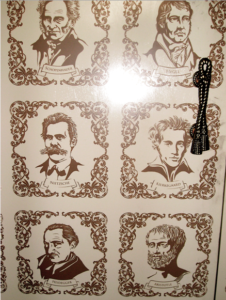
sinclair-lewis.tiff

I feel as though I have been engaging in hypnosis for the last couple of weeks: you are relaxing, I tell you, RELAXING in the face of your upcoming pitching appointment…your only goal is to get these people to ask to see your work…you are buttonholing agents in at conference events and successfully giving your hallway pitch…you are calmly going through your 2-minute pitch to an agent who is delighted to hear it…your only goal is to get these people to ask to see your work, and you are thrilled when they do…

And you will read Sinclair Lewis (whose picture that is, incidentally: I love the intensity of those early 20th-century author photos; they always look as if they’re about to take a big bite out of the photographer)…and not think his work is dated…not dated, I tell you…

So let’s assume for the moment that the mantras I’ve been chanting at you for all these weeks have worked, and an agent or editor has asked to see the first chapter, the first 50 pages, or even the entirety of your manuscript. What do you do next?

In the first place, you send your submissions simultaneously to everyone who asked for them, for reasons I explained on Saturday. Your heart may tell you to give that dreamy agent who was so nice to you an unrequested exclusive, but believe me, your brain should be telling you to play the field.

Don’t tell me that love is blind. Follow Sinclair’s example and wear your glasses, for heaven’s sake.

Second, you send precisely what each agent asked you to send. No slipping in an extra five pages because there’s nifty writing in it, no adding a videotape of you accepting the Congressional Medal of Honor, no cookies or crisp $20 bills as bribes.

Need I say that I know writers who have done all these things, and now know better?

The first 50 means just that: the first 50 pages in standard format, even if that means stopping the submission in mid-sentence. (And if you aren’t absolutely positive that your manuscript IS in standard format or if you were not aware that manuscripts are NOT formatted like published books, please run, do not walk, to the FORMATTING MANUSCRIPTS category at right.)

If you’re asked for a specific number of pages, don’t count the title page as one of them — but no matter how long an excerpt you have been asked to send, include a title page. (If you don’t know how to format a professional title page, or even that there is a professional format for one, please wend your way to the YOUR TITLE PAGE category at right. You see, I really have been preparing my readers for this moment.)

Under no circumstances should you round up or down, even if pp. 49 or 51 is the last of the chapter: part of the point of this exercise is to show that you can follow directions, a rather desirable attribute in a potential client who might be expected to meet sudden deadlines or make surprise revisions down the line.

If asked for a synopsis, send one; do not enclose one otherwise. Ditto for an author bio (don’t worry; I’ll be talking about how to build one next week), table of contents (unless you’ve been asked to submit a book proposal), illustrations, letters of recommendation from your favorite writing teacher, and the aforementioned cookies.

Just send what you’ve been asked to send: no more, no less. With two exceptions: first, you should include a SASE. industry-speak for a stamped (not metered), self-addressed envelope for the manuscript’s safe return. Second, you should include a cover letter.

Why the cover letter? Well, in the first place, render it as easy as humanly possible to contact you — the last thing you want is to make it hard for them to ask for more pages, right? But also, you should do it for the same good, practical reason that I’m going to advise you to write

(Conference name) — REQUESTED MATERIALS

in 3-inch letters on the outside of the envelope: so your work doesn’t end up languishing in the slush pile of unsolicited manuscripts (which are, incidentally, almost invariably rejected). Agents and editors hear a LOT of pitches in the course of the average conference; no matter how terrific your book is, it’s just not reasonable to expect them to remember yours weeks after the fact (which it almost certainly will be, by the time they get around to reading it) simply by its title and your name.

Thus, it is in your best interests to remind them that they did, indeed, ask to see your manuscript.

Be subtle about the reminder — no need to state outright that you are worried that they’ve confused you with the other 150 people they met that day — but it is a good idea to provide some context. Simply inform the agent or editor him/her where you met and that s/he asked to see what you’re sending. As in,

Dear Mr. White,

I very much enjoyed our meeting at the recent Conference X. Thank you for requesting my fantasy novel, WHAT I DID TO SAVE THE PLANET.

I enclose a SASE for your convenience, and look forward to hearing from you soon. I may be reached at the address and phone number below, or via email at…

Regards,

A. Writer

That’s it. No need to recap your plot or re-pitch your concept. Just simple, clean, businesslike. (But NOT, I beg you, in block-indented business format; many folks in the industry regard business format as only marginally literate, at best. I don’t care what you do in the multi-million dollar factory you run: indent those paragraphs whenever you are dealing with anyone in publishing.)

Oh, and if other agents or editors requested it, say so. Considered good manners, and often gets your submission read a bit faster.

The other reason that mentioning where you met is a good idea is — and I tremble to tell you this, but it does happen — there are some unscrupulous souls who, aware that pitch fatigue may well cause memory blurring, send submissions that they CLAIM are requested, but in fact were not.

“Oh, like he’s going to remember ANY pitcher’s name,” these ruthless climbers scoff, stuffing first chapters into the envelopes of everyone who attended a particular conference.

Such scoffers occasionally receive a comeuppance redolent with poetic justice: VERY frequently, the roster of agents and editors scheduled to attend a particular conference changes at the last minute. How well received do you think a, “I enjoyed our conversation at last weekend’s Conference That Shall Not Be Named,” letter goes over with an agent who missed a plane and didn’t show up at that particular conference?

Tee hee.

Do remember, though, for the sake of your blood pressure, you do NOT need to drop everything and mail off requested materials within hours of a conference’s end. The standard writers’ conference wisdom advises getting it out within three weeks of the conference, but actually, that’s not necessary. The publishing industry pretty much shuts down from early August until after Labor Day, anyway.

As I believe I said half a dozen times in the week leading up to the Conference That Shall Not Be Named, a nice conversation with an agent or editor at a conference is just a nice conversation at a conference, not a blood pact.

Nothing has yet been promised — and it can’t have been. As I have mentioned several dozen times throughout this series, no agent is going to sign you on a pitch alone; no matter how good your book concept is, they are going to want to see actual pages before committing.

Why? That old industry truism: “It all depends upon the writing.”

By the same token, you are not bound to honor the request for materials instantaneously. And no, the fact that you said you would send it the moment you got home from the conference does NOT mean that you should send it off without proofing and performing any necessary revisions; unless they asked for an exclusive, they do not expect you to send it within a day or two, or to overnight it.

Besides, it is very much to your advantage that they see your work at its absolute best, after all, not as our work tends to be before a hard-copy proofing.

Long-time readers, chant it with me now: take the time to read EVERY page you intend to submit to ANYONE in the industry in hard copy, out loud, every time.

There is no better way to weed out the mistakes that will strike you a week later as boneheaded (for a sample of these, see the archived Let’s Talk About This on the subject), and the extra couple of weeks fixing any problems might take will not harm your chances one iota.

Trust me, agents and editors meet too many writers at conferences to sit around thinking, “Darn it, where is that Jane Doe’s manuscript? I asked for it two weeks ago! Well, I guess I’m just going to reject it now, sight unseen.”

A common writers’ negative fantasy, but it just doesn’t happen. These people are simply too busy for that. If you wait 6 months to send it, they may wonder a little, but 6 days or 6 weeks? Please.

So unless you already have the manuscript in apple-pie order (which includes having read it — take a deep breath now, so you can say it along with me — in its ENTIRETY, IN HARD COPY, and ALOUD), it’s worth your while to take the time for a final polish. You want your book to be pretty for its big date, right?

Don’t worry: I’ll be talking about that final polish in the days to come, and a bit more about timing your submissions tomorrow. In the meantime, heaps of congratulatory applause to Kari, Amy, and everyone else whose bravery in pitching resulted in requests for material. Way to get out there and market your work!

You are relaxing about getting those requested materials out the door, I tell you…relaxing….

Keep up the good work!

Let’s talk about this: please share your pitching experiences

July 29th, 2007

I’ve been getting such great feedback from readers returning, exhausted, from the Conference That Shall Not Be Named about their pitching experiences that I want to extend an open invitation for attendees (of this or any other pitch-centered conference) to post their insights as comments here.

There’s nothing like a writers’-eye view for getting the skinny on the perils of approaching agents and editors — and it would be hard for the dispatches from the pitching front to be any more up-to-date than this.

So do share your thoughts: how was it different from what you expected, and what part of preparation helped you the most? What do you wish you had known before you pitched, and what did you hit out of the ballpark?

I’m sure writers gearing up to pitching for the first time would love to hear it. Heck, we’d all like to hear it, wouldn’t we?

A couple of caveats: keep your observations G-rated, please, and for your own sake, please forbear from naming names. (I learned at a recent after-hours party that my readership amongst industry types is quite a bit broader than I had realized, and I don’t want to be the means of anyone’s burning any bridges that might conceivably be handy in crossing rivers down the line.)

To get the ball rolling, at a recent conference that I shall not identify, I noticed (and so did the agents and editors) that the pros’ schedules had been set up so tightly as to minimize their non-appointment time wandering around the hallways to a practically unprecedented low. To put it as delicately as possible while still conveying meaning, their scheduled social obligations seemed often to result in oversleeping and an aversion to loud noises in the morning hours.

Which necessarily sharply limited the hallway pitching opportunities for anyone who was not habitually distributing bloody marys with one hand and coffee with the other.

Frankly, I’d never seen this happen before, at least not to the extent of — and this is just a rumor, mind you — cancelled a.m. pitching appointments. It made me wish that I had given my readers a heads-up about the possibility of having either structurally or socially limited access. I promise that I shall be racking my brains to come up with a few clever strategies for dealing with it in future, but I would love to hear how readers handled it in the present.

So I am turning it over to you: what did you learn from your pitching experience that might help others? What worked for you?

PS: If you have complaints, compliments, or suggestions about how any conference you attend could be improved, you should contact the organization that threw it directly about them; please don’t assume that anything you say here will necessarily get back to them. Most conference organizers do take attendee feedback fairly seriously, and sharing your views might result in a better conference for everyone next year.

Book marketing 101: are you really ready to go steady?

July 28th, 2007

Since yesterday’s was SUCH a long post — being giddy over the book sale certainly seems to have made me chatty, doesn’t it? — I’m going to be a bit less garrulous today. And the topic is much more fun: what you should do if you find yourself being wooed by an agent at a conference.

In a professional way, I mean. In the other, more common sense of the word, it’s naturally up to you how to handle it, if you are both consenting adults. (Although for a few insights about how that kind of behavior tends to be regarded at writers’ conferences, please see my post for February 22, Is It Hot in Here, or Is It Just the Guy in the Leather Pants?.)

If an agent does fall deeply in love with your book premise at a conference, you might hear one or both of the following pieces of industry-speak fall from her lips: “I need you to overnight this to me” and/or “I want an exclusive look at this.”

And you, in your giddiness, may be tempted to say yes immediately to one or both.

I wouldn’t advise saying yes to either, because the first will cost you quite a bit of money, and the second is not in your best interests.

Why? Well, manuscripts are heavy, and overnight shipping is expensive. And in the New York-based publishing industry, the normal pace is hectic, so writers dealing with it are exposed to an odd rhythm: delay/panic/delay/panic. Even manuscripts that are of burning interest often sit on desks for a month or two, because other projects are more pressing — after all, acquiring new clients is not how an agent makes a living; commissions come from selling books.

A deal in the hand is worth 128 down the road, I guess.

So when agents and editors say, “I want it now,” or even “I want it NOW!!!” it’s not usually a statement of intention that may be legitimately translated as, ‘I am going to read it as soon as it arrives.” Rather, it’s an expression of serious interest, a way of telling you that they are excited about it — and will read it immediately after the other 17 exciting projects already on their desks.

Ditto with a request for an exclusive — it’s intended to convey to you that the agent is very, very interested in your work, not that she is going to clear her schedule for an entire day as soon as she gets back home to read your book.

It’s meant as a compliment, not as a time prediction – and thus there is no reason for you to break the bank in order to get your manuscript to New York before the agent has even unpacked from her trip. It’s expensive; it will require endless trouble on your part; it will preclude your having time to give the manuscript a last read to catch errors — AND it probably will not get your work read any faster.

Save yourself the dosh.

Besides, it’s pretty generally understood that most of the rest of the country has a slower pace of life than New York. If you are pitching at a conference in the Pacific Northwest, the agent may not be sure if you even have clocks on the walls of your vegetarian commune yurt.

There’s no reason that misconception shouldn’t work to our advantage from time to time. The fact is, it’s a good bet that the requesting agent already has a million manuscripts on her desk — and so does her screener Millicent. A few extra days in the mail will not make any difference at all.

Or, for that matter, a few extra days of proofing it in your vegetarian commune yurt.

I have a firm policy for my editing clients and myself: NEVER overnight ANYTHING to an agency or publishing house unless the RECEIVER is paying the shipping costs; instead, I use the USPS’ Priority Mail, which is infinitely cheaper. Packages with overnight stickers on them are NOT attended to more quickly than those that do not; Priority Mail packages with REQUESTED MATERIALS written on the outside are opened just as fast.

Because of the industry’s peculiar sense of time, where having your manuscript be on the top of someone’s to-read list might mean he’ll read it tomorrow and it might mean it will still be propping up fifteen other manuscripts on his desk four months from now, I also always advise writers to refuse to give any agent, even the best in the world, an exclusive look at any book.

An exclusive, for those of you new to the term, is when a writer agrees not to show a manuscript to anyone else while an agent is trying to make up his mind whether to represent it.

It is almost never in the writer’s interest to agree to this — all you are doing by granting it is making sure that no other agent at the conference can beat the one you’re promising to the punch. It’s tying your hands so you can’t send your work out to anyone else, while at the same time depriving the agent of any possible incentive to read it quickly, since he knows that there’s no competition over the book.

Just say no.

In fact, it’s a VERY good idea to send submissions to every agent and editor who requests them simultaneously — and mention in your cover letter that others are reviewing it as well. This often results in a quicker read on the agency end.

What you should NOT do is submit to your top choice, wait for a reply, then submit to the others who have requested it. Effectively, this is granting an unrequested exclusive, and it’s not to your advantage, no matter how much you liked the agent when you met.

Writers new to pitching grant unrequested exclusives all the time, unfortunately, under the assumption that hooking up with an agent is like making a best friend in junior high school: if you even talk to anyone else, your new BFF might get huffy.

But this is a business. Unless the agent of your dreams has actually ASKED to see the material exclusively, she does not expect to be the only one looking at it.

If you absolutely must grant an exclusive — or if you read this AFTER you already have — say (and repeat it in your cover letter when you send the book), “I am happy to give you an exclusive look at my book for three weeks. After that, I shall still be eager to hear from you, but please know that I shall also be submitting it elsewhere.”

Three weeks is plenty of time for anyone to read any manuscript. And then on Day 22, if you haven’t heard back, bite the bullet and submit it to another agency — and send an e-mail or call the first agency and tell them another agent is now looking at it. If they really are rushing to read it in time, trust me, they’ll call you to ask for an extension.

More on dealing with good news on Monday. Keep up the good work!

Gloat, gloat, GLOAT!

July 27th, 2007

I posted a great big ol’ missive earlier in the day, but I couldn’t resist logging on with some good — no, make that GREAT — news that just came winging through my telephone:

Congratulations, long-time reader Amy Fisher, for winning the Memoir/Nonfiction Book category of the Pacific Northwest Writers’ Association’s literary contest!

Everyone, please join me in a big round of applause for Amy — and for all of those good writers who keep plugging away until their work is recognized. It CAN be done, and hooray for everyone with the courage to put her work on the line to be judged.

I was not at tonight’s ceremony (for reasons that render a member of the Author! Author! community’s winning an award that I won a few weeks before I started this blog all the sweeter for me personally, I must admit), so I do not know how our other 6 nominees fared. Please, folks, let me know, so we can all jump up and down for you, too.

Book marketing 101: it ain’t necessarily so

July 27th, 2007

Yesterday, I wrote about one of the great fringe benefits of conference attendance, making friends with other writers. The person sitting next to you at the agents’ forum might well be famous five years from now, you know, and won’t you be glad that you made friends with her way back when?

Today, I am going to talk about the other end of the spectrum, the naysayers and depression-mongers one occasionally meets at writers’ conferences. And, still more potentially damaging because they’re harder to pin down, the infectious rumors that inevitably sweep the halls from time to time.

You need to inoculate yourself against them. So think of what I’m about to tell you as an adult cootie shot.

Let me step outside the writing world to give you an example of the classic naysayer. Last summer, I went over to a friend’s house for a “let’s save the garden from being reclaimed by the jungle” party. Lopping off branches and deadheading roses in the hot sun, I couldn’t help but notice that another party guest — let’s call her Charity, because she was so VERY generous with her opinions about how other people should be spending their time — kept looking askance at everything I did. I could not so much as pull a weed without her telling me I was doing it wrong.

It was exactly like cooking Christmas cookies with my mother-in-law.

At first, I thought she just didn’t like me, but I soon noticed that Charity was striding around the yard, correcting everyone, in the most authoritative of tones. We all took it meekly, because she seemed so sure that she was right.

However, the third time she gave me advice on pruning that I — the girl who grew up in the middle of a Zinfandel vineyard, pruning shears in hand — knew to be balderdash, I realized something: she was barely doing any gardening herself. She had no idea what should be done. And yet, she had appointed herself garden manager.

Why am I telling you this? Because I can guarantee you that no matter which writers’ conference you choose to attend in your long and I hope happy life, you will run into at least one of Charity’s spiritual cousins.

They’re not hard to recognize as a family. It will be the writer who tells you, in solemn tones, that there’s a national database of every query that’s ever been submitted, so agents can automatically reject ones that have been seen by too many agents. Or that if you’ve been rejected by an agency once, you can never query there again, because THEY maintain an in-house database, dating back years. Or that you’ll get into terrible trouble if you EVER have more than one query out at once. Or that you should NEVER call or e-mail an agency, even if they’ve had your manuscript for over a year.

None of these things are true, incidentally; they’re just persistent rumors that have been circulating harmfully on the conference circuit for years. To set your mind at rest, there are no such databases, and unless an agency actually specifies that it will not accept simultaneous submissions, it simply does not have that policy. Period. And if an agency has lost a requested manuscript, believe me, they want to know about it toute suite.

But these rumors SOUND so true, don’t they? Especially after you’ve heard them 147 times over the course of a weekend. It’s like brainwashing.

I don’t think that people perpetuate them on purpose to dishearten other writers, necessarily, but I have noticed that anyone who speaks with apparent authority on the rules behind the mysterious world of publishing tends to be surrounded by an audience at the average conference. There are some definite perqs to being the person who walks into a group of writers and says this and this and this is true.

For instance: you believe me, don’t you?

It works, of course, because the publication process IS often confusing and arbitrary. As anyone who has ever spent ten minutes browsing in a bookstore already knows, there are plenty of published books that aren’t very good; as anyone who has a wide acquaintance amongst writers also knows, there are plenty of perfectly wonderful writers whose work does not get published.

There IS a lot of luck involved, unquestionably. If your manuscript happens to be the first one that the agent reads immediately after realizing that her marriage is over, or even immediately after stubbing her toe on a filing cabinet, your chances of her signing you are definitely lower than if, say, she has just won the lottery. And there is absolutely nothing you can do to affect whether your work hits someone’s desk on a good or a bad day.

The more you know about how the industry operates, however, the better your chances of falling on the right side of the coin toss. But the right way to learn about it is not through rumors.

Ask people whom you are positive know how the industry works. Go to the agent and editor forums at the conference, and listen carefully. Learn who likes what. These are people with individual tastes, not mechanized cogs in a homogenous industry where a manuscript that interests one agent will inevitably interest them all.

Contrary to what that sneering guy in the hallway just told you.

Which is why, incidentally, you should always take it with a massive grain of salt whenever even the most prestigious agent or editor tells you, “Oh, that would never sell.” What that actually means, in the language the rest of us speak, is “Oh, I would never want to try to sell that.”

It is, in fact, a personal preference being expressed, and it should be treated as such. It may well be a personal preference shared by a substantial proportion of the industry, such as the nearly universal declaration prior to the success of COLD MOUNTAIN that historical fiction just doesn’t sell anymore, but it is still a personal opinion.

If you doubt that, consider: when the author of COLD MOUNTAIN went out looking for an agent, the platitude above WAS standard industry wisdom. And yet some agent took a chance on it. Go figure.

I am harping on this point for two reasons. First, it is a very, very good idea to bear in mind that not everything everyone who speaks with authority says — no, not even a senior editor at a major publishing house, or the agent who represents a hundred clients, or me — is necessarily accurate 100% of the time. That knowledge can save your dignity if you get caught in a meeting with an agent who dislikes your book’s premise.

Trust me, I’ve been there. Just thank the speaker for his opinion, and move on.

I’m quite serious about this: don’t be afraid to walk away. If you find yourself caught in a formal meeting with an agent or editor who tells you within the first thirty seconds that she does not represent books in your category, or that the premise isn’t marketable, or any other statement intended to prevent you from completing your pitch, you are under no obligation to remain and listen to the pro’s opinion. You are well within your rights to murmur, “Thank you for your time, then,” and leave.

Or, as I mentioned earlier in this series, you can take the moral high ground, and turn the conversation into a learning experience. You can always learn something from contact with an industry professional.

For example, you might say, “Oh, I’m sorry, I didn’t know you didn’t represent this kind of work,” (try to say it politely, even if the agent or editor’s conference guide blurb actually state specifically that he DID represent this kind of work) “but if you were me, who else at the conference would you try to pitch this book to, given your druthers?”

Or, “Gee, I’m sorry to hear that you think it won’t sell. Would you mind telling me why? Do you think this is a trend that will go away after awhile, or do you think books like this always have a hard time selling?”

Or even, “If you were a writer just starting out, how would you try to market a book like this to agents and editors?”

Beats losing your temper, and it certainly beats bursting into tears. Often, agents and editors are happy to give you tips in exchange for your sparing them a scene.

The other reason I am harping on why you should take blanket pronouncements with a small mountain of salt. While rumors about secret ways in which the industry is out to get writers may roll off your back at the time you first hear them, they can come back to haunt you later in moments of insecurity.

And the last thing you will need if an agent has held on to your manuscript for two months without a word, and you are trying to figure out whether to call or not to check up on it (do), is a nagging doubt at the back of your mind about whether writers bold enough to assume that the US Mail might occasionally misplace packages are condemned forever as troublemakers, their names indelibly blacklisted in a secret roster to which only agents have access.

Sounds a little silly, put that way, doesn’t it?

When confronted with a hallway rumor, don’t be afraid to ask some critical follow-up questions. “Where did you hear that?” might be a good place to start, closely followed by “Why on earth would they want to do THAT?”

With an industry professional, you can use polite interest to convey incredulity, “Really? Do you know someone to whom that has happened? Did it happen recently?”

Whatever you do, if you hear an upsetting truism, do not swallow it whole. You look that gift horse in the mouth, and everywhere else, before you wheel it into Troy.

And when someone of Greek descent tells you to give a Trojan horse the once-over, believe it.

Let me just go ahead and nip the ubiquitous database rumor in the bud, since it is one of the most virulent of the breed. Since the average agency receives around 800 queries per week, can you imagine the amount of TIME it would take to maintain such a query database, even for a single agency? It would be prohibitively time-consuming. They barely have time to open all of the envelopes as it is, much less check or maintain a sophisticated tracking system to see if any given author queried them (or anybody else) two years ago.

A good rule of thumb to measure the probability of these rumors is to ask yourself two questions each time you hear one. First, would the behavior suggested serve ANY purpose to the agency, other than being gratuitously mean to writers who query it? Is its only real purpose the exercise of power?

Second, would performing the suggested behavior require spending more than a minute on each query — say, to input statistics into a database? Could the agency accomplish it WITHOUT hiring an extra person – or five – to do maintain the roster of doom?

If the answer to any of these questions is no – and it almost always is — chances are, the rumor’s not true. Even unpaid interns’ time costs something. They could be opening all of those envelopes, for instance.

Okay, that’s a long enough walk on the depressing side of the street. Tomorrow, on to what happens if an agent loves your pitch. In the meantime, keep up the good work!

PS: Just between ourselves, my predictive abilities sometimes startle even myself: my spies — oh, they’re everywhere — at the Conference That Shall Not Be Named tell me that 100% of the pitching info being taught there is toward a 3-line pitch. Sigh. I’m glad at least some of the attendees will have more to say for themselves and their books. I’ve also heard from several sources that the wining and dining (mostly the former) of the pros has been unusually lavish this year, to the extent that a savvy writer might want to wait until after their second cup of coffee to pitch to them in the mornings. But that’s just what about a dozen little birds told me; might not be true. But it does raise a possibility that one might want to bear in mind for future conferences, eh?

Book marketing 101: strategizing your conference time, part II

July 26th, 2007

Still hanging in there? Still breathing at least once an hour?

As a veteran of many, many writers’ conferences all over the country, I can tell you from experience that they can be very, very tiring. Especially if it’s your first conference. Just sitting under fluorescent lights in an air-conditioned room for that many hours would tend to leech the life force out of you all by itself, but here, you will be surrounded by a whole lot of very stressed people while you are trying to learn as much as you possibly can.

As you may have noticed, most of my advice on how to cope with all of this ambient stress gracefully is pretty much what your mother probably said to you when you went to your first party: be polite; be nice to yourself and others; watch your caffeine and alcohol intake, and make sure to drink enough water throughout the day. Eat occasionally.

And you’re not wearing THAT, are you?

Oops, slipped too far into Mom mode. Actually, on the only occasion when my mother actually made that comment upon something I was wearing, she had made the frock in question; she hastened to alter it. For my senior prom: a backless little number in midnight-blue Chinese silk that she liked to call my “Carole Lombard dress,” for an occasion where practically every other girl was going to be wearing something demure and flouncy by Laura Ashley; not what anyone expected the valedictorian to wear. Even with the alterations, most of the male teachers followed me around all night long.

Oh, what a great dress that was. Oh, how inappropriate it would have been for a writers’ conference — or really, for any occasion that did not involve going out for a big night on the town in 1939. But then, so would those prissy Laura Ashley frocks.

Which brings me back to my point (thank goodness).

I wrote on what you should and shouldn’t wear to a conference at some length in my post of July 7, but if you find yourself in perplexity when you are standing in front of your closet, remember this solid rule that will help you wherever you go within the publishing industry: unless you will be attending a black-tie affair, you are almost always safe with what would be appropriate to wear to your first big public reading of your work.

And don’t those of you who have been hanging around the industry for a while wish someone had shared THAT little tidbit with you sooner?

To repeat a bit more motherly advice: do remember to eat something within an hour or two of your pitch meeting. I know that you may feel too nervous to eat. but believe me, if you were going to pick an hour of your life for feeling light-headed, this is not a wise choice. If you are giving a hallway pitch, or standing waiting to go into a meeting, make sure not to lock your knees, so you do not faint. (I’ve seen it happen, believe it or not.)

And practice, practice, practice before you go into your meetings; this is the single best thing you can do in advance to preserve yourself from being overwhelmed. As I pointed out yesterday, you will also be surrounded by hundreds of other writers. Introduce yourself, and practice pitching to them.

Better still, find people who share your interests and get to know them. Share a cookie; talk about your work with someone who will understand. Because, really, is your life, is any writer’s life, already filled with too many people who get what we do? You will be an infinitely happier camper in the long run if you have friends who can understand your successes and sympathize with your setbacks as only another writer can.

I know this from experience, naturally. The first thing I said to many of my dearest friends in the world was, “So, what do you write?”

To which the savvy conference-goer replies — chant it with me now, everyone — the magic first hundred words.

In fact, the first people I told about my recent book deal — after my s.o. and my mother, of course — were people I had met in precisely this manner. Why call them first? Because ordinary people, the kind who don’t spend all of their spare time creating new realities out of whole cloth, honestly, truly, sincerely, often have difficulty understanding the pressures and timelines that rule writers’ lives.

Case in point: the FIRST words by mother-in-law uttered after hearing that my book had sold: “What do you mean, it’s not coming out until the autumn of 2009? Why the delay?”

This kind of response is, unfortunately, common. I don’t think any writer ever gets used to seeing her non-writer friends’ faces fall upon being told that the book won’t be coming out for a year, at least, after the sale that’s just happened, or that signing with an agent does not automatically equal a publication contract, or that not every book is headed for the bestseller list.

Thought I got off track from the question of how to keep from getting stressed out, didn’t you? Actually, I didn’t: finding buddies to go through the conference process with you can help you feel grounded throughout.

Not only are these new buddies great potential first readers for your manuscripts, future writing group members, and people to invite to book readings, they’re also folks to pass notes to during talks. (Minor disobedience, I find, is a terrific way to blow off steam.) You can hear about the high points of classes you don’t attend from them afterward.

And who wouldn’t rather walk into a room with 300 strangers and one keynote speaker with a new-found chum than alone?

Making friends within the hectic conference environment will help you retain a sense of being a valuable, interesting individual far better than keeping to yourself, and the long-term benefits are endless. To paraphrase Goethe, it is not the formal structures that make the world fell warm and friendly; friends make the earth feel like an inhabited garden.

So please, for your own sake: make some friends at the conference, so you will have someone to pick up the phone and call when the agent of your dreams falls in love with your first chapter and asks to see the entire book! And get to enjoy the vicarious thrill when your writing friends leap their hurdles, too.

This can be a very lonely business; I can tell you from experience, nothing brightens your day like opening your e-mail when you’re really discouraged to find a message from a friend who’s just sold a book or landed an agent.

Well, okay, I’ll admit it: getting a call from your agent telling you that YOU’ve just sold a book is rather more of a day-brightener. As is the call saying, “I love your work, and I want to represent you.” But the other is still awfully darned good.

One more little thing that will help keep you from stressing out too much: while it’s always nice if you can be so comfortable with your pitch that you can give it from memory, it’s probably fair to assume that you’re going to be a LITTLE bit nervous during your meetings.

So do yourself a favor — write it all down; give yourself permission to read it when the time comes, if you feel that will help you. Really, it’s considered perfectly acceptable, and it will keep you from forgetting key points.

I would advise writing on the top of the paper, in great big letters: BREATHE!

Do remember to pat yourself on the back occasionally, too, for being brave enough to put yourself on the line for your work. As with querying and submitting, it requires genuine guts to submit your ideas to the pros; I don’t think writers get enough credit for that.

In that spirit, I’m going to confess: I have one other conference-going ritual, something I do just before I walk into any convention center, anywhere, anytime, either to teach or to pitch. It’s not as nice or as public-spirited as the other techniques I have described, but I find it is terrific for the mental health. I go away by myself somewhere and play at top volume Joe Jackson’s song Hit Single and Jill Sobule’s (I Don’t Want to Get) Bitter.

The former, a charming story about dumbing down a song so it will hit big on the pop charts, includes the PERFECT lyric to hum walking into a pitch meeting:

And when I think of all the years of finding out
What I already knew
Now I spead myself around
And you can have 3 minutes, too…

If that doesn’t summarize the difference between pitching your work verbally and being judged on the quality of the writing itself, I should like to know what does. (Sorry, Joe: I would have preferred to link above to your site, but your site mysteriously doesn’t include lyrics.)

The latter, a song about complaining, concludes with a pretty good mantra for any conference-goer:

So I’ll smile with the rest, wishing everyone the best
And know the one who made it made it because she was actually pretty good.
‘Cause I don’t want to get bitter
I don’t want to turn cruel

I hum that one a LOT during conferences, I’ll admit. Helpful, I find, when a bestselling author whose agent is her college roommate’s cousin tells a roomful of people who have been querying for the past five years that good writing always finds a home. Perhaps, but certainly not easily.

What you’re trying to do certainly is not easy, or fun, but you can do it. You’re your book’s best advocate.

And remember, all you’re trying to do is to get these nice people to take a look at your writing. No more, no less. It’s a perfectly reasonable request, and you’re going to be terrific at making it, because you’ve been sensible and brave enough to face your fears and prepare like a professional.

That’s been a good month’s effort, my friends. Keep up the good work.

Book marketing 101: strategizing your conference time

July 25th, 2007

Many thanks to all of you who sent in good wishes about my book sale. It’s very nice to feel rooted-for!

A technologically-savvy reader wrote in to ask if it was considered appropriate to take notes on a laptop or Blackberry during conference seminars. It’s still not very common — surprising, given how computer-bound most of us are these days — but yes, it is acceptable, under two conditions.

First, if you do not sit in a very prominent space in the audience — and not solely because of the tap-tap-tap sound you’ll be making. Believe it or not, it’s actually rather demoralizing for a lecturer to look out at a sea of heads that are all staring at their laps: are these people bored, the worried speaker wonders, or just taking notes very intensely?

Don’t believe me? The next time you attend a class of any sort, keep your eyes on the teacher’s face, rather than on your notes. I guarantee that within two minutes, the teacher will be addressing half of her comments directly to you; consistent, animated-faced attention is THAT unusual. The bigger the class, the more quickly s/he will focus upon you.

Back to the Blackberry issue. It’s also considered, well, considerate to ask the speaker before the class if it is all right to use any electronic device during the seminar, be it computer or recording device.

Why? Think about it: if your head happens to be apparently focused upon your screen, how is the speaker to know that you’re not just checking your e-mail?

Enough about the presenters’ problems; let’s move on to yours. Do be aware that attending a conference, particularly your first, can be a bit overwhelming. You’re going to want to pace yourself.

“But Anne!” I hear conference brochure-clutching writers out there crying, “The schedule is jam-packed with offerings! I don’t want to miss a thing!”

Yes, it’s tempting to take every single class and listen to every speaker, but frankly, you’re going to be a better pitcher if you allow yourself to take occasional breaks. Cut yourself some slack; don’t book yourself for the entire time.

And make a point of doing something other than lingering in the conference center. Go walk around the block. Sit in the sun. Grab a cup of coffee with that fabulous SF writer you just met. Hang out in the bar that’s never more than 100 yards from any writers’ conference; that tends to be where the already-agented and already-published hang out, anyway.

This is NOT being lax about pursuing professional opportunities: it is smart strategy, to make sure you’re fresh for your pitches. If you can’t tear yourself away, take a few moments to close your eyes and take a few deep breaths, to reset your internal pace from PANIC! to I’m-Doing-Fine.

I know that I sound like an over-eager Lamaze coach on this point, but I can’t overemphasize the importance of reminding yourself to take deep breaths throughout the conference. A particularly good time for one is immediately after you sit down in front of an agent or editor.

Trust me: your brain could use the oxygen right around then, and it will help you calm down so you can make your most effective pitch.

And at the risk of sounding like a broken record, please remember: writing almost never sells on pitches alone. You are not going to really know what an agent thinks about your work until she has read some of it. Your goal here is NOT to be discovered on the spot, but to get the industry pro in front of you to ask to read your writing. Period.

Yes, I know: I’ve said this before. And I’m going to keep saying it as long as there are aspiring writers out there who walk into pitch meetings expecting to hear the agent cry, “My God, that’s the best premise since OLIVER TWIST. Here’s a representation contract — and look, here’s my favorite editor now. Let’s see if he’s interested.”

Then, of course, the editor falls equally in love with it, offers an advance large enough to cover New Hampshire in $20 bills, and the book is out by Christmas. As an Oprah’s Book Club selection, of course.

Long-time readers, sing along with me now: this is not how the publishing industry works. The point of pitching is to skip the querying stage and pass directly to the submission stage. So being asked to send pages is a terrific outcome for this situation, not a distant second place to an imaginary reality.

Admittedly, though, is SO easy to forget in the throes of a pitch meeting. Almost as easy as forgetting that a request to submit is not a promise to represent or publish.

To reiterate: whatever an agent or editor says to you in a conference situation is just a conversation at a conference, not the Sermon on the Mount or testimony in front of a Congressional committee. Everything is provisional until some paper has changed hands.

This is equally true, incidentally, whether your conference experience includes an agent who actually starts drooling visibly with greed while you were pitching or an editor in a terrible mood who raves for 15 minutes about how the public isn’t buying books anymore. Until you sign a mutually-binding contract, no promises — or condemnation, for that matter — should be inferred or believed absolutely. Try to maintain some perspective.

Admittedly, perspective is genuinely hard to achieve when a real, live agent says, “Sure, send me the first chapter,” especially if you’ve been shopping the book around for eons. But it IS vital to keep in the back of your mind that eliciting this statement is not the end of your job as a marketer, because regardless of how much any given agent or editor says she loves your pitch, she’s not going to make an actual decision until she’s read at least part of it.

So even if you are over the moon about positive response from the agent of your dreams, please, I beg you, DON’T STOP PITCHING IN THE HALLWAYS. Try to generate as many requests to see your work as you can.

I’m serious about this. No matter who says yes to you first, you will be much, much happier two months from now if you have a longer requested submissions list. Ultimately, going to a conference to pitch only twice, when there are 20 agents in the building, is just not efficient.

And there is a fringe benefit to hallway pitching: it tends to be a trifle easier to get to yes than in a formal pitch.

Counter-intuitive, isn’t it? Yet in many ways, casual pitches are easier, for one simple reason: time. In a hallway pitch, agents will often automatically tell you to submit the first chapter, in order to be able to keep on walking down the hall, finish loading salad onto their plates, or be able to move on to the next person in line after the agents’ forum.

If the agent handles your type of work, the premise is interesting, and you are polite, they will usually hand you their business cards and say, “Send me the first 50 pages.”

Okay, pop quiz to see who has been paying attention to this series so far: after the agent says this, do you:

(a) regard this as an invitation to talk about your work at greater length?

(b) say, “Gee, you’re a lot nicer than Agent X. He turned me down flat,” and go on to give details?

(c) launch into a ten-minute diatribe about the two years you’ve spent querying this particular project?

(d) thank her profusely and vanish in a puff of smoke?

If you said anything but (d), go back and reread the whole series again — and the entirety of the INDUSTRY ETIQUETTE category at right as well. You need to learn what’s considered polite in the industry, pronto.

In a face-to-face pitch in a formal meeting, agents tend to be more selective than in a hallway pitch. (I know; counterintuitive, isn’t it?) Again, the reason is time. In a ten-minute meeting, there is actual leisure to consider what you are saying, to weigh the book’s merits — in short, enough time to save themselves time down the line by rejecting your book now.

Why might this seem desirable to them? Well, think about it: if you send it to them at their request, someone in their office is ethically required to spend time reading it, right? By rejecting it on the pitch alone, they’ve just saved Millicent the screener 5 or 10 minutes.

Also, sitting down in front of an agent or editor, looking her in the eye, and beginning to talk about your book can be quite a bit more intimidating than giving a hallway pitch — it helps to be aware of that in advance, I find. In a perverse way, a formal pitch can be significantly harder to give successfully than a hallway one.

So get out there and pitch, pitch, pitch! Think of it this way: every time you buttonhole an agent and say those magic first hundred words is one less query letter you’re going to need to send out.

Take a deep breath on me, everybody, and keep up the good work!

Book marketing 101: asking the right questions, some good news, and a goal!

July 24th, 2007

It’s going to be a long one today, campers, but I can’t resist opening with a bit of good news: I sold a book yesterday!

To be precise, my agent, the fabulous Jim McCarthy of DGLM (who will be attending a certain upcoming Conference That Shall Remain Nameless), successfully marketed my next nonfiction book, a political memoir I am writing with the godmother of the first civil rights act of the 21rst century, Marsha Coleman-Adebayo. It’s being acquired by a wonderful editor — and believe me, as an editor myself, my standard for wonderful is very high indeed — at a terrific independent press.

So I am THRILLED. Now I just have to write it.

Because, you see, like most NF and even most memoirs, it was sold on the basis of a proposal and the first chapter. And if that’s news to all of you memoir-writers out there, please see the WRITING MEMOIR category at right.

(Because I have a lot of material to cover today, I am going to refer to past posts, rather than explaining each point in full, as is my usual wont. If you don’t have time to check, don’t worry: I shall doubtless be revisiting many of these issues in the months to come.)

In case you’re curious about what happens after an offer is made and excepted, the agent then issues what’s called a deal memo, a 1- or 2-page document stating just the facts, ma’am: who is buying it, who the acquiring editor is, how much the advance is and how it will be paid (usually in either two or three installments; for further explanation, please see the ADVANCES category at right), the royalty rates, who owns what subsidiary rights (film, audio, book club, etc.), the area to be covered by the sale (first North American rights, first English-language rights, world rights), the length (always an issue in a book-to-be-written), the delivery date (that’s when I have to get them the finished manuscript), and the tentative publication date (when it will hit the shelves).

And all of that’s before the contract’s even written. Agents honestly do work very hard on their clients’ behalves, you know.

All very exciting, of course, and a trifle disorienting. I shall keep you posted, naturally, as the deal becomes codified.

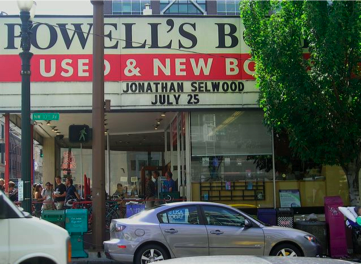
A second bit of good news: FAAB (Friend of Author! Author! Blog) Jonathan Selwood’s first novel, The Pinball Theory of Apocalypse, comes out today, and with what fanfare! I was in Portland a couple of weeks ago, and just look at what greeted me when I arrived at my favorite bookstore:

j-selwoods-marquee.tiff

If having one’s name emblazoned on a terrific bookstore’s marquee isn’t a goal worth having for any writer, I should like to know what is. Congratulations, Jonathan!

For those of you who live in the Portland area, Jonathan will be reading tomorrow night (thus the marquee) at Powell’s City of Books on Burnside. He will be reading in the Seattle area in a couple of weeks, and I, for one, am looking forward to hearing him.

So there you have it: concrete visions of goals-along-the-way for YOUR writing career. Go ahead, spend a few minutes envisioning your name on that marquee and your agent calling you about an offer on your book. That’s where you’re headed, and that’s why you’re investing all this hard work in making your work professional.

It may seem a trifle silly to say that outright, but it’s tempting to focus upon only the end products of writing: the book in the reader’s hand, the royalty check in the bank account, you reading your work to a hushed crowd of avid devotees. But days like this are well worth acknowledging. If you’re in it for the long haul, believe me, celebrating the victories along the way — your own AND others’ — helps sustain you through the long, dark days of seemingly endless work.

I mention this because it fits so beautifully into today’s topic: working up nerve to approach agents to pitch. Because, you see, in the flurry of pitching and querying, signing with an agent can start to feel like the end goal, the point at which all of the hard work is going to end, rather than a victory to be celebrated along the way. Yes, you do want an agent to fall in love with your writing — but never forget that the point of having an agent is to market your book.

Which means — and this is going to seem rather funny, in a pitching situation, when you are concerned with catching an agent’s wandering eye — you should be considering if the person in front of you is a good bet for helping you meet your ultimate goal of publication.

Because believe me, the author’s work does not end when the ink dries on the agency contract: its nature merely changes.

So you’re going to want to ask some questions about who these people are, what they typically represent, and how they like to work with writers. Agenting styles are very different: some are very hands-on, line-editing the work they represent, and some prefer to, as the saying goes, “leave the writing to the writers.” Some enjoy explaining the publishing process to their clients, and some are infuriated by it.

It really is in everyone’s best interests, therefore, that such preferences be aired up front.

I know: it’s intimidating, and you don’t want to offend anybody. But remember, these people come to a conference to discover people like YOU. Don’t talk yourself out of approaching them. Yes, the deck is stacked, but that does not mean that it’s impossible to make it: writers find agents at conferences all the time.

Including, incidentally, yours truly. After asking simply mountains of very pointed questions.

Fortunately, you need not wait until your pitching appointment or you have buttonholed an agent in the hallway to ask such questions: most conferences, including this coming weekend’s Conference That Shall Not Be Named, feature panels where agents and editors talk about their work. Almost universally, the moderator will ask for questions from the audience.

Here’s your chance to ask many agents at once about what they like in a book — and in a client.

It’s a golden opportunity — yet much of the time, it’s is squandered with the too-specific question of the conference newbie who thinks this is an invitation to pitch: “Would you be interested,” such a fellow will stand up and ask, “in a book about a starship captain who finds himself marooned on a deserted planet where only mistletoe grows, and his only chance of escape is to court the ancient Druidic gods?”

Now, personally, I would probably want to take a gander at that particular book, if only for giggles, but question time at an agents’ forum is NOT an appropriate venue for pitching. You should feel free to walk up to the panelists afterward to try out your hallway pitch, but you will make a much, much better impression if you use the question time for, um, questions.

What is likely to happen when our misguided friend ignores this dictum? One of two things, depending upon the mood and generosity level of the agents so approached. If they’re feeling kind, one of them will try to turn this too-specific question into an issue of more general concern, as in, “It’s interesting that you ask that, because the SF market right now is very much geared toward…”

The other, less charitable and more common response is for the agents all to say no and the moderator to ask for the next question from the audience.

Just don’t do it.

A popular variation on this faux pas is a questioner’s standing up, describing his book, and asking how much he could expect to receive as an advance. From the writer’s point of view, this certainly seems like a reasonable question, doesn’t it? Yet to industry-trained ears, it says very clearly that the asker has not gone to the trouble of learning much about how publishing actually works.

Why is that so evident? Well, in the first place, advances vary wildly. Think about the deal memo: pretty much everything that has to do with the author’s cut is a matter of negotiation. Which leads to the second point: a book that attracts competitive bidding today may not interest any editor at all six months from now.

So really, when an aspiring writer asks such a question, what an agent tends to hear is, “I want you to predict the market value of a book you know absolutely nothing about.”

Again: not the best idea. You’re going to want to keep your question general and, if at all possible, have everyone on the panel answer it, so you don’t appear to be targeting one of them for something he said. (It happens.)

Another common faux pas is to challenge what an agent on the panel has already said. Often, the writers who go this route will cite another source, for added credibility, “You said X ten minutes ago, but Miss Snark says…”

This question format will not help you win friends and influence people.

Why? Well, no one particularly likes to be contradicted in front of a roomful of people, right? Being told that someone out there is laying down rules of her conduct is far more likely to raise hackles than provide clarification.

And it’s not as though the average agent reads the many writing blogs out there, even if she happens to write one herself. (As does, I believe, Rachel Vater, also scheduled to attend the CTSRN) So any name you cite — up to and including Miss S’s, who enjoys a mixed reputation amongst agents — is unlikely to seem like an unimpeachable source.

Although you may certainly feel free to preface your remarks to my agent with, “I really like Anne Mini’s blog,” should you be so moved.

As long, that is, as you did not add immediately thereafter, “…and she says that what you told us before is wrong.” Trust me: as an opening gambit, it just doesn’t work.

So what should you ask that intimidating row of agents? A few suggestions that designed to elicit information you would probably have a hard time gleaning anywhere else — and will generally provoke interesting comments, rather than the usual bleak diagnoses of how tough the market is right now:

“What was the last book each of you picked up at a conference? What made that book stand out from the others you heard pitched?” (I love this question, as it gives pitchers hints about how the agents like to hear a book described.)

“Who is your favorite client, and why?” (This is a question they tend to love, as it enables them to promote a client’s work. Make a great show of writing down names.)

“How long do you stick with a book you really love that’s not selling before you give up on it?” (In many ways, this is the single most important thing to know about an agent with whom you’re considering signing — and it’s an agent-friendly question, because they almost invariably answer it by talking about a pet project.)

“How is selling a first-time author’s book different from selling the work of someone more established?” (They’ll like this question less, but it will give you a pretty good idea of who has sold a debut novel lately and who hasn’t.)

“Are you looking for a career-long relationship with a writer when you consider a submission, or are you only thinking about the book in front of you? If you thinking in the long term, how often do you expect your clients to produce new books?” (This last varies a LOT.)

“How much feedback to you give your clients before you submit their books? Do you usually ask for a revision before you send a book out? How much do you like to get involved in the revision process?” (Yes, this is an enormous question, but the agents who never edit at all will usually say so immediately.)

“Is there any kind of book you specifically do NOT want to hear pitched this weekend?” (Hey, someone’s got to pull the pin on that grenade. Sometimes they will answer this question unsolicited, however, so do keep an ear out during the forum.)

“What’s the worst query letter you ever got, and why?” (This is a great question to ask if you’re not planning to do any hallway pitching. The responses are usually pretty colorful. It’s also worth asking if they have any automatic red flags for submissions.)

These are pretty fundamental questions, but you are well within your rights to ask them. Every agent has a different representation style, and you will want to know about any pet peeves or preferences before you stick your pages under their respective noses, right?

You’ll be pleased to hear, after all that, that there is really only one question that someone absolutely needs to ask at the editors’ forum — although most of the questions above will work in this context, too. Since most publishing houses now have policies forbidding their editors from picking up unagented work, everyone in the room will be happier in the long run if you just pull the pin on the grenade:

“If you found a fabulous book here at the conference, which of you could sign the author directly, and which of you would have to refer her to an agent?”

Yes, it’s a bit in-your-face, but the fact is, the editors from houses that have this policy tend to assume that pitchers are already aware of it. Asking to know whether you’ll be pitching to someone who could act directly or not can help you streamline your pitching attempts.

Don’t be afraid: you’re there to learn how to market your work better, and they are there to pick up new writers. You are not a second-class citizen begging the nobility for a favor, as so many first-time pitchers seem to think: you are trying to find the best collaborators for your writing career.

As Francis I of France put it: “The sun shines for me as for others. I should very much like to see the clause in Adam’s will that excludes me from a share of the world.”

You deserve to be heard, in short. Don’t let ‘em intimidate you.

Tomorrow, a few hints on maintaining your energy throughout what can be a pretty exhausting event. Keep up the good work!

Book marketing 101: the contents of your book bag, part II

July 23rd, 2007

Yesterday, I left off talking about what you should SAY at a conference, and moved on to what you should CARRY. While my last post’s advice was concerned with your comfort and welfare, today’s tips are all about networking.

Conferences are about CONFERRING, people: network!

Because you will be meeting some God-awfully interesting people, you will want to bring some easily transferable pieces of paper with your contact information printed on it: a business card, for instance, or comparably sized sheets from your home printer.

I mention this now, so you may prepare in advance. Having to scrabble around in your tote bag for a stray scrap of paper upon which to inscribe your vitals every time you meet someone nice gets old FAST.

Besides, if you file a Schedule C to claim your writing as a business, the cost of having the cards made is usually tax-deductible – and no, you don’t have to make money as a writer in every year you file a Schedule C for it. Talk to a tax advisor experienced in working with artists.

Seriously, it is VERY worth your while to have some inexpensive business cards made, or to print some up at home, for two excellent reasons. First, it’s always a good idea to be able to hand your contact info to an agent or editor who expresses interest in your work. They don’t often ask for it, but if they do — in a situation, say, where an editor from a major press who is not allowed to pick up an unagented book REALLY wants to hook you up with an agent — it’s best to be prepared.

Second, unless you make a point of sitting by yourself in a corner for the entire conference, you are probably going to meet other writers that you like — maybe even some with whom you would like to exchange chapters, start a writers’ group, or just keep in contact to remind yourself that we’re all in this together.

The easier you make it for them to contact you, the more likely they are to remain in contact. It’s just that simple.

I would urge you to avoid the extremely common mistake of walking into ANY writers’ gathering thinking that the only people it is important for you to meet are the bigwigs: the agents, the editors, the keynote speakers. It requires less energy, true, but it is a tad elitist, not to say short-sighted: in the long run, casting a wider acquaintance net will pay off better for you.

For one very, very simple reason: the more writer friends you have, the easier it is to learn from experience. Why make your own mistakes, when you can learn from your friends’, and they from yours? What better source for finding out which agents are really nice to writers, and which are not? And who do you think is going to come to your book signings five years from now?

Obviously, if you can swing a one-on-one with the keynote speaker, go for it — I once spent several hours stranded in a small airport with Ann Rule, and she is an absolutely delightful conversationalist. Especially if you happen to have an abnormally great interest in blood spatter patterns. But I digress.

But try not to let star-watching distract you from interacting with the less well-known writers teaching the classes — who are there to help YOU, after all — or the writer sitting next to you in class. I have met some of the best writers I know by the simple dint of turning to the person rummaging through the packaged teas on the coffee table and saying, “So, what do you write?”

Remember those magic first hundred words? This is the time to use ‘em.

Believe me, it’s worth doing. Someday, some of your fellow conference attendees are going to be bigwigs themselves — realistically, can you rule out the possibility that the person sitting next to you in the session on writer’s block ISN’T the next Stephen King? — and don’t you want to be able to say that you knew them when?

And even if this were not true (but it is), writing is an isolating business — for every hour that even the most commercially successful writer spends interacting with others in the business, she spends hundreds alone, typing away. The more friends you can make who will understand your emotional ups and downs as you work through scenes in a novel, or query agents, or gnaw your fingernails down to the knuckle, waiting for an editor to decide whether to buy your book, the better, I say.

Even the most charmed writer, the one with both the best writing AND the best pure, dumb luck, has days of depression. Not all of us are lucky enough to live and work with people who appreciate the necessity of revising a sentence for the sixth time. Writers’ conferences are the ideal places to find friends to support you, the ones you call when your nearest and dearest think you are insane for sinking your heart and soul into a book that may not see print for a decade.

So stuff some business cards into your conference bag along with a folder containing several copies of your synopsis AND five copies of the first five pages of your book, as a writing sample.

Why five pages, specifically? Well, not all agents do this, but many, when they are seriously taken with a pitch, will ask to see a few pages on the spot, to see if the writing is good enough to justify the serious time commitment of reading the whole book.

They don’t like, you see, to buy a pig in a poke.

Having these pages ready to whip out at a moment’s notice will make you look substantially more professional than if you blush and murmur something about printing it out, or simply hand the agent your entire manuscript.

Don’t, however, bother to bring your entire book with you to the conference, UNLESS you are a finalist in one of the major categories. You will never, ever, EVER miss an opportunity by offering to mail it instead.

In fact, agents almost universally prefer it. This is true, even if they insist that they want to read it on the airplane home.

Why the exception for the contest finalists? Well, agents tend to be pretty competitive people. The primary reason that an agent would ask for the whole thing right away, in my experience, is if he is afraid that another agent at the conference will sign you before he’s had a chance to read it — and the writers who tend to be the objects of such heart-rending scenes of jealousy are almost invariably those sporting finalist ribbons.

So while I have known agents to read a chapter or two of the winners’ work in their hotel rooms, the chances of its happening in the normal run of a pitch day are roughly the same as finding the complete skeleton of a dinosaur in your back yard.

It could happen — but it doesn’t really make sense to plan your life around the possibility.

Otherwise, don’t hurt your back lugging the manuscript box around; the sample will do just as well. If you feel that an excerpt from the end of the book showcases your work better, use that, but if you can at all manage it, choose the first five pages of the book as your sample — it just exudes more confidence in your writing, as these are the first pages a screener would see in a submission.

From the writer’s POV, the sole purpose of the writing sample is to get the agent to ask you to send the rest of the book, so although I hammer on this point about twice a month here, I’m going to say it again: as with everything else you submit to any industry pro, make sure that these pages are impeccably written, totally free of errors, and in standard format.

If the fact that there is a standard format for manuscripts — and that it does NOT resemble the formatting of published books — is news to you, rush into the archives at right immediately, and take a gander at the FORMATTING MANUSCRIPTS. Seriously, this is not a moment when you want your pages to cry out, “The author’s unfamiliar with the standards of the industry!”

Oh, and clever and forward-thinking Dave wrote in yesterday to add another item to your book bag’s must-have list: a printed-out confirmation of your hotel reservation, if you’re not attending a conference that permits you to sleep in your own bed at night. For a fuller explanation of why, please see the comments on yesterday’s post, but for now, suffice it to say: it is not at all unheard-of for a hotel hosting a conference to over-book. Paper confirmation is still a good idea, even in this electronic age.

Tomorrow, I shall talk a bit about how to organize your time in order to get the most out of a conference. In the meantime, keep practicing those pitches, and keep up the good work!

Book marketing 101: the contents of your book bag

July 22nd, 2007

As we head into the final days of prep before my local Conference That Shall Not Be Named*. I have a fun-but-practical topic for today: what materials should you bring with you to a conference — and, more importantly, to your agent and editor meetings?

Other than good, strong nerves and faith that your book is the best literary achievement since Madame Bovary, of course.

At minimum, you’re going to want a trusty, comfortable pen and notebook with a backing hard enough to write upon, to take good notes. Also, it’s a good idea to bring a shoulder bag sturdy enough to hold all of the handouts you will accumulate and books you will buy at the conference.

This is not an occasion for a flimsy purse — don’t underestimate how many books you may acquire. It’s rare that a literary conference doesn’t have a room devoted to convincing you to buy the collected works of conference speakers, local writers, and the folks who organized the conference. (At the Conference That Shall Not Be Named, for instance, only organization members and conference presenters’ work will be featured.)

Don’t expect any discounts — for some reason, offering a writers’ discount never seems to occur to organizers — but it’s usually child’s play to get ‘em signed. Do be aware, though, that when major bookstore chains organize these rooms (and at large conferences, it’s often a chain like Barnes & Noble), they often take an additional payment off the top, so a self-published author may well make less per book in such a venue.

This is not to say that you should hesitate to purchase a book from the writer with whom you’ve been chatting in the book room for the last half an hour. You should. However, if the book is self-published, you might want to ask the author if s/he would prefer for you to buy it elsewhere.

But I digress. Back to the contents of your conference bag.

In addition to my notebook, I always like to include a few sheets of blank printer paper in my bag, so I can draw a diagram of the agents’ forum, and another of the editors’, to keep track of who was sitting where and note a few physical characteristics, along with their expressed preferences in books.

Why do I do this? Well, these fora are typically scheduled at the very beginning of the first day of the conference — a very, very long day.

By the time people are wandering into their appointments at the end of the second day, dehydrated from convention hall air and overwhelmed with masses of professional information, I’ve found that they’re often too tired to recall WHICH editor had struck them the day before as someone with whom to try to finagle a last-minute appointment. Being able to whip out the diagrams has jogged many a memory, including mine.

And by the way, at a conference that offers an agents’ or editors’ panel (and most do), do not even CONSIDER missing it. Attendees are expected to listen to what the agents and editors are seeking at the moment and — brace yourself for this — it does not always match what was said in the conference guide blurb.

There was a reason that I used to post the recent sales of agents and editors scheduled to attend the Conference That Shall Not Be Named: tastes change. So does the market. But blurbs tend to hang around from year to year.

No comment — except to say that you will be a much, much happier camper if you keep an ear cocked during the agents’ and editors’ fora to double-check that the agent to whom you were planning to pitch a vampire romance isn’t going around saying, “Heavens, if I see ONE more vampire romance…”

I always, always, ALWAYS bring bottled water to conferences — even to ones where the organizers tend to be very good about keeping water available. A screw-top bottle in your bag can save both spillage and inconvenience for your neighbors.

How? Well, when you’re wedged into the middle of a row of eager note-takers in a classroom, it’s not always the easiest thing in the world to make your way to the table with the pitcher on it, nor to step over people with a full glass in your hand.

If I seem to be harping on the dehydration theme, there’s a good reason: every indoor conference I have ever attended has dried out my contact lenses, and personally, I prefer to meet people when my lenses are not opaque with grime.

I’m wacky that way. If your eyes dry out easily, consider wearing your glasses instead.

Even if you have perfect vision, there’s a good reason to keep on sippin’. If you are even VAGUELY prone to nerves — and who isn’t, in preparing to pitch? — being dehydrated can add substantially to your sense of being slightly off-kilter. You want to be at your best. Lip balm can be helpful in this respect, too.

Both conferences and hotels, like airports, see a lot of foot traffic, so the week leading up to the conference is NOT the time to skip the vitamins. I go one step further: at the conference, I dump packets of Emergen-C into my water bottle, to keep my immune system strong.

If this seems like frou-frou advice, buttonhole me at a conference sometime, and I’ll regale you with stories about nervous pitchers who have passed out in front of agents. Don’t lock your knees, don’t drink too much coffee or alcohol, and if you need to sit down, say so right away. A conference should not be an endurance test.

Trust me, this is a time to be VERY good to yourself. If I had my way, the hallways at any pitching conference would be lined with massage chairs, to reduce people’s stress.

While I’m sounding like your mother, I shall add: don’t try to pitch on an empty stomach. No matter how nervous you are, try to eat something an hour or so before your pitch appointment. If you are anticipating doing a lot of hallway pitching, or dislike the type of rubber chicken and reheated pasta that tends to turn up on conference buffets, you might want to conceal a few munchies in your bag, to keep yourself fueled up.

Since you will most likely be sitting on folding chairs for many, many hours over the course of the conference, you might want to bring a small pillow. I once attended a conference where instead of tote bags, the organizers distributed portable seat cushions emblazoned with the writers’ organization’s logo, and you should have heard the public rejoicing.

In the spirit of serious frivolity, I’m going to make another suggestion: carry something silly in your bag, a good-luck charm or something that will make you smile. It can work wonders when you’re stressed, to have a concealed secret. I used to advise my university students to wear their strangest underwear on final exam day, for that reason — it allowed them to know something that no one else in the room knew.

(It also meant several years of students walking up to me when they turned in their bluebooks and telling me precisely what they were wearing under those athletic department sweats — and, on one memorable occasion, showing me à la Monica Lewinsky. Allegedly.

Trust me: resist the urge to share; it’s disconcerting to onlookers.)

If you suspect you would be uncomfortable wearing your 20-year-old Underroos or leather garter belt (sorry; you’re going to have to find your own link to that) under your conference attire, a teddy bear in your bag can serve much the same purpose.

That’s such an interesting image that I believe I shall leave you for today to ponder it. Tomorrow, I shall talk a bit about marketing tools you might want to have in your bag, and for the rest of this week, I shall be wrapping up the last loose ends of conference lore, before moving on to how to apply the skills we learned in Book Marketing 101 to query letters and submissions.

A full summer, but a fruitful one, my friends. Keep up the good work!

*If this reference to a conference that may or may not be being held next weekend seems mysterious to you, or if you’re wondering why I’m not doing a Pitch Practicing Palace this year, please see my post for April 14.

« Previous Entries